




Abstract
Digital literacy is a critical skill that administrative staff must acquire to continue their business activities at higher education. However, digital literacy studies for administrative staff seem to be neglected in the current literature. This article examines the impact of higher education administrative staff’s digital literacy on their intention to use digital technologies while performing their tasks. For this purpose, a conceptual model consisting of effort expectancy and performance expectancy structures based on the unified theory of acceptance and use of technology and expanded with the digital literacy dimension has been created. Data were collected from 158 participants who were administrative staff of two higher education institutions in Türkiye to evaluate the theoretical model. The data were analysed using the structural equation modelling technique. The findings revealed the relationship between the digital literacy skills of higher education administrative staff and their intention to use digital technology. According to the results, digital literacy has a direct effect on effort expectancy but not on performance expectancy. Also, contrary to our expectations, digital literacy does not directly affect the intention to use. However, digital literacy affects the intention to use digital technology through effort expectancy and performance expectancy. In higher education, personnel with low digital literacy skills should be identified and in-service training should be provided. This is one of the first studies to address the impact of digital literacy on technology acceptance by administrative staff working in higher education.
1. Introduction
The rapid introduction of digital technologies has brought great importance to individuals’ digital skills. Digital technologies enable to effectively acquire modern knowledge and skills necessary for an active social and economic life [1]. The number of jobs that require digital literacy (DL) and competence is increasing rapidly, and the ability to use these technologies in solving professional problems is becoming an essential need for staff [2,3].
DL encompasses much more than just the use of software or digital devices. It also includes the cognitive, social and emotional abilities that users require to properly function in digital environments. For instance, the user must be able to comprehend the instructions on the visual screens of current digital content and develop new content digitally in these contexts. Similarly, it must be able to evaluate the quality and validity of the information in this environment’s vast data pool. In this view, DL signifies a positive trend, particularly in the sphere of education, when applied properly by academic instructors and students [4].
This study aims to investigate the effect of higher education administrative staff on the intention to use digital technologies in their business activities. To this end, a conceptual model consisting of constructs, such as performance expectancy (PE) and effort expectancy (EE), was created from the unified theory of acceptance and use of technology (UTAUT) framework, which includes the DL dimension. The data were collected from the staff carrying out the administrative work in two higher education institutions in Türkiye. The findings can advance the current understanding of technology acceptance in higher education institutions. A better understanding of the relationship between DL and technology acceptance can also have important implications for designing interventions that help organisations and employees make the most of digital tools in the workplace.
2. Conceptual framework and literature review
2.1. Digital transformation
Digitalisation emerges as a widely applied concept in private sector activities, education, government services and processes related to civil society activities [5]. Digitalisation is a cyclical process and is completed in the following three stages [6]:
Digitisation, which refers to the transfer of information from physical media to digital media;
Digitalisation, which refers to the processing of information in the digital environment and strengthening of business processes;
Substantial and accelerated digital transformation of business activities, processes, competencies and models, considering their current and possible future impacts on society, to maximise the changes and opportunities of digital technologies in a strategic and prioritised manner.
Digital transformation is the process of creating new opportunities and values using digital technologies, strengthening social structures with digital technologies and making them more efficient [7]. Digital transformation is a process with many ways and stages, which concerns the business models, strategic orientations and values of institutions [8]. It has not only technical but also social dimensions [9–11]. Digital transformation is a continuous and dynamic process [12], and thus there is no consensus on its definition and scope [13,14].
Organisations can always make their automation more efficient and improve the digital technology experience in their services using new technologies through digital transformation [15]. Higher education institutions are one of the potential environments where digital transformation would take place [16]. Higher education institutions are expected to handle the digital transformation process as an institutional whole and include it in their vision, mission statements and strategic plans. Also, other employees are expected to be open to innovations and self-development in this process [17]. It is considered a correct approach to strategically plan higher education institutions’ digital transformation and technology integration process, considering all employees, learners and learning–teaching goals [18]. Although digital transformation is considered necessary to gain competitiveness and renew, some are sceptical and strongly opposed to digital transformation, and those supporting digital transformation [19]. In addition to the obstacles encountered during digitalisation, improving the competencies and skills of individuals is also a factor that supports the digital transformation process.
2.2. Digital literacy
The concept of ‘digital literacy’, which is considered an essential component for realising digital transformation, is also an issue emphasised in institutional structuring. According to the most comprehensive definition in the literature, DL is the awareness, attitude and ability of individuals to appropriately use digital tools and facilities to identify, access, manage, integrate, evaluate, analyze and synthesize digital resources, construct new knowledge, create media expressions, and communicate with others, in the context of specific life situations, in order to enable constructive social action; and to reflect upon this process [20].
Contrary to popular belief, the related definition emphasises that DL is a comprehensive concept beyond just using technologies or having specific technical skills. DL is a process life beyond accessing and using technologies [21].
DL skills are an area that should be adopted by teachers, learners and employees in the digital transformation and technology integration processes of higher education institutions and to be considered for professional development. Kir [18] emphasised that the concept of DL is essential not only for teachers and learners but also for the concept of social transformation and digital citizenship. In this context, she stated that it is necessary to carry out studies on the development of DL skills in higher education and at all education levels in general. Ferrel and Ryan [22] stated that despite different opinions on digital transformation, the need for two critical skills, ‘adaptation’ and ‘change’, has emerged due to the Covid-19 pandemic.
Examining digital transformation in the context of digital technologies and user experiences helps to explain its social position as a phenomenon. The transformation created by the Internet and analytical and mobile technologies is examined under ‘digital technologies’. Under user experiences, the effects and capabilities in the presentation and use of these technologies should be considered [23]. In this context, it is of great importance to increase the number of users who can keep up with digital transformation and who are friendly with digital technologies, to minimise the inequalities that may arise from the digital divide by providing the necessary infrastructure and to analyse the needs, preferences and feedbacks of individuals using these technologies. A good understanding of educational institutions’ administrative and academic staff and students is necessary to understand the effectiveness of digital transformation practices in education processes [16].
The necessity of establishing and using digital technology applications in organisations in digital transformation processes is now an inevitable reality. Investments in such technology-intensive systems are inherently expensive and risky. In addition, it is unclear beforehand whether digital technology applications will contribute to improving the performance of the relevant organisation [24]. At this point, the perspectives of end users (managers, employees and professionals), in other words, the organisation’s human resources, towards such technologies are critical. Studies show that users’ resistance to digital technologies is a widespread problem. Users may be reluctant to use technology in their business processes. It is necessary to understand better why people accept or reject these applications to predict better, explain and increase the use of digital technologies.
There are studies in the literature that investigate how users’ levels of DL affect their propensity to use various technological tools. Nikou and Aavakare [25] conducted research at a higher education institution in Finland to investigate the effect that DL has on students’ and staff’s intentions to make use of digital technology. According to the findings, DL did not have an influence on the respondents’ intentions to use digital technologies. Aavakare and Nikou [26] conducted research to determine how DL influences the likelihood that university employees will make use of digital technology in their professional endeavours. According to the findings, the connection between DL and intention to use was shown to be indirectly mediated by characteristics, such as performance expectation and habitual behaviours. Nikou et al. [27] investigated the effect that employees’ levels of DL have on their evaluations of the utility and ease of use of digital technologies, and therefore on their intentions to use technology in their day-to-day work practices. The findings indicated that DL had a direct influence on how easy people believed it to be to use technology, but it did not have any effect on how beneficial people thought technology was.
2.3. Acceptance of information technology
Information system (IS) research has long examined how and why individuals adapt to new digital technologies. This broad field of research encompasses a variety of research streams. One of these research streams focuses on the individual acceptance of Information Technology (IT) or IS [28]. Other streams focused on organisational-level implementation success and alignment between task and technology [29]. While each of these streams makes important and unique contributions to the literature on user acceptance of IT, the theoretical models involved in today’s review, comparison and synthesis use intent and use as the primary dependent variable. The goal is to understand the use as a dependent variable. The intention is important in predicting behaviour and is well established in IS-related reference disciplines [30]. Venkatesh et al. [31] present a basic conceptual framework by combining the models that explain the individual acceptance of IT, which is the basis of this research. In the research, eight main theoretical models were identified as follows: The Theory of Reasoned Action – TRA, Technology Acceptance Model – TAM, Theory of Planned Behaviour – TPB, Motivational Model – MM, Model of PC Utilisation – MPCU, Innovation Diffusion Theory – IDT, Combined TAM and TPB – C-TAM-TPB, and Social Cognitive Theory – SCT.
Digital technologies are becoming increasingly important for organisations [32]. However, using digital technologies in organisations does not guarantee success [33]. For organisational employees to adopt digital technologies, it is essential that they use them as intended [31]. Employees’ DL can contribute to this outcome [34].
A growing body of literature suggests that employees’ digital skills are essential to enable individuals and organisations to get the most out of digital technologies. Marsh [35] used survey data acquired from employees at a UK institution to study the influence of DL on behavioural intention (BI) to continue using the digital workplace. According to the findings, business interventions aimed to encourage digital workplace acceptance have a significant emphasis on employees’ levels of DL. Using survey data collected from individuals working for small and medium-sized businesses (SMEs) in New Zealand, Mohammadyari and Singh [34] investigated the effect that DL has on an individual’s intention to continue using e-learning. According to the findings, employees’ level of DL had a substantial influence on whether or not they intended to continue using Web 2.0 technologies. However, the acceptance of digital technologies by the administrative staff working in higher education institutions and the empirical understanding of its effects on performance are currently limited. From the work of Venkatesh et al. [31] to date, many researchers tested UTAUT to explain technology compatibility. Some studies examined the intention to use digital technologies in the context of teaching and learning in higher education institutions from the perspective of UTAUT [25,26,36].
3. Methods
3.1. Proposed research model and hypotheses
This study aims to examine the effect of university administrative staff on the intention to use digital technologies in business activities by developing a conceptual model comprising factors, such as PE and EE, from the UTAUT framework, which includes the DL factor as seen in (Figure 1). The hypotheses defined in this study are as follows.
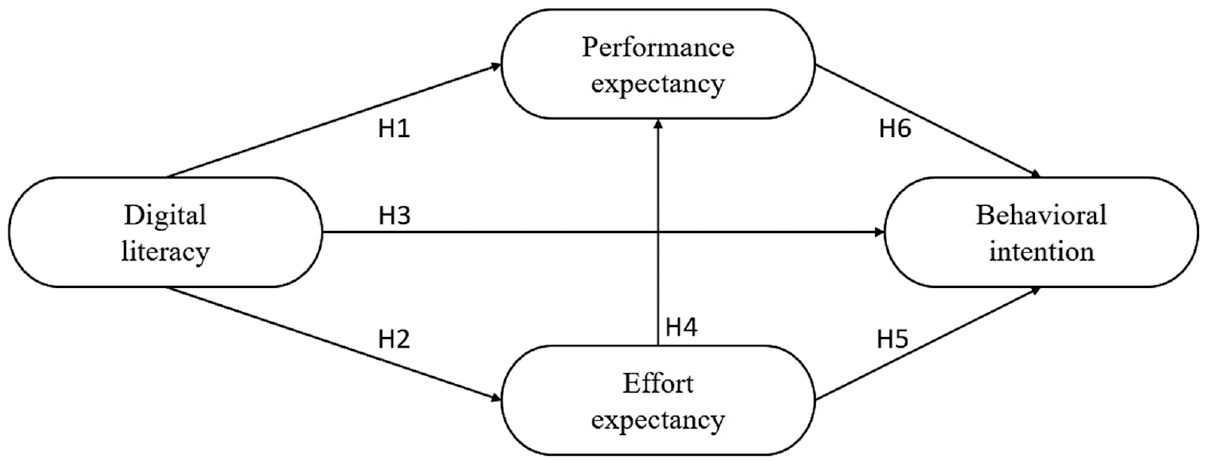
Research model.
3.1.1. DL
DL is a mix of technical, cognitive and socio-emotional factors associated with using digital technologies [37]. DL is the ability to understand, analyse, evaluate, organise and evaluate information using digital technologies [34]. Many studies have explored the relationship between DL and intention to use. Cavalheiro et al. [38] found that DL positively affects the intention to use digital technology. Nikou and Aavakare [25] stated that a higher DL level would have a positive impact on users’ productivity and a direct impact on their intention to use digital technology. In the context of UTAUT, DL has been found to be positively associated with PE and EE [26,34,36]. Accordingly, our hypotheses that a higher DL level of administrative staff positively affects the productivity of administrative staff, and a direct impact on their intention to use digital technology, are given below:
H1. DL positively affects PE.
H2. DL positively affects EE.
H3. DL positively affects the intention to use digital technology.
3.1.2. EE
EE is the degree of ease associated with using digital technology. If the user feels that digital technologies are easily understood and used, their willingness to adapt will increase. Users who feel that digital technology is easy to use and requires little effort have higher expectations for achieving the desired performance [31]. A study found that EE positively affected BI [25]. In addition, the effort expectation of users will increase the performance expectations of users for the use of digital technology [39]. In this context, the user exhibits a more positive acceptance behaviour when he or she uses digital technologies easily and feels that it improves his or her performance. Based on this, the following hypotheses are proposed as follows:
H4. EE positively affects PE.
H5. EE positively affects the intention to use digital technology.
3.1.3. PE
PE is the degree to which an individual believes using the system will help increase job performance [31]. The performance expectation built within each model strongly indicates intent [40,41]. Many studies found that performance expectation positively affects BI [26,34,36,42]. In this direction, our hypothesis that digital technologies will contribute to the work performance of the administrative staff and improve the system usage behaviour is given below:
H6. PE positively affects the intention to use digital technology.
3.1.4. BI
Many studies describing the use of the future technology explored the intention factor extensively as a dependent variable [28,31,43–46]. The structure of intention to use technology in this research expresses the intention of higher education staff to use digital technologies for their administrative duties. This research investigates how DL, PE and EE factors affect the intention of individuals working in higher education to use digital technology.
3.2. Measures
An online survey was designed via Google Forms to examine the path relationships between the four structures in the model. Items used to measure PE, EE and BI were adapted from Venkatesh et al. [31] UTAUT study. DL was adapted from Nikou and Aavakare [25]. A total of 16 items and their contents in the questionnaire were adapted to the use of digital technology by administrative staff working in higher education (Appendix 1).
3.3. Data collection
The research target group is the administrative staff of Karadeniz Technical University and Atatürk University. Data were collected over 6 weeks as of April 2022 to identify participants’ views and experiences. The first part of the questionnaire consisted of variables that determine the demographic characteristics of the sample administrative staff. The variables were the participant’s age, gender and total work experience. The second part of the questionnaire consisted of items aiming to measure the conceptual model. The items used to measure the structure in the model were prepared on a 5-point Likert-type scale ranging from 1 –Strongly Disagree to 5 –Strongly Agree. A pilot test was conducted on a small group of participants at higher education institutions to assess reliability and comprehension [47]. The questionnaire was then sent to the emails of higher education administrative staff employees.
3.4. Data analysis
Questionnaires were sent to more than 300 administrative staff working in the general administration services of Karadeniz Technical University and Atatürk University institutions, and 183 responses were received. After excluding non-responders and incomplete responders, data for 158 participants were prepared for analysis. The proposed conceptual model was evaluated using structural equation modelling (SEM). IBM SPSS Amos [48] programme was used for the analysis of structural model. SEM is a comprehensive statistical approach to test models in which causal and reciprocal relationships between observed and latent variables coexist. SEM, used in many fields of science, provides a comprehensive method for testing and measuring meaningful theories. It is widely used, especially in measuring the relationships between variables and developing and testing institutional models [49].
4. Findings
4.1. Participants
There were 158 participants in total, 48 of whom were female (30.4%) and 110 of whom were male (69.6%). The ages of the responders ranged from 26 to 65 years. The participants’ years of professional experience ranged from 1 to 40 years.
4.2. Measurement model results
The reliability and validity properties of the constructs were calculated to measure the conceptual model proposed by this study. Internal consistency and item reliability of each construct were evaluated with Cronbach’s alpha (α), composite reliability (CR) and average variance extracted (AVE). Hair et al. [50] stated that Cronbach’s alpha (α), CR and AVE values should be equal to or above 0.7, 0.7 and 0.5, respectively. In addition, CR should be higher than the AVE value to ensure convergent validity [51]. According to Table 1, since Cronbach’s α value was above 0.7, all constructs were found to have high reliability and internal consistency [52]. A CR value of more than 0.7 proved that internal consistency and reliability levels were sufficient for all constructs. Convergent validity was measured by evaluating the factor loading of each construct. The results were confirmed with convergent validity as AVE values greater than 0.5 for all constructs [50].
Descriptive statistics, convergent validity, and internal consistency and reliability of items.
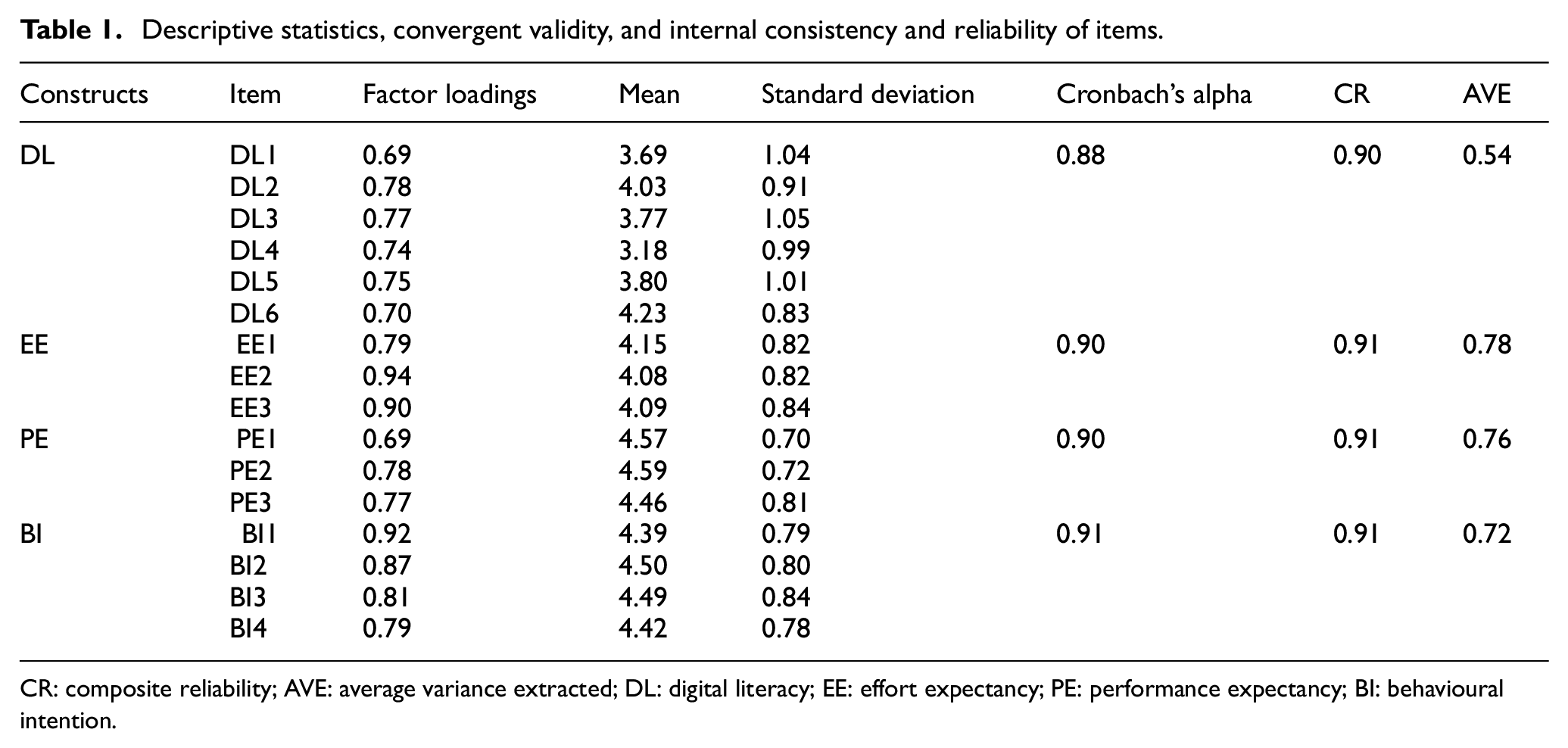
CR: composite reliability; AVE: average variance extracted; DL: digital literacy; EE: effort expectancy; PE: performance expectancy; BI: behavioural intention.
Discriminant validity (DV) measures the degree of difference between one construct and another. The DV in this study was examined based on the DV criterion proposed by Fornell and Larcker [51]. When the values in the Table 2 are examined, it is seen that the bold values in each column from top to bottom and left to right is greater than the others. Table 2 shows that DV was confirmed.
Discriminant validity according to the Fornell–Larcker criterion.
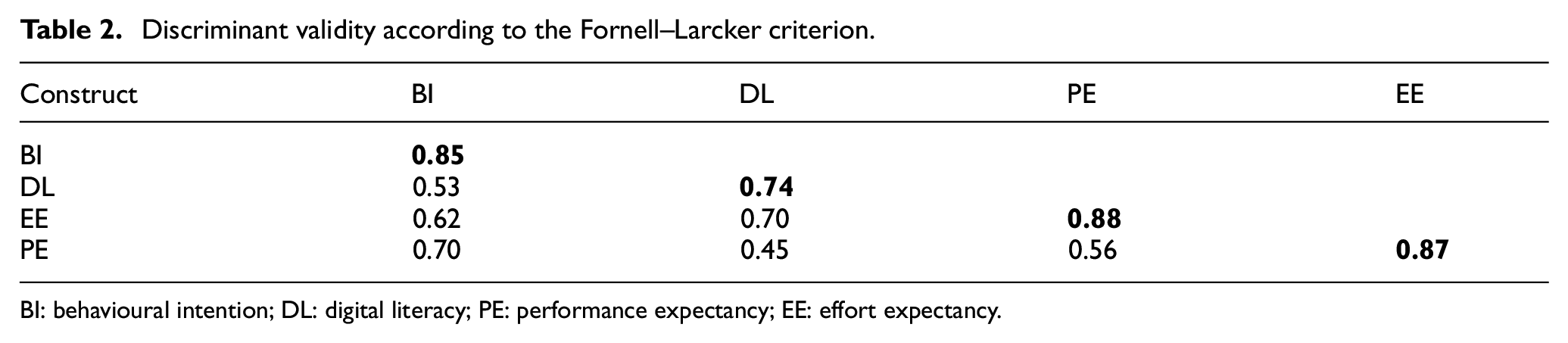
BI: behavioural intention; DL: digital literacy; PE: performance expectancy; EE: effort expectancy.
4.3. Validation of the measurement model
Confirmatory factor analysis (CFA) was used to test the validity of the research scale. CFA aims to examine the extent to which a predetermined or constructed structure is confirmed by the collected data [53]. CFA, supported by a theoretical basis, is carried out to test the extent to which the factors formed from many variables comply with the actual data and whether they are like the research sample [54]. Therefore, CFA was used for the measurement model shown in Figure 2.
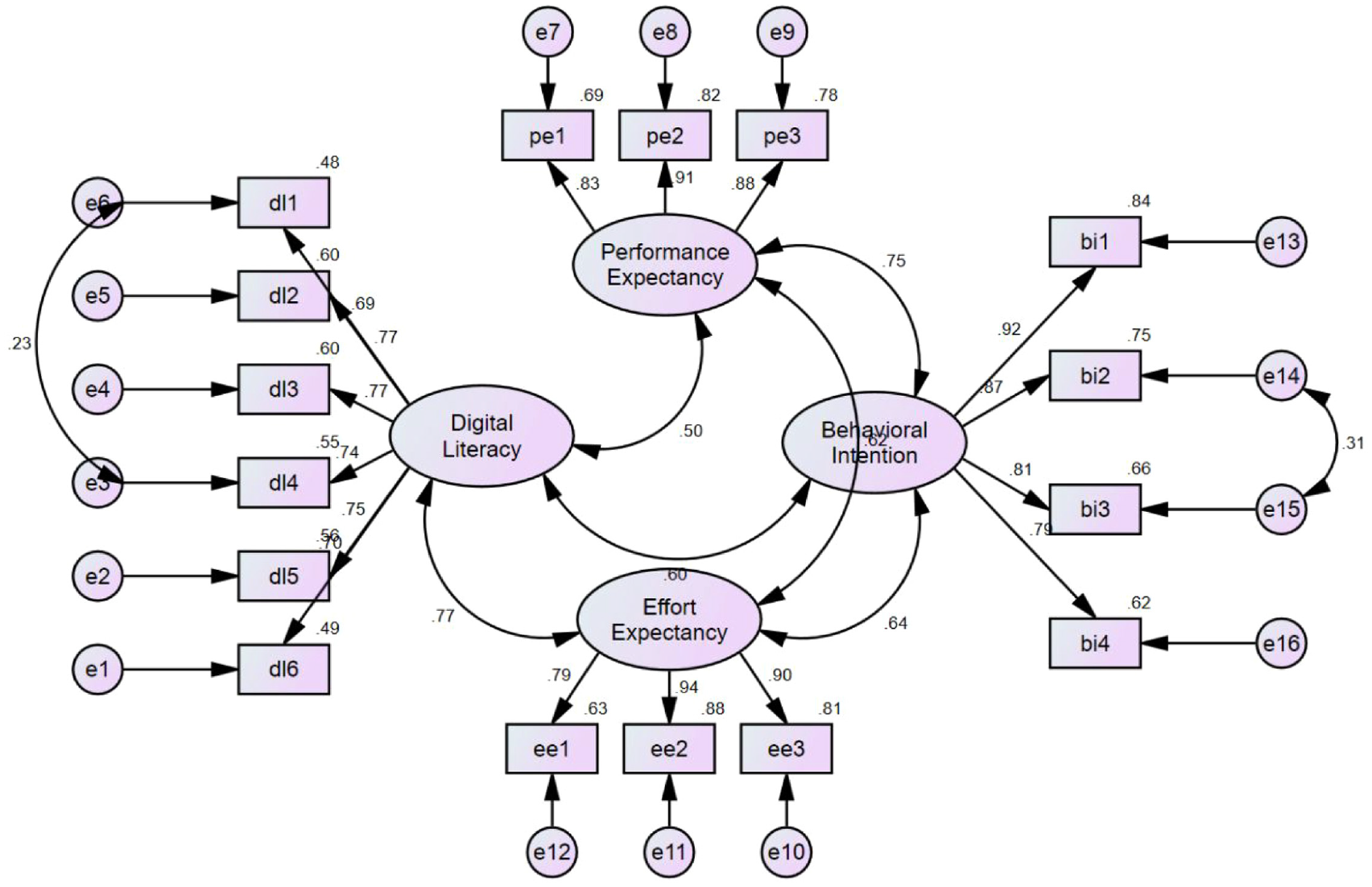
Confirmatory factor analysis.
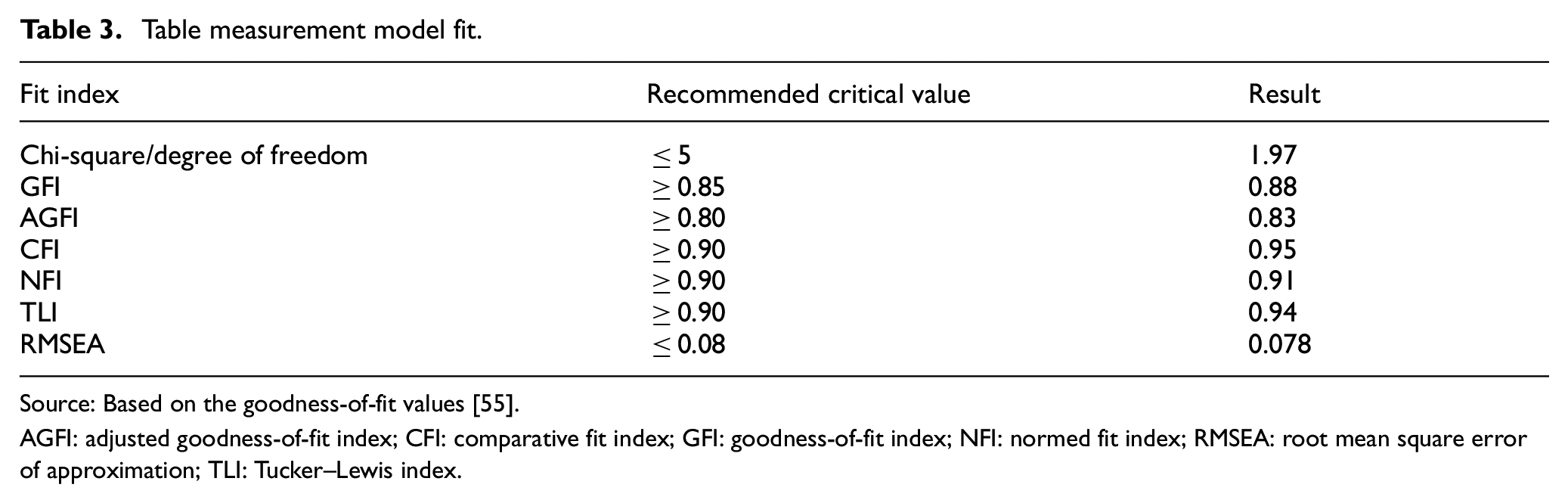
As seen in Table 3, when the fit indices of the CFA of the model were examined, no problem was observed regarding parameter values, and the fit measures were within acceptable limits.
Table measurement model fit.
Source: Based on the goodness-of-fit values [55].
AGFI: adjusted goodness-of-fit index; CFI: comparative fit index; GFI: goodness-of-fit index; NFI: normed fit index; RMSEA: root mean square error of approximation; TLI: Tucker–Lewis index.
4.4. Structural model results
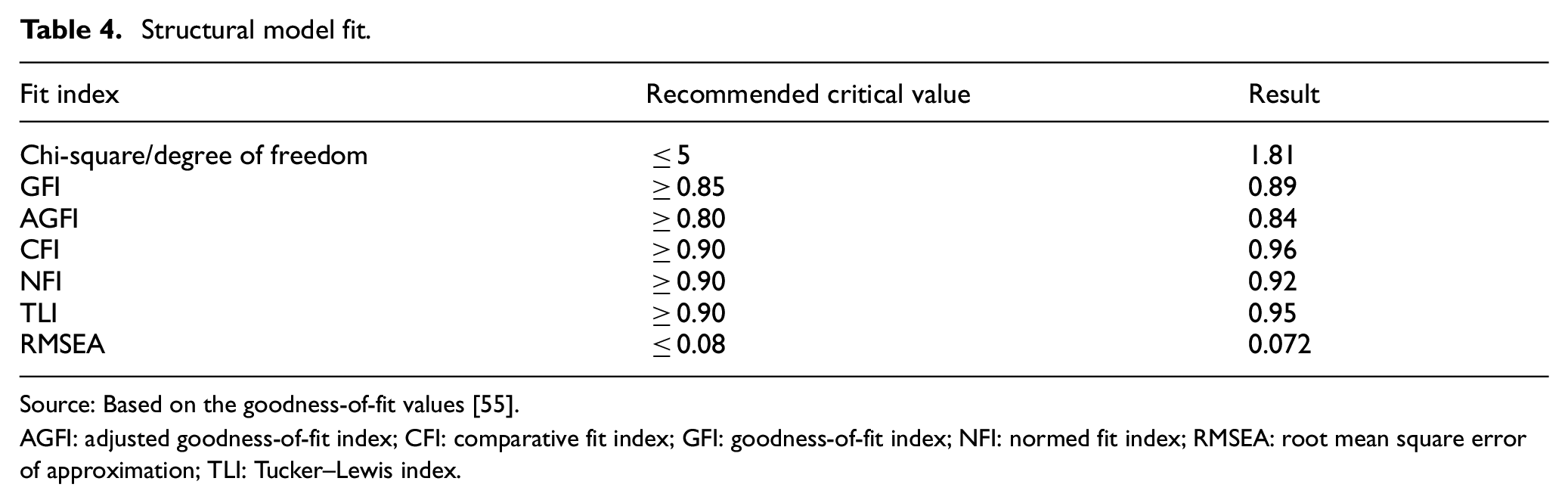
The SEM approach was adopted to test the hypotheses and evaluate the statistical significance of the path coefficients in the research model. In the results of the SEM analysis, tables containing the goodness-of-fit values of the models, standardised estimation graphics, validity of the hypotheses, direct, indirect, total effects of the variables and the significance level of the mediating variable were included. The fit measures, ideal fit values and goodness-of-fit of the models used in the evaluation criteria are given in Table 4.
Structural model fit.
Source: Based on the goodness-of-fit values [55].
AGFI: adjusted goodness-of-fit index; CFI: comparative fit index; GFI: goodness-of-fit index; NFI: normed fit index; RMSEA: root mean square error of approximation; TLI: Tucker–Lewis index.
When Table 4 is examined, it is observed that the fit measurements of the model have ideal fit measures. Standardised structural graphics of the models are shown in Figure 3.
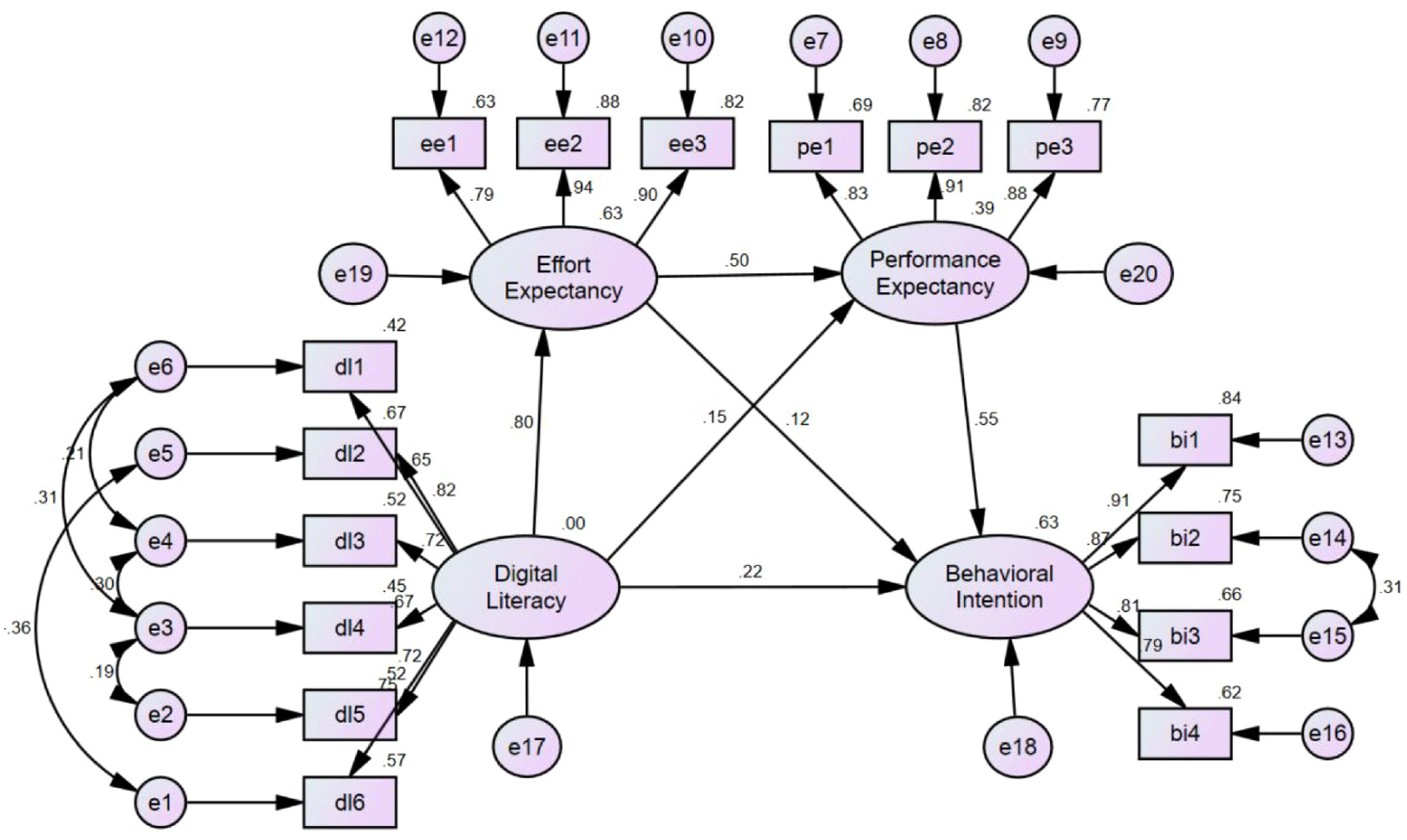
Structural model.
When Figure 3 is examined, a 63% variance explains the intention to use digital technology. In addition, the PE and EE structures of the UTAUT model are explained with 39% and 63% variances, respectively.
4.5. Hypothesis testing
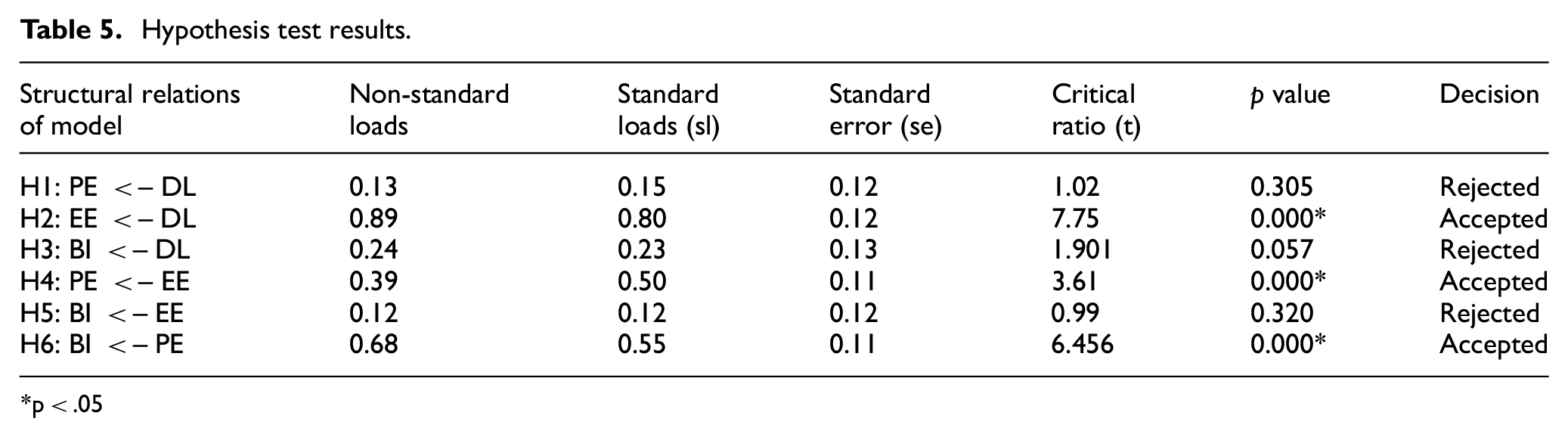
According to the hypothesis test results (Table 5), there is no significant direct relationship between DL and PE, and BI.
Hypothesis test results.
p<.05
Thus, H1 and H3 were rejected. There is a direct and significant relationship between DL and EE. Thus, H2 was accepted. In addition, according to the results of the hypothesis, there is a direct and significant relationship between EE and PE. Therefore, the model supports H4. However, there is no significant direct relationship between EE and BI; thus, H5 was rejected. Finally, there is a direct and significant relationship between PE and BI; thus, H6 was accepted in the model.
4.6. Mediation effect
No direct relationship was found between DL and BI; thus, a mediation test was performed to examine the mediating effects of PE and EE factors. According to the results, EE and PE variables do not mediate the pathways between DL–EE–BI and DL–PE–BI. However, significant indirect effects of the DL variable on BI were found via the DL–EE–PE–BI pathway (b = 0.237, p < 0.05) and the EE variable via PE (b = 0.265, p < 0.05).
5. Discussion and conclusion
The research model presented in this study arose out of the need to understand the importance of DL skills for administrative staff in higher education to adopt the use of digital technology. Based on this need, Venkatesh et al. (2003) aimed to evaluate the intention to use digital technologies with a new approach to combining the UTAUT research model structures with the DL structure. Research on DL skills is a very current topic in higher education, but research on administrative staff in higher education is limited [26,45,56].
In this study, we suggested that the DL variable would have a direct positive impact on the PE and EE of the administrative staff regarding the use of digital technology, and the direct effect on the intention to use digital technology (BI). According to the findings, DL has no significant direct relationship with PE. This finding is in contrast with the findings of previous studies [25,26,36,56]. Also, Nikou et al. [27] found no positive effect between DL and perceived usefulness in their study examining the effect of DL on digital technology use in the context of TAM. One of the five constructs in different models of PE is perceived utility from TAM [28,31]. This finding supports the relationship between DL and performance expectation in our study. The most frequently used technological resources for administrative tasks in higher education are hardware technologies, including computers, peripheral equipment (printer, scanner, etc.), photocopy and communication tools (phone, fax, etc.), and software technologies, including office programmes (word processor, spreadsheet, etc.) and database applications. In addition, administrative staff generally carry out standard job duties. Therefore, we can say that the benefits provided by the digital technologies used by the administrative staff with high DL skills do not increase their PE. That means that administrative staff does not need DL to appreciate the usefulness of the technology they use to fulfil their duties. In another hypothesis, it was revealed that DL has a direct and significant relationship with EE. This finding is consistent with many studies [25,26,36]. Therefore, supporting the H2 may be since administrative staff with high levels of DL skills spend less effort when using digital technology. At the same time, the higher convenience of the relevant digital technology supports this result.
In addition, the H3 was rejected in the model because the path relationship between DL and BI was not significant. This finding was found to be consistent with many studies [25,36]. However, the SEM results show that the effect of DL on the intention to use is mediated through PE and EE, thus forming full mediation. The lack of a significant relationship between DL and BI can probably be explained by the context of the research and the nature of the administrative staff involved in this research. Higher education administrative staff can be assumed to be digitally literate individuals as they use and have access to various digital technologies in their job duties. For this reason, we can say that the use of digital technologies in business processes is a natural behaviour for administrative staff. In such circumstances, it will be essential to comprehend the staff’s demands and concerns, and the organisation’s culture and values in relation to the acceptance of digital technology. Moreover, the DL standards employed in various research are not comparable. Some studies, for instance, have employed measures centred on specific technical abilities (such as the ability to use a mouse or browse a webpage), while others have used more generic measures of DL that encompass a broader variety of skills and knowledge (for example, the ability to find, evaluate and use digital information). The link between DL and technological acceptability may also vary based on the technology or context being considered. For instance, DL may be more crucial for the acceptance of sophisticated or non-traditional technology, such as new software or online services, than for the acceptance of more familiar or straightforward technologies, such as smartphones. It can be claimed that the effort expectation and performance expectation factors employed in this study have a higher influence on the administrative staff’s acceptance of digital technology. It is also suggested that higher education institutions should not only increase the DL of administrative employees but also comprehend other elements that influence technology acceptance, such as training and technical assistance, access to technology, favourable role models and other incentives. In addition, they can take steps to ensure that digital technologies are consistent with staff demands and that employees appreciate the value of their job.
In this study, we hypothesised that when administrative staff use digital technologies easily and feel that it improves their performance, they will exhibit more positive behaviour. The relationship between EE and PE in UTAUT is equivalent to the relationship between perceived ease of use and perceived usefulness in TAM [57]. According to the study findings, EE significantly affects PE; thus, H4 was supported. This finding is consistent with many studies [58,59]. This finding may explain why administrative staff may have higher expectations of achieving desired performance when digital technology is easy to use and requires little effort. Interestingly, EE has no positive effect on BI, and the proposed H5 was rejected. This finding was supported by many studies [26,34,36,42]. This finding may be because administrative staff have difficulty learning and using digital technologies used in their business activities and do not know how to use them. Therefore, preferring digital technologies that can be quickly learned and used by administrative staff in business activities and that have a high level of usability will increase the EE and the intention to use digital technology.
In another hypothesis, a positive effect of PE on BI was detected, and the proposed H6 was supported. Our hypothesis that PE positively affects BI is consistent with many studies [25,26,34,36]. Digital technologies have an important place as they provide many benefits, such as greater efficiency and faster job completion in the business activities of administrative staff. Considering that document flow is an intensive sector in higher education institutions, it is normal for administrative staff to need digital technologies in their work. Therefore, with the increase in the performance expectation of the administrative staff using digital technology in their business activities, the intention to use it will also increase.
Finally, the mediation effect of EE and PE factors was examined since DL has no direct effect on BI. As a result, EE and PE factors have full mediation between DL–BI. This result shows that when administrative staff with higher DL use digital technologies easily, their performance and thus their intention to use digital technology will increase.
7. Limitations and future work
This study has some limitations. It is a limitation that it is not known exactly to what extent the participants answered the questions objectively, consciously and sincerely. The sample consists of administrative staff who use digital technology in their business activities at two state higher education in Türkiye. Therefore, this research can be tested and compared with other higher education in Türkiye. The dataset used in this study was small, and it is recommended to repeat the research model to see if future studies with larger datasets can produce different results. Sulkunen and Malin [60] noted that the DL competencies of adults in Finland exceed many other countries worldwide, including their peers in other Scandinavian countries. Therefore, this study assumed that the surveyed participants had high DL proficiency. However, it is recommended that future studies test the model by identifying administrative staff with lower or higher DL. In addition, researchers can examine how socio-demographic factors affect administrative staff’s decision to use digital technologies in higher education institutions. Finally, although this study aimed to investigate the effect of DL on intention to use, future studies could test the effect of information literacy of administrative staff on intention to use digital technology.
Footnotes
Appendix 1
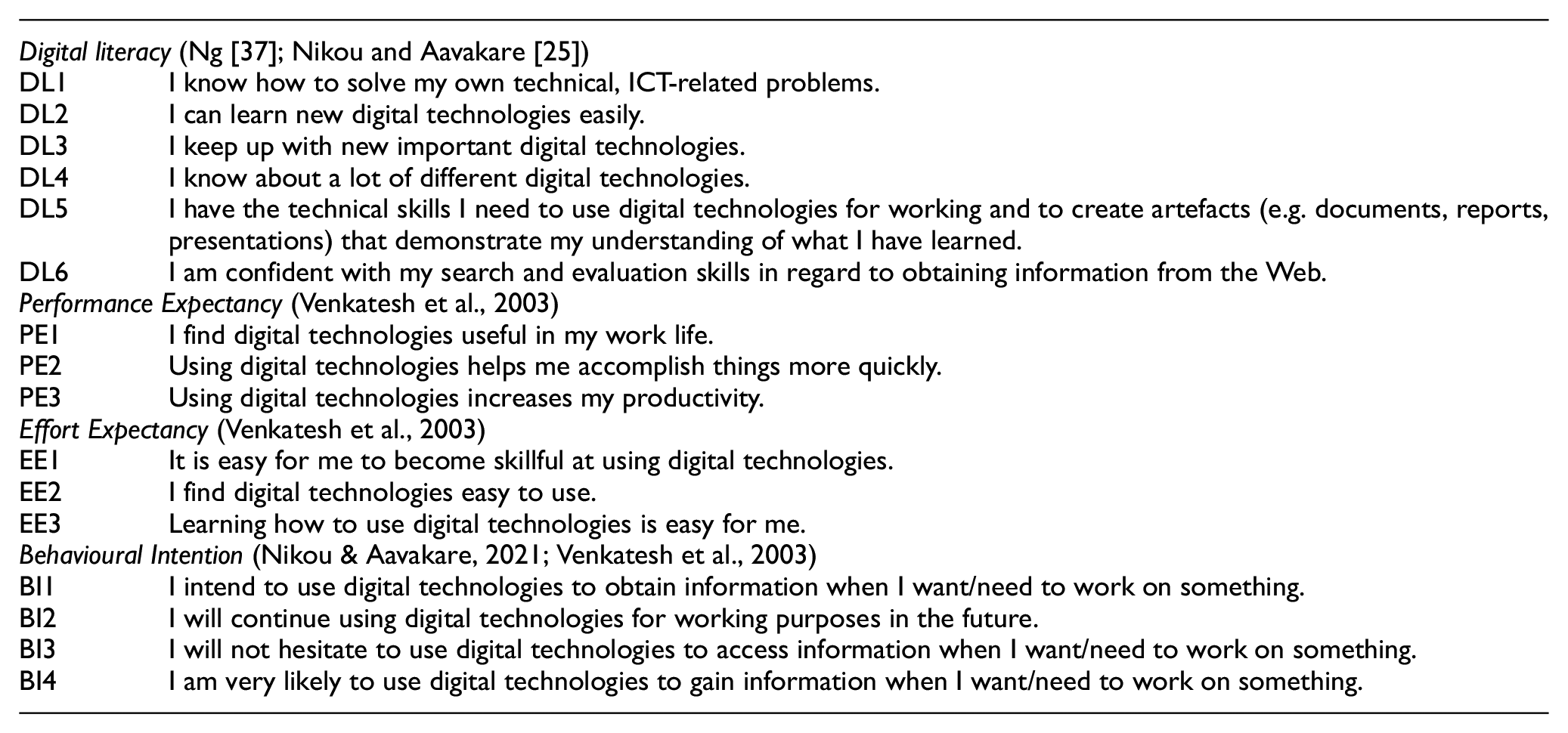
| Digital literacy (Ng [37]; Nikou and Aavakare [25]) | |
| DL1 | I know how to solve my own technical, ICT-related problems. |
| DL2 | I can learn new digital technologies easily. |
| DL3 | I keep up with new important digital technologies. |
| DL4 | I know about a lot of different digital technologies. |
| DL5 | I have the technical skills I need to use digital technologies for working and to create artefacts (e.g. documents, reports, presentations) that demonstrate my understanding of what I have learned. |
| DL6 | I am confident with my search and evaluation skills in regard to obtaining information from the Web. |
| Performance Expectancy (Venkatesh et al., 2003) | |
| PE1 | I find digital technologies useful in my work life. |
| PE2 | Using digital technologies helps me accomplish things more quickly. |
| PE3 | Using digital technologies increases my productivity. |
| Effort Expectancy (Venkatesh et al., 2003) | |
| EE1 | It is easy for me to become skillful at using digital technologies. |
| EE2 | I find digital technologies easy to use. |
| EE3 | Learning how to use digital technologies is easy for me. |
| Behavioural Intention (Nikou & Aavakare, 2021; Venkatesh et al., 2003) | |
| BI1 | I intend to use digital technologies to obtain information when I want/need to work on something. |
| BI2 | I will continue using digital technologies for working purposes in the future. |
| BI3 | I will not hesitate to use digital technologies to access information when I want/need to work on something. |
| BI4 | I am very likely to use digital technologies to gain information when I want/need to work on something. |
Declaration of conflicting interests
The author(s) declared no potential conflicts of interest with respect to the research, authorship, and/or publication of this article.
Funding
The author(s) received no financial support for the research, authorship and/or publication of this article.
