




Abstract
The visibility of individual scientists and their academic performance plays a major role in gaining the creditability to get funded and to advance in academic positions. Therefore, web presences are increasingly used to boost one’s own visibility, disseminate research results and keep up to date with the research of others. However, previous reports show that these channels are not used equally by all scientists. Our study therefore investigates how faculty members (N = 868) at all universities in Lower Saxony (Germany) in the disciplines of physics, biology and chemistry present themselves on institutional websites and professional networking sites. We find that online presentations on institutional websites are mostly rudimentary. In contrast, there are more informative self-presentations on professional networking sites for both established (professors) and less-established (only PhD holders) faculty members. Our figures confirm observations that scientists present themselves online, but less-established ones seem to find less-supportive environments in academic institutions.
1. Introduction
The Internet offers an additional opportunity for disseminating research results and increasing the visibility and credibility of scientists as well as their host institutions [1–5]. Therefore, it is reasonable for scientists and academic institutions to offer information about themselves online. To this end, scientists should use their online presence for personal marketing and provide a portfolio of scholarly work that includes contact details, as well as information about experience, expertise, publications, research projects conducted and qualifications acquired [3,4,6–8]. Maintaining an online presence may be particularly obligatory for scientists seeking their next appointment, a permanent position, a higher position or to change to a more prestigious research institution [2]. Indeed, one of the primary motivations for young scientists to have an online presence is to attract potential employers [1,9,10].
Various studies have shown that a growing number of scientists maintain an online presence. They use both institutional websites and social networking sites for self-presentation, as well as the dissemination of publications and follow the research of others [7,10–15]. There is also evidence that scientists’ online presence on academic networking sites such as ResearchGate, Academia.edu and Mendeley, as well as their use of Twitter, increases the visibility of their research and the number of citations [5,16,17]. In addition, professional platforms such as LinkedIn and institutional websites are important channels for recruitment. Employers increasingly consult such online presentations to search for highly skilled candidates [1,9,18]. Young scientists, in particular, create accounts on such professional networking sites to increase their visibility [18] and when they plan to move to the industry sector [19]. However, previous investigations also show that scientists are sceptical of academic networking sites [9,13,20]. They assume that having an account on such platforms does not advance one’s academic career but rather increases non-academic activities such as following, commenting, and maintaining one’s online profile. Since academic networking sites are not part of the scientific field and websites within academic domains provide a more professional and appropriate representation of scientists, Más-Bleda and Aguillo [3] suggest that scientists should use personal websites hosted on trusted institutional domains belonging to universities and their faculties, departments, and laboratories to provide a complete portfolio of their scholarly work.
Previous research on academics’ online presence has focused either on highly cited researchers [3], small samples [2,10], or case studies of individual institutions [1,21]. Our study takes a broader approach and examines the online presence of all PhD faculty members in the often-scrutinised disciplines of physics, biology, and chemistry at universities in the German federal state of Lower Saxony. The data set consists of advanced career scientists who could indicate their records of accomplishments, including publications, research conducted, and qualifications acquired. In addition, we can distinguish between scientists with a professorship (established) and those who are predominantly on fixed-term contracts (less established) and therefore may be looking for permanent, higher or more attractive positions. We use our sample to examine: what content do faculty members present online and how? How prevalent are personal websites on institutional and professional networking sites? Are less-established scientists more widely represented online than established scientists?
The following sections consider previous research on scientists’ web presence and provide a theoretical framework, using Bourdieu’s field theory, for examining scientists’ online visibility. The current sampling and methodological approach are then reported, followed by the results, their discussion and an overall conclusion.
2. Previous research on scientists’ web presence
Online communication has become an essential part of scientists’ activities [19,22,23]. Today, they use all kinds of online tools, such as emailing, writing blogs and posting on Twitter, as well as maintaining profiles on social and academic networking sites. They promote their research online to gain visibility in the scientific community, attract mass media attention, and increase their number of citations. Several investigations [2,3,21] report that not all faculty members at academic institutions provide comprehensive information about their scholarly contributions on institutional websites. A great proportion of them only provide their contact information and sometimes their research interests, but only a small number include information on their qualifications, a list of publications and research projects, and more. One reason for incomplete online self-presentations on institutional websites might be the fact that academic institutions have different priorities in terms of functionality and uniform branding. According to Hyland’s [2,24] and Jordan’s [10] case studies, faculty members often use academic networking sites and personal websites to circumvent the restrictions on academic domains by their host institution and provide a complete and visually enhanced self-presentation on professional networking sites. Studying this process, different scholars [17,25,26] show that intensive online activities have a positive impact on citations. However, such actions are time-consuming and do not always seem to be of substantial value in increasing scientists’ visibility [12,13,27,28].
A particularly close examination of Academia.edu [29] and ResearchGate [30] supports such sceptical considerations. These platforms promise to improve the visibility of scientists, but, in fact, they turn the academic reward system into a marketplace. Outside of scholarly communication and recognition channels such as journal articles, monographs and conference presentations, scientists create and amplify self-branding on academic networking sites that is measured by the site’s array of quantified records of accomplishment. While scientists thus construct a quantified academic self in a kind of second life in science, these activities absorb scientists’ time and energy to strategically market their branding. Moreover, academic networking sites are not scientifically viable and exhibit questionable practices, such as the automatic creation of fictitious accounts to valorise what is supposed to represent the scientific community. As a result, some scientists conclude that academic networking sites have only entertainment value and are not suitable for the higher education mode of communication [7,10].
Nonetheless, scientists create accounts on social and academic networking sites as complementary resources to disseminate information quickly and widely about their research activities and to follow the work of other scientists [1,2,7,10,11,14,20,24]. Aside from entertainment and visibility reasons, scientists maintain academic profiles outside of their affiliated institutions to overcome institutionally focused presentations. Institutional websites could represent scientists more professional and appropriately [3], but close examinations of such websites [1,2,24] reveal that the presentation of faculty members is primarily used to represent a particular branding and the institutions’ authority and involvement in knowledge production. Affiliated faculty members often have little control over these websites’ content. In contrast, personal websites, as well as profiles on professional networking sites, offer more freedom for their self-presentation to a public audience and are constantly accessible even if scientists change institutions and research fields. Professional online presentations allow scientists to establish personal and professional boundaries, maintain connections and be seen in a certain light. Less-established scientists in particular who are searching for tenured, permanent or more attractive positions use online profiles to portray and promote the value of their scholarly work [2,9,10,19,24].
However, scientists are at risk of wasting time on creating an artificial reputation for themselves on professional networking sites. A comprehensive portfolio of scholarly work on institutional websites could be an alternative. Nonetheless, we know little about how faculty members use institutional websites and professional networking sites for self-presentation. To what extent do websites on institutional domains provide information on faculty members’ records of accomplishments? How do faculty members present themselves on both types of websites? How do faculty members without professorship differ in their self-presentation compared to those with professorships?
3. Theoretical framework
Scientific careers depend on scientists’ performance and visibility. In the scientific field, scientists gain reputations for scientific contributions that have been published and awarded [31,32]. Recognition grows with accumulated scientific capital and is a pathway to pursuing a scientific career in a permanent, tenured or more attractive position within or outside of academia. However, the acquisition of scientific capital is not only related to discoveries and valuable scientific contributions. It is also a matter of visibility in the scientific community and in certain research-related networks, which forces scientists to publish in scientific journals and to participate steadily in conferences and meetings.
For this purpose, the Internet provides a supportive context [8,13,27,30]. Scientists can communicate with others via email and inform them about current research through blogs and on Twitter, as well as create personal homepages on institutional websites, on social networking sites (e.g. Facebook, Instagram), and academic networking sites (e.g. ResearchGate, Academia.edu, Mendeley). Nonetheless, previous studies have found that faculty members have limited ability to control their self-presentation on institutional websites. Therefore, when scientists want to improve their online presence, they often create an account on a professional networking site. In other words, they hope that their profiles have a significant impact on the scientists’ visibility – knowing that their profiles exist only virtually and imitate the scientific field.
Based on Bourdieu’s field theory [32] and previous research, we assume that the scientist’s visibility is pivotal and a driver for all kinds of activities that help to increase their recognition in the scientific community and beyond. Online presence is especially important for less-established scientists who are still seeking tenured, permanent or more attractive positions. PhD holders on fixed contracts generally face a shortage of academic positions [33,34], which is particularly prevalent in Germany, where there are very few (tenured) positions at academic institutions below the professorship level [35]. In view of this, we test the following hypothesis (H) on the relationship between academic position and completeness of online presentation regarding the record of accomplishment:
Moreover, it is reasonable to assume that faculty members create profiles on professional networking sites in addition to their presentations on the websites of their academic institutions due to the limited availability of academic positions for PhD holders. It is also relatively easy to set up a permanent and adaptable online presence on a professional networking site, even if scientists change institution. In fact, several studies show that a large proportion of scientists have accounts on social and academic networking sites [12,14,19,20,36]. Like scientists who are planning to move into the industrial sector [18,19], faculty members might also use such networking sites to increase their visibility as a professional. In addition, it can be assumed that professors already have established networks due to their longer experience, so they have no need to make many new contacts and make their work available to a wider audience on professional networking sites. Based on the assertion in the above studies, we test the following hypothesis:
However, professional and social networking sites provide scientists with an online presence that is loosely connected with the scientific field. While professional networking sites typically include information about scientists such as their curriculum vitae (CV), publications, research interests, and other records of accomplishments that increase the visibility of their academic work, these platforms themselves are not a constitutional part of science. Their business venture models and fictitious profiles also raise doubts about their trustworthiness [12,29,30]. Accordingly, Más-Bleda and Aguillo [3] argue that institutional websites of universities and similar institutions are more professional and appropriate for the online self-presentations of scientists. They are certified representations of the academic world that validate self-presentations on professional networking sites. In this study, we test whether faculty members who maintain a personal homepage on a professional networking site confirm it with a complete portfolio on their institutional website:
4. Data and method
For our study, we screened the institutional websites of all universities in the German federal state of Lower Saxony for faculty members, PhD holders and professors, in departments related to physics, biology and chemistry. In Germany, there are universities that traditionally conduct research and more teaching-based universities of applied sciences. In this study, we concentrated on universities and excluded the latter. It should be noted, however, that there are no universities of excellence in Lower Saxony that are considered particularly research intensive. Faculty members were included in the sample if they were represented at least by name, title, and contact details on the institutional websites. Examined universities only specify minimum requirements for the web presence of the individual institutes, which, however, are not controlled due to the large number. The responsibility and maintenance of the websites lies with the institutes or the scientists. They are responsible for creating profiles for faculty members and what information is shared on websites. Individuals who were listed as teaching assistants, private lecturers or visiting scientists were not included because they often work at the universities only temporarily and therefore are not regular faculty members. For the same reason, emeritus professors as well as honorary ones were excluded. Non-tenured professors were assigned to the group of professors. The study took place from August to October 2020, with a subsequent collection from May until June 2021. The following data were collected for all individuals listed: discipline, university location, academic degree, name, gender, the presence of a CV, a list of publications, and a listing of research projects.
In sum, the sample consists of 868 individuals from nine universities (see Table 1). Separated according to the disciplines considered, the following case numbers result: for the discipline of biology we found 391 individuals, which represents the largest part of the sample (45%), for chemistry, we identified 260 (30%), and for physics, 217 (25%). The sample consists of 64% of PhD holders (36% professors) and men are represented to a higher proportion (69%) than women (31%). The greatest numbers of entries of faculty members on institutional websites were recorded at the largest university locations, university 1 (36%), university 2 (23%) and university 3 (15%), whereas at smaller locations only low case numbers were obtained (e.g. university 8 < 2% and university 9 < 1%).
Description of the sample.
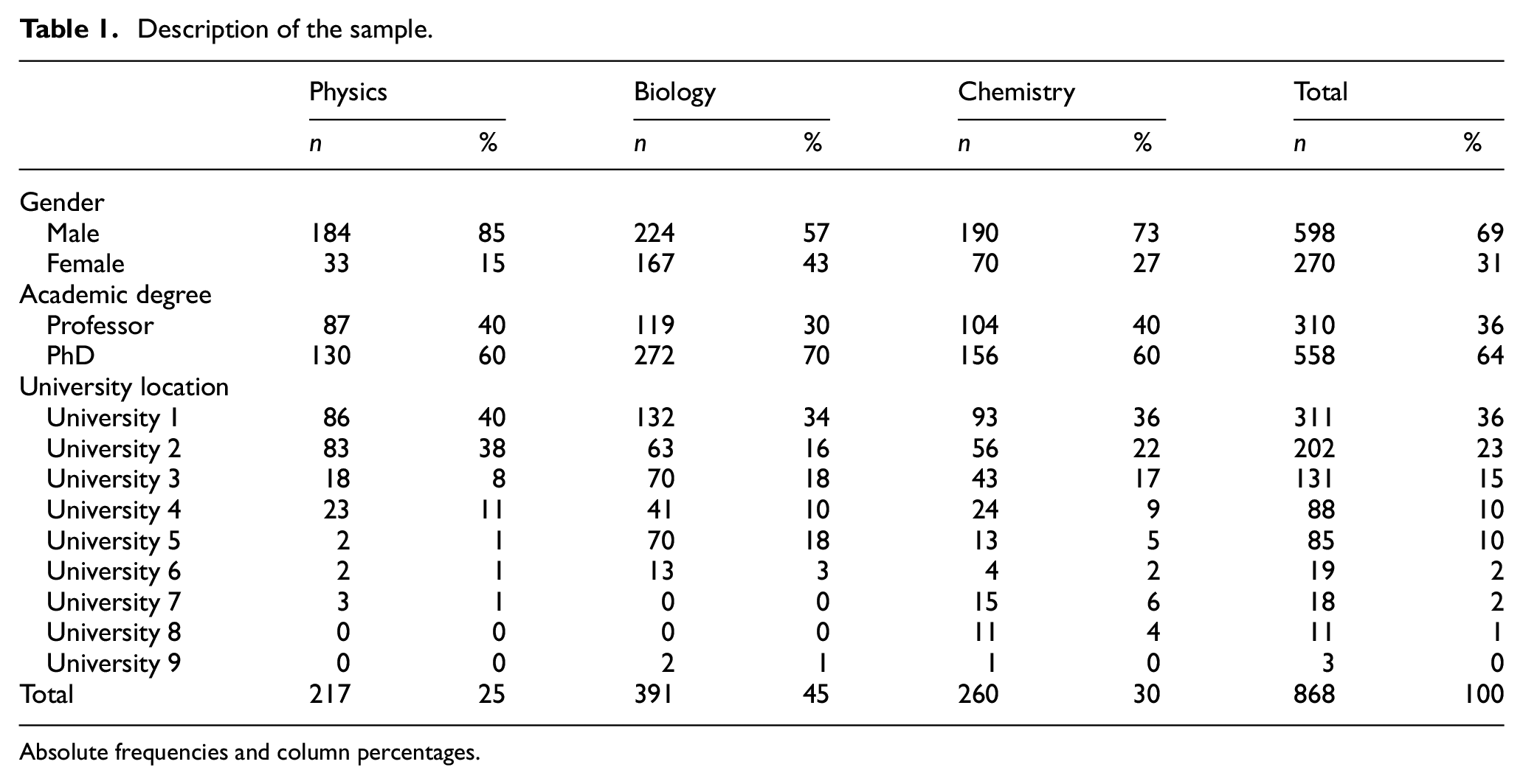
Absolute frequencies and column percentages.
For the faculty members under study, an additional search was conducted for profiles on professional networking sites. These include academic networking sites such as ResearchGate, Academia.edu, Mendeley and ORCiD, and professional platforms such as LinkedIn and Xing. In contrast to institutional websites, these professional networking sites provide permanent and adaptable profiles for scientists unaffected by changing positions and institutions. We focused on popular platforms and did not use field-specific platforms. This is based on the assumption that especially less-established scientists looking for another position prefer to create a profile on these popular platforms in order to be visible to a broad community and possible recruits. We classified the content of the websites according to the presence of a profile, a CV, a list of publications, and a record of research projects, on both institutional websites and professional networking sites. Subsequently, we coded the collected data as a data set to perform descriptive analyses using the statistical programme STATA (Version 16.1). Anonymization was performed by assigning IDs so that the data set includes no sensitive data. The different records of accomplishments were cross-tabulated with the academic degrees and disciplines. Correlation and p value were calculated with Phi to test the strength of explanation of the models.
5. Results
5.1. Composition of institutional websites
Focusing first on the universities, it can be observed that the majority do not have any records of accomplishments on the faculty members’ websites. However, on the websites of universities such as universities 3 (56%), 6 (68%), 7 (56%), 8 (82%) and 9 (100%), higher proportions of individuals can be retrieved who take advantage of the opportunity to present their CV on their personal websites. Interestingly, especially at one of the largest universities, university 2, the proportion of those who do not have a CV on their institutional website is particularly high (82%). More faculty members from universities 3 (51%), 4 (52%), 6 (68%), 8 (82%), and 9 (100%) present lists of publications. University 5, a medium-sized location, has the highest proportion of faculty members (75%) who do not detail their publications. In contrast, only the faculty members of university 8 (55%) present previous as well as current research projects more frequently than faculty members on the websites of the other universities. Moreover, university 7, a smaller location, has the highest proportion of faculty members who do not list their research projects (83%).
A closer look at the faculty members and the three disciplines reveals an even more differentiated picture (see Figure 1). For the entire sample of 868 faculty members, a CV could be found on an institutional website for 338 faculty members (39%). 1 Providing a list of publications seems to be the most common action: 402 faculty members (46%) have one. A list of research projects conducted could only be found for 238 faculty members (27%). In the discipline of physics, the fewest entries can be recorded in all three categories: only 21% of these faculty members offer a CV on an institutional website and only 28% have a list of publications. In addition, only 14% of faculty members list their research projects. In contrast, biology has the most entries in all three categories: about 46% of faculty members offer a CV on an institutional website, 54% offer a list of publications and 32% a record of research projects. The discipline of chemistry is in the upper midfield: 43% of faculty members offer an CV, half have a publications list and about 32% list their research projects on the institutional websites.
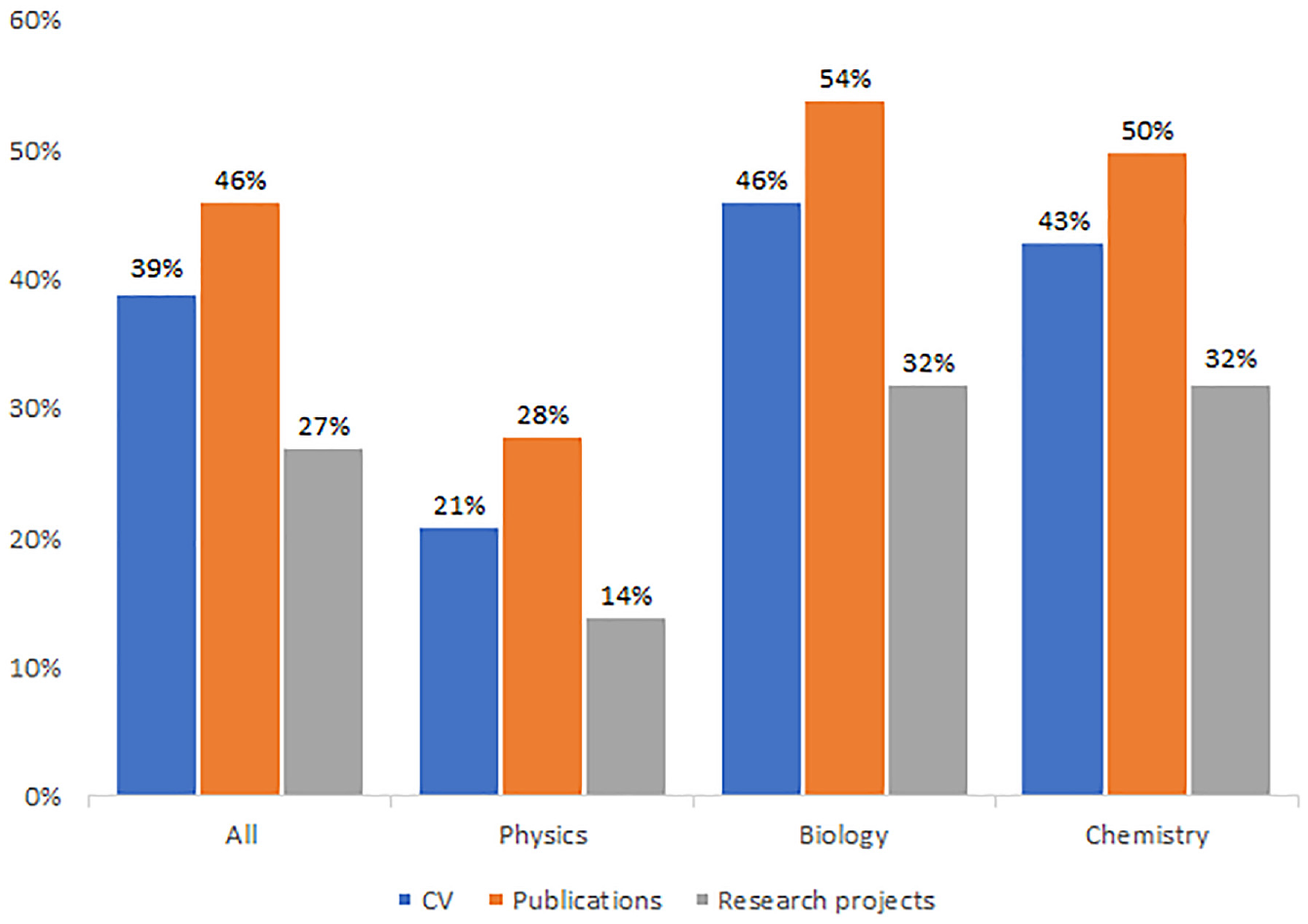
Overview of the information on institutional websites in relation to the discipline.
In addition, we examined differences according to the faculty members’ academic degrees. In the entire sample, about 59% of professors have a CV, but only 28% of PhD holders (see Figure 2). Phi indicates a moderate effect that is statistically highly significant (see Table 2). A publication list was found for 63% of professors and 37% of PhD holders. At this point, Phi only refers to a weak effect, but is still highly significant. A list of research projects was provided by 33% of professors and almost by a quarter of PhD holders. No effect or a negligible one is observed here, which is, however, still highly significant. Remarkably, the presentation on institutional websites is more prevalent for established scientists than for less-established scientists in all three categories.
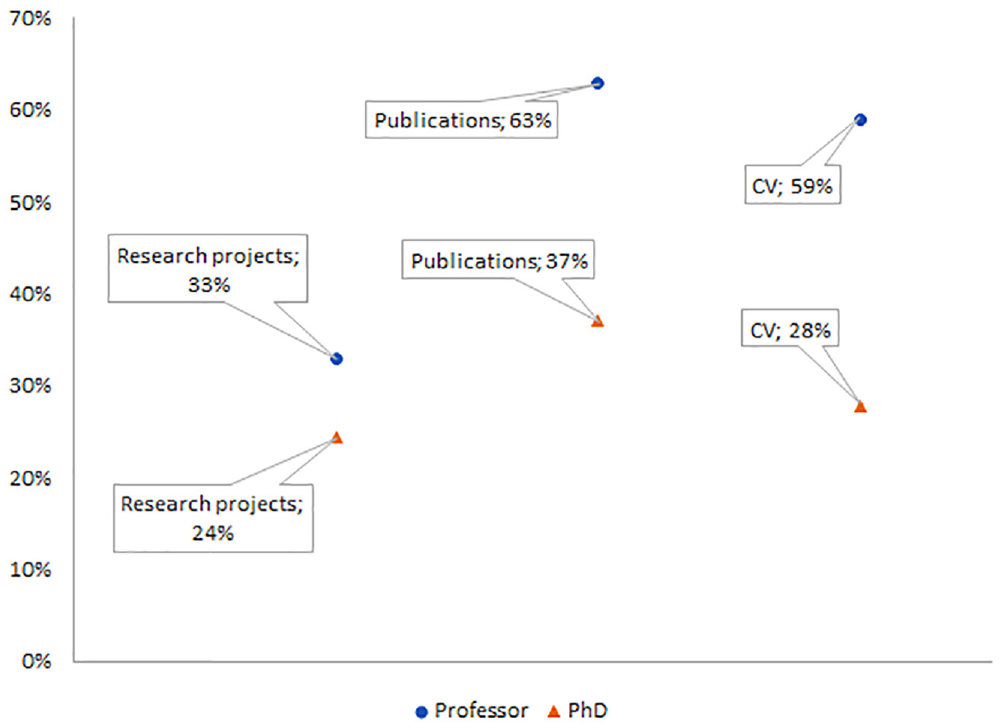
Records of accomplishments on institutional websites in relation to academic degree.
Statistics of the information available on institutional websites.
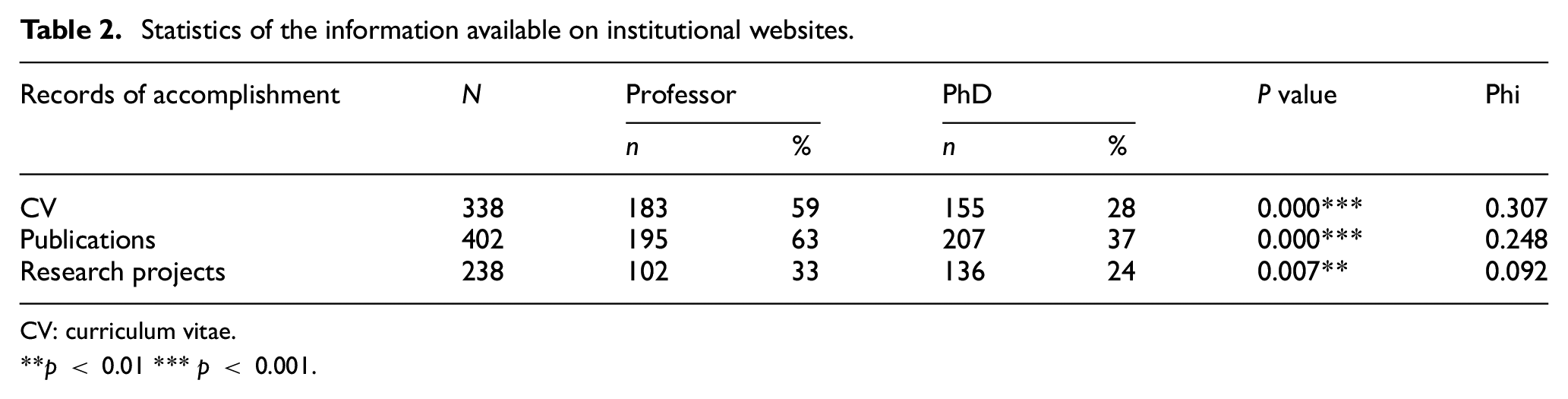
CV: curriculum vitae.
p < 0.01 ***p < 0.001.
In summary, across the sample, more than 60% do not list a CV, more than 50% do not list publications and more than 70% do not list research projects on their institutional websites. This is in line with previous research, which found that not all faculty members at academic institutions provide comprehensive information about their scholarly contributions on institutional websites [2,3,21]. In addition, the results point to a very rudimentary design of these websites. Hypothesis 1, that is, faculty members without professorships provide more information about their records of accomplishments on their institutional websites compared to those with professorships, cannot be confirmed. The presentation of information is very sparse on institutional websites, especially for less-established scientists. Instead, the opposite seems to be true: professors in particular experience a better representation on institutional websites (except for the discipline of chemistry in the case of publications and research projects).
5.2. Composition of professional networking sites
If the university locations are considered, it becomes apparent that faculty members at almost all universities are more likely to make use of a profile on a professional networking site. 2 The range here is between 64% (university 8) and 83% (university 7). Only for the faculty members of the smallest university (university 9) does it appear that they do not maintain profiles on professional networking sites and only present themselves on institutional websites. Considering the records of accomplishments, a mixed pattern emerges. A CV is often not disclosed on professional networking sites. Only 32% (universities 4% and 6) to 51% (university 5) list their CV on these domains. The same is observed for a listing of research projects: between 31% (university 3) and 55% (university 8) present these on professional networking sites. In contrast, faculty members at almost all universities, with the exception of the smallest, university 9, use the possibility of listing one’s publications. Between 55% (university 8) and 78% (university 5) manage a publication list on their professional networking sites. This might indicate a shift to such domains is mandatory to make publications more visible.
A more nuanced picture is obtained by taking a closer look again at the disciplines (see Figure 3). Across all disciplines, there is a generally high propensity among faculty members to create a profile. We found 673 faculty members on professional networking sites (78%). 3 On these profiles, 368 individuals provide their CV (42%). Again, providing a list of publications seems to be most frequently used: 604 faculty members (70%) have one. Moreover, 331 faculty members (37%) list their research projects. For the discipline of physics, it emerges that around 81% of faculty members have a profile, but only 47% present their CV and only about 30% their research projects. In contrast, the option of providing a list of publications is used by almost 75%. The situation is quite similar in the discipline of biology: around 83% of faculty members have a profile on such domains, with 44% presenting their CV. Here, many also include a publication list (79%), but surprisingly, the option to list research projects is used by half of the biologists. For chemistry, the lowest entries are observed in all four categories. Almost 67% of chemists have a profile on a professional networking site, with 36% providing a CV, 52% a publication list and 27% a record of their research projects.
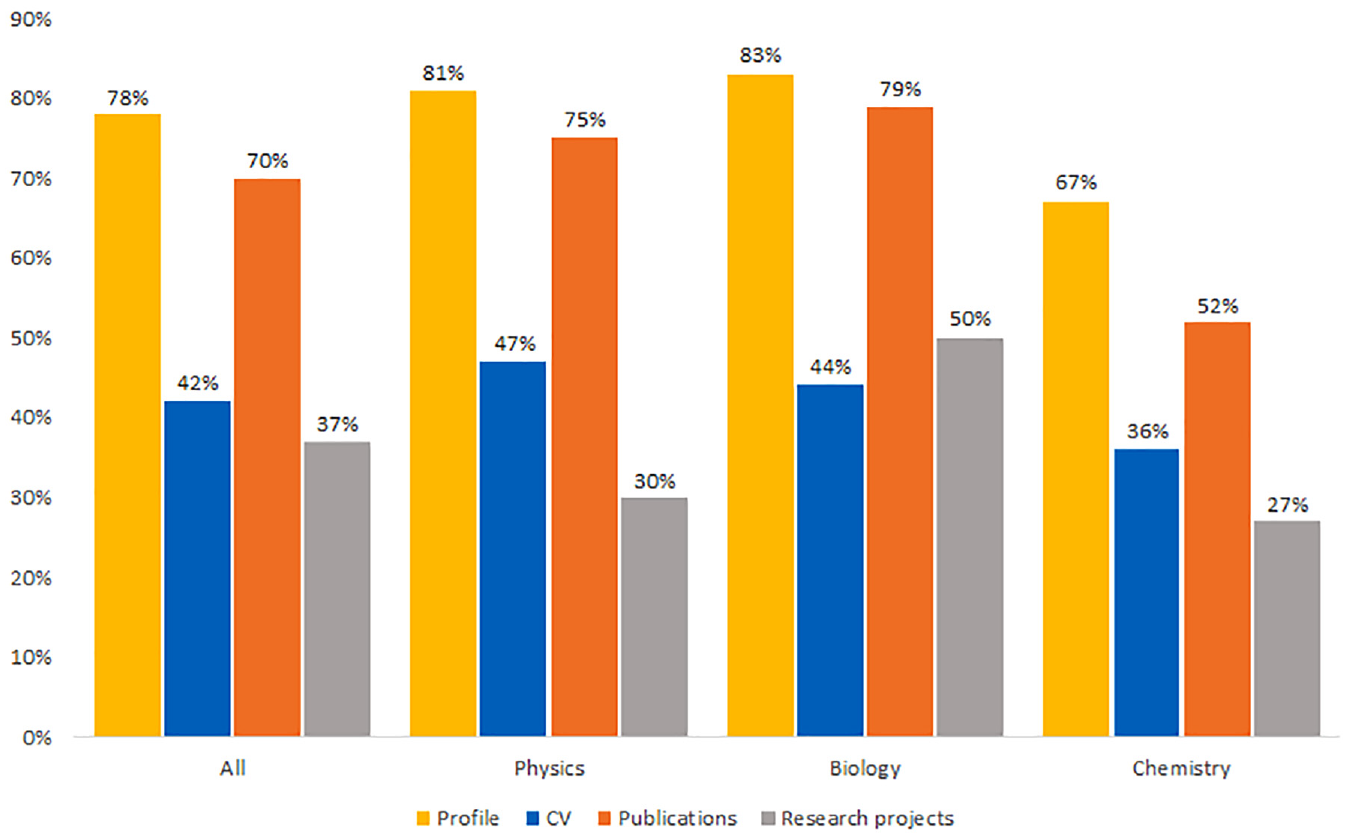
Overview of the information on professional networking sites in relation to the discipline.
As already done with institutional websites, a consideration is also made for professional networking sites according to academic degree: 80% of professors and 76% of PhD holders maintain a profile on a professional networking site (see Figure 4). However, CVs are not often provided there: only 45% of PhD holders and 38% of professors provide one. In contrast, the option to provide a list of publications is frequently used by both status groups: 72% of professors and 68% of PhD holders have one. A list of research projects conducted could be found for 47% of professors and 33% of PhD holders. In the categories of profile, publication list and research project listing, established scientists are slightly superior. Solely for the category of CV do less-established scientists provide it more regularly. However, Phi indicates that all values are non-existent or negligible (see Table 3). Furthermore, only the category research projects shows a statistically highly significant effect, but not the others.
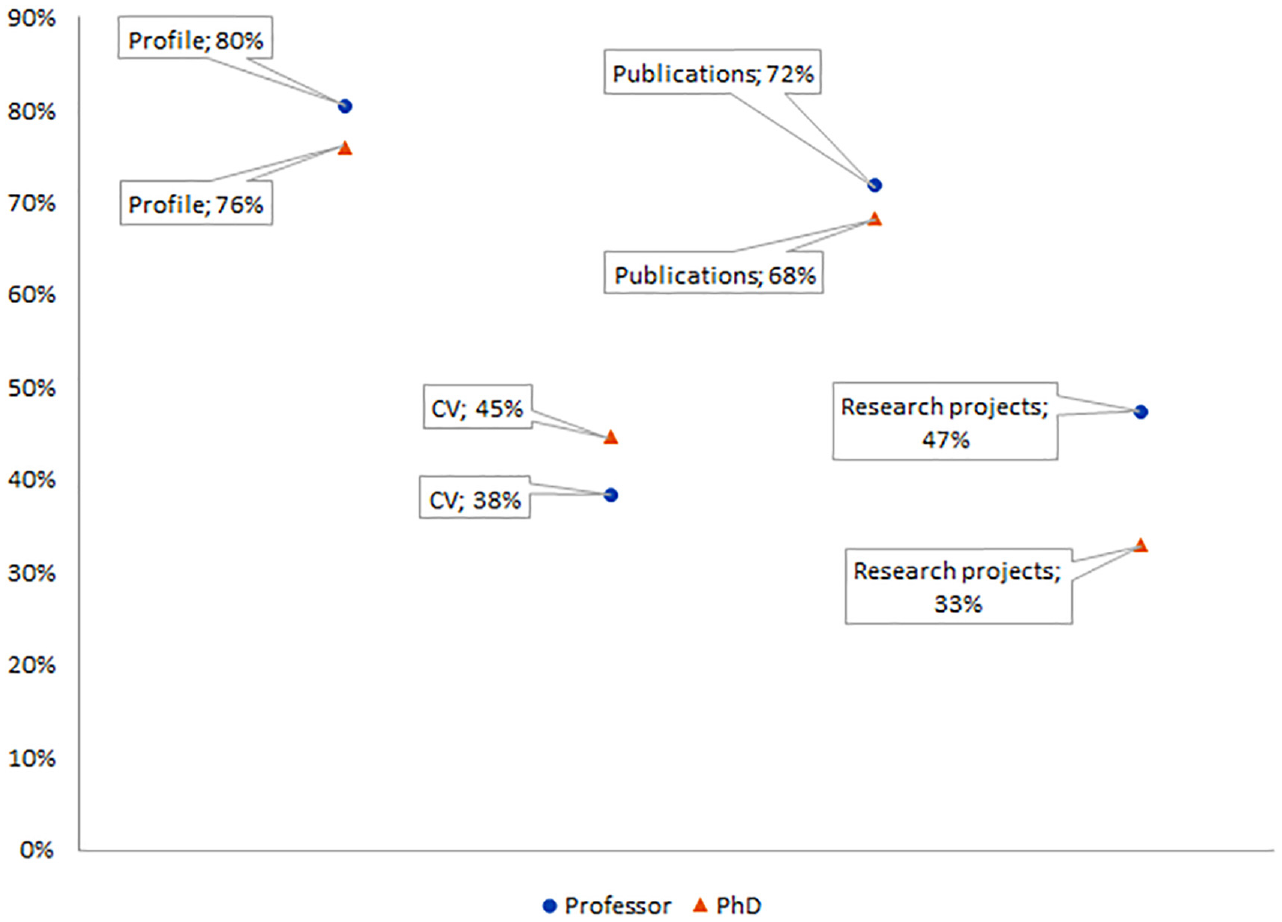
Information on professional networking sites in relation to academic degree.
Statistics of the information available on professional networking sites.
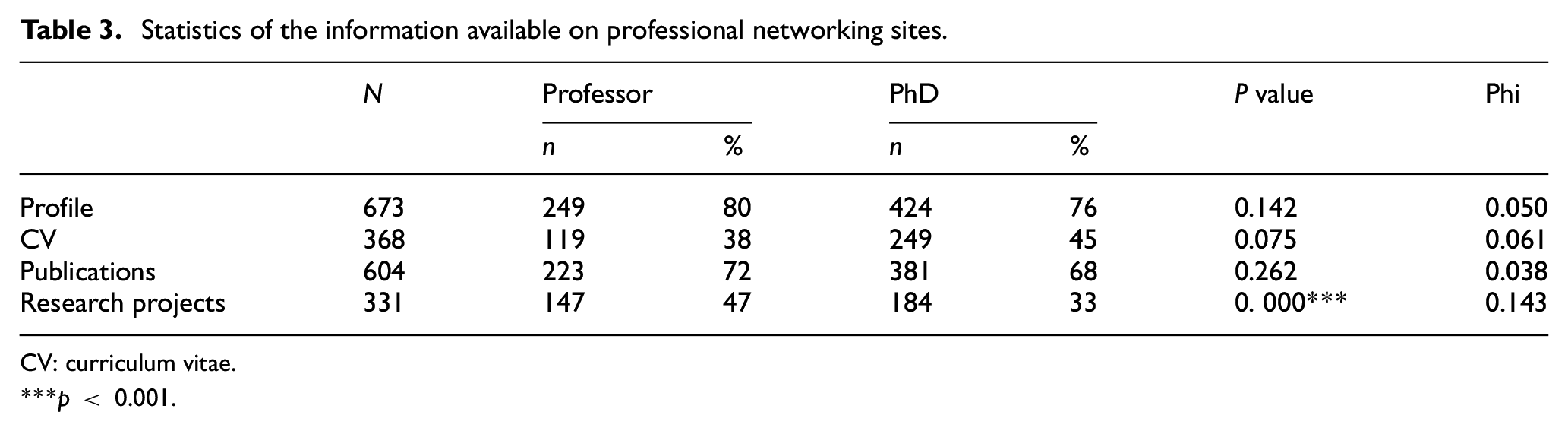
CV: curriculum vitae.
p < 0.001.
In summary, there is a high propensity among professors as well as PhD holders to present themselves on professional networking sites. This is in line with previous research that a growing number of scientists have an online presence and make use of it for self-presentation and the dissemination of publications, as well as to follow the research of others [7,10–15]. However, our results reveal that professional networking sites are mainly used to make one’s publications visible to a broad audience, rather than to present one’s qualifications or research projects. Moreover, a comparison of the three disciplines shows that hypothesis 2, that is, faculty members without professorship are more likely to have a presence on professional networking sites than members with professorship, must be rejected. Our results instead indicate a stronger tendency that both professors and PhD holders maintain a profile on such domains. They only differ slightly in the three observed disciplines. Compared to physics and biology, the discipline of chemistry uses professional networking sites less frequently for extended self-presentation. A look at the data for the entire sample (see Figure 3) also confirms this: for the disciplines of physics and biology, profiles on professional networking sites were found for more than 80% of the sample, while this was only the case for about 67% of the chemistry sample. However, the high amount of profiles on such domains leads to questioning in which way faculty members use these websites. Do they serve as an additional option or are they used as a substitute for a sparse presentation on institutional websites?
5.3. Comparison of the available information on institutional websites in relation to online presence on professional networking sites
A final analysis will examine whether faculty members with a profile on a professional networking site provide more information about their record of accomplishment on institutional websites, than those who only have a personal homepage on an institutional domain (hypothesis 3). To this end, for those present on professional networking sites, it was investigated whether they listed their CV and publications as well as their research projects on their institutional profile. This was summarised under the categories: the person lists nothing, at least one accomplishment, at least two accomplishments or everything on their institutional domain. Similarly, the extent to which those who only have an online presence on the institutional websites and do not maintain a profile on a professional networking site providing the information was also investigated. Surprisingly, there was no person in the sample who provided only one accomplishment on their website. We therefore omitted this category.
Figure 5 shows that more than 36% of those who only have a profile on the institutional websites do not offer any kind of information on these domains. Interestingly, almost 64% of those who also maintain a profile on a professional networking site do not offer any kind of information on their institutional homepages. The same pattern emerges when considering whether at least two accomplishments or even all accomplishments are reported on the institutional homepages: less than a quarter of those who only have a profile on the institutional websites offer two or all information, while about 78% of those who also maintain a profile on a professional networking site do. On one hand, this indicates that professional networking sites are primarily used for extended self-presentation. On the other hand, these figures also pick up on the idea that the information available on these domains can be verified by the same presentation on the institutional websites, giving the scientist more credibility and visibility. This could – according to previous research – be important for less-established scientists, who still seek tenured, permanent or more attractive positions.
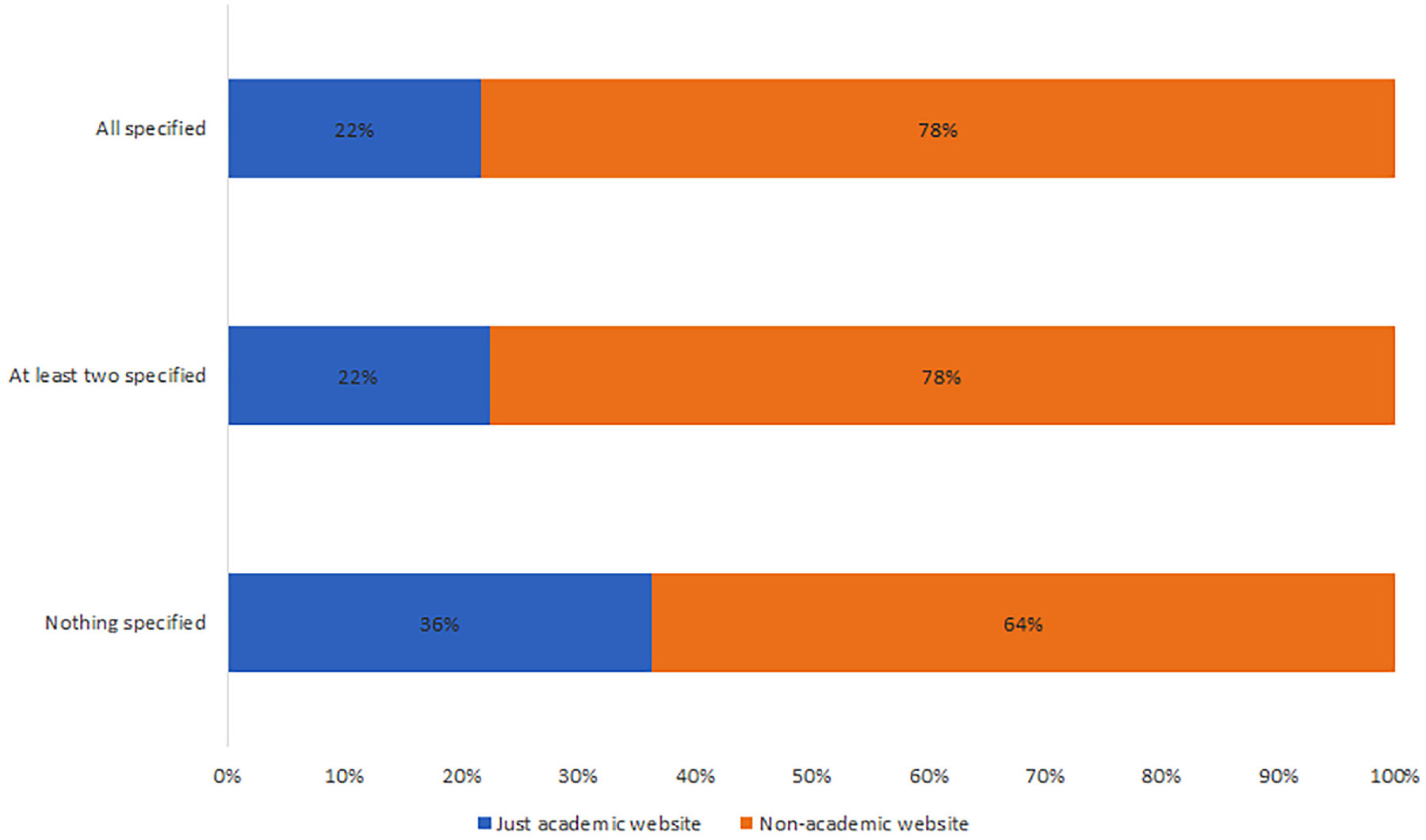
Available information on institutional websites in relation to the online presence of scientists.
In addition, we examined correlations with the academic degree. Interestingly, none of the professors who only maintain an institutional website have not provided any information on it (see Figure 6). Of the professors, 72% provided at least two accomplishments, but only 28% provided all three. This is different for PhD holders, who only have an online presence on an institutional website: about 3% do not offer any kind of information on their homepage, 87% offer at least two accomplishments and 10% offer all three kinds of information.
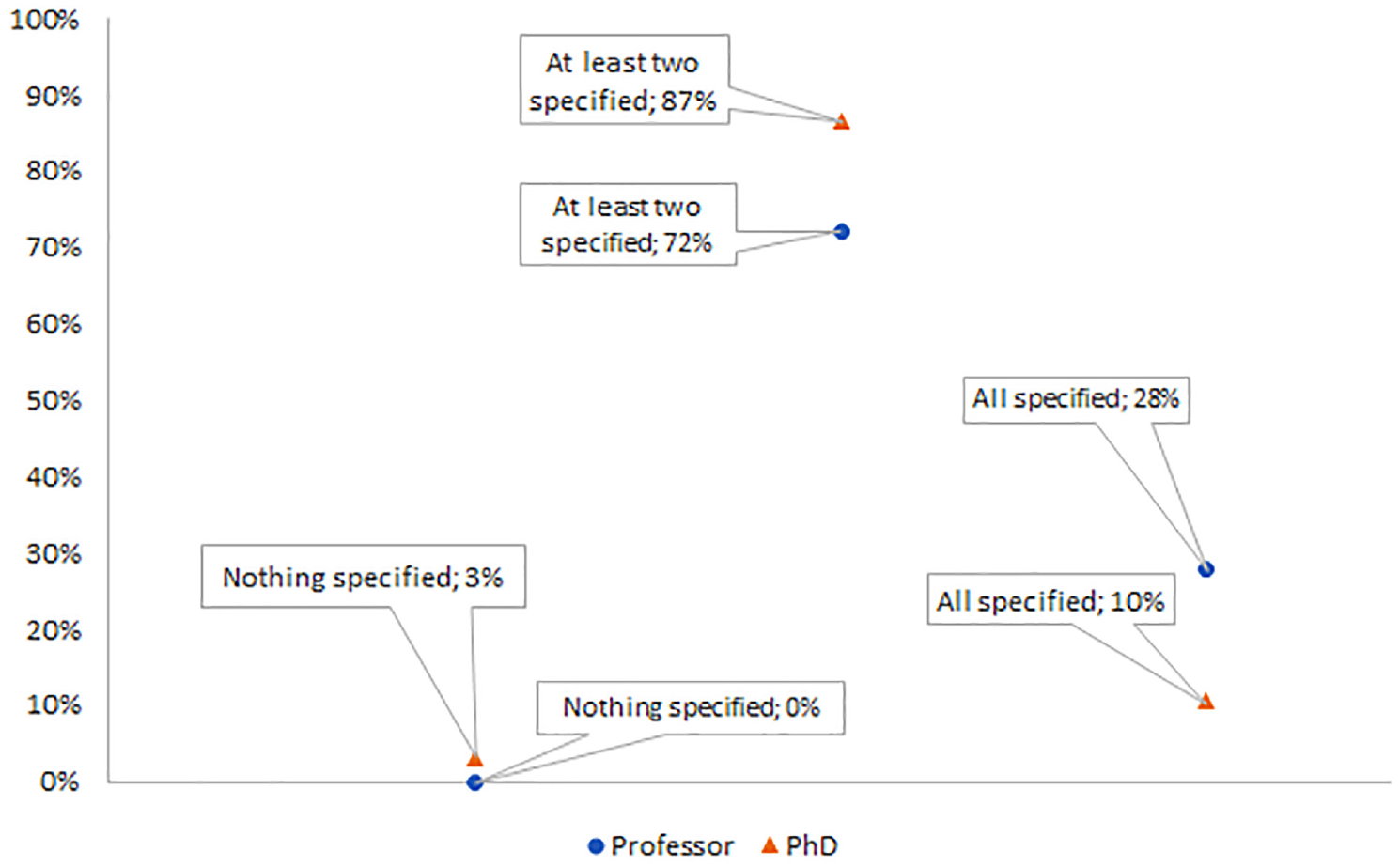
Available information on institutional websites in relation to the online presence of scientists and academic degree: only an online presence on an institutional website.
For faculty members who additionally maintain a profile on a professional networking site, the situation is similar. Just about 1% of both status groups, professors and PhD holders, do not offer any kind of information on their institutional websites (see Figure 7). Of the professors who additionally maintain a profile on a professional networking site, 73% provide at least two accomplishments on their institutional homepage and 26% offer all information. In contrast, 88% of PhD holders with an additional online presence on professional networking sites offer at least two accomplishments on their institutional website, while about 11% provide all three accomplishments.
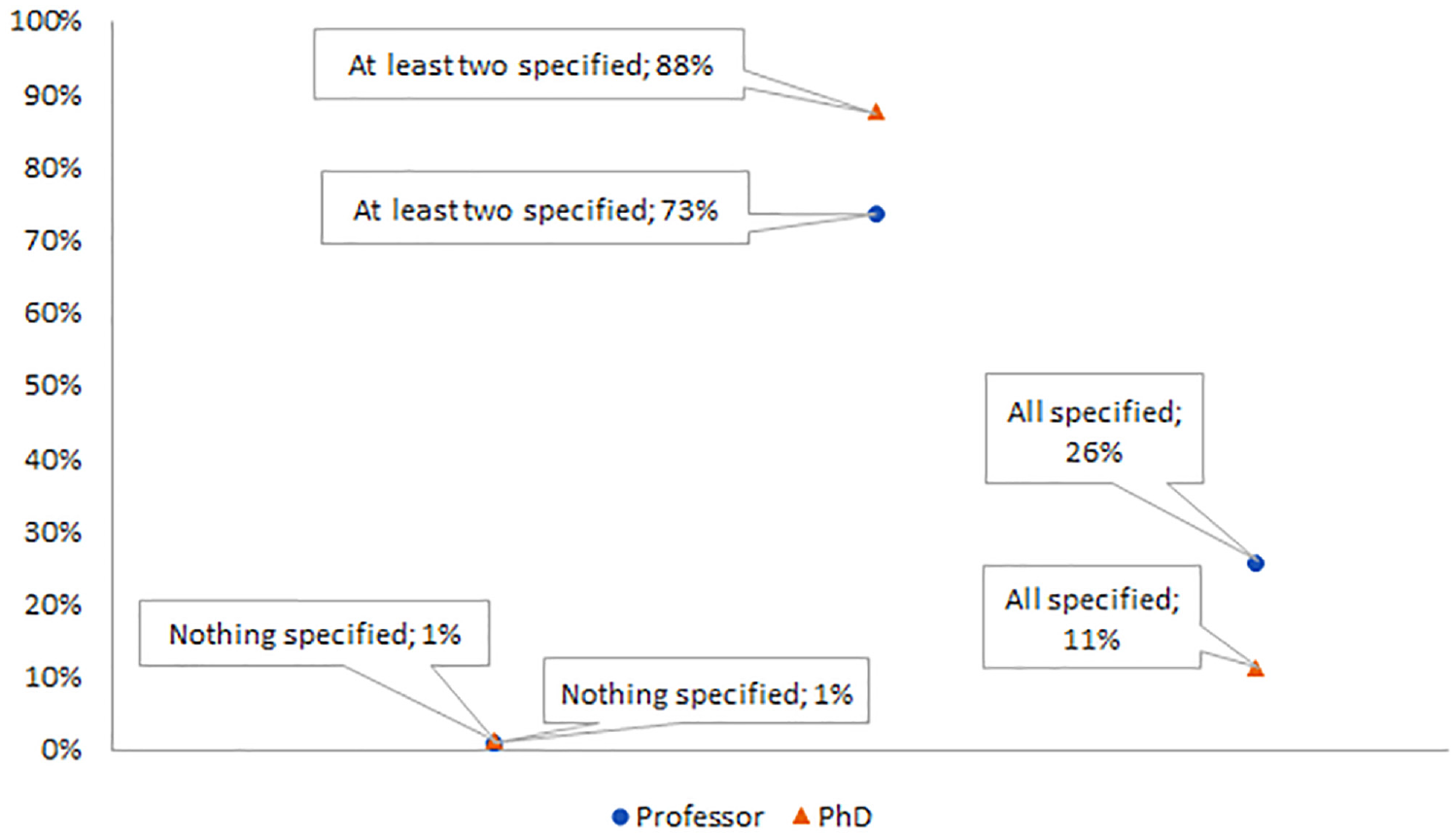
Available information on institutional websites in relation to the online presence of scientists and academic degree: additional online presence on a professional networking site.
When the sample as a whole is considered, a clear difference emerges: faculty members who additionally maintain a profile on a professional networking site provide more information on their institutional homepages compared to faculty members, who only have an online presence on an institutional website. Therefore, hypothesis 3 can be confirmed. However, these differences disappear when distinguishing by academic degree. Professors and PhD holders do not differ greatly in their inclination to provide information – regardless of whether they are only represented on institutional websites or also have a profile on a professional networking site.
The results of this article thus show differences, but more important, they reveal an apparently underdeveloped policy area of academic institutions. Even though the CV can be perceived as an academic identity and a way of documenting career progress and accomplishments, only just under 40% of faculty members provide one on institutional websites. Publications as well as listed research projects are considered to legitimise research activities. In addition, we assumed that highly scientific productivity in the form of publications in early career phases leads to a longer tenure in the academic sector. However, the results show that publications as well as research projects are not always listed on institutional websites (just under 46% and 27% respectively). Although less-established scientists should be present for further career steps, our findings show that they are hardly on the websites of universities. Most of them are not found to present themselves or their competencies and accomplishments. Due to this limited online presentation of faculty members on institutional websites, it is not surprising that 78% of the observed scientists’ resort to professional networking sites to increase visibility, especially of their publications. Regardless of discipline and academic position, it is evident that a stronger and more detailed self-presentation takes place on these domains.
6. Discussion and conclusion
This article investigated the online presence of less-established (PhD holders) and established faculty members (professors) on institutional websites and professional networking sites in the disciplines of physics, biology and chemistry at universities in Lower Saxony, Germany. The content of the websites was classified according to whether a CV was available and whether a list of publications and research projects was provided. Based on Bourdieu’s field theory [32] and previous research, we assumed that the Internet provides a supportive context for increasing a scientist’s visibility and recognition in the scientific community, and so do online presences on both types of websites. For this purpose, we tested three hypotheses. First, we investigated the relationship between academic position and the completeness of an online presence on institutional websites. Second, we examined the online presence of both status groups on professional networking sites. Third, we compared the information available on institutional websites in relation to that of an online presence on a professional networking site. Previous empirical studies [12,14,19,20] indicated that a growing number of scientists have an online presence, especially on social networking sites such as Twitter, as well as on academic ones such as ResearchGate, and professional platforms such as LinkedIn. Scientists use these sites for self-presentation, the dissemination of research results, and to follow the research of others. However, there is also evidence that they are sceptical of these professional networking sites [9,13,20] and thus maintaining an informative online presence on an institutional domain is associated with a higher credibility regarding the scientists and their host institutions.
Our results show a high proportion of rudimentary online presentations by faculty members on institutional domains. We only found a small proportion with more than their contact details supplied, and less than half of the sample provide CVs and publication lists, which is in line with previous research [2,3,21]. Remarkably, a greater number of established scientists offer more records of accomplishment than less-established scientists do, even if an online presence is particularly obligatory for those who are seeking their next appointment, or a permanent, tenured or more attractive position [2]. Regardless of discipline and academic position, in our sample, it appears that faculty members are more often fully represented on professional networking sites. This supports studies previously conducted by Hyland [2,24] and Jordan [10]. However, while scientists’ scepticism regarding an online presence might explain to some extent such bold personal websites on institutional domains and differences concerning websites’ contents, especially in the discipline of chemistry, it is unclear why faculty members in our sample persistently offer only basic information on institutional websites. If the Internet is a supportive device for increasing the visibility of scientists, one could say that an institutional website provides an ideal opportunity to push them into the light and make them shine. However, if we find that established faculty members, but not less-established ones, are represented on institutional websites, the latter are less noticeable and thus hidden in the light. From an individual point of view and in the interest of scientists they should be present on both types of websites to the same degree. The sparse presence on institutional websites thus might have other reasons, such as institutions’ handling of personal websites on their domains.
The last point becomes pressing if we consider that especially in times of digitalization and the growing importance of international collaboration and cooperation for research projects, an online presence for academics is indispensable. The institutional support of scientists’ online presence can boost the scientists’ and their host institutions’ visibility [2,8]. In particular, the accomplishments of each faculty member contribute to the standing and visibility of universities. This becomes particularly evident in Thelwall’s study [37], showing that links to British university websites correlate with their research productivity, and the investigation by Thelwall and Harries [38], which indicates that most productive universities increasingly include online links to published papers. Against this background, it is remarkable how rudimentarily the online presentation of faculty members on institutional websites in our sample is – or is not – taking place. One could say the examined university domains are not fully exploited to represent their impact on science, as well as not being a supportive environment for faculty members, especially for less-established scientists. They restrict the visibility of affiliated scientists to others, at least on institutional domains, which might slow down their career opportunities and make their shift to professional networking sites inevitable. Concisely, less-established scientists are thus caught between striving for academic recognition and forfeiting the credibility of their academic accomplishments through information on professional networking sites, which cannot be verified through entries on institutional websites. University managements thus might revise their online strategies and offer more opportunities and service for their faculty members to present themselves. This omission should be rectified for newly recruited and existing faculty members and to hold scientists.
A limiting factor of our study is the sample size, which only allows for comprehensive conclusions about faculty members’ online presence in the federal state of Lower Saxony. However, all the observed scientists are faculty members in different academic positions which also can be found in other federal states. In this respect, the findings should be generalizable for Germany. But scientists’ online presence might be different in other countries. In addition, some university websites only offer a small amount of information about their faculty members. For this reason, no conclusions can be drawn about any specific university location. Furthermore, one should note that all three disciplines are fields in which research is often conducted in large groups. Therefore, this might affect detailed representations of publications and the research projects of single scientists. It is possible that outcomes are more likely to be presented on pages belonging to entire laboratories than on the individual pages of faculty members. Nonetheless, it is still an open question as to why the online presentations of established and less-established scientists vary and how to explain the disciplinary differences.
Further research should investigate what factors condition this rudimentary online presentation of academic staff on institutional websites. On one hand, it can be assumed that the voluntary nature of providing information means that many scientists do not make use of this opportunity. On the other hand, an administrative problem can also be suspected. A lack of services and information about the possibilities for designing one’s own website, or a lack of guidance in the form of templates or similar about what information is desired on institutional websites, may be responsible for the low number of profile pages.
Supplemental Material
sj-docx-1-jis-10.1177_01655515221137878 – Supplemental material for Hidden in the light: Scientists’ online presence on institutional websites and professional networking sites
Supplemental material, sj-docx-1-jis-10.1177_01655515221137878 for Hidden in the light: Scientists’ online presence on institutional websites and professional networking sites by Laura Paruschke and Axel Philipps in Journal of Information Science
Footnotes
Acknowledgements
The authors thank Eva Barlösius for constructive comments on previous versions of the paper as well as Sherin Al Aoua, Viktoria Fixel, Malin Sappa, and Leonie Weißenborn for helping us to collect the data.
Declaration of conflicting interests
The author(s) declared no potential conflicts of interest with respect to the research, authorship and/or publication of this article.
Funding
The author(s) received no financial support for the research, authorship and/or publication of this article.
Supplemental material
Supplemental material for this article is available online.
Notes

References
Supplementary Material
Please find the following supplemental material available below.
For Open Access articles published under a Creative Commons License, all supplemental material carries the same license as the article it is associated with.
For non-Open Access articles published, all supplemental material carries a non-exclusive license, and permission requests for re-use of supplemental material or any part of supplemental material shall be sent directly to the copyright owner as specified in the copyright notice associated with the article.
