




Abstract
The scholarly publication landscape continues to grow in complexity, presenting researchers with ever-increasing dilemmas regarding journal choice. However, research into the decision-making processes associated with journal choice is limited. This article contributes by reporting on an international survey of researchers in various disciplines and with varying levels of experience. The study examines the extent to which various journal characteristics affect journal selection, perceptions of the extent to which university and national research policies impact on their journal choice, and the influence of academics’ familiarity, confidence and objectives on journal choice. The most important factors influencing journal choice were as follows: reliability of reviewing, usefulness of reviewers’ feedback, the reputation of the journal and confidence that their article is in scope for the journal. Publishing productivity, publishing experience, researcher role and discipline had little impact on the ranking of journal choice factors, suggesting that the research community is homogeneous.
1. Introduction
In academia, the phrase ‘publish or perish’ is more than a pithy witticism – it reflects the reality that researchers are under immense pressure to continuously produce outputs ([1], p.1). Academics’ careers can be significantly influenced by the academic journal in which they choose to publish their research. However, with the significant increase in the number of journals, and journal types, and changes in the coverage and standing of some established journals, it is difficult for even experienced researchers to make sound journal choice decisions. These changes are driven by new models of publishing, and increased pressure upon academics to publish in ‘high ranking’ journals, coupled with increased interdisciplinarity and internationalisation of research and publishing.
With respect to new models of publishing, open access publishing (OAP) has spawned many additional journals. Academics’ attitudes towards OAP vary depending on the quality and reputation of the journal and its impact factor [2], audience accessibility [3] and support from their universities for the payment of OAP fees. Journal ranking has also become more important. Researchers have always shared notions of the ‘most highly regarded’ journals in their field, and Journal Citation Reports (JCR), now managed by Clarivate Analytics, has offered a journal ranking service since 1955. Elsevier’s Scopus abstract and citation database, launched in 2004, also includes the following metrics: SCImago Journal Rank (SJR), CiteScore and Source-Normalised Impact per Paper (SNIP). Some countries also have approved journal lists (e.g. ERA (Excellence for Research for Australia)), and other ranking schemes are created by disciplinary associations; these are often country specific, such as the list compiled by the Chartered Association of Business Schools. All of these schemes have a significant influence on assessment of the published outputs of academics and other researchers, and it is not unusual for the rankings of specific articles or journals to vary between schemes.
In addition, researchers are coming under increasing pressure from their universities and funders to engage in interdisciplinary research projects. With such projects, a research team is often faced with evaluating the relative merits of publishing in journals in different disciplines [4]. Finally, the internationalisation of academic journals means that the boundaries are being continually re-drawn as to the most feasible and efficacious journal choice, taking into account, for instance, not only the subject area [5] but also the language of publication of the journal [6].
In this evolving landscape, academics are coming under increasing pressure from their universities, policy bodies and other research funders to publish in high-ranking journals, yet, such journals may have acceptance rates of around 5% [7,8], and as Nygaard [9] suggests ‘there seems to be more perishing than publishing for the majority of research academics’ (p.519). Nygaard [9] summarises the potential reasons for this situation and proposes an academic literacy approach that focuses on ‘the issues of identity, multiple communities, and different institutional expectations (at the local, national, and international levels)’. However, McCulloch [10], adopting a more critical stance, argues that university research evaluation schemes are predicated on an unrealistic understanding of knowledge creation and pressurise academics towards genres and publication venues that conflict with disciplinary traditions.
Given this complex and ever-changing context, it is important to understand how researchers make their journal selection decisions. First and foremost, such insights would be of particular value to new researchers in helping them to learn to navigate the complexities of journal selection. In addition, such research may open up possibilities and considerations for established researchers and research teams, who are often navigating a complex and dynamic scholarly communication environment. As Mabe and Mulligan ([11] p.290) suggested (in the context of OAP) ‘changes to the scholarly communication business model will only be successful if they continue to satisfy the underlying motivations and needs of researchers’. Research on the factors that affect academics’ journal choice has received some attention, but there is ample scope for further exploration of this process. This research, then, aims to contribute to knowledge regarding the factors that influence researchers’ journal selection decisions. More specifically, the objectives are as follows:
To profile the relative importance of various factors in academics’ journal selection decisions.
To explore the extent to which the relative importance of these factors is dependent on publishing productivity, length of publishing experience, researcher role, and discipline.
2. Literature review
2.1. Previous research into the factors that affect academic journal choice
Previous research has explored various aspects of the changing nature of the scholarly communication landscape. Table 1 offers a summary of journal selection factors and their relative ranking across seven studies and eight data sets. A maximum of seven factors is included for each study; these factors are listed in their order of relative importance for each of the studies, with most important at the top of the list and least important at the bottom. Factor names vary between studies, but in the interest of comparability, terminology has been standardised (e.g. ‘Journal reputation’ has been used for all instances of ‘Journal Reputation’ and ‘Reputation of the Journal’). Most importantly, the inclusion and ranking of factors varies between studies. The frequency of inclusion of the factors across the eight studies is as follows: journal reputation (6), journal impact factor (6), publication speed (4), editor/editorial board reputation (4), peer review quality (4), reviewing speed (3), fit with journal scope (3) and included in abstracting and indexing databases (3). In terms of the factors ranked in the first two positions in the ranking list, the scores are as follows: journal reputation (4), fit with journal scope (4), peer review quality (4), refereeing speed (1) and impact factor (1). This profiling demonstrates that there is a considerable level of variation both with regard to the focus of the various studies and on the relative ranking of the factors.
Most important factors influencing journal selection.
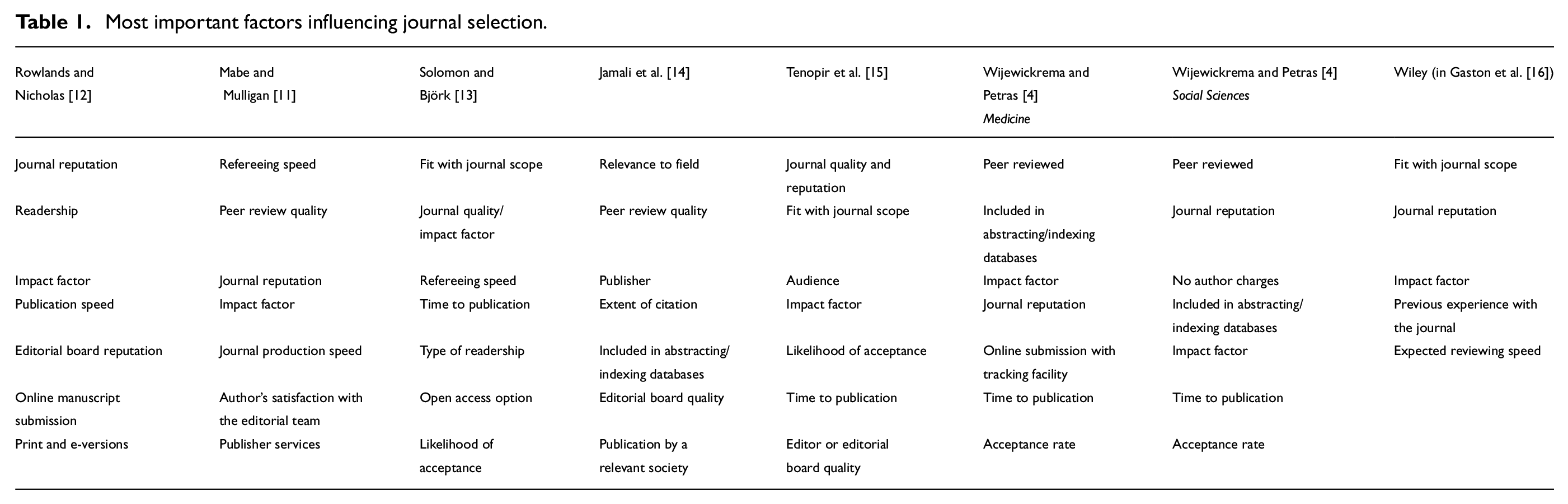
Two studies stand out from those listed in Table 1 for their scope and significance: Tenopir et al. [15] and Rowlands and Nicholas [12]. Tenopir et al. [15] examined the motivations (factors) that influenced researchers’ choice of journal, across four large North American research universities. Various demographic analyses were reported, including the relative importance (on the basis of means) of the various factors relative to each discipline, and their relative importance to different categories of researchers. Across the whole sample, the four most important journal attributes were quality and reputation of journal, fit with scope of journal, audience and impact factor; open access was the least important attribute. As part of a wider study, Rowlands and Nicholas [12] also collected data on the relative importance of decision factors from over 5000 senior researchers and found that the four most important journal attributes were as follows: (1) journal reputation, (2) readership, (3) impact factor and (4) speed of publication.
Other studies demonstrate that journal choice, and their relative rankings, are affected by contextual issues. For example, Wijewickrema and Petras’ [4] comparative study of medicine and the social sciences showed that, while both groups recognised the importance of peer review, researchers in medicine gave significantly greater consideration to impact factors, inclusion of the journal in abstracting and indexing services, publisher’s prestige and online submission with tracking facility. Tenopir et al. [15] found significant differences on the ranking of journal attributes on the basis of discipline and position type. Other researchers have focussed on journal choice factors (JCFs) associated with specific groups or contexts such as: early career researchers [17], OAP [13] and in specific countries (Ghana) [18]. Early career researchers, for instance, are reluctant to engage with the opportunities offered by open science, open access and social media, since they are constrained by the conventional measures of research success, namely, publishing as many articles as possible in high impact factor journals, because this enhances their reputation and increases their employment opportunities [17]. Two studies report on the factors affecting journal choice in the context of OAP. Solomon and Björk [13], in a study that focused on article processing charges and their variation according to disciplinary categories, identified that the top three factors influencing journal choice were as follows: fit with scope, quality/impact and speed of review. They also found that some authors chose to publish open access because they had difficulty in getting their article published elsewhere; this might be regarded as an additional choice factor. Kurt [19] identified four drivers that lead authors to publish in ‘predatory’ journals. These include the following: (1) social identity threat (identifying with the editors of the journal, through shared country, religion and/or language); (2) unawareness (aggressive advertising, being flattered, university endorsement); (3) high pressure (tenure issues, need for a route to rapid publication); and (4) lack of research proficiency in research ethics and methodologies. Adjei and Owusu-Ansah’s [18] study in Ghana suggested that researchers’ journal selection decisions were influenced by (in order of importance) the following: journal reputation, open access or subscription access, journal is free to publish, journal acceptance rate, journal is online, journal indexing and journal publication frequency. Exploring another aspect, Gaston et al. [16] focused on the effect of journal reputation, and impact factor, on journal submissions. Using 10 years of submission data from over a thousand journals, they confirmed that changes in impact factor and retractions were associated with changes in the number of submissions to a specific journal.
Overall, while there is a growing body of research into the factors that influence researchers’ journal selection decisions, there is scope for further research into the decision-making factors and the relationships between them. Thus, this article contributes by reporting on a recent survey, which, unlike some of the earlier work (e.g. [15,18]), is international in scope and not restricted to a specific country. In addition, this study is broader in scope in relation to the number of factors that it considers, relative to some other studies (e.g. [7,8,13,16]). Finally, the questions are generic as to journal types, and researcher disciplines and career stages, in contrast to other studies [7,17,13,19,20]. In addition, this article not only offers a ranking of the journal characteristics that influence journal selection but also explores the influence of university and national policies, as well as the influence of the researchers’ familiarity and confidence with their selected journal, and their objectives in undertaking scholarly publication. Finally, this research investigates and reports on the extent to which the relative importance of journal selection factors is dependent on publishing productivity, length of publishing experience, researcher role and discipline.
3. Methodology
3.1. Process
This research uses an international survey, facilitated by the academic publishers, Taylor & Francis. Adopting a survey approach supported the creation of a significant data set across countries and disciplines, providing evidence of value for Taylor & Francis and other publishers, as well informing the management of research and publishing in universities and other settings.
The ‘Factors Influencing Researchers’ Journal Selection Decisions Survey’ was composed of four sections (‘Journal characteristics that influence your journal choice’; ‘Your perspectives regarding what is expected of you in terms of scholarly publication’; ‘Your experience of, and engagement with, scholarly publication’; and ‘About you’). These sections contained 49 Likert-type scale style questions; all of these questions used a 10-point scale to measure the participants’ views of the relative importance of the various factors. The questionnaire, hosted on SurveyGizmo, was piloted with Taylor & Francis staff and academics from a variety of universities, and disciplines, to check for accuracy, clarity and questionnaire logic. Invitations to participate in the survey and two reminder emails were sent to academics on the Taylor & Francis mailing list using Salesforce Marketing Cloud, between July and August 2019.
3.2. Participants
The survey was sent to 73,000 corresponding authors. Ultimately, 1085 questionnaires were returned, a response rate of 1.5%, consistent with other Taylor & Francis surveys sent to a general sample of authors. One limitation of the survey is that respondents were all Taylor & Francis reviewers, authors and/or editors. This might have influenced the factors that they regarded as more or less important. However, Taylor & Francis is a large international academic journal publisher, with an inter-disciplinary portfolio of journals. The nature of the contact database also affects the geographical spread of respondents. In this study, the geographical distribution of respondents is such that data have been collected from academics in a wide range of countries. More specifically, 20.4% of the respondents are from the United States, 6.4% each from India and the UK, and 4.9% from Australia. Other countries that were well represented were Italy (4.1%), Germany (3.3%), China (3.1%), Canada (3.0%) and Spain (2.4%).
3.3. Data analysis
Data were entered into IBM SPSS Statistics 26. The data set was initially inspected for errors and out-of-range values in each variable. Confidence intervals were calculated for each question to ensure that the response sample provided an adequate representation of the population.
First, the demographic statistics were analysed, in order to profile the sample. Next, descriptive statistics were calculated for the Likert-type style questions in the three main sections of the questionnaire (covering the influence of: journal characteristics, university and national policies, and respondent’s familiarity, confidence and objectives with regard to scholarly publication). Finally, independent samples t-tests and one-way between-groups analysis of variance (ANOVA) with Hochberg’s GT2 (chosen because of the different group sizes) post hoc tests were conducted to compare mean scores to explore the relationship between the respondents’ demographics (publishing productivity, length of publishing experience, researcher role and discipline) on the relative importance of the various JCFs. The assumptions of normality of distribution and equal variance have been met.
4. Findings
4.1. Demographic profile
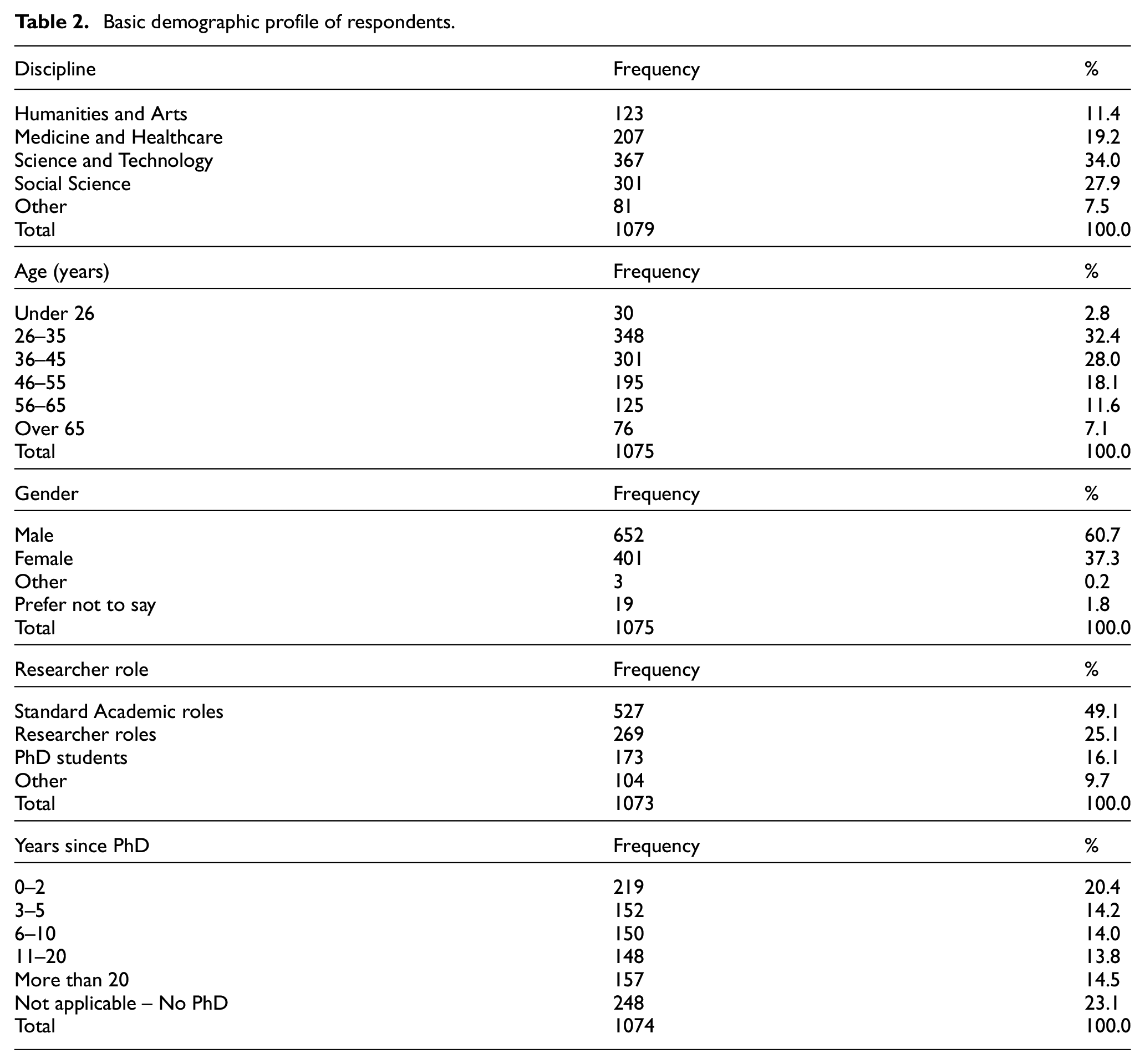
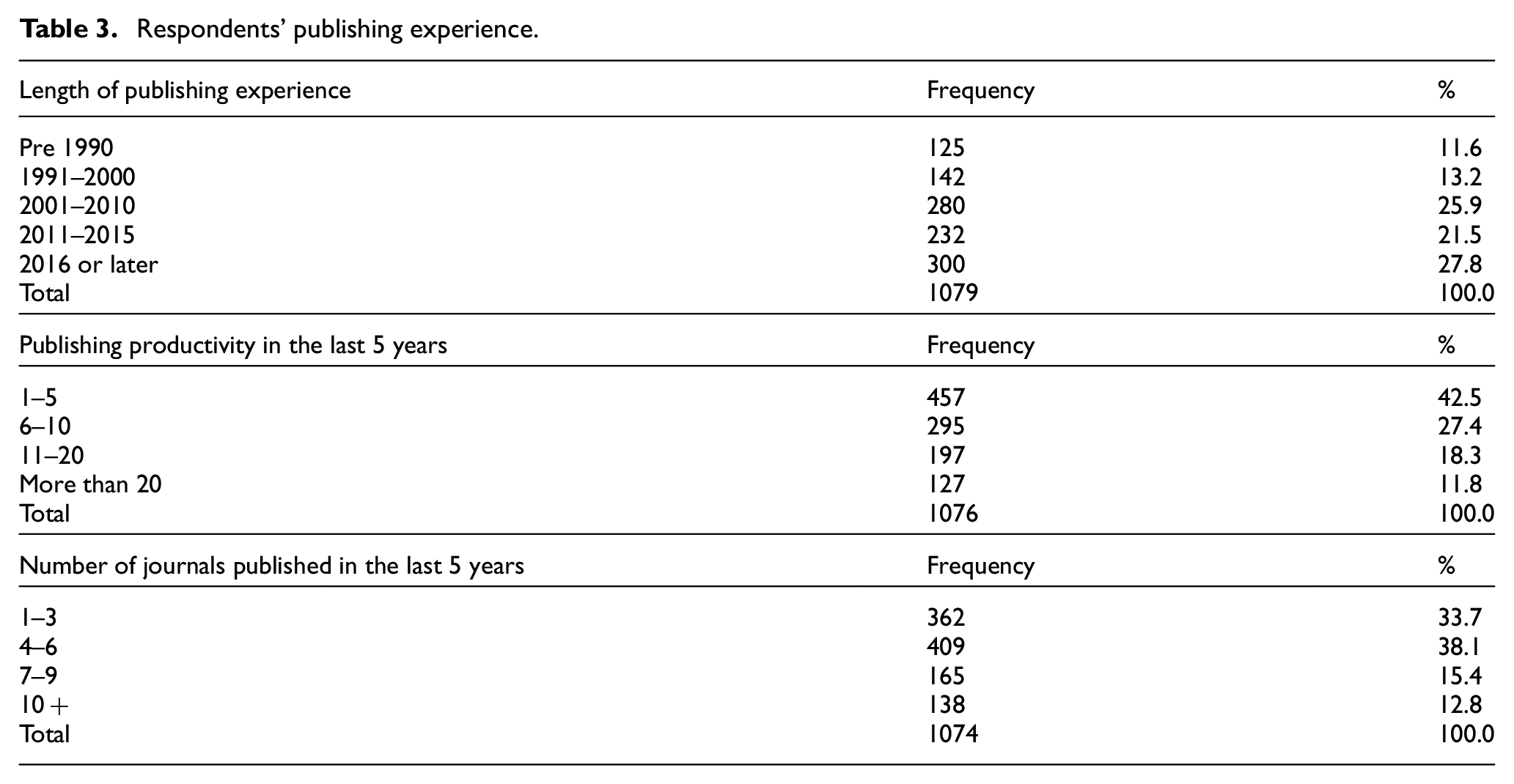
This section provides a summary of the demographic profile of the respondents which, as well as providing an overview of respondents’ experience of scholarly publishing, also presents a number of other aspects of their profile. Table 2 shows that the sample has a higher number of academics working in Science and Technology (S&T) (34.0%) and Social Sciences (27.9%) than in Medicine and Healthcare (19.2%) and Humanities and Arts (H&A) (11.4%); 7.5% did not specify their discipline. In terms of gender, 60.7% were male and 37.3% were female (2.1% did not indicate their gender). As for age, 60.4% were between 26 and 45 years, with 29.7% between 46 and 65 years. Regarding the period since respondents completed their PhD, there was a good spread, although just under half (48.6%) had completed their PhD in the last 10 years. Other questions focussed on publication experience. Table 3 shows that there is a good spread of respondents in relation to the length of publishing experience and their recent publishing productivity. 11.8% of respondents have published more than 20 articles in the last 5 years, while 57.5% had published six or more articles in the last 5 years. In terms of the number of different journals in which respondents had published in the last 5 years, 71.8% had published in six or less journals in the previous 5 years, suggesting that many respondents have ‘favourite’ journals, for which they may know the editor, reviewers and other authors.
Basic demographic profile of respondents.
Respondents’ publishing experience.
4.2. Journal characteristics and their influence on journal selection
This section summarises responses on the extent to which various journal characteristics influence respondents’ selection of a journal. These characteristics are clustered into those associated with the journal’s reviewing process, authority, discoverability and other aspects (including scope, intellectual property practices and the opportunity to deposit research data) (Table 4). In terms of respondents’expectations regarding the reviewing process, the reliability of the reviewing process and the usefulness of the reviewers’ feedback were regarded as paramount, followed by the helpfulness of editor’s comments. Respondents were less concerned with the speed of the process. Speed was not a central concern, but respondents were more concerned with the speed with which their articles appeared online than the speed of the availability of their article in print. Not surprisingly, first and second among the factors relating to authority are the journal’s reputation in specific academic communities and the journal’s prestige. Impact factors were also rated relatively highly, but the reputation of the editor and the editorial board and the publisher’s prestige, all of which have the potential to contribute to reputation, prestige and impact factor, are regarded as less important. Perceived discoverability of a journal’s articles in full-text databases or through Google Scholar was regarded as relatively important, but less important than the reputation and prestige of the journal. The availability of open access publication is rated considerably lower than many other influencing factors. Under other aspects of the journal, consistent with the high response given to ‘the reputation in my academic community’, the most highly ranked factor in this cluster is ‘the scope of the journal within your discipline’. However, interestingly, ‘the interdisciplinarity of the journal’ was also identified as important. Finally, respondents appear to be indifferent as to whether the journals to which they submit have an editor or editorial board members located in their country.
The influence of journal characteristics on journal selection.
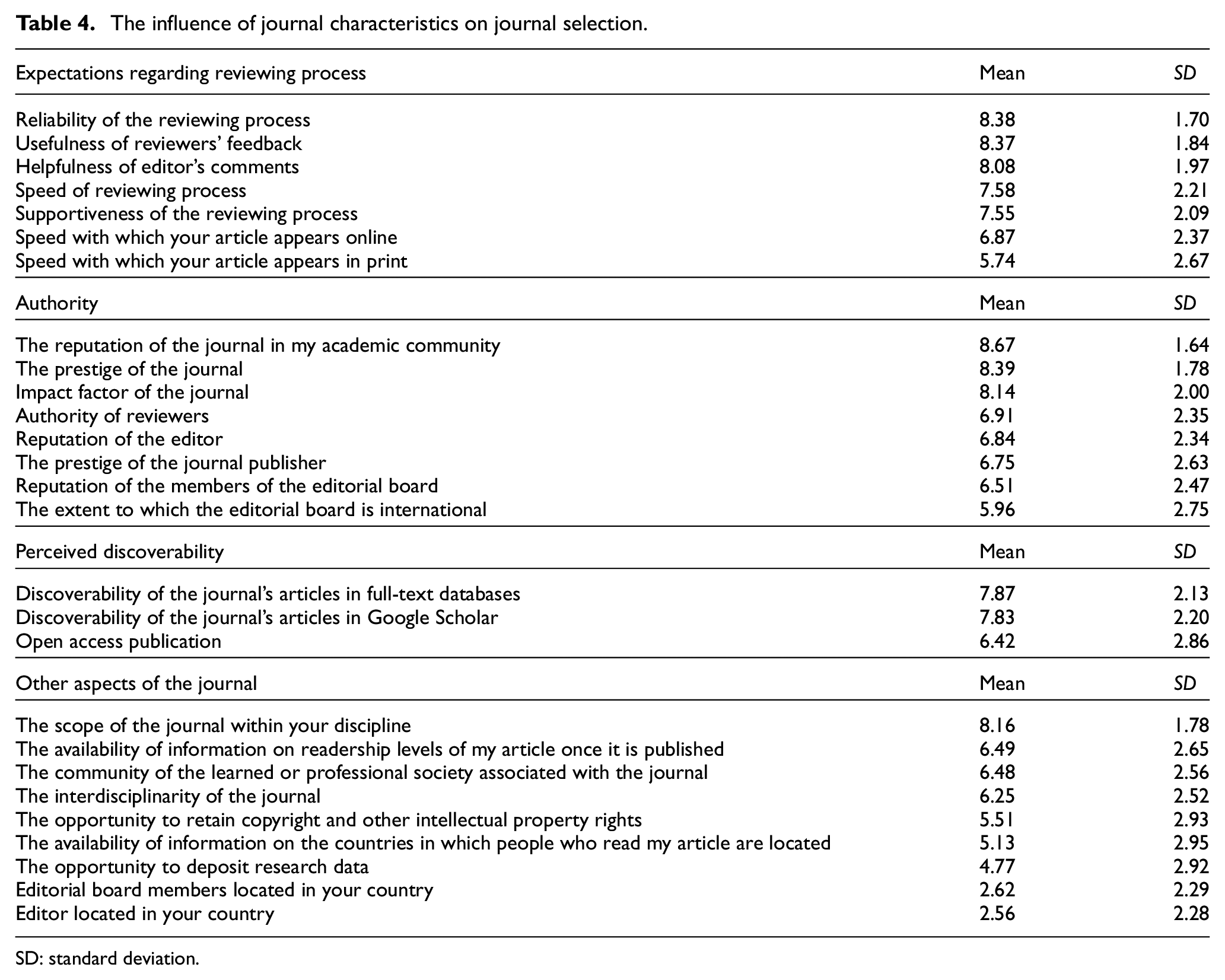
SD: standard deviation.
4.3. University and national policies and their influence on journal selection
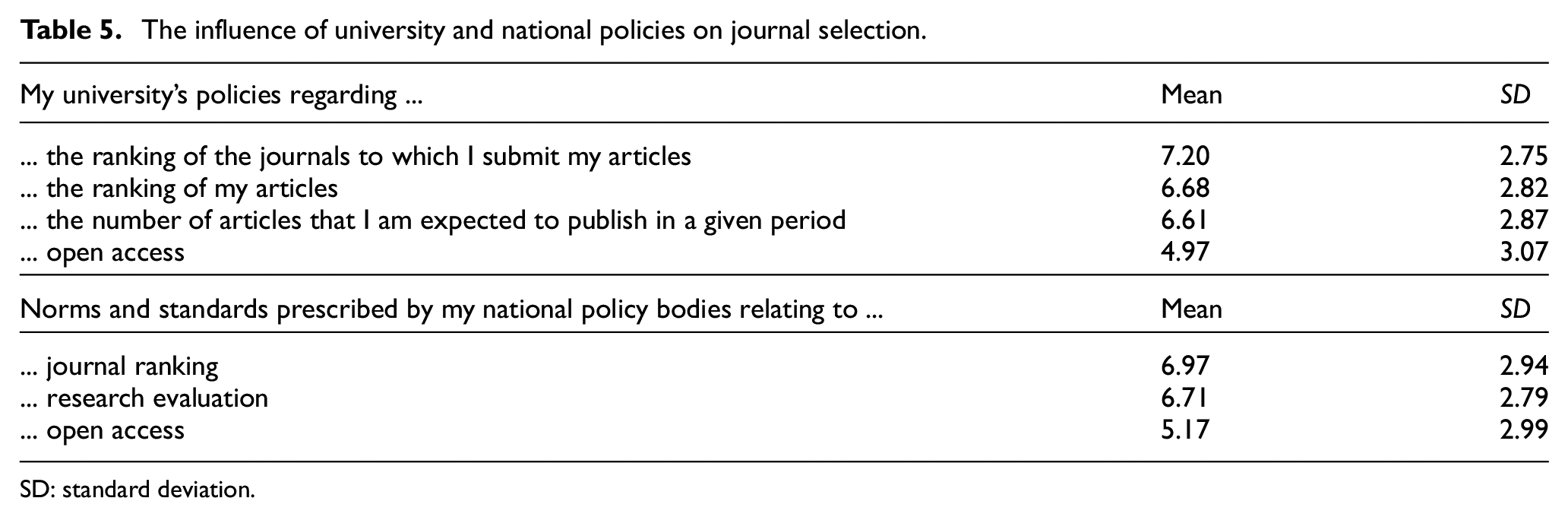
Table 5 suggests that researchers are conscious of pressure from their universities in terms of the ranking of journals to which they submit and, to a lesser extent, the ranking of their articles. They also feel that they are expected to consider the norms and standards associated with national policy bodies. Researchers receiving significant funding from national funding bodies and associated organisations are more probably to be aware of these expectations.
The influence of university and national policies on journal selection.
SD: standard deviation.
4.4. Academics’ views on the extent to which their familiarity, confidence and objectives influence their journal choice
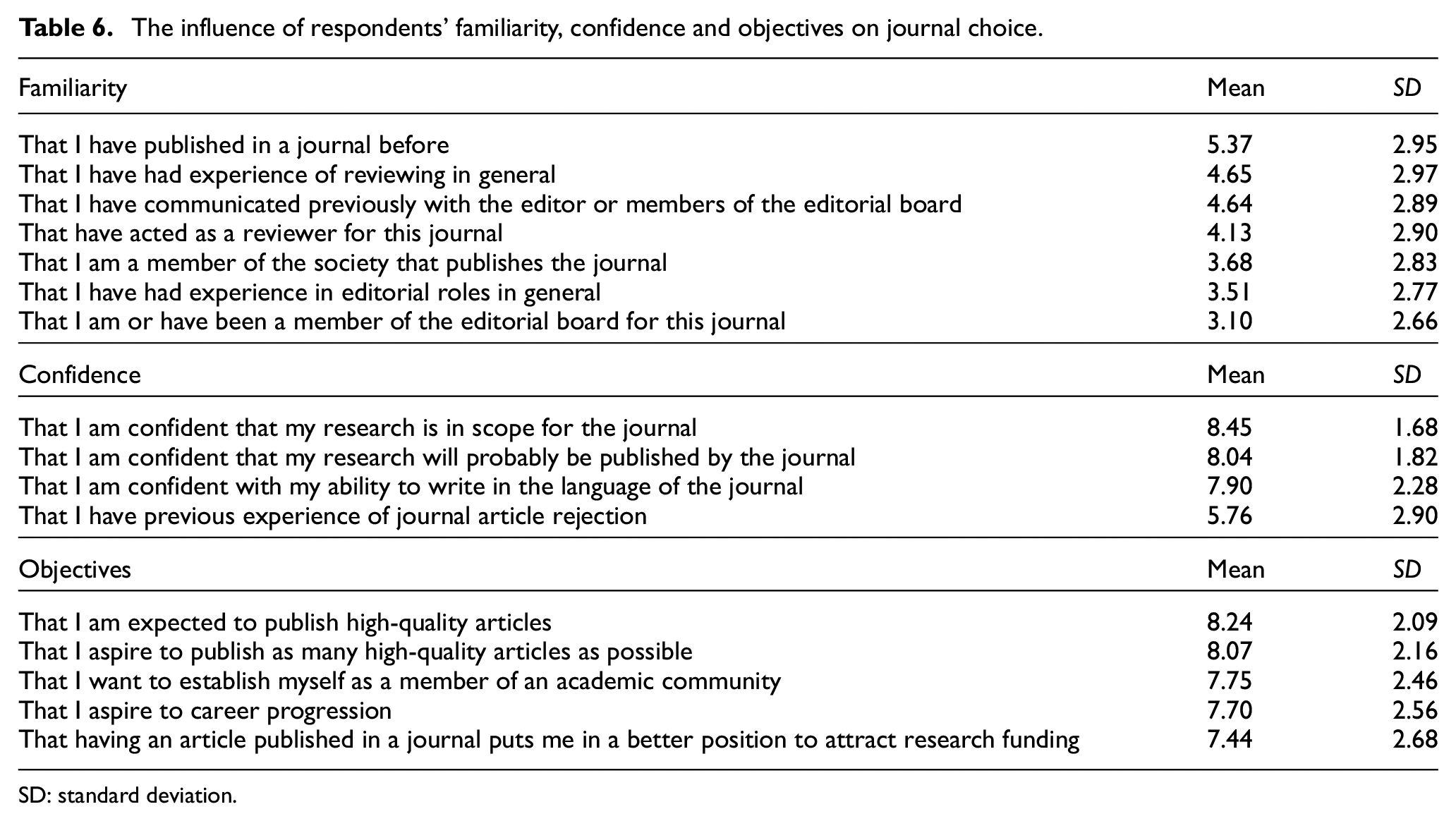
Finally, respondents were asked to offer opinions on how aspects of their experience in the realm of academic publishing influenced their choice of journal (Table 6). They were asked to respond to statements grouped into three clusters of factors associated, respectively, with: their familiarity with the journal publication process; their confidence in their ability to make the best journal choices; and their objectives in the realm of scholarly publication. It is important not to interpret the data in this section as representing a demographic profile of the sample, but to keep the focus on the extent to which these various characteristics influence journal choice. On this basis, it is evident that the factors under familiarity are ranked relatively low compared with the factors under confidence and objectives. This suggests that, for example, experience of reviewing, being a member of a society that publishes a journal, or acting as a reviewer for a journal, does not strongly influence journal choice. However, confidence that their research is in scope for a journal and a perceived ability to write in the language of the journal are strong influencers of journal choice decisions. In addition, seeking to meet objectives, either set by the respondents themselves or by others, including publishing high-quality articles, and becoming established as a member of an academic community, also influence journal choice.
The influence of respondents’ familiarity, confidence and objectives on journal choice.
SD: standard deviation.
4.5. Author characteristics that influence the ranking of JCFs
This section uses independent samples t-tests and one-way between-groups ANOVA to explore the effect of a range of demographic variables on the ranking of JCFs. The JCFs, together with their means and other appropriate statistics, are reported in Tables 7–10. Only JCFs that are statistically significant are included in the tables. This leads to a variation in the inclusion of items between the various tables. The tables summarise statistics relating to the effect of a range of different variables on the ranking of JCFs; they include the following: publishing productivity, length of publishing experience, researcher and discipline.
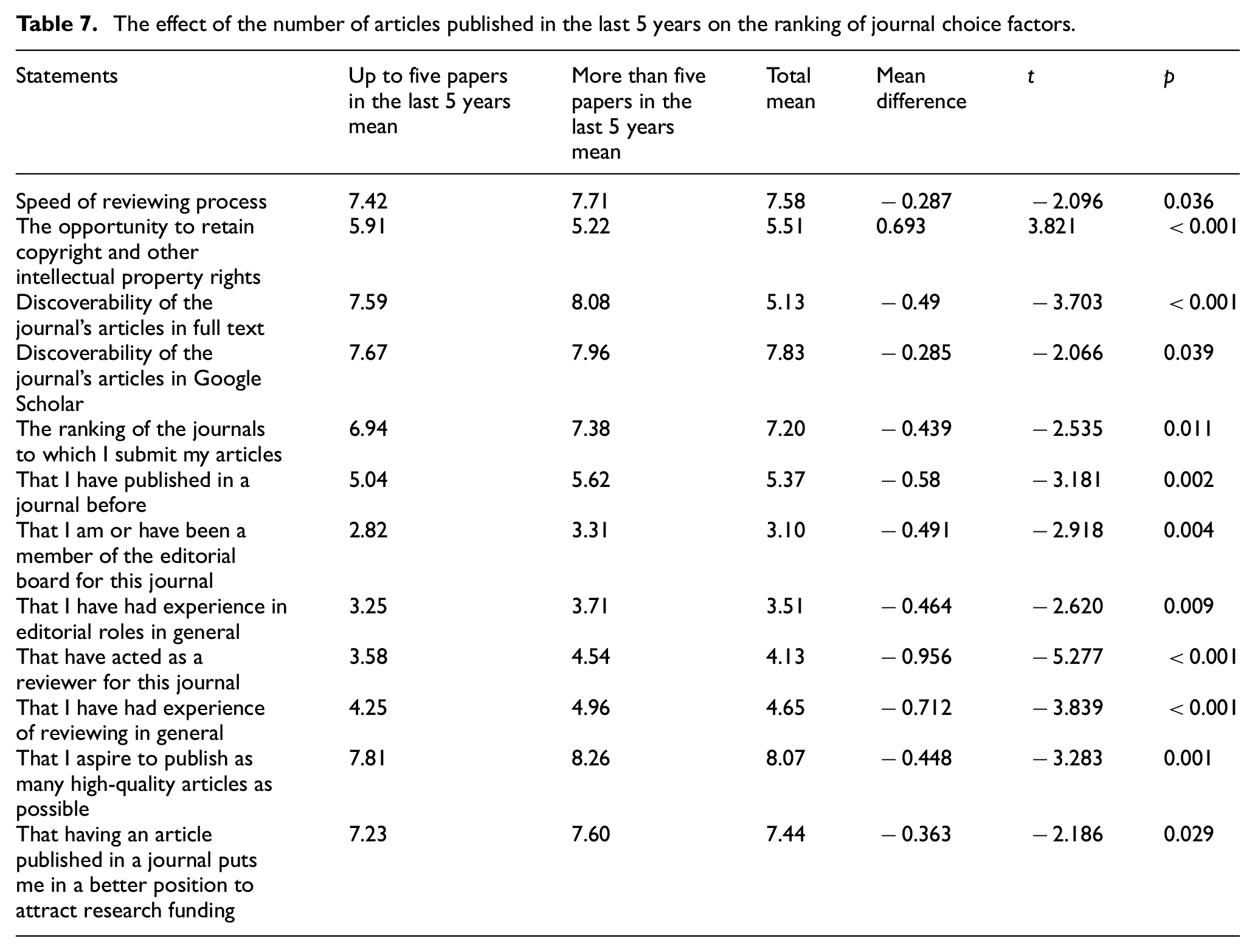
The effect of the number of articles published in the last 5 years on the ranking of journal choice factors.
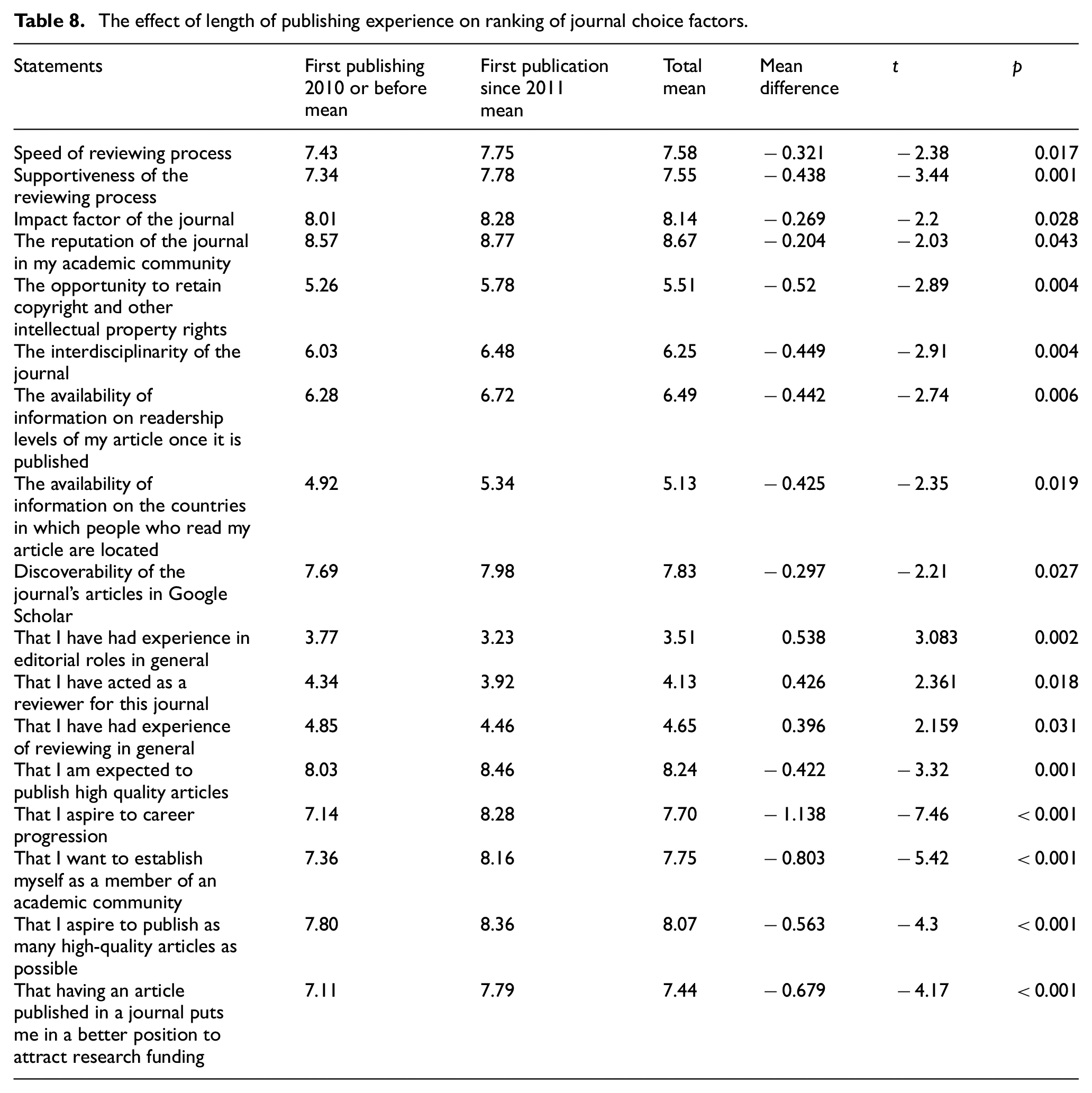
The effect of length of publishing experience on ranking of journal choice factors.
The effect of researcher role on ranking of journal choice factors.
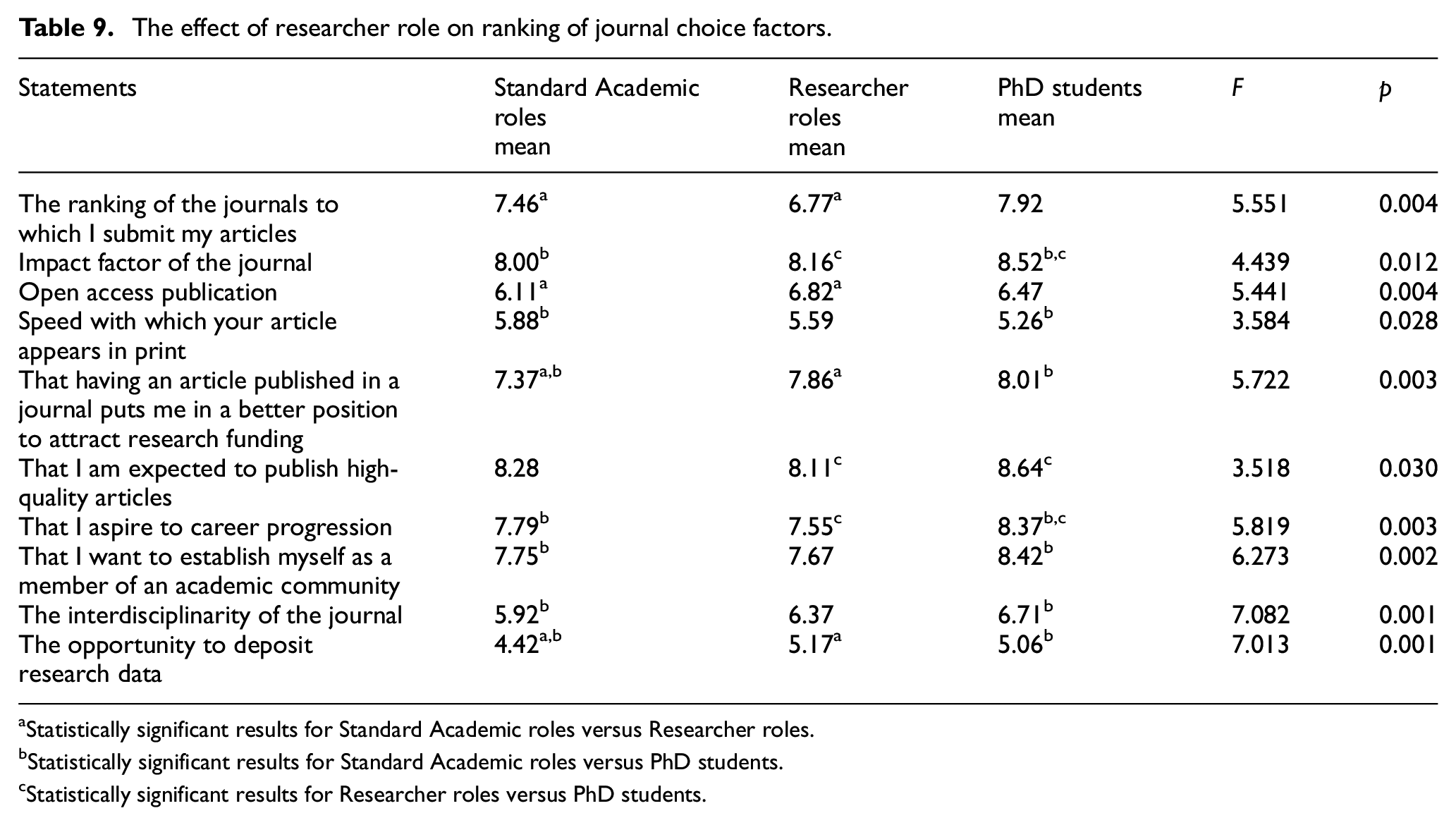
Statistically significant results for Standard Academic roles versus Researcher roles.
Statistically significant results for Standard Academic roles versus PhD students.
Statistically significant results for Researcher roles versus PhD students.
The effect of discipline on ranking of journal choice factors.
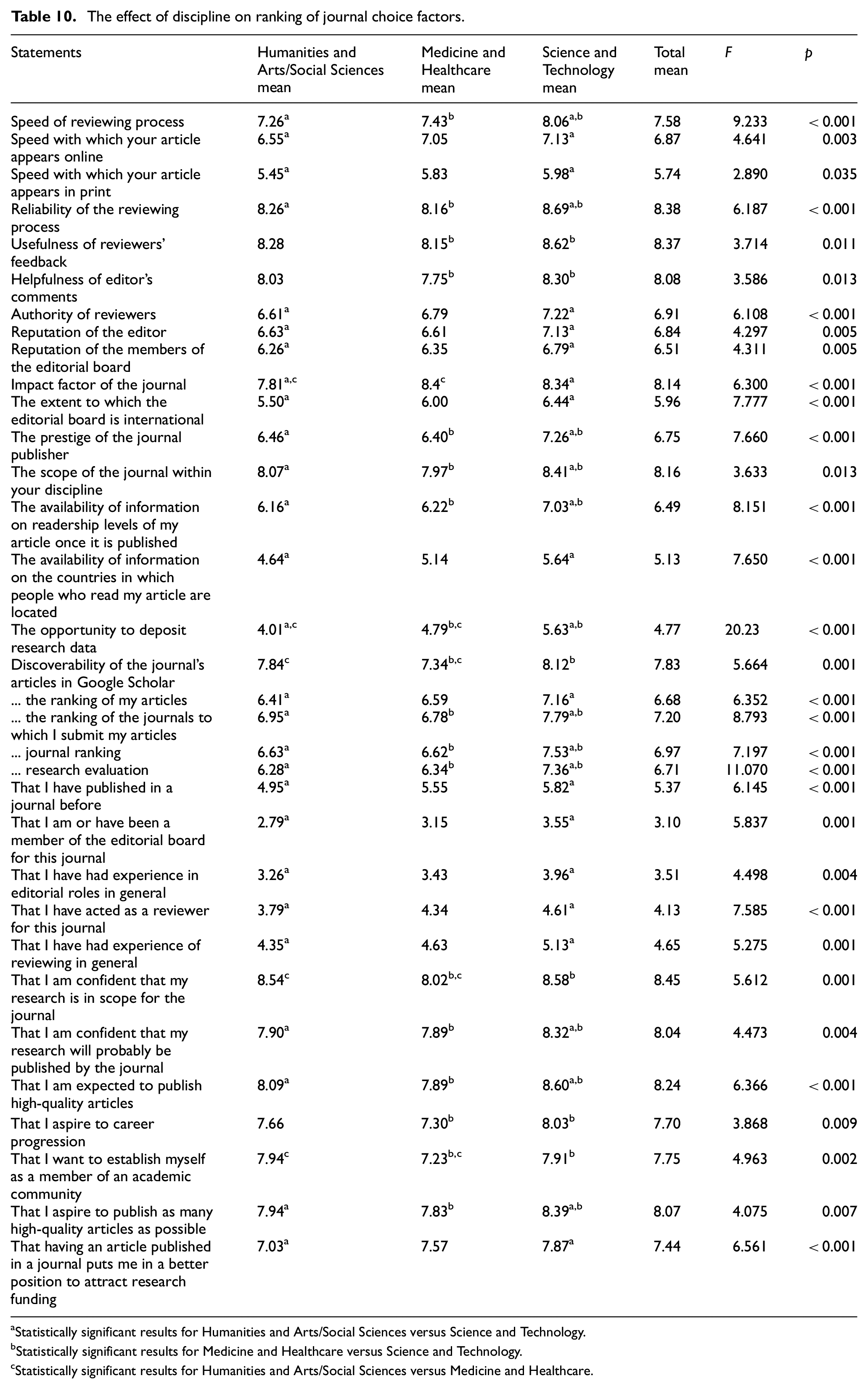
Statistically significant results for Humanities and Arts/Social Sciences versus Science and Technology.
Statistically significant results for Medicine and Healthcare versus Science and Technology.
Statistically significant results for Humanities and Arts/Social Sciences versus Medicine and Healthcare.
Table 7 shows the effect of publishing productivity (the number of articles that an author has published in the last 5 years) on the ranking of JCFs. For example,
Researchers with five publications or less in the last 5 years (lower research productivity) regarded retaining their intellectual property rights as more important in influencing their journal choice (5.91) than those with more publishing experience (higher research productivity) (5.22).
Researchers with higher research productivity rate having acted as a reviewer for a specific journal (4.54) as more important in influencing their journal choice than those with less publishing experience (3.58).
Researchers with higher research productivity rate having experience of reviewing in general (3.31) as being more important in influencing their journal choice than those with less publishing experience (2.82).
Researchers with higher research productivity rate being a member of the editorial board for a journal as being more important in influencing their journal choice than those with less publishing experience.
Examining the effect of length of publishing experience on JCFs, the items showing the most significant differences were associated with career progression, with the highest loadings for these items being associated with respondents whose first publication was in 2011 or later (Table 8). The four items with the largest mean differences in respect to the impact on journal choice were as follows: career progression; establishing themselves as a member of an academic community; having an article published to attract research funding, and aspiring to publish in as many high-quality journals as possible.
In examining the effect of academic role on JCFs (Table 9), one-way between-groups ANOVA was used to compare the differences between the three groups: Standard Academic roles, Research roles and PhD students. As expected, the most marked differences are between the Standard Academic category and PhD students, while those in research roles often returned intermediate scores. Academics are the least interested in the impact factor and open access nature of the journal, while those in Research roles aspire less to career progression and to publish in high-quality journals.
Finally, in respect of discipline (Table 10), one-way between-groups ANOVA was used to compare the differences between the three disciplines on the basis of a pairwise comparison. Statements for H&A are consistently lower than for S&T, demonstrating, overall, that while all factors are seen as important for both disciplines, S&T researchers regard, for example, the reliability of the reviewing process, and the ranking of the journals to which they submit their articles as more important than do H&A researchers. Medicine and Healthcare researchers, in general, regard many of the factors as being of less importance than do researchers in S&T and H&A, although their ranking for some statements is similar to or slightly higher than the ranking for the same statement from S&T and/or H&A scholars.
5. Discussion
This article examines the effect of journal characteristics, university and national policies, respondents’ familiarity, confidence and objectives on journal selection, as well as investigating the effect of publishing productivity, length of publishing experience, researcher role and discipline on the ranking of JCFs. Previous research has investigated some of these factors, but the rapid rate of change, coupled with the limitations in the coverage of previous research, prompted this study. This study embraces, extends and updates lists of journal selection factors from other research (e.g. [4,11,15]). Interestingly, while there is some agreement between previous studies and this study in terms of the inclusion and ranking of JCFs, there are also variations, suggesting that the context of the various studies may be a factor. For example, Tenopir et al. [15] identifies quality and reputation of the journal, fit with scope of the journal, audience and impact factor as being the top four influencers, whereas this study identifies journal reputation, journal prestige, reliability of the revising process and usefulness of reviewers’ feedback as pre-eminent (Table 4). However, consistent with previous studies, publication speed is acknowledged as important in various studies, but, in general, it is not highly ranked [11,12,16]. Finally, the availability of open access publication is not regarded as a priority [13].
Table 5, the influence of university and national policies on journal selection, and Table 6, the influence of various respondent characteristics (familiarity, confidence and objectives with regard to scholarly publication), cover topics that have not been explored in previous research. University policies regarding the ranking of journals and articles, together with the number of articles, are viewed as relatively important, but not as high as, for example, the reputation of a journal in its academic community or the reliability of the reviewing process. This is in line with other research that suggests that researchers have to wrestle with university expectations and their own inclinations in their journal selection decisions [9,10]. Researcher objectives are influenced by their perceptions that they are expected to publish high-quality articles. It is important for them to feel confident that their research is in scope for the journal, and that it will be published by the journal. However, familiarity with the journal in terms of, for instance, having previously published in the journal appears not to be particularly important. This may be because researchers are not committed to one journal but rather develop a familiarity and confidence with regard to a cluster of journals [21,22].
Finally, this research advances previous research by exploring the relative ranking of publishing productivity, length of publishing experience, researcher role and discipline. In relation to productivity, no previous research has examined the impact of this on journal choice processes, but there is previous research on the link between publication rate and other variables such as age and gender [23]. In addition, no previous research has examined the impact of publishing experience on factor ranking, although other studies have examined the ranking of factors by position type, which may have some alignment with length of publishing experience [15]. However, a number of studies have explored the impact of research role and discipline on the relative importance of JCFs. Tenopir et al. [15] focus on a relatively short list (compared with this study) of eight journal attributes and explore their relative importance for the three groups: faculty, postdoc/other and graduate student, and for six discipline groups. Contrary to the findings of this and other research [4,13], their analysis shows that the ranking of their attributes/factors across all six disciplines is relatively consistent.
6. Conclusion
In conclusion, journal choice is becoming an increasingly important and complex decision. In order to successfully manage their portfolio of journals, it is important for publishers and researchers to understand the factors that drive journal choice and their relative significance for different disciplines and other groupings of researchers. This understanding should be informed by ongoing research, so that the optimum solutions for all parties can be achieved. The scholarly publication arena is becoming an increasingly ‘wicked’ problem, with its international scope and powerful interest groups (in the publishing, policy and academic/research arenas). This study provides an international perspective on the factors that affect academics’ choice of the journal to which they will submit. Most importantly, it demonstrates that journal selection is a difficult process and that authors are typically taking a number of factors into account in their journal selection decisions; these include university and national policies, research funding bodies and journal ranking systems, all of which are fluid and evolving. Furthermore, they bring varying levels of experience, competence and personal career objectives to the journal selection process.
This article has its limitations. The research uses an international survey. Such a quantitative technique covering academics in many countries and disciplines can only offer a superficial perspective on decision-making processes. Furthermore, in an international study, it is very easy for some confusion to arise regarding the nature of some of the factors, especially on a topic such as journal choice, where prior studies adopt a casual approach to the definitions of key constructs/choice factors [4,15,17]. In addition, while we have extended the range of factors for choosing a journal beyond that of many previous studies, there are other factors or motivators that may drive journal selection, and some of these merit further investigation. For example, Thompson [24] suggests that the following less common factors may affect journal selection: rapport with journal staff, reliability of the publication, and a desire to support the organisation that sponsors the journal. Other reasons for journal choice include the following: an invitation to submit to a special issue of the journal; rejection from the first choice journal; a desire to establish or continue a professional relationship with a journal editor; and, offering support to a colleague or PhD student. There is, therefore, considerable scope for the development of a more widely shared identification of key JCF’s, possibly leading to a typology of JCF’s, accompanied by consolidation of a consensus regarding the definition of those JCF’s. In addition, future research should delve more deeply into the research impact and assessment policies in different countries and the impact of any differences on journal choice.
The array of factors demonstrates the complexity of journal choice, especially as the scholarly communication environment becomes more complex with constantly evolving models of journal publication as publishers and other stakeholders fight for position, reputation and revenue in a very attractive global marketplace. In addition, it is important to acknowledge that as the publishing arena becomes increasingly competitive, authors are often in a position where they are relatively frequently experiencing rejections from journals, and either subsequently submitting to one or more other journals, or taking advantage of publishers cascading/transfer processes, thereby making the journal choice decision more than once for a specific article. It is quite possible that the factors applied in the various stages of this sequential submission process will vary between stages.
Footnotes
Declaration of conflicting interests
The author(s) declared no potential conflicts of interest with respect to the research, authorship and/or publication of this article.
Funding
The author(s) received no financial support for the research, authorship and/or publication of this article.
