




Abstract
Social media are powerful networking platforms that provide users with significant information opportunities. Despite this, little is known about their impact on job search behaviour. Here, interview (participants = 7), focus group (participants = 6) and survey (n = 558) data supplied by young jobseekers in Scotland were analysed to investigate the role of social media in job search. The findings show that Facebook, Twitter and LinkedIn are the most popular platforms for this purpose, and that the type of job sought influences the direction of user behaviour. Frequent social media use for job search is linked with interview invitations. The study also reveals that although most jobseekers use social media for job search sparingly, they are much more likely to do so if advised by a professional. Combined, the findings represent a crucial base of knowledge which can inform careers policy and be used as a platform for further research.
Keywords
1. Introduction
It has been argued that social media platforms facilitate membership of multiple social networks and that these – coupled with widespread access to mobile devices – provide access to ‘information gathering capacities that dwarf those of the past’ [1]. This claim is well-grounded in the UK context, where the most recent figures show that 100% of 16–24 year olds access the Internet ‘on the go’, and 98% use social networking sites such as Facebook and Twitter [2]. Given the long-established role of social contacts in employment outcomes [3], the convergence of digital technologies and networks has clear implications for the process of job search. Despite this, little is currently known about the means by which jobseekers use social media when they are looking for a job. Indeed, this scarcity of knowledge has been identified as an important issue by career guidance scholars in the UK [4]. Furthermore, prominent contributors to the job search literature have called for a deeper understanding of the specific information sources people use when they seek access to the labour market [5,6].
The research presented in this article, which is underpinned by a prominent model from information behaviour theory, establishes a foundation for knowledge on the role of social media during job search. Its focus is 16- to 24-year-old jobseekers living in Scotland, and their use of Facebook, Twitter and LinkedIn as information sources. The findings derive from a study that deployed iterative mixed methods. The qualitative phase allowed for an exploration of social media use from the perspective of individuals [7]; the quantitative phase discussed here led to the identification of key trends among a much larger sample of the Scottish youth labour market. The main contribution of the work is to establish (1) the role of social media during job search, (2) the key factors linked with usage among younger jobseekers and (3) the impact of social media use on job search outcomes.
The results show that social media platforms are used by most young people looking for a job, although only a small proportion consider them to be their main source of information. Few of the measured explanatory and outcome variables are shown to be significantly related to job search social media use. However, notable marginal trends are detected. For example, those seeking jobs of lower status tend to favour Facebook, while those seeking jobs of higher status are more likely to use either Twitter or LinkedIn. The results also show that frequent use of social media during job search is positively associated with invitations to both face-to-face and telephone interviews. Another contribution of this work is to show that many young people do not consider using social media platforms when they are looking for work unless they are specifically advised to do so by a professional (e.g. a career adviser or a teacher).
In the next section, the results of the empirical work are prefaced by a literature review in which previous studies of networks, social media use and employment are discussed. Then follows an account of the research design – including a summary of the theoretical framework – and its implementation during the field work phase. Key findings from the empirical study are then presented with a focus on: (1) general social media trends among young people, (2) information seeking on social media during job search, (3) contextual factors associated with social media use for job search, and (4) the outcomes of using social media during job search. Following this, the results are discussed with reference to the literature, highlighting where they complement and extend extant knowledge. Finally, the conclusion to the article summarises the main findings and reiterates the contributions of the study.
2. Literature review
2.1. Social media, networks and information acquisition
Before social media were developed or widely used, researchers highlighted the integral role of networks in the allocation of labour. For example, in the mid-2000s, in their study of social networks and labour market outcomes, Franzen and Hangartner found that 31% of UK workers heard via a network contact about the vacancy for the job that they occupied [8]. The digital landscape has changed significantly since then, with the proliferation of social media having increased both our capacity for networking and access to social capital resources [9 –12]. Digital platforms allow individuals to create public profiles and to articulate networks of contacts with others [13,14]. As a result, users enjoy more dynamic strong-tie networks, and interact more frequently with their social ties, than was possible in the past [15]. Frequent use of social media is also associated with relational reconnection (i.e. reconnecting with people following an extended period without contact) [16] and an increased awareness of network contacts and their activities [17].
While social media platforms vary in functionality, a commonality is that they allow users to communicate and exchange content with one another [18]. This creates significant information opportunities for those who use them. For example, active social media use is associated with information acquisition from professional contacts [19] and incidental information acquisition [20,21]. The latter is especially true for young people, as they are more likely than others to be constantly connected to digital platforms on mobile phones [20]. However, the value of social media is not restricted to general acquisition or serendipitous information encounters. Indeed, one study of information seeking behaviour has shown that the young often source tailored content on social media by pooling knowledge from online communities [22].
2.2. Social media, personality traits and demographics
Personality traits are linked with information seeking behaviour [23], and this is also true of information seeking on social media. It has been found that, among students, personality factors better explain information behaviour on social media than variables such as academic discipline or class-level [24]. Specifically, openness to experience and low levels of agreeableness are linked with using an array of platforms to find information [24]. This is consistent with previous information behaviour research (not focused on social media use), which shows that ‘broad scanners’ (i.e. individuals who consult a wide range of information sources) display the same traits [25]. In other academic fields, extraversion has been commonly associated with particular user trends. For example, on Facebook, higher levels of extraversion have been linked with intensive use [26], a large ‘friends’ list [27,28] and information seeking on the platforms [29].
The impact of demographics is another common theme of social media research. With regard to information seeking behaviour, it has been found that young undergraduates are more likely than their older counterparts to seek everyday information from networking sites [24,30] and are more receptive of anecdotal information from strangers [31]. It has also been shown that, in general, young people are more likely to use Facebook frequently than older people [32]. Gender is another important demographic factor in this context. Those identifying as female use networking sites more than those who identify as male [33,34] and have been found to access a smaller range of social media platforms when seeking information [24,30].
2.3. Social media and job search
With regard to job search and social media use, the bulk of extant literature focuses on the actions of employers during the recruitment process [35,36]. From the jobseekers’ perspective, it has been found that that younger people favour Facebook over LinkedIn as a source of employment information [37]. In addition, a global study by Adecco [38] revealed that the following: 55% of jobseekers use at least one social media platform during job search; LinkedIn, Facebook and Twitter are the three most popular platforms for job search; LinkedIn is actively used for job search by 35% of all jobseekers (and 76% of those with a LinkedIn account); Facebook is actively used for job search by 17% of all jobseekers (and 26% of those with a Facebook account); Twitter is actively used for job search by 6% of jobseekers (and 24% of those with a Twitter account); Higher levels of education are associated with job search social media use.
2.4. Career research, social media and research questions
In an experimental study, career researchers found that undergraduate university students are able to source employment opportunities on networking sites when tasked with incorporating social media into job searches as part of a 6-week internship scheme [39]. However, some participants intimated that they had not previously considered using social media for non-recreational purposes. Other than this example, it has been recognised that there is a lack of networking research in relation to employability [4] despite a need to develop a digitally literate workforce [40]. This provides further justification for the research presented here. As demonstrated throughout this section, although there are many existing studies of networks and user trends on social media, few address the subject of job search in any real depth. The empirical study detailed below sought to address this by answering the following research questions (RQs):
RQ1. What is the role of social media in job search?
RQ2. What factors influence social media use during job search?
RQ3. What impact does social media use have on job search outcomes?
3. Method
3.1. Theoretical framework
The research design for the study discussed in this article is underpinned by Wilson’s information seeking behaviour model [41] (see Figure 1). The model comprises the following components: (1) context of information need, (2) barriers to information seeking and (3) information seeking behaviour. According to Wilson, it can be used to stimulate thinking ‘about the kinds of elements that a more complete model ought to include’ [41]. Given the lack of extant research on social media use for job search, from the outset of the study reported in this article, it was considered that the simplicity of this model would help to create a firm base of knowledge on the subject and that this could be expanded in future studies.
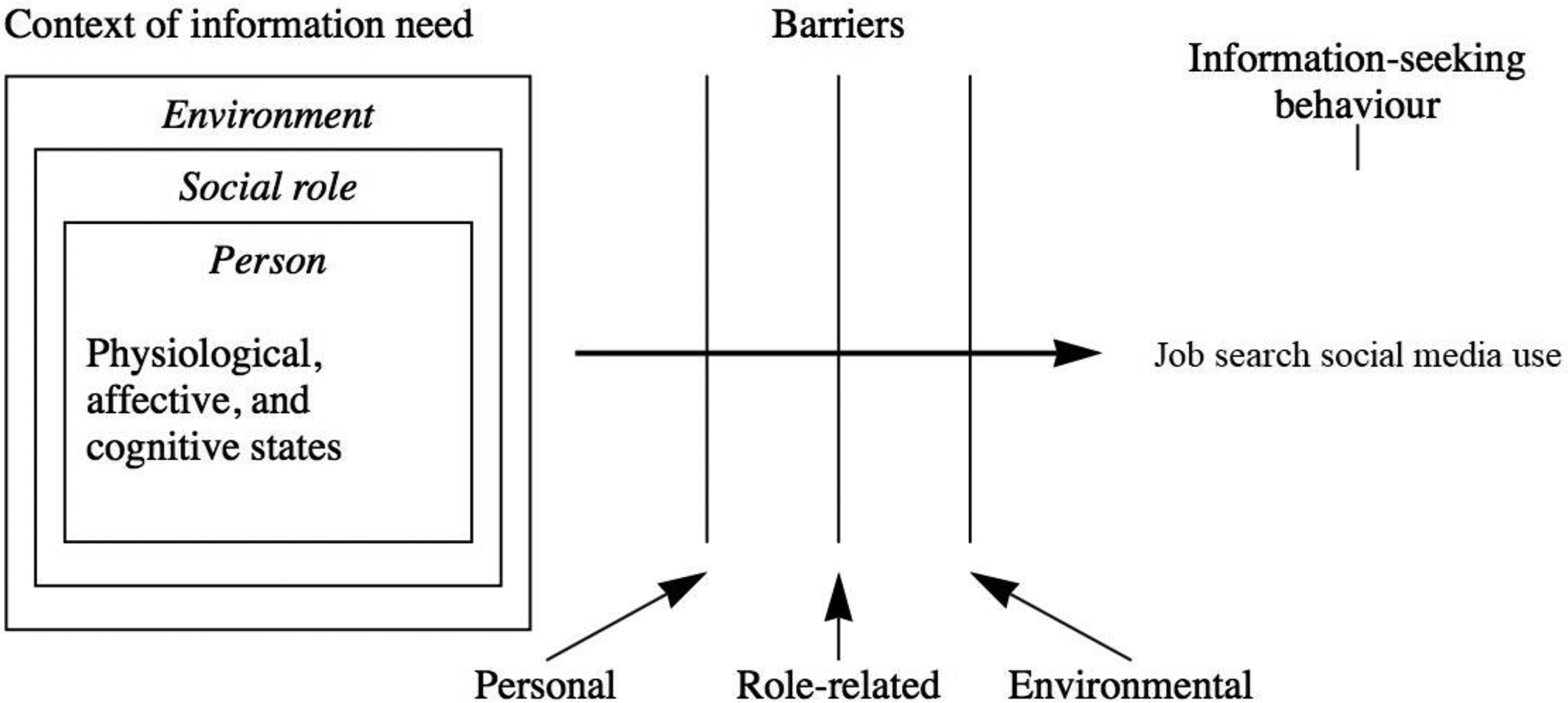
Wilson's [41] information-seeking behaviour model (adapted by the authors).
3.2. Study design
The study was implemented sequentially in a two-stage iterative design. Qualitative data were gathered at the first stage to generate knowledge on social media use during job search at the level of the individual. When these data were analysed, it was possible to identify variables that could be used in the next stage of research process. This iterative ‘qualitative to quantitative’ approach is common in mixed methods research [42].
3.3. Qualitative stage
The qualitative stage of the research comprised seven participant interviews with young jobseekers, and then a focus group with another six 16–24 year olds. The data collection took place between January and March 2016 at locations throughout Scotland. To obtain a wide range of job search perspectives, individuals with different education levels and ages were included in the interview sample (see Table 1). (In the results section below, pseudonyms are assigned to the participants.)
Qualitative stage participant details.
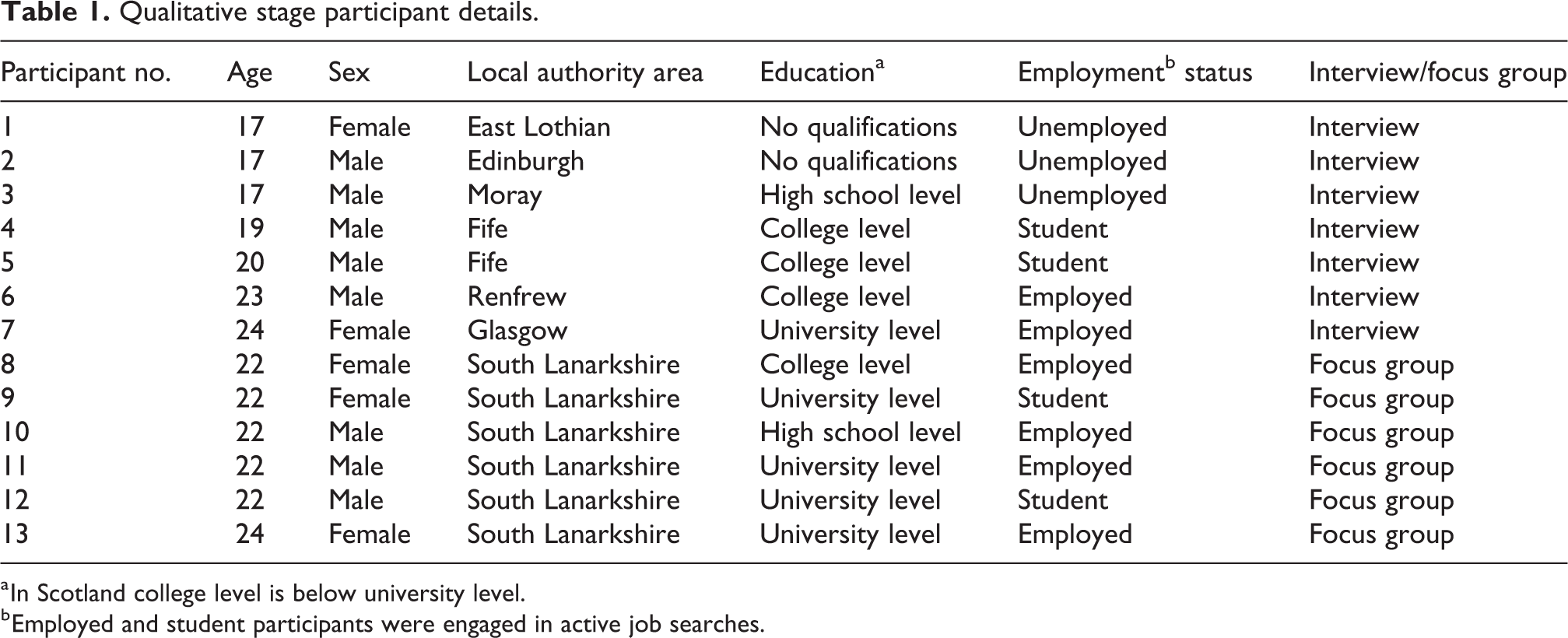
a In Scotland college level is below university level.
b Employed and student participants were engaged in active job searches.
In accordance with Wilson’s model, a number of questions were posed during the interviews to establish the context of information need (e.g. ‘What type of job are you looking for?’ and ‘What motivates you to look for a job?’). Then, an egocentric network approach (i.e. the name-generator method) was used to gather data specifically about networking [43], with the end goal of understanding information seeking behaviours among the cohort. Participants were therefore asked to list the people and/or organisations that provided them information throughout the job search process. Probing questions were used to determine whether social media platforms featured in these exchanges. The focus group questions were similar to those asked in the interviews, centring on contextual factors (e.g. job search motivations), information seeking and potential barriers to online social networking. These questions were used to ‘elicit a multiplicity of views and emotional processes within a group context’ [44], as opposed to developing in-depth knowledge of each individuals’ job search experience.
The qualitative data were subjected to a directed content analysis [45], with transcripts coded in a hierarchy of themes. The top of the hierarchy of codes reflected the core components of Wilson’s model. Detailed sub-codes were developed by analysing the interview transcripts on a line-by-line basis and grouping together recurring themes. Many of these themes were linked to original participant quotations using NVivo; QSR International Pty Ltd. Version 10, 2014.
3.4. Quantitative stage
The second stage of data collection comprised the implementation of an online survey between August and December 2016. The survey was completed by a total of 909 jobseekers in Scotland aged 16–24 years. They were accessed through multiple sources. These included the public career service (i.e. young people on site at career centres), job-related social media feeds, colleges, universities and via a Youth Site survey panel [46]. Just over 60% of the survey respondents (n = 558) identified themselves as job seekers who put effort into seeking employment, and it is their responses that are included in the analysis below. This ensures that the findings of the study draw on the behaviours of committed jobseekers. They exclude those who – at the time of data collection – were only engaging in a very casual job search (e.g. browsing job listings, but without any real intent of applying for a vacancy).
A diverse sample of participants from 27 of the 32 Scottish local authorities was obtained using the approach outlined above: There was a good balance of age and sex among the participants, as shown in Table 2. 83.3% (n = 465) were educated to university level (or working towards university qualifications), and 16.7% (n = 83) to non–university level (i.e. had no qualifications, held high school qualifications or held college qualifications
1
). 36.6% (n = 199) were seeking jobs of high occupational status, 13.2% (n = 72) of medium occupational status and 50.2% (n = 273) of low occupational status.
2
(These categories are based on the Standard Occupational Classification (SOC) framework [47].) Age and sex of the survey respondents (n = 558).

3.5. Survey construction and validity
The questions used to gather data from survey respondents are presented in Table 3. The question groups ‘social media and job search’ (i.e. information seeking behaviour), ‘contextual factors’, and ‘barriers’ again reflect the component parts of Wilson’s model. Several variables were derived from the results of the interviews and focus group. The question group ‘social media and job search’ was wholly derived on this basis. For example, among the seven interviewees, it was established that
Survey questions included in the analysis.
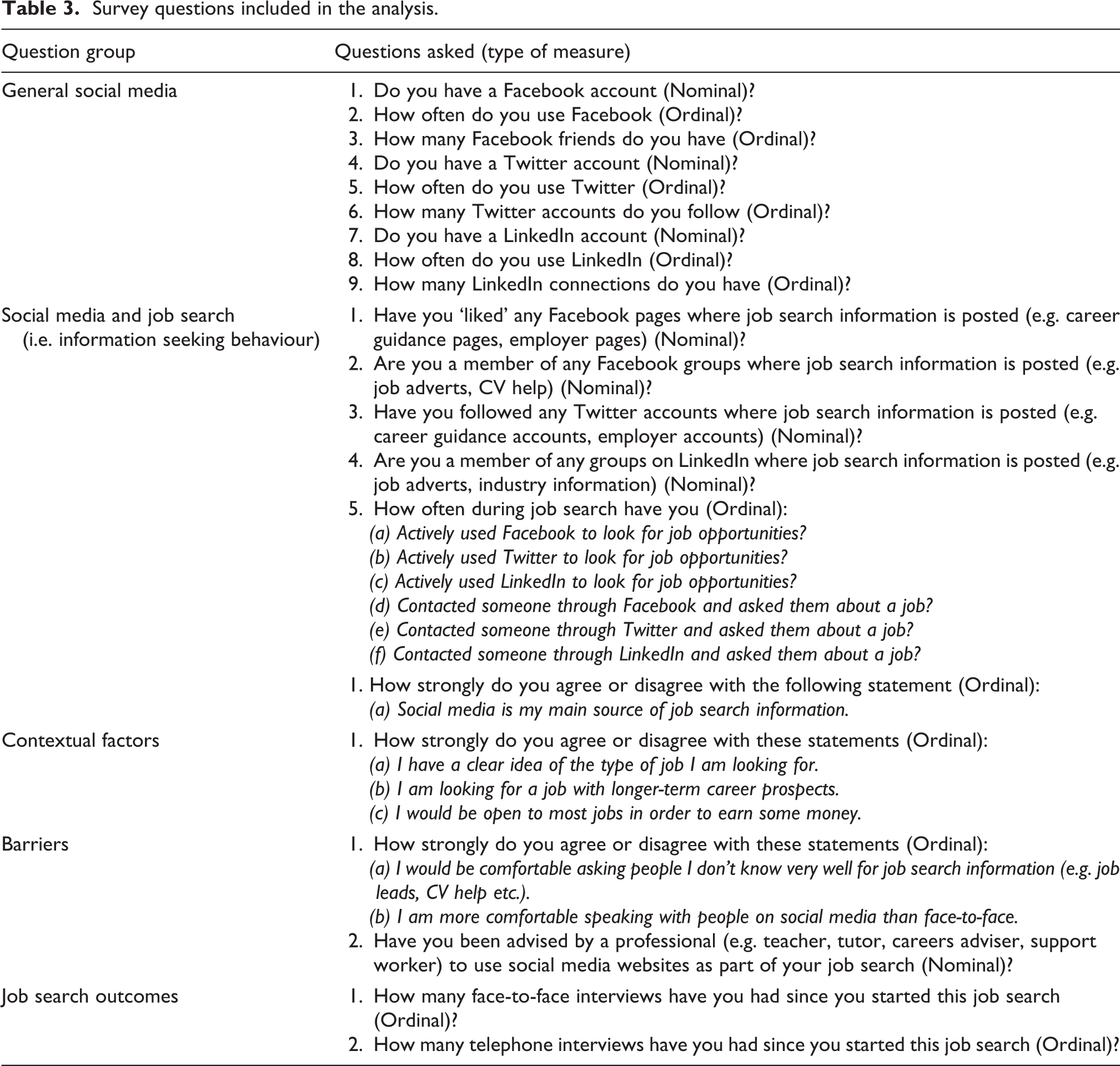
Five ‘liked’ or followed social media pages where job search information is posted. Three actively searched social media pages to look for job opportunities. Two contacted someone through social media to ask about jobs. Two stated that social media was their main source of job search information.
The ‘contextual factors’ questions were developed on the same basis. However, the ‘barriers’ question on networking comfort was replicated from a previous study of job search networking [48], and the ‘job search outcomes’ questions were created specifically for this study as a measure of job search success.
The qualitative data were used to generate questions for the survey due to the lack of previous studies specifically on social media and job search. Basing survey questions on the reports of active jobseekers also served as a robust exercise in content validity, which is a qualitative method of defining the domain of the concept under investigation [49]. Other validation measures, based on methods described by Chang et al. [50], were implemented at the design phase to avoid common method variance: Questions were made clear and understandable. They were piloted with eight respondents with a request for written feedback. The feedback was used to revise question wording accordingly. Different scale endpoints and formats were used throughout the questionnaire. This was to ensure that respondents were not repeatedly answering on the same scale or question type for substantial periods of time and thus reduced the potential for responder fatigue. Item scales included definitive response measures. For example, the answers ‘Never’, ‘Rarely’, ‘Occasionally’, ‘Frequently’ and ‘Very frequently’ were presented alongside ‘0 times’, ‘1 or 2 times’, ‘3 to 5 times’, ‘6 to 9 times’ and ‘at least 10 times’, respectively. This was done to ensure respondents were not basing answers on their own subjective interpretations of the scales, potentially skewing the results.
3.6. Survey analysis
Survey analysis was conducted on R software [51]. Initial data exploration was undertaken with descriptive statistics. Following this, Spearman’s rank-order correlation was used to establish the relationship between the ordinal variables included in the study. Spearman’s correlation is a non-parametric test. It was selected over a Pearson’s correlation because the data on social media use are not normally distributed. The relationship between nominal variables and ordinal variables were determined using the Wilcoxon rank-sum test. This is a non-parametric alternative to the two-sample t-test.
4. Results
The qualitative and quantitative findings are presented together below. It should be noted that the main findings relate only to Facebook, Twitter and LinkedIn during job search. The reason for this is not arbitrary: with the exception of niche discussion forums mentioned by two participants, these three were the only platforms used by the interview and focus group participants as information sources at the time of data collection. Similarly, although survey respondents were asked to provide names of all social media platforms that they used for job search purposes, only 25 mentioned any other than Facebook, Twitter and LinkedIn.
4.1. General social media use
The survey findings show that for general use Facebook is more popular than Twitter and LinkedIn: at the time of data collection, 96.6% (n = 539) of the respondents had a Facebook account. In comparison, 49.6% (n = 277) were on Twitter and 29.4% (n = 164) on LinkedIn. There is a similar trend with regard to frequency of social media use (see Table 4). This pattern also reflects the number of contacts on each platform. On Facebook, 80.7% (n = 434) had more than 200 ‘friends’; on Twitter, 45.3% (n = 126) ‘followed’ more than 200 accounts; and, on LinkedIn, 10.9% (n = 18) had more than 200 ‘connections’.
Frequency of time spent on Facebook, Twitter and LinkedIn.

4.2. Information seeking during job search: passive information acquisition on social media
Wilson’s model culminates with an information seeking behaviour component (see Figure 1). The survey results show that only 10.2% (n = 57) of the respondents considered social media to be their main source of job search information. Despite not being considered the main source of information about employment opportunities, social media do facilitate passive information acquisition during job search. This can be seen in the following figures: 50.3% (n = 269) followed pages, and 36.2% (n = 195) were in groups, where job search information is posted in Facebook. On Twitter, 31.4% (n = 87) followed pages where job search information is posted. 56.4% (n = 92) were in groups on LinkedIn where job search information is posted. 36.9% (n = 205) had been contacted by people with job search information which had been originally posted on social media.
Taken together, these findings highlight the potential to receive information on social media without continuous, active search. The qualitative data shed more light on social media and this kind of passive information acquisition. Examples provided by the interview and focus group participants include (1) being contacted by people with information via private mail (e.g. Facebook messenger), (2) following organisational pages (e.g. Skills Development Scotland’s career information, advice and guidance provision) and (3) holding membership of mutual interest groups (e.g. pages created for people working in the same profession). Being contacted by private mail – on an unsolicited basis – was mentioned by only 2 out of the 13 qualitative participants. In one example, interview participant Michael spoke about the help that he had received in his job hunt from the mothers of his friends: Two of my friends’ mums have been quite good like that. They know I’ve been looking for a job and they’ve sent me messages which has been quite helpful, when they’ve seen that local businesses have posted about a job on social media…Usually on Facebook. Our tutors put up some job listings or anything to do with our industry. There’s been a few times I’ve been scrolling past and there’s a ‘QA Tester’ job advertised.
4.3. Information seeking during job search: active information search on social media
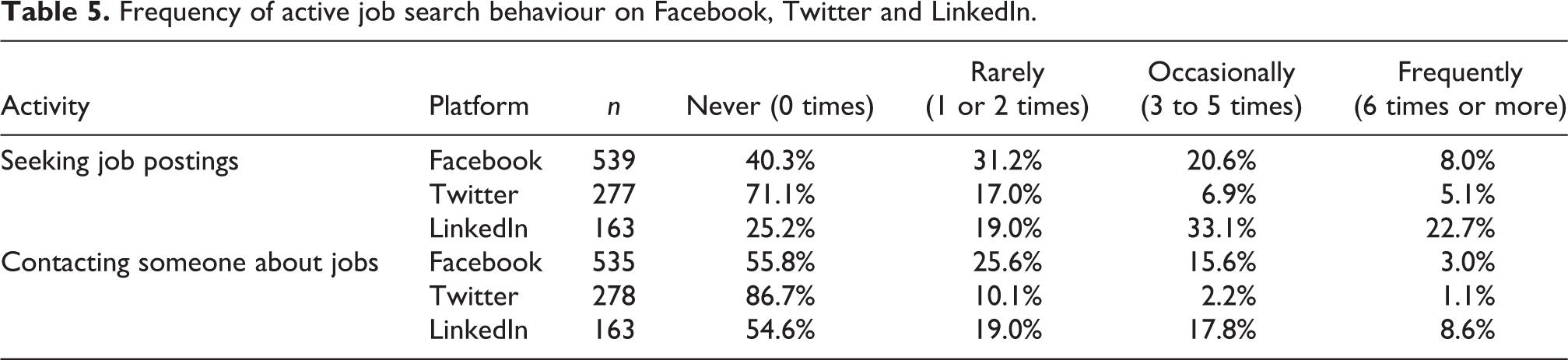
The survey findings reveal the prevalence of active information seeking behaviour on social media during job search (see Table 5). In contrast to its use for general purposes, it can be seen that LinkedIn is the most popular job search platform. This is especially true of seeking job opportunities, with 22.7% (n = 37) reporting that they had done so at least six times compared with 8.0% (n = 43) on Facebook and 5.1% (n = 14) on Twitter. In terms of contacting someone to ask about a job, the distribution of findings is similar for both LinkedIn and Facebook.
Frequency of active job search behaviour on Facebook, Twitter and LinkedIn.
The interview and focus group participants also provided insight into the different ways that social media are used by jobseekers. For instance, five mentioned researching companies. One of the interview participants, Simon, said of this: I did use social media for researching companies and stuff like that, if I had an interview. Obviously you can go on the company’s web site, but I’ve found social media is quite a good way to see what their latest projects and stuff are. The way my industry works is that if you don’t get a job with a company, then you’re almost self-contracting. So I’m building contacts with people. Locums can go direct to an owner and say ‘can you give me some shifts’.
4.4. Contextual factors and barriers associated with job search social media use: ordinal variables
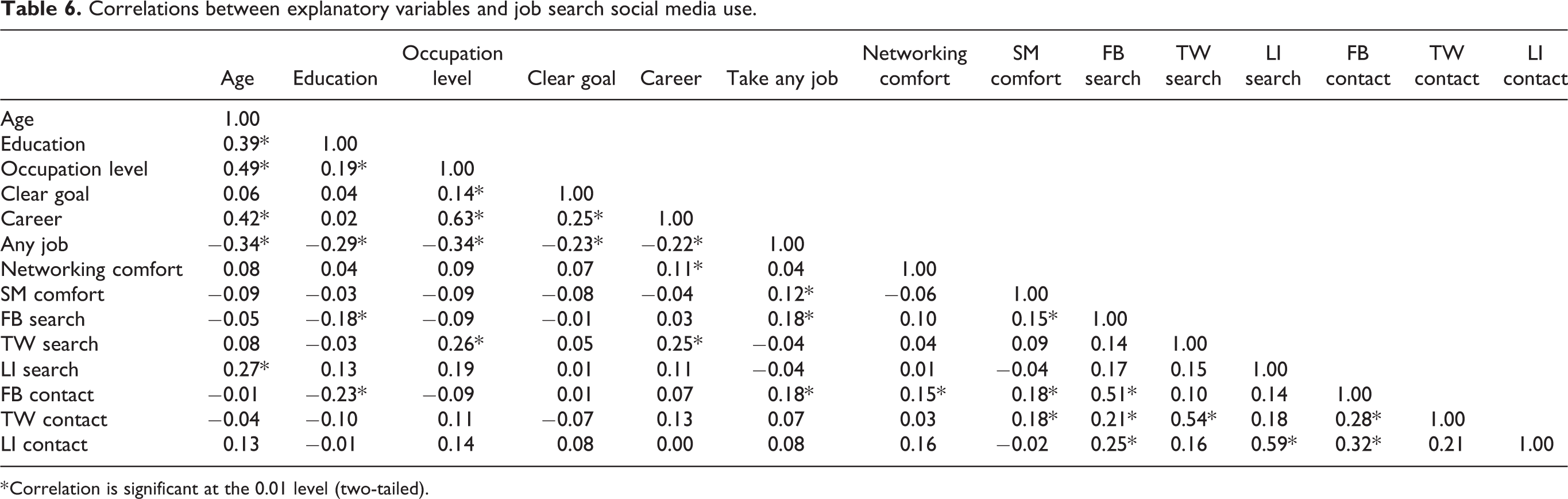
The two other components of Wilson’s model are the context of information need, and barriers to information seeking behaviour (see Figure 1). Many such factors can be identified by considering correlations between a number of the ordinal variables measured in the survey (see Table 6). These include the frequency with which the respondents (1) actively look for jobs and (2) contact people to ask about jobs on Facebook, Twitter and LinkedIn at the time that they contributed data for this study. Please note that the coefficient of determination (R 2) is presented throughout the rest of the results section. This shows proportion of the variance shared by two variables in hand (i.e. the effect size).
Correlations between explanatory variables and job search social media use.
* Correlation is significant at the 0.01 level (two-tailed).
There are some indicative trends in Table 6. For example, the status of the job being sought (i.e. ‘occupation level’) is positively associated with using Twitter (R 2 = 6.8%) and LinkedIn (R 2 = 3.6%) to actively search for jobs. On Twitter, 43.3% (n = 39) seeking high status jobs actively looked for vacancies on the platform, compared with just 19.6% (n = 35) seeking medium or low status jobs. On LinkedIn, the corresponding figures are 81.0% (n = 81) and 66.1% (n = 39), respectively. In contrast, level of occupational status is negatively associated with active job search on Facebook (R 2 = 0.8%). This means that those seeking high occupation jobs (53.7%; n = 102) were less likely than those seeking low- or medium-level jobs (63.3%; n = 212) to actively look for vacancies on the platform. As such, it could be inferred that young people who seek jobs of high occupational status are more likely to use Twitter and LinkedIn for job search, while those seeking jobs of low occupational status are more likely to use Facebook for this purpose. However, it should be noted that, as shown by the R 2 values, the associations described here are weak-to-moderate. They are also not all statistically significant at the 0.01 level (see Table 6). Therefore, while a general trend is observable in the data, the impact of the occupation level is marginal.
Table 6 shows that occupational status is positively associated with age, education level and seeking a career option. It is negatively associated with a willingness to accept any job that pays money. In other words, seeking high status jobs is linked with (1) being towards the upper-range of the 16–24 age-group, (2) possessing university-level qualifications and (3) seeking a career option. However, those seeking higher status jobs are less likely to settle for any job just to earn money.
The social media findings relating to the above variables also provide insight. For example, actively using Twitter to look for jobs is positively associated with seeking a career (R 2 = 6.3%), while actively looking for jobs on LinkedIn is positively associated with age (R 2 = 7.3%). On Twitter, 36.7% (n = 44) looking for a career option actively searched for vacancies on the platform, compared with 20.9% (n = 32) not looking for a career option. On LinkedIn, 81.0% (n = 64) aged between 22 and 24 years looked for jobs on the platform, compared with 66.7% (n = 58), aged 16–21 years. In contrast, the use of Facebook to look for jobs is negatively associated with education level (R 2 = 3.2%), but positively associated with willingness to accept any job (R 2 = 3.2%). With regard to the latter, the findings show that 68.3% (n = 153) seeking any job actively searched for vacancies on Facebook, compared with 53.7% (n = 168) not seeking any job. When combined, these results indicate that – in addition to seeking higher status jobs – jobseekers using Twitter and LinkedIn are distinguished from those using Facebook due to their likelihood of sharing other common attributes. Again though, the impact of these explanatory variables is weak-to-moderate, as can be determined from the low correlation coefficients and R 2 values.
Some examples provided by interview and focus group participants align with the results outlined above. For example, focus group participant Angela – a university student who was seeking a graduate role – emphasised that her main use of Facebook was passive in relation to job search: I just ‘like’ company pages to see what projects they’re working on and stuff. There’s nobody of influence working behind that page. You can’t go looking for a job. It’s good for interviews and stuff, because you know in the back of your mind what’s going on with that company. They tend to intertwine in that sense. I mean if I’m on speaking to friends, as you do for that sort of social media, there’s nothing stopping me spending five, ten minutes just looking at these sites, you know.
4.5. Contextual factors and barriers associated with job search social media use: nominal variables
The results reveal the extent to which social media use during job search relates to the nominal variables: (1) sex and (2) receiving advice from a professional (e.g. a teacher, tutor or career adviser). For the former, the distribution of findings between males and females in terms of social media use for job search is almost identical for Facebook and Twitter. Wilcoxon rank-sum tests confirm that there are no statistically significant differences between males and females for any of the platforms. Table 7 shows the relationship between receiving advice from a professional to use social media, and the actual use of Facebook (R 2 = 22.1%), Twitter (R 2 = 34.3%) and LinkedIn (R 2 = 27.8%) during job search. The findings are clear that those advised by professionals are considerably more likely to use these platforms than those who are not. Wilcoxon rank-sum tests confirm the statistical significance of each association (p < 0.001).
Being advised by a professional to use social media and using social media to search for jobs.
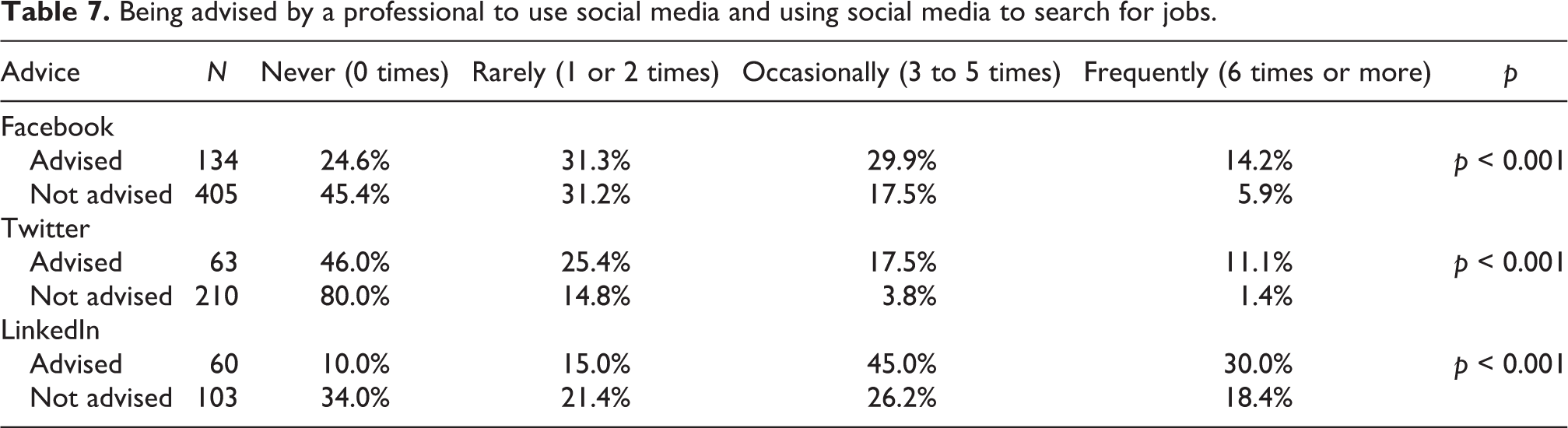
The qualitative findings illustrate the impact of awareness (or a lack thereof) on job search social media behaviour, as implied by the findings in Table 7. Two participants explicitly stated that they did not consider using social media during job search until they were advised to do so. Interview participant Michael said, Believe it or not I never really thought about it till they [the career service] mentioned it to us. So yeah, it was because of them that I started looking on social media.
4.6. Outcomes associated with social media use for job search
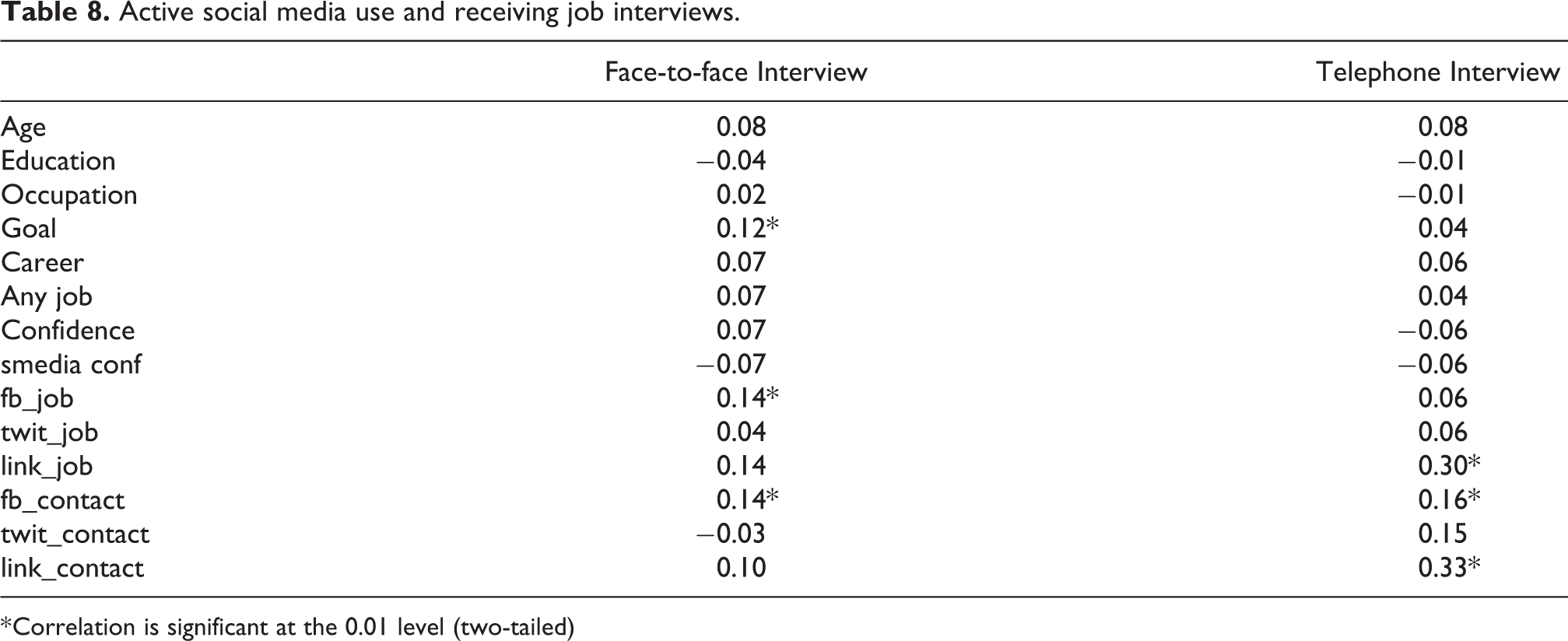
Presented in Table 8 are correlations between explanatory variables, social media use for job search, and the offer of both face-to-face and telephone interviews. These findings show the possible impact of information seeking on social media and being invited to interviews by employers.
Active social media use and receiving job interviews.
* Correlation is significant at the 0.01 level (two-tailed)
The findings show that Facebook use for job search – both for seeking jobs (R 2 = 2.0%) and for contacting (R 2 = 2.0%) people – has a positive and statistically significant (p < 0.01) association with invitations to face-to-face job interviews. However, the small coefficients suggest that the associations are weak-to-moderate. In real terms, 73.0% (n = 235) of respondents who had actively sought jobs on Facebook had been invited to at least one job interview, compared with 64.4% (n = 139) of those who had not actively sought jobs on Facebook. For contacting someone to ask about jobs on Facebook, the corresponding figures are 76.4% (n = 181) and 64.4% (n = 192), respectively.
The results also show that only social media variables are positively associated with telephone interview invitations. The highest coefficients are for using LinkedIn to look for jobs (R 2 = 9.0%) and to contact someone about jobs (R 2 = 10.9%). Therefore, out of all the measured variables in this analysis, LinkedIn use is the most closely associated with telephone interview invitations. In real terms, 59.5% (n = 72) of respondents who had actively sought jobs on LinkedIn had been invited to at least one telephone interview, compared with 24.4% (n = 10) of those who had not actively sought jobs on LinkedIn. For contacting someone to ask about jobs on LinkedIn, the corresponding figures are 63.5% (n = 47) and 38.6% (n = 34), respectively. In both cases, the findings are statistically significant (p < 0.01).
5. Discussion
5.1. General social media use
As stated at the start of this article, the digital landscape has evolved to the extent that almost all 16–24 year olds in the United Kingdom now use some form of social media [2]. The literature also highlights the potency of such sites as sources of social capital [10,11]. Regarding specific social media platforms, this study shows that almost all 16–24 year olds in Scotland have a Facebook account, compared with roughly half with a Twitter account, and quarter with a LinkedIn account. 3 It also shows that Facebook and Twitter are used intensively by significant proportions of young people in Scotland, and that many have access to hundreds of online contacts online. Taken together, these findings provide further evidence that social media use is pervasive among young people, and are potentially powerful sources of social capital.
5.2. Social media and job search
The literature review section above draws attention to a study of adult jobseekers across the globe which found that, of the three platforms, LinkedIn is used the most frequently for job search, followed by Facebook and Twitter, respectively [38]. Broadly, the same pattern is found in this study. It has been shown that – despite being the most popular platform for general use – Facebook comes second to LinkedIn in terms of its appropriation for job search, 4 and Twitter is the least used for the same purpose. However, the findings diverge in other crucial areas. Adecco reported that only a quarter of jobseekers with a Facebook account use this platform for job search; in comparison, over half in this study reported using Facebook for job search. This indicates that the gap between LinkedIn and Facebook use is narrower in the youth labour market than among the general adult population. Indeed, the survey findings here also show that Facebook is used almost to the same extent as LinkedIn to contact people directly about jobs.
5.3. Social media and job search: information seeking behaviour
The third component of Wilson’s theoretical model relates to the manifestation of information seeking behaviour. As discussed in the literature review above, previous studies have shown that social media facilitates incidental information acquisition [20,21]. This study shows that, in relation to job search, information seeking on social media also involves both passive acquisition and active search. Regarding the former, jobseekers who have connected with organisations, or are members of relevant groups, passively consume content that can be useful for job search. Young people also receive information from personal contacts, sometimes via private messages, that has been sourced on social media. This is an important finding, as it demonstrates the effectiveness of digital technologies as communication tools, and their impact on the propagation of information throughout social structures. This benefit of social media has not been found in previous studies of job search, and therefore is a novel contribution of this work.
As discussed in the literature review above, career researchers cite the pressing need to foster a digitally literate workforce [40]. It is therefore crucial to understand the nature of active information seeking on social media during job search. For the first time, the findings here have shown that Facebook, Twitter and LinkedIn are used in various ways by young jobseekers. Key examples include researching companies, searching for job adverts and contacting people directly to ask for information. These are valuable insights into the diverse role of social media as information sources, which can be expanded in future research. However, it should be borne in mind that the results here also show that only a small proportion of 16–24 year olds think of social media as their main source of employment-related information. In addition, only a minority use them more than a few times during job search. This gives a clear indication that, although tools like Facebook, Twitter and LinkedIn provide a clear function to young people seeking employment, they are mostly used as supplementary information resources.
5.4. Social media and job search: context of information need
Wilson’s model highlights the importance of context as a means of understanding subsequent information behaviour. A notable finding in this study is that most of the contextual variables only account for small differences in behaviour. Therefore, it is likely that other undetected factors have a stronger relationship with Facebook, Twitter or LinkedIn use by jobseekers. For example – as indicated by the qualitative findings – the type of job industry could be an influential factor. Even still, the quantitative findings do provide some insight. Previous research has shown that using social media for job search is associated with higher education levels [38] and also that younger jobseekers are more likely to use Facebook than LinkedIn when seeking employment information [37]. The results presented here broadly support these earlier findings, while providing a more nuanced picture. They reveal that 16–24 year olds seeking jobs of higher occupational status – closely associated with higher education levels – are more likely to use Twitter and LinkedIn for job search than those seeking jobs of lower status, but that the difference in use between these groups is not profound. They also show that user trends are slightly different for Facebook. Facebook is used more than Twitter and LinkedIn by young jobseekers who have low educational attainment and are willing to accept almost any job. This could imply that there are more jobs of lower status and/or word-of-mouth vacancies posted on Facebook, compared with the other two platforms. Indeed, the qualitative findings indicate that Facebook groups are useful for young people seeking work in industries with informal recruitment processes.
In terms of the contextual factors that impact social media behaviour, the findings presented here depart from the literature in one key area. Whereas other studies have found differences in social media use between males and females [24,34], this study provides compelling evidence that are no gender differences in the use of Facebook, Twitter and LinkedIn for job search purposes. Although it is not clear why this is the case, it could be a peculiarity of job seeking that – out of necessity – people are drawn towards the same resources, irrespective of gender. Otherwise, it could simply reflect the increasingly pervasive nature of social media use among 16–24 year olds.
5.5. Social media and job search: barriers
While context of information seeking is important to understand information behaviour, Wilson’s model shows that, over and above context, people face additional barriers to information search. Career research has provided evidence to suggest that young people, even intensive social media users, do not necessarily think of platforms like Facebook or Twitter as functional tools [39]. One of the crucial findings of this study is that the most prominent barrier to (and equally, an enabler of) social media use for job search is awareness that tools like Facebook and Twitter can actually be used to this end. Thus, compared with those who have not benefitted from such advice, jobseekers who are guided by professionals to incorporate social media into job search are almost twice as likely to use Facebook and Twitter, and are more than three times as likely to use LinkedIn. Given the positive link between social media use and receiving interviews, coupled with the positive testimony of some of the qualitative participants regarding the usefulness of social media, it is important that this knowledge is disseminated to professionals who work with jobseekers. Indeed, it could be argued that advising jobseekers to use social media should be a core feature of career service provision. However, the survey findings also suggest that some young people may not be comfortable using social media to contact people about jobs. Also, a preference for chatting in online environments (as opposed to in person) is shown to be associated with social media use job search purposes. Although the associations are marginal, professionals advising jobseekers should be aware of that these factors may suppress uptake of social media for some young people.
5.6. Social media and job search: outcomes
The relationship between social media use and invitations to job search outcomes has also been investigated in this study, thereby providing insight into the efficacy of Facebook, Twitter and LinkedIn as tools for job search. The findings show that while social media use does have a positive relationship with outcomes, the associations are weak-to-moderate. Active Facebook use is associated with invitations to face-to-face interviews. It is possible that this relationship exists because Facebook provides a platform for those seeking jobs of lower occupational status to target informal vacancies. It might be argued that Facebook is more conducive to information opportunities than other social media simply because it is the most used social media platform in the United Kingdom [52]. However, this study does not compare social media use with other job search behaviours. It is therefore possible that at least one unobserved variable is responsible for the association between Facebook use and job interviews. For example, frequent use of social media could be linked with other active search behaviours which are potentially more effective in generating positive outcomes (e.g. using job search engines). Therefore, these results should be treated with caution until further research has been conducted in this area.
Finally, the survey results also show that active use of LinkedIn is linked to telephone interviews. Given that LinkedIn use is associated with seeking jobs of higher status, these findings could reflect the nature of a graduate recruitment process which commonly involves multiple stages, including telephone interviews [53]. Thus, reaching the next stage (i.e. a face-to-face interview) would be dependent on the individual’s performance in the telephone interview itself, thereby reducing the influence of information sourced on social media. However, this interpretation should also be treated with caution until more targeted research has been conducted into social media use and its impact on job search outcomes.
6. Conclusion
Despite the widespread use of social media use in the United Kingdom, and the belief that it has greatly expanded our capacity for networking and information pooling, few academic studies have previously addressed its impact on the process of job search. In terms of key findings, this study has established that Facebook, Twitter and LinkedIn are the most popular social media platforms for job search among 16–24 year olds in Scotland and that they are mostly used as supplementary information sources during job search. They provide environments to consume information related to job search both actively and passively, and are efficient communication channels for receiving job-related tip-offs from personal contacts. Broadly speaking, contextual factors (e.g. demographics) only have a small bearing on the direction of social media behaviour, and using social media only has a moderate relationship with outcomes. However, small trends are identified. To this end, Facebook is preferred among jobseekers looking for jobs of lower status, while Twitter and LinkedIn are more likely to be deployed by those seeking higher status jobs. For the most part, actively using social media during job search is positively linked with interview invitations. However, this depends on the type of interview (i.e. face-to-face or telephone) and the specific social media platform. Another complication is the barriers to using social media for job search, most notably an awareness that they can be appropriated for such a purpose. However, this can be remedied to a large extent by simply advising young people to engage with digital platforms when they are looking for work.
The results of this research can be used by the professionals tasked with assisting young people to find employment, by informing policy decisions and contributing towards career interventions. Through the application of mixed methods, underpinned by a framework from the field of information science, the study has made vital contributions to our current understanding of social media use during job search. Interviews and a focus group provided rich and detailed firsthand accounts from the perspective of young jobseekers (n = 13), while the survey questionnaire conveyed some of the key trends in social media use among a much larger sample of the Scottish youth labour market (n = 558). To build on this, more in-depth qualitative research should be conducted to develop an updated version of Wilson’s model (or an entirely new framework), tailored for job searching on social media. This research has provided a baseline of knowledge with reference to the general population of 16- to 24-year-old jobseekers in Scotland. Future work should expand on these insights, perhaps focusing on stratified subgroups of jobseekers (e.g. people seeking employment in specific industries). It is also crucial that a detailed model of the information seeking process, related to passive and active search behaviour, is developed. Further quantitative studies could also clarify the efficacy of social media use in securing interviews, relative to other search methods. In this regard, information scientists could make valuable contributions to the field of job search. In the meantime, this work has provided a solid basis of knowledge on a deeply complex phenomenon.
Footnotes
Acknowledgements
Skills Development Scotland also provided the authors with some assistance in seeking participants for the survey element of the primary research.
Declaration of conflicting interests
The author(s) declared no potential conflicts of interest with respect to the research, authorship and/or publication of this article.
Funding
The author(s) disclosed receipt of the following financial support for the research, authorship and/or publication of this article: ESRC (grant no. ED/J500136/1) and Skills Development Scotland provided the funding for this research.
