




Abstract
The objective of this study is to examine the associations between food parenting practices (FPP) and physical activity parenting practices (PAPP) with children’s weight-related outcomes (WRO), using food and physical activity parenting practices conceptual frameworks. Two systematic reviews with meta-analyses were conducted following PRISMA guidelines. Eligible studies included observational research reporting associations between FPP or PAPP domains—structure, control/coercive neglect/control, and autonomy promotion—and WRO in children aged 3–12. A total of 33 studies on FPP and 15 studies on PAPP were included. Findings from the meta-analyses suggest a small negative association between structure FPP and WRO. No significant associations were found for autonomy promotion or coercive control FPP domains. Regarding PAPP, our results suggest a small negative association between structure practices and lower WRO, and a small positive association between neglect/control PAPP and WRO. Structure parenting practices showed small but consistent associations with WRO, whereas findings for autonomy promotion and control/neglect domains were largely nonsignificant or mixed. Our findings do not support robust links between most FPP or PAPP domains and children’s WRO, but emphasize the need for high-quality longitudinal studies to clarify the predictive value and directionality of parenting practices on children’s WRO.
Keywords
Introduction
Childhood overweight and obesity are serious health conditions that represent a major public health challenge worldwide, particularly in Western industrialized countries (Spinelli et al., 2019). The global prevalence of overweight, including obesity, among children and adolescents is approximately 20% (World Health Organization, 2025). Overweight and obesity in children are associated with lower levels of well-being and with heightened probability of developing physical and mental health issues at short and long term, with additional negative impact on educational and career opportunities (Barton, 2012; Förster et al., 2023).
Many factors impact children’s health-related behaviors, contributing to the onset and maintenance of overweight and obesity. Nutrition and physical activity behaviors are critical lifestyle factors for children’s well-being and health throughout life, including overweight and obesity. Children’s nutrition and eating behaviors, such as high eating frequency (Blondin & Economos, 2016), low fruit and vegetable intake, and high energy-dense food consumption (Field, 2016,), are known to contribute to children’s weight status over time. Likewise, physical activity, such as regular physical exercise and sedentary behavior, including exposure to screen time, is also known to affect children’s weight statuses (Wyszyńska et al., 2020). These lifestyle factors are determinants of health from early ages. Evidence has shown that lifestyle behaviors developed in childhood, such as engaging in physical activity, tend to persist throughout life and shape lifestyle behaviors in adulthood (Telama, 2009).
The environment where a child is raised is complex and multidetermined, critically contributing to children’s lifestyle behaviors and directly affecting their health. The relative importance of each source of influence contributing to childhood overweight and obesity varies within each developmental stage (Harrison et al., 2011; St George et al., 2020). Across child development, parents, as main caregivers, are consistently acknowledged as one of the primary influences on their children’s nutrition and physical activity, ultimately contributing to children’s weight status through specific parenting practices (Harrison et al., 2011). However, it is still unknown to what degree food and physical activity parenting practices relate to or contribute to weight-related outcomes among typically developing children.
Food and physical activity parenting practices are context-specific practices through which parents directly address children’s nutrition and physical activity behaviors (Rhee & Boutelle, 2016). Particularly, through effective food parenting practices (FPP) and physical activity parenting practices (PAPP), parents promote healthy eating habits in children (St George et al., 2020), and encourage children’s engagement in physical activity, respectively (Lindsay et al., 2018). FPPs and PAPPs are often presented with different constructs; however, two different conceptual maps present such practices grouping these into similar domains addressing structure, autonomy promotion, and control (Mâsse et al., 2020; Vaughn et al., 2016). The conceptual map on FPP includes three main domains: structure, autonomy promotion, and coercive control. The structure domain includes behaviors through which parents influence the child’s socialization around food. These practices can be seen in a continuum where parents’ practices vary in the degree of providing support and organizing their children’s food environment (e.g., healthy food availability and accessibility), or, in contrast, do not provide enough positive support and organization. Autonomy promotion refers to parenting practices reflecting parental encouragement of children’s reasoning and involvement in making healthy food choices (e.g., teaching children about nutrition, and encouraging balance and variety) according to their developmental level. The coercive control domain in the FPP conceptual map refers to parenting practices contributing negatively to children’s eating and comprises parenting practices in the higher extreme of a control continuum (e.g., restriction, pressure to eat, food bribes) (O’Connor et al., 2017; Vaughn et al., 2016).
Likewise, the PAPP conceptual framework includes parenting practices related to children’s physical and sedentary activity presented in three domains: structure, autonomy promotion, and neglect/control. The structure domain refers to parental efforts to organize children’s environment, and can be seen in a continuum, on one end promoting child involvement in physical activity and the attainment of a specific outcome (e.g., providing logistic support to children’s sports activities), and on the other end, not providing the necessary structure. The autonomy promotion domain comprises parenting practices such as stimulating the child to be active and promoting children’s self-monitoring of their own activity. The neglect/control domain refers to ineffective parenting practices including different degrees of parental control, such as neglect and forceful demands, where practices of pressuring, shaming and punishing fit (e.g., using PA as a treat or as a bribe) (Mâsse et al., 2017, 2020). A prior systematic review found that food restriction and pressure to eat were positively associated with children’s BMI (Shloim et al., 2015). More recently, a systematic review focusing on the prospective links between FPP and children’s WRO found that pressure to eat negatively contributed to children’s WRO, with higher pressure to eat being associated with lower WRO over time (Beckers et al., 2021). Despite the limited evidence available on the association between FPP and children’s WRO, evidence is still lacking for PAPP. With the purpose of clarifying the association between FPP and children’s WRO, and contributing to the knowledge gap on the association between PAPP and children’s WRO, our work addresses the following research questions: (1) What are the associations between the FPP domains (structure, autonomy promotion, and coercive control) and typically developing children’s WRO; and between the PAPP domains (structure, neglect/control, and autonomy promotion) and typically developing children’s WRO?; and (2) What evidence exists on the strength and directionality of the associations?
To answer these research questions, we performed two systematic reviews with meta-analyses to summarize the evidence obtained from primary studies with parents of typically developing children aged 3 to 12 reporting on the associations between the FPP domains and children’s WRO, and the PAPP domains and children’s WRO.
Methods
We followed the Preferred Reporting Items for Systematic Reviews and Meta-analyses (PRISMA 2020) guidelines (Page et al., 2021). This study was deemed non-human subjects research in accordance with DHHS regulations (45 CFR 46.101) and did not require Institutional Review Board approval. The research team comprised a doctoral researcher and psychology and health sciences professors with expertise in parenting practices, child health behaviors, and systematic review methodologies.
Eligibility Criteria
Our inclusion and exclusion criteria were guided by population, exposure, and outcome (PEO) framework (Hosseini et al., 2024). Regarding the population, we included studies that reported on biological or adoptive parents (mother, father, or both) or stepparents as the main caregivers of children aged 3–12. Studies focusing explicitly on children with specific conditions (such as physical or mental health problems or disabilities), other than overweight and obesity, were excluded. Even though we acknowledge that some physical and mental health issues in children often coexist with obesity (e.g., Beltrán-Garrayo et al., 2023; Galler et al., 2024; Jebeile et al., 2022), we also understand that parenting a child with physical and/or mental health conditions, chronic or not, presents numerous challenges that parents address by making several adjustments into their daily lives, family environment and even the way they interact and parent their child to support their condition (e.g., Crandell et al., 2018; Marston et al., 2022; Pinquart, 2013; Power et al., 2019). As such, we believe that including studies addressing these conditions would be better suited to answer different research questions. Regarding the exposure, we included studies reporting on at least one specific parenting practice related to food or physical activity that could be classified into one of the three domains of food (O’Connor et al., 2017; Vaughn et al., 2016) or physical activity (Mâsse et al., 2017, 2020) parenting practices, evaluated using quantitative measures. As for the outcome, we included studies reporting an objectively measured WRO (i.e., BMI z-scores, BMI percentiles, and the child’s weight status group).
In terms of design and type of study, we included observational studies (i.e., cross-sectional, cohort, longitudinal, and case-control studies) reporting prospective, retrospective, or cross-sectional associations between FPP and/or PAPP and WRO in typically developing children. Randomized controlled trials were excluded as these report on the effects of parenting interventions or programs to address children’s weight issues, and this was not the purpose of our review. We included studies that described quantitative or mixed-methods approaches from which we could extract data on the associations between our variables of interest. We included records published in English in peer-reviewed journals and unpublished dissertations to ensure the inclusion of relevant gray literature and address potential publication bias.
Information Sources, and Search Strategy
We performed the literature searches in March 2023, using the Medline (Web of Science), PubMed, APA PsycInfo, Academic Search Ultimate (EBSCO), and the ProQuest databases. We ran two different searches in each database, respectively, focusing on FPP and PAPP. For the systematic review focusing on FPP, we used the concepts: feeding parenting practices (e.g., feed* strateg*), parenting (e.g., parent* practice*), children (e.g., child*), and weight outcomes (e.g., BMI). For the systematic review focusing on the PAPP, we used the concepts: physical activity parenting practices (e.g., activity), parenting (e.g., parent* practice*), children (e.g., child*), and weight outcomes (e.g., BMI). Our full search string is presented in the Supplemental Material file (Search terms and search strategy).
Selection Process
We merged the extracted documents from all the databases and performed deduplication. After deduplication, in a first step, the selection of the relevant articles was independently performed by two reviewers (MM and EP) through the title and abstract screening in Rayyan (Ouzzani et al., 2016). In a second step, we downloaded a full-text version of each article retained in the first step, and MM, MC, and OC evaluated the eligibility of each full-text document, according to the inclusion and exclusion criteria. We excluded the studies where the full text could not be retrieved. The discrepancies in the screening and eligibility stages were solved by consulting a third reviewer (OC in the screening stage and ACC in the eligibility stage).
Data Extraction and Data Items
The data extraction file included the following items: authors, year, country, design, assessment points and length of the study in months, sample (size, demographic characteristics), FPP and PAPP assessed, method to assess FPP and PAPP, WRO, method to assess WRO, means and standard deviations and/or frequencies/percentages from weight status groups, and effect sizes (correlation coefficients, standardized betas from simple linear regressions). We also retrieved information on group sizes or frequencies, and means and standard deviations for each group in the studies addressing group comparisons to compute Cohen’s d. We used 10 records to pilot and improve our data extraction file prior to the beginning of the task.
Risk of Bias
The quality of the studies was evaluated using the Newcastle–Ottawa Scale (NOS) (Wells et al., n.d.), a commonly used measure to assess the methodological quality of observational studies. The scale assesses three topics: Selection (scoring 0–4), Comparability (scoring 0–2), and Outcome (scoring 0–3). Higher values indicate higher methodological quality and lower risk of bias. Similar to other studies, we made minor adaptations to the NOS scales to evaluate case-control and longitudinal studies (de Roo et al., 2022). For cross-sectional studies, we used an adapted version of the NOS for case-control studies. The NOS versions used in our study are presented in the Supplemental Material file. Following the same approach adopted in other studies (Rezaeizadeh et al., 2024), we converted the NOS scores according to the standards of the Agency for Healthcare Research and Quality: good quality (three or four points in the selection domain, one or two points in the comparability domain, and two or three points in the outcome domain), fair quality (two points in the selection domain, one or two points in the comparability domain, and two or three points in the outcome domain), or poor quality (zero or one point in the selection domain, zero points in the comparability domain, and zero or one point in the outcome domain).
Following the approach described in previous studies (Beckers et al., 2021), we considered a response/retention rate of participants in the studies below 80% as a possible indicator of selection bias in cross-sectional studies and outcome bias in longitudinal studies, and therefore excluded those studies. In addition, given that several studies account for covariates or confounding variables, we adapted the NOS topic evaluating comparability. Thus, we scored studies with at least one point if they controlled one variable, and two points if they controlled two or more variables. We solved any doubts in the study quality assessment by consulting the co-authors in the review.
Effect Size Measures, Synthesis Methods, and Reporting Bias Assessment
We used Pearson’s correlation coefficient as our effect size measure for association studies, including continuous and count data in contingency tables. We extracted Pearson’s coefficient correlation values (zero-order correlations) and standard deviations from studies reporting bivariate associations. Then, we pooled the correlation coefficients in three FPP domains (Structure, Autonomy promotion, and Coercive control) and three PAPP domains (Structure, Autonomy promotion, and Neglect/Control).
For studies comparing the effects among groups of children based on weight status or presenting continuous data regarding parenting practices for each weight status group (expressed as a dichotomic variable), we used Cohen’s d as our effect size measure. To this purpose, we extracted means, standard deviations, and group sizes to compute the effect size and the standard error (SE). Regarding the structure parenting practices (FPP and PAPP), it was necessary to recode part of the data to ensure that all structure practices included in our meta-analyses represented practices that promote a healthy WRO in children. Thus, whenever a structure parenting practice promoted an unhealthy WRO (e.g., the availability of soft drinks at home), the association measure was reversed. In addition, we considered Pearson’s correlation coefficient values of .12, .24, and .41 and Cohen’s d values of 0.15, 0.36, and 0.65 as indicators of small, medium, and large effect size, respectively (Lovakov & Agadullina, 2021).
We performed different independent random-effect meta-analyses using the restricted maximum likelihood estimator. To assess heterogeneity, we used Cochrane Q tests (based on the Chi-square statistics) with an alpha of .05. Significant values lead us to reject the null hypothesis of homogeneity. The heterogeneity of effect estimates was also investigated using the I2 statistic (Higgins & Altman, 2008). We considered an I2 > 60% as indicative of substantial heterogeneity (Higgins & Green, 2011). The risk of publication bias was assessed using funnel plot visual inspection in combination with Egger’s test interpretation (Higgins et al., 2019).
Results
Systematic Review and Meta-Analysis #1 on the Associations between FPP and Children’s WRO
Selection and Identification of Eligible Studies
Our searches identified 2,459 records for the association between WRO and FPP. After removing 1,463 duplicated items, we screened 996 records for eligibility and selected 234 reports for the full-text analysis (agreement of 79.20%). A total of 34 records (agreement of 93.70%) reporting data from 33 studies were included in our systematic review and meta-analysis (see Figure 1).
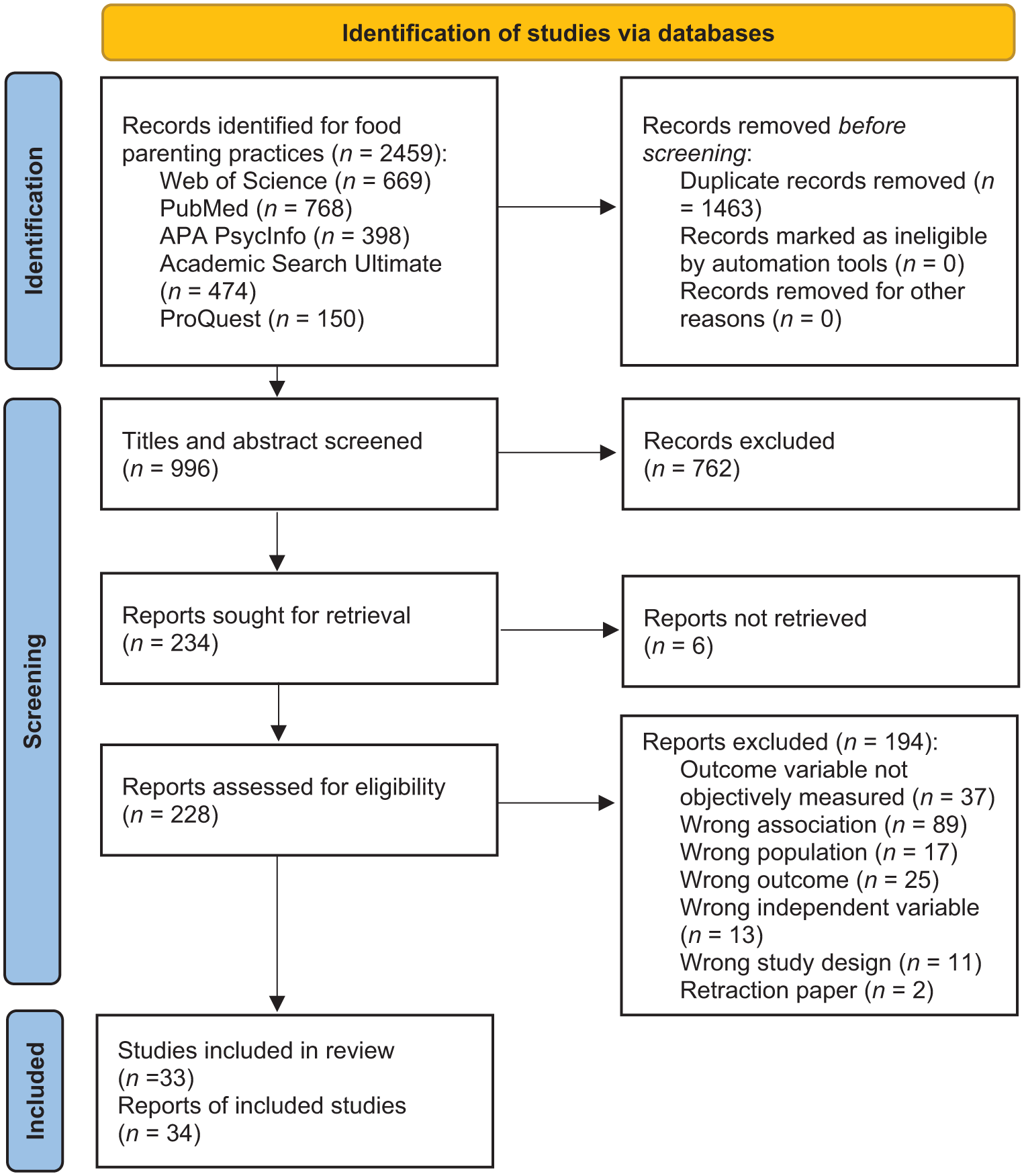
PRISMA Flow Diagram of the Review Process for the Studies Assessing the Association between Food Parenting Practices and Children’s Weight-Related Outcomes (n = 34).
Study Characteristics
The key characteristics of the included studies are briefly described in Table 1, and described in detail in the Supplemental Material file, Table S3. Among the included records assessing the association between FPP and WRO, most records (n = 18) report research conducted in the United States. Most of the records report studies employing cross-sectional designs (n = 28 reports on 27 studies), and less (n = 5) using longitudinal designs. We included one case-control study. Sample sizes range from 15 children (Keller et al., 2006) to 9,042 children (Papamichael et al., 2022), and only 13 studies included fathers as respondents
Summary of the Main Characteristics of the Studies on the Association between Food Parenting Practices and Weight-Related Outcomes Included in the Systematic Review and Meta-Analyses (N = 35).
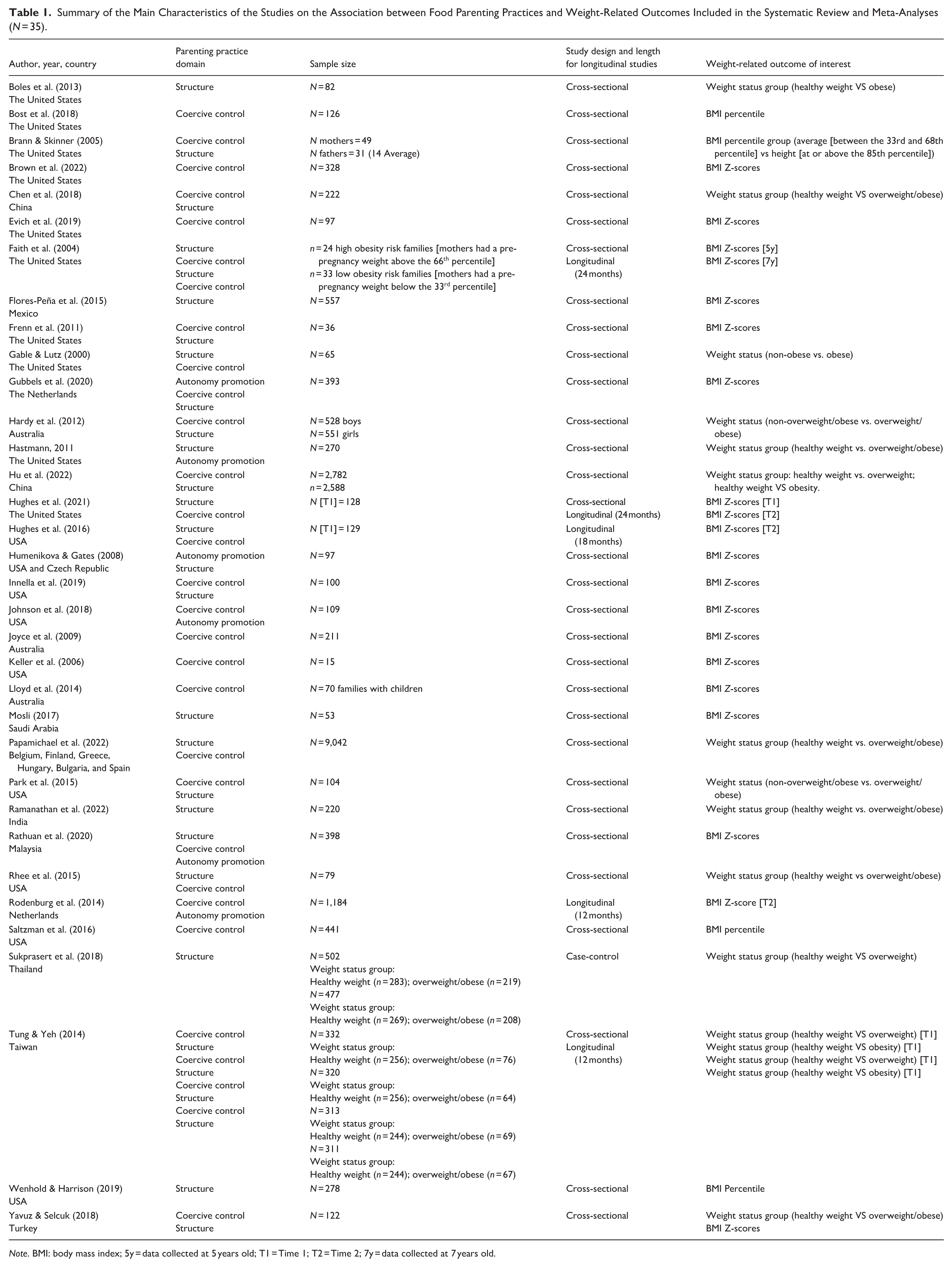
Note. BMI: body mass index; 5y = data collected at 5 years old; T1 = Time 1; T2 = Time 2; 7y = data collected at 7 years old.
Study Quality Assessment
A total of 19 records presenting data for the association between FPP and children’s WRO were classified as having “fair” (12 records) or “good” quality (seven records), and 15 records were classified as having “poor” quality (cf. Supplemental Material file, Table S3). The records classified as having “poor” quality most frequently lack controlling for possible confounders (n = 8), do not present a rationale for the sample size used (n = 8), or raise some concerns with the representativeness of the samples (n = 7). Indeed, these records do not explore or provide an overview of the differences between respondents and non-respondents (n = 8), or the response rate is non-satisfactory (n = 1).
Qualitative Syntheses of the Association between FPP and Children’s WRO
The included studies reported on 67 cross-sectional and six longitudinal associations between structure FPP and children’s WRO, retrieved from 24 records. Altogether, the studies reported data on 17,695 children (48.96% female) aged 1–14 (Mage = 6.52) and included 32.40% of overweight or obese children (with a mean BMI Z-score of 0.90).
The studies reported conflicting findings, with some suggesting that higher use of structure FPP relates to lower children’s WRO, and others that a greater use of structure FPP relates to higher children’s WRO. Longitudinal studies also suggested that the use of monitoring is associated with later lower children’s WRO, but only for low obesity risk families, and only at a 24-month follow-up (Faith et al., 2004; Hughes et al., 2021).
Six records (five describing cross-sectional and one longitudinal studies) reported 13 associations between autonomy promotion FPP and children’s WRO. Specifically, five records reported cross-sectional data, and one record reported longitudinal data. The records included data from 2,451 children (53.13% female) aged between 1 and 11 years old (Mage = 6.75), and the studies included an average of 22.28% of overweight or obese children.
The associations between autonomy promotion FPP and children’s WRO were somewhat inconsistent across the included studies. While some studies suggested that higher use of autonomy promotion practices is linked to lower children’s WRO, others found that higher use of autonomy promotion practices is correlated with higher children’s WRO.
Twenty-five records (twenty describing cross-sectional, three longitudinal, and two combining cross-sectional and longitudinal data) reported on 65 cross-sectional and 16 longitudinal associations between coercive control FPP and children’s WRO. These records included 17,962 children (49.49% female) aged 1–12 (Mage = 6.10). On average, the studies included 27.10% of overweight or obese children and reported a mean BMI Z-score of 0.81.
Also here, the findings were somewhat inconsistent. Some of the studies suggest that the use of coercive control FPP is linked to higher WRO in children, while others found the opposite to be true.
Meta-Analysis
The results of the meta-analysis performed to evaluate the association between FPP domains and children’s WRO are presented in the Supplemental Material file, Table S4. The findings suggest that the FPP within the coercive control and autonomy promotion domains were not related to children’s WRO. We found a small effect size association between the FPP framed within the structure domain and WRO in cross-sectional studies, r = −0.15, p = .008, suggesting that parents’ greater use of structure FPP is associated with lower WRO in children.
Results suggest high levels of heterogeneity for the associations between the three FPP domains and children’s WRO, with I2 percentage values ranging from 58.89% to 96.92% (see Supplemental Material file, Table S4). The exception was for the association between structure domain and WRO in cross-sectional studies (58.89%). In addition, the inspection of the funnel plots and the Egger’s and the Kendall’s Tau p-values presented in the Supplemental Material file, Table S4, suggest some evidence for publication bias in the records included in some meta-analysis: cross-sectional association between autonomy promotion FPP and continuous children’s WRO (Supplemental Material file, Figure S20), structure and control FPP and dichotomic children’s WRO (see Supplemental Material file, Figures S17 and S23, respectively), as well as longitudinal association between coercive control FPP and dichotomic children’s WRO (Supplemental Material file, Figure S25).
Systematic Review and Meta-Analysis #2 on the Association between PAPP and Children’s WRO
Selection and Identification of Eligible Studies
Our searches identified 1,755 records, including 1,026 duplicates. After screening the title and abstract of 729 records, 133 records were selected for full-text analysis (82.30% agreement), and 15 records were included (86.70% agreement) in our qualitative synthesis and meta-analysis (see Figure 2).
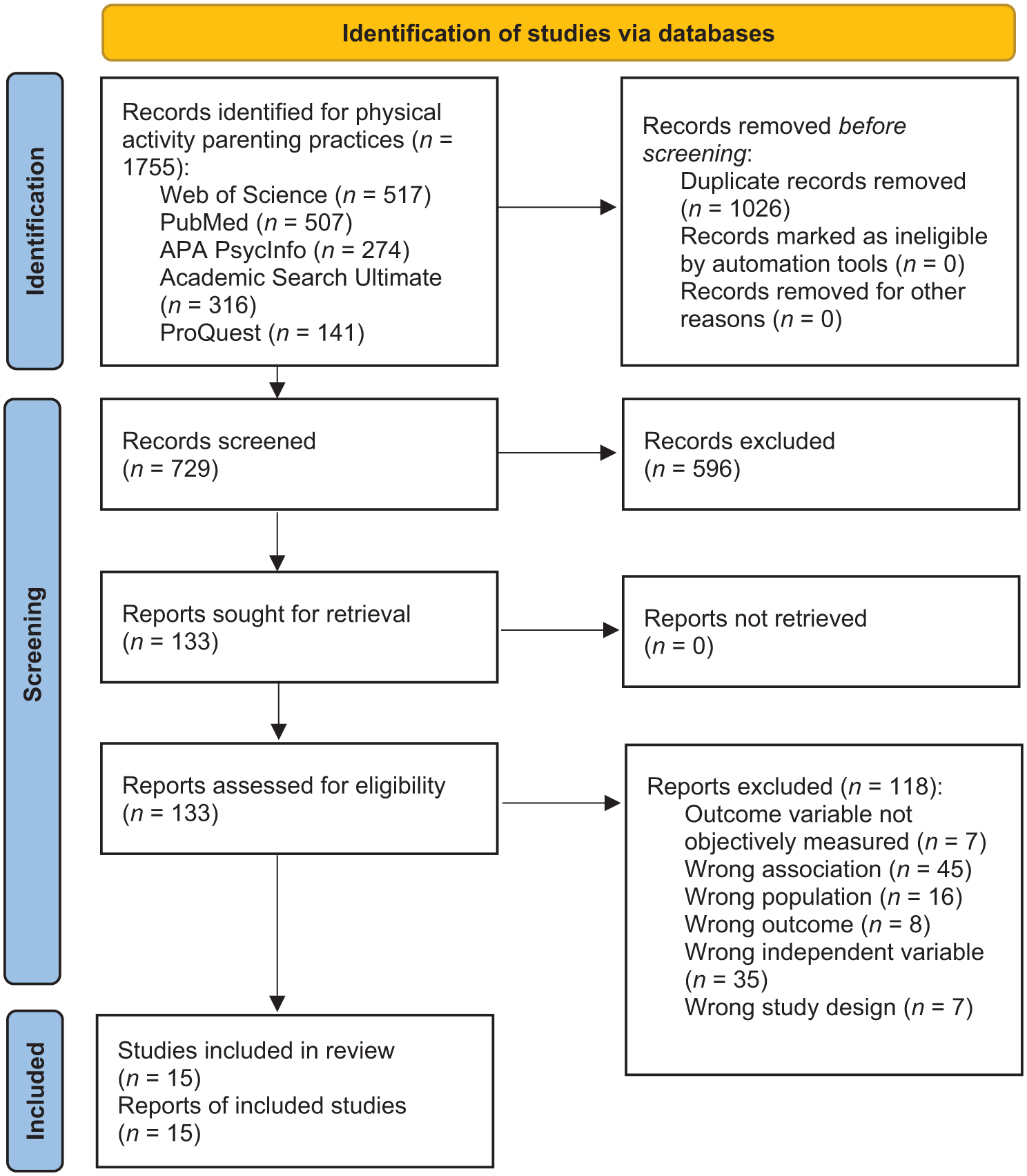
PRISMA Flow Diagram of the Review Process for the Studies Assessing the Association between Physical Activity Parenting Practices and Children’s Weight-Related Outcomes (n = 15).
Study Characteristics
The key characteristics of the included studies are summarized in Table 2 and are described in more detail in the Supplemental Material file, Table S5. For PAPP, 14 records reported on studies using cross-sectional designs, and one reported on a case-control study. The sample sizes ranged from 36 children (Frenn et al., 2011) to 10,863 children (Papamichael et al., 2022). Six records reported data collected from fathers.
Summary of the Main Characteristics of the Studies on the Association between Physical Activity, Parenting Practices, and Weight-Related Outcomes Included in the Systematic Review and Meta-analyses (N = 15).
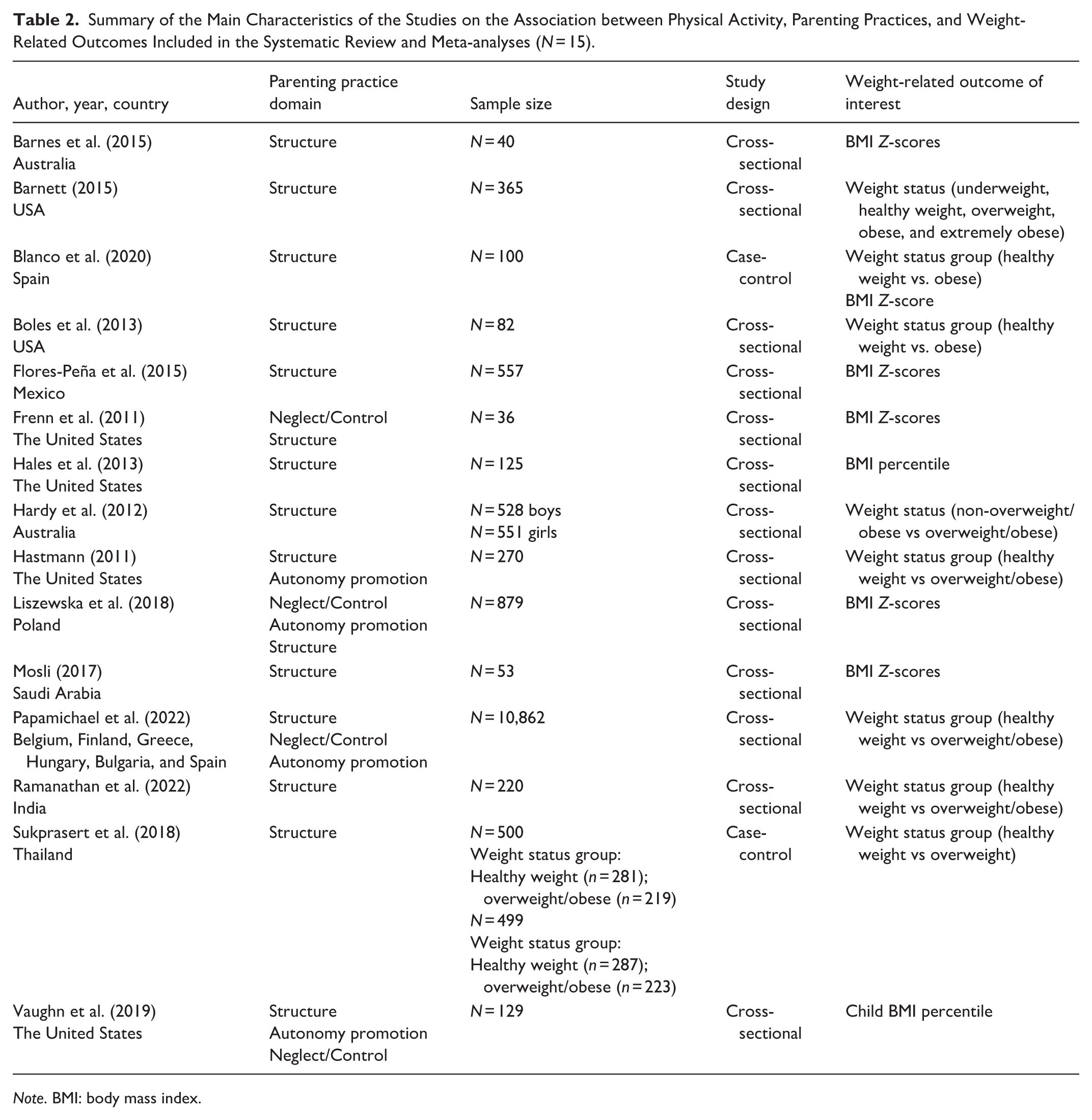
Note. BMI: body mass index.
Study Quality Assessment
The individual quality assessment for records including PAPP is presented in the Supplemental Material file, Table S5. Eight records were classified as having “fair” (four studies) or “good” quality, and seven records as having “poor” quality. The records classified as having “poor” quality mostly failed to control for possible confounders (n = 5), to present a rationale for the sample size (n = 6), and/or revealed in our evaluation some concerns with the representativeness of the samples (n = 6). These records didn’t provide an overview of the differences between respondents and non-respondents (n = 5) or reported an unsatisfactory response rate (n = 2).
Qualitative Synthesis of the Association between PAPP and Children’s WRO
We included 15 records reporting a total of 92 cross-sectional associations between structure PAPP and children’s WRO. The records included data from 15,526 children (50.82% female) aged 2–14 years old (Mage = 7.79), and included on average 34.39% of overweight or obese children (mean BMI Z-score 0.95).
The results of the studies including associations between structure PAPP and children’s WRO suggested a link between a higher use of structure PAPP (including lower levels of PAPP promoting screen time) and lower children’s WRO.
Four records reporting a total of 14 cross-sectional associations between autonomy promotion PAPP and children’s WRO were included, and reported data from 12,140 children (49.68% female) including on average 27.40% of overweight or obese children, aged between 2.5 and 12 years. All the associations reported in the studies were non-significant except one, suggesting the link between encouragement for outside play and children’s WRO, but not between any other PAPP in the structure domain and children’s WRO.
We included four records reporting 11 cross-sectional associations between neglect/control PAPP and children’s WRO, with data from 11,906 children (49.61% female) aged 3–12 years old, and including on average 27.55% of overweight or obese children. The majority of the associations were non-significant, except for two that suggest that neglect and control parenting practices are associated with higher WRO in children.
Meta-Analysis
The studies included in the review about the relation between PAPP domains and children’s WRO did not report longitudinal data, but only cross-sectional associations. For this reason, our meta-analyses only address such associations, as presented in the Supplemental Material file, Table S6. We found small effect sizes for the inverse relationships between structure PAPP and children’s WRO, both for records reporting continuous (Supplemental Material file, Figure S11) and dichotomic (Supplemental Material file, Figure S12) children’s WRO (r = −0.06, p ⩽ .001, and MD = −0.20, p = .010, respectively). Also, the cross-sectional direct relationship between neglect/control PAPP and children’s WRO revealed a small effect size (r = 0.03, p ⩽ .001) (see Supplemental Material file, Table S6 and Figure S15). Such findings suggest that higher structure PAPP is modestly associated with lower WRO, while higher neglect/control PAPP shows a small positive association with WRO. While the heterogeneity was found to be adequate for the PAPP meta-analyses, the cross-sectional association between structural PAPP and continuous children’s WROs revealed a significant Cochrane Q test (Supplemental Material file, Table S6), suggesting some degree of heterogeneity. The inspection of the funnel plots and the Egger’s test and the Kendall’s Tau p-values (non-significant) suggest a reduced likelihood of publication bias, as observed in the Supplemental Material file (Table S6 and funnel plots presented in the figures). The exceptions are for the cross-sectional association between structure practices and continuous children’s WRO (Kendall’s Tau p-value < .001), and for the cross-sectional association between autonomy promotion PAPP and dichotomic children’s WRO (Supplemental Material file, Table S6). In both cases, it was not possible to compute the Egger’s test because all associations were extracted from the same study, violating the test’s assumption of independence between effect sizes (Egger et al., 1997).
Discussion
With our study, we sought to improve the understanding of the link between structure, autonomy promotion, and coercive control FPP and children’s WRO, as well as the relationship between structure, autonomy promotion, and neglect/control PAPP and children’s WRO, using the conceptual frameworks of Vaughn et al. (2016) and Mâsse et al. (2017, 2020) and focused on parenting practices reported by parents, as they occur in non-intervention contexts.
We found small evidence supporting a link between FPP domains and children’s WRO, with structure FPP being the only domain associated with WRO. Our findings suggest that parents’ higher use of structure FPP relates to lower WRO in children (but only for cross-sectional associations with dichotomic WRO). This may suggest that the use of structure FPP, such as ensuring the availability of healthy foods at home and telling children to eat fruits and vegetables, contributes to healthier children’s WRO (Vaughn et al., 2016). Nevertheless, the available evidence does not allow for conclusions on the directionality of the association. Parents’ use of structure FPP can be seen as a response to their perception of children’s WRO, or even take place in an iterative and relationship, both affecting and being affected by children’s WRO. In addition, parents may find it easier to recognize their child’s weight status and respond to a discrete condition (healthy vs. unhealthy weight) rather than making gradual adjustments to their parenting behavior along a continuum of children’s WRO. However, this finding remains to be further explored in future research. Our finding aligns with those from previous systematic reviews that found no support for most of the associations examined in cross-sectional (Russell et al., 2016) and prospective (Beckers et al., 2021) studies.
No associations were found between autonomy promotion, coercive control, FPP, and children’s WRO. Even though Beckers et al. (2021) report a similar finding regarding encouragement FPP and children’s WRO, it is also true that there is scarce research regarding the autonomy promotion FPP, and particularly addressing the association between autonomy promotion FPP and children’s WRO.
Regarding coercive control FPP, unlike Beckers et al. (2021), we found no support for the link between coercive control (which includes both pressure and instrumental FPP) and children’s WRO. This difference may result from the procedures used in our study: we performed meta-analyses, combined individual-specific parenting practices by domain, and excluded studies reporting WRO based solely on caregivers’ reports. Further differences may be accounted for in relation to specific coercive control FPP, such as pressure to eat. In our study, we considered pressure to eat as a practice that promotes unhealthy eating behaviors and unhealthy weight in children, similar to Birch et al. (2001). However, recent literature consistently reports that higher levels of pressure to eat are associated with healthier children’s WRO (Beckers et al., 2021), which contrasts with the findings for most of the specific practices within the control domain. This may have contributed to the small effect sizes in the meta-analyses evaluating the link between coercive control, FPP, and WRO.
Most of the studies included in our reviews are cross-sectional, and therefore, causality cannot be established. The prediction of children’s WRO calls for studies employing longitudinal prospective designs, which should explore the nuanced associations between different FPP domains across child development and children’s weight trajectories.
Our work is a first attempt to characterize the association between FPP and children’s WRO. Our findings should be interpreted with caution, given that we found some evidence for heterogeneity, publication bias, and poor quality of some of the included studies.
We found some evidence supporting the association between structure and neglect/control domains of PAPP and children’s WRO. Consistent with Masse et al.’s conceptualization (Mâsse et al., 2017, 2020), the use of healthy structure PAPP, such as the availability of sports equipment at home or the limited presence of screen media devices, was associated with lower child WRO. This seems to be the case also when parents employ less neglect/control PAPP (Arayess et al., 2023). While some of our findings seem to support Masse et al.’s assertion that structured parental support for physical activity contributes to healthier weight outcomes in children, we did not find evidence supporting an association between autonomy-promoting PAPP and children’s WRO. A possible explanation may be the diversity of measures used to assess PAPP, several of which had not been validated for the samples in the study. Nevertheless, the levels of heterogeneity were acceptable in the meta-analyses performed.
The studies included in our reviews are not exempt from limitations. Most are cross-sectional or observational, preventing conclusions about the directionality of associations between FPP and PAPP. Overall study quality was low, with few rated as high quality. Most studies relied solely on mothers as respondents, restricting generalizability, and few accounted for parents’ education, a factor that might have accounted for the observed associations.
To further understand the relevance of conceptual FPP and PAPP frameworks, primary research is needed to explore the relationship between specific FPP and PAPP, and WRO, and to clarify the directionality of these associations. This seems to be especially important for school-aged children, as research has suggested that parents’ FPP and PAPP seem to be implemented jointly (Canário et al., 2025). Moreover, it is crucial to understand for whom and in which conditions such associations occur. In our work, we employed objective methods to synthesize information from original research following well-described methodologies (Gallagher, 2020). By exploring the associations between different domains of parenting practices and children’s WRO, we provide a more comprehensive understanding of the associations between food and physical activity parenting practices clustered according to conceptual frameworks (Mâsse et al., 2017, 2020; Vaughn et al., 2016) and children’s WRO. With our work, we showcase a more comprehensive perspective on how parenting shapes child WRO. The dimensions of FPP and PAPP reflect a broader parenting approach that can influence multiple aspects of children’s health behaviors. By including both sets of practices, this work highlights the interconnected nature of parenting influences, facilitates comparisons across domains, and encourages future research on potential combined effects, while maintaining analytical clarity through separate meta-analyses.
There are also some limitations to consider when interpreting our results. First, while grouping parenting practices by domain according to the conceptual frameworks allowed us to pool effect sizes and aggregate more information increasing sample size, it might have also contributed to underestimate the individual effect of each specific practice. By including all available associations for each domain of parenting practices, some specific practices may have been either underrepresented or overrepresented in our meta-analyses. Second, studies focusing on children with specific physical or mental health conditions, other than overweight or obesity, were not included. Given that physical and mental health comorbidities frequently co-occur with excessive body weight in childhood, future research would benefit from examining what are the food and physical activity parenting practices of parents of children with physical or mental health conditions that coexist with overweight and obesity, how do these relate to child WRO, and how do these compare to the practices of parents of typically developing children. Third, we did not examine to what extent parents’ and children’s individual characteristics could play a role in the strength and/or direction of the associations between FPP and PAPP and children’s WRO. Future research addressing these limitations may be useful to inform tailored intervention approaches.
Implications for Research and Practice
To address the limitations identified in our work, we believe future research should focus on the causality and directionality of the associations between parenting practices and children’s WRO, through quality studies with longitudinal designs. We did not include studies describing randomized controlled trials as these describe the effects of parenting interventions or programs on child WRO, and including such designs be better suited if we were examining different research questions, such as, which interventions are more effective in changing food and physical activity parenting practices, what are their mechanisms of change, and how do these interventions, through parenting practices outcomes, lead to changes in children’s WRO. Different reviews focused on the effects of family-based and/or parenting programs on the risk of developing obesity or WRO and suggest that family-centered and parenting interventions are promising for promoting better health among children and tackling childhood obesity. However, some of the studies included in the reviews yield mixed findings, and thus, the reviews highlight the need to develop more longitudinal prospective primary studies, following controlled designs, with large sample sizes, to overcome the limitations of methodological heterogeneity and limited long-term data (e.g., Gupta et al., 2025; Kalembo & Kendall, 2022; Latkolik et al., 2025; Sachdeva & Sneed, 2025). In addition, we suggest that future research should employ methods beyond randomized controlled trials, such as factorial designs, and apply analytic strategies, such as cross-lagged panel analysis, to ascertain causality. Indeed, given the relevance of the associations described in the literature, future research should examine how specific food and physical activity parenting practices contribute to children’s WRO using analytic procedures that also examine how children’s WRO contribute to parents’ parenting practices, investigating the possibility that these relations occur through reciprocal, iterative processes. Our work brings us a step closer to this research goal by describing the effect sizes of the associations between food and physical activity parenting practices, and child WRO, allowing researchers to identify which associations warrant further investigation.
Future research should include both mothers and fathers as respondents to provide a more comprehensive understanding of family dynamics and influences, follow the conceptual frameworks of FPP and PAPP and use sound, valid measures to assess food and physical activity parenting practices. Our work has the potential to inform the development of parent-focused interventions by emphasizing structure feeding and structure physical activity parenting practices, such as ensuring the availability of healthy foods at home or supporting children’s engagement in physical activity. We also believe there are benefits to targeting clusters of parenting practices within conceptual domains rather than focusing on isolated behaviors, providing a more ecologically valid approach to supporting healthy changes in children’s WRO.
Supplemental Material
sj-docx-1-jbd-10.1177_01650254261438680 – Supplemental material for Food and physical activity parenting practices and children’s weight-related outcomes: A systematic review and meta-analysis
Supplemental material, sj-docx-1-jbd-10.1177_01650254261438680 for Food and physical activity parenting practices and children’s weight-related outcomes: A systematic review and meta-analysis by Marco Silva-Martins, Ana Catarina Canário, Sanne Gerards and Orlanda Cruz in International Journal of Behavioral Development
Supplemental Material
sj-docx-2-jbd-10.1177_01650254261438680 – Supplemental material for Food and physical activity parenting practices and children’s weight-related outcomes: A systematic review and meta-analysis
Supplemental material, sj-docx-2-jbd-10.1177_01650254261438680 for Food and physical activity parenting practices and children’s weight-related outcomes: A systematic review and meta-analysis by Marco Silva-Martins, Ana Catarina Canário, Sanne Gerards and Orlanda Cruz in International Journal of Behavioral Development
Footnotes
Acknowledgements
The authors thank Eleonora Postinger and Mariana Costa for collaborating in the screening and eligibility phases of the present study, respectively. The authors also thank Helena Mesquita from the Library of the Faculty of Psychology and Education Sciences of the University of Porto, and Cláudia Fernandes, from the Documentation and Information Services of the Faculty of Arts and Humanities of the University of Porto, for their assistance and collaboration in obtaining the full version of the thesis and some of the full-text articles selected to include in the eligibility phase.

Author Contribution
Marco Silva-Martins: Conceptualization, Study administration, Statistical analysis, Methodology, Writing—original draft, and final version of the manuscript. Ana Catarina Canário: Conceptualization, Methodology, Supervision, Writing and review. Sanne Gerards: Conceptualization, Supervision, Writing and review. Orlanda Cruz: Conceptualization, Methodology, Supervision, Writing and review.
Ethical Considerations
This study was deemed non-human subjects research in accordance with DHHS regulations (45 CFR 46.101) and did not require institutional review board approval. Ethical approval was not applicable for this meta-analysis, as it synthesized data from studies already published in the scientific literature. The study adhered to the ethical standards outlined in the Declaration of Helsinki.
Consent to Participate
Not applicable.
Consent for Publication
Not applicable.
Funding
The authors disclosed receipt of the following financial support for the research, authorship, and/or publication of this article: MSM was supported by the Fundação para a Ciência e a Tecnologia (FCT) under a PhD studentship (UI/BD/150897/2021) and an Exceptional Scholarship (COVID/BD/153676/2025). ACC and OC were also supported by national FCT funds sponsoring the Center for Psychology at University of Porto (UIDB/00050/2020).
Declaration of Conflicting Interests
The authors declared no potential conflicts of interest with respect to the research, authorship, and/or publication of this article.
Data Availability Statement
The data that support the findings of this study are available upon reasonable request.
Study Registration
The protocol for the review was registered on PROSPERO (CRD42023404928).
Supplemental Material
Supplemental material for this article is available online.
References
Supplementary Material
Please find the following supplemental material available below.
For Open Access articles published under a Creative Commons License, all supplemental material carries the same license as the article it is associated with.
For non-Open Access articles published, all supplemental material carries a non-exclusive license, and permission requests for re-use of supplemental material or any part of supplemental material shall be sent directly to the copyright owner as specified in the copyright notice associated with the article.
