




Abstract
This pre-registered daily diary study examined the extent to which daily co-rumination with friends after experiencing victimization may exacerbate victimized youths’ daily mood problems, considering both within- and between-person perspectives. For 15 consecutive school days, n = 1,669 Finnish seventh- to ninth-grade adolescents (Mage = 14.45; 55.5% girl) filled in daily questionnaires about victimization, co-ruminating about victimization, and mood. On the within-person level, students did not experience worse mood on days they were victimized and co-ruminated, compared to days they were victimized and did not co-ruminate about it. On the between person-level, students who were victimized at least once and co-ruminated about it as least once experienced more mood problems as compared to those who were victimized at least once but never talked to friends about their victimization. Sensitivity analyses revealed that when controlling for victimization intensity, co-rumination was associated with benefits in daily mood (i.e., less depressed mood) on the within-person level compared to days in which youth were victimized and talked to a friend but did not co-ruminate.
Introduction
Peer victimization in adolescence is a serious problem that is a risk factor for internalizing problems (Christina et al., 2021), potentially lasting even into adulthood (McDougall & Vaillancourt, 2015). Although social support from peers is often thought of as a protective factor that can mitigate the link between stressors and mental health difficulties (Cohen & Wills, 1985), some previous work has demonstrated that supportive friendships may actually exacerbate the negative consequences of victimization (Schacter et al., 2021). This surprising finding may be because some social support from peers could consist of potentially problematic dynamics, such as co-rumination. Co-rumination involves extreme fixation on the stressor and the negative feelings caused by the problem (Rose, 2002). A handful of (cross-sectional) studies have found that youth who co-ruminate with their friends more also experience more emotional problems than those who do not co-ruminate with friends (between-person effects), but these studies were unable to tease apart between- and within-person effects. Distinctions are needed between “trait”-like co-rumination (i.e., a stable quality that varies person to person) and “state” co-rumination (i.e., can vary moment to moment within persons). Considering “state” co-rumination allows examination of how fluctuations in co-rumination (in response to a given stressor) is linked to fluctuations in one’s emotional state (within-person effects). However, most previous studies have assessed victimization and tendency to co-ruminate over problems in general, without specifically examining co-rumination in response to victimization that has occurred. Although many studies examine the long-term impact of victimization on emotional well-being (typically focusing on between-person differences), it is also important to investigate how these dynamics occur as they are happening (i.e., on a day-to-day basis), as the daily impact of victimization on mood may underlie the long-term negative psychological consequences of victimization (e.g., Morrow et al., 2014). The current study goes beyond past research by investigating the role of co-rumination about victimization on youth’s emotional well-being (specifically daily mood), on both between- and within-person levels by utilizing a daily diary design.
Victimization, Co-Rumination, and Daily Mood
Consistent with the response styles theory (Nolen-Hoeksema, 1991), rumination involves excessive focus or dwelling on one’s distress and is a transdiagnostic risk factor for mental health difficulties (Watkins & Roberts, 2020). Rather than dwelling on one’s distress alone, the negative consequences of stressful events can be offset by social support—in line with the stress-buffering model (Cohen & Wills, 1985). Specifically, for youth who are victimized on a given day, discussing it with a friend can be considered a form of seeking social support (Vijayakumar & Pfeifer, 2020)—which may buffer against the negative consequences of victimization. However, it should be acknowledged that the implications of discussing victimization with a friend on youth’s well-being may be more complicated when these discussions involve co-rumination, as co-rumination involves both seeking social support but also dwelling on one’s distress and/or problem (Rose, 2021). Thus, although seeking support is generally thought of as an adaptive strategy for victimized youth (McDougall & Vaillancourt, 2015), this may no longer be the case when it involves excessive dwelling.
Indeed, the general tendency to co-ruminate about problems (of any kind) is associated with internalizing problems (Badawi & Ingram, 2025; Rose, 2021; Spendelow et al., 2017). In addition, trait co-rumination has also been found to moderate the association between daily stressful life events and depressed mood (White & Shih, 2012). Daily co-rumination has also been linked to within-day increases in depressed mood, but did not moderate the effect of general daily stress on depressed mood (White & Shih, 2012). Still, it is important to consider the specific type of stressor, as co-rumination about interpersonal stressors is more strongly associated with depressive symptoms than co-rumination about other types of stressors (Nicolai et al., 2013; Rose, 2021). Given that peer victimization is a highly salient social stressor in adolescence, this underscores the importance of examining co-rumination in relation to victimization experiences.
Only a few studies have investigated how co-rumination may impact the association between peer victimization and well-being, and they have focused on general tendencies to co-ruminate, rather than co-rumination specifically about the victimization experienced. Two cross-sectional studies (Guarneri-White et al., 2015; Huang et al., 2022) found that the concurrent link between peer victimization and psychological problems was non-significant for those who reported low levels of co-rumination, but was significant and positive for those with high levels of co-rumination. Daily diaries allow investigation of the impact of co-rumination specifically about victimization experiences that day on adolescents’ daily emotional well-being. Not only does this provide new insight into the impact of co-rumination specifically about victimization experiences (rather than general co-ruminative tendencies), it can also elucidate micro-level dynamics—that is, day-to-day associations between victimization, co-rumination, and daily mood. This is a key strength as peer relations research often uses time frames (e.g., over the span of several months) that may not properly reflect the time frames in which the process of interest occurs (de Castro et al., 2015). Previous daily diary studies indicate that youth indeed report more negative mood (i.e., feelings of humiliation, depression; Herres et al., 2016; Nishina, 2012; Nishina & Juvonen, 2005) and less positive mood (Reavis et al., 2015) on days when they have been victimized, which was also found in a previous study using the same sample as the current study (Laninga-Wijnen et al., 2024). The current study will extend upon this previous work by examining whether co-ruminating about the victimization exacerbates the link between daily victimization and mood problems. As co-rumination involves dwelling on negative affect, victimization may be linked to worse mood problems (more negative mood, less positive mood) on days when adolescents co-ruminate with their peers about their victimization experiences.
In addition, whereas previous research has primarily focused on between-person differences when examining the links between victimization, co-rumination, and well-being, daily diaries can investigate both between- and within-person associations. On the between-person level, we can still examine whether adolescents who have experienced victimization and co-ruminated about this experience differ in general emotional well-being over the span of the daily diary study compared to those who have not been victimized, or those who were victimized but did not co-ruminate. However, by also considering the within-person level, we can avoid the limitation of possible unmeasured variables driving individual (between-person) differences. Instead, we can examine whether the same individuals experience elevated mood problems on days they are victimized and co-ruminate about their experience, compared to days they are victimized and do not co-ruminate, or days when they are not victimized. Another important distinction to consider is that adolescents may discuss their victimization with their peers without engaging in co-rumination, or may not even disclose their victimization to their peers. Thus, we will differentiate between youth who were victimized and did not talk to any peers about it, youth who were victimized and co-ruminated, and youth who were victimized, talked to peers about it, but did not co-ruminate.
Current Study
The current study will examine the impact of co-rumination about victimization experiences on adolescents’ negative (i.e., feelings of humiliation and depression) and positive mood, considering both between- and within-person perspectives. On the within-person level, we hypothesize that students will experience more mood problems on days when they are victimized and co-ruminate compared to days when they are victimized but do not talk to peers about their victimization, victimized but talk to peers about their victimization without co-ruminating, and non-victimized. On the between-person level, we expect that youth who were victimized at least once and co-ruminated at least once across observations will report more negative and less positive mood compared to youth who were victimized at least once during the 2 weeks but did not co-ruminate. We will control for gender in all analyses, given that girls have been found to co-ruminate more often than boys, particularly in adolescence (Rose, 2021).
Method
Participants and Procedure
The sample included 1,669 Finnish students in grades 7–9. Cohort 1 (data collected in January–February 2023) consisted of 439 students from 16 schools, while Cohort 2 (data collected in January–February 2024) included 1,230 students from another 15 schools. Participants had a mean age of M = 14.45 years (SD = 0.87, range = 13.04–18.00), with 927 identifying as girls and 648 as boys. The number of students per school varied from 2 to 172. Over 95% of students indicated that they spoke Finnish at home, suggesting that the large majority of our sample was Finnish.
Schools were recruited as part of the broader SOLID project and were informed that participation included both substudies, including the daily diary study (for more details, see https://osf.io/nghwm/overview). A 2020 registry of Finnish basic education schools (retrieved from Statistics Finland) was used to contact school principals via email, inviting them to participate. As an incentive, schools were offered a report of research findings, anti-bullying intervention training on defending, and the chance to enter a lottery for a €2,000 monetary reward. All participating schools in the current study were public schools, as is the vast majority of basic education schools in Finland (>95%). Students typically go to the school in their neighborhood, and despite some minor socioeconomic differences between neighborhoods, segregation is very low in Finland.
Parents and students from participating schools were informed about the SOLID project (https://osf.io/nghwm/overview) and asked to provide active written or electronic consent for participation and data archiving. In accordance with Finnish law, only students aged 13 and older were invited to take part in daily diary component (SOLID DAILY). Of the 8,261 students invited (Cohort 1: n = 2,855; Cohort 2: n = 5,406), a total of 3,489 (42%) received parental consent (Cohort 1: n = 643; Cohort 2: n = 2,846).
The daily diary study took place over a 3-week period in January–February (2023 for Cohort 1, 2024 for Cohort 2). In the week leading up to data collection, teachers were instructed on how to assist students in installing the Avicenna app (formerly EthicaData) on their mobile phones. From that point, students could register for the study using an anonymous email address generated by researchers, ensuring pseudonymity by preventing the use of personal email addresses. Students were assured that their responses would remain confidential and that they could opt out at any time.
A total of 2,182 students (Cohort 1: n = 497, Cohort 2: n = 1,685) registered in the Avicenna system, with 48 students later declining participation, resulting in 2,134 final participants. Over approximately 10 school days, participants completed a 2- to 3-min questionnaire at the end of each school day (3 p.m.) via the Avicenna app. Responses were accepted until 11:59 p.m., with in-app reminders sent at 5:00, 7:00, and 8:00 p.m. Daily measures included positive and negative mood, bullying victimization experiences, talking to friends, and co-rumination. The questionnaire followed an adaptive structure based on participants’ responses, ensuring that each student received approximately 30 questions per day. A detailed overview of all items and conditions for questionnaire administration is available (visit https://osf.io/6d2pz/overview?view_only=028a339911d545d8b7bb48ac1b1fc00e (pre-registration) and https://osf.io/nghwm/overview (codebook)). At the end of each questionnaire, students were informed that if they wished to discuss any topics raised in the questionnaire, they could reach out to a trusted adult at school, such as a teacher or social worker. In addition, the phone number of the Children and Adolescents helpline (free of charge) was provided.
To encourage participation, students who completed five questionnaires within one school week were entered into a raffle to win a tablet computer. Those who completed all 10 questionnaires over 2 weeks doubled their chances of winning. In line with best practices for intensive longitudinal studies (van Roekel et al., 2019), a third week was offered for students to “catch up” on any missed questionnaires. Notably, some students who had already completed all 10 questionnaires still chose to participate during the extra days, leading to a few students voluntarily filling out up to 15 questionnaires, despite being informed that this was unnecessary. In comments (asked at the end of the survey), students indicated that they liked filling in the questionnaires, which might have been the reason why they continued the diaries the third week.
In total, 1,669 students (78.2% of the 2,134 who registered and intended to participate) completed at least one questionnaire (Laninga-Wijnen et al., 2024). Of the 20,389 surveys issued, 12,366 (61%) were at least partially completed. On average, participants completed 7.41 surveys (SD = 4.20). A detailed overview of all measures administered in the study is available in the publicly accessible codebook (https://osf.io/nghwm/). The study was approved by the Ethical Board of the University of Turku in Finland (Approval Number: 53/2021).
Measures
Victimization
Each day, students were asked whether they had gone to school that day, and if so, they were asked about their victimization experiences. They were asked “Have you been bullied at school today in such a way that other students . . .” followed by five items: “have spread gossip about you?,” “were name-calling or saying bad things to you,” “excluded you from activities or discussions,” “pushed, hit, or kicked you,” and “have taken or messed up your stuff” (based on Morrow et al., 2019; Solberg & Olweus, 2003). Students could respond on a 5-point Likert-type scale, varying from 1 = not at all to 5 = very much. Within-person reliability of these five items was ω = .78, and between-person reliability was ω = .77. For the main analyses, we created a within-person dummy variable in which students received a “1” if they were a non-victim on a certain day (i.e., a score of “1” on all victimization items) and a “0” if they indicated on at least one of the items that they were victimized that day. Thus, being victimized was the reference category. We also created a between-person dummy variable in which students received a “1” if they were never victimized across all observations and a “0” if they were victimized at least once across all observations. For descriptive purposes, we calculated the within- and between-person average of victimization items as well.
Talking to friends or classmates, and co-rumination
Only students who had indicated on at least one of the victimization items that they were victimized that day were asked whether they talked to friends or classmates about the victimization. They could respond with either yes (1) or no (0) to this question (cf. Nishina, 2012). For our analyses, we transformed this item into a within-person dummy (“did not talk”) in which students received a “1” on days they were victimized but did not talk to friends or classmates—versus the rest who received a “0.” We also created a between-person dummy variable for never talking to friends or classmates: students received a “1” if they never talked to friends or classmates about victimization across observations versus the rest who received a “0.”
Next, on days that victims reported that they had talked to friends or classmates, they were asked to indicate the extent to which they co-ruminated with three items: “We talked about the bullying problem a lot of times when we were together today” (engaging in problem talk), “I talked with my friends or classmates about reasons for why the victimization today may have happened” (cognitive rehashing), and “We talked for a long time about how bad I feel about the victimization” (emotion rehashing). Responses included 3 = not true, 2 = a bit true, and 1 = very true, which were then reverse coded so that higher scores reflected more co-rumination. The items assessing co-rumination were based on the CRQ, but adapted to measure daily state-level co-rumination (rather than trait-level), and adapted it to the victimization context. We selected three items based on the study of Davidson et al. (2014) who explored factorial validity of the CRQ, who detected a three-factor structure (although other work detected a one-factor structure; see Rose, 2021). We chose two items that correspond to the “rehashing factor,” and one about encouraging problem talk. We limited answer categories to three, rather than five, because on a daily basis, there may not be as clear of a difference between, for example, “true” and “very true.” Model fit of confirmatory factor analysis was good, with CFI = 1.000, TLI = 1.005, RMSEA = .000, and SRMR within = .034 and SRMR between = .024, and factor loadings varying from .512 to .599. Within-person reliability of items was rather low, ω = .56, while between-person reliability was good, with ω = .88. On days that students did not score a “3” on any of these three items (after reverse-coding), they received a “1” for the within-person dummy “no co-rumination that day” (see Appendix 1 for how this somewhat deviates from our pre-registration). All other students received a “0.” We also created a between-person dummy variable for never co-ruminated: students received a “1” if they never co-ruminated across all observations versus the rest who received a “0.” For descriptive purposes, we also created within- and between-person sum scores of the items co-rumination.
Daily negative and positive mood
Daily mood was assessed using both high- and low arousal items, partially derived from the Positive and Negative Affect Scale (PANAS, Watson et al., 1988) and partially based on previous work on this topic (Nishina, 2012; Reavis et al., 2015). The PANAS has been adapted for daily reporting in several previous studies involving adolescents (e.g., Silk et al., 2003). Students were asked to rate on a 5-point Likert-type scale (ranging from 1 = not at all to 5 = very much) to what extent they felt certain emotions throughout their day. Negative mood was captured with items assessing depressive feelings (sad, unhappy, and lonely) and feelings of humiliation (embarrassed, insecure, and ashamed). The items for depressed mood and feelings of humiliation, respectively, were averaged to create two scales for negative mood. The emotions for positive mood included relaxed, cheerful and content (cf. Reavis et al., 2015), and these were averaged to create a scale for positive mood.
Multi-level confirmatory factor analysis on all nine daily mood items indicated that the three factors (positive mood, humiliation, sad mood) could be extracted both at the within- and between-level, with good model fit (CFI = .952, TLI = .936, RMSEA = .048, SRMRwithin = .032, SRMRbetween = .082). Within-person reliability estimates were ω = .61 for positive mood, ω = .70 for humiliation, and ω = .74 for sad mood. Between-person reliability estimates were ω = .87 for positive mood, ω = .81 for humiliation, and ω = .85 for sad mood.
Gender
Participants’ gender was based on the combination of their answers during the survey and daily diary data collections. This was based on the item “how do you identify”, on which students could pick “girl,” “boy,” or “other.” We set the option “other” as missing due to their low percentage (< 1.0%). Girls were set as the reference category.
Transparency and Open Science
The design and sampling of the full project have been pre-registered (https://osf.io/nghwm/). This specific study was pre-registered as well (visit https://osf.io/6d2pz/overview?view_only=028a339911d545d8b7bb48ac1b1fc00e). Any deviations from our pre-registered plan have been transparently documented in Appendix 1. Furthermore, all cleaned data and syntaxes necessary to replicate this study are available at https://github.com/lydialaningawijnen/datapaperIJBDcorumination. We refrained from using AI in our writing process.
Analytic Strategy
Data cleaning and descriptive analyses were performed in R, using the dplyr (Wickham et al., 2023) and misty packages (Yanagida, 2024). To test our hypotheses, we analyzed multi-level models in Mplus 8.6, and we ran them for each mood outcome separately. We person-mean centered within-person categorical and continuous variables (Level 1) to tease apart within- and between-person effects (Yaremych et al., 2023).
Does Co-Rumination Predict Victims’ Mood Problems?
To examine the role of co-rumination in victims’ daily mood, we used a model-building approach. In Models 1.1 (the intercept-only models for each mood outcome separately), we estimated the relative amount of within- and between-person variance in the positive and negative mood variables. In Models 1.2, we determined the within- and between-person associations of being victimized and different types of mood (so for each type of mood we ran a Model 1.2). At the within-person level (Level 1), one dummy variable assessing not being victimized (1 = non-victimized on that day and 0 = victimized on that day) was included as a predictor in the model. At the between-person level, a dummy assessing never being victimized was included (1 = never victimized across observations; 0 = being victimized at least once across all observations). At the between-person level, gender was also included as a covariate (0 = girl; 1 = boy).
In Models 1.3, we tested our main question of interest (the role of co-rumination about victimization experienced that day), separately for each mood indicator. Specifically, we estimated the within-person effect of co-rumination on mood by adding two within-person dummies: one for not talking to friends or classmates about the victimization on a certain day (did not talk to friends or classmates = 1 versus the rest = 0) and one for not co-ruminating on a certain day (no co-rumination = 1 versus the rest = 0). The addition of the second and third dummy variables changed the interpretation of the effects of the dummy variables that were originally included in Model 1.2, because these variables became conditional on each other. Dummy 1 (being non-victimized) now reflected the effect of being non-victimized versus being a co-ruminating victim on a particular day. Dummy 2 (did not talk) reflected the effect of being victimized but not talking about it versus being a co-ruminating victim on a particular day. Dummy 3 (no co-rumination) reflected the effect of being a victim who talked to a friend but did not co-ruminate versus being a co-ruminating victim on a particular day. Thus, these three dummies together enabled us to test our hypotheses by comparing students’ mood on days that they were co-ruminating victims versus on days that they were (1) non-victimized, (2) victimized but did not talk to others about it, and (3) talked to others but did not co-ruminate.
At the between-level of Model 1.3, we added two comparable dummies: one for never talking to friends or classmates about victimization across observations (never talked = 1, versus the rest = 0) and one for talking at least once to friends but never co-ruminating across observations (never co-ruminated = 1, versus the rest = 0). Again, the three dummies at the between-level were now conditional on each other, meaning that between-person dummy 1 (never victimized) reflected the effect of being never victimized versus being at least once victimized and at least once co-ruminating with friends or classmates. Dummy 2 (never talked) reflected the effect of being victimized at least once but never talking to friends or classmates about it, versus being victimized at least once and co-ruminating at least once. Dummy 3 (never co-ruminated) allowed comparison of students who were at least once victimized and talked to friends or classmates about it at least once but never co-ruminated, versus those who were at least once victimized and who co-ruminated at least once across observations. Together, these dummy variables enabled us to test the hypotheses about the within- and between-person effects of co-rumination on victims’ mood.
In both Models 1.2 and 1.3, we tested whether within-person predictors should be included as random or fixed effects by comparing Deviance Information Criteria (DIC) between models, with lower DIC indicating a better model. We also evaluated whether Models 1.3 explained additional variance in students’ mood compared to Models 1.2. Given that Models 1.2 were also tested in another paper (Laninga-Wijnen et al., 2024), we will mostly focus on Models 1.3 which pertain to the main questions of our paper.
Model Estimation Procedures
Across all models, we applied Bayesian estimation. We used the Gibbs algorithm for models including random effects, which is an MCMC technique that iteratively draws on a sequence of parameters, latent variables, and missing observations to construct the posterior distribution based on the observed data and specifications of the parameters (Asparouhov & Muthén, 2010). The Gelman-Rubin method was used to determine the convergence of Bayesian estimates, which compares the variability of parameter estimates both within and between chains (Gelman, 2004). The models including talking to friends/classmates and co-rumination did not converge when estimating random effects—even not after 50.000 iterations, which is most likely due to the categorical nature and thus limited between-person variation of our predictors. Therefore, we decided to include fixed within-person effects across all models (all converged within 20.000 iterations with a Potential Scale Reduction close to 1.00). Trace plots were inspected to check parameter-specific convergence, with plots resembling “fat caterpillars” indicating good convergence. In Bayesian estimation, missing values are predicted at each iteration of the estimation process based on the model specification, the parameter estimates obtained from the previous iteration, and the observed data (Winter & Depaoli, 2022).
Across all models, we considered retrieved parameters as significant and interpreted the effect sizes if Bayesian p-values were smaller than .05 and if the Credibility Intervals did not contain 0. Effect sizes were computed for each outcome based on the STDYX standardization for continuous predictors and STDY standardization for categorical predictors, and we used the criteria of Gignac and Szodorai (2016) to interpret the size of the effects.
Results
Descriptive Results
Figure 1 provides a flowchart indicating the prevalence of victimization, talking to friends or classmates, and co-ruminating with them. The figure reports these prevalences both at the within-person (i.e., observations) and a between-person (i.e., individuals) level. On 11,023 out of the 12,366 observations, students had gone to school and hence were asked about being bullied and co-rumination. In 1,329 out of these 11,023 observations (12.1%), participants indicated they had been victimized at school that day. These 1,329 observations of bullying were nested in 654 participants, of whom 386 were bullied once, 124 were bullied twice, and 144 were bullied at least three times across all school days (and students filled in questionnaires on 7 days, on average). On most days that students were victimized, they did not talk to their friends or classmates about it (on 890 out of 1,329 observations; 70.0%), and if students talked to friends or classmates, co-rumination occurred in almost half of the observations. Specifically, on 194 out of 403 victimization episodes students co-ruminated (i.e., scored a “3” on at least 1 of the reverse-coded co-rumination items) when they talked to friends of classmates (48.1%), with 1 response missing on the co-rumination items. These 194 episodes were nested in 139 students—among them, 113 co-ruminated once, 15 co-ruminated twice, and 11 co-ruminated three or more times.
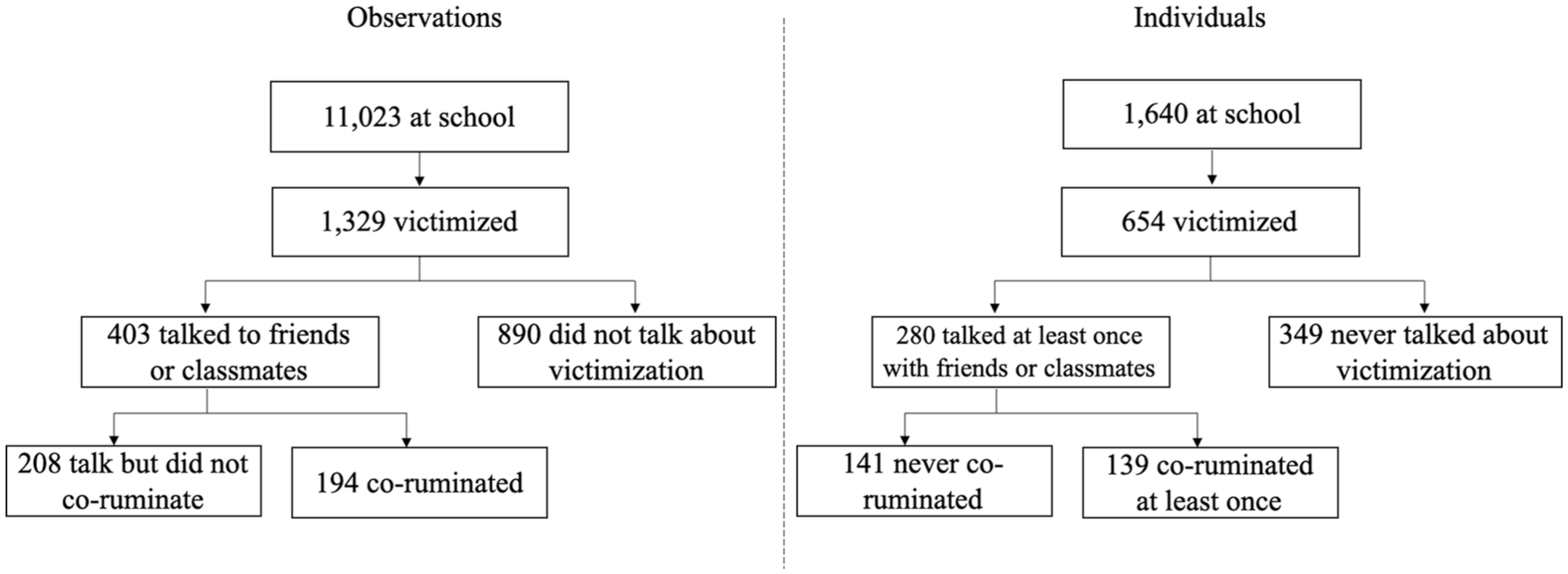
Flowchart of Victimization, Talking About It, and Co-Ruminating Across Observations and Individuals.
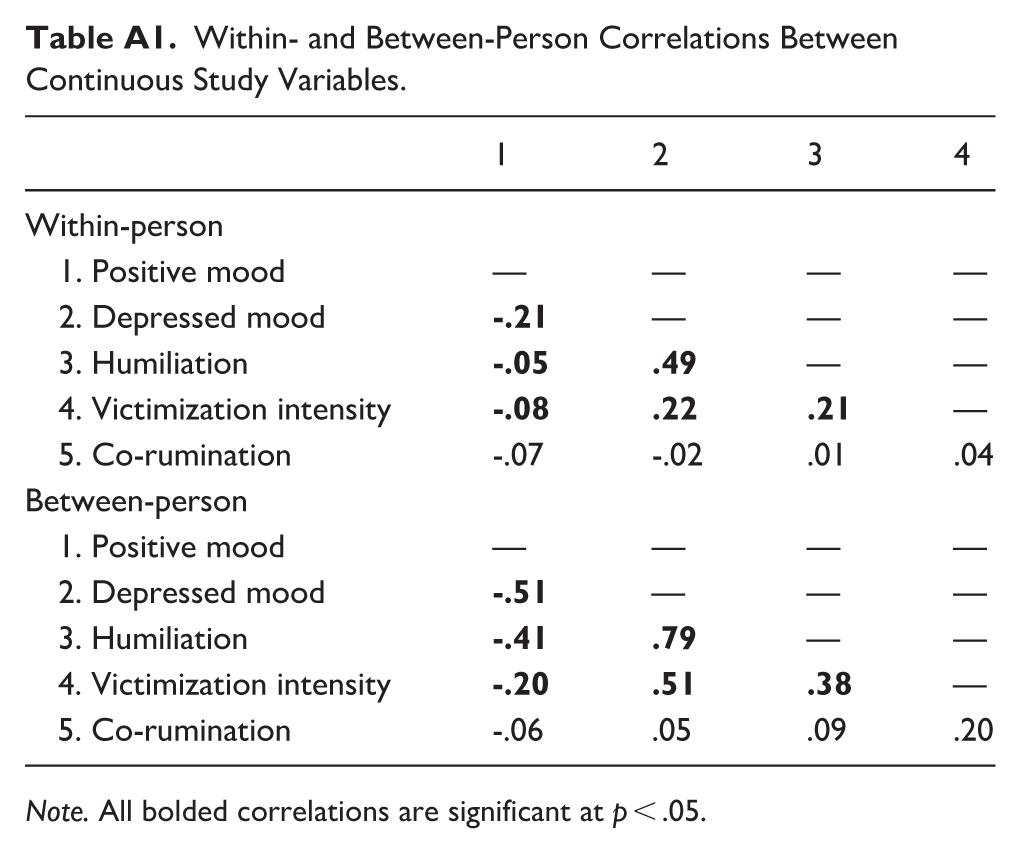
Table 1 displays the averages of daily mood, victimization, and co-rumination across varying observations (upper part) and individuals (lower part). In Table A1 (Appendix 2), we reported within- and between-person correlations between our continuous variables.
Averages and Standard Deviations of Daily Mood, Victimization, and Demographic Information.
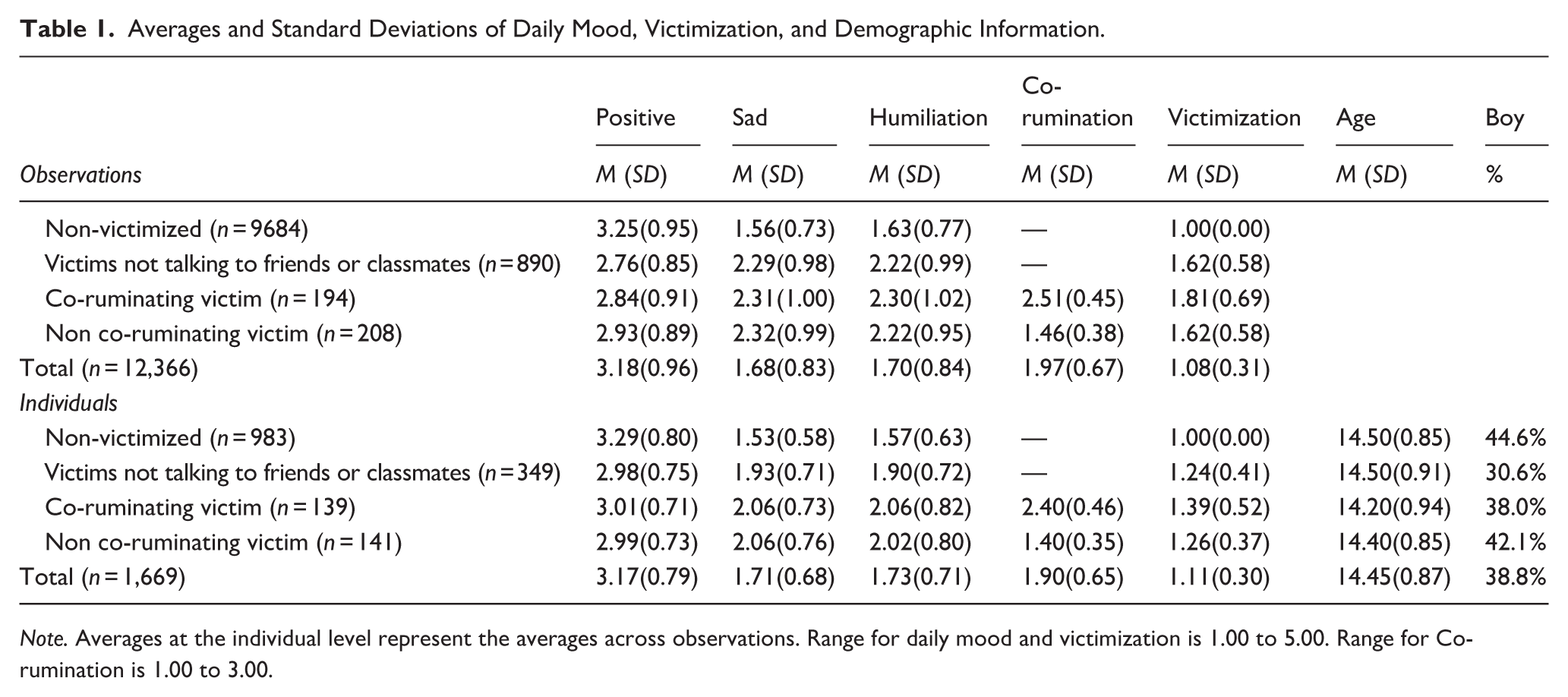
Note. Averages at the individual level represent the averages across observations. Range for daily mood and victimization is 1.00 to 5.00. Range for Co-rumination is 1.00 to 3.00.
Intercept-Only Models
Before testing our hypotheses, we ran intercept-only models for all three mood indicators (Models 1.1). Intraclass correlations varied from .53 to .61, indicating that a bit more than half of the variance in mood was due to differences between persons, and the remaining variance was due to differences within persons or measurement error.
Does Co-Rumination Relate to Within- and Between-Person Mood Problems?
Models 1.2 reveal that students had a less positive mood (βpositive = .059, small effect; Gignac & Szodorai, 2016) and more negative mood (βdepressed = −.159, βhumiliation = −.162, small to medium effects) on days that they had been victimized as compared to on days that they had not been victimized (see Table 2). Moreover, students who were at least once victimized across observations had—on average—a less positive mood (βpositive = .181) and more negative mood than students who were never victimized (βdepressed = −.345, βhumiliation = −.264). Regarding gender, boys experienced fewer mood problems than girls. The effects at the between-person were medium to large (Gignac & Szodorai, 2016).
The Role of Victimization in Within- and Between-Person Differences in Daily Mood (Models 1.2).
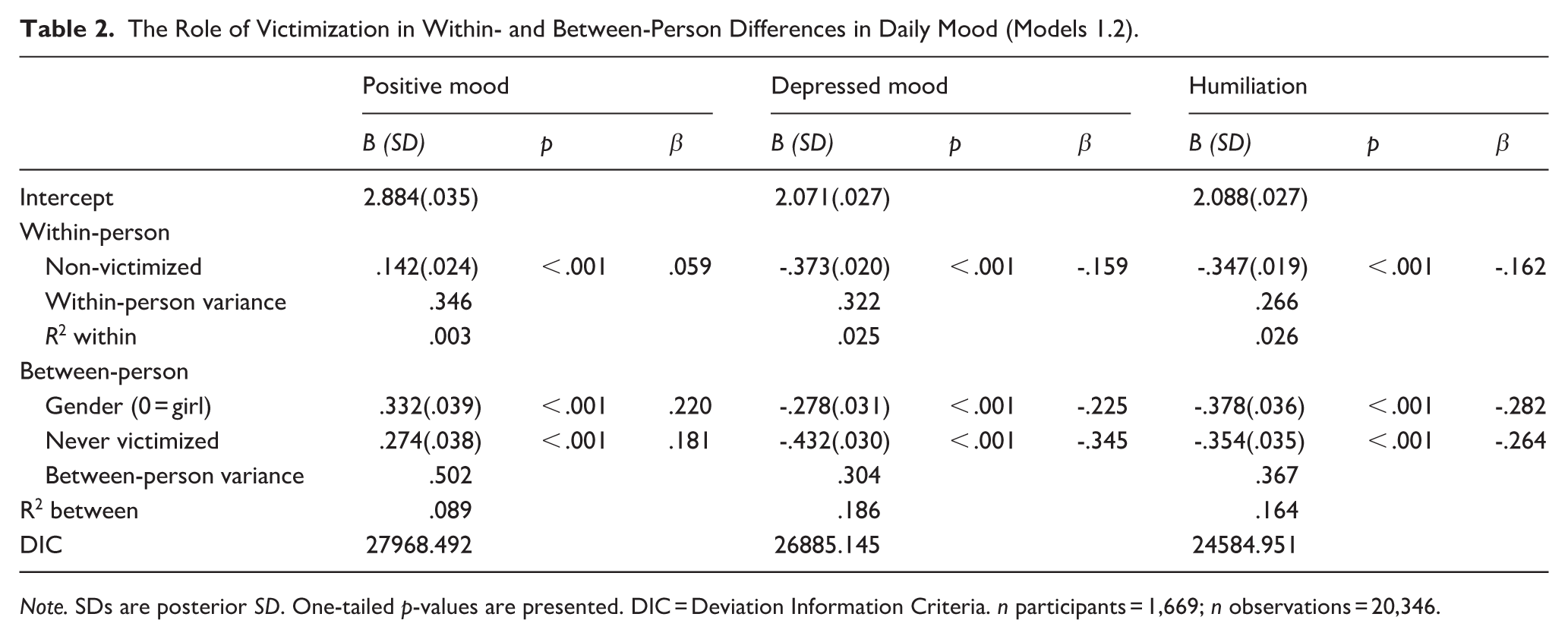
Note. SDs are posterior SD. One-tailed p-values are presented. DIC = Deviation Information Criteria. n participants = 1,669; n observations = 20,346.
In Models 1.3, we examined how co-rumination was related to each mood indicator separately, both at the within-person and the between-person level. We had hypothesized that students would experience more mood problems on days when they are victimized and co-ruminate compared to days when they are: (1) victimized but do not talk to peers about their victimization, (2) victimized but talk to peers about their victimization without co-ruminating, and (3) non-victimized. Although we found that students experienced more mood problems on days that they had been victimized and co-ruminated as compared to on days that they had not been victimized (βpositive = .060, small effect; and βdepressed = −.138, βhumiliation = −.168, small to medium effects), there were no significant differences in students’ mood on days that they had been victimized and co-ruminated compared to days that they had been victimized and did not talk to friends/classmates about it, or days that they had been victimized, talked with friends/classmates about it, but did not co-ruminate (Table 3).
The Role of Co-Rumination About Victimization in Within- and Between-Person Differences in Daily Mood (Models 1.3).
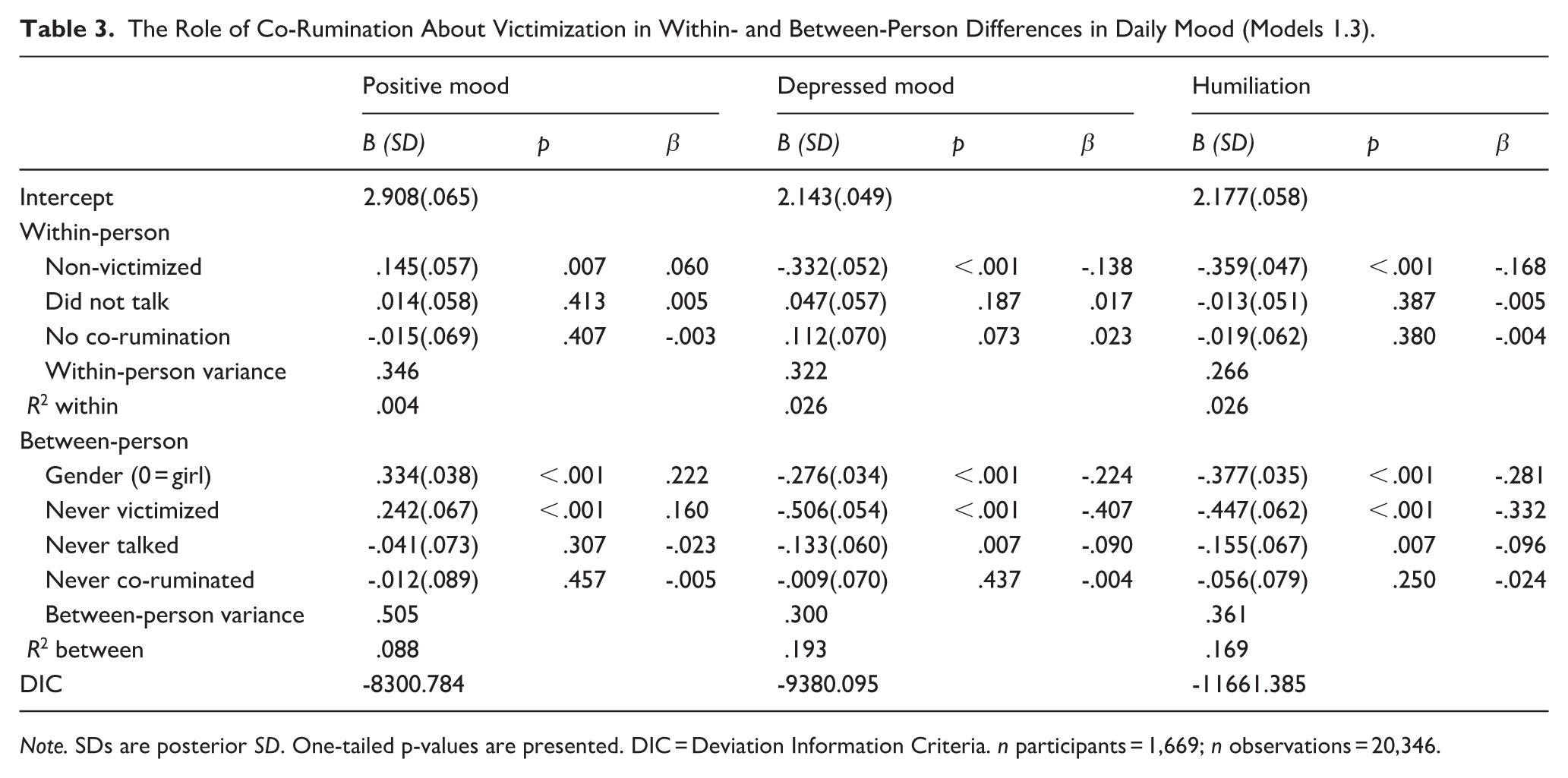
Note. SDs are posterior SD. One-tailed p-values are presented. DIC = Deviation Information Criteria. n participants = 1,669; n observations = 20,346.
On the between-level, students who at least once co-ruminated about victimization across observations experienced more mood problems than students who were never victimized (βpositive = .160, βdepressed = −.407, and βhumiliation = −.332). However, there were no significant differences in positive mood between students who at least once co-ruminated about victimization compared to (1) those who were at least once victimized but never talked with friends/classmates about it, or (2) were at least once victimized, talked with friends/classmates about it at least once, but did not co-ruminate across observations. For negative mood, victimized students who co-ruminated about victimization at least once across the observations had—on average—more negative mood than victimized youth who never talked to their friends about it (βdepressed = −.090, βhumiliation = −.096), but did not differ from victimized students who talked to their friends but did not co-ruminate, and effect sizes were small (Gignac & Szodorai, 2016). Models 1.3 did not explain much more variation in daily mood problems as compared to Models 1.2, suggesting that the role of co-rumination is modest in size.
Sensitivity Analyses
First, as the within-person reliability of the three daily co-rumination items was rather low (ω = .56, as were between item correlations at the within-person-level, see Table S1 in the Supplemental Material) we ran separate sensitivity analyses for each co-rumination item (engaging in problem talk, cognitive rehashing, emotion rehashing). Findings of these sensitivity analyses largely aligned with findings of the main analyses (see Tables S2–S4 inSupplemental Material).
Next, we conducted sensitivity analysis by re-running the main models (with the combined co-rumination items) controlling for victimization intensity (Table 4), as it is possible that students are more likely to talk to friends about their victimization experiences on a given day if the experience was more intense. We found that students reported more mood problems on days that they experienced more intense victimization (within-person effects). Regarding the role of co-rumination on mood problems, most findings were similar to those reported in main analyses. However, there were some key exceptions. After controlling for victimization intensity, students had less depressed mood on days when they were victimized and co-ruminated compared to days when they were victimized but did not co-ruminate (βdepressed = .168). Moreover, on the within-person level, students’ positive mood and depressed mood no longer differed between days that students were victimized and co-ruminated versus days that students were non-victimized, after controlling for victimization intensity. Students did, however, still experience more humiliation on days when they were victimized and co-ruminated compared to days when they were not victimized (βhumiliation = −.064).
The Role of Co-Rumination About Victimization in Within- and Between-Person Differences in Daily Mood, Controlling for Victimization Intensity.
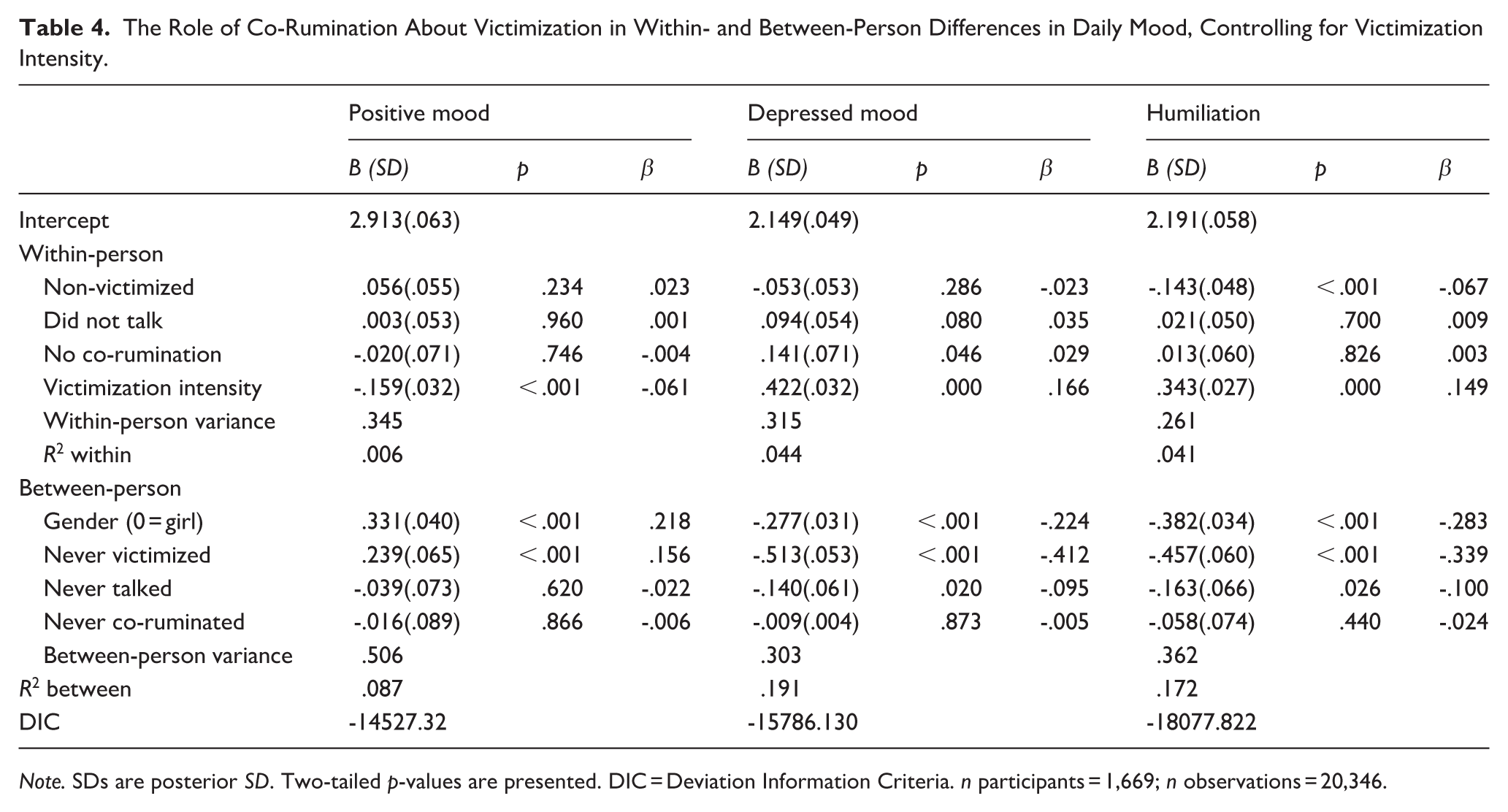
Note. SDs are posterior SD. Two-tailed p-values are presented. DIC = Deviation Information Criteria. n participants = 1,669; n observations = 20,346.
Discussion
Consistent with stress-buffering models of social support (Cohen & Wills, 1985), victimized students are often encouraged to talk about their experience with someone—and in adolescence, youth are increasingly more likely to seek out support from their peers (Valkenburg et al., 2011; Vijayakumar & Pfeifer, 2020). Although support from friends may help victimized youth cope with their experiences, friendship support may also involve processes such as co-rumination that could potentially backfire and worsen adolescents’ psychological adjustment. Previous work revealed that co-rumination can indeed exacerbate the (concurrent) association between victimization and well-being (Guarneri-White et al., 2015; Huang et al., 2022). Yet, these studies examined co-rumination in general (not specific to victimization), focused on between-person effects (ignoring that youth may vary from day to day in whether they co-ruminate or not), and only focused on the effect of co-rumination across longer time spans (e.g., years). However, in addition to between-person effects of “trait”-like co-rumination, it is critical to examine how “state” co-rumination can impact the link between a serious interpersonal stressor such as victimization and well-being. Thus, the current study focused on how co-rumination on a specific day in response to a victimization experience was associated with mood problems. Specifically, we investigated the link between daily co-rumination about victimization and mood, considering both within- and between-person processes.
Our findings at the within-person level highlight that while being subjected to peer victimization significantly worsens students’ mood (cf. Laninga-Wijnen et al., 2024), there was no significant effect of co-rumination: Victimized youth did not differ in their mood on days that they co-ruminated about their victimization as compared to days that they did not co-ruminate. After controlling for victimization intensity, some potential benefits of co-rumination even emerged: students experienced lower depressed mood on days that they were victimized and co-ruminated than on days that they were victimized and did not co-ruminate. These findings are in contrast to a prior daily diary study, which found daily co-rumination about problems to relate to within-day increases in depressed mood (White & Shih, 2012).
Notably, at the between-person level, a somewhat reversed pattern emerged: Those who were victimized and co-ruminated at least once across the observations had more negative mood (depressed mood and humiliation) than those who did not talk to friends or classmates about their victimization at least once across the observations. These findings remained similar after controlling for victimization intensity. Thus, although co-rumination may have some benefits at the within-person level, there may be costs at the between-person level (at least, when compared to not talking to friends at all).
There may be various reasons for these diverging within- and between-person effects. The within-person effect (after controlling for victimization intensity) may have occurred because co-rumination provides a temporary relief through validation of students’ feelings about the victimization, which may facilitate them to process—and mitigate—their feelings of sadness. In contrast, those who talked to a friend or classmate about their victimization but did not co-ruminate, may have had shorter conversations about the experience and/or did not feel like they received the social support that they were looking for. Interestingly, this within-person pattern was only found for depressed mood—not for humiliation or positive mood, suggesting that the potential benefits of co-rumination may not extend to other emotions. Moreover, such relief may be transient: while co-rumination may initially buffer mood on the same day, the between-person findings suggest potential long-term costs. Over time, frequent co-rumination might exacerbate negative mood by fostering sustained rumination. Another possibility why adverse effects of co-rumination were only found on the between-person level is that those who tend to experience more mood problems across multiple days are more in need of “venting” about their negative experiences and therefore start co-ruminating more with their friends. However, as the potential benefit of co-rumination on the within-person level only emerged in the sensitivity analyses, we urge future research to replicate this finding.
Strengths and Limitations
This pre-registered study includes a large sample of adolescents who reported on their daily victimization, co-rumination about victimization, and mood for up to 15 school days. Whereas some studies have examined links between victimization, co-ruminative tendencies, and well-being, the current study goes a step further by examining co-rumination specifically about victimization experienced on a given day. Despite these strengths, there were also a number of limitations that should be acknowledged.
Although assessing co-rumination specifically about victimization on days in which it occurred is a strength of the current study, we did not assess co-rumination about other possible stressors. Therefore, we cannot be sure that the participants did not co-ruminate about other stressors on any of the days of the daily diary. However, all participants (including non-victims) could have experienced (and co-ruminated) about other stressors, so this limitation should not impact one group more than another. Due to the study design, we also had to categorize whether or not co-rumination occurred on a day students were victimized, but there is not a clear indication of what reaches the threshold to be considered co-rumination (e.g., excessive dwelling). To address this, we used a more stringent cut-off than we had originally pre-registered. Yet, previous work is encouraged to examine alternative cut-offs to better understand if there might be a “turning point” when co-rumination might go awry.
In addition, we did not assess other possible social emotion regulation strategies (e.g., validation, problem-solving, social reappraisal) to better understand the dynamics in which talking to a friend or classmate may be beneficial for daily mood, nor considered the extent to which students individually ruminated on their experiences. In addition, we were unable to account for support from parents or other family members at home, which could also impact the daily consequences of victimization. These are essential directions for future research. It is also important for future research to consider individual or relationship characteristics that may further qualify how co-rumination about victimization impacts daily mood. For example, previous concurrent studies (e.g., Tilton-Weaver & Rose, 2023), as well as studies focused on longer-term dynamics (e.g., DiGiovanni et al., 2021), have found high degree of heterogeneity—such that there are subgroups of individuals who experiences primarily costs, primarily benefits, or both costs and benefits of co-rumination. Future research should examine other factors (e.g., pre-existing mental health difficulties, friendship quality, perceived responsiveness of their friend) that may impact how co-ruminating about victimization is related to between- and within-person effects on mood.
Our study focused only on Finnish adolescents, and although we do not have any reasons to suspect our findings would be specific to a Finnish sample, it is important for these associations to also be examined in additional contexts and cultures. Moreover, the findings of the current study should be interpreted as concurrent associations—that is, how victimization on a given day, and co-rumination about the victimization on that same day, was linked to daily mood. Thus, we cannot definitively make conclusions about temporal dynamics. Finally, as is common with ecological momentary assessments, participants did not comply with the daily diary every day (with 61% of the possible surveys were at least partially filled in). However, to address this, we used advanced Bayesian techniques to impute missing data-points.
Conclusion
The current study aimed to examine the impact of daily co-rumination about victimization experiences on victimized youth’s mood. By using a daily diary design, this study was able to investigate these processes on the micro-level (i.e., day-to-day as victimization and co-rumination occur) while also considering between- and within-person effects. Overall, there were limited differences in youth’s mood on days when they co-ruminated about victimization compared to days they were victimized but did not talk to friends about it. However, when controlling for the intensity of victimization experiences, the current study found that youth had less depressed mood on days they were victimized and co-ruminated compared to days they were victimized and talked to a friend about it but did not co-ruminate. This supports other recent findings that the potential benefits of co-rumination may be more present when considering within-person effects, and may reflect youth feeling supported or validated on days in which they co-ruminated. Additional research is needed to investigate under which circumstances talking to friends about victimization experiences can help or hurt in both the shorter and longer terms.
Supplemental Material
sj-docx-1-jbd-10.1177_01650254261417600 – Supplemental material for The link between co-rumination and mood problems in victimized adolescents: A daily diary study
Supplemental material, sj-docx-1-jbd-10.1177_01650254261417600 for The link between co-rumination and mood problems in victimized adolescents: A daily diary study by Sarah T. Malamut and Lydia Laninga-Wijnen in International Journal of Behavioral Development
Footnotes
Appendix 1
Appendix 2
Within- and Between-Person Correlations Between Continuous Study Variables.
| 1 | 2 | 3 | 4 | |
|---|---|---|---|---|
| Within-person | ||||
| 1. Positive mood | — | — | — | — |
| 2. Depressed mood |
|
— | — | — |
| 3. Humiliation |
|
|
— | — |
| 4. Victimization intensity |
|
|
|
— |
| 5. Co-rumination | -.07 | -.02 | .01 | .04 |
| Between-person | ||||
| 1. Positive mood | — | — | — | — |
| 2. Depressed mood |
|
— | — | — |
| 3. Humiliation |
|
|
— | — |
| 4. Victimization intensity |
|
|
|
— |
| 5. Co-rumination | -.06 | .05 | .09 | .20 |
Note. All bolded correlations are significant at p < .05.

Ethical Considerations
The study was approved by the Ethics Committee for Human Sciences of the University of Turku, Finland (Approval Number: 53/2021).
Consent to Participate
Only students who received (written) parental consent and provided their own (written) assent participated in the study.
Consent for Publication
Not applicable.
Funding
The authors disclosed receipt of the following financial support for the research, authorship, and/or publication of this article: This research (including data collection) was supported by the SOLID Project (Research Council of Finland, decision number: 349560; awarded to Dr Lydia Laninga-Wijnen). This research was also supported by the DWELL Project (ERC-2024-STG, decision number: 101163370; awarded to Dr Sarah Malamut) and the INVEST Research Flagship Centre, funded by the Research Council of Finland (decision number: 345546).
Declaration of Conflicting Interests
The authors declared no potential conflicts of interest with respect to the research, authorship, and/or publication of this article.
Data Availability Statement
Fully anonymized data and analysis code are available from the second author upon reasonable request. Electronic mail may be sent to
Supplemental Material
Supplemental material for this article is available online.
References
Supplementary Material
Please find the following supplemental material available below.
For Open Access articles published under a Creative Commons License, all supplemental material carries the same license as the article it is associated with.
For non-Open Access articles published, all supplemental material carries a non-exclusive license, and permission requests for re-use of supplemental material or any part of supplemental material shall be sent directly to the copyright owner as specified in the copyright notice associated with the article.
