




Abstract
This study examined age differences in math anxiety (MA), emotion regulation (ER) strategies, and anxiety susceptibility among 200 women across two age groups (18–27 years old, n = 100; and 50–58 years old, n = 100). Following tests of these differences, we developed an integrative model that delineates the connections between ER, general anxiety, MA, and age. Findings revealed significant age-related differences in regulatory habits and resilience to mathematical anxiety, with older women demonstrating more effective regulatory skills associated with lower numerical stress. In contrast, younger participants exhibited different regulation patterns and higher anxiety levels that could potentially impede mathematical performance. This study demonstrates that separate hypotheses—regarding ER, anxiety, and age—converge into an interesting and complex psychological narrative with pedagogical and clinical implications. The current integrated model reveals their interdependence and suggests that targeting ER may reduce MA and enhance engagement, particularly among younger women.
Introduction
Math aptitudes permeate daily living (Silver et al., 2022), from managing finances to travel planning (Backhaus et al., 2023; Deda et al., 2022), yet math anxiety (MA) plagues many adults, eliciting cognitive interference and undermining performance, regardless of actual skills (Barroso et al., 2021). We ask why some women overcome numerical anxieties while others remain affected by them to different degrees (Barroso et al., 2021). Emotion regulation (ER), encompassing techniques minimizing adverse emotional reactions, has proven efficacious in alleviating anxieties and improving outcomes (Daches Cohen & Rubinsten, 2022; Song et al., 2022). Limited research has examined age-related differences in ER for MA. As women age, their regulatory strategies evolve (Isaacowitz, 2022; Malesza, 2021), influencing how they manage stress and approach cognitive tasks, including mathematics (Bonanno & Burton, 2013). Understanding these patterns can inform interventions designed to enhance mathematical performance among women of various ages. We investigate whether regulatory skills differ between age groups and whether regulatory capacity affects the relationship between MA and achievement across life stages. To achieve this, we constructed an integrative model that delineates the intrinsic connections between ER, general anxiety, MA, and age. As we detail below, this study highlights that cultivating regulatory skills may foster numerical confidence, potentially protecting women’s mathematical potential from anxiety. Along with tailored interventions and training in constructive regulatory approaches, women of all ages can gain awareness and proficiency in managing their anxieties.
MA and Performance
Calculating and applying mathematical concepts is crucial for everyday decisions in our data-rich world (Silver et al., 2022). Mathematics permeates activities such as travel (Backhaus et al., 2023), finance (Deda et al., 2022), time management, and various occupations (Barba, 2022). MA refers to the fear that interferes with problem-solving (Luttenberger et al., 2018), characterized by reactions that hinder cognitive processing (Rubinsten et al., 2018; Zhang et al., 2019) and undermine performance (Sorvo et al., 2022). MA spans from arithmetic to complex reasoning (Braham & Libertus, 2018).
MA literature finds women report higher anxiety and lower math self-efficacy than men (Delage et al., 2022). These differences stem from sociocultural expectations (Van Mier et al., 2019), stereotypes (Wolff, 2021), and early math experiences (Schaeffer et al., 2021). Despite interest in STEM, females have been socialized to view themselves as mathematically inferior (Perkins, 2023). High MA individuals, especially women, avoid math-intensive careers, matching lower female STEM enrollment (Levy et al., 2021).
ER and Anxiety
ER involves processes that influence the intensity of emotions (Lucchiari et al., 2019). Two key strategies are cognitive reappraisal and expressive suppression (Gross, 1998, 2001). Cognitive reappraisal modifies thoughts about stimuli (Gross, 2015), decreasing negative emotions (Troy et al., 2018) and increasing adaptive responses (Roos & Bennett, 2023). Expressive suppression inhibits emotional experiences (Muhtadie et al., 2021) and links to anxiety disorders (Fernandes et al., 2022), while reappraisal associates with resilience (Dryman & Heimberg, 2018). ER can mitigate MA’s effects (Pizzie & Kraemer, 2021) by reducing emotional burden and enhancing cognitive resources during math tasks (Klein et al., 2019). Reappraisal decreases reactivity to math stressors (Song et al., 2022), improving outcomes (Daches Cohen & Rubinsten, 2022).
Also, we emphasize that understanding ER is crucial, as it is associated with cognitive processes such as attention and memory, which are essential for effective problem-solving (Morawetz et al., 2024). Effective ER can enhance learning and performance in mathematics by managing anxiety and promoting positive emotional states, ultimately leading to better educational outcomes. Thus, insights into these strategies can inform teaching methods and support for female students in mathematics.
Reappraisal correlates with reduced anxiety (Aldao et al., 2010). This variability stems from the effectiveness of implementation (Ford et al., 2018), timing, and contextual fit (Troy et al., 2018). Kobylińska et al. (2023) note reappraisal’s adaptive value depends on situational demands, supporting Bonanno and Burton’s (2013) regulatory flexibility model.
General anxiety and MA share neurobiological mechanisms (Suárez-Pellicioni et al., 2016) and emotional processing patterns (Mammarella et al., 2023). Higher general anxiety correlates with higher MA (Wang et al., 2024), suggesting general anxiety may predispose stronger emotional reactions in mathematical contexts (Ramirez et al., 2018). Both involve heightened amygdala reactivity and diminished prefrontal control.
The proposed mediational pathway—cognitive reappraisal influencing MA through general anxiety—aligns with hierarchical ER models (Gross, 2015). The process-specific timing hypothesis suggests reappraisal modifies general emotional appraisals before affecting situation-specific anxiety (Sheppes & Gross, 2011). Neurobiologically, reappraisal activates prefrontal systems that downregulate amygdala reactivity (Morawetz et al., 2024). Longitudinal evidence shows changes in general anxiety often precede domain-specific anxiety changes (Norton & Paulus, 2017), supporting the mediational pathway.
In line with the multicomponent framework of numerical cognition (Gilmore, 2023), mathematics achievement relies on integrating various skills and knowledge. Previous research has established individual relationships between the components of our model, but these connections have not been examined within a unified framework. Studies have demonstrated the impact of MA (MA) on mathematical performance (Barroso et al., 2021), while others have shown that MA mediates the effects of ER on mathematical problem-solving (Zhang et al., 2019). Cross-domain research reveals that ER can influence mathematical competence (Pollack et al., 2021), and MA shapes learning experiences and behaviors at different levels (Radević & Milovanović, 2024; Rubinsten et al., 2018).
Despite these important findings, the pathways through which ER and MA influence mathematical performance remain underexplored within a unified framework. Our study addresses this gap by proposing an integrated model with distinct pathways that provides a comprehensive view of the relationships between MA, ER, and mathematical performance, examining how these relationships may operate through key cognitive and academic processes. As highlighted in previous literature, these academic skills serve as foundational bridges between mathematical and linguistic domains (Pongsakdi et al., 2020). Our multi-pathway model reflects the dynamic interplay between cognitive-academic and affective processes, which can either facilitate or reduce mathematical performance (Rubinsten et al., 2018).
Development: ER as a Learnt Strategy
Research shows that cognitive reappraisal abilities improve from childhood to adulthood, becoming learned strategies (Willner et al., 2022). These skills can be cultivated (Cardi et al., 2021), with interventions demonstrating potential to mitigate anxiety symptoms (Wang et al., 2024).
Older women report more frequent positive reappraisal and less maladaptive emotion suppression compared to younger women (Malesza, 2021). Studies indicate that older adults may be more successful at using positive reappraisal strategies (Isaacowitz, 2022).
Developmental perspectives reveal age-related differences in ER and anxiety. Socioemotional Selectivity Theory (Carstensen, 2021) explains how older adults tend to prioritize emotional goals differently than younger adults, which is associated with enhanced regulation despite cognitive declines (Urry & Gross, 2010).
Older adults tend to exhibit greater emotional stability and more positive appraisals (Carstensen et al., 2020). This “positivity effect” is observed in attention, memory, and appraisal (Carstensen & DeLiema, 2018), with older adults tending to attend more to positive information and employ more reappraisal strategies.
Research confirms age-related improvements in cognitive reappraisal. Older adults downregulate negative emotions more effectively (Isaacowitz, 2022), showing more efficient prefrontal–amygdala connectivity (Dolcos et al., 2020). These advantages are more substantial in women (Malesza, 2021), who tend to use cognitive reappraisal more frequently throughout their lives.
MA shows complex age patterns. Some studies suggest that MA decreases with age (Barroso et al., 2021), while others show persistence, especially in women who have had early negative math experiences (Schillinger et al., 2018). The relationship between ER and MA across age groups remains understudied, though the ability to reframe math-related threats may be important (Pizzie & Kraemer, 2021).
The relationship between reappraisal, general anxiety, and MA likely differs between younger and older women due to older women’s greater experience of ER, more substantial positivity effects facilitating adaptive appraisals, and age-related motivational differences reducing perceived math performance threats.
The Current Study
This study examines interconnections between ER strategies, general anxiety, and MA among younger and older women through moderated mediation. Figure 1 illustrates our theoretical model showing how cognitive reappraisal relates to MA directly (Path c') and indirectly through general anxiety (Paths a and b), with age moderating these relationships (W1, W2, W3 interactions). This integrated model serves as a framework for the current study’s hypotheses and aims to provide a comprehensive understanding of the interactions between ER and anxiety across different age groups.
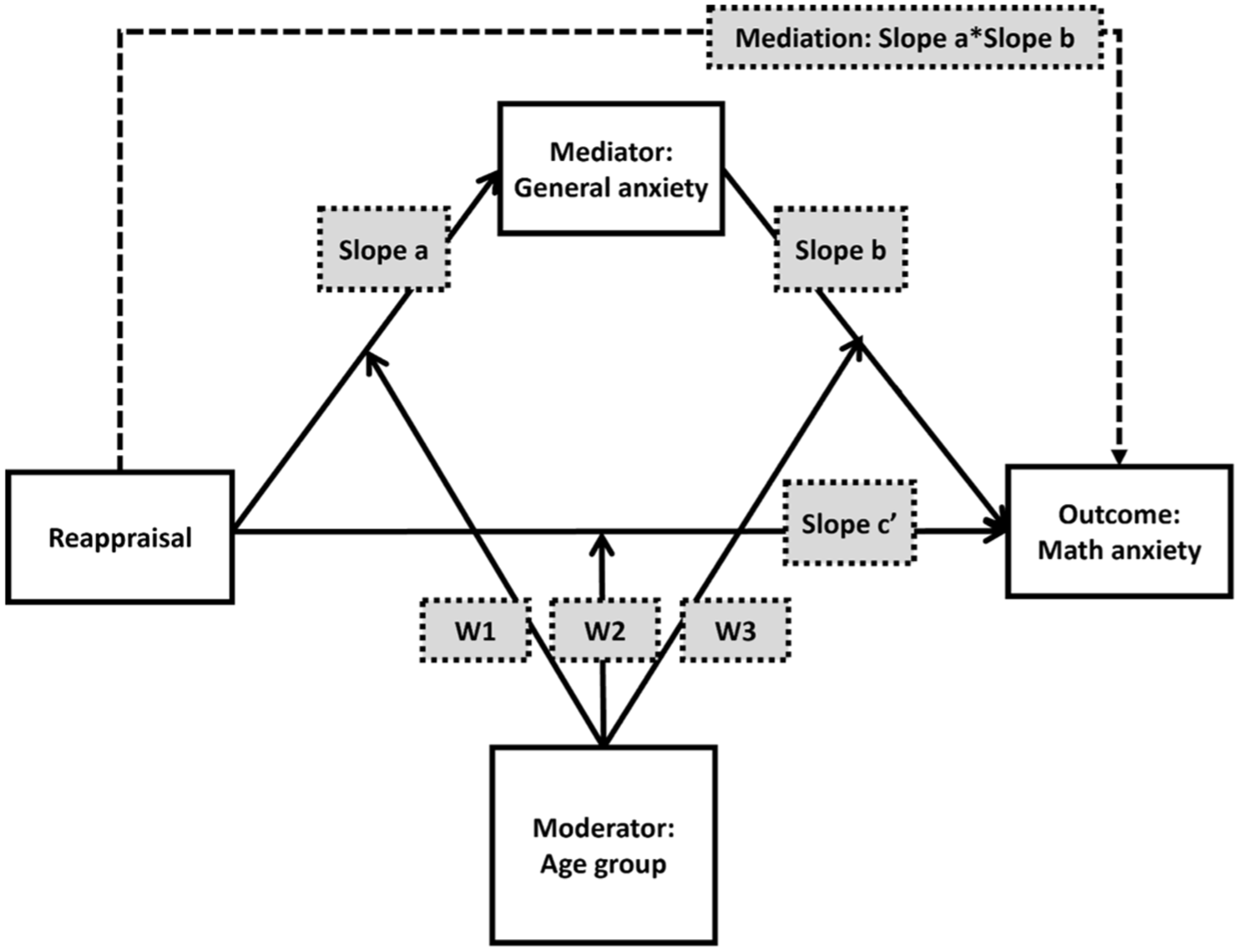
Framework: A Theoretical Moderated Mediation Model of the Research Questions. The association between the independent variable (cognitive reappraisal) and the dependent variable (math anxiety) includes both direct effects (Path c') and indirect effects mediated by general anxiety (Path a*b). Age group moderates the relationship between reappraisal and general anxiety (W1), between reappraisal and math anxiety (W2), and between general anxiety and math anxiety (W3). The theoretical model examines how cognitive reappraisal relates to math anxiety through general anxiety, with these relationships differing between younger and older women.
Specifically, we study four single hypotheses, all of which are interconnected into an interesting psychological story: First, the relationship between ER, general anxiety, and MA (Paths a*b—Figure 1). Cognitive reappraisal is associated with reduced general anxiety (Aldao et al., 2010), which in turn relates to lower MA (Wang et al., 2024). This represents our primary mediation hypothesis. Second, Age-related differences in ER effectiveness (Path W1—Figure 1): Age moderates the reappraisal–general anxiety relationship, with stronger negative associations expected among older women (Isaacowitz, 2022; Malesza, 2021). Third, Age-related differences in anxiety relationships (Path W3—Figure 1): Age moderates the general anxiety–MA relationship. The direction is exploratory, anticipating differences based on previous research (Barroso et al., 2021; Schillinger et al., 2018). Fourth, Age differences in MA and ER (Path W2—Figure 1): Older women demonstrate lower MA and more effective cognitive reappraisal compared to younger women.
Method
Participants
Two hundred women participated in the study and were divided into two age groups. Each group comprised 100 young adult women, aged 18–27 years, and 100 older adult women, aged 50–58 years, recruited in Israel during the spring semester from December 2022 to May 2023. The sample size was determined using a statistical power analysis that considered our planned moderated mediation analysis. Using G*Power, we calculated the required sample size for detecting moderate effect sizes (f² = 0.15) in our most complex regression model, which included up to seven predictors (including interaction terms), α = .05, and a desired power of 0.80. This analysis indicated a minimum sample size of 92 participants per age group. We recruited 100 participants per group to account for potential data loss. The final sample included 100 young adult women (age range: 18–27, M = 24.09, SD = 2.667) and 100 older adult women (age range: 50–58, M = 53.3, SD = 2.823).
Importantly, a few comparable studies, investigating similar emotional and cognitive variables with a similar statistical mediation model (e.g., Awo et al., 2024; Gerhart et al., 2014; Martínez-Córcoles & Zhu, 2020), all of which employed similar sample sizes with reliable outcomes. That is, a sample size of at least 200–400 participants is commonly used for moderated mediation models with similar independent variables.
This study was approved by the University of Haifa Institutional Review Board for Human Subjects Research (Approval #225/22). All participants provided written informed consent.
Participants were recruited through advertisements on campus, social media platforms (e.g., Facebook, Instagram, WhatsApp), and the University of Haifa’s research participation system. Participants were native Hebrew speakers without diagnosed learning disabilities.
Before data collection, participants received informed consent forms stating their right to withdraw without penalty. Participants received monetary compensation equivalent to approximately 30 NIS.
General Assessment
Participants completed a battery of questionnaires and math tests to assess the key variables:
ER
Participants completed the Emotion Regulation Questionnaire (ERQ; Gross & John, 2003) to assess their use of cognitive reappraisal and expressive suppression. The Difficulties in Emotion Regulation Scale (DERS; Gratz & Roemer, 2004) was used to evaluate difficulties regulating emotions.
Anxiety
The State-Trait Anxiety Inventory (STAI; Spielberger et al., 1972) was administered to assess both state and trait anxiety levels. The Short Math Anxiety Rating Scale (sMARS; Alexander & Martray, 1989) provided an index of trait MA. State MA was captured with the State Mathematics Anxiety Questionnaire (state-MAQ; Orbach et al., 2020).
Math Performance
To ensure that differences in mathematical ability do not confound age-related differences in ER and anxiety, we assessed participants’ mathematical skills using the Woodcock-Johnson III Tests of Achievement (WJ-III; Woodcock et al., 2001).
The WJ-III (Woodcock et al., 2001) included math fluency and calculation subtests to objectively measure math performance.
Participants also self-reported their level of high school math courses taken (Bagrut exams, representing a subject course complexity level in Israel, ranging from 3 as the lowest level to 5 as the highest) and their corresponding scores. This allowed for control of prior math educational background, providing insight into participants’ baseline math achievement at the time of study entry.
Occupational Field
To determine participants’ occupation fields (STEM/non-STEM), we used the STEM Designated Degree Program List from the U.S. Department of Homeland Security (DHS; For review: DHS STEM Designated Degree Program List, 2023). For additional information on STEM and non-STEM careers, see the Classification of Instructional Programs (CIP, n.d.) list on the National Center for Educational Statistics website.
Table 1 provides descriptive statistics comparing the two age groups. Younger participants were more likely to engage in STEM studies (40.3%) than older women (17.4%). The 30-year between-group discrepancy was a critical factor explaining occupational differences. Younger women scored higher on math performance tests (WJ-III; 64.3% vs 46.9%). The assessment stratified participants from “Very Low with functional limitation” to “Very Superior conveying strength,” and categorized overall performance as “Low” or “Average/High.” Among younger adults, math-level distribution was approximately even (32%, 31%, 37%), while nearly 60% of older adults studied three math units, the minimum level in Israel. Importantly, three math credit points 30 years ago equaled approximately the current four credit points.
Sample Characteristics by Age Group.
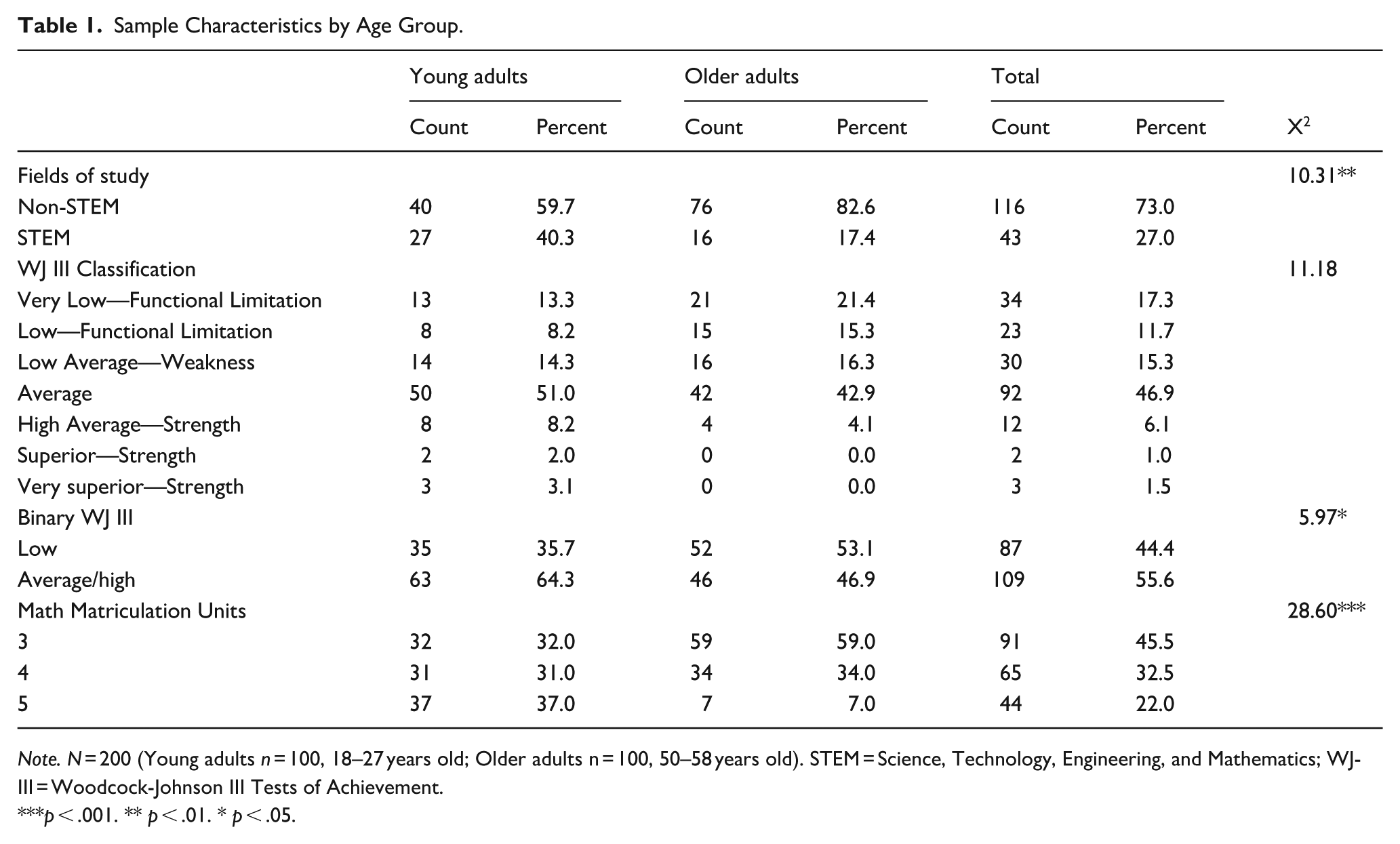
Note. N = 200 (Young adults n = 100, 18–27 years old; Older adults n = 100, 50–58 years old). STEM = Science, Technology, Engineering, and Mathematics; WJ-III = Woodcock-Johnson III Tests of Achievement.
p < .001. ** p < .01. * p < .05.
Procedure
Experimental Measures
All survey instruments were translated by the author into Hebrew using forward and backward translation techniques to ensure the validity of the translation. The study incorporated both trait and state MA measures, distinguishing between self-reports on hypothetical/retrospective math-related situations and real-time assessments of current anxiety in numerical contexts (Bliss-Moreau et al., 2020; Luttenberger et al., 2018; Orbach et al., 2019).
MA
Trait MA
We used a translated-modified version of the short Mathematics Anxiety Rating Scale (sMARS; Alexander & Martray, 1989), a 25-item instrument derived from the original 98-item MARS (Richardson & Suinn, 1972). The scale focuses on three primary components: math test anxiety, numerical task anxiety, and math course anxiety. Items were adapted for adult retrospective reporting, asking participants to rate anxiety levels in various everyday and formal mathematical situations on a 5-point Likert-type scale. The internal consistency of the sMARS in our sample was excellent (Cronbach’s α = .92).
State MA
State anxiety was assessed using the state-Mathematics Anxiety Questionnaire (state-MAQ), which includes self-evaluation questionnaires for current and retrospective anxiety. The instrument uses a 4-point Likert-type scale and demonstrated strong reliability in our sample (α = .85), consistent with previous findings (α = .83; Orbach et al., 2020). The questionnaire was developed from the State Anxiety Inventory (Spielberger et al., 1972).
State-Trait Anxiety
The Spielberger’s STAI (Spielberger et al., 1972) measured trait and state anxiety. The state scale consists of 20 statements describing momentary feelings, while the trait scale includes 20 statements about general emotional experiences. In our sample, both scales demonstrated excellent internal consistency (state scale: α = .91, trait scale: α = .89), comparable to previously reported values (state scale: .83–.92, trait scale: .86–.92; Spielberger, 1983).
ER
Daily and Spontaneous ER
We employed the ERQ (Gross & John, 2003) to measure habitual reappraisal and suppression strategies. The questionnaire includes items assessing reappraisal (6 items) and suppression (4 items) on a 7-point Likert-type scale. In our sample, the internal consistency was good for both the reappraisal (α = .87) and suppression (α = .82) subscales. A supplementary six-item scale (Egloff et al., 2006) measured spontaneous ER use during the math task (α = .84).
Difficulties in ER
The DERS (Gratz & Roemer, 2004) assessed multiple ER dimensions across 36 items, with subscales examining emotional nonacceptance, goal-directed behavior, impulse control, emotional awareness, and emotional clarity. The overall scale demonstrated excellent reliability in our sample (α = .93), with subscale reliabilities ranging from .76 to .89.
Math Performance
Numerical Performance
Arithmetic skills were evaluated using two WJ-III subtests: calculation and math fluency (Woodcock et al., 2001). The calculation subtest measured mathematical computation ability, while the math fluency subtest assessed automaticity in arithmetic facts.
Past Math Achievement
Participants reported their final high school math matriculation scores (Bagrut) and mathematical unit levels, providing context for prior mathematical educational background.
Procedure Details
Participants completed questionnaires via Qualtrics in the following sequence: demographics form, trait math anxiety scale (sMARS), general anxiety scale (STAI), ER scales (ERQ, DERS), pre-test state math anxiety (state-MAQ), spontaneous ER scale (pre-test), math fluency and calculation subtests, post-test state math anxiety (state-MAQ), and spontaneous ER scale (post-test). This sequence was designed to capture baseline trait measures before introducing the potentially anxiety-provoking math performance tasks, allowing us to examine changes in state anxiety in response to the mathematical challenges.
* Note: Comprehensive details about measurement instruments from the procedure section, including full scales and additional psychometric information, are available in the online supplementary materials.
Statistical Analysis
We constructed a moderated mediation model to examine the relationships between ER strategies, general anxiety, and MA across age groups. This analytical approach was chosen to investigate our theoretical assumption that reappraisal associates with MA both directly and indirectly through general anxiety, with these relationships potentially differing between younger and older women.
The PROCESS macro for SPSS (Model 65; Hayes, 2018) was used to estimate direct effects (Paths a, b, c'), indirect effects (a*b), and conditional effects (Moderating Paths W1, W2, W3). Bootstrapping with 5,000 resamples was employed to test the significance of the indirect effects. This resampling approach provides more reliable confidence intervals for mediation effects than traditional methods (Mashreghi et al., 2016).
Results
Before addressing the main aim of the study, that is, testing a moderated mediation model linking reappraisal, general anxiety, and MA, we first conducted preliminary group comparisons. This step was necessary to verify that the two age groups (younger vs. older women) differed on the key psychological constructs central to our hypotheses, such as reappraisal use, general anxiety, and MA, while confirming no significant differences in baseline math ability. Establishing these group patterns provides important context for interpreting age group moderation in the later model and ensures that observed effects are not driven by pre-existing differences in mathematical competence.
In Table 2, we present a comparison (using two independent sample t-tests) as a preliminary examination of group differences. We found consistent differences between the age groups, specifically in the measurements taken before and after, with older women differing significantly from their younger counterparts in both behavioral measures and over time. The use of reappraisal was found to be significantly higher among older adults compared to younger ones in both situational and trait reappraisals (t = −9.91, p < .001; t = −14.93, p < .001, respectively; see Figure 2). In contrast, anxiety in general and MA were found to be higher among the younger participants, which provides primary support to our hypotheses and indicates more intensive use of appraisal in reducing anxiety among the more experienced, older participants (see Figure 3). An additional examination of time difference was performed on the situational reappraisal and the math situational anxiety, which revealed situational reappraisal increased among younger women but remained stable among older women (t = −3.57, p < .001) and similarly but in the opposite direction, MA increased among the younger women (t = 3.25, p < .01). To examine these differences precisely, we applied the latent change score modeling approach (Klopack & Wickrama, 2020). We found that the difference in MA was much smaller among the older women, b = −3.35 (0.53), p < .001, yet their difference in reappraisal was more pronounced, b = 0.70 (0.13), p < .001.
Descriptive Statistics and Reliabilities for Research Indicators by Age Groups.
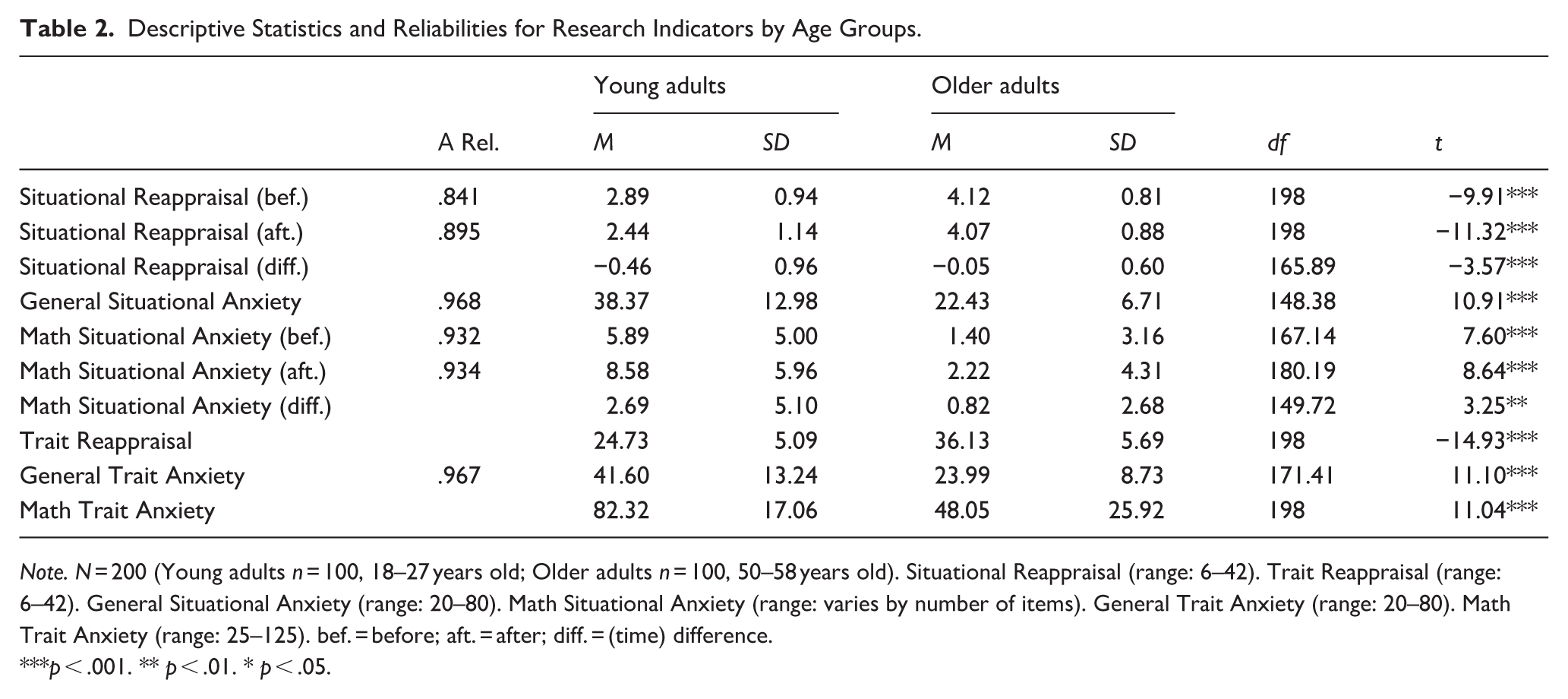
Note. N = 200 (Young adults n = 100, 18–27 years old; Older adults n = 100, 50–58 years old). Situational Reappraisal (range: 6–42). Trait Reappraisal (range: 6–42). General Situational Anxiety (range: 20–80). Math Situational Anxiety (range: varies by number of items). General Trait Anxiety (range: 20–80). Math Trait Anxiety (range: 25–125). bef. = before; aft. = after; diff. = (time) difference.
p < .001. ** p < .01. * p < .05.
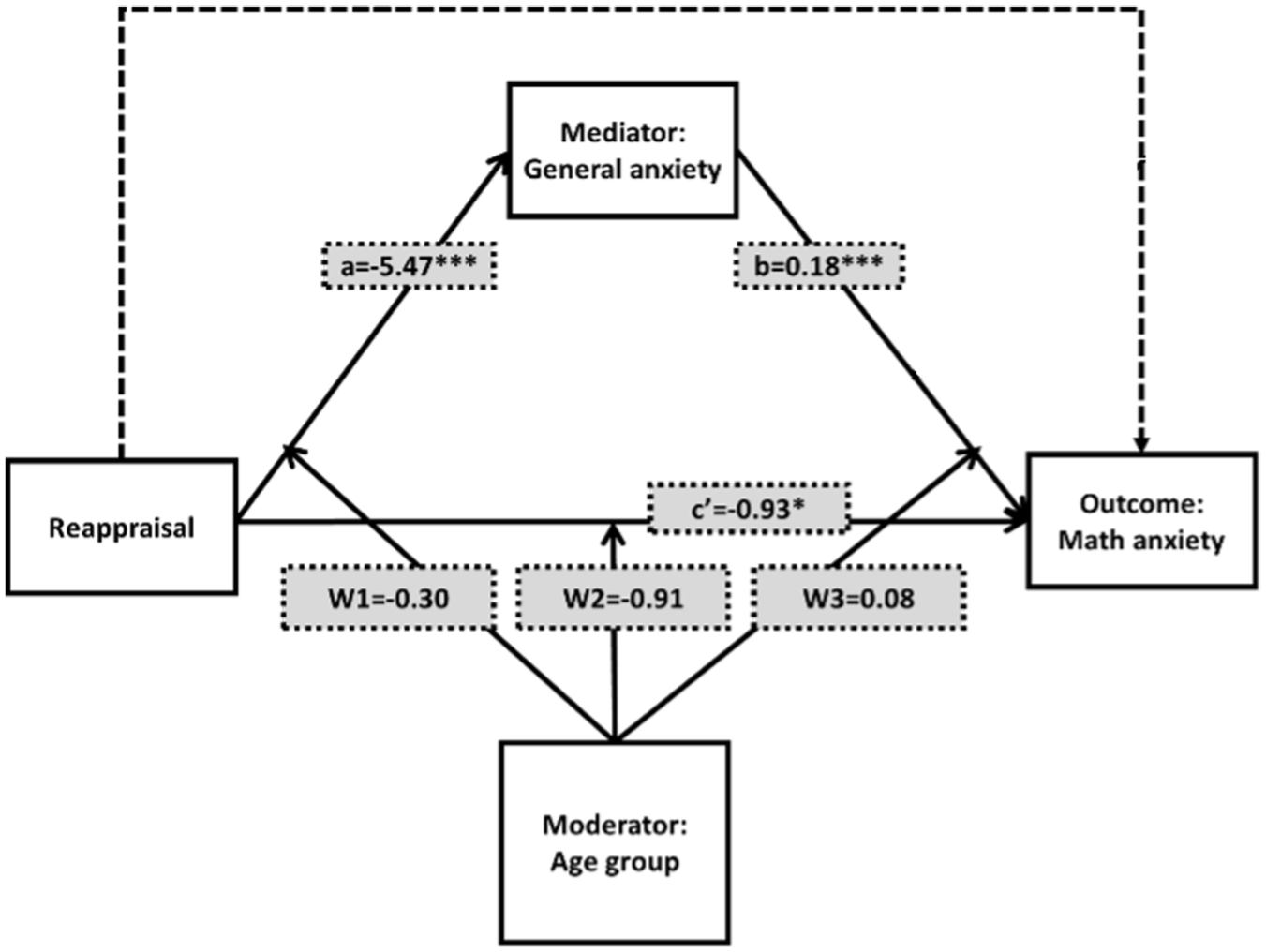
Moderated Mediation Model Results, Unstandardized Coefficients, State Mode. N = 200 (Young adults n = 100, 18–27 years old; Older adults n = 100, 50–58 years old). State Model showing moderated mediation paths. W1 = age group × reappraisal interaction on general situational anxiety; W2 = age group × reappraisal interaction on math situational anxiety; W3 = age group interaction on general anxiety to math anxiety pathway. Unstandardized coefficients shown. The indirect effect supplemented the direct effect, indicating significant indirect effects alongside direct effects between reappraisal and math anxiety.
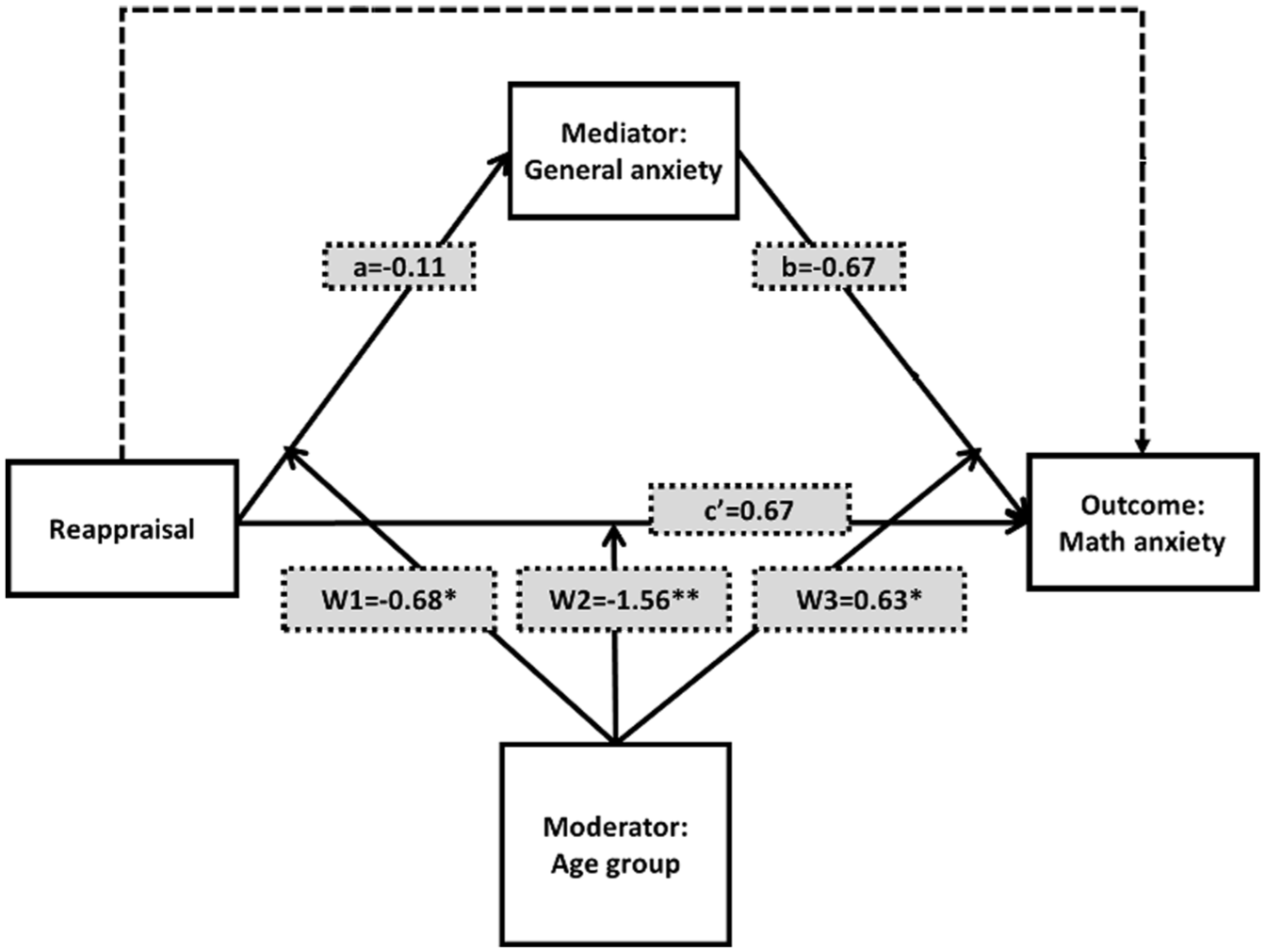
Moderated Mediation Model Results, Unstandardized Coefficients, Trait Model. N = 200 (Young adults n = 100, 18–27 years old; Older adults n = 100, 50–58 years old). Trait Model showing moderated mediation paths. W1 = age group × reappraisal interaction on general trait anxiety; W2 = age group × reappraisal interaction on math trait anxiety; W3 = age group interaction on general anxiety to math anxiety pathway. Unstandardized coefficients shown. Mediation provided a complete indirect effect of reappraisal on math anxiety levels.
Hierarchical Regression Analyses
Following the group comparisons, we conducted hierarchical regression analyses as an intermediate step prior to the full moderated mediation models. This approach served two purposes: (1) to examine the main effects of reappraisal, age group, and math background on anxiety outcomes; and (2) to test whether the addition of interaction terms (e.g., reappraisal × age group) significantly improved the prediction of general and MA beyond the main effects, as indicated by the change in explained variance.
Including this step provided a direct and traditional regression-based examination of our moderation hypotheses, offering both a robustness check and a conceptual bridge between simple group differences and the more complex moderated mediation analysis, which will then be able to explain how the predictors influence the outcome (see the following mediation analysis). Thus, this regression analysis sets the stage for the main moderate mediation model analysis, which enables us to answer the research questions by testing mechanism, conditionality, and simultaneous estimation of all relevant paths.
The hierarchical regression analysis was conducted, regardless of the time frame before and after. The hierarchical regression allowed us to input the main predictors in the first step to assess their main effects on the outcome variables and in the second step to add two-way interactions. The increase in R² was used to test the additional contribution of these interaction effects beyond their significance level. Table 3 shows the regression results. In Step 1, we see that mean anxiety levels among older participants were lower than those of younger participants. Those who studied lower levels of math were found to have higher MA, confirming the relationship between prior mathematical education and current anxiety levels. Situational reappraisal was negatively associated with state anxieties, as hypothesized. However, trait reappraisal was found to be associated with general anxiety but not with trait MA. To examine the reappraisal effect by groups, we tested a two-way interaction term of reappraisal and age group. Table 3 shows that trait reappraisal effects on general and MA differed by age group (general: β = −.24, p < .05; math: β = −.31, p < .01). These interaction effects are shown in Figures 4 and 5, respectively. Among older adults, the use of higher levels of reappraisal was negatively associated with lower anxiety and MA (b = −0.79, p < .001; b = −0.21, p = .004, respectively). As hypothesized, the expected negative association between reappraisal strategies and anxiety was pronounced among older adults. The more experienced group showed lower anxieties, which appears to be related to the ability to use the reappraisal instrument as an anxiety reducer.
Hierarchical Regression Analyses of General and Math Anxiety Outcomes, Standardized Coefficients.
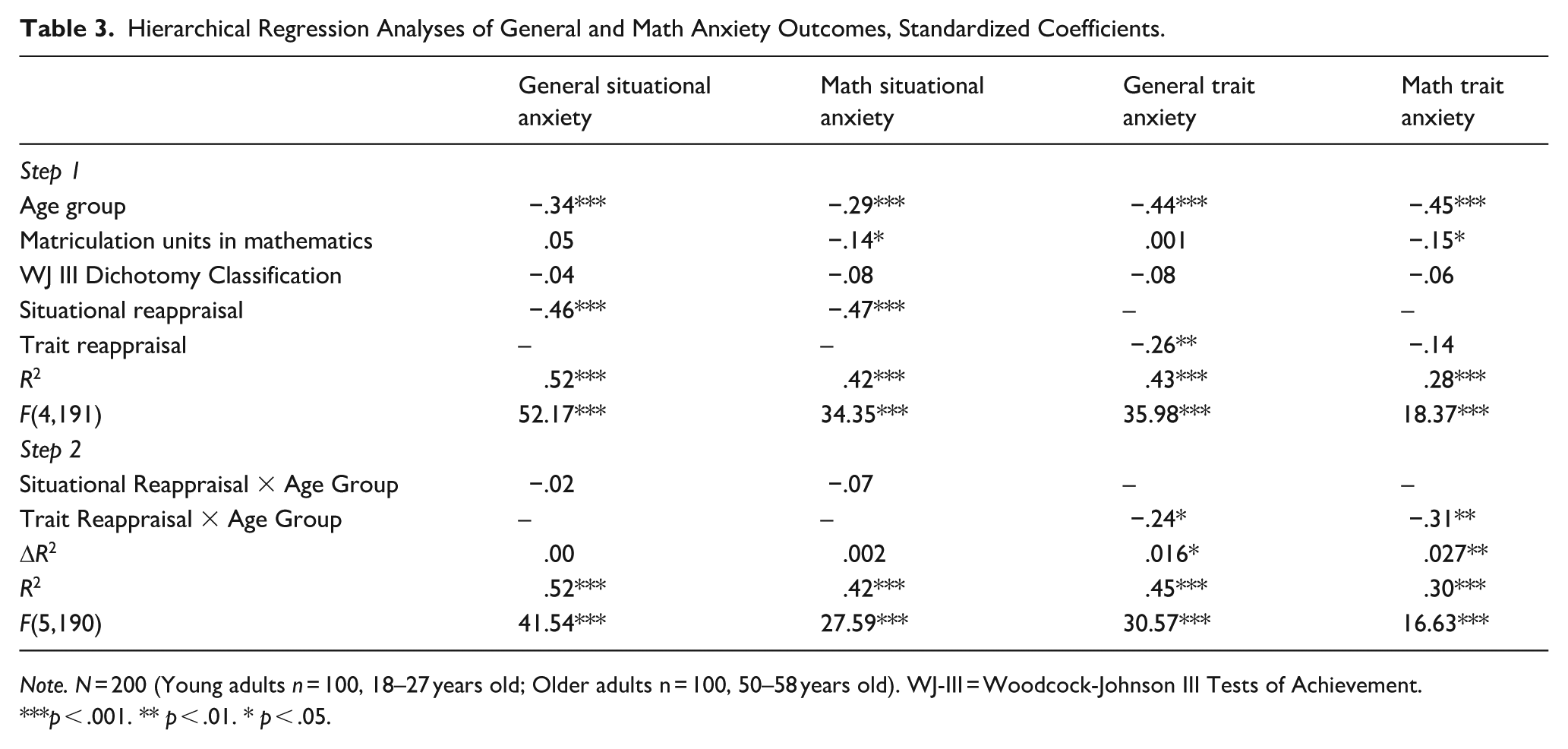
Note. N = 200 (Young adults n = 100, 18–27 years old; Older adults n = 100, 50–58 years old). WJ-III = Woodcock-Johnson III Tests of Achievement.
p < .001. ** p < .01. * p < .05.
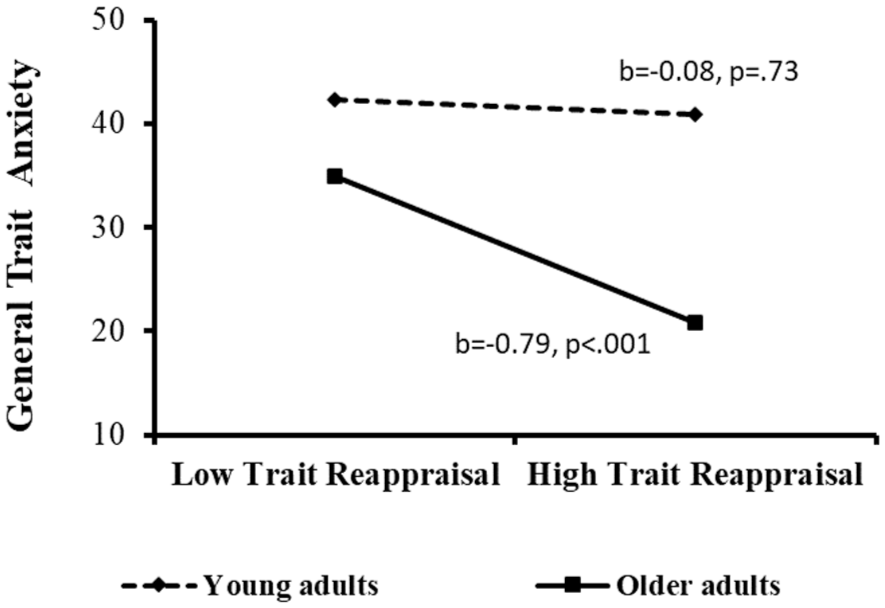
A Two-Way Interaction Effect Between Reappraisal Usage and Age Group on General Trait Anxiety. N = 200 (Young adults n = 100, 18–27 years old; Older adults n = 100, 50–58 years old). General Trait Anxiety interaction. Dashed line (Young adults): b = −0.08, p = .73; Solid line (Older adults): b = −0.79, p < .001. Older adults exhibited heightened use of cognitive reappraisal strategies than younger adults, which potentially mitigated increases in general trait anxiety.
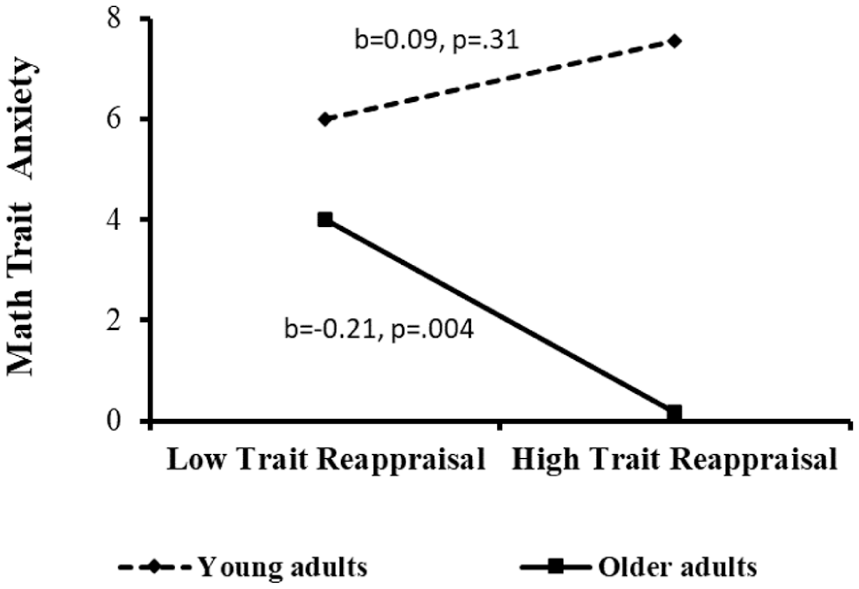
A Two-Way Interaction Effect Between Reappraisal Usage and Age Group and Math Train Anxiety. N = 200 (Young adults n = 100, 18–27 years old; Older adults n = 100, 50–58 years old). Math Trait Anxiety interaction. Dashed line (Young adults): b = 0.09, p = .31; Solid line (Older adults): b = −0.21, p = .004. Older adults reported lower math anxiety levels than younger adults and demonstrated higher use of cognitive reappraisal strategies that significantly mitigated trait math anxiety levels.
Modeling Results
Table 4 presents the moderated mediation results with interaction effects labeled as follows: Paths a*b represent the relationship between ER, general anxiety, and MA, as suggested by our first main hypothesis. W1 represents age group interaction with reappraisal on general anxiety (testing Hypothesis 2), W2 represents age group interaction with reappraisal on MA (testing Hypothesis 4), while W3 (Hypothesis 3) represents moderating effects on the general anxiety to MA pathway. The main effect section shows associations with the mediators (trait and state anxiety, respectively) and the outcome anxiety (trait and state, respectively). These moderated mediation models were tested beyond the before-after time frame.
Moderated Mediation Results—The Effect of Reappraisal on Math Anxiety Conditioned by General Anxiety, Conditioned by Age Group.
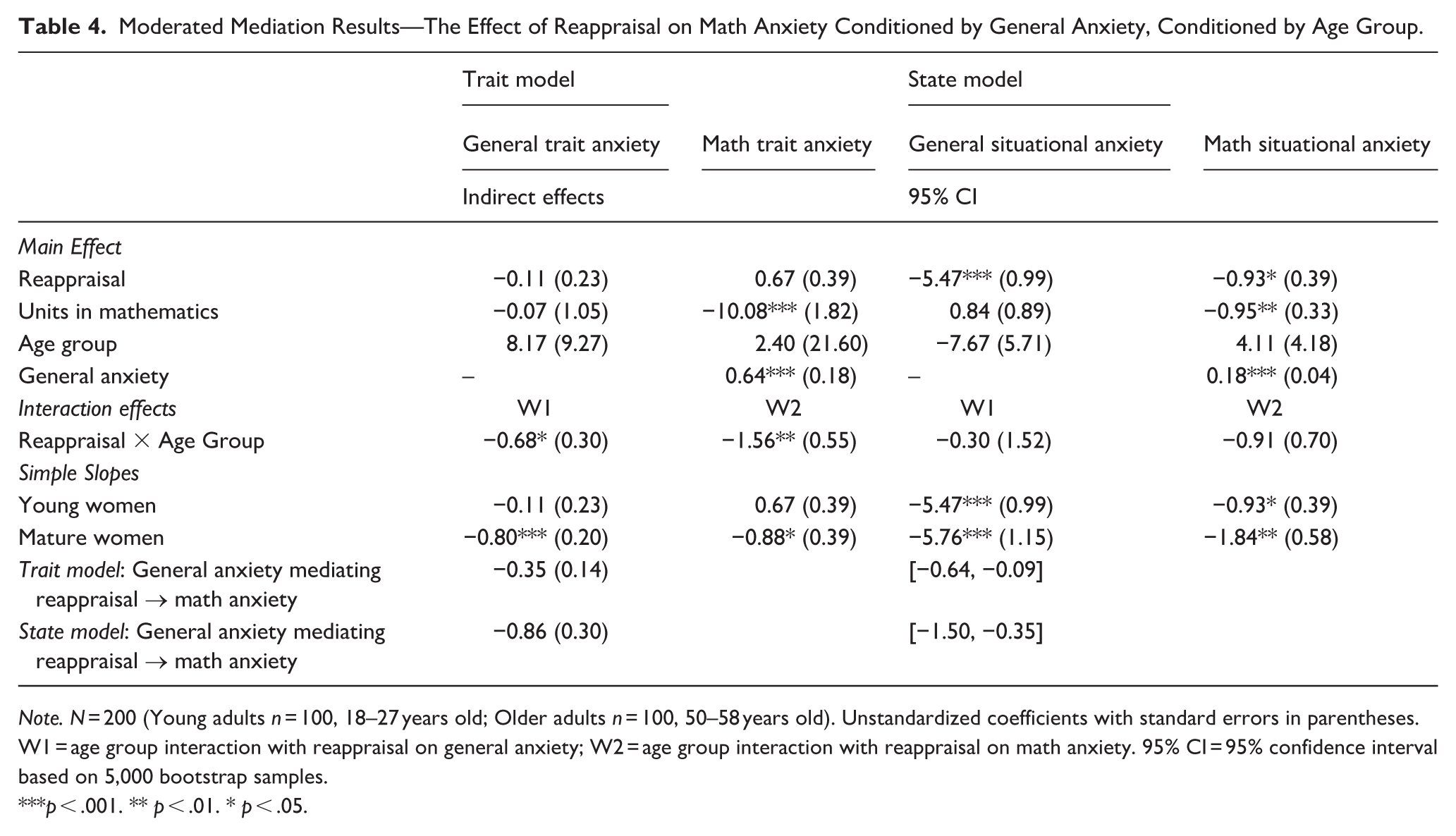
Note. N = 200 (Young adults n = 100, 18–27 years old; Older adults n = 100, 50–58 years old). Unstandardized coefficients with standard errors in parentheses. W1 = age group interaction with reappraisal on general anxiety; W2 = age group interaction with reappraisal on math anxiety. 95% CI = 95% confidence interval based on 5,000 bootstrap samples.
p < .001. ** p < .01. * p < .05.
Findings show that reappraisal was negatively associated with state general and math anxieties (b = −5.47, p < .001; b = −0.93, p < .05, respectively) but not within the trait model framework. These results align with the hypotheses within the state model. This suggests that reappraisal was mainly a momentary instrument that was related to anxiety reduction, that is, women who showed greater reappraisal capacity were lower on their anxiety levels. The positive association between general anxiety and MA (state: b = 0.18, p < .001; trait: b = 0.64, p < .001) provided support to our hypotheses.
A simple mediation analysis was performed to examine the role of general anxiety in the relationship between reappraisal and MA. In both the trait and state models, general anxiety played a mediating role, trait: indirect = −0.35 (0.14), 95% CI = [−0.64, −0.09]; state: indirect = −0.86 (0.30), 95% CI = [−1.50, −0.35]. We observed an indirect relationship via general anxiety between reappraisal and MA. The second section in Table 4 shows the moderation results. The association of reappraisal conditioned by age group on the mediator and the outcome was found significant in the trait model (b = −0.68, p < .05; b = −1.56, p < .01, respectively) but not in the state model. To understand this moderation, we decomposed these interactions into age groups, which showed that among the older women, reappraisal was negatively associated with anxiety and MA in the trait model (b = −0.80, p < .001; b = −0.88, p < .05, respectively), whereas within the state model, the negative reappraisal association with general anxiety was found in both age groups (younger: b = −5.47, p < .001; older: b = −5.76, p < .001), and with MA (younger: b = −0.93, p < .05; older: b = −1.84, p < .05). The reappraisal association with MA within the state model was stronger among the older women, which supported our hypotheses.
Statistical Hypothesis Testing
Our moderated mediation analyses provided clear support for the proposed theoretical model. The primary mediation hypothesis was confirmed in both trait and state models, with general anxiety significantly mediating the relationship between reappraisal and MA (trait: indirect = −0.35, 95% CI = [−0.64, −0.09]; state: indirect = −0.86, 95% CI = [−1.50, −0.35]). Age moderation effects emerged as predicted, with stronger reappraisal–anxiety associations among older women in the trait model (interaction b = −0.68, p < .05) and stronger general anxiety–MA relationships in the expected directions. The hypothesized age-group differences in both anxiety levels and ER strategy use were consistently supported across measures, with older women demonstrating lower anxiety and more effective reappraisal strategies compared to younger women.
Discussion
This study examined age-related differences in ER and MA among women through an integrated theoretical framework. Findings support the proposed moderated mediation model, revealing that cognitive reappraisal strategies relate to MA both directly and indirectly through general anxiety, with relationships differing significantly between younger and older women.
Math fluency, as an index of basic math skills, did not differ significantly between age groups. This finding suggests that the complex interplay between MA, ER, and age cannot be attributed to differences in mathematical ability. That is, the observed age-related differences in emotional and cognitive responses to math are not simply a reflection of skill disparities. Instead, they point to deeper psychological mechanisms—particularly in how ER strategies evolve with age and interact with anxiety in academic contexts. Such findings highlight the theoretical and practical need to focus on regulatory processes, rather than performance alone, when seeking to understand and address math-related anxiety across the lifespan.
The study points to potential age-group differences in the relationship between ER and MA. While young women show strong cognitive potential, their elevated anxiety suggests potential barriers to STEM engagement that are addressable through improved regulatory skills.
Age Group Differences
Younger women exhibited significantly greater generalized and math-specific anxiety compared to older women, aligning with previous findings (Isaacowitz, 2022). Younger adults’ greater generalized anxiety (Hybels et al., 2022) potentially reflects early adulthood challenges (Garcia-Aracil et al., 2021; Huang et al., 2022).
Crucially, our mathematical ability assessments revealed no significant differences between age groups in mathematical competence, yet substantial differences emerged in ER capabilities. This pattern suggests that age-related improvements in ER occur independently of mathematical skill development. Despite younger women’s equivalent mathematical abilities, their elevated anxiety levels may create barriers to optimal mathematical performance and STEM engagement.
Older women showed greater reappraisal use for both situational and trait measures. Increased situational reappraisal is associated with lower state anxiety levels, aligning with our theoretical framework (Daches Cohen & Rubinsten, 2022; Pizzie & Kraemer, 2021). Lower anxiety among older adults appears to relate to their greater capacity to utilize reappraisal as an anxiety regulation strategy, supporting previous research (Pizzie & Kraemer, 2021; Willner et al., 2022).
However, age-related changes in ER flexibility can impact how women adapt to mathematical problem-solving tasks, as flexibility in strategy use associates with better outcomes (Whitmoyer et al., 2024). This suggests older women may rely more consistently on reappraisal but show less adaptability in selecting optimal strategies for different mathematical challenges.
These patterns directly support Hypothesis 4, demonstrating that, despite equivalent mathematical competence between age groups, significant differences emerged in the effectiveness of ER. The W1 moderation effect was particularly pronounced in trait measures, suggesting that older women’s superior reappraisal skills represent stable regulatory advantages rather than merely situational adaptations.
Theoretical Model and Mediation Pathways
The findings provide strong support for our proposed moderate mediation model and confirm our four interconnected hypotheses. Hypothesis 1, our primary mediation hypothesis, received robust support in both trait and state models, with general anxiety significantly mediating the relationship between cognitive reappraisal and MA (trait: indirect = −0.35, 95% CI = [−0.64, −0.09]; state: indirect = −0.86, 95% CI = [−1.50, −0.35]). Results align with the process-specific timing hypothesis (Sheppes & Gross, 2011), confirming reappraisal associates with general emotional responses before affecting domain-specific anxieties.
Age moderation effects emerged as predicted across multiple pathways. Hypothesis 2 was supported, with stronger reappraisal-general anxiety associations among older women in the trait model (W1: interaction b = −0.68, p < .05). Hypothesis 3 received exploratory support, showing age differences in the general anxiety–MA relationship (W3), though the specific patterns varied between trait and state models. The hypothesized age-group differences (Hypothesis 4) in both anxiety levels and ER strategy use were consistently supported across measures, with older women demonstrating lower anxiety and more effective reappraisal strategies compared to younger women.
The integrated model effectively captured complex relationships between ER and anxiety across age groups. As suggested by the multicomponent framework (Gilmore, 2023), findings demonstrate that MA emerges from interconnected cognitive-emotional processes that differ between younger and older women. The mediational pathway from reappraisal through general anxiety to MA was supported, confirming that general anxiety mediates reappraisal associations with MA (Zhang et al., 2019).
Statistical Hypothesis Testing
Our moderated mediation analyses provided comprehensive support for the theoretical framework (Figure 1). The trait model revealed complete mediation, where reappraisal’s relationship with MA operated entirely through general anxiety among older women. In contrast, the state model showed significant indirect effects alongside direct effects (Hayes & Rockwood, 2017), with both direct and indirect pathways significant. These differential patterns across trait and state measures highlight the complexity of ER processes and their temporal dynamics in MA experiences.
Statistical analyses revealed that older women’s greater facility with reappraisal corresponds with lower general and MA levels. This relationship occurs independently of mathematical ability differences, as both age groups demonstrated comparable mathematical competence. This supports that ER serves as a protective factor against MA, separate from mathematical skill level. Findings extend previous research showing relationships between reappraisal and reduced anxiety (Dryman & Heimberg, 2018) and between general anxiety and MA (Wang et al., 2024), demonstrating how these relationships operate within an integrated framework and differ across age groups.
Implications for Understanding MA
Since both age groups showed comparable mathematical competence, anxiety reduction through improved ER may unlock existing mathematical potential rather than requiring extensive mathematical skill development. This age-related pattern suggests that ER skills can be developed over time, offering hope for interventions targeting younger women experiencing MA. Training programs focusing on cognitive reappraisal strategies may be particularly beneficial for younger women, who show equivalent mathematical abilities but elevated anxiety levels.
Limitations and Future Research
Cross-sectional design and associational language: Our cross-sectional design comparing specific age groups (18–27 and 50–58 years) allows observation of age-related differences but cannot identify developmental changes over time or establish causal relationships. All relationships described represent associations observed at a single time point rather than causal interactions. Longitudinal designs would provide more conclusive evidence regarding developmental trajectories in ER and MA relationships.
Findings are specific to women in particular age ranges and may not generalize to other demographic groups (e.g., Prior et al., 2015). These age ranges capture two distinct life stages: early adulthood, characterized by active engagement in higher education and early career development, and middle adulthood, marked by established career patterns and accumulated life experience. We focused exclusively on women due to documented gender differences in career development patterns, work-life balance considerations, and societal expectations that uniquely shape women’s professional trajectories. This methodological decision enabled the control for gender-specific variables and the examination of age-related differences with greater precision. However, gender comparisons represent a critically important direction for future research.
The younger adult group consisted primarily of university students, limiting generalizability. In addition, the older adult group reflects a cohort whose mathematical education occurred during a different educational era with different societal expectations regarding women and mathematics.
Future research employing experimental manipulations (e.g., Goldfarb et al., 2011) or longitudinal designs would provide more substantial evidence regarding the nature of these relationships and potential causal pathways between ER and MA.
Conclusion
The study reveals that four single hypotheses about ER, anxiety, and age are interconnected into an interesting, yet complex, psychological narrative that may have significant implications for both pedagogical and psychological fields.
The current study indicates that age group is significantly associated with MA levels, with younger women reporting greater anxiety despite comparable mathematical abilities. Older women exhibited greater use of ER strategies, particularly cognitive reappraisal (Figures 1 and 4).
While past literature explored facets of math skills, anxiety, and regulation individually across age groups, integrating these critical variables within a comprehensive model elucidates complex relationships between these processes in different age groups of women. The finding that ER differences exist between different age groups, despite similar mathematical skills, highlights the potential for targeted interventions focusing on ER skills to reduce MA and potentially improve mathematical engagement among younger women.
Supplemental Material
sj-docx-1-jbd-10.1177_01650254251396280 – Supplemental material for Math anxiety regulation: How women’s emotion regulation strategies shift across the lifespan
Supplemental material, sj-docx-1-jbd-10.1177_01650254251396280 for Math anxiety regulation: How women’s emotion regulation strategies shift across the lifespan by Shaked Moore and Orly Rubinsten in International Journal of Behavioral Development
Footnotes

Ethical Considerations
Our study consisted of survey participants. The Faculty of Education’s Ethics Review Committee at Haifa University approved our research (approval: 225/22) on July 04, 2022. Respondents gave written consent for review and signature before starting surveys.
Consent to Participate
Before data collection, participants received informed consent forms stating their right to withdraw without penalty.
Consent for Publication
Not applicable.
Funding
The authors disclosed receipt of the following financial support for the research, authorship, and/or publication of this article: This research was conducted without external funding. The study was supported by internal resources of the Edmond J. Safra Brain Research Center for the Study of Learning Disabilities at the University of Haifa.
Declaration of Conflicting Interests
The authors declared no potential conflicts of interest with respect to the research, authorship, and/or publication of this article.
Statements and Declarations
To promote transparency and openness in our research, we are committed to making our study materials, data, and analysis code available to other researchers, subject to ethical constraints regarding participant privacy. Our full study protocol, including all measures and procedures, is available upon request. We provide clear documentation of our data processing and analysis steps, and our anonymized dataset can be accessed by qualified researchers for verification and further analysis. All statistical analyses were conducted using open-source software, and our analysis scripts are available for review. In our report, we disclose all conducted analyses, including any exploratory or additional tests not initially planned, and any deviations from our original protocol. We openly discuss the limitations of our study design and potential alternative interpretations of our findings. While our study was not pre-registered, we are dedicated to transparency in our methods and results to support the reproducibility and integrity of our research.
Supplemental Material
Supplemental material for this article is available online.
References
Supplementary Material
Please find the following supplemental material available below.
For Open Access articles published under a Creative Commons License, all supplemental material carries the same license as the article it is associated with.
For non-Open Access articles published, all supplemental material carries a non-exclusive license, and permission requests for re-use of supplemental material or any part of supplemental material shall be sent directly to the copyright owner as specified in the copyright notice associated with the article.
