




Abstract
Parenting is among the most relevant factors implicated in the development and maintenance of children’s externalizing and internalizing problems. Despite a large body of literature investigating the influence of parenting on children’s outcomes, most studies relied on mothers’ data. Little is known about the role of paternal parenting, but increasing evidence suggested that fathers are as equally important as mothers in children’s development and well-being. The current systematic review aimed to summarize the associations between paternal parenting and externalizing and internalizing problems in children aged 6 to 13, a delicate period during which parenting is crucial to help children adjust to the challenges (e.g., school transition) it poses. Following the Preferred Reporting Items for Systematic Reviews and Meta-Analyses (PRISMA) guidelines, we conducted a systematic search on three databases (i.e., Scopus, PubMed, PsycINFO), which led to the selection of 45 articles. Despite some mixed results, studies showed that positive paternal parenting was related to fewer externalizing and internalizing problems in the offspring, while negative parenting practices are associated with greater symptoms. Externalizing problems appeared to be linked to discipline-related paternal behavior, while internalizing problems seemed influenced by the emotional quality of father–child relationships. This underscores the importance of actively involving fathers in clinical research and parenting interventions aimed at addressing children’s behavioral and emotional difficulties.
Introduction
Internalizing (i.e., depression and anxiety, or a combination of both) and externalizing problems (i.e., conduct problems, aggressive behavior, hyperactivity) characterize a significant number of children (Gritti et al., 2014; Racine et al., 2021). A meta-analysis examining the worldwide prevalence of mental disorders in children and adolescents reported a prevalence of 6.5% for any anxiety disorder, 2.6% for any depressive disorder, 3.4% for attention-deficit hyperactivity disorder (ADHD), and 5.7% for any disruptive disorder (Polanczyk et al., 2015). Despite some heterogeneity in the estimates, the authors stated that the prevalence rates did not vary based on the geographic area of the studies. Genetic factors contribute to approximately 32% up to 37% of the risk of internalizing problems (Gottschalk & Domschke, 2017; Shadrina et al., 2018), and as high as 80% for externalizing problems (e.g., Hicks et al., 2004; Willems et al., 2019). However, several studies indicated risk factors outside of genetic heritability for both internalizing and externalizing problems (Gardner et al., 2003; Odgers et al., 2008; Pinquart, 2017a; Yap & Jorm, 2015), with parenting being one of the most relevant ones. The experience of positive parenting behaviors, such as support and emotional warmth, typically results in a positive influence on a child’s development and well-being, while negative parenting, such as unavailability and harsh and inconsistent discipline, may propel children toward poorer mental health outcomes (e.g., Rohner et al., 2005).
Studies have highlighted the role of coercive, harsh, and conflictual parenting practices in the emergence of externalizing problems, as well as poor parental supervision, neglectful parenting, low-positive parent–child engagement, and psychological control (Gardner et al., 2003; Odgers et al., 2008; Pinquart, 2017a). Recent reviews and meta-analyses, instead, highlighted high levels of harsh control, psychological control, and authoritarian parenting, and low levels of autonomy granting and warmth as parenting behaviors robustly linked to child and adolescent internalizing problems (Manuele et al., 2023; Pinquart, 2017b). Parenting associations with children’s outcomes might vary across developmental stages. In early childhood, low parental warmth and harsh or inconsistent discipline are associated with increased internalizing and externalizing problems (e.g., Bayer et al., 2006; Verhoeven et al., 2010). As children move into middle childhood, parents’ emotional availability and behavioral control play a key role in promoting self-regulation (Eisenberg et al., 2005), reducing the risk of internalizing and externalizing symptoms. As children approach adolescence, autonomy-supportive parenting that maintains warmth and consistent boundaries becomes especially protective (e.g., Lansford et al., 2014).
Despite a wide literature on the relationship between parenting and children’s internalizing and externalizing problems, studies are mostly based on data provided by mothers, as exemplified in Van Der Bruggen et al.’s (2008) meta-analysis, which included 23 studies: only 4 included maternal and paternal data, and just 1 focused exclusively on fathers’ roles. Ignoring the role of fathers in child development and well-being leaves a significant gap in the literature as it is considered equally important as mothers’ (Lee et al., 2018). In this regard, Pinquart (2017b) found that low paternal warmth and high psychological control were more strongly associated with internalizing symptoms than similar behaviors from mothers. Similarly, Manuele et al. (2023) emphasized that paternal psychological control had a stronger association with children’s internalizing symptoms than maternal control; also, fathers’ low engagement and warmth were uniquely predictive of children’s internalizing difficulties, even after controlling for maternal behaviors, especially in boys. Along with some shared effects, studies also suggest that maternal and paternal parenting styles might be uniquely associated with the offspring’s behavior difficulties (Braza et al., 2015; Manuele et al., 2023; Martin et al., 2010; Tavassolie et al., 2016), increasingly underscoring the importance of considering father-specific contributions to child adjustment and the nuanced ways in which different parental roles may shape internalizing trajectories.
Fathering plays a crucial role across all stages of a child’s development. In infancy, fathers engage in stimulating play and contribute to basic care tasks such as feeding and comforting alongside mothers who handle most daily caregiving (Volling et al., 2019). During toddlerhood, fathers typically focus on physical activities, motor skill development, and encouraging independence and risk-taking in their children (Lamb, 2004). At this early ages, paternal supportiveness is relevant for children’s cognitive, language, social, and emotional development (Cabrera et al., 2007). As children grow, fathers act as role models for social behaviors, academic engagement, and moral development, with gender differences emerging as fathers may encourage sons toward competitive behaviors while fostering collaboration and nurturing in daughters (Lamb, 2004). Throughout their children’s lives, fathers continue supporting their cognitive and emotional growth by guiding them and helping them navigate the complex social world. Despite a great emphasis on equal parenting and fathers’ active participation in child-rearing, fathering is highly shaped by societal expectations and cultural factors (Cabrera et al., 2000; Lamb, 2004).
Regardless of a growing interest in the influence of fathering on children’s internalizing and externalizing problems, there are currently no identified systematic reviews addressing this topic. Previous research reviews explored the role of both maternal and paternal parenting concurrently and selectively focused on internalizing (Manuele et al., 2023; Pinquart, 2017b) or externalizing problems (Pinquart, 2017a). Moreover, previous work included studies with samples with a wide age range. Based on this, the current systematic review aimed to summarize the associations between paternal parenting and internalizing and externalizing problems in children aged 6 to 13. This is a delicate age period for children and their families as it involves, among other challenges, the transition to primary school first and to middle school later. It requires adjusting to several changes, such as the school environment, novel learning expectations, rules, identity, and relationships with peers and adults. It is not uncommon for children to have difficulties adapting to these novelties and experience mental health issues (e.g., Margetts, 2009). In this context, parenting practices play a crucial role in accompanying children throughout this period’s changes and challenges by warmingly supporting them but setting the necessary disciplinary boundaries as well.
Method
Study Selection
This systematic review adhered to the Preferred Reporting Items for Systematic Reviews and Meta-Analyses (PRISMA) guidelines (Page, McKenzie, Bossuyt, Boutron, Hoffmann, Mulrow, Shamseer, Tetzlaff, & Moher, 2021; PRISMA Checklist available as Supplementary material). Studies were included in the current review if they met the following eligibility criteria: (a) published in a peer-reviewed journal; (b) contained reports on paternal parenting (male caregiver); (c) investigated clinical or community child participants with an age range of 6 to 13 years inclusive; (e) cross-sectional or longitudinal design; (f) in case of longitudinal design, parenting and child’s outcomes were assessed when the child was 6 to 13 years of age; (g) investigated internalizing and/or externalizing problems in children. We decided to include only English-language studies to ensure accurate interpretation and assessment, minimizing the risk of misinterpretation due to language barriers. In addition, as a significant portion of high-impact literature in this field is published in English, this restriction is unlikely to exclude a substantial number of relevant studies. Also, we included both cross-sectional and longitudinal studies to provide a more comprehensive understanding of the topic.
Articles were excluded based on the following criteria: (a) studies were a systematic review, narrative review, meta-analysis, or discussion paper; (b) studies where adults retrospectively report on perceptions of parenting received during childhood/adolescence; (c) studies that focused solely on paternal variables or factors (e.g., psychopathology and parent–child attachment) that are related to, but distinct from, the core construct (i.e., fathering) of the review.
Three databases were explored: PubMed, Scopus, and PsycINFO. The search is updated to 1 April 2025. No time frame was imposed to search. Searched terms included: “father parenting” OR “paternal parenting” OR “dad parenting” OR “fathering” AND (“child* psychopathology” OR “child* symptom*” OR “child* problem*” OR “child* internal*” OR child* anxi* OR child* depress* OR “child* external*” OR “child* aggress*” OR “child* hyperactiv*” OR “child* conduct problem*”; see Supplementary material for complete strings). The terms selected for the search were applied to titles, abstracts, and keywords in Scopus; to titles and abstracts in PubMed; and to text elements for PsycINFO. The current review protocol was not registered prior to conducting the study.
To ensure reliability in the selection and extraction process, the authors independently reviewed titles and abstracts. The full-text screening was completed independently by two authors. Each author independently screened the articles for eligibility based on the inclusion and exclusion criteria. Similarly, data extraction (e.g., study characteristics, outcomes) was conducted independently by both authors. After the independent screening and extraction, any disagreements or discrepancies between the two authors were discussed and resolved through consensus meetings. If necessary, a third reviewer was consulted for further clarification. Throughout the process, regular check-ins were held to review progress and ensure that both authors were following the same procedures and interpretation of the criteria.
The full screening process is documented in Figure 1. A total of 2,904 articles were first considered; 2,241 were excluded during the first screening phase; 247 were assessed for eligibility through full-text review. Ultimately, 45 papers were included in the current review. The primary reasons for the exclusion of studies from the present review were as follows: (a) the article was not an original research study (e.g., systematic review, narrative review, meta-analysis, or discussion paper); (b) the study population did not include children; (c) the age range of participants fell outside the targeted window of 6 to 13 years; (d) one or more of the key constructs—paternal parenting and children’s internalizing and externalizing problems—were not addressed; (e) the study did not include specific analyses examining the association between paternal parenting and children’s psychological outcomes.
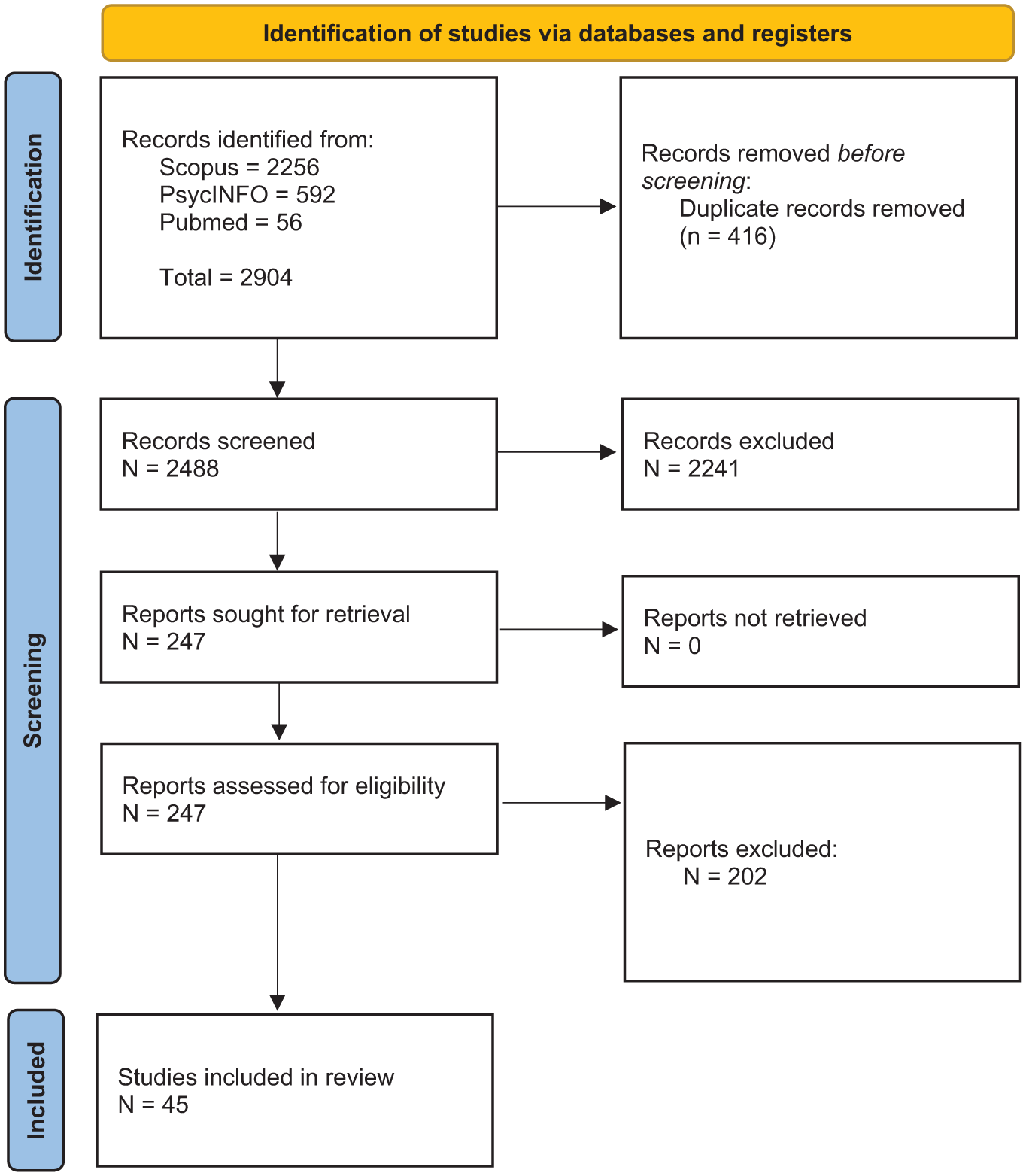
Process of Literature Search Strategy.
Using the Appraisal tool for Cross-Sectional Studies (AXIS) for cross-sectional studies (2016) and the Critical Appraisal Skills Programme (CASP) for longitudinal studies (2024), we systematically assessed the risk of bias for each included study to evaluate their methodological quality. While formal evaluations of reporting bias and overall certainty of the evidence were not conducted, the AXIS and CASP appraisals provided a robust foundation for interpreting the findings.
Ethical approval was not required for this study as it is based exclusively on a review of previously published literature.
Results
Study Characteristics
A total of 45 studies were included in the current systematic reviews. Most studies had a cross-sectional design (n = 34), while the other were longitudinal (n = 11). Thirteen studies were conducted in the United States, 7 in China, 4 in Spain, 3 in the Netherlands, 2 in South Korea, 2 in Portugal, 2 in the United Kingdom, 2 in Belgium, 2 in Pakistan, 1 in Turkey, 1 in Germany, 1 in Finland, 1 in Estonia, 1 in Egypt, 1 in Japan, 1 in Israel, and 1 in Canada. Most studies were conducted on community samples (n = 41), while two studies were conducted on clinical samples of ADHD children (Azzam et al., 2021; Climie & Mitchell, 2017), one on a sample of children of divorcing families (Sandler et al., 2008) and one on children with alcohol or drug abusing fathers (Fals-Stewart et al., 2004). Children’s ages ranged from 6 to 13 years, while parents’ from about 30 to 48 years. Only four studies exclusively focused on fathers’ measures (Bustos et al., 2024; Carreras et al., 2023; Roberts et al., 2022; Ünsal & Acar, 2023), while the others included both mothers’ and fathers.’ However, the included studies assessed paternal parenting with father-reported or child-reported (i.e., perceived paternal parenting) measures or observational tasks. Only one study used averaged maternal and paternal scores to create a father score for parenting (Schacht et al., 2009).
As regards children’s outcomes, 13 studies focused exclusively on externalizing problems and 13 on internalizing ones, while the remaining studies (n = 19) included measures for both dimensions. More specifically, 24 studies included general measures of externalizing problems or behavioral problems, 10 included measures of aggressive behavior (e.g., reactive, proactive, or relational aggression) or conduct problems, two of hyperactivity or ADHD-related symptoms, and one of oppositional defiant disorder (ODD) symptoms. Also, 19 included general measures of internalizing problems or emotional symptoms; 9 included measures of anxiety symptoms, generalized anxiety, or social anxiety; and 8 of depressive symptoms.
Regarding paternal parenting, 22 studies focused on both positive and negative parenting dimensions, while 9 focused only on positive and 14 on negative parenting practices. Among studies investigating the role of positive parenting, most of them included measures of general positive parenting (n = 8) or paternal warmth and supportiveness (n = 12), followed by authoritative parenting (n = 7), paternal involvement (n = 3), consistent discipline (n = 2), encouragement of independence/autonomy (n = 2) acceptance (n = 1), equality in treatment with respect to siblings (n = 1), paternal positive communication (n = 1), paternal monitoring (n = 1), mindful parenting (n = 1), and use of inductive reasoning (n = 1).
Regarding negative paternal parenting dimensions, most studies focused on controlling behaviors (e.g., psychological control, behavioral control; n = 8), followed by general measures of negative and dysfunctional parenting (n = 6), paternal hostility, negative feelings or aggressive behavior toward the child (n = 6), harsh and strict discipline (n = 5), authoritarian or obedience-demanding parenting (n = 5), inconsistent and lax discipline (n = 4), overprotection and overparenting (n = 4), severe punishment (e.g., corporal punishment; n = 4), permissive discipline (n = 4), paternal rejection (n = 3), fear-enhancing behavior (n = 2), poor monitoring (n = 1), over-reactivity (n = 1), and negative communication (n = 1).
Following study selection based on eligibility criteria, included studies were narratively synthesized; no meta-analysis was conducted due to heterogeneity in study designs, outcomes, and measurement methods. Results were organized into two main categories: externalizing and internalizing outcomes. Within each category, findings were further grouped based on whether they reported the effects of positive or negative fathers’ parenting. In outlining the findings of this review, we focused on the direct effects of fathering on children’s externalizing and internalizing symptoms. Formal effect measures such as risk ratios or mean differences were not calculated. Study characteristics and relevant contextual information were summarized descriptively in Table 1 to support the synthesis.
Systematic Review Table.
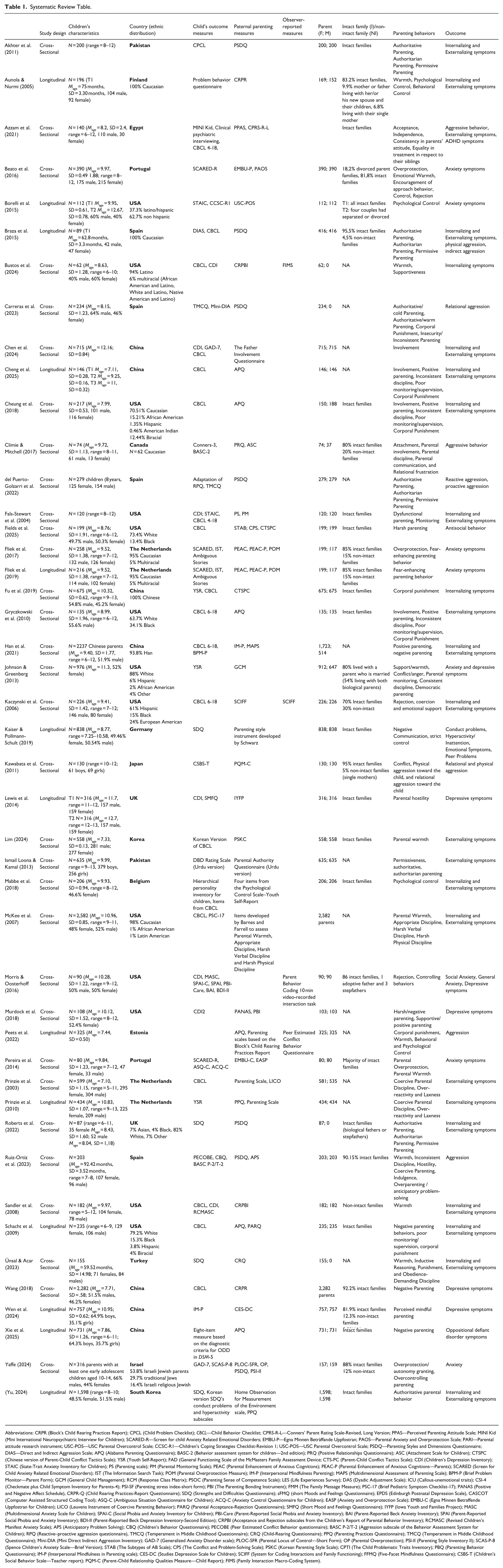
Abbreviations: CRPR (Block’s Child Rearing Practices Report); CPCL (Child Problem Checklist); CBCL—Child Behavior Checklist; CPRS-R-L—Conners’ Parent Rating Scale-Revised, Long Version; PPAS—Perceived Parenting Attitude Scale; MINI Kid (Mini International Neuropsychiatric Interview for Children); SCARED-R—Screen for child Anxiety Related Emotional Disorders; EMBU-P—Egna Minnen Beträffande Uppfostran; PAOS—Parental Anxiety and Overprotection Scale; PARI—Parental attitude research instrument; USC-POS—USC Parental Overcontrol Scale; CCSC-R1—Children’s Coping Strategies Checklist-Revision 1; USC-POS—USC Parental Overcontrol Scale; PSDQ—Parenting Styles and Dimensions Questionnaire; DIAS—Direct and Indirect Aggression Scale; APQ (Alabama Parenting Questionnaire); BASC-2 (Behavior assessment system for children—2nd edition); PRQ (Positive Relationships Questionnaire); ASC (Attachment Scale for Children); CTSPC (Chinese version of Parent-Child Conflict Tactics Scale); YSR (Youth Self-Report); FAD (General Functioning Scale of the McMasters Family Assessment Device; CTS-PC (Parent-Child Conflict Tactics Scale); CDI (Children’s Depression Inventory); STAIC (State-Trait Anxiety Inventory for Children); PS (Parenting scale); PM (Parental Monitoring Scale); PEAC (Parental Enhancement of Anxious Cognitions); PEAC-P (Parental Enhancement of Anxious Cognitions—Parents); SCARED (Screen for Child Anxiety Related Emotional Disorders); IST (The Information Search Task); POM (Parental Overprotection Measure); IM-P (Interpersonal Mindfulness Parenting); MAPS (Multidimensional Assessment of Parenting Scale); BPM-P (Brief Problem Monitor—Parent Form); GCM (General Child Management); RCM (Response Class Matrix); PSOC (Parenting Sense of Competence Scale); LES (Life Experiences Survey); DAS (Dyadic Adjustment Scale); ICU (Callous-unemotional traits); CSI-4 (Checkmate plus Child Symptom Inventory for Parents-4); PSI-SF (Parenting stress index-short form); PBI (The Parenting Bonding Instrument); FMM (The Family Message Measure); PSC-17 (Brief Pediatric Symptom Checklist-17); PANAS (Positive and Negative Affect Schedule), CRPR-Q (Child Rearing Practices-Report Questionnaire); SDQ (Strengths and Difficulties Questionnaire); sFMQ (short Moods and Feelings Questionnaire); EPDS (Edinburgh Postnatal Depression Scale), CASCOT (Computer Assisted Structured Coding Tool); ASQ-C (Ambiguous Situation Questionnaire for Children); ACQ-C (Anxiety Control Questionnaire for Children); EASP (Anxiety and Overprotection Scale); EMBU-C (Egna Minnen Betraffende Uppfostran for Children); LICO (Leuvens Instrument of Coercive Parenting Behavior); PARQ (Parental Acceptance-Rejection Questionnaire); SMFQ (Short Mood and Feelings Questionnaire); IYFP (Iowa Youth and Families Project); MASC (Multidimensional Anxiety Scale for Children); SPAI-C (Social Phobia and Anxiety Inventory for Children); PBI-Care (Parent-Reported Social Phobia and Anxiety Inventory); BAI (Parent-Reported Beck Anxiety Inventory); SPAI (Parent-Reported Social Phobia and Anxiety Inventory); BDI-II (Parent-Reported Beck Depression Inventory-Second Edition); CRPBI (Acceptance and Rejection subscales from the Children’s Report of Parental Behavior Inventory); RCMASC (Revised Children’s Manifest Anxiety Scale); APS (Anticipatory Problem Solving); CBQ (Children’s Behavior Questionnaire); PECOBE (Peer Estimated Conflict Behavior questionnaire); BASC P-2/T-2 (Aggression subscale of the Behavior Assessment System for Children); RPQ (Reactive–proactive aggression questionnaire), TMCQ (Temperament in Middle Childhood Questionnaire); CRQ (Child-Rearing Questionnaire); PPQ (Parenting Practices Questionnaire); TMCQ (Temperament in Middle Childhood Questionnaire); Mini-DIA (Mini Direct Indirect Aggression Inventory); GAD-7 (Generalized Anxiety Disorder scale); PLOC-SFR (Parental Locus of Control—Short Form); OP (Parental Overprotection); PSI-II (Parenting Style Inventory II); SCAS-P-8 (Spence Children’s Anxiety Scale—Brief Version); STAB (The Subtypes of AB Scale); CPS (The Conflict and Problem-Solving Scale); PSKC (Korean Parenting Style Scale); CPTI (The Child Problematic Traits Inventory); PBQ (Parenting Behavior Questionnaire); IM-P (Interpersonal Mindfulness in Parenting scale); CES-DC (Studies Depression Scale for Children); SCIFF (System for Coding Interactions and Family Functioning); FFMQ (Five-Facet Mindfulness Questionnaire); CSBS-T (Children’s Social Behavior Scale—Teacher report); PQM-C (Parent-Child Relationship Qualities Measure—Child Report); FIMS (Family Interaction Macro-Coding System).
Risk of Bias Assessment
Cross-sectional studies were appraised using the AXIS tool, with scores ranging from 14 to 19 out of 20. This reflects moderate variability in quality, with most studies scoring 16 or higher, indicating generally sound methodology despite a few with notable limitations. Longitudinal studies were assessed using the CASP checklist. Overall quality was good, with six studies meeting nearly all criteria. The main issues observed concerned confounding and follow-up procedures, though most studies showed clear design and reporting. More details are available in Supplementary materials.
Results Synthesis
Externalizing Problems
Positive Parenting. Six studies explored the associations between externalizing symptoms and global measures of fathers’ positive parenting. Overall, they showed that, in community samples, high levels of positive parenting (e.g., proactive parenting, positive reinforcement, warmth, and supportiveness) are associated with fewer externalizing problems (Cheung et al., 2018; Han et al., 2021; McKee et al., 2007). Similarly, Schacht et al. (2009) found that a decrease in positive parenting due to fathers’ drinking problems significantly predicted children’s externalizing problems. Other studies did not find evidence of a direct association between positive parenting and externalizing problems, including a cross-sectional study by Gryczkowski et al. (2010) and a longitudinal study by Cheng et al. (2025), which found positive parenting measured at age 7 or 9 was not related to present or later children’s outcomes.
Seven studies focused on the role of paternal warmth (e.g., a positive relationship with the child, showing affection to the child, talking with the child) and supportiveness. Two cross-sectional studies did not find warmth or supportiveness to be associated with externalizing problems (Ünsal & Acar, 2023) or aggressive behavior (Carreras et al., 2023); comparable findings emerged from longitudinal studies (Aunola & Nurmi, 2005; Peets et al., 2022). Nonetheless, Kaczynski et al. (2006) found that lack of emotional support was related to higher externalizing problems, and Sandler et al. (2008) found that fathers’ warmth was associated with lower aggressive behavior in children of divorcing famili (see also Lim, 2024). Similar results were found by Climie and Mitchell (2017) in a sample of ADHD children. Climie and Mitchell (2017) also showed that higher levels of fathers’ communication (e.g., talking with the child about daily events, school activities, friends, and problems) and involvement (e.g., participating in activities with the child) were linked to lower aggression in ADHD children; likewise, Gryczkowski et al. (2010) found fathers’ involvement to be negatively correlated with global measures of externalizing problems, but only in sons (see also, Chen et al., 2024).
Other studies explored the role of fathers’ consistent discipline (e.g., being consistent in responding to the child’s misbehavior, enforcing rules steadily) in ADHD samples: Azzam et al. (2021) found it to be positively associated with aggressive and externalizing behavior but not with ADHD symptoms, while Climie and Mitchell (2017) found it unrelated to externalizing problems (e.g., aggression). Also, Prinzie et al. (2003) found a negative association between fathers’ ability to follow through with consistent and suitable consequences for their children’s behavior and externalizing problems in a community sample.
Roberts et al. (2022) found a negative correlation between fathers’ authoritative parenting (e.g., regulation support, autonomy granting, and warmth) and externalizing problems. Similar results were reported by a longitudinal study that showed that paternal authoritative parenting was related to lower externalizing behaviors assessed 3 years later (Prinzie et al., 2010). del Puerto-Golzarri et al. (2022) found it to be positively correlated with reactive—but not proactive- aggression only in girls; however, the relation was not significant anymore once fathers’ authoritative parenting was modeled with other variables (e.g., mothers’ parenting, child temperament). Carreras et al. (2023) also reported a positive association between cold authoritative parenting and children’s relational aggressive, while warm authoritative parenting acted as a protective factor. Other cross-sectional (Akhter et al., 2011; Ismail Loona & Kamal, 2012) and longitudinal (Yu, 2024) studies found fathers’ authoritative parenting unrelated to children’s externalizing problems.
Moreover, fewer externalizing problems were related to paternal monitoring (Fals-Stewart et al., 2004) and inductive reasoning (Ünsal & Acar, 2023). Finally, Azzam et al. (2021) also explored the influence of acceptance, encouragement of independence/autonomy, and equality in treatment with respect to siblings on externalizing problems in children with ADHD, though no statistically significant relationship emerged.
Negative Parenting. Four studies examined the association between fathers’ general negative parenting and children’s externalizing problems. Han et al. (2021) found it to be associated with higher externalizing problems in 6- to 12-year-old children. Similarly, a longitudinal study by Cheng et al. (2025) showed that paternal negative parenting at age 7, 9, and 11 was concurrently linked to children’s externalizing problems. Furthermore, negative parenting at age 7 predicted externalizing problems at ages 9 and 11 (Cheng et al., 2025). Another longitudinal study found a positive association between negative parenting and concurrent and later children’s ODD symptoms (Xie et al., 2025). Fals-Stewart et al. (2004) did not find a direct link between the two constructs.
An association between paternal harsh and coercive discipline and greater levels of externalizing problems emerged in three studies (Kaczynski et al., 2006; McKee et al., 2007; Prinzie et al., 2003), while two studies found it unrelated to children’s aggressive and externalizing behavior (Fields et al., 2025; Ruiz-Ortiz et al., 2023)
Four studies focused on the relationship between fathers’ controlling parenting (e.g., psychological and behavioral control) and externalizing problems in the offspring. Psychological control was associated with greater externalizing problems concurrently (Mabbe et al., 2018) and longitudinally (Peets et al., 2022), and fathers’ strict control was associated with higher hyperactivity symptoms (Kaiser et al., 2019). Instead, Aunola and Nurmi (2005) found no associations between the levels of paternal parenting, and children’s level and linear trends of externalizing problems. As regards permissive and indulgent fathering, Ruiz-Ortiz et al. (2023) and Akhter et al. (2011) found it was associated with higher externalizing problems, though it was not related to children’s externalizing or aggressive behaviors in one cross-sectional (Ismail Loona & Kamal, 2012) and one longitudinal study (Braza et al., 2015).
The investigation of the influence of fathers’ authoritarian parenting (e.g., high control and demandingness, low warmth and support) on children’s externalizing symptoms yielded contradicting results: indeed, in girls, authoritarian parenting was found to be both longitudinally associated with greater physical aggression (Braza et al., 2015) and concurrent lower reactive aggression (del Puerto-Golzarri et al., 2022). Also, Akhter et al. (2011) found that it was associated with higher externalizing problems (see also Ünsal & Acar, 2023), while Ismail Loona and Kamal (2012) did not find a significant association with them.
Studies showed that fathers’ inconsistent discipline (e.g., a lack of follow-through with discipline) was associated with children’s externalizing problems (Cheung et al., 2018; Gryczkowski et al., 2010) and relational aggression (Carreras et al., 2023), but one research found it unrelated to aggressive behavior (Ruiz-Ortiz et al., 2023).
The use of severe punishment by fathers was related to greater externalizing problems (Fu et al., 2019; Ünsal & Acar, 2023), though one longitudinal study found that this association was significant only for girls, especially when exposed to highly controlling parenting (Peets et al., 2022). Carreras et al. (2023) found no significant relationship between corporal punishment and relational aggression.
Other studies found an association between greater externalizing problems paternal rejection (Kaczynski et al., 2006) or a father–child relationship characterized by negative feelings (e.g., frustration, hostility; Climie & Mitchell, 2017; Ruiz-Ortiz et al., 2023). Kawabata et al. (2011) found that children’s relational aggression was not related to paternal aggressive behavior toward their child, but it was with a conflictual father–child relationship. Fathers’ over-reactivity was linked to greater externalizing problems (i.e., responding with irritation and anger or to react impatiently to problematic behavior; Prinzie et al., 2003), but Prinzie et al. (2010) found no significant results in a longitudinal study. Gryczkowski et al. (2010) also found a positive association between poor monitoring and externalizing problems in girls—but not boys—and Kaiser et al. (2019) found that fathers’ negative communication was related to higher levels of hyperactivity and conduct problems. Finally, Ruiz-Ortiz et al. (2023) tested the association between overparenting (i.e., anticipatory problem-solving) and externalizing problems, but no significant relationship was found. Results are represented in Figure 2.
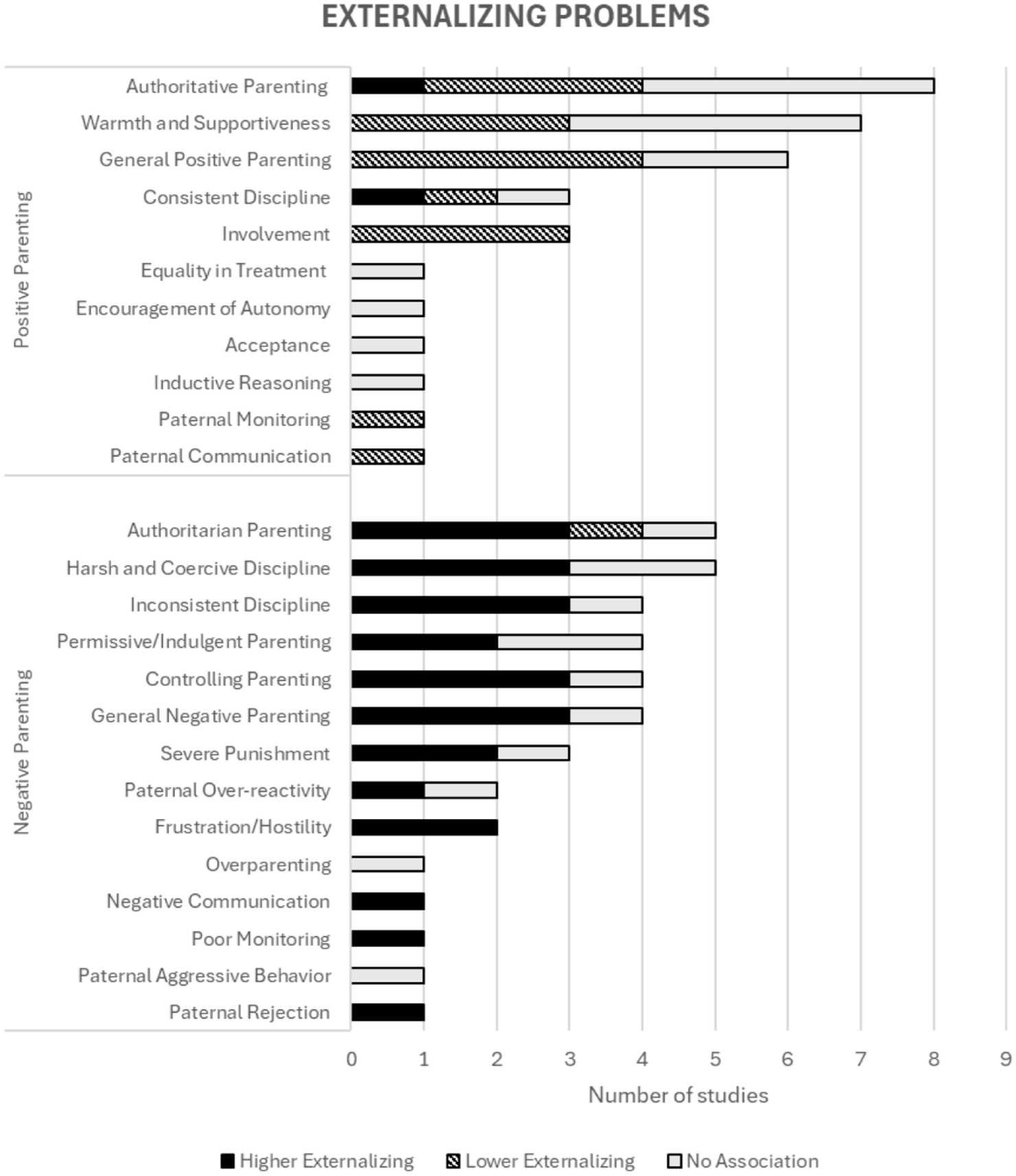
Summary of Associations Between Paternal Parenting Dimensions and Child Externalizing Problems.
Internalizing Problems
Positive Parenting. Six studies explored whether general measures of fathers’ positive parenting were associated with children’s internalizing problems. Three of them found that positive parenting was related to fewer internalizing symptoms (Cheung et al., 2018; Han et al., 2021; McKee et al., 2007), while a cross-sectional (Schacht et al., 2009) and a longitudinal research (Cheng et al., 2025) found them to be unrelated; Murdock et al. (2018) found that positive parenting was not related to depressive symptoms. Also, Johnson and Greenberg (2013) found that community children with higher depressive symptoms and children with higher anxiety and depressive symptoms experienced lower paternal positive parenting than those with only higher anxiety symptoms and those with low internalizing symptoms, respectively.
As regards the influence of paternal warmth, most studies found it not to be significantly associated with internalizing problems (Aunola & Nurmi, 2005; Pereira et al., 2014; Sandler et al., 2008) or anxiety symptoms (Beato et al., 2016), but other found a negative correlation between the two constructs (Bustos et al., 2024; Ünsal & Acar, 2023). Moreover, Johnson and Greenberg (2013) found that community children with higher depressive symptoms perceived lower paternal warmth than children with low internalizing problems. Kaczynski et al. (2006), instead, found that lack of paternal emotional support was associated with mother-reported internalizing problems.
Other studies cross-sectional and longitudinal showed that fathers’ authoritative parenting (Akhter et al., 2011; Roberts et al., 2022; Yu, 2024), the use of inductive reasoning (Ünsal & Acar, 2023), as well as paternal involvement (Chen et al., 2024) were associated with lower internalizing symptoms. Moreover, studies explored the influence of fathers’ tendency to encourage their children’s approach behavior (Beato et al., 2016) and monitor their offspring (Fals-Stewart et al., 2004) but found no significant association with internalizing symptoms. Finally, paternal mindful parenting was correlated with concurrent and later depressive symptoms, but when mothers’ parenting was taken into account, only cross-sectional associations remained significant (Wen et al., 2024).
Negative Parenting. Five studies highlighted that fathers’ general negative and dysfunctional parenting practices were associated with children’s internalizing (Fals-Stewart et al., 2004; Han et al., 2021) and depressive (Murdock et al., 2018; Wang, 2018) symptoms. Cheng et al. (2025) found it unrelated to concurrent and later internalizing symptoms.
Pereira et al. (2014) found that paternal overprotection was associated with higher anxiety symptoms in children, while other studies found it to be unrelated to them (Beato et al., 2016; Fliek et al., 2017). Paternal controlling parenting was found to be frequently associated with children’s with anxiety symptoms and internalizing problems in cross-sectional works (Mabbe et al., 2018; Yaffe, 2024); longitudinal research studies also showed it was linked to anxiety (Borelli et al., 2015) and increased internalizing problems (Aunola & Nurmi, 2005). Morris and Oosterhoff (2016) found that fathers’ physically controlling behavior (i.e., physical takeover) during an interaction task was associated with higher anxiety and depression in children, while verbally controlling behavior (i.e., verbal instructions) was associated with higher social anxiety and general anxiety in boys and lower social anxiety and general anxiety in girls. Beato et al. (2016), instead, found that children’s anxiety was not related to fathers’ psychological control.
Two studies also found that strict, harsh, and coercive discipline was associated with children’s emotional symptoms (Kaiser et al., 2019) and internalizing problems (Kaczynski et al., 2006). Fu et al. (2019) showed that fathers’ use of corporal punishment was related to higher internalizing problems, though Ünsal & Acar (2023) did not find a significant association between the constructs.
Kaczynski et al. (2006) showed that paternal rejection was associated with higher internalizing symptoms. Morris and Oosterhoff (2016) found that paternal rejecting behavior (i.e., frequent criticism) was associated with higher levels of children’s anxiety and depression but not social anxiety. Beato et al. (2016), instead, did not find an association between rejection and anxiety.
Two studies suggested that fathers’ fear-enhancing parenting behavior (i.e., modeling threat information transmission) was associated with greater children’s anxiety (Fliek et al., 2017, 2019). Cross-sectional (Ünsal & Acar, 2023) and longitudinal (Braza et al., 2015) studies explored the influence of fathers’ authoritarian and obedience-demanding behavior on children’s internalizing symptoms but did not find a statistically significant association. Akhter et al. (2011), instead, found it positively related to internalizing symptoms.
Evidence also suggested that paternal permissive parenting was associated with lower subsequent internalizing problems in boys, only when associated with higher levels of maternal authoritarian style (Braza et al., 2015). Akhter et al. (2011) did not find evidence of a significant association between permissive parenting and internalizing symptoms. Finally, internalizing symptoms were found to be related to fathers’ inconsistent discipline (Cheung et al., 2018), while depressive symptoms were correlated with higher levels of paternal hostility in a longitudinal study, though a more complex analysis did not provide evidence of a causal association (i.e., cross-lagged models; Lewis et al., 2014). Similarly, Johnson and Greenberg (2013) found that children with higher depressive symptoms or comorbid depressive and anxiety symptoms reported higher conflict with their fathers and negative affective quality (i.e., anger, insults) than those with low internalizing problems or only anxiety symptoms. Results are represented in Figure 3.
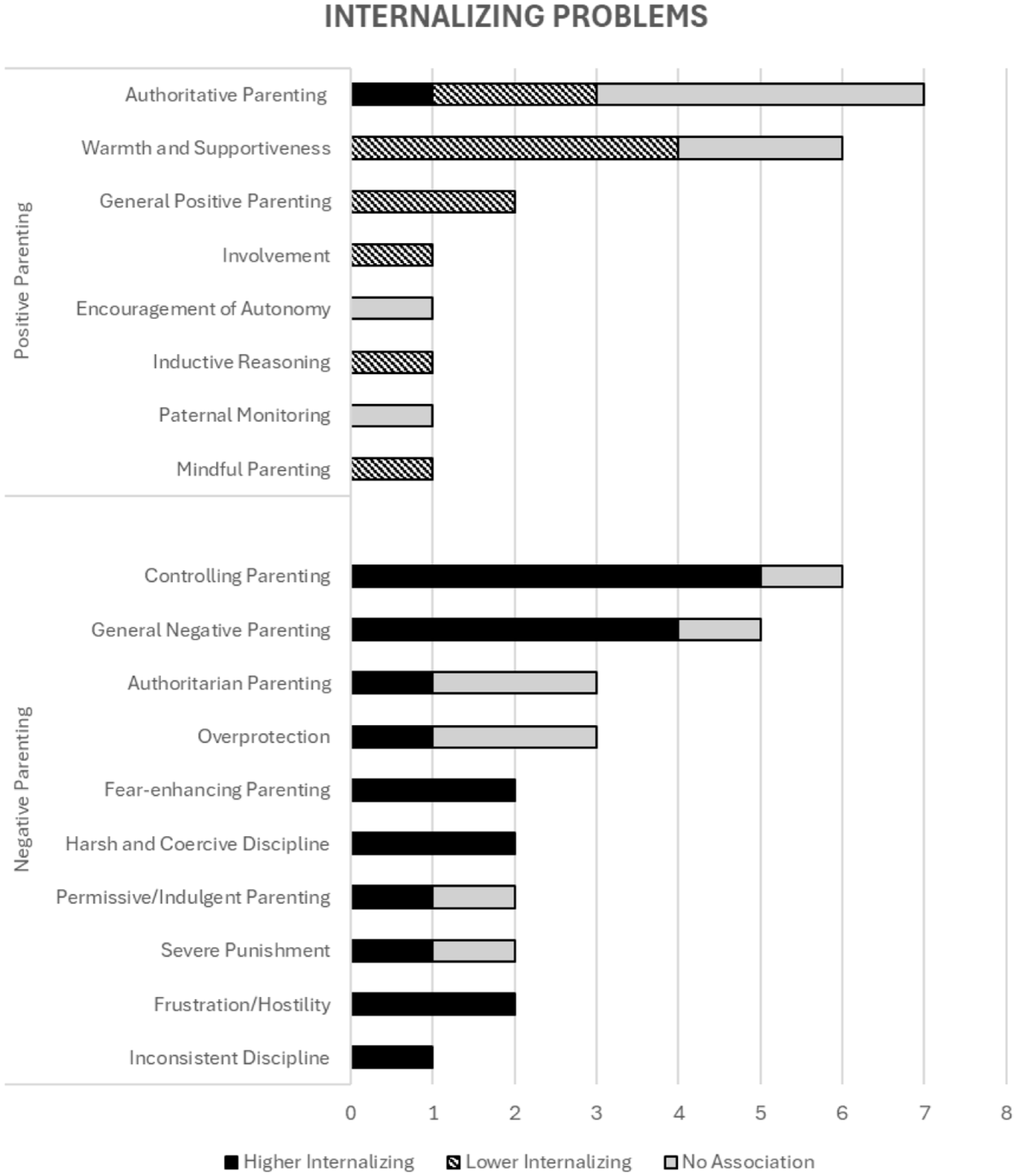
Summary of Associations Between Paternal Parenting Dimensions and Child Internalizing Problems.
Discussion
Parenting is known to play a crucial role in children’s development and might foster or curb the emergence of emotional and behavioral difficulties (McLeod et al., 2007; Pinquart, 2017a). Most current research is based on data collected from mothers and, overall, there is a lack of in-depth investigation into the role of fathers in offspring outcomes. Based on this, the current systematic review aimed to provide valuable insights into the complex relationships between paternal parenting and children’s mental health outcomes.
This systematic review summarized evidence from 45 studies exploring the associations between paternal parenting and children’s internalizing and externalizing problems. Overall, studies showed that across both externalizing and internalizing problems, positive parenting practices were generally related to fewer symptoms in the offspring. In contrast, negative parenting was commonly linked to greater difficulties.
With regard to externalizing problems, the most consistent findings highlight that negative parenting behaviors, including harsh and coercive discipline (e.g., Kaczynski et al., 2006; Prinzie et al., 2003), severe/corporal punishment (e.g., Ünsal & Acar, 2023), controlling parenting (e.g., Mabbe et al., 2018; Peets et al., 2022), authoritarian parenting (e.g., del Puerto-Golzarri et al., 2022), and inconsistent or permissive discipline (Akhter et al., 2011; Carreras et al., 2023), were robustly associated with greater externalizing problems in children. In contrast, positive parenting characterized by proper monitoring (Fals-Stewart et al., 2004) and authoritative practices (Carreras et al., 2023; Roberts et al., 2022)—which combine warmth with structure—generally appears protective against externalizing symptoms. This appears to suggest that discipline-related parenting dimensions are particularly relevant; some of the mentioned negative parenting facets might foster environments characterized by unpredictability and punitive responses, potentially exacerbating children’s behavioral difficulties. On the contrary, more nurturing and structured paternal behaviors might help children to better regulate their emotions and behavior, leading to fewer symptoms. This pattern of results were found in clinical samples of ADHD children (Azzam et al., 2021; Climie & Mitchell, 2017), who are particularly vulnerable to difficulties with self-regulation and impulse control. Therefore, the quality of discipline-related parenting behaviors may play an even more critical role in either mitigating or exacerbating externalizing behaviors in this population.
Fewer internalizing problems were generally linked to positive paternal parenting behavior (e.g., Cheung et al., 2018; McKee et al., 2007), including authoritative parenting (e.g., Roberts et al., 2022; Yu, 2024) and paternal involvement (Chen et al., 2024). Instead, fathers’ negative parenting, characterized by rejection (Kaczynski et al., 2006; Morris & Oosterhoff, 2016), hostility (Johnson & Greenberg, 2013; Lewis et al., 2014), or controlling (e.g., Borelli et al., 2015; Morris & Oosterhoff, 2016), fear-inducing (e.g., Fliek et al., 2019), and strict/harsh discipline (Kaczynski et al., 2006; Kaiser et al., 2019), appeared to lead to a greater extent of internalizing symptoms in children, possibly due to their contribution to a sense of insecurity, low self-worth, poor self-efficacy, and heightened emotional reactivity. Overall, these results suggested the influence of the emotional quality of the father–child relationship on internalizing symptoms.
On the whole, these results align with previous studies conducted with data from mothers or both parents together, which showed that positive parenting tends to be associated with fewer externalizing and internalizing problems in the offspring, while negative parenting with greater difficulties (e.g., Odgers et al., 2008; Pinquart, 2017a; Rose et al., 2018). However, it is important to highlight that a series of inconsistent and unexpected findings also emerged. For instance, even though mothers’—or more generally caregivers’—warmth and affection are usually believed to promote children’s positive outcomes (e.g., Steelman et al., 2002; Von Suchodoletz et al., 2011), several studies failed to find a significant association between paternal warmth and lower externalizing and internalizing symptoms (Aunola & Nurmi, 2005; Beato et al., 2016; Peets et al., 2022; Pereira et al., 2014; Ruiz-Ortiz et al., 2023; Sandler et al., 2008; Ünsal & Acar, 2023). Also, children with externalizing problems are frequently exposed to inconsistent discipline (e.g., Pardini et al., 2008); therefore, paternal consistent discipline would be expected to be associated with fewer difficulties. However, results pertaining to this parenting dimension were rather contradicting, with only one study finding a negative association between the two constructs (Prinzie et al., 2003). In contrast, one found no significant associations (Climie & Mitchell, 2017), and the last one found that perceived paternal consistent discipline was associated with more aggressive behavior in ADHD children (Azzam et al., 2021). As regards this latter finding, the authors argued that it might be explained by recall bias or illusory bias associated with ADHD (Azzam et al., 2021). Moreover, though unexpected, similar findings have also been found for maternal consistent discipline (e.g., Climie & Mitchell, 2017). Mixed results have also emerged as regards the association between externalizing problems and paternal authoritarian (Braza et al., 2015; del Puerto-Golzarri et al., 2022) and negative parenting (Fals-Stewart et al., 2004; Han et al., 2021).
A wealth of factors might account for the inconsistencies in the results. First, there was a remarkable variability in the children’s outcomes and parenting dimensions investigated, which, in addition, were assessed using different informants and measures that might rely on slightly different conceptualizations of the explored constructs. Most studies included global measures of externalizing and/or internalizing problems, while others focused on more specific symptoms, including aggressive behaviors, conduct problems, hyperactivity, anxiety, and depressive symptoms. Similarly, several aspects of positive (e.g., warmth, consistent discipline) and negative parenting (e.g., harsh discipline, controlling behaviors) were investigated, though each study focused on single dimensions or combinations of them. In addition, some parenting dimensions were investigated just from a single study (e.g., positive communication, Climie & Mitchell, 2017), and some dimensions were explored only in relation to externalizing (e.g., over-reactivity, Prinzie et al., 2003) or internalizing (e.g., fear-enhancing parenting behavior, Fliek et al., 2019) problems.
Even though we focused on the direct effects (e.g., correlations, linear regressions) of fathering on children’s difficulties, the selected studies employed different statistical analyses, which might have led to discrepancies in the results. Some studies explored the role of mothers’ and fathers’ parenting separately (e.g., Borelli et al., 2015; Climie & Mitchell, 2017), while others included data from both parents in the same model (e.g., Cheung et al., 2018; del Puerto-Golzarri et al., 2022). The selection of other variables (e.g., maternal parenting, parents characteristics, child temperament) to be included in the analyses along with paternal parenting might also explain results peculiarities. In this regard, for instance, del Puerto-Golzarri et al. (2022) found a positive correlation between daughters’ reactive aggression and paternal authoritative parenting; however, once fathers’ parenting measures were modeled with other mothers’ and children’s ones, the association was not significant anymore.
Also, it is possible that paternal parenting might differently influence sons’ and daughters’ outcomes. As an example, Gryczkowski et al. (2010) found that paternal involvement was associated with lower levels of aggressive behavior in boys but not girls, but poor monitoring was only linked to greater externalizing problems in girls. Finally, some studies showed that the influence of paternal parenting dimensions might interact with other relevant factors, including other paternal or maternal parenting practices and children’s individual characteristics. For instance, Peets et al. (2022) showed that severe paternal punishment was associated with externalizing problems in girls also exposed to high levels of paternal control; Braza et al. (2015) showed that permissive paternal discipline was associated with lower internalizing problems in boys when combined to high maternal authoritarian parenting; and del Puerto-Golzarri et al. (2022) found that fathers’ authoritarian parenting was associated with reactive aggression only in boys with high surgency.
Another aspect to take into account is that models of parenting and children’s psychopathology and scientific evidence highlight that the relation between the caregivers’ behavior and the development of children’s internalizing and externalizing behavior problems is probably bidirectional and reciprocal, meaning that children’s behavior and characteristics might lead to changes in parenting over time (Dadds & Salmon, 2003; Sameroff, 2009; Serbin et al., 2015). Most of the studies included in this review had a cross-sectional design and/or focused on unidirectional parenting effects, and this might have underestimated or overestimated the role of paternal parenting. For instance, Lewis et al. (2014) found that paternal hostility was correlated with children’s depressive symptoms concurrently and longitudinally. However, further analyses showed that fathers’ hostility did not predict sons’ depression, nor did the child’s depression predict paternal hostility. As regards daughters, it was their depressive symptoms that predicted paternal hostility but not the other way around.
To better understand the variability in findings across the studies reviewed, we also conducted a critical appraisal using the AXIS and CASP checklists. This evaluation highlighted differences in methodological quality, with some studies demonstrating stronger designs than others. These quality variations likely contributed to some of the inconsistencies observed, as cross-sectional studies ranged in quality from 14 to 19 out of 20 on the AXIS tool—indicating moderate variability—while longitudinal studies generally showed good quality on the CASP checklist. However, some had limitations related to confounding and follow-up procedures.
The results of the current review should be interpreted in light of some limitations. First, the study sample did not fully represent the world population since most researches were conducted in Western countries (e.g., the United States). Also, we included only English-language studies, which might increase the risk of language bias. Furthermore, in the majority of studies, the mothers’ sample was usually bigger than the fathers’; therefore, a greater effort should be devoted to involving fathers in research studies. Second, attempts to focus on the children’s age range of 6–13 years were hampered by the variability of age ranges adopted in studies, with many excluded because they recruited children of different ages (infants, pre-schools, or adolescents) but did not report separate results. However, the current systematic reviews focused on a rather broad age range, without considering that fathering might influence children’s outcomes differently based on age: this should be taken into account when interpreting the results. Future studies should avoid conflating childhood and preadolescence, and some attempts to stratify by age should be made in statistical analyses such that conclusions on the differential associations during childhood and adolescence can be drawn. Longitudinal studies represented only a minority of the studies in the current review, limiting the possibility of inferring causal links between paternal parenting practices and children’s externalizing and internalizing problems. Also, only a few studies focused on clinical or at-risk populations, which might significantly inform preventive and clinical efforts. The included studies highly differed in terms of statistical analysis employed and model tested, and several of the results described are based on correlational/regression analysis. Finally, a meta-analysis could have offered deeper insights into the strength of the results presented in this work and helped clarify the variations observed across the individual studies.
Future research should seek to refine and broaden our understanding of the multifaceted role of paternal parenting in children’s development and psychological well-being. One key direction is the need for more longitudinal and transactional research to better explore the reciprocal nature of father–child interactions. This will allow for a more accurate causality assessment and investigation of child-driven effects on paternal behavior over time. Another important factor for research would be including different populations and exploring paternal behavior’s influence on children’s outcomes across different cultures, socioeconomic backgrounds, and family structures, providing a more inclusive and globally relevant understanding. Likewise, more insight is needed on the role of paternal parenting in clinical or at-risk populations, where paternal behavior may have different implications and where targeted interventions could be particularly impactful. Finally, future investigations could contribute to developing more tailored intervention programs by identifying paternal vs. maternal parenting strategies that are most effective for specific subgroups of children or behavioral outcomes. This last aspect is of utmost significance. Indeed, the studies in the current review highlighted the importance of fathers parenting for children’s outcomes.
On the one hand, results showed an association between positive paternal parenting and lower externalizing and externalizing symptoms, suggesting that fathers play a more critical and protective role in child development than is often acknowledged. This further emphasizes the importance of engaging fathers in parenting interventions and programs addressing children’s behavioral and emotional difficulties. Many interventions primarily target mothers, potentially overlooking the contributions and influence of fathers. On the other hand, the current review highlighted the risk posed by negative paternal parenting, emphasizing the need for early identification and prevention strategies. A closer involvement of fathers in research and clinical activities would provide a better understanding of the factors underlying the development and maintenance of internalizing and externalizing problems in children. This, in turn, could inform more effective intervention and prevention programs, which could benefit from focusing on increasing paternal involvement and promoting adaptive parenting styles that support emotional regulation, consistency, and warmth while reducing strict, harsh, and controlling behavior.
Supplemental Material
sj-docx-1-jbd-10.1177_01650254251388193 – Supplemental material for Fathers matter—the relationship between paternal parenting and children’s externalizing and internalizing problems: A systematic review
Supplemental material, sj-docx-1-jbd-10.1177_01650254251388193 for Fathers matter—the relationship between paternal parenting and children’s externalizing and internalizing problems: A systematic review by Maria Celeste Caponi, Eleonora Pera, Jacopo Clerici, Giulia Giardini, Selena Bellanova, Annalisa Morsiani, Furio Lambruschi, Silvio Lenzi, Valentina Levantini and Pietro Muratori in International Journal of Behavioral Development
Supplemental Material
sj-docx-2-jbd-10.1177_01650254251388193 – Supplemental material for Fathers matter—the relationship between paternal parenting and children’s externalizing and internalizing problems: A systematic review
Supplemental material, sj-docx-2-jbd-10.1177_01650254251388193 for Fathers matter—the relationship between paternal parenting and children’s externalizing and internalizing problems: A systematic review by Maria Celeste Caponi, Eleonora Pera, Jacopo Clerici, Giulia Giardini, Selena Bellanova, Annalisa Morsiani, Furio Lambruschi, Silvio Lenzi, Valentina Levantini and Pietro Muratori in International Journal of Behavioral Development
Footnotes
Acknowledgements
This article is dedicated to the memory of Jacopo Clerici, in gratitude for his dedication, passion, and invaluable contributions to this work.

Funding
The authors disclosed receipt of the following financial support for the research, authorship, and/or publication of this article: This work was supported by a grant from the IRCCS Fondazione Stella Maris: Ricerca Corrente, Tipizzazione genetico-clinica dei disturbi del comportamento in età evolutiva: implicazioni cliniche e di trattamento and the “5 × 1000” voluntary contributions, Italian Ministry of Health.
Declaration of Conflicting Interests
The authors declared no potential conflicts of interest with respect to the research, authorship, and/or publication of this article.
Supplemental Material
Supplemental material for this article is available online.
References
Supplementary Material
Please find the following supplemental material available below.
For Open Access articles published under a Creative Commons License, all supplemental material carries the same license as the article it is associated with.
For non-Open Access articles published, all supplemental material carries a non-exclusive license, and permission requests for re-use of supplemental material or any part of supplemental material shall be sent directly to the copyright owner as specified in the copyright notice associated with the article.
