




Abstract
School absenteeism is a major social problem that can lead to poorer educational outcomes, including school dropout and social exclusion. To prevent school non-attendance and dropout, more knowledge of how absenteeism affects well-being and educational pathways in the long term is needed. This study examined the consequences of the developmental trajectories of school absences during basic education in students’ educational paths and well-being in early adulthood. The sample included 1,823 Finnish students (T1, mean age 12.76 years; 954 boys). Results revealed that students in the increasing school absences trajectory were more likely to have police contact and less likely to feel lonely. High levels of school absences and low affective engagement in upper secondary education, as well as a higher likelihood of receiving social assistance in early adulthood, were typical of the early started school absences trajectory. Parental and teacher support were protective factors against dropout intentions in upper secondary education and adverse well-being consequences in early adulthood. These results suggest that identifying and supporting students with chronic and high levels of school absences is important to reduce the risk of school dropout and poor subsequent well-being.
Introduction
School absenteeism is a major social problem that may result in school dropout and poorer labor market outcomes, including unemployment (Dräger et al., 2024a; Finn & Zimmer, 2012). Given that adolescence and related educational transitions may pose challenges for the success of future attendance and building emotional connections in school, thus influencing later educational paths and well-being (J. S. Eccles & Roeser, 2011; Finn & Zimmer, 2012), more knowledge of how to prevent school absenteeism in the youth population is needed. Thus, we examined the long-term consequences of the developmental trajectories of school absences during basic education in students’ educational paths and well-being in early adulthood. Despite engagement being identified as an important mechanism between individual or contextual factors and student outcomes (Fredricks et al., 2004; Li et al., 2010), little is known about the roles of affective engagement (i.e., identification with school and a sense of belonging to school community), and school absences as possible mediators of the relationships between the developmental trajectories of school absences and students’ educational paths and well-being. A better understanding of these mechanisms may help develop targeted interventions to reduce adverse educational paths and improve well-being.
Developmental Trajectories of School Absences in Adolescence
School absences may occur for various authorized and unauthorized reasons (Heyne et al., 2019). Unauthorized reasons include truancy, which refers to skipping school without the guardian’s consent (Gottfried, 2009). Sickness and travel are common forms of authorized absences (Klein et al., 2022). There is some evidence to suggest that unauthorized absences may be more detrimental to students’ achievement than authorized absences, due to their association with externalizing problems (Dräger et al., 2024b; Eaton et al., 2008; Gottfried, 2009). Behavioral problems may decrease students’ motivation to learn and increase conflicts with teachers (Dräger et al., 2024b; Wilson et al., 2008). Thus, school absences due to sickness, truancy, and other reasons were examined in this study.
During adolescence, students face multiple developmental, social, and educational changes (J. S. Eccles & Roeser, 2011). As a result, engagement typically declines (M.-T. Wang & Eccles, 2012) and school absences increase (Maynard et al., 2017; Virtanen, Pelkonen, & Kiuru, 2022). However, most studies have examined averaged absences during adolescence, which does not reveal individual differences in the development of absenteeism (i.e., developmental trajectories). Identifying these trajectories can provide valuable insights for identifying students at risk of chronic absenteeism and dropout, and for developing targeted interventions to prevent and reduce absenteeism.
Most studies have investigated trajectories of overall school absences (Simon et al., 2020) or trajectories of truancy (e.g., Kim, 2020). Thus, less is known about the combinations of reasons in the developmental trajectories of school absences. As an exception, Dräger et al. (2024b) identified five trajectories throughout primary and secondary schools in England, based on authorized and unauthorized absences: consistently low absences (66.3%), consistently moderate authorized absences (27.7%), moderately increasing unauthorized absences (3.5%), strongly increasing authorized absences (1.6%), and strongly increasing unauthorized absences (0.8%). In our previous study (Tunkkari et al., 2025), we aimed to identify trajectories of school absences based on sickness, truancy, and other reasons among Finnish students from the end of primary school (Grade 6) to the end of lower secondary school (Grade 9). We focused on this period because absenteeism tends to become more prevalent during these years (Maynard et al., 2017; Virtanen, Pelkonen, & Kiuru, 2022). We identified four trajectories of low-stable (92%), high-stable (4.3%), increasing (2.4%), and early started absences (1.2%). The consequences of these trajectories were examined in this study.
The Role of Developmental Trajectories of School Absences in Subsequent Educational Paths and Well-Being
According to Finn’s (1989) participation–identification model, school absenteeism and its consequences can be examined as ongoing processes of participation (i.e., a behavioral component that includes participation in school activities) and identification (i.e., emotional and cognitive components that include a sense of belonging to school and school-related others, and commitment to learning). Drawing from this model, high levels of school absences (i.e., low participation) may dampen students’ learning outcomes and decrease their connectedness and commitment to school and school-related others (i.e., low identification), thus undermining their subsequent participation in school and leading to poor educational and well-being outcomes (Finn & Zimmer, 2012; M.-T. Wang & Fredricks, 2014).
Regarding educational paths, truancy is related to a higher risk for dropping out of school (Cabus & De Witte, 2015; Gubbels et al., 2019) and not completing upper secondary education in normative time (Virtanen, Vasalampi, et al., 2022). However, it is still unclear whether different combinations of reasons for absences and related developmental trajectories are associated with the risk of dropout. As school dropout is a cumulative process in which students gradually become disengaged from school (Finn, 1989), it is important to consider intentions to drop out that students have while still in school (Tvedt et al., 2021). Thus, in this study, we examined the role of the developmental trajectories of school absences in predicting the completion of upper secondary education in normative time (within 3.5 years) and dropout intentions, which were assumed to act as risk factors for actual dropout (Vasalampi et al., 2018).
School absences have also been linked to various unfavorable psychosocial and well-being outcomes, such as depression and delinquency (Ansari & Pianta, 2019; Eaton et al., 2008). According to the participation–identification model, absences may also lead to loneliness, defined as a painful experience arising from a mismatch between the desired and actual social relations (Hawkley & Cacioppo, 2010). Low participation in school may undermine peer relationships and a sense of belonging to a peer group, which increases feelings of loneliness (Engels et al., 2019; Hawkley & Cacioppo, 2010). Although there is some evidence linking truancy to loneliness (Amu et al., 2020; Pengpid & Peltzer, 2021), thus far, the role of the developmental trajectories of school absences in predicting loneliness is unknown.
Long-term capabilities are built on skills and capabilities that have developed in earlier school years (Ansari et al., 2020; Heckman, 2006). As school absences reduce students’ opportunities to learn and bond with school, school absenteeism may have a long-term effect on mental health and economic outcomes in adulthood (Finn & Zimmer, 2012). Despite this, little is known about the role of the developmental trajectories of school absences in predicting psychosocial outcomes in early adulthood. Using a variable-centered approach, Ansari et al. (2020) found that at the mean level, students who were more frequently absent from school between kindergarten and lower secondary school were more likely to receive government assistance in early adulthood. In turn, Collingwood et al. (2023) found that, regardless of the level of truancy, adolescents who played truant were 4.5 times more likely to receive welfare receipts in early adulthood than non-truant adolescents. In this study, we aimed to shed more light on the psychosocial outcomes of the developmental trajectories of school absences.
Affective Engagement and School Absences as Mediators of the Relationships Between the Developmental Trajectories of School Absences and Educational Paths and Well-Being
Engagement is an important mechanism between contextual or individual factors and learning outcomes (Fredricks et al., 2004; Li et al., 2010). Nevertheless, little empirical research has been conducted on the role of affective engagement as a mediator of the relationships between the developmental trajectories of school absences and educational and well-being outcomes. High affective engagement promoted by active participation in school activities can create a motivational context that helps students deal with setbacks and failures related to schoolwork (Finn & Zimmer, 2012; M.-T. Wang & Fredricks, 2014). This can increase well-being and the likelihood of school completion (Li & Lerner, 2013; Ryan & Deci, 2017) and decrease intentions to drop out of school (Tvedt et al., 2021). By contrast, high school absences can contribute to lower affective engagement (Garcia-Gracia & Valls, 2023; Kidger et al., 2012; Quin, 2017), which can act as a risk factor for dropout intentions and poor well-being (Piscitello et al., 2022; M.-T. Wang & Fredricks, 2014).
School absences tend to accumulate; thus, students who are absent from school in earlier grades are typically absent from school in later grades (Ansari & Pianta, 2019; Li & Lerner, 2013). High school absences may act as a risk factor for school dropout and poor well-being (Ansari & Gottfried, 2021; Piscitello et al., 2022). Nevertheless, less research has been conducted about the role of subsequent school absences in upper secondary education as a mediator of the associations between the developmental trajectories of school absences and educational and well-being outcomes. Examination of these indirect effects can reveal those students who perceive the transition to upper secondary education as a critical turning point (i.e., students showing lower levels of school absences after the transition) and students whose school absences accumulate (see Benner & Wang, 2014). Distinguishing between accumulation of school absences and turning point effects is important for designing and timing interventions to decrease and prevent absenteeism and practices to support successful school transitions.
The Present Study
In this study, two research questions were examined (Figure 1):
Research Question 1. To what extent do the developmental trajectories of school absences from Grades 6 to 9 (i.e., low-stable, high-stable, increasing, and early started school absences; Tunkkari et al., 2025) predict educational paths (i.e., completing upper secondary education in normative time and dropout intentions) and well-being (i.e., purchases of antidepressants, receipt of social assistance, police contact, and loneliness) in early adulthood?
H1a: Students with low-stable school absences are more likely to complete upper secondary education in normative time, have the lowest level of dropout intentions, and the highest well-being in upper secondary education (Finn & Zimmer, 2012).
H1b: Given that our previous study (Tunkkari et al., 2025) showed that externalizing problems, including conduct problems and hyperactivity, were typical for students in the increasing school absences trajectory, these students are more likely to have police contact in upper secondary education (see also Eaton et al., 2008).
H1c: Students with early started school absences are more likely to receive social assistance in early adulthood (Ansari et al., 2020).
Research Question 2. To what extent do students’ affective engagement (i.e., school satisfaction and support from parents, teachers, and peers) and school absences after the transition to upper secondary education mediate the associations between the developmental trajectories of school absences and educational paths and well-being in early adulthood?
H2a: Students following the low-stable trajectory have higher affective engagement and lower school absences in upper secondary education, which predicts higher subsequent well-being, fewer dropout intentions, and a higher likelihood of completing upper secondary education in normative time (Finn & Zimmer, 2012; Tvedt et al., 2021; M.-T. Wang & Fredricks, 2014).
H2b: Given that our previous study (Tunkkari et al., 2025) showed that low perceived support from teachers and parents was typical for students with early started school absences, students following this trajectory were expected to have low affective engagement and the highest levels of school absences after the transition to upper secondary school (Ansari & Pianta, 2019; Li & Lerner, 2013), which, in turn, would predict low well-being and a lower likelihood of completing upper secondary education in normative time (Finn & Zimmer, 2012).
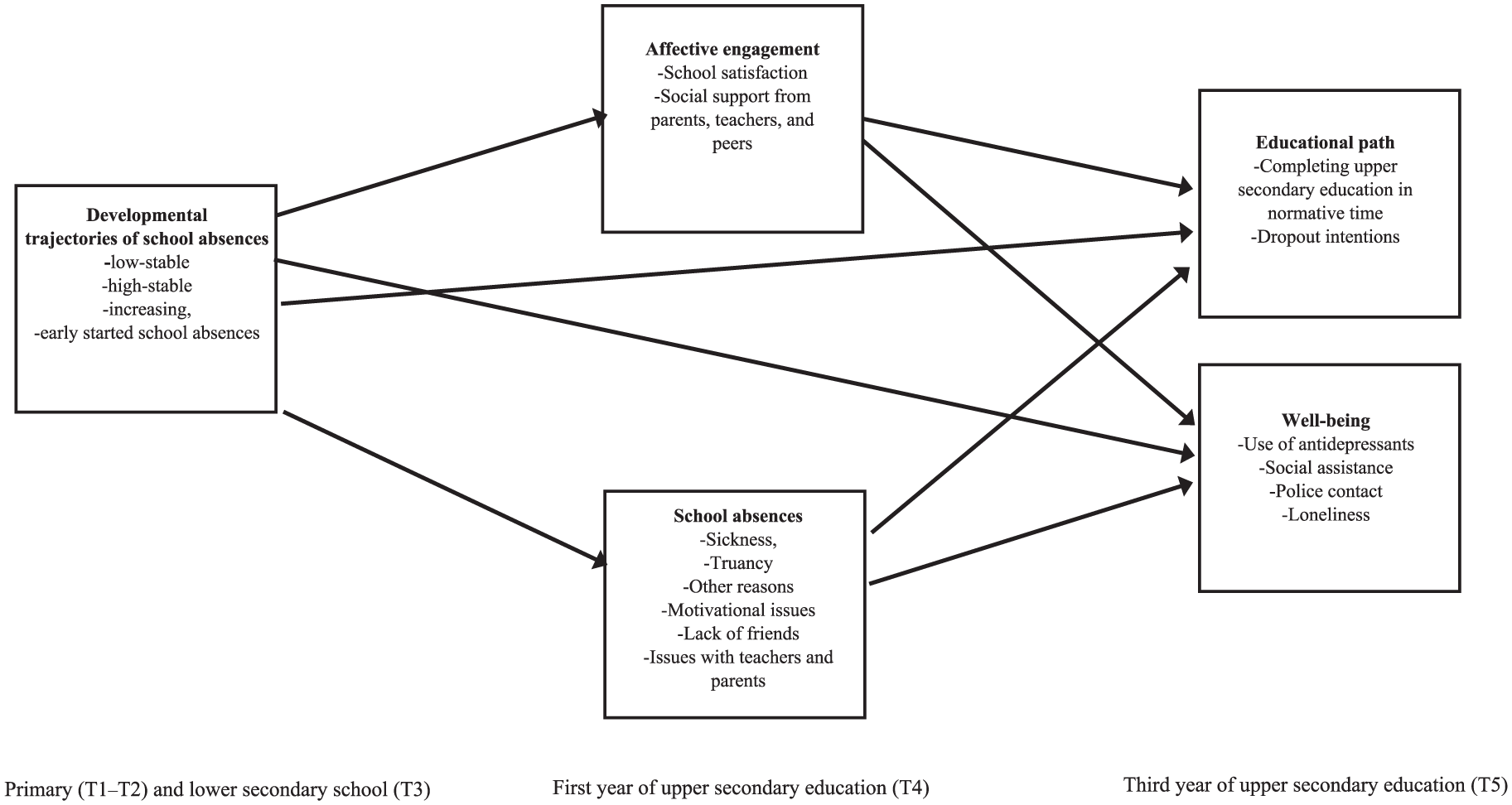
Hypothesized Path Model.
Materials and Methods
Participants
The data used in this study were part of a longitudinal study (Lerkkanen et al., 2006–2016) and its extension (Vasalampi & Aunola, 2016–2020). The longitudinal study followed approximately 2,000 children from kindergarten to the end of lower secondary school in four different municipalities in Finland. In the extension study, students were followed during upper secondary education. Both studies were approved by the ethics committee of the University of Jyväskylä in 2006 and 2018. The studies followed the guidelines of the National Advisory Board on Research Ethics in Finland.
Informed consent from parents was required for student participation in primary and lower secondary school. In upper secondary education, students provided their own informed consent. Longitudinal data were collected between 2013 and 2023. Students completed questionnaires during normal school lessons in the spring terms of Grades 6, 7, 9, and the first year of upper secondary education, and fall term of the third year of upper secondary education. In total, 1,823 students participated in this study at the end of primary school in Grade 6 (T1; mean age 12.76 years, SD = 0.34, 954 boys), 1,789 at the beginning of lower secondary school in Grade 7 (T2), 1,745 at the end of lower secondary school in Grade 9 (T3), 1,371 at the beginning of upper secondary education (first year in upper secondary education; T4), and 997 at the end of upper secondary education (third year in upper secondary education; T5).
The Finnish Educational System
In the Finnish educational system, basic education (Grades 1–9) is divided into primary school (Grades 1–6) and lower secondary school (Grades 7–9). In lower secondary school, students often move to another school building, face new subjects, teachers, and peers, and receive higher workloads and responsibilities. After completing nine years of basic education, students continue to upper secondary education, which may be completed in the academic track or in the vocational track. Students in the vocational track receive qualifications to work in different tasks in the field, whereas those in the academic track do not receive professional qualifications (Ministry of Education and Culture, 2025).
Measures
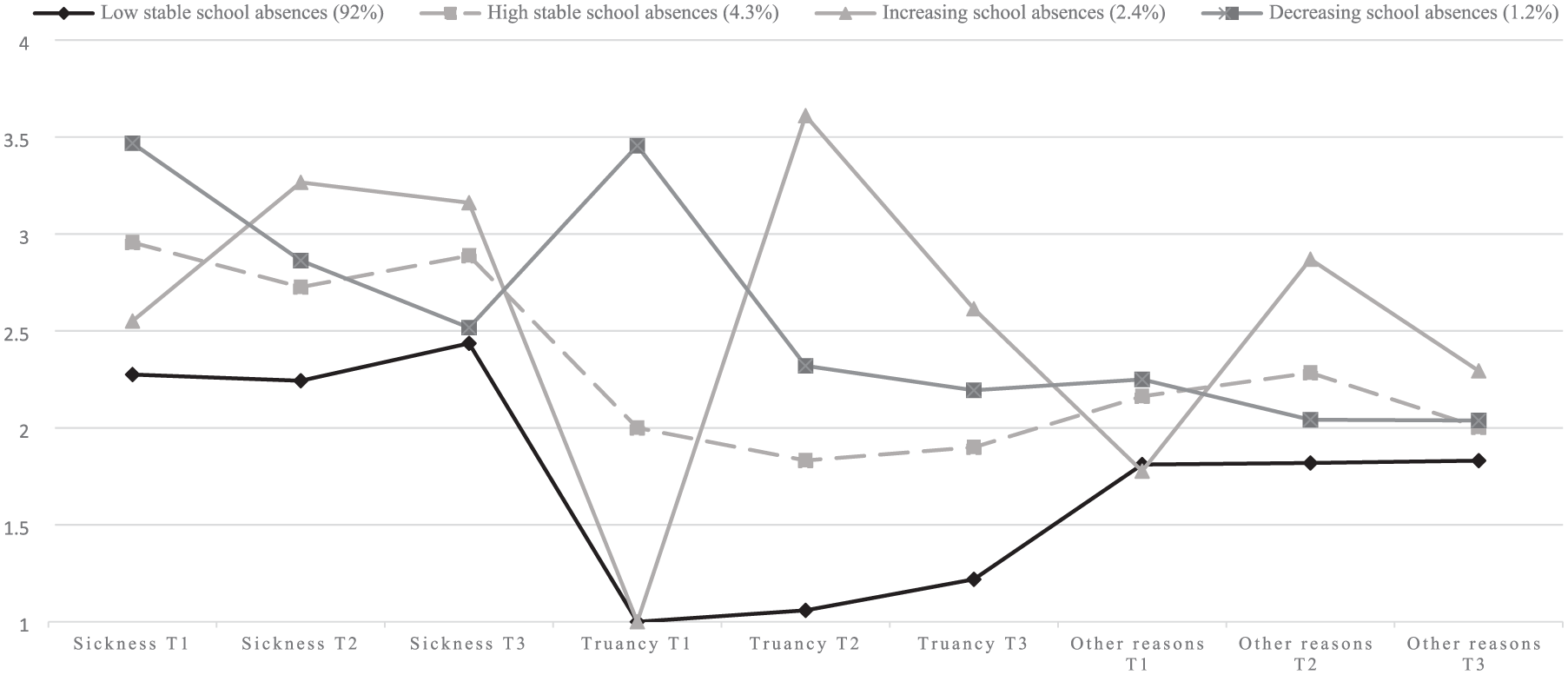
Trajectories of School Absences from Grade 6 to Grade 9.
School absences (T4). Students rated how many days they had been absent from school this academic year due to sickness, truancy, other reasons, motivational issues, lack of friends, and issues with teachers and parents using a 4-point scale (1 = not a single day, 2 = 1–2 days, 3 = 3–5 days, and 4 = more than 5 days). A mean score for the seven items was calculated (α = .64).
Control Factors
Student biological gender (boy/girl), academic achievement in T1, and family-socioeconomic status (SES) were set as control factors, given that girls report playing truant more often than boys (Maynard et al., 2017; Virtanen et al., 2014), and both low achievement and low SES have been associated with higher risk for school absences (Gubbels et al., 2019). Academic achievement in T1 was based on GPA across all school subjects, which were gathered from school records. Family-SES represents the highest parental occupation and was categorized into four groups: upper white collar 43.3% (i.e., upper-level employees with administrative, managerial, professional, and related occupations), lower white collar 38.7% (i.e., lower-level employees with administrative and clerical occupations), entrepreneurs 10.6%, and blue collar 7.4% (i.e., manual workers).
Analytical Strategy
The analyses were conducted in the following order. First, educational and well-being outcomes were included in the FMM using the automatic auxiliary measurement-error-weighted method (BCH) (Asparouhov & Muthén, 2021) while controlling for the effects of the control variables. The BCH method is the most robust for models including continuous and count distal outcomes (Bakk & Kuha, 2021). Effect sizes were reported using Hedge’s g or odds ratios (ORs) with 95% confidence intervals (CIs). According to Cohen (1988), g values of 0.20, 0.50, and 0.80 represent small, medium, and large effects, respectively. Second, the indirect effects from the trajectories of school absences on educational and well-being outcomes through affective engagement and school absences were estimated using the model constraint command (McLarnon & O’Neill, 2018). A bootstrapping procedure with 95% CIs was used to confirm the indirect associations.
The analyses were conducted using the COMPLEX approach of the Mplus statistical package version 8.11 (Muthén & Muthén, 1998–2025) to take into account the clustered nature of the data. The proportion of missing data in the main study variables was 1.3%–60.9%. According to Little’s (1988) missing completely at random (MCAR) test, missingness was not completely at random: χ2 = 5,786,403 (4087), p < .001. Thus, missingness at random was assumed, which is a weaker condition than the data being MCAR. The data were analyzed using full-information maximum likelihood. Because the distributions of some variables were skewed, we used the maximum likelihood estimation with robust standard errors (MLR).
Results
Descriptive Statistics
The descriptive statistics of the study variables are presented in Table 1. The percentages of school absences due to sickness, truancy, and other reasons from Grades 6 to 9 are presented in Figure 3. Sickness was the most common reason for absence, with approximately 70% of the students reporting they had missed at least a few days of school due to illness in the last three months. In turn, the majority of the students had never played truant. However, overall, absences due to truancy increased from 6% to 19%. Absences due to other reasons remained relatively stable across grade levels.
Means and Standard Deviations of the Study Variables.
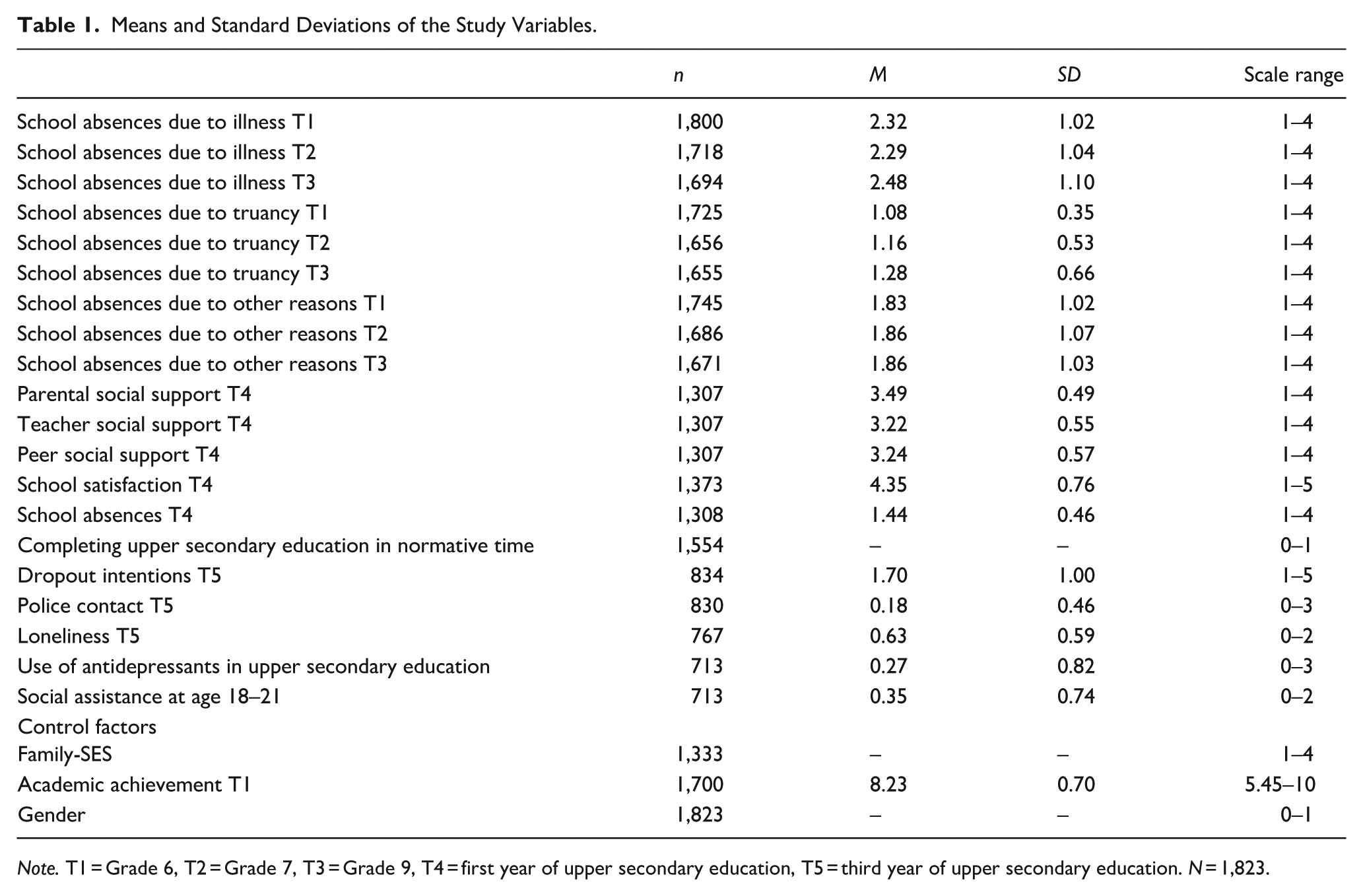
Note. T1 = Grade 6, T2 = Grade 7, T3 = Grade 9, T4 = first year of upper secondary education, T5 = third year of upper secondary education. N = 1,823.
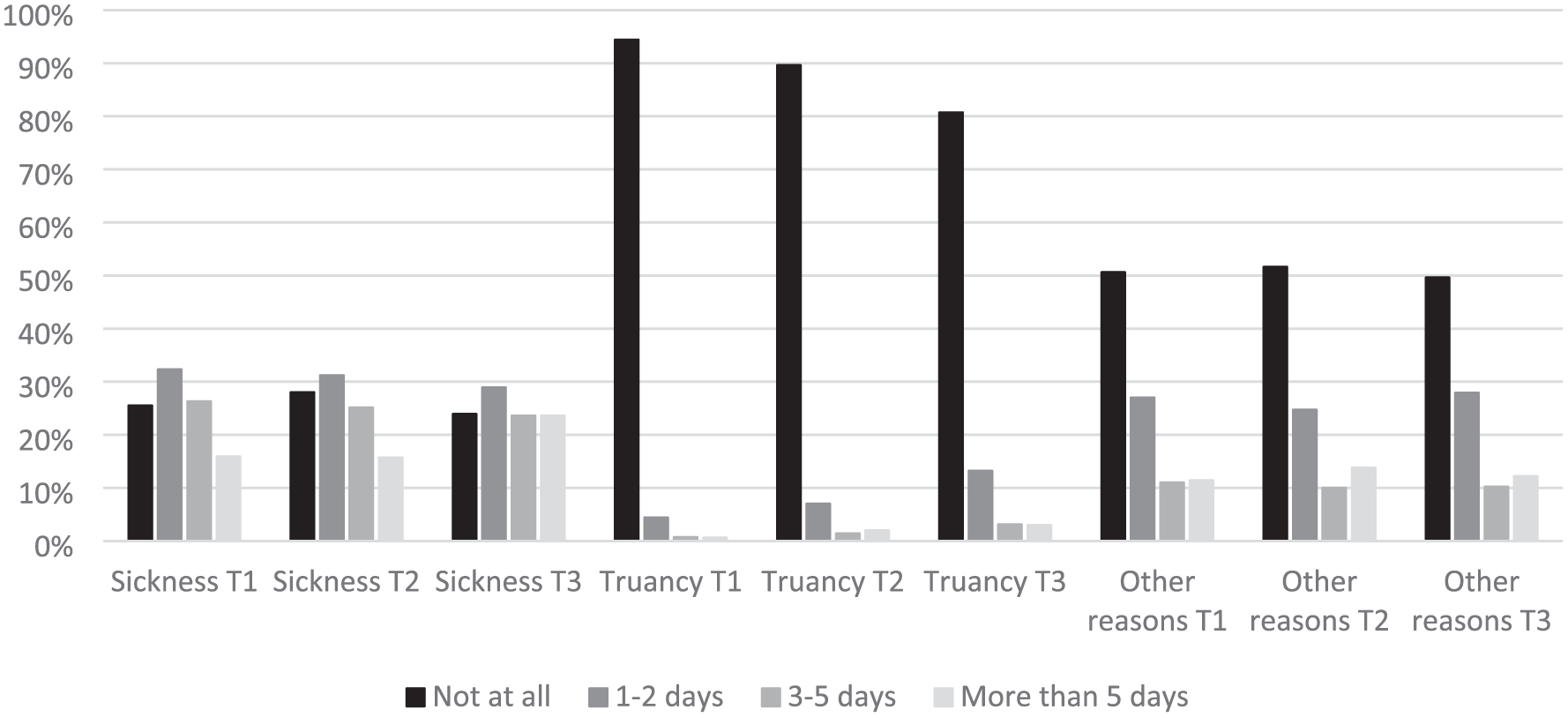
The Percentages of School Absences Due to Sickness, Truancy, and Other Reasons from Grades 6 to 9 (N = 1,823).
Educational and Well-Being Outcomes of the Trajectories of School Absences
The means, standard errors, and differences between the trajectories of school absences in regard to the educational paths and well-being are presented in Table 2. The results showed that students in the low-stable trajectory were more likely to complete upper secondary education in normative time than students in the high-stable (OR = 2.32, 95% CI [1.42, 3.80]), increasing (OR = 5.20, 95% CI [2.77, 9.76]), and early started trajectories (OR = 3.60, 95% CI [1.50, 8.66]). By contrast, students in the high-stable and low-stable trajectories had more dropout intentions in T5 than students in the increasing and early started trajectories. Hedge’s g values ranged from 0.33 to 0.53, indicating small to medium effects.
Means and Standard Errors of Students’ Educational Paths and Well-Being for School Absences Trajectories.
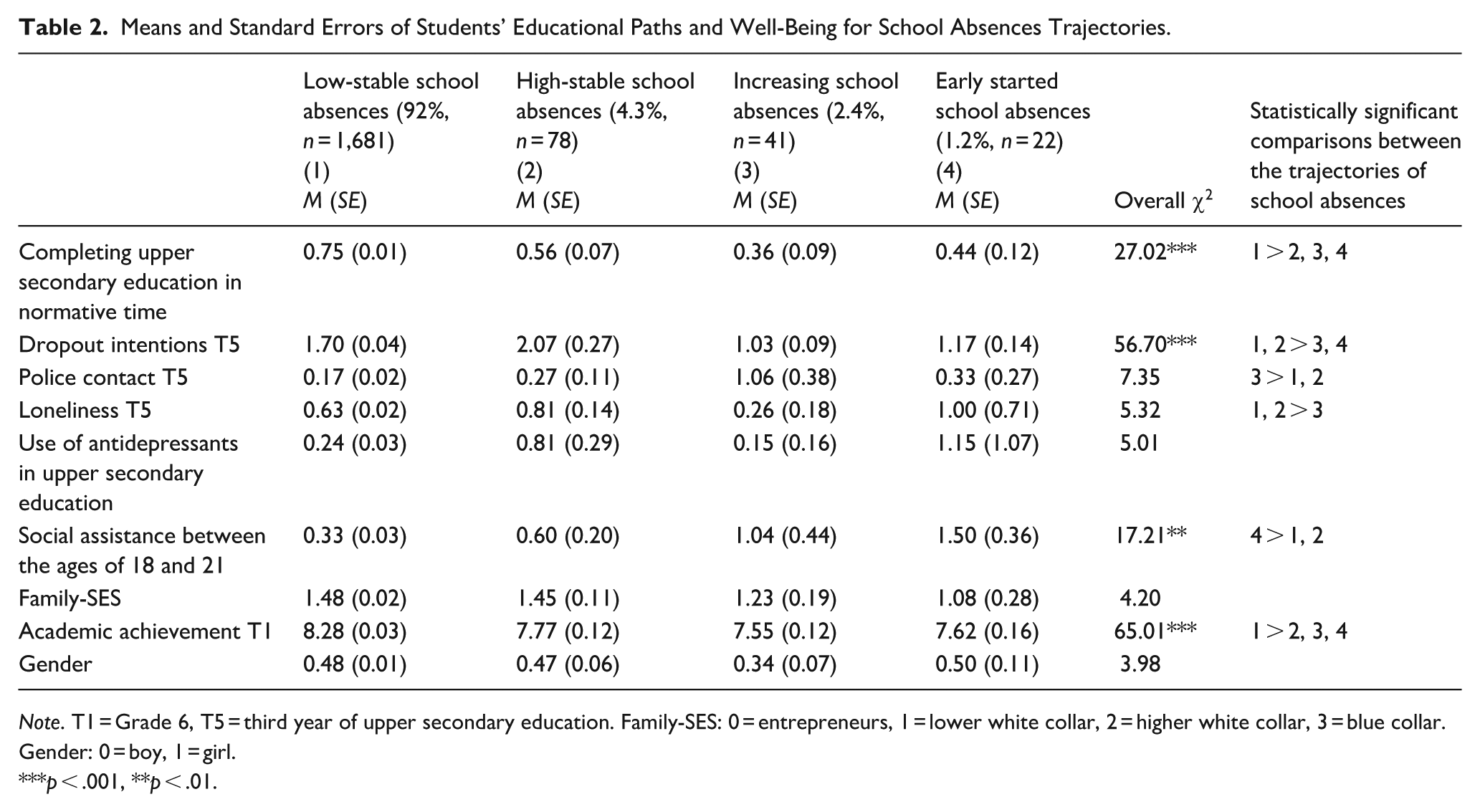
Note. T1 = Grade 6, T5 = third year of upper secondary education. Family-SES: 0 = entrepreneurs, 1 = lower white collar, 2 = higher white collar, 3 = blue collar. Gender: 0 = boy, 1 = girl.
p < .001, **p < .01.
Moreover, students in the early started trajectory were more likely to receive social assistance in early adulthood than students in the low-stable and high-stable trajectories. Hedge’s g values ranged from 0.51 to 0.95, indicating medium to large effects. Students in the increasing trajectory were more likely to have police contact in T5 and were less likely to feel lonely in T5 than students in the low-stable and high-stable trajectories. Hedge’s g values for police contact ranged from 0.49 to 1.00, indicating medium to large effects, whereas for loneliness, both comparisons suggested medium effects (g = 0.45).
Indirect Associations Between the Trajectories of School Absences and Educational and Well-Being Outcomes Through Affective Engagement and School Absences
The direct, total, and indirect effects with 95% CIs are presented in Table 3 (see Supplemental Table 4 for all significant and non-significant indirect, direct, and total effects). The results (Table 3) showed that compared to the early started trajectory, students with low-stable school absences received more support from parents and teachers in T4, which predicted a higher likelihood of completing upper secondary education in normative time, fewer intentions to drop out of upper secondary school, a lower likelihood of feeling lonely in T5 and receipt of social assistance in early adulthood. In turn, support from peers did not mediate any of the associations between the trajectories of school absences and students’ educational and well-being outcomes.
Unstandardized Estimates of Indirect Effects.
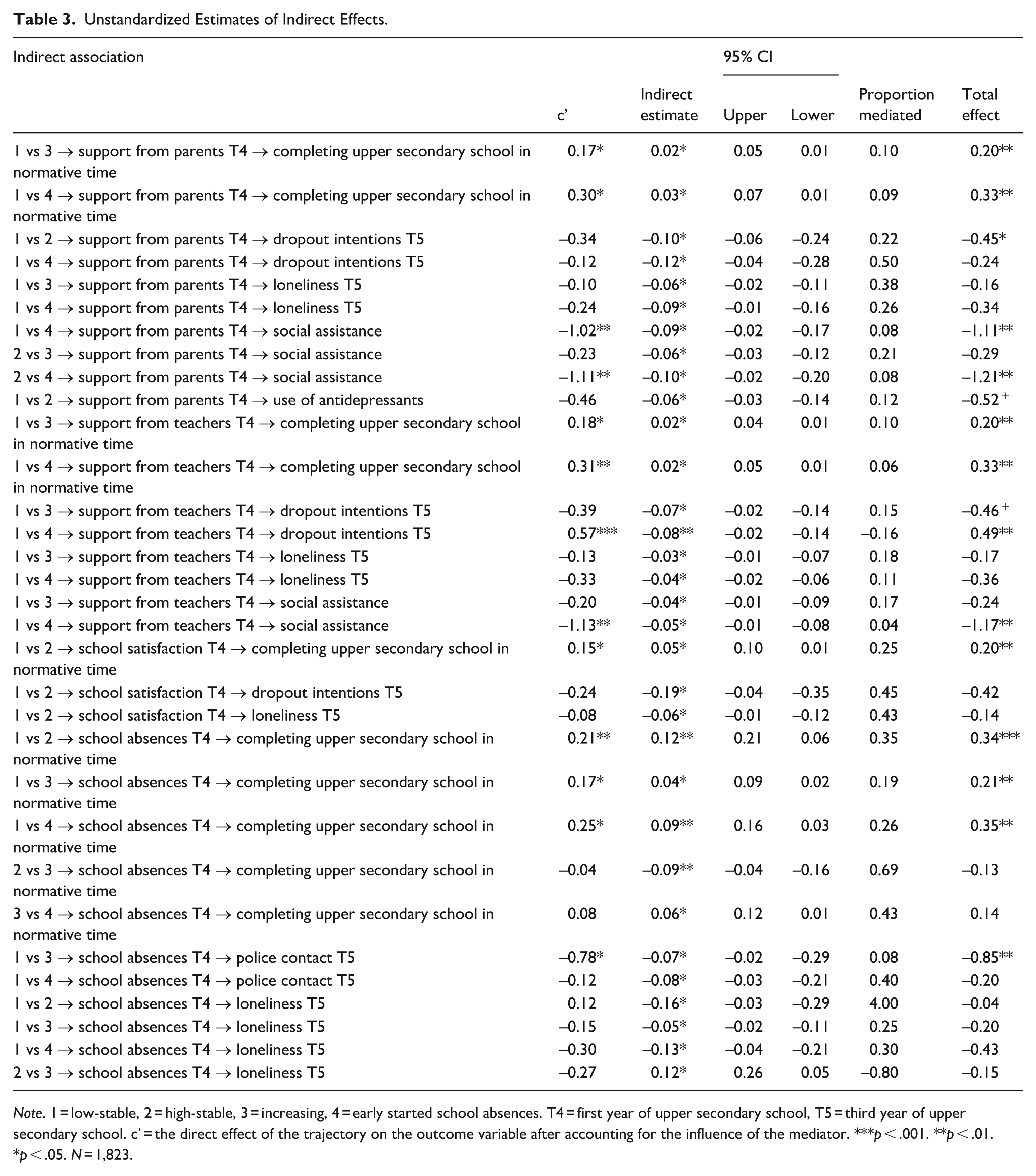
Note. 1 = low-stable, 2 = high-stable, 3 = increasing, 4 = early started school absences. T4 = first year of upper secondary school, T5 = third year of upper secondary school. c′ = the direct effect of the trajectory on the outcome variable after accounting for the influence of the mediator. ***p < .001. **p < .01.
p < .05. N = 1,823.
The results showed further that compared with those in the high-stable trajectory, students with low-stable school absences were more satisfied with their school in T4, which predicted a lower likelihood of feeling lonely in T5, fewer intentions to drop out of upper secondary education, and a higher likelihood of completing upper secondary education in normative time.
Finally, the results showed that compared to the high-stable and early started trajectories, students with increasing school absences had fewer school absences in T4, which was related to a higher likelihood of completing upper secondary education in normative time.
Discussion
This study examined the long-term consequences of the developmental trajectories of school absences in educational pathways and well-being in early adulthood. The results showed that students in the low-stable school absences trajectory were more likely to complete upper secondary studies in normative time than students in the other trajectories. Having police contact and low perceived loneliness were typical for the increasing trajectory, while receipt of social assistance in early adulthood was typical for the early started trajectory. Higher affective engagement protected against intentions to drop out of upper secondary school. These results highlight the importance of early detection of and support for students who are at risk for chronically high school absences and adverse educational and well-being outcomes.
The first aim of this study was to examine the long-term consequences of the developmental trajectories of school absences during basic education in students’ educational paths and well-being in early adulthood. As expected (H1a; Finn & Zimmer, 2012), students with low-stable school absences were more likely to complete upper secondary school in normative 3.5 years than those in the other trajectories. We also expected students with low-stable school absences to have the lowest level of dropout intentions in upper secondary school. However, the results showed that students with low-stable and high-stable school absences had more intentions to drop out in the third year of upper secondary school than students in the increasing and early started trajectories.
In our second hypothesis (H1b; Eaton et al., 2008; Tunkkari et al., 2025), we expected police contact in upper secondary school to be typical for students with increasing school absences. The results supported this hypothesis. Students who lack meaningful engagement, such as regular school attendance, may be more susceptible to deviant behavior (M.-T. Wang & Fredricks, 2014). Students have idle time; thus, they are inclined to engage in criminal or delinquent activities (Hirschi, 1969). In contrast to variable-oriented studies that have shown a positive association between truancy and loneliness (Amu et al., 2020; Pengpid & Peltzer, 2021), students in the increasing school absences trajectory reported feeling less lonely than those in the low-stable and high-stable trajectories. One possible explanation is that students with increasing school absences may choose a peer group that shares similar tendencies toward anti-norm behavior (Hirschi, 1969; M.-T. Wang et al., 2018). A higher sense of belonging to a peer group may manifest itself as lower perceived loneliness (Ryan & Deci, 2017).
In our third hypothesis (H1c; Ansari et al., 2020), we expected students with early started school absences to be more likely to receive social assistance in early adulthood. The results supported this hypothesis by showing that these students were more likely to receive social assistance in early adulthood than those in the low-stable and high-stable trajectories. This finding suggests that early started absenteeism is a particular risk factor not only for economic hardships but also for unemployment in early adulthood because it is one of the main reasons why young adults receive social assistance in Finland (Vaalavuo et al., 2020).
The second aim of this study was to examine the extent to which students’ affective engagement and school absences after the transition to upper secondary education mediate the associations between the developmental trajectories of school absences and educational and well-being outcomes in early adulthood. We expected (H2a; Finn & Zimmer, 2012; M.-T. Wang & Fredricks, 2014) that students with low-stable school absences would have higher affective engagement, which predicts successful educational outcomes and higher well-being. The results provided support for this hypothesis by showing that higher affective engagement in terms of school satisfaction and parental and teacher support perceived by the students in the low-stable trajectory served as protective factors against loneliness and intentions to drop out of upper secondary education. This suggests that greater identification with school and school-related others may provide resilience that helps students cope with academic difficulties and demands and stay engaged at school (M.-T. Wang & Fredricks, 2014). Support from significant others can also promote students’ sense of relatedness and, therefore, decrease loneliness (Ryan & Deci, 2017). By contrast, similar mechanisms were not found for peer support. This suggests that support from mostly norm-relevant figures in adolescents’ lives, such as parents and teachers, is more important for their well-being than peer support (Li et al., 2010).
We also hypothesized (H2b; Ansari & Pianta, 2019; Finn & Zimmer, 2012; Li & Lerner, 2013; Tunkkari et al., 2025) that students with early started school absences have low affective engagement and the highest levels of school absences after the transition to upper secondary school, which predicts adverse educational and well-being consequences. As expected, early started school absenteeism combined with lower perceived support from parents and teachers, and high school absences at the beginning of upper secondary education were related to a lower likelihood of completing upper secondary education in normative time and a higher likelihood of receipt of social assistance in early adulthood. Due to lower school attendance, these students have fewer opportunities to build attachments to school, which influences their subsequent school attendance and well-being (Finn & Zimmer, 2012; M.-T. Wang & Fredricks, 2014). Due to adolescents’ behavior influencing the responses of their significant others’ (Sameroff, 2010), lower support from parents and teachers may also be a reaction to students’ higher anti-norm behavior in terms of high school absences. This may result in a negative cycle in which students regularly skipping school may elicit negative responses from their parents and teachers, thereby increasing school absenteeism (Wilson et al., 2008). Overall, these results suggest that negative cycles of poor well-being and adverse psychosocial outcomes may begin early in primary school. This highlights the importance of providing interventions that focus on the early signs of and reasons behind absenteeism (e.g., School Refusal Assessment Scale-Revised (SRAS-R) (Kearney, 2006).
This study has several limitations. First, school absences were based on students’ self-reports, which may include memory bias. It should also be noted that we did not have information on whether the absences reported were authorized or unauthorized. Thus, in future studies, self-reports could be complemented by register data so that bias related to self-reports could be reduced (Keppens et al., 2019). Moreover, students reported their school absences only once a year. Consequently, possible changes in school absences throughout the school year remain a challenge for future research. Second, the sample sizes in the increasing and early started trajectories were relatively small (2.4% and 1.2%). However, the overall sample size was large (n ≈ 1,800). Large sample sizes (n ⩾ 1,000) have been shown to provide robust results for the fit of FMM and class enumeration, especially when using more complex models with distal outcomes (Y. Wang et al., 2021). In future studies, the results should be replicated using even larger samples. Third, self-reports of loneliness and police contact were measured using only one item. In future studies, broader scales should be used to better address different aspects of loneliness and delinquency. Fourth, the studied associations are correlational. Future studies are needed to elaborate on the reciprocal associations between the antecedents and consequences of the developmental trajectories of school absences. It should be noted that proportions mediated were predominantly low to moderate (MacKinnon, 2008). This suggests that other factors, such as behavioral and cognitive engagement, may also play a significant role and should be explored in future research.
Conclusion
The results showed that the trajectories of school absences had different consequences for students’ educational paths and well-being in early adulthood. Students whose school absences increased in lower secondary school were more susceptible to deviant behavior in upper secondary school. In turn, early started school absenteeism was a risk factor for high school absences in upper secondary education and the receipt of social assistance in early adulthood. The results also suggest that high affective engagement may protect against dropout intentions in upper secondary education and adverse well-being outcomes in early adulthood. In turn, high school absences combined with low perceived support from parents and teachers were risk factors for poor well-being and not completing upper secondary education in a normative time.
These findings suggest that it is important to deal with school absenteeism as early as possible to prevent adverse educational paths and well-being in adulthood. Due to our results highlighting the significance of affective engagement in students’ later well-being and school completion, more attention should be paid to promoting engagement. A school environment that is in accordance with students’ needs for autonomy, competence, and relatedness (Ryan & Deci, 2017) and parenting characterized by affection, clear guidelines, and expectations may be useful when trying to increase students’ participation in school.
Supplemental Material
sj-docx-1-jbd-10.1177_01650254251382284 – Supplemental material for Outcomes of developmental trajectories of school absences among adolescents
Supplemental material, sj-docx-1-jbd-10.1177_01650254251382284 for Outcomes of developmental trajectories of school absences among adolescents by Mari Tunkkari, Tuomo Virtanen, Noona Kiuru and Kati Vasalampi in International Journal of Behavioral Development
Footnotes

Ethical Considerations
The longitudinal studies were approved by the ethics committee of the University of Jyväskylä in 2006 and 2018. The study followed the guidelines of the National Advisory Board on Research Ethics in Finland. Informed consent for participation was required from guardians when an adolescent was under the age of 15.
Funding
The author(s) disclosed receipt of the following financial support for the research, authorship, and/or publication of this article: This study was supported by the Academy of Finland under Grant No. 268586 2013–2017, No. 263 891 2013–2015, No. 299 506 2017–2019, No. 323773 2019–2024, as well as the grant from the Ministry of Education and Culture in Finland (OKM/951/520/2022). Preparation of this manuscript was also supported by the Strategic Research Council (SRC) established within the Academy of Finland (352648 and 352657).
Declaration of Conflicting Interests
The author(s) declared no potential conflicts of interest with respect to the research, authorship, and/or publication of this article.
Data Availability Statement
The data sets generated and/or analyzed during this study are not publicly available due to ethical restrictions but are available from the corresponding author on reasonable request.
Supplemental Material
Supplemental material for this article is available online.
References
Supplementary Material
Please find the following supplemental material available below.
For Open Access articles published under a Creative Commons License, all supplemental material carries the same license as the article it is associated with.
For non-Open Access articles published, all supplemental material carries a non-exclusive license, and permission requests for re-use of supplemental material or any part of supplemental material shall be sent directly to the copyright owner as specified in the copyright notice associated with the article.
