




Abstract
Preventing and reducing antisocial behaviour among young people requires multi-tiered solutions involving families, communities and schools. While targeted family and individual-level programs for at-risk children and young people are critical, they can be limited in reach as well as engagement, participation and retention. Universal programs delivered in schools, which have shown evidence of improving social and emotional learning more broadly, could be a useful complement to addressing antisocial behaviour among young people. We sought to determine whether school-based universal social and emotional learning (SEL) programs are effective at reducing early manifestations of antisocial behaviour and delinquency (i.e., aggression and conduct problems). We conducted a systematic review and identified 6,280 potential studies for inclusion. After screening, 35 studies were retained. Over 77% of programs (27 out of 35) were effective at reducing/decelerating some form of antisocial behaviour. Approximately half (n = 17) of the studies examined the effect of gender on program effectiveness and only six found significant gender differences. A meta-analysis of studies with conduct problems and aggression outcomes found significant, albeit weak treatment effect. Findings suggest that universal SEL programs can help to reduce antisocial behaviour but should be implemented among other strategies.
Tackling criminal and antisocial behaviour among young people is a complex challenge that requires targeting multiple risk and protective factors at the individual, family, school and community levels. While there is increasing evidence that early intervention programs to improve parenting skills are effective in reducing child involvement in antisocial behaviour and delinquency (Piquero et al., 2016), the families most in need of support are often the most difficult to reach with such programs. Qualitative research with mothers involved with the criminal justice system found that these women tended to isolate themselves and not ask for help for fear of being judged or perceived as failures as mothers (Lanctôt, 2018). Meanwhile, their children exhibited increasing behavioural problems as they grew. These mothers also took great pride in being self-reliant and resolving their problems themselves, while often mistrusting official government systems or program providers (Lanctôt, 2018; Muzik et al., 2014). This poses an important challenge for those working with women and families who may need support the most but are less likely to accept it. One avenue to intervene among children and young people who are unable to access formal external supports is via school programming. School-based universal programming delivered to all children (rather than targeted programs for at-risk children) can have a wide reach and minimise stigma. For example, social and emotional learning (SEL) programs are increasingly being implemented in schools. These involve evidence-based implementation of lessons and can help students learn the skills to understand and manage emotions, navigate relationships, deescalate interpersonal conflicts, promote empathy and interpersonal understanding and make responsible decisions (Weissberg et al., 2015).
While SEL programs have not necessarily been developed to target antisocial behaviour and delinquency, many of the skills taught by SEL programs are linked to behaviours analogous to antisocial behaviour, such as aggression and conduct disorder. There is also strong evidence from longitudinal studies that children with disruptive and problem behaviour in childhood are at risk for delinquency and offending later in life (Loeber & Farrington, 2000). Physical aggression in the elementary school years in particular is linked to continuity of violence and delinquency into adolescence (Broidy et al., 2003). Moreover, childhood conduct problems at ages 7 to 9 have been linked to a range of poor adult outcomes, including crime, mental health and substance abuse problems (Fergusson et al., 2005). Therefore, early intervention and targeting problematic behaviours of school age children is critical to preventing and reducing antisocial and/or criminal behaviour in later developmental periods (i.e., adolescence and adulthood). In the current study, we sought to determine the effects of school-based universal social and emotional learning (SEL) programs on early manifestations of delinquency such as aggression and conduct problems.
The five key competencies targeted by SEL programs are self-awareness; self-management; relationship skills; social awareness; and responsible decision-making (CASEL, n.d.; Collie et al., 2017; Weissberg et al., 2015). Considering that aggression and anger play an important role in delinquency and criminality (Acland & Cavanagh, 2022; Mazerolle et al., 2000), universal SEL programs have the potential to reduce delinquency and youth crime by targeting some of these early problematic overt behaviours. School-based universal SEL programs can target precursors of delinquency such as aggressive behaviour by teaching children how to better deal with stress and negative emotions. For instance, SEL programming focuses on responsible decision-making, emotion management, emotion regulation and aggression reduction (Humphrey et al., 2016; Lombas et al., 2019), which could potentially contribute to improving aggression and other forms of antisocial behaviour. Current evidence is less clear about whether SEL programs are effective at reducing antisocial, delinquent and aggressive behaviours specifically as little research on SEL programs adopts a criminological approach or examines antisocial or criminal outcomes. One recent exception is a meta-analysis on school-based interventions more broadly (i.e., not limited to SEL programs) that found small but not significant effects of these interventions on student suspensions and arrests (Mielke & Farrington, 2021).
Several systematic reviews have been conducted to evaluate the effectiveness of school-based SEL programs more broadly (Boncu et al., 2017; Clarke et al., 2021; Durlak et al., 2011; Pérez-Clark et al., 2023; Sancassiani et al., 2015; Sklad et al., 2012; van de Sande et al., 2019; Wigelsworth et al., 2016). Overall, the research shows support for universal SEL programs in improving students’ behavioural outcomes. Due to the large number of reviews conducted, Durlak et al. (2022) conducted a review of 12 meta-analyses on universal, school-based SEL programs for children and adolescents. The authors found significant effects for conduct problems in five of the reviews (Durlak et al., 2022), suggesting that SEL programs can influence early forms of antisocial behaviour. The five reviews that specifically examined conduct problems as an outcome variable (Boncu et al., 2017; Durlak et al., 2011; Sklad et al., 2012; Wigelsworth et al., 2016; Yang et al., 2019) included studies from the 1970s until 2018. None of these reviews focused on aggression as an outcome. We sought to update this time frame by conducting a systematic review and meta-analysis from 2012 to 2023 and to include a broader range of early manifestations of antisocial behaviour (e.g., aggression, delinquency) as our outcome in the current study. In addition, previous systematic reviews (Clarke et al., 2021; Durlak et al., 2022) have highlighted the insufficient examination of gendered effects in SEL programs. Moreover, research on the development of aggression in childhood has highlighted important gender differences in trajectories and risk factors (Côté, 2007; Lussier et al., 2012). We therefore also sought to examine any gender differences in program effectiveness. In line with other systematic reviews on SEL programs (Durlak et al., 2022), we also examined differences by student age, country and informant.
Method
Search Strategy
The search strategy used in this review involved a combination of database searching and secondary searching. First, a search was conducted in PsycINFO and ERIC; these two databases were selected as they were able to provide access to a large amount of research in relevant disciplines such as education, psychology and criminology. Second, to supplement database searching, a targeted search was conducted in the following journals: Prevention Science, Psychology in the Schools, School Psychology Review and School Mental Health. These journals were selected as they are key peer-reviewed journals in the speciality area and past systematic reviews have also searched these journals (Wigelsworth et al., 2016). Third, a Google Scholar search was conducted. Finally, a reference search of previous systematic reviews on SEL program effectiveness was conducted (Clarke et al., 2021; Durlak et al., 2022; Wigelsworth et al., 2016). The following search phrase was used: ((school-based OR universal OR in-school) AND (social AND emotional learning OR social-emotional OR SEL OR life skills OR social skills OR social emotional competenc* OR emotional training OR wellbeing OR conflict resolution OR prosocial behaviour OR antisocial behaviour OR conduct problems OR aggression) AND (program* OR intervention OR initiative OR evaluat* OR education* OR prevent* OR outcome*) AND (student* OR school) NOT (dating)).
Inclusion and Exclusion Criteria
Two researchers independently screened the studies based on the following inclusion criteria: (a) were written in English; (b) were published from January 2012 to March 2023; (c) involved universal social-emotional learning programs and interventions; (d) involved children from kindergarten to 12; (e) were delivered on school-grounds and during school hours; (f) had an experimental or quasi-experimental study designs with a comparison group; and (g) reported on an outcome reflecting antisocial behaviour such as aggression, conduct problems or delinquency.
Exclusion criteria included studies that were specific to high-risk children or children with mental or learning disabilities (i.e., not universal). Studies were also excluded if they were exclusively focused on the following outcomes: drug abuse or use, bullying, dating violence, and suicide or self-harm. These were excluded because the focus of this systematic review was on precursors of delinquency rather than these specific types of behaviour. Bullying, for example, is a sub-type of aggression (characterised by repetition and abuse of power) and therefore the studies on aggression might capture bullying behaviours. During preliminary searches, numerous studies were focused on dating-related violence and relationship violence. Given that dating violence itself is an offending behaviour, we felt it was outside the scope of this study. This led to adding the term ‘dating’ as an exclusion in the search phrase. Although excluding any specific term in the search phrase should be done with caution, several searches were conducted to ensure that removing it did not also remove studies that were possibly eligible for inclusion. In addition, the grade level of participants was limited to kindergarten through 12 and excluded programs delivered in daycares outside of formal schooling.
Study Selection and Data Extraction
After the search was completed, the studies were imported into Covidence systematic review software for the screening and selection process. A screening process was used to determine which articles complied with the criteria and could be investigated further for the purpose of this systematic review. The screening process consisted of a title and abstract review, followed by a full text review by two independent researchers, with any discrepancies discussed with the full research team. The results of the screening process can be found in Figure 1. A total of 6,280 articles were identified for title and abstract screening, with the majority of the articles being sourced from the two databases (n = 6,269) and the remainder from citation searching (n = 4). Covidence automatically detected 596 duplicates, and 18 were excluded manually. There were 187 articles selected for the full text screening. Based on the inclusion and exclusion criteria, 152 articles were excluded as follows: did not include information on the relevant outcome measuring of antisocial behaviour, aggression, conduct problems (n = 86); not a school-based SEL program (n = 41); not universal/targeted a specific group (n = 14); no comparison group (n = 8); and published prior to 2012 (n = 3). A total of 35 studies were included in the systematic review.
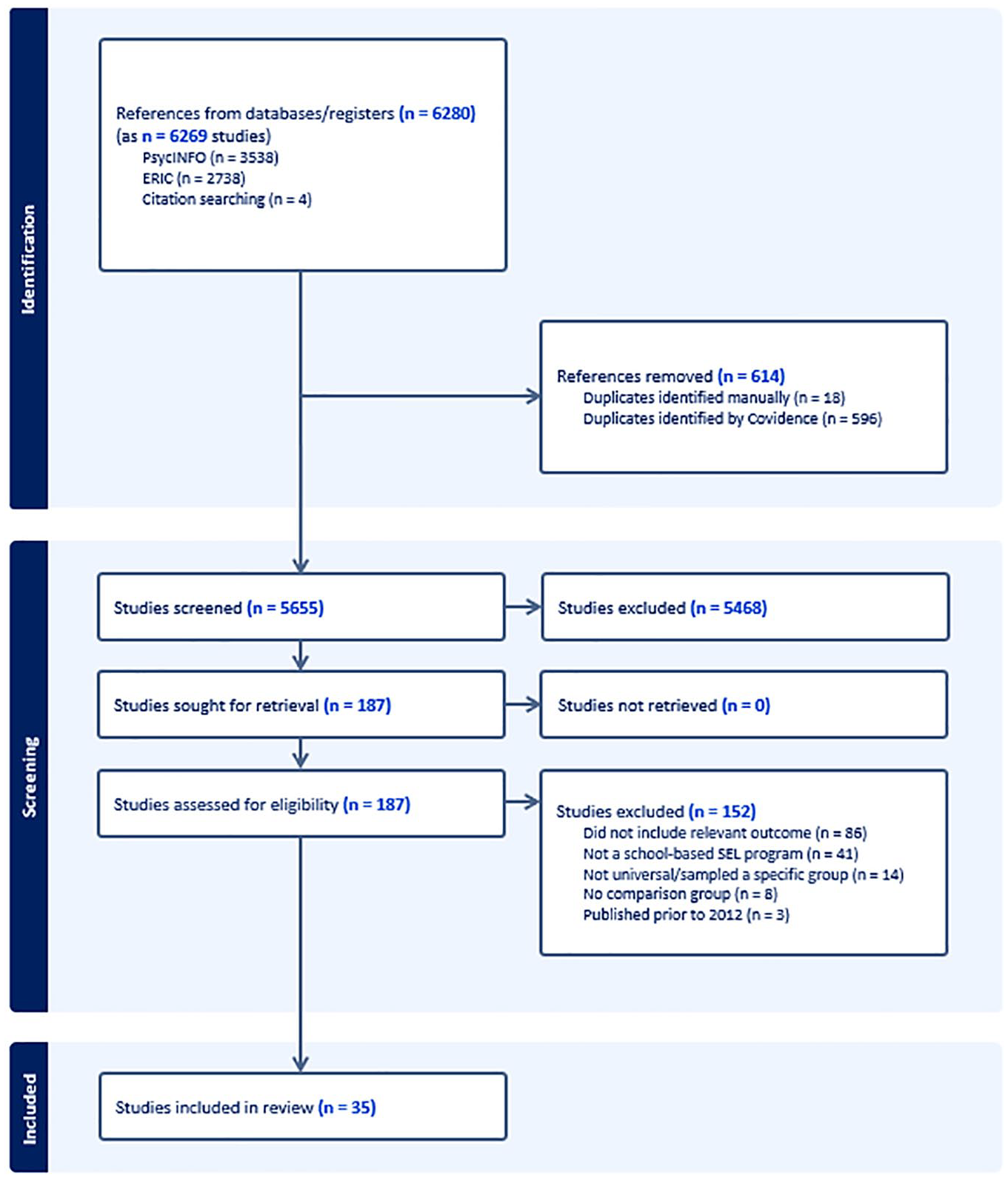
Flow Diagram for Selection Process of Studies Included in the Review.
Data Extraction and Quality Assessment
The data extraction and quality assessment were also conducted by two independent researchers. The extracted information included study location, age and/or school grade, number of participants, SEL program name, outcome measure and outcome results. To assess the quality of each of the final studies included, the Maryland SMS was used (Farrington et al., 2002), which is scored on a 5-point scale, with each point designed to identify a level of implied methodological rigour and quality.
Meta-Analysis
Analyses were performed in R version 4.4.2 using the Metafor package (Viechtbauer, 2010). Meta-analyses were conducted on the 30 studies that reported unadjusted estimates of treatment effects (e.g., pre- and post-test means or unadjusted regression coefficients). Studies that provided multiple treatment effects for the same sample across different follow-up periods or measures were included, with standard errors adjusted for dependence using robust variance estimation. All effect sizes were standardised to Hedges’ g. Pooled estimates from random-effects models were presented with corresponding 95% prediction intervals (PI).
Meta-regression analyses were conducted to examine potential moderation effects of reporter type (e.g., self, parent, teacher), sex, age at program start, length of follow-up and country. Each covariate was modelled separately to account for limited statistical power. Both fixed and random-effects models are reported; however, emphasis is placed on the random-effects findings due to assumed heterogeneity among studies.
Results
Description of the Studies
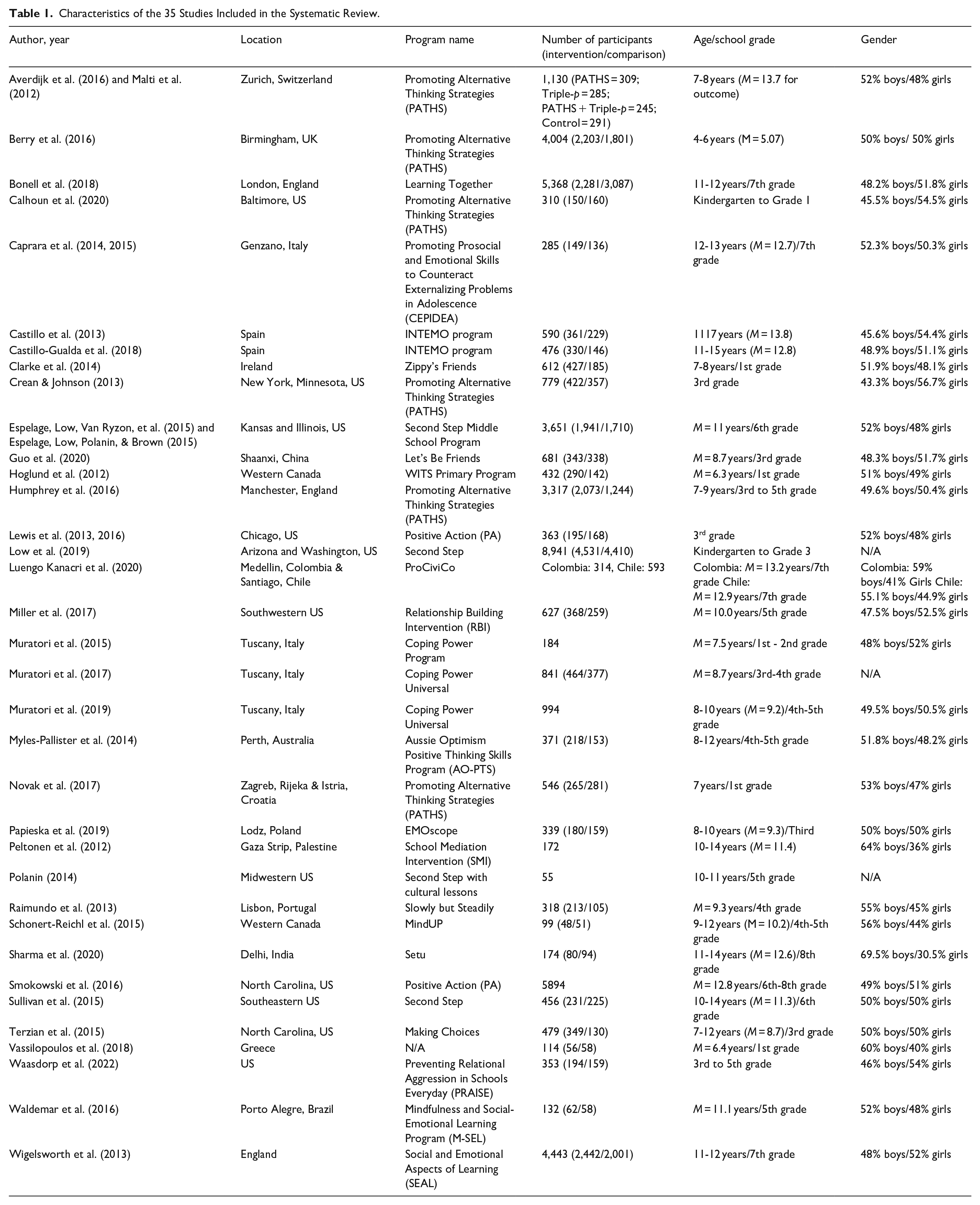
The characteristics of the 35 studies included in the review are provided in Table 1. Across the 35 studies, there was a total of 48,437 participants. These participants’ ages ranged from 4 to 17 years old. Eight of the studies had over 1,000 participants, with the largest sample in the study by Low et al. (2019) at 8,941. The lowest number of participants in a study was 55 in Polanin (2014). The mean number of participants was 1,384. Almost half of the included studies were from Europe (n = 16) and several studies were from North America (n = 13). The majority of the studies had a sample breakdown that was approximately 50% girls and 50% boys.
Characteristics of the 35 Studies Included in the Systematic Review.
Findings regarding the outcome variables and effectiveness of the SEL programs are summarised in Table 2. The studies included numerous outcomes related to antisocial behaviours, with several studies reporting multiple outcomes, including: aggression (n = 24); conduct problems (n = 14); delinquency (n = 3); and self-reported police contact (n = 2). The studies used various scales and measures as detailed in Table 2. The Strength and Difficulties Questionnaire (SDQ; Goodman, 1997) was the most commonly used scale for conduct problems (n = 12). The majority of the studies included a teacher-rated measure (n = 22), followed by self-rated (n = 20), then parent (n = 2) and peer (n = 2).
Outcome Variables, Effectiveness, Gender Differences and Summary of Results.
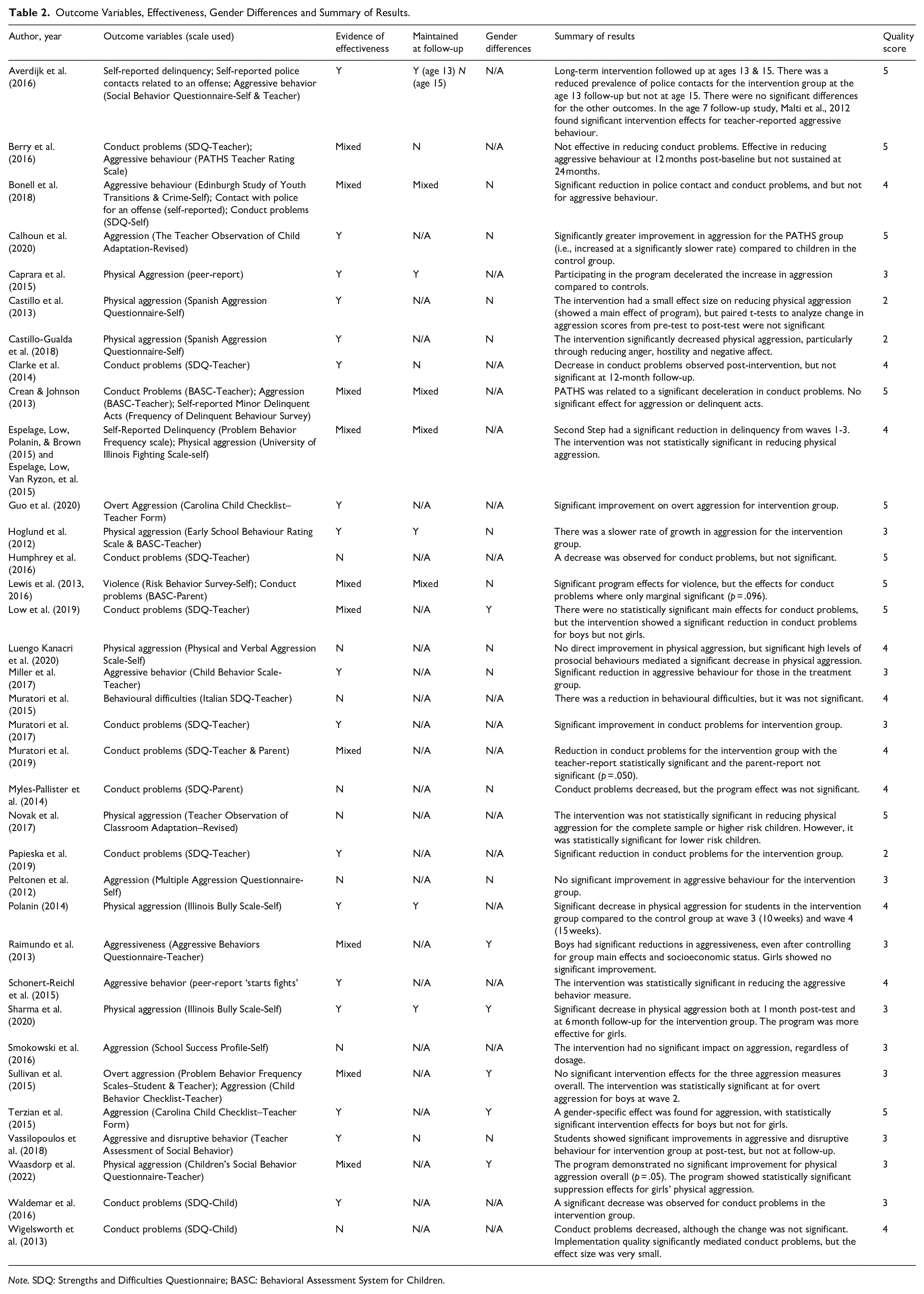
Note. SDQ: Strengths and Difficulties Questionnaire; BASC: Behavioral Assessment System for Children.
Over 77% of the studies indicated that SEL programs were an effective means at reducing some form of antisocial behaviour. Specifically, we found effectiveness of the SEL programs on antisocial outcomes in 17 studies of the 35 studies and an additional 10 studies had mixed findings. Eight studies showed no significant improvements to antisocial behaviours; none of these had adverse or unintended effects on the antisocial outcomes. Among the 12 studies that conducted a longitudinal follow-up beyond the post-test, 10 studies showed evidence of maintained effectiveness.
Many of the studies did not formally test for gender differences; however, among the 17 studies that did, six found that there were statistically significant gender differences. Some studies showed that the program was only significantly effective for boys (n = 4), and some were only significantly effective for girls (n = 2). All studies underwent a quality assessment using the 5-point quality scale in the Maryland SMS. Due to the inclusion criteria requiring a comparison group and experimental or quasi-experimental study design, included studies were primarily of moderate to high quality. The scores ranged from 2 to 5, with a mean of 3.77 (SD = 0.96) and mode of 3.
Meta-Analysis Results
Due to the limited number of studies reporting other outcomes, only conduct problems and aggression were included in the meta-analysis. A meta-analysis for conduct problems was conducted using 16 estimates from 13 studies. Results indicate a significant, albeit weak treatment effect for both the fixed (g = 0.04 [se = 0.02, p = .08; I2 = 71.1%; H2 = 3.46]) and random-effects models (g = 0.09 [se = 0.04, p = .04, 95% PI = -0.12 – 0.29; I2 = 83.3%, H2 = 5.97, tau = 0.10;
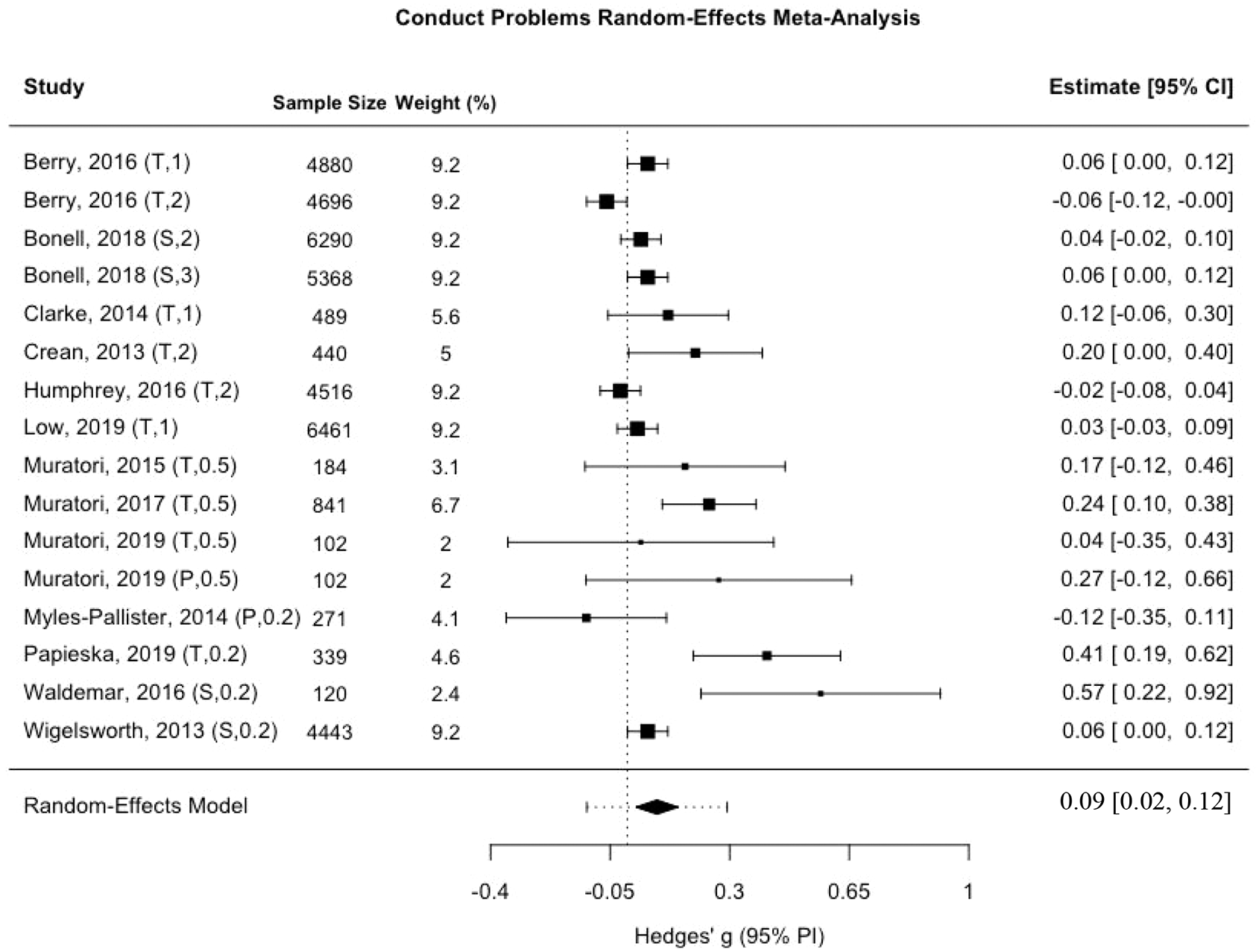
Random Effects Model for Conduct Problems (Robust Variance Estimation).
The meta-analysis on the aggression outcome (33 estimates from 20 studies) found a significant treatment effect for both the fixed (g = 0.10 [se = 0.02, p = .001; I2 = 77.5%; H2 = 4.44]) and random-effects models (g = 0.12 [se = 0.05, p = .04, 95% PI = -0.23 – 0.47; I2 = 82.5%, H2 = 8.01, tau = 0.18;
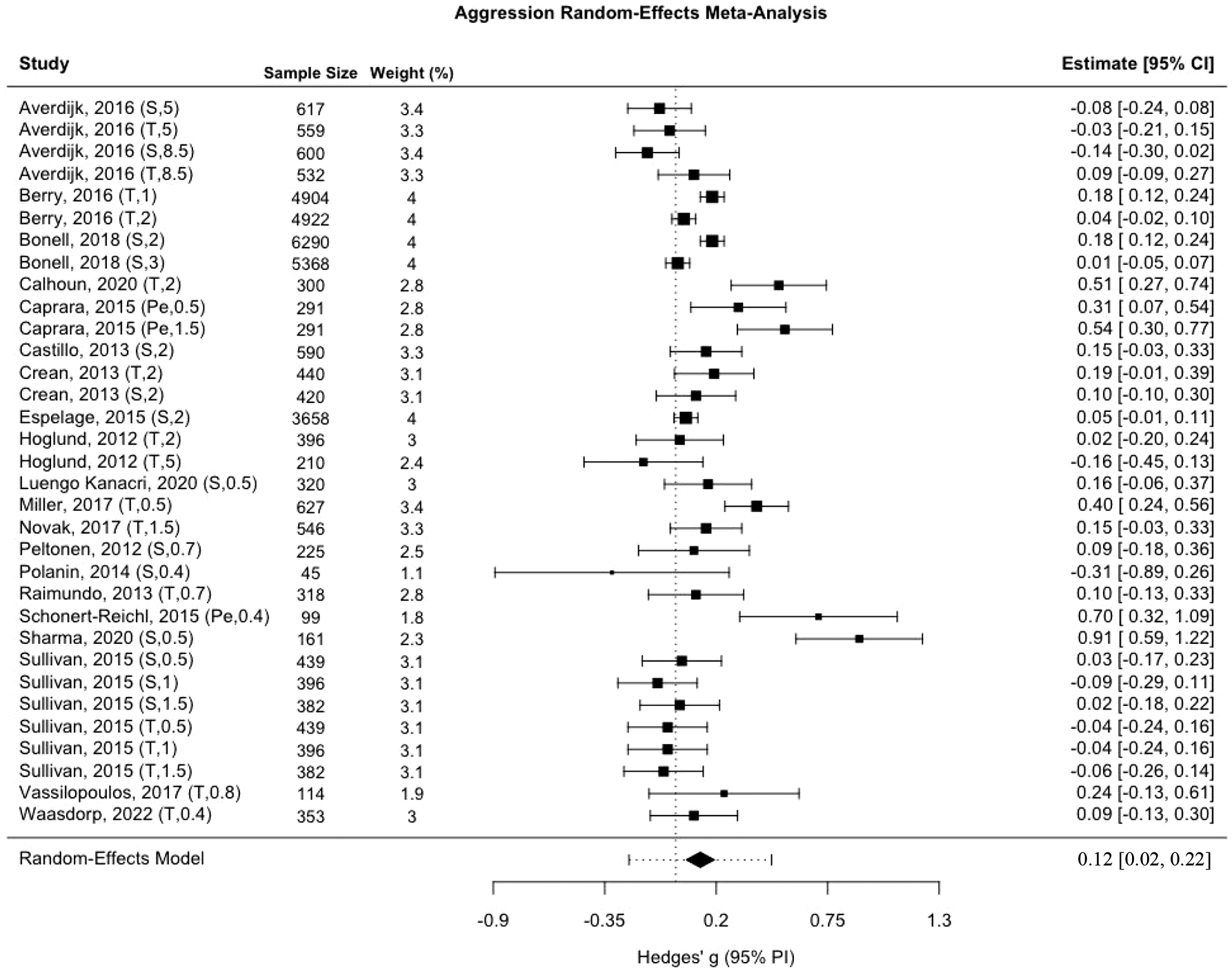
Random-Effects Model for Aggression (Robust Variance Estimation).
Discussion
Considering the potential to minimise stigma and their broad reach, we sought to determine whether universal school-based SEL programs were a useful and effective complement to strategies targeting the preventive intervention of antisocial behaviour in young people. This review found that over 77% of the 35 programs identified in the systematic review showed some evidence of reducing or decelerating antisocial behaviour and that these effects tended to be maintained over time. The meta-analyses showed that these programs are effective at reducing conduct problems and aggression but had a weak effect size. The effect sizes found for conduct problems in this study were somewhat lower than those found in other meta-analyses (Durlak et al., 2022). Both the aggression and conduct problems effect size found in the current study were similar. The systematic review and meta-analysis did not reveal any consistent pattern among the programs that were effective in the current study in terms of age, location, sample size, outcomes examined, quality assessment score or reporter type. In their review of meta-analyses on universal SEL programs in schools, Durlak et al. (2022) found that seven reviews did not find a difference in the source of the assessment, while three reviews found that parents reported higher SEL skills. We did not examine implementation quality or other factors such as sustainability that may influence program success (Elias et al., 2003).
This systematic review also aimed to examine differences between program outcomes by gender as previous systematic reviews often did not investigate gender differences in the effectiveness of school-based universal SEL programs, or did not do so for the specific outcomes of aggression and conduct problems. Gender was not a significant treatment moderator for either of the two outcomes examined in the meta-analyses. Most of the studies (11 out of 17) identified did not find any gender differences in program effectiveness. Overall, there was no conclusive evidence of gender differences in the program effectiveness, although only around half of the studies reported gender-specific results. Inconsistent findings regarding gender differences have been found in other systematic reviews and meta-analyses examining similar outcomes (Clarke et al., 2021; Durlak et al., 2022). Durlak et al. (2022) examined several moderators across 12 meta-analyses including gender, age, country, impelmentation, and concluded that there was little consistency across moderators. However, they note that the lack of reporting on gender and other individual characteristics made it difficult to draw conclusions (Durlak et al., 2022). In the current study, we found one significant moderation effect by country but only for the conduct problems outcome, with studies conducted in Italy producing significantly more favourable results than those conducted in the United Kingdom. Of the five meta-analyses that examined country in the Durlak et al. (2022) study, only one found a significant moderation that favoured US studies (Goldberg et al., 2019) and this study examined a broad behavioural adjustment outcome. Future SEL evaluations should provide results disaggregated by gender and other socio-demographic characteristics to better understand the effectiveness of school-based universal SEL programs for subgroups of the population.
Limitations
The current systematic review and meta-analysis provides an updated overview of the evidence on the effectiveness of school-based universal SEL programs for outcomes that can be considered early manifestations of antisocial behaviour, mainly aggression and conduct problems. However, we acknowledge that other behaviours such as bullying and dating violence were excluded to limit the scope of the review and since the original inclusion criteria would capture aggressive acts that would also be included in these two behaviours. For example, the definitional complexity and importance of context in identifying bullying behaviours (see Volk et al., 2014) along with known differences in potential antecedents of subtypes of bullying, suggests that this may be a series of discrete behaviours with different, albeit related, underlying explanations (Kennedy, 2020; Kljakovic & Hunt, 2016; Schell-Busey et al., 2023). There were too few studies included in this review to examine the long-term effects of the SEL programming on the children into late adolescence and adulthood, which is a known difficulty of studies which evaluate SEL programs (Jones et al., 2015). As such, we cannot empirically determine from this study whether SEL programs will lead to a direct decrease in delinquency and criminality in late adolescence or into adulthood.
Practical Implications and Conclusions
This systematic review and meta-analysis found that school-based universal SEL programs can be effective at reducing aggression and conduct problems in students, although the effect size was weak. While this study only focused on precursors to delinquency (mainly aggression and conduct problems), it is important to note that the programs included in this review demonstrated improvements for several other outcomes, such as self-regulation, emotional intelligence, prosocial behaviours, social skills and academic performance. Therefore, although the effect was weak for the specific outcomes examined here, considering the other known benefits of these programs (Durlak et al., 2022), they can be considered a useful evidence-based tool that is part of a broader approach to address early problematic behaviours. Although school-based universal SEL programs can support the reduction of early antisocial behaviour, SEL programs should not be used in isolation and should form part of a substantial and multifaceted youth justice strategy. Preventing antisocial aggressive behaviour in children and adolescents is a complex task that requires individual, family and community level programs (Hawkins et al., 2008). School-based universal SEL programs could be used in conjunction with other targeted programs as part of a broader strategy, which can lead to long-term reduction in government expenditures required to address youth justice, adult offending, substance abuse, and poor physical and mental health, which are often substantial (Jones et al., 2015). Responding to and preventing antisocial and aggressive behaviour problems in children should extend beyond the criminal justice system and involve a holistic response from multiple government departments. This strategy requires interagency support from the criminal justice system, education department, social services, health department and other relevant government organisations. A comprehensive youth justice strategy should encompass preventive programs targeting at-risk families and children, such as family and parent therapeutic programs (Carr, 2016), or individual-level violence prevention strategies, including violence prevention or anti-bullying programs (Ferguson et al., 2007; Kovalenko et al., 2022).
Footnotes
Data availability statement
The authors confirm that the data supporting the findings of this study are available within the article.
Ethical considerations
This research does not involve human participants and/or animals and informed consent is not required.
Funding
The author(s) disclosed receipt of the following financial support for the research, authorship and/or publication of this article: This research was conducted with financial support from the Australian Research Council (ARC) Discovery Early Career Researcher Award (DE210100113 awarded to S.T.).
