




Abstract
We examined associations between peer victimization in early adolescence and self-esteem and internalizing problems in late adolescence and whether these, in turn, explained variation in later parenting. We used longitudinal data from the TRacking Adolescents’ Individual Lives Survey (TRAILS) and its next-generation spin-off study (TRAILS NEXT) to model links between peer victimization reported by individuals themselves, their parents, and their peers at age 11, self-esteem and internalizing problems at age 19, and parental stress and self-efficacy ~10 years later. The used subsample consisted of n = 199 parents (79% female, mean age = 30.48 when offspring were 30 months old) with n = 273 children. Contrary to expectations, peer victimization was not indirectly associated with later parental stress or self-efficacy via self-esteem or internalizing problems at age 19 after adjusting for baseline mental health. Internalizing problems at age 19 consistently predicted higher parental stress in all models. Our findings suggest that early peer victimization experiences have limited long-term effects on parenting, but this might be due to the current assessment of victimization experiences. To better examine the impact of parents’ developmental histories, a more fine-grained measure of peer victimization should be used, taking into account factors such as severity and chronicity.
Many children and adolescents experience peer victimization, which involves intentional and repeated harm in the context of a power imbalance between the bully and the victim (e.g., Olweus, 1993) and can impact mental health later in life in that victims suffer from lower levels of self-esteem and more internalizing difficulties (Christina et al., 2021; Mullan et al., 2023). Victimization can also impair social relationships with friends and family both concurrently (e.g., Smith et al., 2004) and later on (McDougall & Vaillancourt, 2015). Experiencing peer victimization possibly also affects behavior toward and the relationship one has with one’s own child later on given that parental developmental history is an important determinant for variation in parenting and parent–child relationship quality (Belsky, 1984). Yet, prospective research on this long-term association, including exploration of potential mechanisms connecting preconception experiences to parenting, is scarce.
The few studies that have examined the extent to which peer victimization shapes parenting suggest that parents who recalled being victims of bullying during childhood or early adolescence were more likely to have authoritarian and less likely to have permissive parenting styles compared with parents who had not been victimized (Wright, 2017; Wright et al., 2021). In addition, fathers who had been victimized during childhood and adolescence enacted poorer parenting strategies such as harsh parenting, low warmth, and poor discipline (Kerr et al., 2018). Similarly, mothers who recalled frequent conflict in their peer relationships rated themselves as less nurturing toward their offspring compared with mothers with positive peer memories (Putallaz et al., 1991).
These studies highlight the importance of parents’ social developmental histories as potential determinants of parenting, but we cannot draw firm conclusions about the role of peer victimization as a predictor of parenting because studies usually relied on retrospective data (Putallaz et al., 1991; Wright, 2017; Wright et al., 2021), only assessed mothers’ or fathers’ peer victimization experiences (Kerr et al., 2018; Putallaz et al., 1991; Wright, 2017; Wright et al., 2021), were based on a high-risk sample (Kerr et al., 2018), or suffered from shared-method bias (Putallaz et al., 1991; Wright, 2017; Wright et al., 2021). To circumvent these limitations, we used a longitudinal prospective design to examine whether early adolescent peer victimization experiences would predict later parenting. Moreover, we used parental stress and self-efficacy—rather than only global parenting—as potential correlates of peer victimization to account for the complexity of the parent–child relationship, to find more fine-grained effects for separate aspects of parenting (Ladd & Kochenderfer-Ladd, 2019), and to capture positive as well as negative parenting. Parental stress is described as the stress one experiences resulting from the demands and expectations associated with parenting (Deater-Deckard, 1998; Hayes & Watson, 2013) and parental self-efficacy refers to one’s belief in their ability to parent successfully (Bandura, 2006; Bandura & Adams, 1977).
Next to alleviating limitations of prior research, the primary aim of the current study was to explore possible pathways that explain how early peer victimization predicts later parenting. We consider self-esteem and internalizing problems to be potential mechanisms that connect peer victimization to parental stress and self-efficacy for several reasons. First, low self-esteem and high levels of internalizing problems are common longitudinal correlates of peer victimization (e.g., van Geel et al., 2018; Youguo et al., 2022). Experiencing peer victimization might compromise feelings of safety in interactions as victims pick up negative emotions and behaviors of others (Taylor et al., 2013). In addition, the continuation of victimization might result in victims coming to believe that they deserve to be victimized (Graham & Juvonen, 1998). This constant threat to comfort and security in interactions, along with victims’ self-blaming attributions, are important risk factors for maladjustment (e.g., McDougall & Vaillancourt, 2015).
Second, low self-esteem and reduced emotional well-being of victims (Armitage et al., 2021), as consequences of negative self-beliefs, likely affect their perception of how competently they parent as well as how much stress they experience when raising their children. Indeed, self-esteem and mental health are both linked to variation in parenting—at least concurrently or when assessed during or after pregnancy. For example, parents with higher self-esteem reported less parental stress (Saisto et al., 2008) and more self-efficacy (Leerkes & Crockenberg, 2002), whereas parents with internalizing problems, such as depression or anxiety, reported more parental stress (Saisto et al., 2008; Williford et al., 2007) and less parental self-efficacy (Kunseler et al., 2014). Knowledge, however, on whether self-esteem and internalizing problems determine variation in parenting if measured prior to conception is scarce. Such links are plausible given work in neighboring research fields showing that parents’ personality traits prior to the transition to parenthood are associated with parenting and parental self-efficacy (Northrup et al., 2023; Spry et al., 2023).
Current Study
In the current study, we tested the role of peer victimization at age 11 as antecedent of self-esteem (Figure 1, path a) and internalizing problems (path b) at age 19 and self-esteem and internalizing problems at age 19 as predictors of parental stress (paths c and e) and self-efficacy (paths d and f). We also modeled indirect effects to test whether self-esteem and internalizing problems connect peer victimization in early adolescence to later parenting.
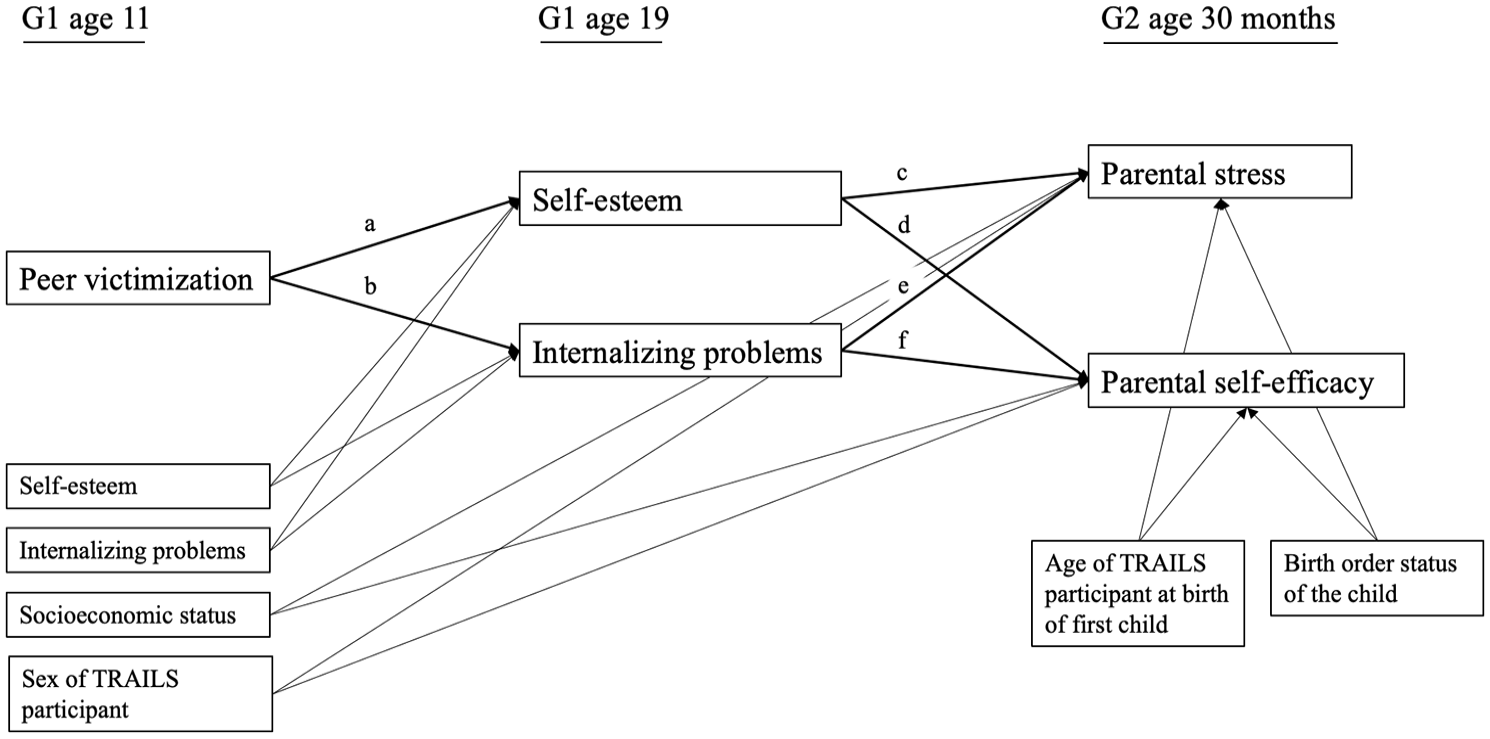
Theoretical Model. We refer to TRAILS participants as G1 (Generation 1) and their children as G2 (Generation 2).
We used data from a longitudinal multiple-generation sample stretching from early adolescence into adulthood, hereby avoiding previous limitations such as the use of retrospective reports. Moreover, we included mothers’ as well as fathers’ experiences of peer victimization and reports of parenting and used reports of victimization from adolescents themselves, their parents, and their peers because different reporters tap into diverse aspects of victimization (e.g., Pouwels et al., 2016). We expected those who had experienced victimization in early adolescence to have lower self-esteem and more internalizing problems in late adolescence and that these mental health problems in late adolescence would be associated with higher levels of parental stress and lower levels of parental self-efficacy. We also expected that experiencing peer victimization in early adolescence would indirectly predict higher levels of parental stress and lower levels of parental self-efficacy via higher internalizing problems and lower self-esteem in late adolescence.
In our models, we adjusted for self-esteem and internalizing problems at age 11 given the stability in mental health (e.g., Rudolph et al., 2011; Trzesniewski et al., 2003). In addition, we controlled for factors that can explain variation in parenting: family-of-origin socioeconomic status (e.g., Trentacosta et al., 2010), sex (McKinney & Renk, 2008), age of the parent at birth of the first child (Bryanton et al., 2008; Trentacosta et al., 2010), and birth order status of the child to whom the parent referred when reporting on their parenting. The latter is important because parents adjust their parenting in response to the development of their children and their own experiences as parents (Mowder, 2005). As such, parents are likely more stressed about parenting their first child than their second or third, because it is a new experience for them and parenting is another social role they need to grow into (Mowder, 1993). Likewise, parents might feel more self-efficacious with their second or third child compared with their first, because they have already mastered problems and gained experience with the upbringing of their first child.
Methods
Procedure and Participants
Data come from the TRacking Adolescents’ Individual Lives Survey (TRAILS) cohort and its next-generation spin-off study TRAILS NEXT. Detailed information about TRAILS and TRAILS NEXT has been published in several reports (Hartman et al., 2022; Huisman et al., 2008; Oldehinkel et al., 2015). Ethics approval for TRAILS and TRAILS NEXT was obtained from the Dutch National Ethics Committee (CCMO; respectively, approval number NL38237.042.11 and approval number NL47782.042.14) or the medical ethics committee prior to the start and at each new wave.
The sample consisted of n = 449 TRAILS NEXT participants (71% female, mean age = 30.55) with n = 689 children (52% girls, age range: 29–39 months). To test our hypotheses, we used a subsample of TRAILS participants who had available information on at least one parenting outcome. This approach helped to avoid model instability due to the amount of missing data on these outcomes (60.4% and 60.7% for parental stress and self-efficacy, respectively, see Table 1 for more details). The used subsample consisted of n = 199 parents (79% female, mean age = 30.48 when offspring were 30 months old) with n = 273 children (56% girls, age range: 29–39 months).
Descriptive Statistics.
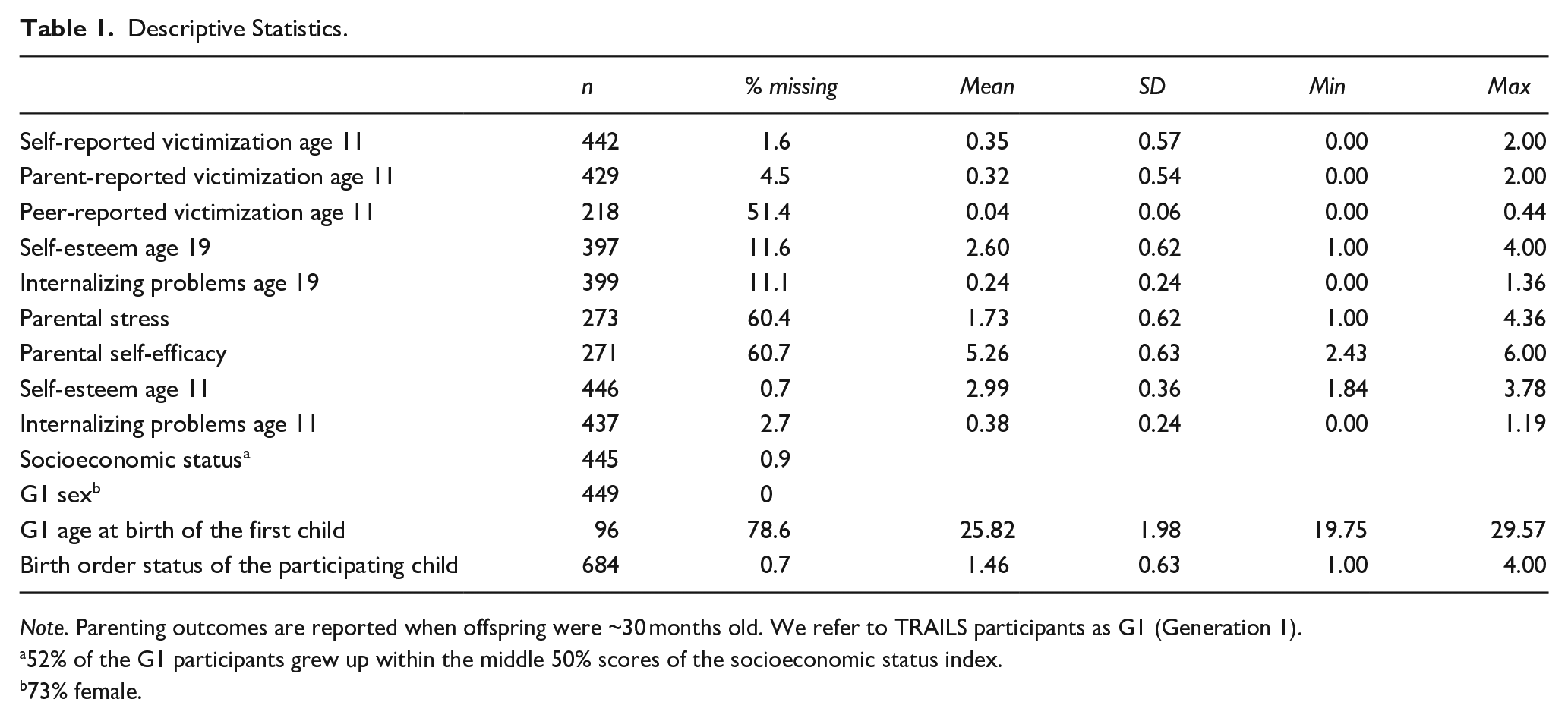
Note. Parenting outcomes are reported when offspring were ~30 months old. We refer to TRAILS participants as G1 (Generation 1).
52% of the G1 participants grew up within the middle 50% scores of the socioeconomic status index.
73% female.
Measures
Peer Victimization (Age 11)
Self-reported victimization was assessed using one item from the Youth Self-Report (“I get bullied a lot”) rated from 0 = not at all to 2 = often (Achenbach & Rescorla, 2001). Notably, 25% of the adolescents reported to be victimized sometimes and 4% often.
Parent-reported victimization was assessed using one item from the Child Behavior Checklist (“My child gets teased a lot”) rated from 0 = not at all to 2 = often (Achenbach & Rescorla, 2001). Notably, 24% of the parents reported that their child had been teased sometimes and 3% often.
Peer-reported victimization was assessed in classrooms with at least 10 TRAILS participants. A total of 1,065 TRAILS members took part in the peer-nomination procedure, representing approximately 48% of the eligible TRAILS participants across 34 secondary schools. Children received a list of all classmates and were asked to nominate victims of bullying. The number of nominations was unlimited and children were not required to nominate anyone. To account for differences in the number of respondents per class, the number of nominations children received from their classmates was divided by the number of nominations maximally possible to compute the proportions of bullying victimization for each participant, with higher scores indicating more victimization nominations. More details on the procedures can be found elsewhere (Kretschmer et al., 2017).
Self-Esteem (Age 19)
Self-esteem was assessed using four items of the Interpersonal Sensitivity Measure (Boyce & Parker, 1989). These items were related to sensitivity to negative social evaluation by others (Tops et al., 2008) including “My value as a person depends enormously on what others think of me.” Items were reverse coded from 1 = very like me to 4 = very unlike me, with a higher score indicating higher self-esteem. All four items load on a single factor explaining 57.03% of the total variance. The items had strong loadings on this single factor, ranging from .64 (“I always expect criticism”) to .87 (“My value as a person depends enormously on what others think of me”). Responses were averaged across items. The internal consistency of this scale (α = .75) is comparable to psychometric properties in another study using TRAILS data (Tops et al., 2008).
Internalizing Problems (Age 19)
To assess internalizing problems, the widely used and validated withdrawn/depressed, physical complaints, and anxious/depressed subscales of the Adult Self-Report (ASR; Achenbach & Rescorla, 2001) were used. The internalizing problems scale consists of 39 items including “I am unhappy, sad, or depressed,” rated from 0 = not at all to 2 = always. Responses were averaged across items (Cronbach’s α = .92).
Parental Stress and Self-Efficacy (Offspring Age ~30 Months)
Parental stress was assessed using the Nijmeegse Ouderlijke Stress Index (NOSI-K; de Brock et al., 1992), which is an adaption from the Parental Stress Index (Abidin, 1992). The NOSI-K subscale consists of 24 items including “Parenting this child is harder than I thought,” and “I often feel like giving up,” rated from 1 = totally disagree to 6 = totally agree. Responses were averaged across items (Cronbach’s α = .93). Psychometric properties in other studies were comparable (e.g., de Brock et al., 1992).
Parental self-efficacy was assessed using the emotional availability and play subscales of the Self-Efficacy for Parenting Tasks Index-Toddler Scale (SEPTI-TS; Coleman & Karraker, 2003). Emotional availability consists of seven items including “Providing physical comfort for my child is easy for me.” Play consists of seven items including “I am a fun playmate for my toddler.” Items on both scales were rated from 1 = strongly disagree to 6 = strongly agree. Responses were averaged to create one scale (Cronbach’s α = .84). Psychometric properties in other studies were comparable (e.g., Liu et al., 2019).
Covariates
Self-esteem at 11 years was assessed with the commonly-used and validated Self-Perception Profile for Children (Harter, 1982, 2012) which consists of 36 items including “Some children often feel unhappy with themselves” and is rated from 1 = very true for me to 4 = very untrue for me. Responses were averaged across items (Cronbach’s α = .74). Internalizing problems at 11 years were assessed using the withdrawn/depressed, physical complaints, and anxious/depressed subscales of the Youth Self-Report (YSR; Achenbach, 1991), to create an internalizing problems scale (Achenbach et al., 2003) consisting of 31 items including “I feel like no one loves me,” and items were rated from 0 = not at all to 2 = always. Responses were averaged across items. The Cronbach’s α of .87 was in line with psychometric properties found in other studies (e.g., Reitz et al., 2005). Family-of-origin socioeconomic status was determined by taking the mean of the standardized scores for the occupational and educational level of both parents of the TRAILS participant and family income, assessed at age 11 (Cronbach’s α = .84; Sentse et al., 2009). Sex of the TRAILS participant was coded as 0 = girl and 1 = boy. Age of TRAILS participant at first birth and birth order status of child to whom the TRAILS participant referred when reporting on their parenting were assessed at TRAILS NEXT T3 assessment (offspring age ~30 months).
Analytic Strategy
We calculated intraclass correlation coefficients and design effects based on average and maximum cluster size (Zhan et al., 2021) to determine whether multilevel analyses were required to handle the nested structure of the data, that is, multiple children within families. The intraclass correlations (.63 for parental stress and .56 for parental self-efficacy) and design effects (1.24 based on average cluster size and 2.88 based on maximum cluster size for parental stress and 1.21 based on average cluster size and 2.68 based on maximum cluster size for parental self-efficacy) indicated that multilevel models should be used (Hox & Maas, 2002; Vajargah & Nikbakht, 2015). We modeled the effects of victimization at age 11 on self-esteem and internalizing problems at age 19 and the effects of self-esteem and internalizing problems at age 19 on parental stress and parental self-efficacy on the between-level, given that only the outcome variables were specifically assessed for each child within the family, in Mplus 8.6 (Muthén & Muthén, 1998–2022).
In three separate path models, we estimated the indirect effects from peer victimization at age 11, as reported by adolescents themselves, parents, and peers, to parental stress and parental self-efficacy via self-esteem and internalizing problems at age 19. We used the MODEL INDIRECT command to calculate the indirect effects and confidence intervals as bootstrapping was not possible for the two-level model (Muthén & Muthén, 1998–2022). All models were estimated using full information maximum likelihood estimation with robust standard errors, to account for missing data. We controlled for self-esteem and internalizing problems at age 11, socioeconomic status, sex and age of TRAILS participant at the birth of the first child, and birth order status of the child to whom the parent referred when reporting on their parenting in each model.
Model-data fit was not satisfactory for the main models. Especially the Comparative Fit Index CFI was low, with a likely explanation being many weak correlations between variables. Of 25 included associations, only 12 exceeded β > .10 in each model. Of 75 correlations, only 21 were significant.
Results
Descriptive Statistics
Descriptive statistics are presented in Table 1. Overall, parents felt confident in their parenting and reported little stress. Table 2 shows pairwise correlations of the variables used in this study (see Table S1 in Supplemental Material for the additional correlations based on the subsample). Agreement concerning victimization was modest between self- and parent-reported victimization and between self- and peer-reported victimization, while parent- and peer-reported victimization were not correlated. Parents who reported more stress felt less confident in their parenting. Individuals who reported being victimized at age 11 had lower self-esteem, reported more internalizing problems at age 19, and felt less confident in their later parenting. Individuals whose parents reported them to be victimized at age 11 reported more internalizing problems at age 19 but parent-reported victimization was not associated with self-esteem at age 19 nor later parenting. Individuals whose peers reported them to be victimized at age 11 reported fewer internalizing problems at age 19 and less parental stress. Those with lower self-esteem at age 19 felt more stressed in their parenting later on and, similarly, those who reported more internalizing problems at age 19 felt more stressed in their later parenting.
Spearman Correlations.
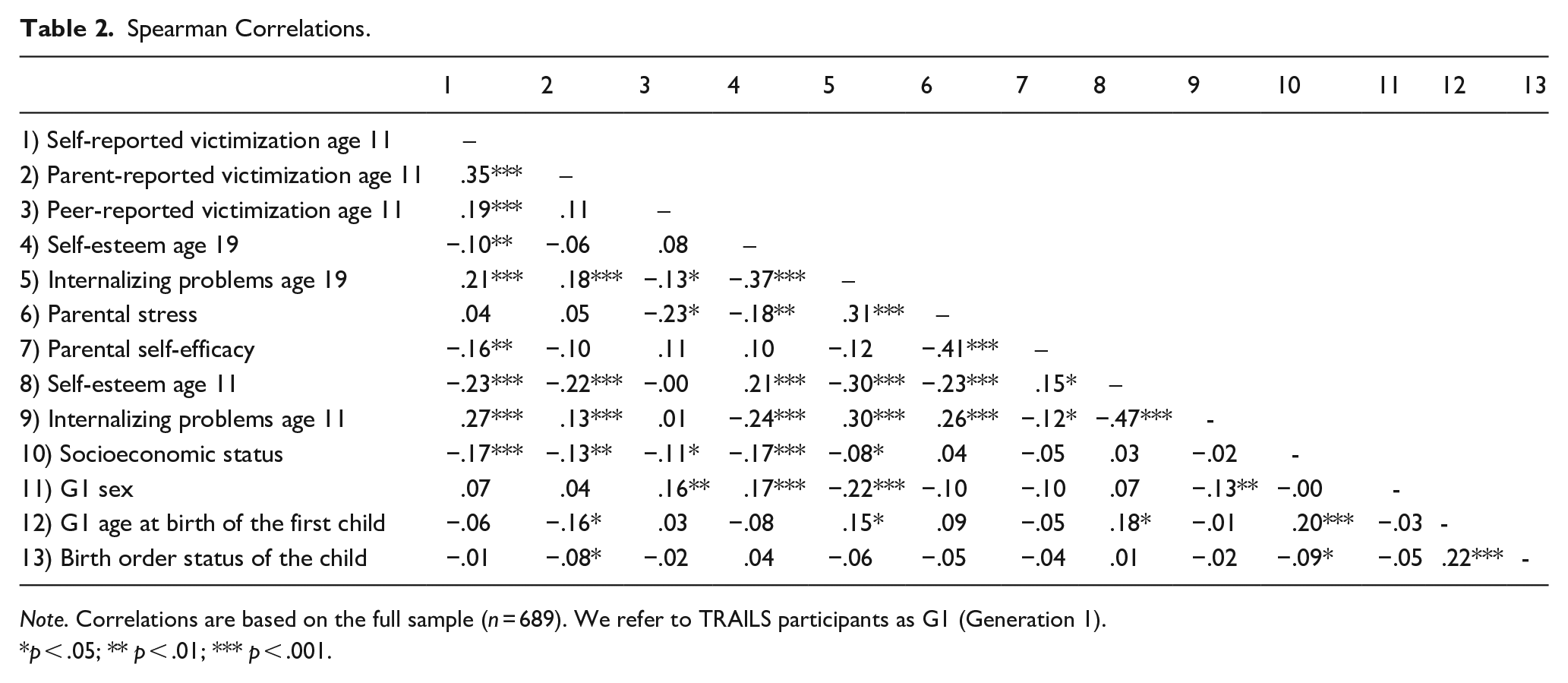
Note. Correlations are based on the full sample (n = 689). We refer to TRAILS participants as G1 (Generation 1).
p < .05; ** p < .01; *** p < .001.
Self-Esteem and Internalizing Problems as Pathways From Victimization to Parenting
Figure 2 presents the standardized regression coefficients for the overall path model in which self-reported victimization was examined as a predictor of stress and self-efficacy as a parent later on via self-esteem and internalizing problems at age 19. Only the association between internalizing problems and parental stress was significant. Indirect paths did not reach statistical significance, suggesting that neither self-esteem nor internalizing problems linked victimization to parenting. The indirect effect of victimization at age 11 to parental stress was β = .00, p = .668 via self-esteem and β = .04, p = .068 via internalizing problems. The indirect effect of victimization to parental self-efficacy was β = −.00, p = .753 via self-esteem and β = −.03, p = .246 via internalizing problems. Table 3 shows full details of all included associations.
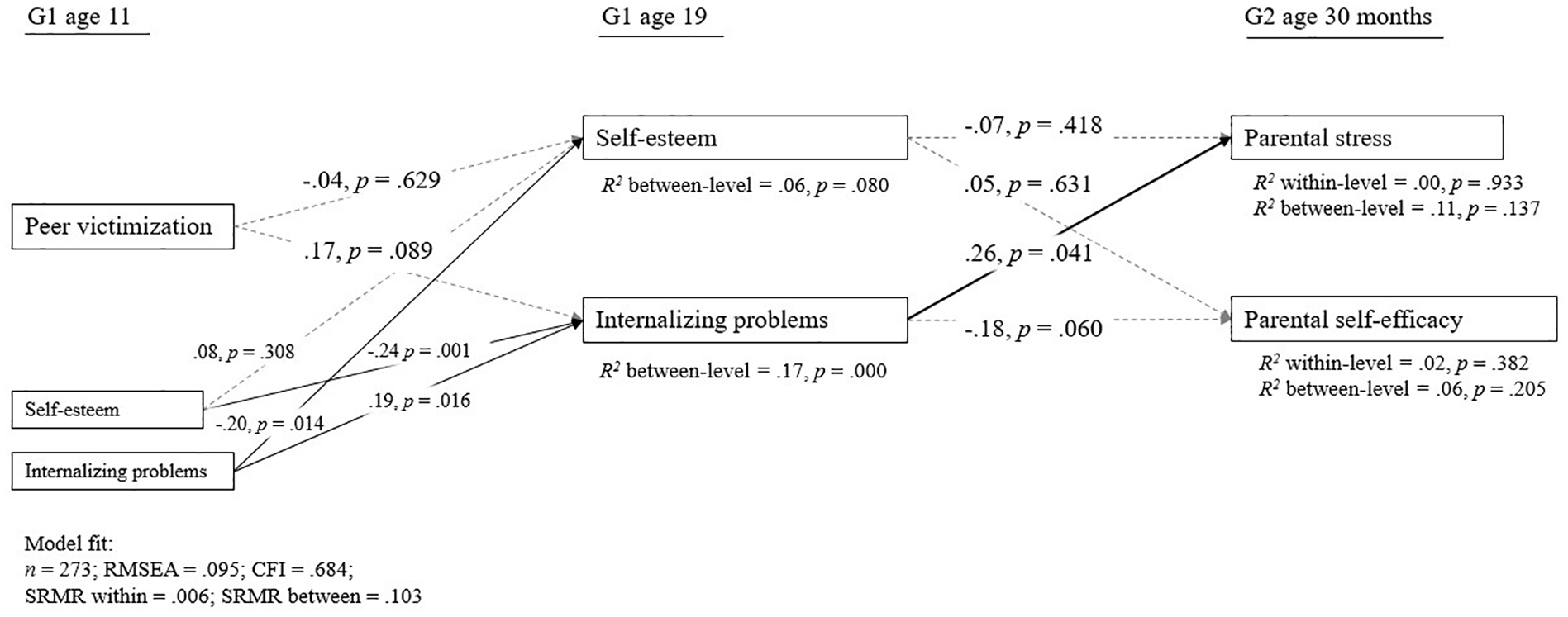
Self-Reported Victimization at Age 11 and Later Parental Stress and Self-Efficacy via Self-Esteem and Internalizing Problems at Age 19. The model is based on a subsample of available parenting information (n = 273). We refer to TRAILS participants as G1 (Generation 1) and their children as G2 (Generation 2). All coefficients are standardized. Significant paths are depicted with a solid line, and non-significant paths are depicted with a dotted line. Covariates were included in the model, but non-significant covariates are not depicted in this figure (see Table S1 in Supplemental Material for more details). The effects of victimization at age 11 on self-esteem and internalizing problems at age 19 and the effects of self-esteem and internalizing problems at age 19 on parental stress and parental self-efficacy were all modeled on the between-level (given that only the outcome variables were specifically assessed for each child within the family).
Model Details of All Included Associations.
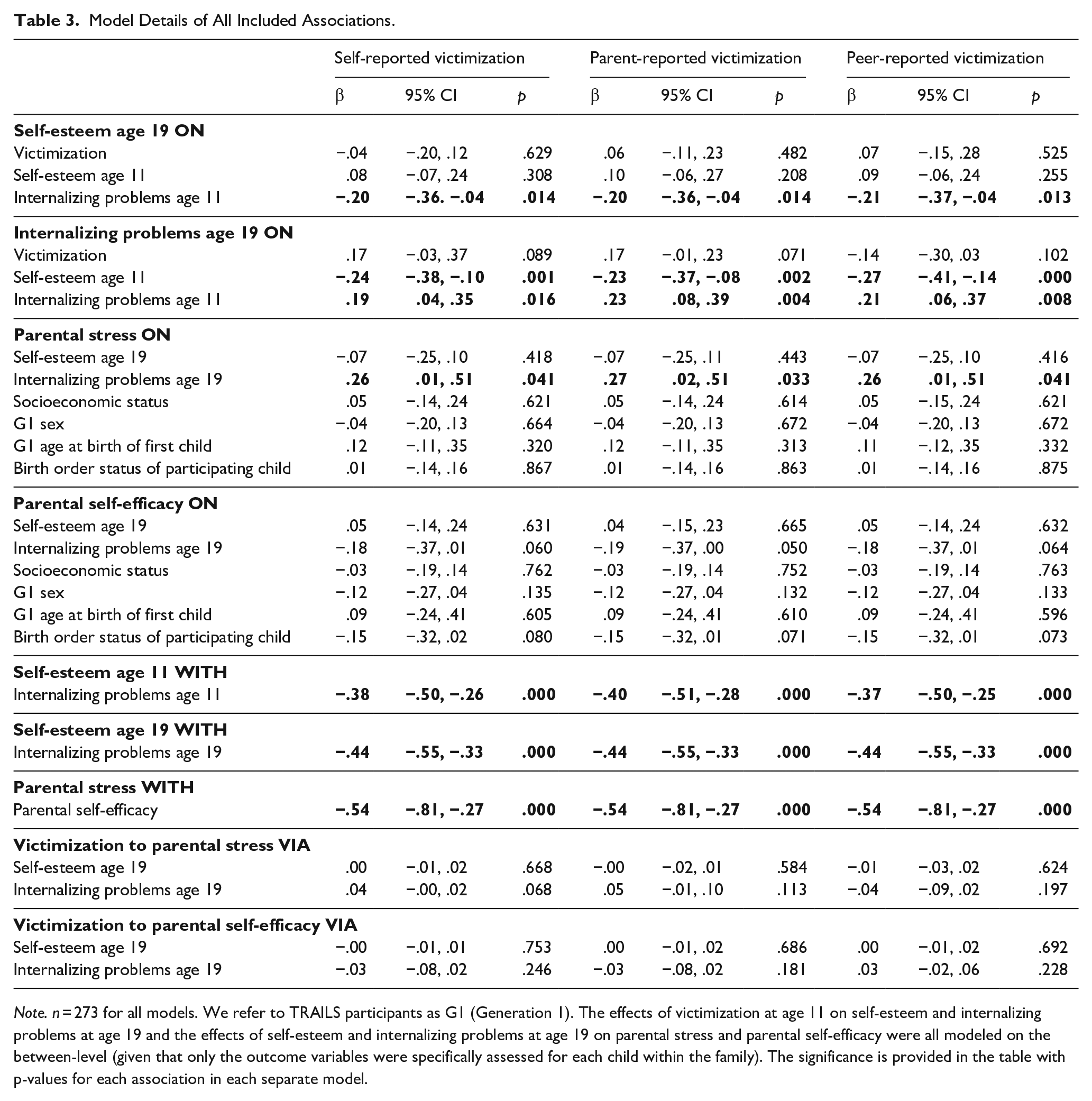
Note. n = 273 for all models. We refer to TRAILS participants as G1 (Generation 1). The effects of victimization at age 11 on self-esteem and internalizing problems at age 19 and the effects of self-esteem and internalizing problems at age 19 on parental stress and parental self-efficacy were all modeled on the between-level (given that only the outcome variables were specifically assessed for each child within the family). The significance is provided in the table with p-values for each association in each separate model.
Figure 3 presents the standardized regression coefficients for the overall path model for parent-reported victimization as a predictor for later parenting via self-esteem and internalizing problems. Internalizing problems at age 19 were significantly associated with parental stress. Yet, as for self-reported victimization, the indirect paths were not significant. The indirect effect of victimization at age 11 to parental stress was β = −.00, p = .584 via self-esteem and β = .05, p = .113 via internalizing problems. The indirect effect of victimization to parental self-efficacy was β = .00, p = .686 via self-esteem and β = −.03, p = .181 via internalizing problems.
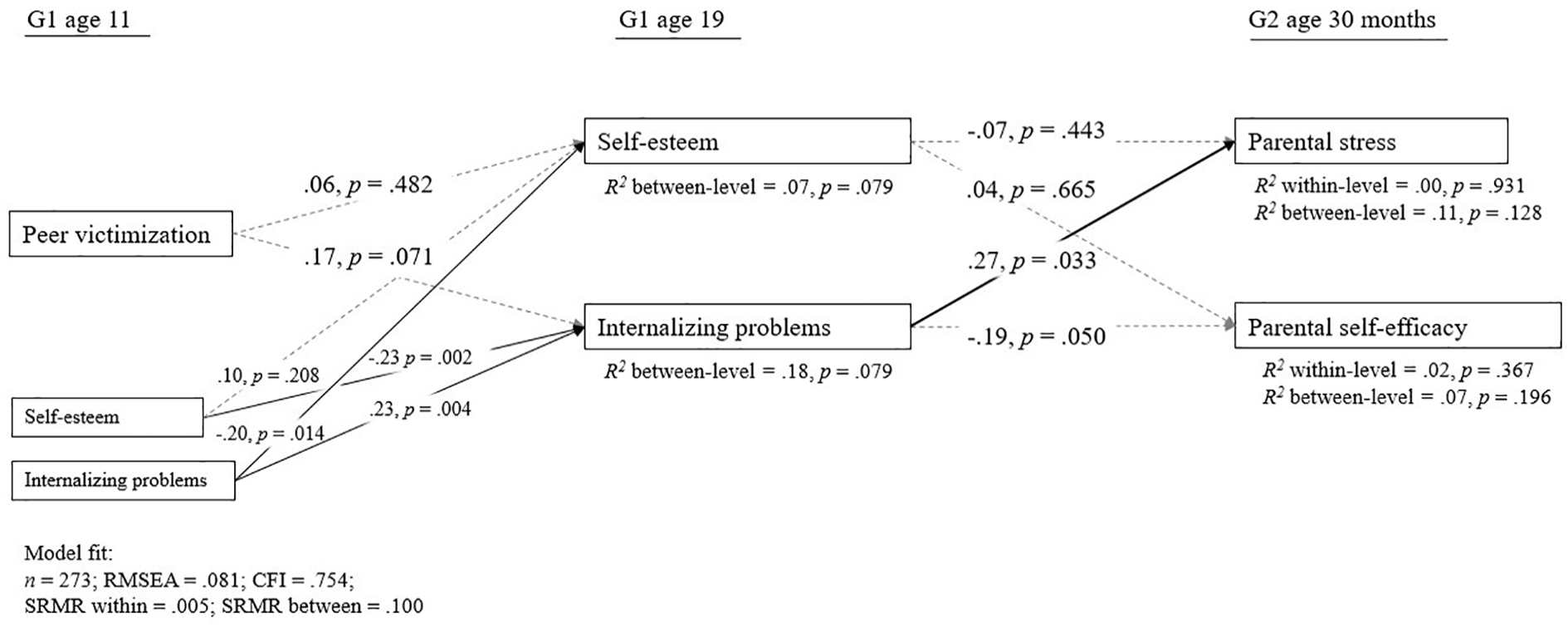
Parent-Reported Victimization at Age 11 and Later Parental Stress and Self-Efficacy via Self-Esteem and Internalizing Problems at Age 19. The model is based on a subsample of available parenting information (n = 273). We refer to TRAILS participants as G1 (Generation 1) and their children as G2 (Generation 2). All coefficients are standardized. Significant paths are depicted with a solid line, and non-significant paths are depicted with a dotted line. Covariates were included in the model, but non-significant covariates are not depicted in this figure (see Table S1 in Supplemental Material for more details). The effects of victimization at age 11 on self-esteem and internalizing problems at age 19 and the effects of self-esteem and internalizing problems at age 19 on parenting stress and parental self-efficacy were all modeled on the between-level (given that only the outcome variables were specifically assessed for each child within the family).
Figure 4 presents the overall path model with standardized regression coefficients for peer-reported victimization as a predictor for later parenting via self-esteem and internalizing problems at age 19. Also here, internalizing problems were significantly linked to more parental stress. Again, the indirect paths were not significant. The indirect effect of victimization at age 11 to later parental stress was β = −.01, p = .624 via self-esteem and β = −.04, p = .197 via internalizing problems. The indirect effect of victimization to later parental self-efficacy was β = .00, p = .692 via self-esteem and β = .03, p = .228 via internalizing problems.
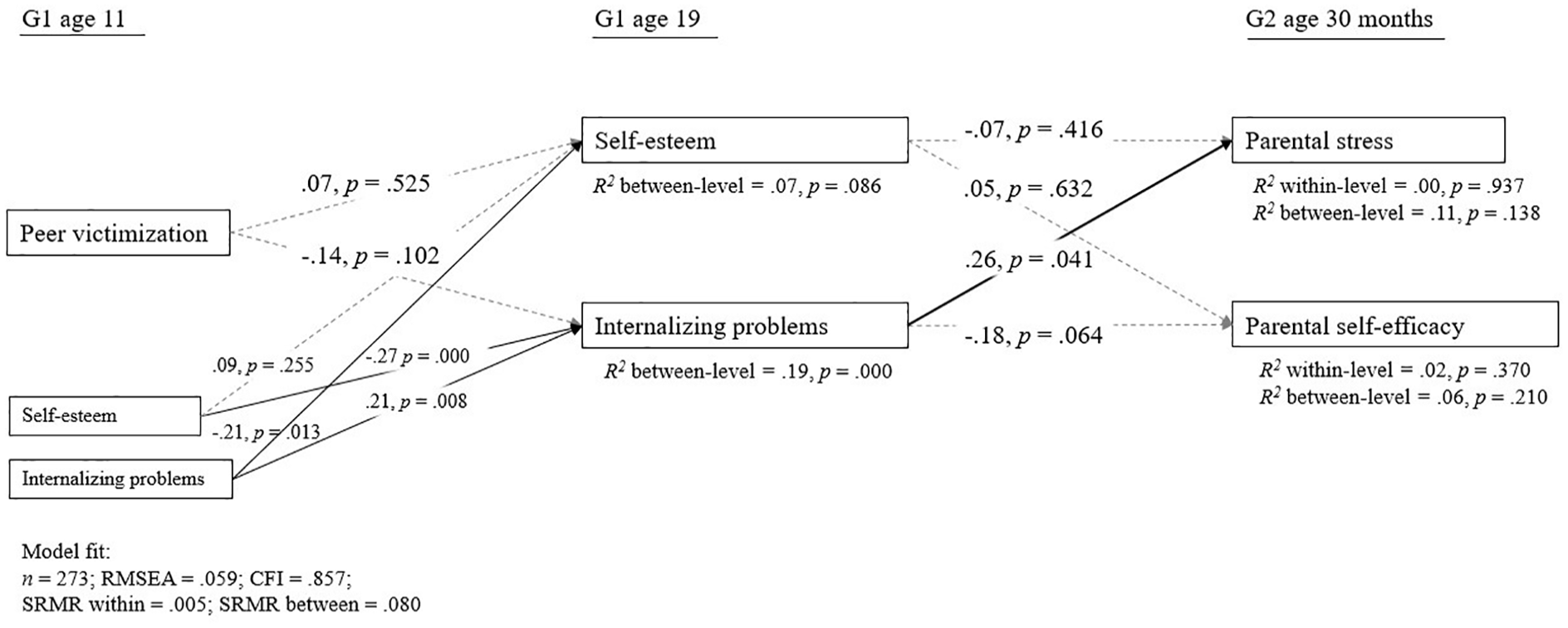
Peer-Reported Victimization at Age 11 and Later Parental Stress and Self-Efficacy via Self-Esteem and Internalizing Problems at Age 19. The model is based on a subsample of available parenting information (n = 273). We refer to TRAILS participants as G1 (Generation 1) and their children as G2 (Generation 2). All coefficients are standardized. Significant paths are depicted with a solid line, and non-significant paths are depicted with a dotted line. Covariates were included in the model, but non-significant covariates are not depicted in this figure (see Table S1 in Supplemental Material for more details). The effects of victimization at age 11 on self-esteem and internalizing problems at age 19 and the effects of self-esteem and internalizing problems at age 19 on parenting stress and parental self-efficacy were all modeled on the between-level (given that only the outcome variables were specifically assessed for each child within the family).
Additional Analyses
We first re-computed all models without self-esteem and internalizing problems to test the direct effect of peer victimization in early adolescence on later parenting (Supplemental Material Table S2). The overall pattern was almost identical to the main analyses, except self-reported victimization predicted less parental self-efficacy and peer-reported victimization predicted less parental stress. Second, we re-computed the same models to test the direct effect of peer victimization on later parenting, but this time with self-esteem and internalizing problems as pathways (Supplemental Material Table S3). In these models, self-reported victimization was no longer a significant predictor of parental self-efficacy. Peer-reported victimization remained a significant predictor of less parental stress.
As a final robustness check, we re-computed all models without covariates to test whether peer victimization in early adolescence would predict mental health aspects ignoring possible stability effects. Model-data fit was good for these models (Supplemental Material Figures S1 through S3). The overall pattern was almost identical to the main analyses, with the exception that peer victimization was significantly linked to internalizing problems at age 19 in all models. In addition, the indirect effect of self-reported victimization at age 11 to later parental stress via internalizing problems at age 19 reached statistical significance (β = .07, p = .027).
Discussion
With this study we aimed to contribute to the literature on long-term correlates of peer victimization, and in doing so, going beyond most longitudinal work that focuses on the individual only. Exploring associations with parenting in methodologically rigorous designs is innovative yet feasible, as other preconception experiences have been linked to individual variation in different facets of parenting before (Northrup et al., 2023; Spry et al., 2023). We tested the role of peer victimization in early adolescence as a predictor of own parenting in adulthood with self-esteem and internalizing problems in late adolescence as pathways, building on different bodies of literature to support these separate pathways. However, the results are far from conclusive.
To begin with, peer victimization at age 11 was not associated with parenting, either directly or via self-esteem and internalizing problems at age 19. This contrasts with the little existing work on peer experiences and parenting. Whereas previous (retrospective) studies likely captured chronic victimization, given that adults still thought of themselves as victims and recalled their negative experiences at the time of the assessments (Putallaz et al., 1991; Wright, 2017; Wright et al., 2021), our data might represent fleeting experiences of victimization. Especially chronic peer victimization can affect individuals in the long run (Sheppard et al., 2019), but since we included one-time measures, we cannot assert that the victimization was persistent. Results of the additional analyses, in which we tested the direct effect of peer victimization on parental stress and self-efficacy, were unexpected: those who were victimized according to peers reported less parental stress. This result is difficult to interpret and warrants replication to establish its robustness and to provide meaningful insights.
Contrary to expectations, peer victimization at age 11 was also not a stable predictor of aspects of mental health in late adolescence. Whereas correlational analyses suggested more internalizing problems and lower self-esteem among those who were victimized according to self-reports or parent-reports, these links were not found when adjusting for baseline internalizing problems and self-esteem. One possible explanation for this might be that perceptions of victimization have been shaped by previous or current maladjustment. Indeed, additional analyses, in which we computed models without covariates, suggested that peer victimization was significantly linked to internalizing problems—but not to self-esteem. Another possible explanation is that, as time passes, associations might become weaker, as was shown by a meta-analysis on peer victimization and internalizing symptoms (Schoeler et al., 2018). Most previous longitudinal studies were assessed with a relatively short time lag between the assessments (Christina et al., 2021; Mullan et al., 2023), while the associations in our study were assessed over two decades. Finally, the absence of associations might also be explained by the small sample which we used to compute the complex models.
Turning to associations between internalizing problems and self-esteem and later parenting, correlations were mostly as expected, with more self-esteem and fewer internalizing problems predicting less stress as a parent. Associations between internalizing problems and stress were stable in all path models and although associations between internalizing problems and self-efficacy just missed the significance threshold, these paths underline the importance of preconception mental health for parenting that was reported earlier. Self-esteem in late adolescence, in contrast, was not associated with parenting, which suggests that this individual characteristic taps into a different domain than internalizing problems.
Finally, indirect effects were not significant in adjusted models and model-data fit was not satisfactory. As such, our data did not support the hypothesis that peer victimization—as an adverse preconception experience—explains individual differences in parenting via its association with mental health aspects. Given that some correlations were observed between peer experiences and later parenting, the assumption that developmental histories matter still stands but it is likely that severity and chronicity as well as subjective interpretations of relationship experiences need to be taken into account to elucidate replicable pathways.
Strengths, Limitations, and Future Directions
Despite the strengths of this study—victimization being assessed at the time it happened, use of different reporters, inclusion of both mothers’ and fathers’ experiences, and longitudinal data spanning approximately two decades—our findings should be interpreted with some limitations in mind: In addition to capturing peer experiences in more detail and examining associations between victimization as assessed by peers and late adolescent mental health to find out whether the contrary-to-expected association found here was by chance or represents a systematic effect, future research should ideally include more comprehensive measures of peer victimization. That is, self-reported and parent-reported victimization were measured with single items without a definition given, which is not an optimal way to assess victimization experiences (Kaufman et al., 2020). In addition, parent-reported victimization referred to “teasing” instead of “bullying.” Moreover, the data used here were all collected by means of questionnaires. Multi-method approaches including observations of parenting could have been beneficial.
Furthermore, we used the Fear of Negative Social Evaluation scale (Tops et al., 2008), which is based on items from the Interpersonal Sensitivity Measure (Boyce & Parker, 1989), to assess self-esteem. The four items were originally designed to capture individuals’ general sensitivity to social feedback, focusing on how others perceive them and their fear of receiving negative evaluations or criticism (Harb et al., 2002; Tops et al., 2008). While the Interpersonal Sensitivity Measure in its full form has established reliability and validity (Boyce & Parker, 1989), these specific four items have not been validated separately in the context of measuring self-esteem related to sensitivity to social feedback. Hence, it might be that some of the items do not correspond to more general measures of self-esteem that reflect self-assessment of personal worth independent of others’ opinions (e.g., Rosenberg Self- Esteem Scale; Rosenberg, 1965).
Furthermore, self-esteem and internalizing problems as well as parenting aspects were reported by the same person, albeit at different time points. Shared-method variance might therefore partly account for the link between internalizing problems and parental stress. We can also not be sure of the extent to which victimization, self-esteem, and internalizing problems at age 11 influenced each other beforehand as they were all assessed at the same time. This might have resulted in an overcorrection for mental health stability. Ideally, one would adjust for mental health prior to being victimized or examine whether changes in victimization are related to changes in mental health. Finally, peer victimization and psychological maladjustment are at least partly confounded by shared genes (Vrijen et al., 2024). Without adjusting for genetic confounding, it is impossible to determine whether effects might be explained by a shared genetic vulnerability rather than reflect a causal influence of victimization on mental health.
Supplemental Material
sj-docx-1-jbd-10.1177_01650254251314768 – Supplemental material for Prospective associations between peer victimization in adolescence and parental stress and self-efficacy: Self-esteem and internalizing problems as pathways
Supplemental material, sj-docx-1-jbd-10.1177_01650254251314768 for Prospective associations between peer victimization in adolescence and parental stress and self-efficacy: Self-esteem and internalizing problems as pathways by Maria Wiertsema, Tina Kretschmer, Charlotte Vrijen, Catharina Hartman and Rozemarijn van der Ploeg in International Journal of Behavioral Development
Footnotes
Acknowledgements
This research is part of the TRacking Adolescents’ Individual Lives Survey (TRAILS). Participating centers of TRAILS include various departments of the University Medical Center and the University of Groningen, the University of Utrecht, the Radboud Medical Center Nijmegen, and the Parnassia Group, all in the Netherlands. TRAILS has been financially supported by various grants from the Netherlands Organization for Scientific Research (NWO), ZonMW, GB-MaGW, the Dutch Ministry of Justice, the European Science Foundation, the European Research Council, BBMRI-NL, and the participating universities. We are grateful to everyone who participated in this research or worked on this project to make it possible.
Author Contributions
M.W. designed the study, carried out the analyses, drafted the manuscript, and reviewed and revised the manuscript. T.K. designed the study, drafted the manuscript, and critically reviewed and revised the manuscript. C.V. and C.H. critically reviewed and revised the manuscript. R.v.d.P. designed the study, supervised the analyses, and critically reviewed and revised the manuscript. All authors were involved in writing the paper and had final approval of the submitted and published versions.
Funding
The author(s) disclosed receipt of the following financial support for the research, authorship, and/or publication of this article: Preparation of this manuscript was supported by a European Research Council Starting Grant awarded to T.K. (Grant Agreement Number 757364) and a European Research Council Consolidator Grant awarded to T.K. (Grant Agreement Number 101087395).
ORCID iDs

Supplemental Material
Supplemental material for this article is available online.
References
Supplementary Material
Please find the following supplemental material available below.
For Open Access articles published under a Creative Commons License, all supplemental material carries the same license as the article it is associated with.
For non-Open Access articles published, all supplemental material carries a non-exclusive license, and permission requests for re-use of supplemental material or any part of supplemental material shall be sent directly to the copyright owner as specified in the copyright notice associated with the article.
