




Abstract
This longitudinal study examined the interactive effects of individual- and classroom-level teacher−child relationships on developing externalizing, internalizing, and prosocial behaviors in kindergarten children over time. On two occasions separated by about 1 year, data were collected from 473 kindergarten children (52% boys, Mage = 4.36 years) and their class teachers and mothers in Hong Kong, China. Class teachers reported the closeness and conflict in their relationships with each participating child of their class at Time 1, and mothers reported the child’s externalizing, internalizing, and prosocial behaviors at Times 1 and 2. Results indicated that controlling for child age, gender, grade, maternal education, and prior levels of child adjustment, individual-level teacher−child closeness was negatively associated with internalizing behaviors, and individual-level teacher−child conflict was positively associated with child externalizing behaviors over time. Classroom-level teacher−child closeness and conflict emerged as moderators. The longitudinal association between individual-level teacher−child closeness and externalizing behaviors was negative in low-closeness classrooms but not in high-closeness classrooms. However, the longitudinal association between individual-level teacher−child conflict and child prosocial behaviors was negative in low-conflict classrooms but not in high-conflict classrooms. Despite the statistical significance of the cross-level interaction effects, they were of small effect sizes and explained only very small amounts of variance. Theoretically, our findings demonstrated the interplay of the individual- and classroom-level teacher−child relationships in shaping children’s psychosocial adjustment over time. Practically, our findings highlighted the importance of enhancing teachers’ awareness of the affective quality of their relationships with children at both classroom and individual levels, which could potentially impede or promote child development.
Keywords
Introduction
As children transition from home to school, their school experiences—such as the ones with their teachers—begin to shape their psychosocial adjustment (Garner et al., 2014). Individual-level teacher−child relationships (TCR), that is, whether an individual child has positive or negative relationships with his or her teacher, have been regarded as an important predictor of children’s adaptation to schools (McGrath & Van Bergen, 2015). Evidence suggests that positive individual-level TCR promotes children’s learning engagement and psychosocial well-being (Cadima et al., 2015; Lee & Bierman, 2015). Negative individual-level TCR, however, predicts children’s learning difficulties and psychosocial symptoms (Buyse et al., 2009; Roorda et al., 2014; Weyns et al., 2019). In addition to individual-level TCR, ecological systems theory posits that multiple dynamic systems where individual relationships are embedded, such as the social environments of classrooms, may foster or impede child development (Bronfenbrenner & Morris, 2006). A growing body of evidence shows that classroom-level TCR, that is, whether a class of students has positive or negative relationships with the teacher, contributes to child adjustment (Buyse et al., 2009; Hughes et al., 2006, 2014; Rucinski et al., 2018). Notably, social referencing describes how children interpret their own relationship with their teachers by observing their teachers’ interaction with other children in the same class (Campos & Stenberg, 1981; Feinman, 1982). In this sense, classroom-level TCR may serve as a “social referent” that reflects children’s relative social standing among their classmates (Hughes et al., 2014). Thus, they may moderate the impact of individual-level TCR. However, little work has investigated the social referencing phenomenon in the context of kindergarten children’s adjustment.
This study addresses this research gap and investigates individual- and classroom-level TCR as potentially interactive predictors of changes in child adjustment over time using longitudinal data from the class teachers and mothers of 473 kindergarten children from Hong Kong, China. We focused on child externalizing behaviors (i.e., hyperactive, disruptive, and aggressive behaviors), internalizing behaviors (i.e., anxiety, depression, and social withdrawal), and prosocial behaviors (i.e., helping and sharing with others) because these behaviors are commonly used to determine the adjustment of kindergarten children (Whitcomb, 2023). Moreover, children’s externalizing, internalizing, and prosocial behaviors in kindergarten have long-term implications for children’s psychological and academic development in the primary and secondary school years and beyond (Bornstein et al., 2010; O’Connor et al., 2011).
Individual Teacher−Child Relationships and Child Adjustment
According to attachment theory (Bowlby, 1973), warm, caring relationships with parents provide children with emotional security, which allows children to freely explore the environment and acquire knowledge and skills via engaging with the surrounding people and objects. In contrast, parent−child relationships characterized by conflict and hostility elicit feelings of insecurity and induce withdrawal responses among children, which impede their exploration and development (Fearon et al., 2010). Although attachment theory was originally proposed to understand parent−child relationships, more recent work shows that children can build attachment-like relationships with other important adults, such as their teachers (Sabol & Pianta, 2012; Verschueren & Koomen, 2012).
Research corroborates this view by showing children who share close and supportive relationships with their teachers tend to look to teachers for support and subsequently have better adjustment. Several longitudinal studies have consistently linked individual-level teacher−child closeness to fewer internalizing behaviors in kindergarten- and elementary-aged children (Lee & Bierman, 2015; Rucinski et al., 2018; Weyns et al., 2019). Other longitudinal studies have linked individual-level teacher−child closeness to increases in prosocial behaviors in kindergarten-aged children (Longobardi et al., 2021; Roorda et al., 2014). The association of individual-level teacher−child closeness and child externalizing behaviors has been less consistently documented: one cross-sectional study showed that children who had closer relationships with their teachers exhibited fewer externalizing behaviors (Spilt et al., 2010), whereas longitudinal studies reported null findings (Buyse et al., 2009; Zhang & Sun, 2011).
In contrast, individual-level teacher−child conflict has been related to child poor adjustment outcomes in early and middle childhood (Buyse et al., 2009; Zatto & Hoglund, 2019). For instance, longitudinal studies have consistently linked individual-level teacher−child conflict to increased externalizing behaviors in kindergarten- and elementary-aged children (Lippard et al., 2018; Rucinski et al., 2018; Weyns et al., 2019). However, the link of individual-level teacher−child conflict to either internalizing or prosocial behaviors has been less consistently documented. For child internalizing behaviors, only one study found that individual-level teacher−child conflict predicted first graders’ increases in internalizing problems (i.e., anxiety and school avoidance; Arbeau et al., 2010), whereas other longitudinal studies reported null findings in kindergarten- and elementary-aged children (Rucinski et al., 2018; Weyns et al., 2019; Zatto & Hoglund, 2019). For child prosocial behaviors, one cross-sectional study found that individual-level teacher−child conflict predicted fewer prosocial behaviors in preschoolers (Myers & Morris, 2009), but no prospective effect of individual-level teacher−child conflict on prosocial behaviors was detected in another longitudinal study (Roorda et al., 2014). Taken together, we expected that individual-level teacher−child closeness would be negatively linked to child internalizing behaviors and positively linked to child prosocial behaviors. In contrast, individual-level teacher−child conflict would be positively linked to child externalizing behaviors. The mixed findings about the association of individual-level closeness with externalizing behaviors and the associations of individual-level conflict with internalizing and prosocial behaviors may suggest the presence of moderators.
Classroom-Level Teacher−Child Relationships as Moderators
Aside from individual-level TCR, the positive or negative relationship a teacher develops with the entire class creates a specific social environment in the classroom that is important for children’s psychosocial development (Hughes et al., 2006). Several studies have distinguished classroom-level TCR from individual-level TCR (Buyse et al., 2009; Hughes et al., 2006; Weyns et al., 2019). For instance, a teacher may have negative relationships with many children in his or her class but a particularly positive relationship with one child, and vice versa. Longitudinal studies found that teacher−child closeness and conflict—at both individual and classroom levels—were unique predictors of child adjustment (Buyse et al., 2008; Lee & Bierman, 2015; Weyns et al., 2019). In the present study, we went one step further to examine the interactive roles of individual- and classroom-level TCR in understanding child adjustments.
According to social referencing theory (Campos & Stenberg, 1981; Feinman, 1982), children actively seek out their important other’s cues for how to behave in social situations. Social referencing occurs when the important other (e.g., a teacher) ostensively communicates her value of a referential person or event to the children. Children, in turn, generalize this value to their own interpretation of the person or event (Clément & Dukes, 2017). Research on TCR has extended social referencing theory to classrooms and pointed to the crucial role of TCR in shaping social dynamics in classrooms. Notably, teachers serve as an affective model for the quality of relationships children are expected to develop with one another in the classroom (Bandura, 1992; Farmer et al., 2011). In addition, the relationships teachers develop with individual children also inform children of their social standing in the classroom (Mikami et al., 2010).
Research on peer relationships has extensively studied how children’s perception of teacher support allocated to different classmates would affect their inferences about these classmates’ social standing and likeability. This line of research showed that children with more positive relationships with the teacher were more liked by their peers (Endedijk et al., 2022). Children generalize not only a specific classmate’s relationship with the teacher to their perception of the classmate but also their own relationship with the teacher to their self-perception, as previous studies indicated that children who had close relationships with their teachers developed a more positive self-concept in both social and academic domains (Garner et al., 2014; Kiuru et al., 2015; Verschueren et al., 2012).
In addition to social referencing theory, we rely on the conformity literature in the field of social psychology to guide our hypotheses regarding the potential interactive roles of individual-level and classroom-level TCR in shaping child adjustment. Conformity literature has suggested that deviance from a group norm often incurs social cost (e.g., undermined social standing) and elicits unfavorable responses from other group members (e.g., social exclusion; Van Kleef, 2023). Positive deviance, or deviance in a rare but socially desirable way, elicits favorable responses and increases acceptance by group members (Blanton & Christie, 2003). Hughes et al. (2006) have referred to the overall relationship quality a teacher develops with all the members of the same class (i.e., classroom-level conflict or closeness) as the classroom norm of conflict or closeness. In this regard, the extent to which individual children’s relationship with the teacher deviates from the classroom norm of closeness and conflict may affect their social standing and the interpretation of their relationship with the teacher compared with their peers (Chang, 2004). We theorized that individual-level teacher−child closeness, especially in classrooms where teacher−child closeness was uncommon (vs. common), would boost the children’s social standing in the class and benefit their adjustment. In contrast, individual-level teacher−child conflict, especially in classrooms where teacher−child conflict was uncommon (vs. common), would undermine the child’s social standing in the class and hamper their adjustment (Mikami et al., 2010). In other words, children treated especially well by their teacher (i.e., positive deviance) would have higher social standing among their peers and see themselves as more valuable members of the class, thereby promoting their adjustment. In contrast, children treated especially poorly by their teachers (i.e., negative deviance) would have lower social standing among their peers and see themselves as less valuable members of the class, thereby impeding their adjustment.
Indeed, studies demonstrated that classroom norms (particularly classroom-level teacher−child closeness) would moderate the associations of individual-level TCR quality with child adjustment. For example, in a cross-sectional study with kindergarten-aged children, Buyse et al. (2008) found that the negative association between individual-level teacher−child closeness and internalizing behaviors was weaker when classroom-level teacher support was high (vs. low). Moreover, in a longitudinal study with second- and third-graders, Hughes et al. (2014) found that individual-level teacher−child support positively predicted children’s academic performance and peer acceptance, especially when classroom-level teacher−child support was low (vs. high). When teacher support was “unevenly” distributed among children in the same class, the children who received particularly high teacher support seemed to be doing particularly well. Drawing on these research findings, we expected that children with higher individual-level teacher−child closeness would show better adjustment, especially when classroom-level teacher−child closeness is low (vs. high). However, children with high individual-level teacher−child conflict would show poorer adjustment, especially when classroom-level teacher−child conflict is low (vs. high).
The Present Study
The first objective of this study was to examine the effects of individual-level TCR on the development of child externalizing, internalizing, and prosocial behaviors over time. Guided by attachment theory (Bowlby, 1973), we expected that individual-level teacher−child closeness would be associated negatively with child internalizing behaviors and positively with child prosocial behaviors, and individual-level teacher−child conflict would be associated positively with child externalizing behaviors. Our second objective was to investigate how individual- and classroom-level TCR would potentially interact to predict child adjustment over time. Guided by social referencing theory (Campos & Stenberg, 1981; Feinman, 1982) and conformity literature (Blanton & Christie, 2003), we expected that individual-level teacher−child closeness would be more strongly and negatively associated with child externalizing behaviors in classrooms with low (vs. high) teacher−child closeness. Moreover, individual-level teacher−child conflict would be more strongly and positively associated with child internalizing behaviors and negatively associated with child prosocial behaviors in classrooms with low (vs. high) teacher−child conflict. We controlled for child age, gender, grade, and maternal education, as these factors were consistently linked to TCR and child adjustment (Lippard et al., 2018; Rucinski et al., 2018). We also controlled for prior levels of child adjustment to capture children’s changes over time.
Method
Participants and Procedure
Participants were the class teachers and mothers of 473 children (52% boys) from 72 classes in nine kindergartens in Hong Kong, China. A stratified sampling method was used to recruit families with diverse socioeconomic status (SES). The geographic districts in Hong Kong were first divided into low, medium, and high SES strata based on their median household incomes (Census and Statistics Department, 2016). Random calls were made to kindergartens until three in each stratum agreed to participate in the study. Children in Hong Kong typically start attending 3 years of kindergarten (K1-K3) at the age of 3 to 4. The first wave of data was collected at the beginning of the school year (from October to November 2017). Class teachers and children knew each other for about 2 to 3 months prior to the first data collection. The second wave of data was collected about 12 months later, in 2018 (Time 2). The procedures of this study were approved by the Human Research Ethics Committee of the Education University of Hong Kong (Reference number:2016-2017-0093). Informed consent was first sought from the principals and class teachers of the participating kindergartens. Invitation letters and consent forms were then sent to all families with K1 and K2 children at Time 1.
At Time 1, class teachers reported on their relationships with children in their classes. Meanwhile, at Times 1 and 2, mothers reported on their children’s psychosocial adjustment and provided child and family demographic information. At Time 1, the mean age of children was 4.36 years (SD = .60). Regarding maternal education, the percentage of mothers obtaining an undergraduate degree or above was 29.1% in the current sample, which was equivalent to the 29% for the regional education levels for all women aged 30–39 years (Census and Statistics Department, 2016). As tokens of appreciation, each class teacher received a supermarket coupon of HK$200 (about US$24), and each mother received a supermarket coupon of HK$50 (about US$6) after providing data at each time point.
Participants were excluded from the present study if their mothers did not complete the child adjustment assessment (n = 50) at Time 1. Thus, the final sample of the present study is 473 children, and 435 of them remained in the study at Time 2, resulting in a retention rate of 92.0%, higher than the average retention rate of 73.9% among nonclinical longitudinal studies (Teague et al., 2018). No significant differences were found between attrited and retained children across demographic characteristics (child age, gender, maternal education), TCR variables (teacher−child closeness and conflict at both individual- and classroom-level) and child adjustment outcomes (i.e., externalizing, internalizing, and prosocial behaviors) measured at Time 1, Fs < .85, ps > .35.
Measures
All substantive variables were assessed using measures validated with Chinese samples. Therefore, the original Chinese items were used in this study.
Individual-level teacher−child relationship qualities were assessed using the conflict and closeness subscales of the Student-Teacher Relationship Scale (Pianta, 2001). At Time 1, on a 5-point scale ranging from 1 (Strongly Disagree) to 5 (Strongly Agree), class teachers used seven items to rate their warm and positive interactions with each participating child in their classes (e.g., “I share an affectionate, warm relationship with this child”). Teachers also used another seven items to rate their conflictual and negative interactions with each child (e.g., “This child easily becomes angry with me”). Ratings were averaged for each subscale, such that higher scores indicated higher levels of closeness or conflict. Cronbach’s alphas were .87 and .78 for the subscales of conflict and closeness, respectively.
Classroom-level teacher−child relationship qualities were computed by aggregating scores of teacher−child closeness and scores of teacher−child conflict across all participating children in each class (Buyse et al., 2009; Hendrickx et al., 2016; Hughes et al., 2014). Higher scores of classroom-level closeness indicated a classroom environment characterized by warmth and positive interactions. Higher scores of classroom-level conflict indicated a classroom environment characterized by conflict and negative interactions. The intraclass correlation at the student level (ICC1) was .33 for teacher−child closeness and .45 for teacher−child conflict. To evaluate whether classroom-level predictors reliably reflected teacher perception of overall relational quality, we computed ICC2 (Lüdtke et al., 2008) to assess the reliability of the class means of teacher-reported teacher−child closeness and conflict. ICC2 was .78 for teacher−child closeness and .86 for teacher−child conflict, indicating reliable class-mean ratings (Lüdtke et al., 2008).
Child psychosocial adjustment was assessed using the internalizing, externalizing, and prosocial behavior subscales of the Strengths and Difficulties Questionnaire (Goodman, 1997). At Times 1 and 2, on a 5-point scale ranging from 1 (Strongly Disagree) to 5 (Strongly Agree), mothers used 10 items to rate their children’s internalizing behaviors (e.g., “My child is rather solitary, tends to play alone”), 10 items to rate their children’s externalizing behaviors (e.g., “My child is restless, overactive”), and five items to rate their children’s prosocial behaviors (e.g., “My child shares readily with other children”). Negatively worded items were reversely coded before ratings were averaged for each subscale, such that a higher score indicated a higher level of child internalizing, externalizing, or prosocial behaviors. At Time 1, Cronbach’s alphas were .82, .77, and .78 for the subscales of internalizing, externalizing, or prosocial behaviors, respectively. At Time 2, Cronbach’s alphas were .83, .80, and .85, respectively.
Demographic information, including child age (in years), gender (0 = boys, 1 = girls), and maternal education, was reported by mothers at Time 1. Maternal education was measured by having mothers indicate their highest level of education: primary school, secondary school, higher diploma or associate degree, or undergraduate degree or above. Maternal education level was then recoded into a dichotomous variable (0 = below undergraduate degree, 1 = undergraduate degree or above).
Analytic Plans
We first examined descriptive statistics of and correlations among variables using SPSS 26. Effect sizes of bivariate correlation coefficients were interpreted as small (r = 0.10), moderate (r = 0.20), and high (r = 0.30) (Gignac & Szodorai, 2016). To account for the nested structure of our data, we conducted multilevel modeling using PROC MIXED in SAS 9.4 with maximum likelihood estimation. Overall, 0.2% to 5.9% of data were missing across variables, participants, and time points. Little’s Missing Completely At Random (MCAR) test indicated that such missingness was completely at random,
We fitted three separate models for each of the child outcomes. In Model 1 (random-intercept models), we tested the main effects of individual-level TCR. Individual-level closeness and conflict were indicated by each child’s scores centered at the average of his or her class (i.e., group-mean centered) so that it captured how a specific child’s relationship with the class teacher was compared with the rest of the class. The control variables are child age, gender, grade, maternal education, and the corresponding outcome variable at Time 1. Model 2 included the main effects of classroom-level TCR. Classroom-level teacher−child closeness and conflict were indicated by the class averages centered at the sample mean so that it captured what the overall classroom environment was like compared with the rest of the sample. Model 3 examined the potentially interactive roles of individual- and classroom-level TCR in child development: We first estimated the random slope models for each of the child outcomes and then included the interaction between individual- and classroom-level closeness and the interaction between individual- and classroom-level conflict as predictors. We tested whether the between-classroom difference in the association between individual-level TCR and child psychosocial adjustment could be explained by the level of classroom-level TCR. If a random slope could not be estimated for a given child outcome, the cross-level interaction would not be included as a predictor of the outcome in the model (Heisig & Schaeffer, 2019). A significant interaction would be followed up by simple slope tests. Specifically, the association of individual-level teacher−child closeness/conflict with child adjustment would be examined separately for classrooms characterized by high (1SD above the mean) versus low (1SD below the mean) conflict/closeness. The effect size was assessed via pseudo-R2 for proportion reduction in variance comparing a given model to a baseline model and total R2 for the correlation between the actual outcomes and outcomes predicted by the fixed effects.
Results
Table 1 provides descriptive statistics and correlations for all study variables. Focusing on the correlations between teacher−child relationship qualities at Time 1 and child adjustment at Time 2, individual-level teacher−child closeness was correlated negatively and moderately with internalizing behaviors (r = −.18, p < .001) and positively and weakly with prosocial behaviors (r = .10, p = .03) but was unrelated to externalizing behaviors (r = −.05, n.s.). Likewise, classroom-level teacher−child closeness was correlated positively and weakly with prosocial behaviors (r = .11, p = .02) but was unrelated to externalizing or internalizing behaviors (rs = −.03−.09, n.s.). Individual-level teacher−child conflict was correlated positively and moderately with externalizing behaviors (r = .25, p < .001), positively and weakly with internalizing behaviors (r = .10, p = .03), and negatively and moderately with prosocial behaviors (r = −.15, p = .002). Moreover, classroom-level teacher−child conflict was correlated positively and weakly with externalizing behaviors (r = .11, p = .02) and negatively and moderately with prosocial behaviors (r = −.16, p = .001), although it was unrelated to internalizing behaviors (r = .05, n.s.).
Means, Standard Deviations (SD), Range, and Correlations for the Study Variables (Uncentered).
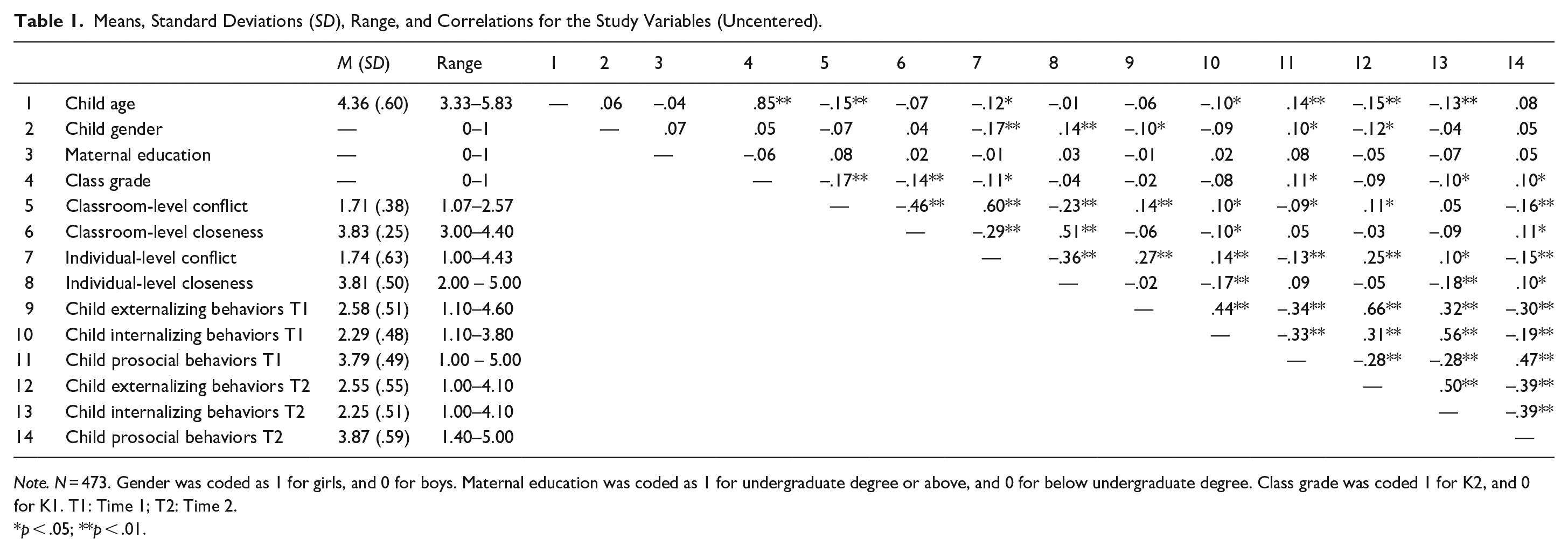
Note. N = 473. Gender was coded as 1 for girls, and 0 for boys. Maternal education was coded as 1 for undergraduate degree or above, and 0 for below undergraduate degree. Class grade was coded 1 for K2, and 0 for K1. T1: Time 1; T2: Time 2.
p < .05; **p < .01.
The ICCs revealed that child psychosocial adjustment could be attributed mainly to within-classroom differences (i.e., individual child level): Only 0.8%, 2.4%, and 1.6% of the variance was due to the between-school differences for externalizing, internalizing, and prosocial behaviors. Tables 2–4 present the unstandardized coefficients and standard errors for the main analyses. In Model 1 (random intercept models), we tested only the main effects of individual-level TCR when controlling for child gender, age, and maternal education. The variance components of random intercepts were marginally significant (ps < .10). We expected that individual-level teacher−child closeness would be associated negatively with child internalizing behaviors and positively with child prosocial behaviors, and individual-level teacher−child conflict would be associated positively with child externalizing behaviors. Results indicated that individual-level teacher−child closeness was negatively associated with internalizing behaviors (b = −.13, SE = .05, p = .01) but was not significantly associated with prosocial behaviors (b = .00, SE = .06, p = .96). However, individual-level teacher−child conflict was positively associated with externalizing behaviors (b = .12, SE = .04, p = .01). None of the other main effects of individual-level predictors reached significance, ps > .44. The inclusion of the main effects of individual-level TCR improved the explained variance in externalizing, internalizing, and prosocial behaviors by 1.14%, 1.41%, and .002%, respectively. Model 2 included the main effects of classroom-level TCR to predict child adjustment. None of the main effects of classroom-level predictors reached significance, ps > .08. The inclusion of the main effects of classroom-level TCR improved the explained variance in externalizing, internalizing, and prosocial behaviors by .07%, .13%, and 1.32%, respectively.
Individual- and Classroom-Level Conflict and Closeness Predicting Child Externalizing Behaviors at T2.
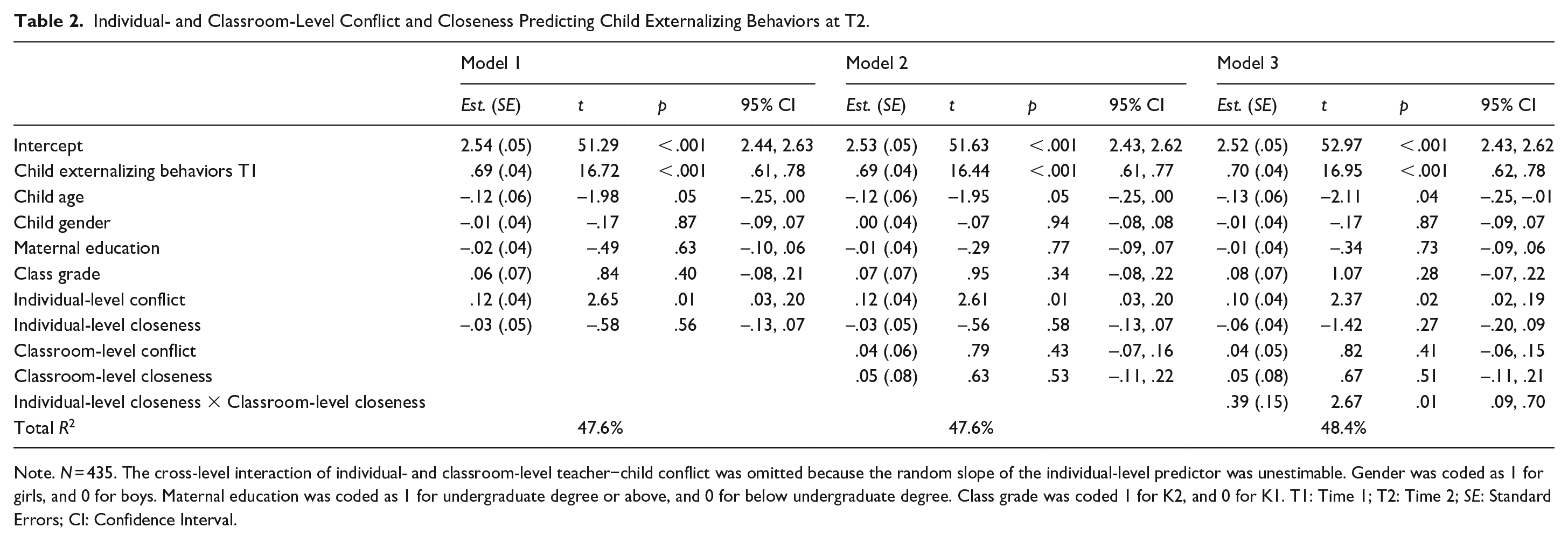
Note. N = 435. The cross-level interaction of individual- and classroom-level teacher−child conflict was omitted because the random slope of the individual-level predictor was unestimable. Gender was coded as 1 for girls, and 0 for boys. Maternal education was coded as 1 for undergraduate degree or above, and 0 for below undergraduate degree. Class grade was coded 1 for K2, and 0 for K1. T1: Time 1; T2: Time 2; SE: Standard Errors; CI: Confidence Interval.
Individual- and Classroom-Level Conflict and Closeness Predicting Child Internalizing Behaviors at T2.
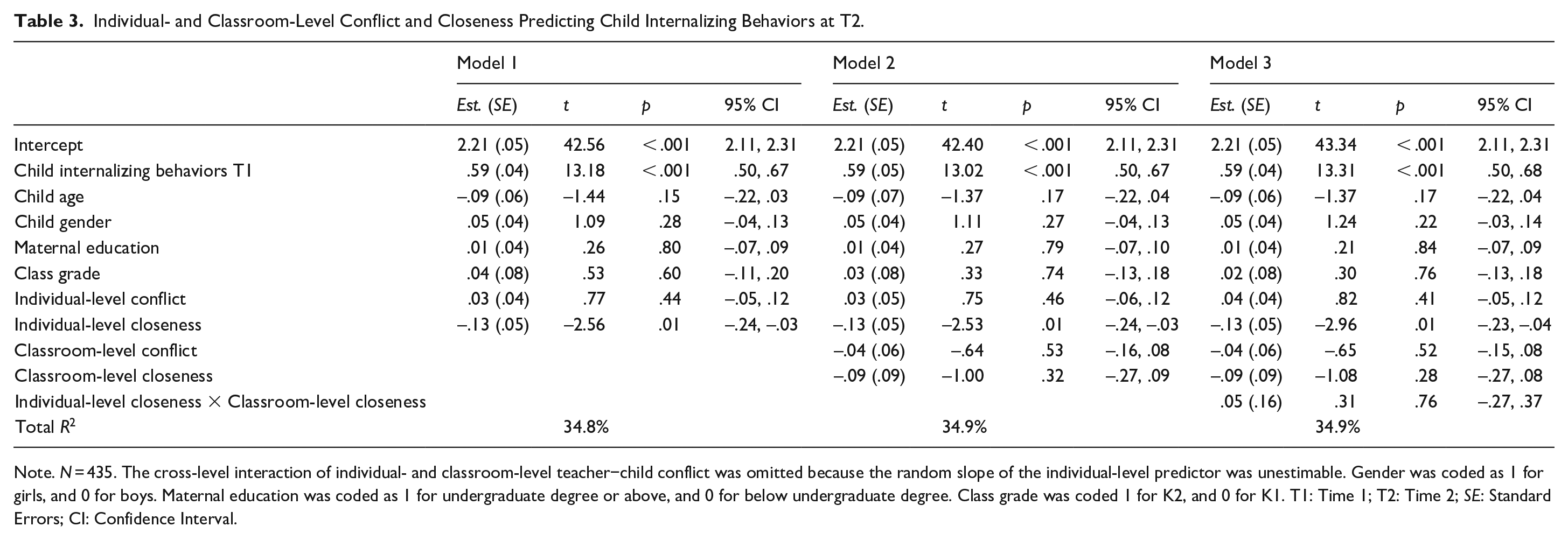
Note. N = 435. The cross-level interaction of individual- and classroom-level teacher−child conflict was omitted because the random slope of the individual-level predictor was unestimable. Gender was coded as 1 for girls, and 0 for boys. Maternal education was coded as 1 for undergraduate degree or above, and 0 for below undergraduate degree. Class grade was coded 1 for K2, and 0 for K1. T1: Time 1; T2: Time 2; SE: Standard Errors; CI: Confidence Interval.
Individual- and Classroom-Level Conflict and Closeness Predicting Child Prosocial Behaviors at T2.
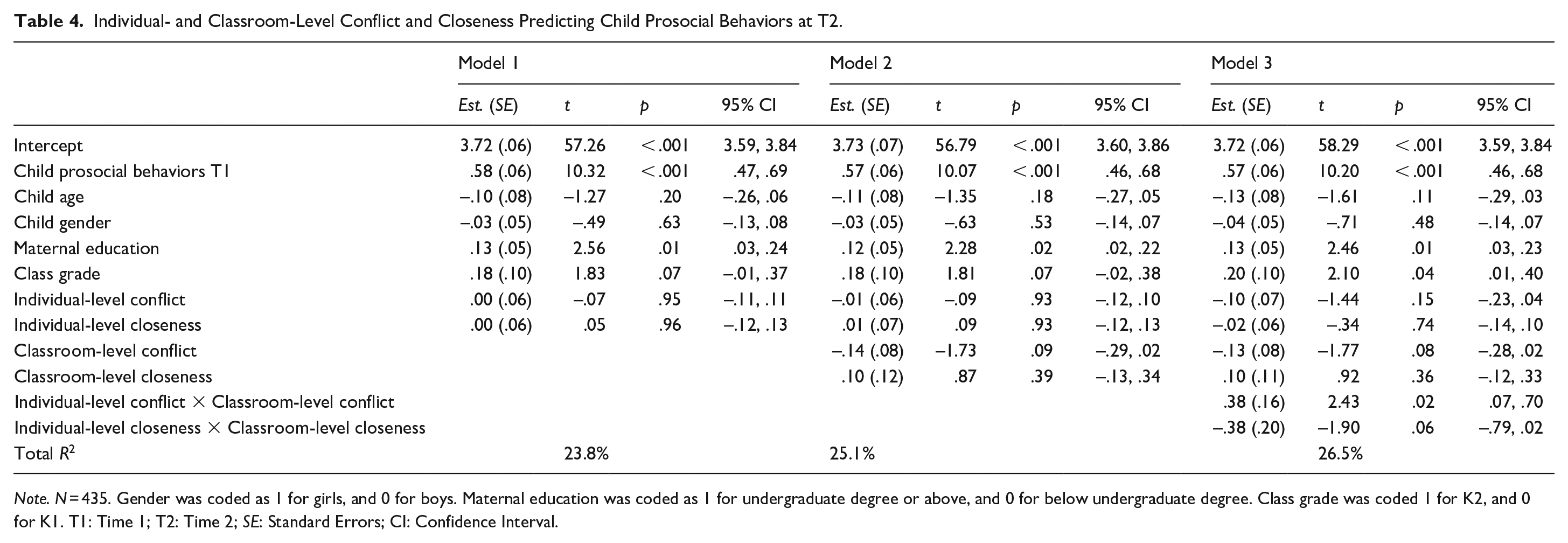
Note. N = 435. Gender was coded as 1 for girls, and 0 for boys. Maternal education was coded as 1 for undergraduate degree or above, and 0 for below undergraduate degree. Class grade was coded 1 for K2, and 0 for K1. T1: Time 1; T2: Time 2; SE: Standard Errors; CI: Confidence Interval.
Model 3 investigated the interactive roles of individual- and classroom-level TCR. We first estimated random slope models, which revealed nonsignificant differences between classrooms in the associations between individual-level teacher−child closeness and all child outcomes (Var = .008, SE = .023, p = .73 for externalizing behaviors, Var = .015, SE = .014, p = .29 for internalizing behaviors, and Var = .015, SE = .025, p = .56 for prosocial behaviors) and in the association between individual-level teacher−child conflict and child prosocial behaviors (Var = .003, SE = .022, p = .90). Adding the random slopes of individual-level teacher−child conflict led to nonconvergence for the models of child externalizing and internalizing behaviors, suggesting that the random slopes were too negligible to be estimated (Snijders & Bosker, 2012). Therefore, we examined whether classroom-level teacher−child closeness moderated the associations between individual-level teacher−child closeness and child externalizing, internalizing, and prosocial behaviors. We also investigated whether classroom-level teacher−child conflict moderated the association between individual-level teacher−child conflict and child prosocial behaviors. A significant interaction between individual- and classroom-level closeness emerged for child externalizing behaviors (b = .39, SE = .15, p = .01). As shown in Figure 1, simple slope tests indicated that the association between individual-level closeness and externalizing behaviors was negative when classroom-level teacher−child closeness was low (1 SD below the mean; b = −.16, SE = .05, p = .02); no such association was found when classroom-level teacher−child closeness was high (1 SD above the mean; b = .04, SE = .05, p = .47). A significant interaction between individual- and classroom-level conflict also emerged for child prosocial behaviors (b = .38, SE = .16, p = .02). As shown in Figure 2, simple slope tests indicated that the association between individual-level conflict and child prosocial behaviors was negative when classroom-level teacher−child conflict was low (1 SD below the mean; b = −.24, SE = .11, p = .03); no such association was observed in when classroom-level teacher−child conflict was high (1 SD above the mean; b = .05, SE = .06, p = .40). No other interactions were significant, ps > .06. The inclusion of the interaction effects improved the explained variance in externalizing, internalizing, and prosocial behaviors by 0.78%, 0.01%, and 1.42%, respectively. Overall, the models explained 48.4%, 34.9%, and 26.5% of the variance in child externalizing, internalizing, and prosocial behaviors, respectively.
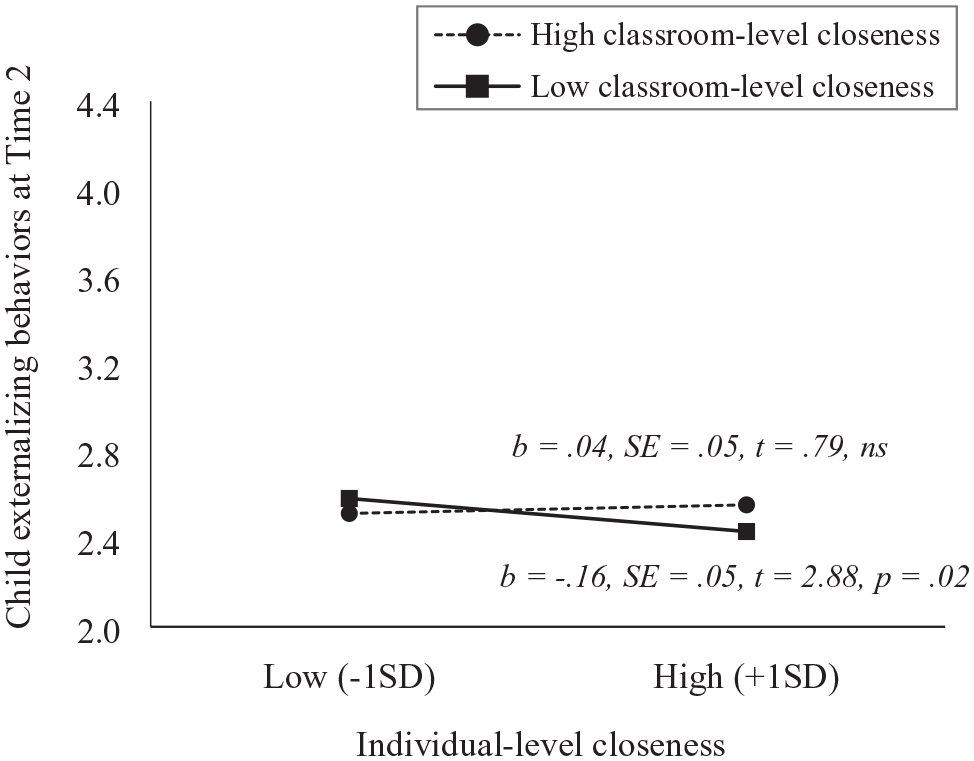
Moderating Role of Classroom-Level Teacher−Child Closeness in the Association Between Individual-Level Teacher−Child Closeness at Time 1 and Externalizing Behaviors at Time 2 (N = 435).
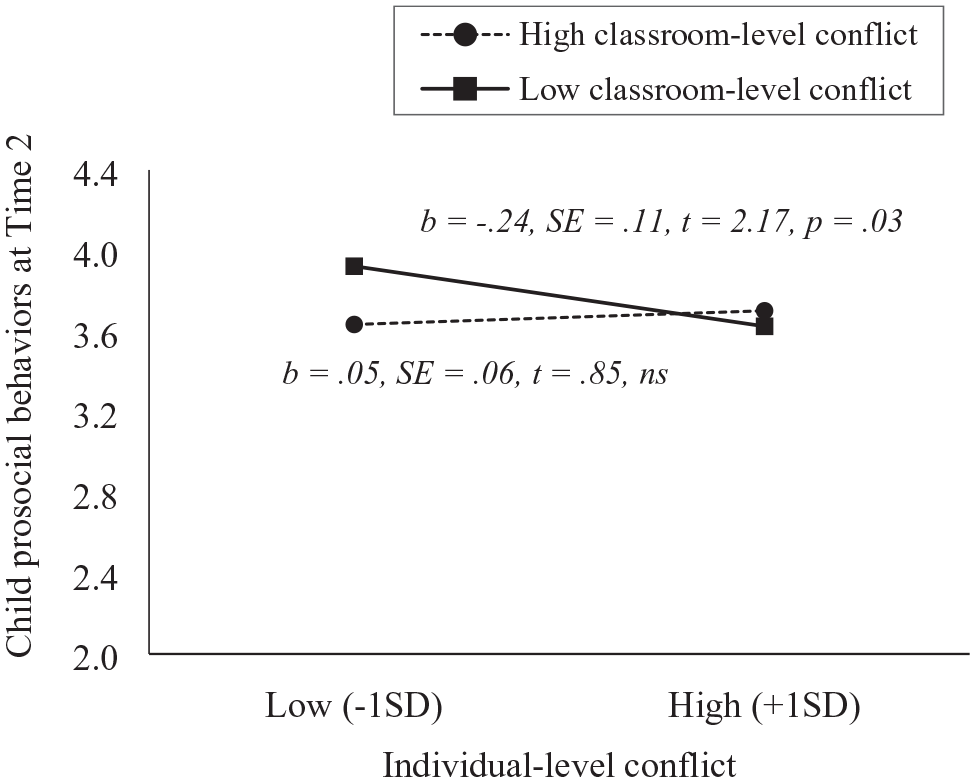
Moderating Role of Classroom-Level Teacher−Child Conflict in the Association Between Individual-Level Teacher−Child Conflict at Time 1 and Prosocial Behaviors at Time 2 (N = 435).
Discussion
Although research has investigated individual-level TCR as an important predictor of child adjustment (McGrath & Van Bergen, 2015), few studies have examined how individual- and classroom-level TCR independently and jointly predict kindergarten children’s psychosocial adjustment over time. Consistent with extant literature (McGrath & Van Bergen, 2015), findings indicated that individual-level teacher−child closeness was negatively associated with child internalizing behaviors and individual-level teacher−child conflict was positively associated with child externalizing behaviors over time. In addition, of particular interest was whether classroom-level TCR moderated the longitudinal associations of individual-level TCR with child adjustment. Findings indicated that individual-level teacher−child closeness was negatively associated with child externalizing behaviors in low-closeness classrooms (but not in high-closeness classrooms). Individual-level teacher−child conflict was negatively associated with child prosocial behaviors in low-conflict classrooms (but not in high-conflict classrooms). Despite the presence of these cross-level interaction effects, it is important to note that they are of small effect size and explain only very little variance. The main findings and their implications are discussed below.
Individual teacher−child Relationships and Child Adjustment
Our study indicated that, in general, children who had high individual-level teacher−child closeness at class entry displayed fewer internalizing behaviors one year later. In contrast, children with high individual-level teacher−child conflict exhibited more externalizing behaviors one year later. In alignment with attachment theory (Bowlby, 1973; Verschueren & Koomen, 2012), the present findings supported that individual-level TCR played a key role in child psychosocial adjustment, similar to parent−child relationships. That is, warm and supportive TCR increases children’s feelings of security, which in turn promotes their adjustment and exploration. Conflict or a lack of support in TCR leads to children’s emotional distress and maladjustment—particularly their development of internalizing and externalizing problems (Fearon et al., 2010; Rucinski et al., 2018). Contrary to our prediction, individual-level teacher−child closeness was unrelated to child prosocial behaviors. Research documenting this effect used only teacher reports on both TCR and child adjustment (Longobardi et al., 2021) or involved only a sample of children with externalizing behaviors (Roorda et al., 2014), both of which could yield a larger effect size. Hence, we speculate that this documented link could be due to shared method variance and did not remain significant while being examined with a multi-informant design.
Furthermore, although this study did not address the mechanisms underlying the links of TCR to child adjustment, several possible mechanisms may exist. Our findings indicate that individual-level teacher−child conflict may make children see themselves as unworthy and others as hostile; the negative representations of self and others may contribute to the associations reported here (Verschueren et al., 2012). In addition, children with high conflict with the teacher may be less inclined to refer to the teacher as a role model, which results in children’s limited opportunity to be socialized with emotion knowledge and regulation from their teacher (Denham et al., 2017). Future research may look into possible mechanisms that likely operate together to influence classroom social dynamics and child adjustment.
Classroom-Level teacher−child Relationships as Moderators
Guided by social referencing theory (Campos & Stenberg, 1981; Feinman, 1982), we expected that classroom-level closeness and conflict would serve as a social referent for children to interpret their relationship with their teacher. Drawing on the conformity literature (Blanton & Christie, 2003), we anticipated that individual-level closeness or conflict would be more strongly associated with child adjustment, especially in classrooms where teacher−child closeness or conflict was low. In classrooms where teacher−child closeness or conflict was high, individual-level teacher−child closeness or conflict would be less likely to be interpreted as social cues that signal individual children’s social standing and would be less impactful on their adjustment later on.
Our hypotheses are partly confirmed, as the moderating effects of classroom-level TCR emerged for only externalizing and prosocial behaviors but not internalizing behaviors. Given that TCR tends to be less exclusive than parent−child relationships, many factors can come into play while determining the centrality of attachment-behavior processes in TCR (Verschueren & Koomen, 2012). Our finding regarding the moderating role of classroom-level closeness demonstrated that, among children who established a close relationship with the teacher, the relationship might benefit them more when it was exclusive— that is, the teacher did not develop equally good relationships with other children.
Furthermore, the results showing the significant association between individual-level conflict and child prosocial behaviors in classrooms where overall conflict was low are consistent with social referencing theory and conformity literature (Blanton & Christie, 2003; Hughes et al., 2006. 2014). The findings suggested that individual-level teacher−child conflict, especially in classrooms where teacher−child conflict was uncommon, appeared to dampen their prosocial behaviors (Mikami et al., 2010). That is, children with high conflict with the teacher may have felt singled out or targeted by the teacher when most of the other classmates had little conflict with the teacher. In contrast, when the majority of students in the class experienced conflict with the teacher, the individual-level conflict appeared to matter less.
Finally, the absence of the moderating effect of classroom-level TCR on the association of individual-level TCR with internalizing behaviors suggested that the direct effect of individual-level closeness on internalizing behaviors appears stable across different classroom contexts. Another plausible explanation for the null findings may have to do with the patterns of internalizing behaviors (such as shyness or withdrawal) so that mothers may not have detected these signs. For example, children with emerging internalizing problems may not reveal their emotions or send clear messages to their parents.
Strengths, Limitations, and Future Directions
A major strength of this study lies in its multi-informant design. As our predictor variables were based on data from class teachers, and our outcome variables were based on mothers’ reports, our findings could not be attributed to shared method variance. Furthermore, since we controlled for child demographic variables and child outcomes at Time 1, neither could our results be explained by children’s inter-individual variability regarding age, gender, grade, maternal education, or the prior levels of child adjustment. Moreover, TCR was measured one year before mothers reported child adjustment at Time 2, reflecting the temporal sequence of relational predictors and child outcome variables.
The present study has several limitations. First, despite its longitudinal design, the correlational nature of this study does not allow inferences about the causality between TCR and child outcomes. The associations documented in the study can be bidirectional, as past research has established reciprocal associations between TCR and child adjustment outcomes (Doumen et al., 2008; Zatto & Hoglund, 2019). Future research may incorporate multiple assessments of the classroom- and individual-level TCR and child adjustment throughout kindergarten to obtain more detailed operationalizations of stability and change in these constructs. Second, despite our efforts to sample families from diverse backgrounds, our sample was not representative of all families with kindergarten children in Hong Kong. Future studies based on regionally representative samples of Chinese families are needed to test the generalizability of the present findings.
Third, we used the aggregated scores from individual-level teacher−child closeness and conflict as indicators of the classroom norms of closeness and conflict. Lüdtke et al. (2008) argued that aggregated scores may not be a reliable measure of the overall classroom climate if a small number of individuals are sampled from each classroom. Although classroom-level reliability was deemed acceptable in the present study, and thus, we did not estimate multiple variance components as described in Lüdtke et al. (2008), future research can further adjust for within-class heterogeneity in relation to individual-level predictors. A final limitation of the present study was its lack of peer perception measures. Despite our reliance on social referencing theory as a guiding framework, we did not measure children’s perception of their teacher’s relationships with other classmates. Future research on these questions would benefit from including peer assessment outcomes and testing whether children’s perceptions of their own and other classmates’ social standing can mediate the associations reported here.
Practical Implications
Our findings pointed to the importance of the relationships teachers develop with individual children and the entire class in shaping child psychosocial adjustment. However, the small magnitude of the interaction effects between individual- and classroom-level TCR reported here warrants caution in interpreting the results. We are not suggesting that a teacher should cultivate relationships with only her favorite students to foster their adjustment, given that many studies have documented the downsides of teacher differential behavior for peer relationships and child adjustment, such as increased peer status hierarchy (Mikami et al., 2010), and peer rejection of the favored child (Babad, 2009). For instance, Hughes et al. (2014) did not find a significant interaction between individual-level and classroom-level teacher support on peer acceptance, suggesting that the benefits of preferential teacher support may be canceled out by its drawbacks in the long run.
Our results suggest that teachers should cultivate TCR at both individual and classroom levels. At the individual level, teachers should provide students with structured opportunities to gain social standing among peers and develop more effective classroom management strategies. Intervention programs such as Playing-2-gether (Vancraeyveldt et al., 2015) based on attachment theory can help teachers identify troubled individual TCR and reduce their conflict with specific children. When teachers are equipped with proactive classroom management strategies, they are less likely to use affiliative strategies with particular children as a means to reinforce the classroom norm of appropriate behaviors (Farmer et al., 2011). At the classroom level, teachers should build an egalitarian, supportive classroom climate by, for instance, reducing the use of reprimands and increasing behavior-specific praises (Reinke et al., 2008). Intervention programs such as Classroom Check-Up (Reinke et al., 2008) can help teachers examine classroom ecology and implement effective class-wide classroom management strategies for fostering child adjustment.
Conclusion
In conclusion, our findings contributed to the literature by identifying individual-level TCR as an important factor in understanding child psychosocial adjustment, highlighting the significance of establishing warm, supportive TCR in kindergartens. Our findings further demonstrated that the associations between individual-level TCR and child psychosocial adjustment may be better understood by considering classroom-level TCR as a contextual factor. Consistent with social referencing theory, social cues conveyed in individual-level TCR may be interpreted differently by children depending on the overall classroom relational quality the teacher creates. Comparison of one’s own teacher−child relationship to the classroom relational norm informs children of their social standing in the class, thereby shaping their psychosocial adjustment over time. If teachers are better aware of this, they can deliberately adjust their daily interactions with individual students and with the class as a whole. Future research may build on these findings in investigating individual- and classroom-level TCR as interactive predictors for child adjustment.
Footnotes
Acknowledgements
We thanked the project officers, research assistants, and student helpers for their help in conducting this study, and the participating kindergartens, teachers, and families for their time and insights about child development.
Declaration of Conflicting Interests
The author(s) declared no potential conflicts of interest with respect to the research, authorship, and/or publication of this article.
Funding
The author(s) disclosed receipt of the following financial support for the research, authorship, and/or publication of this article: This study was funded by grants from the Research Grants Council of the Hong Kong Special Administrative Region, China (GRF:18620022) to Dr. Lam Chun Bun and (GRF:18603520) to Dr. Chung Kevin Kien Hoa, as well as Simon K. Y. Lee Foundation to Dr. Chung Kevin Kien Hoa.
