




Abstract
For ethnoracially minoritized and immigrant youth, identity formation involves efforts to integrate social identities that are derived from their ethnic-racial group memberships (i.e., ethnic-racial identity) and their connection to the country in which they reside (i.e., national identity). This study investigated the extent to which these two social identities were simultaneously associated with adolescents’ psychosocial adjustment via their associations with the integration of these identities (i.e., bicultural identity integration) and across adolescents’ identity domains (i.e., global identity coherence). This cross-sectional study (January 2020) included a US ethnoracially diverse sample of 355 adolescents (Mage = 15.95 years; SD = 0.79; 50.4% female; 40.6% Latino/a/x, 29.0% White, 13.2% Black, 8.2% Asian, 7.0% other; 76.1% US-born; 76.9% had at least one foreign-born parent) who completed online surveys in class. Structural equation path analyses with bias-corrected bootstrapping were conducted to test a theoretical sequential mediation model of identity and adjustment. Findings indicated that national American identity explained significant variance in adolescent psychosocial adjustment (i.e., higher academic engagement and self-esteem) via its unique associations with bicultural identity integration and global identity coherence. Furthermore, sensitivity analyses revealed some support for alternate models suggesting that the examined identity constructs may work in tandem with one another to inform adolescent psychosocial adjustment. This study highlights the multifaceted nature of social identity development and provides preliminary evidence regarding how the simultaneous development of adolescents’ ethnic-racial and national identities informs their psychosocial adjustment.
Keywords
Identity formation involves the integration of one’s identity across multiple domains, including one’s social identities (Erikson, 1968). Developing a clear, cohesive sense of self promotes youth psychosocial adjustment (Phinney et al., 1997; Umaña-Taylor et al., 2014). For ethnoracially minoritized and immigrant youth, identity formation involves integrating social identities that are derived from ethnic-racial group memberships (i.e., ethnic-racial identity) and individuals’ connection to the country in which they reside (i.e., national identity; Knight et al., 2018). For these youth, the development and integration of ethnic-racial and national social identities is a salient task (Safa et al., 2022)—a task positively associated with psychosocial adjustment when youth engage in clarifying processes to resolve tensions across these identities (Firat & Noels, 2022; Yampolsky et al., 2016). However, the processes or mechanisms via which these two social identities develop and simultaneously inform adjustment are understudied (Amiot et al., 2007; Ward et al., 2018).
Consistent with recent calls to explore the associations between multiple social identities and youths’ overall sense of self (Crocetti et al., 2018), this study builds upon existing theoretical frameworks to test a model of bicultural identity (BI) development. The integration of ethnic-racial and national social identities, or bicultural identity integration, is theorized to involve two main processes capturing the degree to which youth blend (i.e., blendedness) or keep their identities separate (i.e., compartmentalization) and the extent to which they resolve (i.e., harmony) or perceive tensions across their identities (i.e., conflict; Benet-Martínez, & Haritatos, 2005; Huynh et al., 2018). The cognitive-developmental model of social identity integration suggests a developmental progression in which youth initially evaluate whether a given identity is a part of their overall sense of self, or their global identity (i.e., categorization). Next, they acknowledge the multiplicity of their identities while keeping them separate (i.e., compartmentalization) until they can build linkages and resolve conflicts across these identities (i.e., integration; Amiot et al., 2007; Yampolsky et al., 2016). Considering its dynamic nature, youth achieve BI integration either by choosing elements of both identities and blending them (i.e., hybridizing) or by shifting their identities to fit particular social contexts (i.e., alternating; Ward et al., 2018). Finally, the BI orientations model incorporates ideas from prior frameworks and identifies five components: monoculturalism indicating identification with only one cultural system, conflict reflecting perceived incompatibility between identities, complementarity indicating compatibility between identities, hybridity referring to blending of identities, and alternation indicating contextual switching of identities (Comănaru et al., 2018). Together, these frameworks suggest that bicultural or multicultural identity integration requires youth identification with multiple identities, the ability to resolve conflicts across their identities, and strategies to blend their identities and respond to contextual cues.
We also draw from Erikson’s (1968) theoretical notions postulating that resolution or clarity of identity domains leads to a more integrated overall sense of self or to global identity coherence, which promotes positive psychosocial adjustment. This study bridges these theoretical works by underscoring that youth need to recognize their multiple identities, and that clarity regarding their identities informs the integration across identities (i.e., global identity) and, consequently, their adjustment. Particularly, we argue that for immigrant and ethnoracially minoritized youth, BI integration serves as a key intervening mechanism (Figure 1). Consistent with recent conceptualizations (Comănaru et al., 2017), we focus on four separate components of BI integration reflecting its main processes: blendedness, compartmentalization, harmony, and conflict.
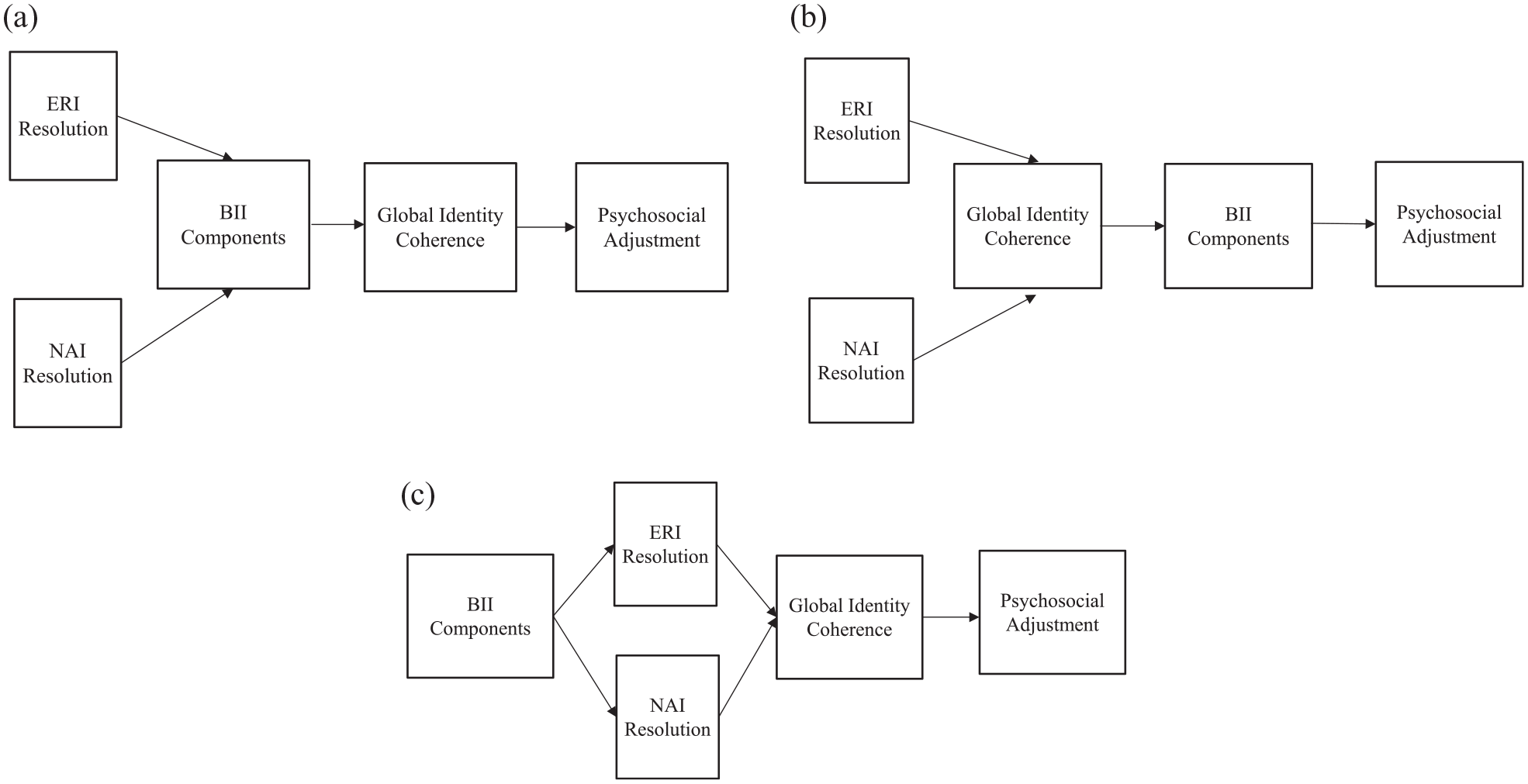
Conceptual Models: (a) Hyphothesized Model, (b) Alternate Model 1, and (c) Alternate Model 2. ERI: ethnic-racial identity; NAI: national American identity; BII: bicultural identity integration.
In addition to the strong theoretical support for the proposed model described above, empirical work has supported the hypothesized associations. First, prior work has found the positive association between ethnic-racial identity (ERI) resolution and psychosocial adjustment to be mediated by global identity coherence in a US ethnoracially diverse adolescent sample (Umaña-Taylor et al., 2018). Furthermore, ERI and national American identity (NAI) were positively associated with adolescent adjustment via higher global identity coherence in a US Latino/a/x adolescent sample (Safa et al., 2022). However, these studies did not examine the extent to which BI integration informed adolescents’ global identity coherence and adjustment.
Although prior work has revealed that higher levels of ERI and NAI were associated with greater BI integration among US Latino/a/x adolescents (Schwartz et al., 2015) and in an ethnoracially diverse sample of college students (Huynh et al., 2018), we have yet to understand whether BI integration is associated with global identity coherence, and whether it is through this association that it is linked with adjustment. Theoretical work supports this mechanism, as BI integration is believed to reflect two main processes involving the synthesis of (i.e., blendedness vs. compartmentalization) and the search for sources of compatibility among (i.e., harmony vs. conflict) one’s ethnic-racial and national identities (Benet-Martínez & Haritatos, 2005). These processes of synthesis and search are consistent with Erikson’s (1968) notions of global identity synthesis, which he posited as necessary for adaptive functioning. Therefore, it follows that BI integration, particularly the synthesis and compatibility that youth develop across their ERI and NAI, inform how these identities get integrated into youth global identity (Amiot et al., 2007). Furthermore, empirical work found that the positive association between BI integration (i.e., hybrid or blended) and psychosocial adjustment was explained via higher cultural identity consolidation (i.e., commitment and synthesis) among Chinese and Greek adults in New Zealand and Arab Palestinian adults in Israel (Ward et al., 2018). Although global identity coherence was not examined, findings provide evidence for the importance of BI integration for the synthesis of other parts of one’s identity. Based on this strong theoretical and empirical evidence, we argue that the mechanism by which ERI and NAI may be associated with youths’ positive psychosocial adjustment is through increased BI integration and, in turn, greater global identity coherence.
This study investigated a theoretical model of BI development among US ethnoracially minoritized and immigrant adolescents, with BI integration as a key mediation mechanism explaining the links between adolescents’ ERI and NAI with their global identity coherence and adjustment (Figure 1). We hypothesized that higher ERI and NAI resolution would be associated with higher BI integration (i.e., higher blendedness and harmony; lower compartmentalization and conflict) and, in turn, with greater global identity coherence, which would be associated with better psychosocial adjustment (i.e., higher academic engagement and self-esteem).
Given the nascent literature on BI development (Firat & Noels, 2022) and the dynamic nature of BI integration (Ward et al., 2018), we also examined two alternate models (Figure 1). Building on prior research suggesting that having a more coherent overall sense of self may help youth easily integrate other identities (Amiot & Jaspal, 2014), we tested a model in which BI integration was specified as the second mediator and explored whether higher global identity coherence would be associated with greater BI integration (Alternate Model 1). Because previous work indicates that clarification and integration of identities inform one another (Meca et al., 2017), we tested another model in which BI integration was specified as the predictor and explored whether higher BI integration would be associated with greater ERI and NAI resolution (Alternate model 2). Models were tested among youth with bicultural experiences, or those who have been exposed to at least two cultural systems (Benet-Martínez et al., 2021). There are different ways in which US youth can be exposed to multiple cultural systems, including recent history of immigration (e.g., youth or parents are foreign-born; Benet-Martínez et al., 2021); exposure to a language other than English at home, given the strong connection between language and culture (Ji et al., 2004); belonging to multiple ethnoracial groups and associated cultural systems (Sanchez et al., 2014); and identifying with an ethnic-racial group other than White, given that whiteness is equated with the American culture (Bonilla-Silva, 2012).
Method
Participants and Procedure
Data were from a cross-sectional study conducted in January 2020 of 413 adolescents in an ethnoracially diverse US Northeastern high school. Adolescents with bicultural experiences as defined above were included, resulting in an analytical sample of 355 adolescents (Mage = 15.95 years; SD = 0.79; range = 15–18). Participants’ ethnic-racial identification included Latino/a/x or Hispanic (40.6%), White (29.0%), Black (13.2%), Asian (8.2%), and other (e.g., Arab, Native American; 7.0%). Most participants had at least one foreign-born parent (76.9%), were US born (76.1%), spoke a language other than English at home (69.3%), and self-identified as bicultural (63.9%). White participants were included if they were foreign-born (25.5%), had at least one foreign-born parent (72.3%), spoke a language other than English at home (53.2%), or self-identified as multiracial (19.1%) or bicultural (61.7%). Furthermore, participants were in the 10th (56.9%) or 11th (42.3%) grade; 50.4% self-identified as female, 48.5% as male, and 1.1% as another gender identity label.
Regarding parental education, participants reported their mothers had less than a high school degree (22.5%), at least a high school education or equivalent (16.3%), some college (13.0%), a degree from a 2- or a 4-year institution (20.6%), or a master’s or professional degree (14.1%). Some participants did not know (12.4%) or did not report their mothers’ educational attainment (1.1%). Participants reported their fathers had less than a high school degree (22.3%), at least a high school education or equivalent (21.4%), some college (9.0%), a degree from a 2- or a 4-year institution (15.8%), or a master’s or professional degree (13.5%). Some participants did not know (16.6%) or did not report their fathers’ educational attainment (1.4%). Data were collected during class via online surveys that took approximately 30 min. All 10th- and 11th-grade students were eligible to participate and were provided with electronic student assent forms unless their parent/guardian had returned an opt-out form and/or students were not present during data collection. Of all eligible students, 70% completed the survey. Participants completed the survey in English and were entered into a raffle to win a $20 gift card. All procedures were approved by the Harvard University Institutional Review Board [IRB19-1528] and the school district.
Measures
ERI and NAI Resolution
Adolescents’ ERI resolution (e.g., “I am clear about what my ethnicity/race means to me”) was assessed with the 3-item resolution subscale from The Ethnic Identity Scale—Brief (EIS-B; Douglass, & Umaña-Taylor, 2015). The scale has demonstrated adequate reliability and support for its validity has emerged in prior work with a US ethnoracially diverse sample of adolescents (Umaña-Taylor et al., 2018). Adolescents’ NAI resolution was assessed with an adapted version of the EIS-B resolution subscale. Specifically, ethnicity-race was replaced with American (e.g., “I am clear about what being American means to me”). Responses ranged from 1 (does not describe me at all) to 4 (describes me very well). Mean scores were calculated with higher scores indicating greater ERI and NAI resolution, respectively (see Table 1 for alphas).
Correlations and Descriptive Statistics of Study Variables.
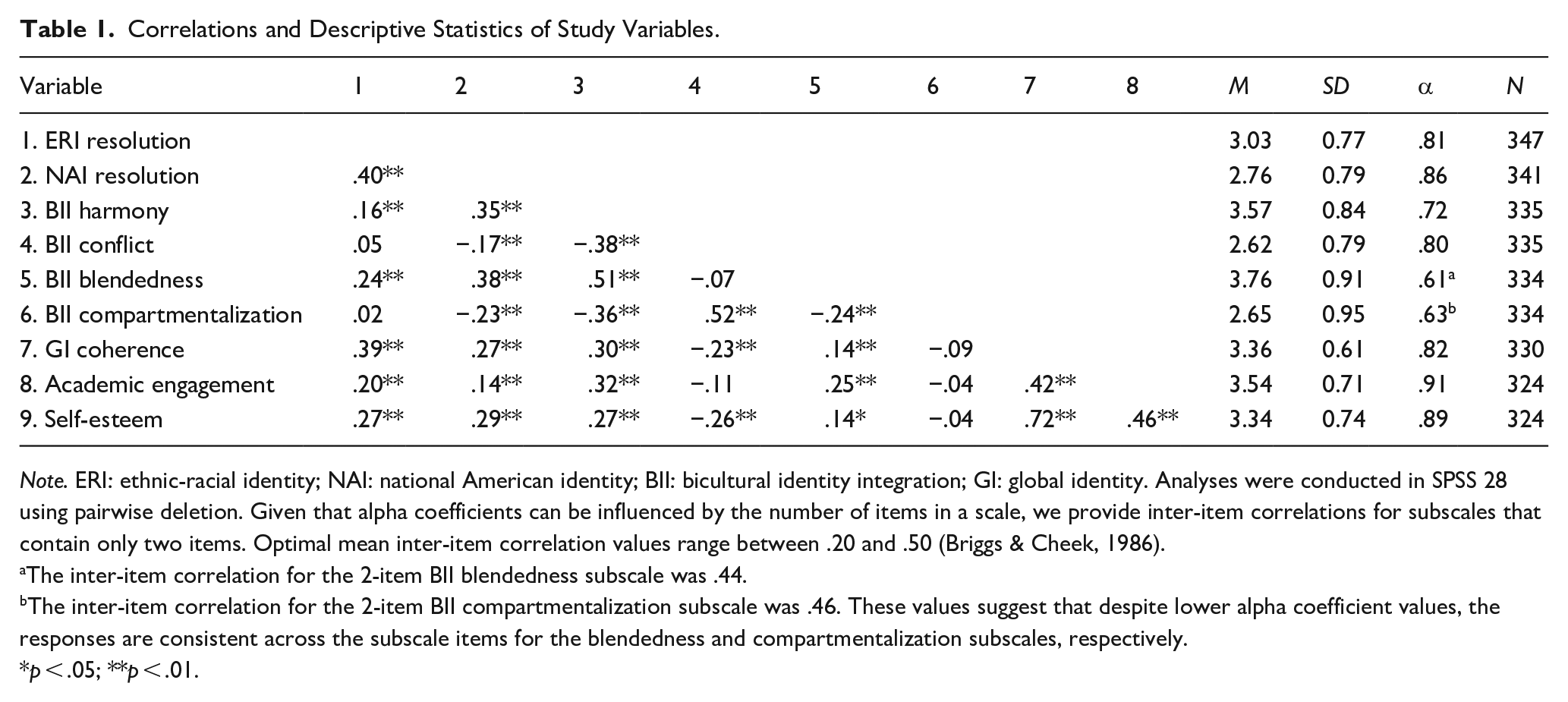
Note. ERI: ethnic-racial identity; NAI: national American identity; BII: bicultural identity integration; GI: global identity. Analyses were conducted in SPSS 28 using pairwise deletion. Given that alpha coefficients can be influenced by the number of items in a scale, we provide inter-item correlations for subscales that contain only two items. Optimal mean inter-item correlation values range between .20 and .50 (Briggs & Cheek, 1986).
The inter-item correlation for the 2-item BII blendedness subscale was .44.
The inter-item correlation for the 2-item BII compartmentalization subscale was .46. These values suggest that despite lower alpha coefficient values, the responses are consistent across the subscale items for the blendedness and compartmentalization subscales, respectively.
p < .05; **p < .01.
Bicultural Identity Integration
Adolescents reported on the cultural, ethnic, or racial group that they felt most a part of and completed the 12-item Bicultural Identity Integration Scale for Adolescents (BIIS-A; Safa et al., under review), which is an adaptation of the Bicultural Identity Integration Scale–2 (Huynh et al., 2018). The BIIS-A includes items assessing harmony (three items; for example, “I find it easy to balance both _________ and American cultures”); conflict (five items; for example, “I feel that _________ and American cultures are not compatible”); blendedness (two items; for example, “I feel ________ and American at the same time”); and compartmentalization (two items; for example, “I keep _________ and American cultures separate”). Responses ranged from 1 (strongly disagree) to 5 (strongly agree). Consistent with recent theoretical conceptualizations (e.g., Comănaru et al., 2017) and prior psychometric work (e.g., Szabó et al., 2020), a mean score was calculated for each subscale, with higher scores indicating greater harmony, conflict, blendedness, and compartmentalization. The four subscales have demonstrated adequate reliability and support for their validity (e.g., factor structure, convergent validity) has emerged in prior work with ethnoracially diverse samples of US adolescents (Safa et al., under review).
Global Identity Coherence
Adolescents’ global identity coherence was assessed with the 12-item Erikson Psychosocial Stage Inventory (Rosenthal et al., 1981), including synthesis (e.g., “I’ve got a clear idea of what I want to be”) and confusion (e.g., “I don’t really know who I am”) subscales. Responses ranged from 1 (strongly disagree) to 5 (strongly agree). After reverse scoring the confusion subscale items, an overall mean score was calculated, with higher scores indicating greater coherence. The scale has demonstrated adequate reliability and support for its validity has emerged in prior work with an ethnoracially diverse US adolescent sample (Umaña-Taylor et al., 2018).
Academic Engagement
Adolescents’ academic engagement was assessed using the academic engagement subscales of the Engagement Versus Disaffection With Learning Scale (Skinner et al., 2009), including behavioral (six items; “I try hard to do well in school”) and emotional subscales (four items; “When I am in class, I feel good”). Responses ranged from 0 (never) to 4 (all the time). A mean score was calculated across subscales and higher scores indicated greater overall academic engagement. The scale has demonstrated adequate reliability and support for its validity has emerged in prior work with an ethnoracially diverse US adolescent sample (Umaña-Taylor et al., 2018). In the current sample, the one-factor model fit the data adequately: Model fit: χ2 (31) = 208.744, p < .001; comparative fit index (CFI) = .913; root mean square error of approximation (RMSEA) = .132, 90% confidence interval (CI) = [.116, .150]; standardized root mean square residual (SRMR) = .058; and all factor loadings were statistically significant (p < .001). Of note, residual covariances between four sets of items were estimated to improve model fit.
Self-Esteem
Adolescents’ self-esteem was assessed using the Rosenberg Self-Esteem Scale (10 items; “On the whole I am satisfied with myself”; Rosenberg, 1979). Responses ranged from 1 (strongly disagree) to 5 (strongly agree). A mean score was computed, with higher scores indicating higher self-esteem. The scale has demonstrated adequate reliability and support for its validity has emerged in prior work with an ethnoracially diverse US adolescent sample (Umaña-Taylor et al., 2018).
Covariates
Adolescents reported on relevant demographic information including grade (0 = 10th; 1 = 11th), gender (0 = female or other; 1 = male), ethnic-racial background (coded using a series of dummy codes), and whether they identified as a bicultural person (0 = self-identifies as bicultural; 1 = does not self-identify as bicultural). They also reported their parents’ country of birth, which was used to code immigrant family status (i.e., 0 = at least one foreign-born parent and 1 = no foreign-born parent).
Analytic Strategy
Consistent with the theorized model of BI development, we fit a chain sequential mediation model (Figure 2) controlling for grade, gender, ethnic-racial background, immigrant family status, and bicultural self-identification. Detailed information on measurement models and psychometric properties of the BIIS-A is reported elsewhere providing support for the validity and reliability of the measure (Safa et al., under review). We tested structural models with observed variables because these models are more parsimonious (i.e., require estimation of fewer parameters), which is particularly important given the current study’s sample size. The recommended sample-size-to-parameters ratio is 10 participants per 1 parameter (Kline, 2016). Our models estimated 48 parameters; thus, our analyses were slightly underpowered given our sample size of 355, which provided 7 participants per estimated path. A bias-corrected bootstrap mediation path model with 10,000 bootstrap sample draws was tested in Mplus 8.8 (Muthén & Muthén, 1998–2022) to obtain unbiased confidence intervals for the indirect effects (MacKinnon et al., 2004). Missing data were handled using full information maximum likelihood (Arbuckle, 1996). Good model fit was determined by a non-significant chi-square test, CFI values greater than or equal to .95, and RMSEA and SRMR values less than or equal to .05 (Hu & Bentler, 1999). Sensitivity analyses explored alternate models.
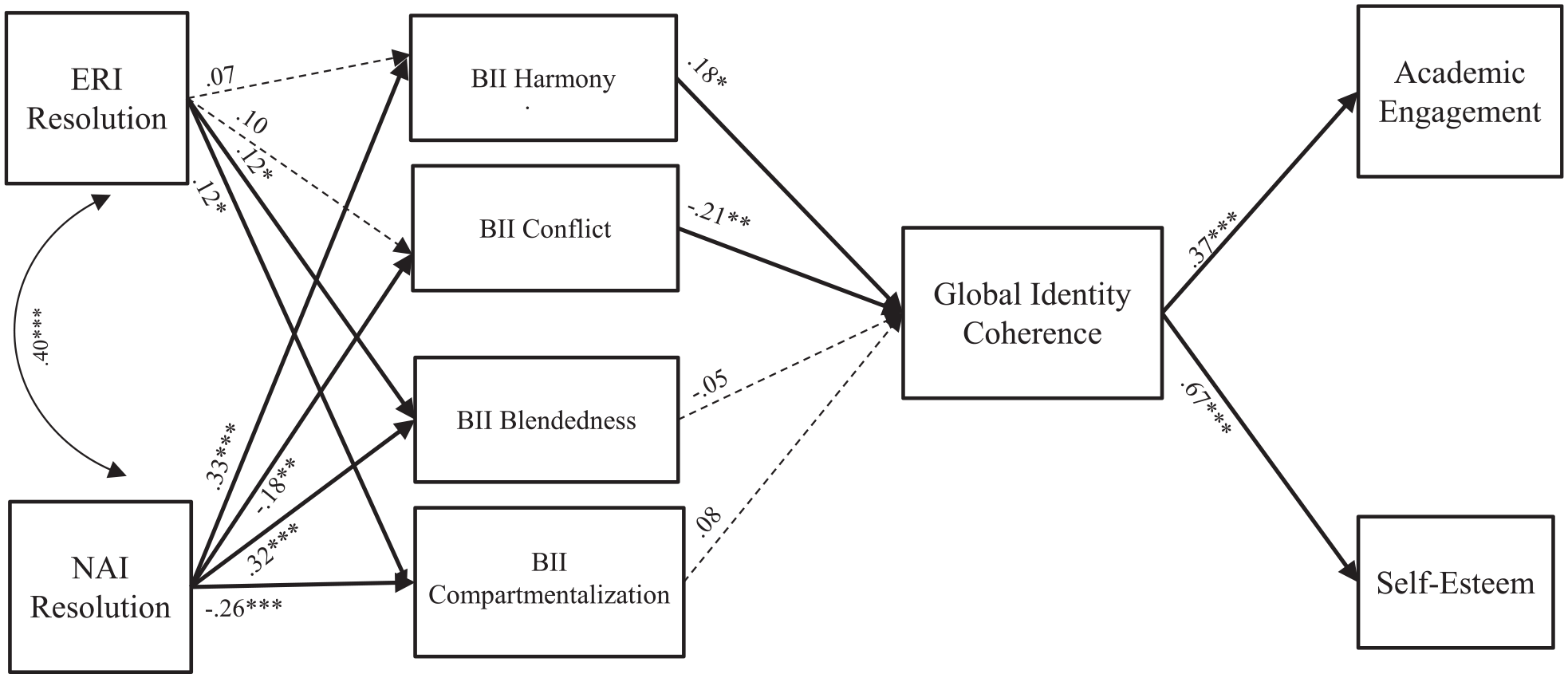
Hypothesized Model Examining Associations Between ERI and NAI With Adolescent Adjustment via BII Components and Global Identity Coherence (N = 355). ERI: ethnic-racial identity; NAI: national American identity; BII: bicultural identity integration. Standardized coefficients reported (STDYX in Mplus). Grade, gender, ethnic-racial background, immigrant family status, and bicultural self-identification were included as covariates of endogenous variables. Solid lines represent significant paths. Dashed lines represent non-significant paths (p > .05). Model fit: χ2 (1) = .74, p = .390; CFI = 1.00; RMSEA = .00; 90% CI [.000, .133]; SRMR = .01.
Results
Correlations and descriptive statistics are shown in Table 1. The fit of the hypothesized chain sequential mediation model was good (Figure 2). The model accounted for 25% and 55% of the variance in academic engagement (p < .001) and self-esteem (p < .001), respectively. Greater NAI resolution was associated with higher BI integration harmony and lower BI integration conflict, which were each associated with greater global identity coherence; which in turn was associated with better adjustment (i.e., higher academic engagement and self-esteem; Table 2).
Results of Hypothesis Testing for Indirect Effects (N = 335).
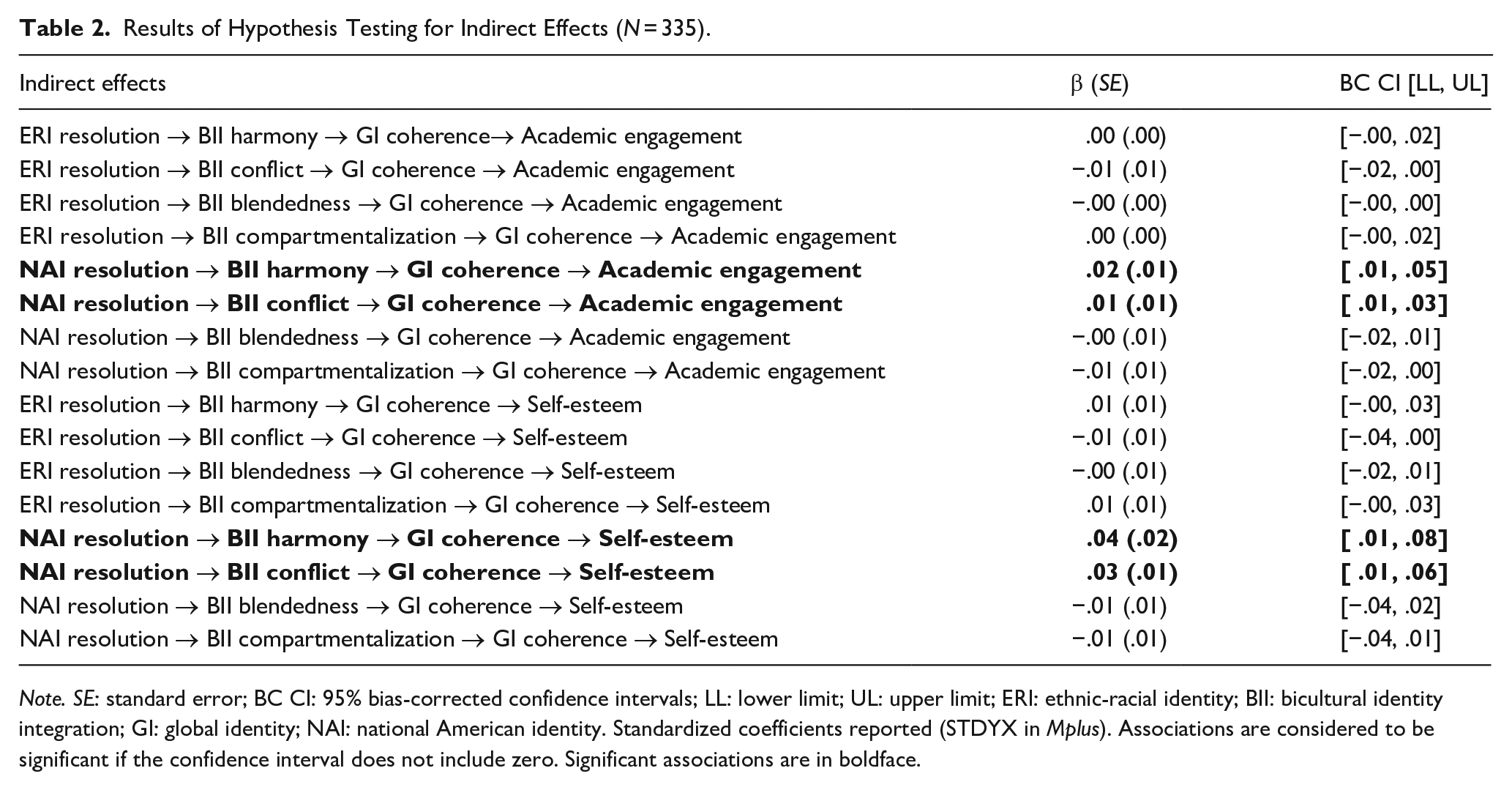
Note. SE: standard error; BC CI: 95% bias-corrected confidence intervals; LL: lower limit; UL: upper limit; ERI: ethnic-racial identity; BII: bicultural identity integration; GI: global identity; NAI: national American identity. Standardized coefficients reported (STDYX in Mplus). Associations are considered to be significant if the confidence interval does not include zero. Significant associations are in boldface.
Alternate Model 1 described a process whereby greater ERI resolution was associated with higher global identity coherence, which was associated with greater BI integration harmony and, in turn, higher academic engagement (Figure 3). Moreover, greater ERI resolution was associated with higher global identity coherence, which was associated with lower BI integration conflict and, in turn, higher self-esteem (Table 3). Finally, Alternate Model 2 described a process whereby greater BI integration blendedness was associated with higher ERI resolution, which was associated with greater global identity coherence and, in turn, with better adjustment (i.e., higher academic engagement and self-esteem; Figure 4; Table 4). Given that our sample-size-to-parameters ratio was slightly below the recommended guideline (i.e., 7 participants rather than 10 per 1 parameter), findings from these models should be interpreted with caution.
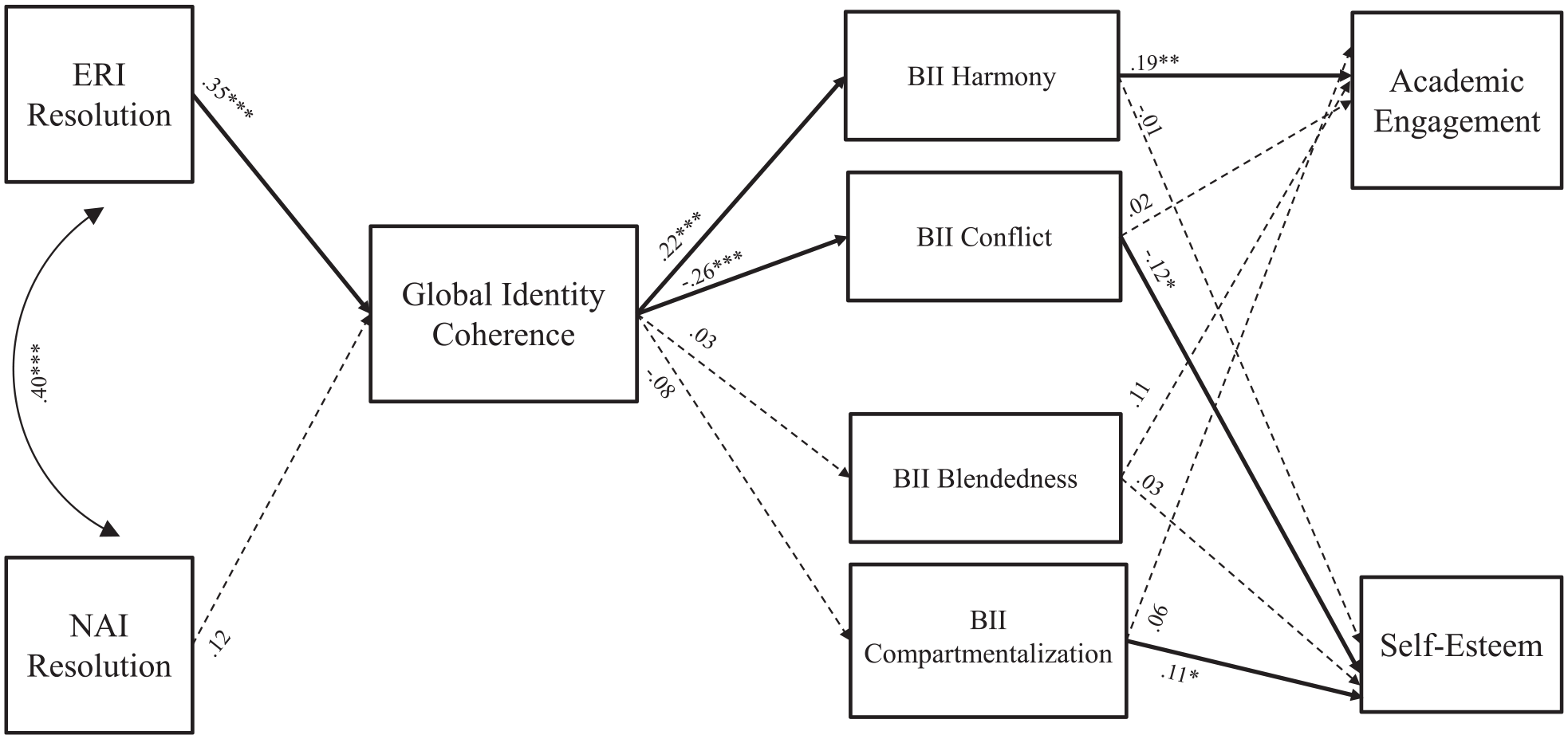
Alternate Model 1 Examining Associations Between ERI and NAI With Adolescent Adjustment via Global Identity Coherence and BII Components (N = 335). ERI: ethnic-racial identity; NAI: national American identity; BII: bicultural identity integration. Standardized coefficients reported (STDYX in Mplus). Grade, gender, ethnic-racial background, immigrant family status, and bicultural self-identification were included as covariates of endogenous variables. Solid lines represent significant paths. Dashed lines represent non-significant paths (p > .05). Model fit: χ2 (1) = .53, p = .467; CFI = 1.00; RMSEA = .00; 90% CI [.000, .125]; SRMR = .01.
Summary of Indirect Effect Coefficients for Alternate Model 1 (N = 335).
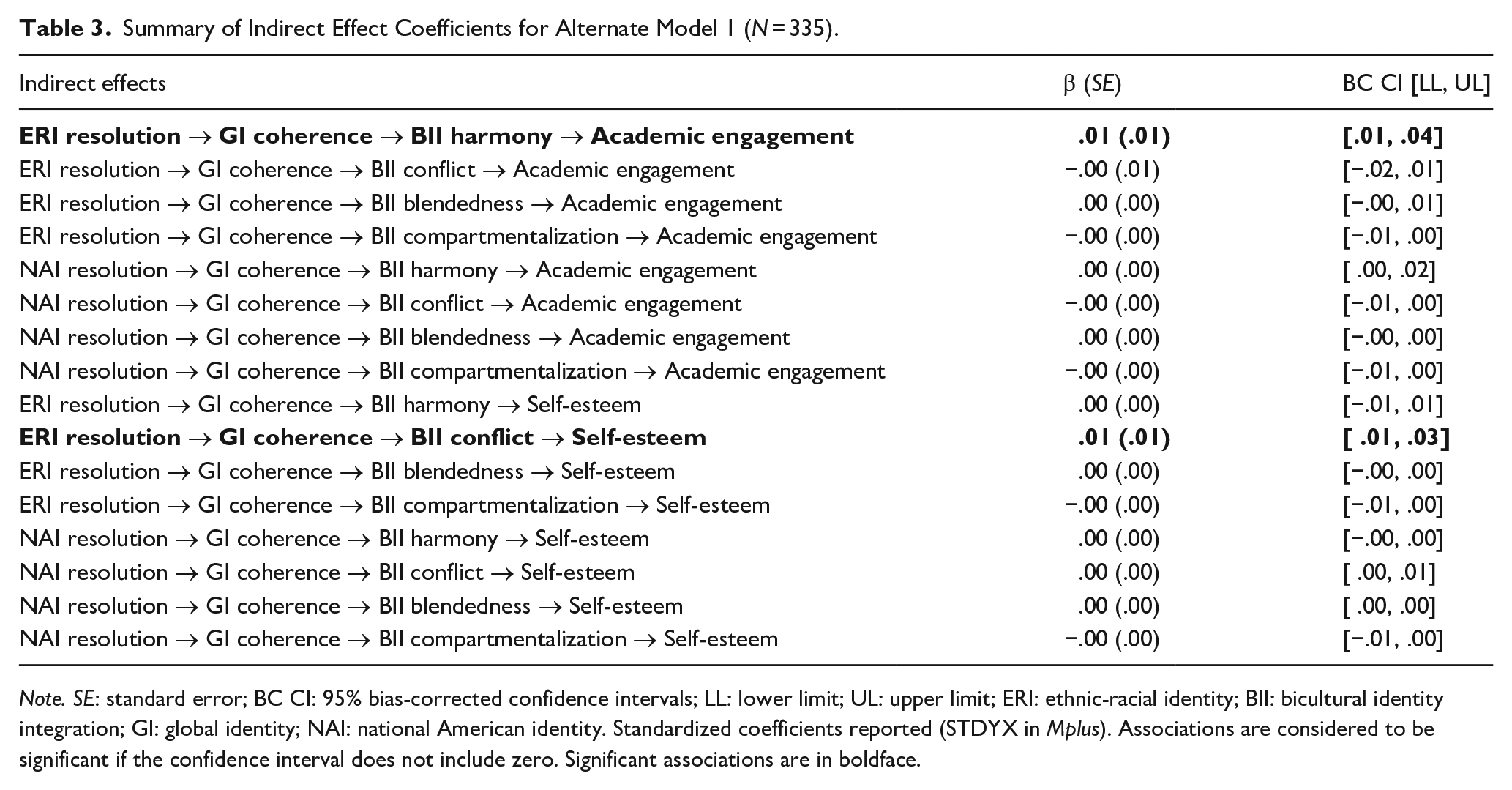
Note. SE: standard error; BC CI: 95% bias-corrected confidence intervals; LL: lower limit; UL: upper limit; ERI: ethnic-racial identity; BII: bicultural identity integration; GI: global identity; NAI: national American identity. Standardized coefficients reported (STDYX in Mplus). Associations are considered to be significant if the confidence interval does not include zero. Significant associations are in boldface.
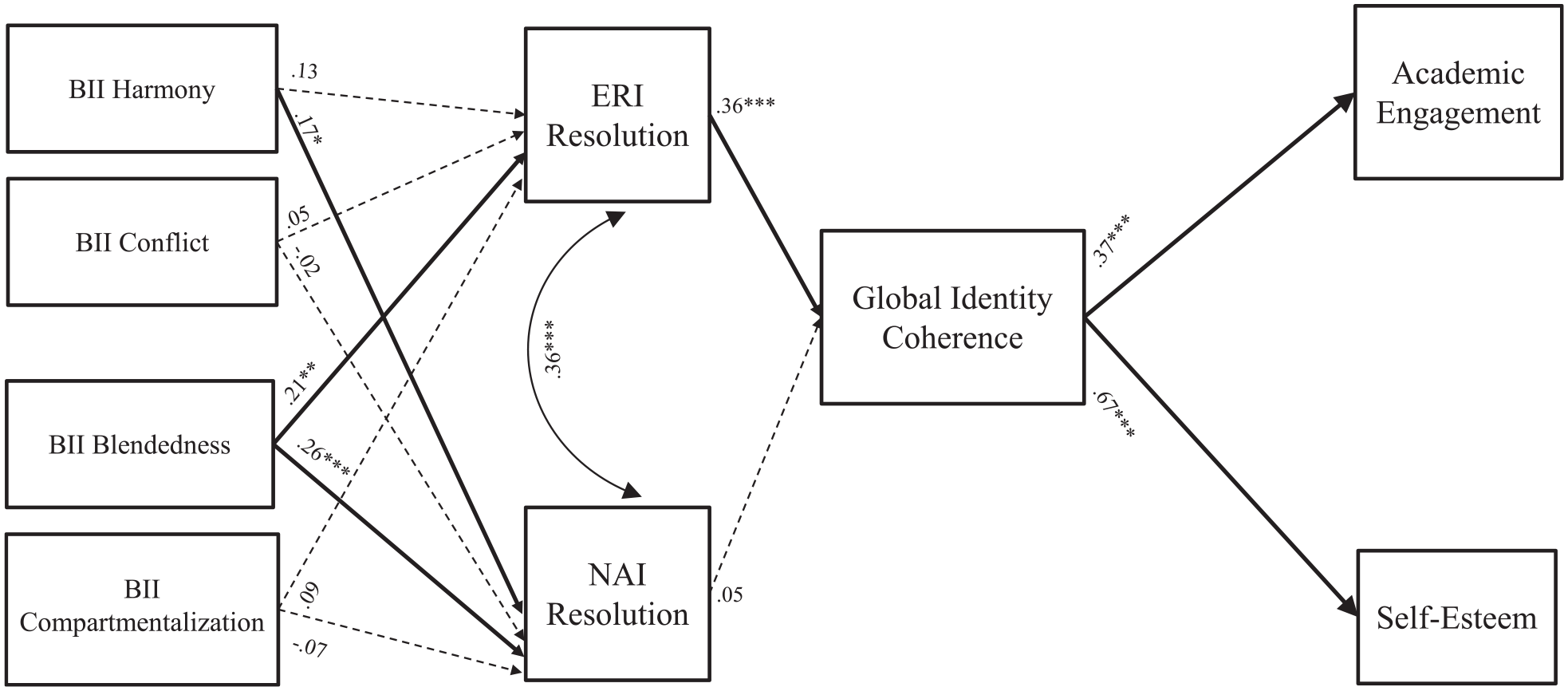
Alternate Model 2 Examining Associations Between BII Components With Adolescent Adjustment via ERI and NAI and Global Identity Coherence (N = 335). ERI: ethnic-racial identity; NAI: national American identity; BII: bicultural identity integration. Standardized coefficients reported (STDYX in Mplus). Grade, gender, ethnic-racial background, immigrant family status, and bicultural self-identification were included as covariates of endogenous variables. Solid lines represent significant paths. Dashed lines represent non-significant paths (p > .05). Model fit: χ2 (1) = 1.71, p = .19; CFI = .99; RMSEA = .04; 90% CI [.000, .157]; SRMR = .01.
Summary of Indirect Effect Coefficients for Alternate Model 2 (N = 335).
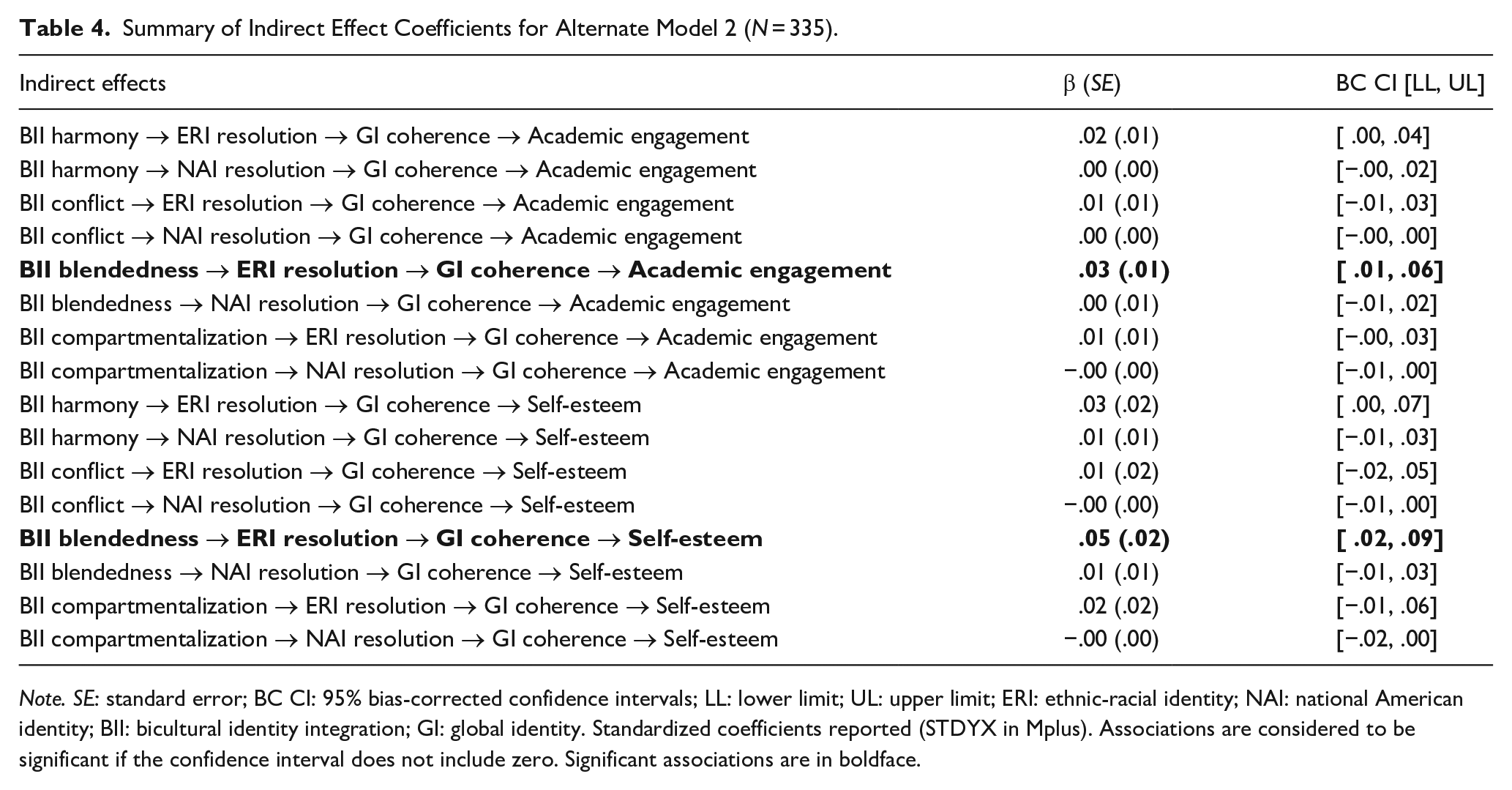
Note. SE: standard error; BC CI: 95% bias-corrected confidence intervals; LL: lower limit; UL: upper limit; ERI: ethnic-racial identity; NAI: national American identity; BII: bicultural identity integration; GI: global identity. Standardized coefficients reported (STDYX in Mplus). Associations are considered to be significant if the confidence interval does not include zero. Significant associations are in boldface.
Discussion
Consistent with key theoretical frameworks on global identity (Erikson, 1968) and BI integration (e.g., Amiot et al., 2007; Huynh et al., 2018), findings suggest that global identity coherence is a key mechanism via which processes associated with the development of ethnic-racial and national identities – including resolution and integration of these identities – inform adolescents’ psychosocial adjustment. This finding highlights the importance of adolescent synthesis not only across ethnic-racial and national identity domains but relative to multiple identity domains. In addition, it exemplifies the multifaceted, dynamic nature of identity development (Crocetti et al., 2018; Umaña-Taylor et al., 2014).
We found support for a sequential mediation model in which higher NAI resolution was associated with higher BI integration harmony and lower conflict; higher BI integration harmony and lower conflict were each associated with greater global identity coherence and, in turn, with higher academic engagement and self-esteem. These findings highlight the importance of adolescents’ clarity relative to their connection to the country in which they reside for their ability to harmonize and balance their ethnic-racial and national identities, particularly for ethnoracially minoritized and immigrant youth. Furthermore, they suggest that out of the four examined BI integration components (i.e., harmony, conflict, blendedness, compartmentalization), supporting these youth as they search for compatibility and resolve conflicts between their ERI and NAI is particularly important for their global identity coherence. This is in line with theoretical models (Amiot et al., 2007; Erikson, 1968) and expands work highlighting the importance of increasing specificity regarding BI integration components (Firat & Noels, 2022; Huynh et al., 2018; Ward et al., 2018; Yampolsky et al., 2016).
We did not find evidence of ERI resolution indirectly informing global identity coherence. Although ERI and NAI inform one another and have adjustment-related benefits (Knight et al., 2018; Safa et al., 2022), the mechanisms by which they inform adolescents’ adjustment via BI integration may differ. Indeed, findings supported an alternate model in which higher ERI resolution was associated with higher global identity coherence and, in turn, greater BI integration harmony and lower conflict. Furthermore, higher BI integration harmony was associated with higher academic engagement, and lower BI integration conflict was associated with higher self-esteem. These findings highlight the importance of ethnoracially minoritized and immigrant adolescents’ clarity regarding their ethnic-racial group memberships for their overall sense of clarity and synthesis, consistent with theoretical notions postulating ERI development as a normative task that arises from adolescents’ basic need for identity coherence (Umaña-Taylor et al., 2018). Together, findings from our theorized model and Alternate Model 1 highlight the importance of compatibility between adolescents’ ERI and NAI and across the many domains comprising their identities. Furthermore, they provide preliminary evidence suggesting that BI integration components and global identity coherence work in tandem to inform adjustment.
Findings also provided support for a model in which higher BI integration blendedness was associated with higher ERI resolution, and higher ERI resolution was associated with greater global identity coherence and, in turn, with higher academic engagement and self-esteem. Thus, adolescents’ ability to integrate ERI and NAI is relevant for gaining clarity relative to their ethnic-racial group memberships, which is consistent with prior work documenting iterative processes of identity development in which both clarification and integration of identities inform one another (Meca et al., 2017). Furthermore, this finding may point to the importance of ethnoracially minoritized and immigrant adolescents perceiving their ethnic-racial groups to be a part of US society (Phinney et al., 1997). Together, findings from our theorized model and Alternate Model 2 expand prior work documenting an association between ERI and NAI with BI integration (Huynh et al., 2018; Schwartz et al., 2015) by providing preliminary evidence that resolution of ERI and NAI work in tandem with BI integration to inform adolescents’ overall sense of self and their psychosocial adjustment. Importantly, they suggest that each BI integration component offers unique contributions to adolescent BI development and to adjustment-related benefits.
The present study extends important theoretical models of identity development by providing preliminary findings of potential mediation mechanisms via which ethnoracially minoritized and immigrant adolescents engage in BI formation processes. Our theoretically informed model showed the most promise as the estimated paths followed a hypothesized sequence that was grounded in the theoretical and empirical literature. Although cross-sectional approaches to longitudinal mediation can over- or under-estimate longitudinal effects (Maxwell & Cole, 2007), findings from such data can shed light on longitudinal mediation processes when they are grounded in well-founded theories that describe the causal direction of the processes, and for which the interpretation of the cross-sectional measures is informative about the temporal process (Shrout, 2011). Our hypothesized model was grounded in theoretical work underscoring that youth’s recognition and clarity of identity domains lead to a more integrated identity that promotes positive psychosocial adjustment (Amiot et al., 2007; Erikson, 1968). Nevertheless, our findings should be interpreted with caution as they only provide a snapshot of a theoretically informed process rather than information regarding its dynamic nature. Future work would benefit from longitudinal designs that could offer a more rigorous examination of these questions and of potential bidirectional associations over time. In addition, although we controlled for key social position variables, future work should examine moderation by factors such as ethnic-racial background, youth/parent nativity status, and gender, which may set youth on different developmental pathways. Recruiting nationally representative samples across multiple schools will also be important, as different contexts may provide unique affordances for BI formation and larger samples will increase statistical power. Finally, BI integration is a dynamic, multicomponent process, and future work should assess additional components (e.g., alternation) to better capture how youth integrate their ERI and NAI. Despite its limitations, this research provides insights into the mechanisms by which the simultaneous development of adolescents’ ethnic-racial and national identities informs their psychosocial adjustment.
Footnotes
Acknowledgements
We are grateful to the youth who participated in the study and the school partners who supported data collection. We thank the project graduate students, research assistants, and research staff for their assistance in conducting this investigation.
Declaration of Conflicting Interests
The author(s) declared no potential conflicts of interest with respect to the research, authorship, and/or publication of this article.
Funding
The author(s) disclosed receipt of the following financial support for the research, authorship, and/or publication of this article: This material is based on work supported by the National Science Foundation SBE Postdoctoral Research Fellowship under Grant No. (NSF 1911722), the SRCD Early Career Scholar Research Award, and the Harvard Graduate School of Education Dean’s Venture Fund.
Ethics Approval
Study procedures were approved by the university institutional review board and school district.

Data Availability
The data that support the findings of this study are available from the corresponding author, M.D.S., on reasonable request.