




Abstract
This study explored the dynamics of motivational development across late elementary and early middle school. Using longitudinal data from a cross-section of fifth to seventh-grade students, analyses examined whether parents’ and teachers’ warm involvement shows unique and/or mediated effects on students’ academic engagement and whether engagement feeds back into adults’ continued involvement. Parent and teacher involvement each predicted changes in adolescents’ engagement; parental involvement also played an indirect role via student–teacher relationships; and students who were more engaged reported that adults responded with increasing levels of involvement. These models provide support for a reciprocal dynamic that could lead to virtuous cycles increasing in both involvement and engagement or to vicious cycles amplifying disaffection and withdrawal of involvement over time. Future studies, using time series or observational data, could further unpack these dynamics, examining processes of transmission, mediators, and effects on the longer-term development of academic engagement.
Middle school can be a challenging time for adolescents, as is apparent from the normative losses typically found in their academic engagement from the end of elementary to the beginning of middle school (Symonds & Galton, 2014; Wigfield et al., 2015). These potential declines are cause for concern because academic engagement, defined as students’ active, enthusiastic behavioral and emotional participation in academic tasks (Lam et al., 2012; Reeve, 2012; Skinner et al., 2009; Wang et al., 2019; Wong & Liem, 2021), is key to their learning and educational success (Christenson et al., 2012; Lei et al., 2018; Upadyaya & Salmela-Aro, 2013) and provides a buffer against risky behaviors during early adolescence (e.g., Li & Lerner, 2011). Decades of research have demonstrated that parents and teachers can positively contribute to students’ academic engagement by providing warm involvement, that is, care, affection, availability, knowledge, and interest in their academic lives (Grolnick et al., 2009; Martins et al., 2021; Tao et al., 2022; Upadyaya & Salmela-Aro, 2013; Wentzel, 2010). Parents and teachers function as key social partners, important adult figures, and meaningful role models shaping students’ educational development (Wentzel, 2016).
Yet, just as adolescents need close relationships to buffer losses in their engagement, some evidence indicates that the quality of their connections with parents and teachers may be declining. Parents’ behavioral involvement decreases during the adolescent years (Spera, 2005; Wei et al., 2019) in tandem with increases in mild conflict and less close parent–adolescent relationships (Hill & Tyson, 2009; Smetana et al., 2006; Steinberg & Morris, 2001). At the same time, middle school teachers, who are teaching multiple classes with higher enrollments, find it more difficult to develop close supportive relationships with individual students (Eccles & Roeser, 2015; Wigfield et al., 2015). Older students also report declining support (in the form of care and advice) from their teachers (De Wit et al., 2010). Together, these changes have the potential to leave adolescents without the support they need to sustain their school engagement during this challenging time.
Although research has found that parent and teacher warm, supportive involvement each individually benefits students’ academic engagement, this research falls short of providing a holistic picture of their combined or collective effects over time (Skinner et al., 2022). Studies are typically cross-sectional; they rarely examine how parent and teacher involvement work together to predict changes in student engagement, and few consider the potential of adolescents’ own engagement to play a role in the involvement they receive from adults. One way to highlight these unique and transactional cross-time relations is through the process model shown in Figure 1. This model posits that multiple supports from the social context (i.e., parent and teacher warm involvement) each uniquely influence the functioning of children and adolescents (i.e., their academic engagement), while at the same time, students’ functioning also shapes the kinds of supports that their social partners subsequently provide. This framework tries to capture the unique, reciprocal transactions between social partners working together over time, as suggested by theory (e.g., Bronfenbrenner & Morris, 2006; Connell & Wellborn, 1991; Sameroff, 2010; Skinner & Pitzer, 2012) and previous research (e.g., Cheung, 2019; Quin et al., 2017; Rickert & Skinner, 2022). The current study draws upon this model to conceptualize and explore the transactional relations between parent and teacher involvement and students’ academic engagement as these processes unfold across the school year.
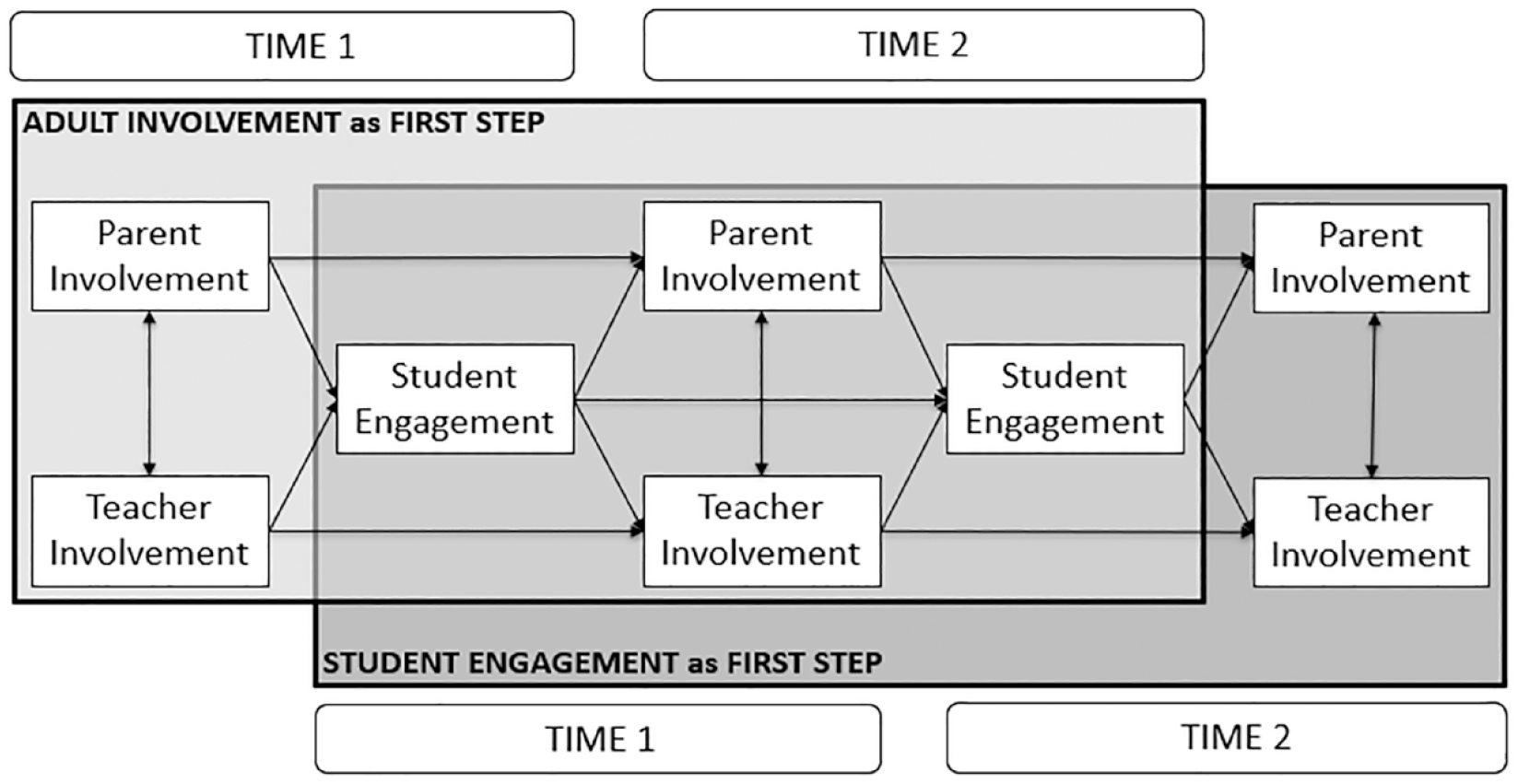
Proposed Transactional Model. Proposed transactional model of the unique effects of parent and teacher involvement and the feedback effects of student academic engagement, which can be considered with adult involvement as the first step or with student engagement as the first step.
Transactional Effects of Parent and Teacher Involvement on Student Engagement
Multiple theories of achievement motivation and engagement underscore the role of high-quality interpersonal relationships (see Allen et al., 2022; Connell & Wellborn, 1991; Martin & Dowson, 2009; Ryan & Deci, 2017; Walton & Brady, 2017). Close relationships with important adults seem to facilitate engagement via multiple channels, both directly and indirectly—by, for example, fostering personal motivational resources (such as a sense of belonging, valuing of school, or self-efficacy) that underpin engagement in the classroom (Martins et al., 2021; Upadyaya & Salmela-Aro, 2013; Wigfield et al., 2015). Empirical evidence of the contributions of parents and teachers is provided by separate lines of research. On the one hand, consistent with the literatures on parenting and attachment more generally, decades of research document the crucial contributions of parenting to students’ motivation (e.g., Bempechat & Shernoff, 2012; Grolnick et al., 2009; Rowe et al., 2016) and engagement (Raftery et al., 2012; Upadyaya & Salmela-Aro, 2013). On the other hand, a wealth of evidence has accumulated indicating that students who experience warm, emotionally supportive relationships with teachers also show greater academic motivation and engagement during elementary and middle school (Gregory & Korth, 2016; Martin & Collie, 2016; Pianta et al., 2012; Roorda et al., 2011; Tao et al., 2022; Upadyaya & Salmela-Aro, 2013), especially informative are longitudinal studies documenting these effects over time (Quin, 2017; Salmela-Aro et al., 2021).
Collective Contributions of Parent and Teacher Involvement
Although theories of academic motivation and engagement agree that high-quality relationships with both parents and teachers are important, few specify how supports from these two social partners work together in combination. At least two ways can be posited, based on bioecological models of collective effects (defined as “influences from multiple microsystems that act in concert to shape students’ academic functioning and development,” Skinner et al., 2022, p. 87). First, collective supports can be unique or cumulative, in which parents and teachers each positively predict students’ engagement, over and above support provided by the other. Such findings can be contrasted with theories that postulate “satiation” in which, for example, once one social partner meets students’ needs, the other is superfluous (e.g., Guay et al., 2017). If studies document the unique contributions of parents and teachers, this suggests that each adult has a specialized role to play, and a positive relationship with one cannot substitute for a poor relationship with the other; both are needed to optimize development.
Second, supports can be mediated or sequential, in which the contribution of one partner is exerted indirectly through their influence on the other. Since parental warm involvement is largely expressed outside the classroom, theories most often postulate indirect effects that run from parents to teachers. For example, attachment theorists hold that the internal working models children construct of their parents pave the way for the relationships they develop with adults outside the home, like teachers (Ryan et al., 1994). From this perspective, parents can indirectly promote their children’s school engagement by facilitating supportive relationships with teachers. If studies of collective effects find evidence for mediation, this suggests that investigations aiming to document the impact of a given social partner will need to include not only their direct effects but also the indirect effects they may exert by shaping the nature of the relationships students form with others.
Previous Studies of Unique and Mediated Effects
Despite the voluminous literatures documenting the importance of parents and teachers individually, only nine studies to date have examined the collective direct or indirect effects of both parent and teacher involvement on students’ engagement during late elementary or early middle school. Although not all of these studies examined the exact parent and teacher constructs of interest in this investigation, together they provide support for the notion that the collective contributions of parents and teachers can be both unique and mediated.
Six studies examined unique effects. Of these, four found that parents and teachers each made their own contributions, over and above the effects of the other (Furrer & Skinner, 2003; Murray, 2009; Quin et al., 2017; Rickert & Skinner, 2022). For example, Murray (2009) found that parental positive involvement and teacher closeness-trust each uniquely predicted the engagement of Latino sixth to eighth graders; and Quin and colleagues (2017) found that parental support for education and teacher support for relatedness each uniquely predicted seventh graders’ engagement. The other two studies of unique effects suggested that support from only one social partner predominated in predicting student engagement, but studies did not converge on which partner was more important. One study indicated that parental support (but not teacher support) uniquely predicted sixth graders’ teacher-reported behavioral engagement (Estell & Perdue, 2013), while the other study found that it was teacher involvement (and not parental involvement) that made a unique contribution to changes in teacher-reports of behavioral and emotional engagement over the school year (Kindermann, 2007).
Only three studies to date have examined the mediated effects of parent and teacher support on student engagement during early adolescence; all found that the contributions of high-quality relationships with parents on adolescents’ academic engagement were mediated via their impact on teacher support (Duchesne & Larose, 2007; Woolley et al., 2009), although in one study parent support was only partially mediated by teacher–student relationships, providing evidence for both direct and indirect effects of parent involvement (Cheung, 2019).
Evidence of unique and mediated effects suggests the importance of examining the contributions of both social partners within the same conceptual and statistical models to understand their collective effects more fully. At the same time, previous studies were limited in certain respects. Like research on the individual effects of parents and teachers more generally, all but two of these studies (Cheung, 2019; Rickert & Skinner, 2022) were cross-sectional. As such, studies have largely been unable to examine causal precedence, to determine whether parents’ and teachers’ support can predict changes in adolescents’ academic engagement, or to explore whether connections between adults and adolescents are transactional, that is, whether adolescents’ engagement in turn predicts changes in the involvement provided by their adult social partners.
Feedback Effects of Student Engagement
To provide the more complete, transactional picture suggested by the process model in Figure 1, studies must also consider the feedback effects of adolescents’ engagement. As students show behavioral and emotional engagement in their academic work, these actions can feed into and reinforce the continued warm involvement of parents and teachers. That is, when students pay attention, exert effort, stay on task, and express interest and enthusiasm about their schoolwork (i.e., are behaviorally and emotionally engaged), these actions are visible to parents and teachers (Skinner et al., 2009). Adults are likely to view such students as motivated, cooperative, and easy to get along with, evoking warmth and a desire for more interaction, thus eliciting more subsequent involvement. In contrast, when adolescents become bored or disaffected in the classroom, show off-task or disruptive behaviors, or otherwise disengage from schoolwork, parents and teachers can see these actions as well. Adults may view such students as unmotivated, uncooperative, or hard to get along with, and may find them more difficult to like or work with, leading adults to withdraw their subsequent warm involvement. It is as if enthusiastic engagement from students attracts more engagement (in the form of higher levels of warm involvement) from adults, whereas student disaffection evokes more disengagement (in the form of lower levels of warm involvement) from adults. The few longitudinal studies exploring how students’ engagement predicts the subsequent behaviors of their parents (Dumont et al., 2014) and teachers (Skinner & Belmont, 1993) suggest that such feedback effects are possible (see Nurmi & Kiuru, 2015; Paschall & Mastergeorge, 2016, for overviews), although none of these studies examined parents and teachers simultaneously.
The investigation of how students’ actions shape adult responses is important in its own right, as researchers try to understand the factors that contribute to parent and teacher warm involvement, but such effects may also be parts of virtuous and vicious cycles in which students initially “rich” in adult involvement and engagement get richer in both, while students initially “poor” in adult involvement and engagement become poorer in both over time (Connell & Wellborn, 1991; Skinner & Pitzer, 2012). Hence, the current study sought to explore not only the collective contributions of parent and teacher warm involvement on changes in adolescents’ academic engagement but also the feedback effects of adolescent engagement on changes in parents’ and teachers’ involvement across the school year.
Current Study
Using longitudinal data from two time points (fall and spring of the same school year) from a cross-section of fifth, sixth, and seventh-grade students, three research questions guided this study’s examination of the collective contributions of parent and teacher involvement on changes in adolescents’ academic engagement within the same school year:
Cumulative unique effects. Do parent and teacher warm involvement each uniquely predict changes in adolescents’ academic engagement?
Sequential mediated effects. Does the warm involvement provided by parents or teachers indirectly predict engagement by shaping the involvement provided by the other social partner?
Feedback effects. Does adolescent academic engagement predict changes in both parent and teacher involvement across the school year?
We also explored two ways in which these feedforward and feedback effects might be differentiated: by grade level and by target outcome, specifically whether the target was behavioral versus emotional engagement. Although behavioral and emotional engagement can be distinguished, they are closely connected (Skinner et al., 2009). To determine whether the collective contributions of parents and teachers played out similarly for behavioral versus emotional engagement and whether parents and teachers responded differentially to students’ behavioral versus emotional engagement, we examined them in separate models with the expectation that if they functioned similarly, we would aggregate them.
In terms of differentiation by grade, consistent with previous research, we anticipated differences in average levels of warm involvement and academic engagement across fifth, sixth, and seventh grades; however, we did not expect age/grade differences in either the feedforward or feedback effects of parent and teacher involvement and student engagement. Rather, as suggested by self-determination theory (Connell & Wellborn, 1991; Ryan & Deci, 2017), and consistent with theories of the fundamental nature of attachment, social support, and belonging (Allen et al., 2022), we anticipated that patterns of unique, mediated, and feedback effects would be similar across grades. To test this possibility, we compared models with coefficients constrained versus unconstrained across grades (see Analysis Plan below), with the expectation that if models did not differ, findings would be aggregated across grade levels.
Method
Participants
Data for this study come from an existing longitudinal dataset that evaluated an entire rural-suburban school district in upstate New York (approved by Portland State University IRB, application #00032 for the project “Factors Influencing Students’ Academic Motivation”). Participants in the current study included 371 students in fifth grade, ages 9 to 12 years old (M = 10.30); 377 students in sixth grade, ages 10 to 14 (M = 11.33); and 342 students in seventh grade, ages 12 to 14 (M = 12.34). Half of the participants were female (52.7%) and almost all were White (95%; the most prominent minority group was Latino with fewer than 3% of the sample). Participants’ socioeconomic status was mostly working and lower middle class (measured by parents’ occupational and educational attainment), and few students qualified for free or reduced lunch (less than 5%).
Design and Procedure
This cross-section of fifth to seventh graders was followed over two time points during a single school year. Students completed assent forms before completing surveys administered by trained interviewers across three 40-min class sessions in October (fall) and May (spring) of the same school year. Teachers were not present during student data collection, and students were assured that their responses would remain confidential.
Measures
Students rated items on a 4-point scale (1 = not at all true for me, 2 = not very true for me, 3 = sort of true for me, 4 = very true for me). Scale items were averaged (with negative items reverse-coded) so that all scales ranged from 1 to 4.
Perceived Parent Warm Involvement
Students rated the quality of their parents’ warm affection, caring, and attention using five items (e.g., “My parents know a lot about what’s important to me” and “Sometimes I think my parents don’t care about what goes on for me,” reverse-coded). Structural and psychometric properties of this measure have been examined in previous studies (e.g., Skinner et al., 2005). In this study, internal consistency reliabilities were satisfactory at each time point across all grades (ωF5 = .82, ωS5 = .79; ωF6 = .78, ωS6 = .74; ωF7 = .74, ωS7 = .75).
Perceived Teacher Warm Involvement
Students also rated their teachers’ pedagogical caring and warmth using five items (ωF5 = .83, ωS5 = .82; ωF6 = .81, ωS6 = .78; ωF7 = .79, ωS7 = .79). Example items included “My teacher really cares about me” and “My teacher just doesn’t understand me” (reverse-coded). This measure has demonstrated good reliability (Skinner & Belmont, 1993).
Adolescent Academic Engagement
Students rated their levels of behavioral and emotional engagement and disaffection (reverse-coded), using measures tested for their structural and psychometric properties and for correspondence with teacher reports and classroom observations (e.g., Skinner et al., 2009).
Behavioral Engagement
Students reported on six items tapping their effort and active behavioral participation in learning activities (ωF5 = .75, ωS5 = .71; ωF6 = .75, ωS6 = .72; ωF7 = .76, ωS7 = .73). Example items included “I try very hard in school” and “When we start something new, I practically fall asleep” (reverse-coded).
Emotional Engagement
Students rated nine items tapping their positive and negative emotions while participating in learning activities in the classroom (ωF5 = .84, ωS5 = .87; ωF6 = .82, ωS6 = .83; ωF7 = .83, ωS7 = .85), such as “When we start something new in class, I feel interested” and “When I’m doing my work in class, I feel worried” (reverse-coded).
Analysis Plan
Transparency and Openness
To examine the three research questions, structural equation modeling (SEM) was used in the statistical program R to analyze two path models each for behavioral and emotional engagement separately. If these models produced identical results, a final model would be analyzed with an aggregate that combined behavioral and emotional engagement into a single indicator. This study’s design and its analysis were not preregistered. Data, materials, and analysis code are available upon request from the authors. All measures are reported above, and no data were excluded.
Cumulative Unique Effects
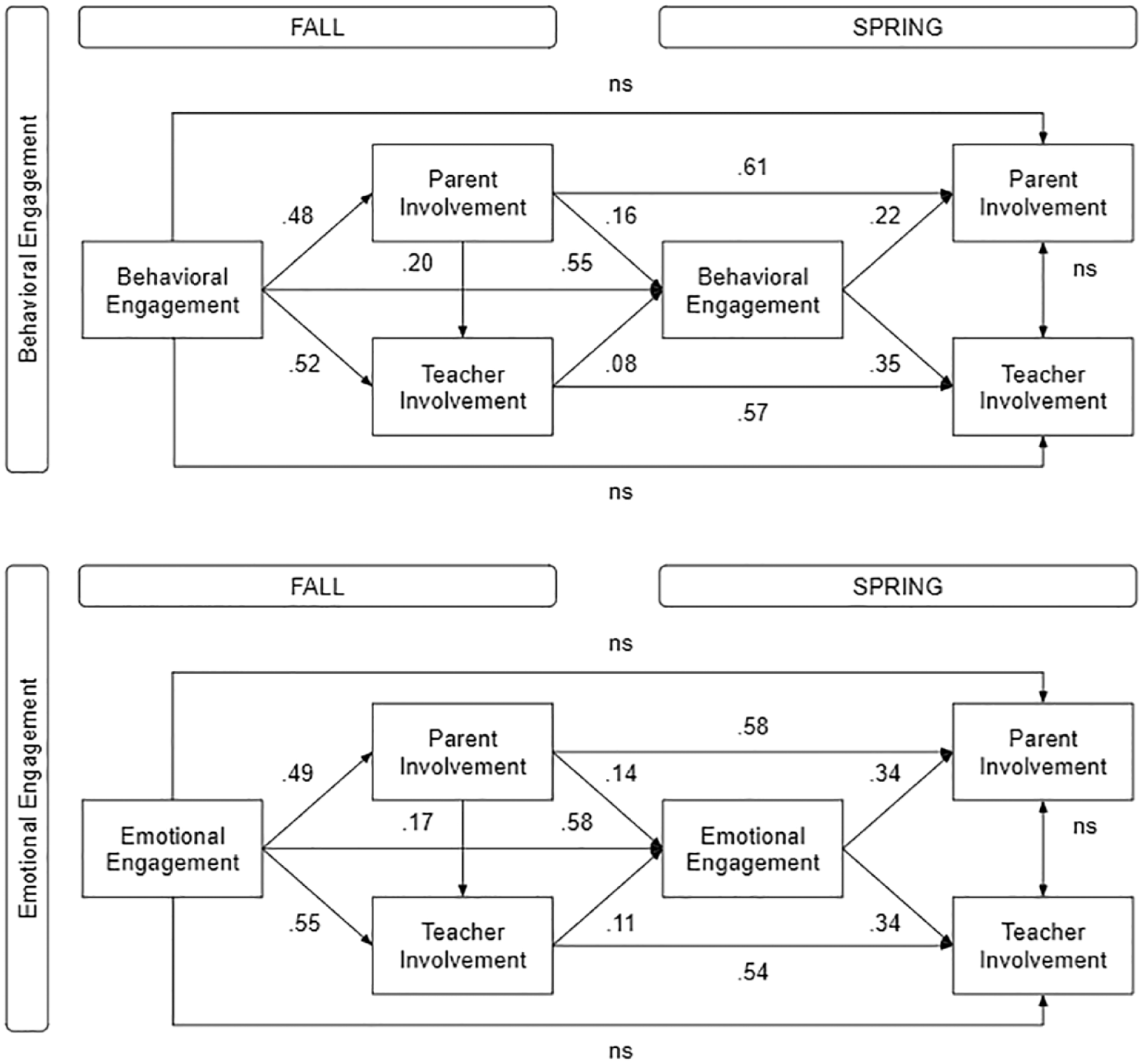
First, to evaluate RQ1, the hypothesized model in Figure 1 depicting unique effects was examined, which involves adult involvement as the first step in the process. Second, to test RQ3, a model, also shown in Figure 1, in which adolescents’ engagement was the first step in the process model was examined. 1 Both models included unique feedforward effects from adult involvement to student engagement over the school year, as well as feedback effects from student engagement to adult involvement over the school year, but differed in whether adults or students comprised the first step. If effects were running in both directions, we expected both models to show a good fit to the data, with stronger contributions apparent in the first step of each, since later steps in the model were predicting change over time, and so controlled for variables from earlier steps.
Sequential Mediated Effects
To explore whether collective effects of parents and teachers were also mediated (RQ2), we started with the basic process models of unique effects in Figure 1, and then tested and compared more complex models incorporating mediated effects. We examined the fit of models that added pathways from parents at time 1 to teachers at time 2, from teachers at time 1 to parents at time 2, and tested for mediated effects on engagement at time 2. If mediated pathways were statistically significant and these models showed adequate to good fit, we concluded that this constituted evidence for mediated effects.
Grade Differences
Once we determined the most appropriate model for collective effects (i.e., unique and/or mediated), we examined whether those models were consistent across grade levels by constraining pathways and coefficients to be equal across grades and comparing model fit across a variety of indices (e.g., AIC, BIC, chi-square difference test, change in comparative fit index [CFI]). If the constrained model did not show significantly worse fit to the data than the unconstrained model, this would suggest that the pattern of findings was not significantly different across fifth, sixth, and seventh-grade students, and we would utilize a model collapsed across the grade level. If it did not, this would suggest that the pattern of findings differed across grade levels, and we would examine those grade-level differences.
Determining Fit
Fit for all models was assessed by examining the χ2 goodness of fit test, CFI, Tucker–Lewis index (TLI), standardized root mean squared residual (SRMR), root mean square error of approximation (RMSEA), and standardized correlation residuals. Following standard cutoff criteria guidelines (Hu & Bentler, 1999), CFI and TLI > .95 were considered good fit and > .90 adequate fit, and SRMR and RMSEA < .06 were considered good fit and < .08 adequate fit.
Results
Missing Data
In fifth grade, missing data ranged from 43.7% to 52.6% across all measures (Fall: 43.7%–47.2%, Spring: 46.6%–52.6%). In sixth grade, missing data ranged from 17.8% to 27.1% across all measures (Fall: 17.8%–21.5%, Spring: 22.0%–27.1%). In seventh grade, missing data ranged from 17.3% to 54.7% across all measures (Fall: 17.3%–22.8%, Spring: 49.4%–54.7%). Across variables, students with data present tended to have higher means than students missing all other variables; therefore, missing data were addressed using full information maximum likelihood estimation in R to represent the range of student experiences (Enders, 2013; Graham, 2009).
Descriptive Analyses
Descriptive analyses, including means, standard deviations, and correlations, were calculated for all variables at each time point across grades (see Table 1). As expected, student reports of parent involvement, teacher involvement, and their own behavioral and emotional engagement were positively and statistically significantly related to one another at all time points for students from all three grades, and cross-year stabilities were relatively high (averaging .67). Consistent with previous research suggesting that both academic engagement and the quality of relationships with adults may decline somewhat during early adolescence (i.e., De Wit et al., 2010; Wei et al., 2019), involvement from both social partners and both aspects of engagement descriptively showed losses across the school year (i.e., spring means lower than fall means) and evinced lower mean levels at successive grades (i.e., seventh grade means lower than fifth grade means).
Descriptives and Correlations Among Variables for Fifth, Sixth, and Seventh-Grade Students.
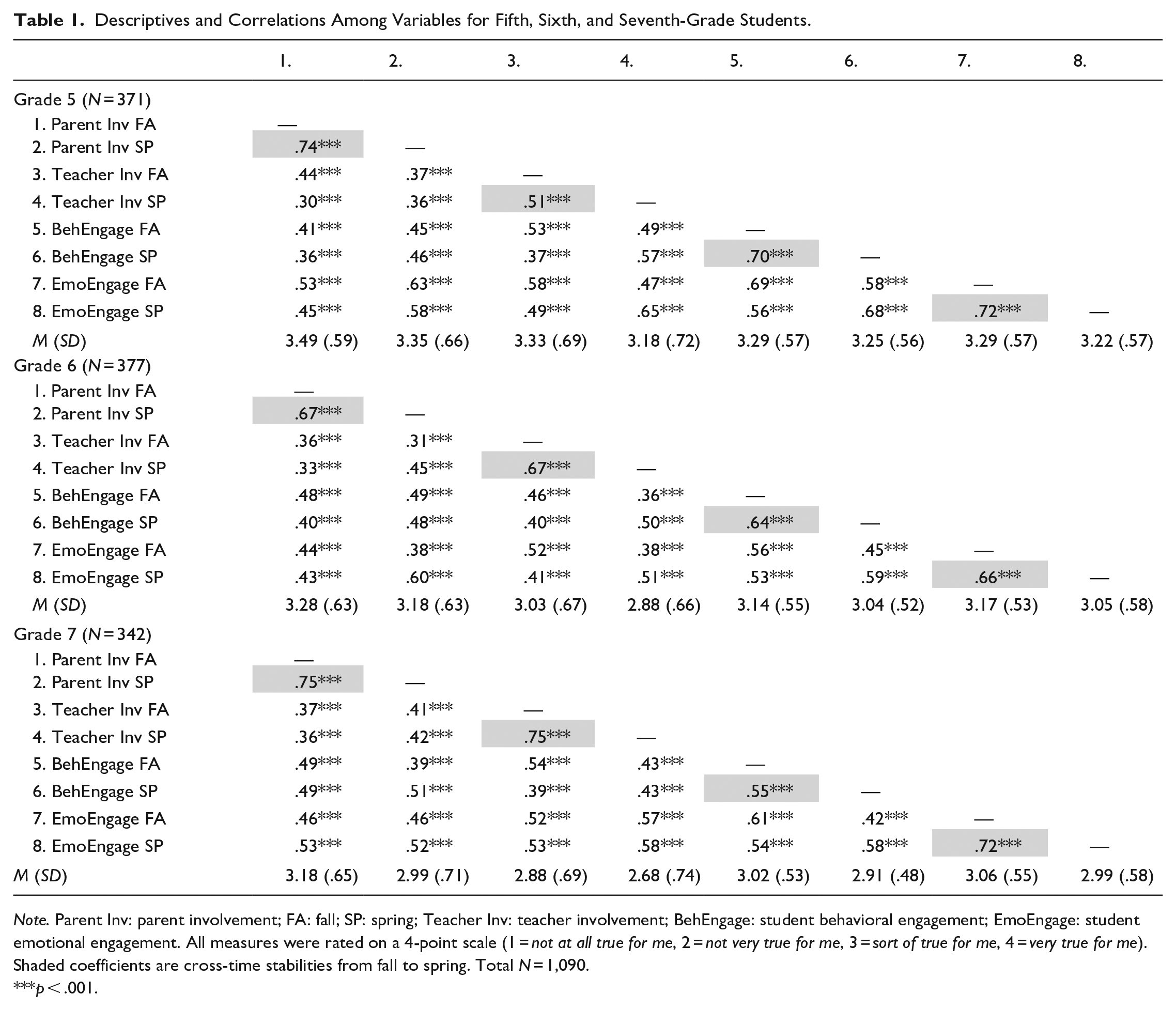
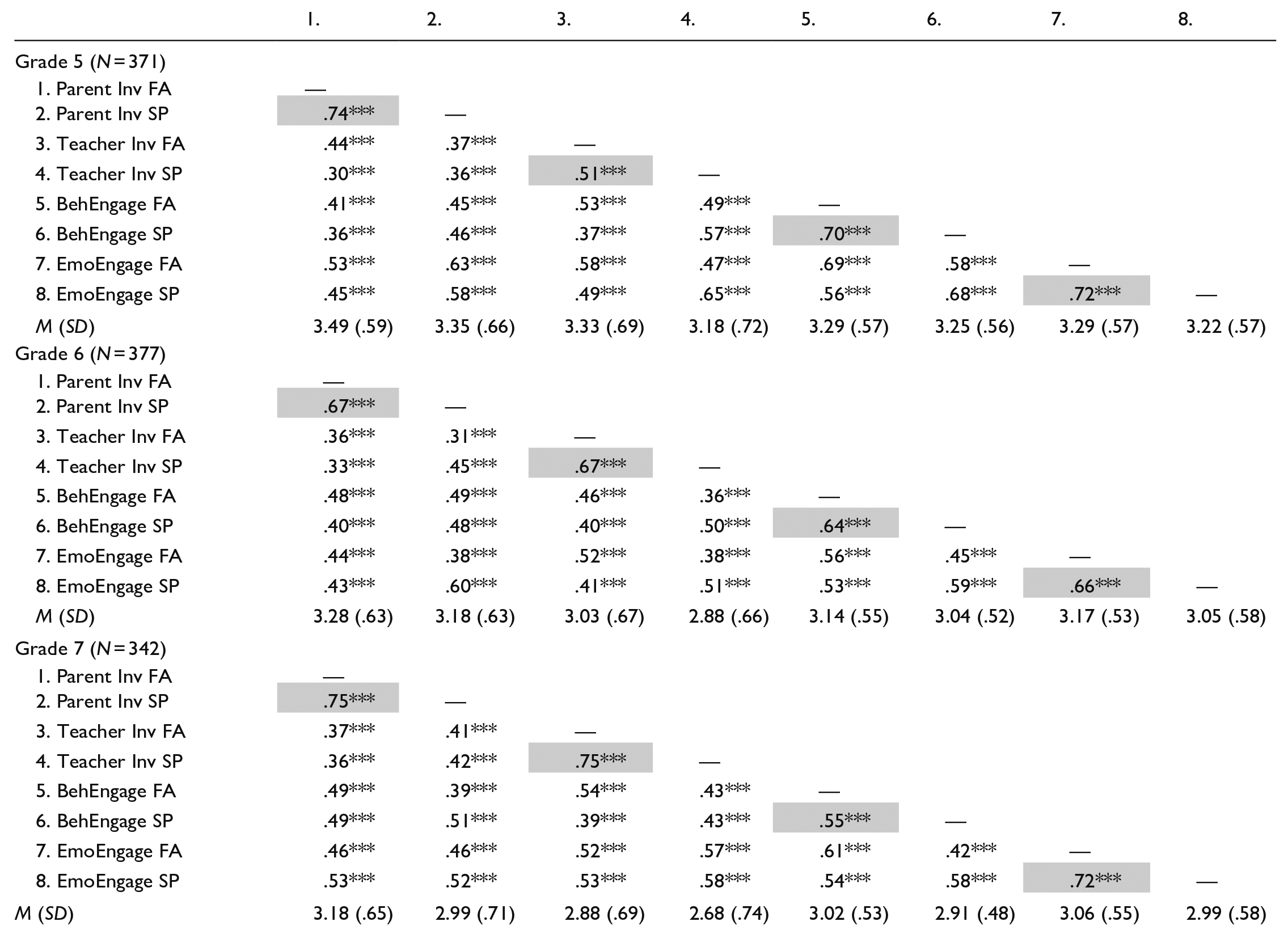
Note. Parent Inv: parent involvement; FA: fall; SP: spring; Teacher Inv: teacher involvement; BehEngage: student behavioral engagement; EmoEngage: student emotional engagement. All measures were rated on a 4-point scale (1 = not at all true for me, 2 = not very true for me, 3 = sort of true for me, 4 = very true for me). Shaded coefficients are cross-time stabilities from fall to spring. Total N = 1,090.
p < .001.
Path Models of Collective Effects of Parents and Teachers
Initial model testing focused on differentiated effects, or whether model fit and patterns of unique, mediated, and feedback effects differed by component of engagement (behavioral vs. emotional) and grade level (5 vs. 6 vs. 7). In general, there were a few differences between components of engagement, so we present those models separately; models in which behavioral and emotional engagement are combined into a single aggregate indicator are included in the Supplemental Materials. Few or no differences were found by grade level. The more differentiated models were a good fit to the data and were essentially identical to those presented in Figures 2–4, suggesting no statistically significant or practically different findings across grade levels. Hence, findings are presented aggregated across grade levels. The results of the chi-square and model fit comparisons and the more differentiated models are included in the Supplemental Materials.
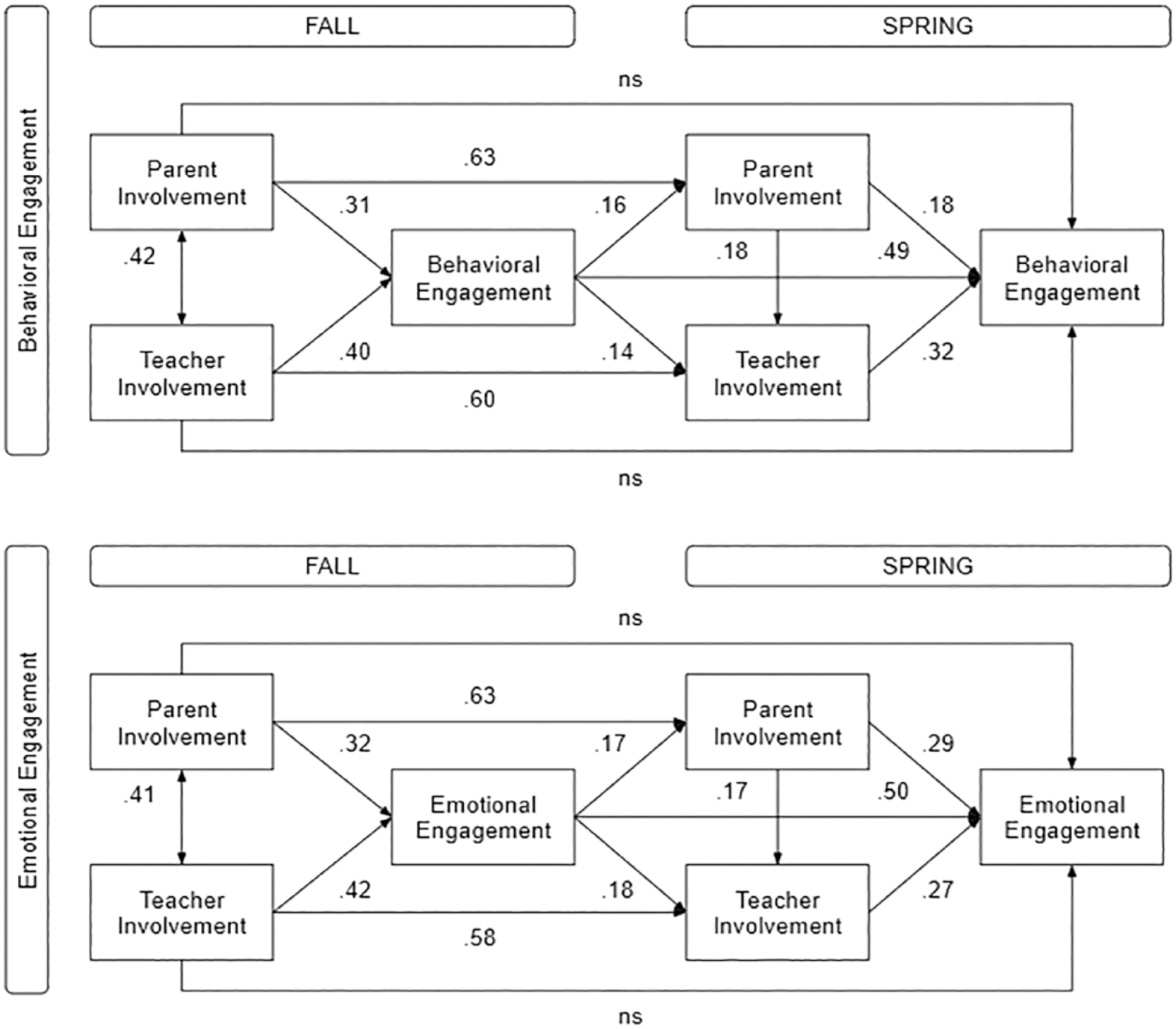
Unique Effects Path Model for Behavioral and Emotional Engagement. All coefficients were standardized, and unless otherwise noted, statistically significant at least at p < .001. Model fit for behavioral engagement: χ2(2) = 5.84, p = .05; CFI = 1.00, TLI = .98, RMSEA = .05, SRMR = .02. Model fit for emotional engagement: χ2(2) = 4.64, p = .10; CFI = 1.00, TLI = .99, RMSEA = .04, SRMR = .02. Total N = 1,090.
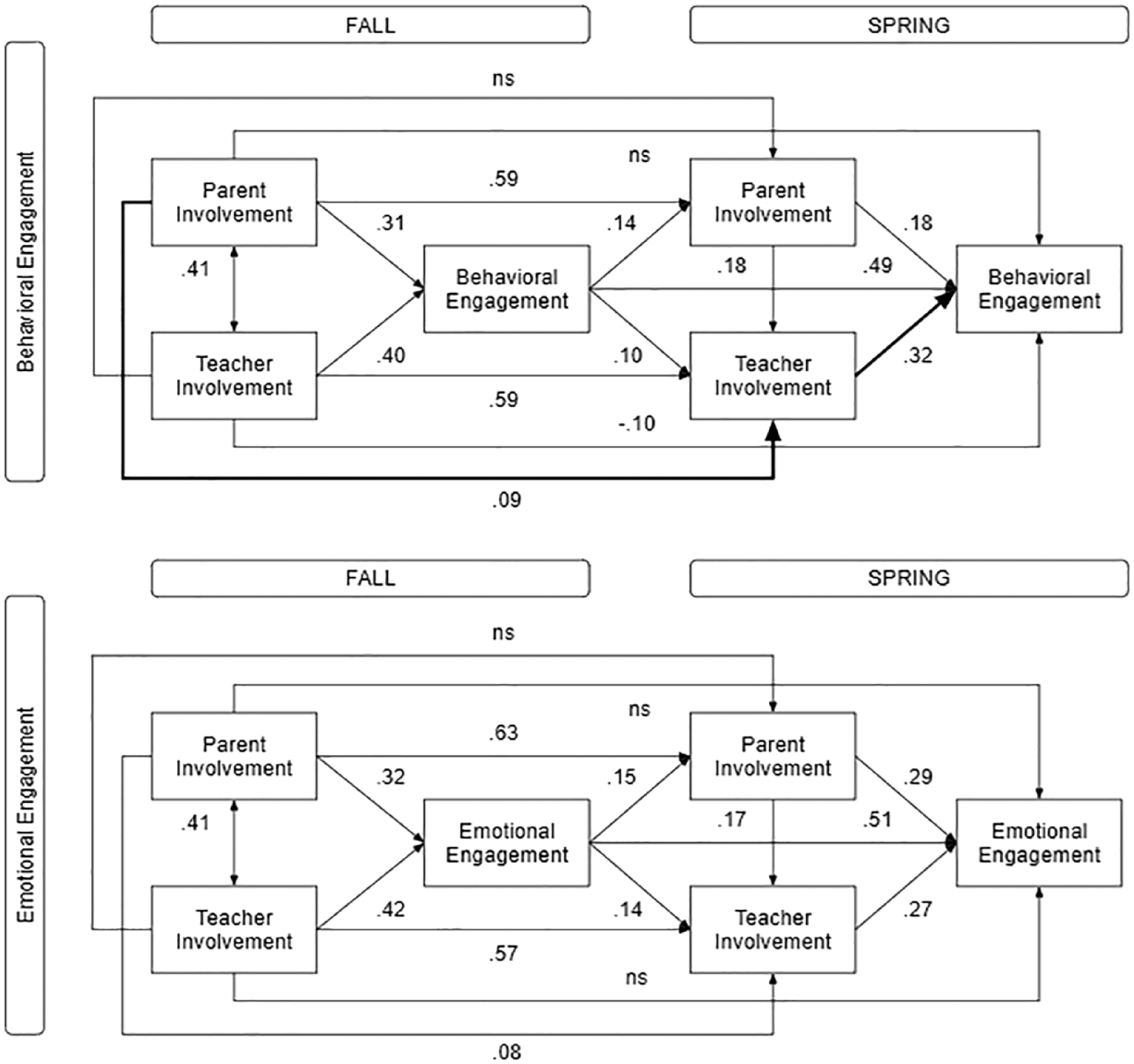
Alternative Path Model for Behavioral and Emotional Engagement. All coefficients were standardized, and unless otherwise noted, statistically significant at least at p < .05. Model fit for behavioral engagement: χ2(2) = .82, p = .66; CFI = 1.00, TLI = 1.00, RMSEA = .00, SRMR = .01. Model fit for emotional engagement: χ2(2) = .49, p = .78; CFI = 1.00, TLI = 1.00, RMSEA = .00, SRMR = .00. Total N = 1,090.
Unique and Mediated Effects Path Model for Behavioral and Emotional Engagement. All coefficients were standardized, and unless otherwise noted, statistically significant at p < .05. Indirect effects for behavioral engagement: βParent Indirect = .03, p < .05, βParent Total = .02, p = .74, βTeacher Indirect = .01, p = .48, βTeacher Total = −.10, p < .05. Model fit for behavioral engagement was just identified, so no model fit statistics were available. Indirect effects for emotional engagement: βParent Indirect = .02, p = .06, βParent Total = −.05, p = .30, βTeacher Indirect = .01, p = .48, βTeacher Total = −.04, p = .37. Model fit for emotional engagement was just identified, so no model fit statistics were available. Total N = 1,090.
Transactional Effects
The clearest evidence was found for collective effects that were unique. As shown in Figures 2 and 3, models for behavioral and emotional engagement demonstrated good fit and indicated that warm involvement from parents (BehEngage: βParent = .16–.31, p < .05; EmoEngage: βParent = .14–.32, p < .05) and teachers (BehEngage: βTeacher = .08–.40, p < .05; EmoEngage: βTeacher = .11–.42, p < .05) contributed positively to students’ engagement in fall and spring. In other words, students’ perceptions of parents’ and teachers’ warm involvement each made a unique contribution to adolescents’ enjoyment and behavioral participation in academic work, over and above the involvement provided by the other social partner. These effect sizes ranged from small to medium in magnitude across both social partners at each time point. Similarly, in both models, there was consistent support for the feedback effects of students’ behavioral (Parent Inv: βBehEngage = .16–.48, p < .05; Teacher Inv: βBehEngage = .14–.52, p < .05) and emotional engagement (Parent Inv: βEmoEngage = .17–.49, p < .05; Teacher Inv: βEmoEngage = .18–.55, p < .05) on the subsequent involvement of their social partners (effect sizes ranged from small to medium). Students who were more behaviorally and emotionally engaged with their academic work also reported that both their parents and teachers became more involved as the year progressed. As expected, the magnitude of coefficients was greater for whichever social partner (adults or students) was modeled as the leading independent variable.
Mediated Effects
When additional mediated pathways were added to transactional models, the time-lagged path from parents to teachers was statistically significant (see Figure 4). The contributions of parents at time 1 to changes in their children’s behavioral engagement from time 1 to time 2 were partially mediated by students’ relationships with teachers at time 2 (BehEngage: βParent Indirect = .03, p < .05, βParent Total = .02, p = .74). Consistent with previous cross-sectional research, this pathway suggested that parents contributed to changes in their children’s behavioral engagement both directly, via their own involvement, and indirectly by shaping the involvement provided by their children’s teachers. However, this indirect effect was only marginally significant for emotional engagement (EmoEngage: βParent Indirect = .02, p = .06, βParent Total = −.05, p = .30). The complementary mediated pathway from teachers to parents was not statistically significant (BehEngage: βTeacher Indirect = .01, p = .48, βTeacher Total = −.10, p < .05; EmoEngage: βTeacher Indirect = .01, p = .48, βTeacher Total = −.04, p = .37), suggesting that teachers, who are present in the classroom, primarily make direct contributions to students’ behavioral and emotional engagement.
Discussion
The current study sought to explore the potential dynamics of motivational development by examining whether parents’ and teachers’ warm involvement shows unique and/or mediated effects on changes in students’ academic engagement and whether students’ engagement in turn feeds back into changes in adults’ continued involvement. In line with previous research (Cheung, 2019; Quin et al., 2017; Rickert & Skinner, 2022), the current study documented the unique contributions of parents and teachers, suggesting that both adults are crucial to the development of academic engagement during late childhood and early adolescence. Also consistent with previous investigations (e.g., Duchesne & Larose, 2007), the current study confirmed the operation of time-lagged mediational effects, in which parental involvement also played an indirect role, via the quality of the relationship students formed with their teachers. Finally, consistent evidence was also found for feedback effects, adding to the few studies that have previously documented such effects (Dumont et al., 2014; Skinner & Belmont, 1993). Students who were more behaviorally and emotionally engaged indicated that their parents and teachers responded with increasing levels of involvement as the school year progressed, whereas students who initially reported more disaffection experienced their parents and teachers as withdrawing involvement over time. Taken together, these models provide support for a reciprocal dynamic that could lead to either virtuous cycles involving increases in both adult involvement and adolescent engagement, or to vicious cycles as lack of adult involvement and student disaffection mutually amplify each other over time. Models also show that both feedforward and feedback effects are operating in a similar (although not identical) manner for behavioral and emotional engagement, suggesting that these two components can be aggregated to form a general picture (as presented in the Supplemental Materials).
Limitations and Future Directions
There are several ways that results from the current study can be used to guide future research. Methodologically, given that participants consisted predominantly of White, middle-class students, future work could examine these patterns of findings with a more diverse sample. Although many theories posit that the importance of warm involvement for students’ academic engagement is universal (e.g., self-determination theory, attachment theory; Martin & Dowson, 2009), nonetheless, future studies could test this assumption and determine if there are differential contributions of parents and teachers across diverse students and settings. For example, for students facing racial or ethnic discrimination, economic hardships, or other adversities, warm involvement from parents and teachers may be even more important in promoting their continued engagement in school (e.g., Pan et al., 2017).
Regarding measures, it is possible that the positive connections found in this study are at least partially the result of drawing on data from the same reporter. To mitigate common method bias, future studies could incorporate additional sources of information about target constructs. Data from parents and teachers about their warm involvement or observations of student engagement could supplement these interpretations. However, in such studies, it will be important to continue to include students’ own reports of the warm involvement they experience from their parents and teachers since these perceptions could be considered markers of their internal working models of relationships. Such working models are key to mediated effects since they represent one of the mechanisms through which early relationships with parents are hypothesized to shape subsequent relationships with teachers (Cheung, 2019; Duchesne & Larose, 2007; Ryan et al., 1994; Woolley et al., 2009). Further, future studies could more directly examine the impact of the switch in middle school from few to many different teachers. The current study employed the same set of items across all students, using the referent “my teacher.” This allowed measures to be comparable across grades, but it also meant that fifth-grade students reported on a single teacher’s warm involvement while it is unclear if sixth and seventh graders reported on the warm involvement from their homeroom teacher, favorite teacher, or an aggregate of their experiences across multiple teachers.
Finally, regarding methodology, future studies could be improved by expanding beyond a single school year to look at the feedforward and feedback effects across multiple years. Longitudinal data would allow researchers to examine whether this reciprocal dynamic contributes to changes in engagement as adolescents transition from elementary to middle school and to see whether adult involvement (prior to and during the middle school transition) can predict differential trajectories of behavioral and emotional engagement (e.g., Rickert & Skinner, 2022). It would still be important to include multiple time points within the same school year so that social supports are examined during the same time window over which engagement trajectories are unfolding. If studies cross academic years, then teachers during one year are likely to be replaced by different teachers the next year, and these new teachers are likely to be more central in shaping student engagement at that point. In fact, three points within each year would provide a better test of mediated effects (e.g., Jang et al., 2012). The current study’s design, with only two time points, was limited in its capacity to test mediation models since temporal precedence of mediator and outcome (e.g., whether perceptions of teacher support subsequently foster student engagement or the reverse) cannot be established. Future studies could remedy this with at least three time points, allowing potential antecedents, mediators, and outcomes to be examined at different time points.
Next Steps in the Study of Collective Effects of Parents and Teachers
Despite its limitations, the current investigation suggests several directions—both conceptual and empirical—for next steps in the study of the collective effects of parents and teachers on the development of students’ engagement, motivation, and academic functioning.
Examining Additional Supports, Social Partners, and Student Outcomes
Conceptually, future research could expand on the current study by including additional forms of support from social partners as well as additional social partners who might also contribute to students’ academic engagement. Regarding forms of support, the self-system model of motivation posits that in addition to warm involvement, provision of structure and autonomy support can also fuel students’ engagement in academic tasks (Connell & Wellborn, 1991; Hospel & Galand, 2016; Jang et al., 2010). The dimensions of structure and autonomy support may also be involved in feedback effects if, for example, adults respond to student disaffection by becoming increasingly controlling or coercive (e.g., Skinner & Belmont, 1993). Conceptualizations and measures of involvement, structure, and autonomy support sometimes show a bit of overlap, but most studies considering multiple dimensions find that each of them is important in fostering student motivation and engagement (e.g., Jang et al., 2010). In fact, they may be complementary, such that, for example, involvement or structure may need to be provided in an autonomy-supportive way if they are to exert their positive effects. At the same time, few studies have examined the collective effects of parent and teacher provision of all three dimensions. Such studies would be helpful in determining whether, for example, parents and teachers differ in the balance of supports they provide or in the kinds of supports that have the biggest impact on students’ engagement.
There are also many other social partners who make important contributions to students’ engagement, such as siblings (Alfaro & Umaña-Taylor, 2010), mentors (e.g., extended kin, neighbors, and community members; Hurd & Sellers, 2013), and most notably peers (Juvonen et al., 2012; Kindermann, 2016; Wentzel & Muenks, 2016). In future studies of the collective effects of parents and teachers, it might be worthwhile to expand the research questions used to guide the current study by, for example, examining the unique and mediated effects of peers. It may be that they make their own individual contributions to engagement over and above the important effects of adults (e.g., Chen, 2005). They may also be mediators of the indirect effects of parents on academic engagement, in that parents seem to have an impact on the relationships their children form with friends and classmates at school (Ladd et al., 2016). Adults may set the frame for the impact of peers in other ways as well, for example, studies suggest that students with high-quality relationships with teachers are less susceptible to the effects of their peer groups, either positive or negative (Vollet et al., 2017). Hence, the inclusion of additional social partners would allow more complex cumulative, contingent, and sequential effects among the microsystems of home, school, and peer groups to be explored (Skinner et al., 2022).
The current investigation could also be expanded to include other student outcomes that are shaped by warm involvement from parents and teachers. For example, in addition to behavioral and emotional engagement, reviews of the effects of parents and teachers suggest that they both have an impact on student motivation, resilience, and achievement (e.g., Martin & Collie, 2016; Rowe et al., 2016; Tao et al., 2022); these and other outcomes would be candidates for the study of collective feedforward and feedback effects. Some outcomes, like homework involvement, might even show a different pattern of mediated effects (Dumont et al., 2014). Since students’ involvement in homework takes place at home, it may be that for this outcome, unlike for classroom engagement where the effects of distal parents were mediated by teacher warm involvement, it would be possible that parents mediate the effects of more distal teachers on student engagement in schoolwork at home. The examination of a range of student outcomes would be important in designing interventions or identifying best practices, since interventionists, parents, and teachers are interested in promoting multiple dimensions of students’ academic functioning and development.
Examining Pathways and Dynamics
While the current study provides support for the feedforward and feedback effects of parents, teachers, and adolescents, subsequent research could also explore the pathways or mechanisms behind these associations. For example, along with other approaches (e.g., Juvonen, 2007), the self-system model (Connell & Wellborn, 1991) posits that a sense of relatedness to others is one conduit through which warm involvement supports adolescents’ engagement with academic tasks (i.e., Rickert & Skinner, 2021). Unpacking the mechanisms of feedback effects, to identify the pathways through which students’ engagement shapes adults’ subsequent behavior, seems like a particularly important direction for future study. If the amplifying feedback loops found here, in which students with higher initial levels of engagement subsequently experience increases in adult involvement, while students higher in disaffection experience decreases in parental and teacher warm involvement, then adults are inadvertently participating in vicious cycles; they are reacting to disaffected students with exactly the opposite responses that would be needed to counteract their disaffection. Research identifying the factors that contribute to these reactions will be especially useful in guiding efforts to prevent vicious cycles from taking root. Mechanisms might include parent and teacher interpretations of student actions, in which adults label disaffected adolescents as “unmotivated” or “uncooperative,” thus influencing parents’ and teachers’ expectations for whether it is worthwhile to stay involved with them. Perhaps if parents and teachers could instead focus on the malleability of students’ engagement and disaffection, they could more constructively interpret the actions they observe, potentially even using them to diagnose underlying motivational issues and prescribe the kinds of supports needed to reverse them, such as more involvement or autonomy support (Furrer et al., 2014).
Future studies could also follow up on the possibility of virtuous and vicious cycles by explicitly focusing on how this amplifying dynamic operates over time. At a micro-developmental level, future research, using for example time series or observational designs, could attempt to capture the real-time episodes in which adult warm involvement (or other supports) bolsters students’ behavioral and emotional engagement; and in which students’ behaviors and emotions are attracting (or repelling) subsequent adult involvement. Analyses of sequential dependencies in the time series or observational data would seem particularly suited to capture the feedforward and feedback dynamics in such social interactions. At a macro-developmental level, researchers could examine the effects of changes in the social ecologies students experience over multiple school years. For example, researchers could chart changes in parental involvement and differences in teacher involvement as students move from elementary to middle school and beyond; and then examine whether students’ long-term trajectories of engagement differ depending on how their ecologies have changed. The expectation would be that students whose parents become more involved and/or whose new teachers show more support would be more likely to evince improvement in their behavioral and emotional engagement, compared to students whose social ecologies show a more normative pattern of declines in adult involvement. Especially interesting would be the developmental trajectories of engagement for students inhabiting ecologies in which warm involvement from one kind of adult (either parents or teachers) increases while the other declines. Person- or pattern-centered analyses seem particularly suited to capturing these differing patterns of change in ecologies.
Implications for Practice and Intervention
Results from the current study offer at least three suggestions for future work aimed at promoting adolescents’ academic engagement during a time when it often declines (Wigfield et al., 2015). First, building on themes emerging from interventions (Karabenick & Urdan, 2014; Lazowski & Hulleman, 2016; Wentzel & Wigfield, 2007), evidence for collective effects suggests that researchers should focus on multiple interpersonal influences, in this case, both parents and teachers, when designing interventions. If programs focus on a single social partner, these interventions will only optimize the engagement of those students who already are receiving warm involvement from the other. To help adolescents reach their full potential, educational programs and practices need to promote the warm, supportive involvement of both parents and teachers since each provides unique sources of support.
Second, mediational findings highlight the many ways that parents can shape their children’s engagement in school. The current study confirms the central, direct role parents play (e.g., Bempechat & Shernoff, 2012; Upadyaya & Salmela-Aro, 2013) and adds the notion that parents may also play an indirect role, by shaping the nature of the relationships their children form with teachers. These findings, along with results from other studies that have documented mediational effects from parents to teachers for students in middle school (e.g., Duchesne & Larose, 2007) and at younger ages (e.g., Castle Heatly & Votruba-Drzal, 2017), suggest that interventions to bolster parent involvement could also examine whether positive influences accrue through improved teacher–student relationships.
Third, the results of this study, indicating that effects are unique, mediational, and reciprocal, highlight the complex social system in which student engagement is embedded (e.g., Hilpert & Marchand, 2018; Skinner et al., 2022). They also suggest leverage points for strengthening virtuous cycles of involvement and engagement, as well as preventing or reversing vicious cycles of student disaffection and withdrawal of adult involvement. These complex systems are the targets of all interventions. One way of improving their functioning seems to be changing the dynamics of the teacher–student, parent–child, and peer interactions they contain, as seen, for example, in interventions based on dynamic systems principles that target teacher–student instructional interactions (e.g., Steenbeek & van Geert, 2013; Turner et al., 2014).
The overarching theoretical frame of the current study, which highlights multiple interpersonal relationships as part of a complex social ecology, is also consistent with multi-systemic interventions, often couched in Bronfenbrenner’s bioecological approach (e.g., Skinner et al., 2022), that focus explicitly on establishing and enriching family–school connections (e.g., Chapman et al., 2013; Raftery et al., 2012; Sheridan et al., 2019). These interventions extend beyond the findings of the current study, which focused on the collective effects of students’ relationships with each set of social partners, to intentionally create linkages between teachers and parents, with the goal of aligning students’ multiple worlds (Phelan et al., 1998). Children and adolescents negotiate these complex social ecologies every day, and the more researchers and interventionists can learn about them, the better equipped they will be to help parents and educators design supports that promote the development of students’ academic engagement, functioning, and success.
Supplemental Material
sj-docx-1-jbd-10.1177_01650254231210561 – Supplemental material for Parent and teacher involvement and adolescent academic engagement: Unique, mediated, and transactional effects
Supplemental material, sj-docx-1-jbd-10.1177_01650254231210561 for Parent and teacher involvement and adolescent academic engagement: Unique, mediated, and transactional effects by Nicolette P. Rickert and Ellen A. Skinner in International Journal of Behavioral Development
Footnotes
Data Availability Statement
Data is available upon request from the authors.
Funding
The author(s) received no financial support for the research, authorship, and/or publication of this article.

Supplemental Material
Supplemental material for this article is available online.
Notes
References
Supplementary Material
Please find the following supplemental material available below.
For Open Access articles published under a Creative Commons License, all supplemental material carries the same license as the article it is associated with.
For non-Open Access articles published, all supplemental material carries a non-exclusive license, and permission requests for re-use of supplemental material or any part of supplemental material shall be sent directly to the copyright owner as specified in the copyright notice associated with the article.
