




Abstract
Developmental research suggests that peer rejection has negative spillover effects which strain parent–child relationships and parent attitudes toward the child’s school. This study tested whether a school-based social skill training program could reverse these effects and improve parent–child closeness and parent attitudes toward the school. Participants included 217 children who were rejected by peers (57% White, 17% Black, 20% Latinx, 5% multiracial; 68% male; Mage = 8.1 years old) identified with sociometric social preference scores and randomized to intervention or control groups. Parents rated parent–child closeness and parent attitudes toward school at the start and end of the intervention year. Multilevel path analyses indicated that intervention improved parent–child closeness and, for children in the older grade levels only, enhanced parent attitudes toward the school. Additional analyses revealed that intervention effects on parent–child closeness were direct whereas effects on attitudes toward school were mediated by intervention-related increases in teacher support and peer liking. Implications for intervention design and future research are discussed.
Keywords
In total, 10%–15% of elementary school children are rejected by peers (e.g., chosen as “most liked” by few classmates and as “least liked” by many), increasing their risk for long-term school maladjustment and mental health difficulties (van Lier & Koot, 2010). Peer rejection usually emerges when children with under-developed social-emotional skills experience non-supportive classroom contexts and peer group dynamics that limit their social opportunities (Farmer et al., 2019; Mendelson et al., 2016; Waas, 2006). Peer rejection can become chronic when negative treatment by peers (social exclusion, victimization) amplifies child social–emotional vulnerabilities and problem behaviors, undermining child self-efficacy and fueling feelings of loneliness, anxiety, and angry resentment (Ettekal & Ladd, 2015). Low levels of teacher support and poor-quality student–teacher relationships often further reduce the social–emotional support experienced by children who are rejected by peers, exacerbating their social isolation (Hughes & Im, 2016; Mikami, Lerner, Griggs et al., 2010) and making early intervention desireable.
Most negative peer treatment occurs in school settings (Bierman & McCauley, 1987) but parents are affected by their child’s distress, which can undermine both parent–child and parent–school relationships (Kaufman et al., 2020). Negative peer interactions increase child moodiness and irritability at home, contributing to parent–child antagonism (Janssens et al., 2017; Kaufman et al., 2020). In addition, parents may come to resent the school’s ineffectiveness at addressing peer problems over time and the corresponding lack of teacher care and support for their child’s development and well-being (Santiago et al., 2016). This study addressed the unanswered question of whether a school-based social skills training (SST) intervention might have positive effects for parents and improve parent–child closeness and parent attitudes toward the school.
Peer Rejection and Parent–Child Relations
Parents influence early social–emotional development, affecting child social competencies at school entry. Sensitive–responsive caregiving, close parent–child relationships, and parents’ scaffolded support for peer interactions all enhance children’s developing abilities to form high-quality friendships and attain peer acceptance (Ladd & Pettit, 2002). However, the nature and direction of social–emotional influence shifts as children enter school and expand their contact with teachers and peers. School experiences become central forces influencing child peer relations, with spillover effects on parent–child relations (Kaufman et al., 2020; Ladd & Pettit, 2002).
Negative peer experiences at school can increase irritability and behavior problems at home, which distress parent–child relationships and undermine parent support (Chung et al., 2017; Kaufman et al., 2020). Daily diary studies show direct links between peer problems at school and increases in aversive parent–child interactions at home, mediated partially by child anxiety and emotional distress (Chung et al., 2011; Lehman & Repetti, 2007). Longer term longitudinal studies show complex bidirectional effects over time between peer rejection and parent–child conflict, contributing to social adjustment difficulties that escalate as children move into adolescence (Ettekal & Ladd, 2015; Janssens et al., 2017).
One consequence of this negative cycle is that peer mistreatment at school can undermine children’s emotional and behavioral well-being in ways that adversely affect relationships at home and reduce parent–child closeness (Kaufman et al., 2020; Liu et al., 2020). Kaufman et al. (2020) found that elementary students who experienced heightened levels of peer victimization at the start of the study reported declines in parent support and warmth over time. Bidirectional effects were also apparent, as children who reported lower levels of parent support and warmth at the start of the study were more likely to experience peer victimization over time. Negative bidirectional effects were partially mediated by increases in child depressive symptoms and behavior problems reflecting the distress associated with peer mistreatment. Children who feel rejected by parents and peers are at high risk for increasing psychopathology in adolescence, documenting the importance of attending to these cross-context relationships and addressing negative peer experiences at school (Ferguson & Zimmer-Gembeck, 2014).
Peer Rejection and Parent Attitudes Toward the School
Persistent negative peer experiences at school can also undermine parent perceptions that the teacher and school care about their child’s well-being. Santiago and colleagues (2016) surveyed the parents of elementary school students and found that parents expressed less trust in the teacher when their children were experiencing peer problems at school. Additional studies have documented that when children struggle with social–emotional and behavioral difficulties at school, their parents often lose confidence in the school’s response, leading to strained parent–teacher relationships and negative parent attitudes toward the school (Gwernan-Jones et al., 2015; Hummel et al., 2022). Interviews suggest that parents who feel judged, unheard, and blamed for their child’s difficulties are especially likely to feel alienated by and resentful of the teacher and school (Gwernan-Jones et al., 2015). Feelings of discontent and distrust are amplified for parents with fewer economic resources (Santiago et al., 2016) and those with low levels of education or a history of school problems themselves (Henderson & Mapp, 2002; Räty, 2011). Many of the children who experience peer rejection also struggle with social–emotional and behavioral difficulties at school and come from families with fewer economic resources, increasing the likelihood that parents will encounter judgmental attitudes and insufficient or ineffective support for their child’s well-being (Farmer et al., 2019; Hjalmarsson & Mood, 2015). Diminished trust and negative attitudes toward the teacher and school reduce parent willingness to collaborate with the school (Sheridan et al., 2012), impeding collaborative intervention efforts (Dearing et al., 2008; Santiago et al., 2016).
School-Based Social Skill Training Interventions
Schools often employ SST for children who are experiencing peer rejection (Bruhn et al., 2014; Maag, 2006). However, research has not yet addressed whether effective SST interventions conducted at school help to reverse the negative spillover effects that child experiences of peer rejection have on parent–child relationships and parent attitudes toward the school. This study addressed this question in the context of a randomized-controlled trial (RCT) of a school-based SST program—the Fast Track Friendship Group program 1 (hereafter, “Friendship Group”; Bierman et al., 2017).
School-based SST programs are frequently indicated for children who are peer rejected, as they promote social skill acquisition and improved behavior (Gresham, 2016). Friendship Group was implemented as a small group intervention that incorporated the standard elements of SST (Bierman, 2004; Gresham, 2016). Manualized sessions used instructions, discussions, and modeling to illustrate skill concepts and then provided children with practice opportunities and performance feedback to help them refine their skill performance. Recognizing that rejection processes and peer mistreatment are influenced by peer group dynamics and teacher attitudes in addition to the skill sets of vulnerable children (Mikami et al., 2010; Saarento et al., 2015), Friendship Group included classmates and teachers as intervention participants. Classmates served as rotating partners in intervention groups to provide the children experiencing rejection with positive models and to help them build friendships that might sustain outside of the group setting (Ang & Hughes, 2002; Bierman, 2004). Teachers received handouts that described the focus of each session and met with intervention staff to discuss how best to support the child’s social skill development and friendship-making in the classroom. Intervention staff also sought to include parents as intervention supports. They provided parents with weekly handouts describing the group session foci and suggesting support activities for home use. They also held consultation meetings with parents at the beginning and mid-point of the intervention to incorporate their input about their child’s progress and tailor the program to address their concerns and goals.
The Friendship Group intervention demonstrated significant benefits for children in this RCT. Relative to the “usual practice” control group, children in the intervention group showed significantly more improvement in teacher-rated social skills and reduced externalizing behaviors, along with greater increases in student–teacher closeness. Friendship Group also increased sociometric friendship nominations and “like most” nominations, although “like least” nominations were not affected (Bierman et al., 2022).
Potential SST Effects on Parent–Child and Parent Attitudes Toward School
Conceptually, Friendship Group may have also had both direct and indirect effects on parent–child closeness and parent attitudes toward the school. Parents were included as partners in the intervention, with opportunities to share their concerns and discuss how to help build their child’s friendship skills at home. Intervention procedures were designed to increase parent awareness of their child’s need for social support, validate the importance of their support efforts, and enhance their capacity to provide support. By fueling positive parent engagement, the intervention might have directly increased parent feelings of warmth, affection, and connectedness with their child. The intervention also successfully improved child social skills and increased teacher support and peer acceptance at school (Bierman et al., 2022). These child effects might have enhanced parent–child closeness in indirect ways, by increasing the child’s ability to communicate and problem-solve with the parent and by reducing negative social experiences at school and associated spillover effects on child mood and behavior at home (Bai et al., 2017).
Friendship Group could also have direct effects on parent attitudes about the school because it represented positive school efforts to help the child and support their well-being. Alternatively, Friendship Group effects on parent attitudes toward school might be indirect, dependent on the degree to which intervention increased the child’s positive social experiences at school. Increases in teacher–student closeness and peer acceptance could enhance child feelings of comfort and happiness at school, thereby indirectly improving parent attitudes toward school (Dearing et al., 2008; Westerberg et al., 2020).
Developmental Factors
The degree to which or pathways by which Friendship Group affects parents could vary as a function of the child’s grade level. The content and structure of Friendship Group sessions varied across grade level, with sessions for younger children (grades 1–2, ages 6–8 years) focused on more behavioral skills and sessions for older children (grades 3–4, ages 8–10 years) including more complex meta-cognitive skills such as stress management and coping skills (Bierman et al., 2017). This shift in focus reflects developmental progressions in the quality of children’s social reasoning (Veenman et al., 2006) that correspond with growth in social comparison processes, peer influence, salience of social stratification and impact on self-perceptions (Bierman, 2004). These developmental shifts can amplify the negative effects of peer rejection in the later elementary years (Nesdale & Lamberg, 2008) thereby increasing negative spillover effects on parents. Grade level may also affect parent attitudes toward the school. Parents of older children with school difficulties were more distrustful and disillusioned with the school than parents of younger children who were facing similar problems (Dearing et al., 2008). Correspondingly, the beneficial effects of SST on parent–child closeness and parent attitudes toward the school may be greater at the older elementary levels where heightened parental distress provides more opportunity for improvement.
The Present Study
Evidence-based SST programs like Friendship Group offer promise for improving the social skills and peer relationships that rejected children experience at school. It is yet unknown whether such interventions also reduce the negative spillover effects of peer rejection on parent–child relationships and parent attitudes toward the school.
Using data from the recent school-based RCT, this study tested the hypothesis that Friendship Group promoted improvements in parent–child closeness and parent attitudes toward the school relative to a control group who received “usual practice” school supports. Multilevel models included grade level as a potential moderator of intervention effects to determine whether benefits were greater for parents of children in the older grades (grades 3–4) relative to the younger grades (1–2). In addition, multilevel path analyses evaluated three possible mediators that might account for indirect intervention benefits for parents: intervention-related improvements in child social skills, student–teacher closeness, and peer liking. These mediators were selected because they were significantly improved by the intervention and could conceptually support improvements in parent–child closeness and parent attitudes toward the school.
Method
All study procedures followed the American Psychological Association standards for the ethical conduct of research and were approved by the Penn State University IRB (approval number CR00020289).
Sample Selection
Each year for 4 consecutive years, all children in participating classrooms in 15 public elementary schools in four school districts were invited to take a sociometric survey. All classrooms (grades 1–4) in these schools were invited to participate in the study; in a few rare cases, teachers opted out of the study. Letters describing the survey were sent to the parents of all children in the participating classrooms and parents or children could opt out. Classroom participation rates were generally high (M = 87%, range = 65%–100%). Surveys were computer-administered by trained research assistants using commercially available software designed for school use (SELWeb). Based on recommendations for best practices in sociometric administration (Mayeux et al., 2007), children listened to questions through headphones and responded confidentially by selecting classmates from a roster. The nine survey items included descriptions of social behavior as well as liking/disliking, with positive-valence items placed at the start and end. Unlimited nominations were accepted. Social preference scores represented peer liking (those you like most [LM]) and disliking (those you like least [LL]) that were standardized within classroom (LM—LL; van den Berg et al., 2015).
Study recruitment efforts started with the child in each classroom with the lowest social preference score and proceeded in rank order until parent consent was provided and one peer-rejected child per classroom was enrolled in the study. When two children in the same classroom had equivalent social preference scores (e.g., within 0.25 standard deviations), a 3-item teacher rating of concerns about child social skills, peer relations, and behavior was used to determine rank order. Parents of eligible children were visited at home where the study was described and interested parents provided informed consent.
Participants included 217 first-through-fourth-grade students who were rejected by their peers (57% White, 17% Black, 20% Latinx, 5% multiracial; 68% male, 32% female). Most participants had the lowest (75%) or second lowest (22%) social preference score in their classroom (mean social preference score = –1.79, SD = 0.44). Children were on average 8.1 years old (range = 6.2–10.9 years of age). They were distributed across the grade levels (23% in first grade, 39% in second grade, 21% in third grade, 17% in fourth grade). The number of children participating from each school ranged from 3 to 44 (M = 14.83).
For each child, one parent or guardian completed the pre-intervention and post-intervention interviews. Parent respondents included mothers (72%), fathers (9%), grandparents (5%), step parents (6%), or other type of guardian (foster parent or relative, 8%). Parents were married (39%), cohabitating with a stable partner (19%), or single (42%).
Procedures
Baseline measures were collected by research staff who interviewed parents during home visits; teachers received measures through Qualtrics and completed them electronically. After baseline assessments, participants were randomly assigned to the Friendship Group intervention (n = 108) or to a “usual practice” control group (n = 109). Tests for baseline equivalence showed no statistically significant differences in the pre-intervention scores of children in the intervention and control group for any of the measures used in this study (all p > .05, Supplementary Table S1). Intervention began in November and continued through April. Post-intervention assessments were collected in May including parent interviews, teacher ratings, and computer-administered classroom sociometric surveys.
Friendship Group Intervention
Friendship Group (Bierman et al., 2017) includes 36 scripted lessons (22 for children in grades 1–2; 14 for children in grades 3–4). Each session starts with activities designed to promote skill acquisition by presenting stories, discussions, or role-play examples that illustrate the target skill. Children practice the skills during cooperative activities, receiving positive reinforcement and performance feedback (Bierman, 2004). Lessons follow a progression from foundational interaction skills (i.e., prosocial behavior. communication skills, emotion regulation, behavioral self-control) to skills needed to manage peer difficulties (e.g., stress management). When indicated, group leaders were allowed to repeat sessions or extend practice on specific skills during additional sessions. Most children received a full set of sessions (M = 24.60, SD = 2.49 for first and second graders; M = 21.60, SD = 3.27 for third and fourth graders).
Classmates served as rotating partners in intervention groups and the child experiencing rejection was not singled out. The group sessions were presented as a way to help strengthen friendships in the classroom. Group leaders consulted with teachers to help them promote positive peer dynamics in the classroom.
Friendship Group provided parents with weekly handouts describing the target skill and suggestions for generalization support at home. Group leaders met with parents twice during the program (at the start and mid-point) to discuss child strengths and skill deficits. Using a Friendship Check-Up model based on the Family Check-Up (Dishion & Stormshak, 2007), they reviewed pre-assessment data that illustrated child strengths and areas of friendship needs. After discussing the data, group leaders worked with parents to identify individualized goals and plans for support activities at home. Attendance was high at the first meeting (95% of parents) and moderate at the second meeting (57% of parents).
Group leaders included experienced teachers and a paraeducator who were hired locally from participating school districts. Leaders attended an initial 3-day training workshop and a subsequent booster workshop. They were supervised by a certified Friendship Group trainer who conducted the workshops, held bi-weekly supervision calls, and observed groups on occasion to support high-fidelity implementation.
Measures
Outcome Measures
Parent–Child Closeness
Using eight items adapted from the Student–Teacher Relationship Scale (Pianta, 2001) parents rated their feelings of closeness with their child on a 5-point rating scale (e.g., my child openly shares his or her feelings and experiences with me, pre-test α = .80; post-test α = .77). Response options ranged from 1 = definitely doesn’t apply to 5 = definitely applies. The total score was used in analyses.
Attitudes Toward School
Parents completed the 4-item Parent Endorsement of Child’s School subscale of the Parent–Teacher Involvement Questionnaire (CPPRG, 1991; the people at your child’s school are doing good things for her or him, pre-test α = .86; post-test α = .89). Response options ranged from 0 = not at all to 4 = a great deal. Parents also completed the 14-item School Experiences subscale of the Family and Child Experiences Survey (FACES, U.S. Department of Health and Human Services, Administration For Children and Families, Office Of Planning, Research and Evaluation, 2013). They rated the teacher’s treatment of their child on a 4-point scale ranging from 0 = never to 4 = always (e.g., the teacher is warm and affectionate toward your child; pre-test α = .86; post-test = .94). Total scale scores were standardized within the sample and then averaged to represent parent attitudes toward the school.
Moderators
Child grade level was tested as a moderator for the intervention. It was split into two categories: younger grades (grades 1 and 2) and older grades (grades 3 and 4).
Mediators
Social Skills
Teachers rated child social skills on the 46-item Social Skills Improvement System (SSIS; Gresham & Elliott, 2008). Items were rated on a 4-point scale with response options ranging from 0 = never to 3 = almost always and organized into subscales representing communication skills, empathy, cooperation, assertion, responsibility, engagement, and self-control. A total score was calculated (pre-test α = .91, post-test α = .94).
Student–Teacher Closeness
Teachers completed the closeness items of the Student–Teacher Relationship Scale (STRS; Pianta, 2001), rating eight items with a 5-point scale to describe positive relationship quality (e.g., I share an affectionate, warm relationship with this child; pre-test α = .83, post-test α = .87). Response options ranged from 1 = definitely does not apply to 5 = definitely applies.
Peer Liking
As part of the computer-administered peer survey, children were asked which classmates they “liked most.” They could select as many classmates as they wanted using the roster provided. The number of “liked most” nominations each child received was totaled and divided by the number of raters in their classroom.
Baseline Covariates
Parents reported on child sex (32% female, 68% male; coded 0 = female, 1 = male) and the number of children in the family (M = 2.80, SD = 1.50, range = 1–9). They also reported on their highest education level and current occupation and that of their partner (if applicable). Family socioeconomic status (SES) was coded using the Hollingshead (1975) two-factor classification system using parent education and occupation levels. Most families were in the lowest quartile (56%) or second lowest quartile (32%) of the Hollingshead system.
Plan of Analysis
First, multilevel models tested the main effect of intervention on each parent outcome using PROC MIXED SAS version 9.4. Child characteristics (sex, family SES, number of children) and study design features (cohort, grade level) served as level 1 covariates along with the pre-intervention score on the outcome measure. As school characteristics might influence child and parent–school experiences, models accounted for within-school dependence, although Intraclass correlation coefficient (ICC) were low for study outcomes (0.05 for parent–child closeness, 0 for parent attitudes toward school). Because only one participant was selected from each classroom, within-classroom dependence was not accounted for. Parent ratings of parent–child closeness and attitudes toward the school were standardized to calculate effect sizes. An interaction term (intervention by grade level) was added to the models to evaluate potential moderation of intervention effects by grade level. Second, multilevel path analyses were computed using structural equation models (SEMs; Mplus version 8.4; Muthén & Muthén, 1998–2019) to evaluate mediation pathways. Separate models were run for each outcome, controlling for the covariates listed above and accounting for within-school dependence. Model fit was evaluated using the following indices: Root Mean Square Error of Approximation (RMSEA), Comparative Fit Index (CFI), and Standardized Root Mean Square Residual (SRMR). Bootstrap methods were used to determine the significance of mediated pathways. There was a small amount of missing data (seven participants were missing teacher data and 14 were missing parent data at one time point) which was accounted for using full information maximum likelihood (FIML) methods.
Results
Preliminary Analyses
Descriptive statistics and correlations for study variables are presented in Table 1. Significant correlations emerged between parent–child closeness, child social skills, and teacher–child closeness at both baseline and post-intervention assessments. In addition, at post-intervention assessments only, parent attitudes toward school were correlated with teacher–child closeness, child social skills, and parent–child closeness. All variables showed significant and moderate levels of stability across the year, with baseline to post-intervention associations ranging from r = .25–.59.
Means, Standard Deviations, and Correlations for Study Variables.
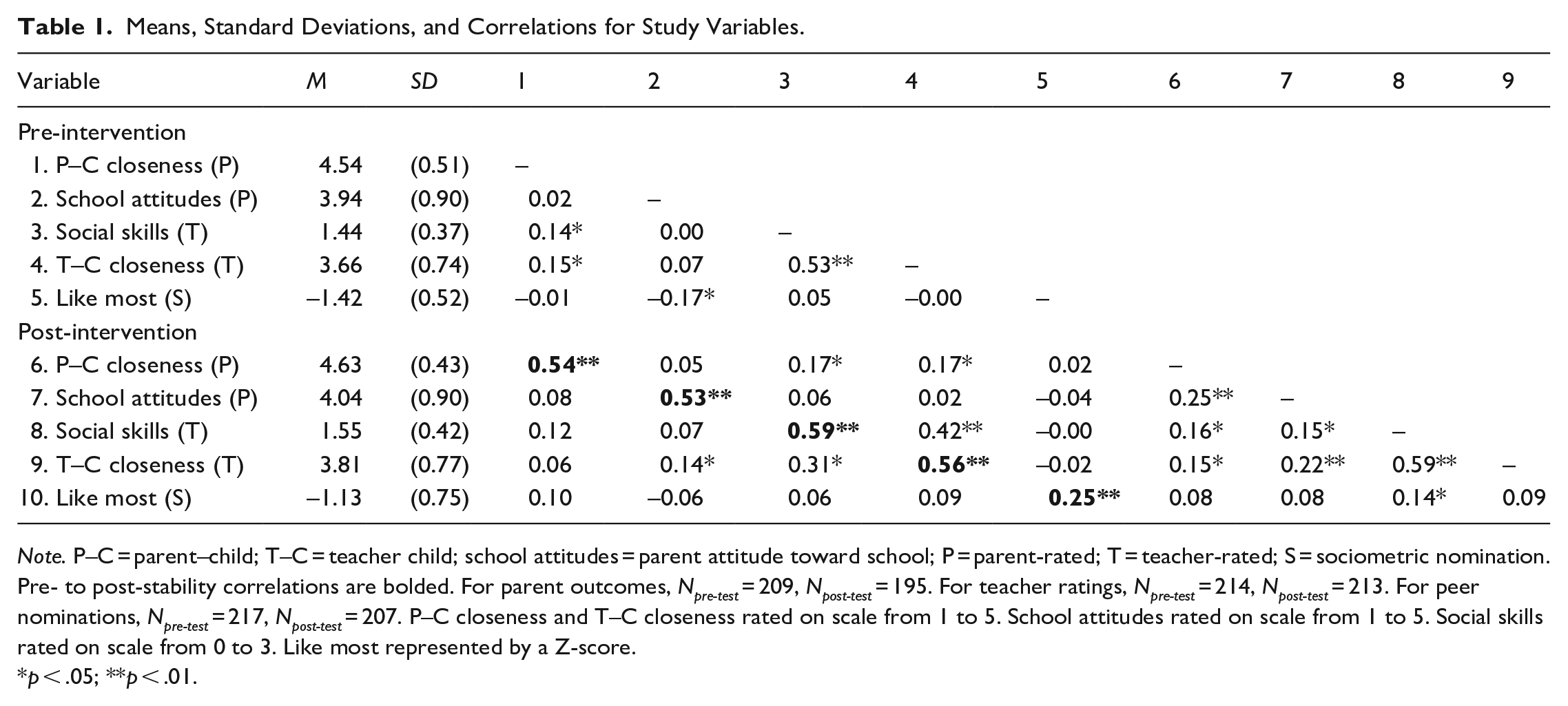
Note. P–C = parent–child; T–C = teacher child; school attitudes = parent attitude toward school; P = parent-rated; T = teacher-rated; S = sociometric nomination. Pre- to post-stability correlations are bolded. For parent outcomes, Npre-test = 209, Npost-test = 195. For teacher ratings, Npre-test = 214, Npost-test = 213. For peer nominations, Npre-test = 217, Npost-test = 207. P–C closeness and T–C closeness rated on scale from 1 to 5. School attitudes rated on scale from 1 to 5. Social skills rated on scale from 0 to 3. Like most represented by a Z-score.
p < .05; **p < .01.
Intervention Effects on Parent Outcomes
Results of the multilevel models, shown in Table 2, revealed that intervention had a significant impact on parent–child closeness, ES = 0.25, p = .04. Parents of children who received the intervention reported feeling significantly closer to their children at the end of the year than parents of children in the control condition, Mintervention = 4.70 (SD = 0.29) versus Mcontrol = 4.55 (SD = 0.52). This intervention effect was robust across grade levels, with no moderation detected.
Intervention Effects on Parent Outcomes.
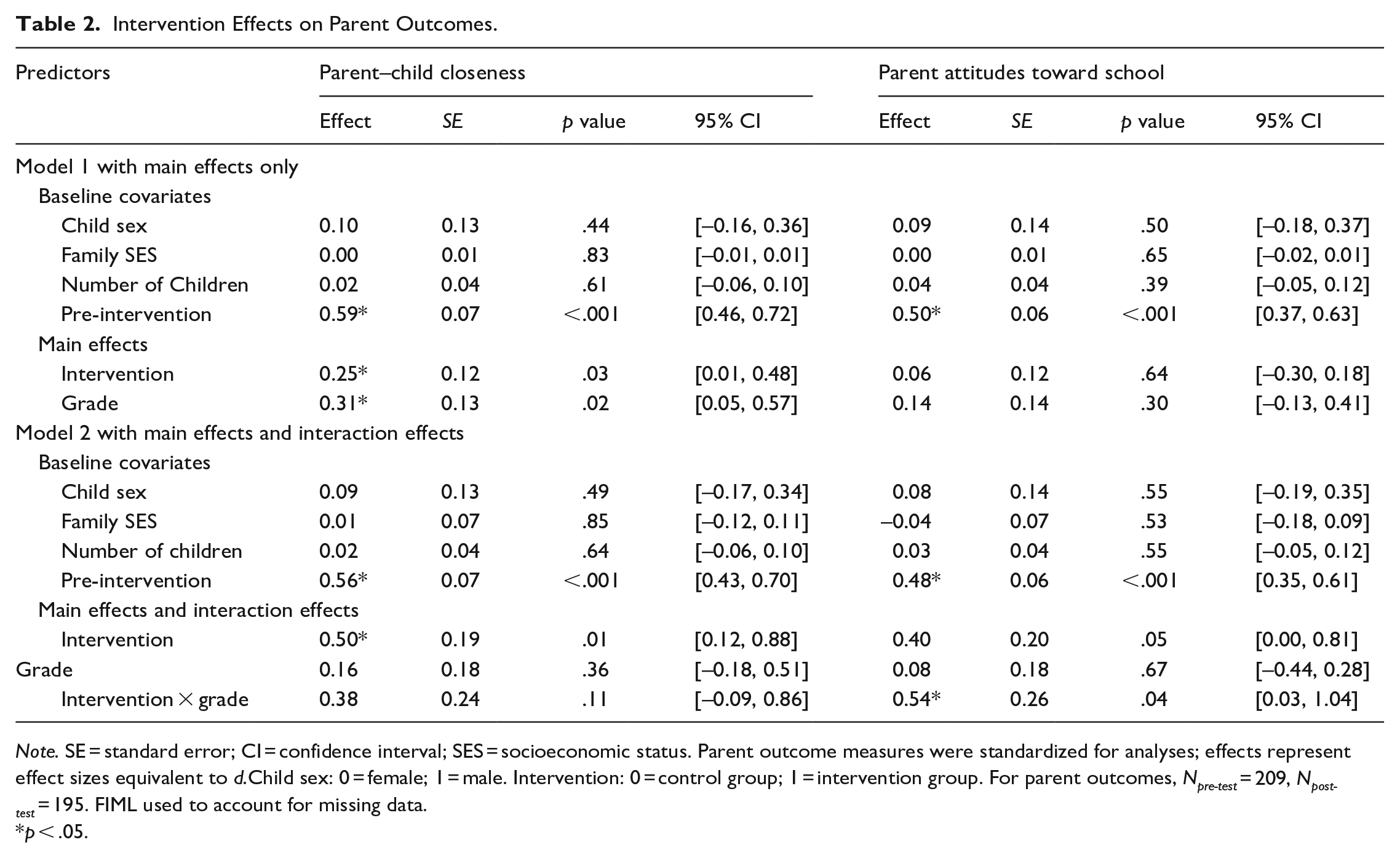
Note. SE = standard error; CI = confidence interval; SES = socioeconomic status. Parent outcome measures were standardized for analyses; effects represent effect sizes equivalent to d.Child sex: 0 = female; 1 = male. Intervention: 0 = control group; 1 = intervention group. For parent outcomes, Npre-test = 209, Npost-test = 195. FIML used to account for missing data.
p < .05.
A similar multilevel model assessed intervention effects on parent attitudes toward the school. The main effect of intervention was not significant, ES = .06, p = .64; however, a significant moderated effect emerged, ES = .53, p = .03. Intervention had a significant impact on the attitudes toward school of parents of older children, ES = .40, p = .04, Mintervention = 4.15 (SD = 0.64) versus Mcontrol = 3.79 (SD = 0.89), but no effect on the parent attitudes toward school of younger children, ES = .13, p = .40, Mintervention = 4.06 (SD = 0.77) versus Mcontrol = 4.16 (SD = 0.72).
Mediation Models
Multilevel path analyses testing indirect pathways from intervention to parent–child closeness showed good fit, RMSEA ⩽ .0.01, CFI ⩾ 0.99, and SRMR ⩽ 0.02, but revealed no significant mediation by any of the tested variables—teacher–student closeness, ES = .02, 95% CI = [−0.02, 0.11]; child social skills, ES = .004, 95% CI = [−0.04, 0.06]; and peer liking ES = .01, 95% CI = [−0.03, 0.06] (see Table 3 and Figure 1). The intervention had a direct effect on parent–child closeness which was not explained by indirect effects operating through intervention-related change in child social skills, teacher closeness, or peer liking at school.
Standardized Direct and Indirect Effects in the Path Model to Parent–Child Closeness.
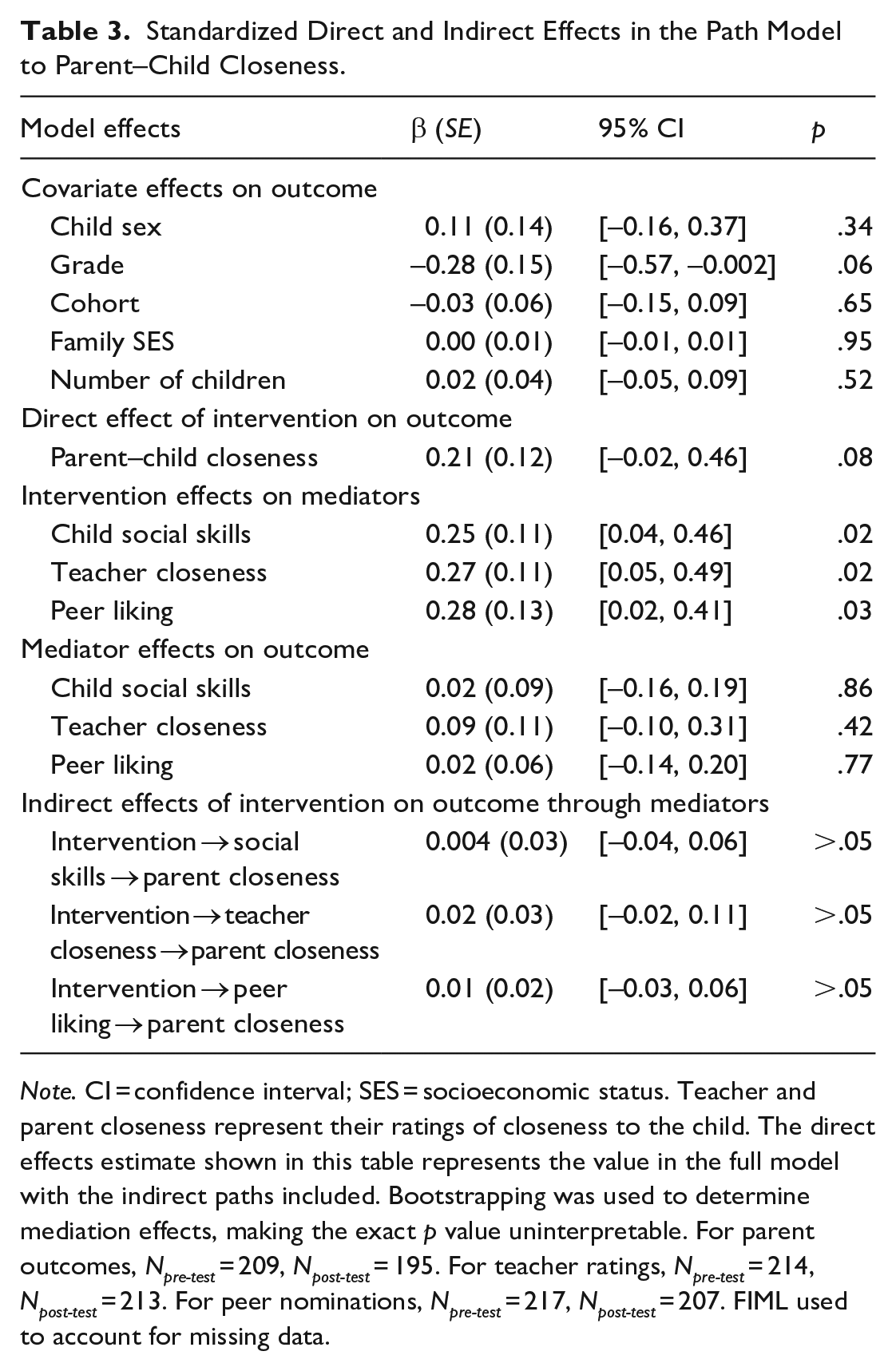
Note. CI = confidence interval; SES = socioeconomic status. Teacher and parent closeness represent their ratings of closeness to the child. The direct effects estimate shown in this table represents the value in the full model with the indirect paths included. Bootstrapping was used to determine mediation effects, making the exact p value uninterpretable. For parent outcomes, Npre-test = 209, Npost-test = 195. For teacher ratings, Npre-test = 214, Npost-test = 213. For peer nominations, Npre-test = 217, Npost-test = 207. FIML used to account for missing data.
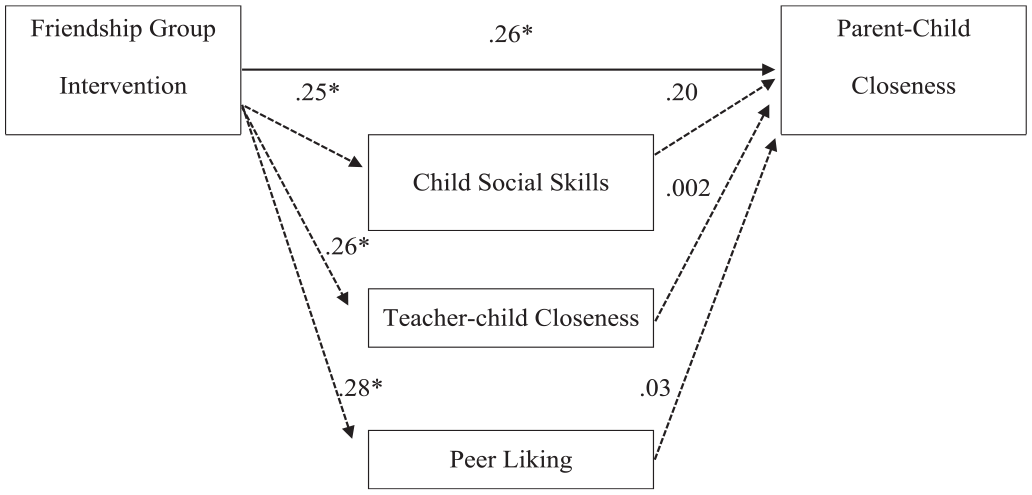
Intervention effects on parent–child closeness: direct and indirect paths. For parent outcomes, Npre-test = 209, Npost-test = 195. For teacher ratings, Npre-test = 214, Npost-test = 213. For peer nominations, Npre-test = 217, Npost-test = 207. FIML used to account for missing data.
Models testing indirect pathways from intervention to parent’s attitudes toward school also showed a good fit to the data (RMSEA ⩽ .0.01, CFI ⩾ 0.99, and SRMR = 0.01). Significant indirect paths emerged through teacher–student closeness, ES = 0.06, 95% CI = [0.01, 0.13], and peer liking, ES = 0.03, 95% CI = [0.001, 0.09] (see Table 4 and Figure 2). Teacher rated social skills did not emerge as a significant indirect path, ES = 0.01, 95% CI = [−0.02, 0.06]. Mediation paths were not significantly moderated by grade level (for descriptive purposes, mediation models for younger and older students are shown in Supplemental Material, Figure S1.)
Standardized Direct and Indirect Effects in the Path Model to Parent School Attitudes.
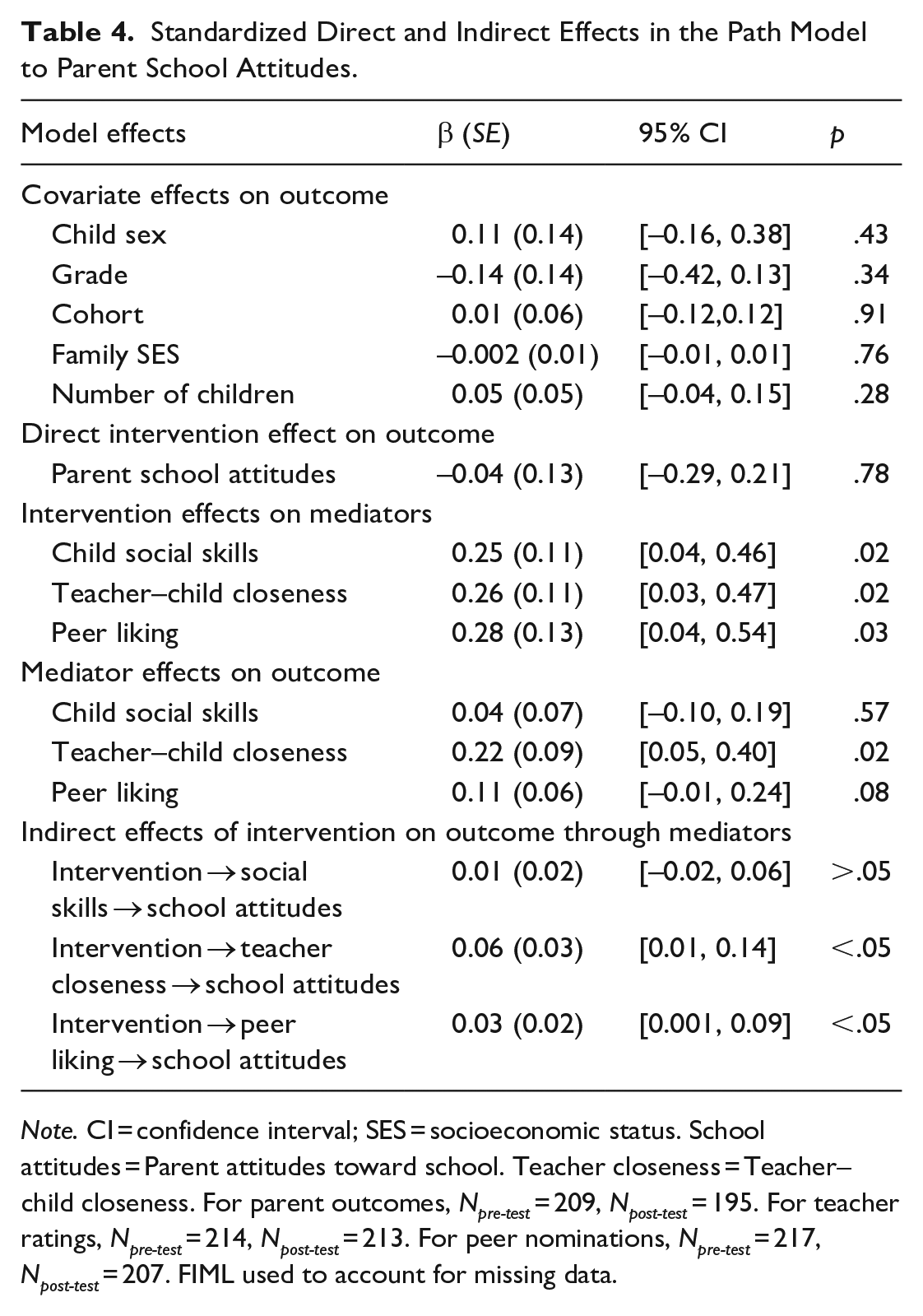
Note. CI = confidence interval; SES = socioeconomic status. School attitudes = Parent attitudes toward school. Teacher closeness = Teacher–child closeness. For parent outcomes, Npre-test = 209, Npost-test = 195. For teacher ratings, Npre-test = 214, Npost-test = 213. For peer nominations, Npre-test = 217, Npost-test = 207. FIML used to account for missing data.
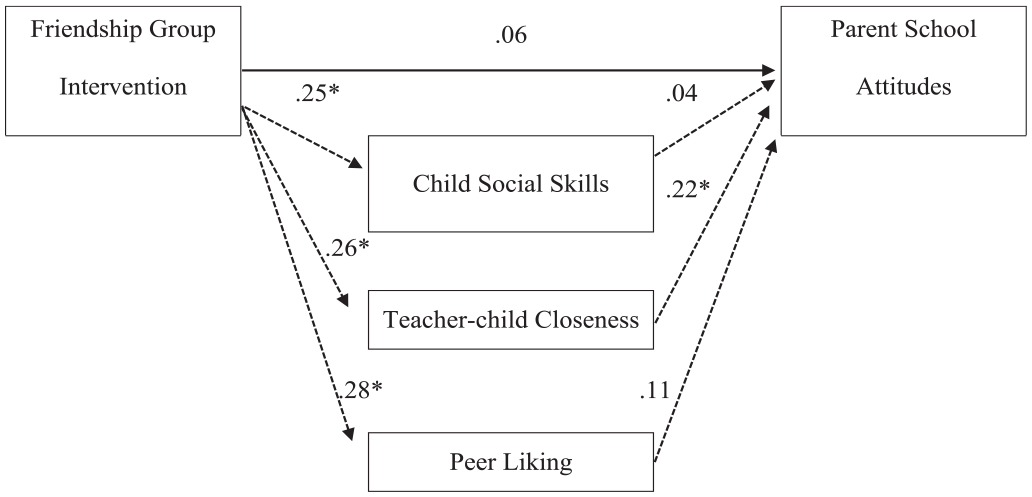
Intervention Effects on Parent Attitudes Toward School: Direct and Indirect Paths. For parent outcomes, Npre-test = 209, Npost-test = 195. For teacher ratings, Npre-test = 214, Npost-test = 213. For peer nominations, Npre-test = 217, Npost-test = 207. FIML used to account for missing data.
Discussion
Evaluations of school-based SST typically focus on the child social skills and peer relations that are direct intervention targets. An unanswered question is whether these interventions might also have spillover benefits for families. Developmental research documents that peer rejection at school can adversely affect parent–child relationships and parent attitudes toward the school. Given these associations, it was hypothesized that the Friendship Group intervention that improved the social skills, peer liking, and teacher closeness of children who experienced peer rejection at school might also produce spillover benefits for parents, enhancing parent–child closeness and parent attitudes toward school. Multilevel path analyses revealed that the intervention increased parent–child closeness and (for the older elementary children) enhanced parent attitudes toward the school. Analyses exploring the pathways that accounted for these effects revealed that improvements in parent–child closeness were a direct effect of intervention whereas enhanced attitudes toward school were mediated through intervention-related improvements in student–teacher closeness and peer liking. These findings have implications for the design of SST interventions and future research.
Parent–Child Closeness
School-based SST programs focus on improving child social skills and rarely include parents as intervention partners (Gresham, 2016). However, multi-component intervention trials for children with externalizing problems suggest that parent inclusion boosts the improvements in the child’s school functioning associated with SST (Lochman et al., 2017; Pfiffner et al., 2018). In addition, clinic-based SST programs for children with Autism Spectrum Disorder (Frankel et al., 2010) and Attention Deficit Hyperactivity Disorder (Mikami et al., 2010) demonstrate that parents can provide effective coaching for child social skill development at home. Friendship Group included parents as SST intervention partners to strengthen generalized support for child social skill development and positive peer interaction opportunities at home.
Including parents in the intervention had direct benefits for parents, promoting increases in parent–child closeness. We can only speculate about the specific elements of intervention inclusion that fostered these positive changes, but several possibilities exist. Increases in parent knowledge about their child’s peer difficulties may have boosted parent empathy and motivated efforts to help. This information was provided during two in-person meetings using a “Friendship Check-up” form modeled after the Family Check-Up model (Dishion & Stormshak, 2007), which includes the use of motivational interviewing to help parents articulate problem-focused goals and plans. Encouraging parents to reflect on the social adjustment issues they wanted to target at home and the approaches they planned to use could have motivated action and thereby increased positive parent–child interaction and closeness.
Parents also received handouts after each session that reviewed target skills and included suggestions for practicing and extending skill practice at home. Providing parents with this specific guidance may have increased the frequency with which parents talked with their child about their school and friendship experiences, promoting feelings of closeness. Future research is needed to determine the optimal ways to include parents in school-based SST interventions, but the present results demonstrate the value in doing so.
Parent Attitudes Toward the School
Friendship Group also improved parent attitudes toward the school, but only for children in the older grades. At the end of the year, intervention group parents were significantly more likely than control-group parents to feel that the school was a good place for their child and that their child was being treated with respect and kindness.
Parents of children who experience peer problems at school often have strained relationships with the teacher and school and concerns about insufficient support for their child’s well-being (Gwernan-Jones et al., 2015; Santiago et al., 2016). Parent discontent may grow over time if they feel that the school is blaming them and their child or if they feel unheard when they express their concerns (Gwernan-Jones et al., 2015). No evidence of direct effects of intervention on parent attitudes toward school emerged; it was not enough to simply include parents as partners and invite them to share their concerns and ideas with school staff. Instead, the intervention benefits were indirect, mediated by intervention-related improvements in student–teacher closeness and peer liking at school. In other words, the intervention was effective in promoting positive parent attitude change only when it led to significant improvements in the way teachers and peers felt about the children who had originally been rejected.
The Friendship Group intervention increased student–teacher closeness, improving the way the teacher felt about and interacted with the children who experienced peer rejection. Prior research suggests that when teachers feel closer relationships with students, their student–teacher interactions are friendlier and involve fewer harsh reprimands (Westerberg et al., 2020). By increasing student–teacher closeness, the intervention likely enhanced teacher behavioral supports in ways that positively affected student school experiences and perceptions which were communicated to or observed by parents. Close and supportive student–teacher relationships may also have additional benefits not studied here such as increasing positive parent engagement in the child’s schooling (Dearing et al., 2008). It is also possible that children might pick up on parent attitudes toward the school in ways that might increase their school engagement—a potential benefit that deserves exploration in future research.
Friendship Group also increased peer liking, producing significant gains in the number of “like most” nominations that intervention-group children received from classmates relative to control-group children. Increases in peer liking were a second mechanism linking the intervention to improved parent attitudes toward the school. Parents may become aware of the growth in their children’s school friendships and positive peer interactions as a function of the way the child talks about classmates at home and by observations of classmate interactions outside of school. As parents see that their child has more friends at school and is being treated well in the classroom, it follows that their concerns about school neglect or mistreatment would decline and they would become more trusting of the school itself.
Although the effect of the Friendship Group intervention on the parents’ attitudes toward school was moderated by grade level and significant only for parents of the older children, the mediation process did not significantly interact with grade level. This suggests that the intervention influenced parent perceptions of the school treatment of their child in the same way across the grade levels, but the magnitude of the effect reached statistical significance only at the older grades. Dearing et al. (2008) found that, over time, parent perceptions of their child’s school deteriorated as student–teacher relationship and child feelings about school worsened. It is possible that the intervention-related improvements in student–teacher and peer relations were more salient for parents of older children due to their past history with the school, resulting in a greater magnitude of improved feelings toward the school. Older children may also be more aware of their negative (and then improving) teacher and peer treatment than the younger children, and more likely to share these feelings with their parents.
Strengths and Limitations
This study had a number of strengths including the randomized-controlled design that allowed for causal interpretations of intervention effects. By involving parents and assessing their perceptions of their parent–child relationship and attitudes toward the school, it was possible to evaluate potential spillover effects of the school-based Friendship Group, addressing an important gap in the literature. In addition, the study design made it possible to explore mediation pathways that helped clarify how the school-based intervention affected parent perceptions and attitudes.
The study also had important limitations that warrant consideration. Parent–child closeness and parent attitudes toward school were assessed only by self-reports that reflected the perspective of the parent. Future research would benefit from also collecting child ratings of parent–child relationships and teacher ratings of parent–school relationships to provide a fuller picture of school-based SST impact on parent–child and parent–school relationships.
Furthermore, the potential mediators of intervention effects on parents were limited to intervention-related improvements in child social skills, student–teacher closeness, and peer liking. There are other factors that may account for the spillover effects of peer rejection on family functioning and serve as possible targets and mediators of intervention benefits from families. For example, research has suggested that negative spillover effects of peer rejection occur as a function of increased child irritability at home (Janssens et al., 2017; Kaufman et al., 2020) and low self-efficacy (Vershueren & Marcoen, 2002). These affective dimensions of child functioning were not assessed in this study, nor was the quality of parent–child interaction. A broader base of measurement may provide a wider foundation for understanding cross-context intervention effects in the future and help clarify the mechanisms of action and processes by which intervention led to benefits for parents and children at home. Future research on school-based SST is needed to test out possible mechanisms of action to optimize benefits that extend outside of the school context.
The study focused on how parents benefited from the child-focused intervention but did not assess the degree to which parent engagement or parent attitude change may have affected intervention benefits for children. The design did not compare conditions in which parents were included in varying ways, which would have allowed for analyses that evaluated the degree to which parent inclusion contributed to child outcomes. The study also lacked measures of the impact that intervention inclusion had on parent behaviors such as their specific efforts to support their child’s skill development at home. Our ability to understand who benefited from the intervention and why is limited by our collected measures and does not provide a full picture of how much parent behavior may have changed due to the intervention such as by increasing parent support and scaffolding for child improvements at home.
Including sociometric nominations in the study provided a strong assessment of intervention effects on peer relations including the capacity to track differential intervention effects on peer liking versus peer disliking. Sociometric measures are encouraged in peer relations research because of their strong predictive validity (van den Berg et al., 2015), but their use has raised ethical concerns about the potential harm associated with asking children to evaluate their classmates, especially with negatively valenced questions (Mayeux et al., 2007). Research suggests that sociometric nominations can be administered in ways that minimize the risk of negative impact (Mayeux et al., 2007). However, most schools use teacher ratings rather than peer nominations to identify children for Tier 2 interventions. Teachers often lack a full awareness of the peer dynamics in their classrooms; in one study, teachers failed to identify 40% of the children who were sociometrically rejected in their classrooms (van den Berg et al., 2015).
Conclusion
School-based SST interventions for children experiencing peer difficulties may provide significant benefits to parents including improving their relationship with their child and their attitudes toward the school. Children who participated in the Friendship Group intervention had significantly closer relationships with their parents after intervention, highlighting the potential of SST interventions to enhance family relationships as well as improving relationships with teachers and peers. For older children, the intervention also improved the trust that parents felt about the school’s treatment of their child. Improving parent attitudes toward the school may, in turn, boost parent willingness to collaborate with the school in efforts to support their child’s learning and adjustment, thereby enhancing child success at school. Effect sizes were in the small to moderate range (d = .26 on parent–child closeness, duppergrades = .40 and dlowergrades = .13 for parent attitudes to school) which validate the promise of the approach. This study has strong implications for future research and intervention implementation. The knowledge that SST benefits children and families beyond the classroom suggests that researchers and practitioners could leverage these interventions in ways that strengthen different relational components and improve parent–school partnerships and parental engagement throughout the intervention process.
Supplemental Material
sj-docx-1-jbd-10.1177_01650254231198031 – Supplemental material for Impact of a school-based social skills training program on parent–child relationships and parent attitudes toward school
Supplemental material, sj-docx-1-jbd-10.1177_01650254231198031 for Impact of a school-based social skills training program on parent–child relationships and parent attitudes toward school by Rebecca Slotkin, Karen L. Bierman and Linda N. Jacobson in International Journal of Behavioral Development
Footnotes
Acknowledgements
Special thanks are offered to Sandra Stewart who served as the intervention trainer and supervisor for this project. The views expressed in this article are ours and do not necessarily represent the granting agencies.
Declaration of Conflicting Interests
The author(s) declared no potential conflicts of interest with respect to the research, authorship, and/or publication of this article.
Funding
The author(s) disclosed receipt of the following financial support for the research, authorship, and/or publication of this article: This project was supported by the Institute of Education Sciences grant R305A150488. Appreciation is expressed to the teachers, students, parents, and program personnel who served as partners in this project in the Altoona, Juniata County, Mifflin County, and York City School Districts in Pennsylvania.

Supplemental Material
Supplemental material for this article is available online.
Notes
References
Supplementary Material
Please find the following supplemental material available below.
For Open Access articles published under a Creative Commons License, all supplemental material carries the same license as the article it is associated with.
For non-Open Access articles published, all supplemental material carries a non-exclusive license, and permission requests for re-use of supplemental material or any part of supplemental material shall be sent directly to the copyright owner as specified in the copyright notice associated with the article.
