




Abstract
Which domain-specific self-evaluations are most central to children’s global self-worth? And does this differ between countries with different levels of collectivism–individualism? We conducted a preregistered cross-cultural meta-analysis to address these questions. We included 141 independent samples (21 countries/regions, 584 cross-sectional effect sizes), totaling 33,120 participants in middle to late childhood, a critical age for self-worth development. Overall, global self-worth was most strongly correlated with self-evaluations in the domain of physical appearance (r = .64), followed by behavioral conduct, peer relations, academic competence, athletic competence, and parent relations (rs = .39 to .54). Global self-worth was equally strongly correlated with agentic and communal self-evaluations (r = .51 and .52, respectively). The strength of these associations did not vary significantly by country-level collectivism–individualism. These findings reveal the robust correlates of self-worth across cultures and raise important new questions about when and how culture shapes the development of children’s global self-worth.
What do you like about yourself? When asked this question, an 8 year-old may provide many possible answers, often including self-evaluations in specific domains, such as athletic competence (e.g., “I’m good at sports”), social relationships (e.g., “I have many friends”), and physical appearance (e.g., “I like the way I look”). From middle childhood, children readily incorporate domain-specific self-evaluations into their global self-worth (e.g., “I’m happy with myself”; Harter, 2012). Despite the large body of research in this area, meta-analytic evidence on the correlations between children’s domain-specific self-evaluations and global self-worth is lacking. This should be investigated across cultures, because cultural differences in ideals, norms, and practices may determine which domains are most central to children’s self-worth (Nelson, 2003). Here, we report a preregistered cross-cultural meta-analysis to address two critical questions: Which domain-specific self-evaluations are most central to children’s global self-worth? And does this differ across countries with different levels of collectivism–individualism?
Domain-Specific Self-Evaluations and Global Self-Worth
The constellation of views that children have of themselves has long been characterized as a multidimensional hierarchy with domain-specific self-evaluations at its base and global self-worth at its apex (Harter, 2012; Marsh, 1990; Marsh & Shavelson, 1985; Shavelson et al., 1976). A meta-analysis that synthesized longitudinal evidence found reciprocal relations between global self-worth and domain-specific self-evaluations over time (Dapp et al., 2023), suggesting that domain-specific self-evaluations influence global self-worth (bottom-up effects) and vice versa (top-down effects). In the current meta-analysis, we focused on cross-sectional evidence to examine how domain-specific self-evaluations and global self-worth are correlated in middle to late childhood, the time when children’s self-worth first emerges. In early childhood, from around age 4 years, children have the cognitive capacities to make judgments about their competencies in specific domains, which are referred to as domain-specific self-evaluations (Harter, 2012). Children also start to construct a sense of global self-worth based on their successes or failures, but they do so only under specific circumstances (e.g., when they believe they are being evaluated by an adult; Cimpian et al., 2017). In middle childhood, from around age 8 years, children can reliably incorporate domain-specific self-evaluations into their global self-worth (e.g., Butler, 2005; Dweck, 1998; Harter, 2012; Marsh et al., 2002). Knowledge about how domain-specific self-evaluations are associated with global self-worth may provide crucial insight into the emergence and development of global self-worth.
Consistent with meta-analyses on longitudinal data (Dapp et al., 2023; Orth et al., 2021), we choose to focus on several critical domains of children’s self-evaluation. These domains of children’s self-evaluation include (a) academic competence; (b) athletic competence; (c) behavioral conduct; (d) parent relations; (e) peer relations; and (f) physical appearance. These domains figure prominently in theories of the self (Bracken et al., 2000; Coopersmith, 1984; Shavelson et al., 1976), and are reflected in key measures of children’s self-views (see Table 1), most notably the Self-Perception Profile for Children (Harter, 2012) and Self-Description Questionnaire-I (Marsh, 1990). While the Self-Description Questionnaire-I (Marsh, 1990) distinguishes mathematics and verbal self-evaluations as separate domains, influential hierarchical models (Shavelson et al., 1976) consider them as subdomains of academic self-evaluation. Accordingly, mathematics and verbal self-evaluations are conceptually further from global self-worth, compared to general academic self-evaluation. We focused on the broader construct of academic self-evaluation rather than its specific components.
Children’s Domain-Specific Self-Evaluations and Their Operationalization.
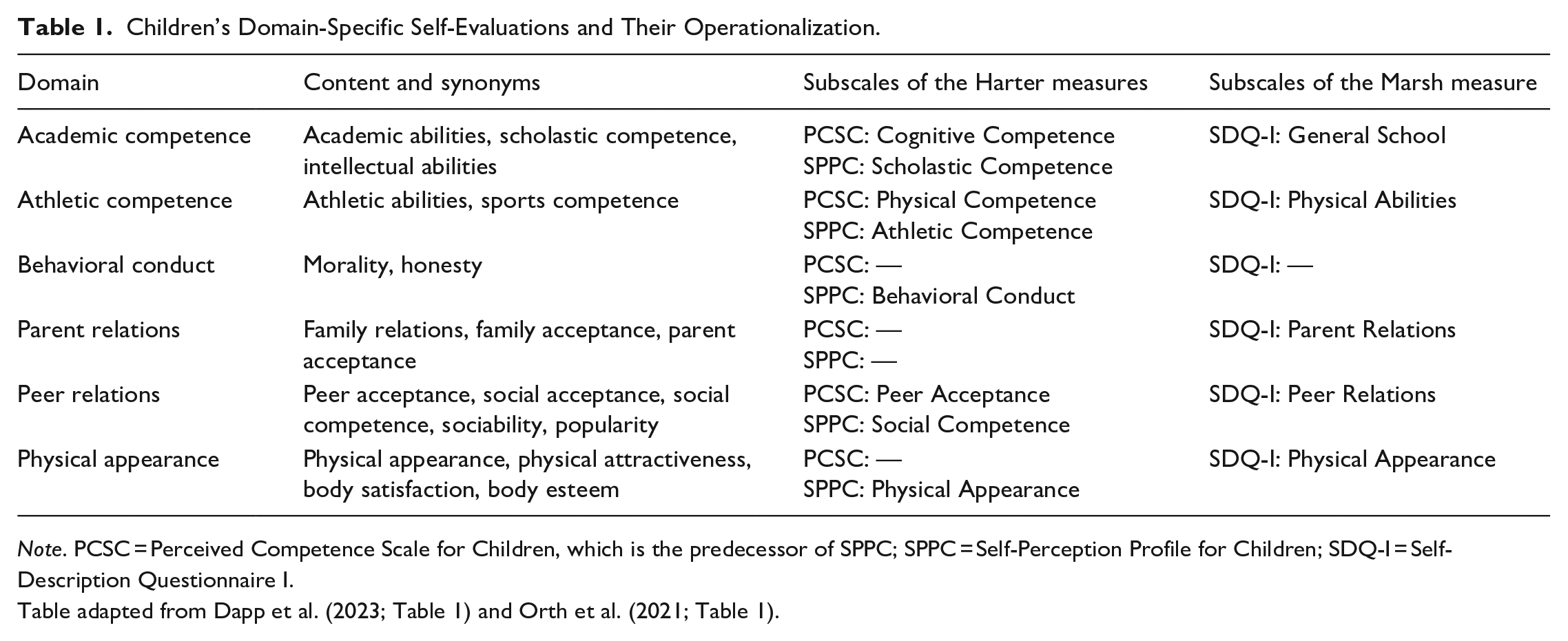
Note. PCSC = Perceived Competence Scale for Children, which is the predecessor of SPPC; SPPC = Self-Perception Profile for Children; SDQ-I = Self-Description Questionnaire I.
Table adapted from Dapp et al. (2023; Table 1) and Orth et al. (2021; Table 1).
Which domains are most important for children’s self-worth? Several theories suggest that self-evaluations in agentic domains—those reflecting the degree to which children are personally effective, competent, or superior (Bakan, 1966; F. Chen et al., 2017; Judd et al., 2005)—are important. For example, theorists have argued that children need to experience personal efficacy and confidence to develop self-worth (Brummelman & Sedikides, 2020; Dweck, 2017; Muenks et al., 2018). Consequently, children may lose self-worth when they fail to feel competent in valued domains (e.g., in school; Covington, 2009). Yet, children build their self-worth not only on agentic domains, but also on communal domains—those reflecting the degree to which children experience relatedness, warmth, or support from others (Bakan, 1966; F. Chen et al., 2017; Judd et al., 2005). Influential theories hold that the perceived quality of one’s social relationships is a major source of self-worth. For example, the attachment theory proposes that when children perceive significant others to be available and accepting, they come to see themselves as worthy individuals (Bowlby, 1969; Sroufe, 2002). The sociometer theory extends this perspective and argues that self-worth is an evolutionary adaptation that serves to monitor the quality of one’s social relationships (Leary & Baumeister, 2000). Taken together, agency and communion have consistently appeared as core determinants of how individuals value themselves (Crocker & Wolfe, 2001; Marsh & Shavelson, 1985; Tafarodi & Swann, 1995). Accordingly, the self-determination theory (Ryan & Deci, 2000) holds that individuals’ self-worth arises from both the fulfillment of agentic needs (i.e., the needs for competence and autonomy) and communal needs (i.e., the need for relatedness).
Empirical evidence supports the view that both agentic and communal domains are relevant to children’s self-worth. Cross-sectional, longitudinal, and experimental evidence shows that children’s self-evaluations in agentic domains—such as their self-perceived physical appearance, academic performance, and athletic ability—are strongly associated with their self-worth (Arens & Hasselhorn, 2014; Harter, 2000; Mendo-Lázaro et al., 2017; Slutzky & Simpkins, 2009; Yang et al., 2019). Other studies have shown that children’s self-evaluations in communal domains—such as their self-perceived relationship quality with their parents and peers, and behavioral conduct—are strongly associated with their self-worth as well (Arens & Hasselhorn, 2014; Harris et al., 2017; Magro et al., 2018; Thomaes et al., 2010; Wagner et al., 2018). Despite a large body of empirical studies, meta-analytic evidence on how these two fundamental dimensions of self-evaluation are associated with children’s global self-worth is lacking. Here, we empirically synthesize the associations between domain-specific self-evaluations and children’s self-worth in middle to late childhood.
Cultural Differences
Cultural differences in ideals, norms, and practices are thought to shape the development of the self (Keller, 2020; Wang, 2004). Culture prescribes what being a “good person” entails, and self-worth can thus be understood as the extent to which individuals view themselves as living up to culture-bound norms and expectations (Bleidorn et al., 2016; Crocker & Wolfe, 2001; Sedikides et al., 2003). The “self-centrality breeds self-enhancement” principle holds that adhering to standards central to the self is a primary source of self-worth. It also suggests that there are cultural differences in self-centrality of such standards (Sedikides et al., 2015). One cultural dimension that provides a useful proxy for describing cultural differences in how individuals perceive and socially contextualize themselves is collectivism–individualism (Hofstede, 1980; Markus & Kitayama, 1991; Triandis, 1989). Individualistic cultures (e.g., North-American, Australian, and most Western European cultures) emphasize ideals and norms surrounding independence, freedom of choice, and self-expression. By contrast, collectivistic cultures (e.g., East-Asian, South-American, and most African cultures) emphasize ideals and norms surrounding interdependence and social embeddedness. Accordingly, it has been proposed that individualistic cultures primarily assign importance to competence-based self-worth (i.e., feeling that one is capable and efficacious, akin to agency), and collectivistic cultures to liking-based self-worth (i.e., feeling that one is relationally competent and accepted by others, akin to communion; Tafarodi & Milne, 2002). This pattern has been supported in research in Eastern and Western cultures (Baranik et al., 2008; Kwan et al., 2009; Nezlek et al., 2008; Schmitt & Allik, 2005).
Cultural influences already operate from early development; as they grow up, children internalize cultural values, and they embody these values in their developing self-views (Keller, 2020; Nelson, 2003; Tomasello, 2016). Individualistic cultures typically encourage self-maximization and the fulfillment of personal goals and desires. This is reflected in socialization messages conveying to children the importance of personal effectiveness and distinctiveness (Gürel et al., 2020; Thomaes et al., 2017) and of independence and self-sufficiency (Kagitcibasi, 2005; Tamis-LeMonda et al., 2008). Collectivistic cultures typically encourage social responsibility and ingroup loyalty. Accordingly, children who grow up in such cultures are often socialized to embrace the importance of modesty, obedience, respect, and fitting in (X. Chen, 2000; Kagitcibasi, 2005; Tamis-LeMonda et al., 2008). Taken together, children growing up in individualistic cultures may derive their self-worth more from agentic than from communal domains, while children growing up in collectivistic cultures may derive their self-worth more from communal domains.
Over the past few decades, it has been debated how collectivism–individualism should be conceptualized and operationalized. At the level of individuals, collectivism and individualism can be studied as independent constructs, which implies that individuals can embrace both simultaneously (Oyserman & Uskul, 2008). By contrast, at the level of countries, collectivism and individualism are usually studied as opposite ends of the same spectrum (Hofstede et al., 2010; Santos et al., 2017). We relied on country-level measures of collectivism–individualism to examine cultural differences in the associations between domain-specific self-evaluations and children’s self-worth.
The Current Study
This preregistered meta-analysis presents the first comprehensive, cross-cultural analysis of how children’s domain-specific self-evaluations are associated with their global self-worth. We build on and extend a recent meta-analysis (Dapp et al., 2023) that examined longitudinal associations between domain-specific self-evaluations and global self-worth in childhood, adolescence, and adulthood. While longitudinal data on these associations exist in childhood, they are scarce compared with cross-sectional data, and they have been collected predominantly in Western countries. In this meta-analysis, we relied on cross-sectional studies which allowed us to synthesize data from more diverse countries. Our study contributes to the literature by exploring cultural differences, investigating children’s self-evaluation along the two fundamental dimensions of agency and communion, and focusing on the foundational developmental stage of middle to late childhood.
We took two steps. First, we examined the centrality of domain-specific self-evaluations by exploring associations between children’s self-evaluations and their global self-worth, and how they vary across self-evaluation domains. Second, we examined whether these associations were moderated by country-level collectivism–individualism. We assessed country-level collectivism–individualism using two complementary indices: Hofstede’s collectivism–individualism index (Hofstede et al., 2010) and a time-sensitive collectivism–individualism index (Santos et al., 2017). We tested moderation by methodological and sample characteristics (i.e., measurement type, sample type, age, gender, race/ethnicity, socioeconomic status) as sensitivity analysis.
Method
We preregistered the research question, methods, and analyses with PROSPERO in 2020. We did not preregister hypotheses; our aim was to explore the associations between domain-specific self-evaluation and children’s global self-worth by aggregating the existing evidence. All data, analysis codes, research materials, and preregistration can be accessed at OSF (https://osf.io/6yegt).
Literature Search
The meta-analysis focused exclusively on the Self-Perception Profile for Children and the Self-Description Questionnaire I because they possess three critical features: (a) they assess both global self-worth and domain-specific self-evaluations, and there is considerable overlap between the domains included in both measures with good convergent validity (Donnellan et al., 2015); (b) they assess global self-worth independently from domain-specific self-evaluations (rather than as the average of domain-specific self-evaluations); and (c) they are frequently used and well-validated for research involving participants in middle to late childhood.
To identify relevant primary studies, we performed a three-step search procedure. First, using the Web of Science database, we searched for articles citing the Self-Description Questionnaire-I (SDQ-I; Marsh, 1986, 1987, 1988, 1990, 1993, 2007; Marsh et al., 1983) the Self-Perception Profile for Children (SPPC; Harter, 1985, 2012; Renick & Harter, 1989), or its predecessor, the Perceived Self-Competence Scale (PSCS; Harter, 1982).
Second, we conducted a literature search in the PsycINFO, ERIC, HAPI, and Web of Science databases. We used the search string “self description question* OR self perception profil* AND child*” to find additional articles that potentially used (one of) our focal measures (the asterisk allows for searching terms with alternate endings).
Third, to identify potentially relevant unpublished manuscripts, we screened the reference lists of the included articles and reached out to researchers cited more than once in our included studies. We also announced our request for unpublished data via social media and “listservs” of research organizations in developmental, social, personality, and cultural psychology (see Supplementary Material S1 for our efforts to search for unpublished data).
We ended our database search in December 2020 and unpublished data search in September 2022. After removing duplicates, our search strategy resulted in a total of 6,960 potentially eligible records.
Inclusion Criteria
Studies eligible for inclusion had to meet the following criteria: (a) they were empirical and quantitative; (b) they reported at least one zero-order cross-sectional correlation between global self-worth and at least one domain-specific self-evaluation; (c) participants did not take part in an intervention program (i.e., only baseline and control group data from intervention studies were used); and (d) participants in middle to late childhood were sampled (i.e., sample mean age ±1 SD had to fall in the range from 8.00 to 12.99). If sample mean age and SD were not reported, we searched for proxy indices of age (e.g., grade level or age range). If grade level was reported, we verified children’s typical age in the relevant grade level in the pertaining country. If only an age range was reported, it needed to fall in the range of 8.00 and 12.99 years.
We conducted a two-step screening to determine the eligibility of the reports (Figure 1). First, we screened titles and abstracts. Two raters independently screened 10% of the records with good interrater agreement (Cohen’s κ = .96). Inconsistencies were discussed until full consensus was reached. Second, we read the full-texts of potentially eligible reports. Again, raters independently screened 10% of the reports with good interrater agreement (Cohen’s κ = .82). Disagreements were once again resolved via discussion until full consensus on eligibility was reached. A total of 93 published articles and 1 unpublished report were included.
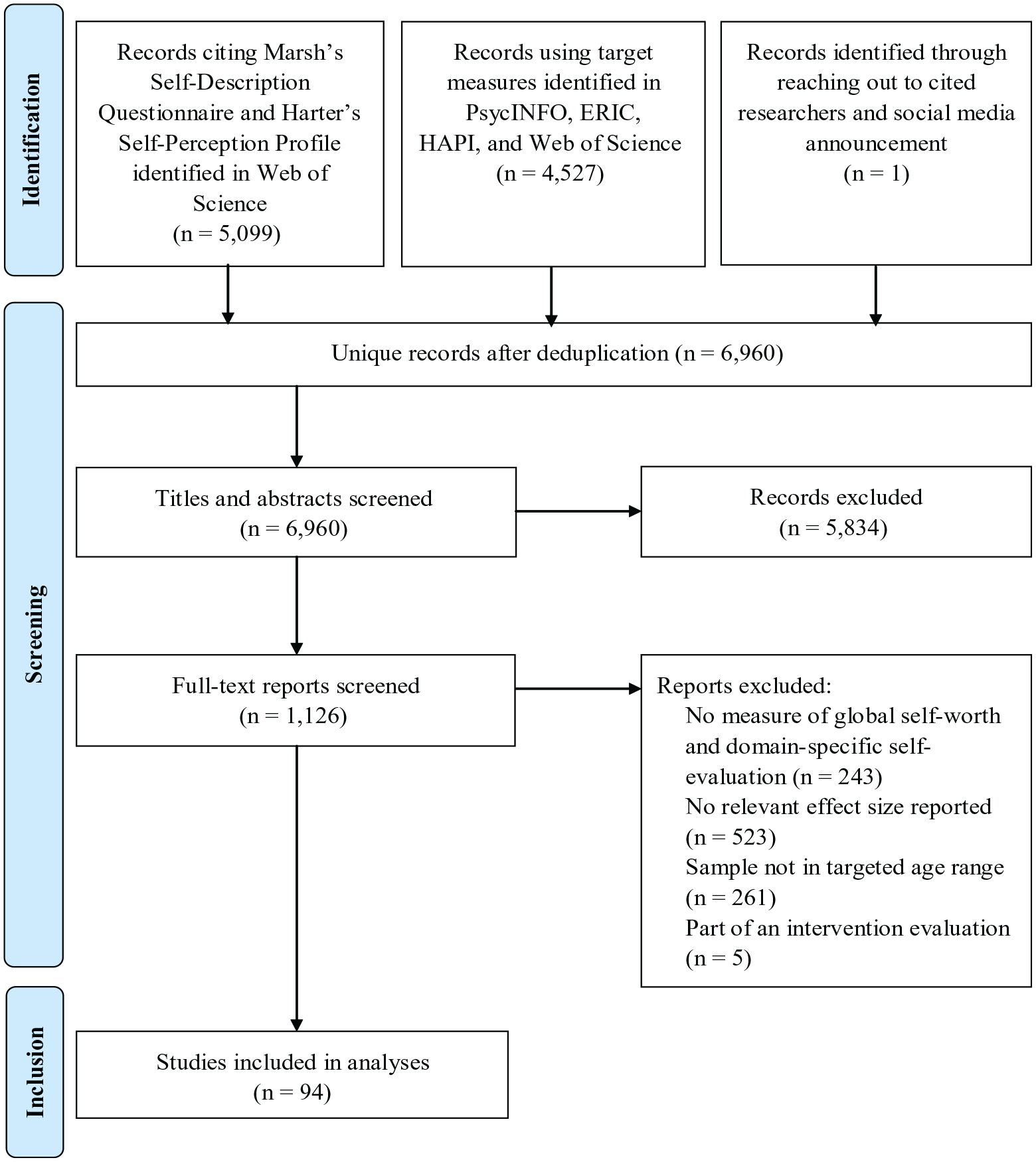
Flow Diagram of Study Inclusion.
Coding of Studies
We coded the following sample characteristics: (a) mean age; (b) gender (i.e., percentage of female participants); (c) racial/ethnic status (i.e., percentage of racial/ethnic majority participants); (d) sample type (i.e., typical, nontypical, or mixed; we operationalized nontypical samples as samples recruited for the purpose of overrepresenting children with a mental or physical problem, such as obesity, learning difficulty, or a psychiatric or other medical diagnosis); (e) measurement type (i.e., the Harter or Marsh measures); (f) socioeconomic status (i.e., high, middle, low, or mixed); (g) sample size; and (h) effect size (i.e., zero-order correlation coefficient). When studies reported effect sizes for both a total sample and subgroups (e.g., for males and females separately), we only included the effect sizes reported for the subgroups to maximize the number of effect sizes.
We used two country-level indices of collectivism–individualism. First, we used the well-established Hofstede’s collectivism–individualism index (Hofstede et al., 2010), which represents the degree of independence between members in a society. Adding to our preregistered approach, we included a second index of time-sensitive collectivism–individualism (Santos et al., 2017), because a country’s level of collectivism–individualism can change across time (Hamamura, 2012; Kashima, 2014; Morris et al., 2015). This index is calculated by averaging standardized values for three culture-level indicators from the World Value Survey 1981–2020 time-series dataset (Haerpfer et al., 2022; data available in every 5 years): (a) perceiving friends as more important than family; (b) attaching importance to cultivating independence in children; and (c) prioritizing personal self-expression over other values. The two indices of collectivism–individualism were positively correlated, r = .49, p < .001. For both measures, higher scores indicate higher levels of individualism and lower levels of collectivism; and lower scores indicate high levels of collectivism and lower levels of individualism.
To determine the interrater reliability of the coding process, around 10% (n = 11) of the included reports were double-coded by a second coder. Interrater reliability was good, with intraclass correlations (ICC) for continuous variables ranging from .87 to 1, and Cohen’s κ for categorical variables ranging from .84 to 1. Coding disagreements were discussed and fully resolved.
Data Analysis
Studies often included multiple effect sizes derived from the same sample (e.g., effects sizes for the associations between various domains of self-evaluations and global self-worth). We performed a three-level meta-analysis (Assink & Wibbelink, 2016), which allowed us to include multiple effect sizes from one study while accounting for their dependency by modeling the hierarchical structure of the data (Assink et al., 2015; Van den Noortgate & Onghena, 2003). First, we estimated an overall association between self-evaluations and global self-worth in an intercept-only random effect model. Second, we performed two separate one-sided log-likelihood ratio tests to determine whether the within-study variance (at Level 2 of the model) and the between-study variance (at Level 3 of the model) in effect sizes were significant. In case of significant heterogeneity, we extended the random effect model to mixed effect models in bivariate moderator analyses to test whether the strength of the association between self-evaluations and global self-worth varies across domains (i.e., across individual domains, as well as across domains aggregated into overarching agentic and communal dimensions). Third, we explored potential interaction effects between domains and country-level collectivism–individualism. Finally, we conducted sensitivity analyses in which we tested potential moderating effects of study design and sample characteristics (i.e., measurement type, sample type, age, gender, race/ethnicity, and socioeconomic status).
We analyzed the data in R (R Development Core Team, 2016), using the metafor package (Viechtbauer, 2015) and syntax developed by Assink and Wibbelink (2016). We used the rma.mv function of the metafor package to build three-level models and estimated model parameters using the restricted maximum likelihood method (REML; Viechtbauer, 2005). Prior to conducting the analyses, we converted Pearson’s r values to Fisher’s z values (Lipsey & Wilson, 2001). After conducting the analyses, we transformed the Fisher’s z values back into Pearson’s r for interpretability. We mean-centered continuous moderator variables, and recoded categorical variables into dummy variables. We used two-tailed tests throughout, unless otherwise specified.
Risk of Bias Assessment
Publication bias (i.e., statistically significant findings are more likely to be published than nonsignificant findings) can cause inflated estimates of an effect. We anticipated that publication bias would not be a problem in our meta-analysis, because the associations we focus on (i.e., between domain-specific self-evaluations and global self-worth) were typically not the main focus of the included research. Nevertheless, we used multiple statistical methods to detect potential publication bias (Carter et al., 2019). We examined the funnel plot, which plotted effect sizes against their standard error. Publication bias would introduce asymmetry in the funnel plot, reflecting that nonsignificant and negative effect sizes are less likely to be published (Borenstein et al., 2009). We applied two methods to quantify asymmetry in the funnel plot: the Egger’s regression test (Egger et al., 1997) and the Trim and Fill method (Duval & Tweedie, 2000). We also conducted the p-uniform analysis (van Assen et al., 2015) and the PET-PEESE technique (Stanley & Doucouliagos, 2014) to detect potential publication bias.
Results
Included Studies
We identified 94 eligible studies reporting 584 effect sizes obtained from 141 independent samples, with an aggregate sample size of 33,120 participants (see Supplementary Material S2 for descriptive information of included studies). Sample sizes ranged from N = 9 to 2,007 (M = 235, SD = 290, Mdn = 145). Sample mean age (reported for 64% of the samples) ranged from 8.00 to 12.45 years (M = 10.56, SD = 1.01, Mdn = 10.73). Sample proportion of female participants (reported for 90% of the samples) ranged from 0% to 100% (M = 50%, SD = 30%, Mdn = 50%). Sample proportion of majority ethnicity (reported for 42% of the samples) ranged from 0% to 100% (M = 69%, SD = 38%, Mdn = 86%). Sample socioeconomic status (reported for 50% of the samples) was most often “mixed” (37%), then “middle to low” (31%), “middle” (16%), or “middle to upper” (16%). Sample type was most often “typical” (79%), then “nontypical” (15%), or “mixed” (6%).
We included samples from 21 countries/regions (see Table 2 for the country-level collectivism–individualism distribution). Although most samples were from countries/regions scoring relatively high (>55) on Hofstede’s collectivism–individualism index (n = 500, comprising 85.62% of total effect sizes), we retrieved a sizable number of samples from countries/regions scoring low on this index. Specifically, we retrieved 84 effect sizes (comprising 14.38% of total effect sizes) from 22 independent samples, including a total of 5,372 participants, from countries/regions scoring relatively low (<55) on Hofstede’s collectivism–individualism index, including China, Ghana, Greece, Hongkong, Israel, Lebanon, Peru, Spain, Taiwan, and United Arab Emirates. This variation allowed us to test moderation by country-level collectivism–individualism.
Number of Effect Sizes from Different Countries/Regions and Their Level of Collectivism–Individualism.
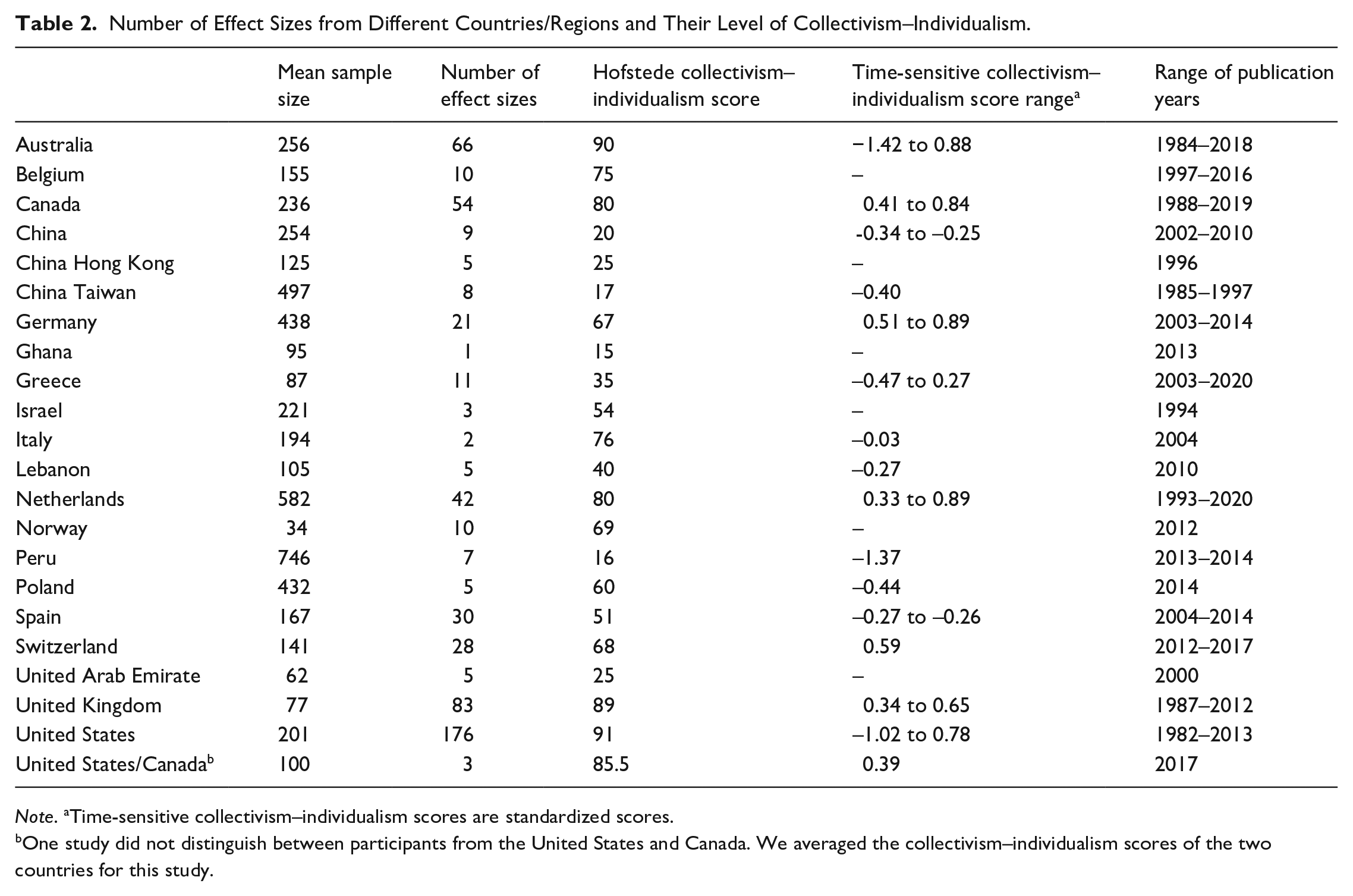
Note. aTime-sensitive collectivism–individualism scores are standardized scores.
One study did not distinguish between participants from the United States and Canada. We averaged the collectivism–individualism scores of the two countries for this study.
Overall Association and Effect Size Heterogeneity
The analysis yielded a large overall effect size (Cohen, 1992), r = .51, 95% CI = [0.49, 0.53], p < .001, indicating that more positive domain-specific self-evaluations are correlated with higher global self-worth. We found a heterogeneous distribution of effect sizes, both within studies (i.e., variance at level 2), χ2(1) = 2,822.74, p < .001 (representing 64.23% of the total variance), and between studies (i.e., variance at level 3), χ2(1) = 56.82, p < .001 (representing 28.03% of the total variance). Thus, the associations between children’s self-evaluations and global self-worth varied within the same studies (e.g., across domains of self-evaluation) and between studies (e.g., across various samples).
Moderation by Domain
We found a significant moderating effect of domains in the associations between self-evaluations and global self-worth, F(5, 578) = 43.28, p < .001 (see Table 3). The association was significantly stronger for physical appearance, r = .64, 95% CI = [0.61, 0.66], p < .001, than for any other domain, ps < .001. Behavioral conduct, r = .54, 95% CI = [0.51, 0.57], p < .001, and peer relations, r = .52, 95% CI = [0.49, 0.54], p < .001, did not differ significantly in their association with global self-worth, p = .307. Academic competence, r = .49, 95% CI = [0.45, 0.51], p < .001, was less strongly related with global self-worth than were physical appearance, behavioral conduct, and peer relations, ps < .017, but was more strongly related with global self-worth than were athletic competence and parent relations, ps < .005. Athletic competence, r = .40, 95% CI = [0.36, 0.43], p < .001, and parent relations, r = .39, 95% CI = [0.32, 0.45], p < .001, did not differ significantly in their association with global self-worth, p = .770.
Bivariate Moderator Analyses.
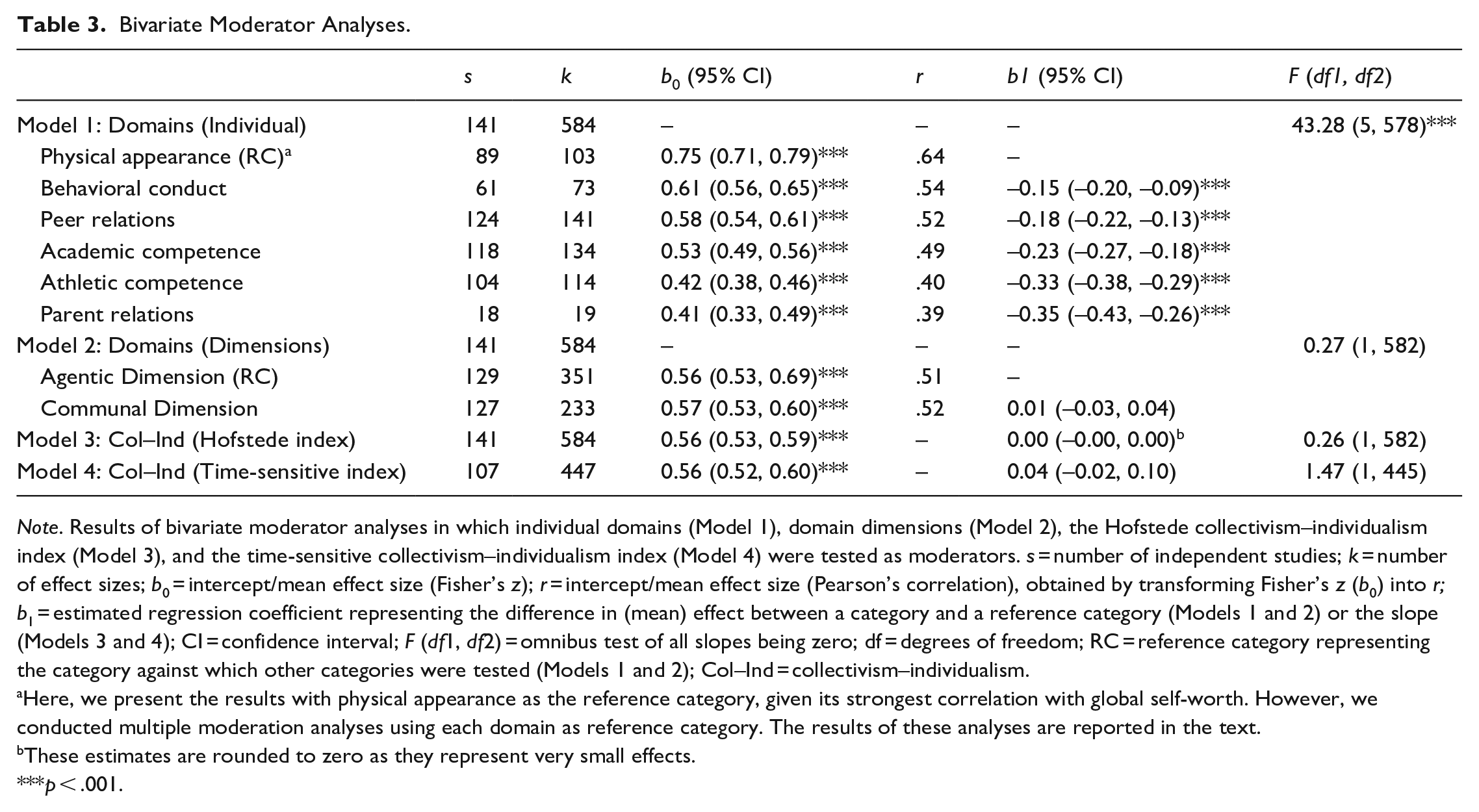
Note. Results of bivariate moderator analyses in which individual domains (Model 1), domain dimensions (Model 2), the Hofstede collectivism–individualism index (Model 3), and the time-sensitive collectivism–individualism index (Model 4) were tested as moderators. s = number of independent studies; k = number of effect sizes; b0 = intercept/mean effect size (Fisher’s z); r = intercept/mean effect size (Pearson’s correlation), obtained by transforming Fisher’s z (b0) into r; b1 = estimated regression coefficient representing the difference in (mean) effect between a category and a reference category (Models 1 and 2) or the slope (Models 3 and 4); CI = confidence interval; F (df1, df2) = omnibus test of all slopes being zero; df = degrees of freedom; RC = reference category representing the category against which other categories were tested (Models 1 and 2); Col–Ind = collectivism–individualism.
Here, we present the results with physical appearance as the reference category, given its strongest correlation with global self-worth. However, we conducted multiple moderation analyses using each domain as reference category. The results of these analyses are reported in the text.
These estimates are rounded to zero as they represent very small effects.
p < .001.
Next, we aggregated domains into overarching dimensions of agency (i.e., athletic competence, academic competence, and physical appearance) and communion (i.e., peer relations, parent relations, and behavioral conduct). There was no significant moderating effect of these overarching dimensions, F(1, 582) = 0.27, p = .606. Thus, agentic self-evaluations, r = .51, 95% CI = [0.49, 0.53], p < .001 and communal self-evaluations, r = .52, 95% CI = [0.49, 0.54], p < .001, did not differ significantly in their association with global self-worth.
Moderation by Domain and Collectivism–Individualism
We then tested the domain × country-level collectivism–individualism interaction on the associations between self-evaluations and global self-worth. First, we examined the Hofstede collectivism–individualism index. There was no significant interaction between the domains and the Hofstede index, as there was no significant difference in the model fit of (a) the full model with main effects and interaction effects (Table 4) and (b) the reduced model with only main effects (Table 3), χ2(5) = 5.11, p = .402. The effect of collectivism–individualism on the associations between self-evaluation and global self-worth was thus similar across domains, and it was not significant for any of the domains, ps > .123. There was also no significant interaction between the overarching dimensions (i.e., agency and communion) and the Hofstede index, χ2(1) < .68, p = .409. The effect of collectivism–individualism on the associations between self-evaluation and global self-worth was thus similar across overarching dimensions, and for both dimensions the effect was not significant, ps > .386.
Moderator Analyses Testing the Interaction Between Domains and Collectivism–Individualism.
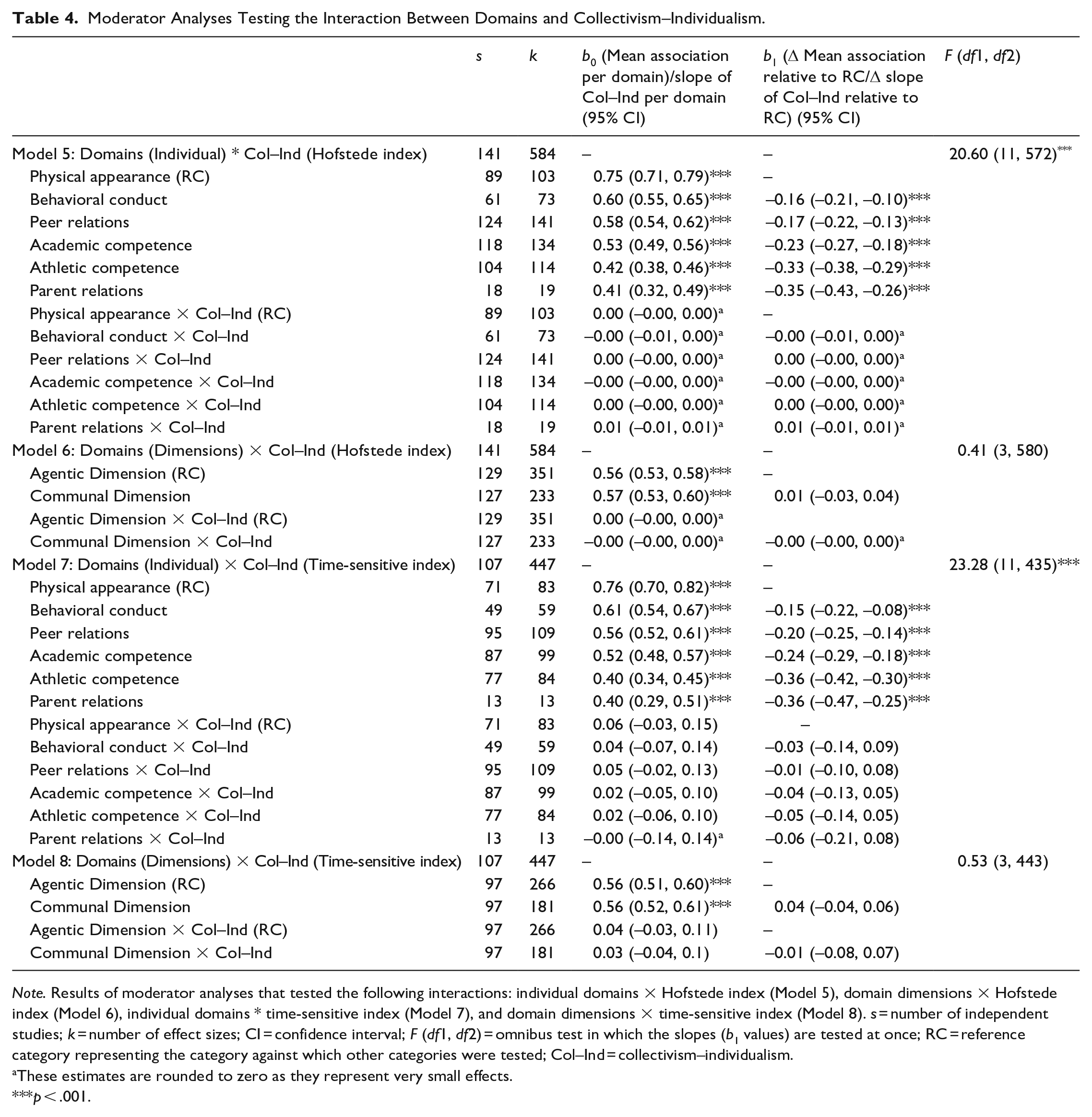
Note. Results of moderator analyses that tested the following interactions: individual domains × Hofstede index (Model 5), domain dimensions × Hofstede index (Model 6), individual domains * time-sensitive index (Model 7), and domain dimensions × time-sensitive index (Model 8). s = number of independent studies; k = number of effect sizes; CI = confidence interval; F (df1, df2) = omnibus test in which the slopes (b1 values) are tested at once; RC = reference category representing the category against which other categories were tested; Col–Ind = collectivism–individualism.
These estimates are rounded to zero as they represent very small effects.
p < .001.
Second, we examined the time-sensitive collectivism–individualism index. Similarly, there was no significant interaction between domains and the time-sensitive collectivism–individualism index, χ2(5) = 1.88, p = .865. The effect of collectivism–individualism on the associations between self-evaluation and global self-worth was thus similar across domains, and the effect was not significant for any of the domains, ps > .171. There was also no significant interaction between the overarching dimensions and the time-sensitive collectivism–individualism index, χ2(1) = .02, p = .876. The effect of collectivism–individualism on the associations between self-evaluation and global self-worth was similar across the overarching dimensions, and for both dimensions the effect was not significant, ps > .245.
Together, there was no evidence that the strength of the associations between children’s self-evaluations and their global self-worth was dependent on country-level collectivism–individualism. That said, between-country differences may be captured by cultural dimensions other than collectivism–individualism. We therefore also explored associations between domain-specific self-evaluations and global self-worth across world regions (see Supplementary Material S3), which we did not preregister. This exploratory analysis did not reveal meaningful differences across world regions, except that in Northern Europe, agentic self-evaluations were more strongly correlated with global self-worth than were communal self-evaluations. In other regions, there was no such difference. Thus, while subtle differences may exist, the patterns of association between children’s domain-specific self-evaluations and self-worth are similar across most world regions.
Robustness Analyses
We conducted additional bivariate moderator analyses to examine whether our results held across methodological and sample variations (i.e., measurement type, sample type, age, gender, race/ethnicity, and socioeconomic status; see Table 5). We found no significant moderating effect for any of these demographic variables. The associations between self-evaluations and global self-worth did not vary across samples of different ages, β1 = .02, 95% CI = [−0.01, 0.04], p = .249, or samples with varying proportions of female participants, β1 = −.00, 95% CI = [−0.08, .08], p = .996, or samples with varying proportions of ethnic majority participants, β1 = −.08, 95% CI = [−0.17, 0.02], p = .110. The associations between self-evaluations and global self-worth were similar for typical samples, r = .52, 95% CI = [0.49, 0.54], p < .001, nontypical samples, r = .49, 95% CI = [0.42, 0.54], p < .001, and mixed samples, r = .46, 95% CI = [0.36, 0.54], p < .001. The associations between self-evaluations and global self-worth were similar for samples of mixed socioeconomic status, r = .49, 95% CI = [0.45, 0.53], p < .001, lower-to-middle socioeconomic status, r = .53, 95% CI = [0.49, 0.57], p < .001, middle socioeconomic status, r = .52, 95% CI = [0.45, 0.58], p < .001, and middle-to-higher socioeconomic status, r = .48, 95% CI = [0.41, 0.54], p < .001. The associations between self-evaluations and global self-worth were similar for effect sizes measured with Marsh’s measure, r = .54, 95% CI = [0.50, 0.59], p < .001, and Harter’s measures, r = .50, 95% CI = [0.48, 0.52], p < .001.
Robustness Analyses.
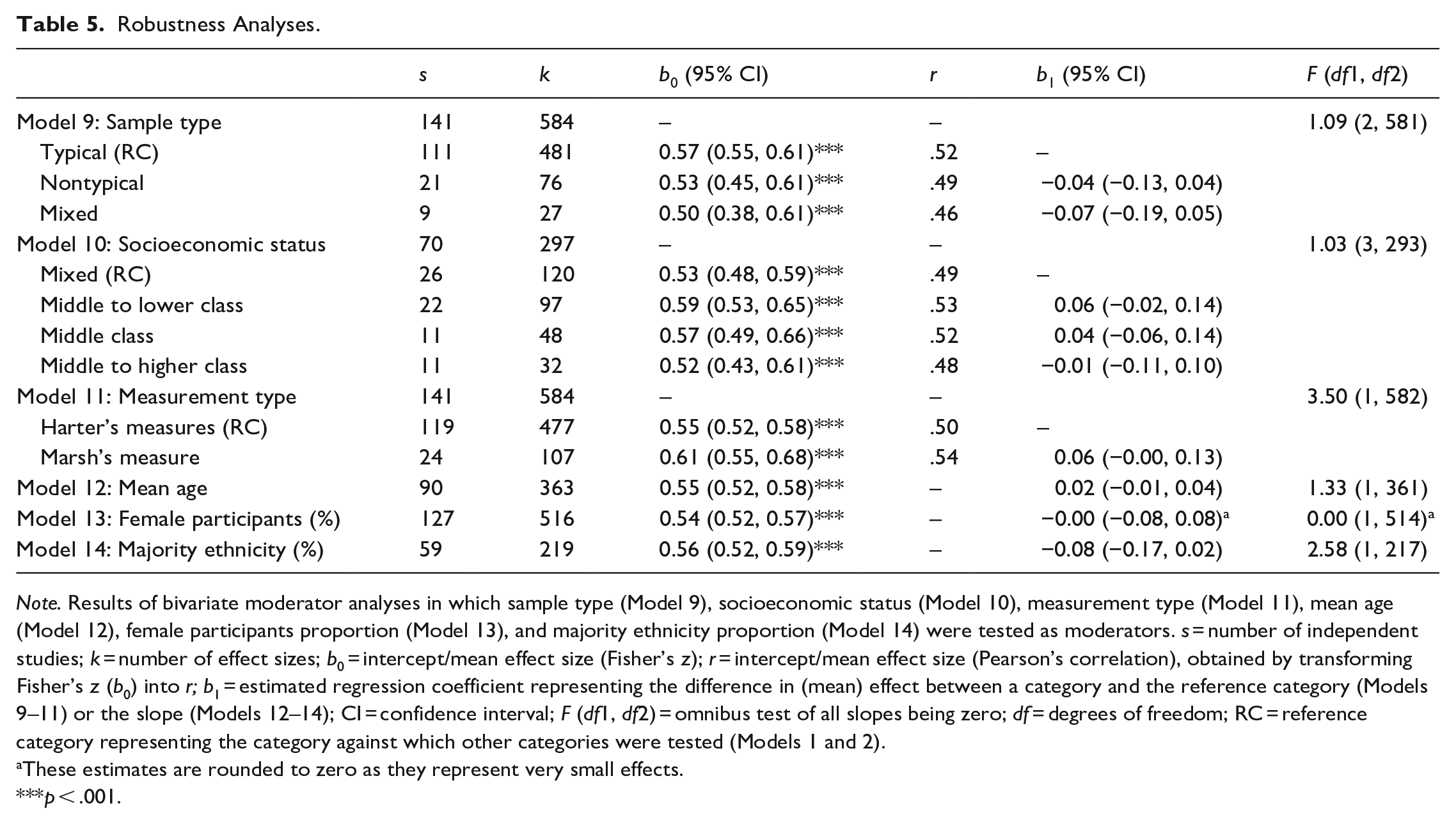
Note. Results of bivariate moderator analyses in which sample type (Model 9), socioeconomic status (Model 10), measurement type (Model 11), mean age (Model 12), female participants proportion (Model 13), and majority ethnicity proportion (Model 14) were tested as moderators. s = number of independent studies; k = number of effect sizes; b0 = intercept/mean effect size (Fisher’s z); r = intercept/mean effect size (Pearson’s correlation), obtained by transforming Fisher’s z (b0) into r; b1 = estimated regression coefficient representing the difference in (mean) effect between a category and the reference category (Models 9–11) or the slope (Models 12–14); CI = confidence interval; F (df1, df2) = omnibus test of all slopes being zero; df = degrees of freedom; RC = reference category representing the category against which other categories were tested (Models 1 and 2).
These estimates are rounded to zero as they represent very small effects.
p < .001.
Sensitivity Analyses
To address the potential influence of outliers in our analyses, we searched for outliers using the “influence” command of the metafor package (Viechtbauer, 2010). We identified five large positive effect sizes (rs ranging from .85 to .98) as potential outliers based on significant DFFITS values (indicating a difference in the predicted average effect when these effect sizes were included versus excluded in model fitting; Viechtbauer & Cheung, 2010). The sample sizes of these five effect sizes ranged from 103 to 320. We carefully examined the effect size codings of these studies and found no indications of errors or implausible values. Therefore, we decided to retain all effect sizes in the meta-analytic dataset. This decision aligns with previous study (Orth et al., 2021) and methodological literature that discourages the routine exclusion of studies solely based on extremely large or small effect sizes (Viechtbauer & Cheung, 2010). Nevertheless, we conducted a sensitivity analysis to investigate the potential influence of outliers in our analyses (see Supplementary Material S4). This analysis suggested our main findings remained unchanged after removing the outliers.
Bias Assessment
The risk of bias tests showed no indications of publication bias. We did, however, find some indications that large effect sizes were underrepresented, suggesting that the initially estimated overall effect size may underestimate the true effect size. The Egger’s regression test was nonsignificant, suggesting that the funnel graph did not deviate significantly from a symmetrical shape, z = −0.18, p = .857. The trim-and-fill algorithm indicated that 113 effect sizes needed to be imputed to the right side of the plot to attain optimal symmetry (Figure 2). Accordingly, the adjusted overall effect size increased to r = .56, 95% CI = [0.55, 0.58], p < .001, which is slightly higher than the initially estimated overall effect size (Δr = .05). The p-uniform model indicated that the distribution of effect sizes did not violate the “uniformal” null hypothesis, (L.pb = 0.56, p = .286), and produced a slightly higher adjusted overall effect size of r = .55, 95% CI = [0.54, 0.56]). The result of the PEESE model was interpreted as β0PET is significantly larger than zero. The non-significant slope suggested no evidence of publication bias, β1 = 1.74, t(582) = 1.07, p = .284, with the intercept presenting a slightly higher adjusted overall effect size, β0 = 0.55, p < .001.
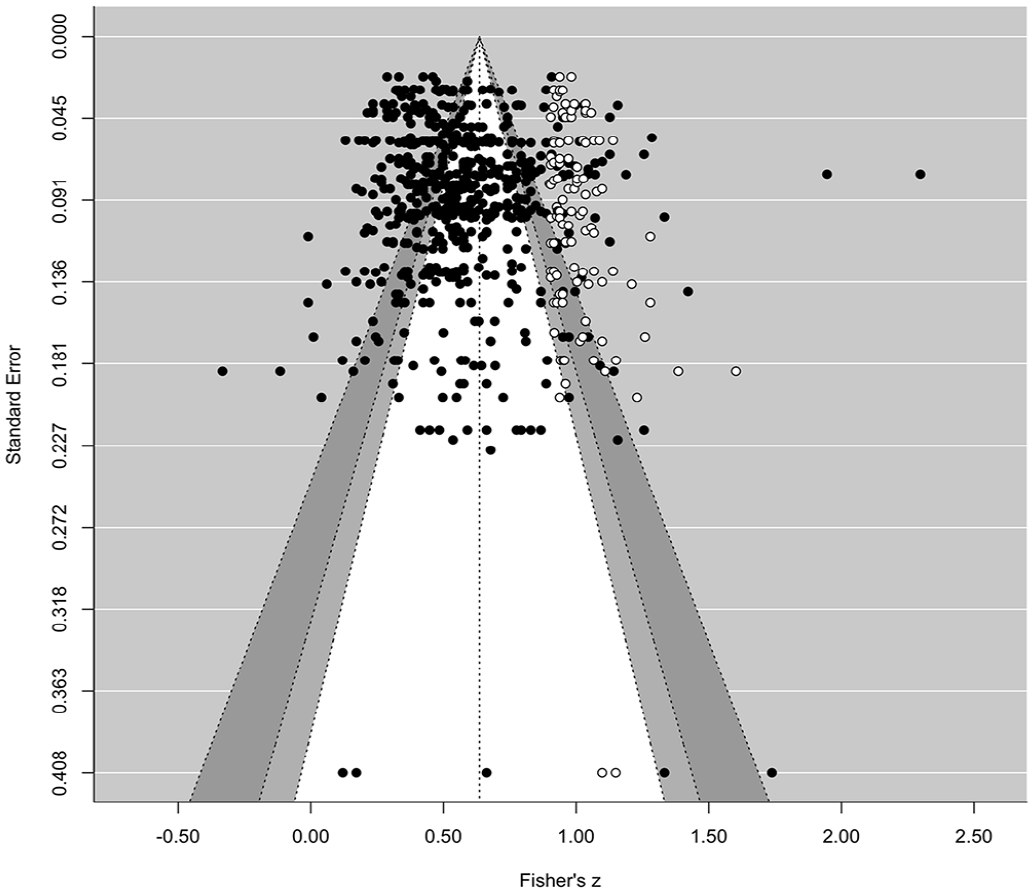
Funnel Plot. Effect sizes (x-axis) are plotted against their standard errors (y-axis). The black dots denote observed effect sizes, the white dots denote imputed effect sizes. The solid vertical line represents the overall mean effect. From inside to outside, the dashed lines limit the 90%, 95%, and 99% pseudo confidence interval regions.
We note that some caution in interpreting these tests is needed, given that their accuracy has not yet been extensively studied for three-level meta-analyses with heterogeneous datasets like ours. Accordingly, we interpreted the effect sizes produced by these various bias assessment techniques as a plausible range of effect sizes, rather than “corrected” effect sizes (Coburn & Vevea, 2015; Terrin et al., 2003).
Discussion
This preregistered meta-analysis provided a comprehensive, cross-cultural analysis of how children’s domain-specific self-evaluations are associated with their global self-worth. We synthesized a large body of work spanning 141 independent samples and 33,120 participants from 21 countries/regions. Across countries, children’s self-evaluation of physical appearance was most strongly correlated with their self-worth, with a large effect size. Children’s self-evaluations of behavioral conduct, peer relations, academic competence, athletic competence, and parent relations were less strongly correlated with global self-worth, but still showed medium-to-large effect sizes. Agentic self-evaluations (i.e., physical appearance, academic competence, and athletic competence) and communal self-evaluations (i.e., parent relations, peer relations, and behavioral conduct) did not differ in strength of association with global self-worth. Importantly, none of the associations between children’s self-evaluations and global self-worth varied by country-level collectivism–individualism. Our findings were robust across methodological and sample characteristics.
Theoretical Implications
Children incorporate domain-specific self-evaluations into their global self-worth (Harter, 2012; Marsh, 1990; Shavelson et al., 1976). The present work revealed the associations of these self-evaluations with children’s global self-worth, and its cross-cultural variation. Our finding that children’s self-evaluation of physical appearance is most central to their self-worth has been observed previously. This is consistent with a recent meta-analysis that synthesized the longitudinal associations between global and domain-specific self-worth, showing that physical appearance was the strongest predictor of global self-worth, compared with other self-evaluative domains (Dapp et al., 2023). Some scholars have even suggested that children’s self-worth is only “skin-deep” (Harter, 2000, p. 133). Unlike other domains, physical appearance is readily visible, subject to continuous social evaluation, and beyond children’s direct control. In middle and late childhood, children are concerned about how their appearance is judged by others, and they recognize that their appearance is an important source of others’ approval (Jensen & Steele, 2008; Q. Li et al., 2019; Silverman et al., 1995). The perceived importance of physical appearance is already salient in middle to late childhood, a period when children begin to generate a global sense of self-worth (Harter, 2003). Together, these factors may account for why, across cultures, self-perceived physical appearance is so central to global self-worth at this age.
The fact that physical appearance is central to children’s self-worth suggests that children may be particularly vulnerable to repeated exposure to society’s beauty ideals. Children’s widespread use of social media platforms and exposure to content that reinforces beauty ideals may further exacerbate children’s concerns about their own appearance (Richards et al., 2015; Saiphoo & Vahedi, 2019), potentially undermining their global self-worth. Acknowledging the centrality of physical appearance to children’s self-worth is crucial for tailoring interventions and support systems that aim to address the potential negative impact of societal pressures and help children develop healthy self-worth.
Although less central than physical appearance, children’s self-evaluations in other domains also correlate strongly with their self-worth. From middle childhood, children realize that social conformity and morally good behaviors are valued by peers and adults (Carpendale, 2000), which is reflected in the strong correlation between self-evaluated behavioral conduct and self-worth. In addition, establishing positive social relationships and attaining academic skills (and, to a lesser extent, developing athletic ability) are central developmental tasks in childhood (Erikson, 1959; Isabella & Diener, 2010). This is reflected in the strong correlations between self-evaluated parent and peer relations, and academic and athletic ability and children’s self-worth.
Agency and communion have consistently appeared as two overarching dimensions of self-evaluation that underlie self-worth in adults (Crocker & Wolfe, 2001; Tafarodi & Swann, 1995) as well as children (Butler & Gasson, 2005; Harter, 2012). Our findings show that children’s agentic and communal self-evaluations are about equally central to their global self-worth. This is in line with theoretical perspectives suggesting that experiences of both competence and relatedness are vital for healthy psychological development (Dweck, 2017; Ryan & Deci, 2000). During middle and late childhood, children often receive feedback relevant to their competence (e.g., at school), and they are generally aware of their competence relative to their peers (Cole et al., 2001; Dijkstra et al., 2008; Muenks et al., 2018). At the same time, children this age attach importance to forming and sustaining positive relationships with their peers and parents (Kerns & Richardson, 2008; Nickerson & Nagle, 2005; Parker et al., 2006). These parallel developments may account for why children’s global self-worth is correlated with self-evaluations of agentic and communal functioning to a similar degree.
Our research provided the first systematic test of potential cross-cultural differences in the self-evaluative correlates of children’s self-worth. We included data from across the world, ranging from countries high on individualism (e.g., Australia, the United States, and the United Kingdom) to countries high on collectivism (e.g., China, Ghana, and Peru). Several theorists have argued, mainly based on research with adults, that the sources of self-worth can differ across cultures (Crocker & Wolfe, 2001; Novin et al., 2015; Pyszczynski et al., 2004). We did not find such differences across the cultural dimension of collectivism–individualism in children. Why might this be? Children’s main developmental tasks are relatively independent of the cultural context they grow up in. For example, children are universally motivated to acquire knowledge and learn, and to form close or supportive social relationships (Dweck, 2017; Greenfield et al., 2003; Ryan & Deci, 2000). Furthermore, while establishing physical attractiveness is not a developmental task per se, children do care about their appearance more generally because it is consequential for their social experiences and sense of effectiveness (Harter, 2000; Marsh, 1986). The universal importance of these domains (Barker & Bornstein, 2010; Harter, 2000) may help to explain why we found no cultural differences.
Strengths and Limitations
We conducted the first meta-analysis of the self-evaluative correlates of children’s self-worth and their cross-cultural variation. Strengths of our research include its focus on the critical developmental period of middle to late childhood, its inclusion of studies from diverse countries/regions, and its extensive robustness analysis. Our meta-analysis also has limitations. First, we focused on collectivism–individualism because of its theoretical relevance to self-development. We found similar patterns of results across two complementary indices of collectivism–individualism. However, these indices do not capture different types of collectivism and individualism (e.g., vertical vs. horizontal; Singelis et al., 1995; Vignoles et al., 2016), nor do they reflect within-culture differences in collectivism–individualism. We call for research to develop cross-cultural indices that reflect different types of collectivism–individualism and are more sensitive to within-culture variation.
Second, although we were able to retrieve enough effect sizes to explore cultural differences, most of the studies we included were conducted in Western, Educated, Industrialized, Rich, and Democratic (WEIRD) countries (Henrich et al., 2010; Nielsen et al., 2017). Unfortunately, this reflects a broader underrepresentation of non-WEIRD samples in the social and behavioral sciences (Henrich et al., 2010). Samples from Africa, South America, and the Middle East were especially underrepresented. Future work will need to correct this underrepresentation to establish a truly global science of self-development.
Third, we relied on research that used cross-sectional correlational designs, our findings do not speak of the directionality of effects. Children’s domain-specific self-evaluations and global self-worth may influence each other bidirectionally over time (Dapp et al., 2023; Rentzsch & Schröder-Abé, 2022). Some scholars have theorized that domain-specific self-evaluations serve as the foundation for the development of children’s global self-worth (e.g., Harter, 2003). Conversely, other scholars have theorized that global self-worth impacts children’s self-evaluation in specific domains (e.g., Brown et al., 2001). For example, children with higher (vs. lower) levels of global self-worth are more likely to maintain positive domain-specific self-evaluations following failure (Brown et al., 2001). Future longitudinal work could scrutinize the psychological mechanisms that drive the co-development of children’s self-evaluations and global self-worth over time.
We used the correlations between domain-specific self-evaluations and global self-worth as a proxy for the importance of these domains for children’s global self-worth. However, we did not directly measure the importance that children assign to these domains. Prior research suggests that the impact of a specific domain on global self-worth may vary based on individuals’ perceived importance of that domain (Harter, 2003; Marsh, 1993; Rosenberg et al., 1995). Therefore, future studies should directly measure the importance assigned by children to each domain to obtain a more comprehensive understanding of their relevance to self-worth.
Future Directions
One priority for future work is to explore potential age differences in the associations between domain-specific self-evaluation and self-worth, as the centrality of different domains to global self-worth may shift throughout the life course. For instance, the increasing importance of peer relationships during adolescence may be reflected in a stronger association between peer-relational self-evaluations and self-worth in adolescents, as compared with children (von Soest et al., 2016). Similarly, the decreasing importance of athletic ability during adolescence may be reflected in a weaker association between athletic-ability self-evaluations and self-worth in adolescence, as compared with children (Fredricks & Eccles, 2002). It is also possible that cultural influences on the centrality of different domains to global self-worth become more pronounced with age. While children internalize cultural norms and practices from early development, repeated exposure to such norms and practices may amplify cultural differences in the links between self-evaluations and global self-worth with children they grow older (Legare, 2019). Understanding age differences in the associations between domain-specific self-evaluations and self-worth would provide important insight into the developmental trends of global self-worth across the world.
Another priority is to use research methods (e.g., experience sampling methods) that can help reveal the dynamic moment-by-moment process through which children build their self-worth (Hamaker & Wichers, 2017). How does the salience of self-evaluative domains change over time and from context to context (e.g., do classroom settings make the academic domain more salient, whereas family gatherings make the family domain more salient)? How are self-evaluations within domains triggered by everyday experiences (e.g., praise and criticism)? Do these processes differ across cultures (e.g., are children from cultures higher on individualism more responsive to experiences within agentic domains)? Addressing these questions will shed light on the dynamic nature of children’s self-worth and its underpinnings (Crocker & Brummelman, 2018).
Conclusion
This preregistered meta-analysis provides a comprehensive cross-cultural analysis of the associations between children’s domain-specific self-evaluations and global self-worth. By focusing on cross-sectional data, our study provides valuable insights into what appears to be a culturally universal pattern of associations between domain-specific self-evaluations and global self-worth. Specifically, our findings highlight the significance of physical appearance self-evaluation as well as the equal centrality of agentic and communal self-evaluations for children’s global self-worth. Understanding these associations at the early emergence of global self-worth is crucial for comprehending self-worth development and for designing interventions and support systems that foster healthy self-worth in children.
Supplemental Material
sj-docx-1-jbd-10.1177_01650254231190926 – Supplemental material for Children’s domain-specific self-evaluations and global self-worth: A preregistered cross-cultural meta-analysis
Supplemental material, sj-docx-1-jbd-10.1177_01650254231190926 for Children’s domain-specific self-evaluations and global self-worth: A preregistered cross-cultural meta-analysis by Yixin Tang, Eddie Brummelman, Sheida Novin, Mark Assink and Sander Thomaes in International Journal of Behavioral Development
Footnotes
Acknowledgements
The authors thank Milou Back for her help with data coding and management.

Funding
The author(s) disclosed receipt of the following financial support for the research, authorship, and/or publication of this article: Eddie Brummelman was supported by the Jacobs Foundation (2020-1362-02).
Supplemental Material
Supplemental material for this article is available online.
References
Supplementary Material
Please find the following supplemental material available below.
For Open Access articles published under a Creative Commons License, all supplemental material carries the same license as the article it is associated with.
For non-Open Access articles published, all supplemental material carries a non-exclusive license, and permission requests for re-use of supplemental material or any part of supplemental material shall be sent directly to the copyright owner as specified in the copyright notice associated with the article.
