




Abstract
Economic inequality has been consistently rising in recent decades in many Western countries including Germany. This is a pressing issue as greater economic inequality within a society has detrimental consequences for well-being, social stability, productivity, and even life expectancy. However, little is known about how individuals of different ages experience and respond to social inequality across adulthood. Because status differences are perceived as more malleable in young adulthood (i.e., young adults can expect to move up the social ladder) and only manifest across adulthood, we predicted that negative emotional reactions to the perceived standing in the social hierarchy should become increasingly pronounced with age. Consistently, a first study based on a national representative sample in Germany (N = 2,542; 18–91 years) confirmed that subjective social status had a much stronger effect on the acceptance of social inequality among middle-aged and older, as compared with younger, adults. In a second experimental study (N = 387; 18–89 years), participants of any age responded with negative emotional reactions when rising inequality was made salient. However, subjective social status moderated this effect only in middle-aged and older, but not younger, adults. Finally, a third experimental study (N = 605; 18–82 years) showed that, compared with middle-aged and older adults, younger adults maintained stronger upward mobility beliefs that accounted for the age-differential effects of subjective social status on negative emotional reactivity to rising inequality. We discuss the central role of upward mobility beliefs for individuals’ responses to social inequality across the adult life span.
Social inequality is defined as “unequal access to valued resources, services, and positions in society” (Kerbo, 2011, p. 11) and has been consistently rising in the United States and Europe during the recent decades (e.g., Atkinson, 2015; Piketty & Saez, 2014). For example, inequality in Germany has grown significantly since the 1980s and this change has been accelerated in the past 20 years (Blanchet et al., 2019; Grabka et al., 2019; Organisation for Economic Co-operation and Development [OECD], 2021). Although social inequality is part of any social system and might promote growth to some degree, past research has suggested that growing inequality is not only often experienced as undesirable and harmful (Elenbaas et al., 2020; Heberle & Carter, 2015; Layte & Whelan, 2014), but often precedes social conflict and may undermine the stability of societies (Wilkinson & Pickett, 2009).
Consistently, empirical evidence suggests that increasing inequality within a society goes hand in hand with detrimental consequences on the levels of the individual (e.g., low well-being, poor health, shorter life expectancy) and the society (e.g., social instability, low productivity; Pickett & Wilkinson, 2015). Seen in this light, it is not surprising that many individuals experience social inequality as a threat, although there may be considerable individual differences in the level of acceptance and emotional reactions to social inequality. Consistent with previous findings (e.g., Brandt, 2013; Pickett & Wilkinson, 2015; Sapolsky, 2004), our central hypothesis was that individuals with a lower subjective social status would accept social inequality less and respond with greater negative emotions than those with a relatively higher social status. Extending this earlier work, and adopting a lifespan perspective, we investigated chronological age as a moderator of the effects of subjective social status on negative emotional reactions to inequality. Specifically, we expected that subjective social status should be particularly important for individuals’ responses to rising inequality in midlife and later adulthood, but less so in younger adulthood. A mechanism that may drive this dynamic relates to age differences in beliefs in upward social mobility. Our main prediction was that as individuals age, they should perceive their position in the social hierarchy as more and more fixed, increasing the impact of subjective social status on their acceptance and affective reactions to social inequality. Thus, in middle adulthood and old age, but not necessarily in young adulthood, a relatively low subjective social status should make rising inequality more difficult to accept and more deleterious to one’s emotional experience.
Acceptance and Emotional Experience of Social Inequality: The Role of Social Status
Hierarchies are a basic aspect of social life and entail inequality of its members (Anderson et al., 2015; Jackman & Jackman, 1973). Social hierarchy is a fundamental driver of human behavior and a substantial determinant of motivation, well-being, and health (Mattan et al., 2017; Matthews et al., 2010; Sapolsky, 2004; Walasek & Brown, 2015). Hierarchies occur in everyday life (e.g., leader vs. followers, senior vs. junior, veteran vs. rookie, first class vs. economy class, rich vs. poor) and people differ regarding their position or rank in these hierarchies. Hierarchically structured groups often entail few individuals at the top and many at the bottom (Fiske, 2010; Magee & Galinsky, 2008). Empirical research has consistently suggested that individuals lower in the hierarchy experience less favorable conditions and outcomes as compared with individuals higher up in the hierarchy (Sapolsky, 2004). For example, individuals with a lower social status seem to experience more negative and less positive emotions, higher levels of stress, show exaggerated cardiovascular reactivity, and have a higher risk for depression (Anderson et al., 2012; Berdahl & Martorana, 2006; Cundiff & Matthews, 2017; Gilbert, 2000; Gruenewald et al., 2006; Mendelson et al., 2008; Sherman et al., 2012; D. Weiss & Kunzmann, 2020).
Moreover, the individual social position within a given social hierarchy may determine individuals’ support for, or the rejection of, social inequality (Brandt, 2013; Turner & Reynolds, 2003; Weber, 1958). More specifically, the more individuals benefit from inequality, the more they should support it. Thus, one’s self-perceived standing in the social hierarchy (i.e., subjective social status) can play an important role in determining attitudes and ideologies about redistribution and fairness (Brown-Iannuzzi et al., 2015; Kluegel & Smith, 1986; D. Weiss et al., 2012). For example, research consistently shows that individuals with higher rank in the social hierarchy are more likely to believe that differences in income are fair and legitimate than people occupying lower ranks (Brandt, 2013; Brandt & Reyna, 2010; Caricati, 2012; Rizzo & Killen, 2020; Schmitt et al., 2003). Further research shows, for example, that men are more likely than women to support traditional gender ideology, arguably because they benefit from this arrangement (D. Weiss et al., 2012). Likewise, the different status positions within the social hierarchy may also influence individuals’ emotional experience of social inequality. For example, research suggests that social inequality is more emotionally threatening to individuals with a lower rather than a higher rank in the social hierarchy (Wilkinson, 1996; Wright et al., 1990) and lower-status individuals show increased vigilance to threats during social interactions (Kraus et al., 2011). In addition, research demonstrates that inequality exacerbates emotional distress for those low but not for those high in social status (Layte & Whelan, 2014; Wilkinson & Pickett, 2009). Thus, feeling unfairly disadvantaged leads to negative emotional experiences and greater emotional distress (Osborne & Sibley, 2014). For example, those who feel lower in the social hierarchy and relatively disadvantaged experience anger and resentment (Smith & Pettigrew, 2014). In addition, studies show that if people feel that their disadvantaged position is unfair, they feel angry, frustrated, and depressed (Abrams & Grant, 2012; H. W. Weiss et al., 1999).
Social Inequality and Meritocracy
Past research also suggests that already children tend to reject inequality (Elenbaas & Killen, 2016) and that people prefer a society that is more equal than what they consider as status quo in their own society (Norton & Ariely, 2011). At the same time, however, it is not the case that individuals typically value or strive for absolute equality but rather accept a certain amount of inequality if the societal system is perceived as fair (Starmans et al., 2017).
Social stratification in Western societies is generally justified by the principle of meritocracy, that is, the idea that success should not be dependent on an individual’s social origin but their willingness to work hard and their talent (e.g., Major et al., 2007). Put differently, meritocracy refers to a social system “in which individuals get ahead and earn rewards in direct proportion to their individual efforts and abilities” (McNamee & Miller, 2009, p. 2). According to this, distributed rewards within this system (e.g., income, wealth, positions of power) are linked to merit, and, hence, are conceived of as alterable. Research suggests that perceptions of a permeable status hierarchy where individuals can move from one rank to another results in the motivation to engage in hard work to enhance one’s social standing (Ellemers et al., 1993; Wright et al., 1990). In addition, if social mobility is perceived as possible, outcomes are seen as deserved because they are earned or achieved as products of an individual’s actions. Thus, the principle of meritocracy operates as a norm that justifies and maintains hierarchical status differences and contributes to the perception of societal fairness (Kluegel & Smith, 1986; McNamee & Miller, 2009; Shariff et al., 2016; Weber, 1958). Consequently, if a system is perceived as fair, people show more acceptance of and less negative emotions toward inequality (Goudarzi et al., 2020). In line with this, the Prospect of Upward Mobility (POUM) hypothesis (Benabou & Ok, 2001) predicts that individuals with a lower social status are less likely to support policies of redistribution if they believe in upward mobility because they expect to move up (or their kids) in the status hierarchy in the future. Social inequality without social mobility, by contrast, violates general norms and values of democratic societies such as principles of equity and meritocracy and may lead to less tolerance of the societal system as well as negative emotional experiences and psychological distress (Jetten et al., 2017; Layte & Whelan, 2014; Leahy, 1990; Pickett & Wilkinson, 2015; Starmans et al., 2017). In support for this argument, studies show that when people learn that social mobility is low rather than high, they experience lower levels of positive affect, perceive the current system as unfair, and are less likely to defend the societal system (Day & Fiske, 2017; Kluegel & Smith, 1986; McCoy & Major, 2007; Shariff et al., 2016).
Do the Effects of Social Status Change Across the Adult Life Span? The Role of Beliefs in Upward Mobility
The influence of subjective social status on the perception and acceptance of social inequality may differ across the adult life span. One factor that may explain age differences in responses to rising inequality refers to differences in personal status expectations and upward mobility beliefs (Day & Fiske, 2017; Ellemers et al., 1993; Tajfel & Turner, 1979; Wright et al., 1990). Personal status expectations and upward mobility beliefs capture the degree to which a person believes that their social status is malleable or fixed and whether it will change in the future (Day & Fiske, 2017; Shane & Heckhausen, 2017). Stronger upward mobility beliefs are associated with beliefs that one’s social status is malleable and will increase in the future. In contrast, weaker upward mobility beliefs are associated with beliefs that one’s social status is relatively immutable and will not increase in the future.
Status differences appear to be more malleable in young adulthood (i.e., young adults can expect to move up the social ladder) and tend to manifest itself only as individuals enter midlife (Robertson & Weiss, 2017). We argue that if one’s current social status is perceived as immutable (i.e., in midlife and old age), it will have a stronger impact on individuals than when it is perceived as transient and modifiable (i.e., in young adulthood; Garstka et al., 2005; McFarland et al., 1992; Neel & Lassetter, 2015; D. Weiss et al., 2016). Thus, subjective social status should become more important in midlife and beyond when individuals realize that their social position in the social hierarchy is permanent and less likely to improve in the future because of more limited opportunity structures. According to that, younger adults should be more likely to believe that their social status is relatively malleable and will increase in the future, whereas middle-aged and older people should be more likely to believe that their social status is relatively fixed and will not increase in the future. Consequently, for middle-aged and older adults their current status should be a more important predictor to their responses to social inequality because they perceive little change in the future (Robertson & Weiss, 2017). Consistent with this idea, research consistently demonstrates that younger relative to older adults tend to overestimate their future outcomes (e.g., life satisfaction; Lachman et al., 2008; Lang et al., 2013). Moreover, one study found that social mobility beliefs appear to be stronger among younger adults as compared with middle-aged and older adults (Kraus & Tan, 2015). Kraus and Tan (2015) argue that younger adults seem to overestimate social class mobility because they have less experience with mobility and are more motivated to believe in future economic opportunity. Moreover, a study by Ohtake and Tomioka (2004) showed that older adults with a lower social status were more likely to support extensive income redistribution than their younger counterparts because they had fewer prospects of upward mobility.
From a life-span developmental perspective (Baltes, 1987; Freund, 2006; Staudinger et al., 1993), this overestimation of future opportunities may reflect young adults’ growth orientation and serve a motivational function (e.g., to maximize future outcomes). Consequently, the perception of continued change and improvement of one’s social status should be more salient in young adulthood, whereas as people age (in midlife and later adulthood) their focus is expected to shift to their current social standing and on maintaining their position in the social hierarchy. Likewise, as explained above if people believe that they have the opportunity to move up the social ladder in the future, they usually perceive the societal system as fair (even if they currently do not receive equal outcomes). Perceiving the system as fair and that one’s future outcomes are controllable may mitigate some of the negative emotional consequences of low social status in the face of rising inequality (Sagioglou et al., 2019). In addition, studies show that if individuals with a lower status perceive the societal system as fair, they are more likely to work harder, persist longer, and invest in long-term goals (Laurin et al., 2011).
Against this background, we hypothesize that self-perceived rank in the social hierarchy (i.e., subjective social status) should play a greater role for the acceptance and emotional experience of social inequality in midlife and later adulthood as compared with young adulthood. Thus, social status should be less predictive of younger, as compared with middle-aged and older, adults’ responses and emotional experience of social inequality because young adults maintain higher beliefs in future social mobility than middle-aged and older adults.
The Present Research
How do individuals differ in their acceptance of and emotional responses to social inequality?
First, and consistent with previous studies (see Brandt, 2013; Pickett & Wilkinson, 2015; Sapolsky, 2004), we hypothesized that, individuals with a lower subjective social status would accept social inequality less (Study 1) and respond with greater negative emotional reactivity (Studies 2 and 3) to rising inequality than individuals with a relatively higher subjective social status. Second, we predicted that the effects of subjective social status on the acceptance of social inequality (Study 1) and negative emotional responses to rising inequality (Studies 2 and 3) should increase with age (i.e., be stronger in middle adulthood and old age than in young adulthood). Third, we predicted that this effect can be explained by age differences in upward mobility beliefs (Study 3) such that subjective social status has a reduced impact on negative emotional reactivity to rising inequality among younger adults because they expect to move up the social ladder in the future.
We tested these predictions across three studies in the national context of Germany because similar to other Western countries (e.g., the United States), there has been a significant increase in inequality in the past few decades (Atkinson, 2015; Blanchet et al., 2019). For example, data suggest that in recent years being poor despite being working has become more common and that prospects for upward mobility among individuals with a low socioeconomic status (SES) have been declining in Germany (OECD, 2021).
Study 1
In the first study, we examined young, middle-aged, and older adults’ acceptance of social inequality as a function of their perceived position in the hierarchy on the basis of representative German survey data. We analyzed subjective social status and predicted that higher subjective social status would be associated with greater acceptance of social inequality. In line with previous research (Adler et al., 2000; Cundiff & Matthews, 2017), we further predicted that this effect will appear independently above and beyond the effects of objective SES. We hypothesized that the effect of subjective social status should be stronger for middle-aged and older adults as compared with younger adults. Analyses were based on data collected in 2004, a time that was marked by a steep increase of economic inequality and worries of economic development in Germany (Grabka et al., 2019).
Method Study 1
Design and Participants
To test the proposed age-differential effect of subjective social status on the acceptance of social inequality, we analyzed survey data drawn from the German General Social Survey (GGSS, Wave 2004; Terwey, 2000). The GGSS is a cohort study which collects representative data bi-annually from different samples of the German population since the 1980s. Our sample consisted of N = 2,542 participants between 18 and 91 years of age (M = 47.74, SD = 17.35, 50.6% women). According to university regulations at the time the current study was conducted, investigators make their own determination about exemption from review. The current study was exempt according to the regulations of Leipzig University and the German Research Foundation as the panel study consists of previously collected (secondary), anonymized data. The original study (from which the data were drawn) was approved by the study coordination group ALLBUS (Terwey, 2000).
Measures
Subjective social status
Participants were asked to assess their social standing on a ladder (i.e., “In our society, there are people who tend to be on top and those who tend to be on the bottom. When you think about yourself, where would you place yourself on this scale?”) ranging from 1 = bottom to 10 = top. The social status ladder is a well-validated measure and its construct validity has been confirmed (e.g., Adler et al., 2000; Cundiff et al., 2013).
Acceptance of social inequality
The degree to which people accept social inequality was measured with two items (i.e., “Differences in status between people are acceptable because they basically reflect what people have made of the opportunities they have had” and “On the whole, I consider the social differences in our country as just”) anchored from 1 = completely disagree to 4 = completely agree. The two items were moderately correlated (r = .41). We computed a mean composite score of the two items with higher values representing a higher acceptance of social inequality.
Covariates
We included gender (0 = male, 1 = female) and SES (mean composite of z-standardized level of education and household income) as covariates because previous research suggests associations between these variables and subjective social status (Adler et al., 2000; Cundiff et al., 2013).
Results Study 1
Means, standard deviations, and bivariate correlations for variables are reported in Table 1. SES was correlated moderately positive with subjective social status and negatively with older chronological age. Subjective social status was positively correlated with acceptance of social inequality.
Means, Standard Deviations, and Bivariate Correlations for Variables in Study 1.
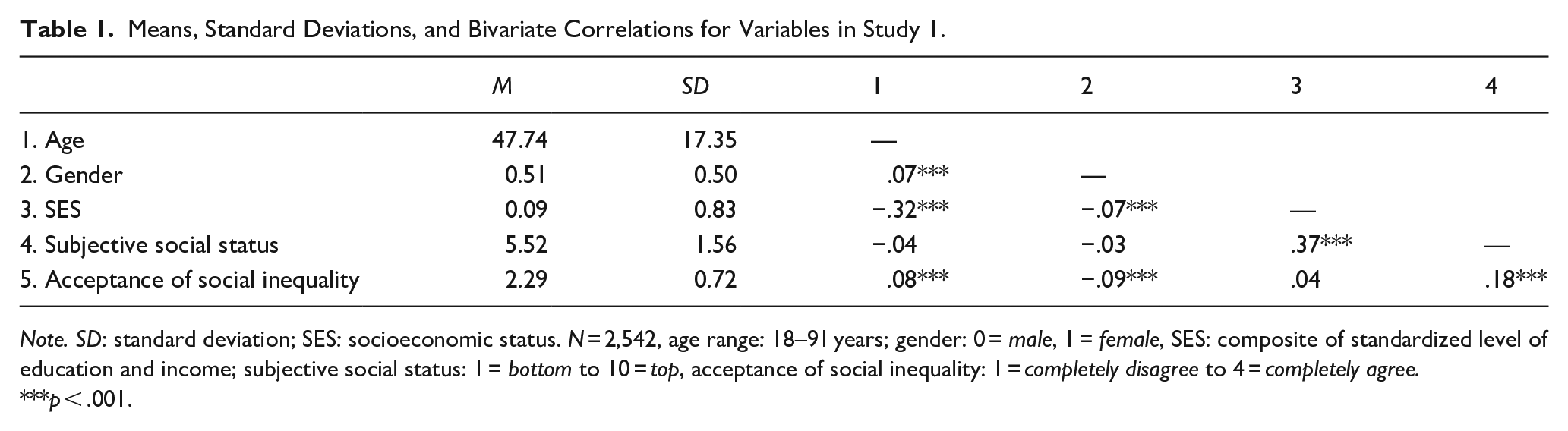
Note. SD: standard deviation; SES: socioeconomic status. N = 2,542, age range: 18–91 years; gender: 0 = male, 1 = female, SES: composite of standardized level of education and income; subjective social status: 1 = bottom to 10 = top, acceptance of social inequality: 1 = completely disagree to 4 = completely agree.
**p < .001.
As expected, regression analyses revealed two significant main effects of subjective social status and chronological age on the acceptance of social inequality. Higher social status and older chronological age predicted higher acceptance of social inequality. More critical to our predictions, the effect of subjective social status on acceptance of social inequality was moderated by chronological age (see Table 2). Simple slope analyses demonstrated that the effect of subjective social status on acceptance of inequality was significantly greater in middle-aged and older as compared to younger adults (ps < .001; see Figure 1). Comparing the simple slopes between middle-aged and older adults did not yield significant differences (p = .22). These effects were unchanged after statistical control of SES and gender.
Multiple Regression Analyses Predicting Acceptance of Social Inequality in Study 1.
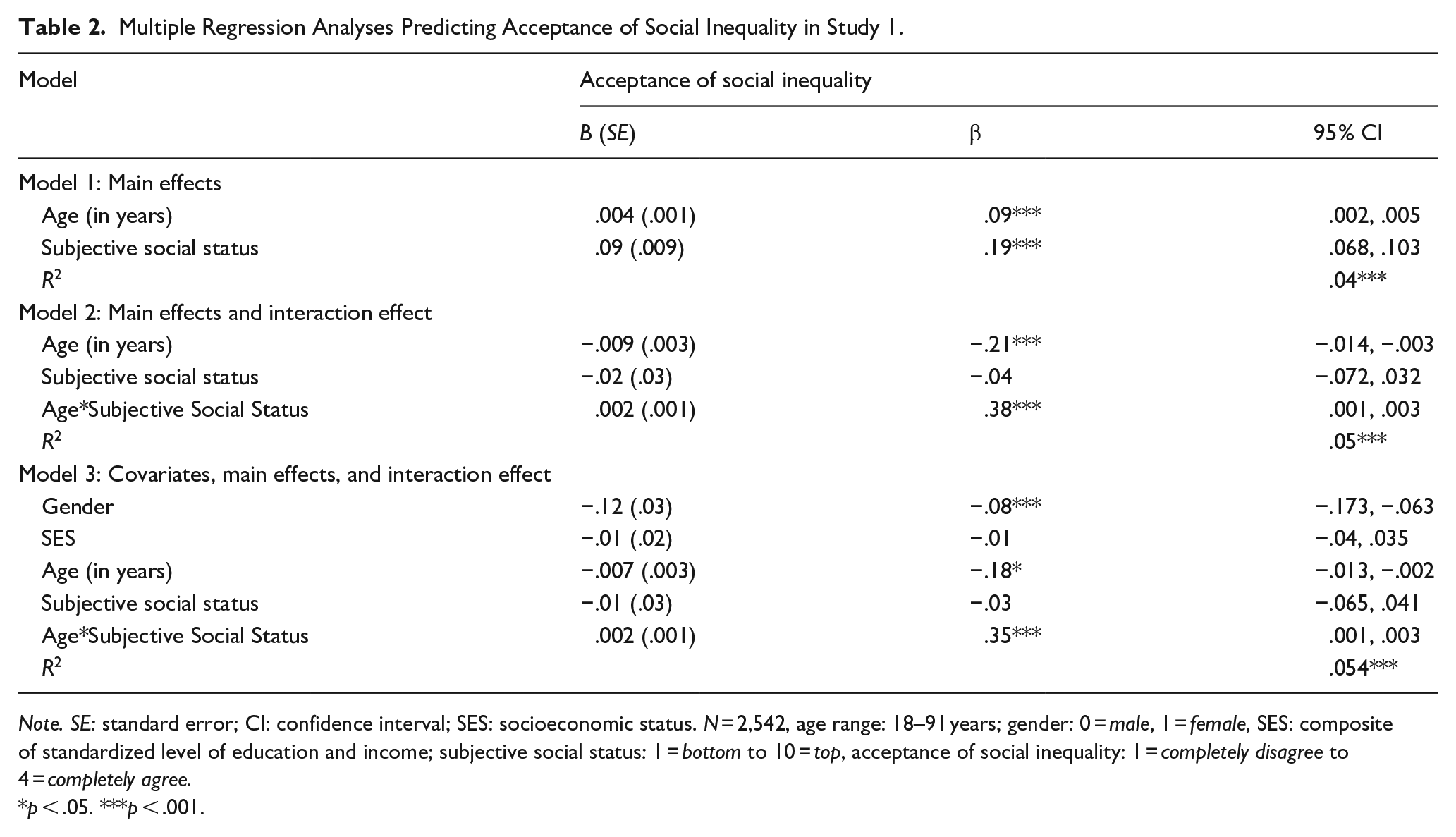
Note. SE: standard error; CI: confidence interval; SES: socioeconomic status. N = 2,542, age range: 18–91 years; gender: 0 = male, 1 = female, SES: composite of standardized level of education and income; subjective social status: 1 = bottom to 10 = top, acceptance of social inequality: 1 = completely disagree to 4 = completely agree.
p < .05. ***p < .001.
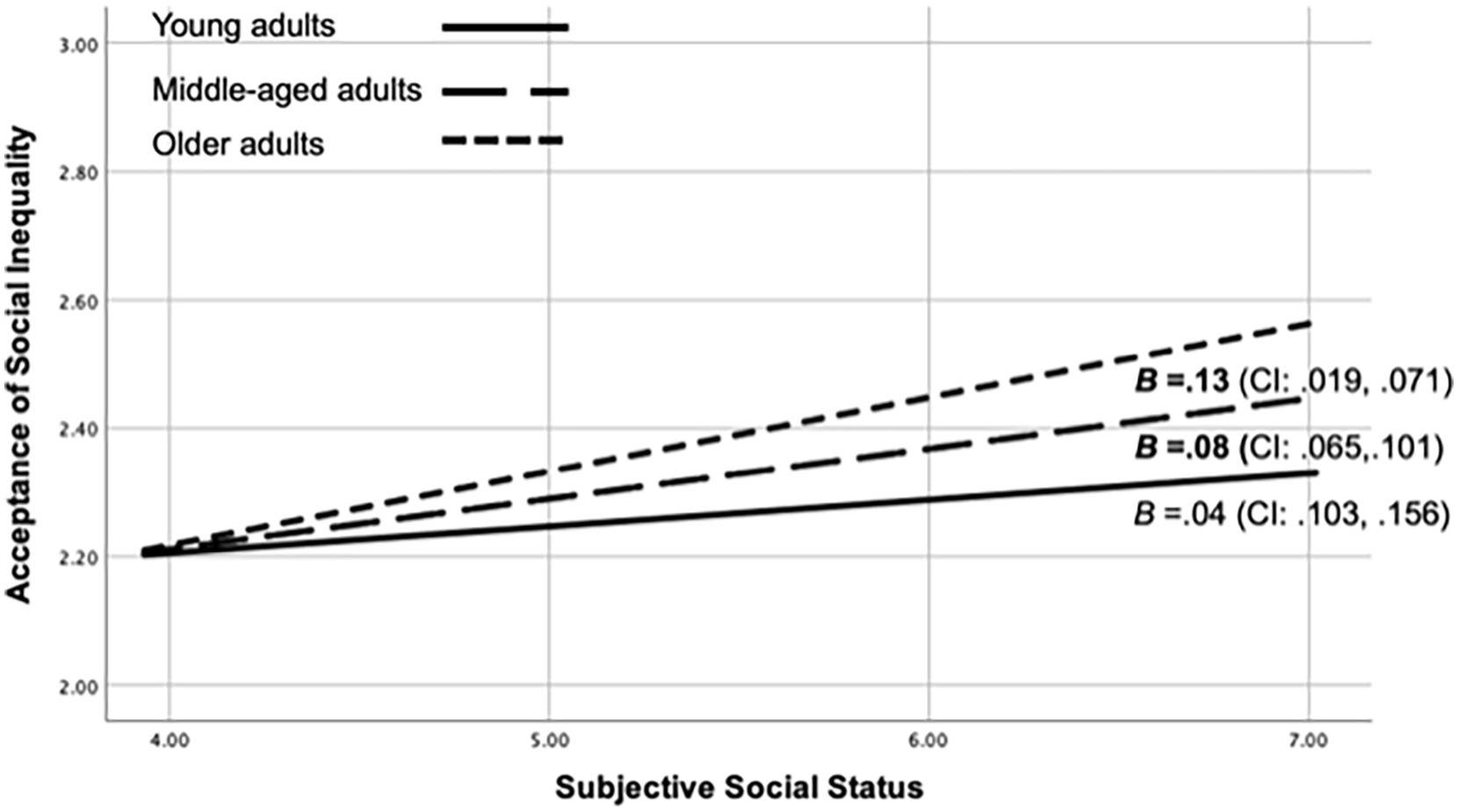
Age Moderates the Effect of Subjective Social Status on the Acceptance of Social Inequality (Study 1).
Discussion Study 1
In a first study with a large and age heterogeneous sample, individuals with a lower subjective social status were less accepting of social inequality than people with a higher social status. Importantly, this effect was qualified by age, such that subjective social status had a stronger effect on the acceptance of social inequality among middle-aged and older adults as compared with younger adults. Thus, for younger adults, their perceived social standing in the hierarchy is less important for whether they accept or reject social inequality. For middle-aged and older adults, in contrast, their subjective social status is a relatively more important determinant for how they respond to social inequality.
Apart from the age differences concerning the strength of the effect, the results also suggest that younger adults with higher subjective social status were less likely to accept social inequality than their middle-aged and older counterparts. Thus, younger people with a higher social status might reject social inequality because they haven’t yet had the opportunity to determine their position (and no need to justify it), as their elevated social status results mostly from the position of their parents/family. In addition, younger individuals appear to be more critical of social inequality and are generally more likely to question the prevailing social conditions. By contrast, middle-aged and older adults with a higher status are more likely to accept social inequality because they might feel that they are entitled and deserve their position because they have earned their higher position in the hierarchy throughout their lifetime. This might explain high-status older adults’ agreement that differences in status are “just” and basically reflect “what people have made of the opportunities they have had.” Thus, it might seem more convincing for middle-aged and older adults than for younger adults to claim that they have earned, deserve, and are entitled to their higher status position.
Limitations of this study are related to the cross-sectional, correlational nature of the design. We examined potential cohort effects linked to individuals’ sociocultural conditions by comparing the effects for older adults who grew up in very different political systems in East and West Germany. However, analyses did not show a further moderation effect by origin (East vs. West Germany) and the effects of subjective social status on the acceptance of social inequality were very similar in size for older adults living in East and West Germany (B = .089, SEB = .021, p < .001 and B = .088, SEB = .016, p < .001, respectively). This suggests that the reported effect of social status on the acceptance of social inequality might not be driven by cohort differences with regard to experienced historical/political conditions in East and West Germany.
Finally, a further limitation pertains to the fact that it is not clear whether the effect of subjective social status on tolerance of social inequality will generalize to how individuals respond to social inequality emotionally. We address this question in Studies 2 and 3.
Study 2
Individuals’ responses to social inequality (acceptance vs. rejection) should be accompanied by emotional experience because social inequality can be emotionally threatening (Kemper, 1991). Previous research has shown that rising inequality exacerbates emotional distress for those low in social status, as they are less likely to benefit and more likely to suffer from the consequences of social inequality (Wilkinson & Pickett, 2009). For example, if individuals feel that their lower position in the hierarchy is unfair, they feel angry, frustrated, and depressed (e.g., Smith & Pettigrew, 2014). Emotional reactions result from individuals’ appraisals of whether certain conditions are harmful or beneficial (e.g., Lazarus, 1991) and these appraisals might be partly influenced by an individuals’ age (Kunzmann & Grühn, 2005). With advancing age one’s position in the social hierarchy should be perceived as less malleable and more fixed, therefore, we predicted that the effects of subjective social status on negative emotional responses to rising inequality should increase with age (i.e., be stronger in middle adulthood and old age than in young adulthood). Study 2 was exempt according to the regulations of Leipzig University and the German Research Foundation as the study included only self-reported data and completing the study presented no more than minimal risk to the participants (i.e., as ordinarily encountered in daily life or during the performance of routine psychological tests).
Method Study 2
Design and Participants
To test this idea, we conducted an experimental study with a randomized between participant design, consisting of two factors: age group (young, middle-aged, and older adults) and activated rising inequality (social inequality vs. control condition). At the beginning of the study, participants reported their subjective social status, momentary emotions, and demographic information and were then asked to read one of the two articles (social inequality vs. control condition). Young, middle-aged, and older adults were randomly assigned to one of the two conditions. After reading the articles, participants reported their momentary emotions and were subsequently debriefed and thanked for their participation.
Participants were recruited in June/July 2019 online through a commissioned professional panel provider in Germany ensuring an approximately equal distribution of age (young, middle-aged, and older adults) and gender (male, female) groups. Using G*Power 3 software (Faul et al., 2009), we determined that we needed a sample of least 379 participants for this experiment to achieve adequate power (1 − β > .80) to detect a medium-sized effect (see Brandt, 2013; Brandt & Reyna, 2010). The final sample included N = 387 participants between 18 and 89 years of age (M = 49.97, SD = 16.82, 51.7% women) consisting of 109 young adults (18–39 years, M = 29.59, SD = 651; 55.2% women; control n = 55, and inequality, n = 54), 153 middle-aged adults (40–59 years, M = 49.37, SD = 5.68; 49.6% women; control, n = 66 and inequality, n = 87), and 125 older adults (60–89 years, M = 69.05, SD = 6.72; 50.4% women; control, n = 65 and inequality, n = 60). We excluded incomplete responses and respondents who failed our attention checks. According to university regulations at the time the current study was conducted, investigators make their own determination about exemption from review. Study 2 was exempt according to the regulations of Leipzig University and the German Research Foundation as the study included only self-reported data and completing the study presented no more than minimal risk to the participants (i.e., as ordinarily encountered in daily life or during the performance of routine psychological tests).
Measures and Procedure
Subjective social status
Self-perceived social standing was measured with a similar status ladder (1 = low status to 10 = high status) as in Study 1 asking participants mark the appropriate rung on the ladder where they think they stand in society (i.e., “Think of this ladder as representing where people stand in society. At the top of the ladder are the people who are the best off—who are most respected in society and looked up to in society. At the bottom of the ladder are the people who are the worst off—who are least respected and looked down to in society”). This social status ladder is a well-validated measure to assess subjective social status (e.g., Adler et al., 2000; Cundiff et al., 2013).
Exposure to social inequality
To activate social inequality, we presented a short fact-based newspaper article (159 words) that emphasized rising levels of social inequality in Germany. More specifically, an article entitled The New World of Social Inequality discussed increases of income inequality, wealth inequality, the proportion of low-income jobs, and reduced levels of social mobility (inequality condition). In the control condition, participants also read a newspaper article of similar length (160 words, control condition) about the importance of morning routines that was unrelated to social inequality (Morning Routines; see Supplemental Appendix 1).
Negative emotional reactivity
Emotional reactivity is defined as emotional response to an event (here: rising social inequality) consisting of changes in negative or positive emotions. Momentary emotions were assessed via an adjective list that consisted of positive and negative emotion adjectives (e.g., “angry,” “anxious,” “sad,” and “happy”). Participants were asked to rate their momentary emotions on a 10-item scale ranging from 0 = absolutely disagree to 6 = absolutely agree. This adjective list was completed twice before and after presentation of the article and emotional reactivity was operationalized as change between the first and the second measurements. The positive items were reverse scored for analyses and all items were averaged to create a measure to assess negative emotional reactivity. Cronbach’s alphas of the scale were adequate for the two measurement occasions (.86 and .88, respectively).
Covariates
As in Study 1, we included gender (0 = male, 1 = female) and SES (mean composite of z-standardized level of education and individual income) as covariates.
Results Study 2
Means, standard deviations, and bivariate correlations are shown in Table 3. SES and subjective social status were moderately positive correlated, and both were negatively associated with negative emotional experience at T0 and T1.
Means, Standard Deviations, and Bivariate Correlations for Variables in Study 2.
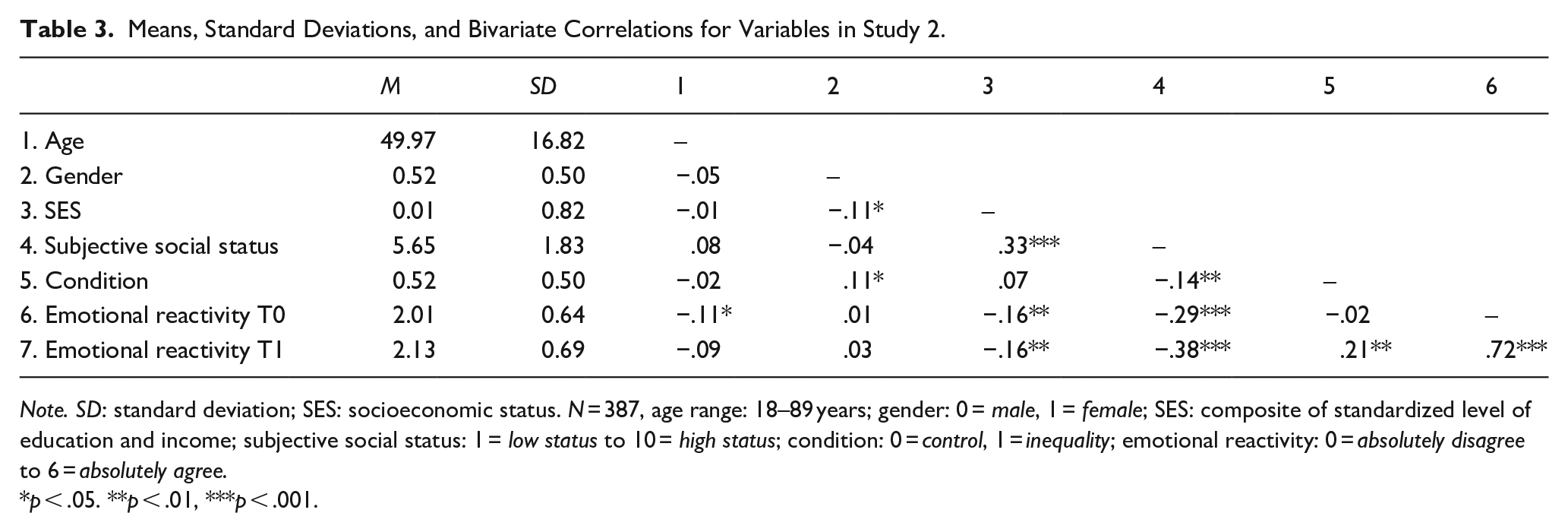
Note. SD: standard deviation; SES: socioeconomic status. N = 387, age range: 18–89 years; gender: 0 = male, 1 = female; SES: composite of standardized level of education and income; subjective social status: 1 = low status to 10 = high status; condition: 0 = control, 1 = inequality; emotional reactivity: 0 = absolutely disagree to 6 = absolutely agree.
p < .05. **p < .01, ***p < .001.
To test our hypotheses, we conducted analyses of covariance (ANCOVA) and multiple regression analyses predicting negative emotional reactivity (controlling for T0) by age, subjective social status, and experimental condition. Consistent with the findings from Study 1, an ANCOVA yielded a main effect of condition on negative emotional reactivity such that individuals’ negative emotional reactions in response to the social inequality condition were greater than individuals’ reactions in the control condition, F(1, 386) = 44.46, p < .001, ηpart.2 = .10. Follow-up analyses revealed that this main effect was significant in all three age groups (i.e., young, middle-aged, and older adults, ps < .001). Also consistent with the findings from Study 1, a multiple regression analyses yielded a two-way interaction effect of subjective social status and condition on negative emotional reactivity (B = −.07, SE = .02, 95% confidence interval [CI] = [−.123, −.024], p = .003, R2 = .60). Individuals with a lower subjective social status responded with more negative emotional reactivity when confronted with rising social inequality as compared with those higher in social status.
Particularly important for the present predictions, the two-way interaction effect was further qualified by a three-way interaction effect of condition, subjective social status, and age (see Table 4). More specifically, the effect of social inequality (vs. control) was qualified by subjective social status in middle-aged (B = −.07, SE = .03, 95% CI = [−.124, −.024], p = .003) and older adults (B = −.13, SE = .04, 95% CI = [−.203, −.056], p < .001) but not younger adults (p = .61).
Multiple Regression Analyses Predicting Emotional Reactivity in Response to Social Inequality as a Function of Age and Subjective Social Status in Study 2.
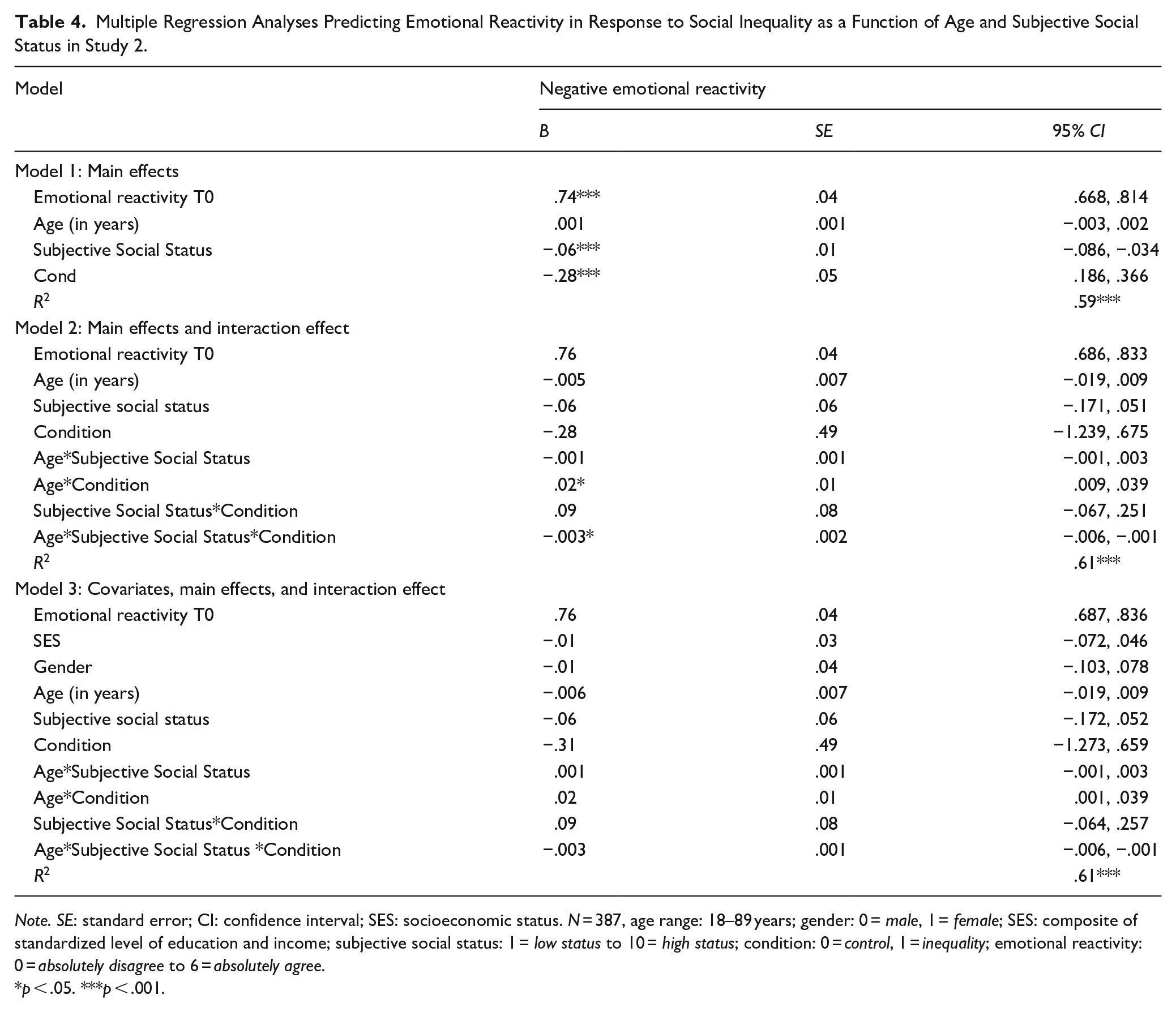
Note. SE: standard error; CI: confidence interval; SES: socioeconomic status. N = 387, age range: 18–89 years; gender: 0 = male, 1 = female; SES: composite of standardized level of education and income; subjective social status: 1 = low status to 10 = high status; condition: 0 = control, 1 = inequality; emotional reactivity: 0 = absolutely disagree to 6 = absolutely agree.
p < .05. ***p < .001.
Simple slope analyses (see Figure 2) demonstrated that subjective social status did not affect the negative emotional reactivity to primed social inequality among younger adults. By contrast, subjective social status moderated the effect of social inequality (vs. control) on negative emotional reactivity among middle-aged and older adults. The findings remained stable when including SES and gender as covariates (Table 3). Together, these findings indicate that subjective social status moderates the experience of social inequality on negative emotional reactivity among middle-aged and older adults, but not in younger adults.
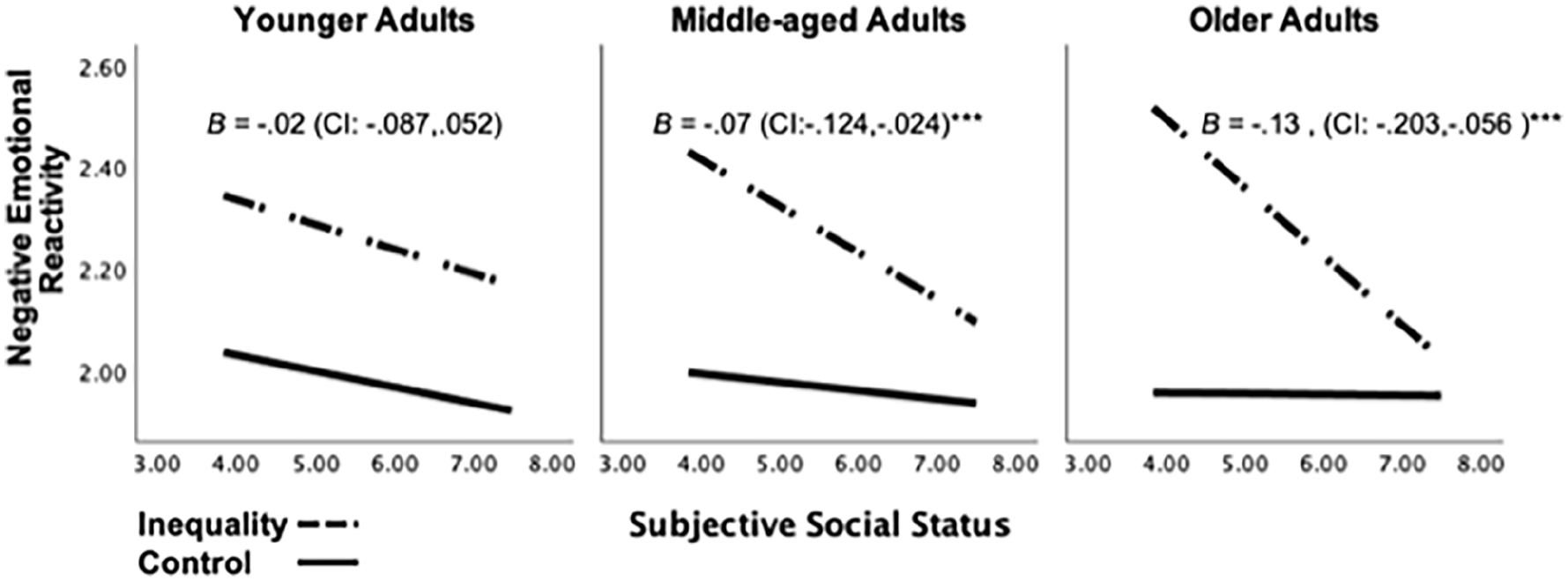
Significant Effects of Exposure to Social Inequality and Subjective Social Status on Negative Emotional Reactivity for Middle-Aged and Older, But Not Younger Adults (Study 2).
Discussion Study 2
Study 2 replicates and extends findings of Study 1, showing that exposure to rising social inequality increased young, middle-aged, and older adults’ negative emotions. As predicted, this was depending on subjective social status such that only individuals low in subjective social status experienced an increase in negative emotions but not people high in social status. Most critical, this effect was again qualified by age resulting in a three-way interaction such that age moderated the effect of social status on negative emotional reactivity to rising inequality. Specifically, the effect of subjective social status and experimental condition only appeared among middle-aged and older adults but not in younger adults.
Study 3
In two studies, younger adults’ subjective social status had no or weaker—and middle-aged and older adults’ subjective social status stronger effects on the acceptance and emotional experience of social inequality. In Study 3, we sought to test the idea that social status should be less predictive of younger adults’ negative emotional reactivity to rising inequality, because they are more likely to believe in upward social mobility rendering their social status as more malleable than middle-aged and older adults. Thus, the purpose of Study 3 was to replicate and extend the findings of Study 2, showing that the age-differential effects can be explained by age differences in upward mobility beliefs. We formulated a mediated-moderation model predicting that the initial moderating effect of age of the effect of exposure to social inequality and subjective social status on negative emotional reactivity will be mediated by upward mobility belief (see Figure 5).
Method Study 3
Design and Participants
We relied on the same design as Study 2 with one important extension. Specifically, at the beginning of the study, we assessed participants’ beliefs in upward social mobility. We again recruited participants in September 2020 online through a commissioned professional panel provider in Germany ensuring an approximately equal distribution of age (young, middle-aged, and older adults) and gender (male, female) groups. To attain adequate power to test our hypotheses, we aimed at recruiting N = 600 young, middle-aged, and older participants (Faul et al., 2009). Participants first reported their subjective social status, demographic characteristics, and their upward social mobility beliefs. Subsequently, participants read one of two articles (control vs. rising inequality). Participants reported their momentary emotions before and after reading the article. They were randomly assigned to the experimental (article about rising inequality) and control (article about morning routine) conditions. We excluded incomplete responses and respondents who failed our attention checks. The final sample (N = 605, 18–82 years of age, M = 51.06, SD = 16.79; 52.4% women) consisted of 167 young adults (18–39 years, M = 29.41, SD = 5.94; 53.3% women; control n = 84 and inequality condition n = 83) condition, 219 middle-aged adults (40–59 years, M = 49.67, SD = 6.27; 51.1% women; control n = 119 and inequality condition n = 100), and 219 older adults (60–82 years, M = 68.96, SD = 5.63; 53% women; control n = 112 and inequality condition n = 107). According to university regulations at the time the current study was conducted, investigators make their own determination about exemption from review. Study 3 was exempt according to the regulations of Leipzig University and the German Research Foundation as the study included only self-reported data and completing the study presented no more than minimal risk to the participants.
Measures and Procedure
Subjective social status
As in Studies 1 and 2, self-perceived social standing was measured with a status ladder (1 = low status to 10 = high status) asking participants mark the appropriate rung on the ladder where they think they stand in society (Adler et al., 2000; Cundiff et al., 2013).
Upward mobility beliefs
To assess participants’ beliefs about their upward social mobility, we developed a six-item scale (e.g., “I have many opportunities to move up in society,” “If I try hard enough, I can improve my social status in society” from 0 = absolutely disagree to 6 = absolutely agree; see Supplemental Appendix 3 for the complete scale). A principal components factor analysis yielded one component with an eigenvalue of 4.04, accounting for 67.23% of the variance. Cronbach’s alpha of the scale was .89.
Exposure to social inequality
As in Study 2, we presented two short mock newspaper articles (a) emphasizing rising levels of social inequality (experimental group) or (b) discussing the importance of morning routines (control group; see Supplemental Appendix 1).
Emotional reactivity
As in Study 2, we assessed momentary emotions before and after the social inequality activation using a 10-item scale asking participants how they felt from 0 = absolutely disagree to 6 = absolutely agree (e.g., “angry,” “anxious,” “sad,” and “happy”). Again, the positive items were reverse-scored for analyses and all items were averaged to create a measure to assess negative emotional reactivity. Cronbach’s alphas of the scale for the two measurement occasions was .88 and .91, respectively.
Covariates
We included gender (0 = male, 1 = female), SES (mean composite of z-standardized level of education and individual income), chronological age, and perceived control (Lachman & Weaver, 1998; three-items, e.g., “What happens to me in the future mostly depends on me”; we computed a mean composite score with higher values indicating a stronger sense of control, Cronbach’s alpha = .80) as covariates. We added perceived control as a further covariate to Study 3, with the goal to confirm the predictive role of upward mobility beliefs above and beyond the effects of perceived controllability.
Results Study 3
Means, standard deviations, and bivariate correlations are shown in Table 5. Upward mobility beliefs were negatively associated with age, r(605) = −.40, p < .001; see Figure 3, such that younger adults were more likely to believe that they will gain social status in the future, whereas older adults were more likely to believe that their position in the social hierarchy will not increase in the future. In addition, SES was positively associated with subjective social status, upward social mobility beliefs, being a man, perceived control and negatively associated with negative emotions. Subjective social status was positively associated with upward mobility beliefs and perceived control and negatively associated with negative emotions. Upward mobility beliefs were moderately positive associated with perceived control and negatively associated with negative emotions.
Means, Standard Deviations, and Bivariate Correlations for Variables in Study 3.
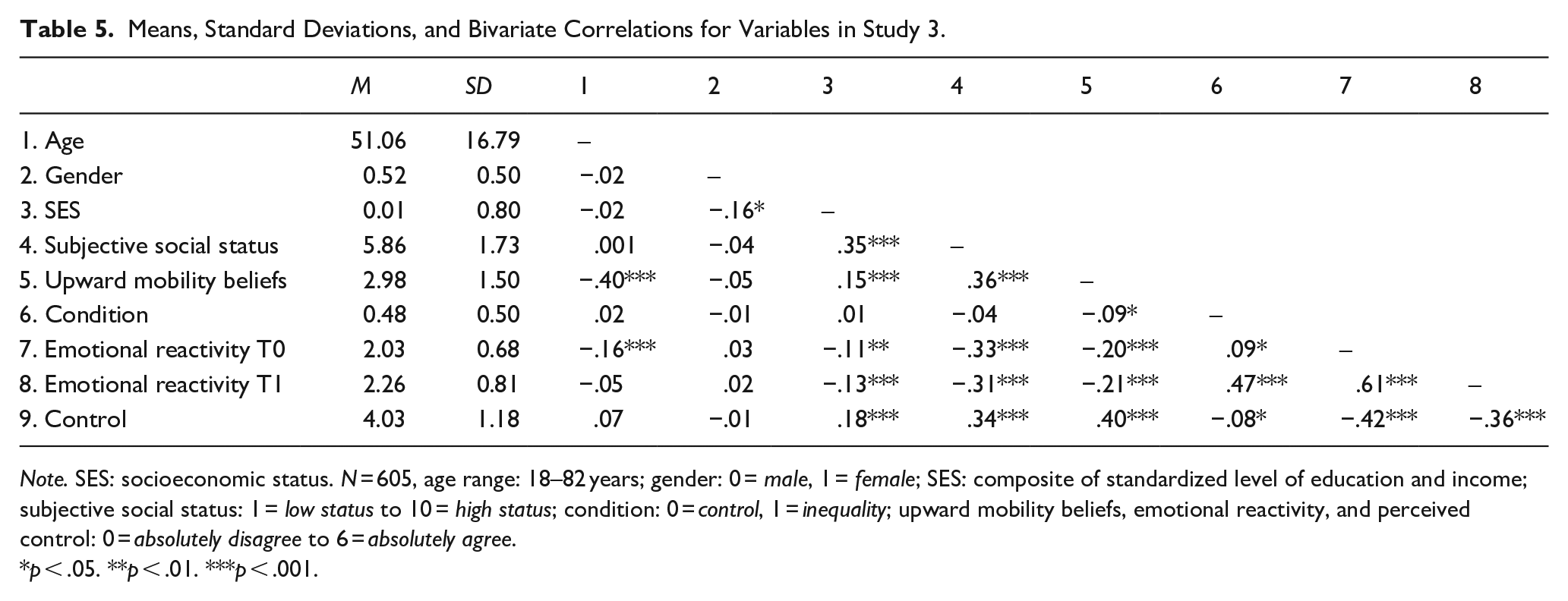
Note. SES: socioeconomic status. N = 605, age range: 18–82 years; gender: 0 = male, 1 = female; SES: composite of standardized level of education and income; subjective social status: 1 = low status to 10 = high status; condition: 0 = control, 1 = inequality; upward mobility beliefs, emotional reactivity, and perceived control: 0 = absolutely disagree to 6 = absolutely agree.
p < .05. **p < .01. ***p < .001.
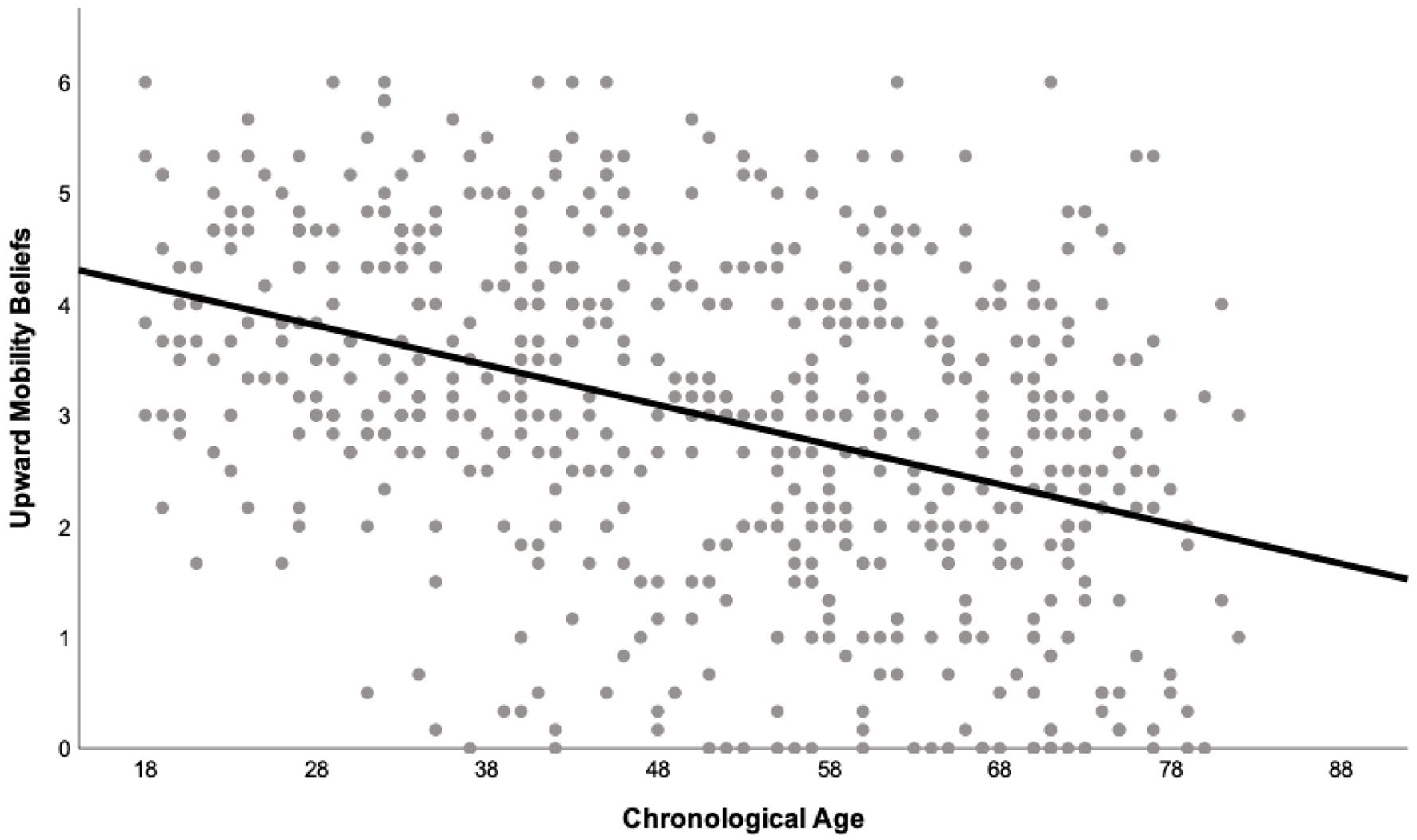
Association of Chronological Age With Upward Mobility Beliefs (Study 3).
We first tested the effect of experimental condition (0 = control, 1 = inequality) on negative emotional reactivity. Consistent with the findings from Study 2, an ANCOVA yielded a main effect of condition on negative emotional reactivity such that individuals in the social inequality condition (M = 2.66, SD = 0.82) reported more negative emotions than those in the control condition (M = 1.89, SD = 0.59), F(1, 604) = 234.69, p < .001, ηpart.2 = .28. Further analyses revealed that the main effect of condition was significant in all three age groups (i.e., young, middle-aged, and older adults, ps < .001). Similarly, consistent with Study 2, multiple regression analyses yielded an interaction effect of subjective social status and condition (0 = control, 1 = inequality) on negative emotional reactivity (B = −.06, SE = .03, 95% CI = [−.113, −.013], p = .01, R2 = .56).
In addition, and further replicating findings of Study 2, we found evidence for the three-way interaction effect of condition, subjective social status, and chronological age (see Table 6). Specifically, subjective social status affected negative emotional reactivity to rising social inequality in middle-aged (B = −.06, SE = .03, 95% CI = [−.108, −.007], p = .02) and older adults (B = −.11, SE = .04, 95% CI = [−.185, −.041], p = .002), but not younger adults (p = .96); Figure S1. Again, the findings remained stable after statistical control of SES and gender (Table 6).
Multiple Regression Analyses Predicting Emotional Reactivity in Response to Social Inequality as a Function of Age and Subjective Social Status in Study 2.
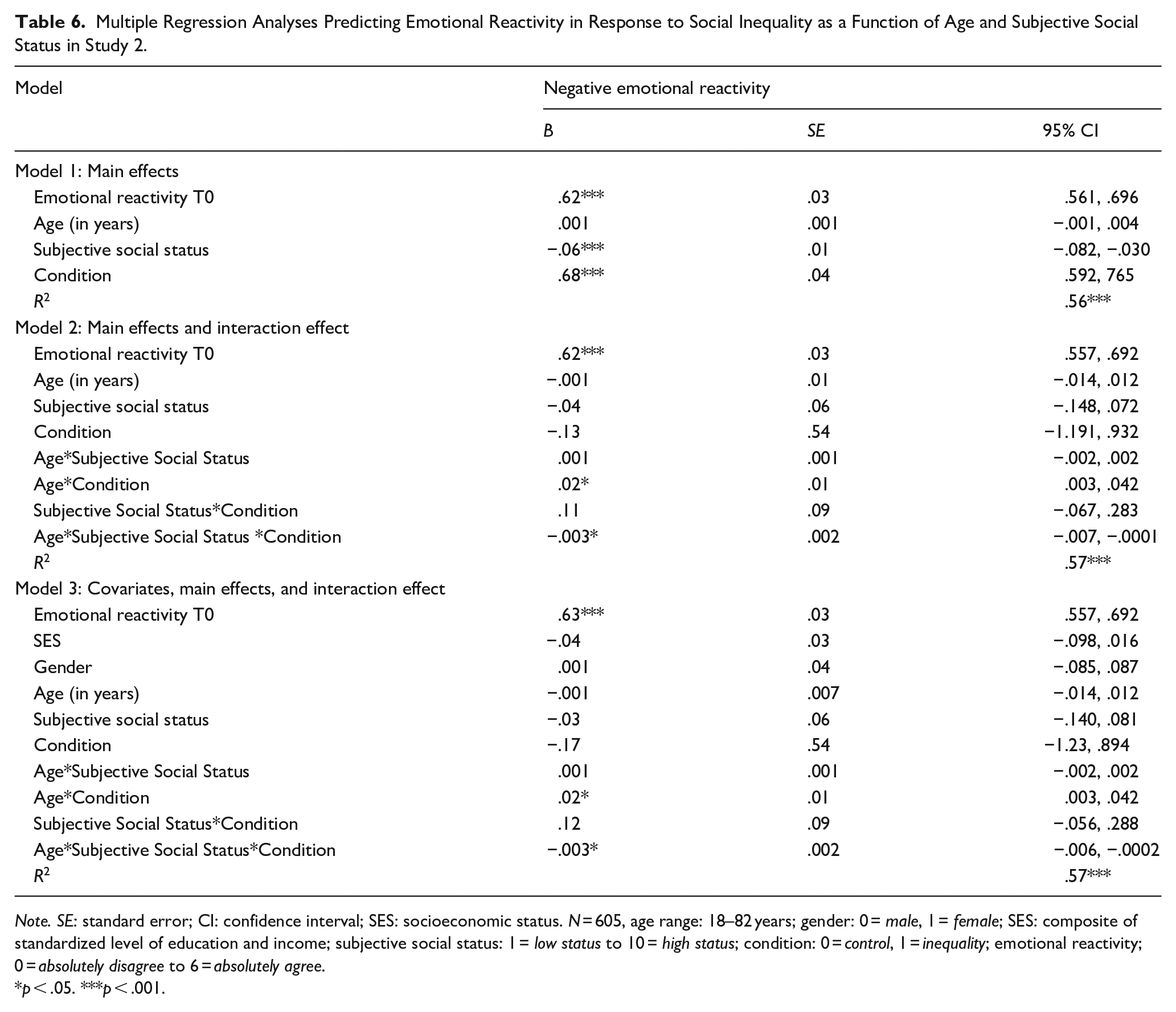
Note. SE: standard error; CI: confidence interval; SES: socioeconomic status. N = 605, age range: 18–82 years; gender: 0 = male, 1 = female; SES: composite of standardized level of education and income; subjective social status: 1 = low status to 10 = high status; condition: 0 = control, 1 = inequality; emotional reactivity; 0 = absolutely disagree to 6 = absolutely agree.
p < .05. ***p < .001.
Third, we tested the hypothesis that the effect of subjective social status and exposure to rising inequality is moderated by upward mobility beliefs: subjective social status should only have an effect on negative emotional reactivity when individuals maintain weak upward mobility beliefs (Figure 4). In line with predictions, the three-way interaction effect of subjective social status, condition, and upward mobility beliefs on negative emotional reactivity was significant. Specifically, subjective social status moderated the effect of experimental condition on negative emotional reactivity for those participants who reported weak (−1 SD) upward mobility beliefs (B = −.10, SE = .03, 95% CI = [−.166, −.039], p = .001) but not for those with strong upward mobility beliefs (+1 SD; p = .28). The findings remained significant when including chronological age, SES, gender, and perceived control as covariates.
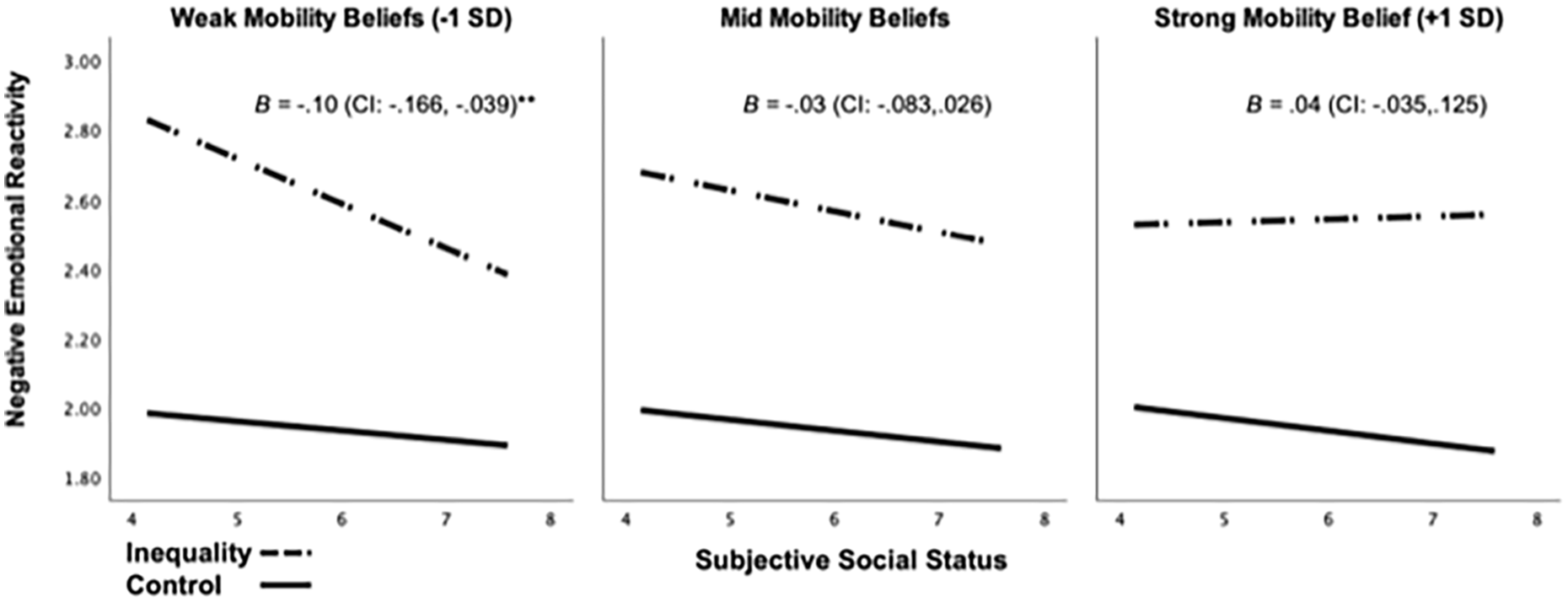
The Age Differential Effect of Exposure to Social Inequality and Subjective Social Status on Negative Emotional Reactivity Is Explained by Upward Mobility Beliefs (Study 3).
Finally, we tested a mediated-moderation model predicting an indirect effect of age on the relationship between subjective social status x exposure to social inequality and negative emotional reactivity through upward mobility beliefs (Figure 5). To test the mediated-moderation effects of age, we estimated indirect effects in terms of a Type II Mediated Moderation, where the moderating effect of the original moderator (i.e., age) on the relationships between the independent and the dependent variables (i.e., subjective social status, exposure to social inequality, and negative emotional reactivity) is conveyed through the mediator (i.e., upward mobility beliefs; see Gielnik et al., 2018). Path analyses showed a significant and positive effect of age on upward mobility beliefs (Table 7), which indicates that older adults are less likely to hold upward mobility beliefs than younger adults. Also, the indirect moderation effect of age on the relationship between social status x exposure to social inequality and negative emotional reactivity through upward mobility beliefs was significant (indirect effect B = .003, SE = .001; 95% CI = [.001, .006]). Together these results support our hypothesis and suggest that upward mobility beliefs explain age differences in emotional reactivity as a function of subjective social status to social inequality. Specifically, when confronted with social inequality the relationship between social status and negative emotions is stronger for middle-aged and older adults, who are less likely to hold upward mobility beliefs, compared with younger adults, who are more likely to endorse upward mobility beliefs. Figure 5 summarizes the overall model results controlling for covariates (SES, gender).
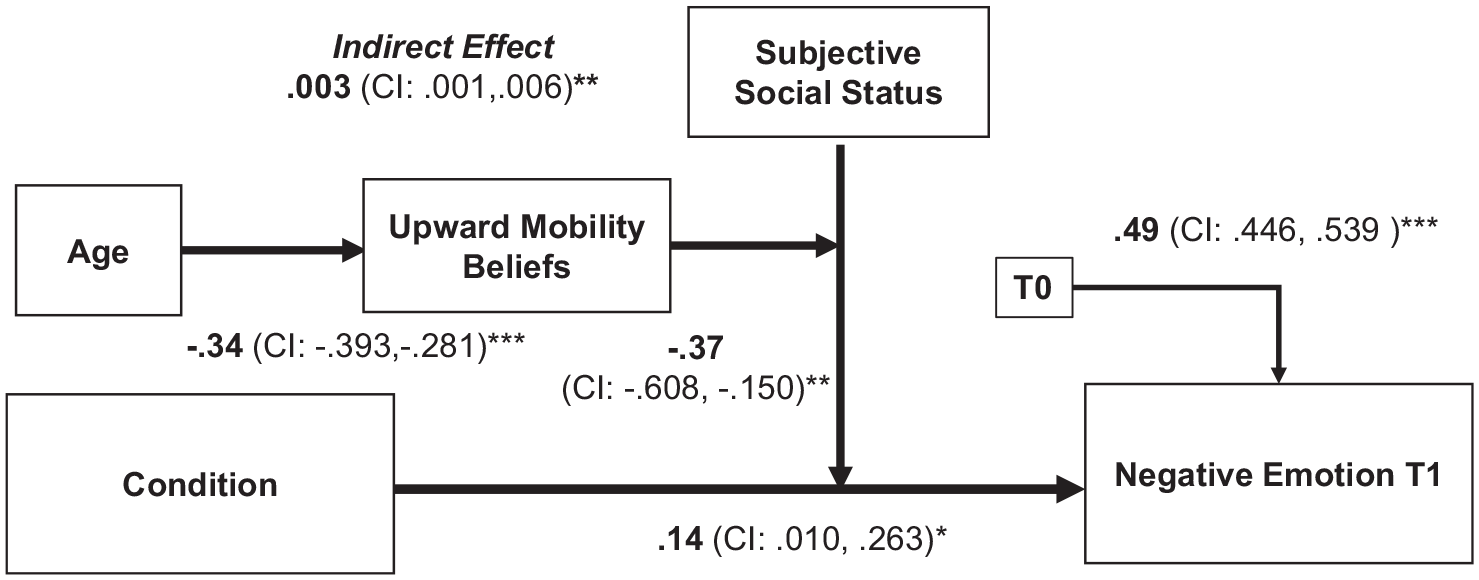
Mediated-Moderation Model Showing that Upward Mobility Beliefs Explain Age Differences in Negative Emotional Reactivity to Social Inequality (Study 3).
Mediated-Moderation Analyses Predicting Emotional Reactivity in Response to Social Inequality as a Function of Subjective Social Status, Upward Mobility Beliefs, and Age in Study 3.
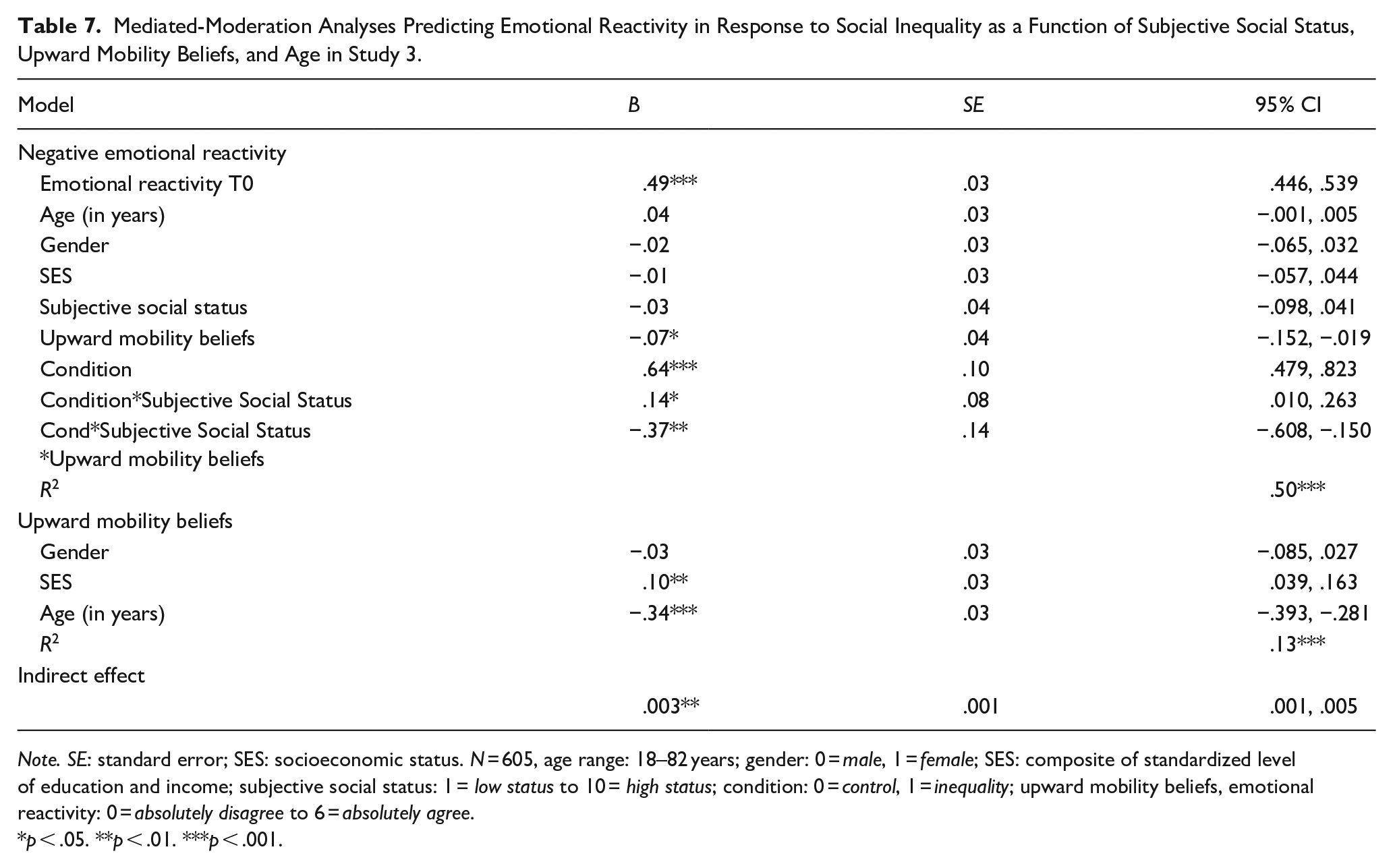
Note. SE: standard error; SES: socioeconomic status. N = 605, age range: 18–82 years; gender: 0 = male, 1 = female; SES: composite of standardized level of education and income; subjective social status: 1 = low status to 10 = high status; condition: 0 = control, 1 = inequality; upward mobility beliefs, emotional reactivity: 0 = absolutely disagree to 6 = absolutely agree.
p < .05. **p < .01. ***p < .001.
Discussion Study 3
Study 3 provides a replication of Study 2 and extends these findings by highlighting the role of upward mobility beliefs to explain the effects of subjective social status and rising social inequality on negative emotional reactivity. Specifically, the results show that middle-aged and older adults perceived their social status as relatively fixed, whereas young adults perceived their social status to be in flux as they anticipate status gain in the future. These beliefs, in turn, moderated the effect of subjective social status on negative emotional reactivity to rising social inequality. Subjective social status only had an effect on individual’s negative emotional reactivity who believed that their status is immutable and would not increase in the future. However, this relationship was absent among individuals who were more likely to endorse upward mobility beliefs. Specifically, for those who believed that their status will increase in the future, subjective social status had no predictive role to explain their negative emotional reactivity to rising social inequality. Finally, our proposed mediated-moderation model was further supported by the data showing that the moderating effect of the initial moderator (i.e., age) was conveyed through the mediator (i.e., upward mobility beliefs). Again, these effects were significant above and beyond the inclusion of covariates (e.g., perceived control, gender, SES).
General Discussion
The present research suggests that the effect of subjective social status on individuals’ responses to social inequality differs across the adult life span and can be explained by age differences in upward mobility beliefs. Across three studies, we consistently found evidence that being confronted with (rising) social inequality leads to a general rejection and less tolerance as well as negative emotional experiences. Thus, our results suggest that individuals generally reject rising social inequality and experience it as emotionally distressing. The results also show that individuals with a lower social status more so than those with a higher social status. Findings further demonstrate that age and subjective social status play an important interactive role in shaping the experience and acceptance of social inequality. Subjective social status had only an effect for middle-aged and older adults but not for younger adults. As predicted, among younger adults, subjective social status had a reduced impact on inequality acceptance (Study 1) and its impact was absent on negative emotional reactivity (Studies 2 and 3). Among middle-aged and older adults, however, subjective social status had a significant impact on inequality acceptance (Study 1) and negative emotional reactivity to rising inequality (Studies 2 and 3). Importantly, this dynamic could be further explained by age differences in beliefs in upward mobility. Accordingly, younger adults expected to move up the social ladder in the future, whereas middle-aged and older adults expected less change and that their social status would be relative immutable. Therefore, low social status seems to be less likely to be associated with feelings of negative emotions among younger adults, as a result of their belief to move up the social ladder in the future. Feeling lower in social status in middle-aged and older adults seems to be more detrimental, as they do not expect to move up and gain rank in the hierarchy in the future. Within the limitations of a cross-sectional design (see Lindenberger et al., 2011), this pattern of findings suggests that age differences in upward mobility beliefs may explain the predictive role of subjective social status for negative emotional responses to social inequality in midlife and later adulthood.
In the current research, age differences in negative emotional reactivity to rising inequality were associated with age differences in upward mobility beliefs. Thus, our mediated-moderation model suggests that upward mobility beliefs represent one factor that may account for age differences in the predictive role of subjective social status on emotional reactivity. Hence, our findings are consistent with the notion that chronological age does not represent and independent or explanatory variable in developmental research and should be merely understood as a placeholder for changes that occur across the life span that influence individuals’ attitudes, motivation, and behavior (Wohlwill, 1970).
Our findings also help to explain how social inequality impacts young, middle-aged, and older adults’ emotional experience. Past research suggests that increasing levels of inequality can have detrimental consequences for individual well-being, productivity, and life expectancy (Wilkinson & Pickett, 2009). In addition, emerging evidence suggest that the effects of a lower social status on poor health are mediated by cognitive-emotional factors (Matthews et al., 2010). Consequently, negative emotional experiences of rising inequality may trigger different physiological and behavioral responses between younger, middle-aged, and older adults. Thus, future research could examine age differences in the consequences of negative emotional experiences for motivation, behavior and health across the life span.
Limitations and Future Research
Although our results largely support our predictions, they are not without limitations. In Study 1 we used a cross-sectional design that precludes any inferences about causality. Although Experiments 2 and 3 confirm the direction of the proposed effects another potential limitation of the present study is that we were not able to disentangle age and cohort effects. The experience of social inequality is shaped by specific sociocultural contexts and the accompanying occurring historical changes (see Gerstorf et al., 2020). Although there has been significant increases in inequality in the past few decades in many Western countries (Atkinson, 2015), opportunities to get ahead may still differ within and across countries. Thus, is possible that different socio-historical factors might lead to divergent patterns of results. The current results may vary by the degree of inequality in a given context and country (East vs. West Germany; Germany vs. Sweden). For example, in contexts and countries that are associated with higher inequality (e.g., East Germany), subjective social status might have an even greater impact on the acceptance and emotional experience of social inequality.
Research suggests that during the past 20 years, income- and wealth inequality have grown faster in Germany than in the 20 years before (Grabka et al., 2019; OECD, 2021). These history-graded changes may have decreased the salience of social inequality among later-born as compared with earlier-born cohorts rendering social inequality as the “new normal.” Despite the rising levels of social inequality, “rags to riches” beliefs where hard work and persistence leads to success seem to be more popular than before (Davidai, 2018). Moreover, it is important to consider the contexts in which individuals’ development takes place as perceptions of inequality are shaped by people’s experience that they accumulate throughout their life span. For example, older individuals have lived through and experienced many more historical events and crisis than younger people (e.g., Great Depression 1930s, Second World War, German reunification 1990, financial crisis in 2008, COVID-19 pandemic 2020). At the same time, however, younger and older individuals differ in their exposure to certain events and crisis as well as educational and occupational opportunity structures at different points in their life span. Thus, these unique experiences may shape younger, middle-aged, and older individuals’ understanding of hierarchies and their place within it, as well as their awareness of social inequality. In a recent study, Case and Deaton (2015) found that mortality and morbidity among less educated (White) middle-aged adults in the United States has been rising in recent years. Their results indicate that for this group, social inequality sharply increased with regard to worsening labor market conditions and lack of access to health care, which resulted in “deaths of despair” (e.g., suicide, drug overdose, alcoholism).
More research using longitudinal designs is necessary to further confirm and extend the results of the current studies. In addition, our assessment of subjective social status was based on a one-item status ladder measure. Although this is a widely used and well-validated measure with a strong construct validity and retest reliability (e.g., Adler et al., 2000; Cundiff et al., 2013), future research might include further and more multidimensional measures. Despite these limitations, there are important strengths of this research. First, we were able to analyze representative data of a large sample in Study 1 in Germany. Second, the effects reported in the paper could be replicated and extended across three different studies including two experiments. Based on these results we can conclude that the effects found are fairly robust. Nonetheless, future research should test how universal these findings are in terms of cultural differences.
In our studies we treated upward mobility beliefs as a relatively stable individual difference variable. However, social status is dynamic and may change across time (D. Weiss & Kunzmann, 2020). Studies show that economic inequality can lead people to perceive less socioeconomic mobility (Davidai, 2018). Thus, future research needs to test how young, middle-aged, and older adults’ upward mobility beliefs might be altered by raising social inequality and how this modulates their experience of it.
Considering the current findings, it seems fruitful to distinguish between upward mobility beliefs and actual opportunities for social mobility across different contexts. For example, there might be discrepancies across different periods of life as well as different societal systems and cultures. On one hand, having many opportunities for social mobility but a lack of belief in it might lead to detrimental consequences in the short term. On the other hand, having little opportunities but a strong belief in upward mobility might also lead to detrimental consequence in the long term.
A full analysis of social inequality across the life span needs to take not only intragenerational—but also intergenerational mobility into account. Future research examining social inequality in age diverse samples should, for instance, analyze how parents perceive the prospects of upward mobility not only for themselves but also for their children. Expecting one’s children to move up in the social hierarchy might temper parent’s opposition to current inequality. It seems also important to consider intergenerational divisions and distribution of resources. For example, intergenerational inequality could render current inequality for younger generations even more intolerable.
Finally, we conceptualized upward mobility beliefs focusing on positive change, that is, how a person thinks she or he will increase her or his social standing in the future. Importantly, beliefs about one’s social standing can also entail fear of losing social status (Layte & Whelan, 2014; D. Weiss & Kunzmann, 2020). For example, loss of social status is associated with later adulthood due to the pervasiveness of negative old-age stereotypes (Robertson & Weiss, 2017). At the same time, however, research suggests that older adults perceive older adults in general to have unequivocally low social status but perceive their own social status as relatively higher. Future research is needed to examine in more detail loss-based status expectations and whether their consequences differ across the life span.
Conclusion
The current set of studies highlights differences in the predictive role of subjective social status regarding the acceptance and emotional experience of rising inequality across the adult life span. The results of the current studies demonstrate that it is possible to disentangle these age differences by highlighting the explanatory role of upward mobility beliefs. It appears that young, middle-aged, and older adults differ in their upward mobility beliefs, which modulates the effect of their current social standing on their experience of social inequality. Although this is only the first step to a more nuanced life span model of social inequality and social status, it provides an important perspective considering age differences that can inform future research.
Supplemental Material
sj-png-1-jbd-10.1177_01650254221089615 – Supplemental material for Responses to social inequality across the life span: The role of social status and upward mobility beliefs
Supplemental material, sj-png-1-jbd-10.1177_01650254221089615 for Responses to social inequality across the life span: The role of social status and upward mobility beliefs by David Weiss, Werner Greve and Ute Kunzmann in International Journal of Behavioral Development
Footnotes
Authors’ Note
David Weiss is now at the Department of Psychology, Martin-Luther University of Halle-Wittenberg, Germany and Ute Kunzmann, Department of Psychology, Wilhelm Wundt, Leipzig University, Germany. Werner Greve, Department of Psychology, University of Hildesheim, Hildesheim, Germany.
Funding
The author(s) disclosed receipt of the following financial support for the research, authorship, and/or publication of this article: This research was supported by a Heisenberg Fellowship from the German Research Foundation awarded to David Weiss (WE 5441/2-1).

Supplemental Material
Supplemental material for this article is available online.
References
Supplementary Material
Please find the following supplemental material available below.
For Open Access articles published under a Creative Commons License, all supplemental material carries the same license as the article it is associated with.
For non-Open Access articles published, all supplemental material carries a non-exclusive license, and permission requests for re-use of supplemental material or any part of supplemental material shall be sent directly to the copyright owner as specified in the copyright notice associated with the article.

