



Abstract
We conducted a meta-analytic review of 53 studies published between 2000 and 2020 to quantify associations of parents’ emotion regulation with parenting behavior and children’s emotion regulation and internalizing and externalizing symptoms. Twelve meta-analyses, which included between 4 to 22 effect sizes (N from 345 to 3609), were conducted to summarize associations of parent emotion regulation with positive or negative parenting behaviors and child outcomes of emotion regulation, difficulties in emotion regulation, internalizing symptoms, or externalizing behavior. Given the range of behavioral parent emotion regulation measures used across studies, effect sizes for parent emotion regulation strategy use (skill) were analyzed separately from effect sizes for parents’ difficulties with emotion regulation. Summary effect sizes ranged from |.08| to |.28| for relations of parent emotion regulation skill with parenting behaviors and children’s adjustment. Summary effect sizes ranged from |.03| to |.42| for relations of parent emotion regulation difficulties with parenting behaviors and children’s adjustment. In general, parents with better emotion regulation skill or fewer difficulties are higher in positive parenting behaviors and have children with better emotion regulation and fewer internalizing symptoms. Evidence was less clear-cut for child externalizing behaviors. Significant effect size heterogeneity was observed in most analyses, and study characteristics (measures, child age, parent gender, sampling, and region where the study was conducted) were examined as moderators. Measures used, child age, and participant risk status moderated effect size in some analyses.
Keywords
Parenting has been described as a complex, skill-based task that involves many daily emotions that require regulation (Dix, 1991). Thus, one of the skills that can be important to parenting is parents’ capacity for adaptive emotion regulation, especially when they are distressed or angry (Kopp, 1982; Morris et al., 2017). A capacity for adaptive emotion regulation implies that one has a sense of control over his or her emotions and that emotion management efforts are appropriate to goals and situational demands. For example, adaptive emotion regulation has been defined as the awareness of personal emotional experiences, the ability to accurately recognize one’s own emotions, and the capacity to modulate emotional responses in accordance with situational demands or individual goals (Gratz & Roemer, 2004). Thompson (1994) defined emotion regulation as “the extrinsic and intrinsic processes responsible for monitoring, evaluating, and modifying emotional reactions, especially their intensive and temporal features, to accomplish one’s goals” (pp. 27–28).
In a review considering the role of emotion regulation in parenting and child development, Rutherford et al. (2015) proposed that “[parents’ own emotion regulation] has a functional purpose in facilitating sensitive responding and caregiving behavior—irrespective of the affective state of the child” (pp. 1–2). Thus, parents’ skill or capacity for emotion regulation is expected to have downstream effects on parenting behaviors and children’s regulation and socioemotional adjustment. This attention on emotion regulation for parents (Rutherford et al., 2015), as well as the more general benefits of emotion regulation for positive adjustment and well-being across the lifespan (Aldao et al., 2010), has resulted in an upturn in attention to parents’ emotion regulation and their parenting behaviors or children’s developmental outcomes. However, to date there has been no meta-analytic review summarizing the findings of this body of research. Thus, our aim here was to quantify associations of behavioral measures of parents’ emotion regulation with their parenting behaviors and children’s adjustment (emotion regulation and internalizing and externalizing symptoms).
One challenge in this research has been how to measure emotion regulation. This challenge has resulted in the development and use of several different measurement strategies. By limiting our review to studies that used a behavioral measure, we found that parents’ own emotion regulation had been measured in one of two general ways. The first approach was to measure parents’ specific skills or strategies to regulate emotion, such as cognitive reappraisal (e.g., Deater-Deckard et al., 2016; Remmes & Ehrenreich-May, 2014). The second approach was to measure overarching difficulties with emotion regulation, such as difficulties with emotional awareness and lack of access to strategies to regulate emotions (e.g., Carreras et al., 2019; Woodward & Viana, 2018). Thus, our review integrates the findings from studies that used behavioral indicators of parents’ use of specific emotion regulation skills or parents’ difficulties regulating their emotions.
Parents’ Emotion Regulation, Parenting, and Children’s Adjustment
While organizing this review, we also had to grapple with the parenting behaviors that had been investigated in studies of parents’ emotion regulation. Studies identified generally centered on one of two approaches, with each approach differentiating positive-supportive from negative-unsupportive parenting behaviors. First, researchers had concentrated on parents’ emotion socialization of their children, finding that it can be essential for helping children grow into emotionally and socially competent adolescents and adults (Denham et al., 2000; Dunbar et al. 2017; Johnson et al., 2017). Parent emotion socialization includes behaviors that help or hinder children’s recognition, expression, or regulation of emotion (Eisenberg et al., 2017; Schwartz et al., 2012). Some responses are described as supportive including reflecting feelings, guiding children to use problem-solving, encouraging emotional expression (e.g., “use your words”), and teaching useful containment strategies. Other responses are viewed as less supportive, especially those that are punitive or minimize distress or those that limit opportunities for children to experience, understand, acknowledge, and learn about emotions and regulation (Eisenberg et al., 1998). In emotion socialization research, the focus is often on parents’ responses to children’s negative emotion, and parents who report more supportive responses in these situations have children with more emotion regulation skills, fewer conduct problems, more prosocial behavior with peers, and fewer internalizing symptoms. In contrast, non-supportive parental responses to children’s negative emotions have been associated with poorer child adjustment (Hurrell et al., 2015; Song & Trommsdorff, 2016).
A second approach has been to concentrate on general behaviors of parents when interacting with and socializing children, separating behaviors into those with positive (warmth, support) or negative (hostile, coercive, rejecting) valence and effects on child regulation and adjustment. These studies provide evidence that parents’ warmth and supportiveness when interacting with their children, as well as parents’ minimal use of hostile, coercive, and rejecting parenting behaviors, result in happier and healthier children (Bornstein et al., 2018; Leerkes & Augustine, 2019). Largely, use of more positive and fewer negative parenting behaviors have been associated with fewer internalizing symptoms among children (Parent et al., 2016), more child prosocial behavior when with their peers (Darling & Steinberg, 1993), and less aggressive behavior and other forms of externalizing behaviors among children (Parent et al., 2016). Furthermore, positive and negative parenting behaviors, as well as parent supportive and unsupportive emotion socialization practices, have all been associated with children’s understanding of emotion and interactions with others in predictable directions (Katz et al., 2016; Valiente et al., 2004).
Recent Literature Reviews Summarizing the Association Between Parent Emotion Regulation and Parenting Behaviors
To summarize the above, there is compelling evidence that parenting behaviors are proximally linked to children’s socioemotional adjustment. Yet, multiple parenting and child development models and theories recognize that parenting behavior can be influenced by parents’ own skills and capacities (Gottman et al., 1996; Morris et al., 2007, 2017). Notable for the present review, parents’ own emotion regulation is one of the parenting capacities that has been prominent in multiple parenting and child development models (e.g., Leerkes & Augustine, 2019; Shaffer & Obradović, 2017). Yet, despite theories and a growing body of research on parents’ emotion regulation as a foundation on which they build their parenting behaviors, there has been no previous published meta-analysis summarizing how parents’ own emotion regulation relates to their parenting behaviors and children’s socioemotional adjustment.
Although no published meta-analysis was located, we did locate published reviews in related areas. In one narrative review, Bariola et al. (2011) presented evidence supporting associations between parent emotion regulation, parent emotional expression, and child emotion regulation; and, in a second review, Barros et al. (2015) described deficits in parents’ self-regulation and emotion regulation skills as root causes of parenting problems. Furthermore, two comprehensive reviews organized existing research evidence to formulate developmental models to explain how regulation may be transmitted from one generation to the next (Bridgett et al., 2015) or how parents’ emotionality and emotion regulation, both behavioral and physiological, relate to positive and negative parenting and child socioemotional adjustment outcomes (Leerkes & Augustine, 2019).
Two other reviews are especially notable for their focus on parents’ control or parents’ emotionality as explanations for various parenting behaviors. Crandall et al. (2015) conducted a systematic review on the intersection of maternal emotion and cognitive control capacities with parenting, locating 35 articles published between 2000 and 2014. Generally, maternal emotion and cognitive control capacity were lower among parents with more negative (e.g., rejecting, more controlling) parenting strategies. Parents, who scored better in maternal emotion and cognitive regulation exhibited more sensitive responding with their children, were warmer and more involved parents and had more positive responses to their children’s emotions. Rueger et al. (2011) meta-analyzed 63 studies of parental affect and parenting behavior. The studies included in this review do not overlap with the studies of parents’ emotion regulation included here. Instead, Rueger et al. (2011) summarized studies that used multiple ways of capturing parent affect (e.g., studies of personality, studies of negative mood, and studies of depressive symptoms). The analyses considered parent markers of negative separate from positive affect and measures of harsh-negative separate from supportive-positive parenting. Effect sizes (r) were .19 for 42 studies of negative affect and negative parenting, .13 for 44 studies of negative affect and positive parenting, .07 for 11 studies of positive affect and negative parenting, and .20 for 14 studies of positive affect and positive parenting. Moderators of effect sizes were tested, with no evidence of moderation by parent gender, but some evidence of child age as a moderator, whereby the association between negative parent affect and supportive parenting was stronger in preschool children relative to infants or school-age children.
Aims of the Present Study
In the present review and series of meta-analyses, we included all studies we could locate (published between 2000 and 2020) that incorporated a behavioral measure of parents’ own emotion regulation (either their skill or their difficulties). Included studies used a behavioral measure of parents’ personal emotion regulation that conformed to definitions of emotion regulation (Gratz & Roemer, 2004; Thompson, 1994), without reference to parenting, behaviors of parents when with their children or parent–child interactions. In addition, included studies reported associations of parents’ personal emotion regulation with either (1) their parenting behaviors (positive or negative) or (2) children’s emotion regulation skill, difficulties with emotion regulation, internalizing symptoms, or externalizing behaviors. When effect sizes varied across studies (i.e., when there was effect size heterogeneity), we also considered whether study characteristics moderated effect size. Study characteristics tested as moderators included the types of measure used, child age, risk status of the children/parents (i.e., selected for risk or unselected community members), parent/caregiver gender mix (i.e., mother, mix mother/father, reports from each mother and father), and region where the study was conducted.
Method
Search Methods and Study Inclusion and Exclusion Criteria
Electronic searches of PsycInfo and PubMed were conducted in April 2020 to identify potentially eligible studies published in 2000–2020 (see Figure 1 for the PRISMA diagram). We expected a time span of 20 years would capture all studies, given a review published in 2011 identified no studies published prior to 2000 that had investigated associations of parents’ own emotion regulation with parenting behaviors or children’s adjustment (Bariola et al., 2011).
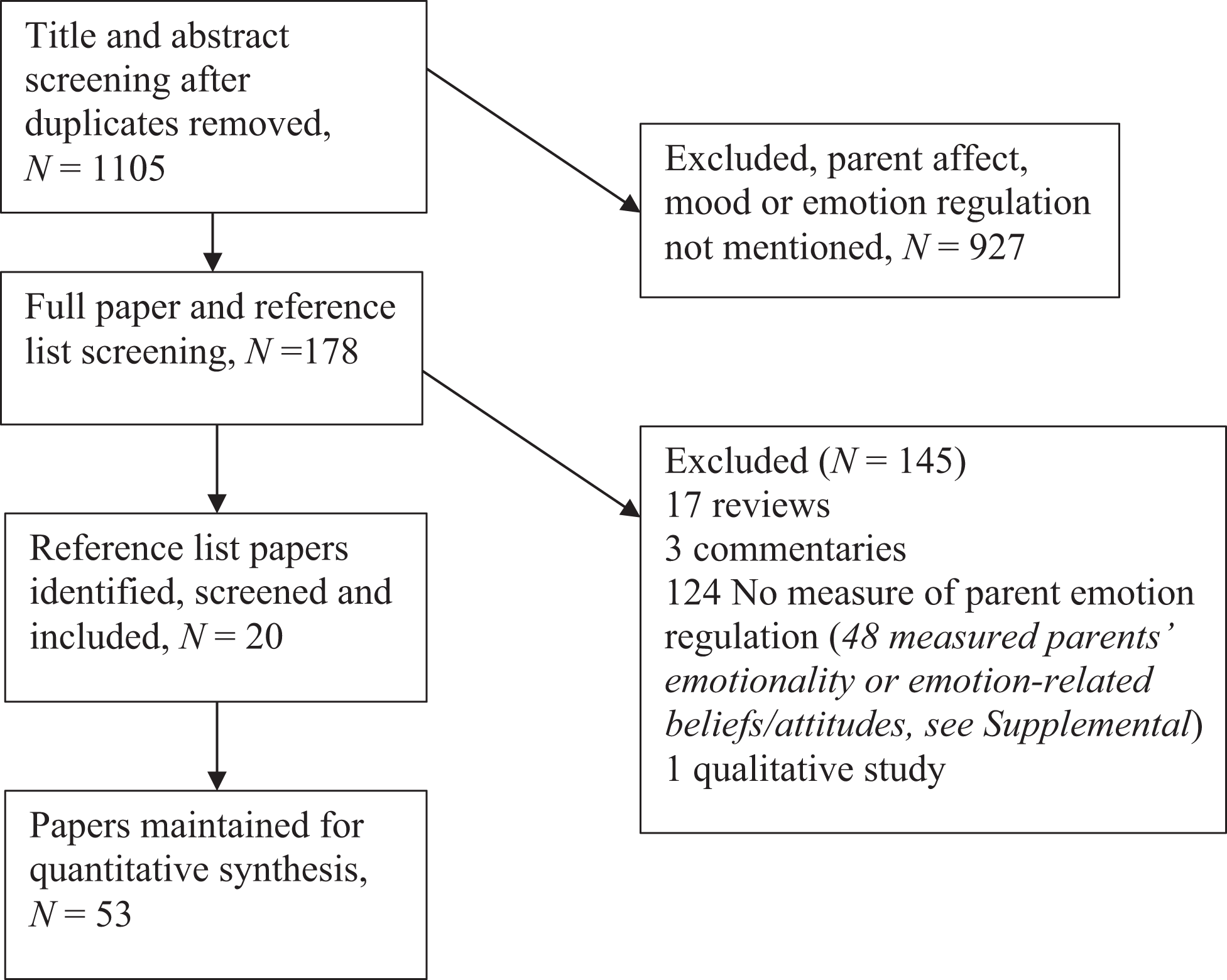
PRISMA Flow Chart of Citations and Studies Through Screening and Data Extraction (Search Date: April 9, 2020).
Search terms included (emot* regulation, emot* dysregulation, emot* control, emot* express*, affect* regulation, affect* dysregulation, affect* express*, emotion socialization, affect socialization, emotion socialisation, affect socialisation) AND (parent*, maternal, paternal, mother, father, caregiver, family). Human and English language restrictions were applied. Studies were included if they had (1) collected quantitative data; (2) used a behavioral measure to collect data on at least one parents’ personal emotion regulation, which conformed to widely cited definitions of emotion regulation by capturing the presence of absence of behavioral or cognitive strategies that are used to regulate emotion (Gratz & Roemer, 2004; Thompson, 1994); (3) measured some aspects of parenting behaviors and/or child (no age limit) adjustment (emotion regulation skills or difficulties, internalizing symptoms or externalizing behavior); and (4) reported correlations of parent emotion regulation with either parenting behaviors or child adjustment outcome. Studies that only assessed parents’ emotional distress, stress, or emotional problems (e.g., depressive symptoms) without a separate measure of emotion regulation were excluded. Studies that described a focus on parents’ emotionality or emotional expression (or emotion beliefs or attitudes), excluding those focused on emotional disorders or symptoms, were fully screened but were not analyzed here (see Supplemental 1).
Data Extraction
Titles and abstracts of all studies identified through electronic database and reference list searching were screened against eligibility criteria by two independent reviewers (the second and third authors) both of whom were postdoctoral research fellows. Once studies that possibly met inclusion and exclusion criteria were identified, second-stage screening involved reading full texts of methods and results, with each study read by two reviewers (two of the second, third, and fourth authors of this manuscript per paper). Qualitative information and effect sizes from the final included papers were extracted independently by each reader. Two individuals reviewed each paper, so that we could compare information and identify discrepancies for further investigation. Any differences in data abstraction were resolved by returning to the publication for resolution involving the first author. In addition, the first author confirmed all data extracted against full texts of each study. Extracted data, entered into a spreadsheet, included demographic information, study design characteristics, and effect sizes.
Data Analyses
We conducted 12 meta-analyses of correlation coefficients (r) using the Major module in Jamovi (R Core Team, 2019; The Jamovi project, 2020). Effect sizes were divided into those related to parent emotion regulation skill from those that measured parent difficulties in emotion regulation, whether parenting was positive or negative in valence, and whether child outcome was internalizing symptoms, externalizing behaviors, emotion regulation skill, or difficulties in emotion regulation. Thus, parent emotion regulation (skill or difficulties) was crossed with positive/negative parenting behaviors to produce four sets of results. Also, parent emotion regulation (skill or difficulties) was considered in relation to children’s internalizing symptoms (two analyses), children’s externalizing behavior (two analyses), children’s emotion regulation skill (two analyses), and children’s difficulties in emotion regulation (two analyses).
Regarding measures of parent emotion regulation, some studies included multiple subscales of parent emotion regulation that were not highly correlated (this occurred most often for studies that measured cognitive reappraisal and emotion suppression); thus, these different measures of emotion regulation were examined in separate analyses and these studies are indicated with multiple superscripts in Supplemental 2. Only in one case were two effect sizes from one study included in a single meta-analysis (parent difficulties in emotion regulation associated with negative parenting; Lowell & Renk, 2017). In studies that examined subscales of the Difficulties in Emotion Regulation Scale (DERS) and a total DERS composite score, only the findings for the total composite score were analyzed. Regarding measures of parenting behaviors and children’s adjustment outcomes, if a study used multiple measures relevant to a single meta-analysis (e.g., reported results for parent warmth separate from parent support), then the effect sizes were averaged for the analysis. This was done because different parenting behaviors and different child outcomes included in a single meta-analysis tended to be moderately or highly correlated with each other and effect sizes were similar across the different measures. For the eight studies that gathered reports from both mothers and fathers, effects were averaged for the primary analyses. However, parent gender mix was tested as a moderator of study effect size (see below).
Effect size heterogeneity
Variation in effect sizes is referred to as effect size heterogeneity. For each meta-analysis, we used Cochrane’s Q test to determine whether the effect size heterogeneity across studies was significantly greater than would have been found by sampling error alone. When effect size heterogeneity was significant using this Q test, we investigated moderators of effect size by performing meta-regression. Potential moderators tested included the emotion regulation measure subcategory (described below for each analysis), subcategory of parenting/child measure (described below for each analysis), child age, risk status of the children/parents (unselected vs. selected for high risk), parent/caregiver gender mix (mother only, mixed with one measure completed, mother and father measured separately), and region where the study was conducted (North America, Europe, Australia, China, or Israel). For region, the five regions were investigated as an explanation for effect size heterogeneity, but region was also dichotomized to compare North America (United States—including one study from Canada) with other countries. We also report the Fail-Safe N, which is the number of additional studies with null results (i.e., an effect size not significantly different from 0), needed to increase the p-value for the meta-analysis summary effect size to above .05 (see Orwin, 1983).
Results
Overview of the 53 Included Studies
The 53 included studies are summarized in Supplemental 2 and marked with an asterisk in the Reference list. Sample sizes ranged from 33 (Reindl et al., 2018; Silva et al., 2018) to 454 (Crespo et al., 2017); 57% (n = 30) had fewer than 100 participants or dyads. Eight of the 53 studies were longitudinal (15%; Bowie et al., 2013; Jones et al., 2014; Kehoe et al., 2015; Kim et al., 2009; Kliewer et al., 2004; Mazursky et al., 2015; Su et al., 2018; Tan & Smith, 2019). These studies were included but only cross-sectional correlations were abstracted and analyzed (all studies had reported cross-sectional results).
Regarding study characteristics, eight of the 53 studies (15%) focused on parents of infants/toddlers, 16 (30%) were of parents of preschool or young school-age children, 19 (36%) included parents of children in the late childhood to early adolescent age ranges (all under age 14 years), and eight (15%) included older teenagers (see Supplemental 2). One study was of young adults (Kim et al., 2009) and one study did not report child age (Hiraoka et al., 2016).
Eight studies (15%) had selected high-risk participants (e.g., children exposed to trauma or intimate partner violence, children or parents with mood disorders, US Headstart children), whereas the participants were unselected community members in all other studies (see Supplemental 2). In addition, 30 studies (57%) collected data from the mother, eight (15%) included assessment of both mothers and fathers, and the remaining 15 (28%) included one report from a mix of parents. We refer here only to mother or father, but studies did sometimes include kinship carers or other nonbiological parents. Studies originated from a range of countries, with the highest proportion from the United States (n = 36, 68%), one from Canada, four from Australia, six from Europe, three from China, and three from Israel. In the US studies, the participants were diverse in sociocultural background, with the proportion of participants who were White/European ranging from 0% (Cao et al., 2017; Kliewer et al., 2004) to 96% (Tan & Smith, 2019) and only about one third (36%) reporting 60% or more White/European participants.
Measures used across the included studies varied; no set of two studies included the same set of measures in a similar age group (see Supplemental 2). The most common measures used to assess parents’ emotion regulation were the DERS (25 studies, 47%; Gratz & Roemer, 2004) or the Emotion Regulation Questionnaire (ERQ; 13 studies, 25%; Gross & John, 2003). Parenting behaviors were assessed in 36 studies (68%) with a range of measures assessing, for example, warmth, discipline skills, general parenting behaviors, laxness, overreactivity, intrusiveness, and child abuse potential, but the most frequently measured were supportive and unsupportive emotion socialization from the Children’s Coping with Negative Emotion Scale (CCNES; n = 9, 17%; Fabes et al., 2002). Children’s internalizing symptoms, externalizing behaviors, or emotion regulation were assessed in 39 studies (74%). Multiple of these studies used the DERS (n = 3), ERQ (n = 3) or Emotion Regulation Checklist (n = 9; Shields & Cicchetti, 1997) to measure children’s emotion regulation. Twenty studies (38%) involved some form of observation of children or parent–child dyads or included a physiological measure. Summary effect sizes from the four meta-analyses of parenting behaviors described below are summarized in Table 1. Summary effect sizes from the eight meta-analyses of child outcomes described below are summarized in Table 2.
Summary of Meta-Analyses Results for Parent Emotion Regulation With Positive and Negative Parenting Behaviors.
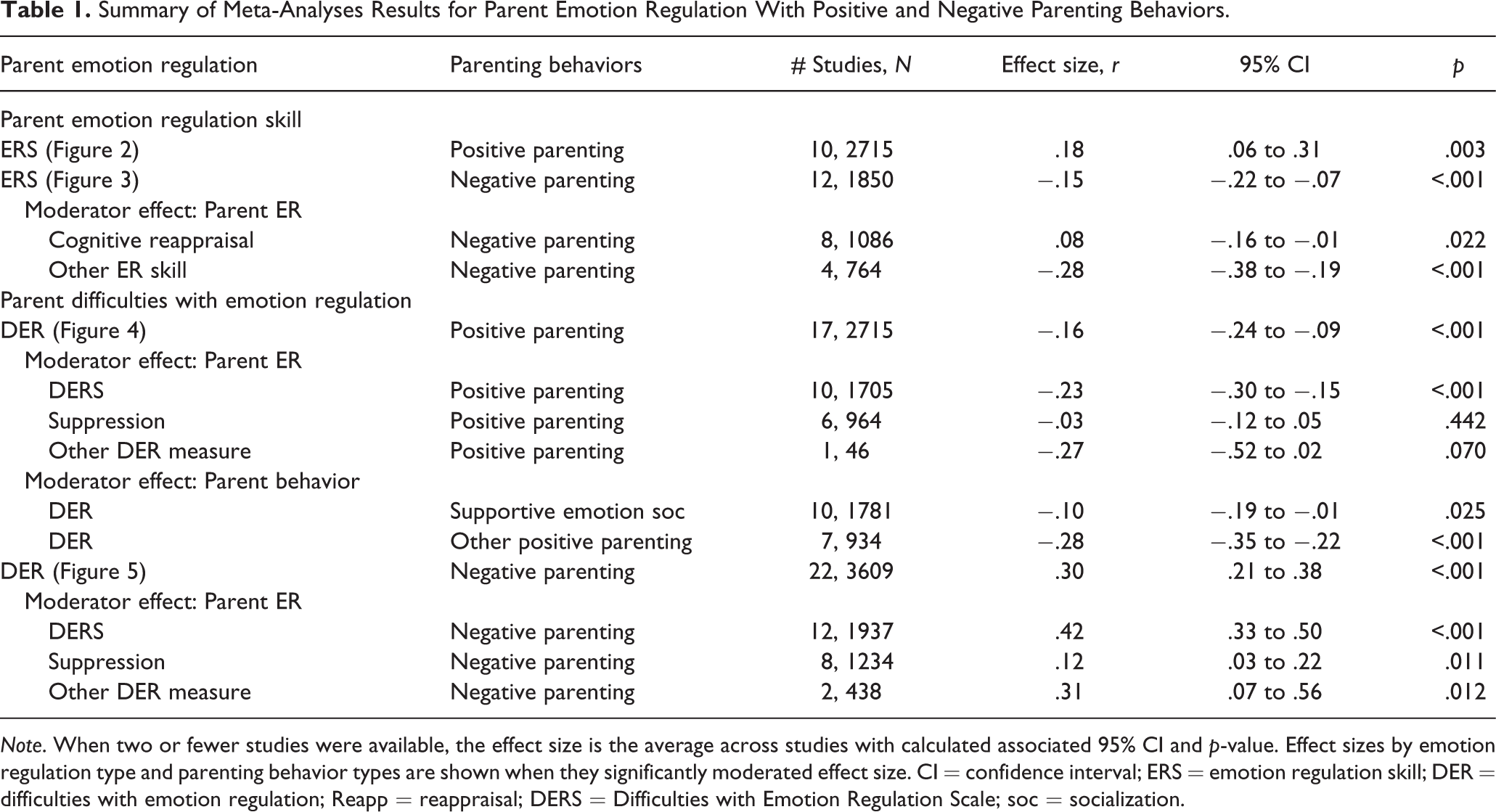
Note. When two or fewer studies were available, the effect size is the average across studies with calculated associated 95% CI and p-value. Effect sizes by emotion regulation type and parenting behavior types are shown when they significantly moderated effect size. CI = confidence interval; ERS = emotion regulation skill; DER = difficulties with emotion regulation; Reapp = reappraisal; DERS = Difficulties with Emotion Regulation Scale; soc = socialization.
Summary of Meta-Analyses Results for Parent Emotion Regulation Skill and Difficulties With Child Internalizing and Externalizing Symptoms and Emotion Regulation Skill and Difficulties.
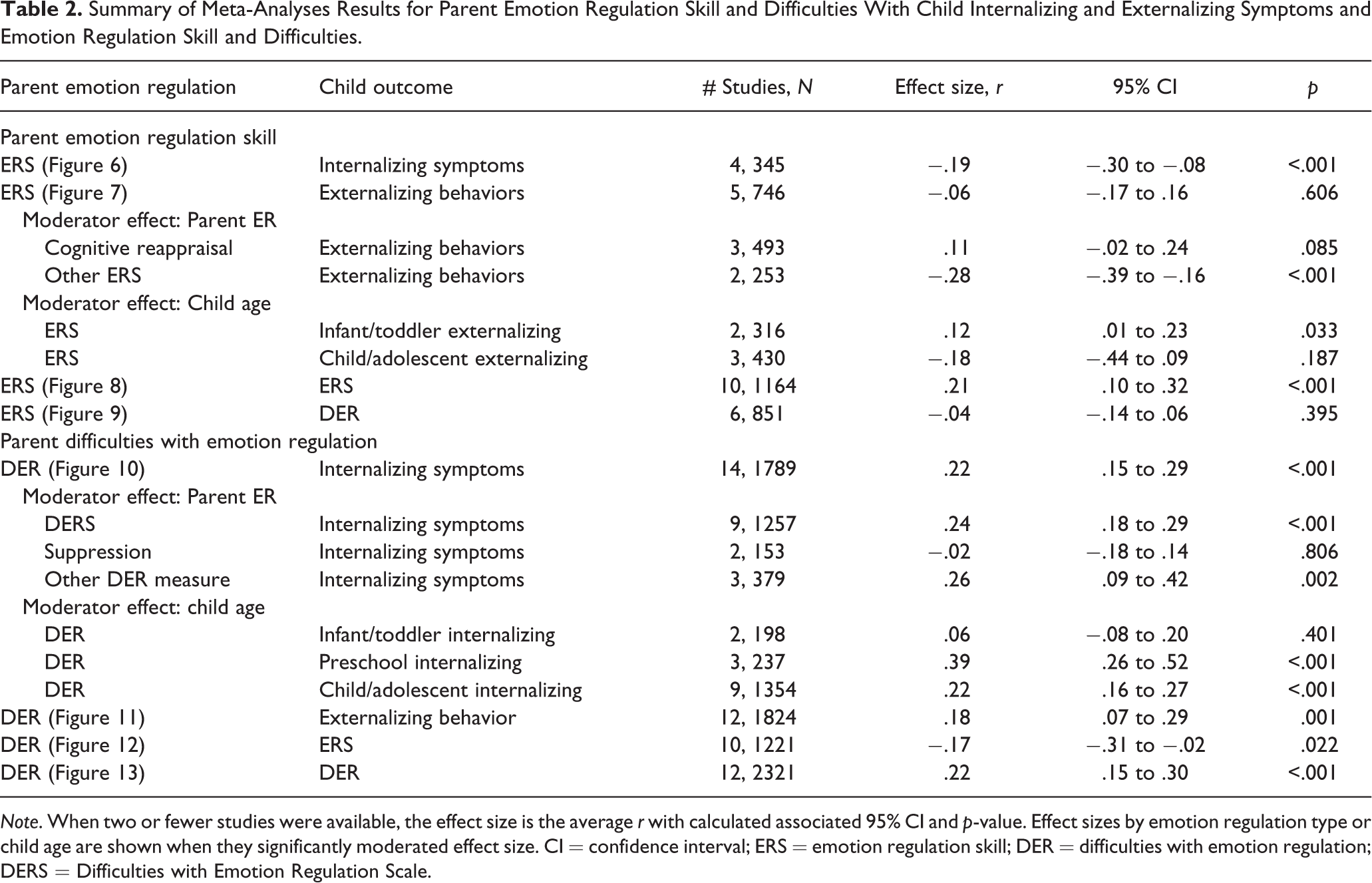
Note. When two or fewer studies were available, the effect size is the average r with calculated associated 95% CI and p-value. Effect sizes by emotion regulation type or child age are shown when they significantly moderated effect size. CI = confidence interval; ERS = emotion regulation skill; DER = difficulties with emotion regulation; DERS = Difficulties with Emotion Regulation Scale.
Meta-Analysis: Parent Emotion Regulation Skill and Parenting Behaviors
Positive parenting behaviors
Ten studies (indicated with superscript 1 in Supplemental 2, total N across studies = 1360) included measures of parent emotion regulation skill and positive parenting behaviors. Seven studies had measured parents’ use of cognitive reappraisal, but one study used a composite of vagal tone and self-reported regulation ability (Deater-Deckard et al., 2016) and two gathered positive displays of regulation of negative mood via interview (Kliewer et al., 2004) or self-report (Samuelson et al., 2012). For positive parenting behavior, four studies measured supportive emotion socialization with the CCNES, whereas two studies used other survey measures, one observed parenting behavior only, and the final three used both observation and survey measures.
Figure 2 shows the effect size for each study of parent emotion regulation skill and positive parenting behavior and the significant summary positive effect size of r = .18 (95% CI .06 to .31), p = .003 (i.e., RE model at the bottom of the Figure 2). This effect size indicates that parents with more emotion regulation skill were higher in positive parenting behaviors. There was significant effect size heterogeneity across the studies, Q(9) = 35.18, p < .001, and the Fail-Safe N was 149. No study characteristic significantly moderated effect size. Given that only one study reported effect sizes for mother and father separately (Hughes & Gullone, 2010), this study was categorized with the mixed gender studies for the moderator analysis. Also notable, the only study that used observation only to measure parenting behavior returned the counterintuitive effect size of r = −.21.
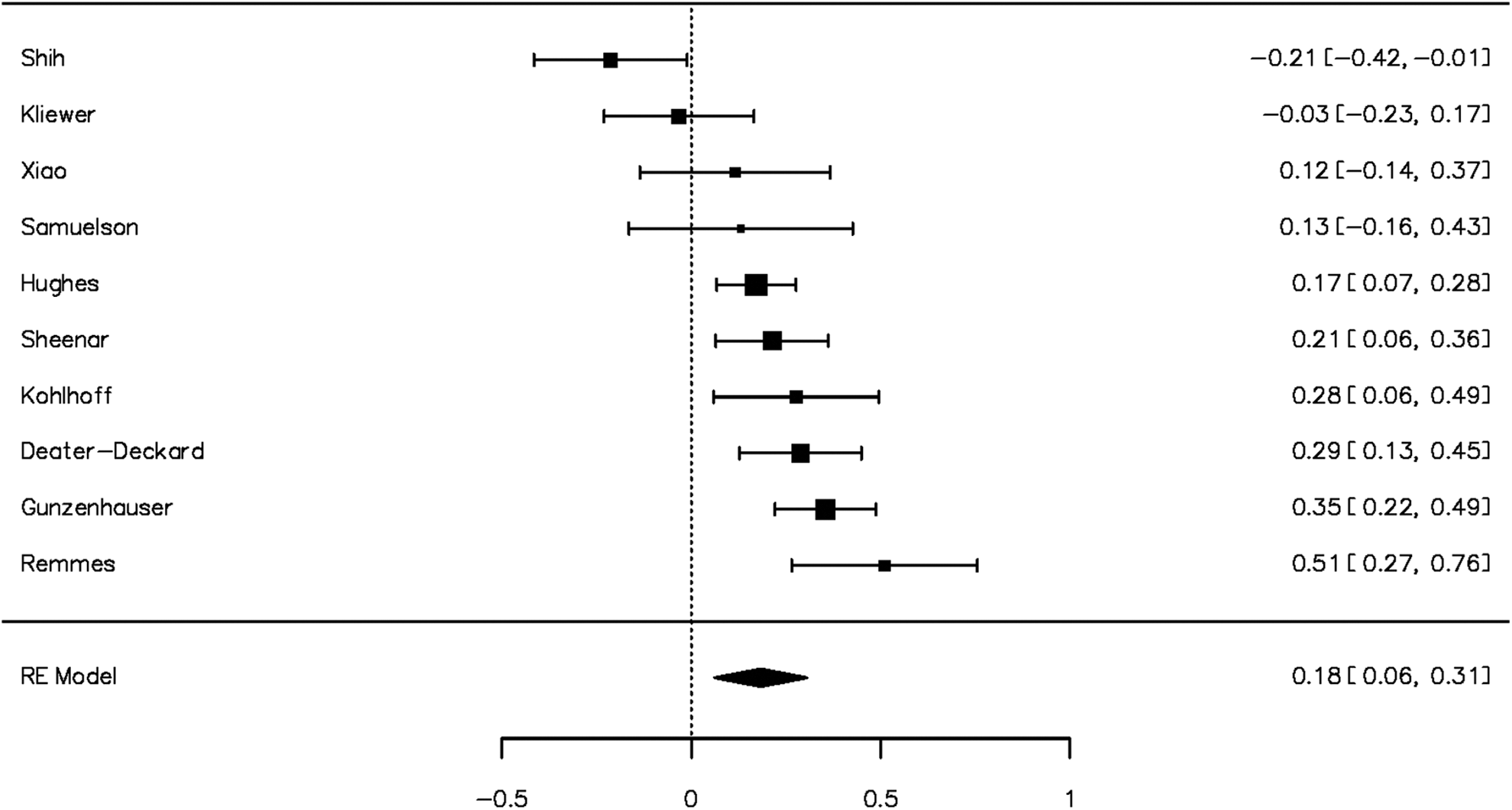
Forest Plot of Effect Sizes (r) for Parent Emotion Regulation Skill Associated With Positive Parenting Behaviors.
Negative parenting behaviors
Twelve studies (superscript 2 in Supplemental 2, total N across studies = 1850) included measures of parent emotion regulation skill and negative parenting behaviors. Eight studies measured parents’ use of cognitive reappraisal, whereas the other four used either a composite of vagal tone and self-reported regulation (Deater-Deckard et al., 2016), self-report of negative mood regulation (Rodriguez et al., 2017), measured anticipated regulation of negative mood using hypothetical scenarios (Martini et al., 2004), or assessed emotional control (Crandall et al., 2018). For negative parenting behavior, four studies measured unsupportive emotion socialization using the CCNES, whereas five studies used other survey measures and three studies used observation and survey measures.
Figure 3 shows that the meta-analysis of parents’ emotion regulation skill and negative parenting behavior yielded a significant effect size of r = −.15 (95% CI −.22 to −.07), p < .001. Thus, parents with more emotion regulation skill were lower in negative parenting behaviors. There was significant effect size heterogeneity across the studies, Q(11) = 28.27, p = .003, and the Fail-Safe N was 144. The measure of parents’ emotion regulation moderated effect size. Studies that measured a mix of emotion regulation skill had a stronger summary effect size (−.28, p < .001) than studies that measured cognitive reappraisal (.08, p = .022). No other study characteristic moderated study effect size. Only one study reported effect sizes for mother and father separately (Hughes & Gullone, 2010), so this study was categorized with the mixed gender studies for the moderator analysis of parent gender.
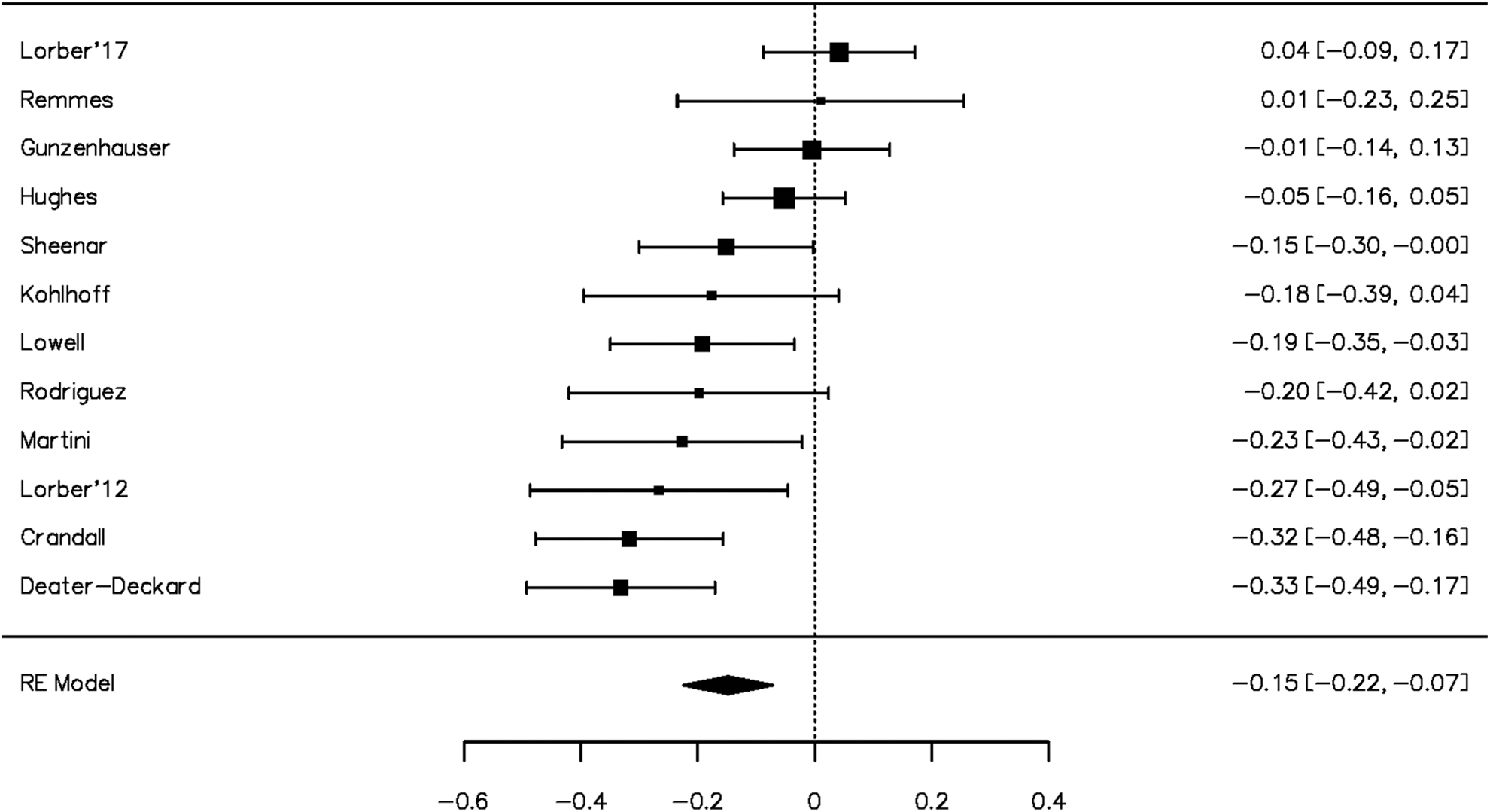
Forest Plot of Effect Sizes (r) for Parent Emotion Regulation Skill Associated With Negative Parenting Behaviors.
Meta-Analysis: Parent Difficulties With Emotion Regulation and Parenting Behaviors
Positive parenting behaviors
Seventeen studies (superscript 3 in Supplemental 2, total N across studies = 2715) included measures of parents’ difficulties with emotion regulation and positive parenting behaviors. Ten studies measured parents’ difficulties in emotion regulation with the DERS, whereas six studies measured emotional suppression and one study measured difficulties as self-reported emotion instability and regulatory skill deficits (Kim et al., 2012). For positive parenting behavior, nine studies measured supportive emotion socialization with the CCNES, whereas one study used another survey of parenting behavior, six studies observed parents’ emotion availability, sensitivity, or other form of responsiveness, and the final study used observation and survey measures.
Figure 4 shows that the meta-analysis of parents’ difficulties with emotion regulation and positive parenting behavior yielded a significant summary effect size of r = −.16 (95% CI −.24 to −.09), p < .001. Parents with more difficulties in emotion regulation were lower in positive parenting behaviors. There was significant effect size heterogeneity, Q(16) = 53.84, p < .001, and the Fail-Safe N was 387. The measure of parent difficulties in emotion regulation and the measure of parenting (emotion socialization vs. other positive parenting) moderated effect size. Studies that measured difficulties in emotion regulation with the DERS produced a stronger summary effect size (−.23, p < .001) relative to studies that assessed emotional suppression (−.03, p = .442). The one study using an alternative measure had an effect size that aligned closely to studies using the DERS (−.27, p = .070). Studies of supportive emotion socialization (−.10, p = .025) had a smaller effect size than studies that used other approaches to measure positive parenting behaviors (−.28, p < .001). No other study characteristic moderated effect size.
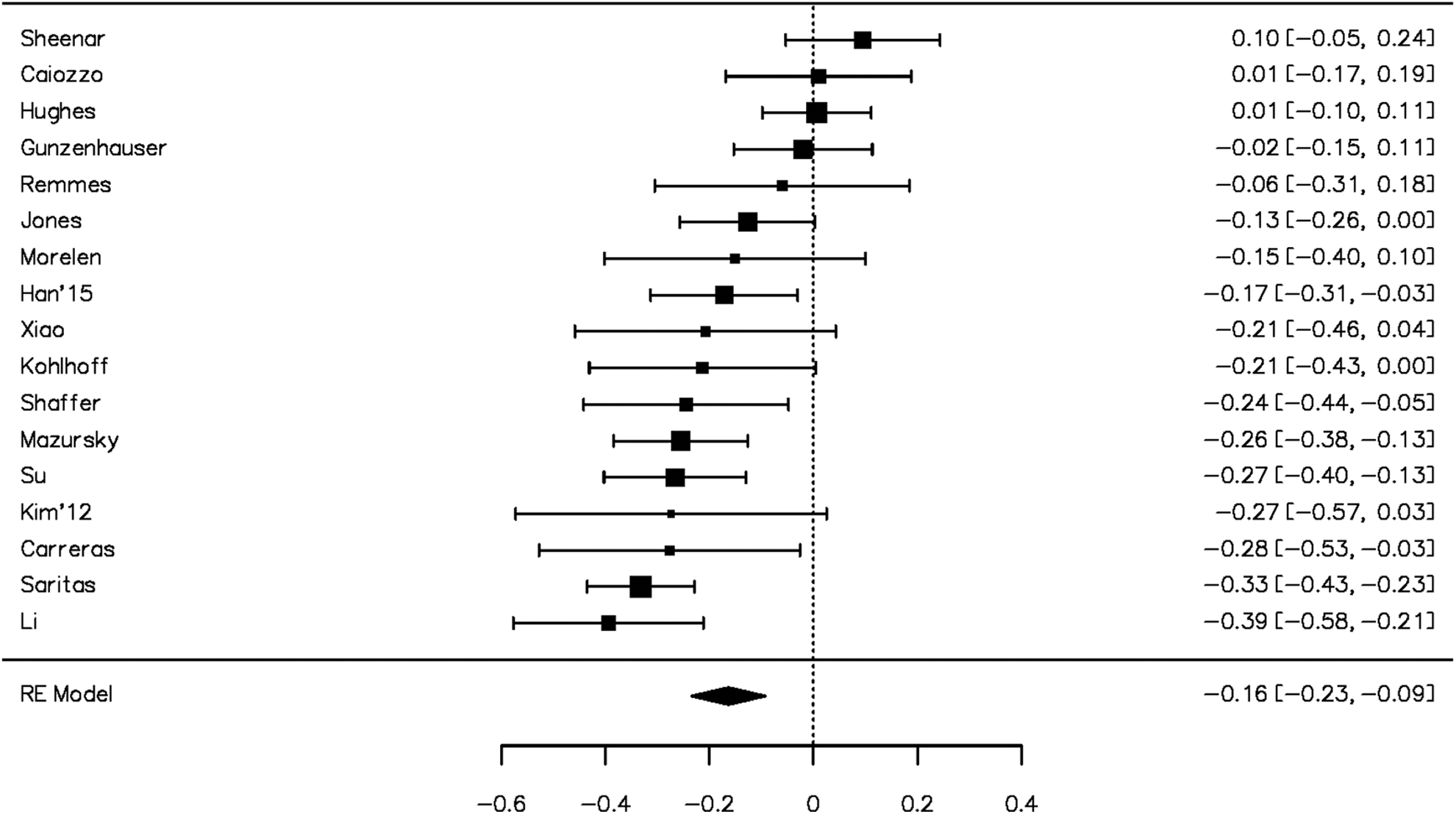
Forest Plot of Effect Sizes (r) for Parent Difficulties in Emotion Regulation Associated With Positive Parenting Behaviors.
Negative parenting behaviors
Twenty-two studies (superscript 4 in Supplemental 2, total N across studies = 3609) included measures of parents’ difficulties with emotion regulation and negative parenting behaviors. Twelve studies measured parents’ difficulties in emotion regulation with the DERS, whereas eight studies measured emotional suppression and two studies used other measures. For parenting outcomes, 11 studies measured unsupportive emotion socialization using the CCNES, whereas six used other survey measures of parenting behavior, two studies observed unsupportive behavior only, and the final three studies used observation and survey methods.
As shown in Figure 5, the meta-analysis of parents’ difficulties with emotion regulation and negative parenting behavior yielded a significant effect size of r = .30 (95% CI .21 to .38), p < .001, indicating that parents with more difficulties in emotion regulation were higher in negative parenting behaviors. There was significant effect size heterogeneity, Q(21) = 121.25, p < .001, and the Fail-Safe N was 2460. The measure of emotion regulation moderated effect size. Studies that used the DERS had a stronger effect size overall (.42, p < .001) compared to studies that assessed emotional suppression (.12, p = .011); the two studies that used another measurement method fell in-between with a summary effect size of .31 (p = .012). Furthermore, participant risk status moderated effect size, despite the availability of only two studies (Kohlhoff et al., 2016; Remmes & Ehrenreich-May, 2014) with selected high-risk participants. Each of these two selected studies had a nonsignificant effect size of r = .03, whereas the 20 studies of unselected, community samples yielded an effect size r = .32 (95% CI .24 to 40, p < .001). No other study characteristic moderated effect size.
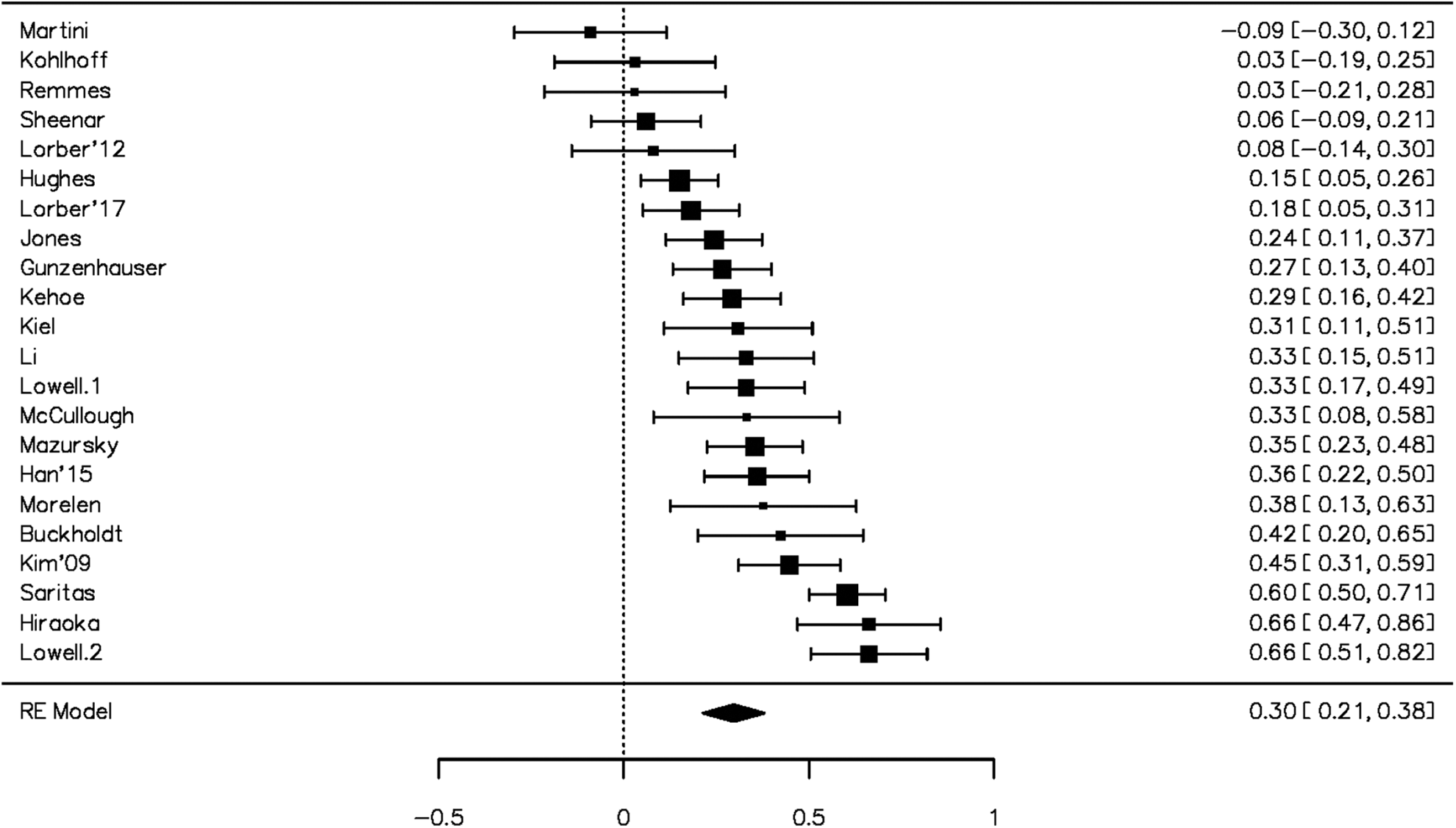
Forest Plot of Effect Sizes (r) for Parent Difficulties in Emotion Regulation Associated With Negative Parenting Behaviors.
Meta-Analysis: Parent Emotion Regulation Skills and Child Adjustment
Child internalizing symptoms
Four studies (superscript 5 in Supplemental 2, total N across studies = 345) included measures of parent emotion regulation skill and child internalizing symptoms. Three studies measured parents’ cognitive reappraisal and one measured general emotion regulation (Kliewer et al., 2004). All studies used survey measures of internalizing symptoms.
Figure 6 shows that the meta-analysis of parent emotion regulation skill and child internalizing symptoms yielded a significant effect size of r = −.19 (95% CI −.30 to −.08), p < .001. Thus, parents with more emotion regulation skill had children with fewer internalizing symptoms. There was no significant effect size heterogeneity, Q(3) = 1.44, p = .696 and the Fail-Safe N was 13.
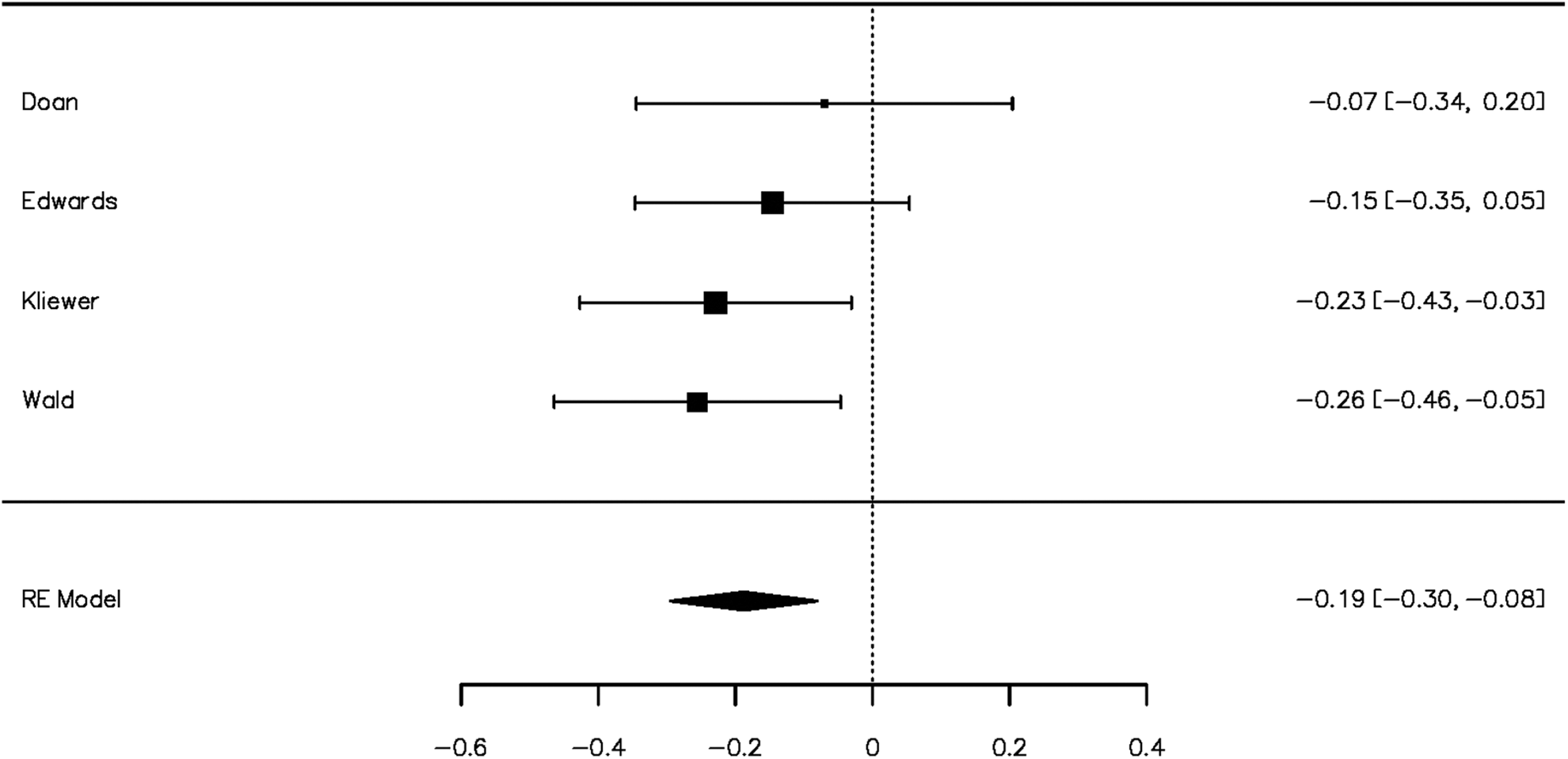
Forest Plot of Effect Sizes (r) for Parent Emotion Regulation Skill Associated With Child Internalizing Symptoms.
Child externalizing behaviors
Five studies (superscript 7 in Supplemental 2, total N across studies = 746) included measures of parent emotion regulation skill and child externalizing behaviors. Two studies measured parents’ cognitive reappraisal, and the other three measured parents’ cognitive reappraisal specific to child discipline (Lorber et al., 2017), negative mood regulation via interview (Kliewer et al., 2004), or emotional control (Crandall et al., 2018). All but one study used survey measures of externalizing behaviors.
Figure 7 shows that the meta-analysis of parent emotion regulation skill and child externalizing behavior yielded a nonsignificant effect size of r = −.06 (95% CI −.27 to .16), p = .606, indicating no significant association of parents’ emotion regulation skill with children’s externalizing behaviors. There was, however, significant effect size heterogeneity across these studies, Q(4) = 38.49, p < .001, and given the nonsignificant effect size, the Fail-Safe N was 0. There was a nonsignificant positive effect of parents’ cognitive reappraisal on child externalizing behavior (.11, p = .085), but a negative effect for general measures of parents’ emotion regulation (−.28, p < .001). Child age also moderated effect size, with a nonsignificant positive association in infants/toddlers (.12, p = .033), and a nonsignificant negative association in children/adolescents (−.18, p = .187). Given that only five studies were available, however, caution is noted regarding these findings. No other study characteristic moderated effect size. High-risk status was not analyzed, given only one study had a selected, high-risk sample, reporting an effect size of r = .03, p > .05. No study reported effect sizes for mother and father separately (i.e., all studies were of mothers only or were a mix of single reports from mothers and fathers).
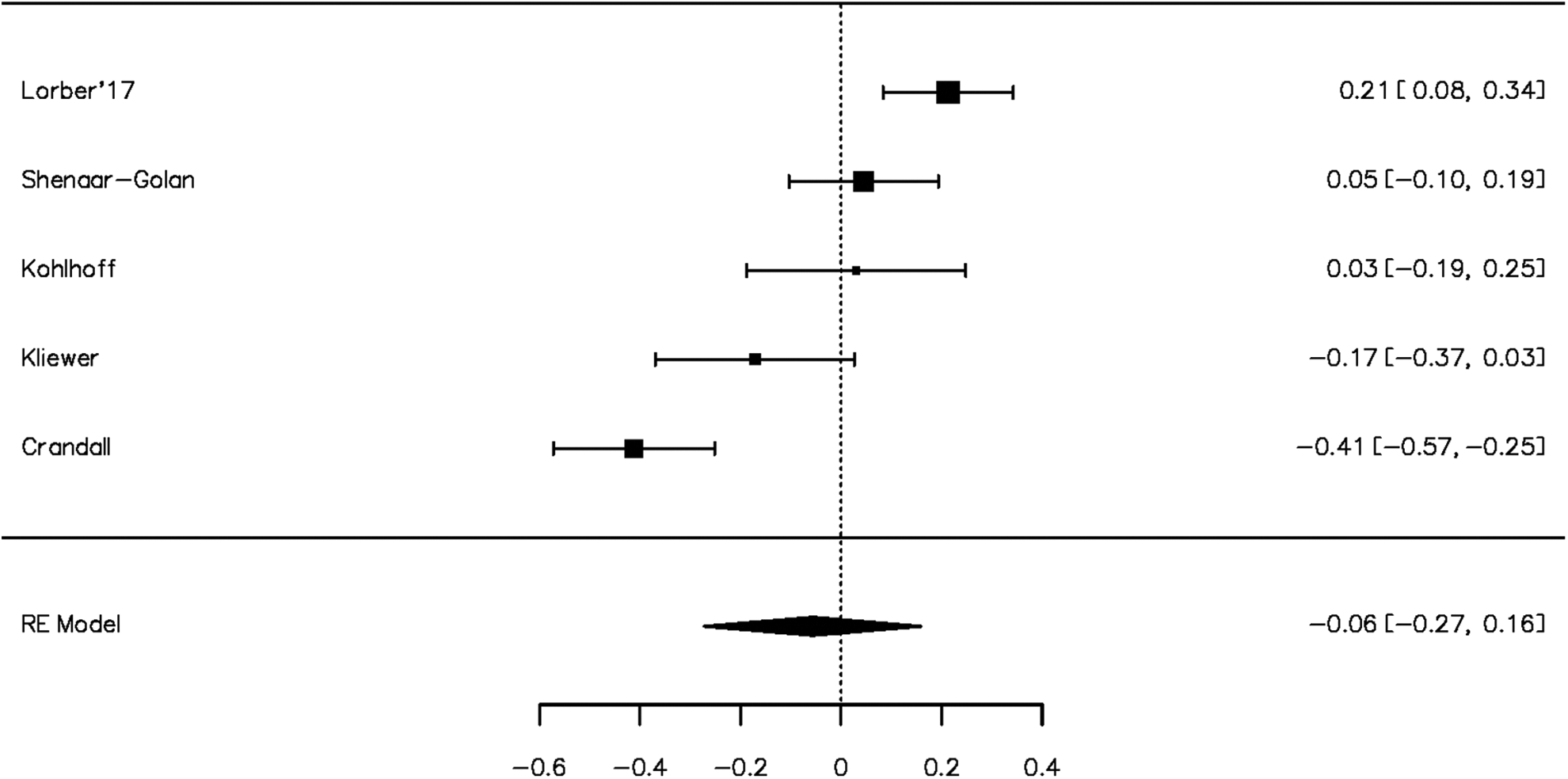
Forest Plot of Effect Sizes (r) for Parent Emotion Regulation Skill Associated With Child Externalizing Symptoms.
Child emotion regulation skill
Ten studies (superscript 9 in Supplemental 2, total N across studies = 1164) included measures of parent emotion regulation skill and child emotion regulation skill. Seven studies measured parents’ cognitive reappraisal, one used interview to assess negative mood regulation (Kliewer et al., 2004), one observed regulation (Melnick & Hinshaw, 2000), and one collected parent self-report of mood regulation (Samuelson et al., 2012). Six studies measured child regulation skill via survey, whereas two studies observed children, and two studies used laboratory tasks.
As shown in Figure 8, the meta-analysis of parent emotion regulation skill and child emotion regulation skill yielded a significant effect size of r = .21 (95% CI .10 to .32), p < .001. This effect size indicated that parents with more emotion regulation skill had children with more regulatory skill. There was significant effect size heterogeneity across these studies, Q(9) = 27.88, p < .001, and the Fail-Safe N was 135. No study characteristic moderated effect size.
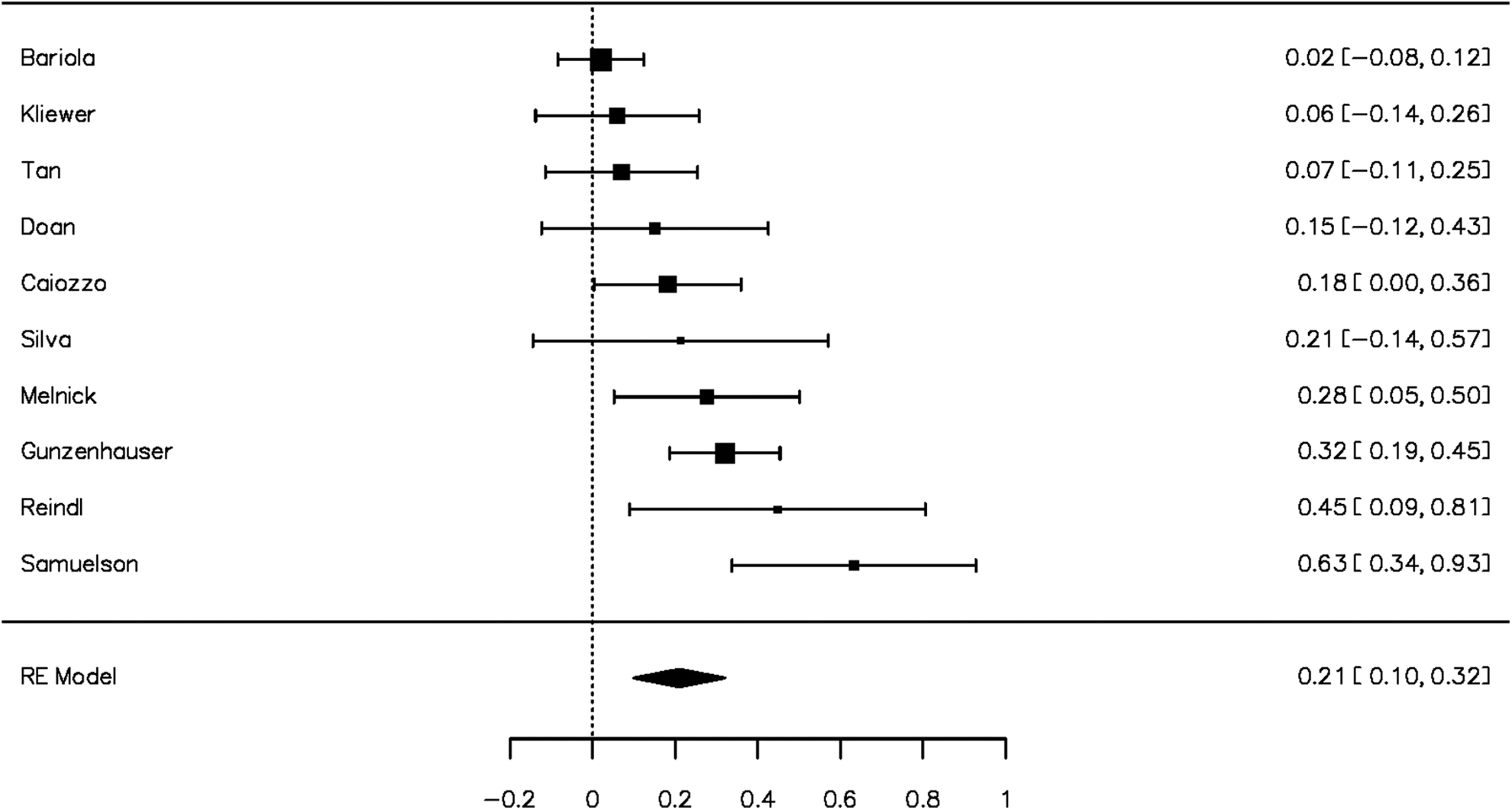
Forest Plot of Effect Sizes (r) for Parent Emotion Regulation Skill Associated With Child Emotion Regulation Skill.
Child difficulties with emotion regulation
Six studies (superscript 10 in Supplemental 2, total N across studies = 851) included measures of parent emotion regulation skill and children’s difficulties with emotion regulation. All but one study, which measured parents’ emotion regulation via young adult report of their parents (Woodward & Viana, 2018), measured parents’ cognitive reappraisal. All studies used surveys to measure child difficulties with emotion regulation.
As shown in Figure 9, the meta-analysis of parent emotion regulation skill and child difficulties with emotion regulation yielded a nonsignificant effect size of r = −.04 (95% CI −.14 to .06), p = .395, indicating no significant association between parents’ emotion regulation skill (mostly cognitive reappraisal) and children’s difficulties with emotion regulation. There was no significant effect size heterogeneity, Q(5) = 8.64, p = .124, and given the nonsignificant effect size, the Fail-Safe N was 0.
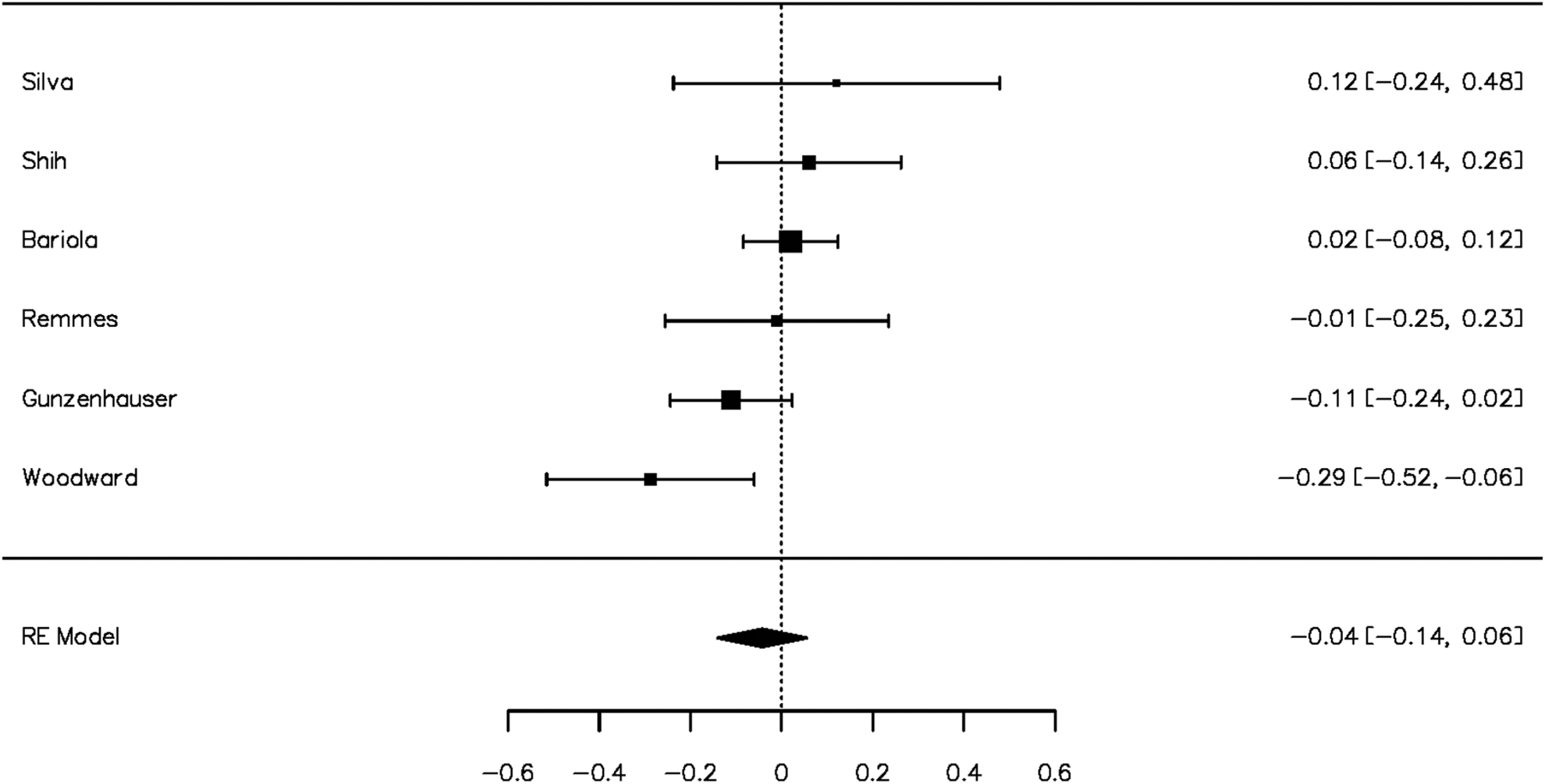
Forest Plot of Effect Sizes (r) for Parent Emotion Regulation Skill Associated With Child Difficulties in Emotion Regulation.
Meta-Analysis: Parent Difficulties With Emotion Regulation and Child Adjustment
Child internalizing
Fourteen studies (superscript 6 in Supplemental 2, total N across studies = 1789) included measures of parents’ difficulties with emotion regulation and child internalizing behavior. Nine studies measured parents’ difficulties in emotion regulation with the DERS, two studies measured emotional suppression, and three studies used other measures of difficulties in emotion regulation (interview assessed difficulties with emotion regulation of sadness and anger, Bowie et al., 2013; self-reported emotion avoidance and emotion-fused inaction, Coyne & Thompson, 2011; composite of self-report, son-report, and observation of parent difficulties in emotion regulation, Kim et al., 2009). Ten studies used surveys to measure child internalizing symptoms, whereas three studies observed children and one study used observational and survey measures.
As shown in Figure 10, the meta-analysis of parent difficulties with emotion regulation and child internalizing symptoms yielded a significant effect size of r = .22 (95% CI .15 to .29), p < .001. Thus, parents with more difficulties in emotion regulation had children with more internalizing symptoms. There was significant effect size heterogeneity, Q(13) = 23.38, p = .037, and the Fail-Safe N was 364. Emotion regulation type and child age moderated effect size; the effect size was larger in studies using the DERS (.24, p < .001) or a general measure of difficulties in emotion regulation (.26, p = .002) relative to studies of expressive suppression (−.02, p = .806). Effect size was larger in studies of preschool/young children (age 2–6; .39, p < .001) relative to infants/toddlers (.06, p = .401) and older children or adolescents (>age 6; .22, p < .001). No other study characteristic moderated effect size. High-risk status was not analyzed, given only one study had a selected, high-risk sample, reporting an effect size r = .30, p < .001.
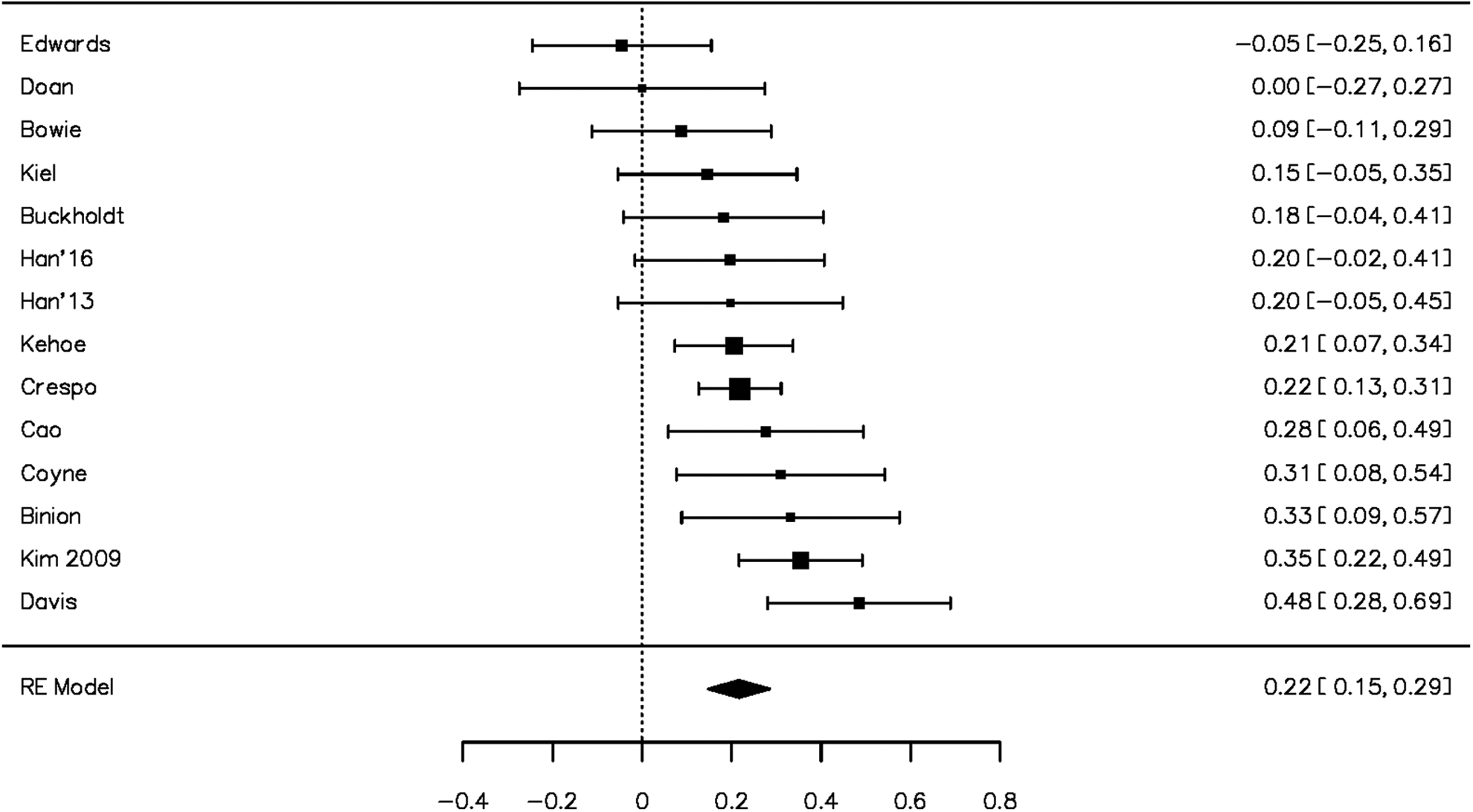
Forest Plot of Effect Sizes (r) for Parent Difficulties in Emotion Regulation Associated With Child Internalizing Symptoms.
Child externalizing behaviors
Twelve studies (superscript 8 in Supplemental 2, total N across studies = 1824) included measures of parents’ difficulties with emotion regulation and child externalizing behaviors. Nine studies measured parents’ difficulties with emotion regulation with the DERS, whereas one study measured emotional suppression, and the remaining studies collected parents’ cognitive reappraisal specific to child discipline (Lorber et al., 2017) or used an alternative self-report measure of difficulties in emotion regulation (Shenaar-Golan et al., 2017). Eight studies used surveys to measure child externalizing behaviors, whereas three studies observed children and one study used observational and survey measures.
As shown in Figure 11, the meta-analysis of parent difficulties with emotion regulation and child externalizing behavior yielded a significant effect size of r = .18 (95% CI .07 to .29), p = .001. Thus, parents with more difficulties in emotion regulation had children with more externalizing behaviors. There was significant effect size heterogeneity, Q(11) = 50.35, p < .001, and the Fail-Safe N was 237. No study characteristic moderated effect size. High-risk status was not analyzed as a moderator, given only one study had a selected, high-risk sample, reporting an effect size r = .05, p > .05. Also, no study reported effect sizes for mother and father separately.
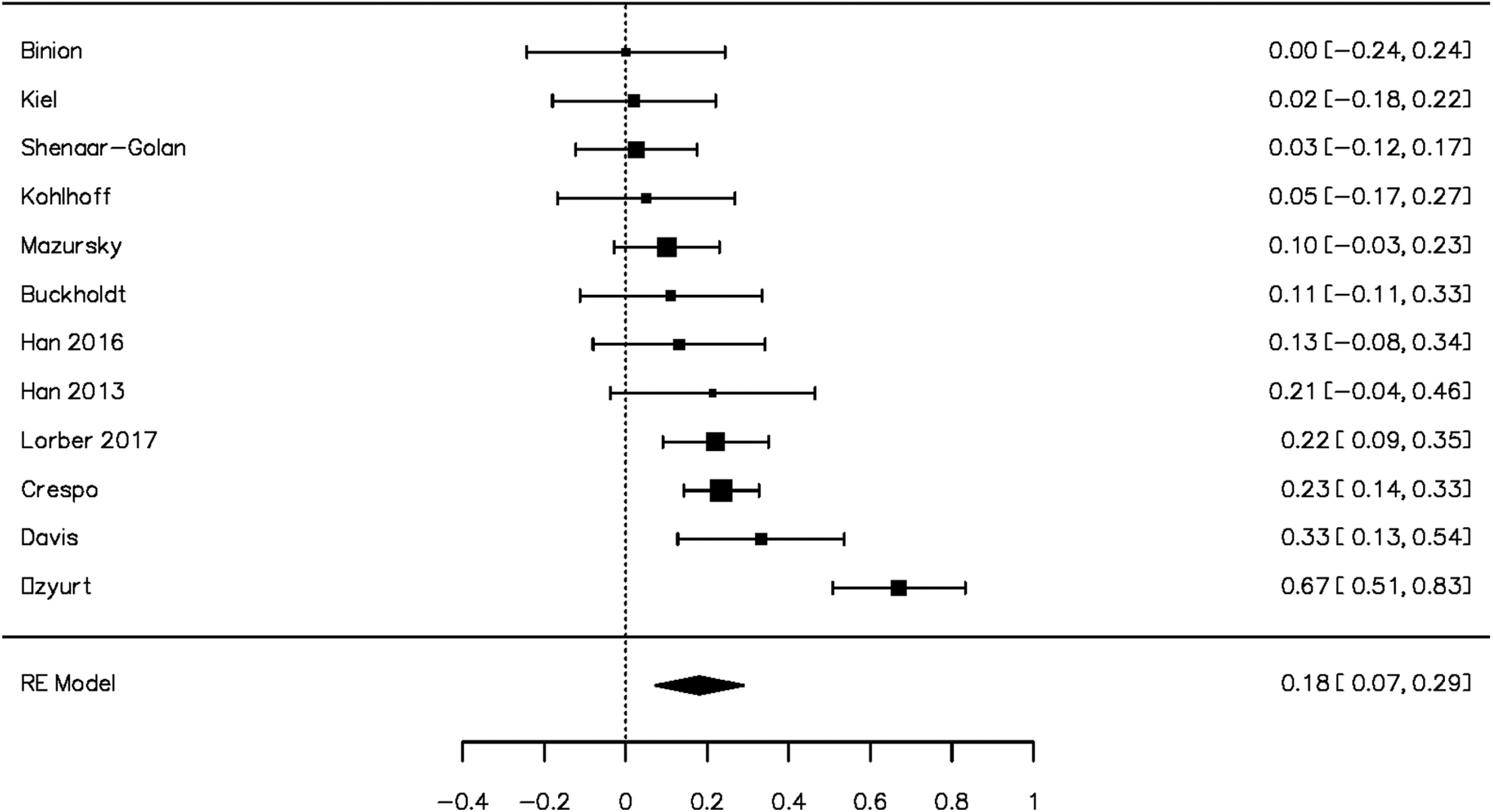
Forest Plot of Effect Sizes (r) for Parent Difficulties in Emotion Regulation Associated With Child Externalizing Symptoms.
Child emotion regulation skill
Ten studies (superscript 11 in Supplemental 2, total N across studies = 1221) included measures of parents’ difficulties with emotion regulation and children’ emotion regulation skill. Four studies used the DERS to measure parents’ difficulties with emotion regulation, five studies measured parents’ expressive suppression, and one study observed poor regulation (Melnick & Hinshaw, 2000). Seven studies used surveys to measure child emotion regulation skill, whereas two studies observed children and one study used observational and survey measures.
As shown in Figure 12, the meta-analysis of parent difficulties with emotion regulation and child emotion regulation skill yielded a significant effect size of r = −.17 (95% CI −.31 to −.02), p = .022 . Thus, parents with more difficulties in emotion regulation had children with poorer emotion regulation skill. There was significant effect size heterogeneity, Q(9) = 42.21, p < .001, and the Fail-Safe N was 90. No study characteristic moderated effect size. High-risk status was not analyzed as a moderator, given only one study had a selected, high-risk sample, reporting an effect size r = −.45, p < .001.
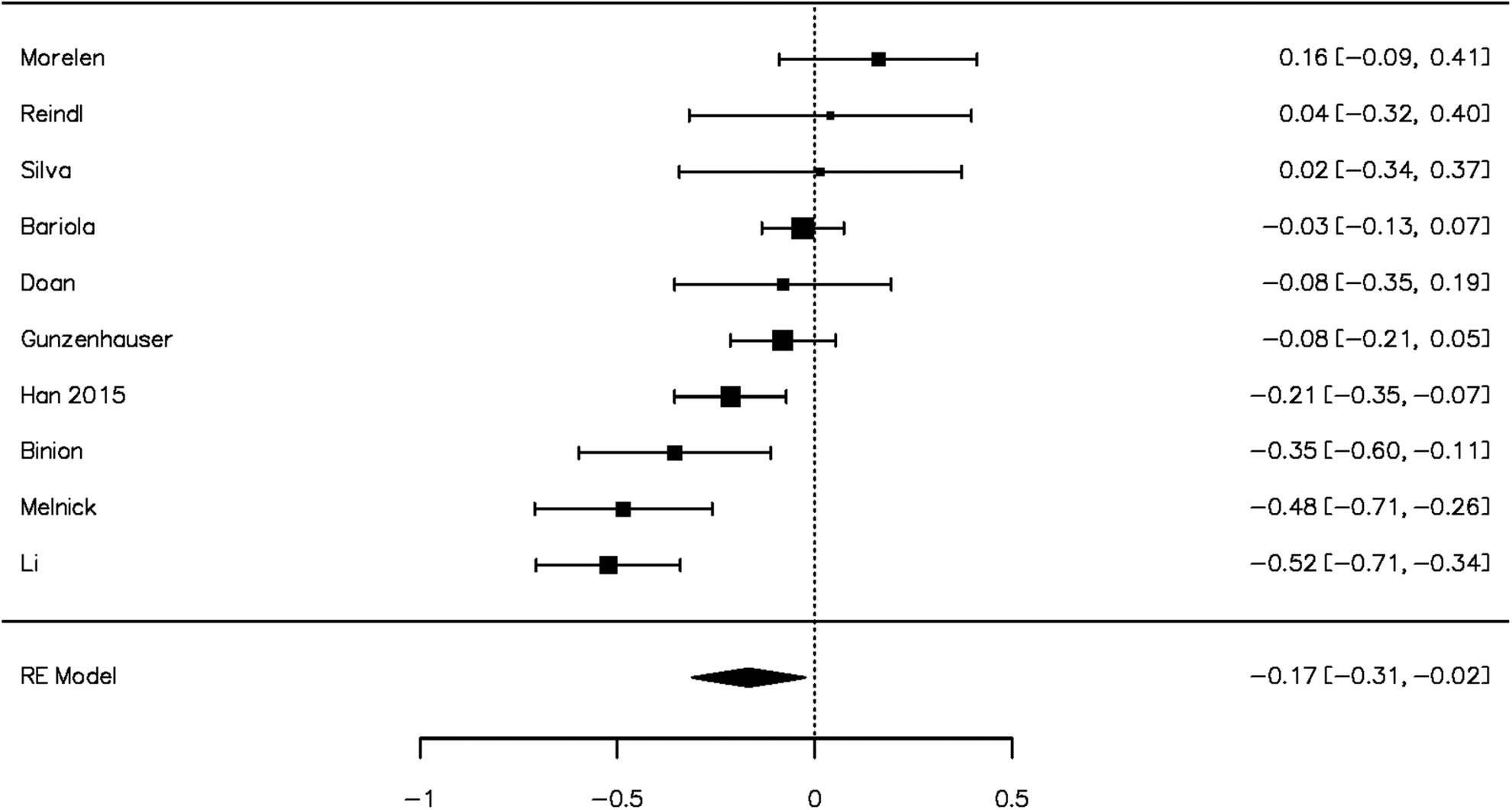
Forest Plot of Effect Sizes (r) for Parent Difficulties in Emotion Regulation Associated With Child Emotion Regulation Skill.
Child difficulties with emotion regulation
Twelve studies (superscript 12 in Supplemental 2, total N across studies = 2321) included measures of parents’ difficulties with emotion regulation and children’ difficulties with emotion regulation. Eight studies measured parents’ difficulties with the DERS, and the other four studies measured parents’ expressive suppression. Nine studies used surveys to measure child difficulties with emotion regulation, whereas one study observed children and two studies used observational and survey measures.
As shown in Figure 13, the meta-analysis of parent difficulties with emotion regulation and child difficulties with emotion regulation yielded a significant effect size of r = .22 (95% CI .15 to .30), p < .001, indicating that parents with more difficulties had children with more difficulties. There was significant effect size heterogeneity, Q(11) = 27.02, p = .005, and the Fail-Safe N was 408. No study characteristic moderated effect size.
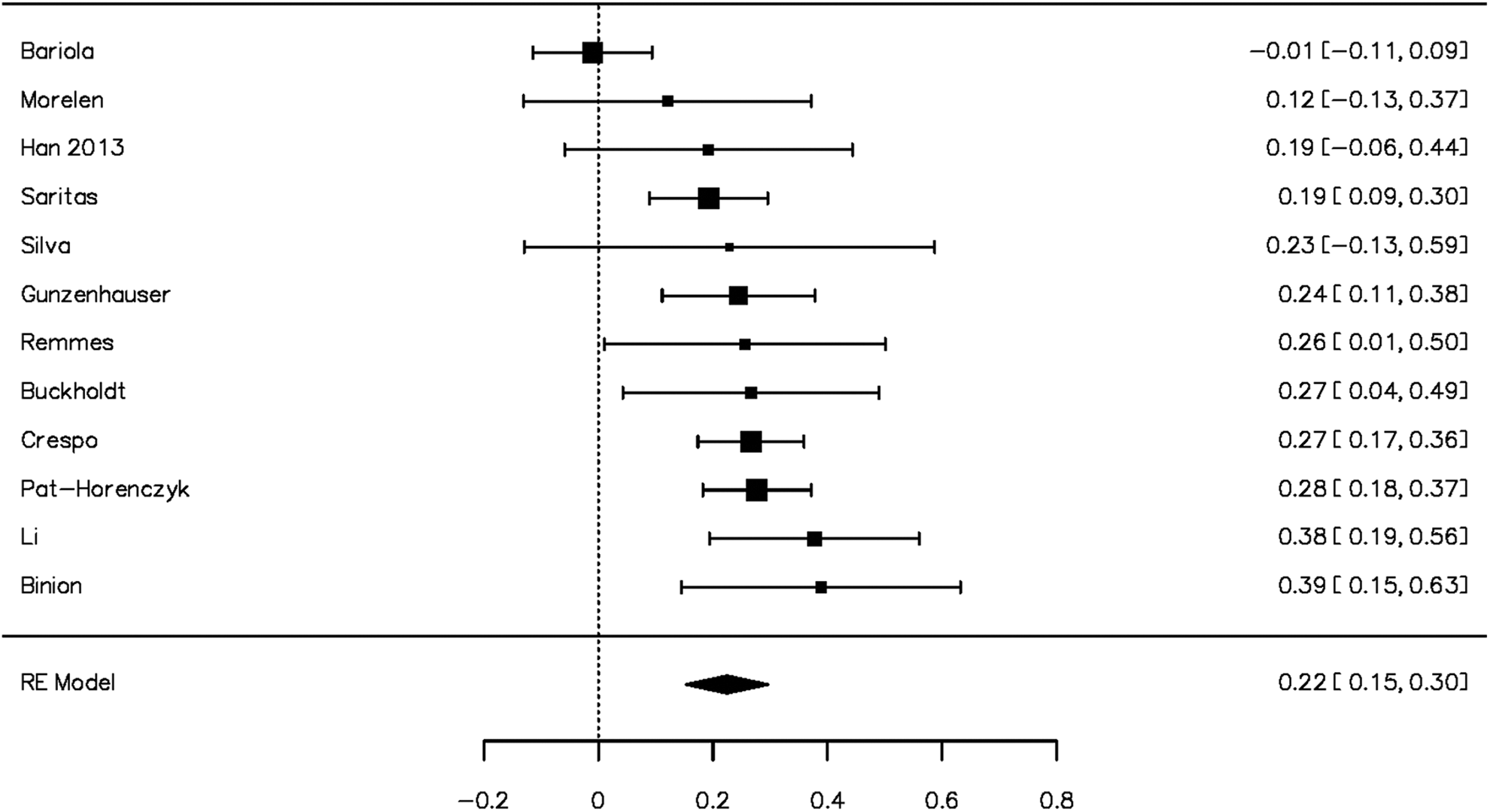
Forest Plot of Effect Sizes (r) for Parent Difficulties in Emotion Regulation Associated With Child Difficulties in Emotion Regulation.
Discussion
In the last several decades, there has been increasing attention placed on parents’ emotionality, emotional expression, emotion regulation, or emotion socialization processes, revealing affective family patterns as important in children’s developmental progress. This focus on affective aspects of parenting can be found in studies of parents’ own emotionality and ability to regulate emotion, either in general or specific to the domain of parenting, and in the studies of parents’ ways of responding to their children’s emotional reactions and regulation. For example, many reviews of the literature reflect this intensifying focus on emotion, proposing theories or models to aid research on emotion, regulation, parenting, and child development (e.g., Bariola et al., 2011; Bridgett et al., 2015; Dix, 1991; Hollenstein et al., 2017; Johnson et al., 2017; Laurent, 2014; Leerkes & Augustine, 2019; Morris et al., 2017; Schwartz et al., 2012; Yap et al., 2007). Moreover, many of these frameworks suggest or explicitly identify parents’ emotion regulation ability or skill as a core proximal influence on parenting (Rueger et al., 2011), while also having immediate or downstream impact on children’s own regulation and internalizing symptoms or externalizing behaviors (e.g., Crandall et al., 2015; Peris & Miklowitz, 2015).
All of this attention to family emotional processes has progressed research that cuts across these many related areas. Here, we conducted the first set of meta-analyses to provide summary effect sizes based on studies that had specifically investigated behavioral indicators of parents’ own emotion regulation as a correlate of their parenting behaviors and children’s regulation and socioemotional adjustment. Overall, the findings from 53 studies parsed into 12 meta-analyses revealed that measures of parent emotion regulation skill and difficulties with emotion regulation had effect sizes (r) of |.30| or smaller when correlations with parenting behaviors and children’s own emotion regulation and symptomatology were considered, with summary effect sizes all in the directions that would be expected. For example, parents who display or report more emotion regulation skill, such as more ability to regulate negative mood, or who report greater reliance on cognitive reappraisal to regulate emotions, are warmer and less hostile with their children. Relatedly, parents who report fewer difficulties with emotion regulation, such as having fewer problems with emotional awareness or better access to strategies to manage emotions, have children with fewer regulation problems and fewer symptoms of internalizing symptoms (e.g., anxiety, depression) and externalizing behavior (e.g., aggression, tantrums).
We found that measures used across studies, whether identified as a measure of parents’ emotion regulation skill (e.g., Gross & John, 2003) or a measure of difficulties with emotion regulation (e.g., Gratz & Roemer, 2004), tended to be associated with parenting behaviors and with children’s emotion regulation and internalizing symptoms, with findings rather more negligible for children’s externalizing behavior. Additional to this general conclusion, studies of difficulties with emotion regulation, especially those more general in their focus, appeared to produce somewhat larger effect sizes than studies focused on regulation skill. Emotion regulation skill was generally assessed as physiological or cognitive efforts (reported on surveys, measured in the lab or observed) to manage emotional intensity, duration, valence, and/or display. In contrast, emotion regulation difficulties included, for example, the specific strategy of suppressing emotion, the general inability to recognize emotions or an overall lack of access to strategies to regulate emotions. Furthermore, in almost all analyses, there was effect size heterogeneity across the included studies, and effect sizes were sometimes moderated by the measure of emotion regulation, the type of parenting behaviors assessed (emotion socialization vs. other parenting behaviors), child age group (infants/toddlers, preschool children, school-age children, and adolescents), or other study characteristics.
Studies That Measured Parents’ Emotion Regulation Skill
Drilling down into the studies of behavioral skills of parents for regulating their emotion, we can draw three main conclusions. First, it is important to begin by noting that the conclusions about the effects of parents’ emotion regulation skill, relative to difficulties, are rather tentative here because of the smaller number of studies of emotion regulation skill, especially in the area of children’s regulation or symptoms.
Second, in studies of parents’ emotion regulation skill, cognitive reappraisal has a weaker association with negative parenting behaviors and children’s externalizing behavior compared with other measured emotion regulation skill. It is useful to find that cognitive reappraisal has a weaker or even nonsignificant association with parenting and children’s outcomes in some cases. This finding for cognitive reappraisal suggests that future research might more productively look elsewhere for specific regulatory strategies of benefit for reducing negative parenting behaviors or assisting children to avoid tantrums and aggression. For example, there is conceptual and operational overlap between definitions of emotion regulation and coping with stress (Compas et al., 2014, 2017), so this related research could be drawn upon to identify specific other strategies that parents use to downregulate negative emotion (Skinner & Zimmer-Gembeck, 2016). Another potential skill to consider is parents’ executive functioning, given its relation to emotionality and emotion regulation but also because of its general benefits across a range of areas (Schmeichel & Tang, 2015) or self-regulation more generally (Bridgett et al., 2015). Moreover, future attention could be placed on parents’ reflective functioning or mind-mindedness, which might be particularly relevant to understanding how parents respond to their own and their children’s emotions (Colonnesi et al., 2019; Zimmer-Gembeck et al., 2019). Reflective functioning and mind-mindedness tap into parents’ ability to understand their children’s behaviors in light of underlying mental states and intensions, promoting the ability to take the perspective of the child. These parent capacities are argued to be pivotal in fostering adaptive emotion regulation in both parents and children and for facilitating optimal child developmental outcomes.
Third, parent emotion regulation skill was associated with better emotion regulation and fewer internalizing symptoms in children, but more rarely was associated with children’s externalizing behavior and children’s difficulties with emotion regulation. Although, this conclusion is based on only five studies, most studies reported nonsignificant effect sizes. This raises the question of whether parents’ emotion regulation has a significant or a practical impact on child externalizing behaviors. Notably, although not focused on parents’ own emotion regulation, a previous meta-analysis of 14 studies of parenting behaviors in the form of emotion socialization and child conduct problems reported an effect size of r = −.08 (Johnson et al., 2017). Furthermore, within the five studies we located, child age moderated effect size, with a positive nonsignificant association in infants and toddlers, but a negative nonsignificant association in children and adolescents. This pattern is consistent with the view that effects here may be nonsignificant for multiple age groups, but also that studies might be more informative if they focused on co-regulation of emotion between parents and their young children as central to children’s developing capacity for behavior regulation throughout life (Hollenstein et al., 2017).
Studies That Measured Parents’ Difficulties With Emotion Regulation
Regarding studies of parents’ difficulties with emotion regulation, there are three additional findings to highlight. First, parents’ suppression of emotion, which we classified as a difficulty with emotion regulation, was rarely significantly associated with either parenting behaviors or children’s emotion regulation and symptoms. This finding for parents’ suppression of emotion is not completely surprising, as reviews of research on suppression and its association with adults’ own symptoms of psychopathology tend to range in effect size and can be nonsignificant (e.g., Aldao et al., 2010). Suppression of emotion, depending on the context and the emotion, can be adaptive or not. In the area of parenting, suppressing some emotions (e.g., anger) may aid positive parenting behaviors and reduce hostile reactions, resulting in better family relationships and fewer child symptoms, whereas suppression of other emotions (worry or sadness) may have no impact or may result in minimization of children’s own fears and negative affect, thus exacerbating children’s symptoms (see Schwartz et al., 2012 for a review of observational studies of specific parent responses to specific child emotions and their effects on adolescent symptoms). Future research on the effects of emotion suppression on parenting and children’s regulation or symptoms should consider expanding the assessment to address suppressing specific emotions, as well as considering emotion-specific emotion socialization by parents. Few studies included here addressed specific emotions or compatibility between parents and children, but previous reviews that focused more specifically on parent emotion socialization have found that parents’ responses to emotions have different impacts of children depending on the emotion under consideration (Schwartz et al., 2012).
Second, behavioral indicators of parents’ difficulties with emotion regulation, usually self-reported, had far-reaching significant associations with children’s greater difficulties with emotion regulation, internalizing symptoms, and externalizing behaviors. In contrast to studies of suppression, other difficulties with emotion regulation—whether measured with the DERS (Gratz & Roemer, 2004) or based on another measurement method—were associated with poorer parenting behaviors, elevated children’s difficulties with emotion regulation, and more internalizing symptoms in children. The effect sizes found here are comparable to those in a previous meta-analysis that examined the association of parents’ depression diagnosis (and symptoms) with negative and harsh parenting (Lovejoy et al., 2000) and are comparable to those reported by Rueger et al. (2011) in their meta-analyses of parental affect as associated with warm-positive or hostile-negative parenting. Our findings, alongside the results of these previous meta-analyses, suggest that studies of associations of parents’ depressive symptoms, negative affect, and difficulties with emotion regulation with parenting behavior converge on similar effect sizes. Thus, findings generalize across the variety of populations, measures, and child age groups addressed in these disparate bodies of research. Yet, there is one caution. In one analysis, the association between parents’ difficulties and negative parenting behaviors was moderated by the risk status of the sample, whereby there was no significant association in the two studies of high-risk families relative to studies that recruited families from the general community.
Third, effect size heterogeneity was partly explained by the measure of parenting (parenting type) or child age in some analyses. Parenting type moderated effect size among studies of parent difficulties with emotion regulation and positive parenting (supportive emotion socialization vs. other positive parenting), whereby the effect size for supportive emotion socialization was smaller relative to the effect size for other positive parenting. Yet, parenting type did not moderate effect size in studies of parents’ difficulties with emotion regulation and negative parenting (unsupportive emotion socialization vs. other negative parenting). Thus, parents who have more difficulties with emotion regulation are less warm and involved and more hostile in their parenting behaviors, and they report more unsupportive responses to their children’s negative emotions (e.g., minimizing feelings). Difficulties with emotion regulation may not interfere with parents’ capacity to be supportive (e.g., encouraging children to express feelings or to problem-solve) in response to children’s negative emotions. This suggests that there is specificity in how difficulties with emotion regulation in parents will affect their parenting behaviors. For example, parents’ difficulties with emotion regulation may not always reduce the capacity for parents’ positive responses, especially at moments when children require parental support (such as when they express appropriate negative emotions), but difficulties with emotion regulation will increase the likelihood of negative responses, in general, across situations and settings.
Child age also explained some of the heterogeneity in effect sizes, with the association between parents’ difficulties with emotion regulation and children’s internalizing symptoms stronger in preschool children relative to either younger or older age groups. Although somewhat surprising, these findings coincide with the findings of a meta-analysis of relations between parents’ negative affect and positive parenting, which found a stronger effect for preschool children (r = .24) relative to infants (r = .11) and school-age children (r = .10) (note: data were transformed in this past study to result in only positive effect sizes; Rueger et al., 2011). Some of our findings suggest that age may be relevant in studies of parents’ affect, emotion, and regulation. One possible explanation is that a stronger association may be found as children confront some of the challenges of preschool and the first years of school. This is a time when substantial changes in children’s regulation occur, especially a transition from co-regulation of emotion with their parents to greater self-reliance in regulating their emotions inside and outside the family (Skinner & Zimmer-Gembeck, 2016). However, an explanation for this age moderation effect awaits research concentrated on identifying some of the mechanisms that might explain why some associations may be stronger in studies of preschool children relative to infants/toddlers and older children or adolescents.
Parent gender and study region of origin were also examined as moderators of effect size but were never significant. Given these nonsignificant findings and given that the finding of no moderation by parent gender is consistent with the finding of Rueger et al. (2011), our findings are an encouraging indicator of generalizability across emotional domains of parenting.
Limitations and Future Research Directions
Although not every meta-analysis returned a significant effect size, the results of the majority did support the view that behavioral indicators of parents’ emotion regulation are correlates of general and emotion-related parenting behaviors and children’s emotional and behavioral adjustment. Yet, one limitation of the findings was the reliance on cross-sectional designs and effect sizes. In the eight longitudinal studies located, effect sizes tended to be smaller when examined over time but these were not summarized here. Also, a second limitation was the small number of studies located on some topics, with some findings based on fewer than 10 studies. This was particularly a limitation when effect size heterogeneity was found and then analyses of moderators of effect size depended on even fewer studies in subgroups (e.g., subgroups by child age or subgroups by measure of emotion regulation). Furthermore, many of the studies relied on parent report for all measures, which could inflate associations due to shared method variance.
It is also relevant to note that the present findings should be considered alongside theory and research that captures dynamic interactions between parents and children. A dynamic view would draw attention to how parents’ skills at emotion regulation may optimize their parenting behaviors and children’s development and well-being but also recognizes that parents increasingly react to their children and this might be particularly true when children are high in internalizing symptoms or externalizing behaviors. For example, parents of children with externalizing behaviors could find it difficult to regulate their own emotions. Mutually reinforcing patterns may emerge and lead to some unexpected associations between parents’ skills at emotion regulation, their responses to emotions of their children, and children’s functioning. For example, in their review, Schwartz et al. (2012) found that the dysphoric behavior displayed by depressed adolescents may result in parents suppressing certain emotional displays, and this emotion suppression by parents may only lead to increasing symptoms of depression in their adolescents. Also, parents have been found to respond more positively to the dysphoric behavior of nondepressed adolescents than they do to depressed adolescents (Pineda et al., 2007). Such findings suggest that historical knowledge or generalized patterns of emotional reactivity and regulation of both parents and their children may impact parenting behaviors and well-being within families over time. Yet, at times, these associations can be counterintuitive or unexpected. Future research is certainly needed that is designed to test such complex and historically embedded dynamic interactions between parents’ traits and personal skills, parenting behaviors, and children’s development and well-being.
The analysis here focused on parents’ influence on and socialization of their children (i.e., parent effects on children), but children could promote parents’ learning about emotions and emotion regulation. Parenting can involve conflict with children (and other family members) many times an hour (Patterson, 1980, 1982). In this situation, intense anger and worry from children or parents can interfere with optimal parent behavior, and when there is disagreement with partners or other family members and a lack of sleep, this interference can be even more disruptive (Dix, 1991). New parents, in particular, may be facing many of these challenges for the first time but could also learn over time how to regulate emotion and effectively respond. Most contemporary theories of parenting and child development recognize that dyads and systems exist within families, whereby parents influence children and children influence parents (Bridgett et al., 2015). This had been addressed in observational studies of parents interacting with their young children (e.g., Hollenstein et al., 2017 for a review) and with children or adolescents (e.g., see Schwartz et al., 2012 for a review). Future research could consider child effects on parents alongside parent effects on children by, for example, investigating how children’s dysregulated or otherwise disruptive and unsettling behaviors have effects on parents’ developing capacity for emotion regulation (Bridgett et al., 2015; Rutherford et al., 2015).
Practical Implications of the Findings
Broadly, the results of the 12 meta-analyses (53 studies) of cross-sectional effect sizes identify parents’ emotion regulation skill and difficulties as having effects on parenting behaviors and children’s outcomes. The largest associations appeared when parents’ difficulties with emotion regulation were the focus, especially when studies examined associations with unsupportive and negative parenting behaviors, as well as poorer child emotion regulation and elevated internalizing symptoms and externalizing behaviors. Thus, interventions focused on boosting parents’ capacity to recognize their emotions and put in place strategies to regulate negative emotions could be important avenues for prevention or intervention efforts. In particular, working to assist young, new, or stressed parents, as well as parents of children who are showing regulatory skill deficits or signs of emotional or behavioral maladjustment, to better recognize their emotions, to practice strategies to manage emotions, and to build beliefs regarding personal efficacy and ability in emotion regulation could be of benefit. In particular, focusing on all of these skills could improve parents’ capacity to model and to directly teach their children to respond and manage negative emotions, provide a foundation for generally more involved and warm parenting, and be a strategy to enhance children’s developing regulation skills—minimizing risk for developing internalizing symptoms.
It was less clear from the current findings whether teaching specific skills, such as cognitive reappraisal, would have the same benefits for parenting or for children’s outcomes. Moreover, the conclusions are also quite tentative and mixed for parents’ suppression of emotion. Suppressing emotions as an emotion regulation strategy simply needs more research, especially research that focuses on suppression of specific emotions, such as sadness, anger, and worry. It may be more beneficial to focus on giving parents opportunities to practice downregulation of their negative emotions by trying out a range of practical strategies (positive self-talk, relaxation, distraction). Furthermore, teaching parents better ways to respond to children’s negative emotions to avoid reinforcement of negativity while rewarding child regulation attempts and successes may also be beneficial (see Lerkes & Augustine, 2019, for additional applied implications of these findings).
Especially if designed to involve parents of young children, focusing on providing parents with new emotion regulation skills may also impact children’s externalizing behaviors. There are many approaches available to teach strategies in emotion regulation (Rutherford et al., 2015) and evidence that existing parenting programs designed for parents of children with externalizing disorders can result in improvements in parents’ emotion regulation and children’s behavior (Zimmer-Gembeck et al., 2019). A remaining issue, however, is whether all parents need to learn general skills for better emotion regulation or if is it a matter of expressing specific emotions at the right intensity in different settings and situations. Overall, the purpose is to assist parents to manage their own emotions so that they can provide support for children that aligns with their specific needs to enhance overall family functioning and children’s development and well-being.
Conclusion
In summary, this meta-analytic review of 53 studies of parents’ emotion regulation, parenting behaviors, and children’s regulation and symptoms supports the view that emotion regulation ability of parents plays a decisive role in parenting and their children’s regulation and adjustment. The strongest associations were found between parents’ difficulties, such as low emotional awareness, suppression or a lack of emotion regulation strategies, and children’s own difficulties with emotion regulation and internalizing symptoms. Furthermore, multiple other summary effect sizes were supportive of the general conclusion that parents’ skill and difficulties with emotion regulation are indicative of a range of parenting behaviors and child outcomes. However, the evidence was less strong for an association between parent emotion regulation skill, such as using cognitive reappraisal to regulate emotion, and children’s externalizing behavior. Given significant moderation of effect sizes by measures used and other study characteristics in some cases, we encourage further attention on ways of measuring emotion regulation in future research on parents’ emotion regulation. Extending research to consider additional ways that parents may regulate emotion will enrich theory and could be applied to extend and enhance existing parenting programs and interventions.
Supplemental Material
Supplemental Material, sj-docx-1-jbd-10.1177_01650254211051086 - Parent emotional regulation: A meta-analytic review of its association with parenting and child adjustment
Supplemental Material, sj-docx-1-jbd-10.1177_01650254211051086 for Parent emotional regulation: A meta-analytic review of its association with parenting and child adjustment by Melanie J. Zimmer-Gembeck, Julia Rudolph, Jessica Kerin and Gal Bohadana-Brown in International Journal of Behavioral Development
Footnotes
Acknowledgment
We thank the entire Family Interaction Program team for many engaging conversations about parenting and child development over the past 15+ years.
Author Contributions
MJZ-G designed the study, conducted literature searches, conducted all analyses, and wrote the manuscript. JR assisted with data abstraction, construction of the tables, and drafting of the Introduction. Authors JK and GB-B assisted with abstraction of data and construction of the tables and appendices.
Data Availability
Data for this meta-analytic review are available upon reasonable request from the first author.
Declaration of Conflicting Interests
The author(s) declared no potential conflicts of interest with respect to the research, authorship, and/or publication of this article.
Funding
The author(s) disclosed receipt of the following financial support for the research, authorship, and/or publication of this article: Funding for this study was provided by the Queensland Department of Child Safety, Youth Justice and Multicultural Affairs to the Family Interaction Program (MJ Zimmer-Gembeck, Director).

Supplemental Material
Supplemental material for this article is available online.
References
Supplementary Material
Please find the following supplemental material available below.
For Open Access articles published under a Creative Commons License, all supplemental material carries the same license as the article it is associated with.
For non-Open Access articles published, all supplemental material carries a non-exclusive license, and permission requests for re-use of supplemental material or any part of supplemental material shall be sent directly to the copyright owner as specified in the copyright notice associated with the article.
