



Abstract
Consumption of news media can influence attitudes toward specific groups, but the influence of news media on longitudinal data collection has not yet been researched. We present a method to index media attention on a specific topic, as well as a case study on a big child sexual abuse (CSA) story and its effect on parents’ attitudes toward male childcare professionals in a longitudinal study with fathers and mothers of 207 Dutch families. Questionnaire data on attitudes toward gender-differentiated parenting were collected in four annual waves between 2010 and 2014. NexisUni® Academic database was used to index articles on CSA to chart patterns of media attention before and during that time span. There was an immediate increase in media attention, the amount of articles on CSA doubled, as well as a prolonged increase in attention which culminated during the second wave of the study. In the first wave, 97 of the families participated before the CSA case became known, and 110 participated afterward. Parents who participated after the first news about the case came out reported a more negative attitude toward hiring a male babysitter than those who participated before it. This effect was stronger for mothers. The negative effect on attitude endured during the subsequent waves for all fathers and for those mothers who participated before the news broke. Findings indicate that big news stories influence attitudes that lasts over time and can therefore influence longitudinal data. Further analysis suggests that the influence of news stories is gendered, as mothers showed a recovery in their attitudes over time while fathers did not. We recommend further research on the effect of news on attitude and behavioral measures in longitudinal research.
Most people spend a significant and increasing amount of time consuming news (Wonneberger et al., 2012), which influences their behaviors (Slater, 2007) and can reinforce negative implicit and explicit attitudes toward specific groups (Arendt & Northup, 2015). A possible explanation is overrepresentation of crime in the news (Prieto Curiel et al., 2020; Windzio & Kleimann, 2009). Research suggests that the consumption of news is related to an increase in fear of crime and significantly elevates the perceived risk of crime (Callanan, 2012; Intravia et al., 2017). This effect can be crime-specific, like fear of terrorism (Nellis & Savage, 2012) and kidnapping (Wilson et al., 2005), and has been found to be stronger for women than for men (Callanan, 2012; Intravia et al., 2017; Wilson et al., 2005). Fear of crime is negatively associated with level of education (Callanan, 2012; Wilson et al., 2005). In recent years, online news consumption has greatly increased. Online news consumption shows a stronger relation with fear of crime than other forms of media (Intravia et al., 2017) as well as a stronger relation with non-neutral attitudes toward specific groups of people (Mertens et al., 2019). It could be theorized that big news stories influence longitudinal attitude research. In this article, we present a time-efficient screening method to gain insight into patterns of national media attention that a certain story or topic has received in a certain period and a case study on the impact of a big child sexual abuse (CSA) news story on parents’ attitudes about male professional caregivers measured in a Dutch longitudinal research project.
News Media and Longitudinal Research
News media can have an effect on attitudes and social-emotional behaviors over a longer period of time (Arendt & Northup, 2015; Slater, 2007). As attitudes and social-emotional behaviors are often topics of research in the social sciences, news coverage may inadvertently influence the outcomes of longitudinal research. This could subsequently be wrongfully attributed to other constructs. To the best of our knowledge, there are no studies on how news media inadvertently influence the outcomes of longitudinal data collection on participants’ attitudes or social-emotional behavior.
The influence of media messages on measured behavior has been conducted mostly in research on health-risk behaviors. Media messages are associated with an increase in attendance of cancer screenings and the use of contraceptives and a decrease in the use of recreational drugs (Wakefield et al., 2010). Health-related media messages have also been shown to have a positive effect on health-related attitudes, such as attitudes toward causes and treatment of depression (Wakefield et al., 2010). News stories can also affect attitudes toward specific groups. In news media, an increasing amount of attention is given to crime stories (Grosholz & Kubrin, 2007), even though most forms of crime have decreased over the past decades (Windzio & Kleimann, 2009). Crime stories can lead to more negative attitudes toward specific groups who are overrepresented and frequently portrayed in the media as (potential) perpetrators (Arendt & Northup, 2015), such as juveniles (Grosholz & Kubrin, 2007) and immigrants (Windzio & Kleimann, 2009). The influence of media messages on attitudes and behaviors has been found in studies in English-speaking countries across the world, as well as countries in Latin America, Asia, and across Europe (Arendt & Northup, 2015; Callanan, 2012; Grosholz & Kubrin, 2007; Nellis & Savage, 2012; Popović, 2018a; Prieto Curiel et al., 2020; Wakefield et al., 2010; Windzio & Kleimann, 2009), indicating that this influence is present in many cultural contexts.
Children are overrepresented in news media as crime victims (Grosholz & Kubrin, 2007), and CSA is overrepresented when compared to other forms of child abuse (Hove et al., 2013). CSA news stories often focus on the most heinous stories and the most extreme offenders (Hove et al., 2013; Popović, 2018b; Smith & Pegoraro, 2020; Weatherred, 2015, 2017). Research in the United States shows that there are big spikes in the number of newspaper articles on CSA attributable to specific cases and perpetrators (Hove et al., 2013; Weatherred, 2017). There is evidence that parents associate male childcare professionals with pedophilia and CSA (Rentzou, 2011; Sak et al., 2019). A link between the attention for CSA in news media and a rise in suspicion toward male childcare workers among parents, especially mothers, has been theorized in research (Eidevald et al., 2018; Munk et al., 2013), but to the best of our knowledge this relation has not yet been studied.
As the coverage of CSA in the media can be capricious (Weatherred, 2017), a big CSA case that unfolds during a research period might cause an unexpected spike in attention for the topic among research participants. News messages have been found to perpetuate stereotypes about perpetrators (Cromer & Goldsmith, 2010) as well as elicit stereotypical responses from the public (Popović, 2018a). Increased coverage of CSA in childcare could therefore lead to a more negative attitude toward men working in early childcare education (Eidevald et al., 2018; Munk et al., 2013). This may subsequently influence attitudes and behaviors that are being studied. An explanation of how media consumption influences attitudes and behavior is posed in the resonance thesis (Weitzer & Kubrin, 2004). This states that when the content of media coverage is closely linked to a person’s everyday reality or vulnerability for that type of crime, media and personal experience jointly reinforce fear and perceived risk. This mechanism could explain why CSA news coverage would lead to an increase in parents’ fear and perceived risk of CSA and subsequently be negatively related to parental attitudes toward male childcare professionals. Parents of young children may be particularly sensitive to CSA in the news because of their personal vulnerability.
Case Study: A Big CSA News Story During a Longitudinal Research Project
The focus of this article will be on the attitudes of parents who participated in the longitudinal project “Boys will be Boys?” toward letting a male caregiver mind their children before and after the first news stories about a big CSA case were published. On December 7, 2010, a male childcare professional was arrested in Amsterdam, the Netherlands. This perpetrator was ultimately convicted of 67 counts of CSA concerning children aged 0–4 years as well as the possession, creation, and distribution of child pornography. The perpetrator worked in formal and informal childcare. The case was later dubbed the biggest sex crime case of all time in the Netherlands by the media (Koch, 2012). However, to the best of our knowledge, the amount of media attention this case received has never been studied.
The aim of the longitudinal project “Boys will be Boys?” was to examine the relation between parental gender-differentiated socialization and the socio-emotional development in early childhood. The research project took place over the course of 4 years, consisting of four annual waves. During the first wave (June 2010–June 2011), approximately half of the families participated before the Amsterdam CSA case first became known (December 7, 2010) and the other half afterward. As part of the project, parents filled in a questionnaire measuring their gender attitudes, which contains an item on their attitude toward hiring a male babysitter. All families had children in the age range of the victims in the Amsterdam CSA case, and the majority used a form of childcare (11% only informal, 57.5% only formal, and 21.5% both formal and informal). Consequently, the news of the Amsterdam CSA case could be considered close to their everyday reality. We expected that (1) there would be a spike in media attention related to the perpetrator and CSA in general; (2) during Wave 1, fathers and mothers who participated after the news of the Amsterdam CSA case became public would show a more negative attitude toward hiring a male babysitter than those who participated before the news; (3) this effect in Wave 1 would be stronger for mothers than for fathers; (4) during the three subsequent waves, both mothers and fathers would continue to have a more negative attitude toward hiring a male babysitter than during Wave 1; (5) the effect of date of participation in Wave 1 did not occur for other aspects of parents’ gender attitudes that did not relate to males in formal caregiving.
Method
Salience of CSA in the Media
To index the frequency of yearly publications on topics related to CSA, the NexisUni® Academic database was searched. This database has been recommended as the most important source for content analysis of textual news data (Krippendorff, 2012; Weatherred, 2017) and has been used before to investigate patterns of media attention over time (e.g., van der Meer et al., 2019). The five largest Dutch newspapers were analyzed, which had a combined daily circulation of 1.63 million copies during Wave 1 of the longitudinal study (Instituut voor Media Auditing, 2011). While our data collection took place in a period in which television was an important news source and online news consumption saw a large increase, we decided to focus on newspapers. Research has shown that the content of social media is greatly influenced by mass media (Prieto Curiel et al., 2020) and content found and shared on social media is often published by traditional (print) media outlets (Möller et al., 2020; Smith & Pegoraro, 2020). Searching the NexisUni® Academic database offers convenience and easy access to Dutch newspapers. Dutch television news broadcasters do not have an accessible archive.
To investigate the salience of topics related to CSA, the number of articles containing the word “zedenzaak” (sex crime) and the number of articles containing the word “kinderporno” (child pornography) were indexed per year, starting on January 1, 2006 and ending on December 31, 2014 (i.e., 4 years before and after the Amsterdam CSA case became known, and during the longitudinal study which took place between 2010 and 2014). Search results contained some duplicates which were deleted (n = 19). To further examine the connection between the Amsterdam CSA case and newspaper content mentioning sex crimes and child pornography, articles containing the name of the perpetrator, Robert M., were also registered per year. As there are some notable persons who have a similar name (e.g., author Robert M. Pirsig), the heading of each article was read to ensure suitability for the study. When in doubt, a longer part of the article was read. Articles not related to the case were deleted (n = 36), as well as duplicate articles (n = 2). No articles were published about the perpetrator before December 7, 2010. There was an overlap between the articles that were included in the counts for sex crime, child pornography, and the name of the perpetrator. The overlap was registered as well. As the longitudinal study consisted of four annual waves that stretched from midway June until June the following year, these processes were repeated for the four waves. The total process of indexing took approximately 10 hr.
Longitudinal Family Study
Sample
This study is part of the longitudinal study “Boys will be Boys?” Families with a father, a mother, and two children were selected from municipality records in the Western region of the Netherlands. Families were included if the second-born child was around 12 months of age and the firstborn child was approximately 2 years older. Out of 1,249 eligible families, 390 families participated in the study, which involved multiple home visits with video observations, questionnaires, and computer tasks. For more information on the sampling method and inclusion criteria, see Hallers-Haalboom et al. (2017). For the current report, families were selected if both parents filled out the Child Rearing Sex Role Attitude Scale (CRSRAS, see below) in each of the four waves. Due to the intensive data collection methods, in 47% of the families at least one parent did not fill in the questionnaire in at least one of the waves. This resulted in a subset of 207 families. The subset did not differ significantly in terms of age or educational level.
In Wave 1, 97 families participated before the news about the Amsterdam CSA case was first published and 110 families afterward. Data collection took place annually as close as possible to the birthday of the second child. In Wave 1, mothers’ ages ranged from 25.1 years to 45.6 years (M = 34.19, standard deviation [SD] = 3.94) and fathers’ ages from 25.8 years to 53.3 years (M = 37.33, SD = 5.41). The children were on average 3.11 years (SD = 0.30) and 1.02 years (SD = 0.03) old. Most parents were highly educated: 81.7% of mothers and 76.8% of fathers (International Standard Classification of Education [ISCED] level 6 or higher). In the first wave, 94.6% of the parental couples were married, registered partners or had a cohabitation agreement and 5.4% were unmarried. During the following waves, five of the married couples got divorced. The sibling gender combinations were as follows: 22.2% girl-girl, 23.7% boy-boy, 28% girl-boy, and 26.1% boy-girl.
Procedure
All families were visited in each of the four waves. Parents were asked to individually fill out a set of questionnaires, including the CRSRAS, before every visit. Families received a yearly gift of €30 and small presents for the children. For more information about the procedure, see Hallers-Haalboom et al. (2017). Informed consent was obtained from all participating families. Ethical approval for this research was provided by the Research Ethics Committee of Commission Research Ethics Code of the Leiden Institute of Education and Child Studies (ECPW-2009/014).
Instruments
CRSRAS
The CRSRAS (Freeman, 2007, adapted from Burge, 1981) was used to assess fathers’ and mothers’ explicit attitudes toward gender-differentiated parenting. The questionnaire consisted of 19 items that were completed on a 5-point scale ranging from 0 (strongly agree) to 4 (strongly disagree). The internal consistency of the CRSRAS was adequate at each wave, with the Cronbach’s α coefficient ranging from .75 to .79 for fathers and .72 to .75 for mothers. For this study, 3 items relating to stereotypical attitudes about gender-specific roles of boys/men were selected, namely (1) I would not hire a male babysitter, (2) Parents should handle the behavior of boys and girls differently, and (3) I could buy my son a doll. The third item was recoded, so a lower score on each item indicates a more stereotypical attitude. The first item was chosen as focus item as its content relates closely to the Amsterdam CSA case. The other two were included to compare patterns of responses to the focus item
Data Analysis
Media attention related to Amsterdam CSA case was indexed using NexisUni®. Using Microsoft Excel, frequency tables were created and the data were subsequently used to create graphs for visual inspection in order to detect patterns and spikes in media attention. Further analyses of the data of the longitudinal family project were carried out using SPSS 25.0. The three CRSRAS items were inspected for outliers, defined as values more than 3.29 SD above or below the means (Tabachnick & Fidell, 2007), and no outliers were found.
We examined whether parents who participated after the Amsterdam CSA case scored lower than those who participated before the news in Wave 1 with independent samples t-tests. The t-tests have been found suitable for examining single 5-point Likert-type items (Norman, 2010). The tests were carried out separately for fathers and mothers to examine the role of parent sex. To investigate the effect of the moment of participation over time and the interaction effect with parent sex, generalized linear mixed model (GLMM) analyses were conducted for each item. The within-subjects factors parent sex (father, mother) and time (the four waves) and the between-subjects factor timing of participation (before or after the news) were examined. The third item (doll for son, recoded) was non-normally distributed (standardized skewness ranged from −8.25 to −6.33 and standardized kurtosis from 1.00 to 4.20). The central limit theorem establishes that for sample sizes greater than 10 per group, regardless of the distribution of the dependent variable, the means are approximately normally distributed (Norman, 2010). As the sample sizes per group in our study are 97 and 110, the tests are robust.
In this article, both
Results
Salience of CSA in the Media
The frequency of articles containing the words sex crime and child pornography and the name of the perpetrator per year can be found in Figure 1. In the 4 years before the Amsterdam CSA case became known (2006–2009), on average 229.50 (SD = 33.91) articles per year contained the words “child pornography” and 45.25 (SD = 25.58) “sex crime.” In 2010, when the news about the case broke, a large increase is visible, with 369 articles mentioning child pornography and 163 mentioning sex crime. The news about the Amsterdam CSA case broke on December 7, 2010. Of the articles that contained the word child pornography that were published in 2010, 35.7% was published after December 6, for articles containing the word sex crime this was 71.8%. The highest peak of articles that contained these words occurred in 2011, with 462 and 411 articles respectively. In 2012–2013, there were still noticeably more articles on sex crimes and child pornography than in 2006–2009. All articles containing the name of the perpetrator were published after December 6, 2010. The largest peak in articles mentioning him occurred in 2012, when the most important parts of his trials and sentencing took place. The number of published articles was strongly correlated with the number of articles containing the word sex crime, r = .94, p < .001, and the number of articles containing the word child pornography, r = .76, p = .018.
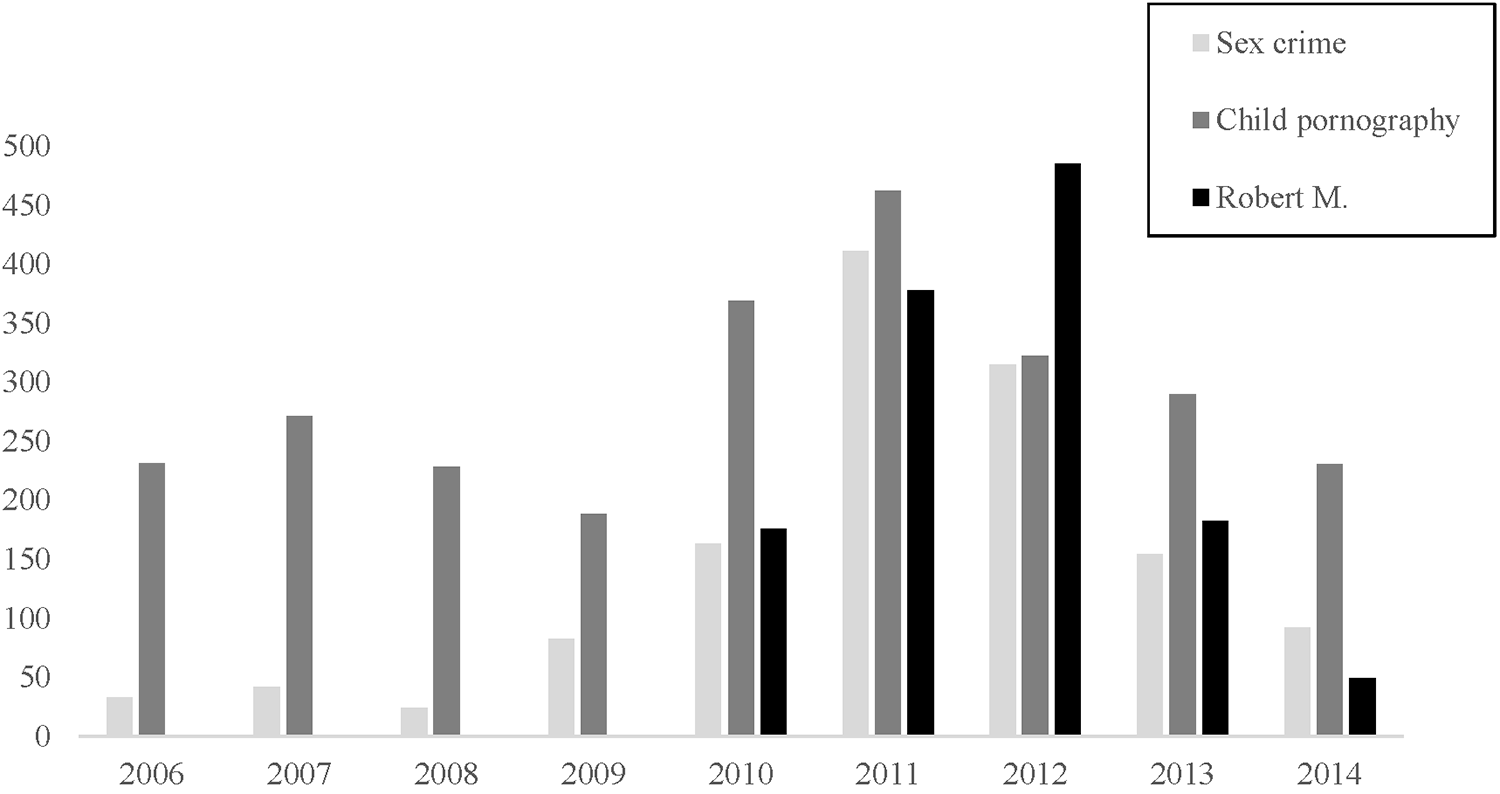
Number of Newspaper Articles per Year.
When looking at the articles that were published per wave during the longitudinal study “Boys will be Boys?” between June of 2010 and June of 2014, it becomes apparent that the largest peak for all three investigated terms took place during the second wave of the study (Figure 2). Over the four waves, there was overlap between articles. Of the articles containing the word sex crime, 12.5%–21.8% per wave mentioned the name of the perpetrator, this was 3.9%–6.6% for articles containing the word child pornography, and 5.4%–11.1% mentioned all three.
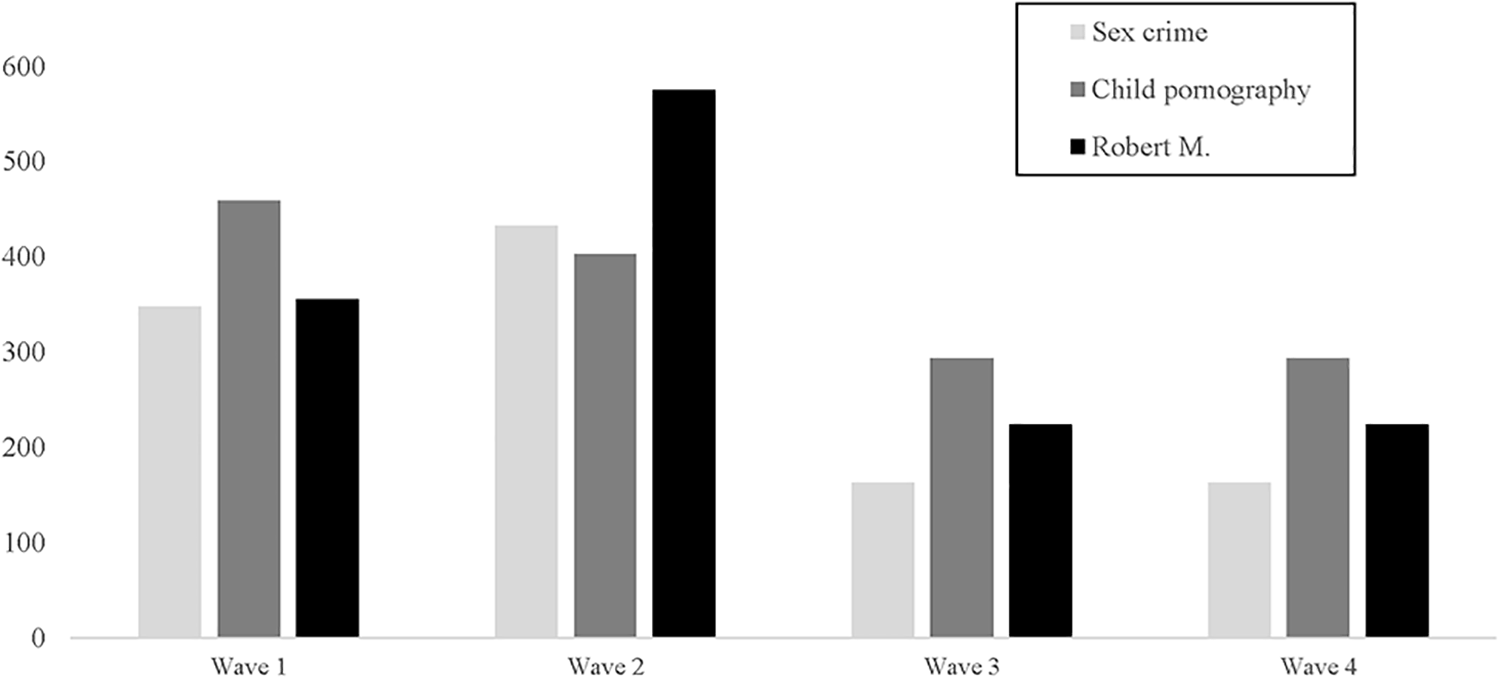
Number of Newspaper Articles per Wave.
Longitudinal Family Study
Means and SDs on the three CRSRAS items selected for this study can be found in Table 1. The difference in attitude toward hiring a male babysitter between parents who participated before the initial breaking of the news about the Amsterdam CSA and parents who participated afterward in Wave 1 was investigated (Figure 3). A significant difference was found between fathers who participated before and fathers who participated after the news first became known, mean difference = .47, 95% confidence interval (CI) = 0.10–0.83; t (205) = 2.51, p = .013; Cohen’s d = .35. A significant difference was also found between mothers who participated before the news and those who participated afterward, mean difference = .86, 95% CI = 0.51–1.21; t (204.89) = 4.90, p < .001 (two-tailed); Cohen’s d = .68. Cohen’s d indicates that the effect of the news breaking during Wave 1 was stronger for mothers than fathers.
Means and Standard Deviations on Three CRSRAS Items for Fathers and Mothers (N = 207).
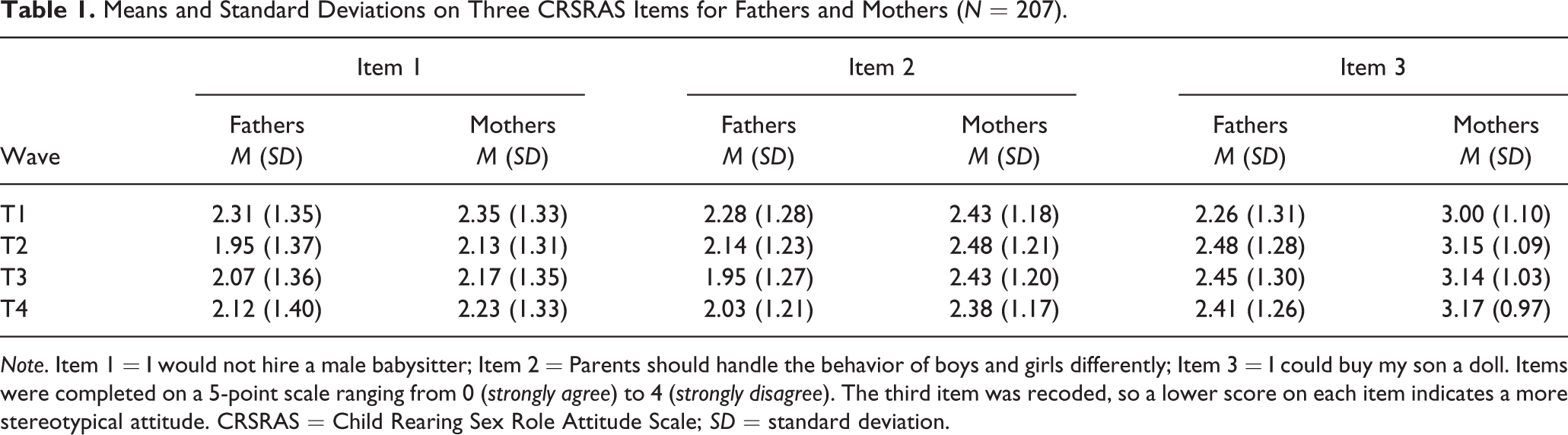
Note. Item 1 = I would not hire a male babysitter; Item 2 = Parents should handle the behavior of boys and girls differently; Item 3 = I could buy my son a doll. Items were completed on a 5-point scale ranging from 0 (strongly agree) to 4 (strongly disagree). The third item was recoded, so a lower score on each item indicates a more stereotypical attitude. CRSRAS = Child Rearing Sex Role Attitude Scale; SD = standard deviation.
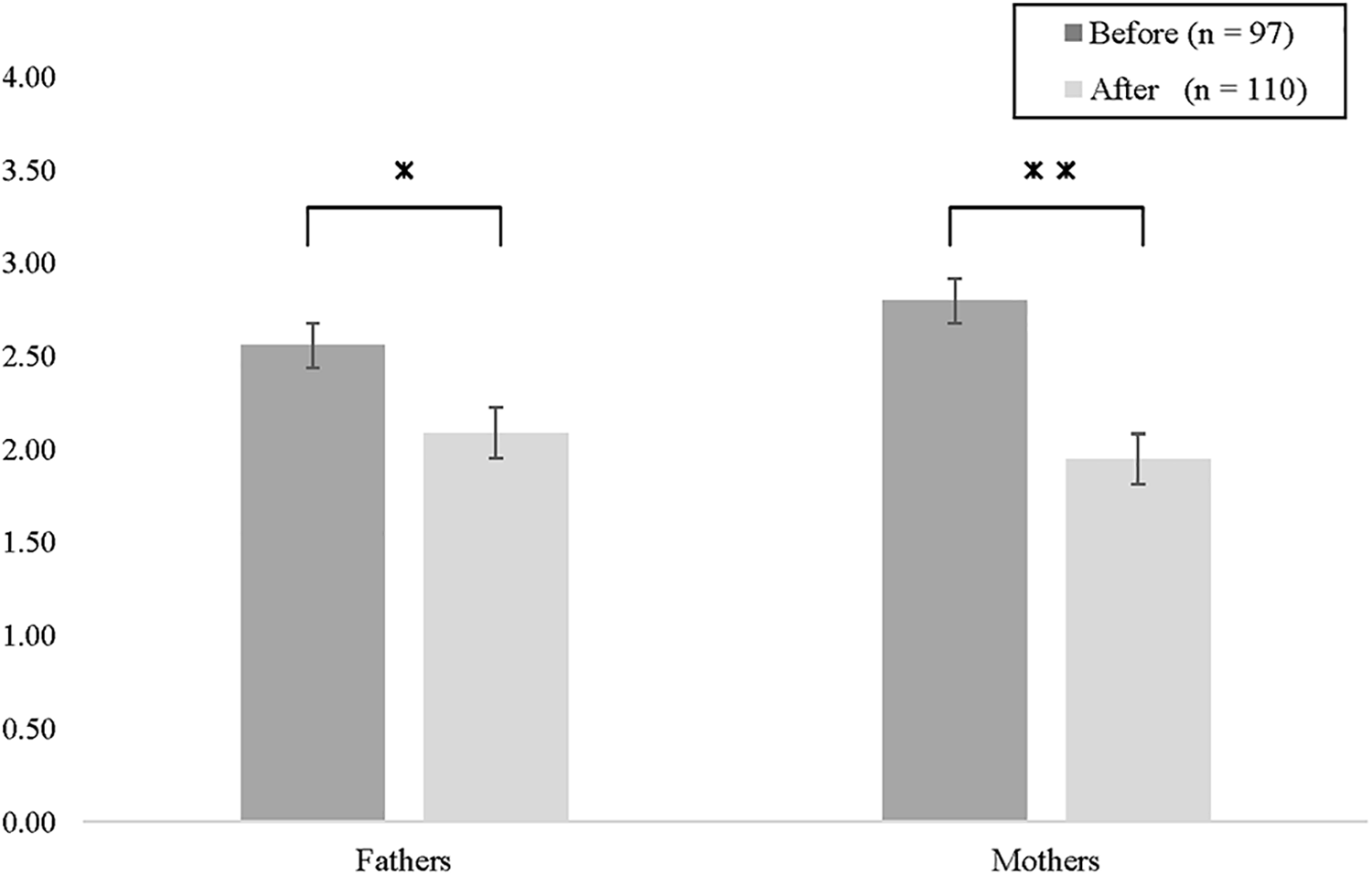
Differences in Fathers’ and Mothers’ Attitude Toward Hiring a Male Babysitter.
GLMM analyses were conducted to examine parents’ attitudes over time. The interaction effect of the moment of participation over time and the interaction effect with parent sex was investigated. Regarding Item 1 (hire male babysitter), Mauchly’s test of sphericity indicated that the assumption of sphericity had been violated for the within-subjects factor time, χ2(5) = 18.12, p = .003, therefore all degrees of freedom in the following analyses were corrected using Greenhouse–Geisser estimates of sphericity (ε = .94; Keppel, 1991). A significant three-way interaction effect was found between time, moment of first participation, and parent gender, F(2.95, 604) = 3.88, p = .010,
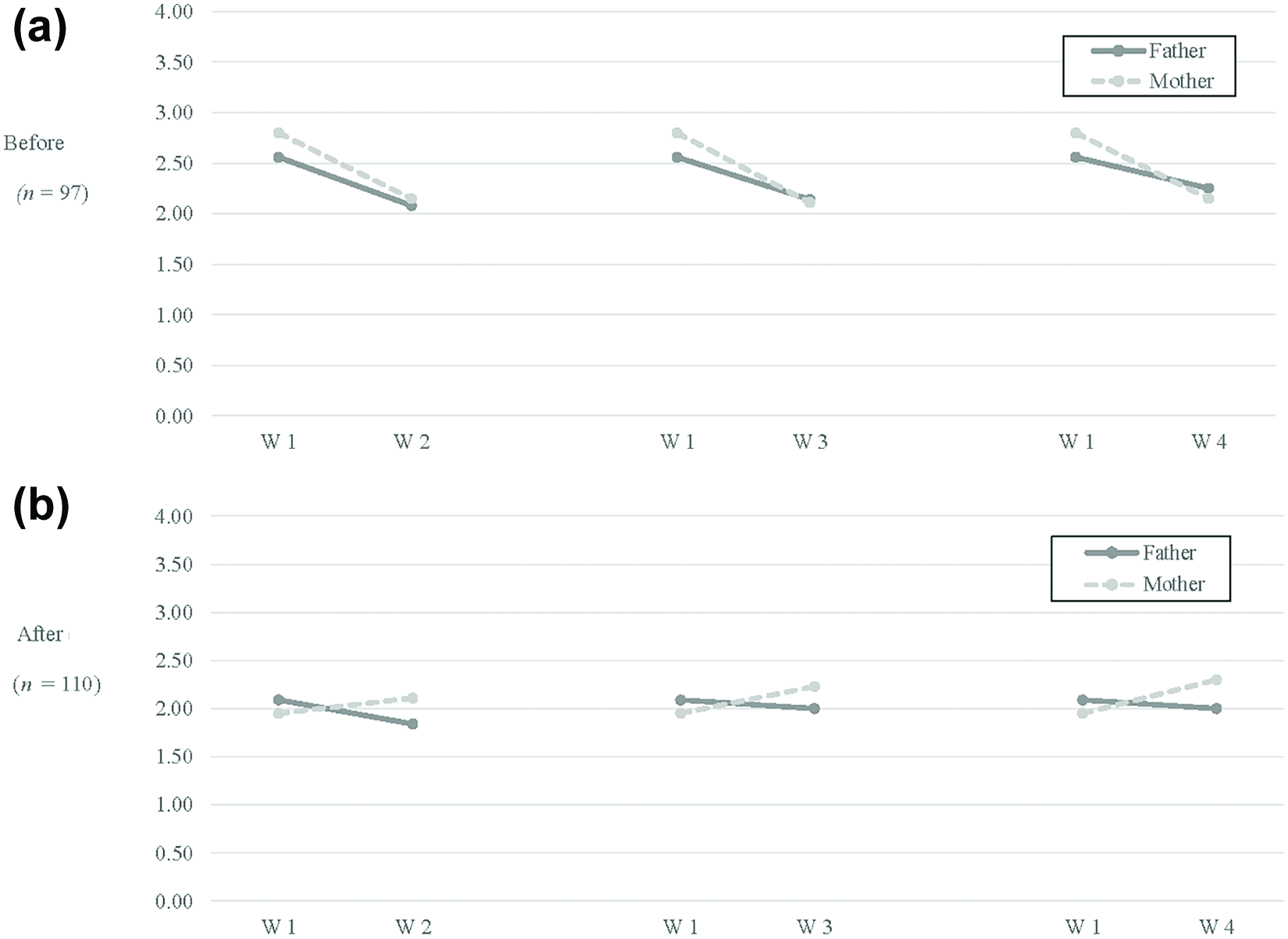
Parents’ Attitude Toward Hiring a Male Babysitter in Wave 1 Compared to Subsequent Waves.
Regarding Item 2 (gender-differentiated parenting of child), as well as Item 3 (doll for son, recoded), independent t-tests showed no effect for the moment of participation in Wave 1. A main effect was found for time for Item 2, F(2.97, 608.11) = 3.11, p = .027,
Discussion
In the current study, we presented a way to index media attention on a specific topic and investigated the possible influence of a big news story on longitudinal data collection. In concordance with research in the United States (Hove et al., 2013; Smith & Pegoraro, 2020; Weatherred, 2017) and our expectations, we found spikes in articles on CSA, compared to the 4 years before the Amsterdam CSA case became known. We also found prolonged attention to the perpetrator of the Amsterdam CSA case in the media. The attention culminated during the second wave of the data collection. We found that after the news of the case broke (Wave 1), parents showed a more negative attitude toward hiring a male babysitter than those who participated before the case. This effect was stronger for mothers than for fathers. This negative effect on parents’ attitude toward hiring a male babysitter lasted over time and differed between fathers and mothers. None of the mentioned effects were found for aspects of parents’ gender attitudes unrelated to male childcare professionals.
According to previous studies in varying cultural contexts (Arendt & Northup, 2015; Mertens et al., 2019; Popović, 2018a; Windzio & Kleimann, 2009), news coverage can negatively affect attitudes toward specific groups. The negative influence of news coverage of CSA on attitudes toward male childcare professionals has been suggested before (Eidevald et al., 2018; Munk et al., 2013). To the best of our knowledge, this is the first time this effect has been studied. The found effect of the news about the Amsterdam CSA case on parents’ attitudes could be explained by the resonance thesis (Weitzer & Kubrin, 2004). Having young children and making use of childcare may play a role in parents’ attitudes toward hiring a male babysitter. Consistent with earlier research (Callanan, 2012; Intravia et al., 2017; Wilson et al., 2005), mothers were affected more than fathers in Wave 1. This could be because women report higher levels of fright-related feelings in relation to crime and crime news (Callanan, 2012; Wilson et al., 2005), which could cause the bigger effect of the news on mothers’ attitudes.
As expected, the negative effect on parents’ attitude toward male babysitters lasted across the following waves. We found that the patterns of this enduring effect were different for mothers than fathers. Fathers remained less inclined to hire a male babysitter over the years, while mothers who participated after the case in Wave 1 showed an increasing inclination in Waves 3 and 4. The highest peak of media attention took place during Wave 2, when the perpetrator was on trial. During Wave 2, all fathers showed a lower inclination to hire a male babysitter, while mothers who were aware of the news during Wave 1 did not show a further decrease during Wave 2. Our findings indicate that while mothers’ attitudes are affected more by big news stories initially, their attitudes may also recover faster or they are less sensitive to prolonged media attention to a certain crime. Further research into this mechanism is recommended. The sample in this study was quite homogenous in regard to the level of education, as over 76% of parents were highly educated. Participation bias in intensive longitudinal research is a well-known problem (Goodman & Gatward, 2008; Schmidt & Woll, 2017). Previous studies have shown that fear of crime is negatively associated with level of education (Callanan, 2012; Wilson et al., 2005), so with a more representative sample the effect could possibly be larger. Studying the effect of big news stories in a more heterogeneous sample is recommended to investigate such effects in more detail. Doing so within a less demanding study design could prevent participation bias.
Our findings relate to one specific component of explicit attitudes toward gender-differentiated parenting, so we can only make limited conclusions. What impact big news stories could have on social behaviors and attitudes remains to be studied. However, our aim was foremost to present a case study to illustrate the possible influence of news media on longitudinal data collection and how researchers can include media attention in their work. We have demonstrated that this can be done in a low-cost and timely manner. To conclude, our findings provide evidence that big news stories can influence parents’ gender attitudes over a longer period of time. As the consumption of news media has risen over the past decades (Wonneberger et al., 2012), and the increase of online news consumption has shown to elicit stronger and more polarized effects on attitudes (Intravia et al., 2017; Mertens et al., 2019; Popović, 2018a), we advise researchers to be mindful of, and where possible take into account, such effects in future studies.
Appendix
Equations for Main effect of time (B):

Interaction effect of moment of first participation and time (AB):

Interaction effect of moment of first participation, time, and parent sex (ABC):

