




Abstract
Home-leaving is considered an important marker of the transition to adulthood and is usually framed as an individual decision. We move beyond this limited assumption to examine a broader conceptualization that might better illuminate home-leaving among youth in impoverished circumstances. We adopt the Problem Behavior Theory-framework to investigate the association of home-leaving with behavioral and psychosocial variables and with other transitions. We use data on adolescents aged 14–22 years from a three-wave study conducted between 2007 and 2010. We used variable- and person-centered cross-sectional analyses, as well as predictive analysis of home-leaving by subsequent waves. Parental controls protection predicted home-leaving by subsequent waves. Overall, protective factors moderated the association of problem behavior involvement with leaving home in Nairobi’s slums.
In this article, we explore “home-leaving” (establishing independent residence) among young people in two informal settlements (slums) in Nairobi, Kenya’s capital city. We seek to understand home-leaving as one indicator of the transition to adulthood within resource-poor informal settlements. Specifically, we investigate the association between the occurrence and timing of home-leaving and socio-demographic, contextual, and psychosocial characteristics..
The transition to adulthood is a period of significant developmental changes that shape the nature and quality of young people's future lives (Lloyd, 2005). Independence is considered an important hallmark of adulthood. Consequently, the act of leaving the parental home and establishing an independent residence is considered an important marker of the transition to adulthood (Goldscheider & Goldscheider, 1993; Koc, 2007; Mulder & Clark, 2000). For example, a study by Rusconi (2000) in Germany and Italy, indicates that becoming residentially independent is considered indexical of economic and individual autonomy from the household of origin. Similarly, a study conducted in Zambia highlights home-leaving as a focal point for other critical developmental tasks and transitions (Benefo, 2004). Investigations of the dynamics of home-leaving in Italy have shown that economic resources play a key role in young people’s transition into independent living (Aassve, Billari, & Ongaro, 2003). Studies in the United States also show that the higher a young person’s income level, the more likely she or he is to be living independently (Avery, Goldscheider, & Speare, 1992; Donald, Hendershott, & Kim, 1993; Leslie & Peters, 1996). In the UK, Ermisch (1999) found that the cost of housing also influences young people to leave their parental home. Specifically, some youth delay home-leaving, while others may return to their parental home after a stint of living independently because of financial constraints. Some studies in The Netherlands and China have shown that young people leave home earlier when the parental household has a high level of transferable material resources (e.g., income and property) and that non-transferable material resources (e.g., living space, help with meal preparation and housework, etc.) delay home-leaving (An, Mertig, & Liu, 2003; De Jong, Liefbroer, & Beekink, 1991; Laferrère, 2005). There is also evidence that family size can influence leaving the parental home. For example, it has been found that a higher number of siblings increases the likelihood of leaving home for union formation and employment reasons; however, it decreases the likelihood of leaving home for furthering education (Billari & Ongaro, 1999). Overall, most theorizations of home-leaving frame home-leaving as a personal choice or an independent decision of the young person concerned. In this article, we move beyond this limited assumption to examine a broader conceptualization that takes into account both contextual and individual-level constructs and that might better illuminate home-leaving among young people in impoverished circumstances.
Leaving home is also an important event because of its interdependencies and consequences (Aassve et al., 2003). Thus, in addition to exploring the dynamics of home-leaving in the slums, we will examine the association between independent living and other transition behaviors (e.g., sexual initiation and marriage), some of which can also represent a claim on a more mature status. Since some of these other transition behaviors (e.g., early sexual initiation) can be viewed as risk behaviors, we have engaged a well-established explanatory framework, Jessor’s Problem Behavior Theory (Costa et al., 2005; Jessor, 1991; Jessor et al., 2003), to illuminate the interlinkages between home-leaving and other markers of the transition to adulthood. The explanatory framework involves psychosocial protective factors, for example, informal social controls and supports that lessen the likelihood of engaging in risk behavior, and psychosocial risk factors, such as, models risk and vulnerability risk, that enhance the likelihood of engaging in risk behavior.
Problem Behavior Theory posits that behavior is influenced by both protective and risk factors. The theory outlines three types of protective factors: models protection, controls protection, and support protection; and three types of risk factors: models risk, opportunity risk, and vulnerability risk (Jessor et al., 2003). Protective factors promote pro-social behaviors while risk factors increase the likelihood of risk behaviors. Protective factors may also moderate the impact of risk factors on behavior. According to the theory, models risk includes measures of models for risk behavior (e.g., friends who engage in substance use may serve as behavioral models). Opportunity risk refers to situational factors that provide an opportunity to engage in risk behaviors (e.g., presence of alcohol in the household may provide an opportunity to consume alcohol). Lastly, vulnerability risk refers to individual characteristics, such as low self-esteem, that increase the likelihood of engaging in risk behavior. Models protection, on the other hand, includes measures of parent and peer models for pro-social behavior (e.g., friends who value education). Controls protection are informal regulatory controls that are either individual-level (e.g., high religiosity) or social-environmental (e.g., parental monitoring). Finally, support protection refers to contextual supports for pro-social behavior (e.g., having a supportive parent). In this study, we posit that young people reporting high levels of protective factors will be less likely to leave home and will report lower levels of engagement in risk behavior even if they are living independently. In contrast, young people reporting higher levels of risk factors will be more likely to report independent residence.
In addition to the associations postulated by Problem Behavior Theory, we also posit that the experience of other markers of the transition to adulthood, and whether a young person is a migrant or not, will be associated with home-leaving. First, in most societies, married couples are expected to establish an independent household. Consequently, we expect to find that married youth will live independently. In addition, early pre-marital pregnancy may also result in the transition to independent living. Further, young people with an income may be more likely to live independently because they have the resources to support an independent household. Living independently also may give young people the freedom to engage in risk behavior. Conversely, young people who engage in risk behavior may desire to live alone in order to have more freedom. Finally, with respect to migration, we consider that home-leaving may take several pathways; those who migrate from their rural areas to start their own independent living in the city and those who leave their parental homes in the same slum or other parts of the city to form their own independent living in the slum.
The overall conceptual framework for the study is shown in Figure 1.
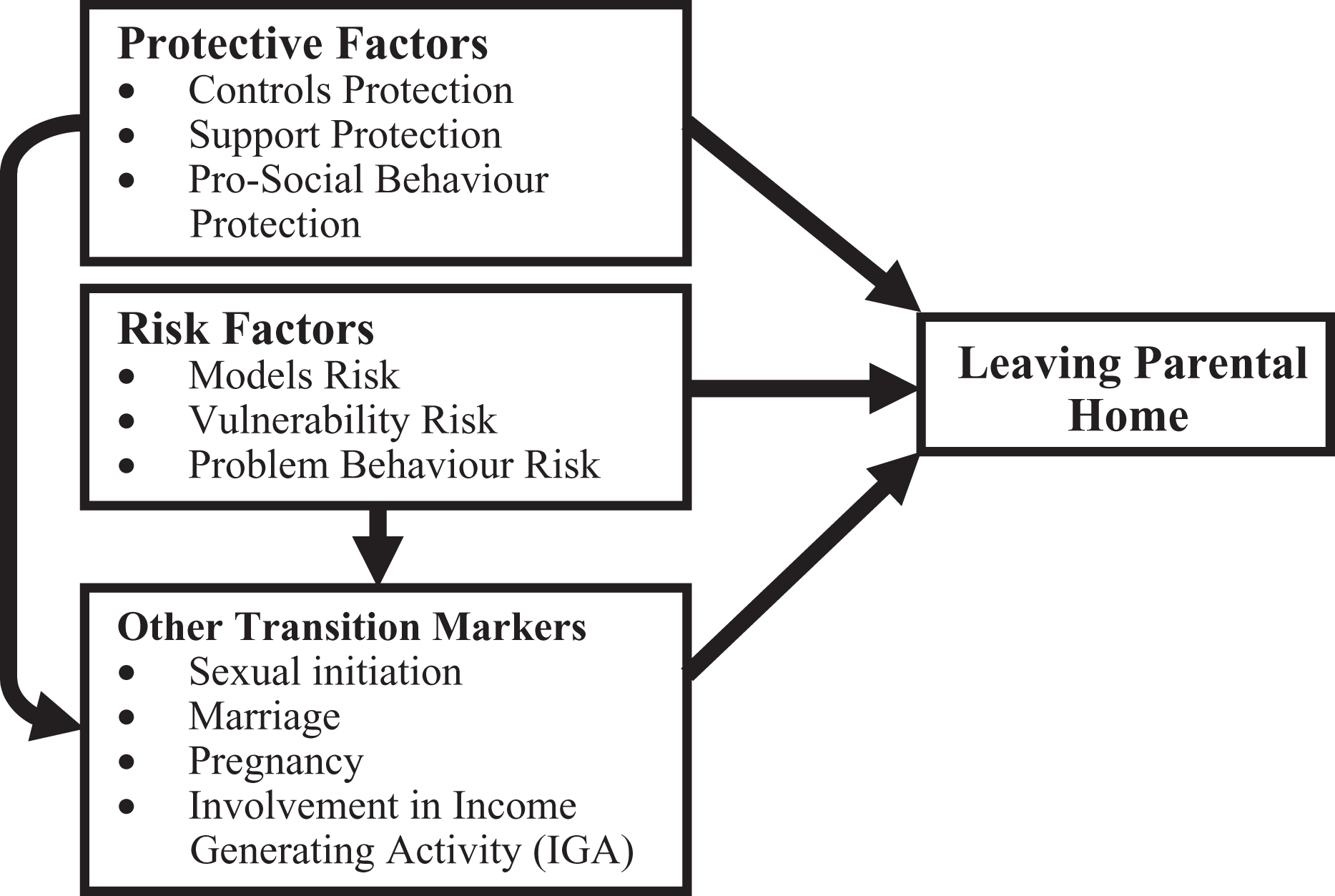
Conceptual framework, adapted from Jessor’s Problem Behavior Theory (Costa et al., 2005; Jessor, 1991; Jessor et al., 2003).
Study context
It is noteworthy that studies of the dynamics of residential independence have primarily focused on youth living in the global North. Conversely, little is known about home-leaving in sub-Saharan Africa, where different cultural factors may have substantial effects on home-leaving—an important marker of transition to adulthood in African settings. Nairobi’s informal settlements (or “slums”) provide a unique context for examining residential independence for three main reasons. First, overcrowding and inadequate dwelling spaces typify these slums. Dwelling units have average measurements of 10 by 10 ft and are constructed with substandard materials such as iron sheets or mud and timber. Several scholars (Amuyunzu-Nyamongo & Magadi, 2006; Dodoo, Zulu, & Ezeh, 2007) have investigated the association between the lack of space and the sexual behavior of youths resident in the slums. However, space constraints in informal settlements are also likely to be linked to the timing of residential independence among young people. In other words, in addition to other reasons, leaving home is likely to be a function of pragmatic considerations: youths in the slums may be prompted to establish a separate residence from that of their parents simply because sufficient space in their household of origin cannot be taken for granted.
The second reason for which Nairobi’s slum settlements constitute a unique study site has to do with the fact that they are home to a diversity of ethnic groups. This diversity may also play a role in influencing the establishment of independent households by young people. The traditional expectation for certain ethnic groups (the Kikuyu, for instance) is that boys will live on their own once they have undergone circumcision, a rite that symbolizes the transition to adulthood for some sub-cultures in Kenya and that is performed on boys around the age of 13 years. Of significance is the fact that this sort of cultural expectation has little to do with the youth’s personal choice or desire to leave home or not. Rather, it is more of an obligation to which male youth must adhere. Third, while many theorizations of home-leaving center on the economic resources of the home-leaver to establish an independent residence, the slum setting (which is characterized by high levels of poverty and unemployment) raises questions about the centrality of economics to residential independence among young people in the slums of Nairobi. The slums of Nairobi are characterized by a high unemployment rate and a shortage of productive investment. Basic public services such as affordable and clean water, access to electricity, and stable sources of income are lacking. The realities of the dire economic challenges in the slums create a situation in which leaving home may be realized through unique living arrangements. For instance, while some young people who have left home may be living a fully (economically) independent life, others may have “left home” in that they live in, and are responsible for paying for, their own independent residence, but they continue to be supported in other ways by their household of origin. For example, food and educational expenses may be borne by their parents or caregivers. Other young people will live with their peers.
The present study examines the dynamics and consequences of home-leaving in two informal “slum” settlements in Nairobi. The study seeks to address the following three questions: 1) is home-leaving related to other transition-to-adulthood markers, including first sexual intercourse, marriage, childbearing, and involvement in income-generating activities?; 2) do psychosocial protective and risk factors, as well as sociodemographic characteristics, explain the occurrence and timing of the home-leaving transition?; and 3) do protective factors moderate the impact of risk factors on adolescents’ home-leaving?
Methods
Study design, participants and procedures
The data used in this study are drawn from the baseline (Wave 1) and the follow-up (Waves 2 and 3) surveys of the Transition-To-Adulthood (TTA) project, a component of the 5-year Urbanization, Poverty and Health Dynamics (UPHD) project conducted by the African Population and Health Research Center (APHRC) in two slums in Nairobi. The study is nested in the Nairobi Urban Health and Demographic Surveillance System (NUHDSS), which collects routine health and demographic data from about 76,094 people in 29,900 households (as at the end of 2009) in the two slums (African Population and Health Research Center, 2009). During the first wave of data collection, about 4,057 youths were interviewed using a structured interviewer-administered questionnaire between October 2007 and June 2008. In the second wave (March 2009–August 2009), 2,527 youths were re-interviewed and 1,629 youths were re-interviewed in the third wave (April 2010–August 2010).
The questionnaire included questions covering social demographic characteristics (e.g., independent housing and schooling), and living arrangements, as well as other psychosocial and behavioral factors. The questionnaire was developed and reviewed by a team of experts in youth issues and was pilot tested among a group of young people living in villages adjacent to the Demographic Surveillance Area (DSA). The complete questionnaire was translated from English to Kiswahili and administered in Kiswahili, the language most spoken in the study area.
Measures
Outcome variables
Independent housing (residential status) was assessed based on the response to a single question: “Have you ever owned or rented your own residence, such as a structure or house?” This variable was used as proxy for the event status of leaving home. Fieldworkers were trained to ensure that respondents understood that residential independence referred to being primarily responsible for paying rent or being the head of household. Respondents who had lived independently were also asked at what age they first lived independently; and in what month and year they first owned or rented their residence. A variable denoting the timing of first independent housing was derived from this second question. The outcome criterion measure is the dichotomous variable indicating whether or not an individual had ever lived independently. Analyses of this criterion in this paper adopted three approaches: variable-centered analysis, predictive analysis of leaving home, and person-centered analysis. The variable-centered analysis focused on the association between the psychosocial and behavioral explanatory variables in the conceptual framework and residential status at Wave 1. The second approach was a predictive analysis to establish whether the explanatory variables, measured at Wave 1, predicted home-leaving by Wave 2, for the cohort that had not left home by the first round of survey. Third, the person-centered analysis involved the creation of subgroups, based on transitions made, and then comparing predictor variables among the groups, again based on Wave 1 data.
Socio-demographic variables
Socio-demographic measures included respondents’ sex and schooling status (whether or not a respondent was in school at Wave 1), youth sexual behavior, employment status, migration status and marriage. Schooling status was included as an independent variable since being in or out of school may influence the decision to move out of the parent’s home. Migration status comprised two categories: whether or not the respondent was born in the study area. Migration is controlled for in this case because those who move into their study area without their families are thought to be more likely to acquire independent housing than those who were born there.
Marital status was assessed using the responses to three questions. Respondents were asked, “Have you ever been married or lived together with a man/woman as if married?” If they responded “yes”, they were asked, “Are you currently married or living together with a man/woman as if married?” If they gave an affirmative response, they were asked about the month and year when they first got married/started living with a partner, and where the date was unknown, they reported the age when they first got married or started living with a partner. Sexual behavior was assessed by asking the respondents, “Have you ever had sexual intercourse?” If their response was in the affirmative, they were asked about the age when they had their first sexual intercourse. Respondent’s pregnancy history was derived from the questions “Have you ever been pregnant?” for girls and “Have you ever made someone pregnant?” for boys. The date when this first happened was also recorded. The age or date when these events happened were collected to determine whether they happened before or after leaving the parental home. Respondents were also asked about their involvement in income-generating activities (IGA). Involvement in IGA is considered as a measure of economic independence and the ability to afford independent living (Aassve et al., 2003; Rusconi, 2000).
A socio-economic index was constructed using data on household characteristics and possessions collected under the Demographic Surveillance System. Principal Components Analysis (PCA) was used to construct the socio-economic index using information on asset ownership, access to utilities and infrastructure (e.g., source of water), and housing characteristics (e.g., building material) were used. Descriptive analysis (frequencies) was performed to guide in deciding which variables to include in the analysis. If most or very few households owned the asset then these variables were dropped from the analysis. The variables that were excluded are vehicle, car, motorcycle, refrigerator, mattresses, fan, blankets, and roof material which had less than 1% of households owning them. Variables with many categories or low frequencies were combined and recoded into binary variables. A continuous score obtained from (PCA) was grouped into tertiles of poorest, poor, and least poor.
Measures of psychosocial and behavioral protective and risk factors
We constructed composite measures of three key psychosocial protective factors (controls protection, support protection, and behavior protection), and three key psychosocial risk factors (models risk, vulnerability risk, and problem behavior risk) from the Problem Behavior Theory framework. Composite measures of protection and of risk were generated by averaging all the equally weighted items in the component subscales and standardizing them with mean of zero. The alpha reliabilities of the composite measures of risk and protective factors, and of their component subscales, are presented in Table 1. The composite protection and risk measures were generated to assess the relationship of overall protection and overall risk with the home-leaving criterion measure.
Psychosocial and behavioral protective and risk factor composite measures, component subscales, and alpha reliabilities.
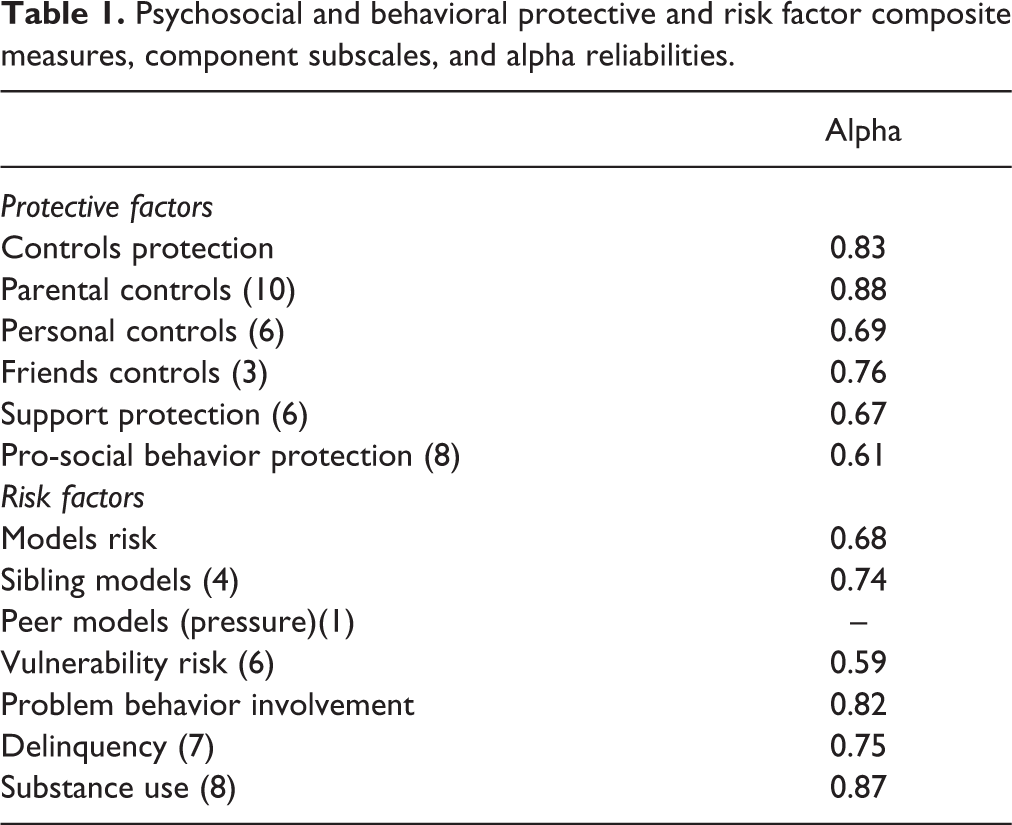
The controls protection composite comprised items in three multiple-item subscales that assess parental, personal, and friends’ controls. Parental controls were measured using 10 items that assessed the respondent’s perception of how much their parents or guardians know about the respondent’s daily activities (e.g., “Where you spend time in the evenings on weekdays, or who your friends are”) and parental sanctions (e.g., “How often does your parent scold or reprimand you when you do something wrong?”). Personal controls included individual reliance on religious beliefs (e.g., “How important is it to you to be able to rely on religious teachings when you have a problem?”) and individual-level intolerance for normative transgressions (e.g., “Young women/men should remain virgin until they marry”). Peer controls included peers’ approval of pro-social behavior (e.g., “How important is it to your friends that you do well in school?”) and peers’ feelings about substance use (e.g., “How do most of your friends feel about someone your age drinking alcohol, using marijuana or other drugs?”). The support protection composite comprised six items assessing parental support using questions (e.g. “How often does your father/mother teach you things?”, “How often do you share secrets with your father/mother?” and “How often does your father/mother try to help you?”). Pro-social behavior protection included involvement in positive community activities (e.g. “Do you belong to a religious group, drama/dance/choir group, anti-AIDs club, anti-drugs club or self help group?”).
The models risk composite comprised four items related to siblings and a single item related to peers (e.g., “How much pressure is there on people your age to have sex?” and “Have any of your brothers or sisters ever had premarital sex, smoked, drunk alcohol?”). Vulnerability risk was measured using a six-item scale of self-esteem including the following questions: “How well do you get along with others?”, “How well do you live up to what is expected of you?”, “What is your ability to do well in school?”, “How attractive do you think you are?”, “How satisfied are you with yourself?”, “How well do you resist peer pressure from the rest of the group?” The composite measure of problem behavior involvement comprised two multi-item subscales; delinquent-type behavior and substance use. Delinquency was assessed using seven items that measured the frequency with which the respondent engaged in delinquent behaviors, for example, staying away from home for at least one night without parental permission. Eight items assessing cigarette smoking, alcohol drinking, and use of other recreational drugs were used to generate a scale for substance use.
Statistical analyses
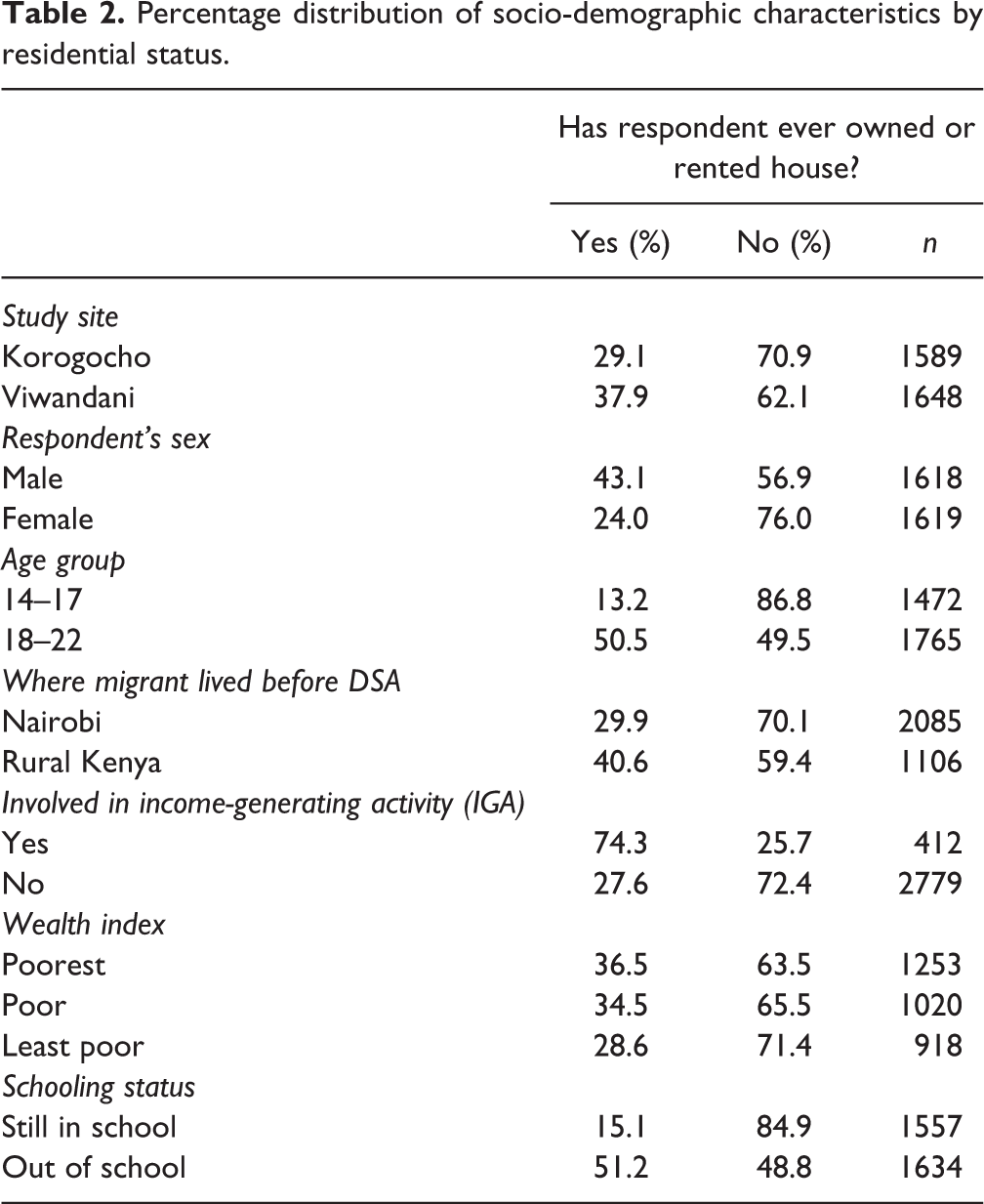
Descriptive characteristics of the sample are presented by residential status (see Table 2). Two analytic approaches were used to examine the relation of our psychosocial and behavioral variables to home-leaving. First, a variable-centered approach was used to examine the association of the explanatory measures with the home-leaving measure using logistic regression. We expect the three protective factor measures to be associated with a lower likelihood of leaving the parental home; conversely, we expect the three risk factor measures to be associated with a higher likelihood of leaving home. Second, person-centered analysis, based on leaving home sub-groups, was employed to address the hypothesis that problem behavior involvement will be higher among adolescents with low protection and high risk who left their parental home.
Percentage distribution of socio-demographic characteristics by residential status.
Bivariate analyses were performed to assess the association between each independent variable and the criterion measure of home-leaving. Multivariable analyses (logistic regression) were then conducted to assess the combined effects of the explanatory variables on the odds of home-leaving. Socio-demographic variables and other transition-to-adulthood variables that were significantly associated with leaving home were included in the multivariate model to control for their effect in assessing the role of the psychosocial and behavioral protective and risk factors. The final model was obtained through stepwise model selection, keeping all the psychosocial variables in the model. The final model was fitted for the overall sample, and then stratified by sex and age group. The stratified analysis by sex and age was performed since home-leaving among adolescents may differ by sex and age. The moderating effect of protective factors on the impact of risk factors on home leaving was assessed through examining interaction effects between protective and risk factors. The approach used for the predictive analysis also employed logistic regression. The predictive analysis assessed whether the psychosocial and behavioral protective and risk factors, at Wave 1, predicted home-leaving by either Wave 2 or Wave 3, for those who had not left the parental home at Wave 1. To make more apparent the overall effect of the risk and protective factors, analyses of composite psychosocial measures were also undertaken.
Results
Descriptive findings about home-leaving
The study used data on 3,237 youths aged 14–22 years (excluding 820 adolescents aged 12–13 years) with about equal number of male and female respondents (1,618 males; 1,619 female). The study excluded youth aged 12 and 13 years because this group is less likely to experience any of the transition to adulthood markers. Only 2% of 12–13-year-olds had moved out of the parental home. Table 2 presents the proportion that ever rented or owned a house by socio-demographic characteristics. The ethnic groups in the study area include Kikuyu (34%), Kamba (17%), Luhya (12%), Luo (17%), and other groups (18%). The data from this study show that Kikuyu and Kamba were more likely to leave the parental home compared to the other groups. Among the adolescents interviewed, 34% had ever owned or rented a house. The proportion ever owned or rented a house in Korogocho was 29% and is 38% in Viwandani. Of the female youths, 24% reported to have ever lived independently, while 43% of males had moved out of their parental home. About 50% of those aged 18–22 years had moved out of their parental home compared to 13% among those aged 14–17 years. About 41% of youths who migrated from rural Kenya to the study areas reported that they had rented or owned a house compared to about 30% of those who were born in the area or came from other parts of Nairobi. Of those involved in income-generating activity, 74% reported ever moved out, compared to about 28% of those who were not involved in income-generating activity. Table 2 shows that 37% of the adolescents from poorest households moved to independent houses compared to 35% from poor households, and 29% from the least poor households. The table also shows that 51% of those out of school had lived independently as compared to 15% of those still in school.
With regard to our first objective, the exploration of the relations of the home-leaving transition to other transition markers, Table 3, presents percentages indicating the inter-relationships among the various markers of transition to adulthood. What is apparent is the clear bi-directional relation between pregnancy status and marital status. The rest of the relationships show that one marker is more an outcome of other markers. Home-leaving is more likely to occur as a result of involvement in income-generating activities (IGA) as opposed to the reverse: 74% of those involved in IGA reported having left their parental home, and 29% of those who left their parental home reported involvement in IGA. A similar relationship is observed between home-leaving and other transition-to-adulthood markers, except engaging in sexual intercourse. The data make clear that the transition of home-leaving is significantly related to other markers of the transition to young adulthood. In that regard, they support the application of the Problem Behavior Theory-framework to illuminating the leaving-home transition.
Inter-relationships among transition-to-adulthood markers in terms of percentages: Considering columns as outcome and rows as exposure.
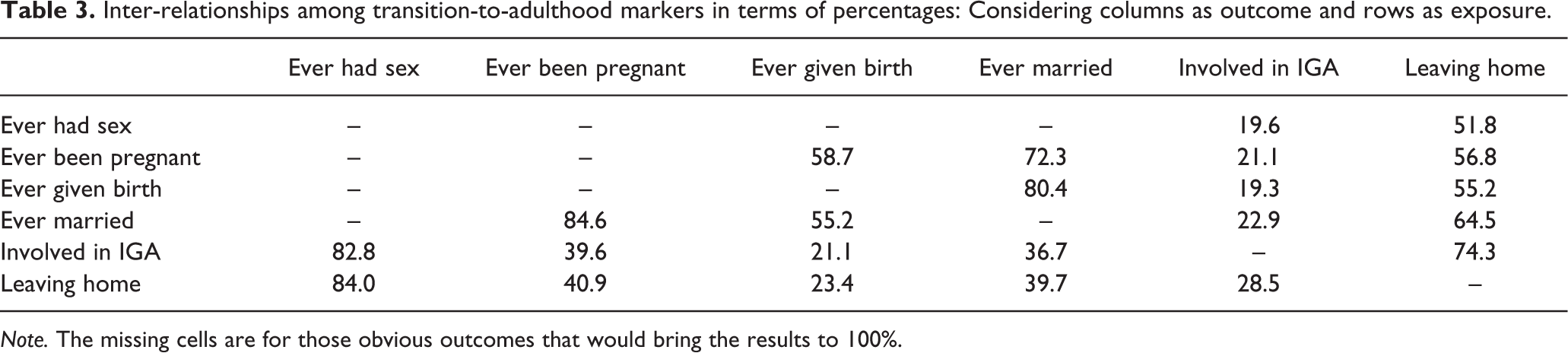
Note. The missing cells are for those obvious outcomes that would bring the results to 100%.
Accounting for home-leaving: Findings from cross-sectional, variable-centered analysis
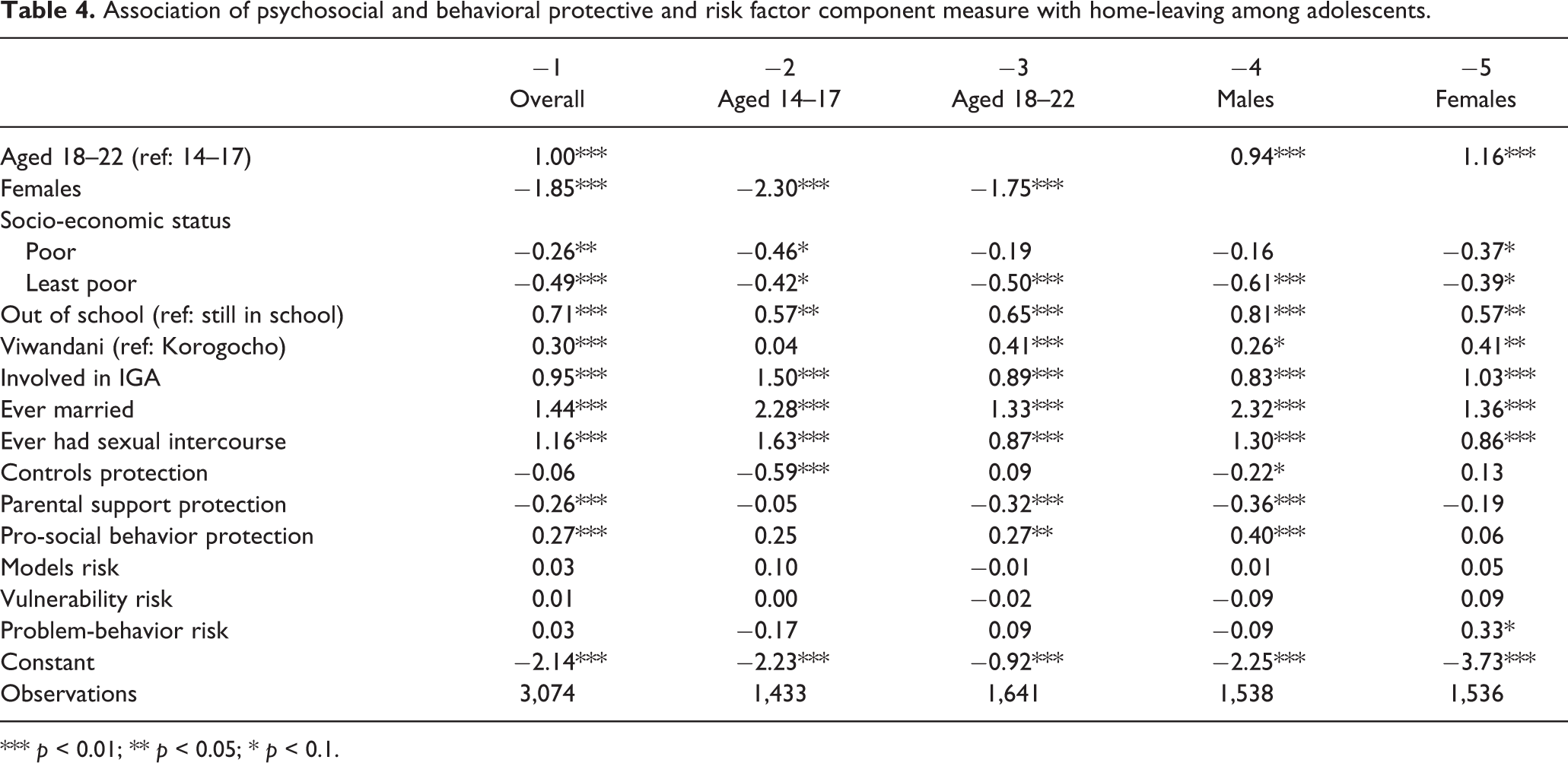
Models were fitted for the overall sample, for younger adolescents (14–17 years), for older adolescents (18–22 years), and for males and females separately. A target sample of 3,237 adolescents formed the analytical sample for this cross-sectional analysis. The actual number reported for the different models is less than 3,237 because of the excluded observations with missing information on some of the predictors. The results of the combined sample show, in Table 4, that, as expected, older adolescents (18–22 years) were more likely to leave their parental home compared to the younger adolescents, regardless of sex. Generally, female youths were less likely to leave their parental home compared to male youths. Adolescents who reported having ever married were more likely to move out of their parent’s home compared to those who never married, and a similar effect was observed across sex and age. Sexual intercourse-experience was significantly associated with leaving home, regardless of sex and age. Though ever being married or being sexually experienced were associated with a greater likelihood of home-leaving, the association was greater among males and younger youths. Involvement in income-generating activity and being out of school both increased the chance of young adolescents moving into independent housing across sex and age. Residents in Viwandani were more likely to have lived independently compared to Korogocho residents, though this association was not significant for young adolescents. This difference may be due the fact that more residents in Viwandani are employed, thus increasing the likelihood of leaving the parental home because of economic independence. Indeed, Viwandani had a higher proportion of youths who were involved in income-generating activities (19%) compared to Korogocho (7%). Migration status was not found to have an influence on leaving the parental home after controlling for other factors. Household socio-economic status had a negative effect on leaving home in that adolescents from wealthier households were less likely to leave their parental home.
Association of psychosocial and behavioral protective and risk factor component measure with home-leaving among adolescents.
*** p < 0.01; ** p < 0.05; * p < 0.1.
After controlling for these characteristics, the model results show that psychosocial and behavioral protective factors were associated with a lower likelihood of leaving home. This association varied with both age and sex. Higher controls protection was associated with a lower likelihood of leaving home for young and male adolescents only, while parental support was associated with a lower likelihood of leaving the parental home for older and male adolescents. Unexpectedly, high pro-social behavior was significantly associated with a higher likelihood of leaving the parental home for male and older adolescents. This result is contrary to what was theoretically expected. Neither models risk nor vulnerability risk was significantly associated with home-leaving, after controlling for other factors, except for problem-behavior involvement risk which was found to increase the likelihood of home-leaving, as expected, but only among female adolescents. There was no significant interaction between controls protection and any of the risk measures.
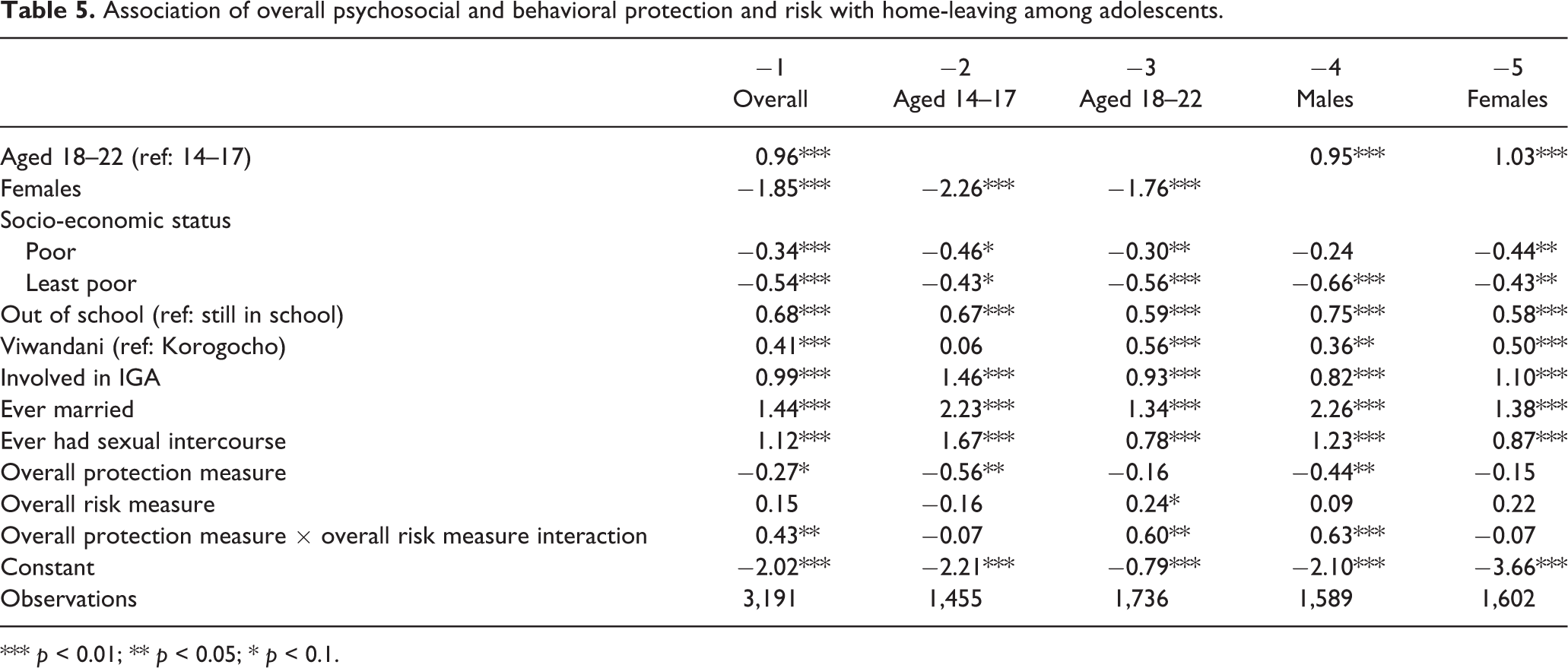
The second model considered the relation of overall protection (controls + support + pro-social-behavior involvement) and of overall risk (models + vulnerability + problem-behavior involvement) to home leaving, controlling for socio-demographic characteristics and other transitions. In this model, there was no change in the relation of socio-demographic characteristics and of the other transition-to-adulthood markers. The relation of the measure of overall protection is the same as that shown in the Table 4 model, which is based on the individual components of the protection measure: Protection is associated with a lower likelihood of independent living for male and younger youths. The measure of overall risk was significantly associated with home-leaving, but only for older youths. The interaction between the overall protection measure and the overall risk measure was significant—as expected, overall protection moderated, buffered or reduced the association between problem-behavior involvement and home-leaving (Table 5).
Association of overall psychosocial and behavioral protection and risk with home-leaving among adolescents.
*** p < 0.01; ** p < 0.05; * p < 0.1.
Accounting for home-leaving: Findings from predicting home-leaving over time
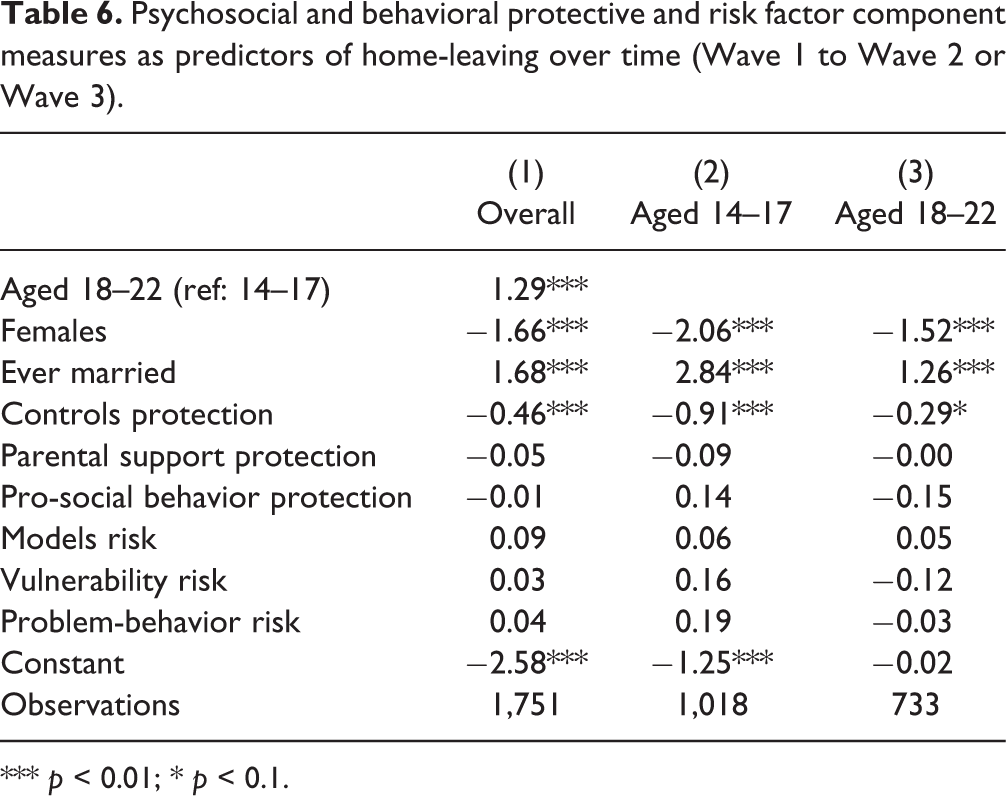
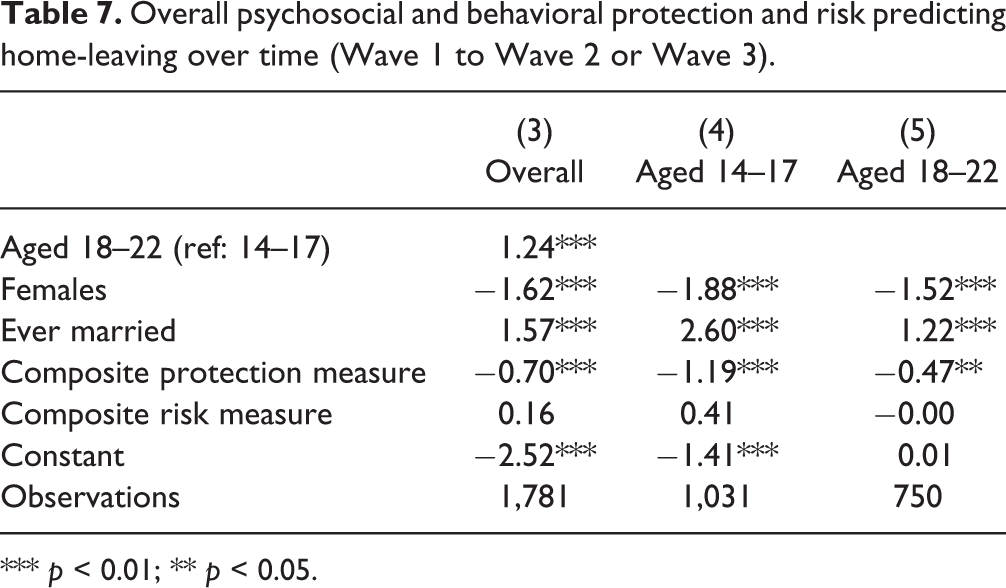
The target sample for this predictive analysis was 2,150 adolescents who had not moved out at Wave 1, of which 1,780 adolescents had information at the subsequent waves either at Waves 2 or 3. Therefore, the analytical sample for predictive analysis was 1,780, and the actual number used for analysis (reported in Tables 6 and 7) is less than 1,780 because of observations with missing information on some of the predictors. A predictive analysis of home-leaving for those adolescents who had not yet left home by the first wave of data collection shows that older adolescents were more likely to leave home compared to younger adolescents, while female respondents were less likely to leave regardless of their age. Adolescents who reported ever having been in a marital union were more likely to leave home by the second wave of data collection. Among the psychosocial variables, controls protection conferred a delaying effect on home-leaving: the higher the controls-protection score, the less likely they were to leave home, controlling for demographic factors. Neither the measures of pro-social behavior-involvement protection nor of problem-behavior involvement risk nor of models risk were significant predictors of home-leaving after controlling for other factors. These predictive results for the component measures are presented in Table 6. The composite measures of overall protection and risk, shown in Table 7, reinforce the importance of the overall protection composite as significantly associated with a reduced likelihood of a home-leaving transition over the subsequent time interval.
Psychosocial and behavioral protective and risk factor component measures as predictors of home-leaving over time (Wave 1 to Wave 2 or Wave 3).
*** p < 0.01; * p < 0.1.
Overall psychosocial and behavioral protection and risk predicting home-leaving over time (Wave 1 to Wave 2 or Wave 3).
*** p < 0.01; ** p < 0.05.
Accounting for home-leaving: Findings from person-centered analysis
The person-centered analysis considered two sub-groups of adolescents: those whose transition event was leaving home only, and those who had not experienced any transition-to-adulthood event. Figure 2 illustrates the relationship between controls protection, models risk, and an index of involvement in problem behavior. The distribution of the controls protection score was dichotomized to define groups as low (L) and high (H) in protection; the distribution of the models risk score was categorized to define groups as low, medium, and high risk. The problem behavior index was used as a continuous score, with a high score associated with high problem behavior involvement, that is, with high engagement in delinquent behavior and substance use.
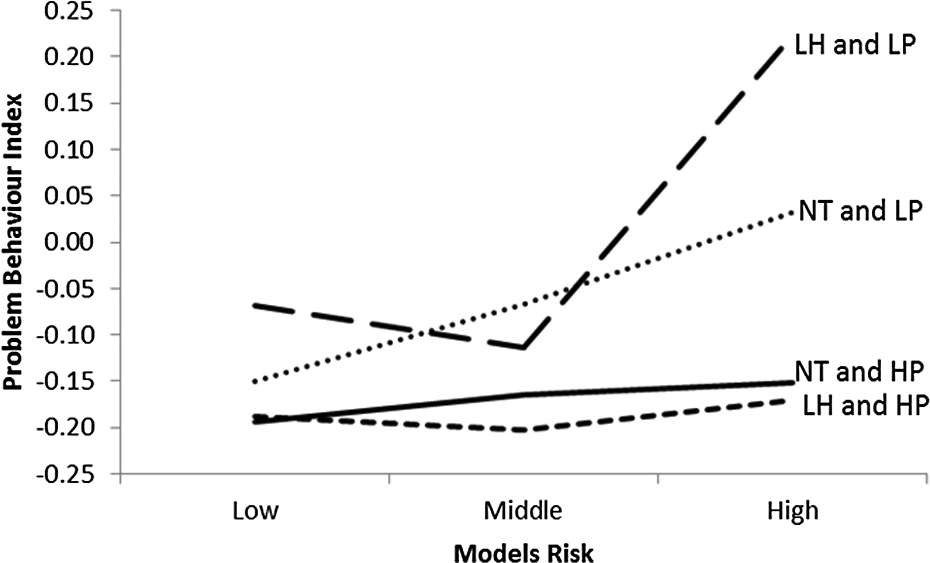
Moderation of models risk by controls protection for sub-groups of those who left the
parental home only and those who made no transition (
Figure 2 shows the mean problem behavior involvement score for participants with low protection scores (LP) and high protection scores (HP) in subgroups at low, medium, or high model risk scores, respectively. Results show that among those who have left home (LH), those who had low protection (LP) also had high involvement in problem behavior. In contrast, among those who left home (LH) with high protection (HP), their problem-behavior involvement was low, and it remained low, that is, it did not vary as risk went from low to high. As shown in the figure, among those who made no transition, the role of variation in protection is the same; those with low protection have high problem behavior scores, scores increasing as risk goes from low to high, while those with high protection have low problem behavior scores irrespective of the level of risk.
Discussion
In this article, we explored the concept of home-leaving (establishing independent residence) as a transition to adulthood among young people in two informal settlements (slums) in Nairobi, Kenya’s capital city. In addition, we examined the usefulness of an explanatory framework incorporating psychosocial and behavioral risk and protective factors.
Our first objective was to examine whether home-leaving is related to other transition-to-adulthood markers, including first sexual intercourse, marriage, childbearing, involvement in income generating activities. We observed a strong association between home-leaving, marital status, sexual experience, involvement in an income-generating activity, and schooling status in the cross-sectional, variable-centered analysis. As expected, young people who were married were more likely to be living independently. The association with sexual experience can be explained in two ways; sexually-active youth may leave home in anticipation of greater freedom and privacy, given the crowded living space in slum dwellings; youth who are living independently have more chance to engage in sex because of the absence of social controls such as parental monitoring. The bi-directional relationship between involvement in IGA and home-leaving reinforces the role of having an income in the transition to independent residence. Previous studies have documented the role of economic resources in the attainment of independent residence among young people (Avery et al., 1992; Donald et al., 1993; Leslie & Peters, 1996). As expected, we also observed that young people who were not in school were more likely to be out of their parental homes. As explained below, the opportunity to attend school may be regarded as a non-transferable resource within the parental household which in effect delays home-leaving.
Our second objective was to explore the role of psychosocial protective and risk factors in explaining the occurrence and timing of the home-leaving transition, while accounting for socio-demographic characteristics. With respect to socio-demographic characteristics, we found that females leave home later than males, a finding that is counter to studies conducted in parts of Europe (Bernhardt, Gähler, & Goldscheider, 2005; Mulder, 2000; Rusconi, 2000). Cultural practices that favor early male residential independence while expecting females to leave the parental home upon marriage may underlie this observation. As noted by Kuate-Defo, (2006) in most sub-Saharan African societies, girls are granted less autonomy and given greater parental monitoring. Therefore, parents may be less willing to let their daughters move into independent housing as compared to sons. In contrast, as noted earlier, cultural expectations of male independence may also trigger their leaving home earlier than girls. However, females may also be less likely to move out because they lack the financial means to do so.
Although socioeconomic status at Wave 1 was not associated with residential status at subsequent waves, the results of the cross-sectional, variable-centered analyses suggest that in low resource settings, such as urban slums, young people living in better resourced households may delay home-leaving compared to their counterparts living in the most resource-strained households. This is in contrast to some studies conducted in the global North (Aquilino, 1991) where scholars have found the opposite association—higher socioeconomic status is associated with home-leaving. As noted by An, Mertig, and Liu (2003), in wealthier households in resource-constrained settings, access to non-transferable resources within the parental household, such as availability of food or opportunities for schooling, among others, may lead youth in wealthier households to delay home-leaving, while those from poorer households may be forced to move out to look for alternative sources of livelihood.
The risk-protection framework of Problem Behavior Theory employed in this study explained substantial variation in residential status. There were observed differences in the association of the theoretical concepts of risk and protection with residential status, depending on age and sex. Unlike the study by Juang, Silbereisen, and Wiesner (1999) in Germany, we did not observe an association between home-leaving and engagement in problem behavior. However, we observed that the theoretical measure of controls protection moderated or buffered the likelihood that the home-leaving transition will be accompanied by involvement in problem behavior. In other words, these analyses are uniquely important in revealing that there are (at least) two kinds of home-leavers; those whose home-leaving is associated with involvement in problem behavior, and those whose home-leaving does not implicate problem behavior, the difference being due to variation in the magnitude of protection. Protection emerges from this study as a key factor, not only in the likelihood of occurrence of home-leaving, but also in the factors associated with it.
The findings that models risk was not associated with home-leaving among adolescents and that engagement in pro-social activities such as participation in religious, drama, and other groups was associated with a higher likelihood of leaving home, were unexpected. As postulated by Juang et al. (1999), young people’s development is affected not only by proximal factors, such as peer influence, but also by more distal, macro-level factors, including poverty levels. As such, it is plausible that although having peers who engage in risk behavior may increase the likelihood that young people engage in risk behavior and subsequently cause parent-child conflicts, in resource-constrained settings, such as urban slums, the lack of financial resources to support independent living may reduce the likelihood of home-leaving. With respect to the observed association between engagement in pro-social activities and home-leaving, participation in pro-social activities may reflect the young person’s level of maturity and readiness for independence, which may be directly associated with timing of home-leaving.
Overall, the cross-sectional and predictive variable-centered analyses, and the cross-sectional, person-centered analyses highlight the association of psychosocial and behavioral factors with leaving home among adolescents in resource-limited settings such as the slums surrounding Nairobi. Therefore, beyond individual socio-demographic characteristics, it is evident that protective factors such as informal social and personal controls regulate and reduce the likelihood of early adolescent transitions, whether involvement in risk behaviors or the likelihood of leaving the parental home.
There are several limitations that must be considered when interpreting the findings of this study. First, the study did not collect information on the main reasons why young people leave home in the study communities. Therefore, further qualitative studies may be helpful in this respect because they may shed light on the variety of actual experiences that lead to home-leaving among youth. Second, although the inclusion of psychosocial variables such as protective and risk factors advances the understanding of the concept of home-leaving, most of these psychosocial variables did not capture parental, peer, or individual attitudes and beliefs about the desireable timing of independent living that might be more directly linked with residential status. Third, parental and peer psychosocial factors were obtained from the perceptions of adolescents themselves; this could introduce bias in the reporting of peer and parental orientations. Attrition may also be a concern for the predictive analysis, though we looked at how the factors at Wave 1 predict home-leaving by either Wave 2 or Wave 3. This reduced the attrition rate from about 60% to about 34%. We checked how sensitive our results might be to the attrition by fitting the model after imputing all missing data with either 0 or 1 for the outcome variable of home-leaving; there was no contradiction to our conclusions when compared to the model without imputation (results not shown). Based on these findings, attrition does not appear associated with the outcome of interest, home-leaving.
Despite these limitations, the study has provided enlarged understanding of home-leaving among youth in informal settlements and underscored the role of the social and economic context in determining home-leaving among young people in resource-poor settings. These finding may have implications in initiatives to ensure positive youth development especially those in poverty as noted by Lloyd (2005). Although the prevalence and timing of home-leaving may differ in more affluent and representative sections of the region, the present account of home-leaving by psychosocial risk and protective factors, based as it is on theory, should have generality.
Footnotes
Appendix
Acknowledgments
The authors would like to thank Dr. Chi-Chi Undie for her valuable contribution in the initial conceptualization of the paper. We are grateful to the colleagues at APHRC who worked on the project and to the youth in the study communities for participating in this study.
Funding
This work uses data from the Transitions To Adulthood study, which was part of the Urbanization, Poverty and Health Dynamics project funded by the Wellcome Trust (Grant Number 078530/Z/05/Z) from 2006 to 2010. Analysis and writing of the manuscript was supported by the general support grants from the William and Flora Hewlett Foundation (Grant Number 2009-4051) and the Rockefeller Foundation (Grant Number 2009 SCG 302).