




Abstract
This study aimed to describe and explore how three interventions (coffee-meetings, art workshops, guided library tours) could foster the social participation of older adults at risk of social exclusion in a revitalizing city. Using action research, the interventions were experimented in spring 2024 in Sherbrooke (Québec, Canada), with 20 older adults (71 ± 4.5; 16 women). Four focus groups involving all older participants and individual telephone interviews with three community organization workers enabled the description and exploration of the interventions through thematic content analysis. Older participants reported positive effects on their personal factors, physical environment, and social participation. The location of activities, adaptation to their preferences and social interactions were the main facilitators for their participation, while lack of accessibility was the main obstacle. Alongside the physical environment, it is important to consider the social environment in revitalization initiatives to foster social participation and awareness of community services.
Introduction
Defined as involvement in social meaningful activities with others (Levasseur et al., 2010), social participation and connection are recognized as fundamental human need, as air or food (World Health Organisation, 2023) and are associated with better health and well-being among older adults (Munford et al., 2020). Social participation intersects with various activities, including physical, leisure, and cognitive ones, yet it is distinct in that it inherently requires a social component, while others may be pursued individually. The Human development model – disability creation process (HDM-DCP; Fougeyrollas, 2021) conceptualised social participation as the result of dynamic interactions between personal and environmental factors that can either enhance or hinder participation and increase the risk of social exclusion, leading to isolation and loneliness. Personal factors, which refer to individuals’ identity and abilities (e.g., age, health status), that may contribute to social exclusion include: (1) being aged 80 years old or over (Prattley et al., 2020); (2) having low income (National Seniors Council, 2017); (3) presenting physical or mental health disorders; or (4) belonging to an ethnic, linguistic, sexual or gender minority group (National Seniors Council, 2017). Among environmental factors, the physical dimension refers to the built and natural features while the social includes socio-cultural and politico-economic elements (Fougeyrollas, 2021). While both health supports and well-being (Chen et al., 2025; De Main & Xie, 2020), physical environment is mainly associated mobility and independence (Stearns et al., 2023), whereas social dimensions influences activities and interactions, behaviors essential for healthy aging (World Health Organisation, 2023). Environmental dimensions are also interrelated: physical environment can enable or constrain opportunities for social participation, just as social contexts can influence older adults’ mobility and use of space (Ottoni et al., 2016). While it is possible to facilitate the social participation of older adults through supportive social and physical environments (Levasseur et al., 2015; Richard et al., 2013), revitalization initiatives most often focus solely on improving the physical environment (O’Neill et al., 2023).
Revitalization is a coordinated, cross-sectoral process aimed at improving the quality of life in a community by acting on its physical, social, economic, and community environment. It involves concrete changes to the environment, such as the renovation or repurposing of buildings, the improvement of public spaces (parks, sidewalks, lighting), the creation of community or cultural spaces, and support for the local commercial fabric. During rapid building turnover, ensuring the inclusion of older adults at risk of social exclusion becomes more challenging when the environment is an integral part of their identity (e.g., sense of belonging or social network), especially when the importance of the social environment is overlooked. A realist review on revitalization urban programs showed that these difficulties are exacerbated when community members do not take part in developing and implementing planned changes (Mehdipanah et al., 2018). Concerns regarding potential negative effects of urban revitalization on older residents and users at risk of social exclusion had been identified in the process of revitalizing downtown Sherbrooke, Quebec (Collectif pour une Well INC.lusive, 2017). In this downtown area, which presents mobility challenges due to its uneven terrain, the revitalization focused primarily on one of the city’s most disadvantaged neighborhoods (Figure 1; Area 1), but also extended across the entire downtown area (Figure 1; Areas 1 and 2). The initiative involved the renovation and construction of buildings, public and residential spaces, offices, and commercial areas, with the goal of developing a strong entrepreneurial and commercial hub, doubling the number of residents, attracting new businesses, and promoting active transportation. Adults 65 years and older account for 15.5% of the downtown population, over half had a low income, two in three presented disabilities, and three in four were living alone (Direction de santé publique de l’Estrie - Équipe de surveillance de la santé de la population et de l’évaluation, 2023). Sherbrooke plan and revitalization sectors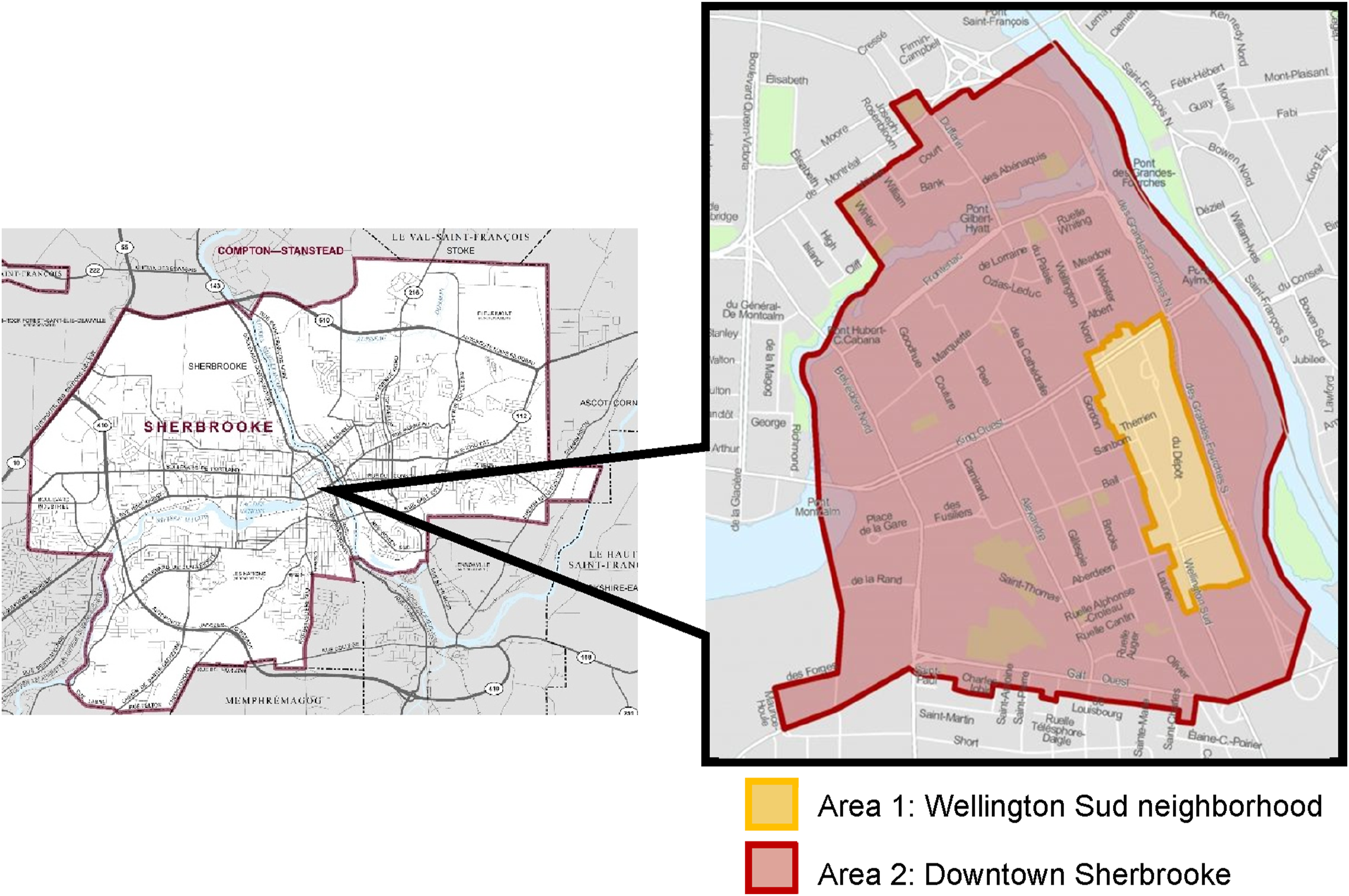
To guarantee equity and inclusion of older adults at Sherbrooke, concerted efforts were carried out in three-phase action research of which the present study represents the third and final phase. In the first phase, researchers, health and social services network, municipal authorities, and downtown residents and users, including those aged 65 and over, participating in these efforts indicated the importance of the social environment, including having an inclusive downtown that offered free or affordable activities that suited their interests and capacities, and would like to be informed of resources and activities (Levasseur et al., 2025). In the second phase and in line with these findings, a scoping review of intervention for older adults at risk of social exclusion identified the elements that foster their social participation (Meynet et al., in press). According to lessons from these international interventions, implementing activities in the heart of disadvantaged neighborhoods, collaborating with community organizations, providing accessible transportation options, and adapting activities to the diversity of participants are essential to foster their social participation either through individualized interventions or collective activities in the community. Peer assistance and grouping older adults according to interests or shared life experience facilitated social interaction between participants. Lack of access to transportation and implementation of activities adapted to the diversity older participants represented challenges to participating in the interventions.
Despite these findings, little is known about interventions tailored to support the social participation of older adults at risk of social exclusion in an urban revitalization context, and their effects on personal and environmental factors. While existing literature often focuses on older adults’ experiences and perceptions toward changes in their physical environment (Popescu, 2024; Sýkora et al., 2023), few interventions aimed at social participation are developed through direct collaboration with those at risk of social exclusion (Levasseur et al., 2015). Action research is therefore needed to better understand what type of interventions can foster social participation of at-risk older adults and how these interventions interact with both personal and environmental factors. Corresponding to the third phase of the action research, this study aimed to describe and explore how three community interventions could foster the social participation of older adults at risk of social exclusion in a revitalizing downtown. Specifically, this exploration examined the participants’ experiences within these interventions and what facilitators and barriers influenced their participation.
Methods
Study Design
An action research project was carried out to foster social participation among older adults at risk of social exclusion in the context of the Sherbrooke (Quebec, Canada) downtown revitalization. Representing an iterative process of developing, validating, and implementing relevant transformation actions (Guay & Gagnon, 2021), a participatory action research design (Dolbec & Clément, 2000) was adopted, supported by an advisory committee comprising the research team, representatives of the health sector, community organizations and the city of Sherbrooke, along with older adults. Based on the two previous phases of the research project, three community interventions, i.e., coffee-meetings (CM), art workshops (AW), and guided tours (GT) of the local library, were implemented between January and June 2024 to enhance the social environment alongside the physical environment targeted by the revitalization efforts. These interventions were designed based on the scoping review findings in the second phase of this action research project (Meynet et al., in press), local opportunities, experiential knowledge of community organizations, and aligned with the needs identified in the first phase by older adults regarding free or affordable access within walking distance (Levasseur et al., 2025). All phases of this research action project have received ethics approval from the Research Ethics Committee of the Eastern Townships Integrated University Centre for Health & Social Services – Sherbrooke University Hospital Centre (CIUSSSE-CHUS; #2022-4036).
Participants
A purposeful sample of residents or users of downtown Sherbrooke aged 60 or over with at least one characteristic placing them at risk of social exclusion was recruited. These characteristics were verified through a self-reported sociodemographic questionnaire. In addition to living or frequenting downtown Sherbrooke by public transportation or with their own vehicle, participants had to present at least one of the following criteria: being 80 years of age or older, having a low income (≤25,000 CAD per year), presenting physical or mental health disorder (self-reported diseases, perceived health or depressive symptoms), or belonging to an ethnic, linguistic, sexual or gender minority. While 88.4% of the population has French as their mother tongue (Statistics Canada, 2022), the inability to communicate in French was the only exclusion criteria. In collaboration with a municipal housing organization, one social housing for older adults in a disadvantaged neighborhood was selected as the location in which to hold the CM and AW. This choice was made due to events in previous months that had caused a high level of insecurity among residents, including homeless people occupying the common areas of the residence, presence of drug dealing and degradation of the internal and external buildings, which increased residents’ isolation according to the organization’s social worker. Since those events, all shared spaces (kitchen, toilets, community room) had been locked, and only the organization’s social worker had the key. The recruitment strategies involved posters on the bulletin board and leaflets in mailboxes, followed by a door-to-door campaign across the building’s 60 units by the research team and the social worker to hand-deliver the information and create an initial contact with residents. For the GT, publicity was posted on the social media of one regional organization partner of this study, that facilitates collaboration between associations, organizations and older adults. The research team also visited residences facilities and community organizations dedicated to older adults at risk of social exclusion to distribute leaflets. Most people registered for the study when approached individually, and others contacted the research team after having been approached. Older adults who had participated in previous research and had given their consent to be contacted for additional research were also reached by telephone and e-mail.
Characteristics of Older Participants for Each Intervention
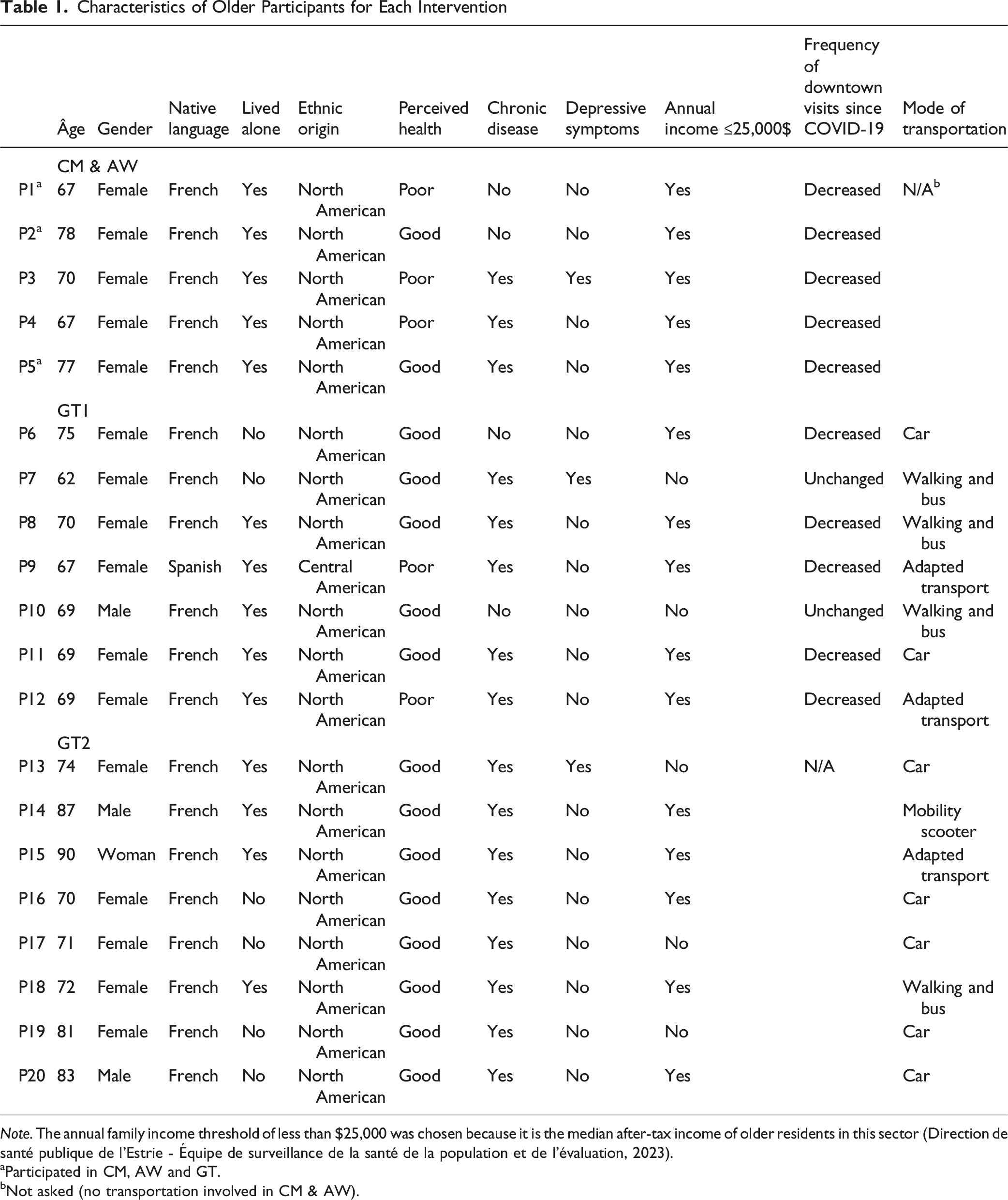
Note. The annual family income threshold of less than $25,000 was chosen because it is the median after-tax income of older residents in this sector (Direction de santé publique de l’Estrie - Équipe de surveillance de la santé de la population et de l’évaluation, 2023).
aParticipated in CM, AW and GT.
bNot asked (no transportation involved in CM & AW).
In addition to older participants, three professionals involved in the design and delivery of the interventions (e.g., social worker, librarian, and artistic mediator) were interviewed to deepen the understanding of the implementation process. Their perspectives contributed to data triangulation and helped identify key facilitators and barriers to participation. Older adults and community organization workers signed a written consent form to take part in the study upon attending the interventions.
Interventions
The three community interventions were implemented in downtown Sherbrooke, within a reasonable walking distance for participating residents or easily accessible by public transport. They were free of charge and accessible to individuals of all educational backgrounds and social realities.
Coffee-Meetings and Art Workshops
In the community space of a social housing for older adults in a disadvantaged neighborhood (in Area 1; Figure 1), five CM and four AW, each lasting 90 min, were carried out every Friday afternoon on alternate days for 10 consecutive weeks (from March to May 2024). The CM offered a place for exchange and learning on various topics to foster relationships and social participation among residents around a snack offered by the municipal housing organization, and which respected the dietary preferences of the participants. Co-hosted by the organization’s social worker and the first author, the CM targeted the topics chosen by the residents: presenting the study, discussing the importance of social participation, improving neighborhood social participation, organizing social activities, and presenting local services (Supplement material 1). The regular CM sessions provided information on available resources and practical support, thereby strengthening participants’ capacity to identify, access, and participate with community activities and services.
Led by the Musée des Beaux-Arts (local fine arts museum), the AW invited older adults to participate in creative exercises that stimulated self-reflection, as well as their openness to others. Co-hosted by the first author and an art mediator, four AW were predefined by the museum team with the aim of discovering accessible artistic techniques and encouraging dialogue in a caring atmosphere: collage, self-portrait, decorating a box, and reproducing a place with tissue paper (Supplement material 1). The artistic workshops allowed the participants to express their emotions through art and discover that artistic activities and cultural spaces, such as museums, are accessible to everyone. This experience aimed to encourage participants to view art as a means of connection and inspire them to attend future cultural events in their community.
Guided Local Library Tours (in Area 2; Figure 1)
Two GTs were carried out, one in April and the other in June 2024 to publicize the activities and services of the local library. A few days before the intervention, three members of the research team called all participants to remind them of the event, and consider transport options to the library for which financial compensation was provided to cover costs. Each session lasted 1 hr and was led by a librarian and two members of the research team and two formats of GT were experienced: traditional guided tour and adapted guided tour to physical disabilities (Supplement material 1). The GTs aimed to increase familiarity with community spaces and reduce perceived accessibility barriers, which could enhance participants’ confidence and intention to use local services.
Data Collection
The data were collected by the first three authors (SM, TN, and JP), specially trained to conduct qualitative interviews, through four in-person focus groups with older participants in the community interventions (one for all CMs, one for all AWs and one for each GT). According to their preference, an e-mail or telephone questionnaire for each of the three community organization workers (art mediator, social worker, and librarian) was handed out. While the focus groups for the CMs and ATs were carried out immediately after the last session of these interventions, the focus group for the GT was conducted at the end of the visit. A specific interview guide was developed for each intervention, including open-ended questions on the older adults’ experiences, such as “What motivated you to participate in this workshop?”. Questions also explored personal facilitators and barriers (e.g., “What benefits have you gained from these AW?”), as well as environmental facilitators and barriers related to their participation, both social (e.g., “What are your thoughts on the interactions between participants during these CM?”), and physical (e.g., “How do you perceive the physical accessibility of the GT?”). It was based on literature and validated by two experts in the fields of occupational therapy and psychology.
Lasting approximately 45 min, each focus group was audio-recorded and transcribed (verbatim) by the first author. Within the next 24 hr, a field note was completed to register participants’ non-verbal reactions (e.g., a participant with tears and a shaking voice) and the focus group’s ambiance (e.g., respect from participants when one became emotional). Participants were also invited to fill a questionnaire with sociodemographic information, including factors leading to the risk of social exclusion such as income or ethnic origin.
Data Analysis
The thematic analysis procedures proposed by Braun & Clarke (2006) were adopted along with Roberts et al.’s recommendations (2019) for the mixed coding strategy and the codebook development. While Braun & Clarke’s framework offers a detailed step-by-step guide on how to develop themes, Roberts et al.’s propositions facilitate the teamwork during the analysis. This methodological combination enhanced the rigor while enabling the flexibility required in qualitative research. Further details on coding procedures, coder training, consensus strategies, codebook development, triangulation, and validation steps are provided in Supplemental Material 2.
The objective of data collection was not to reach thematic saturation, but to ensure sufficient informational value based on the five dimensions of the information power concept (Malterud et al., 2016): (1) Study aim: the specific and clearly defined objectives required a smaller number of participants than would be necessary in a broader exploratory study. (2) Sample specificity: the high degree of homogeneity among participants, i.e., older adults from downtown Sherbrooke at risk of social exclusion, increased the information power of the sample. (3) Theoretical background: the interventions and analytical framework were grounded in a solid theoretical context, including the MDH-PPH, a previous qualitative study identifying the needs of the target population and a literature review of interventions fostering social participation among older adults in situation of vulnerability. (4) Quality of dialogue: the exchanges, including in data collection processes, between the first author and the older participants were rich and substantive. Because the researcher co-facilitated all CM and AW sessions, a trusting relationship had been established beforehand, creating a trust relation that encouraged honest and reflective discussions. Participants were informed their anonymity and felt comfortable expressing their views. (5) Analysis strategy: a mixed thematic content analysis was conducted, combining inductive coding of participants’ narratives with a deductive organization of themes based on the MDH-PPH model. This systematic and theory-assisted approach enabled in-depth analysis.
Results
Participants Experiences
Coffee-Meetings and Art Workshops
Participants reported a satisfying experience, both psychologically (well-being) and socially (interactions). While curiosity was the main motivating factor for coming to the first sessions, participants returned to other sessions in search of well-being, learning, new skills or social interaction, “I wanted to see if it could do me good.” (P4). The CM enabled them to reclaim their living space and reconnect with each other after the occupation of the residence by homeless people: “It was mostly for the meetings and discussions we could have, to keep a social link.” (P3). Although they reported that all the sessions were very interesting, participants preferred the presentation of services and activities for older adults, a topic they considered very useful since they were willing to use them soon. Among AW, decorating the box was particularly pleasant, while drawing a self-portrait was found more difficult. While participants were not always inspired, the variety of art projects proposed, and the absence of cost for the sessions and materials were very meaningful for them. In fact, they would recommend the CM and AW to other older adults, deplored the lack of participation from other residents, and expressed a desire to ensure the sustainability of these weekly sessions, notably by identifying levers and obstacles.
The accessibility of the common areas was decisive to ensure their participation: “We’re all in the same place, no need to go out, no need to commute.” (P3). However, they would have liked to have a key to access the shared kitchen and toilets near the common room, spaces still closed due to unsanitary conditions. The involvement of other residents could be facilitated by offering a free meal during the sessions. Finally, planning themes in advance, respecting attitude of the participants and co-hosts (punctuality, regularity and support) fostered sustainability and participation of residents: “It’s good that [the artistic mediator] explained things to us. She gets involved and she gets us involved too.” (P1).
Guided Tours of the Local Library
Although Sherbrooke’s library is a landmark in the city centre, known by everyone, all participants learned something during the visit, even those who had already frequented the library before the pandemic: “There are corners where I had never been, like the one at the back with the big books. I was impressed!” (P16). The information was greatly appreciated, especially concerning services like CD and DVD borrowing, book clubs, conferences and art workshops. Missing information was requested from the librarian during the question-and-answer session, e.g., how to borrow numeric books or park mobility scooters. With the quantity of information transmitted during these GT, participants of the second tour would have appreciated the booklet summarizing visit’s main features: “You overestimated our memory!” (P14).
All participants reported positive appreciations of the library, highlighting also its esthetics: “Really, everything was beautiful.” (P9). Considered difficult by pre-pandemic users, the GT facilitated understanding of the book classification: “I had been here before, but I did not know how to find my way around and would have wandered for a long time.” (P16). For adapted transport users, the specific time-schedule of the guided tour raised difficulties. For each focus group, one to two persons had to leave before the end because their ride was scheduled just after the meeting, and they feared to miss it. Likewise, paying for parking was perceived by car users as confusing, with all participants of GT2 needed help from the security guard at the entrance of the library to pay: “It’s a shame to have machines that do not work. It makes people angry. It should be written ‘pay inside’.” (P20). Finding one’s way within the parking to one lot reserved to library’s users was also a challenge to some participants, notably since it’s a partially one-way drive.
Perceived Facilitators and Barriers to Participation in the Interventions
Overall, with very few negative comments, participants described the community interventions as having been particularly positive for their personal factors (Figure 2). Probably because of their longer duration, CM and AW were also perceived by participants as having a greater global influence than GT, especially on their physical environment and social participation. Perceived benefits of concerted actions on participants’ personal or environmental factors, and social participation. Note. Bold, predominant theme, named by most participants in each focus group. CM & AW: coffee-meetings and art workshops; (+): facilitators; (−): barriers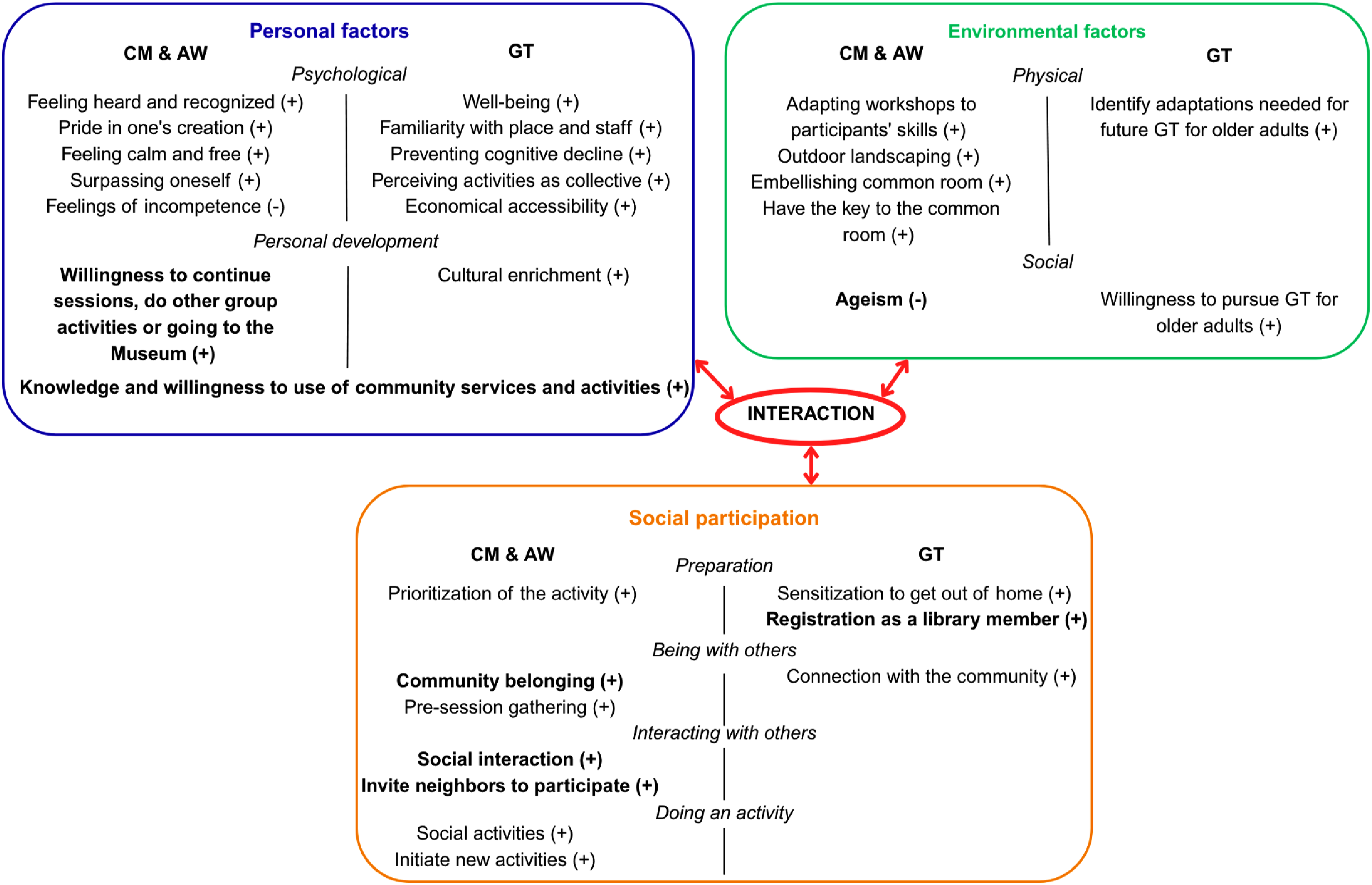
Coffee-Meetings and Art Workshops
During CM sessions, older participants felt listened and recognized through the possibility of choosing snacks and themes: “You also asked about our tastes and our choices. It’s the first time we’ve invested in ourselves. It means we’re being taken care of a little.” (P4). By exploring and expressing personal aspects of their identity during the AW on reproduction of a place and self-portrait, they felt lighter and calmer after releasing emotions through art: “Representing ourselves is already a lot. It comes from within. It makes room too. It’s liberating.” (P3). Although a feeling of incompetence emerged in the portrait workshop, the older participants surpassed themselves: “I am not good at [drawing], but I went right to the end of the activity. I did what I knew.” (P2), and were persistent in their efforts. Proud of their AW creations, they displayed each work to embellish their common room and showcase the decorated box in their home: “It is in my living room and I look at it all the time, every day.” (P1). Since the CM provided information about activities and services for older adults, participants reported increased knowledge: “I have learned many things that I did not know before and I’ve discovered several services that I intend to use.” (P5) and they independently organized a meeting to set up their first bingo displayed leaflets about these activities and service on the bulletin board for all residents (Figure 2). After two sessions of CM, the social worker provided a key to the common room to one of the older participants to make it easier for them to access the hall and avoid waiting in the corridor. Discussing exterior landscaping leading to the repair and purchase of new benches and swings to allow all residents to socialize. Perceived as ageism, participants reported that the use of “vouvoiement” (the formal second person plural in French) by the co-hosts was a barrier to participation in the workshops and reduced the quality of the exchanges: “I would have liked to be called by my first name. Just because we are 60 does not mean you have to start using formalities with us.” (P2). Identified as the major benefit, increased social interactions was reported by both focus groups (Figure 2). In a context of high insecurity and social isolation, weekly CM or AW sessions fostered community belonging and increased confidence in others: “It’s fun to meet people, we are a group, we know each other. We are the Friday team.” (P3). From the second session onwards, participants were meeting each other in the corridors to walk together to the common room, and these moments had become privileged for them: “Fridays are coffee-meeting days. We do not make other appointments.” (P1). Although none of the neighbors joined the workshops, all participants tried to convince them to join on several occasions. At the end of the interventions, the participants wanted to continue other activities for the residents (e.g., gym, board games, meditation), and all said they wanted to go to the Museum to continue participate in the free workshops (Figure 2). While the social worker was hoping for more participants, he noted their active participation, involvement and initiative in organizing activities. He wants to continue these CM and organize them in other social housing. The art mediator deplored the lack of facilities in the common room (e.g., the absence of a sink for rinsing brushes), but she adapted to the location and to the diversity of participants and their skills, which was very formative for her. She expressed an interest in sustainability to strengthen the bonds created during the workshops and to consider larger-scale projects in the future.
Guided Tours of the Local Library
Depending on whether they attended out of pure curiosity, interest, or to go out of their apartment, participants described various positive experiences, from well-being associated with the idea of watching borrowed films or with the possibility of preventing cognitive decline by learning English (Figure 2). Described as an ecological activity (i.e., borrowing instead of buying), the use of library services was also highlighted as culturally enriching and economically accessible: “It is about opening horizons in a different way. It represents healthy and eco-friendly outings that do not cost much.” (P11). Some leisure activities previously considered solitary by older participants, are now perceived as collective: “In the case of puzzles, instead of making them alone at home, it can be a opportunity to come [to the library] occasionally and do some together.” (P8). The familiarity created between the older participants during the GT1: “We know people here now. It is fun.” (P11), interest in the library’s services induced a strong willingness to come back, expressed as a moral imperative by the same group: “You have to use them [the services of the library].” (P12). The impact on participants’ social participation was manyfold. First, all households had – or intended to have – their free library member card (Figure 2). The information provided empowered individuals to connect with the community: “It will allow me to talk about it to other people too.” (P10). Guided tours also sensitized participants to the importance of being socially integrate: “It’s about getting people out of their homes.” (P6). Focus groups therefore allowed free discussion between peers to exchange tips on mobility to the library and beyond: free parking after 17:30 and on weekends, most convenient bus lines and eligibility for adapted transport. Finally, both guided tours highlighted what would be needed to better fit the participants’ cognitive and physical needs, including a booklet to summarize all information, assistance with parking and more consideration given to adapted transport users’ need of flexibility. To complete its service offering, Sherbrooke’s library would be interested in adding guided tours for older adults at risk of social exclusion in addition to the existing one for students or newcomers but felt they needed help for recruitment.
Discussion
This study described and explored how three community interventions, i.e., coffee meetings (CM), art workshops (AW), and guided tour of library (GT), fostering social participation of older adults at risk of social exclusion in a revitalizing downtown. Older adults that participate in CM and AW reported positive psychological and social experiences, including well-being, learning, new skills, and social interaction, while those in GT valued learning new information, exploring unfamiliar areas, and understanding library systems. Facilitators to participation mainly related to personal factors, especially an increased knowledge of the services and activities offer in the community and a stronger intention to use them. Compared to GT, CM and AW were perceived as generating greater overall facilitators of social participation in older adults, which could partially be explained by their higher intensity and longer duration (9 weekly 2-hr sessions vs. 1-hr tour). According to most older participants, CM & AW improved their sense of belonging to the community, increased their social interaction and motivated them to organize gatherings for which they mobilized their neighbors.
For the physical environment, activities accessible and adapted to the diversity of older adults were two important facilitators in fostering social participation of older adults. Adapting activities to the diversity of participants may have helped them feel valued and recognized, a finding that is consistent with previous studies conducted primarily in North America and Europe among this population (Meynet et al., in press). Empowering older adults by giving choice of CM topics and proposing a GT with an indoor presentation for those with disabilities seemed to result in greater and more inclusive participation, which may also have fostered participants’ independence (Noone & Yang, 2022). Ensuring accessibility of activities, i.e. free but also within walking distance, has been identified as an important strategy to reduce financial and transportation constraints, particularly in studies conducted in North America (Levasseur et al., 2015). Since driving remains the preferred mode of transportation for older adults, particularly in North American contexts (Cao et al., 2010), and the present study supports that parking accessibility as one main barriers to participation, municipalities need to ensure user-friendly and well-indicated parking options near social opportunities.
In the social environment, interest in interactions was an important facilitator along with a sense of community. Coherently with other studies conducted across diverse international contexts among low-income older adults (Lapena et al., 2020; Middling et al., 2011; Milligan et al., 2015; Sutherland et al., 2024), the present results support the importance of co-design interventions fostering older adults’ participation, especially in the revitalization initiatives that can jeopardizes the sense of belonging (Savage et al., 2005). Because such revitalization can also reduce social interactions between neighbors (Dahlberg, 2020), including in disadvantaged areas, interventions in the heart of these neighborhoods present a great potential to foster proximity among participants. Especially necessary in the global context of a housing crisis and rising homelessness (Padgett, 2020), these interventions might also increase the likelihood that older adults will participate at future social events and consider themselves to be part of the community (Kharicha et al., 2017). Having a key role in these interventions, hosts must facilitate group dynamics and support participants’ involvement by regularly inquiring about their feelings (Todd et al., 2017). These hosts should also be properly trained in aging and the population at risk of social exclusion. By embracing a preventive approach, these interventions could reduce participants’ feelings of incapacity and agist discourse, while promoting inclusion.
Finally, to facilitate the implementation of social participation interventions and mobilization of older adults most at risk of social exclusion (Levasseur et al., 2021), this study was conducted with the close collaboration of community organizations. Such partnerships are essential not only for co-developing interventions but also for effectively reaching individuals who are typically difficult to engage. Research shows that proactive recruitment approaches, including engagement through trusted community actors, personalized outreach, and the use of peer ambassadors, are more successful than passive information dissemination in reaching socially isolated older adults, with this pattern particularly observed in studies conducted in North America and Europe (Ige et al., 2019; Nkimbeng et al., 2020). In these regions, as highlighted in integrated community care practices, the sustained involvement of local actors also strengthens trust and social capital among older adults, contributing to long-term outcomes (Allaire et al., 2024). It therefore is necessary to support leisure and cultural organizations in establishing lasting collaborations to ensure optimal social participation. By, for and with individuals at risk of social exclusion, i.e., at the heart of the research and action process and co-creating interventions directly inspired by the identified social needs, this study stands in stark contrast to scientific extractivism (Godrie, 2025). The present study recognized individuals not as mere participants but as agents of change, valuing their lived experiences, ensuring meaningful feedback to the community through social participation opportunities, and enhancing access to activities.
Strengths and Limitations
Using a rigorous action-research, this study has generated results from new collaborations between community organizations to foster the social participation of older adults at risk of social exclusion. However, the participants were not fully representative of the diversity of older adults with different social participation needs, especially men and ethnic minorities who were under-represented. This sample distribution may nevertheless have increased the risk of selection bias, and shaped the findings, as the topics, format, and timing of the activities may have been more appealing or accessible to caucasian women. As the study was conducted at a single site located in a revitalizing downtown area, including a social housing with closure of common room for CM & AW and logistical challenges of adapted transport but cost covered for GT; consequently, the findings are transferable to similar contexts. Finally, while each focus group was told there are no right or wrong answers and responses as close as possible to reality were sought, a potential social desirability bias may have limited participants’ expression.
Policy-Related Implication
The results of the present study emphasizes the need to give greater attention to the social environment in urban revitalization initiatives, an aspect too often globally overlooked in local planning and development policies (O’Neill et al., 2023). While these strategies often prioritize improving physical infrastructure to enhance residents’ living conditions, a more holistic approach is needed to also foster social participation and inclusion. With social isolation now world widely well recognized as a significant risk factor for morbidity and mortality (Office of the Surgeon General, 2023), including among older adults, it is crucial for municipalities to ensure balanced physical and social considerations in their revitalization efforts. Although conducted in a Canadian context, the mechanisms underlying these interventions, e.g., cross-sector collaboration, low-threshold social activities, and adaptation to older adults’ capacities, are transferable to other urban settings with similar demographic and social challenges. Indeed, international urban and public health policies aimed at promoting social participation and healthy aging within revitalization processes should prioritize improving the sense of community belonging, implementing adapted and accessible activities, and increasing awareness of community services and opportunities. In parallel with physical environment improvements, global revitalization strategies could include the implementation of local clubs, volunteer networks, and community activities in disadvantaged neighborhoods, while enhancing the proximity and accessibility of public transportation. It is essential that the planning, implementation, and delivery of such interventions be carried out by, for, and with older adults, ensuring that their lived experiences directly inform local actions. Integrating such initiatives into urban revitalization strategies would globally help better address the needs expressed by older adults themselves and contribute to the creation of more inclusive and age-friendly environments.
Conclusion
The social exclusion of older adults raises concerns for municipalities, especially during revitalization initiatives, which should have a positive influence on everyone, not just the wealthiest residents. This study described and explored how three community interventions, i.e., coffee meetings (CM), art workshops (AW), and guided tour of library (GT), could foster the social participation of older adults at risk of social exclusion in a revitalizing city center. Older participants reported various benefits, including increased social interaction and knowledge of community services, as well as community belonging. Interventions that reach out to older adults and are offered in disadvantaged neighborhoods have the potential of a better match between individual needs and neighborhood opportunities. Future studies should globally explore how revitalization initiatives can be designed to not only improve the physical environment but also strengthen social environment for older adults at risk of social exclusion.
Supplemental Material
Supplemental Material - Fostering Social Participation in Older Adults at Risk of Social Exclusion: Importance of Community Interventions Implemented in the Neighborhoods’ Heart
Supplemental Material for Fostering Social Participation in Older Adults at Risk of Social Exclusion: Importance of Community Interventions Implemented in the Neighborhoods’ Heart by Stéphanie Meynet, T. H. Trang Nguyen, Julie Pélata, Martine Shareck, Mélissa Généreux, Ruth Ndjaboue, Sébastien Lord, and Mélanie Levasseur in Research on Aging.
Supplemental Material
Supplemental Material - Fostering Social Participation in Older Adults at Risk of Social Exclusion: Importance of Community Interventions Implemented in the Neighborhoods’ Heart
Supplemental Material for Fostering Social Participation in Older Adults at Risk of Social Exclusion: Importance of Community Interventions Implemented in the Neighborhoods’ Heart by Stéphanie Meynet, T. H. Trang Nguyen, Julie Pélata, Martine Shareck, Mélissa Généreux, Ruth Ndjaboue, Sébastien Lord, and Mélanie Levasseur in Research on Aging.
Footnotes
Acknowledgments
The authors would like to thank the older adults and community organization managers who agreed to collaborate on this study, as well as community organization workers.

Ethical Considerations
The study was approved by the Research Ethics Committee of the Eastern Townships Integrated University Center for Health & Social Services – Sherbrooke Hospital University Center (CIUSSSE-CHUS; #2022-4036).
Consent to Participate
All participants signed a written consent form to take part in the study.
Funding
The authors disclosed receipt of the following financial support for the research, authorship, and/or publication of this article: This work was supported by the Fonds de recherche du Québec Société et culture (grant numbers: 294918). At the time of the study, Stéphanie Meynet and Mélanie Levasseur were respectively supported by salary awards from the Research Lab Connect and Research Centre on Aging, and Senior 1 Fonds de Recherche du Québec– Santé Researcher (298996). Professor Levasseur now holds a Tier 1 Canadian Research Chair in Social Participation and Connection for Older Adults (CRC-2022-00331; 2023-2030) and Stéphanie Meynet holds a Mitacs postdoctoral fellowship. Professor Martine Shareck holds a Tier 2 Canadian Research Chair in Urban Health Equity Among Young People (CRC-2019-00272; 20120-2026). Ruth Ndjaboue holds a Canadian Research Chair in inclusivity and active ageing (2021-2028) co-funded by the Social Sciences and Humanities Research Council (SSHRC) and the Program Canadian Research Chair (PI: Ndjaboue).
Declaration of Conflicting Interests
The authors declared no potential conflicts of interest with respect to the research, authorship, and/or publication of this article.
Supplemental Material
Supplemental material for this article is available online.
Author Biographies
References
Supplementary Material
Please find the following supplemental material available below.
For Open Access articles published under a Creative Commons License, all supplemental material carries the same license as the article it is associated with.
For non-Open Access articles published, all supplemental material carries a non-exclusive license, and permission requests for re-use of supplemental material or any part of supplemental material shall be sent directly to the copyright owner as specified in the copyright notice associated with the article.
