




Abstract
Friendship is an understudied social context in research on advance care planning (ACP). Using data from the Health and Retirement Study (2018-2020), we examine the associations between the quality and quantity of friendships and older adults’ engagement in advance directives (AD) and end-of-life (EOL) discussions. Multivariable logistic regressions show that having any friends is associated with greater odds of AD and EOL discussions. Number of close friends and emotional support are positively associated with AD only. Marital status and gender, both independently and jointly, moderate the associations between friendship predictors and ACP. The positive association between emotional support from friends and EOL discussions is more pronounced among never married men, compared to both married individuals and never married women. These findings highlight friendship as a salient social context associated with ACP engagement, particularly among never married men.
Sixty-seven percent of older adults experience impaired decision-making capacity in the final week of life, relying on others to act on their behalf (Kaspers et al., 2013). Without specifying healthcare wishes in advance, they face a higher risk of receiving treatments that may be futile, costly, and misaligned with their preferences (Institute of Medicine, 2015). Advance care planning (ACP), which comprises advance directives (AD) and end-of-life (EOL) discussions, can reduce the risk of death misaligned with wishes and ensure that the values of patients at the end of life are understood and respected (Haines et al., 2019). AD includes documenting healthcare preferences in a living will or designating a proxy decision-maker. EOL discussions happen when individuals express their wishes for future care with others.
Because ACP helps reduce overtreatment and contributes to care that aligns with patients’ values, widespread efforts have been made to promote it (IOM, 2015; The Kaiser Family Foundation, 2016). However, disparities in ACP persist, with gender and marital status among the key dimensions (Baughman et al., 2024). Despite growing attention to demographic disparities in ACP, most studies assume that romantic partners and immediate family members are the primary, or even exclusive, social ties relevant to EOL decision-making (Boerner et al., 2013; Carr et al., 2013). Yet, for older adults who are unpartnered or estranged from family, these assumptions do not hold, resulting in little knowledge about alternative sources of support that might facilitate ACP. Lifelong singles account for approximately seven percent of older adults aged 65 and above (U.S. Census Bureau, 2022). Along with rising rates of gray divorce and the broader retreat from marriage, these demographic changes further underscore the need to reevaluate assumptions about support at the end of life (Smock & Schwartz, 2020).
The emphasis on romantic and family relationships in ACP research reinforces the notion that friendship is insignificant in this process (Carr & Khodyakov, 2007). This bias is reflected in policy. Many states have systems that prioritize immediate family members as decision-makers by default, operating under the assumption that family members are the most intimate and informed social ties (Carr & Khodyakov, 2007; Carr & Luth, 2017). This assumption is problematic, as it may grant uninformed or estranged family members legal decision-making power and does not leave room for close nonkin who may have been close sources of support during the patient’s life and could be more familiar with the patient’s EOL wishes (Majesko et al., 2012).
This study moves beyond the focus on romantic partnerships and family context by investigating the role of friendship in ACP. Although numerous studies suggest that friendship serves as a key source of emotional and informational support for older adults (Liebler & Sandefur, 2002; Semlali et al., 2022), and that contact with friends is positively associated with health and well-being (Han et al., 2019; Huxhold et al., 2014), the existing literature rarely acknowledges friends as socially salient relationships in shaping engagement in ACP. When it does, it tends to emphasize the structural characteristics of friendships, with less attention to how relationship quality is associated with ACP engagement (Cudjoe et al., 2020).
Using nationally representative data from the Health and Retirement Study (HRS), we first investigate how friendship characteristics, including having any friends, the number of close friends, and emotional support from friends, relate to ACP engagement. Second, how do these associations vary by marital status and gender? By answering these questions, we document the associations between various aspects of friendship and EOL preparation, especially among older adults with certain marital status and gender profiles.
Background
Friendship and Advance Care Planning
Social relationships serve as a protective layer that helps individuals navigate life’s challenges, and close companions can influence one’s health and well-being (Antonucci & Akiyama, 1987). Friendship is an essential part of human social life, and this remains true as people grow older. Previous research indicates that spatially proximate social ties named by older adults are predominantly nonkin, and of which 73% are friends (Cornwell & Goldman, 2021). Given the prominent presence of friends in older adults’ local social networks, they serve as key sources of face-to-face interaction and various kinds of social support, all of which can promote health and health-protective behaviors.
For example, evidence shows that older adults who interact with friends frequently tend to have better moods and fewer depressive symptoms (Han et al., 2019; Ng et al., 2021). The existence of close friends prompts older adults to engage in personal disclosure about their health (Semlali et al., 2022). Having later-life friendships diversifies one’s social network, which is associated with greater engagement in physical exercise (Fingerman et al., 2020). Moreover, although friends are often not regarded as a primary source of caregiving (Cantor, 1979), they may become involved in supportive roles under certain circumstances, with proximity, relationship closeness, and kin availability being key factors (Lapierre & Keating, 2013; Mair, 2019). The myriad ways in which friendships provide support in later life have led to the hypothesis that having friends is associated with greater preparation for the end of life. H1(a): Older adults who have one or more friends are more likely to engage in both EOL discussions and AD than those who have no friends. H1(b): The number of close friends is positively associated with both EOL discussions and AD.
In addition to structural connectedness with friends, emotional support, which is the content that flows between these social ties, is also expected to be associated with ACP engagement. Emotional support is defined as the “demonstrations of love and caring, esteem and value, encouragement, and sympathy (Thoits, 2011, p. 146).” Emotionally supportive friendships have been shown to encourage the disclosure of personal health-related information, as individuals feel comfortable that their friends will listen attentively and care (Semlali et al., 2022).
As people grow older, their awareness about the need to discuss and document their EOL wishes tends to increase, especially among older women (Teixeira et al., 2015). Love and encouragement from friends are associated with a sense of control or mastery over life (Thoits, 2011), which may boost older adults’ confidence in navigating complicated processes such as ACP. Emotionally supportive friendships carry a symbolic meaning to older adults, enabling them to feel a sense of mattering to others (Thoits, 2011). Knowing that other people care about their existence could motivate them to adopt ACP. Processes resembling social control, typically associated with romantic partners, might also operate within emotionally supportive friendships (Allen et al., 2011; Muraco & Fredriksen-Goldsen, 2011).
Furthermore, emotionally supportive friends are capable of substituting family-like roles in circumstances of limited kin availability. In the sociology of family literature, this process is referred to as nonkin conversion, and those who are converted are described as fictive kin (Allen et al., 2011). Without a spouse or children, fictive kin become salient figures within older adults’ support networks for contemplating EOL issues. The process of nonkin conversion may occur on a broader scale, extending beyond kinless older adults. According to a qualitative study, most individuals who engaged in this process still had other relatives, and some maintained close relationships with their children (Allen et al., 2011). Consequently, emotionally supportive friends can enhance health-protective behavior, including ACP, regardless of family presence. H1(c): Emotional support from friends is positively associated with both EOL discussions and AD.
Marital Status as a Moderator
Friendship plays a salient role in maintaining the health and well-being of unpartnered older adults compared to those who are partnered (Blieszner et al., 2019). The dyadic withdrawal hypothesis offers a compelling explanation, suggesting that as couples become more involved with each other, they tend to withdraw from other relationships (Johnson & Leslie, 1982). They either reduce these other relationships or invest less effort in maintaining them, as emotional, cognitive, and temporal resources are limited. Unpartnered and lifelong single individuals, in contrast, have more resources available to devote to friendships.
Research continues to support this perspective. Unmarried older adults incorporate more friends into their caregiving networks (Barrett & Lynch, 1999). Older Americans who are unmarried more frequently interact with friends and report receiving greater social support from them than those who are married or partnered (Zhang et al., 2023). Previous studies examining the interplay between friendship networks and health among older adults indicate that the relationship between friendship characteristics and psychological well-being is stronger for unpartnered individuals than for their partnered counterparts (Ermer & Proulx, 2019). Consequently, based on the dyadic withdrawal hypothesis, we expect stronger associations between friendship characteristics and ACP among unpartnered compared to partnered older adults. H2: The positive associations between the presence of friends, the number of close friends, and emotional support from friends with ACP engagement are stronger for older adults who are never married, divorced or separated, or widowed compared to those who are married or partnered.
Gender as a Moderator
Research also suggests that friendship may be more consequential for older women’s health-promoting behaviors, including ACP, than for men’s. Gender-role expectations encourage women but discourage men from being emotionally expressive and nurturing (West & Zimmerman, 1987). As a result, women are socialized to provide more emotional support than men (Kahn et al., 2011), and they also take on the bulk of health behavior work in their romantic relationships with men (Reczek & Umberson, 2012). A study of 832 married heterosexual older adults shows that emotional support from friends is associated with emotional well-being for women but not for men (Ermer & Proulx, 2020). This study also indicates that while men’s self-rated health benefits from family support, women’s does not. Because women often receive limited emotional support from their partners of the opposite gender, they may depend on their same gender friends for these important psychosocial resources.
In later life, both social activities and friendship networks remain highly gendered, meaning older adults primarily spend time with peers of the same gender outside the home (Mehta et al., 2021; Noon & Ayalon, 2018). When researchers asked U.S. adults aged 50–74 years to nominate five close friends whom they want to “hang out” with, they found that 74% of these nominations were friends of the same gender (Mehta et al., 2021). Same-gender friendship among older women is characterized as placing greater emphasis on intimacy, emotional support, and endurance (Felmlee & Muraco, 2009; Field, 1999; Liebler & Sandefur, 2002). Older men expect friendship to be more oriented toward status and physical fitness (Hall, 2011). Consequently, through the flow of emotional support, gender-based friendship segregation in later life may reinforce healthy behaviors within women’s friendship networks, but not men’s. H3: The positive associations between the presence of friends, the number of close friends, and emotional support from friends with ACP are stronger for women than for men.
The Interplay of Marital Status, Gender, and Friendship in Later Life
Marital status and gender intersect to shape older adults’ social networks and the extent to which friendship are associated with health-related behaviors. Scholars have long emphasized that marital status and gender jointly shape individuals’ patterns of social interactions (Hatch & Bulcroft, 1992). Research adopting this intersectional approach often finds that unmarried men are much more likely to experience social isolation as they grow older relative to partnered individuals and unmarried women (Umberson et al., 2022).
The gender-as-relational (GAR) perspective offers a potential explanation for this pattern. It posits that social connectedness is not an individual trait but is shaped by relational contexts such as marriage (Thomeer et al., 2020). Following marital dissolution, men are more likely to become distant from their adult children and extended family members, as they can no longer rely on their wives to maintain these relationships (Carr & Pudrovska, 2012). This relational vulnerability has implications for EOL planning. Because ACP often requires identifying a surrogate decision-maker, the absence of social relationships among unpartnered older men can represent a major barrier (Kalousová & Carr, 2024).
In addition, the absence of a “wife character” not only increases the risk of social isolation for unpartnered men, but also limits their access to emotional support that gender-role expectations would otherwise favorably provide through a partnership with a woman in a heteronormative relationship. Older men’s social interactions with same-gender friends tend to be less intimate and communicative, which constrain opportunities for the exchange of emotional support (Noon & Ayalon, 2018). Without a different-gender partner, who is typically socialized to provide emotional support, and under the influence of masculine norms around emotional expression, older men may continue to face relational barriers to ACP, even when socially connected. In other words, unpartnered men who remain stoic may be the most in need of emotional support yet remain deprived of it. For this reason, beyond the mere presence of social ties, a certain degree of emotional intimacy within friendships may be particularly important for understanding variation in ACP engagement. H4: The positive associations between having one or more friends, the number of close friends, and emotional support from friends with ACP engagement are stronger for never married, divorced or separated, or widowed older men relative to their opposite gender counterparts and partnered individuals.
Research Design
Data
The HRS is a nationally representative longitudinal survey that collects data from participants aged 51 years and older, as well as their spouses or partners, regardless of age. The HRS was first launched in 1992, and data collection is ongoing. A new cohort of roughly 5,000 people is added every six years, and this keeps the sample size around 20,000 per wave. Starting in 2006, the HRS began administering Psychosocial and Lifestyle Self-Administered Questionnaires (SAQ), which contain detailed questions about social relationships. Because the SAQ is administered to half of the sample at a time, data for the full sample are obtained by combining two biannual SAQ waves. We limited our analysis to data from the 2018 and 2020 waves of the HRS to ensure all respondents were exposed to the same post-2016 Medicare reform on ACP reimbursement policy (The KFF, 2016). In addition to the HRS Core Survey and the SAQ, we used variables (e.g., net worth) constructed from the RAND HRS Longitudinal File 2020 (V2). This file is based on the HRS Core Survey data (RAND HRS, 2020).
Variables
Dependent Variables
The HRS administers EOL planning questions to respondents 65 years of age and older. We used the following question in the HRS Core Survey to capture EOL discussions: “People sometimes make plans about the types of medical treatment they want or don’t want if they become seriously ill in the future. Have you ever discussed your healthcare plans and preferences with anyone?” People who answered “yes” were coded as having engaged in EOL discussions. In our sample, 82% of respondents indicated having had such discussions.
AD completion status was assessed with the following questions: “Have you provided written instructions about the care or medical treatment that you want to receive if you cannot make the decisions yourself?” and “Have you made any legal arrangements for a specific person to make decisions about your care or medical treatment if you cannot make these decisions yourself?” Following prior research, we constructed a binary variable indicating whether respondents have AD, defined as completing a living will, appointing a health proxy, or both (Carr et al., 2013). Overall, 69% of respondents completed an AD.
Friendship Predictors
The presence of friends was measured by a survey item, “Do you have friends?” Most respondents answered “yes” (91%). For those who reported having one or more friends, the SAQ followed up with questions on the nature of their friendship.
The number of close friends was measured by asking: “How many of your friends would you say you have a close relationship with?” (Mean = 3.37, SD = 2.73). Nine percent of respondents reported having no friends; we assigned a value of zero for the number of close friends in these cases. Upon examination of the variable distribution, we found that several respondents reported having an improbably high number, e.g., 99 close friends. To minimize bias from outliers that were likely caused by data entry errors, we applied the 1.5 standard deviation threshold to identify outliers, which translated to having more than 13 close friends. In regression models that use this variable, we excluded 172 respondents who reported having an implausibly high number of close friends. Our sensitivity analyses suggest that the main associations remain unchanged across models with different approaches to treating outliers (Supplement 1).
Emotional support from friends was measured using three questions in the SAQ that were adapted from the Supportive Interaction Scale (Schuster et al., 1990). Respondents were asked: “How much do friends really understand the way you feel about things?” “How much can you rely on friends if you have a serious problem?”, and “How much can you open up to friends if you need to talk about your worries?” The response categories were a lot, some, a little, and not at all. We constructed a continuous emotional support measure that is consistent with previous research (Chen & Feeley, 2014). Each item was measured on a scale from one to four, with higher values indicating greater social support. The emotional support measure is the average of the three items (Mean = 3.07, SD = 0.73).
Moderators
Marital status was taken from the HRS Core survey closest to each respondent’s SAQ year (2018 or 2020). We grouped respondents who were currently married, married with spouse absent, or partnered into a single category, married or partnered. Those who were separated or divorced were categorized together as divorced or separated. Individuals who had never married or who had lost a spouse remained in their respective categories of never married and widowed. We used the binary indicator included in the RAND HRS Longitudinal File to operationalize gender (man/woman).
Covariates
We controlled for a range of demographic, socioeconomic, health, and social relationship factors that could account for the association between various dimensions of friendship networks and EOL discussions and AD completion. These controls included race/ethnicity (non-Hispanic White, non-Hispanic Black, Hispanic, other), age (in years), education (in years), and net worth (categorized as less than $0, $0–49,999, $50,000–99,999, $100,000–249,999, $250,000–499,999, and $500,000 or more). Health-related covariates included a binary indicator of self-rated health (poor/fair), hospital admissions (none, one, two or more), and a binary indicator of depressive symptoms based on the CES-D Scale, with a score of 4 or more coded as having depressive symptoms (Radloff, 1977). Social relationship controls included the number of living children, whether the respondent has other family members. For respondents who did not answer whether they have other family members in the SAQ, we used their responses to an equivalent question from the Core Survey. We also adjusted for the wave of data collection to account for potential period effects associated with the COVID-19 pandemic.
Analytic Sample
We created three analytic samples, each corresponding to a focal predictor. Across the three samples, the eligibility criteria were: completed the SAQ, was 65 or older, reported status on EOL discussions and AD, and provided complete responses for all covariates. In total, 9,627 respondents returned the SAQ. Of these, 5,750 respondents were age-eligible for EOL questions (i.e., 65 or older). We did not include 338 respondents due to missing data on variables of interest and covariates. Our largest, most inclusive sample, in which we analyzed the association between any friends reported and EOL outcomes, had 5,412 respondents. Our second sample included 5,103 respondents who had valid data on all controls as well as the focal predictor: number of close friends. The final sample, used for models with emotional support from friends as the predictor, included 4,859 respondents.
Analytic Strategy
We first provide the descriptive statistics for the full sample and stratified by EOL discussions and AD. Second, we estimate multivariable logistic regression models to investigate the associations between having any friends, number of close friends, emotional support from friends, and older adults’ engagement in EOL discussions and AD, accounting for individual-level factors. Third, to assess how these associations differ by marital status and gender, we estimate logistic regression models that include two-way interactions between friendship predictors and each moderator, as well as three-way interactions among friendship predictors and both moderators. We present odds ratios, visualizations, discrete marginal effects estimated at selected representative values, and average marginal effects (AME) to illustrate the statistically significant moderation effects. All analyses applied the HRS cross-sectional SAQ survey weights.
Results
Descriptive Statistics (Weighted), Health and Retirement Study (HRS), 2018–2020
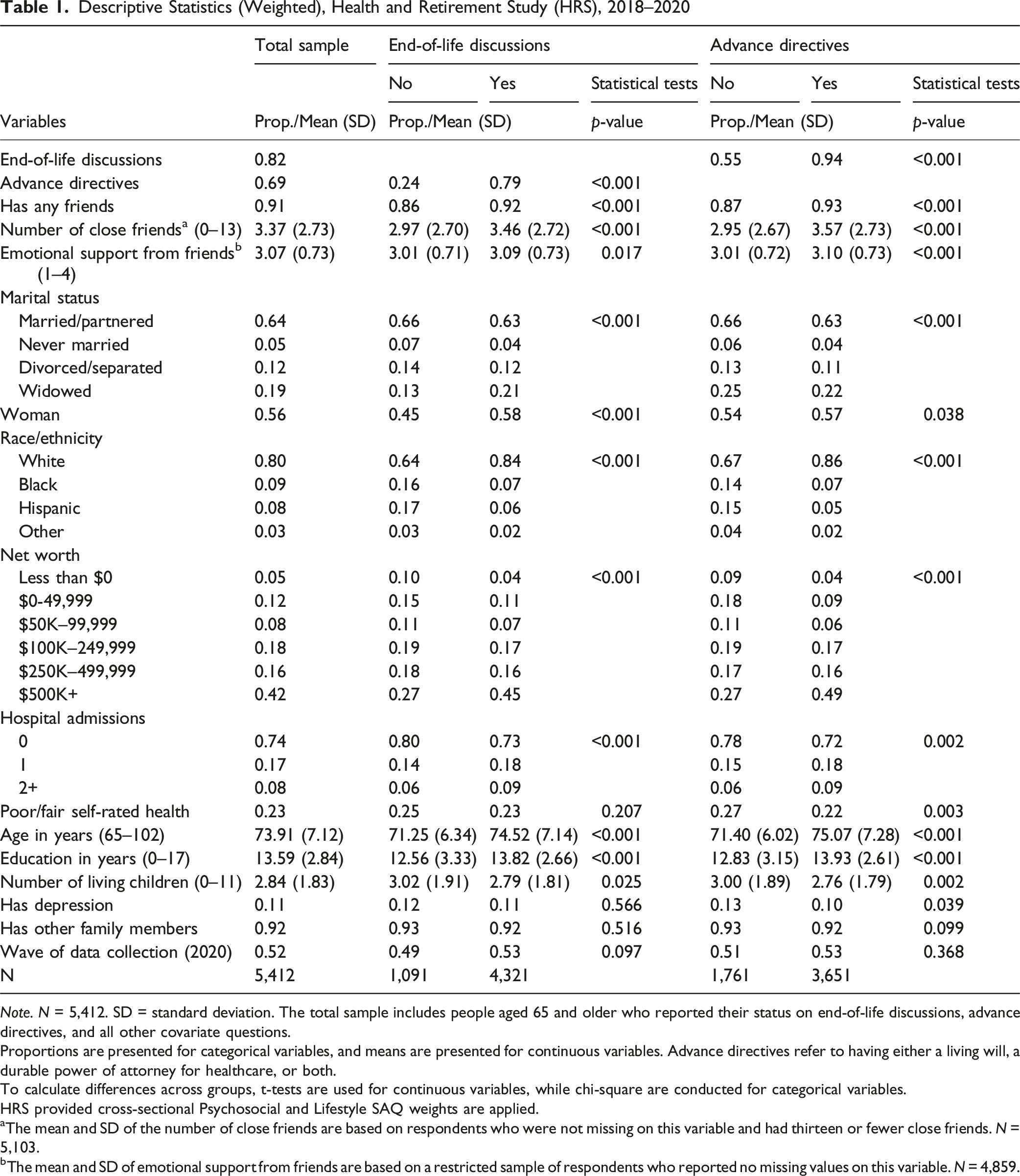
Note. N = 5,412. SD = standard deviation. The total sample includes people aged 65 and older who reported their status on end-of-life discussions, advance directives, and all other covariate questions.
Proportions are presented for categorical variables, and means are presented for continuous variables. Advance directives refer to having either a living will, a durable power of attorney for healthcare, or both.
To calculate differences across groups, t-tests are used for continuous variables, while chi-square are conducted for categorical variables.
HRS provided cross-sectional Psychosocial and Lifestyle SAQ weights are applied.
aThe mean and SD of the number of close friends are based on respondents who were not missing on this variable and had thirteen or fewer close friends. N = 5,103.
bThe mean and SD of emotional support from friends are based on a restricted sample of respondents who reported no missing values on this variable. N = 4,859.
Logistic Regression Models Predicting Completions of End-of-Life Discussions and Advance Directives by Friendship Predictors. Health and Retirement Study (HRS), 2018–2020
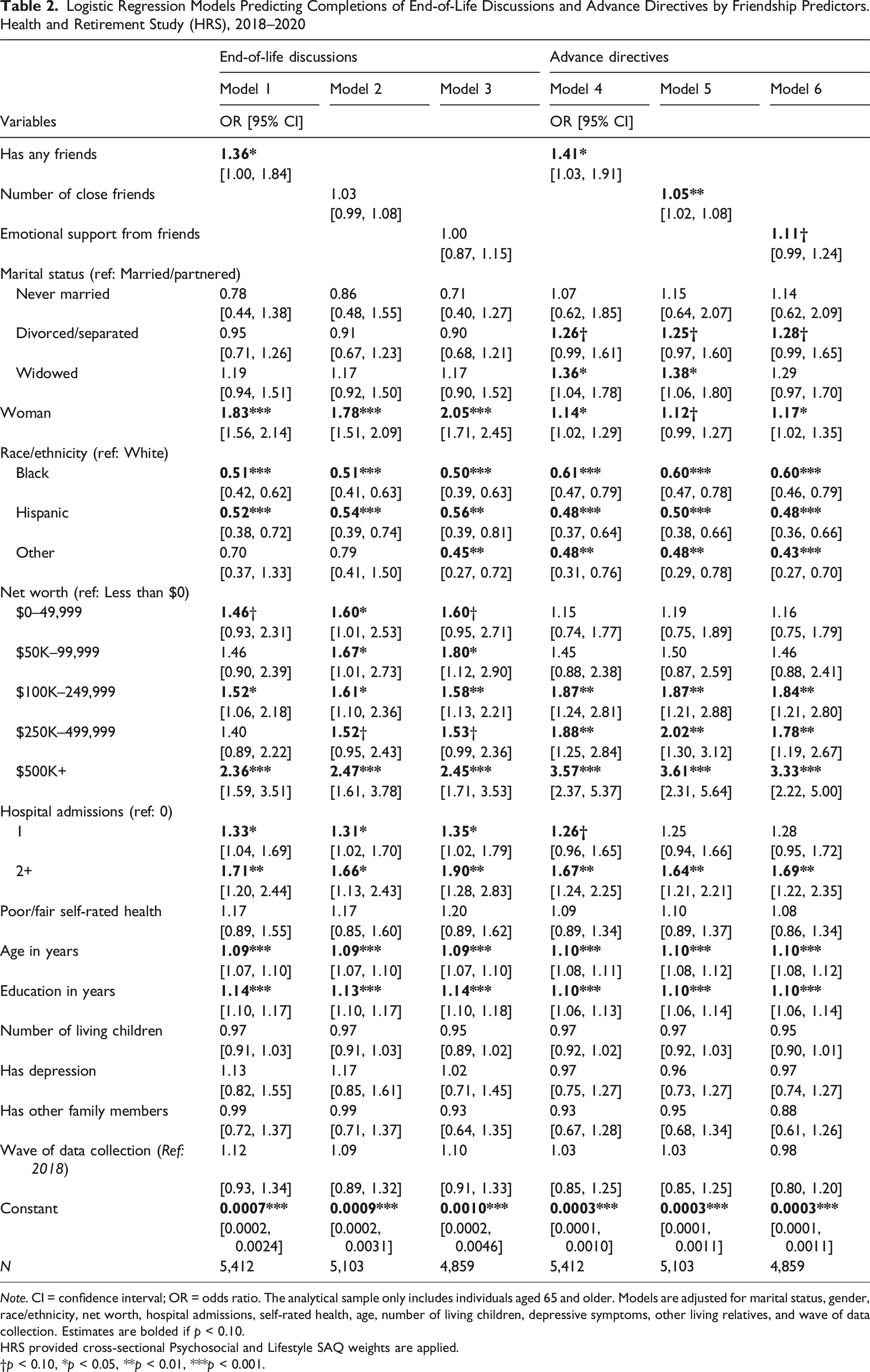
Note. CI = confidence interval; OR = odds ratio. The analytical sample only includes individuals aged 65 and older. Models are adjusted for marital status, gender, race/ethnicity, net worth, hospital admissions, self-rated health, age, number of living children, depressive symptoms, other living relatives, and wave of data collection. Estimates are bolded if p < 0.10.
HRS provided cross-sectional Psychosocial and Lifestyle SAQ weights are applied.
†p < 0.10, *p < 0.05, **p < 0.01, ***p < 0.001.
Next, we evaluate whether these associations are moderated by marital status and gender in Figures 1 and 2. Figure 1 displays results for the interaction effects between friendship predictors and marital status. According to Panel A, having one or more friends is statistically significant and positively associated with AD only among never married individuals. Panel B shows that while the number of close friends is not associated with AD among partnered people (blue solid line), it is positively associated with AD for never married people (red dashed line). Predicted probability of advance directives by friendship predictors and marital status. Health and Retirement Study (HRS), 2018–2020. N = 5,412 (Panel A). N = 5,103 (Panel B). Note. Panel A is constructed based on Model 4 in Supplement 2. Panel B is constructed from Model 5 in Supplement 2. The association between number of close friends and advance directives are not statistically significant among divorced/separated and widowed older adults (not shown in Panel B). Predicted probability of end-of-life discussion and advance directives by friendship predictors and gender. Health and Retirement Study (HRS), 2018–2020. N = 5,412 (Panel A). N = 5,103 (Panel B). Note. Panel A is constructed based on Model 1 in Supplement 3. Panel B is constructed from Model 5 in Supplement 3.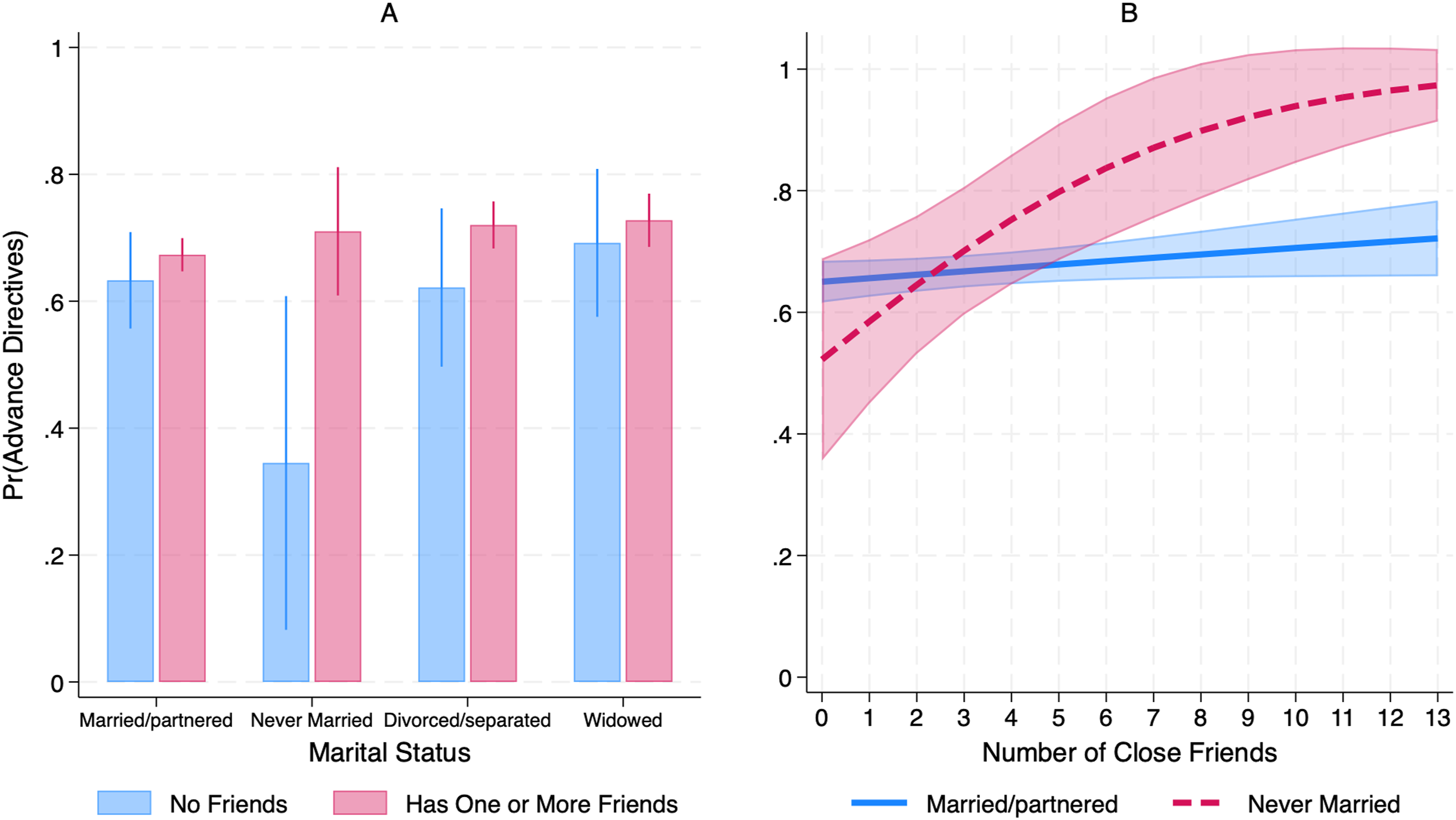
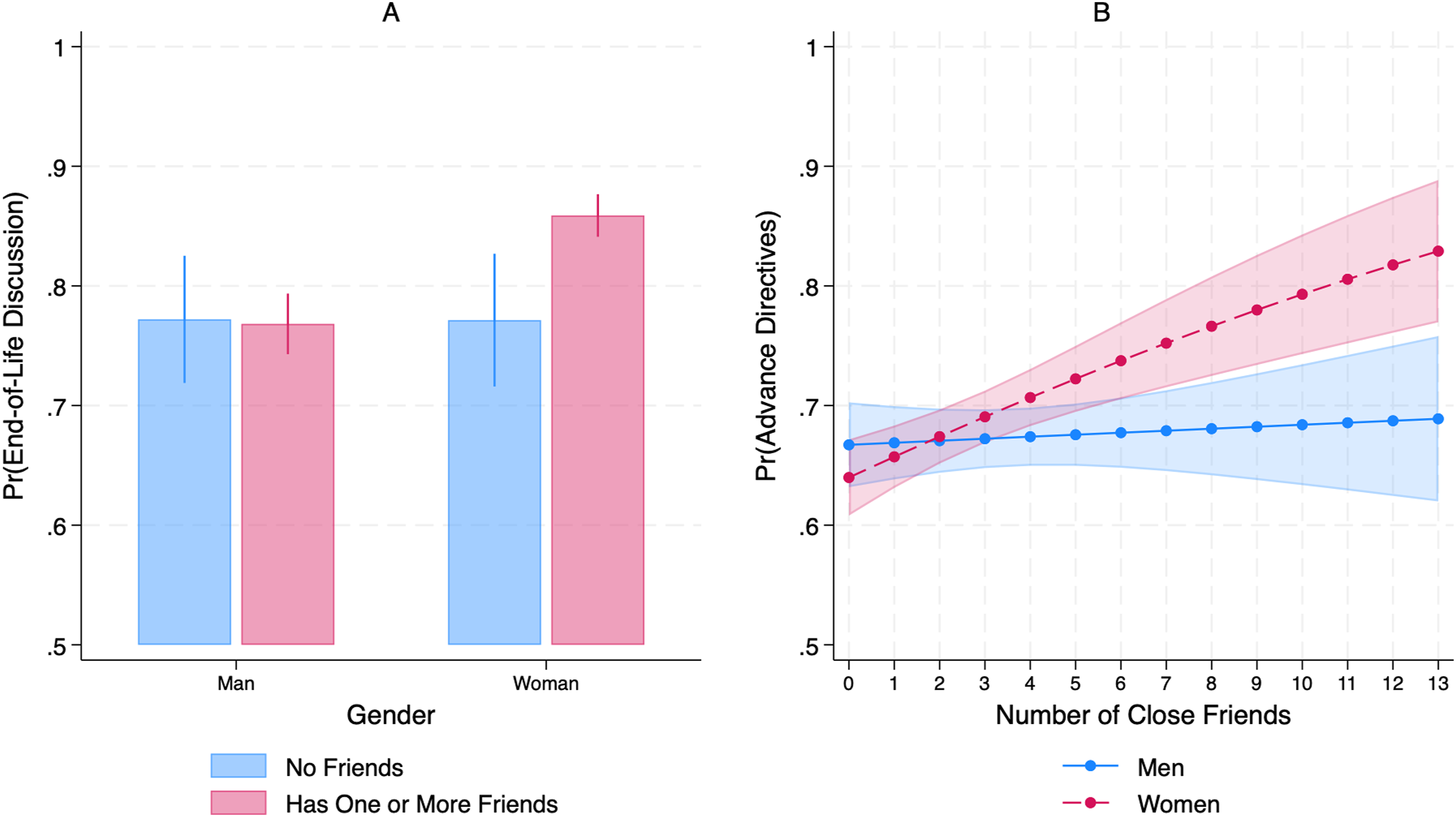
Figure 2 shows statistically significant gender moderations. As indicated in Panel A, whether men have any friends or not is not associated with a meaningful change in the predicted probability of EOL discussions. On the other hand, the predicted probability of women who have at least one friend is nine percentage points higher than that of women who do not have any friends. From Panel B, the relationship between the number of close friends and AD displays a steady upward trend (red dashed line), whereas the slope for men is nearly flat (blue solid line). Across higher values of the number of close friends, women’s predicted probability of completing an AD is higher than that of men.
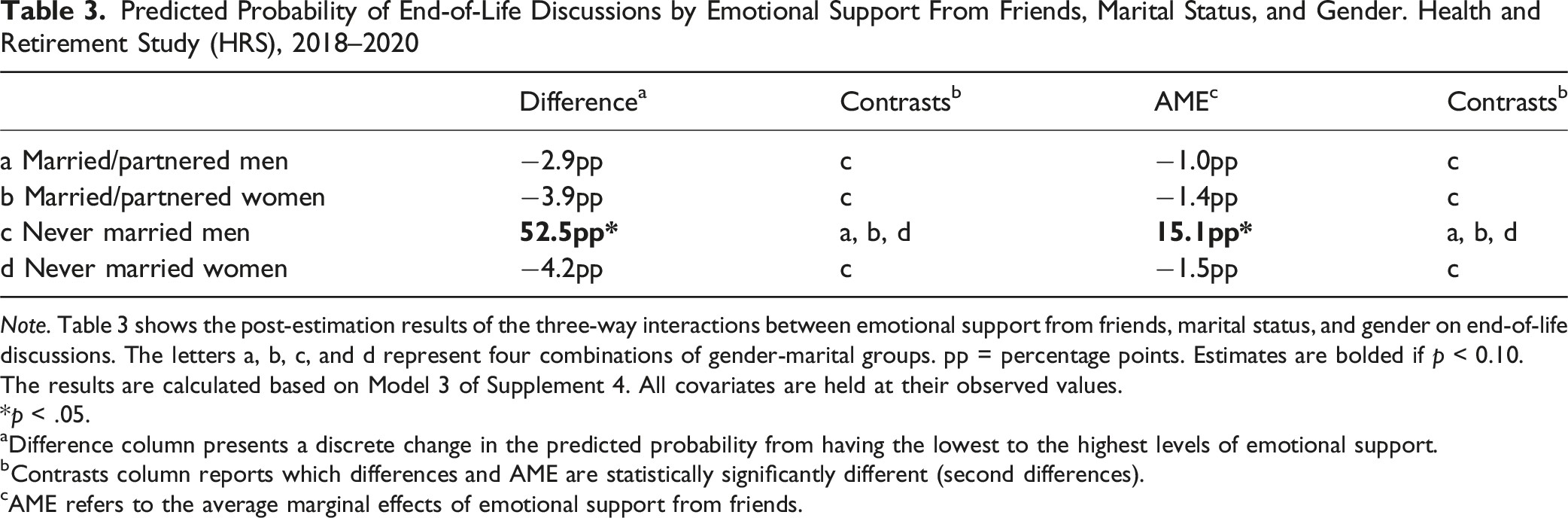
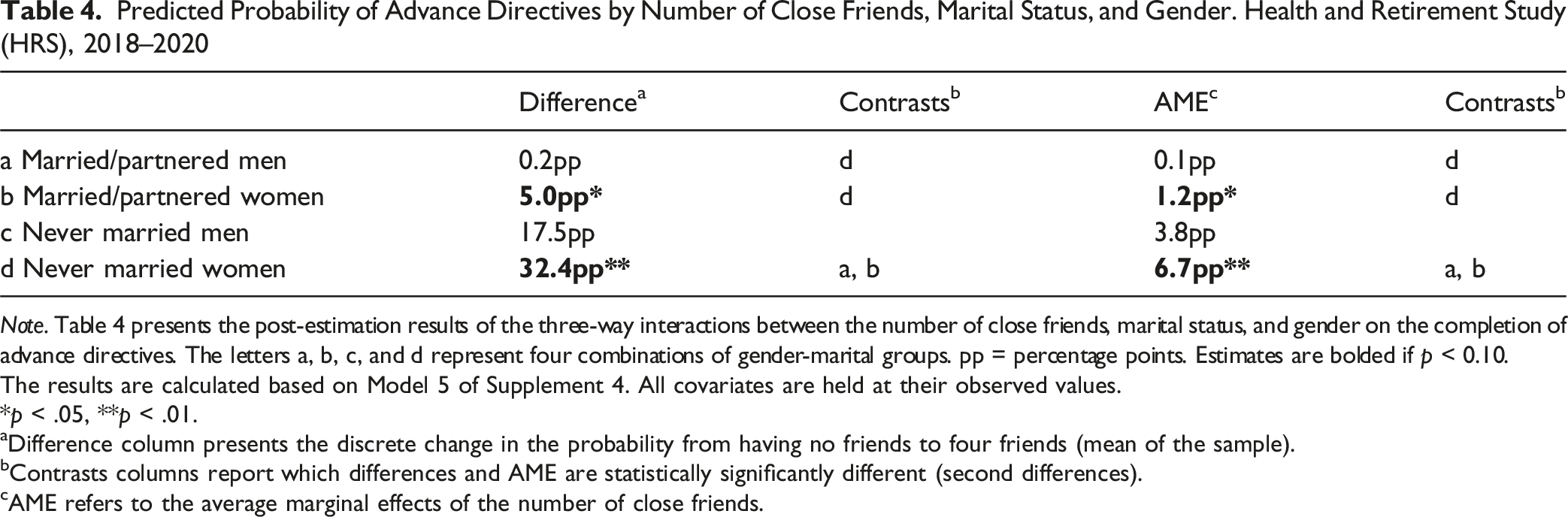
Figure 3, along with Tables 3 and 4, illustrates how the three-way interactions among friendship predictors, marital status, and gender are associated with EOL discussions and AD. After visually inspecting distinct patterns and testing for differences, we found that two pairs of associations among our key variables are jointly moderated by marital status and gender. We present only the statistically significant results here; the full table is available in Supplement 4. Average marginal effect of friendship predictors on end-of-life discussion and advance directives. Health and Retirement Study (HRS), 2018–2020. N = 4,859 (Panel A). N = 5,103 (Panel B). Note. Panel A is constructed based on Model 3 in Supplement 4. Panel B is constructed from Model 5 in Supplement 4. All covariates are held at their observed values. Tables 3 and 4 contain the tests of differences of the AME. Predicted Probability of End-of-Life Discussions by Emotional Support From Friends, Marital Status, and Gender. Health and Retirement Study (HRS), 2018–2020 Note. Table 3 shows the post-estimation results of the three-way interactions between emotional support from friends, marital status, and gender on end-of-life discussions. The letters a, b, c, and d represent four combinations of gender-marital groups. pp = percentage points. Estimates are bolded if p < 0.10. The results are calculated based on Model 3 of Supplement 4. All covariates are held at their observed values. *p < .05. aDifference column presents a discrete change in the predicted probability from having the lowest to the highest levels of emotional support. bContrasts column reports which differences and AME are statistically significantly different (second differences). cAME refers to the average marginal effects of emotional support from friends. Predicted Probability of Advance Directives by Number of Close Friends, Marital Status, and Gender. Health and Retirement Study (HRS), 2018–2020 Note. Table 4 presents the post-estimation results of the three-way interactions between the number of close friends, marital status, and gender on the completion of advance directives. The letters a, b, c, and d represent four combinations of gender-marital groups. pp = percentage points. Estimates are bolded if p < 0.10. The results are calculated based on Model 5 of Supplement 4. All covariates are held at their observed values. *p < .05, **p < .01. aDifference column presents the discrete change in the probability from having no friends to four friends (mean of the sample). bContrasts columns report which differences and AME are statistically significantly different (second differences). cAME refers to the average marginal effects of the number of close friends.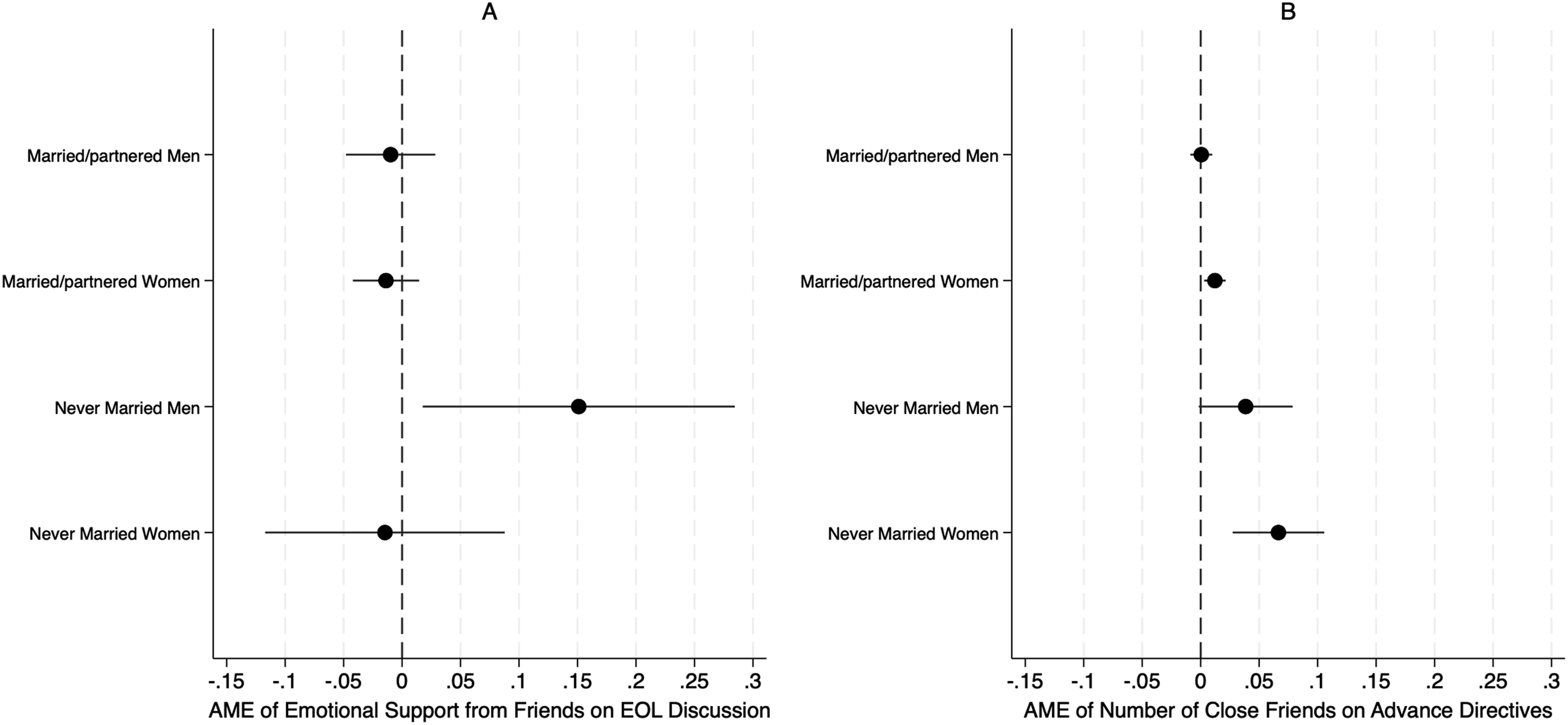
According to Panel A of Figure 3, emotional support from friends is statistically significantly and positively associated with EOL discussions among never married men, as the confidence interval of the AME excludes zero. For other combinations of gender and marital groups, the confidence intervals of the AME estimates contain zero, which suggests that their EOL discussions are not statistically significantly associated with emotional support from friends. Panel B of Figure 3 displays the AME of the number of close friends on AD. The number of close friends is statistically significantly and positively associated with the AD completion of partnered and never married women. In addition, the AME of the number of close friends is greater for never married women than that of partnered men and women.
Although the visualizations of AME help illustrate the direction and the relative magnitude of the primary associations, they can obscure the nonlinear relationships in certain regions of the predicted probability curve. To give a more complete picture, Tables 3 and 4 present formal tests, showing both the discrete change in predicted probabilities at selected values of the friendship predictors and their AME.
According to Table 3, having high emotional support is more strongly associated with EOL discussions among never married men than among other gender and marital groups. For never married men, moving from the lowest to highest levels of emotional support from friends is associated with 53 percentage points greater probability of engaging in EOL discussions (first difference p < 0.05). Tests of second difference suggest that the effects of change from no emotional support to the highest level are statistically significantly greater for never married men than for partnered individuals and never married women (all second differences p < 0.05). Tests of AME differences support the same conclusions. On average, each additional unit increase in the emotional support from friends is associated with a 15-percentage-point greater probability of never married men engaging in EOL discussions (p < 0.05). This effect of change is statistically significantly greater than that of the other three gender and marital groups (AME second differences p < 0.05).
Table 4 summarizes how the link between the number of close friends and AD is moderated by marital status and gender. Again, the discrete change effects of selected values and the AME approach show consistent findings. The AD of never married women is positively associated with having a greater number of close friends, and this association is statistically significantly greater than that of partnered individuals. For never married women, the probability difference in completing AD between those with four friends and no friends is 32 percentage points (first difference p < 0.01). This magnitude of change exceeds that observed among partnered men (second difference p < 0.01) and partnered women (second difference p < 0.05). On average, each additional close friend is associated with a seven-percentage-point greater probability of never married women’s AD completion (p < 0.01). The AME of the number of close friends on AD for never married women is statistically significantly greater than their partnered counterparts (AME second differences p < 0.01).
Discussion
ACP reduces the risk of receiving medical treatments that are misaligned with personal values and wishes at the end of life (Carr & Luth, 2017). Yet, many older adults do not engage in ACP, and disparities remain. While the existing research confines its scope to examining family context, this study explores the relationship between connectedness to friendship ties and older adults’ engagement in ACP. Given friends have a strong presence in older adults’ local social networks (Cornwell & Goldman, 2021), they may be well positioned to provide companionship, health-related advice, and a willing ear for discussions about future healthcare wishes. The absence of friendship in later life, then, may be associated with lower levels of discussion and documenting ACP preferences, both of which are associated with a greater risk of receiving unwanted care (Haines et al., 2019).
Our results first show that, in 2018 and 2020, approximately nine percent of U.S. older adults fall into the category of not having any friends. Compared to older adults who have friends, those without any are less likely to discuss EOL wishes and complete AD, which supports H1(a). We continue to confirm H1(b) by discovering that older adults who have a greater number of close friends are more likely to complete AD. This finding is consistent with the literature that indicates the protective effect of incorporating friends into one’s social networks. The associations between friendship on ACP are not merely structural but also vary by qualitative dimensions of these relationships. Consistent with H1(c), emotional support from friends is positively associated with AD. Although our study is unable to establish whether friends were legally appointed as healthcare proxies, this association may reflect such a designation, or that feeling loved, cared for, and validated by close friends is associated with the adoption of health-protective behavior such as completing AD.
Friendship characteristics shape ACP in different ways depending on whether the outcome is EOL discussions or AD. Although friendship is a unique social tie associated with a greater likelihood of EOL discussions, neither the number of close friends nor the emotional quality of these relationships appears to be significantly tied to this outcome. Having a large and high-quality friendship network may promote and help people learn how to complete an AD, which is widely valued as protective against adverse EOL outcomes due to its legally binding nature. However, older adults may view discussing EOL wishes with friends as less useful, especially when they have kin. Because culturally and legally, friends are typically not the first to be consulted in healthcare decisions unless they have been explicitly appointed, this perceived lack of utility may influence which aspects of ACP are prioritized or encouraged within close and emotionally supportive friendships. Another possible explanation is that different barriers in accessing EOL discussions and AD enable friendship to be more valuable in one than the other. Many states require two witnesses for an AD to be legally effective, and most of these state laws forbid the person’s appointed agents, spouse, heirs, relatives, and healthcare team from being such witnesses, fearing conflict of interests (Castillo et al., 2011). As a result, these restrictions may help explain why friendship characteristics are more strongly associated with AD completion than with EOL discussions, as those with fewer friends may have a harder time finding eligible persons to fulfill such a requirement.
Findings about marital status support the dyadic withdrawal hypothesis stated in H2 (Johnson & Leslie, 1982). Never married older adults are more likely to complete an AD when they report having one or more friends, and this positive association is stronger than among partnered individuals. The number of close friends is positively associated with the likelihood of completing an AD among never married individuals, and such an association is stronger than that of those who are partnered. In the absence of a romantic partner, never married individuals are expected to invest more into friendships than their partnered counterparts, thus showing stronger associations between both the presence and number of friendships with AD completion.
The associations between friendship and ACP differ by gender. As hypothesized in H3, we find that having at least one friend and the number of close friends are positively associated with the ACP engagement among women. Furthermore, these positive associations among women are statistically significantly greater than the associations among men. This pattern aligns with well-documented evidence of gender differences in how friendship is formed and maintained over the life course (Mehta et al., 2021; Umberson et al., 2022). While gender-role expectations socialize women to prioritize intimacy, emotional expression, and nurturing, they encourage men to display stoicism and independence (West & Zimmerman, 1987). As a result, friendships among men are less emotionally supportive (Liebler & Sandefur, 2002). Normative demonstrations of love and care, including encouragement of adopting health-protective behaviors, may be more common within women’s friendships than within men’s. Since friendship networks and social interactions in later life are highly gender segregated (Noon & Ayalon, 2018), these results align with our expectation that the positive associations between friendship characteristics and EOL planning are stronger among women than among men.
Three-way interaction models show some results in support of H4. The positive association between emotional support from friends and EOL discussions is especially salient among never married men. Gender-role expectations and the GAR perspective suggest that, as men live in a society where being masculine is associated with emotional stoicism, the harmful effects on health and health behavior become most apparent in the absence of an opposite-gender partner. Compared to married men, single never married men lack an opposite-gender partner who is often socialized to kin-keeping and attentive to their health needs (Cornwell & Schafer, 2016). To overcome these barriers, they may need at least one highly affectionate and supportive friend who occupies an emotionally salient position within their social network by providing love, care, and serving as a trusted confidant. Consequently, transcending gender-role expectations to cultivate more emotionally intimate friendships may help mitigate some of the relational barriers these men face in engaging with ACP, alleviating the challenges that these men face in engaging in EOL discussions.
Additionally, we find that the positive association between the number of close friends and AD completion is stronger for never married women than for partnered individuals. Although we do not observe statistically significant differences for never married men relative to their partnered peers, the predicted probability curve shows a similar upward trajectory (Panel B of Supplement 6). This pattern suggests that a greater number of close friends may benefit the AD completion among never married men as well, but small sample sizes in this group likely limit our ability to detect a statistically significant association.
While this study presents several important findings, these need to be interpreted considering a few limitations. First, the richness of information involved in the processes of EOL planning and decision-making is washed away because of data limitations and the reductive nature of quantitative methodology. This warrants caution against simply attributing the observed results to the direct outcome of ACP promotion by friends. More qualitative research is needed to identify how involved friends are in facilitating EOL preparation, particularly among never married individuals. Second, the use of cross-sectional data limits investigating the temporal transformations of individuals’ social networks and prevents establishing time order or making causal claims about the relationship between friendship characteristics and ACP. Lastly, gender was operationalized as a binary variable. Given that friendship plays a particularly vital role in the lives of sexual and gender minority (SGM) individuals (Muraco & Fredriksen-Goldsen, 2011), we encourage future work to explore how friendship may be associated with ACP among older adults within the SGM community.
Conclusion
This study highlights friendship as a meaningful but understudied social context associated with older adults’ engagement in end-of-life planning. The associations between features of friendship and ACP are most pronounced among those without a partner and vary by gender and types of EOL planning. Our findings suggest that emotionally intimate friendships among never married men may represent an important context for future research and intervention development in facilitating EOL discussions among this group of individuals, shedding light on how to narrow the gender gaps (Kalousová & Carr, 2024). We encourage scholars to continue examining the role of friendship in the EOL process.
This study is timely in the context of shifting demographic patterns and the increasing number of older adults aging outside of marriages or marriage-like relationships (Smock & Schwartz, 2020). Increasing rates of ACP will require attention to how social structures and social relationships facilitate the ways in which people think about and prepare for the end of life. Given current legal frameworks that prioritize family over friends as the default health proxies, policymakers and community leaders may benefit from reevaluating assumptions about the role of friends in later life. Greater attention to the social conditions under which friendships are formed and maintained may be an overlooked avenue for supporting EOL planning among older adults.
Supplemental Material
Supplemental Material - Later-Life Friendship in Advance Care Planning: Variation by Marital Status and Gender
Supplemental Material for Later-Life Friendship in Advance Care Planning: Variation by Marital Status and Gender by Zheng Lian and Lucie Kalousová in Research on Aging
Footnotes
Acknowledgements
We would like to thank Deborah Carr for introducing us to this special issue. We would also like to thank Brina Ratangee, Clifford Ross, and Zhe Zhang for their support and helpful feedback throughout this project. We also gratefully acknowledge the use of facilities and services provided by the Center for Research on Inequality and Health at Vanderbilt University that enabled the execution of this study.

Ethical Considerations
Ethical approval was not required for this study because it used publicly available, de-identified data.
Consent to Participate
Informed consent was not required for this study. The Health and Retirement Study obtains informed consent from all participants.
Funding
The authors received no financial support for the research, authorship, and/or publication of this article.
Declaration of Conflicting Interests
The authors declared no potential conflicts of interest with respect to the research, authorship, and/or publication of this article.
Supplemental Material
Supplemental material for this article is available online.
Author Biographies
References
Supplementary Material
Please find the following supplemental material available below.
For Open Access articles published under a Creative Commons License, all supplemental material carries the same license as the article it is associated with.
For non-Open Access articles published, all supplemental material carries a non-exclusive license, and permission requests for re-use of supplemental material or any part of supplemental material shall be sent directly to the copyright owner as specified in the copyright notice associated with the article.
