




Abstract
We examined associations between change in social contact communication modalities and change in perceived control over social life (PCOSL) following onset of the COVID-19 pandemic among older Americans and evaluated the extent to which associations were moderated by personality. Data were from the 2016 and 2020 waves of the Health and Retirement Study. Multivariate ordinary least squares regression analyses were computed adjusting for baseline PCOSL, sociodemographic, health, and psychosocial factors. Multiple moderation analyses revealed that extraversion moderated the association between change in social media communication and change in PCOSL before to during COVID-19. As levels of engagement in social media communication increased, those with high extraversion experienced increases in PCOSL, whereas those with low extraversion experienced decreases in PCOSL. Findings suggest that social interventions targeting perceived control and communication modality may be useful for older adults during global health events and that personality characteristics can help to inform intervention choices.
Introduction
Perceived control has been associated with better health and well-being across the lifespan (Lachman et al., 2015). Having a greater sense of control can serve as a protective factor, buffering against the negative effects of stress (Neupert et al., 2007). The coronavirus disease 2019 (COVID-19) pandemic has exposed individuals to a unique set of stressors (Park et al., 2020). Older adults are particularly vulnerable to developing severe illness from COVID-19 and have been urged to stay home and adhere to strict social distancing measures (Centers for Disease Control and Prevention, 2020). Studies have identified this confinement and the associated loneliness as major stressors for older adults (Macdonald & Hülür, 2021; Whitehead & Torossian, 2021). Perceived control and its buffering effect on stress have been found to vary across domains (Lachman, 1986; Lachman et al., 2011; Neupert et al., 2007). Due to the profound impact of COVID-19 on social interactions, the present study investigated change in perceived control over social life (PCOSL) following onset of the COVID-19 pandemic among older adults in the United States.
The concept of perceived control has its roots in social learning theory (SLT; Rotter, 1966). According to SLT, individuals perceive learning situations as determined by either internal characteristics (e.g., personal skills and efforts) or external forces (e.g., chance, powerful others). Such perceptions of internal versus external control have been found to vary across individuals (Rotter, 1966). Although a large body of literature has focused on the consequences of control beliefs, less is known about the sources of between-person differences in perceived control (Lachman et al., 2015). Perceptions of control have also been found to vary within persons across age and across situations (Lachman et al., 2015; Robinson & Lachman, 2017). Research has examined perceived control as both a global and a domain-specific construct, showing that individuals may experience a higher sense of control in some life domains (e.g., health, social relationships) than in others (Lachman et al., 2009).
Few studies have examined perceived control specifically within the social domain. Theorists suggest that perceived control over social relationships contributes to more global perceptions of control (e.g., Bandura, 1977; Skinner, 1992). Social support has been associated with a sense of mastery and control (Antonucci, 2001; Lachman et al., 2009) and positive health and well-being (Kahn et al., 2003) among older adults. PCOSL has been found to mediate the association between social support and positive health and well-being (Bisconti & Bergeman, 1999). Moreover, studies suggest that PCOSL is influenced by both individual and relationship characteristics (Hay & Fingerman, 2005). The current study focused on two particular characteristics and their associations with PCOSL: social contact communication modalities and personality traits. This study extends previous research by examining the prospective associations between change in social contact communication modalities and change in PCOSL following onset of the COVID-19 pandemic and evaluating the extent to which associations are moderated by personality traits during the pandemic among U.S. older adults.
Literature Review
Communication Modalities and PCOSL
During the COVID-19 pandemic, stay-at-home orders and social distancing measures limited face-to-face interactions. Many individuals increased their use of mediated communication, such as video or phone calls and text messaging, to maintain contact with family and friends (Brown & Greenfield, 2021). Research suggests that the use of mediated communication during the COVID-19 pandemic is associated with positive outcomes, such as decreased loneliness and increased well-being (Brown & Greenfield, 2021; Choi & Choung, 2021). The impact of social media use on well-being has yielded mixed findings (Choi & Choung, 2021) and may depend on whether individuals are actively or passively engaging with social media content (Sun et al., 2020). Research has also found age differences in communication modalities during the pandemic. Younger individuals may be more likely to use mediated communication such as video calling (Brown & Greenfield, 2021) and to increase nonphysical intergenerational contacts (Arpino et al., 2021). Many older adults increased their use of video calls and instant messages during the pandemic, with fewer increasing their social media use (Arpino et al., 2021). Studies suggest that the ability to maintain social communication served as a source of joy (Whitehead & Torossian, 2021) and a protective factor (Macdonald & Hülür, 2021) for older adults during the pandemic.
Communication modalities may also influence PCOSL. In a study comparing face-to-face and computer mediated communication (CMC), individuals with social anxiety reported experiencing a greater sense of control during CMC (Shalom et al., 2015). Similarly, a qualitative study by Madell and Muncer (2007) found that young adults report greater control over social interactions when using asynchronous (e.g., email, text messaging) compared to synchronous (e.g., voice calls, face-to-face) communication modalities. The authors note that asynchronous communication modalities allow individuals time to think before providing a response if desired. These findings suggest that the increased use of mediated communication during the pandemic may contribute to increased PCOSL. However, no studies to date have examined the association between communication modalities and PCOSL among older adults. As older adults are typically less familiar with technology than their younger adult counterparts (Hunsaker & Hargittai, 2018), they may find it more difficult to engage in digital communication when face-to-face interactions are restricted. A recent study focused on U.S. older adults documented that social contact communication modes were impacted by relocation distances even though asynchronous contact gives older adults flexibility (Cho & Smith, 2022). Additional research is needed to understand the impact of communication modalities on perceived control among older adults during the COVID-19 pandemic.
Personality Traits and PCOSL
Although social relationships and personality have historically been researched in separate fields, Back et al. (2011) suggest that these constructs are intrinsically tied and propose a unified framework for examining personality and social relationships (PERSOC). PERSOC highlights the role of both trait-level dispositions and state-level social interactions (Back et al., 2011). To examine the interplay of personality and social relationships, the current study examined the interaction between personality traits and social contact communication modalities among older Americans following the onset of COVID-19.
Guided by the five-factor model of personality (McCrae & Costa, 1987; Soto & John, 2017), we posited that personality traits might contribute to individuals’ social lives during the COVID-19 pandemic. Recent studies have linked personality traits with social distancing measures (e.g., Choi et al., 2022; Modersitzki et al., 2020) and social activities during the pandemic (e.g., Cooper et al., 2020). For example, Cooper et al. (2020) found that social distancing was negatively associated with extraversion and positively associated with agreeableness, conscientiousness, and neuroticism. Extraversion and conscientiousness were associated with more online social activities during the pandemic (Cooper et al., 2020). Individuals scoring higher on extraversion and neuroticism demonstrated more negative appraisals of the pandemic and associated government-implemented measures (Modersitzki et al., 2020). Neuroticism and extraversion were associated with increased stress during the COVID-19 pandemic (Liu et al., 2021; Zacher & Rudolph, 2021). Liu et al. (2021) found that individuals with higher neuroticism experienced increased stress due to higher levels of perceived threat from COVID-19 and lower levels of efficacy to follow government recommendations. In contrast, the extraversion-stress relationship may be better explained by social restrictions associated with COVID-19 (Liu et al., 2021; Zacher & Rudolph, 2021).
Personality traits have also been associated with perceived control both globally and specifically to the social domain. Perceived control has been negatively associated with neuroticism and positively associated with openness, conscientiousness, extraversion, and agreeableness (Darvill & Johnson, 1991; Lachman et al., 2009; Myles et al., 2020). In a study examining changes in general and domain-specific control across 10 years, Lachman et al. (2009) found that individuals with a more adaptive personality profile (low neuroticism and high openness, conscientiousness, extraversion, and agreeableness) were more likely to maintain or increase perceived control over time. Changes in perceived control in social domains were also positively predicted by an adaptive personality profile (Lachman et al., 2009). In a study by Sesker et al. (2022), conscientiousness, extraversion, and agreeableness were associated with less decline in perceived control during the beginning of the COVID-19 pandemic. Taken together, these studies suggest that an adaptive personality profile may contribute to PCOSL and that neuroticism and extraversion may be particularly important when examining outcomes related to COVID-19. Furthermore, the prospective associations between change in social contact communication modalities and change in PCOSL attributable to the COVID-19 pandemic may vary on the basis of personality traits.
Sociodemographic, Health, and Psychosocial Factors Associated With PCOSL
A large literature has demonstrated sociodemographic variations in global and domain-specific perceived control. Global perceived control has been found to decline after midlife into late adulthood (Drewelies et al., 2017; Mirowsky & Ross, 2007). However, trajectories of change in perceived control may vary by domain. For example, studies have found that control over children tends to decrease whereas control over marriage tends to increase across the lifespan (Lachman et al., 2009; Lachman & Weaver, 1998b). Hay and Fingerman (2005) found small age differences in perceptions of control in the social domain, such that the oldest-old reported lower levels of control. When examining specific relationships, the authors found no age differences in perceived control over relationships with spouses, siblings, extended family, or nonfamily. Similar to findings by Lachman et al. (2009), age differences were found in parent-child relationships such that younger adults perceived significantly more control over children compared to older adults (Hay & Fingerman, 2005). In addition to age, studies have found differences in perceived control by sex and race/ethnicity. Although sex differences are typically small, research suggests that women perceive lower levels of control than men (Infurna et al., 2011; Lachman & Weaver, 1998b; Specht et al., 2013). However, there may be certain social domains in which women report higher perceived control, with one study showing that women felt more control over their sex lives than men (Lachman & Weaver, 1998b). With regards to race/ethnicity, African Americans report lower levels of perceived control compared to non-Hispanic White Americans (Mirowsky & Ross, 2007; Shaw & Krause, 2001). These racial/ethnic differences persist across the life course (Shaw & Krause, 2001), likely reflecting a history of discrimination and restricted opportunities for African Americans (Bruce & Thornton, 2004). Racial/ethnic differences can also be seen in the associations between social relationship variables and perceived control (Bruce & Thornton, 2004). Overall, these studies provide support for sociodemographic variations in PCOSL.
Existing literature also documents that health status and psychosocial factors are related to perceived control. Perceived control has been associated with multiple aspects of health, including self-rated health (Infurna et al., 2018), number of health conditions (Infurna, Gerstorf, & Zarit, 2011), and functional health (Kempen et al., 2005). In a study by Toyama and Fuller (2020), American respondents showed a reciprocal relationship between perceived control and health, where changes in perceived control were linked to changes in chronic health conditions, self-rated health, and functional limitations. In addition to health, reciprocal relationships have been found between perceived control and social support (Gerstorf et al., 2011). Religion has also been found to influence perceptions of control, such that religious individuals are more likely to perceive God as a causal agent (Loewenthal & Cornwall, 1993). In a study by Jackson and Bergeman (2011), perceived control was found to partially mediate the association between religious practices and subjective well-being. Finally, a high sense of control has been associated with positive psychological outcomes, such as decreased depressive symptomatology (Lachman & Weaver, 1998a; Myles et al., 2021; Yates et al., 1999).
The Current Study
Given the profound effect of the COVID-19 pandemic on older adults’ social relationships, the current study investigated perceived control within the social domain. We know of no population-based studies in the United States that have directly explored whether changes in social contact communication modalities are related to changes in PCOSL among older adults following onset of the COVID-19 pandemic, and how these associations differ by personality traits. Thus, using a nationally representative population-based panel study, our aims were (a) to examine the associations between change in social contact communication modalities and change in PCOSL among older adults following onset of the COVID-19 in the United States and (b) to evaluate the moderating effects of personality traits on these prospective associations.
Hypotheses
Based on prior empirical and theoretical studies, we predicted that change in frequency of social contact communication would be related to change in PCOSL following onset of the COVID-19 pandemic. We hypothesized that individuals who experienced increases in social contact communication [synchronous (i.e., in-person meetings, telephone calls) or asynchronous (i.e., written letters or emails, social media)] would be more likely to experience increases in PCOSL. Further, we hypothesized that personality traits would moderate these effects of change in social contact communication on change in PCOSL among U.S. older adults following onset of the pandemic, such that these associations would be stronger for those high in openness, conscientiousness, extraversion, and agreeableness and for those low in neuroticism.
Research Design
Data and Sample
This study used data from the 2016 and 2020 waves of the Health and Retirement Study (HRS), a nationally representative panel survey of U.S. adults aged 51 and older conducted biennially. Our analyses were limited to those who completed the self-administered questionnaire (SAQ), which contained questions on perceived control, social contact communication, and personality traits. The SAQ was piloted in 2004 and began in earnest in 2006, surveying half of the HRS respondents each wave with an alternating sample. More details on study design are described in Sonnega et al. (2014) and Health and Retirement Study (2022).
Sample Characteristics, 2016 and 2020 HRS (N = 3132).
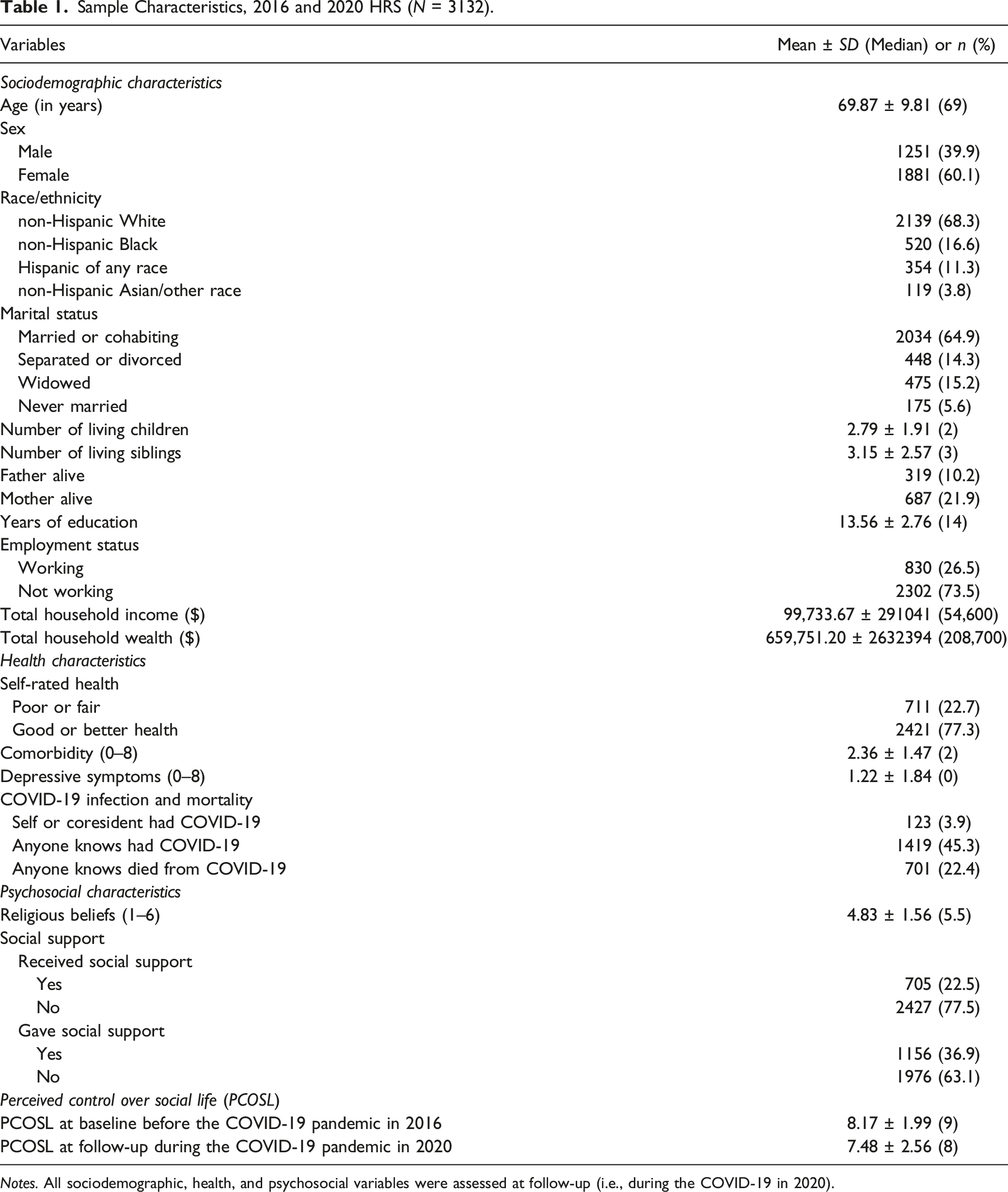
Notes. All sociodemographic, health, and psychosocial variables were assessed at follow-up (i.e., during the COVID-19 in 2020).
Measures
Dependent Variable
Change in Perceived Control Over Social Life
At each assessment point, participants were asked “How would you rate the amount of control you have over your social life these days?” Answers were given on a scale ranging from 0 (no control at all) to 10 (very much control).
Focal Independent Variable
Our focal independent variable was change in social contact communication modalities with close social ties before and after the onset of the COVID-19 pandemic.
Change in Social Contact Communication Modalities
Social contact communication, assessed in both 2016 and 2020, included four modes of social contact: (a) in-person meetings, (b) telephone calls, (c) written letters or e-mails, and (d) social media communication (Cho & Smith, 2022; Smith et al., 2017). Each communication modality was operationalized as the average frequency of contact for three social relationship types: children, other family members, and friends. Responses ranged from 1 (less than once a year or never) to 6 (three or more times a week). In-person meetings, telephone calls, and written letters or e-mails were calculated by averaging the scores of the three different social relationship types, with higher scores reflecting more frequent communication. Social media communication was assessed with the question “On average, how often do you communicate by Skype, Facebook, or other social media with any of your children, any of other family members, any of your friends, not counting any who live with you?” Higher scores indicated more frequent social media communication.
Potential Moderators
Personality Traits
Participants completed the Big Five Inventory of personality traits (McCrae & Costa, 1987). The personality traits were assessed in 2020 with 31 items across five domains: (a) neuroticism (4 items; α = .71), (b) extraversion (5 items; α = .75), (c) openness to experience (7 items; α = .80), (d) agreeableness (5 items; α = .79), and (e) conscientiousness (10 items; α = .71). Items were rated on a scale from 1 (a lot) to 4 (not at all) and reverse-coded in the direction of the trait label as necessary. The mean was taken across items for each trait.
Covariates
We adjusted for baseline PCOSL (in 2016, prior to the COVID-19 pandemic) while adjusting for health, sociodemographic, and psychosocial factors at follow-up (in 2020, during the COVID-19 pandemic) that have been shown by previous research to be associated with PCOSL. First, health covariates included self-rated health (poor or fair vs. good or better health [reference]), number of chronic conditions (range: 0–8), and depressive symptoms (range: 0–8). Depressive symptoms were measured by the eight-item version of the Center for Epidemiologic Studies Depression (CES-D) scale (Radloff, 1977). Also, we adjusted for COVID-19 infection of respondent and respondent’s coresident and acquaintance. Given the high likelihood of intrahousehold COVID-19 spread, a single dichotomous variable was created to indicate COVID-19 infection of anyone in the respondent’s household. We also created two binary variables for COVID-19 infection and deaths from COVID-19 of respondent’s acquaintances, respectively.
Second, sociodemographic characteristics included age (in years), sex (female vs. male [reference]), race/ethnicity (non-Hispanic White [reference]; non-Hispanic Black; Hispanic of any race; and non-Hispanic Asian/other race), marital status, years of education, working status (currently working vs. not working [reference]), and the number of living children and siblings as well as parents’ vital status (father alive, mother alive). Total household income and total household wealth were included as financial status variables. To reduce skewness, we used the natural logarithm for household income and wealth.
Finally, psychosocial factors included religious beliefs and social support during the COVID-19 pandemic. Respondents rated four items assessing their religious beliefs and values (e.g., “I find strength and comfort in my religion”) on a scale from 1 (strongly disagree) to 6 (strongly agree). Higher average scores corresponded to higher levels of religious beliefs and values (α = .93). Respondents were also asked both whether they (a) gave or (b) received support during COVID-19 with money or paying bills, and shopping for groceries, errands, rides, or chores (yes; no).
Analytic Plan
Descriptive Statistics and Intercorrelations Between Main Study Measures, 2016 and 2020 HRS (N = 3132).
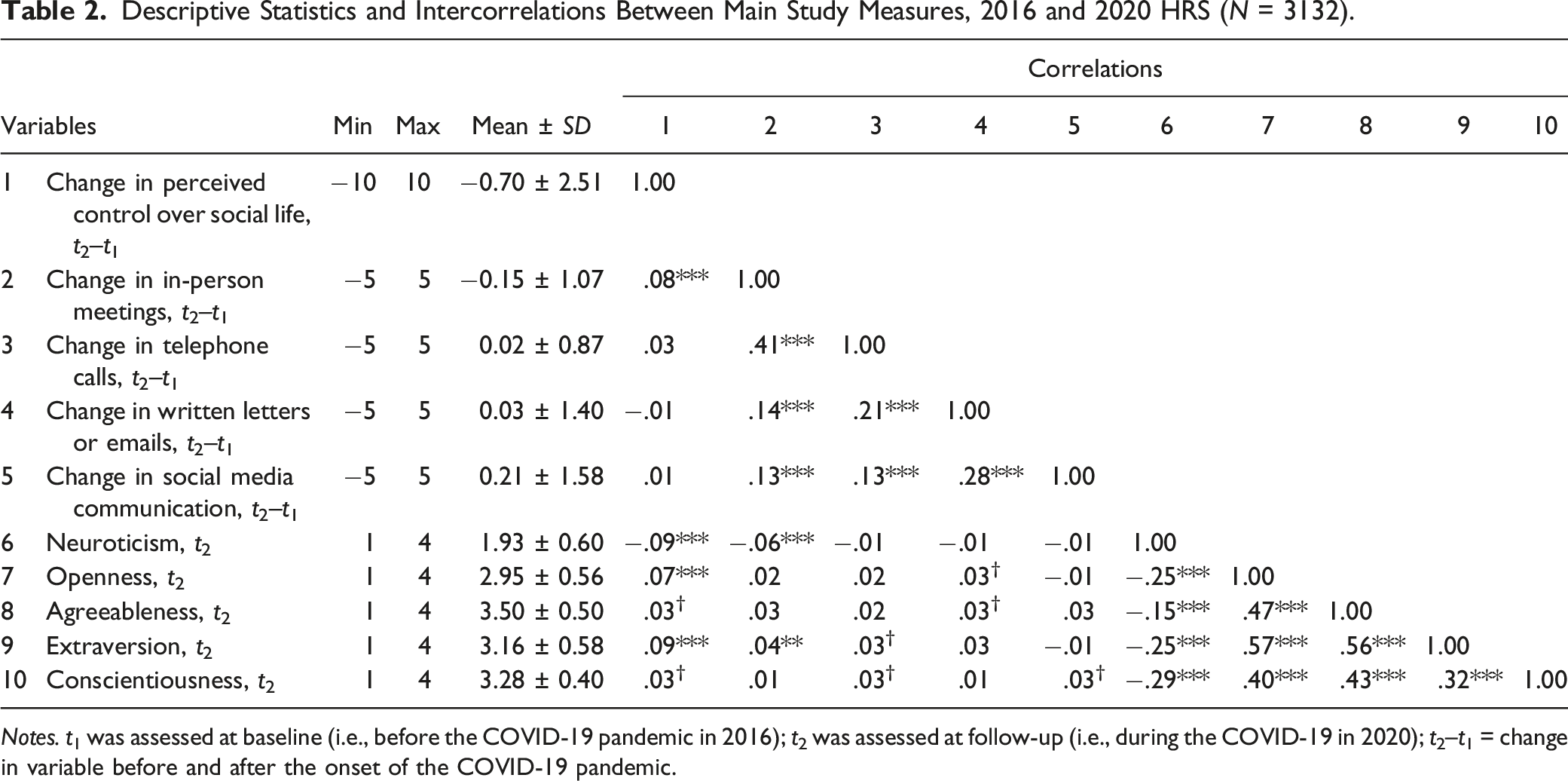
Notes. t1 was assessed at baseline (i.e., before the COVID-19 pandemic in 2016); t2 was assessed at follow-up (i.e., during the COVID-19 in 2020); t2–t1 = change in variable before and after the onset of the COVID-19 pandemic.
Linear Regression Predicting Change in Perceived Control Over Social Life Following Onset of the COVID-19 Pandemic Among U.S. Older Adults, 2016 and 2020 HRS (N = 3132).
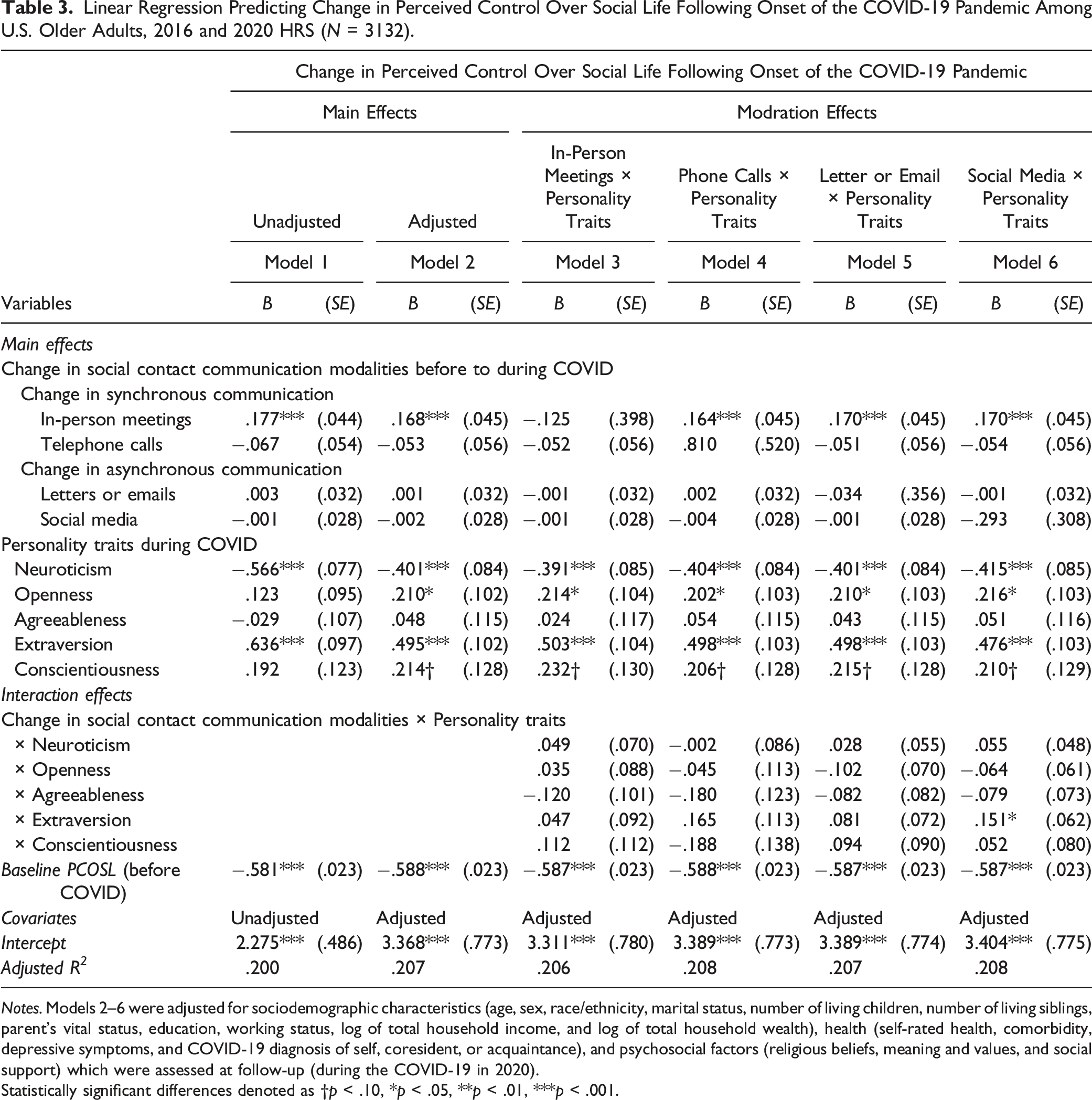
Notes. Models 2–6 were adjusted for sociodemographic characteristics (age, sex, race/ethnicity, marital status, number of living children, number of living siblings, parent’s vital status, education, working status, log of total household income, and log of total household wealth), health (self-rated health, comorbidity, depressive symptoms, and COVID-19 diagnosis of self, coresident, or acquaintance), and psychosocial factors (religious beliefs, meaning and values, and social support) which were assessed at follow-up (during the COVID-19 in 2020).
Statistically significant differences denoted as †p < .10, *p < .05, **p < .01, ***p < .001.
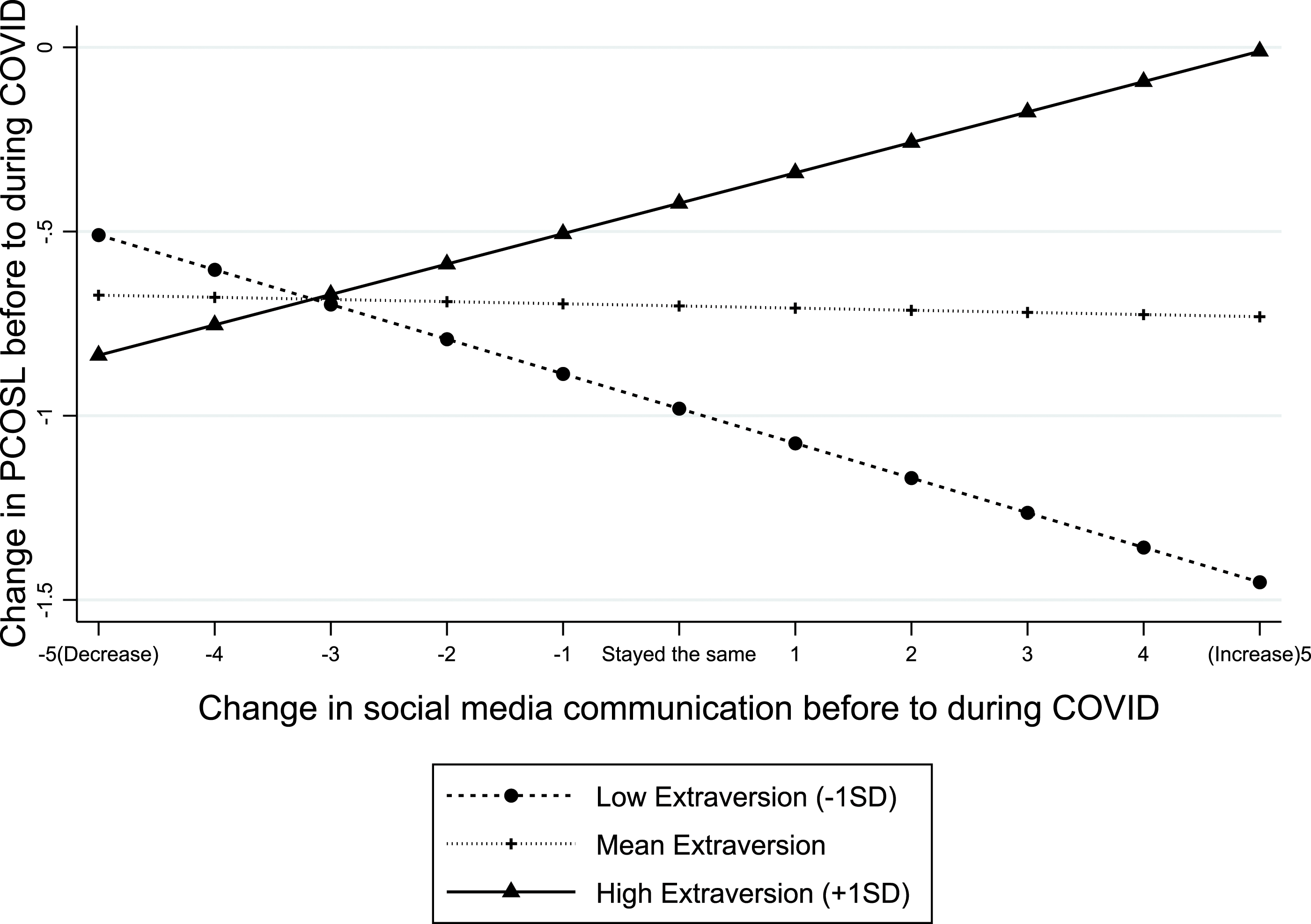
Moderating effect of extraversion on the association between change in social media communication and change in PCOSL following onset of the COVID-19 pandemic.
Results
Bivariate Analysis
Table 1 describes sample characteristics and Table 2 presents descriptive statistics and intercorrelations between main study measures in the 2016 and 2020 waves of the HRS. Among each social contact communication modality, change in in-person meetings was positively correlated to change in PCOSL following onset of the COVID-19 pandemic (r = .08, p < .001). Regarding personality traits, neuroticism (r = −.09, p < .001) was negatively correlated with change in PCOSL, whereas openness (r = .07, p < .001), agreeableness (r = .03, p < .10), extraversion (r = .09, p < .001), and conscientiousness (r = .03, p < .10) were positively correlated with change in PCOSL following onset of the COVID-19 pandemic.
Multivariable Analysis
Social Contact Communication Modalities and Change in PCOSL
As shown in Model 1 in Table 3, change in frequency of in-person meetings was significantly and positively associated with increased PCOSL between 2016 and 2020 among U.S. older adults (b = .177, p < .001). The significant association between in-person meetings and change in PCOSL remained statistically significant after adjusting for baseline PCOSL and health, sociodemographic characteristics, and psychosocial variables at follow-up in Model 2 (b = .168, p < .001). We controlled for previous PCOSL and current health, sociodemographic, and psychosocial variables. However, associations of changes in phone calls, written letters or emails, and social media communication with change in PCOSL were not statistically significant.
Personality Traits and Change in PCOSL
Personality traits, assessed in 2020, were significantly associated with change in PCOSL following onset of the COVID-19 pandemic. Specifically, lower neuroticism (b = −.566, p < .001) and higher extraversion (b = .636, p < .001) were significantly associated with increases in PCOSL in an unadjusted model (Model 1 in Table 3). These associations were slightly attenuated but persisted after adjusting for covariates in Model 2. In a fully adjusted Model 2, higher levels of extraversion (b = .495, p < .001), openness (b = .210, p < .05), and conscientiousness (b = .214, p < .10) were significantly related to increases in PCOSL following onset of the COVID-19 pandemic. Conversely, higher neuroticism was significantly related to declines in PCOSL after controlling for covariates (b = −.401, p < .001).
Moderation Analyses
Our final analysis focused on multiple moderation models testing whether the associations between change in social contact communication modalities and PCOSL following onset of the COVID-19 pandemic differ on the basis of personality traits. We evaluated two-way interaction terms—“in-person meetings × personality traits” (Model 3), “phone calls × personality traits” (Model 4), “written letters or emails × personality traits” (Model 5), and “social media × personality traits” (Model 6), respectively—after adjusting for baseline PCOSL and other covariates at follow-up. Coefficients and standard errors (SE) are presented in Models 3–6 in Table 3. The statistically significant two-way interaction is plotted in Figure 1, providing a visual interpretation of the estimated marginal effects for change in PCOSL (Model 6).
Multiple moderation analyses revealed that extraversion moderated the association between change in social media communication and change in PCOSL. Our results indicated that among those reporting decreased engagement in social media communication from 2016 to 2020, persons with low (−1SD) and high (+1SD) extraversion experienced a negligible change in PCOSL. Depicted in Figure 1, as levels of engagement in social media communication increased, older adults with high extraversion experienced increases in PCOSL; in contrast, those with low extraversion experienced decreases in PCOSL following onset of the COVID-19 pandemic. The gap widened considerably as the frequency of social media communication increased from 2016 to 2020.
This moderating effect was observed significantly only for social media communication and not for in-person meetings, phone calls, written letters, or emails. Also, the moderating effect of personality traits was observed significantly only for extraversion. Regardless of levels of neuroticism, openness, agreeableness, and conscientiousness, the impacts of change in social contact communication modalities on PCOSL following onset of the COVID-19 pandemic were similar among U.S older adults.
Discussion
These analyses are unique in their focus on perceived control in the interpersonal realm, which may be particularly important during periods of relative isolation such as that experienced during the COVID-19 pandemic. Taken together, our findings suggest that an adaptive personality profile can protect against declines in PCOSL among older Americans during global health events. In particular, increased communication via social media was beneficial for individuals high on extraversion during the relative isolation caused by social distancing during the COVID-19 pandemic. By contrast, as levels of engagement in social media increased, those with low extraversion experienced substantial decline in PCOSL.
Overall, PCOSL was fairly high among this representative sample of older Americans at both time points, with an average rating of 8.17 out of 10 before the COVID-19 pandemic and 7.48 during the pandemic. Interestingly, change in mode of social communication was not a strong predictor of change in PCOSL following onset of COVID-19 among U.S. older adults. Of the four types of communication examined, synchronous contacts, particularly in-person meetings, were statistically significantly related to increases in PCOSL; asynchronous communication via letters or emails and social media were not significantly related to change in PCOSL.
In contrast, personality traits were strongly and consistently related to change in PCOSL following onset of the pandemic. Our results indicated that higher levels of openness, conscientiousness, and extraversion were significantly associated with increases in PCOSL following onset of the COVID-19 pandemic, whereas higher neuroticism was associated with decreases in PCOSL. Mirroring previous studies of personality and perceived control (e.g., Lachman et al., 2009; Myles et al., 2020), extraversion displayed a strong positive association with perceived control and neuroticism, an equally strong negative one. However, these dynamics differed somewhat as a function of social contact communication modalities. Specifically, as social media communication increased, older adults high in extraversion experienced increases in PCOSL, whereas those low in extraversion experienced declines in PCOSL. The gap widened considerably as the frequency of social media communication increased throughout the pandemic.
Overall, these findings highlight the ascendancy of stable personal characteristics over communication patterns as determinants of change in PCOSL following onset of the COVID-19 pandemic. Extraversion, in particular, could be expected to drive persons’ openness to and enjoyment of social contacts and, hence, their perception of control over those contacts. Previous research has found that individuals high on extraversion demonstrated more negative appraisals of the COVID-19 pandemic (Modersitzki et al., 2020) and increased stress during the pandemic (Liu et al., 2021), which may be attributed to social restrictions related to COVID-19. Results of the present study suggest that social media communication may protect against the negative effects of global health events on PCOSL for individuals high on extraversion. Studies have found that extraversion is associated with increased online social activity (Cooper et al., 2020), and online social activities such as social media may represent an important outlet for older adults high on extraversion during periods of relative isolation such as the COVID-19 pandemic.
The lack of meaningful effect for type of communication is at first puzzling, particularly given the dramatic changes in social contacts engendered by the COVID-19 pandemic for all age groups. However, on re-examination, it is perhaps not surprising for several reasons. First, with the exception of in-person contacts, there is no real reason why COVID-19 should have caused marked departure from pre-pandemic levels of social contact. Thus, in evaluating their own perceptions of control, respondents may simply not have found much difference. The demographics of this older sample may also have diluted the impact of COVID19-related lockdowns. Roughly two-thirds of the sample were married or cohabiting and thus had a ready source of social contact at home. Similarly, three-quarters were not employed at the time of the COVID-19 pandemic and therefore likely did not experience the kind of disruption of daily social contacts that affected persons working outside the home. Thus, although the pandemic clearly posed a greater health risk to older adults, its impact on social contacts and perceived control thereof may have been far less dramatic than for younger persons.
These explanations are, of course, purely speculative, and invite further in-depth explorations of older adults’ change in PCOSL following onset of the pandemic. Personality can be conceptualized as both a fixed trait and a flexible state that changes across situations (Fleeson, 2004). One study introduces that extraversion may act as an adaptive tool, whereby individuals adjust their state extraversion when interacting with friendly others (Huang & Wu, 2021). This ability to adapt behavior during interactions may also impact change in PCOSL. We cannot specify the mechanism accounting for whether personality is fixed or flexible among U.S. older adults in the context of the public health crisis. Future studies should evaluate potential cultural and behavioral mechanisms, such as socially and culturally desirable acts, social integration, or inner processes including self-control, rational choice, and initiative in a cultural context (Baumeister et al., 2011).
Additionally, our findings lend support for the dynamic interplay between personality and social relationships highlighted in the PERSOC framework (Back et al., 2011). Although our results suggested a strong link between personality and PCOSL, associations differed as a function of social contact communication modalities as demonstrated by the significant “extraversion × social media communication” interaction effect. Future research should continue to examine the complex dynamics between personality and social phenomena, as well as how these dynamics change across age and in relation to the COVID-19 pandemic.
Implications
Given the significant role of personality in predicting change in PCOSL following onset of COVID-19, personality characteristics should be considered key determinants of psychological outcomes in the context of public health crises. Findings suggest that individuals low in extraversion and/or high in neuroticism may be at particular risk for decline in perceived control when faced with such crises. Prior research has found that control beliefs can be altered through cognitive behavioral and group education programs (e.g., Wolinsky et al., 2009). In a recent study examining remote learners during the COVID-19 pandemic, the use of cognitive reappraisal was associated with greater perceived control (Zhao et al., 2021). Our results suggest that interventions targeting perceived control may be particularly useful for individuals with personality profiles characterized by low extraversion and high neuroticism. Personality screening may be used to identify individuals in need of mental health treatment or to guide interventions (Sesker et al., 2022).
Although it may not be clinically practical to target individuals based on personality profile in many scenarios, clinicians may benefit from considering the role of personality during case conceptualization and adapting interventions to meet their clients’ unique needs. For example, results of the current study suggest that increasing social media communication may be beneficial for older adults high in extraversion but detrimental for those low in extraversion. This finding illustrates how individual differences in personality may influence which interventions are most appropriate for a given individual.
Older adults seeking increased social contact during global health events, particularly those high on extraversion, may benefit from increased engagement in digital means of social contact. However, many older adults are excluded from digital services due to lack of experience with technology and/or access to the Internet, leading to a “digital divide” (Seifert et al., 2021). COVID-19 may be viewed as an opportunity to bridge this digital divide and increase intergenerational contact by assisting older adults who are interested in enhancing their use of information and communication technologies (ICTs; Seifert et al., 2021). Hybrid solutions that couple online and offline strategies may be helpful for promoting digital inclusion and enhancing social engagement among older adults (Xie et al., 2020). Further, use of ICTs among older adults can help to reduce risk of isolation and loneliness (Francis et al., 2018).
Limitations and Future Directions
Our analyses have several limitations, including the use of data focusing solely on U.S. older adults. In the context of the global consequences of the outbreak, generalization of the findings requires replications in other countries. Indeed, many countries enacted strict lockdown policies to slow the spread of COVID-19, whereas others relied on recommendations rather than stricter social distancing restrictions. Similarly, the mandates of protective measures, lockdowns, and restrictions of social distancing varied by city and state within the United States. However, we were unable to specify the geographical residence of respondents due to a data restriction. Future research would benefit from including a measure of geographical information.
As the impact of COVID-19 changes over time, future studies are required to understand perceived control change trajectories and the consequences of control of social life and quality of life of older adults for causal inference in the post-pandemic period. The HRS is an excellent vehicle for such analyses. As the HRS continues to collect and release additional data, researchers will be able to explore longitudinal effects across the sample. Additionally, each of the variables in the present study was based on a self-report telephone interview, leading to the possibility of over- or under-reporting. Further, PCOSL was assessed with a single-item question. Although single-item measures can provide useful information, from a psychometric standpoint future research may consider multiple-item measures (Fisher et al., 2016). Also, it is possible that respondents may have interpreted the item on PCOSL in multiple ways, as control over social life may be viewed as having command over others or more broadly as having access to social support and joint activities. Multiple-item measures may be used to facilitate a clearer operationalization of PCOSL in future research. Lastly, we were unable to consider the objects and contents of social contact communication due to data limitations, but future studies may focus on these effects on change in PCOSL.
Conclusion
Despite these limitations, current findings suggest that social contact communication modality was a nonsignificant predictor of change in PCOSL, with the exception of face-to-face meetings, whereas personality traits (low neuroticism and high openness, extraversion, and conscientiousness) were significantly associated with increases in PCOSL following onset of the COVID-19 pandemic among older Americans. Multiple moderation analyses further indicated that the associations between change in social contact communication modalities and change in PCOSL varied by personality traits; specifically, results suggest that as levels of engagement in social media communication increased, older adults with high extraversion experienced increases in PCOSL, whereas those with low extraversion experienced declines in PCOSL. This information could help to guide targeted social interventions to enhance older adults’ perceived control and overall quality of social life. Given the prominent link between perceived control and health and well-being, understanding the factors contributing to perceived control is crucial for enhancing older adults’ psychological outcomes during and after the COVID-19 pandemic.
Footnotes
Declaration of Conflicting Interests
The author(s) declared no potential conflicts of interest with respect to the research, authorship, and/or publication of this article.
Funding
The author(s) disclosed receipt of the following financial support for the research, authorship, and/or publication of this article: This research did not receive any specific grant from funding agencies in the public, commercial, or not-for-profit sectors. This study used data from the Health and Retirement Study (HRS), a public use dataset produced and distributed by the University of Michigan with funding from the National Institute on Aging [grant number NIA U01AG009740].
Ethical Approval
We used the public data of the Health and Retirement Study (HRS) which was approved by the Institutional Review Board (IRB) at the University of Michigan and all respondents provided informed consent.
