




Abstract
This article examines Netflix’s recycling content strategies in the era of streaming cinema. It starts from the assumption that because of the different institutional logic at work in the land of SVODs, the affordances that recycled content brings may not be as effective (and necessary) as it has been in Hollywood. Using a database-centered approach, we analyze 658 Netflix Original films. Between 2015 and 2022, Netflix released 440 non-recycled Originals, showcasing a commitment to offering a high quantity of niche films. The dataset equally shows that the percentage of recycled films (33%) follow a linear upward pattern, highlighting the persistence of conservative content strategies. More specifically, (re-)adaptations constituted the biggest chunk of recycled content (68%), as these allow the streamer to quickly fill its catalog with recyclable IP. Netflix’s inclination toward sequels (16%), spin-offs (6%), and prequels (2%) aligns with its sequelization strategy, while also leveraging its own IP. Remakes (8%) play a less significant role, likely due to the relatively young age of Netflix’s content library. The article concludes that Netflix may, in fact, be less of a disruptive force to the film industry in terms of the diversity of its content creation, prompting further recycling of existing properties.
Introduction
Hollywood has long been accused of a supposed depletion of originality and artistic conservatism (Hutcheon, 2006; Klein and Palmer, 2016; Naremore, 2000; Rosewarne, 2020). Next to the industry’s general focus on commercial filmmaking, ranging from blockbuster cinema to working mainly with bankable stars (Rosewarne, 2020), Hollywood’s association with artistic rigidity is most often brought back to its overemphasis on “content recycling” (Stelmach et al., 2022). That is, the practice of expanding on and reusing existing material in the form of spin-offs, sequels, remakes, reboots, literary adaptations, and so on. Building on recognizable properties would fulfill Hollywood’s insatiable appetite for successes.
Conversely, this so-called proliferation of recycled content – which is often wrongly perceived as a linear trend upwards (Stelmach et al., 2022) – would lead to, amongst others, a growing adoption of more conservative plot structures and a tendency toward self-cannibalization of “once original ideas” (Verevis, 2006). It would also cause the curbing of creative freedom, reluctance to take risks, and favoring of established names over newcomers. In this context, Elliott (2014) argued that this has now become Hollywood’s golden standard, fostering artistic “conservatism, monopolies, and corporate capitalism, with its quest for global domination” (p. 192).
When launching its streaming platform in January 2007, Netflix positioned itself rhetorically against the above described artistic conservatism of “traditional” Hollywood. To establish the cultural credibility of its new streaming service, the company aimed to associate its brand with “quality” (Jenner, 2018), amongst others “by challenging audience sensibilities and thereby claiming a higher cultural status” (Meir, 2022: 77). Similar to how premium cable networks invoked a rhetoric of “quality tv” to distance themselves from traditional television in the 1970s, “Netflix largely followed HBO’s model to establish its brand identity” (Wayne, 2022: 195). Indeed, with the goal of accruing cultural status and “redefining” or even “disrupting” first the American and later the global television industry, Netflix started releasing its proper “Original” series in 2011. Doing so, the streaming company conveyed its intention to create authentic content and provide opportunities for both established “auteurs” and upcoming talent to make audiovisual content, while seemingly prioritizing more risky projects.
Finally, in 2015, Netflix launched its Original film strategy with the release of Beasts of no Nation, a powerful war drama that the company had exclusively acquired. The film delves into the harrowing story of Agu, a young boy who becomes a child soldier during a brutal civil war. Directed by Cary Joji Fukunaga, it reflects the abovementioned Original television strategy as it provided an opportunity for a budding talent who had already proven himself with two critically acclaimed films. As Meir (2023) argues, since then, while also producing more traditional “Hollywood” films, Netflix has consistently embraced serious and thought-provoking auteur cinema as a cornerstone of its original film strategy. Notably, the streamer’s international reach has enabled them to commission monumental auteur films from various national industries beyond the English-speaking world (Lobato, 2019). Some, therefore, claim that subscriber-funded video on demand (SVOD) platforms like Netflix have effectively expanded the range of storytelling within global film culture and the film industry by investing in the creation of new films that operate outside the dominant industrial logics of Hollywood (Lotz and Lobato, 2023). As such, these services would increase the availability of films that may not have otherwise been produced while also making them more accessible compared to solely a traditional theatrical release.
In contrast to the above assertions regarding Netflix’s disruptive impact on the global film industry and its content strategies, this article aims to shed light on the other side of the coin. Drawing on a comprehensive database of all Netflix Original films (2015–2022), we aim to highlight, for the first time, if and how Netflix has engaged in content recycling since the inception of its Original film strategy. As such, the article openly questions whether Netflix, in terms of its content production, can truly be considered a wholly new and almost antithetical entity to the more traditional (commercial) filmmaking in Hollywood and beyond. Additionally, while many researchers have adopted qualitative (chiefly textual) and anecdotal approaches to analyze the practice of recycling content, we believe it is crucial to complement these perspectives with a quantitative approach. By solely criticizing sequels, franchises, remakes and other forms of recycling from an ideological standpoint of industrial-commercial imperialism, its pervasive nature as a common (cinematic) practice might get overshadowed.
Therefore, in line with a more recent wave in the fields of adaptation and remake studies (Cascajosa-Virino, 2022; Stelmach et al., 2022), we employ methods rooted in the rapidly evolving field of digital humanities. Leveraging data-driven distant reading techniques (inspired by Moretti’s pioneering work in 2013) and descriptive statistical analysis, this article paints a comprehensive picture of Netflix’s recycling strategies when commissioning films. To gain a deeper understanding of the dynamics of content recycling within the traditional film industry, this article first examines the existing literature that explores various factors explaining the persistence of this practice. Subsequently, our focus shifts to understanding how SVOD platforms like Netflix may or may not disrupt the status quo and potentially alter or eliminate the recycling practice.
On the persistence of recycled content in Hollywood
Given explanations behind the recycling practice range from the cultural idea that “storytelling is always the art of repeating stories” (Benjamin, 2006: 367) to the psychological mere-exposure effect (Zajonc, 2001) or the familiarity principle that dictates how humans develop preferences for things they are already familiar with. One could also argue, more broadly, that recycled content may have become even more relevant in the context of the “attention economy” (Terranova, 2012), where people’s attention spans are increasingly fragmented and competition for viewership is fierce. In such a saturated environment, familiar content can act as a reliable anchor amidst the sea of choices. By revisiting beloved characters or storylines, filmmakers can tap into nostalgic connections, creating a sense of anticipation and excitement (Kennedy-Karpat, 2020). The practice of recycling content within the film industry is often thought of as a more recent phenomenon. Hence why it is regularly (Herbert, 2008; Moraru, 2001) contextualized within a Jamesonian sense of postmodern culture where originality is replaced by mere imitation, that is, “a neutral practice of such mimicry [devoid of any] ulterior motives” (Jameson, 1991: 65) – except economic ones, for that matter.
However, several film historians have showed how the process of recycling existing content for films is in fact as time-honored as the medium film itself, stretching back to its earliest days (Forrest, 2002; Verevis, 2006). Indeed, since its inception, the practice has persisted without ever truly dissipating, albeit with varying degrees of intensity throughout different periods or cycles of film history. Forrest and Koos (2002), for instance, argue that recycling content “has appeared wherever audience attendance has been low or threatened” (p. 4). During the economic depression in the 1930s, for instance, Hollywood employed film remakes as a band-aid to its slumping investments from Wall Street (Mazdon, 2000). The same rings true for the financial crisis in 2007 and 2008, where recycling became “a very attractive business plan for Hollywood” (Loock, 2016: 280). Next to economic conjuncture, the evolution of film technologies has equally impacted the degree of recycling. The desire of production companies to experiment with new technical advancements, which can be expensive, is thereby mitigated by opting for pretested material. During the 1930s in the US, for instance, there was an abundance of so-called “talker remakes” (Loock, 2016), that is, sound remakes of previously silent movies. Similarly, post-1945, there was a surge of color remakes (Herbert, 2008).
Importantly, filmmaking has become more expensive throughout history (Follows, 2019), not only for producing the films themselves but also for marketing them – which brings us back to the dynamics of the attention economy. This implies that when studios bet on titles that have had previous popularity, they do not “have to work quite as hard to explain why the characters are interesting or why the narrative is worth revisiting” (Rosewarne, 2020: 13) – a process aptly called “brand extension” (Bohnenkamp et al., 2015), indicating its fitting nature in capturing the marketing aspect of leveraging recycled content. These high marketing costs, combined with the pressure from shareholders to maximize profits, made studios more likely to pursue projects that are perceived as having the best chance of providing a return on investment. In addition to the reduction of marketing costs, recycling often also results in savings on the more apparent production expenses, “saving time and money required for the development of new ideas: storyline, screenplay and script” (Rolls and Walker, 2009: 186). This turns the industry into a highly risk-averse entity where “the pursuit of originality is [perceived as] a very risky strategy that seldom pays off” (Rolls and Walker, 2009: 46).
Another important reason behind the recycling strategy’s tenacity is related to intellectual property (IP). The value of IP has long been perceived as vital to the industry, especially since conglomerates started “acquiring Hollywood studios in the 1960s, [seeking] to exploit the IP of their film and television subsidiaries” (Fleury et al., 2019: 7). From that juncture onward, it could be contended that American studios have strived to capitalize on boundless syndication sales of their material, rather than resorting to leasing international content for distribution. By retaining ownership of the copyright, these studios have wielded the means to reap financial gains not only from the initial success at the box office but also from all subsequent entitlements, including licensing for TV broadcasting, DVD sales, and beyond (Rosewarne, 2020). With the rise of blockbuster franchises in the 1980s and 1990s, film companies seemingly unlocked yet another commercial potential of established IP: franchising, remaking, sequelization, and other recycling processes became highly popular. As a result, the film industry witnessed a significant shift toward a recycling-driven model, where existing IP became the backbone of the industry’s commercial strategies, ensuring continued success and prolonged audience engagement (Meikle, 2019). Indeed, by repurposing “stars, proprietary characters, patented processes, narrative patterns, and generic elements [. . .] Hollywood develops its ‘pre-sold’ audience” (Verevis, 2006: 88), which is expected to mitigate the probability of a failure.
Particularly over the past two decades, it is primarily sequels, remakes, franchises, and other types of recycled films that have crowned the global box offices – a finding that has led Joye (2009) to claim that the new millennium introduced a “new golden age for artistic imitation” (p. 67). In sum, the recycling phenomenon within the film industry is deeply rooted, with historical evidence showcasing its persistence across different periods and economic circumstances. Due to the industrial conditions of commercial filmmaking in Hollywood, longevity, expansion, and repetition is (economically) rewarded. In order to better grasp the role that recycling might play in the age of streaming, it is important to understand the main (industrial and consumption) dynamics that are at play in the SVOD market and how these may or may not incentivize recycling in its content strategies.
Institutional logics in content strategies: traditional Hollywood versus Netflix
Contrary to Hollywood studios, an SVOD service like Netflix is funded mainly by subscription fees, rather than a combination of financing from production studios, distributors, investors, and other sources – thereby mixing, amongst others, ticket sales, advertising, licensing, or merchandising. From an institutional point of view – that is, focusing on the organizing practices that shape decision-making processes on the level of production and distribution of content (Haveman and Gualtieri, 2017) – it is claimed that studio executives’ decisions are guided by a “commitment logic,” which is rooted in the alignment between feature films and movie theaters. This type of institutional logic emphasizes successful theatrical releases and the generation of box-office revenues – which explains why studio decisions are oriented toward maximizing initial attendance, attracting media attention, and creating momentum for profitable theatrical runs. High marketing costs and the pressure to deliver returns on investment drive studios to focus on projects perceived as having the best chance of success (Basuroy et al., 2006). The commitment logic, therefore, relies chiefly on capturing audience attention within the theatrical setting, utilizing marketing strategies, and emphasizing the importance of bankable actors, expensive special effects, and recognizable properties. Hence, in an industry where the commitment logic dominates, what follows is a “steady decrease in original and art house productions to [instead] focus on blockbuster franchises, sequels, and adaptations” (Hadida et al., 2021: 226).
In contrast, online streaming services generally adopt a “convenience institutional logic” (Hadida et al., 2021). These platforms offer accessibility, allowing consumers to access films at any time, on any device, and at their own convenience (Lotz, 2022). Additionally, streamers like Netflix leverage data analytics to produce and recommend content, targeting specific consumer groups, and minimizing search costs. The convenience logic reduces the reliance on traditional commercial strategies, instead focusing on production volumes and offering a wide variety of niche content (cfr. the idea of the long tail). Moreover, due to its different nature and business model, Netflix adopts a different approach to marketing. Since it is a streaming platform that operates primarily through its own service, it has a fairly consistent built-in audience and direct access to its subscribers. Though one should note that Netflix does, at times, invest in marketing efforts beyond its platform – especially for high-profile releases or projects aimed at wider reach – they do rely heavily on their platform and user interface to promote their content to their subscriber base. Lotz (2022) summarizes that because of this, “it is not simply a question of how many people watched, but also to what extent watching provided value that encouraged continued subscription” (p. 58). While titles capable of attracting a substantial viewership still possess value, it should be acknowledged that their worth is not solely limited to this aspect. In order to engage viewers and highlight their original films and series, SVODs employ strategies such as personalized recommendations, algorithm-based suggestions, and targeted notifications (Tan, 2022).
Taking this into consideration, the advantage of remakes, sequels, and the like in terms of brand extension and built-in audiences seems to diminish in the case of services like Netflix. While SVODs could still benefit from producing recycled content, they may not be as dependent on the marketing affordances it offers as traditional studios. As streaming services compete more for subscribers than for box office hits, one could claim that they are “freed” from most of the recurring strategies used by Hollywood studios – think of stars, blockbusters, advertising overdrive, and recycling. Indeed, with a vast library of content available to its subscribers, Netflix could afford to take more creative risks and explore a wider range of genres, stories, and themes. Hence, building on their consistent consumer base, overall market power, and strong cashflow, platforms may have a greater flexibility to invest in original content that may not necessarily or solely adhere to mainstream conventions, allowing for greater experimentation and innovation (Hadida et al., 2021; Lotz, 2022). Rosewarne (2020) concludes that as “platforms like Netflix [are] able to take more risks with content – thus, arguably, produce more original media – it could be argued that [. . .] film will need to compete in new ways, and ‘more of the same’ may no longer be a sufficient enticement to future audiences” (p. 74).
Method
The purpose of this study resides in giving a comprehensive mapping of recycling strategies in the Netflix Original film catalog (2015–2022). More specifically, this research adopts a database-centered approach as seen in the digital humanities (Schöch, 2013) and literary studies (Moretti, 2013). To facilitate descriptive statistical analysis, following Vanlee’s (2019) work, a database was constructed based on both primary and secondary (meta-)data, which will serve as a tool to support further qualitative exploration rather than being solely a method of analysis itself. The final database consists of 658 titles, with Netflix Originals released in many different languages, ranging from English to Dutch, or from Hindi to Tamil.
The main reason for focusing on Netflix films instead of series stems from the fact that there is a pressing need for research that pays attention to how SVODs impact film industries (Meir, 2023). Due to limits in the scope of this article, we solely focus on Netflix exclusives or Originals. This does not pose big issues as Originals or commissions “provide the purest articulation of content strategy, followed by co-commissions, then licensed content” (Lotz, 2022: 20). Moreover, the database focuses solely on feature films and, therefore, does not include documentaries nor “specials” (e.g. aftershows, comedy, concerts, . . .). Not only is content recycling less common in documentaries and specials, the overall costs of feature films are also generally much higher which, arguably, makes them more significant in terms of how Netflix wants to position (and market) themselves qua content strategies.
It should be noted that Netflix has a rather broad understanding of what it calls its “Originals” (Afilipoaie et al., 2021). By using the term this broadly, the platform aims to strengthen its brand identity and promote a sense of exclusivity and uniqueness associated with its content. More specifically, a “Netflix Original film” actually refers to a film, that is, produced, financed, and/or exclusively distributed by the platform. This study, therefore, follows Lotz’s (2022) call to also consider as commissions (1) movies that are funded by Netflix and which have received (limited) theatrical screening, given that “while the theatrical revenue is a business motivation of the owned-IP SVODs, this is not the case for Netflix” (p. 20); and (2) feature films that were not funded or in any way influenced during their production process by Netflix but fully acquired later on. By their nature, these latter films fall right in between being simply licensed (which is not considered as an Original) and directly commissioned. These were also added to the database, because, in these cases, Netflix definitely benefits from acquiring already completed films, as it allows them to assess their value and relevance to their overall strategy.
As Netflix itself does not explicitly indicate whether a film falls under the category of “recycled” content, secondary (meta-)data was manually extracted mainly from Wikipedia and IMDb, but also from other online sources. Given that the work of Wikipedia’s and IMDb’s editors and users often contains factual errors, thorough verification with both online and printed sources was necessary. Based on our findings, six types of recycled content were used: adaptations (i.e. films based on a non-cinematic property, e.g. books or plays), readaptations (i.e. films based on a non-cinematic property that was adapted to film before), remakes (i.e. films based on a previously released film), sequels (i.e. films that expand on or continue the story of a previous film), prequels (i.e. films that chronologically precede the narrative of a previous film), and spin-offs (i.e. films that expand on, continue, or chronologically precede the narrative of a previous series).
It should be noted that these are fuzzy categories, however. Hence why, in some cases, films could be classified under multiple categories simultaneously, such as being both a remake and a readaptation (e.g. exemplified by the film Centauro, an action thriller released in 2022) or a prequel and a spin-off (e.g. observed in the case of the Belgian-Dutch crime drama Ferry (2021)). To address this issue, a guideline was implemented: when initial references from sources like Wikipedia and IMDb identify a film as a “remake,” it is categorized accordingly. In instances where it is discovered to also be a readaptation, based on a previously filmed property, the classification of “remake” is maintained due to its primary association with this label in popular and critical discourse, and its potential influence on audience expectations. The application of this categorization approach is supported by the scale of the database, which includes a substantial number of film titles, suggesting that the impact of these exceptional cases on the overall results is negligible.
Old wine in new barrels? Recycling in the era of streaming cinema
In line with Hollywood’s historical reliance on content recycling and its association with artistic conservatism, initial findings (cfr. Figure 1) reveal that similar patterns persist within the Netflix Original film catalog. In fact, 33% of all Original films released between 2015 and 2022 can be classified as recycled content, totaling in 218 films.
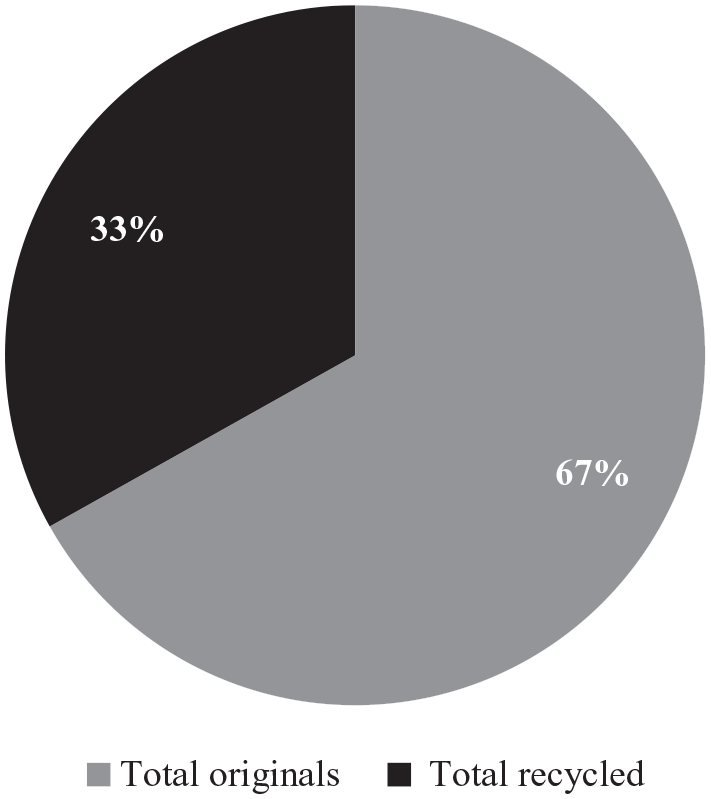
Percentage of original versus recycled Netflix Original films.
The persistence of recycling strategies within Netflix indicates that, between 2015 and 2022, the industrial logics associated with the traditional practice continues to shape conservative content strategies in the age of streaming. It is, however, noteworthy that while recycling constitutes a significant portion of Netflix Original films, the company also released 440 non-recycled Originals in a time span of 7 years, equaling in an average of 63 films per year. This high percentage of “original” films may underscore the convenience institutional logic on content strategies, highlighting the platform’s commitment (and liberty) to promoting more diverse and “authentic” storytelling, focusing on high production volumes and niche content.
A primary factor accounting for the substantial prevalence of “original” films is related to Netflix’s specific corporate position. According to Lotz (2022), Netflix is a “pure play,” single-purpose company, while other SVOD services are corporate extensions of existing video businesses (e.g. Disney+) or corporate complements to large horizontally and vertically integrated conglomerates (e.g. Amazon Prime or Apple TV). As a result of their industrial positions, The Walt Disney Company, for instance, already owns an extensive IP catalog on which its streaming service can build, while for Amazon, entertainment is only one branch on which it focuses. Netflix is neither of these, and thus, they realized that as a stand-alone company they swiftly had to ramp up their (film) production volume to expand their content library, being their main asset. In addition, anticipating the competitors’ move of pulling back on their licensed content deals and, therefore, facing content scarcity, Netflix strategically accelerated the production of numerous Original films to retain and attract subscribers (Lotz, 2022). The strategic move to quickly increase its output is reflected in the absolute number of productions (cfr. Figure 2).
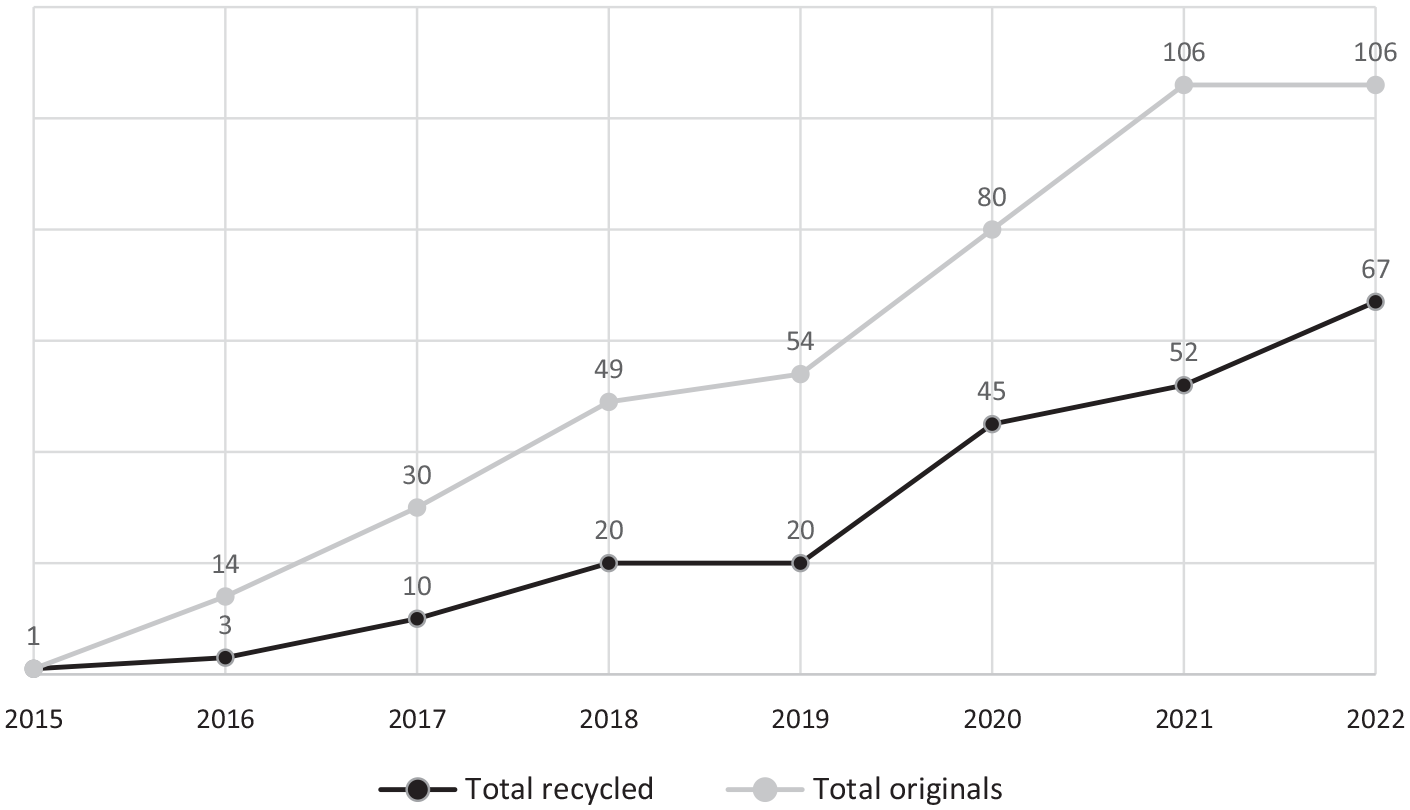
Absolute amounts of “original” and recycled Netflix Original films (2015–2022).
However, Figure 2 also tells us that, next to the linear uptrend of “original” Originals, the absolute amount of recycled Originals is on the rise in Netflix’s catalog. This suggests that – in line with Netflix’s aim to associate its brand with quality and originality – while the focus on producing original content remains strong, the company has increasingly recognized the value of recycling existing material. This conservative content strategy is coupled with Netflix’s decision to increasingly populate the catalog with expensive blockbusters (Fleury et al., 2019). Consider American productions like Bright (2017), an urban fantasy film set in a world where humans coexist with mythical creatures, and The Gray Man (2022), an action-driven espionage thriller (cfr. Lotz, 2022). Despite the fact that, generally, content that caters to a broader audience and achieves widespread popularity is perceived as less fulfilling for subscribers, in all probability, Netflix does this “to generate buzz, unpaid promotion, and cultural discussion that make people who don’t subscribe feel left out or that they need to join and see what is going on” (Lotz, 2022: 144).
To gain a better understanding of the increasing significance of recycled content, Figure 3 shows the relative proportion of recycled Original films compared to all Originals over the period 2016–2022. The data point of 2015 was left out of this figure because in this year, there were only two productions with one of them being recycled, skewing the findings.
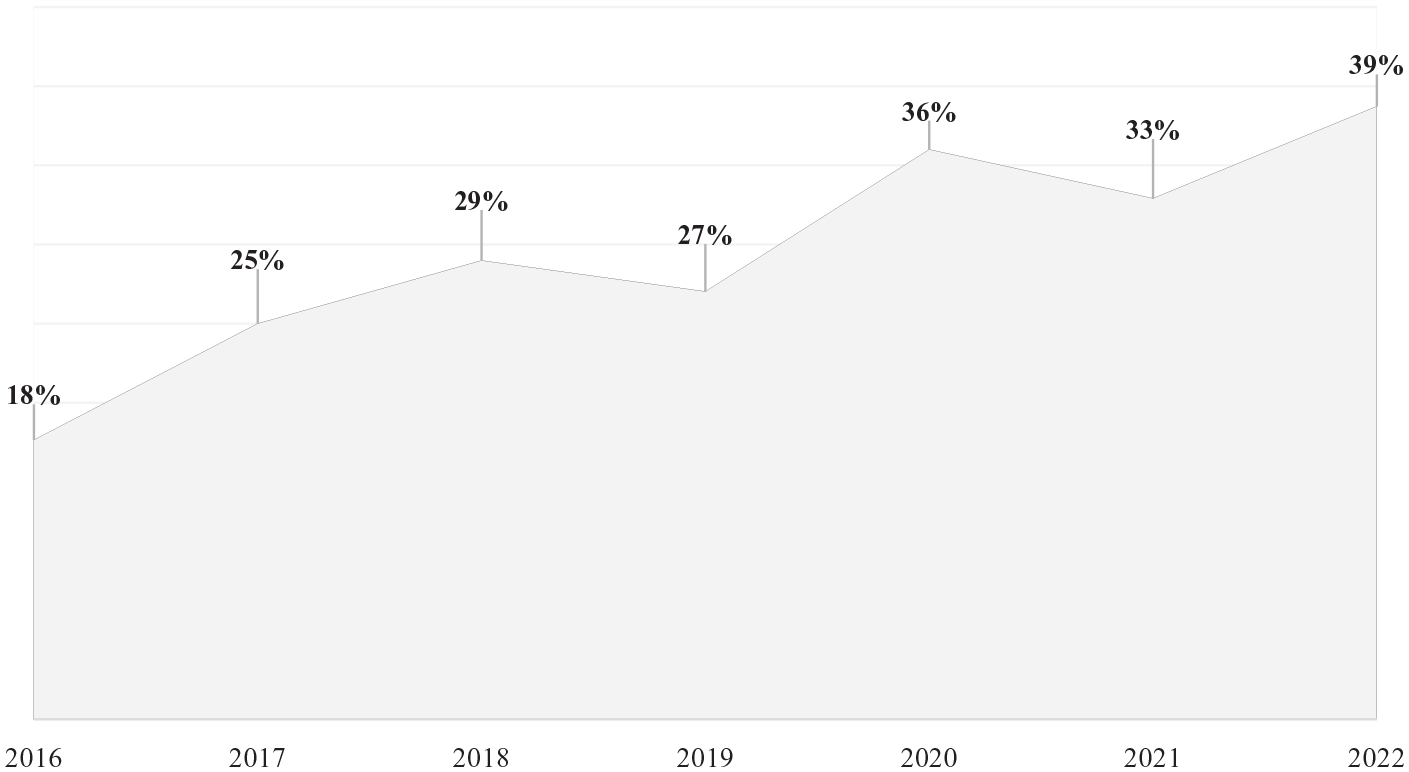
Relative amount of recycled Originals.
Figure 3 reveals a fluctuating, yet overall upward pattern, highlighting the increasing prominence of recycled content within Netflix Original films over the specified timeline. In 2016, the percentage of recycled Originals stood at 18%, indicating a relatively modest presence of recycled content in the early years of Netflix’s original programming – conforming to Netflix’s early positioning as a disruptive player, challenging traditional studios by focusing on quality and authenticity. However, one can observe a noticeable increase in the following years, with 2017 showing a rise to 25% and 2018 reaching 29%. Interestingly, there was a slight decline in the percentage of recycled Originals in 2019, dropping to 27%. At first sight, this small dip may indicate a shift toward investing more in original content and a conscious effort to diversify their offerings.
However, the trend quickly reversed back in 2020, marking a substantial increase to 36% of recycled Originals. The latter surge might be attributed to various factors, such as the challenges (and affordances) posed by the COVID-19 pandemic, which not only pushed “audiences ever more into the arms of the streaming services as a way to see new films [but also] increasingly, serial fiction” (Meir, 2021: 282). Additionally, in Q2 of 2019, Netflix did not add as many subscribers as projected and even lost 130,000 US customers which former CEO Reed Hastings attributed to “a lack of original content” (Alexander, July 2019) – which is not to be taken literally, as illustrated by the growing level of recycled content. Hence, just like Hollywood has always resorted to risk-off strategies in times of economic downturns, in times of declining subscribers, Netflix has expanded its film catalog by relying increasingly on recycled material.
As described in the above, streaming platforms place great importance on minimizing customer turnover to ensure a steady stream of revenue. In this manner, Netflix appears to have not only adopted the convenience logic in its content strategies, but also embraced strategies that govern the commitment logic. Adopting the tactic of offering audiences more of what they already enjoy holds significant value, as it serves as a compelling incentive for subscribers to stay engaged and committed to the platform. Whereas in 2021, the percentage of recycled Originals remained relatively stable at 33%, data for 2022 show a further increase to 39% of recycled Originals, reaching a notable proportion of their content lineup. This confirms that Netflix adeptly leverages this principle by cultivating and delivering audience expectations.
Aligned with the escalating prevalence of recycled content, Netflix has strategically embarked upon substantial financial endeavors to acquire highly sought-after IPs. As evidence of this trend, in 2021, the company made a momentous acquisition of the Roald Dahl Story Company for an estimated value of $1 billion (Ramachandran, September 2021). Concurrently, Netflix reportedly invested a staggering $450 million in securing the sequel rights for the film Knives Out (2019) (Lang and Donnelly, March 2021). This critically acclaimed murder mystery explores the death of a wealthy crime novelist, Harlan Thrombey (Christopher Plummer). In clear whodunit fashion, the witty private investigator, Benoit Blanc (famously portrayed by Daniel Craig), adeptly unveils the intricacies of the strained relationships that exist between Harlan and multiple members of his family in order to solve the mystery. These strategic moves prompt an inquiry into the ownership of the content that Netflix recycles and whether the company possesses the IP itself (cfr. below).
In sum, it becomes apparent that Netflix operates in a complex landscape, navigating the dual demands of content recycling and original storytelling. Hadida et al. (2021) indicate that “[t]he institutional logics perspective points to organizations potentially becoming more similar in time, for instance through the mobility of human capital among them. Online streaming services regularly hire traditional media executives” (p. 232). In other words, the integration of expertise from traditional studios into streaming services highlights a convergence of institutional logics, which may explain how “instead of wanting to be an alternative to the Hollywood standard, [Netflix] is trying to beat Hollywood at its own game” (Cuelenaere and Joye, in press). In sum, in its first years, Netflix seemingly defied the established norms of Hollywood and succeeded in building an impressive global streaming empire, quickly inspiring other players in the entertainment industry to imitate its model. However, in the face of slowing growth and subscriber turnover, Netflix is now revisiting its strategies and drawing insights from Hollywood’s centuries-old game plan as it seeks more conservative approaches to move forward.
Netflix’s film catalog: adapting, extending, and restarting narratives
“There’s just no other substitute for the amount of work and creativity that goes into a book,” claims Matt Thunell, vice president of original series at Netflix (Boog, April 2019). When comparing the different types of recycling (cfr. Figure 4) prevalent in Netflix’s film catalog, it becomes evident that 66% of the recycled content consists of adaptations and 2% of readaptations. A closer analysis shows that these (re-)adaptations involve transforming non-cinematic material, such as books (77%), plays (7%), graphic novels (5%), and other properties (11%) into film. Interestingly, less than 10% of the books and novels, on which these adaptations were based, are bestselling properties. This is noteworthy since earlier research has shown how “book equity” (including best-seller status) drives the film adaptation’s success, suggesting that selecting a book with a higher best-selling rank has a stronger influence on the movie’s success at the box office (Joshi and Mao, 2012). Indeed, while adaptations and readaptations can offer quality content, they might not always provide the built-in audience or immediate recognition that, for example, spin-offs, sequels, or prequels do (Sood and Drèze, 2006), which typically benefit from existing fan bases or brand recognition. This may indicate that these adaptations and readaptations are possibly meant to introduce lesser-familiar or niche stories to the platform. As Kelly Luegenbiehl, vice president creative for international Originals at Netflix, once stated: a book’s success and, therefore, built-in audience for the adaptation is “something that we want to know about, but it’s definitely not the single determining factor in why we would adapt something” (Boog, April 2019).
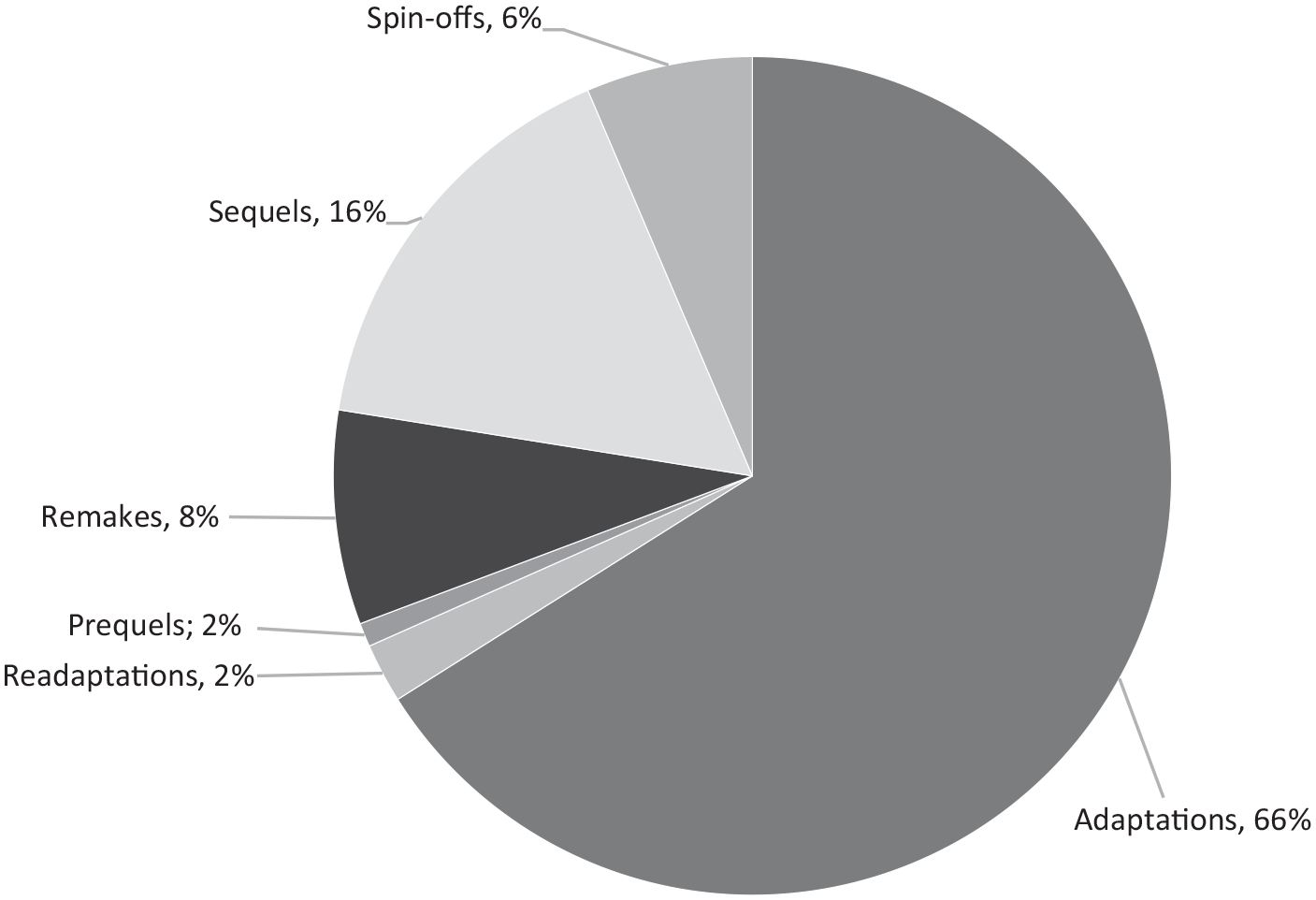
Percentages of the different types of recycled films in the Netflix Original film catalog.
It could, therefore, be argued that – in line with the convenience institutional logic – adaptations might have been strategically employed by Netflix to quickly acquire compelling stories and build a diverse content library, especially considering the platform’s initial need to catch up in terms of IP. In several cases, Netflix opted to also link a critically acclaimed director to the adaptation. The Power of the Dog (2021) serves as a prominent example of this strategy. The film is a powerful revisionist Western psychological drama that explores themes of masculinity, family dynamics, and repressed emotions in the American West in the 1920s. It quickly received critical acclaim for its stunning cinematography, compelling character development, as well as exceptional performances of its cast, notably Kirsten Dunst and Benedict Cumberbatch. Directed by Jane Campion, the film is an adaptation of a novel bearing the same title, authored by Thomas Savage in 1967. This example reflects Netflix’s approach of reviving and reimagining literary works, tapping into established stories – in this case a novel that was republished in 2001 due to lackluster sales in its initial year of publication, despite receiving critical acclaim.
Our findings, therefore, seem to point to a “double tracked” pursuit of IP (both recyclable IP and investment in original scripts), exemplifying the strategic approach to content acquisition and expansion in the competitive streaming landscape. As such, it is suggested that the current era of streaming might represent a revival of several of the content strategies that are central to the traditional studio system. A notable difference here is that a platform like Netflix may no longer wish to “possess” the most influential talent (i.e. directors, stars, writers, . . .), but rather “the most important cinematic brands” or properties (Fritz, 2018: 94).
Next to the high percentage of adaptations, sequels comprise 16%, spin-offs constitute 6%, and prequels account 2% of the recycled content, totaling in 24%. Different factors may explain why Netflix prioritizes recycled content that continues or expands on existing narratives (in the case of sequels, spin-offs, and prequels), instead of repeating them (in the case of remakes). While sequels, for instance, offer opportunities for expanding the narrative world and exploring new storylines, remakes face the difficult task of balancing audience expectations with the need for fresh and creative storytelling.
It could be argued that the platform’s inclination to expand storylines aligns with its overall sequelization logic, which is prominent in the way it releases series with additional seasons. As some media industry scholars argue that the boundaries between films and series are becoming less significant (Fleury et al., 2019; Lotz, 2022), one could argue that Netflix treats films more in line with the expanding logic of television series, making them more amenable to extensions rather than direct replication, as seen in remakes. As shown in Figure 5 (cfr. below), the high percentage of recycled content that expands on existing content can also be attributed to Netflix’s strategy of capitalizing on its own IP catalog. Our analysis supports this notion, with 75% of prequels in the Netflix Original film catalog expanding on storylines from their own IP, while 60% of sequels and 50% of spin-offs also draw from the platform’s internal IP.
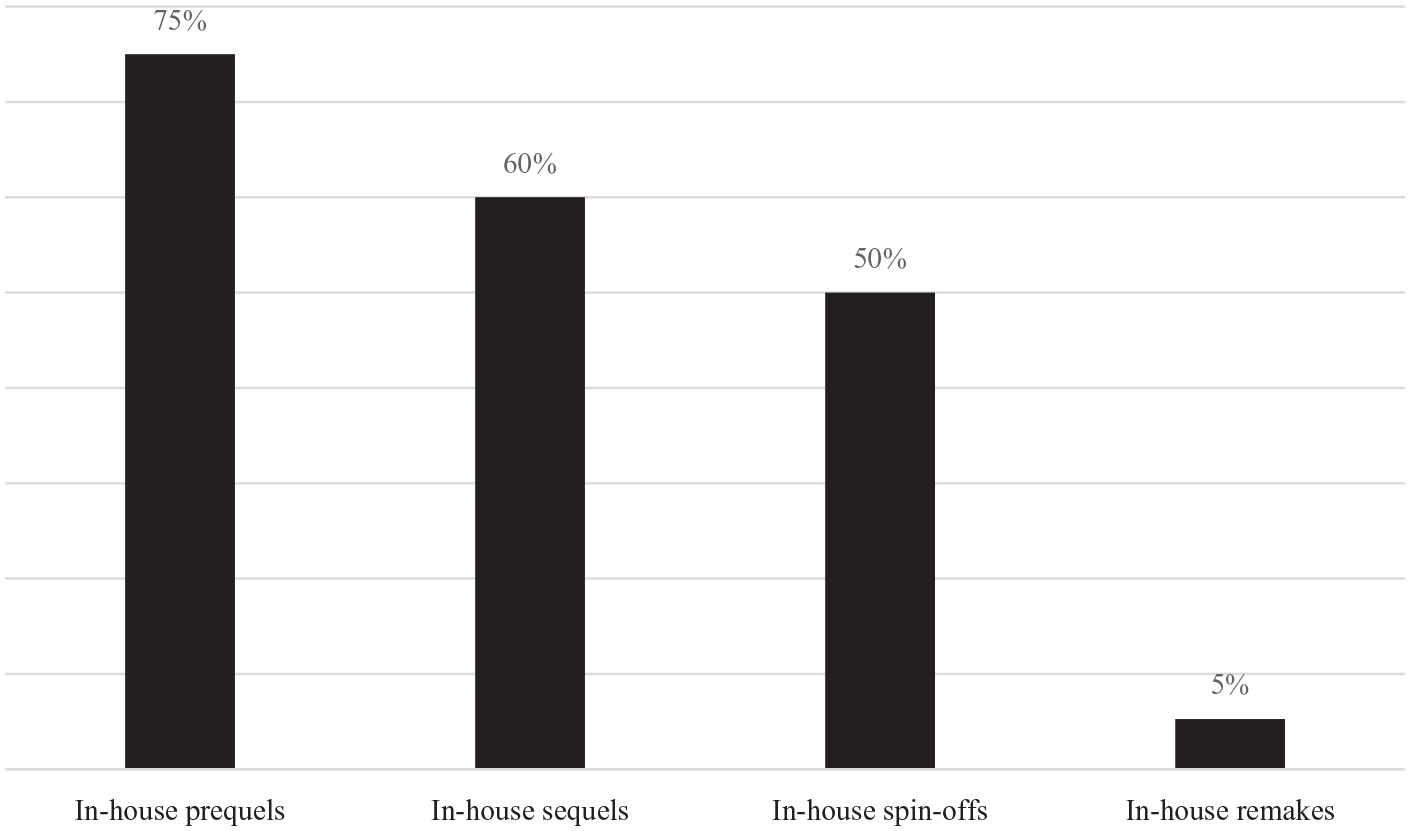
Relative amounts of in-house recycled content per type.
An interview with the ex-CEO in The Hollywood Reporter exemplifies the latter. Reed Hastings claimed that Netflix could still learn from Hollywood, especially when it comes down to building unique universes and franchises, akin to, for instance, Harry Potter and Star Wars (Jarvey, September 2020). This aspiration is illustrated by the company’s efforts in launching the The Gray Man universe in 2022. Its first installment is an action thriller starring Ryan Gosling and Chris Evans. The film centers on a duel between two elite assassins (which are also ex-colleagues), with Gosling’s character as the pursued and Evans as the relentless pursuer, creating a high-stakes cat-and-mouse game in the world of espionage and international intrigue. Prior to Netflix acquiring the adaptation rights, Mark Greaney’s best-selling debut novel, bearing the same title and published in 2009, was initially considered for adaptation by New Regency in 2011 and subsequently by Sony Pictures in 2015. In 2020, Netflix was willing to pay no less than $200 million (its most expensive film project as of yet) to produce the film, probably driven by the fact that the Russo brothers (known for working on several highly successful Marvel and other franchises) wanted to direct the film adaptation. In fact, not long after the film finally premiered on the platform in 2022, an in-house sequel and spin-off was locked in, which confirms that “Netflix is cementing plans for the IP to become a major spy franchise” (Netflix, July 2022).
Finally, Figure 4 reveals a rather low percentage of film remakes (8%) in Netflix’s Original catalog. There is a consensus among scholars (Herbert, 2008; Moine, 2007; Verevis, 2006) suggesting that remakes, both as an industrial practice and a cultural phenomenon idea, are particularly susceptible to criticism based on “preconceived notions of cultural value” (Mee, 2017: 194) and the neoromantic belief that art should be original and divorced from commerciality (Klein and Palmer, 2016). Coincidentally, these are precisely the two aspects that Netflix’s branding strategy has long attached great significance to, which may explain the lower amount of remakes. Whereas, for Netflix, sequels, spin-offs, and prequels are founded on the strategy of bolstering customer retention and ensuring a steady revenue stream, the streamer’s remakes primarily aim to introduce existing properties made in specific geo-linguistic contexts to a new (often global) audience. An example of this is the Spanish Netflix Original, A Not So Merry Christmas (2022), which is a remake of the originally Brazilian Just Another Christmas (2020), which is also part of Netflix’s Original catalog. Both films fall under the genre of fantasy holiday comedies (both released in the month of December) and follow a protagonist who is suddenly trapped in a “Groundhog Day”-like loop, having to relive Christmas Day repeatedly until he discovers the “true” meaning of the holiday.
The latter remake is a unique example, however, as it is an in-house remake, which only accounts for (5%) of all Netflix Original remakes. This low number of in-house remakes may make sense today, as it would be redundant to introduce its audiences to a remake of a film that is, already part of its catalog. It is, however, too early to conclude that the streamer might never opt for this specific recycle strategy, considering the relatively short tenure of the company. In comparison, Disney+, for instance, of which the parent company owns a content library filled with decades old successes, has tapped into this strategy several times (e.g. Lady and the Tramp (2019), Pinocchio (2022) or Peter Pan & Wendy (2023)). As Netflix has not been in existence for an extended period, it has not yet produced films that are a decade or two old and which could be ripe for a remake. As time progresses, and the streaming service’s original content ages, the possibility of pursuing in-house remakes might become more relevant in its content strategy.
As said in the above, for now, Netflix’s ambition with remakes seems to lay in introducing existing properties to new audiences, explaining why 79% of its remakes are transnational in nature. The majority of these transnational remakes are, however, English-language remakes, allowing Netflix to reach a wider and more diverse viewership without extensive investments in entirely original productions. This is illustrated in The Guilty (2021), for instance, which is an English Netflix remake of a Danish original, Den Skyldige (2018). Both films’ plots center on a police officer demoted to emergency dispatch duty who receives a distressing call, setting off a race against time. With the latter example, Netflix aimed to cater to a wider English-speaking audience, including viewers in different countries who might not be familiar with the original Danish version. The film’s thriller genre also easily transcends language barriers, while its gripping narrative resonates with international audiences, making it an ideal choice for a transnational remake.
Conversely, non-English local language remakes seem to serve more as a cost-effective and risk-adverse means (Cuelenaere et al., 2021) to tap into new local markets by utilizing existing and proven storylines to enrich the platform’s local-language catalogs with fresh content. The Turkish Netflix remake One-Way to Tomorrow (2020) serves as an illustrative example here because it represents a milestone for the platform as its first Turkish original film. In this film, a chance encounter between two strangers on a train sparks a journey of self-discovery and romance. More importantly, by venturing into the Turkish market with a local-language remake, the platform demonstrates its commitment to expanding its global footprint and catering to specific regional audiences. In accordance with the fairly recent trend of European local-language remakes, in 2020, Netflix, for instance, released an Italian remake The Players. Based on the originally French sex comedy released in 2012, the film deals with male infidelity in the form of a group of friends who engage in a series of outrageous romantic escapades. This remake exemplifies Netflix’s endeavor to capitalize on successful films through localization, while also aligning with its broader strategy of offering region-specific content to appeal to a wide range of audiences across Europe and beyond (Cuelenaere et al., 2021).
Conclusion
The recycling phenomenon within the film industry, though not set in stone, is firmly entrenched and has shown enduring persistence across various historical periods and industrial contexts. The study’s results reveal that while Netflix has been prolific in producing original films, it also dedicates a substantial and even growing portion of its catalog to recycled content. In contrast to the speculation in existing literature, which posits that SVODs rely more on the long tail of content rather than heavily exploiting a few hits per decade due to their distinct business model, our findings indicate that Netflix actually exhibited an increasing dependence on recycled material. This enabled the company to (in a sense paradoxically) quickly widen its library, tap into established audiences, expand on existing IP, and capitalize on proven storylines, while simultaneously enhancing revenue streams and customer retention by incentivizing continued subscription.
Hence, contrary to the truism that new media forms replace old ones, our findings demonstrate that the coming of SVOD platforms in the film industry – in our study exemplified by Netflix – represents an ongoing negotiation between established and emerging content practices. Indeed, as we hope to have shown, content recycling within Netflix’s Original film catalog may have not faded away but is also not just a mere replication of past content strategies. While the streamer does not adhere fully to the commitment logic – focusing on the generation of box-office revenues – Netflix does employ some of its tactics to retain and attract subscribers through a diverse range of offerings, blending recycled content with original productions.
By the end of 2022, Netflix’s strategic move to launch an ad-supported tier has further complicated the interplay between traditional and emerging strategies within the platform. This may, in turn, have various potential implications for Netflix’s future content strategies. For now, it seems like Netflix’s executives will further focus on developing successful IPs, hoping to creating universes and characters that can be revisited across various shows, movies, games, and other consumer products. Hence, the rise and expanding significance of SVOD platforms, forerun by Netflix, appear to represent less of a fundamental revolution, let alone modification to the tried and tested content strategies that have been recycled for decades in Hollywood. Even though the persistence of recycling strategies raises questions about industrial and especially artistic conservatism, it also simply reflects the pragmatic realities of the streaming industry’s competitive landscape.
