




Abstract
The article explores legitimization strategies related to cultural consumption in the Czech media space by comparing the representations of cultural products in influencer communication on social media and in legacy (print and online) media outlets. Departing from the theoretical debate on the intersection of cultural omnivorousness and the emergence of algorithmic culture, the article poses the question: what strategies do influencers on social media and journalists in legacy media outlets employ to present consumption of cultural products as legitimate, interesting, and cool? Based on qualitative content analysis of 10 Instagram profiles of prominent Czech influencers and culture sections of 10 Czech legacy media, it discusses two main discursive legitimization strategies: (1) the notion of authenticity, used by social media influencers and (2) the notion of cult, used by legacy media in two distinctive ways – as (a) legendary, part of the pop cultural canon and (b) new, contemporary, part of up-to-date cultural savviness.
Introduction
In July 2021, the writer and essayist Safy-Hallan Farah published an essay in The Vox titled “The Great American Cool.” By describing her own experiences with working in a literary magazine, she writes about what she perceives as the disappearance of clear-cut and reliable denominators of coolness. “The great American cool is nearly dead, slipping out of the grasp of Gen Z, who seem too busy being themselves to care,” she conjectures (Farah, 2021). Farah bases her argument on the omnipresence of social media feeds and the democratizing forces of the Internet, where everyone can have access to almost everything. In addition, the distribution channels from cultural elites (“hip kids”, in Farah’s words) to the masses, which artists, producers, and marketers have cultivated since the emergence of mass media, have been severed. She concludes that Cool, once narrowly delineated and foisted upon us by marketing cherry-picked from hip kids, has been blown apart for the new generation. In a world where everyone, not just the most interesting youths, is under a kind of constant surveillance — where our individual information is more valuable than any short-lived idea of collective cool — demographics give way to data.
In a similar vein, Kayle Chayka writes about the “end of monoculture” in his widely referenced essay, “Can monoculture survive the algorithm?”. Chayka (2019) identifies two trends in English-speaking media: (1) warnings about the disappearance of shared cultural reference points caused by the emergence of streaming platforms and social media, and, quite paradoxically, (2) concerns that the ever-present pressure of performing taste on social media – reinforced by the biases of algorithmic recommendations – are causing a flattening effect. Even though we are all seemingly being catered specific products based on our niche interests (i.e. data we give to platforms), we all end up consuming, liking, and referencing the same things (Chayka, 2019).
These essays are only a few examples of several media representations of a dynamic that is perceived as a cultural shift (see also Reynolds, 2019). In the academic discourse on cultural consumption and cultural hierarchies, the past 30 years have been to a great extent defined by debates over the concept of “omnivorousness” (Peterson and Kern, 1996). Sociologists have recently argued that the perceived “traditional” divide between highbrow and lowbrow cultural consumption has disappeared (Bennett et al., 2008; de Vries and Reeves, 2022; Pedersen et al., 2018). The concept of omnivorousness, which “suggests a qualitative shift in the basis for marking elite status – from snobbish exclusion to omnivorous appropriation,” (Peterson and Kern, 1996) is framed by the debate on class and taste. Many authors are thus questioning whether and the extent to which omnivorousness can be seen as blurring class distinctions or reflecting a change in class-related denominators that are becoming more fluid (Pedersen et al., 2018). Debates about cultural stratification are becoming more closely linked to the conceptualization of individual identities (de Vries and Reeves, 2022; Pedersen et al., 2018). At the same time, as de Vries and Reeves (2022) note, several small-scale, qualitative studies also show that elitism and the positioning of high-brow culture as desired canon are still prevalent among different groups in society (Pedersen et al., 2018; Špaček, 2018; Veenstra, 2015).
Last but not least, the emergence of streaming platforms such as (most visibly) Netflix and Spotify recently prompted a new body of research on the impact of algorithmically ordered platform environments on collective and individual consumption patterns, taste, and cultural stratification (Hallinan and Striphas, 2016; Striphas, 2015). The above-mentioned media narrative on the “death of cool” and the “end of monoculture” thus needs to be interpreted against this backdrop of intersecting trends and phenomena, where journalists are trying to navigate the seemingly conflicting trends of omnivore consumption, algorithmic catering to niche interests, fragmentation of cultural landscapes and the emergence of new cultural intermediaries (Maguire, 2015; Maguire and Matthews, 2014) such as online influencers.
Departing from these debates, this article presents an analysis of how both traditional cultural intermediaries (e.g. journalists in legacy media outlets) and newly emerging intermediaries (e.g. social media influencers) are navigating the changing dynamics of cultural stratification. The comparison is based on the assumption that journalists and social media influencers are important cultural intermediaries that consumers rely on to navigate the market of cultural artifacts, but their practices differ based on the environment in which they work.
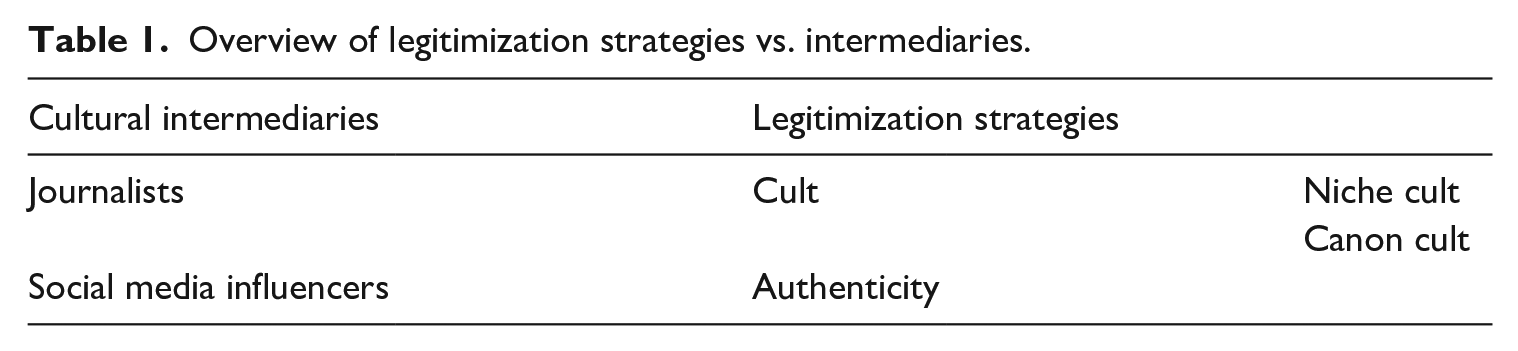
Based on a qualitative content analysis of the culture reviews and articles in legacy media and an ethnographic analysis of social media influencers’ content on Instagram, this study seeks to identify and analyze discursive strategies employed by the two groups of cultural intermediaries to establish and legitimize cultural hierarchies. In other words, it asks how journalists and influencers legitimize what can be labeled as cool and worthy of their audience’s attention. The analysis identifies two main concepts that are applied to legitimize the representation and consumption of popular cultural products – authenticity, which is most often used by social media influencers, and “cult” or “cultishness” employed by legacy media journalists. Furthermore, the analysis distinguishes between two different approaches to the notion of cult that emerged during the study: namely, (1) the notion of cult as something that is widely known, referenced and thus legendary and part of canon, and (2) the definition of something as “cult” because it is niche, up-to-date and part of cultural savviness (see Table 1). While the second notion is sometimes also adopted by social media influencers (but presented within the framework of authenticity), the first one is used almost exclusively in the context of legacy media.
Overview of legitimization strategies vs. intermediaries.
Cultural intermediaries in the age of (digital) omnivorousness
The current academic debates regarding cultural consumption are framed by two overlapping themes: (1) the ongoing discussion about the validity and usefulness of Peterson’s (1992) omnivore hypothesis and (2) the collection of various attempts to grasp the impact of changing modes of distributing cultural content – most notably the emergence of streaming platforms – on individual consumption patterns and taste (Striphas, 2015; Weingartner, 2021). The omnivore hypothesis, though criticized from different angles (de Vries and Reeves, 2022; Veenstra, 2015), has become the dominant academic framework for discussing cultural capital and taste (Bennett et al., 2008; de Vries and Reeves, 2022). As de Vries and Reeves (2022) sum up, there is little doubt that omnivorousness offers a better analytical outlook on how culture is classified and consumed in the 21st century than the previous distinction of mass versus elite consumption. The question remains, however, as to how we can precisely define an omnivore, and the degree to which the choice of cultural products from across the low-brow/high-brow spectrum is determined by class and social and cultural capital. Weingartner (2021) explores the notion of “digital omnivores” and asks if digital media are capable of decreasing the inequalities between different groups of consumers, as digital media make a wide range of cultural content available to an ever greater number and variety of audiences. His study, however, shows that digital media have no discernible “democratizing” effect in this way (as opposed to television, which was the dominant medium of cultural consumption at the time of Peterson’s first article on omnivores).
Nevertheless, the impact of digital media, and most notably online streaming platforms such as Netflix, cannot be overlooked. As Chayka (2019) in the above-mentioned essay points out, the access to seemingly endless content on platforms has, on the one hand, created a niche groups of individuals consuming specific genres that were previously less visible. The datafication of consumption introduced by Netflix (Chandrashekar et al., 2017) enabled platforms to classify consumers’ tastes and cater to their specific interests. On the other hand, the profit-driven logic pushes the platform to produce content that will respond to the preferences of the widest possible number of subscribers, which means that “niche” fragmentation is also accompanied by increased production (and consumption) of standardized products (which Chayka calls elsewhere “ambient TV”; Chayka, 2020). Striphas (2015) uses the notion of “algorithmic culture” to observe that the “shift in culture has long been practiced, experienced and understood” (p. 395) as a result of the classification of culture being increasingly delegated to algorithmically ordered processes. Striphas (2015) also points out that while algorithmic culture could seem like an ultimately democratizing force (since everyone with an Internet connection is able to offer their data thereby seemingly getting a say in what gets produced and consumed), it is the opposite. A process of privatization (Striphas, 2015: 406) occurs, since the data are owned, classified, and commodified by the platforms’ private actors/owners, and the algorithms sorting the data are in many cases opaque (see also Hallinan and Striphas, 2015). Gaw (2022) views algorithms (specifically, the Netflix recommendation algorithm) as contemporary cultural intermediaries: “They are tastmakers who, through their cultural capital, legitimize particular forms of culture and translate them into everyday cultural encounters” (p. 707). What is important however, is that “algorithms derive their influence not from cultural expertise, but from their computational capabilities” (Gaw, 2022). Following Striphas’s notion of algorithmic culture, Gaw proposes the concept of “algorithmic logic” to analyze the mechanisms of constructing taste on the Netflix platform.
Cultural intermediaries are defined as “actors who construct value by mediating how goods [. . .] are perceived and engaged with by others” (Maguire and Matthews 2014: 2). The age of digital media and algorithmic culture created new categories of cultural intermediares – in addition to algorithms, the growth of algorithmically ordered, user-generated content platforms is also linked to the emergence of influencers able to legitimize mass cultural consumption.
Cultural intermediaries in legacy media and new media
This article seeks to analyze how two types of cultural intermediaries use various discoursive strategies to legitimize cultural hierarchies – in an environment characterized by the shift to omnivorousness as a dominant mode of cultural consumption on the one hand, and the ever-increasing signficance of algorithmic culture, and algorithms as cultural intermediares, on the other. As Matthews (2014) notes, journalists appear as an example of cultural intermediaries in Bourdieu’s work even if media scholars have been mostly reluctant to employ this particular sociological perspective in their research (p. 145). It has also been noted that Bourdieu’s work on cultural consumption focused overwhelmingly on two specific categories – literature and art. Hesmondhalgh (2006), however, provides an overview how Bourdieu’s notion of cultural capital can be applied and theorized within media studies, and Matthews (2014) contributes to filling this knowledge gap by analyzing the role of journalists as cultural intermediaries in the current media landscape.
Social media influencers (SMI) on the other hand comprise a relatively new type of intermediary whose authority is native to the environment of digital communication platforms. As the culture of internet communication shifts toward what Abidin (2021) calls the “refracted public” model, where internet communities are fragmented, increasingly opaque, and creatively circumventing the algorithmic recommendations of the platforms from which they emerge, the role of SMIs also shifts toward a position of “curators” (Andjelic, 2021). This study thus seeks to compare the legitimization strategies used by these two types of cultural intermediaries – journalists in legacy (print and online) media and social media influencers (on Instagram). The comparison is based on the assumption that both journalists and social media influencers are important cultural intermediaries in the current market of cultural products, but that their practices differ because they are shaped by both the technological and social affordances of the environment in which they work as well as the kind of interaction they expect from their audiences.
Deuze (2001) dates the beginnings of the digital media era to the early 1990s. The digital media boom has been accompanied by the shrinking of legacy media, particularly print media and broadcasting services such as TV and radio. These early developments led in many cases to the assumption that digital media would soon replace legacy media entirely (Diel, 2017). Today, most authors recognise that this has not happened – at least not yet (Diel, 2017). At the same time, the distinction between what constitutes “old” and “new” in the media ecology seems to become more and more blurred, as traditional broadcasting services are adapting to digital environments and producing content targeted at digital audiences and distributed via social media channels alongside TV and radio content. Some authors then point out that the chief differences between legacy media and new, web-based media are mainly in their ownership, funding structures and profit-making models (Painter et al., 2018). Natale (2016) avers that the term “legacy media” itself only makes sense in relation to and in comparison with new media, and proposes to treat new media “as a relational concept – not an attribute characterizing media as such, but an element of how people perceive and imagine them” (p. 585). In this perspective, the everyday experiences and emotions of the audience are key to determining what “new” and “old” mean (Natale, 2016).
This paper follows the approach of these authors and focuses on how both journalists working for legacy media and social media influencers relying on user-generated content platforms develop different strategies for legitimizing cultural consumption based on: (a) the technological affordances of the distribution channels they use to communicate with their audiences (media outlets versus social media), and (b) the everyday practices that are tied to the expectations, emotions, and experiences of the audience (following up on Natale’s approach). The article follows the assumption that the practices, tools and strategies of value-making used by cultural intermediaries to legitimize certain cultural artifacts for consumers are shaped by both the changing nature of omnivorousness (and the changing nature of cultural capital that comes with it) and the communication tools available to them, most notably social media.
Data and methods
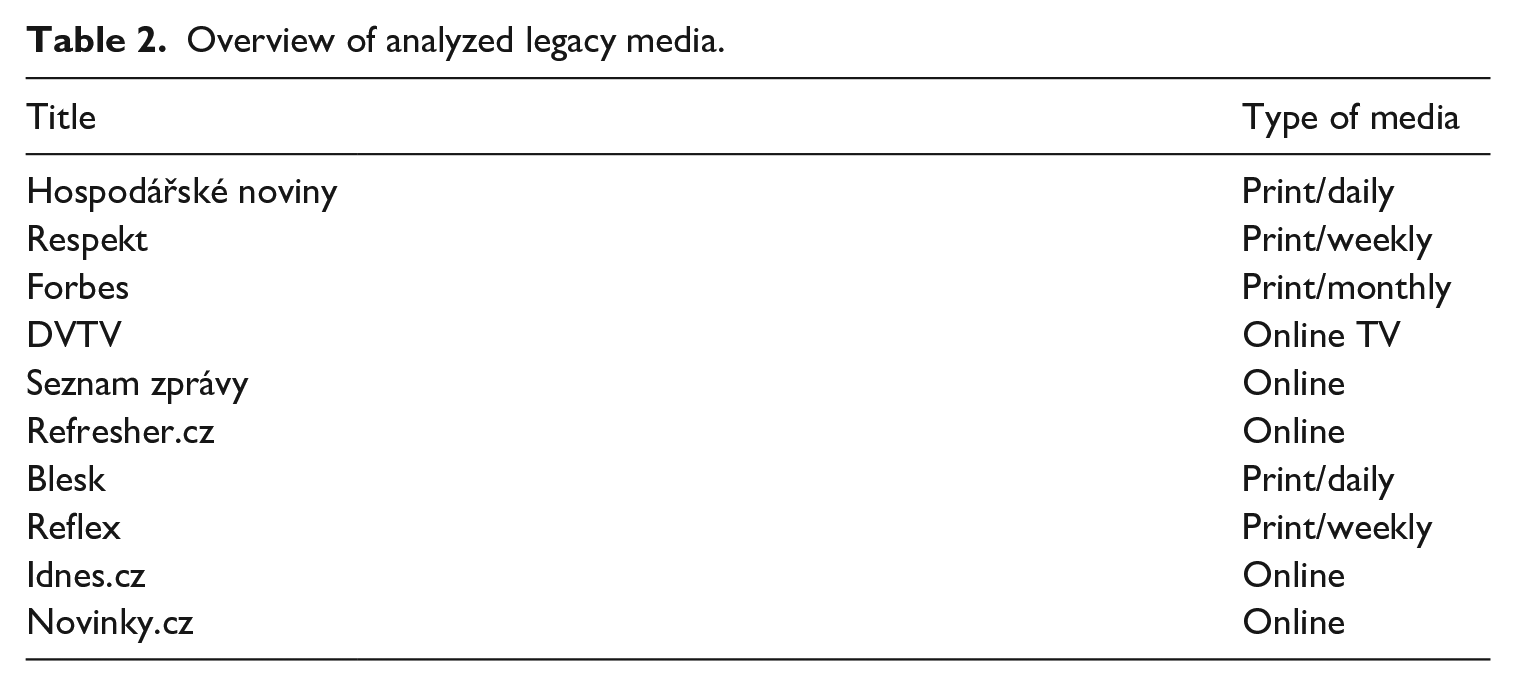
The principal methods employed for the analysis of the data presented in this article are qualitative content analysis, namely thematic content analysis (Neuendorf, 2018), and ethnographic content analysis (Altheide & Schneider, 2013; van den Scott, 2018). The data from legacy media outlets (print and online versions) were collected from the Newton Media Database using a combined keyword search for cultural sections and covering the period from January to December 2019. The media outlets were selected based on two main criteria: their relative focus on culture or inclusion of a dedicated culture section, and the outlet’s relevance for the target group of youth (20–35 years old). Newton Media Database was also sourced for information on target groups and relevance to young audiences (Table 2).
Overview of analyzed legacy media.
The data were coded in two rounds. In the first round, an open coding approach (Rivas, 2012) was applied and categories were established inductively. The category of “cult/cultish” was established as a prominent legitimization strategy in the first round of coding, therefore the second round focused on a smaller sample of data that were generated from the original corpus by using a keyword search for “cult” and “cultish” (“kult/kultovní” in Czech). Repetitive and irrelevant outputs were manually filtered out and the resulting corpus containing 196 media articles was coded and analyzed using Atlas.ti software.
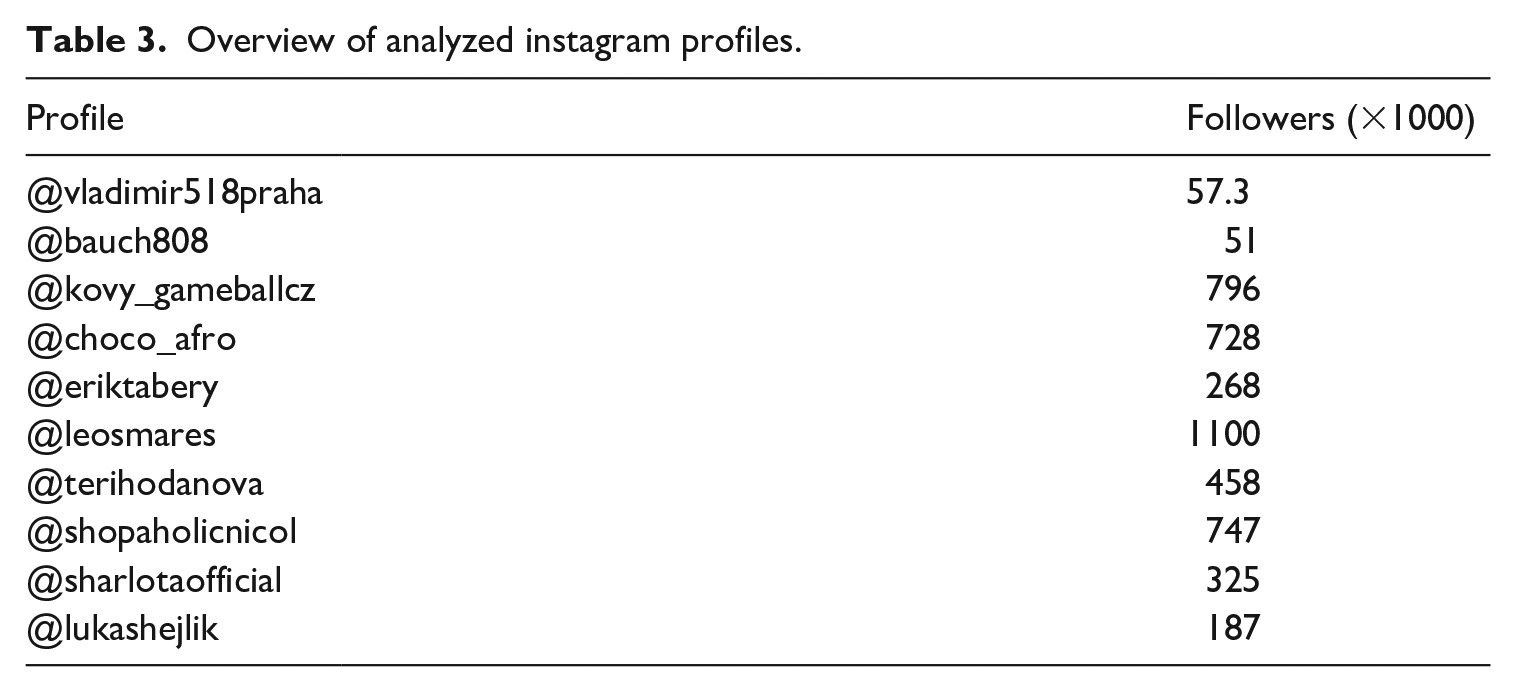
The data from Instagram profiles cover the same period and were collected using the Apify Instagram scraper. The selection of influencers was based on publicly available data on followers, engagement and target groups and, where available, triangulated with the Facebook insights tool for relevance to the same target group (20–35 years old). The main selection criteria were interest in cultural production, relevance, and engagement. The article follows the definition of influencers as people who are able to monetize their presence on one or several social media platforms (Abidin, 2018). At the same time, the focus on cultural consumption also emphasizes the role of influencers as “curators” (Abidin, 2021; Andjelic, 2021). Thus, six of the influencers included in the final sample are also celebrities, artists, and journalists who build their audiences outside of Instagram yet are now using it to promote their work, build their personal brands and promote various products to their audiences; the remaining four are influencers whose fame is native to the platform. Lastly, the focus on Instagram is based on the representational position of the platform within Czech influencer culture (Heřmanová, 2022). Data from Instagram (posts in feeds and captions) were analyzed and coded in two rounds using Atlas.ti software. The second round of coding relied on ethnographic content analysis to include both visual and textual aspects and focused specifically on markers of authenticity (van Driel and Dumitrica, 2021; Table 3).
Overview of analyzed instagram profiles.
Aspirational authenticity and curating taste on Instagram
Erik is a prominent Czech journalist with a following of 26,000 users on Instagram. His profile is a blend of work-related and personal content – he talks about books he reads and posts not only pictures from his garden but behind-the-scenes pictures from the offices of the weekly magazine of which he is the editor-in-chief. He likes to take pictures in front of his library, especially when he talks about book recommendations. In 2019, he also published a book – a collection of essays on the state of Czech democracy – and toward the end of the year, he posted a lot of photos from book readings, debates, and meeting with the audience. But throughout the whole year, he continued to post snippets of his personal, everyday life, such as having coffee in the garden or going on a family holiday. Erik does not use his verified Instagram profile for paid collaborations or sponsored posts but frequently uses his online presence to promote his work, including both the magazine and his book.
As Crystal Abidin (2017) notes, showing behind-the-scenes photos or videos is one of the main strategies employed by influencers to appear authentic and relatable to their audiences. In recent years, a significant body of research has been produced on the conceptualization of authenticity in social media (Heřmanová, 2022; Arriagada and Bishop, 2021; Balaban and Szambolics, 2022; Cunningham and Craig, 2017; van Driel and Dumitrica, 2021). Additional well-documented and often used strategies of authenticity include using unfiltered photos, showing intimate personal snippets of everyday life, posting comparisons between edited and unedited pictures (via the “Instagram vs reality” template) or posting unedited photos with the #nofilter hashtag and esthetics. While Erik’s communication on Instagram relies heavily on the “behind-the-scenes” trope as well as on glimpses into his home and personal life, Teri, another influencer included in the sample, uses the hashtag #nofilter on a regular basis. In the case of Vladimir, a musician and performer with a following of over 20,000 users on Instagram, the relationship with his audience is often strengthened by talking openly about his political opinions and emphasizing the integrity of those opinions. For example, when he includes in an Instagram profile caption a discussion of who should become the next Czech president, he ends the caption with “you don’t have to agree with me, but this is how I feel about it.” In comparison, Sharlota, who is also a professional musician and successful influencer with more than 320,000 followers on Instagram, also talks about her music, work, and opinions on various things, but in a different way – she often asks her followers questions, prompts them to action and often thanks them and expresses her gratitude. For example, in the caption of a post from the Utubering festival, where youtubers and other social media personalities meet their audiences, she thanks all of her fans and everyone she met for the great experience that she had.
In May 2021, she writes in an Instagram caption: I don’t want to be the most beautiful one or the most natural one or the one who will comply with everyone’s expectations, I want to be myself, I want to stay crazy and courageous, not be afraid of new things even if it means some negative feedback, I only live once and I want to live fully <3.
1
Very similar rhetoric is used by Nikol, a full-time influencer with more than half a million followers on Instagram. Nikol often talks about how she does not always feel her best, and how she is grateful for a community where she can also show weakness.
While it is clear that the strategies of authenticity used by the influencers are significantly gendered, with women relying on more vulnerability and communication with followers and men emphasizing their professionalism and integrity of opinions (see also Heřmanová, 2022), all the influencers in the sample regularly employ various strategies of authenticity. Their communication regarding everyday matters (e.g. their jobs and personal lives) is also reflected in their cultural production and product recommendations to their audience. While Erik mostly recommends books and sometimes comments on theatre shows or films he has seen, Vladimir likes to talk about his taste in architecture, specifically his interest in brutalist architecture and Czech architecture in the second half of the 20th century – he posts pictures from various places in Prague, and recommends books and documentaries on the topic. Sharlota, Teri, and Nikol on the other hand all talk about the TV shows and books they read, but often also about fashion. When they recommend products to their audiences, authenticity becomes a central strategy for displaying their tastes – as Nikol says, “I am genuinely recommending this because I like it, it makes me feel good.” Teri believes that the books she reads can be “useful or helpful” for her followers, because “they were life-changing for me.”
Authenticity is often a contested concept and is thus difficult to exhaustively define. As Thurnell-Read et al. (2022) note, authenticity has become a sort of buzzword of our time, so much so that . . .You might find it difficult to walk through a supermarket or department store without encountering products proudly claiming their authenticity. Turning on a television, flipping through a magazine, or scrolling social media invariably turns up textual and visual content intentionally designed to convince you that a particular person, place, or experience is authentic, and therefore worthy of your respect, your trust, your money, or your vote. (2022: 1).
The variety of strategies that influencers employ to perform authenticity on Instagram is thus not surprising because their economic and social capital as influencers very much relies on their ability to appear authentic and relatable – to convince their followers, that they genuinely, authentically, like what they are recommending them.
Until recently, influencers were seen as authorities mostly in the realm of fashion and lifestyle, but in past years, more and more influencers are turning toward more socially critical content, commenting on politics (Riedl et al., 2021) as well as engaging in cultural analysis and social critique (Andjelic, 2021). As the analyzed sample shows, more and more artists and “creatives” are also adopting different influencer strategies to communicate their work to broader audiences. At the same time, influencers can no longer rely on just visibility and the ability to reach a broad audience; dynamic developments in internet culture, content creation, and consumption practices online are marked by information overload. As various authors have noted (Abidin, 2021), influencers are becoming “curators” that guide their followers through the vast amounts of information online and point the attention of their followers toward products and content worthy of their attention. Cultural consumption and products recommended by influencers – such as Erik’s recommendation of political essays, Vladimir’s interest in brutalist architecture or Teri’s minimalist fashion choices – are thus presented as aspirational lifestyle choices, interesting for their audiences because they are based on authentic taste.
In a dynamic similar to that observed by Michael (2015), influencers are presenting their lifestyle choices as authentic (and thus aspirational) precisely because they are curated from a vast expanse of content and experienced by the influencers personally. The Instagram profile of Lukas, one of the most prominent Czech food influencers, is a also a good example of the strategy of authenticity and curation. Lukas travels throughout the Czech Republic and tries food from different places, followed by posting reviews in Instagram captions. He does not just post pictures of food – in many of the photos, he is also present and very often includes his wife and two children, writing about their experience as well. While Lukas’s strategy of making a recommendation based on authentic experience and personal taste is perhaps more pronounced, other influencers are employing similar strategies when promoting different products and artifacts.
In this way, influencers are using authenticity to perform their taste and, subsequently, confirm the ability to serve as curators of content for their audiences. Authenticity (performed as an aspirational marker of personal taste) thus serves as a legitimization strategy that can denote a cultural artifact as interesting and worthy as an object of aspirational consumption, be it a book, vinyl record, brutalist building, clothing outfit, or a vegan bistro in a small Czech town.
Mainstreaming the cult, becoming canon in the media
Unlike influencers, journalists cannot rely on personal taste and authentic experience, because, unlike influencers, they are seen as professionals in cultural reporting, and their reviews and recommendations thus deal with the expectations of being expert and objective. The role of personal taste, esthetic norms, and emotions in professional cultural critique remain somewhat of a contested point for journalists in legacy media (Zahrádka and Kotišová, 2020). Analysis of the culture sections of ten Czech print and online media outlets shows that journalists do not overtly reveal their personal preferences. Even when covering events such as musical concerts, the media coverage tends to be presented as an expert overview rather than a personal, authentic experience of the music. While influencers rely on personal taste and an authentic experience with cultural production as a legitimization strategy, this analysis identifies the notion of “cult” or “cultish” as a prominent strategy employed by Czech media to describe something as worthy of attention (and media coverage).
In the analyzed sample, the terms “cult” and “cultish” were used in reference to all kinds of products and artifacts – buildings, books, movies, PC games, theatre productions, music bands, music records and, less freqently, in reference to individual persons (“cult personality” could refer to both real and fictional characters, such as Michael Jackson or Spock from Star Trek). In the academic literature, the term “cult” within the context of cultural consumption lacks a fixed definition – in a manner very similar to the omnipresence yet ambivalence of the notion of authenticity, the question of what “cult” is or what can become “cultish” also seems to be particularly fluid and unstable. Corrigan (2021) analyses the audience experience of film as a cult and lists B-movies as predecessors of cult movies, but makes a distinction between cult films and B-list films by noting that cult films . . .become part of an audience’s private space, and in this embracing of public images as private space, they become much like furnishings or material acquisitions. . .. With cult movies, as opposed to most other films, audiences seek out not only the unfamiliar in character and story, but the unfamiliar style, frame, and imagistic texture. But once discovered and identified, the cult film and its strange images are then brought home, appropriated by viewers, who make these images privately and personally meaningful. (2021: 26).
Frow (1998) analyses the notion of cult as part of the religious aspects of celebrity worship and focuses on the meaning such practices have for the participants in celebrity cults, while Hills (2015) links cult cinema to the concept of subcultural capital (Thornton, 1995) and cult fandom practices. Martin (2008) discusses “cult nostalgia” as a way of relating to films. In these accounts, any cultural artifact can gain the status of being cult via interaction with the audience – what decides whether something is or is not cult is the way the audience, or, more specifically, the fans and fandoms, relate to it. The relationship can be nostalgic, proprietary, personal, collective, or rooted in both a sense of belonging and a sense of exclusiveness. Yet, in academic accounts of cult, cultishness, like authenticity, is a relational, dynamic process constantly negotiated within the fandom, rather than an inherent quality of the artifact itself.
Journalists using the term cult or cultish as a legitimization strategy in their professional writing are thus always presuming that this relationship with the audience exists. In the analyzed sample, these imagined audiences were represented in two distinctive ways, subsequently leading to two distinctive concepts of cult.
Firstly, “cult” was used to refer to something widely known and widely referenced, as in the following example: “Natural Woman is one of the greatest hits of the twentieth century, a cultish record that has become a symbol of the sixties and soul as a genre. It was released in 1967 and countless cover versions were released since then.” (Novinky.cz, 11/2/2019). Cult is, in this sense, something that has over the years become so widely known that it is often also described as “legendary” and “notorious.” Cult is something that can be easily referenced in a conversation because everyone will know what you mean: “It would be difficult to find a film fan who doesn’t know the mandatory equipment of Jedi knights from the cult series Star Wars”(Novinky.cz, 20/2/2019). In this context, the notion of “cult” can be interpreted as “part of the popcultural canon”, a product (e.g. a Fendi handbag), a distinctive style of production or creation (e.g. when referring to Karl Lagerfeld: “Everything he did soon became cult.” Forbes.cz, 19/2/2019), or cultural artifact (e.g. the Star Wars movie franchise or Bob Dylan’s songs). The “canon cult” thus legitimizes the cultural consumption of artifacts that are embedded in mainstream popular culture, and they are so popular that they create their own reference frames, such as famous quotes (e.g. “my name is Bond, James Bond”), or memes (e.g. baby Yoda).
Secondly, “cult” can also be used to refer to something that is, as Carrigan also notes (Carrigan, 2021: 26), “peculiar” and known to a specific, dedicated group of fans with its own language and meaning-creation practices around the artifact. The following example concerns genre films: The work of Everywhen creative collective, Sona Ferencikova, Maria Judova and Alexandra Timpau is certainly worth paying attention to, as well as the remake of the cultish horror film El Santo who fights against female vampires in the new interpretation of Mexican performer Cristina Maldonado titled Telekinetic Assault Group. (Novinky.cz, 6/2/2019).
Another example concerns PC games: “At the announced event on Thursday night the authors from the NetherRealm studios revealed the upcoming sequel to the cult series Mortal Kombat in its full glory.” (Refresher.cz, 18/1/2019). In this context, cult refers to something that can also be very new (a TV series can “quickly become cult”), but the cult status is earned by distinction from the mainstream, not by widely recognized pertinence to it. The “niche cult” status thus refers to things that are only known and appreciated by a specific group of cultural savvy fans, and the knowledge and consumption of these artifacts can also be used to signal belonging to that group. In some cases, an artifact can become cult in the niche sense but generate a wider reference framework – in the analyzed sample, this was most notably the case of the movie Downfall (2004) by German director Oliver Hirschbiegel, which was presented as a cult not because it was so widely known, but because everyone was familiar with the Adolf Hitler video memes that it produced and that are recognized even by people who have never seen the movie.
Interestingly, both notions of cult are used by the same media outlets (and presumably by the same journalists) without seeming outwardly inconsistent. In both cases, marking something as “cult” serves as a legitimization strategy that can establish a film, song, PC game, music video, or handbag as worthy of media coverage (and, subsequently, as meaningful in terms of consumption).
The fluid, dynamic character of cult in both categories can be illustrated by examples of three specific pop cultural artifacts that were found to move between the categories of “canon cult” and “niche cult,” namely the Harry Potter saga (both books and films), the HBO series Game of Thrones and the Netflix series The Witcher. The “Harry Potter universe” was referenced as a cult with dedicated fans (“Potterheads”). In this case, Harry Potter is a cult because it has a dedicated group of fans that generate narratives and language not comprehensible to people outside of the fandom. In other cases, the Harry Potter saga was marked as cult simply because it is popular, famous, and because everyone knows who Harry Potter is. “Live your life the best you can, in peace and safety, the author of the cult Harry Potter series wrote”(Refresher.cz, 21.12.2019); there is no need to mention whom we are talking about. Both Game of Thrones and The Witcher series became cult before they became mainstream (“On Monday night, the fantasy TV saga Game of Thrones, which has quickly become cult after it was first released in 2011, will come to an end.” Novinky.cz, 16/5/2019). The Witcher first acquired its “niche cult” status because of its literary counterpart (“The short stories and novels of the Polish author are considered to be one of the pillars of European fantasy and the videogames created by CD Projekt RED studio have also gained a cultish status” (Reflex, 10.10.2019), but was referred to as “cult” almost immediately after it was released on the streaming platform.
Conclusion
While the omnivore hypothesis dominates the current academic debate on cultural consumption, the question of how we can define, measure, and operationalize it are still at the center of lively debate both in cultural sociology and among media consumption theorists (Cutts and Widdop, 2017). At the same time, the parallel debates engaging with new and old media (or digital vs legacy media) complement the discussion by pointing out how modes of cultural consumption are embedded in the socio-technological environments in which they take place. In this context, the concepts of algorithmic culture and algorithmic taste construction help determine how and when cultural artifacts became available to us. That, in turn, influences whether we perceive an artifact or a mode of consumption as legitimate. Contemporary cultural intermediares thus need to navigate the algorithmic landscape of streaming platforms, adopt new ways of communicating with audiences on social media and be aware of shifting dynamics in the media market.
This study used thematic content analysis as well as ethnographic content analysis to explore the legitimization strategies of two groups of important cultural intermediaries – journalists in legacy media and social media influencers. The comparison was based on the assumption that both journalists and SMIs play an important role in mediating the value and meaning of cultural products for their respective audiences. Their ways of generating value, however, differ based on the social and technological affordances of the environments they work in; consequently, the expectations the have for their audiences also differ. The results of the analysis defined two distinctive strategies employed by the two groups – the notion of authenticity, used by SMIs, and the notion of cult, used by journalists. Furthermore, it shows that journalists talk and write about cult and cultish products in two contexts. (1) They label products and artifacts as cult when they are massively popular, and presumably so famous and known to each possible member of their audience that they do not even need explaining (canon cult). (2) On the other hand, “cult” and the adjective “cultish” are also used to talk about things that are niche, related to a specific genre and known to a specific community of people with their own language and reference frames (niche cult). The analysis also discovered examples of cultural products that quickly crossed from one category of cult to another (e.g. the Harry Potter saga, Game of Thrones, and The Witcher TV series).
The results of the analysis hence confirm that journalists and SMIs use different legitimization strategies in their role as cultural intermediaries. These strategies are to a significant degree determined by the specificities and affordances of the platforms through which they communicate with their audiences. The notion of cult, employed by the journalists, stems from an imagined response of the audience – something is cult or can be become cult because the audience will react to it in a certain way (e.g. they will celebrate it, reference it, or make memes about it). This is in line with previous definitions of cult within the framework of cultural consumption (Corrigan, 2021; Hills, 2015). In this sense, journalists base their legitimization strategies on a projection to the audience. The value of the product is always established in relation to the audience, and the journalist’s authority is based on the fact that they know, or are able to guess, the relationship of their readers to the product they are writing about. The value of the product is thus, in a way, “off-loaded” to the audience as an external authority, and journalists as cultural intermediaries gain their authority from the ability to be in line with the expectations of their audiences.
SMIs, on the other hand, root their legitimization strategies almost solely in their personal taste and preferences. The strategy of authenticity is rooted in sincerity and relatability, and these aspects are compounded by various strategies such as revealing intimate moments from everyday life. In opposition to journalists, then, SMIs are the experts themselves and they ascribe value to cultural products according to personal tastes that they present as authentic, and not affected by the audience’s modal opinions. In this sense, the authenticity strategy sometimes comes close to the niche cult strategy, but it is still based on a different type of authority which is personal, subjective, and based on personal experience.
The analysis also shows that the social and technological affordances of the platforms used for audience communication by cultural intermediaries play a significant role in establishing legitimization strategies. While journalists rely on expert authority (“this is cult because people relate to it in a certain way”), SMIs, who are in direct contact with their audience, rely on their own authentic persona (“this is authentic because I personally experienced it”). The infrastructure of the platform is indispensable to the influencer’s authority, because the audience is always directly present and interacting; unlike in legacy media, where the audience is, in this case, a projection of the journalist. In the age of algorithmic culture, influencers, as a new type of cultural intermediary, build their authority on opposition to the algorithmically ordered – they build their authority on the personal, the subjective, and the authentic.
