




Abstract
Through an ethnographic study of the Delhi metro and Kumbh fair, this article explores the public address system as an infrastructure of life in urban India. Amplified sound is the singular means to address crowds during emergencies which makes it significant for understanding mass mediation and public safety. Since millions of people travel in the Delhi metro every day, and the Kumbh fair is the largest human gathering in the world, human density and scale as a predominant Southern reality is the premise of this research. It offers an intersubjective understanding of crowds through empathy and care, and reveals the life-saving potentiality of infrastructures when the masses are at risk.
Introduction
This article studies sonic amplification and public address (PA) systems in urban India as an infrastructure of life during emergencies. It offers a counternarrative to the understanding of loudness as a threat, weapon, or noise (Goodman, 2012; Hecker, 2014; Radovac, 2015; Thompson, 2017) by revealing its implementation as a life-saving force. During an interview, a manager at Ahuja Radios, one of the largest PA system companies in India, told me that the most challenging of all his projects was the PA system installation at a government atomic energy unit. In case of a radioactive leak, amplified sonic instructions were the only means to guide the workers and scientists out of danger. Since no human aid can be provided in such a situation, the stakes of designing and installing a system that must not break down are very high (Sunil Ojha, 2018, personal communication).
Concerns about life and safety get inscribed within the professional ethics, technical designs, aesthetic choices, managerial mechanisms, and religious services associated with PA systems. Sonic amplification, loudspeakers, and PA systems have been studied as means of propaganda (Birdsall, 2012), modes of state control and dissent (Alonso, 2019; Radovac, 2015), sources of noise (Radovac, 2015; Thompson, 2017), producers of sonic space (Sterne, 2015; Thompson, 2002), weapons and threats (Goodman, 2012; Hecker, 2014), technologies of collective listening (Devine, 2012), mediators of religious messages and sentiments (Khan, 2011; Larkin, 2014), and objects that populate the everyday (Duggal, 2018). This article adds to the above literature by exploring the PA system as a critical public infrastructure of safety in urban India, while also aligning itself with the sonic turn in South Asian studies (Brueck et al., 2020). The unique quality of amplified sound for addressing physical crowds during emergencies also foregrounds its potential for the conceptualization of mass mediation and listening publics, which I explore in various sections of this article.
I use infrastructure not only as an object of analysis but also as a set of revelatory situations, practices, and imaginations in two ways. Firstly, a specific situation – crisis or emergency – becomes a stage for infrastructural performance. Just like breakdowns (Star, 1999) and spectacles (Larkin, 2013), crises can be studied as moments of “infrastructural inversion” that reveal the inner workings of a system (Bowker and Star, 1999). Secondly, infrastructure becomes humanized (Simone, 2004) as a site of empathy through my ethnographic interlocutors, that is, lower and mid-level sound personnel – sound designers, retailers, managers, maintainers, voice artists, and operators – and their imagination of the PA system as an infrastructure of life. Infrastructures of life go beyond the biopolitical or necropolitical models of power wherein control over life and death are prerogatives of the welfare, neoliberal, or military state (Foucault, 1978; Mbembe, 2003). They reveal the co-existence of a parallel domain where infrastructural work is a site of empathy and care for the masses. Therefore, the professional choices and ethics of the sound workers in this article must be distinguished from the politics of the state they work for.
As this article will demonstrate, there is a direct relationship between infrastructures of life and crowd theory. While crowds have mainly been understood in relation to embodied energy, populism, and politics (Chakrabarty, 2007; Cody, 2011; Laclau, 2005; Mazzarella, 2010; Tambar, 2009), I focus on them as an infrastructural concern. The life-saving qualities of sound and infrastructure manifest firstly because of human scale and density, that is, the sheer number of people whose lives might be at risk in case of an emergency. Human density and scale as a predominant Southern reality is thereby the premise of this article, and the tendency of infrastructure to become a site of life emerges in response to this reality. Secondly, it is an empathetic and intersubjective conception of the crowds which encourages sound workers or the maintainers and managers of public infrastructures to imagine, design, and use PA systems as infrastructures of life. This empathetic and intersubjective attitude toward crowds challenges their categorization as an impassioned collectivity, unaddressable mob, or destructive gathering (Canetti, 1978; Tarde, 1969).
The promises and politics of infrastructure are also inherent to my field sites – the Delhi metro and the Kumbh fair – where the PA system is both imagined and maintained as a critical public infrastructure as opposed to, for instance, the New Delhi Railway Station where no official, manager, or engineer knows who maintains or repairs the PA system on a daily basis or during an emergency. Scholarly work on the Delhi metro has demonstrated its status as a world-class metro system which caters only to the middle and upper classes and not to the urban poor (Randhawa, 2012), and the Kumbh, like other religious festivals such as the Chhath Puja (Hardy, 2020), has been studied as a site of Hindu majoritarian propaganda. As sites where the promise of infrastructure (Anand et al., 2018) has been fulfilled, they reveal a latent biopolitical agenda pertaining to classes and communities whose lives matter more than the others. Without denying the significance of studying infrastructural biopolitics, this article attempts to narrate a parallel story about the pursuits of a community of sound workers who unanimously attach technological work and public infrastructure to human life and safety.
This article is divided into two parts. The first part discusses the use of the PA system as an emergency communication system and a critical infrastructure in the Delhi metro. The second part is a tour through the Kumbh fair and the largest public address network in the world. Over 5 million people travel on the Delhi metro every day, and as the largest human gathering in the world, more than 240 million pilgrims visited the Kumbh fair over a period of about 2 months in 2019. Each section explores sound in relation to the complex triad of human life, mass address, and crowd management during an emergency.
The Delhi metro
Public announcements in the Delhi metro (Figure 1) are a marked sonic signature of the city. First-time visitors are struck by the incessant relay of announcements in the voices of Shammi Narang and Rini Simon Khanna, popular former newsreaders at Doordarshan (an autonomous public broadcaster funded by the Government of India) during the 1980s and 90s. Their voices acquired more popularity as they moved from the screen and radio to echo across the Delhi metro. This part discusses the managerial, technical, and aesthetic practices associated with the PA system in the Delhi metro, which congeal around its role as an emergency communication system. From dog barks, church bells and drums, to the use of sirens, radios and public address systems, sonic artifacts, and technologies have been used as critical warning infrastructures since antiquity (Siegert, 2013; Stuhl, 2021). As a part of this lineage as well as a broader technological safety-net, the PA system in the Delhi metro is imagined and designed as a critical infrastructure, with concerns about safety inscribed within the professional maintenance, technical stability, aesthetic performance, and accessible features of the system. Each of these aspects will be discussed in the following sections.
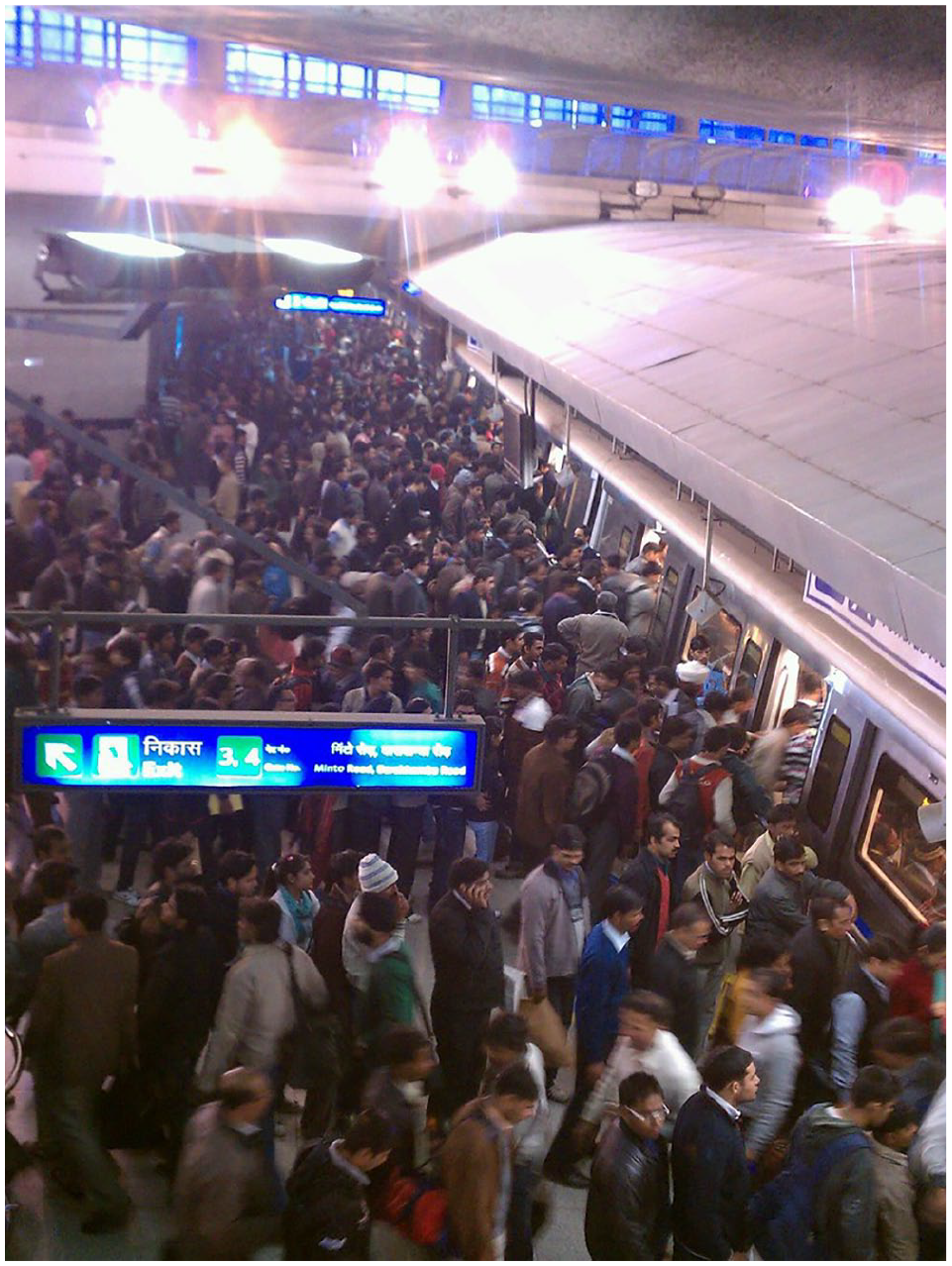
Rush hour in the Delhi metro.
Maintainers of verbal oxygen
Garima Bhadauria, an electrical engineer at the DMRC (Delhi Metro Rail Corporation, a public sector undertaking that operates the Delhi metro in India), directly supervises the maintenance of the in-train communication system. She was busy training a new group of train operators when I first met her at the Electronics Lab of the Delhi metro. A crucial part of operator training includes an expeditious use of the in-train PA system to address passengers during an emergency: making instant announcements to instruct and calm the passengers, remembering the dial codes for various pre-recorded emergency announcements, as well as selecting the most appropriate announcement immediately and accurately (Figures 2 and 3). For instance, an announcement about evacuating the train cannot be played even by mistake when the passengers are supposed to stay put. The following is a description of the PA system within the Delhi metro by Bhadauria: Our communication system is actually an Emergency Communication System. Thousands of people (public) are travelling in the train. If there is one representative from DMRC, it is just the train operator. How can a single person control thousands of people when he is no big authority? He is not a king, the President, or the Prime Minister. How will we think of a solution in case of a chaos? Among so many people, a solution can be sought only through verbal communication. So, our communication system is the means for conveying information verbally. That is why we call it the Emergency Communication System. (Garima Bhadauria, 2018, personal communication)
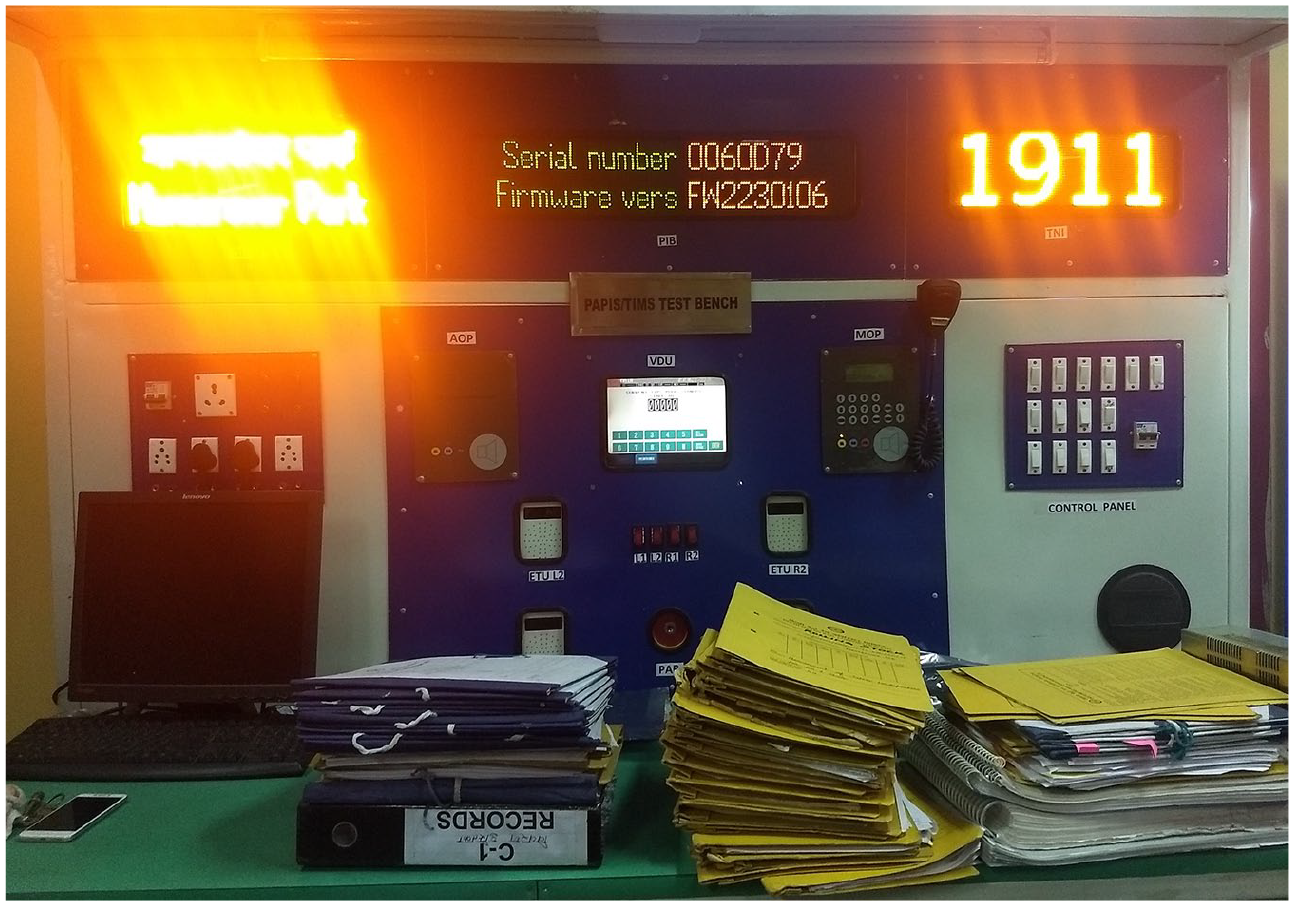
The PA system test bench at the Electronics Lab, Delhi metro.
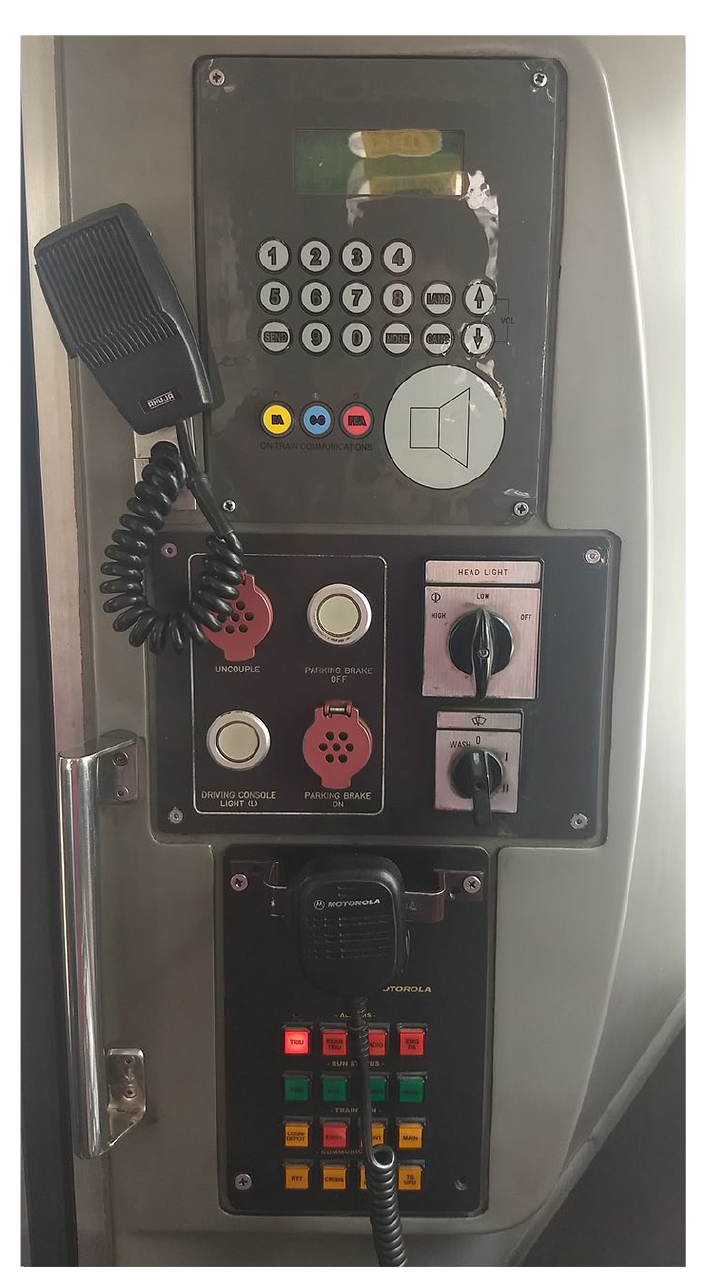
The in-train PA communication panel in the driver’s cabin.
As an “Emergency Communication System,” the in-train PA system always already anticipates an emergency and is consequently designed to withstand the test of a crisis. Despite the availability of overhead electricity supply, which is the primary power source for the propulsion and working of trains, the Emergency Communication System operates on batteries to avoid loss of contact with the passengers during power failure. The PA system and the “Emergency Talk-back Units” undergo rigorous testing every day because the metro staff is answerable in case the passengers are unable to correspond with the train operator during an emergency. Bhadauria also emphasized the indispensability of PA systems for crowd management during natural contingencies such as heavy rainfall and disasters such as earthquakes. She described the PA system as part of a necessary safety infrastructure along with fire extinguishers, emergency exits, and regular supply of oxygen in case of prolonged halts in the underground metro tunnels, thereby classifying it as an infrastructure of life.
Safety, which is a primary promise of infrastructure, was a matter of personal and professional responsibility for Bhadauria. It was about the roles Bhadauria, the metro staff and the drivers could play in assuring a safe journey for the passengers. Consider her elucidation of an emergency situation inside the train: [I]f you are a daily traveller, you know the next station is Kashmiri Gate and you will deboard even if the announcement is not made on a particular day. But suppose some xyz person has a problem. He is trying to communicate about his situation. If I continue relaying the routine announcements at the same time, it will be a cause of disturbance. So either I drop down the volume of the announcements. . . or as it happens in my trains, the routine announcements stop completely. The passenger call [from the emergency talk-back unit] will continue because amidst a public of thousands you should be able to listen to what the passenger needs clearly. You cannot deal with their condition through guesswork–that the passenger asked for lemon water or sweet water or PCM [Paracetamol] or Avil [a common antihistamine]. What if they asked for PCM and you give them Avil? What if someone is having an attack and asking for something else? (Garima Bhadauria, 2018, personal communication)
As a lower-level engineer who directly supervises the everyday maintenance of the metro cabins, Bhadauria’s insights were far more valuable than any bureaucratic expert at DMRC. She highlighted the importance of emergency announcements over the routine ones with a concern for the safety of passengers. Her imagination of a listening public weaved professional and personal responsibility into the broader enterprise of public safety. While offering me a demonstration of the in-train communication system, she shared the tragic account of a passenger committing suicide on the train tracks. Fisch (2013: 340) has shown how Tokyo’s commuter suicides have been naturalized within the smart networks of the city. Suicides are considered only as irregular regularities, or as “routinized non-events that are capable of generating only indifference.” As the next section will demonstrate, the PA system design in the Delhi metro anticipates accidents and contingencies not to naturalize but circumvent their deadly effects. Contrary to the condition of apathy in Tokyo, my interlocutors demonstrate how infrastructure can be a site of empathy and care for the people it serves.
Attenuating risk and contingency
While Bhadauria provided a perspective on the in-train PA system, a corresponding account of the metro station PA networks was offered by Sunil Ojha, the techno-commercial manager at Ahuja Radios. He shared information about the PA input and output mechanisms, both of which have been designed to prevent a breakdown and minimize contingencies during an emergency. As regards the output, the PA system comprises successive backups against all probable breakdowns to nullify the possibility of a complete breakdown. A daily (literate) traveler-listener in India, such as me, would think of the PA system at the metro stations as an inert infrastructure – as an infrastructural excess that plays a non-essential role in the dissemination of information. Such an idea also emerges from the assumption that an urban traveler, like Walter Benjamin’s flâneur, is a distracted listener. A discussion with Bhadauria and Ojha revealed that the PA system is rather designed as a hyperactive infrastructure to combat multiple or simultaneous breakdowns.
Each metro station is divided into four PA zones for broadcasting of messages: platforms, concourse, station control rooms, and standby amplifier (Figure 4), which help in the selective relay of announcements for crowd management during emergencies. This implies that different instructions can be played in different areas of the metro station to guide the crowds more efficiently. The PA system at each station is connected to an “Automatic Changeover Unit” (ACU) that activates the “standby amplifier” (the last zone) in case any other amplifier stops functioning. Also, not all the speakers on the platform are connected to a single amplifier lest it breaks down. Two amplifiers power the speakers on each side of the platform to ensure that at least a few speakers work in case an amplifier failure coincides with an emergency.
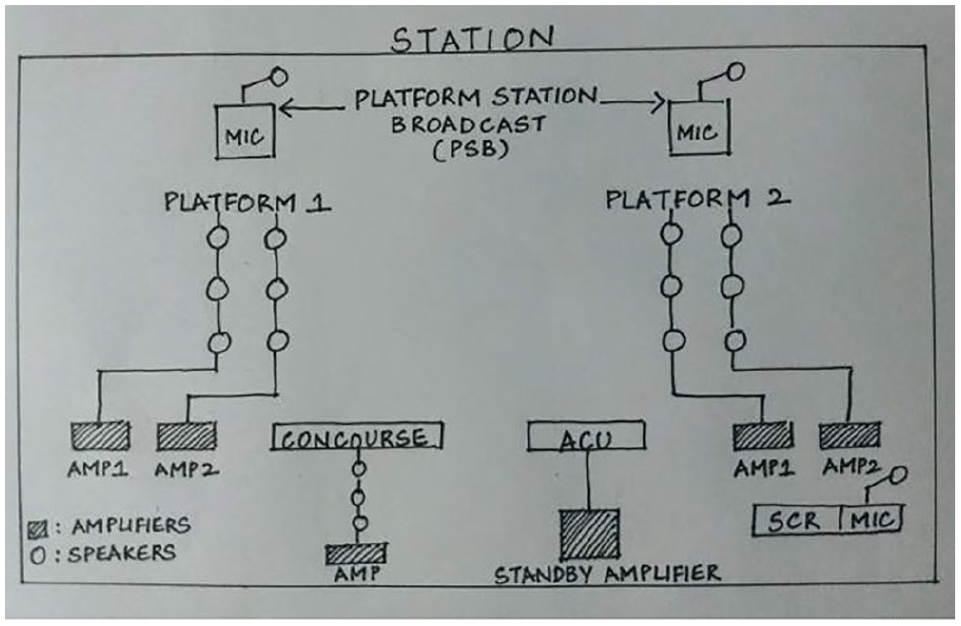
Sketch of the PA zones at the metro stations by Sunil Ojha.
As regards the input, the announcement system of the Delhi metro has multiple points of operation. This distribution of operational nodes reveals the relationship between sonic space and emergencies. While centralized automatic announcements play at all the stations and within the trains, the microphones can also be operated from the platforms, the station control rooms, and the central dashboard. These operation points have a decided order of priority: they are placed in the decreasing order of the probability of an emergency. Therefore, if an announcement is being broadcasted from a higher priority source, it would not be possible to relay any messages from the sources that have a relatively lower priority. The following is the order of priority, with platforms at the top because they are most prone to accidents:
PSB (Platform Station Broadcast) – Highest priority
OCC (Operations Control Centre) Live Broadcast – Second priority (the OCC is connected to all the stations)
SCR (Station Control Room) Mic – Third priority
Automatic Announcements – Lowest priority
The prioritization of the PA input in relation to probability of crises mitigates contingency and maximizes the effectiveness of the PA system as an infrastructure of life. Radovac (2015: 35) discusses how the PA system was associated with an expansion of the hearing territory that was called “an ‘acoustic arena,’ a term that highlights both the spatial dimensions of acoustic perception and its materiality as an event that constitutes and defines an audience.” The PA system zoning and prioritization divide the acoustic arena in relation to risk and probability of emergencies. These divisions make life a defining feature of sonic space and built environment. The association between PA systems, risk and crowds is also observed on a broader scale. During a conversation at the Delhi Police headquarters, I was told that the city-wide loudspeaker network is concentrated at the 27 most crowded places (2019, personal communication). These spots are usually on high alert during national festivals due to the presumed threat of bomb blasts, and sonic instructions would be the sole means to evacuate and manage crowds in such situations. The association of the city-wide PA network with human density is another manifestation of the unique association between amplified sound and mass address.
The relationship between sound and crowds also becomes evident through the choice of loudspeakers for different spaces. For instance, Ojha penned the basic technical schema of an announcement system in my field diary (Sunil Ojha, 2018, personal communication) (Figure 5):
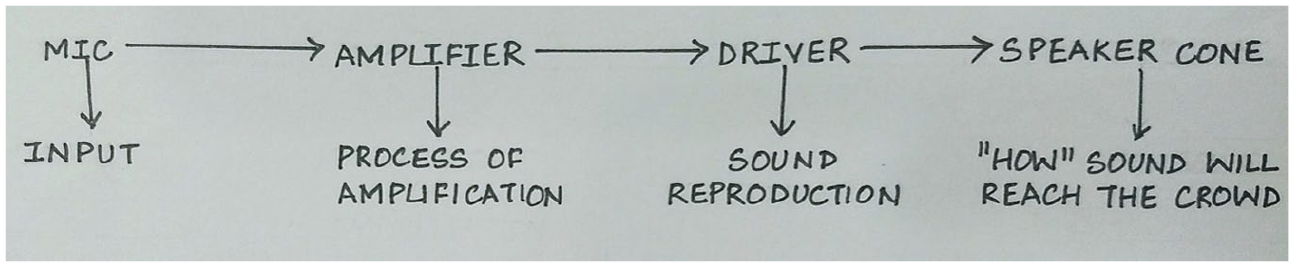
Basic schema of a PA system, by Sunil Ojha.
The last segment of the schema demonstrates how speaker cones shape amplified sound and determine its reach for the crowd. The nature of the crowd and space is thereby constitutive of the speaker design (Thompson, 2002). Is the space open or closed, the crowd large or small, the sound just voice or both voice and music? Should the sound be “scattered” over a larger area, or “directed” toward a narrower field to address the crowd in the best possible way? Multiple factors are taken into account before selecting the speaker models for a given space.
The use of public address systems as indispensable safety equipment for crowd management points to the conceptual potential of amplified sound for theories of mass mediation. In media studies, the theorization of urban crowds has changed from irrational and unaddressable to networked digital masses through the course of the 20th century (Baxmann et al., 2016). A conceptual genealogy of mass mediation encompasses a three-stage process: privatization, domestication, and atomization (Devine, 2012). If mass mediation has evolved through the historical stages of the private (for instance, radio), domestic (television), and atomic (smartphone), then the case studies in this article offer a mediatic conceptualization of physical masses. It explores the sonification of masses, that is, the unique way in which physical urban crowds are rendered addressable as an aggregate through sonic amplification and evocation of the human ear. While tracing the history of New York City’s sound device ordinance in the first half of the 20th century, Radovac (2015: 35) shows how the PA system dramatically enlarged the “acoustic territory of public speech” and also brought “a new mass audience into being” where the “crowds that assembled for political events could also be listeners.” It is due to the distinctiveness of amplified sound as a mode of address that loudspeakers, megaphones, and PA systems are regulated to control dissent (Radovac, 2015), or that amplifiers and loudspeakers have been attached to film and radio equipment from the early 20th century (Thompson, 2002). The sonification of masses through amplification technologies is hence crucial to the genealogy of media addressability, especially when much of the late 19th and early 20th century crowd theory analyzes the unaddressability of crowds as a modern menace. The next segment will discuss some aspects about the aesthetics and accessibility of public address.
The urban soundstage
And if one aim of the city is to keep us moving, part and parcel of the urban flow of goods and capital, it does so by utilizing the dramatic effects of the voice. Instant messages break into the air like radio-bulletins, as if the city had started to narrate itself, or had simply become a vast theatrical soundstage. . .prompting us through a scripted public space as if a theatrical quality was somehow fundamental to the messages they impart. . . [T]he talking urban infrastructure already serves as a kind of special effect in the “mise en scene” of the modern city. Safety messages and warnings were made doubly dramatic when a cast of famous voices. . .advised passengers to buckle-up in the back of New York’s cabs. (Elliman, 2005)
As mentioned at the beginning of this section, the Delhi metro announcements are in the voices of Shammi Narang and Rini Simon Khanna. Since they were popular newsreaders during the 1980s and 90s, their disembodied voices ring a bell of familiarity among the daily metro travellers. All the metro announcements in India are produced by Pindrop Media, New Delhi, a media production company established by Narang in 1998. Narang’s perspective about the metro announcements both speaks to and departs from that of Paul Elliman’s, a British artist and designer based in London, who compares the city to a theatrical soundstage and audio signages to special effects that lend it affective charge. Narang developed a distinct vocal aesthetic for the Delhi metro by combining the functional and aesthetic role of the announcements. The routine announcements are mostly meant for the visitors and tourists of the city, and hence have to be slow and polite (Shammi Narang, 2018, personal communication). The announcer has to request and not command the passengers to follow certain rules, which is why the words “kripya” or “please” are used so frequently. He added that about 95% of the recorded announcements are meant for emergencies, which is where the clarity, tone, and pace of voice matter the most. The sound engineer at Pindrop Media, Pankaj Kumar, reiterated Narang’s perspective, and mentioned that the vocal aesthetic of the metro announcements is different because they are very comprehensible in comparison to the sarkari (official) announcements in other parts of the city (Pankaj Kumar, 2018, personal communication). Comprehensibility and clarity of voice are the primary concerns even when audio equipment is selected for the metro. The specifications of the speakers, emergency talk-back units, and inbuilt noise sensors that help in amplifying the announcements according to the ambient noise level, ensure maximum intelligibility of speech (Radford, 2001). As evident from the descriptions by Narang and Kumar as well as the choice of audio equipment, the idea of saving lives gets associated with certain techno-aesthetic choices made by the voice artist and sound engineers.
Owing to the crucial function of the PA system during emergencies, all my interlocutors acknowledged that effective crowd management requires instructions for addressing a diverse set of listeners: non-literates, daily travellers, tourists, citizens, multilingual audiences, the elderly, and children. They understood a listening public not as a unified pregiven entity, but as an aggregate that must be addressed through the inclusion of differential listening, and through a continuous process of sonic recomposition. Differential listening refers to the plurality and situatedness of everyday listening by challenging any assumed uniformity of audition. It extends the ideas on listening positionalities and ideologies in relation to colonialism (Robinson, 2020), race (Stoever, 2016), and disability (Friedner and Helmreich, 2012) by conceptualizing audition itself as variable. In that sense, it is a close cousin to what Robinson (2020: 37) calls “critical listening positionality” – “an intersection of perceptual habit, ability, and bias” that challenges any given definition of listening owing to the plurality of its emergence and formation in various contexts.
The early announcements at the Delhi metro were very minimal and informed the passengers only about the upcoming station. However, the metro staff regularly invites feedback from the metro travellers. Many announcements have been changed, added, and recomposed as per the suggestions of traveler-listeners creating a feedback loop between the listeners and public address (BK Dwivedi, 2018, personal communication). For instance, there are newer announcements that warn the travelers about pick-pocketers in certain congested areas of the city, or also about the common mistakes that passengers make while choosing the metro stops for some landmark sites. Rather, traveler-listeners also dropped suggestions about the incorrect pronunciation of some words in the announcements, which were ultimately rectified by the voice artist. Currently, instructional announcements such as “Please do not play music inside the metro,” “Please do not sit on the floor,” and “Consumption of food is prohibited inside the metro,” among many others, play on a loop, ad infinitum in the Delhi metro. Audio signage is thereby not only an accessible means of instruction for the non-literate but also an everyday pedagogical experience for citizen-listeners. The non-stop use of sonic instructions is a way to circumvent concerns of alphabetic literacy and enable alternative forms of knowing and doing in an embodied public space. Such inclusive practices inform both the routine and emergency announcements in the Delhi metro. Other examples demonstrating the pedagogical function of public announcements will appear in the section on the Kumbh fair.
Through descriptions offered by sound personnel at the Delhi metro, this section focussed on the professional, technical, and aesthetic aspects of public address as an infrastructure of life. The classification of the PA system as a necessary safety equipment, the creation of sonic space in relation to probability of risk, the distinct aesthetics of the emergency announcements, as well as the inclusion of differential listening within the fold of mass address show how life and safety are infrastructurally determined. The second part of the article supplements the arguments presented in the first part through ethnographic material from another site – the Kumbh fair.
The Kumbh fair
Recognized as the largest human gathering in the world, the Kumbh (Figure 6) merits some context prior to a discussion on its vast PA network. The Kumbh is a Hindu pilgrimage that takes place every 3 years at the holy sites of Allahabad (Prayagraj), Haridwar, Ujjain, and Nashik in India. Every 12 years, a special version of the fair called the Maha Kumbh Mela (Great Kumbh Fair) is held at Allahabad (Prayagraj) when the devotees visit a sacred river junction called the Sangam, the confluence of the rivers Ganga, Yamuna, and Saraswati, to take a dip in the holy water and cleanse their sins. Every 6 years, another iteration of the fair called the Ardh Kumbh Mela (Half Kumbh Fair) is held at Allahabad. More than 240 million pilgrims visited the Ardh Kumbh Mela in 2019, though crowds have always been a problem at the fair as more than the estimated number arrive every time (Maclean, 2008: 213). Months before the fair, an entirely new “pop-up” or “temporary” megacity is built right from scratch to host millions of pilgrims (Koch, 2013). The fair can be described as a combination of gigantic crowds, a mythical-religious atmosphere, and infrastructural management. During the Ardh Kumbh Mela 2019, the fair area expanded to about 30 km2 and so did the intricate network of the public address system with more than 6700 loudspeakers (Srivastava, 2019). 1
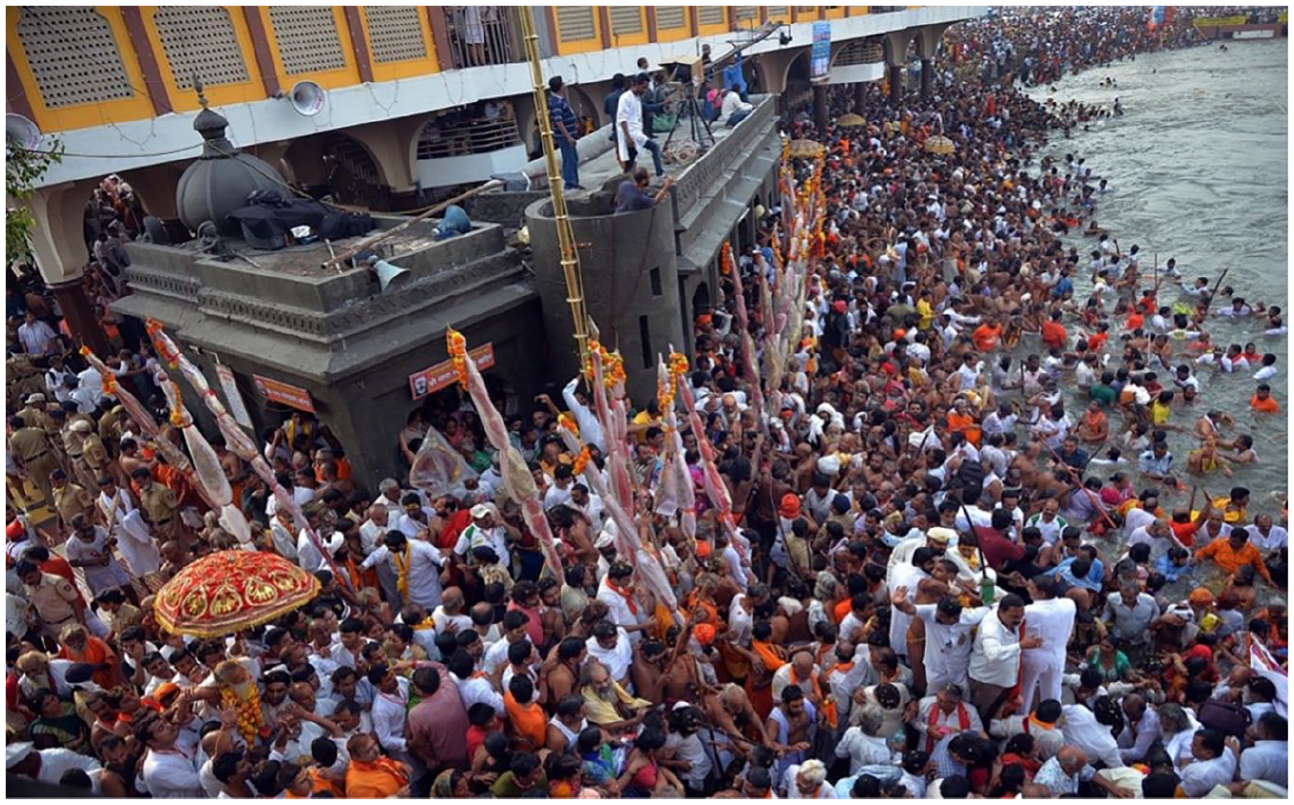
Kumbh Mela in Nashik, June 2014.
Sonic crowd management
Since 1942, the loudspeakers in the fair have been installed by Asha and Company (A&C hereafter) (Figure 7), a sound equipment rental service that started as a radio repair enterprise in 1940. A&C has been associated with the Kumbh administration for about 80 years and has grown from installing 2 to 6700 loudspeakers in the Kumbh between 1942 and 2019. In 2008, A&C earned a place in the Limca Book of Records for providing the largest public address coverage in the world. During the 2019 fair, more than 30 million pilgrims bathed at the sacred river junction in a single day on mauni amavasya, the most auspicious bathing day during the fair. Praveen Malviya, the owner of A&C, told me that the Deputy Inspector General himself had to make announcements throughout that night for the crowd at the river to move and allow others to bathe (Praveen Malviya, 2019, personal communication). At all other times during the day and for the entire time that the fair runs, announcements about lost and found family members, instructions about safety and cleanliness, programs across the fair area, and provisions of all other kinds, keep playing on a loop.
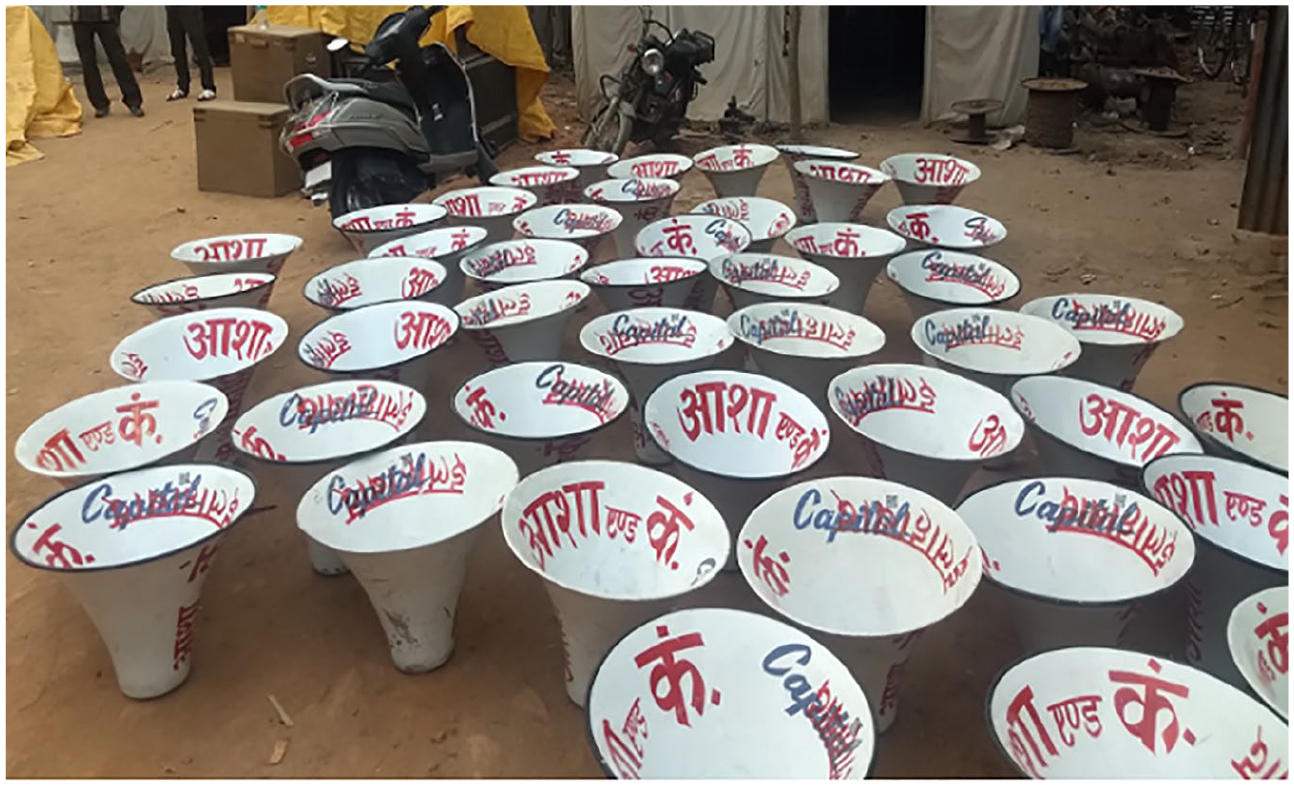
Loudspeaker horns in the Asha and Company warehouse.
Malviya too emphasized that the Kumbh PA system cannot fail under any circumstances, which is why it is water/rain-proof and rigorously checked on a continuous basis. The PA network in the fair was expanded in the aftermath of a stampede in 1954 that took more than a thousand lives (Figure 8). The cause of the stampede was inefficient traffic management by the police and also a huge flaw in the planning of the Kumbh City. As Maclean (2008) has explained, five roads converged at the spot of the stampede and the circulation of crowd was not well-managed. A special Enquiry Committee was appointed to look into the causes of the accident, and one of its suggestions was to lay down appropriate rules for the working of the loudspeakers in the fair (Report of the Kumbh Tragedy Enquiry Committee, 1954, 1955: 125). Currently, A&C works closely with the police department to ensure safe traffic management during the fair.
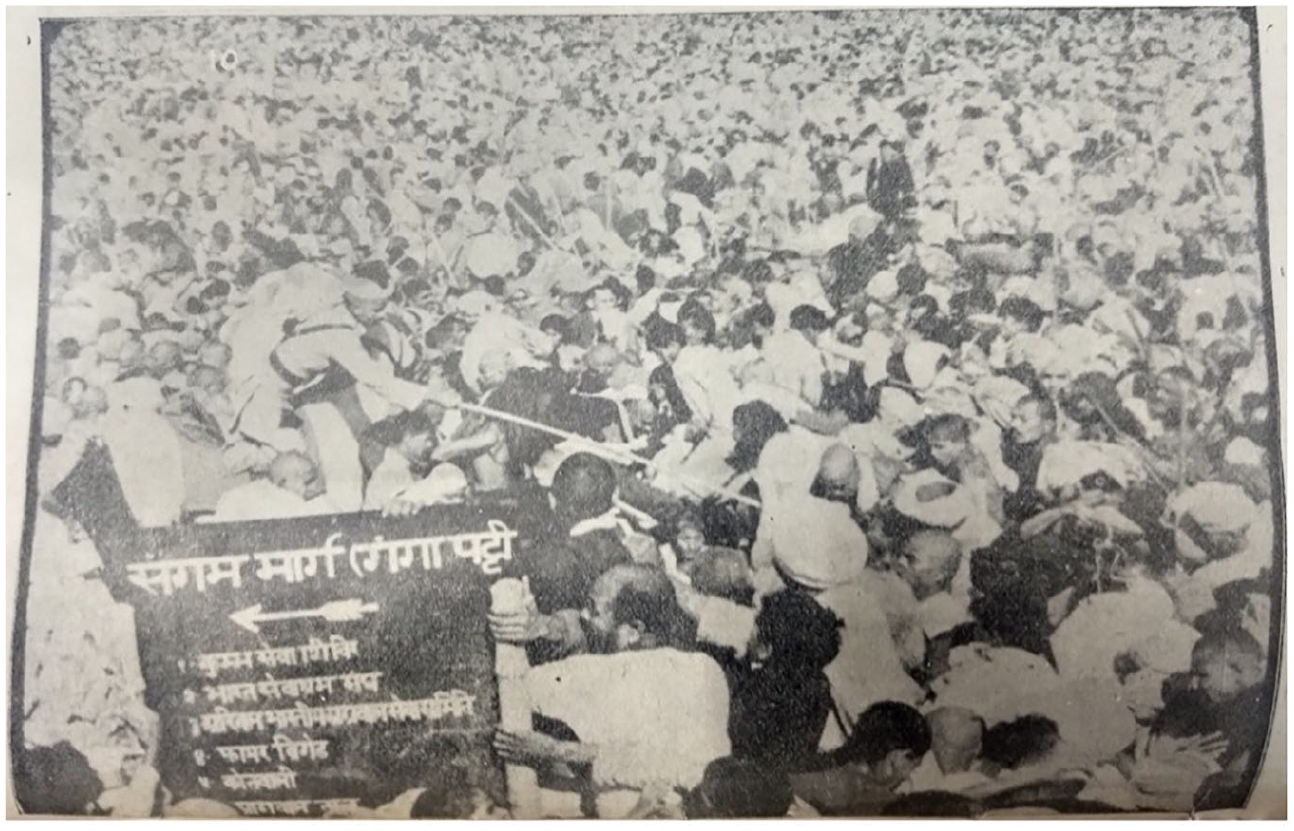
The 1954 stampede at the Kumbh.
The crowd in the Kumbh often becomes dangerous for itself, and this self-threatening nature of the crowd evokes the need for sonic crowd management, which is an amalgamation of public address and spatial planning as an infrastructure of life. As was evident in the previous section as well, in addition to constituting an addressable crowd, the public address infrastructure has a managerial function to augment the circulatory potential of space (Figure 9). A snippet from the 1966 fair report demonstrates how the police devised ways to circulate traffic and the role of the PA system therein: A new type of “circulating” hold-up quadrangle was devised in which not only could the crowds be held but also circulated in order to eliminate pressure from behind and consequent danger of stampede. About 83 control, direction and watch towers were set up on the main incoming and outgoing routes and these were connected by telephones, wireless acts and public address systems for giving precise directions to pilgrims and for keeping in touch with the central control tower. (Dhar, 1966: 38–40)
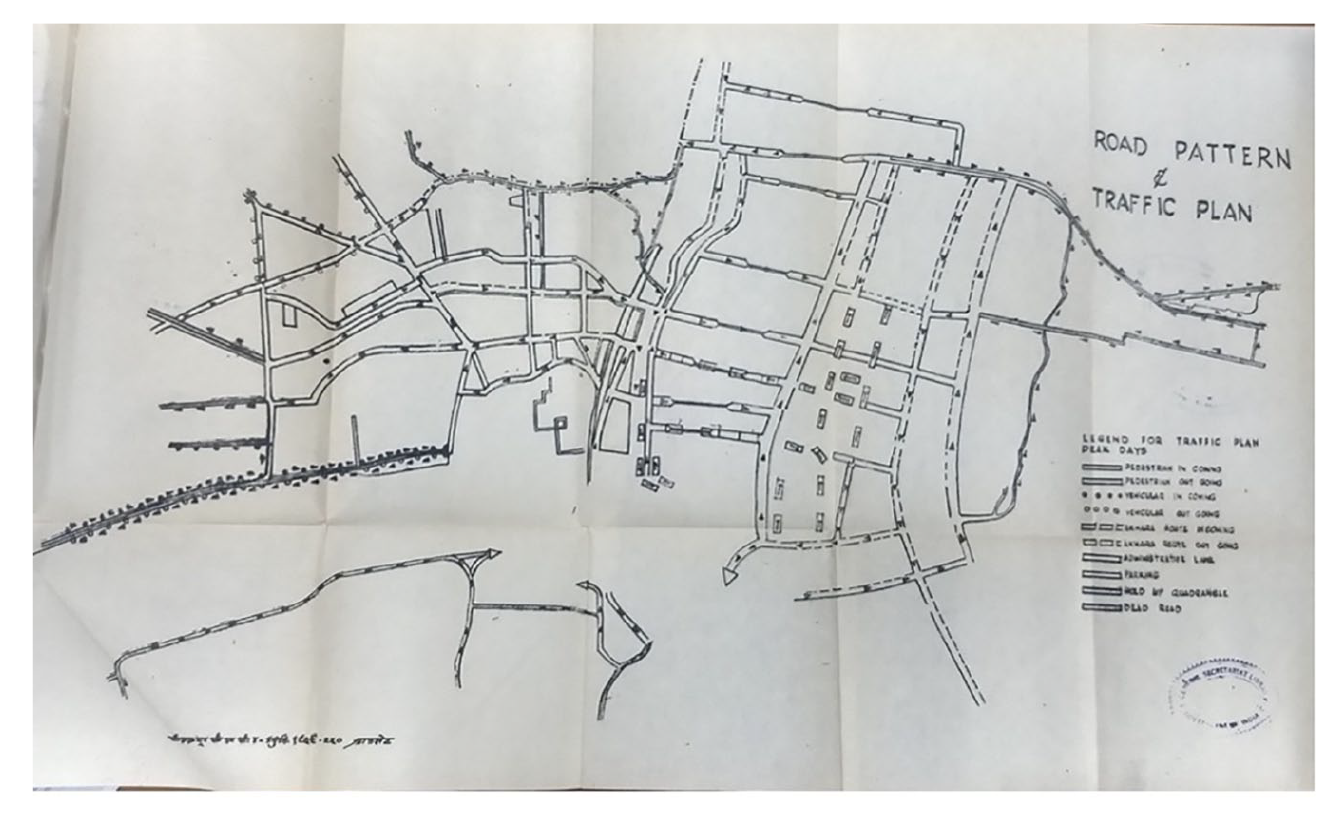
Road traffic plan during the 1966 Kumbh which shows one-way traffic.
Even today numerous sound and watch towers are used by the police to directly address the crowd for constant movement. Even when the television, followed by the CCTV, emerged as a technology of traffic control in the Kumbh, the PA system was imperative for direct communication with the crowd: For the first time television was pressed into service in the country for traffic control. . .[T]he officers at the Central Control Tower had to depend on visual reports of traffic. . .through telephone or wireless. Visual confirmation of these reports could be possible only through television. . . [T]he elaborate network of radio communication and thoroughly organized public address system helped greatly in controlling the traffic. While the wireless network was found most useful in quick and timely assessment of traffic assessment in various areas of the mela. . . through the public address system, we could reach the pilgrims and give them precise direction for movement, bathing and dispersal. (Dhar, 1966: 38–40) (emphasis mine)
Like the Delhi metro, mobility of crowds in the fair is also managed through PA system zoning for making selective announcements especially during emergencies. During the 2019 fair, the fair area was divided into 16 zones, the most active zones being those close to the river due to the greater probability of accidents in the region. In addition to zoning, sonic crowd management incorporates the constant repetition of accessible audio instructions with the assumption that urban crowds can only be perpetually managed, not permanently disciplined. Most importantly, sonic crowd management and mass address also take into account the heterogeneity of the listeners by accommodating the differential nature of audition. For instance, sonic and other graphic instructions become extremely important while addressing a non-literate audience, and the 1938 Kumbh was special in this regard (Figure 10): [A] new plan has been adopted for this year’s Kumbh Mela. The tickets, instead of being marked with geometrical signs, will have stamped upon them pictures of common objects and animals such as an elephant, a cow or the rising sun. These signs will correspond with signs on the booking office, on the passenger enclosure to which the ticket holder must repair for the train he wants, and on the train into which he has to enter. All that a passenger with an elephant will have to do is, so to speak, to follow the elephant wherever he sees it. And thus he will be sure to get into the right train. (Times of India, 1938)
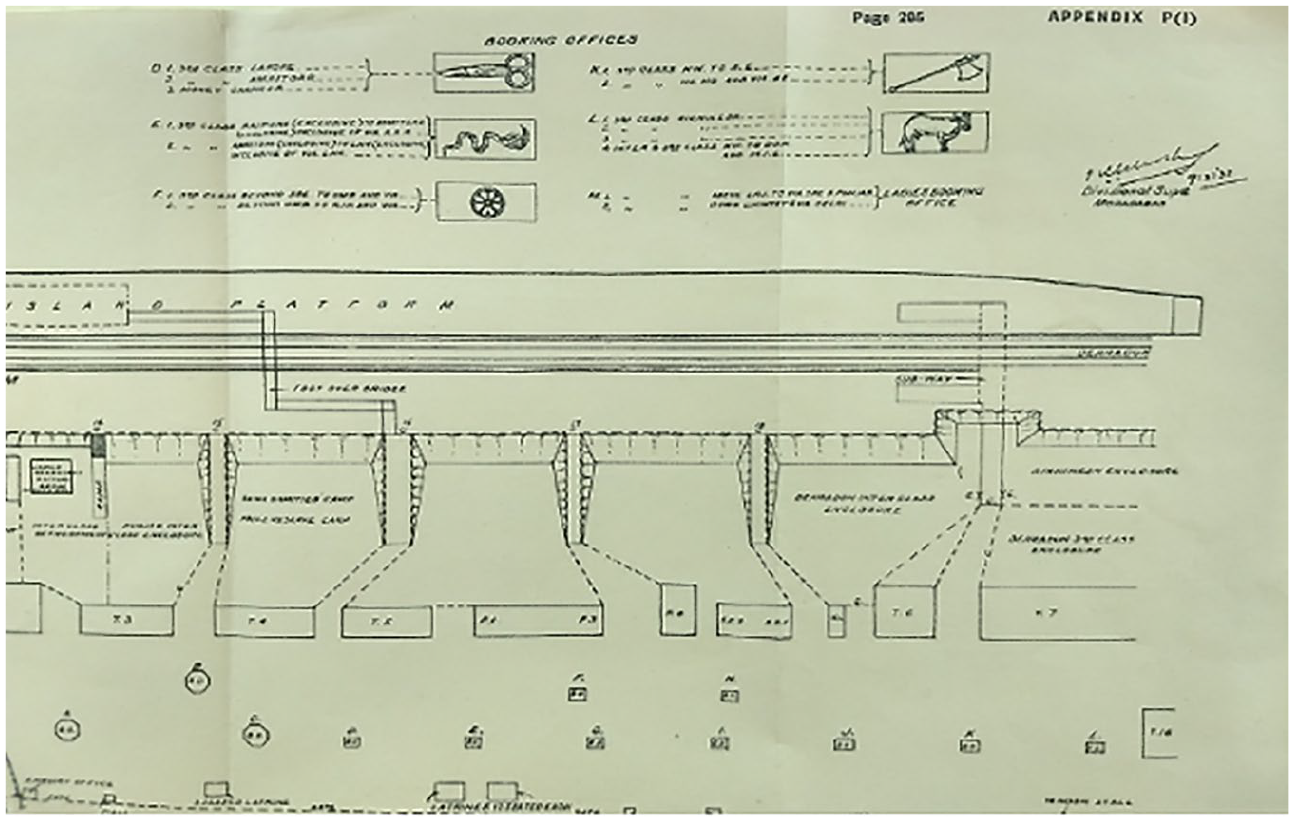
(Top) Graphic ticket symbols used during the 1938 Kumbh Mela.
This symbolic transference, from printed names to graphic symbols resulted in a smooth flow of non-literate pilgrim-passengers at the railway station. Sonic instructions accomplished a similar function when a loudspeaker was installed at the Haridwar railway station during the 1938 Kumbh for broadcasting information (Railway Report, 1938). In addition to being accessible for a non-literate audience, regular announcements at the Kumbh also fulfill a pedagogical function just as they do in the Delhi metro. Some announcements from the 1977 fair provide a glimpse into the pedagogical role of public address: Haija ka tika laga kar hi mela kshetra mein pravesh karein (Please enter the fair area only after getting the cholera vaccination), Bailgadi se aane vali yaatri apne bachav hetu apne saath pual aadi lekar aayein (Those traveling by bullock carts should carry straw, etc. for their own safety), Jal lene ke baad nal band karna na bhoolein (Do not forget to turn off the tap after taking water), Chhote bacchon ke jeb mein unke naam va pata likhakar rakhein taki bhatak jane par ve surakshit sthaan par pahuchayein ja sakein (Keep the name and address of children in their pockets so that they can be assisted to a safe place in case they get lost), etc. (Kumbh Mela Report, 1977). These announcements keep changing with time, depending upon the needs of the public.
In her work on listening publics, Lacey (2013: 8) distinguishes between “listening in” and “listening out,” where the former refers to a passive, “receptive and mediatized communicative action” and the latter to an active, “attentive and anticipatory communicative disposition,” which makes listening a political act in the public sphere. It is important to note the distinction between publics and crowds – the former is primarily understood as a political agent that forges its “own legitimacy through the medium of common discourse” and participation (Cody, 2011: 39), and the latter is usually understood as the physical or virtual collection of manipulative and passionate bodies or individuals also referred to as the masses. While it might seem that the sonic management of crowds does not entail any direct forms of “sonic citizenship” (Punathambekar and Mohan, 2017) or participative listening practices, there is a latent listening public to be found in the accounts from the Delhi metro and the Kumbh fair. It is a listening public whose participation and life are inscribed within infrastructure and technological systems through the incorporation of differential listening, that is, through the inclusion of the access needs, perspectives, and requirements of a multitude of listeners. Publicness thereby gets encoded into media systems, or in other words, public address and listening publics come to share a dialectical relationship. It demonstrates how mass address can be recursive and incremental, updating and expanding in relation to the subjects it addresses. It also shows how soundscapes are also listenerscapes, not just listened to but also produced by a variety of listeners. In the next segment, I show how public announcements in the Kumbh fair have another significant function of reuniting lost family members.
In service of the lost
Since the fair is swamped with millions of pilgrims, thousands of people, especially the elderly and children, get separated from their families and go missing. The Kumbh is so infamous for the separation and reunion of families that many Bollywood films have used this idea as a melodramatic plotline. To help the lost and their families, a service called the Bhoole Bhatke Shivir (BBS hereafter), or the Lost and Found Centre, was initiated in 1946. The BBS was established by Raja Ram Mohan Tiwari and is currently run by his son Umesh Tiwari, who shared the following anecdote about the origins of the camp (Umesh Tiwari, 2019, personal communication). In the 1946 Magh fair, an annual fair in Allahabad, Raja Ram Mohan Tiwari came across a distressed old woman who got separated from her family. He carried the woman on his back and made a bhopu (a megaphone made out of a tin plate) to announce her name and find her family. A team of nine people roamed across the fair each day and used bhopus to find waifs and strays. This gradually expanded to a camp with an announcement room that broadcasted messages in the entire fair area both for the Magh and Kumbh fairs. Even today, anyone who loses a family member or gets lost during the fair can walk to this camp. The missing person’s details are first recorded in registers by hand, then transferred onto small chits which are carried to the announcement room and finally announced across the entire PA system network from time to time by an announcer.
The announcements in the Delhi metro are made in both Hindi and English, and those for the lost and found at the Kumbh are preferably announced in the first language of those lost. Tiwari constantly mentioned the audiences they struggled to address due to varying hearing abilities and habits, such as the elderly and children, and how they try to improve their services for those who require it the most. Tiwari and all the volunteers at the BBS consider their work as a form of sewa, 2 which means “service” in Hindi and many other Indian languages. They take pride in having united about 1.4 million pilgrims with their families since 1946. On the BBS website, Raja Ram Mohan Tiwari has been described as the son of Mother Ganga, as someone who attained moksha (freedom) due to his sewa (Bharat Sewa Dal Prayag, 2015). The BBS is a unique form of service centered around the PA system that emerged precisely because the crowd becomes a threat to itself in multiple ways. In being used as a medium for religious and moral service, the loudspeaker becomes a site of care and empathy, an infrastructure of life for the lost in the fair.
It will be worthwhile to contrast the BBS with another center for the lost and found which was established for the first time in 2019 – the Computerized Lost and Found Centre (CLFC hereafter). 3 There were 15 CLFCs across the fair area which undertook a task similar to the BBS, but through a computerized system. Reports for the lost had to be submitted through a “missing person” form developed with the aid of the police with details such as name, address, photographs of the missing, etc. (Ranjeet Chandra and Suraj Kalyankar, 2019, personal communication). The 15 centers across the fair area were connected and the profiles of the lost and the found were matched to solve cases. Information for the public was relayed in a limited area outside the specific centers through an LED screen and announced through a Hindi text-to-speech system. If a missing person was not found in 3 hours, the text-to-speech system automatically relayed the information through loudspeakers across the entire fair area.
Unlike the BBS, the CLFC was not a form of moral service and functioned through a combination of profiling as well as sonically addressing the crowds. Despite a computerized search system in place, the use of PA systems at the CLFCs once again highlights the indispensability of amplified sound for addressing physical crowds, especially in a context where many pilgrims do not have mobile phones or any other means of being tracked and traced. This section focussed on Kumbh as a spectacle of human density and scale, and a site of perpetually impending emergencies where the crowd becomes a threat to itself. As an essential safety measure, the PA system in the fair merges crowd management with spatial design, pedagogical instructions, and religious service, making it an infrastructure of life for millions of pilgrims and visitors.
Conclusion
This article studied the public address system as an infrastructure of life by exploring the processes of maintenance, design, aesthetics, management, and religious service associated with it. It was an attempt to extend our understanding of sound as a life-saving force and reveal the embeddedness of life and death within infrastructures. The unique relationship between amplified sound and mass address makes the sonification of masses significant for the conceptual genealogy of mass mediation and addressability. 4 Sound is the only means to manage crowds through processes of sonic-spatial design and differential listening. Through the various ways in which the access needs, perspectives, and lives of the listeners get encoded into systems of public address, publicness can be understood as inscribed within technological systems.
While it might seem that the PA systems discussed in this article are beyond breakdown, there are times when they do fail, and in case of the Kumbh, people do remain missing or sometimes even die in stampedes. The aim of this article, however, was neither to present PA systems as infallible nor to focus on failure as has been done in many studies of infrastructure as well as emergency media (Ellcessor, 2019; Pinkus, 2017; Stuhl, 2021). Its aim was to explore the human dimensions of infrastructural propensities and dispositions (Easterling, 2014) and highlight the potentiality of infrastructure to acquire life-saving qualities when a large number of people are at risk. The failure of the same infrastructure during an emergency could also result in the death of a large number of people. However, the ethical choices of my interlocutors offer a new way to understand crowds through empathy and care, which in this case makes infrastructure a site of life for the millions who inhabit our cities.
Footnotes
Acknowledgements
I would like to thank Jonathan Sterne and members of the the Culture and Technology Discussion and Working Group (CATDAWG) at McGill University for comments on an earlier draft of this article. I would also like to thank Ravi Sundaram, Ravi Vasudevan, and my colleagues at Sarai, the Centre for the Study of Developing Societies (CSDS)and the M.S. Merian - R. Tagore International Centre of Advanced Studies ‘Metamorphoses of the Political’ (ICAS:MP), Delhi, for their inputs while I was conducting this research. Finally, thanks are due to the two anonymous reviewers whose suggestions were very helpful in refining the arguments in this article.
Funding
The author received no financial support for the research, authorship, and/or publication of this article.
