




Abstract
Incarcerated individuals have long contributed to crucial societal infrastructures. From being leased work force building the railway in the United States to constructing canal systems in Sweden, prisoners’ labor has been widespread as an important part of value production. Part of the labor conducted by incarcerated people is related to the production, repair, and maintenance of media devices and media infrastructures constituting what we call prison media work. In this article, we trace the changing logics of prison media work historically since the inception of the modern prison at the turn of the 20th century. Based on archival material, interviews, and field observations, we outline a shift from physical manual labor toward the work of being tracked that is constitutive of surveillance capitalism in- and outside of the prison. We argue that prison media work holds an ambiguous position combining elements of exploitation and rehabilitation, but most importantly it is a dystopian magnifying glass of media work under surveillance capitalism.
Keywords
From manual labor to the work of being watched
Since January 2019, the Finish Criminal Sanctions Agency (CSA) is collaborating with the start-up company Vainu that is providing a comprehensive database over businesses on a global level and that employs artificial intelligence (AI) to predict the best business opportunities for its clients. In order to train AI, the start-up has worked with Amazon’s Mechanical Turk, hiring digital workers to classify content. The archetype work conducted by platform workers is content categorization, for example, whether an article is about the company Apple or the fruit. Mechanical Turkers do what AI is unable to do so far; they interpret context and feed the data back into the system based on which machine learning will improve algorithms. This works well for source material that is published in English, but there are not enough cheap workers on Amazon’s Mechanical Turk who can do these interpretations in Finnish and other small languages. Consequently, the company was looking for an affordable alternative. According to Tuomas Rasila, chief technology officer at Vainu, the solution was found by coincidence: Vainu is sharing the office building with the CSA and quickly a collaboration was set up. At the time of writing, around 10 prisoners are categorizing content of business publications in two Finnish prisons. The work requires no specific skills beyond the ability to read and very fundamental skills to handle a laptop. Rasila described the interface as game-like with very simple classification tasks. The prisoners do not need any additional training and the custom-made laptops were delivered to the prisons by the company. Rasila and his colleagues know very little about the digital laborers in the middle-level security facilities, like the digital laborers on platforms like Upwork and Amazon Mechanical Turk, they pay their workers by delivered unit. At the same time, he sees the outsourcing to prisons as a contribution to rehabilitation efforts of Finnish prisons. The products they sell – business predictions and connections – are based on the latest technology and he is proud that prisoners are part of and contribute to this kind of cutting-edge technological development.
The kind of digital labor described above fits perfectly into the prison context and mirrors many features of historical forms of media work conducted by prisoners. Digital work in conjunction with AI in prisons is the latest development of prison media work and at the same time shares a lot with its preceding forms of media work conducted in prison.
This article analyzes the main logics and types of prison media labor and highlights important historical shifts in prison media work. We explore how prisoners were engaged in the construction, maintenance, and repair of infrastructures of communication and media throughout the 20th century since the inception of the modern prison. Starting in the Swedish penal system with the unit mainly responsible for organizing prison labor – KrimProd – the article makes clear that prison labor has historically shifted from simple manual production toward cognitive forms of labor that contributes to the general development of surveillance-based data capitalism as described by Mark Andrejevic (2007), John Foster and Robert McChesney (2014), and most recently by Shoshana Zuboff (2019). Rather than engaging in manual labor, prisoners are increasingly conducting mainly and exclusively ‘the work of being tracked’, namely providing and generating data that are important resources to train and feed machine learning–based technologies. In that sense, we turn to the panopticon (Foucault, 1977) not merely as metaphor to analyze late modern surveillance capitalism, but engage literally with prison work that is contributing to media and non-media-related value production.
The article will progress as follows. We, first, situate prison media work within the broader context of prison labor. We, second, develop the theoretical framework that allows us to consider the historical shifts of prison media work moving from manual labor to the work of being tracked to finally provide a brief historical analysis of prison media work in the Swedish context while relating to broader developments. The analysis focuses mainly on the Swedish penal system that has been described in terms of Scandinavian exceptionalism (Reiter et al., 2018). Structured work assignments have here been part of the broader attempt to normalize life in prison with a clear rehabilitative feature. More generally work has, in a Scandinavian model of social democratic welfare, been given a special status as the preferred method of rehabilitating and adjusting the ‘deviant’ members of society to a productive and honest life (Nilsson, 2013, 2017). The case study presented here, however, also shows many similarities and overlaps with international trends in penal ideology and practice.
Prison media work
The following section provides a brief background of labor in the prison context. Work and productive labor are central aspects of prison life. Prisons have accordingly been called ‘factories behind bars’ (LeBaron, 2008) and Torsten Eriksson, the former director general of the Swedish Prison and Probation Service, in a debate book on penal ideals in Sweden quotes the motto of the architectural committee of the correctional services (Fångvården), ‘we build the factory first and then the prison that belongs to the factory’ (Eriksson, 1966; see also Nilsson, 2017). In the post-war period in Sweden, factory work and prisons were imagined as closely integrated and to provide ‘meaningful’ work as an important part of the penal logic. The idea of integrating work into the prison everyday life was translated into modern prison architecture in Sweden around that time and big ‘factory prisons’ such as Hall and Kumla were built. Industrial work in the prison context developed rapidly after the Second World War and was increasingly integrated into rehabilitation programs for prisoners.
The work conducted by prisoners has historically been ranging from assignments for internal purposes such as simple administration, laundry, cleaning, and cooking, but also included work assignments for external companies and public institutions. The work in prisons as well as convict leasing has been addressed, though not extensively, earlier (Davis, 2003; Gilmore, 2007; Mancini, 1996; Nilsson, 2017). What has been underexplored so far is a specific part of prison work that relates to media or what we call prison media work. This includes the construction of crucial media-related infrastructures such as laying cables, producing parts of infrastructures such as electronic equipment, envelops and mail bags for the postal system, as well as maintenance work on such infrastructures, for example, repair shops for television and radio sets and the dissembling of obsolete devices (Conrad, 2011). Because the labor conducted by prisoners most often includes manual labor that does not require specific or extensive training to perform, few have considered the relationship between prison labor and media work. However, of the three categories that the Swedish Prison and Probation Services has used to organize prison labor throughout the 20th century – namely, agriculture, forestry, and industry – industrial work conducted within prisons has often included media work. Today, this production has its developed own brand, Made In Prison, to market its products.
We conceptualize prison media work in similar terms as Kelly Gates has done for – ironically – police media labor that encompasses among other things ‘the work of wearing cameras is transformed into scalable, infrastructural labor, and where the individual videos and embodied work activities involved in digitally recorded policing become valuable objects of exchange in the police media economy’ (Gates, 2015). Gates’ conceptualization and investigation of police media labor provides also an important taxonomy that allows to develop a typology of prison media work: Like most forms of media work, the media labor that the police perform is simultaneously immaterial and material, cultural and technical, mental and manual. Far from providing individual police workers with an empowering creative outlet for self-expression, it requires a repudiation of creative subjectivity, by and large serving the risk-management needs of police organizations and policing as an institution. It also serves the direct and indirect aims of a variety of interconnected industries – a set of aims and connections that require further research. (Gates, 2015)
We could, hence, argue that prison media work ranges from material to immaterial work, from technical to cultural and from manual to cognitive work. In the analysis, we show the historical movement from material to immaterial, from technical to cultural, and from manual to mental work. Prison media work as empirical phenomenon and theoretical conception extends ongoing debates on work and labor in media studies that have focused on questions of creativity (Hesmondhalgh and Baker, 2011), exploitation (Qiu, 2016), and hidden precarious labor (Mayer, 2011).
Logics of prison media work: from manual labor to the work of being tracked
This section develops the theoretical framework suggesting a move from manual labor toward the work of being tracked that characterizes prison media work in the Swedish context. The historical development and transformation of prison media work can be described in terms of a changing logic from manual labor toward the work of being tracked. The work of being tracked relates here to the argument of audiences conducting work while watching television, originally suggested by Dallas Smythe (1981) and furthered by Sut Jhally and Bill Livant (1986). Mark Andrejevic (2002) argues that in the area of interactive television, this work is extended through increased surveillance of audiences. Jhally and Livant (1986) argue that the work of watching is salaried through the ‘programming content’ afforded to the viewer, and that the productive aspect of watching television is primarily based on the speeding up of the circulation process of products. Andrejevic similarly situates the valorization of online activities in the fact that the production and circulation process is further rationalized with the help of building niche markets through surveillance of audiences.
In the era of datafication, in which increasing parts of our everyday lives are turned into data to be processed, this work of being watched or rather the work of being tracked is increasing exponentially. The ‘work of being watched’ (Andrejevic, 2002) that prisoners perform is a key dimension of prison media work but also, and increasingly, relates to societal transformations in labor and being (Cheney-Lippold, 2017). We produce value through moving through digital worlds and leaving data traces. Data that are used to further rationalize and speed up production processes, but also to automate production through AI and machine learning. Prison contributes in several ways to the work of being tracked: first, prisoners’ lives are datafied into the last detail. Records are kept about food intake, emotional status, as well as media consumption. In the US context, commercial companies are recording prisoners’ voices on a large scale with the aim to develop unique voice fingerprints that will allow for future detection and pre-emption of crime. At the same time, they produce large amounts of data to train machine learning algorithms that will be repurposed in commercial applications such as Alexa and Siri. This example also hints at the second way in which prisoners are producing value by being watched and tracked. The productive labor of inmates constructing the databases through being tracked and datafied can be understood in Shoshana Zuboff (2019) as one form of ‘behavioral surplus’. Zuboff argues more generally that we produce value by moving through digital worlds and leaving data traces. These data are used to further rationalize and speed up production processes and to automate production through AI and machine learning. Machine learning and AI require large amounts of data to train their algorithms and, as Cheney-Lippold (2017) argues, we supply these data by living our digital lives.
Prisons are test sites for surveillance technologies that generate more data and that would run into public pushback in other context because of privacy concerns. An example here is AI-powered, broad-range coverage of closed-circuit television (CCTV) footage is automatically analyzed for unusual movements and behavior, notifying guards only in case of deviation from normal activities. Latest developments integrate AI to analyze heart rate and facial expression to predict and consequently pre-empt aggressive behavior, suicide, or unwanted behavior. In Malaysia, all prisons are completely covered with CCTV, but surveillance is concentrated in only one control room (Goedbloed, 2019). Training AI in this context allows the export of improved and trained algorithms into other commercial contexts.
Foster and McChesney (2014) have traced the emergence of surveillance capitalism historically and define it as the means of surplus absorption were to add impetus in different ways to the communications revolution, associated with the development of computers, digital technology, and the Internet. Each necessitated a new form of surveillance and control. The result was a universalization of surveillance, associated with all three areas of: (1) militarism/imperialism/security; (2) corporate-based marketing and the media system; and (3) the world of finance. (p. 2)
Foster and McChesney identify the military–industrial complex starting with Eisenhower who emphasized the importance of a close relationship between the military and civilian scientists as well as technologists, the industry, and universities. Here, we would add prisons as an important sector contributing to value production; captured in the notion of the prison complex as pointed out by Angela Davis and further developed toward the prison–television complex by Laurie Ouellette and Allison Page (2019).
Tracing prison media work
In this section, we discuss the material and methodological approach to study prison media work. The article draws on a multi-method approach to gather empirical material. The material analyzed includes archival sources documenting the Swedish Prison and Probation Services (including order books 1970–1975, client registers, documents by the architectural committee, official statistics published by the Prison and Probation Services since 1948, reports by the Prison and Probation’s department for work operations 1958–1962, reports and concept papers by the board of Prison and Probation Services including annual reports 1970–2000). In addition, we have submitted two Freedom of Information requests to gain an overview over current external clients as well as orders of goods and services by the Prison and Probation Services. Besides analyzing these documents, we have conducted field visits at three out of seven high-security prisons (security class 1) in Sweden including visits of the workshops at the prisons. The visited facilities house between 171 and 405 incarcerated individuals. The material also includes in-depth interviews with the work operation coordinator at the headquarters of the Prison and Probation Services, managers of work operations at the visited high-security facilities, and informal conversation with workshop leaders amounting to in total four interviews. The interviews were not recorded as recording devices are not allowed at the prison facilities where the interviews were conducted. However, we took extensive notes during the interview as both authors were present during the interviews. In addition, we have conducted participant observations at two security technology fairs that cater to the corrections sector. One taking place in the United Kingdom and one in the United States. At the expos, we collected materials on technology companies that are active in the corrections sector by interviewing the sales managers present as well as collecting information materials provided at the stalls. Furthermore, we attended the European conference Technology in Corrections held in Lisbon in April 2019. The intersectorial meeting is jointly organized by EuroPris (European Organisation of Prison and Correctional Services) and ICPA (International Corrections and Prisons Association); and brings together practitioners from the corrections sector, industry representatives, and academics. The participant observations were documented in extensive fieldnotes that feature as contemporary, contextualizing material for the analysis of the historical development of prison media work.
The material was categorized according to a theme-based analysis highlighting major categories in relation to prison media work. The categories developed from the material are illustrated with the help of quotes and images throughout the analysis. The material does not include interviews with incarcerated individuals since access and ethics clearance through the Swedish Prison and Probation Services is still pending.
A brief history of prison (media) work
In the following, we analyze the collected material with the help of the theoretical framework developed earlier. We divide the development of industrial prison labor (and with it, prison media work) into roughly two periods. The first stretches from the Second World War until the early 1980s, and the second extends from the 1980s until today. Together, these two periods reflect a shift from manual production to the passive work of being tracked. These two periods also mirror the broader social, economic, and cultural developments, namely the emergence of the social welfare state and its subsequent dismantling as well as the rise of social capitalism and its crisis shift toward surveillance capitalism. The first period (ca. 1945–1980) witnessed the emergence of modern state administration dominated by large, bureaucratic institutions and companies that service the needs of the late capitalist or ‘monopoly capitalist’ society that emerged after the Second World War. The second period (about 1980–present) is characterized by the emergence of neoliberal society, globalization, and digitization – all developments with strong effects on the organization of work in prisons. The 1980s are also marked by what David Garland (2001) has called the ‘punitive turn’ and the exponential increase in the number of inmates incarcerated across different jurisdictions. While the global prison population has increased rapidly since the 1980s, it has also become increasingly difficult to attract customers for the manual labor conducted in prisons. As part of the general trend toward the globalization of markets, companies are increasingly outsourcing labor to the global South, making it ever more difficult for prisons in Sweden to compete with this cheap labor. As a result, prison labor has become ever more passive, taking the shape of the work of being watched and tracked.
One of the most common examples of early prison media work in modern prisons during the first period are the printing workshops and book binderies. On Långholmen, one of the most notorious prisons in Sweden operating between 1880 and 1975, the printing workshop and the book bindery were two of the most popular work places. Likewise, the mechanical workshop where prisoners produced holders for telephone catalogs found in telephone booths all over Sweden was a popular workplace. Prisoners especially appreciated the opportunity to acquire professional training in the use of printing presses that would be useful after their release. The work also offered possibilities to bend regulations and constraints in the prison and that are expressions of how media and related labor become part of resisting some of the premises of the prison space: We forged driver’s licenses, IDs and everything we needed. Sometimes we even set up jokes for those inmates we didn’t like. Once, for example, we joked with one of the boys who was bragging constantly, but was little bit stupid. [. . .] He had gone through a test of his abilities at the human resources council to find out which profession would suit him. The whole thing was taking place in the 1950s, so television was a very new kind of thing. And he wanted to be a TV technician. [. . .] One day when we worked in the printing workshop, we cut out a nice linen paper, set the types for printing and did a letterhead, which looked just the same as the letterhead of the human resources council. This was a hell of a job and it took several hours to do everything as perfectly as possible. We wrote a fake reply to him, forged the signature, put the letter into an envelope with a stamp and stamped it with a stamp that we had produced. We closed the envelope and unpicked it again, so that it looked as if somebody had checked it, and put the letter on his bed just when the regular mail arrived. [. . .] The printing workshop was the best workshop. Everybody wanted to work there; they paid relatively well; and we learned to handle the machines, even for our own purposes. (Former inmate at Långholmen between 1950s and 1960s; quoted in Lamroth, 1990)
In the post-war period, large state and private companies and government administrations were the primary customers for prison-produced goods. The expanding educational and bureaucratic state organizations after the Second World War needed infrastructure to function, and prisoners provided the cheap labor required to manufacture the large quantities of bookshelves, filing cabinets, desks, chairs, folders, binders, and records needed. For example, Swedish prisoners entertained the entire Swedish government administration’s need for bookshelves, delivering 5000 shelves every year. Although these clients were not media companies, prisoners produced the hardware and infrastructure required to archive, distribute, and communicate information; hence, we consider this work as prison media work (Figure 1).
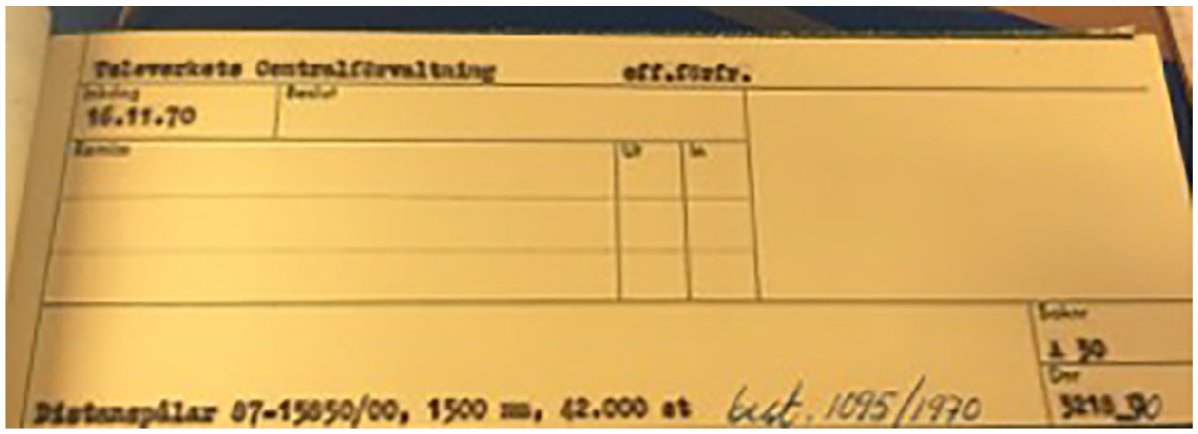
Order sheet by Televerket for 42,000 spacing stakes to mark telecommunications cables underground.
However, among the prisons’ clients during this period, we also find a number of media and communication companies proper. This is not surprising, because the media and communications industry in Sweden during this period was dominated by large state-owned companies such as Televerket (the state-owned telecommunications cooperation), Posten (the state-owned postal service), and Teracom (a terrestrial broadcast transmission service company) (see Table 1). Among the prisons’ regular customers were also semi-governmental organizations such as the public service companies, The Swedish Radio, and The Swedish Television. Communication, information transfer, and the effective coordination of ‘monopoly capitalism’ required communication infrastructure – and so the emergence of modern large-scale administration and bureaucratically organized companies during the post-war period made ever greater demands on communication infrastructure of this kind (mail, telephony, broadcasting). Large private companies such as The Swedish Film Industry and Ericsson also numbered among the clients ordering components for media and communication infrastructure such as call center headsets from the prison industry.
Overview over parts of prison media work, 1970–1974.
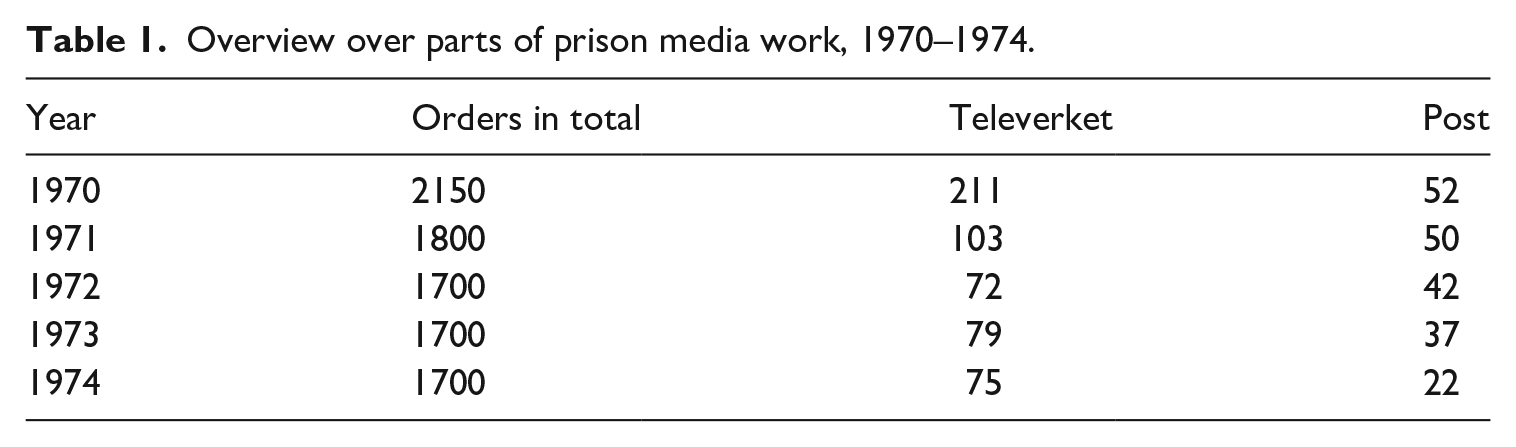
For the postal service, Swedish prisoners produced information boards, letter bags for postmen, letter trays, parts of postbags, air mail bags, parts for typewriters, wallets, package trays on wheels, folders and stamps, as well as pallets. The Televerket ordered bookshelves, letter bags, mailbox stands, trays for catalog holders, spacer plates, spacer tubes for catalog holders, flags, parts of headphones, and other small electronic parts as well as cases for bars on a large-scale every year in the 1970s (Figure 2).
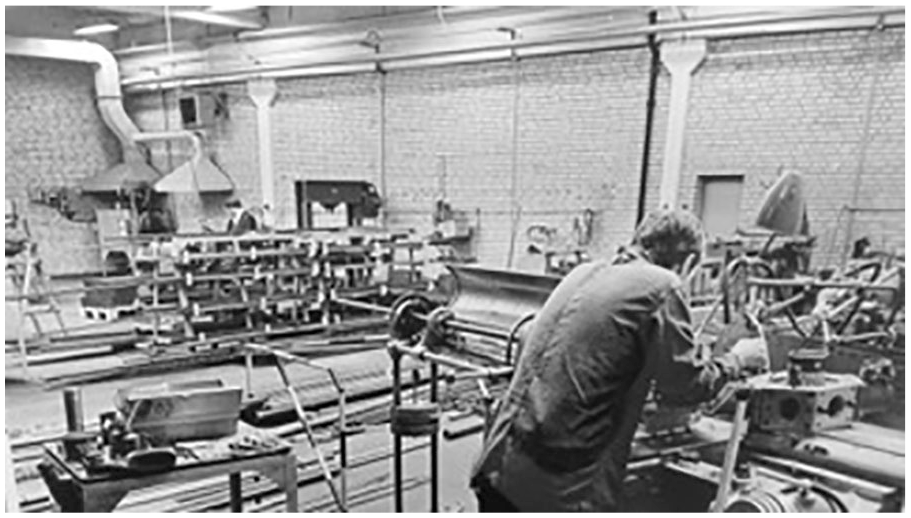
Industrial prison workshop in Kumla prison.
Some prison media work was more directly involved in the production of media content and technologies for mass media productions. Since prisons are not only uncanny, but also inspire, it is not surprising that there is a whole genre of prison literature, movies, and TV series. Providing the scenes for an everyday life at the edge, prisons feature prominently in popular culture and imaginaries. Of course, these productions are supposed to be featuring authentic prison scenery. This need for authenticity was also part of work operations in Kumla, one of the high-security prisons in Sweden. The work operation manager told us that he not only once, but twice sold prison authenticity to a film production company. First, by building a film set in the prison itself that was newly furnished and housed in a different unit than the inmates, especially for giving more space to film cameras and the team. Second, after a while, another film company bought the very same set of prison furniture. That way Kumla made money from selling prison authenticity twice, he ensured us proudly. In addition, during a period in the 1950s and 1960s, inmates in one of the Swedish prisons ran a repair workshop for TV and radio devices.
During the 1970s, the nature of work within prisons changed. On the one hand, these changes were driven by general changes in the labor market and in society. On the other hand, they were linked to the so-called ‘the prison struggle’ (Fångkampen) that took place in the late 1960s and early 1970s, which among other things meant that the prisoners in the workshops formed a union and struggled for market-based salaries leading to decline in the competitiveness of prison media work compared with outsourced labor to low-wage countries (Tornklint, 1971). The increasing globalization of economic life in the 1970s brought about a general ‘structural transformation’ in the Swedish economy. The manufacturing industry both inside and outside the prison walls was severely affected by this transformation process, as a series of mainly routine manufacturing tasks were outsourced to low-wage countries, especially in Asia (Kindgren and Littman 2015). At the same time, the professionalization of prison production with a stronger focus on the work environment, occupational safety, and market wages, following a correctional reform in 1974, meant that the competitive advantage of prison labor’s low wages was lost. Ironically, these efforts to improve prisons’ working conditions reduced the demand for prisoners’ work and limited opportunities for the institutions to offer meaningful workshop work to the prisoners. Many of the customers who had previously relied upon prison labor for manufacturing work also turned to this new labor market. This development was simultaneous to a process within which the large state-owned companies that had been major customers in the work of the correctional services were dismantled. These changes in the economic life of society, both of which are part of the transition to a neoliberal economic-political regime, made it increasingly difficult to find customers for the prison industry – and thus work for the prisoners (see efficiency of Swedish prison labor Table 2).
Development of employment: comparing the income and expenditure (in thousands) since 1945 based on annual reports.
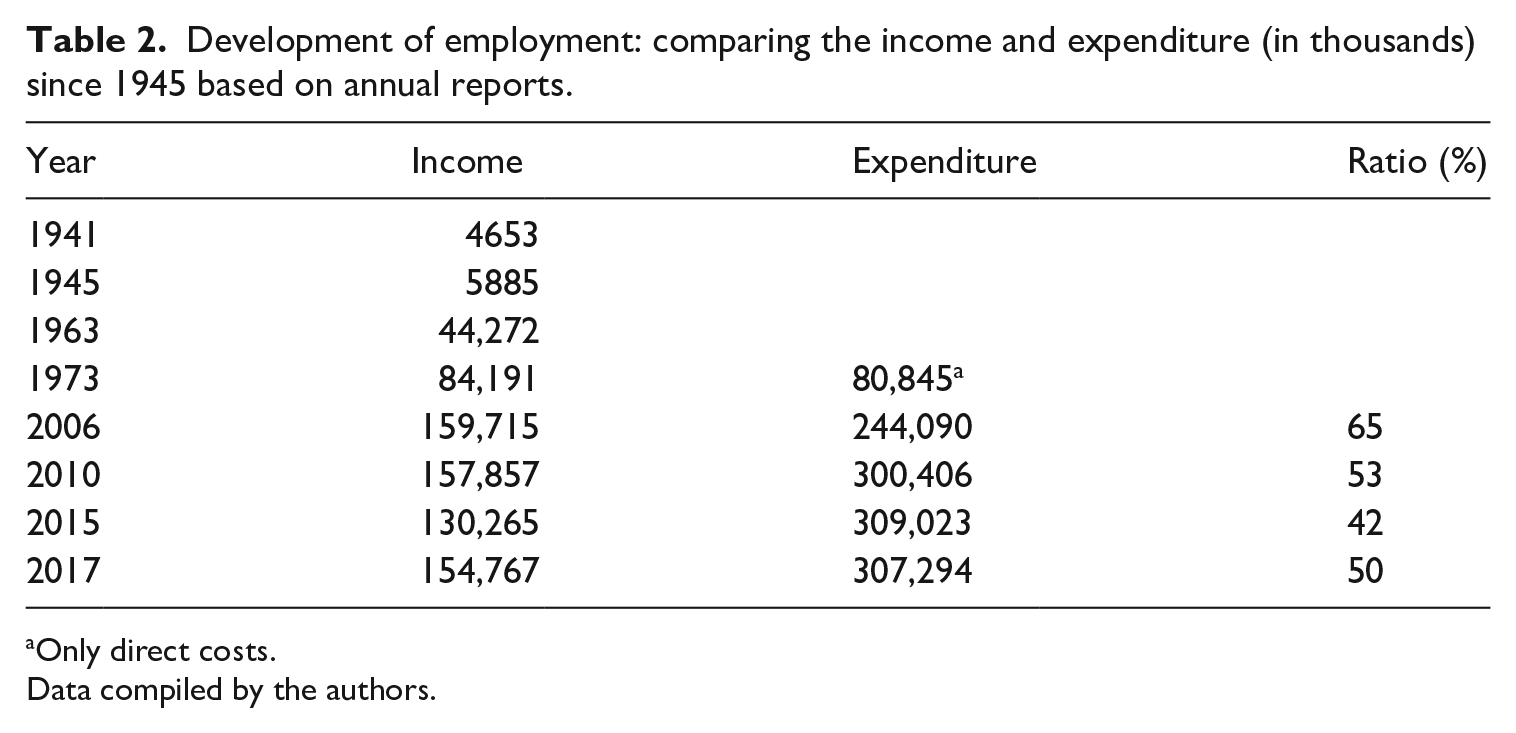
Only direct costs.
Data compiled by the authors.
During the 1980s, the local prison administrations reported constant problems with work operations due to the deterioration of the market for prison labor as outlined above. Even as the central authority – the Prison and Probation Service – demanded better profitability and more customers, the demand for the prisoners’ labor fell. The institutions’ annual reports from the 1980s returned again and again to the problems with prison production.
One problem that also loomed large in this decade was low productivity, which came – at least in part – from recurrent work refusal (what is called ‘passivity in the workshops’). This problem has characterized production throughout the history of the modern prison: even in the 1920s and 1930s, the reports of the old Royal Prison and Probation Authority complain of a lack of discipline and work ethic in the prisoners. Another problem identified in these reports is that the inmates coming from lower socioeconomic classes and often suffering from drug addiction in the 1980s were found to be in poorer mental and physical condition than before and therefore unable to work. Furthermore, because more and more prisoners were very young and sentenced to rather short penalties, following the ‘war on drugs’, the prison population was constantly being replaced and it was hence difficult to retain competent staff in production.
Although the 1970s and 1980s saw a decline in production, prison work did not stop altogether. While fewer goods were ordered from the Prison and Probation Service, clients were to some extent still present; even today, in 2019, we find a large number of media companies in the customer register of the Swedish prison production. It is still common for prison interiors and prison clothes used as costumes for TV or film productions to be made by prisoners in prison workshops. On the other hand, the large state-owned companies that were once the prison’s best customers – the post and the national telecommunications network – are now only partly state-owned or entirely privatized and they are no longer found on KrimProd’s customer lists.
From manual labor to the work of being tracked
Prison media work has been characterized by a number of changes since the post-war period. Moving from manual labor in the 1940s to a steep decline of prison media work during the 1970s and 1980s and a re-emergence of prison media work in the 1980s, current prison media work is characterized largely by the principles of digitalization.
This process started already in the 1970s, with the development of so-called ‘tele-technical’ surveillance systems. The Prison and Probation Service Concepts 1973-07-16 – an internal planning document – states that The modern, closed institutions are equipped with an expensive and complicated power system for, among other things, alarm devices, control devices, TV and radar monitoring, etc. [. . .] The Board of Directors expects a need for two additional officers. One of the officers should be given a technical mandate in order to be able to respond to the operational reliability and further development of the institutions’ strong and low-current installations and other technical space-preventing devices. [This is to be financed by the fact that] human intervention can be replaced by technical monitoring equipment in the form of TV and radar control.
After the major correctional reform in 1974, computerization and digitization of the Prison and Probation Services took off, bringing about the increased automation of office and registry functions. During the 1970s and 1980s, technical surveillance systems were further developed. Now, built-in microphones in the walls, surveillance cameras, and automatic lock systems have become increasingly integrated into Swedish prison architecture. But it was not until digitization that the correctional service seriously became an experimental workshop for the development of new monitoring technology, whereupon prisoners could be said to be a labor force to the extent that they become the test subjects who, by being monitored, contributed to the technical development and refinement of such systems. Here, the notion of the smart prison that relies on smart digital devices promising more reliability and efficiency is a key to understand the newly emerging character of prison media work, namely the work of being tracked (and consequently datafied) (Kaun and Stiernstedt, forthcoming). In the Swedish context, these developments are palatable in the approaches toward digitalization by the Swedish Prison and Probation Services. In 2018, the state agency launched the initiative Krim:Tech in order to recruit technology developers. In addition, Krim:Tech is meant to serve as a hub to renew, digitize, and smartify the work with prisoners. The Swedish Prison and Probation authority describes the hub in following terms: Krim:Tech is the new digitization initiative by the Swedish Prison and Probation Service. With the help of the latest technology and research, the initiative will support the development of new and improved digital solutions within the authority. Krim:Tech is an inventor’s workshop and testbed for digital technology. Does an ankle monitor have to be actually be an ankle monitor or could it be something else instead? How can we use IT to keep our security class 1 facilities calm? How can we prevent children and families who are visiting their father or mother in prison from feeling afraid? Can we do the security scan with a toy instead of metal detectors and full body scanners? (from a job posting March 2018 https://www.kriminalvarden.se/globalassets/kontakt_press/pressmeddelanden/krimtech-klar.pdf )
In the context of the smart prison, prison media work is increasingly focused on the work of being tracked and consequently producing valuable data that are used to automate specific processes with the help of algorithms and digital technologies. The infrastructural work in the smart prison is increasingly focused on automation based on tracking and data collection.
Although the use of digital media technologies in the prison context is still limited, these technologies are employed in more and more areas. The most common ways that digital technologies enter prisons are as solutions offered by different companies that allow for ubiquitous computing to track, manage, and control prison populations. One example of smart digital technology in the prison context is Spartan by Guardian RFID. The android-based handheld device is equipped with radio frequency identification (RFID), wi-fi, push-to-talk, as well as high-resolution imagining to be used to automate security rounds, for headcounts, inmate activity tracking, and more. The website advertising the device encourages clients to Centralize your inmate identification, security rounds, and activity logging into one powerful platform that integrates with your jail or offender management system. Maximize your defensibility, mitigate risk, and gain lightning-fast, real-time reporting with corrections most powerful Command & Control platform.
By standardizing the digital technologies used to survey and control prison populations, a range of different data can be collected and stored in common databases. This storage opens the possibility for analyzing these data in real time, with the aim of predicting and pre-empting unwanted behavior among prisoners. The Offender Management System developed by GTL, for example, promises to collect and handle ‘information on all aspects of an inmate’s incarceration’. This would allow a full picture of the inmates’ movements through the prison, previous records, but also health measures extending and standardizing the inmate tracking beyond previous possibilities.
Large-scale data collection and the construction of comprehensive databases are also at the center of a news story that unfolded in January 2019, when the adversarial online news publication The Intercept reported in a long-read about a voice surveillance system that has been rolled out across the United States. According to the article, incarcerated individuals in increasing numbers of correction facilities have been pressured into recording their voice. Often without being fully informed about the purpose of the recording and given no choice to comply or losing the possibility to make voice calls, a large number of incarcerated individuals has been voice finger printed. Voice finger-printing works through extracting and digitizing voices of prison population and adding them to a large database. The aim is to pre-empt future crimes and detect criminal networks coordinated from correction facilities. The surveillance extends, hence, beyond prison gates and also includes external callers. The total number of all inmates’ voices recorded and registered is difficult to estimate, but the New York Department of Corrections confirmed that approximately 92% of its in total 50,000 people counting prison population have been enrolled in the voice recognition system. Other states with large prison populations such as Florida, Texas, and Arkansas have confirmed the purchase of the recognition software by Investigator Pro as well. Producing large-scale, searchable database of voice fingerprints, the company Securus offering the voice finger-printing software argues that it monitors over 1,200,000 inmates in over 3400 facilities, but the total number of inmates supervised in that way is hard to estimate.
The productive labor of inmates constructing the databases through being tracked and datafied can be understood in Shoshana Zuboff (2019) as one form of ‘behavioral surplus’. Zuboff argues more generally that we produce value by moving through digital worlds and leaving data traces. These data are used to further rationalize and speed up production processes and to automate production through AI and machine learning. Machine learning and AI require large amounts of data to train their algorithms – and, as Cheney-Lippold argues, we supply these data by living our digital lives. Prisoners contribute in several ways to the work of being tracked. Their lives are datafied into the last detail. Records are kept about their food intake, emotional status, and media consumption. A second way in which prisoners produce value by being tracked is by serving as test subjects for developing surveillance technologies that would encounter public pushback in other contexts due to privacy concerns. Training AI in this context hones algorithms that can then be deployed in other commercial contexts. It also normalizes new and more data-driven surveillance techniques for broader use in civil society. The ‘work of being watched’ (Andrejevic, 2002) that prisoners perform is a key dimension of prison media work; however, it is also, and increasingly, driving broader societal transformations of how labor is structured including the media work performed by prison guards. Much of guard work is about controlling, moderating, suppressing, or steering communication and media practices (who talks to whom, what media content can be consumed by whom, etc.). According to Zuboff (2019) under the new regime of surveillance capitalism, our behavior is turned into observable and measurable units that can be processed with computational methods. She argues that human behavior that is turned into data is the new raw material for surplus production. In that sense, behavior and speech, in the case described above, is producing value in the form of data. As previous forms of prison media work, current forms of labor in prisons are intimately linked with general developments of capitalism. In the case of surveillance capitalism, however, the idea and practices – namely the surveillance, tracking, control, and prediction of behavior – that have become central to value production share many characteristics with prisons.
Prison media work under surveillance capitalism
In his article on the work of being watched, Mark Andrejevic quotes Michel Foucault’s discussion of the role and intention of the panopticon: The Panopticon . . . has a role of amplification; although it arranges power, although it is intended to make it more economic and effective, it does so not for power itself . . . its aim is to strengthen the social forces – to increase production, to develop the economy . . . to increase and multiply. (Discipline and Punish, Foucault, 1977: 208)
As a metaphor, the panopticon stands for the 19th-century shift toward establishing self-monitoring and self-discipline in order to increase economic productivity under capitalism. Within the panopticon, citizens discipline themselves into productive laborers in order to produce surplus value. According to Andrejevic, the panopticon becomes a metaphor to make sense of emerging forms of disciplining the self and for contemporary forms of surveillance. In contrast, we turn literally to prison media labor to trace changes in infrastructural work over time (Cheney-Lippold, 2017).
In this article, we have traced the contours of the media work that was carried out by Swedish prisoners in Swedish prisons during the 20th and 21st century. As we have emphasized that prisoners have contributed to many of the media and communication infrastructures that we still rely on in our everyday life today. This kind of media work differs from much of the media work and the media production that so far has been at the center of media research, which has been primarily interested in the symbol-producing and expressive media work conducted by society’s ‘creative classes’. Focusing on prisoners’ media work illuminates some general insights for media research. First, of course, prison work emphasizes dimensions that exists in all labor, but which becomes clearer here: that labor is in some ways and to some degree always unfree. The work conducted in prisons is linked to how the labor market and the economy are largely organized in society and it can be a useful reminder that also media work, often described and analyzed as ‘cool, creative and egalitarian’ (Gill, 2002), is embedded in hierarchical power relations and inequalities in different ways. The development that has taken place, from an emphasis on industrial production to ‘passive’ media work, where the fact that prisoners are technologically monitored in the prison becomes a kind of work in itself, furthermore, illuminates trends and tendencies that exist in society in general within contemporary surveillance capitalism, and as such prison media work is a dystopian magnifying glass of media work under surveillance capitalism. Another important reason to consider prison work as a form of media work is that doing so deepens our understanding of the political-economic contexts in which all media are embedded. The example of prisoners’ media work points to the role of the state in the development of media and communication technologies, as it clarifies that state-subsidized work de facto has been behind a large part of the media infrastructures that surround us. Prisoners’ media work highlights the state’s role in organizing, financing, and subsidizing media and media work, and in so doing it has used its outcasts and marginalized populations to create and maintain the ‘technologies of freedom’ important for the construction of the capitalist welfare state of the 20th century. Finally, the example of prisons highlights the need to further study the forms of media work that take place ‘below the line’ (Mayer, 2011) and beyond what have traditionally been perceived as media industries. Hence, the example of prison media work points to the need of a more broader approach to studies of media work and media production. The type of work that prisoners in Swedish prisons have conducted has been mainly about producing and maintaining media technologies (e.g. the television sets and radio sets) and infrastructure (e.g. the telephone poles and electronic components for telephony) required for mass communication, but as the contemporary examples of ‘passive’ media work in smart prisons suggests, the correctional services also act as an experimental workshop which contributes to the development of media and communication technologies. In that sense, prison media work continues to contribute to the development of crucial media infrastructures for the future.
