




Abstract
This study explored the effect of listening to texts on comprehension among students with intellectual disabilities (ID) compared with traditional reading methods. A single-subject A-B design with a time lag and follow-up phase was employed. Eight middle and high school students with ID participated in the study. During the baseline phase, participants read texts and answered three comprehension questions. In the intervention phase, they listened to the same texts and answered comprehension questions identical to those in the baseline phase. The students completed 12 intervention sessions, which included systematically listening to the texts. The results indicated that all students demonstrated better text comprehension when listening than when reading. Some students showed continuous improvement as the text advanced. For students with ID, especially those unable to read longer texts, text-to-speech may be essential for enhancing text engagement. Individual and pedagogical implications, methodological issues, and future research directions are discussed.
Introduction
Literacy is essential for personal and professional development, as it influences educational success, employment opportunities, health, and societal participation (Alqahtani, 2020; Shurr & Taber-Doughty, 2012). However, an estimated 15–20% of the global population experiences difficulties with reading and writing (Elliott & Grigorenko, 2024). Moreover, up to 80% of students with intellectual disabilities (ID) face significant difficulties with literacy, including reading comprehension (Afacan et al., 2018; Channell et al., 2013; Knight et al., 2018; Ratz & Lenhard, 2013). This study, therefore, investigated differences in text comprehension between listening and reading among students with ID, focusing on the potential benefits of systematic text-to-speech (TTS) practice as a learning aid. By exploring whether listening is an effective alternative to traditional reading, we aimed to address the critical need for efficient, accessible text comprehension interventions for this population.
While phonological training is widely recognized as effective for improving reading skills in most students (Elliott & Grigorenko, 2024), its effect on students with severe dyslexia or ID remains a subject of debate. Some studies report benefits (Barker et al., 2013; Dessemontet & de Chambrier, 2015) while others note the limitations of traditional methods for students with significant literacy challenges (Alquraini & Rao, 2019; Di Blasi et al., 2018; Lindström & Lemons, 2021). Such variability underscores the need to explore innovative solutions, such as assistive technology, to address these gaps in literacy support.
Assistive Technology
A promising alternative to traditional reading methods is assistive technology, particularly TTS, which has demonstrated significant potential to complement or replace visual reading (Perelmutter et al., 2017; Prystiananta et al., 2024; Wood et al., 2020). Assistive technology is defined as a set of tools that promote user independence by minimizing the effects of disabilities (Edyburn, 2015). Assistive technology encompasses various approaches, including TTS, which is increasingly used in literacy education. Specifically, TTS and speech-to-text technologies have shown promise for individuals with reading difficulties (Alper & Raharinirina, 2006; Dogan & Delialioğlu, 2020; Elliott & Grigorenko, 2024). Text-to-speech studies have reported improvements in reading fluency and comprehension, although the results vary across studies (Mize et al., 2023; Schmitt et al., 2019; White & Robertson, 2015; Wood et al., 2020). Additionally, research indicates that students who use TTS and possess basic decoding abilities experience improvements in their decoding skills despite not explicitly practicing decoding. This phenomenon has been attributed to a “transfer effect,” where engaging in linguistic activities, such as listening to texts, indirectly enhances decoding skills (Young et al., 2019; Svensson et al., 2021). Such findings highlight TTS’s dual role as a compensatory tool and a means of fostering skill development. This underscores the relevance of exploring TTS use among students with ID, who often face persistent challenges developing fluent reading skills (Ratz & Lenhard, 2013).
This study expands on previous findings (e.g., Mize et al., 2023; Sand et al., 2025; Wood et al., 2020) by systematically comparing reading and listening comprehension among the same students using a single-subject design. Moreover, we add nuance to previous findings on decoding development by suggesting that a transfer effect may occur among students with initial decoding skills (Perelmutter et al., 2017; Svensson et al., 2021; Young et al., 2019). In this way, this study helps clarify the conditions under which TTS may support both comprehension and decoding development among students with ID.
Earlier studies have indicated that students with ID often comprehend texts more effectively when listening rather than reading independently (Alqahtani, 2020; Sand et al., 2025). This is further supported by research showing that structured listening activities, such as shared story reading or listening to adapted e-texts with instructional strategies, can significantly improve listening comprehension in students with ID (Dessemontet et al., 2024; Hudson & Browder, 2014; Wood et al., 2020). Given the extended time required for students with ID to learn to read (Afacan et al., 2018; Cannella-Malone et al., 2015) and their relatively superior comprehension while listening, investigating the cost-effectiveness and broader benefits of listening versus reading is crucial. The ability to comprehend textual content is vital, whether accessed through reading or listening. Improved understanding may foster greater motivation and enable students to engage more autonomously with texts (Lindeblad et al., 2019; McNicholl et al., 2023). Investigating these benefits and accounting for the diverse needs of students with ID require a method that allows for individualized analysis. One such approach is the single-subject design, which has gained popularity in special education because of its ability to accommodate individual variation while providing a detailed tracking of progress (Horner et al., 2005; Kratochwill & Levin, 2014; Lobo et al., 2017). A single-subject design is particularly suited to students with ID, whose diverse learning profiles require tailored instructional methods (Alnahdi, 2015). Studies employing this approach have demonstrated that TTS improves text comprehension and increases students’ independence in engaging with educational materials (Alqahtani, 2020, 2023; Wood et al., 2020).
However, there remains a lack of research on the differences between listening and reading comprehension among students with ID. Many of these students have not received systematic instruction on using TTS for text comprehension as compared with reading. Therefore, further research is needed to investigate whether systematic teaching using TTS can enhance students’ text comprehension.
Purpose of the Study
This study primarily aimed to assess and compare the effects of listening and reading on text comprehension among students with ID. The secondary aim was to explore whether listening to texts via TTS might also influence decoding ability, suggesting a potential transfer effect. Our research questions are as follows: • Does the systematic practice of listening to texts improve text comprehension for individual students? • Are there differences between reading and listening in the number and variety of words and sentences individual students generate when answering comprehension questions? • Does the decoding ability of individual students improve after listening to texts, suggesting a potential transfer effect?
Methods
Study Context
In Sweden, students diagnosed with ID have the option to attend either mainstream schools, where they receive education alongside peers without ID, or compulsory schools tailored to their educational needs. The latter are referred to as adapted school forms (Swedish National Agency for Education, 2023), which is the term we will use in this paper. Adapted school forms include primary, upper secondary, and high schools specifically designed for students with ID. This educational commitment spans approximately 10 years, starting in grade 1 at the age of seven (Swedish National Agency for Education, 2023). Mainstream compulsory education in Sweden covers grades 1–9 and follows the general national curriculum for students without disabilities, similar to regular primary schools in other contexts. Students with ID follow a curriculum distinct from that of their peers without ID. The curriculum is designed to address the academic and social needs of students with disabilities while also supporting their communication abilities, social skills, and independence. All students in our study attended adapted school forms. Instruction is primarily delivered in a one-on-one format (1:1), although small-group instruction occasionally occurs. The student-to-staff- ratio is approximately 1:1. There is a limited documentation regarding the exact amount of time allocated to reading instruction in adapted school settings in Sweden, as this varies considerably depending on student age and individual needs. The school in this study serves a total student population of 20 individuals, spanning grades 1–9.
Participants
Details About Students Participating in the Study.
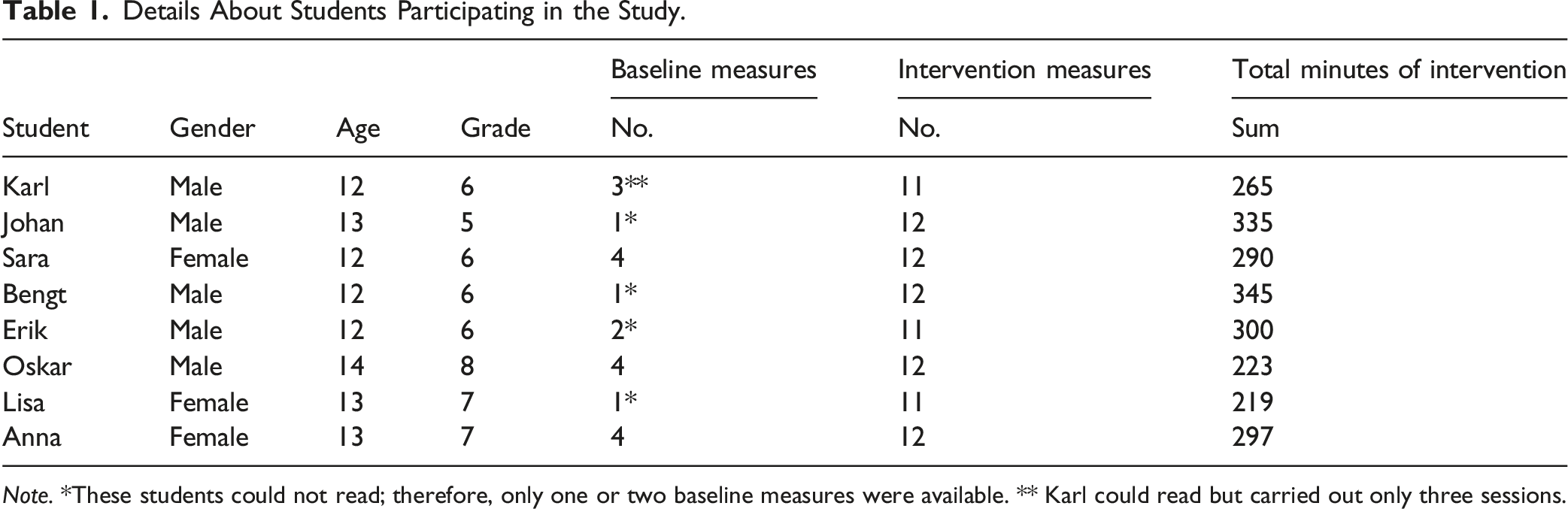
Note. *These students could not read; therefore, only one or two baseline measures were available. ** Karl could read but carried out only three sessions.
Four of the students had attended adapted school forms throughout their education, while the other four had transferred from regular primary schools during their earlier school years. All participants had received structured reading instruction, but their reading abilities varied. According to the LäSt test (Elwér et al., 2016) results, two of the students could only decode a few isolated words (fewer than 10 words per minute; WPM), five demonstrated decoding skills in line with the average for grade 1 (about 22 WPM), and one performed at a level comparable to the grade 2 average (about 54 WPM). In terms of connected-text reading, four students were either unable or, in two cases, struggled significantly to read and comprehend short passages.
None of the participants had prior experience using TTS or other assistive technologies for listening to text. See Supplement A for detailed individual profiles, including educational background, reading development, and session participation.
Procedure
Each teacher was assigned instructions for a single student. Initially, during the baseline phase (including three or four sessions for students who could read connected texts), students independently read texts without using digital technology. All texts were selected by the teachers based on students’ reading levels. The texts varied in length and included both fiction and nonfiction texts. Teachers selected texts from a collection categorized into three difficulty levels, matched to each student’s reading proficiency. They logged which text was used and ensured that no text was repeated with the same student. While difficulty varied owing to individual needs and progress, consistency was maintained across phases in terms of length, structure, and content. Students were allowed to read or listen to texts as often as they wished. Teachers documented in a logbook if a student read or listened more than twice. This reflects standard instructional practice and aligns with a similar flexible text-selection approach in Fälth et al. (2025). Different texts were used for each student at baseline and in the intervention. After each session, teachers asked the students three comprehension questions: “What is the text about?” “What happened in the text?” and “Can you tell me more about the text?” These questions were designed to aid students in both reading and listening to texts, thereby improving their comprehension of the content within the project, as well as in future texts they would encounter. The teachers documented students’ responses and allowed them to reread the text multiple times to formulate their answers.
During the intervention phase, the students engaged in 12 individualized lessons involving TTS technology (three students did only 11 sessions due to illness or travel that could not be rescheduled). The length of the lessons varied as they were adjusted to the students’ pace and motivation (see Table 1). The teacher provided instructions on how to operate the TTS system and demonstrated its use in listening to texts as an alternative to reading. These instructions included guidance on how to start TTS, follow the text, adjust the voice speed, and select different voices. Students were also taught how to pause and replay sections of the text as needed, including specific words, sentences, and paragraphs. The teacher personalized the guidance to cater to each student’s needs with the goal of fostering independence in using technology.
Each lesson during the digital technology teaching phase followed this structure: (1) The teacher introduced TTS synthesis and demonstrated its use to the student, (2) the student listened to the text, and (3) the teacher asked the student the same three comprehension questions as in the baseline phase and recorded the responses. Students were allowed to listen to the text multiple times to answer the questions. If a student struggled to answer the questions, the teacher prompted them to listen to the text again.
Study Design
We employed a single-case experimental design using an A-B, time-lagged, concurrent multiple baseline format across participants, consistent with the guidelines in Ledford and Gast (2018). The design included a staggered (time-lagged) introduction of the intervention to strengthen internal validity by reducing the influence of history and maturation effects. All eight participants began the baseline phase approximately one week apart, with each participant completing the same number of sessions in both the baseline and intervention phases—typically 4 and 12 sessions, respectively. Although four students completed fewer than four baseline sessions owing to their inability to decode text, the sequential timing of intervention onset was preserved for all (except for three students who carried out 11 sessions). The design allowed for individual-level analysis while enabling systematic replications across participants. We selected this format to satisfy ethical and practical requirements when working with students with ID while still providing a strong demonstration of experimental control. A follow-up assessment was conducted about 1.5 years after the end of the intervention to evaluate the long-term maintenance effects.
The independent variable was using TTS to listen to text. The dependent variables included students’ comprehension of text content, measured by the percentage of correct answers to open-ended questions, and their oral language production (number of words, different words, and sentences). In designing the study, we considered both open- and closed-ended questions, as both are commonly used in single-case designs targeting reading comprehension among students with mild ID (e.g., Shelton et al., 2019). However, closed-ended questions may require detailed recall, which can be challenging for students and hinder participation. Since our study did not include memory-enhancing strategies (cf. Hagaman et al., 2010), we prioritized comprehension over recall. We opted for open-ended questions to support students’ expression in their own words, reduce the risk of failure during repeated assessments, and ensure consistency across sessions.
Instrument and Materials
ClaroSpeak Plus is a TTS application designed to facilitate the auditory reading of various types of documents. It supports reading at the word and sentence levels, as well as continuous text. Users can customize the app by selecting from a range of voices and adjusting the speed settings to meet their individual requirements.
LäSt is a test that measures decoding, reading comprehension, and spelling. For this study, we used the decoding part, which consists of a word reading test and a nonword reading test. In the word reading test, correctly read aloud words are recorded over two 45-s periods and aggregated into a total score; the nonword reading test is conducted similarly. The test–retest reliabilities for word decoding were 0.74 and 0.78; for nonwords, they were 0.91 and 0.88. Norms for the test are available for grades 1–6 (Elwér et al., 2016).
In the SL-60 reading comprehension test, students read one or two sentences and then select an image from a set of five that best illustrates the text. The sentences are initially simple and gradually increase in complexity. The test comprises 60 items, with each correct response earning one point. Norms are available for grades 1–3 (Nielsen et al., 1997).
The CELF-4 listening comprehension subtest assesses students’ ability to understand and recall information from short spoken texts. In this subtest, the examiner reads the text aloud, and students respond orally. The assessment includes six texts, divided into two age-specific sets: three texts for students aged 9–10 (A) and three for students aged 11–12 (B). Each set of texts allows for a maximum of 15 points. In this study, the students completed both sets. Normative data are available for each age category (Semel et al., 2004).
The texts used during the baseline and intervention phases were short and simple, covering various topics, such as animals, vehicles, and countries. The lengths of these texts ranged from 52 words (shortest) to 310 words (longest). The instructors’ task was to familiarize themselves with the text in advance and select the appropriate text for each lesson. This procedure was followed regardless of whether the students independently recalled the content after reading or listening. Additionally, text complexity increased, with the simplest text being introduced during the baseline phase.
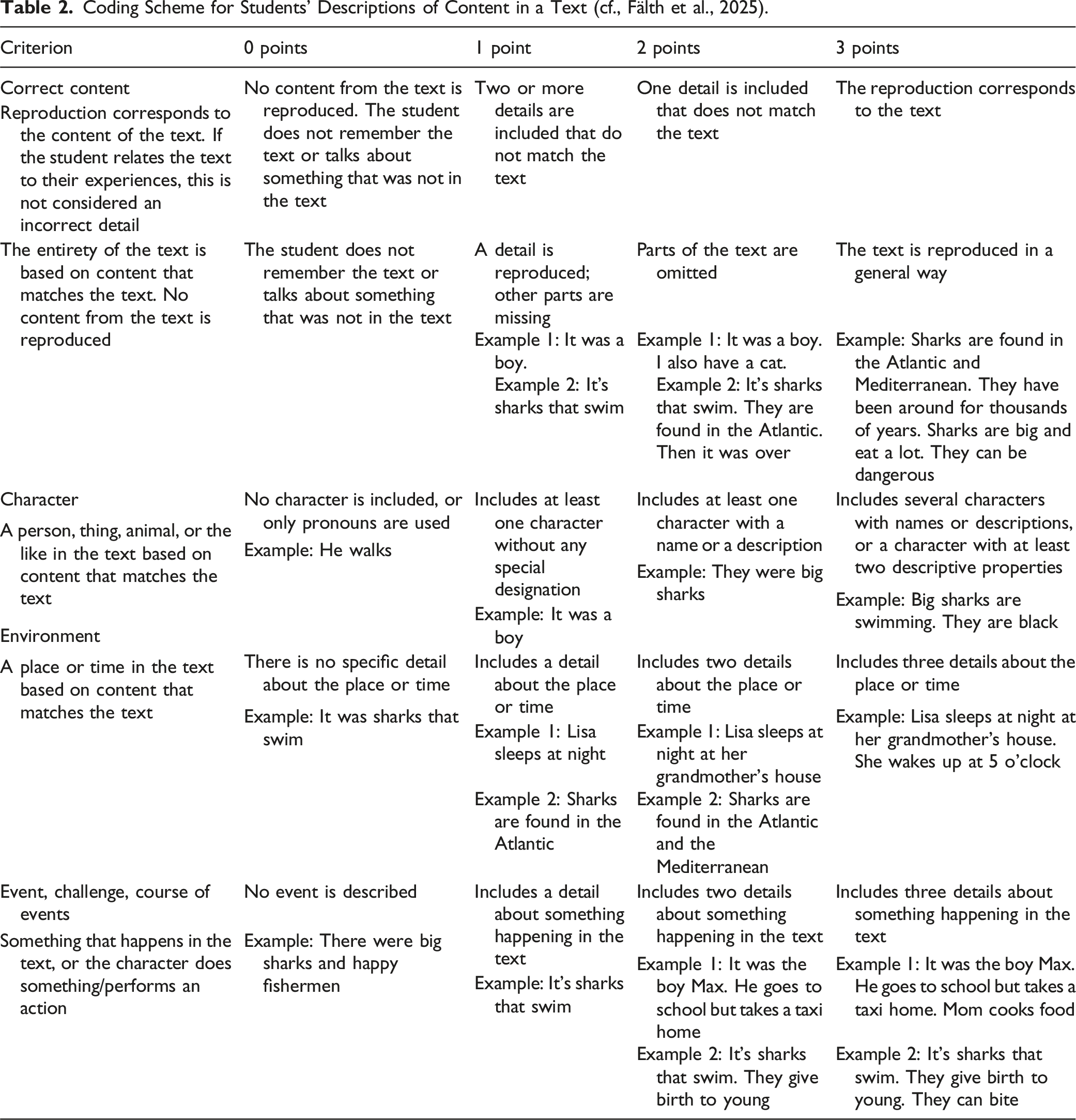
Coding Scheme for Students’ Descriptions of Content in a Text (cf., Fälth et al., 2025).
Fidelity
In preparation for this research, we met with teachers to discuss the structure and content of the study. Additionally, the teachers received a comprehensive teaching guide that outlined how lessons should be conducted, along with instructions for using TTS. A member of the research team maintained weekly communication with the teachers. The teachers were also instructed to maintain a logbook for each participating student. The logbook entries included detailed records of each student’s responses to the text comprehension questions, lesson duration, student requests for assistance, levels of independence and motivation, and whether the students read or listened to the text multiple times. Furthermore, the teachers documented whether the students could independently open the text document, initiate TTS synthesis, pause/stop the synthesis as needed, and adjust the speed of TTS synthesis.
Ethics
Both oral and written information were provided to the students and their guardians, with written informed consent being mandatory for participation in the study. Participants had the right to withdraw from the study at any stage without facing any consequences. This study was approved by the Ethical Review Authority (2022-04925-02).
Analyses
We visually analyzed each student’s data to monitor comprehension across the reading and listening sessions, capturing trends and patterns (Kratochwill et al., 2023). Figure 1 illustrates this approach, which was essential for evaluating the effectiveness of TTS for enhancing comprehension. The figure shows the percentage of the maximum, presenting the differences between the baseline and intervention phases, as well as the magnitude of the intervention effects. We used Student’s t-test to compare linguistic elements between the reading and TTS sessions, such as the number of words, types of words, and sentences. Students’ Text Comprehension at Baseline (Reading), Intervention (Listening), and Follow-Up (fup; Reading and Listening). Note. Comprehension refers to the student’s percentage of reported details, obtained by scoring their retelling of content, wholeness, character, environment, and events. Mean percentages for the respective phases are presented in the graphs. TTS: text-to-speech.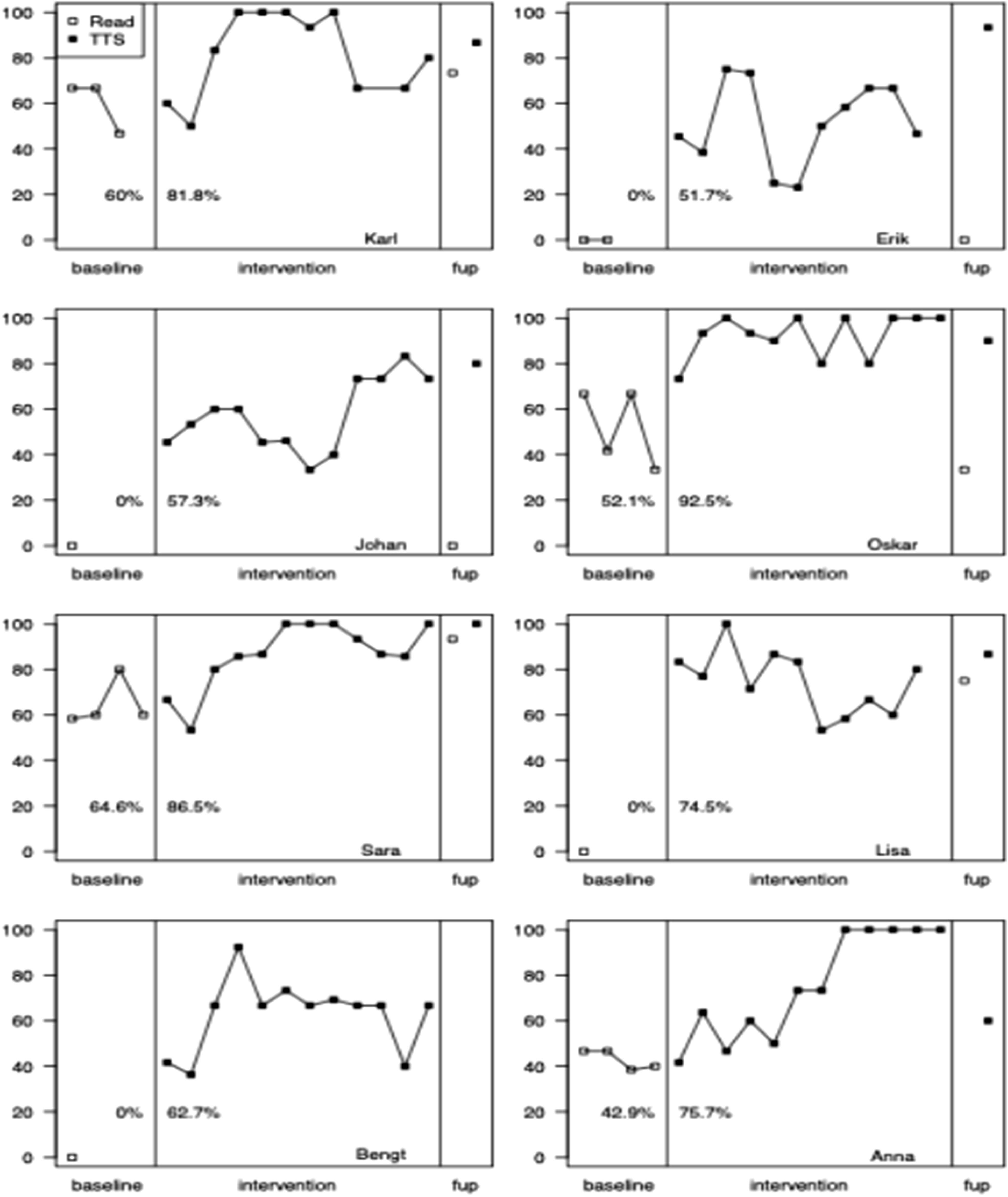
Results
Raw Scores for Word Decoding, Reading Comprehension, and Listening Comprehension Across Baseline and Postintervention.
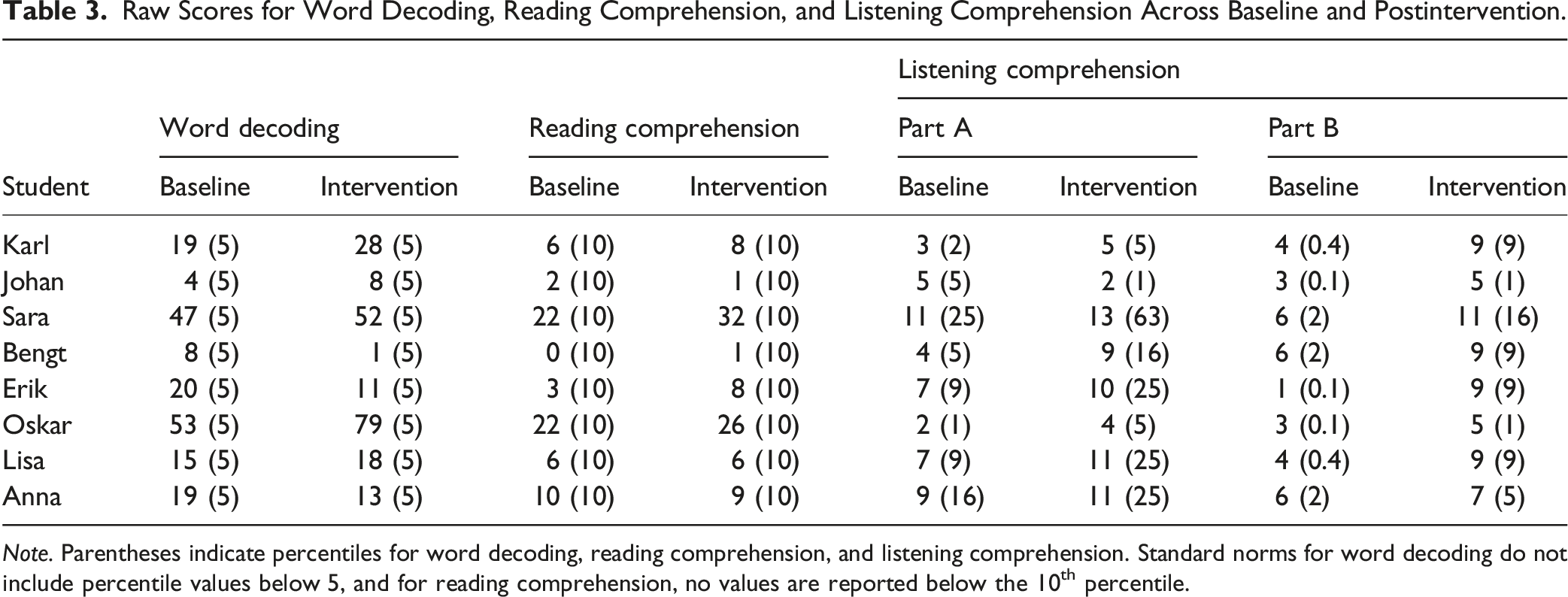
Note. Parentheses indicate percentiles for word decoding, reading comprehension, and listening comprehension. Standard norms for word decoding do not include percentile values below 5, and for reading comprehension, no values are reported below the 10th percentile.
Pre- (Read) and Post-Tests (TTS) Among the Students.
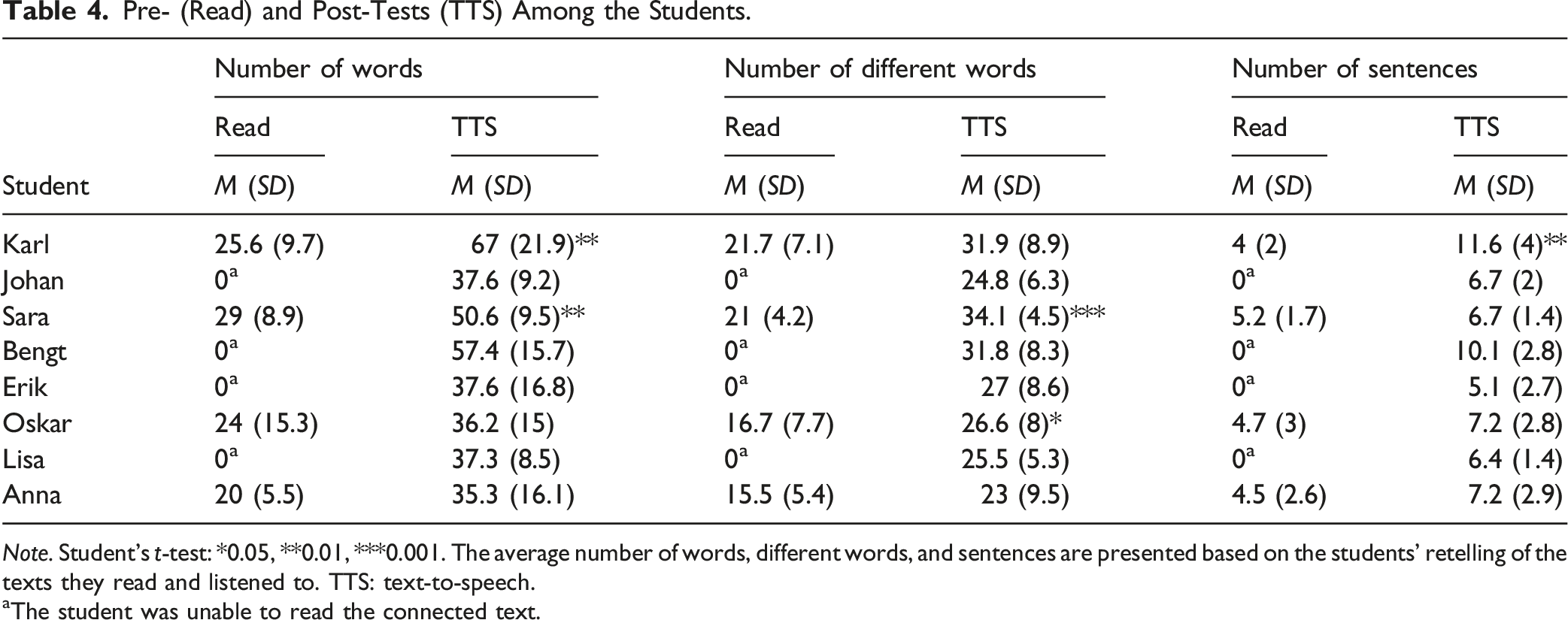
Note. Student’s t-test: *0.05, **0.01, ***0.001. The average number of words, different words, and sentences are presented based on the students’ retelling of the texts they read and listened to. TTS: text-to-speech.
aThe student was unable to read the connected text.
All eight students experienced difficulties with word decoding before and after the intervention, and none of them reached an average level above grade 2. In the reading comprehension test, none of the students reached the average grade 1 level. While some participants improved from baseline to intervention on both the word decoding and reading comprehension tests, the most pronounced gains were observed on the listening comprehension test. Only one student (Johan) failed to improve listening abilities. Despite having higher listening comprehension than reading comprehension, none of the participants achieved age-appropriate levels on the tests.
Visual analyses demonstrated that all students understood the texts better when listening than when reading. Several students had only one or two marked sessions at baseline, which can be attributed to their initial inability to read at all. There was no marked reading session for Anna at follow-up because she refused to read the text and no marked session for Bengt since he did not participate in the follow-up session.
Karl demonstrated a slight level change in decoding between baseline and intervention, although his performance remained well below grade-level expectations. His reading comprehension showed no meaningful level change across phases. By contrast, his listening comprehension improved immediately following the intervention, increasing from 60% at baseline to 81.85% during the intervention and reaching nearly 90% at follow-up. This suggests both an immediate effect and maintenance gains over time.
The visual analysis (Figure 1) showed a positive trend in Karl’s listening comprehension, with minimal variability. The absence of data overlap between the baseline and intervention phases further supports an intervention effect. In terms of language production, Karl used more words, exhibited greater lexical diversity, and used more complete sentences in the listening condition than in the reading condition (Table 4), indicating consistency across measures. He also learned to manage key TTS functions, such as adjusting playback speed and switching voices. Following the intervention, he increased his use of TTS during school activities and began listening to audiobooks independently.
Johan was unable to decode words at baseline and therefore demonstrated no measurable reading comprehension. This pattern remained stable throughout the intervention, indicating no change in decoding or reading comprehension. By contrast, his listening comprehension showed a clear change, improving from 57.3% at baseline to approximately 80% at follow-up. The data suggest a positive trend across the intervention phase and the maintenance of gains postintervention.
The visual analysis (Figure 1) indicated low overlap between baseline and intervention scores in the listening condition. Although Johan’s retellings included few words, they were qualitatively more accurate and content-relevant after the intervention (Table 3). The number of words, unique words, and complete sentences also increased in the listening condition compared with reading (Table 4), reflecting consistency across measures. Johan required full support to use the TTS app initially, but over time he learned to start the app independently, pause playback, change voices, and adjust the speed. After the study, he continued to use TTS in school, although not at home.
Sara initially struggled with text decoding, but during baseline (A), she was able to recall an average of 64.8% of the text content when reading. Following the onset of the intervention phase (B), which involved listening to texts using TTS, there was an immediate and substantial level change, with her comprehension increasing to 86.5%. A positive trend was observed across the 12 intervention sessions, and her performance remained consistent, with low variability. Visual analysis indicated a clear separation between baseline and intervention, with minimal overlap in the comprehension scores, suggesting a strong functional relationship between the intervention and improved performance. At follow-up, Sara demonstrated gains maintenance, reaching full comprehension when listening and near-complete comprehension when reading. In addition to accuracy, she produced a higher number of words, exhibited more varied vocabulary, and used more syntactically complete sentences during the intervention phase.
Bengt was unable to decode any words at baseline and thus demonstrated no measurable reading comprehension. Upon entering the intervention phase, in which he listened to texts using TTS, there was an immediate and substantial change in listening comprehension, with his performance increasing to 62.7% accuracy. Visual analysis revealed no overlap between the A and B phases and low variability during intervention. Bengt’s performance was consistent across the 12 intervention sessions, with a positive trend observed in the quality of his responses. He produced more total words, a greater variety of words, and more complete sentences during B compared with baseline. Follow-up data were not available, as Bengt relocated before postintervention assessment could be conducted.
Erik could read only a few words at baseline (A), and his reading comprehension was almost zero. With the introduction of intervention (B) in which he listened to texts, there was an immediate level change, with his average comprehension increasing to 51.7%. He used more words, more varied words, and more complete sentences while listening. Despite overall improvement, his performance during intervention showed moderate variability, with some sessions yielding lower scores. Effect consistency was moderate across sessions. At follow-up, Erik still could not read the texts, but he reached his highest individual comprehension score, indicating maintenance of the gains from the intervention. He quickly learned to manage the TTS tool and began using it regularly at school and at home.
Oskar demonstrated a clear change between baseline (A) and intervention (B), with improvement observed in both the decoding and comprehension test scores. He also showed a marked difference between conditions during the intervention, recalling 51.1% of the content when reading the texts and 92.5% when listening. Visual analysis revealed no overlap between baseline and intervention data, along with low variability and a stable pattern of high comprehension during listening sessions. He produced more words, used a broader range of vocabulary, and produced more complete sentences while listening than when reading. At follow-up, the difference between reading and listening comprehension persisted, favoring listening, indicating maintenance of the gains observed during the intervention. Oskar quickly learned to use the TTS app and often replayed segments to enhance his understanding. After the study, he preferred listening to longer texts and chose to read shorter ones independently.
Lisa could read only a few words at baseline (A), and no gains were observed in the decoding or reading comprehension test scores following the intervention. However, an immediate level change occurred when she began listening to texts during the intervention phase (B). She recounted 74.5% of the text content when listening. Visual analysis showed a clear separation between baseline and intervention, with no overlap and a positive trend in listening comprehension. Performance showed moderate variability across sessions but remained consistently above baseline. At follow-up, Lisa had developed basic decoding skills and was able to read texts; however, her listening comprehension remained slightly stronger, indicating maintenance of the intervention effect. She learned to use TTS independently and frequently replayed the texts to improve understanding.
Anna struggled with reading and showed no progress between baseline (A) and intervention (B) on the decoding or reading comprehension scores. However, her listening comprehension improved, with an immediate change at intervention onset. She understood 42.9% of the content when reading and 75.7% when listening. Visual analysis showed no overlap between baseline and intervention, with a moderate trend toward improved performance and some variability across sessions. She also used more words, more diverse vocabulary, and more complete sentences while listening. At follow-up, she refused to read but maintained listening comprehension at or above the intervention level, indicating effect maintenance. Anna quickly learned to use TTS independently. After the intervention, she continued listening to texts at school but not at home and did not engage in reading.
Social Validity
Seven teachers were surveyed regarding their experience of teaching TTS to students. They reported that both the intervention and the use of TTS were highly relevant for their students and that the technology was easy for them to learn. With the exception of two individuals, all students were now using TTS in lessons other than the intervention sessions. All participating students were able to use TTS independently to varying degrees. The teachers emphasized the necessity of TTS for their students, noting that students comprehended texts better when listening than when reading. All teachers expressed an intention to share insights with their colleagues regarding how systematic instruction can enable students in adapted educational settings to use technology.
Discussion
This study investigated the effect of TTS on text comprehension among students with ID. During the baseline phase, students read texts and responded to comprehension questions. In the intervention phase, they listened to the same texts and answered comprehension questions identical to those posed during the baseline phase. A consistent pattern emerged: All eight students demonstrated better performance when listening to the texts than when reading them independently, both in terms of text comprehension and the amount of verbal output. Figure 1 shows an increasing trend in text comprehension in the student group during the listening phase, although significant variability among students was observed. Our results support Sulaimon and Schaefer’s (2023) study, which found that students comprehended questions better when listening to them.
Differential Outcomes in Initial Reading Ability
For four students, this outcome was expected, as they were unable to read texts before the intervention or during the baseline phase. The results indicated that the difference was particularly pronounced for students who were unable to read connected texts. These students were unable to comprehend any of the content when reading, despite three of them having limited ability to decode individual words. However, when they listened to the texts, they were able to recount the content either fully or partially, even as the text became more complex. It is worth noting that the students demonstrated notable improvement in their ability to comprehend text content when listening and outperformed their comprehension when reading. These findings align with prior research showing that students with mild-to-moderate ID can effectively understand various types of text using TTS (Mize et al., 2023; Sand et al., 2025; Wood et al., 2020).
Of the four students who were unable to read connected texts, three were in middle school (grades 5 and 6) and one was in junior high (grade 7). Despite participating in only 12 training sessions focused on listening—a minimal number compared with their extensive prior reading training—these students achieved notable gains in listening comprehension. This indicates that the continued practice of listening to texts can further enhance comprehension abilities. Furthermore, improvements were observed in the quality and quantity of words and sentences generated in the later sessions, even for more complex texts. This aligns with Collins et al. (2019), who emphasized the benefits of practicing listening comprehension. At baseline, these students demonstrated a decoding ability comparable to that of first-grade students, indicating extremely limited word-reading skills despite having completed five to 7 years of schooling. These results highlight the potential of TTS as a primary tool for assimilating text, promoting students’ learning at school, and supporting their text comprehension both inside and outside of school. Thus, our findings underscore the need to reflect on the balance between continued reading instruction and compensatory tools such as TTS for students who have not developed sufficient decoding skills despite extended support.
The four students who read the connected texts were two junior high students (grades 7 and 8) and two middle school students (grades 5 and 6). The students also performed better when listening after the intervention. Two of them demonstrated decoding abilities comparable to the second-grade average while the other two were at the first-grade level. For these students, it is beneficial to continue practicing reading, but it is equally important to incorporate TTS in parallel. It is also worth noting that all four students began in an ordinary compulsory school, where they received extensive training in reading. Our results suggest that it is crucial to consider the cost–benefit aspect; that is, how much training, and for what duration, should a student undergo if technology that can compensate for these challenges exists? Studies have shown that students with ID take significantly longer to learn various tasks, such as reading (Afacan et al., 2018; Cannella-Malone et al., 2015). This can also be related to the level of reading proficiency required in society to access essential information and pursue personal development. To our knowledge, no exact threshold has been established for this level of proficiency. Studies examining reading levels suggest anywhere from fourth to ninth grade, while some argue that a minimum reading speed of 200 WPM is needed to comprehend texts intended for adults (Brysbaert, 2019; Hasbrouck & Tindal, 2017; St Clair, 2012; Wagner & Venezky, 1999). Earlier studies indicated that achieving reading comprehension for second-, third-, and fourth-grade students in compulsory education requires reading 50–70 correct WPM (CWPM) (Burns et al., 2002, 2011). Most students with ID cannot read 100 WPM, regardless of grade level (Ratz & Lenhard, 2013; Sand et al., 2025). Consequently, since reading fluency is an important link between decoding and comprehension, inadequate decoding ability can jeopardize comprehension (Roberts et al., 2008; Sulaimon & Schaefer, 2023).
Evaluating the Role of TTS: Complement, Compensation, or Replacement?
In light of aspects mentioned above such as cost–benefit and required decoding level, we should consider the extent to which students in this study, who had some reading ability but did not reach the minimum reading level (fourth grade or 50–70 CWPM), should continue to receive traditional training. Notably, Oskar achieved the best decoding result, reading 56 WPM; he was the only student to exceed 50 WPM. Yet, his word decoding ability was still well below the expected level for his age. This issue is particularly pertinent for students in grades 7 and 8. Continuing to train in a skill that has not sufficiently developed over many years can be frustrating and detrimental to students’ self-esteem, especially when alternative methods that can compensate for these difficulties are available. In such cases, TTS can provide reliable access to written content, reducing frustration and supporting participation in school and society, especially when traditional reading approaches have reached a plateau.
All students demonstrated better text comprehension when listening to texts than when reading them independently, even after the first session. This suggests that their actual comprehension ability may be higher than previously assumed. Such findings have important implications, both individually and socially, as they concern how students perceive their capabilities and how others view them (Sand et al., 2025). Using appropriate tools, these students can perform more effectively, often exceeding their own and external expectations.
Some studies have identified a transfer effect when using TTS, suggesting that students might also improve their decoding ability when reading visually (Perelmutter et al., 2017; Svensson et al., 2021). This reflects the way that engaging in linguistic activities, such as listening to texts, can indirectly support decoding skills. In this study, only one student (Oskar) showed a clear improvement in decoding ability; however, he had possessed stronger decoding skills from the outset. Others with low initial decoding ability likely did not reach the threshold required to benefit from the transfer effect. Although these findings do not provide strong evidence of a widespread transfer effect, they align with prior studies (Svensson et al., 2021; Young et al., 2019), indicating that such an effect may be limited to students with a certain level of baseline decoding proficiency. Pedagogically, this highlights TTS’s role as a compensatory tool for accessing text, while its potential as a training instrument may be more context-dependent and applicable to specific groups of students, such as Oskar.
The broader implications of TTS extend beyond comprehension and decoding. Numerous studies have highlighted the negative effects of limited access to written language (Alqahtani, 2020). Thus, it is essential to provide students with modalities that align with their specific learning needs—in this case, TTS. With the increasing availability of digital technologies, such as smartphones and tablets, TTS serves as an indispensable tool, enabling students to access text more easily during and beyond school hours.
Limitations, Strengths, and Future Directions
This study used an A-B design, which has been criticized for its limited scientific rigor, particularly because of concerns about internal validity. This design makes it difficult to attribute improvements solely to the intervention since external factors during the measurement period might have also influenced the results (Kratochwill & Levin, 2014). While a multiple-baseline or probe design with a time lag for each student would have been preferable, implementing a time lag for all students was impractical, as four students were unable to read. Nevertheless, some students experienced a time-lagged baseline phase, which partially mitigated this limitation. Additionally, the study’s relatively large sample size in the context of single-subject studies and the inclusion of students spanning different ages and grade levels compensate for the limitations of the A-B design. Another limitation is that there are no standardized reading tests for students with ID. However, since fluent reading requires a certain WPM regardless of cognitive profile, norm-based comparisons still offer meaningful benchmarks for evaluating progress and instructional needs. A final limitation concerns the extended time interval between intervention and follow-up. While this longer delay increased the possibility of external influence, it also offered a valuable opportunity to examine the durability of the observed effects. The fact that most students retained their gains in listening comprehension suggests the potential for sustained benefit over time.
The students in this study did not undergo targeted training in listening comprehension; instead, they listened to texts and answered comprehension questions. This practice focused mainly on understanding the content of specific texts rather than developing broader listening skills. Nevertheless, all students demonstrated progress, either immediately or over time. This aligns with Collins et al.’s (2019) study, which found that participants improved despite a lack of training in listening to texts. The aim was to encourage students to become more independent in using TTS and to pose questions about text content independently.
A more prolonged, systematic training program that specifically targets listening comprehension would be valuable in the future. Nevertheless, this study indicates that students comprehended texts more effectively when listening, as opposed to reading independently, regardless of their decoding ability. Remarkably, this improvement was observed after just 12 listening sessions, in contrast to years of reading training. These results suggest that the manner in which students with ID are exposed to text should be reconsidered. For students struggling with decoding, listening to a text may offer more benefits than traditional reading methods. However, these findings should be interpreted with caution, and replication studies are needed to confirm the results.
Conclusion
Eight adapted school form students in grades 5–8 used TTS to improve their text comprehension. Following the intervention, they continued to use TTS, and all eight showed improved performance in answering questions about texts when listening as opposed to reading independently. One student showed a transfer effect in decoding skills, with a noticeable improvement following the intervention. However, none of the students achieved decoding proficiency above the average grade 2 level by the end of the intervention.
Our findings suggest that listening to text significantly enhances students’ comprehension. This finding has both pedagogical and individual-level implications. Pedagogically, it highlights the need for discussion on how to best support these students in developing literacy skills, particularly focusing on which educational tools and strategies should be prioritized. At the individual level, by utilizing appropriate tools, students can achieve better comprehension, which allows them to engage more fully in social processes. Furthermore, this enhanced comprehension may influence how others perceive their cognitive abilities, fostering recognition of their potential. Although the results are promising, this study’s small sample size necessitates further replication to confirm the findings.
Supplemental Material
Suppplemental Material - Text-to-Speech as Reading Aid for Students With Intellectual Disabilities: A Single-Subject Design
Suppplemental Material for Text-to-Speech as Reading Aid for Students With Intellectual Disabilities: A Single-Subject Design by Idor Svensson, Staffan Nilsson, Linda Fälth, Heidi Selenius, Christina Sand in Journal of Special Education Technology
Footnotes
Declaration of conflicting interests
The authors declared no potential conflicts of interest with respect to the research, authorship, and/or publication of this article.
Funding
The authors disclosed receipt of the following financial support for the research, authorship, and/or publication of this article: This work was supported by the Swedish Institute for Educational Research [Dnr 2021-00049].

Supplemental Material
Supplemental material for this article is available online.
Author Biographies
References
Supplementary Material
Please find the following supplemental material available below.
For Open Access articles published under a Creative Commons License, all supplemental material carries the same license as the article it is associated with.
For non-Open Access articles published, all supplemental material carries a non-exclusive license, and permission requests for re-use of supplemental material or any part of supplemental material shall be sent directly to the copyright owner as specified in the copyright notice associated with the article.
