



Abstract
We used the Council for Exceptional Children (CEC) Standards for evidence-based practices (EBP) in Special Education to evaluate the effectiveness research on the use of visual scene displays (VSDs) and video VSDs with young children with autism spectrum disorder and/or intellectual and developmental disability (ASD/IDD). VSDs and video VSDs are designed to support communication for individuals with speech or speech-related disabilities. In a high-tech VSD approach, images are programmed (on a tablet computer) with “hotspots” that produce speech when touched. Twelve of the 14 articles located for the review met all eight quality indicators as identified by the CEC Standards for evidence-based practices, and presented positive results for 37 of the 42 participants. We conclude that the use of VSDs and video VSDs can be considered an EBP in communication intervention for young children with ASD/IDD during social interaction activities commonly observed in early childhood settings.
Keywords
Introduction
The communication interactions that take place in childhood form the foundation for a lifetime of intellectual, linguistic, and social development (Billstedt et al., 2007; Gillespie-Lynch et al., 2012). However, 1.1% of school-age children experience severe difficulty communicating with speech (Binger et al., 2021), including children with intellectual and/or developmental disabilities (IDD), and/or autism spectrum disorder (ASD). For these children, interactions with peers and adults are often very challenging, and can result in communication breakdowns during important activities of early childhood, such as playing with peers, sharing information, and participating in early literacy activities (Romski et al., 2015).
Successful communication is always at least partly dependent on the skills of the partner (Kent-Walsh et al., 2015), and this is especially true for young children who are just beginning to learn and demonstrate early communication skills. However, all children, regardless of age, must receive the needed technology and instructional support to participate in a wide range of activities with a wide variety of communication partners (Light & McNaughton, 2014). The communication skills learned at this age are important both in early childhood, and to support social interaction, desired educational and vocational outcomes, and community participation across the lifespan (Gillespie-Lynch et al., 2012; Laubscher et al., 2019).
Augmentative and Alternative Communication
The term augmentative and alternative communication (AAC) is used to describe a wide variety of supports (e.g., speech-generating devices [SGDs], picture, and alphabet boards, etc.) that can assist in communication for those individuals for whom speech is not sufficient to meet their communication needs (Beukelman & Light, 2020). The importance of comprehensive AAC intervention in addressing a variety of communication functions (e.g., sharing information, supporting social closeness) has been widely recognized (Light & McNaughton, 2014; Romski et al., 2015). To date, however, AAC intervention researchers have frequently focused on the communication of needs and wants (McNaughton & Light, 2015). Only a limited number of research studies are available on the use of AAC to support communication in the social interaction activities (e.g., play, picture-book reading, sharing information) that are important for full participation in early childhood settings (Laubscher et al., 2019).
Research suggests there are at least four reasons why social interaction may pose a challenge for children with speech disabilities (Caron et al., 2018; Light et al., 2019). First, many traditional AAC systems do not include the developmentally appropriate and personally relevant vocabulary that is needed to support social interaction with (and between) young children (Laubscher & Light, 2020; Light & McNaughton, 2014). Too often, only vocabulary that supports the communication of needs and wants is made prominent on the AAC system (Beukelman & Light, 2020). Second, the symbols chosen for the representation of vocabulary items on traditional AAC systems can be difficult for children to recognize; the symbols provide decontextualized representations of vocabulary in ways that may not reflect the child’s life experience (Light & McNaughton, 2012; McCarthy et al., 2018). Third, traditional AAC technologies require a child to attend to the activity, the communication partner, and the AAC device. Difficulties with this triangulation of attention often lead to missed social cues and communication breakdowns (Light & Drager, 2007; McCarthy & Boster, 2019). Finally, traditional AAC systems provide little support for identifying and taking turns within a social interaction. Many children with speech disabilities have had only limited opportunities to participate in peer interaction and may therefore benefit from supports to develop the use of these skills (Romski et al., 2015).
Visual Scene Displays and Video Visual Scene Displays
In order to better support the communication of young children who require AAC, research has investigated the use of visual scene displays (VSDs) and video VSDs. VSDs are contextualized images that are of interest to the learner, programmed with vocabulary that is developmentally appropriate and meaningful to the child. In a “high-tech”
1
approach to creating a VSD, an image of a meaningful event is presented on a tablet computer and is programmed with areas (i.e., “hotspots”) that produce speech, sounds, and/or text pop-ups when touched (Light et al., 2019). The VSDs can then be used to support comprehension and model expressive language during developmentally appropriate activities (e.g., pretend play, a storybook reading activity); for example, the adult may touch a hotspot while talking about the picture of a favorite play activity with the child. The VSD can also provide a means of expressive communication for the child (Light & Drager, 2007). See Figure 1 for an example of a VSD with the text pop-up feature (Light et al., 2019). Example Visual Scene Display (VSD) with the Transition-to-Literacy feature.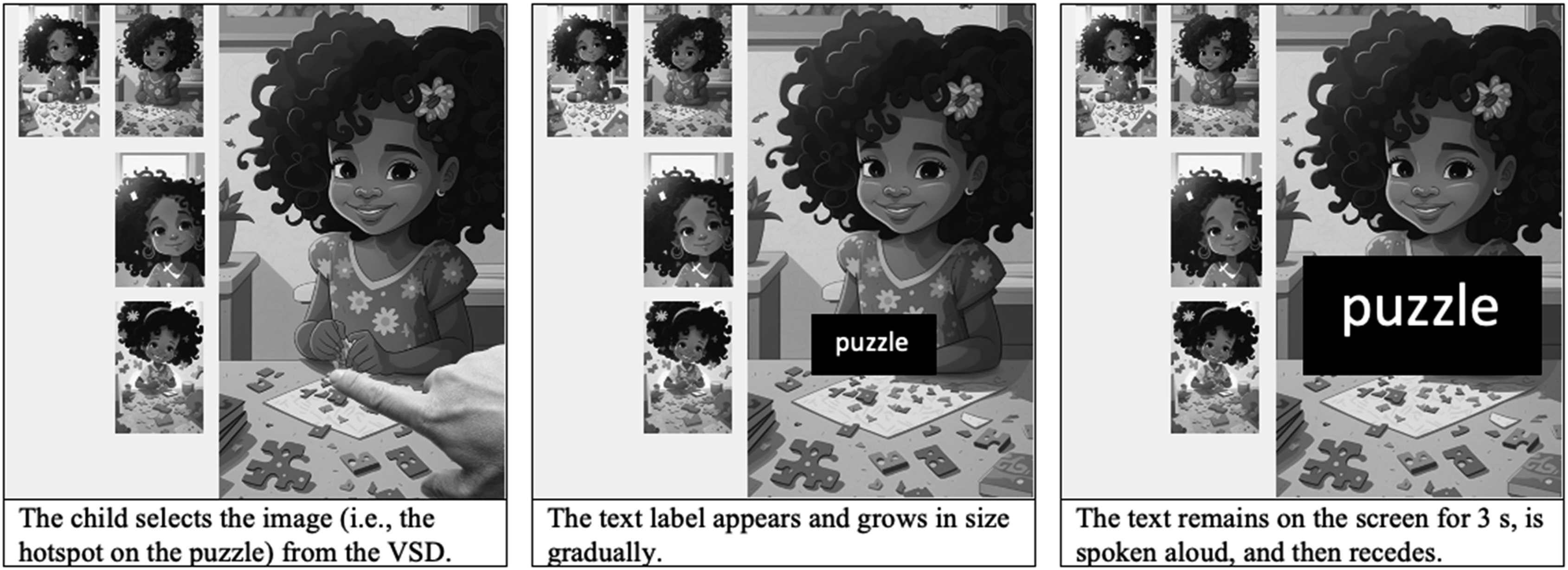
More recently, the use of video VSDs has been investigated in a variety of educational and community settings (Light et al., 2019). In this approach, a video of a meaningful event (e.g., a play activity, a favorite TV episode) is programmed with an app to play on a tablet computer, and then pauses when a VSD is presented. The VSD can then be used to support expressive communication appropriate to the video and activity (Laubscher et al., 2022). See Figure 2 for an example of a video VSD to support a play-activity with young children playing with puppets. Example of a video VSD, created using the GoVisualTM
2
app, to support playing with puppets.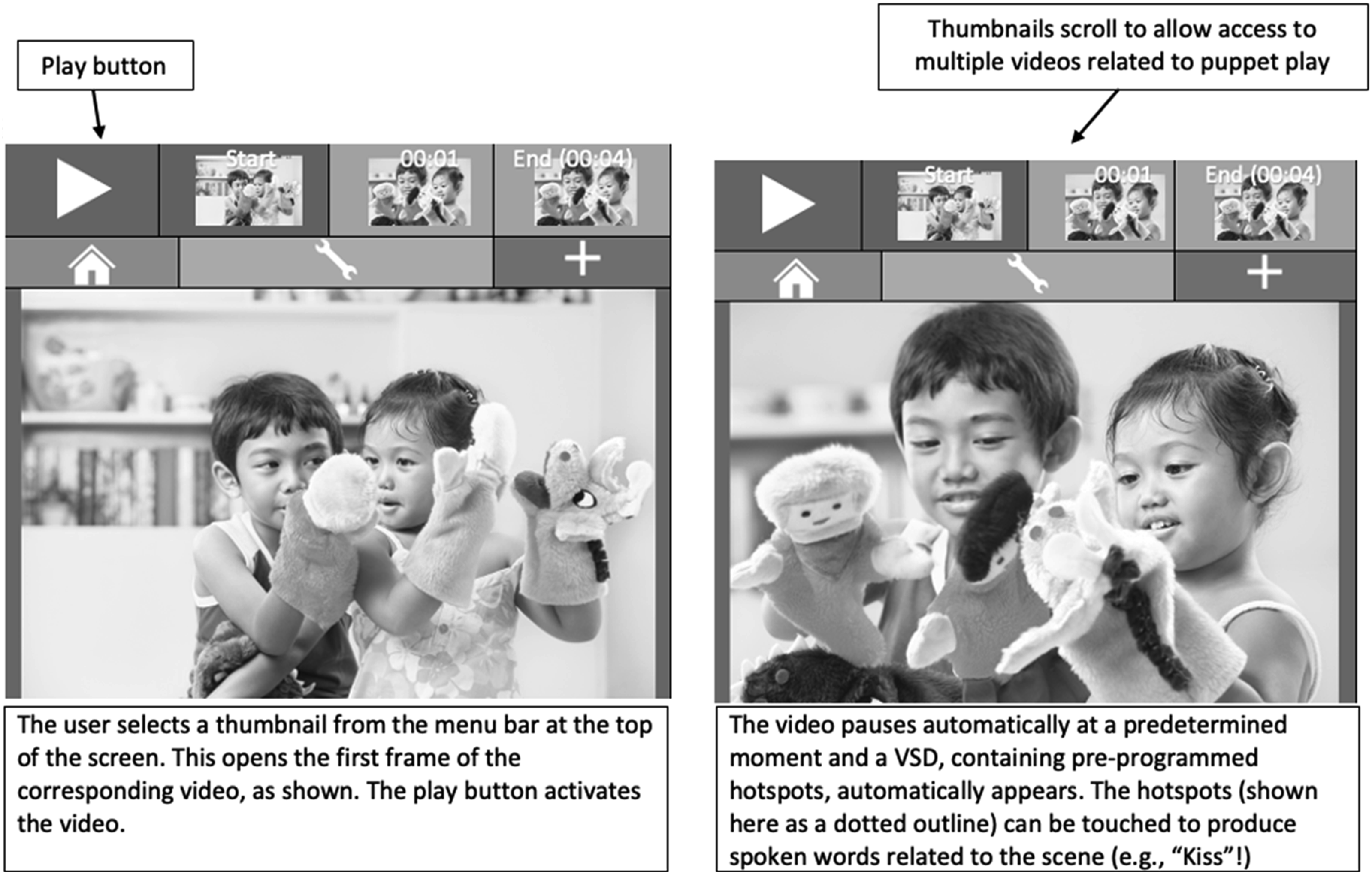
It has been suggested that VSDs and video VSDs may address many of the concerns identified with traditional AAC representations for young children. First, because the VSD makes use of images (e.g., photographs) of scenes and activities that are important and familiar to the child, key vocabulary can be easily identified and made available (using hotspots) for the AAC user (Holyfield et al., 2017; Light et al., 2019). Second, because the images are of familiar activities, the hotspot vocabulary is presented within a supporting context and can be more easily recognized and used (Holyfield et al., 2019). Third, because support for communication can be programmed “into the activity” (e.g., book pages can be programmed as VSDs in a tablet computer, with hotspots added for key vocabulary), the need for triangulation between the device, the communication partner, and the activity decreases (Holyfield et al., 2019; McCarthy & Boster, 2019). Finally, in the case of video VSDs, the video model provided in the video VSDs can support taking turns in play activities, and the “pause” that occurs with the appearance of the VSD can provide a social cue for interaction (Babb, McNaughton, et al., 2021; Caron et al., 2018).
Previous Research
Prior research provides evidence that the use of VSDs with adolescents and young adults can result in increases in social interaction (Babb, McNaughton, et al., 2021; Caron et al., 2018). More recently, similar positive outcomes have been observed for the use of video VSDs as supports to communication and participation in activities such as community volunteer work (Babb et al., 2020), riding public transportation (O’Neill et al., 2017), and grocery shopping (Babb, Jung, et al., 2021). While some interaction opportunities are common across all ages, early childhood brings its own unique set of communication and participation experiences (and challenges). Although there is a growing body of research examining the use of VSDs and video VSDs with young children, to date there has been no systematic review of the evidence base for their use as a communication support for children receiving early childhood services.
Council for Exceptional Children Standards for Evidence-Based Practices
In an effort to support the identification and adoption of evidence-based practices (EBP) with children with disabilities, The Council for Exceptional Children has published standards for practice in special education settings (Cook et al., 2015). These standards help identify methodologically sound studies based on eight categories of criteria, which include: (1) context and setting, (2) participants, (3) intervention agent, (4) description of practice, (5) implementation fidelity, (6) internal validity, (7) outcome measures, and (8) data analysis (Cook et al., 2015). Using these quality indicators, researchers are able to determine if an intervention is evidence-based, potentially evidence-based, has mixed evidence, insufficient evidence, or negative effects. According to the CEC standards in single-case research, two essential criteria must be met for an intervention to be described as evidence-based. First, there must be at least five published intervention studies assessed as being methodologically sound. And second, the studies must include a total of 20 participants for whom the intervention has had positive effects.
Research Purpose
Early childhood practitioners and teachers need evidence-based interventions to support the communication of young children with speech and speech-related disabilities. One proposed intervention, examined in a series of studies over the past 20 years, is the use of high-tech VSDs and video VSDs. The purpose of this review, therefore, is to compare the current VSD and video VSD research literature to the CEC Standards for Special Education, and to evaluate the evidence base of VSDs and video VSDs as a communication support for children with speech and speech-related disabilities in early childhood settings. More specifically, this review aimed to answer the following questions: 1. Does the research literature on VSDs and video VSDs meet the CEC standards for EBP with young children in early childhood settings? 2. What is the reported social validity for VSD and video VSD interventions according to early childhood professionals, parents, peers, and participants?
Methods
Inclusion Criteria
Studies included in this literature review were required to meet the following criteria: (a) published in a peer-reviewed journal between the years 2000 and 2022; (b) included children between the ages of 0–8 years old; (c) included children diagnosed with a developmental disability (e.g., autism, Down syndrome, cerebral palsy) that is associated with difficulty with spoken communication; (c) used a high-tech VSD or a video VSD as the independent variable; and (d) used a communication skill as the dependent variable.
Search Procedures
Included studies were first identified by the use of electronic databases including ERIC, ProQuest, PsycInfo, Web of Science, and Google Scholar. Combinations of the following terms were used to search, including the utilization of Boolean search techniques and thesaurus searching: disability area (developmental delay, intellectual disability, developmental disabilities, learning disabilities, communication disorders, ASD); activity type (electronic books, visual scene displays, VSD, video visual scene display, electronic publishing, educational technology, technology uses in education); skill acquisition (oral communication method, language skills, assistive technology, receptive language, augmentative and alternative communication, expressive language, verbal communication, communication skills, vocabulary development, skill development, reading skills); and age demographic (child, preschool, elementary school, and youth). A hand search of the following journals between the years 2000 and 2022 was also completed to locate studies that were not identified by the electronic database searches: Assistive Technology; American Journal of Speech-Language Pathology; Augmentative and Alternative Communication; Inclusion; Journal of Special Education Technology; Language, Speech, and Hearing Services in Schools; Research in Autism Spectrum Disorders; Seminars in Speech and Language; and Topics in Early Childhood Special Education. Additionally, for the articles identified for inclusion, a bibliographic citation analysis was conducted in which all references for the identified articles were reviewed. The initial search generated 179 results. With duplicates removed, 156 total articles remained. Those 156 articles were first reviewed for inclusion based on the titles and abstracts. A total of 144 articles did not meet the inclusion criteria, and therefore 12 articles were identified for possible inclusion in this review. Two additional studies were identified by a bibliographic citation analysis, resulting in a total of 14 studies considered for inclusion.
Interrater reliability for inclusion was calculated with the first and third authors. Both coders are doctoral candidates in Special Education, and hold Master’s degrees in Special Education or related fields. The third author was trained using the coding manual (which describes the inclusion criteria) with a series of studies related to, but outside the scope of, this review (e.g., study participants clearly did not meet the age requirement for this study). Once mastery for inclusion coding was met with the practice articles (i.e., three agreements in a row), the third author was then provided with the total search with duplicates removed (n = 156). We calculated interrater agreement for the articles to be included in this literature review by calculating the number of agreements divided by the total number of agreements plus disagreements and multiplying by 100. The initial rating of the interrater agreement was 97%. After additional discussion, it was agreed that 14 articles met the initial inclusion criteria, resulting in a interrater reliability score of 100%.
Coding for Quality Indicators
We assessed both the rigor and outcomes of the 14 identified articles using the CEC quality indicators (Cook et al., 2015) in order to determine the level of evidence for VSDs and video VSDs. This was a two-step process: We first assessed the methodological quality of the identified studies, and then examined the reported outcomes.
All of the articles that were identified for this review were single-subject designs; therefore, we only used the single-subject quality indicator criteria. As per Cook et al., (2015) we evaluated a total of 22 quality indicators for single-subject designs across the eight domain areas: context and setting, participants, intervention agent, description of practice, implementation fidelity, internal validity, outcome measures/dependent variables, and data analysis. For a study to contribute to the identification of an intervention as an EBP, there must be a sufficient number of studies that meet or exceed the methodological standards for all eight domains (Cook et al., 2015). As a first step, the first author independently coded the 14 articles. The first author then used the coding manual to train the third author in the quality indicator coding process, using related, but not included, articles for instruction. After the third author demonstrated proficiency by coding three training articles to 100% agreement with the first author, the third author then independently coded each of the 14 articles using the CEC quality indicator criteria. An interobserver agreement score of 100% for the 14 articles was calculated for the first and third authors using the same formula as was used for inclusion agreement.
Determining Level of Evidence
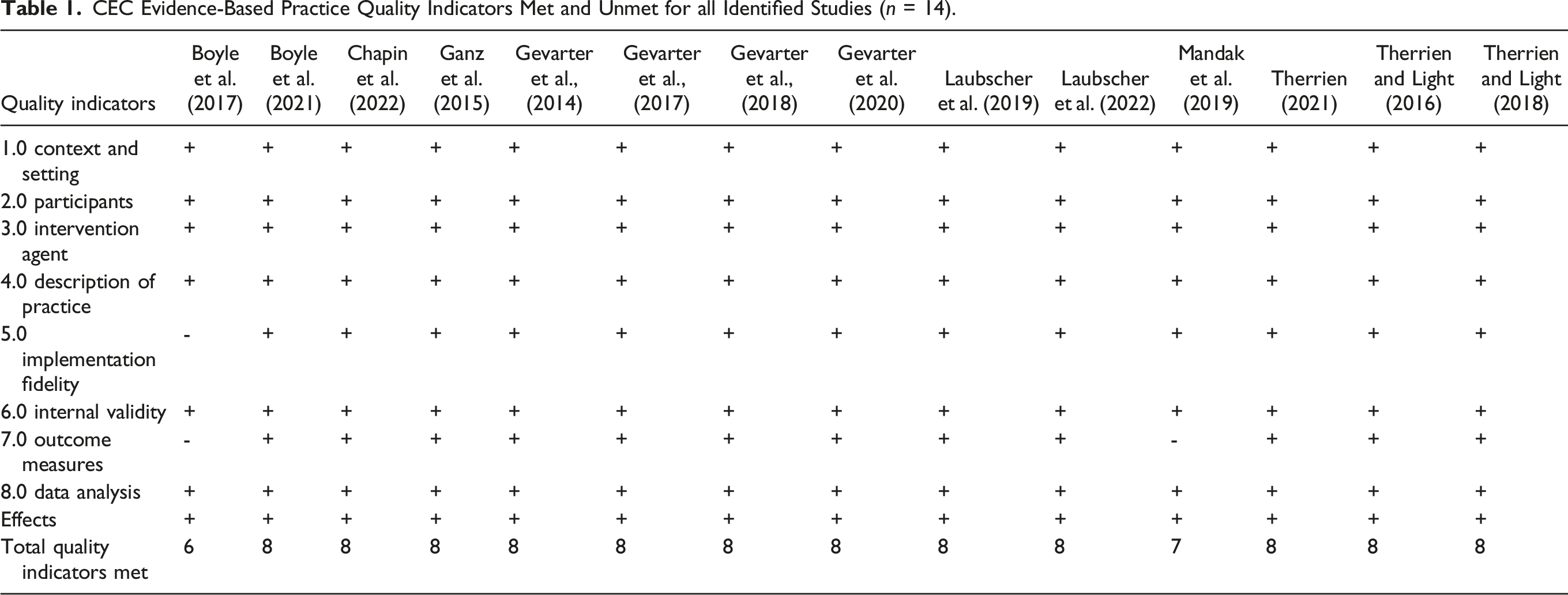
After reviewing the 14 studies that were identified in our initial search, we determined that two of the 14 studies did not meet all eight quality indicator domains. We therefore reviewed the remaining 12 studies for their contributions to the level of evidence for the intervention (i.e., VSDs, video VSDs) using the CEC criteria (Cook et al., 2015). For an intervention to be described as evidence-based, the identified research literature needed to contain at least two group studies with at least 60 participants, five single-subject studies with at least 20 participants, or one group with 30 participants and three single-case studies with 10 participants (Cook et al., 2015). Also, all included studies must provide evidence of a positive functional relationship between the independent and dependent variables, thereby demonstrating a therapeutic effect.
Results
Included Studies
CEC Evidence-Based Practice Quality Indicators Met and Unmet for all Identified Studies (n = 14).
Participant Demographics
A total of 42 participants were included across the 12 studies that met all of the CEC quality indicators. As per the inclusion criteria for this review, all participants were 8 years old or younger. Participants in the included studies ranged from 3 to 8 years old. Nine of the 12 studies provided information on race/ethnicity for the participants. For the 27 participants for whom this information was available, 20 were identified as being white/and non-Hispanic, one was identified as being Asian, two were identified as being Hispanic, and four were identified as being African-American. Disability information was provided for all 42 children, and included ASD (n = 34), Down syndrome (n = 2), and intellectual/developmental disabilities (n = 9). Some participants were identified as having multiple disabilities. Detailed information on the children’s communication status varied, however, all participants were described as experiencing difficulty in using speech alone to communicate with others.
Although the results reported here focus on the results for children with disabilities, it is of interest to note that seven of the studies included children who were described as typically developing in the intervention activity. Three of the studies (Boyle et al., 2021; Therrien, 2021; Therrien & Light, 2018) provided data on these individuals (n = 6). All six of these participants showed increases on the dependent variable of interest (e.g., symbolic communication turns, single-word reading). For example, Boyle and colleagues (2021) examined the impact of a VSD intervention using a children’s story book on the single word reading of both the participants with a disability as well as typically developing peers. Following intervention, all four of the typically developing peers (who were paired with a peer with a disability to form a dyad for the intervention) showed an increase in the number of words read correctly.
Dependent Variables
The most commonly reported dependent variable was symbolic communicative turns taken, used in six of the 12 included studies. For those studies which examined symbolic communicative turns, 15 of the 18 participants demonstrated an increase. Other frequently used dependent variables included spontaneous comments (n = 1), sight word reading (n = 2), and requesting (n = 3).
Independent Variables
Characteristics of Included Studies a (n = 12).
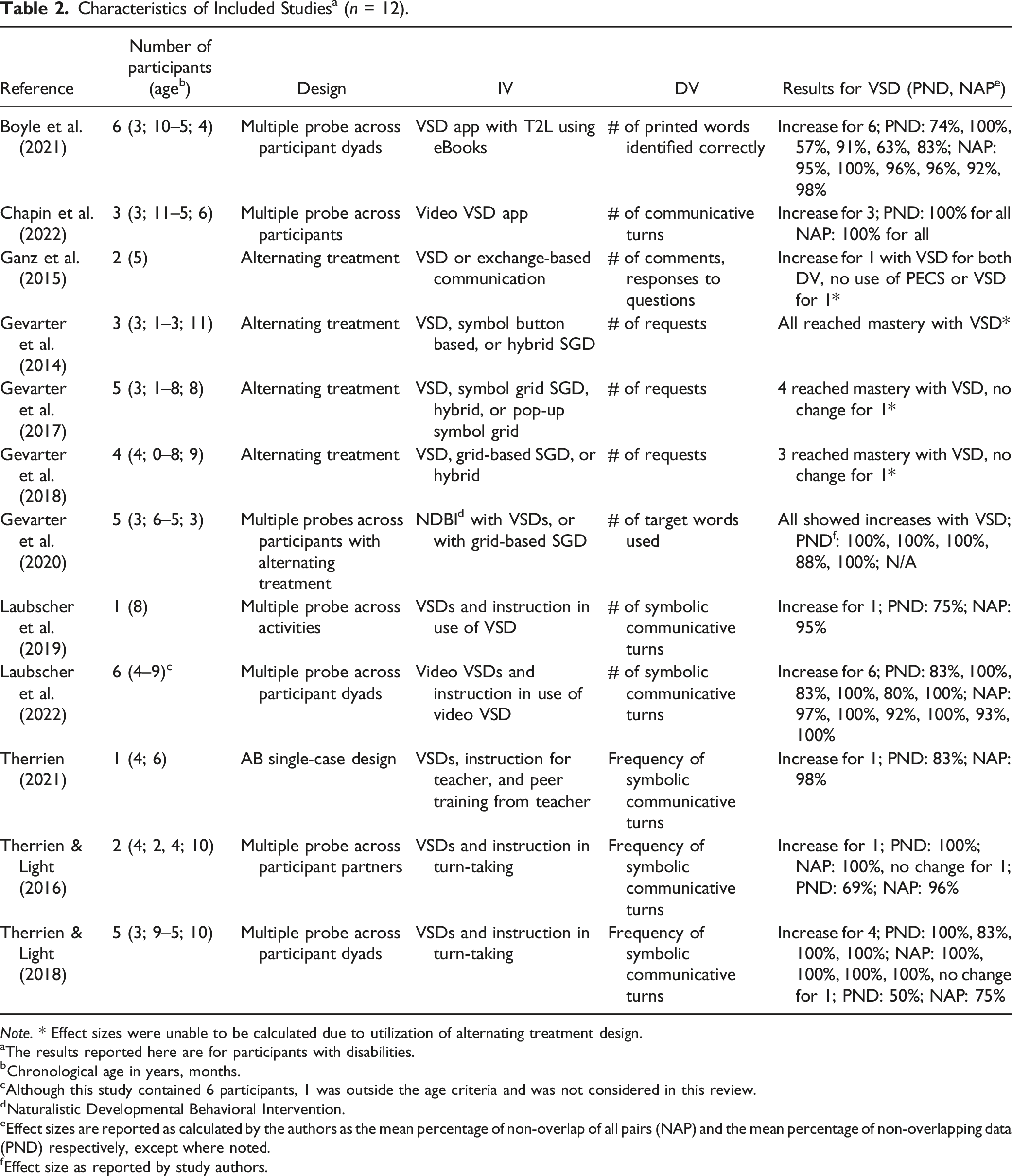
Note. * Effect sizes were unable to be calculated due to utilization of alternating treatment design.
aThe results reported here are for participants with disabilities.
bChronological age in years, months.
cAlthough this study contained 6 participants, 1 was outside the age criteria and was not considered in this review.
dNaturalistic Developmental Behavioral Intervention.
eEffect sizes are reported as calculated by the authors as the mean percentage of non-overlap of all pairs (NAP) and the mean percentage of non-overlapping data (PND) respectively, except where noted.
fEffect size as reported by study authors.
Storybook reading has been the most common context for VSD interventions (Boyle et al., 2021; Ganz et al., 2015; Therrien, 2021; Therrien & Light, 2016, 2018). In these interventions, pages of the book were programmed as images using a VSD app on a tablet computer. Hotspot vocabulary included spoken single-words, phrases, and sound effects (e.g., a “honking horn” for a car). In those studies which examined the impact of VSDs on sight-word reading, the activation of a hotspot also resulted in the presentation of the printed word. In some cases, hotspots were added by the research team prior to use of the VSD by the participants (Boyle et al., 2021; Ganz et al., 2015; Laubscher et al., 2019; Therrien & Light, 2016, 2018). In other cases, hotspots were added by the teacher after training (Therrien, 2021).
Similarly, video VSDs were found to be effective in all three of the studies in which they were used, with positive effects for 9 of the 10 participants. No significant change was observed for one of the participants, and no participants showed a negative effect. Two studies (Laubscher et al., 2019, 2022) have examined the use of video VSD interventions as a participation and communication support during play activities with peers. In these studies, a video is made of a typical play context (e.g., playing with farm animals), and then VSDs programmed with supporting vocabulary (as hotspots) are added to the video using a video VSD app. The child can use the video provided by the video VSD app as a model for participation in the play activity, while the VSD which appears in the video can provide support for communication at key junctures in the play activity.
A study by Chapin and researchers (2022) capitalized on the interest of young children in videos, and investigated the use of video VSDs to increase turn-taking while watching videos with three preschoolers with ASD. In this study, the interventionist programmed individually preferred videos for each child (e.g., a video of construction equipment at a building site, a children’s TV show) with VSDs, and then modeled the use of the VSDs while watching the video with the child using the video VSD app. All participants showed a large increase in the number of turns taken.
Social Validity
Nine of the 12 included studies provided data on the perceived social validity of the intervention. Teachers and other early childhood professionals (n = 22), parents (n = 7), typically developing peers (n = 22), and participants (n = 18) were the most common respondents. In summary, nineteen of the 20 teachers reported that the intervention was effective and feasible, useful in the classroom, and overall supported the usage of VSDs in the classroom (Boyle et al., 2021; Chapin et al., 2022; Laubscher et al., 2022; Therrien, 2021; Therrien & Light, 2016, 2018). One teacher expressed a potential concern about the time needed to program the video VSD app (Laubscher et al., 2022). The participating speech language pathologists (SLPs; n = 2) and occupational therapist (OTs; n = 1) described social interactions as important for all students, and that they supported the use of VSDs for communication development (Chapin et al., 2022; Therrien & Light, 2016, 2018). When parents (n = 7) were asked similar questions, all respondents described the VSDs as effective and useful for their child, and that they believed that social interactions were crucial for their children. For the 22 typically developing peers’ who provided information on social validity (Boyle et al., 2021; Laubscher et al., 2019; Therrien & Light, 2016, 2018), all peers described the intervention positively. When the student participants themselves were asked for their opinions regarding the intervention, 17 of the 18 preferred using the tablet and the VSD intervention over traditional alternatives (e.g., participation without the support of the VSD app). For the one participant who reported that he preferred the traditional alternative over the VSD, it is interesting to note that he was seen to immediately request the tablet computer with the VSD app to use at the start of the day, indicating that he most likely did actually enjoy the VSD condition (Therrien & Light, 2016).
Discussion
The purpose of this review was to examine the evidence base for VSDs and video VSDs as a communication support for early childhood learners according to the CEC guidelines for EBPs (Cook et al., 2015). Although the usage of VSDs is a relatively new AAC practice, 14 peer-reviewed, published studies were found to meet the initial inclusion criteria of (a) used a VSD or video VSD as the intervention, (b) included early childhood (3–8 years old) participants, and (c) evaluated a communication skill as one of the dependent variables. According to the CEC guidelines, in order for an intervention to be considered evidence-based there must be at least 20 participants across five high quality studies who demonstrate a positive functional relationship between the intervention and the selected dependent variable(s). Twelve of the 14 studies were determined to meet all of the quality indicators identified by the CEC guidelines, with a total of 42 participants across the 12 studies. Among the 42 participants, 37 demonstrated positive effects with the intervention, while 5 demonstrated no significant effects. No participants demonstrated a negative effect. Given these criteria, VSDs can be appropriately described as an EBP for supporting communication skills with young children according to CEC guidelines (Cook et al., 2015).
Evidence-Based Practice
Recent systematic reviews have identified a positive impact for the use of AAC with the disability populations frequently served in early childhood programs (e.g., Lorah et al., 2022; Morin et al., 2018). These reviews, however, included research across the lifespan. There is a clear need to identify evidence-based AAC interventions that can be easily adapted to support communication and participation in the activities (e.g., shared reading, playing with peers) that regularly take place in early childhood settings (Ganz et al., 2011; Laubscher et al., 2022; Therrien & Light, 2016, 2018).
The positive results reported in the included articles are evidence that the use of VSDs with early childhood-aged participants meet the CEC standards for EBP (Cook et al., 2015). Positive results were observed with interventions addressing communicative turn-taking, spontaneous comments, target words used, sight word reading, and requesting. These studies provide clear evidence for teachers, parents, and researchers that VSDs can provide effective support for the development of communication and social skills of young children with a variety of disabilities, including ASD, developmental disabilities, language delays, etc.
Typically Developing Peers
Opportunities to interact with typically developing peers promote social and emotional communication (Standard 6.4; Initial Practice-Based Standards for Early Interventionists/Early Childhood Special Educators, 2020) and the development of play and interaction skills (Standard 6.5). Typically developing peers participated in 6 of the 12 studies included in this review. The inclusion of peers not only contributed to the provision of an inclusive learning experience for the child with a disability – the typically developing peers themselves also benefited from VSD intervention. A total of 28 typically developing peers were included in the 12 studies; however, data for only six typically developing participants was included. For the six typically developing peers for whom data was collected, all demonstrated increases on the targeted dependent variable (e.g., communication turns, sight word reading). As noted by Therrien and Light (2016), VSDs are effective for fostering social interactions for children, and can be mutually beneficial for both typically developing peers and the child with speech or speech-related disabilities. The VSD can be used as a shared communication platform for school-based activities, creating communication opportunities for typically developing peers and children with expressive communication needs that could otherwise be challenging to support (Therrien & Light, 2016).
For early childhood professionals who are interested in VSDs or video VSDs, there are a growing number of published peer-reviewed tutorials to assist in their use in early childhood settings. Laubscher et al., (2022) provides detailed examples of how VSDs and videos VSDs can be used to support peer interaction in activities such as object play in inclusive early childhood classrooms. Bhana et al., (2020) describes a 5-step strategy for the creation of VSDs to support shared storybook reading and provides a case example of how VSDs could be used to support communication and interaction during children’s picture book activities.
Social Validity
In order to support widespread and continued uptake, an intervention must be seen not only as effective, but as socially valid by key stakeholders, including professionals, family members, and the individuals participating in the intervention (Biggs & Hacker, 2021). Investigations of social validity should address three major questions (a) are the goals socially important? (b) are the procedures acceptable and feasible? and (c) are the outcomes meaningful? (Schlosser, 1999; Wolf, 1978). Despite its recognized importance, few studies report on social validity (Park & Blair, 2019; Snodgrass et al., 2018). In the absence of information on social validity, it is unclear whether the results are truly impactful for the intended audiences (i.e., the potential users of the research findings).
It is positive to note that nine of the 12 studies included in this review provided information on social validity, and that there was general agreement among both professionals and parents that VSDs and video VSDS are effective and feasible for classroom use. This is an important finding, as difficulty in implementing AAC interventions in “real world” conditions often serves as a barrier to uptake (Moorcroft et al., 2021). The positive response from peers is also encouraging, as the features of an AAC system play an important role in the attitudes of young children towards the use of AAC (Lorah et al., 2021)
Future Research
The majority of research to date has examined the usage of VSDs and video VSDs with adolescent and young adults with speech and speech-related disabilities (Babb et al., 2019; Caron et al., 2018; Holyfield et al., 2019). Future research should continue to investigate the use of VSDs and video VSDs across a wide variety of early childhood activities and settings, with special attention to social interactions between young children with communication support needs and typically developing peers.
Second, in the current review, only Therrien (2021) investigated teacher implementation of VSDs within the classroom; all of the other interventions (n = 11) were implemented by a researcher or research team. In order to better understand factors supporting uptake and use, other intervention agents, including early childhood professionals, parents, and peers, should have opportunities to create and use VSDs and video VSDs (Holyfield et al., 2017).
Finally, while there are a number of effective strategies that can be used to gather social validity information with professionals and family members, it can be challenging to collect with young children who cannot use speech as their primary means of expression. Despite these challenges, some researchers have found innovative ways of collecting this data; for example, Boyle et al. (2021) utilized a modified Talking Mats approach (Murphy & Cameron, 2008) to gather social validity information from children as young as 3; 9 years old. Boyle and colleagues (2021) used Talking Mats to measure the social validity of research activities with participants with limited speech via sorting images based on their preferences. Most of the information currently available on social validity that is provided in these papers was gathered with adults, not children. One reason for this discrepancy may be that social validity data is often gathered using traditional social validity procedures (e.g., written questionnaires, Likert scales) that may be difficult to use with children who have limited spoken language (McLeod et al., 2011). We discuss Talking Mats, therefore, because it is a promising approach to collecting social validity information with children or other individuals who may not produce valid and/or reliable responses with traditional means (Ferm et al., 2010). Talking Mats and other inclusive approaches to perception identification should be explored more as methods of social validation. Continued work is needed to better understand the perspectives of everyone, including professionals, participants, and peers, who play a role in the success of providing AAC supports.
Implications for Practitioners
The results of this literature review provide evidence that VSDs and video VSDs are effective supports for the development of communication skills in young children. Practitioners in early childhood contexts can utilize VSDs with their students to build communication and language skills in motivating and developmentally appropriate activities (e.g., storybook reading, creative play). Of special interest is the use of VSDs and video VSDs to support peer interaction during both play and early literacy activities.
Conclusion
VSDs and video VSDs are new approaches to supporting communication for people who cannot use speech as their primary means of expression (Light et al., 2019). This review provides evidence that the use of VSDs and video VSDs with young children with speech-related disabilities to address communication goals meets the CEC Standards for EBPs (Cook et al., 2015). This technology provides a promising tool for promoting communication, participation, and inclusion in early childhood settings for children with communication support needs.
Footnotes
Author’s Note
This study was conducted by the first author in partial fulfillment of PhD requirements at The Pennsylvania State University, Department of Educational Psychology, Counselling, and Special Education.
Declaration of Conflicting Interests
The author(s) declared no potential conflicts of interest with respect to the research, authorship, and/or publication of this article.
Funding
The author(s) disclosed receipt of the following financial support for the research, authorship, and/or publication of this article: This project was supported, in part, by funding from (a) the Penn State AAC Leadership Project, a doctoral training grant funded by the U.S. Department of Education, grant H325D220021; and (b) a grant from the National Institute on Disability, Independent Living, and Rehabilitation Research (NIDILRR grant 90REGE0014) to the Rehabilitation Engineering Research Center on Augmentative and Alternative Communication (RERC on AAC). NIDILRR is a Center within the Administration for Community Living (ACL), Department of Health and Human Services (HHS). The contents of this article do not necessarily represent the policy of NIDILRR, ACL, or HHS; and endorsement by the federal government should not be assumed.
