




Abstract
Augmented reality has the potential to give students a unique experience, including when teaching science subjects. The purpose of this study was to examine the effectiveness of an augmented reality-based intervention in teaching “Solar Systems and Planets” to four students with learning disabilities. The dependent variable was the percentage of the students’ correct answers to the questions about the science unit. The independent variable was the augmented reality-based intervention. A multiple baseline across participants’ designs was used in the study. The results showed a functional relationship between the augmented reality-based intervention and the percentage of correct answers the students gave to the questions. All four students showed significant gains immediately after receiving the intervention and maintained it between one and 5 weeks. Social validity findings also showed that students enjoyed the augmented reality-based intervention and were willing to use it in other subjects.
Introduction
Science education should be provided to all students regardless of the student’s gender, age, ethnic background, or disability status (National Research Council [NRC], 2000). Many students with learning disabilities (LD) face challenges in understanding science lessons due to various factors such as difficulty in acquiring new knowledge, limited attention span, reading difficulties, and needing support with visual and auditory learning. These difficulties necessitate specialized teaching techniques that cater to the student’s unique learning needs. In addition, students with LD may feel hesitant to participate in class discussions and may struggle with laboratory activities, which further hinder their ability to learn science effectively (Brigham et al., 2011; Patton & Bailey, 2014; Yenioglu & Guner-Yildiz, 2022). The benefits of an effective science education to students with learning disabilities are listed as follows: (a) it helps students get to know their environment, (b) they can use basic skills in meaningful contexts, (c) they can develop practical experiences in which students will associate new ideas, (d) it gives students high-level thinking skills, (e) develops problem-solving skills and (f) helps them to use the knowledge they will acquire in the science lesson for life (Patton & Bailey, 2014). Science is considered one of the most important courses that should be offered to students with LD in terms of improving their ability to observe and classify events (Brigham et al., 2011; Mastropieri & Scruggs, 1992; Scruggs & Mastropieri, 2007). Science is also found to be one of the most difficult courses for LD (Brigham et al., 2011). There are several possible explanations for this (Therrien & Taylor, 2011). Primary factors that have a negative impact on the academic performance of students with learning disabilities (LD) in science are deficiencies in reading and writing skills (Parmar et al., 1994; Steele, 2004). Additionally, since science frequently involves mathematical concepts, struggles in this area may also contribute to the limited academic success of students with LD (Olson & Platt, 2004). It is important to note that learning disabilities can create obstacles beyond academic tasks, particularly in science. According to Steele (2004), students with LD can face behavioral challenges in areas such as sustained attention, attitude toward science, and social skills, which can impact their success in the general education setting.
Science and Learning Disabilities
The National Joint Committee on Learning Disabilities (NJCLD, 2018) defined learning disabilities as having significant difficulties in reading, writing, using numerical skills, and reasoning skills. Students with LD may have difficulties in one or more of these skills (IDEA, 2004). In addition, students with LD may have difficulties with memory, attention, motivation, and visual and auditory processing (Bender, 2008). Having difficulties in these areas can make science challenging for students with LD (Brigham et al., 2011).
Through science education, students can gain the ability to make sense of nature, understand scientific concepts, and apply scientific concepts in daily life and scientific inquiry. In addition, science supports students' thinking and learning skills and provides opportunities for students to become more productive individuals with the knowledge they acquire (NRC, 2000). While it is already difficult for students to meet the expectations for science lessons, it becomes more difficult to meet these expectations for students with LD, who may have difficulties in acquiring, processing, and maintaining information (Brigham et al., 2011). These difficulties may cause students with LD to achieve lower performance than their peers who do not have any disabilities (Aydeniz et al., 2012). Considering this, the performance gap between students with LD and their peers with typical development (Carlisle & Chang, 1996) should be decreased by providing instructional support with appropriate teaching methods for students with LD (Holahan et al., 1994; Karaer & Melekoglu, 2020). Lam et al. (2008) discussed the development and evaluation of a 1-year Science, Technology, Engineering, and Mathematics (STEM) program designed for middle school students with and without LD. The results showed an increase in student knowledge and career interest for both groups, and overall positive responses to the program from both students and parents.
Major organizations in the field of education strongly recommend the use of technological resources and processes to support twenty-first-century learners ((Association for Educational Communications and Technology [AECT], 2012; International Society for Technology in Education (ISTE), 2017). Technology may also help students with disability to have better learning outcomes and enhance their learning achievements (Adam & Tatnall, 2017; Barton et al., 2017; Cakir & Korkmaz, 2019; Chiang & Jacobs, 2010; Cumming & Draper Rodríguez 2017; Polat et al., 2019). The use of technology in special education has increased in recent years. Science has become one of the most frequently supported courses with technology (Kermani & Aldemir, 2015). The use of technology in science lessons increases the attention period of students, facilitates the learning of academic skills, and improves high-level thinking skills (Fernández-López et al., 2013). The number of technology-supported studies in science teaching to students with LD has increased in recent years (Ok et al., 2021; Turan & Atila, 2021; Yenioglu & Guner-Yildiz, 2022).
Augmented Reality (AR)
Recent studies in the field of education show that the use of 3D virtual environments (Papachristos et al., 2014) and augmented reality (AR) technologies have great potential to provide on-site learning experiences (Lee, 2012). Specifically, AR technology shows promise in being an effective way to teach abstract concepts that are typically difficult to teach. AR technology provides a real-time interactive environment by blending the physical and virtual worlds (Klopfer, 2008). AR enhances user experience by providing real-time interactions with the virtual elements (Azuma, 1997; Martín-Gutiérrez et al., 2015) using text, pictures, videos, and audio on mobile devices. AR is suitable for users of all ages and may be accessible through already existing mobile devices such as smartphones or tablets. AR technology would offer students a unique experience, especially for teaching science subjects that include abstract concepts and requires a high level of cognitive functioning, as these subjects can be difficult to learn.
AR can contribute to the learning experience of students with LD by bringing together real and virtual objects in science education. In addition, while teaching academic skills to students with LD, the use of instructional technologies can attract their attention and interest, which helps them learn more effectively (Vinumol et al., 2013). AR offers students with LD the opportunity to interact with abstract and concrete elements through 3D models or pictures in real environments (Martín-Gutiérrez et al., 2015). Although AR technology is a technique that has been used for many years, it still has an interesting and important potential to be used in the teaching of academic skills, especially to students with LD in the field of special education (Lin et al., 2016). In addition, AR applications are useful in teaching science to students with LD in terms of being practical and economical (Martín-Gutiérrez et al., 2015). Moreover, AR provides the opportunity for students with LD to repeat what they have learned as much as they want and to learn outside of school (Kamarainen et al., 2013; Kellems et al., 2020). For these reasons, it is essentialto examine the effects of AR technologies on the learning of students with LD (Turan & Atila, 2021).
While there are studies that investigated the use of AR technology in science education in general (Çankaya & Girgin, 2018; Kirikkaya & Senturk, 2018; Liou et al., 2017; Montoya et al., 2016; Techakosit & Nilsook, 2016; Wang et al., 2015), several studies specifically focused on investigating the use of AR technology in teaching science subjects to students with LD (Turan & Atila, 2021). Turan and Atila (2021) used a multiple-probe design approach to examine AR’s influence on the learning of science concepts. Four sixth-grade students with learning disabilities participated. During the intervention session, the science teacher taught one-on-one lessons to each student using an augmented reality science book that focused on the states of matter and physical and chemical changes. Each intervention session took 40 minutes. As a result of the study, AR was found to be effective in supporting the learning of students with learning disabilities. In addition, the students were willing to use augmented reality technology.
In another study, Alqarni (2021) examined the effect of AR use on sixth grade students' attitudes toward science and learning outcomes. There are 24 students as participants in the study. Twenty-four student participants were equally divided into control and experimental groups. The study utilized a pre-test and post-test design to compare the efficacy of AR-based practice and traditional teaching methods. The subject of “Space,” which is one of the subjects of a science lesson, was taught. As a result of the research, it was determined that the AR application was effective, and students developed positive attitudes toward science.
McMahon et al. (2016) aimed to investigate the efficacy of augmented reality in teaching science vocabulary to college students with autism spectrum disorders and intellectual disabilities. The study employed multiple probes across behaviors. Four students, including one with autism and three with intellectual disabilities, were evaluated on their ability to define and label three sets of science vocabulary words related to bones, organs, and plant cells. The findings revealed that all students were able to acquire knowledge of the new science vocabulary in terms of definition and labeling. This study highlights the potential of using augmented reality to create authentic learning opportunities for students with disabilities.
In this study, the visuals used in the AR application were presented to the students as cards instead of using the science content in a book (Turan & Atila, 2021) or directly on the mobile application, unlike previous studies. However, research is needed to extend the use of AR within classrooms to support the mobility of students. The use of cards not only increases students' interest in the lesson (McMahon et al., 2016) but also allows them to be easily transported with them in daily life. The cards are very simple to use. By directing the camera of their mobile devices towards the card, students can see the image on the card in three dimensions on the screens of their mobile devices.
Research Questions
With limited studies available on this matter, further studies are still needed to evaluate opportunities for students with LD. The purpose of this research is to examine the effectiveness of AR-based intervention via iPad® in teaching the solar system unit to students with LD. At the same time, we examined whether the students maintained the knowledge they had gained with the AR intervention. It also aimed to reveal the social validity of the research by collecting data from students with LD. For this purpose, the following questions were addressed: 1. Is there a functional relationship between the percentage of correct answers for the solar system unit and the use of an AR-based intervention? 2. After acquiring a skill, could students maintain accuracy without intervention? 3. What is the social validity of using AR to teach the solar system unit to students with LD?
Method
Setting
This study was conducted in the special education and rehabilitation center in Eskisehir, Turkey, which provides educational support services to students with disabilities. Students with disabilities receive education one-on-one at the rehabilitation center. All teaching and assessment sessions were conducted in an individual classroom throughout the study. All sessions of the study were conducted by the third author, who has a master’s degree in special education and 3 years of teaching experience.
Participants
The discrepancy model is used in Turkey for the identification of students with LD. The student’s intelligence score is determined by the intelligence test administered by the health board in hospitals. Afterwards, students are diagnosed with LD by comparing their academic performance in reading, writing, and mathematics with their intelligence scores (Sakiz, 2018; Yenioglu et al., 2019). In this article participant selection was based on the following criteria: Students who (a) have a diagnosis of LD, (b) receive inclusive education, as well as receive special education in a special education and rehabilitation center, (c) have auditory and visual proficiency to participate in the application, and (d) have permission to participate in the research were chosen. A preliminary interview was held with both their teachers and their families about the students who met the determined criteria. In this interview, students who were willing to participate in the study and agreed to complete the study were selected as participants.
Sam is ten years and 11 months old third-grade male student who has repeated the first and third grades. He was diagnosed with LD in the second grade. Sam falls below grade level in all academic subjects. He requires extensive support in reading, writing, and math (mixing up letters, reverse letters, too much spacing between letters and words, mixing up numbers, and writing numbers backward). Sam can read and understand even if he is not fluent. For this reason, Sam was receiving the support for these courses in the special education and rehabilitation center.
Amy is 11 years and 2 months old fifth-grade female student with LD. She was diagnosed in second grade. Amy reads fluently and does addition and subtraction in mathematics independently. However, she has difficulties in understanding what she reads in Turkish, in multiplication and division operations, and problem solving in mathematics.
Jack is ten years and 4 months old fourth-grade male student diagnosed with LD in the third grade. Jack receives intensive support training in Turkish and mathematics. He sometimes mixes up letters in reading and writing. Jack needs support in fluent reading and reading comprehension. In mathematics, Jack needs to develop problem-solving skills.
Kevin is 11 years and 7 months old fifth-grade male student. He was diagnosed with LD in third grade. Kevin intensively needs supportive education in mathematics. His fluent reading and reading comprehension skills in Turkish are at grade level.
Prior to the intervention, the researcher observed the students in their courses. The aim of the observations was to determine students’ behavior in the lessons. Based on the observations, the researcher found that the students had short attention periods (e.g., on average, 1 minute after the teacher explained a topic in the lesson, the students looked away from the teacher or the worksheet). Sam often resisted attending class, and his mother had to convince him. In the lesson, he often spoke too much out of context. Amy talked a lot about topics that were not related to the course.
Materials and Equipment
Space 4D + AR cards
“Space 4D + AR cards” were used in the intervention sessions of the research. The cards contained images such as the solar system, planets, space objects, and space missions. On one side of the cards, there is a visual of the relevant subject; while on the other, side there is written information about the subject. Cards are used through a mobile application. Space 4D + AR card set consists of 27 lecture cards. During the intervention, 13 cards related to the planets, which are suitable for the primary school level science subject, were used (see Figure 1). To use the Space 4D + app, an iPad® was utilized. Before starting the intervention, the students were taught how to use the iPad® and open the app. Details are explained in the independent variable section. Space 4D + Cards used in this study.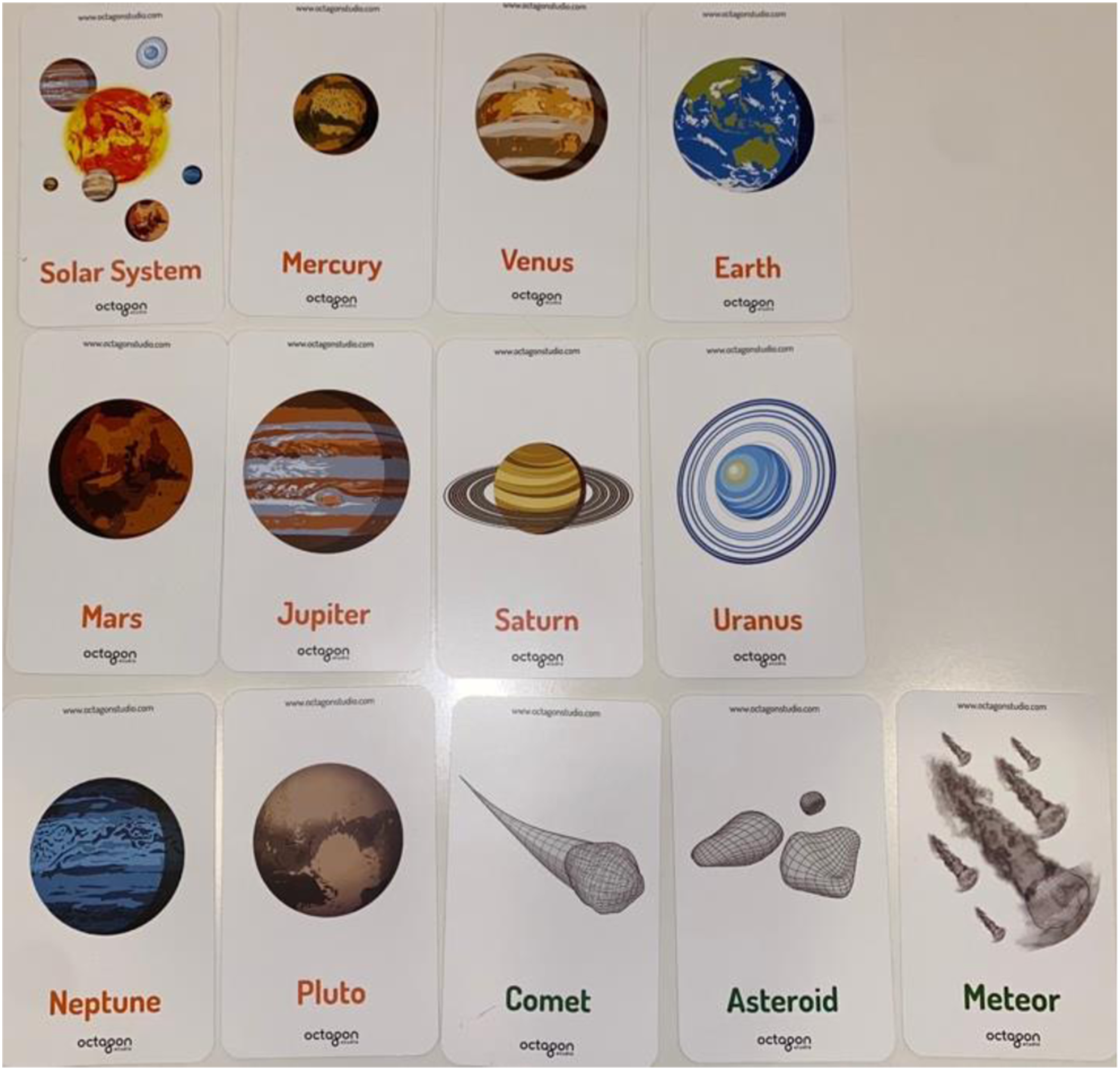
The independent variable of the study is the augmented reality app named Space 4D+. To use this app, Space 4D + cards need to be bought. Then the app can be downloaded free of charge from the App Store or Google Play Store. To activate the image on the card as augmented reality, the student must independently open the iPad®, swipe the iPad® screen to unlock it, open the Space 4D + app, and the student needs to point the camera of the iPad® toward to card until it comes into the frame. Then the augmented reality image of the relevant card starts to play automatically. The student can also listen to the information about the digital image by clicking the figure from the menu in the lower-left corner of the screen.
The dependent variable of this study is the percentage of correct answers given by students with LD on the achievement tests about the solar system and planets. The Achievement Test was prepared by taking the opinions of five experts, three of whom work in the field of special education and two in the field of science education. The assessment questions in the achievement test were selected from the existing science curriculum. A pool of questions that are equivalent in terms of difficulty, covering all the content in this specific study, was created. From these questions, 10 short answer questions in each achievement test, which are suitable for this research, were selected, and the Achievement Test was finalized. For baseline, assessment, and follow-up sessions, 30 alternative test forms were created. Expert opinion was sought again to check whether the difficulties of the prepared achievement tests were equivalent.
Achievement Test
To evaluate students’ knowledge, a ten-question test was used. These tests were used during baseline and daily probe sessions. In the dependent variable section, it is explained how the tests were prepared and, in each session, used a set of questions that were prepared in a similar way but were different from the questions used in other sessions.
Experimental Procedures
The multiple baseline design across participants was used to investigate the relationship between the dependent and independent variables across four students. The multiple baseline design across participants allows researchers to compare the effectiveness of an intervention performed at different points each time on more than one participant (Horner et al., 2005). The experimental procedure consists of training, baseline, daily probe, intervention, and follow-up sessions. The intervention was carried out in the special education and rehabilitation center.
Training
Before starting the intervention, a one-time training session was held in which all students were taught how to open and use the necessary application on the tablet. In this session, unlocking the iPad® screen, opening the mobile app, and navigating through the app were shown to the students.
Baseline Sessions
Students completed a 10-question assessment during baseline to measure their knowledge about the solar system and planets. In each session, students were asked to write answers for a 10-question achievement test. Four baseline sessions were held with the first student, and when it was determined that stable data were obtained, intervention sessions were started. While the intervention sessions with the first student continued, baseline data with the other students were collected continuously.
In this study, two different criteria were used. The criterion for starting the intervention with the next student was 50% correct response from the student with whom the intervention was held. The criterion for terminating the intervention was 80% correct response for three consecutive sessions.
Daily Probe Sessions
Daily probe sessions were held at the end of each intervention session. Daily probe sessions were organized similarly to baseline sessions. In these sessions, students were given an achievement test of 10 questions about the solar system and planets, and they were asked to complete this test.
Intervention
Through the mobile app downloaded on the iPad®, the augmented reality cards shown to the iPad® camera were reflected on the screen in three dimensions, and the information on the card used first was played audibly (see Figure 2). In addition, while the student was examining the planets, the researcher repeated the information given on the cards once for all participants. In this way, the student was supported with both visual and auditory stimuli, and the abstract concept was embodied. Auditory information about the general characteristics of the planets on the card, their place in the solar system, and the planet’s satellitesare given from the Ipad in accordance with the primary school level. Intervention sessions took place three and four times a week. The average duration of the intervention session was 20 minutes. View of space 4D + cards on the app.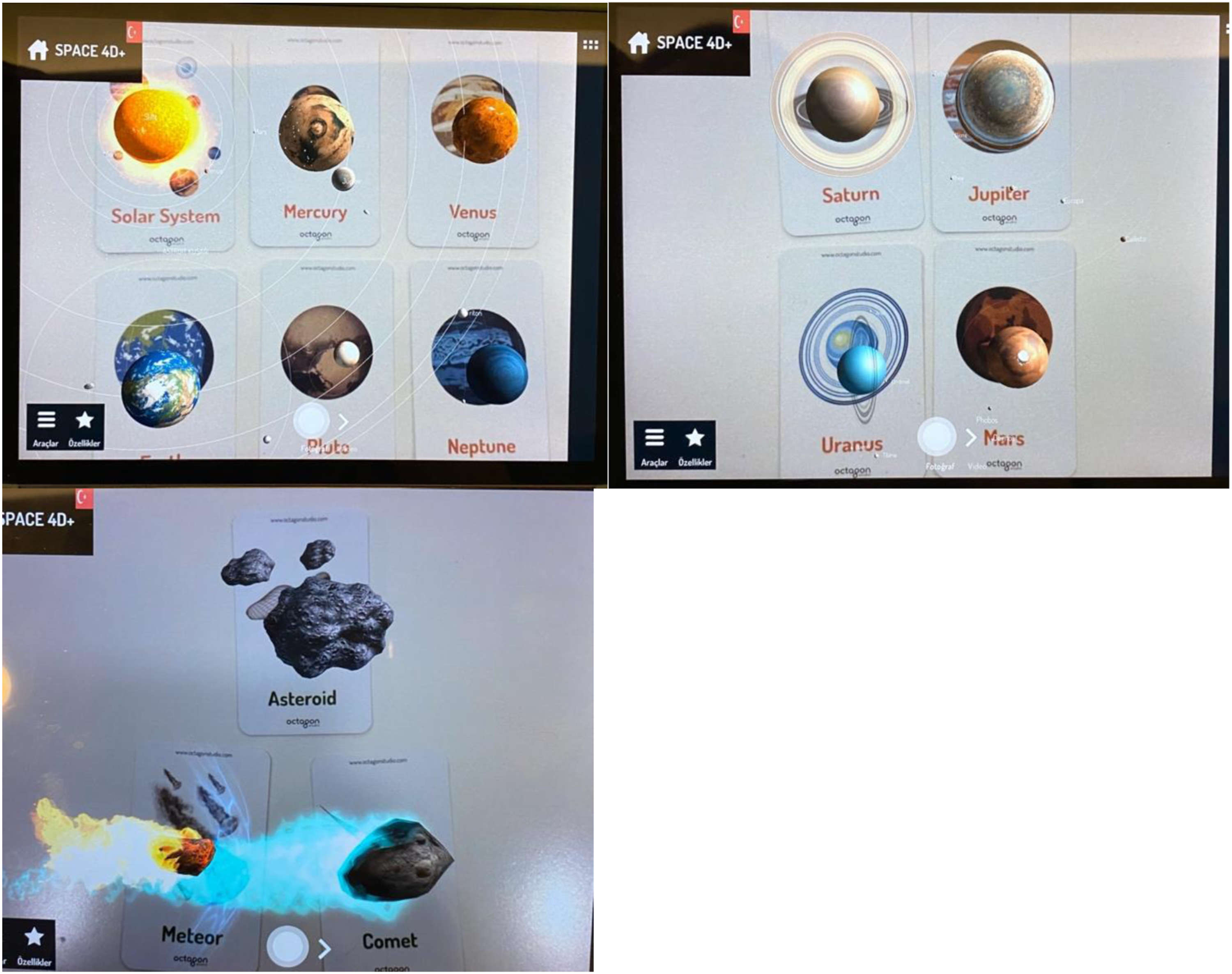
In the intervention session, the researcher and the student sat opposite each other at a table. The researcher first asked the student to start the “Space 4D+” app via iPad®. Then the researcher put the cards on the table and waited for the student to point the rear camera of the iPad® onto the card (see Figure 3). When the student projected the card appropriately on the iPad® screen, the 3D version of the planet was seen on the screen (as the planet’s card was on the table, it was seen on the iPad® screen as if the planet was flying over the table). While listening to the information about the projected card through the mobile app, the student also examined the planet on the iPad® screen. The intervention session ended after the student examined the visuals related to all the cards included in the lesson and listened to all the auditory information. Student using the space 4D + app.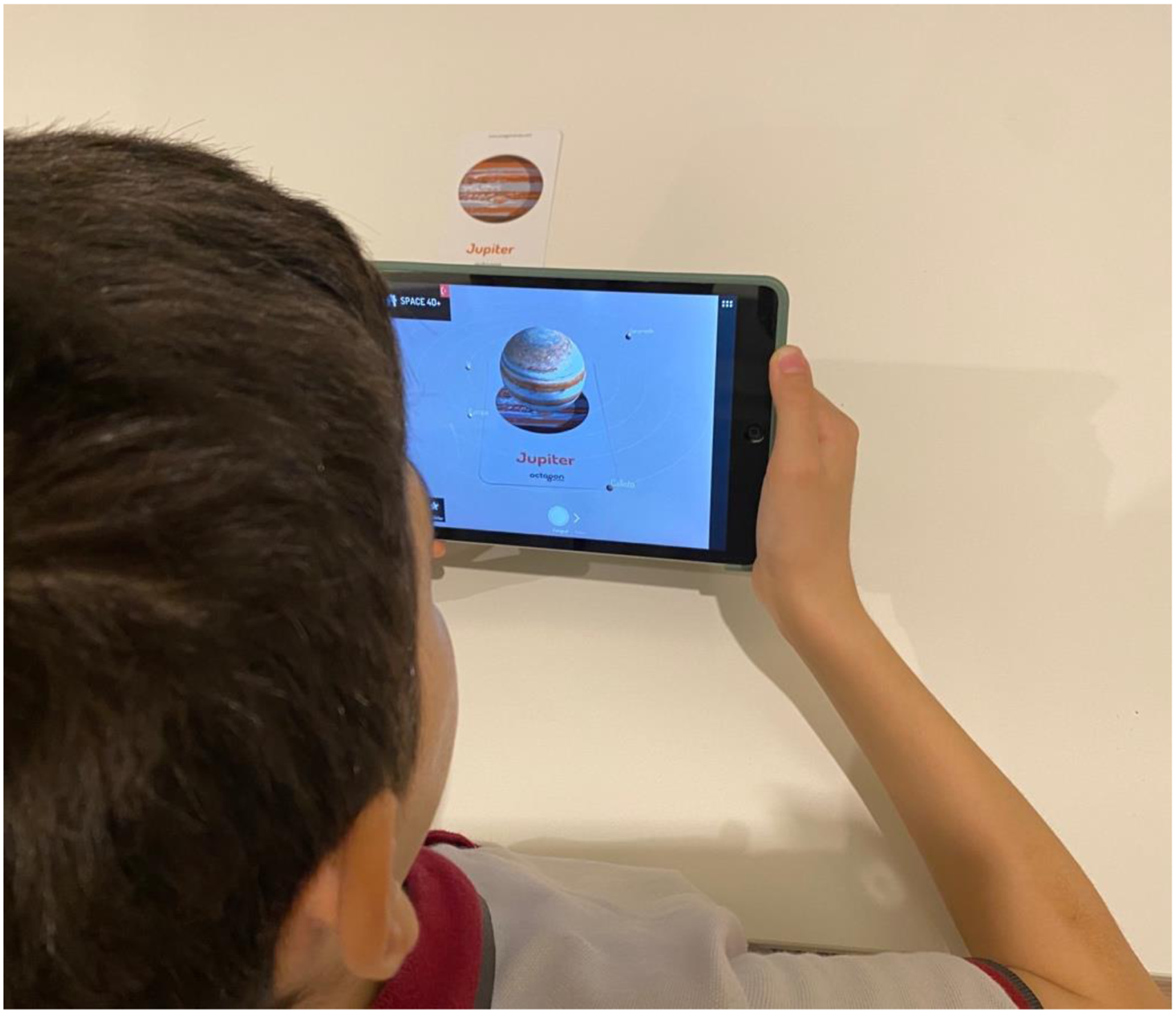
Follow-Up
After the intervention, follow-up sessions were completed for all students. Follow-up sessions were organized similarly to baseline and daily probe sessions. While planning the intervention, it was planned to hold the follow-up sessions two, four, and 7 weeks after the completion of the intervention sessions. However, the follow-up sessions could not be held as planned, as the Covid-19 pandemic took place in May, and some students could not attend the classes due to the Covid-19 pandemic. Follow-up sessions were held with Sam for two, four, and 5 weeks, with Amy for two and 3 weeks, with Jack for 1 week, and with Kevin for one and 2 weeks after the intervention.
Treatment Fidelity
Reliability data were collected by a PhD student in special education. Inter-observer agreement (IOA) data were collected in 30% of all sessions across all conditions. The observer watched randomly selected session videos and calculated the students’ performance using the same data collection sheets. Inter-observer reliability was calculated by dividing the number of agreements by the total number of agreements plus disagreements. IOA was 100% for all students. Treatment fidelity was collected in total at 30% (18 of 60 sessions) of the baseline, intervention, and follow-up sessions. To measure the fidelity of the nature and process of the intervention, the observer was given a copy of a designed fidelity checklist. Fidelity was 100%, 98%, 98%, and 100%, respectively. The average fidelity was 99%.
Social validity
Among the important indicators of social validity in single-subject studies are the viability and acceptability of the intervention (Horner et al., 2005). A social validity questionnaire was prepared to determine the students' views on the application. Following the intervention, the students were asked to fill out this questionnaire. A questionnaire containing four yes/no questions and four open-ended questions was used to collect the social validity data of the study. In the prepared questionnaire, the importance of the subject taught, the use of the AR application in other lessons, the usefulness of the AR application, and the deficiencies of the AR application were asked. The answers given by the students were recorded with a voice recorder. The audio recordings were then transcribed, and the social validity data were analyzed through descriptive analysis.
Data Analysis
In studies in which single-subject research designs are used, data analysis is performed by interpreting the obtained data by showing them graphically (Horner, 2005). To answer the questions for the aims of this research and as a requirement of single-subject research methods, visual analyses were used. The data were marked in stages in the graph to indicate the pre-teaching and students' performance levels in the research (Horner & Baer, 1978). The percentage of correct responses was calculated using the formula “Number of correct responses/(Number of incorrect responses + Number of correct responses) x 100. The Tau-U effect size was calculated.
Results
Figure 4 shows the performances of the students. To collect baseline data, four sessions were held with Sam, six sessions with Amy, eight sessions with Jack, and 10 sessions with Kevin. All students underperformed in the baseline phase (the correct response percentage range was 2.5–17%). During the intervention phase, five sessions were held with Sam, six sessions with Amy, seven sessions with Jack, and six sessions with Kevin. The criterion for terminating the intervention was greater than or equal to 80% correct responses for three consecutive sessions. When the students reached this criterion, the intervention was terminated. After the intervention, Sam’s correct response percentage increased by 69.2%, Amy’s by 71.7%, Jack’s by 56.6%, and Kevin’s by 64.7%. After the correct answer percentage of 80% and above was obtained from the participants, the teaching continued until at least three sessions of stable data were obtained. As seen in Figure 4, the performances of the students remained high in the follow-up sessions as well. The percentage of students’ correct responses.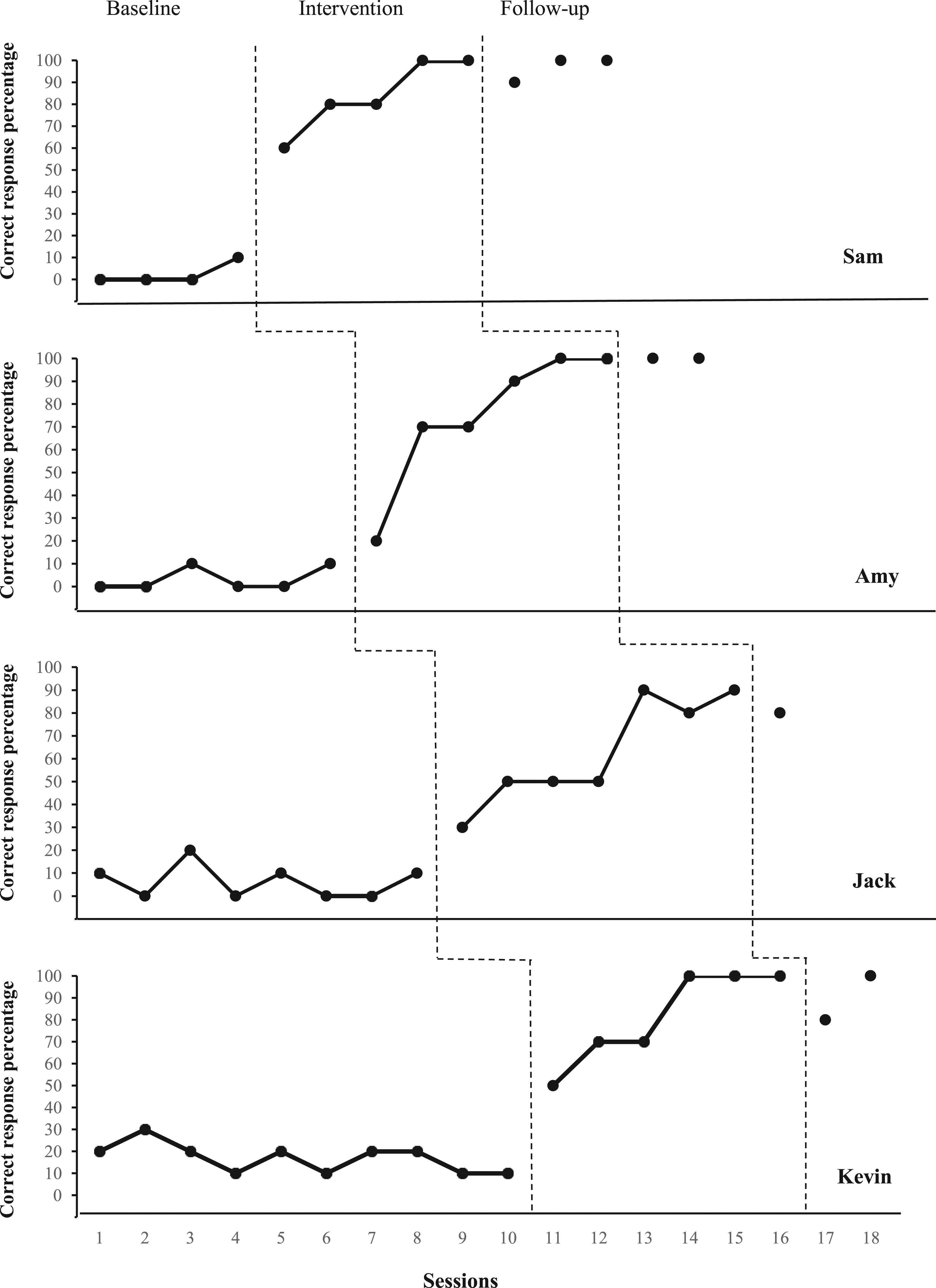
The mean Tau-U effect size between baseline and intervention was 1.0 for all four students. All values indicated a clear difference in students’ performance between the baseline and the intervention phase, confirming the hypothesis that the AR-based intervention was effective.
Social Validity Findings
In this study, social validity data were collected from students. The students were asked four open-ended and four yes/no questions about the intervention. First, the students were asked what they thought about the AR app. The answer to this question was generally positive. In the second question, the students were asked whether they found the application useful and entertaining. Students stated that they found the application useful and entertaining. In the next question, they were asked whether they had any difficulties or problems with the application. Except for one student, who stated that he had charging and connection problems (Jack), all students stated that they did not experience any problems. Their thoughts on using AR applications in other lessons were asked on the last question. Students’ opinions are as follows: “The pictures are 2D, but I understood the planets better because I can see the planets in 3D with this AR application.” (Amy) “I think the application is good, but it can be developed a little more.” (Jack) “I understood the subject better.” (Sam) “The application developed my imagination.” (Amy) “I wish we could use this application in every lesson.” (Sam and Amy).
Discussion and Conclusion
In this study, students with LD were taught about the solar system and planets using AR-based intervention, and its effect on students' learning was investigated. In addition, students' opinions about the AR-based intervention were collected. The findings revealed that AR contributed positively to the learning of all students and helped improve their learning levels. All students learned about the planets in the solar system. This finding aligns with previous research in the field, which indicates that the use of augmented reality (AR) technology is effective in teaching abstract concepts (Ibáñez et al., 2014) and can increase students' engagement (Hwang et al., 2016; Lu & Liu, 2015; Turan & Atila, 2021). This finding is supported by the fact that the study also found a positive correlation between the effectiveness of AR and its ability to capture students' interest. Considering that many students with LD may have difficulty staying on task, AR has a positive effect on increasing students’ attention period and facilitating their acquisition of science. The use of enriched visuals or videos, such as AR-based interventions in the teaching of abstract concepts especially supports the learning of students with LD (Turan & Atila, 2021). Considering both the presentation of abstract concepts in three dimensions and their support with verbal stimuli with AR applications, it would provide significant advantages in science teaching to students with LD. The conclusion that AR technology has a positive impact on students' learning is the most cited advantage in a systematic review study that aimed to identify the pros and cons of using AR technology. This conclusion reinforces the expectation that the use of AR technology can have a beneficial effect on students' educational outcomes (Akçayır & Akçayır, 2017; Yilmaz-Yenioglu & Güner-Yıldız, 2022).
All students showed a success rate of between 2.5% and 17% of science content questions correct before teaching. Some students had a slightly higher percentage of correct response rate prior to intervention. These percentages can be explained by the fact that the students were taught about the “Solar system and Eclipses” in general education environments before the intervention. The implementation of this research was carried out in the spring semester, but the students were taught about the solar system and planets in the fall semester in general education class. Considering this situation, it reveals that the teaching applied in general education classes did not provide permanent learning. When the follow-up findings of the research are examined, it is seen that one student (Sam) maintained his learning level even 5 weeks after the end of the intervention. This result is similar to the findings of Turan and Atila (2021), in which they found that the skills acquired by the students were preserved 2 weeks after the end of the intervention (Turan & Atila, 2021). Due to the Covid-19 quarantine and a student’s illness, follow-up data could not be collected as planned. Only Sam had three follow-up sessions, which were conducted two, four, and 5 weeks after the initial session.
Another finding of the study is that the students expressed positive opinions about the use of AR technology in science teaching. Students stated that they understood the subject better, thanks to AR, and that it should be used more. In addition, the fact that the students stated that they had a lot of fun and benefited from their learning during the intervention sessions gives hope that AR technology can be an effective tool in teaching academic skills. This finding is similar to the findings of other studies in the literature (Lin et al. 2016; Turan, Meral, & Sahin, 2018; Turan & Atila, 2021). In addition, the presentation of the application via iPad® helps students create their learning environments outside of their educational environments. This allows students to study whenever and wherever they want. This finding is consistent with other findings from studies in the literature that use iPad® to teach science to students with LD (Turan & Atila, 2021; Yenioglu & Guner-Yildiz, 2022). In the study conducted by Turan and Atila (2021), students wanted the AR application to be used in other lessons as well. In another study, where science experiments were presented with tablets, students stated that they had fun; they could use the skills they gained at school and in daily life, that other lessons would be more effective when taught in this way, and that the use of tablets in the lesson increased their interest and attention (Yenioglu & Güner-Yıldız, 2022). Apart from this, social validity analyses reveal that the only difficulty in presenting the AR application on tablets is the charging and connection problems. This finding is similar to the results of Akçayır & Akçayır’s (2017) study.
Sam needed intensive support in literacy and mathematics. He read very slowly compared to his peers, and he mixed up the letters while reading. In addition, it was seen that he often wrote letters backward while writing. The student’s teacher stated that his sense of failure in academic lessons caused him to have a negative attitude toward the school. As a result of the interview with the student’s teacher and the observation made by the researcher, it was revealed that the student had very low participation in the lessons and spoke too much out of context. Although data on the student’s participation in the lesson was not collected prior to the intervention, it was observed that the student listened carefully to the researcher during the intervention and asked questions about the subject studied. Based on these situations, it can be said that the AR app may attract the attention of the students and arouses their curiosity. Many studies in the literature reveal that AR attracts students' attention and increases their motivation (Kamarainen et al., 2013; Kellems et al., 2020; Lin et al., 2016). Therefore, this study shows promise in AR being an effective tool for students with LD who have experienced the feeling of failure too much in their academic life to increase their motivation and to develop a positive attitude towards learning again. Another situation observed in the same student is that the AR application contributed to the student’s reading and writing skills. The researcher observed that the student spelled many words incorrectly at the beginning of the intervention sessions and made fewer mistakes towards the end of the intervention sessions and even while writing the same words in the follow-up sessions. Therefore, it can be an important detail that AR applications may contribute not only to target behavior but also to non-targeted skills.
In summary, it is seen that AR applied via iPad® is an effective and practical tool in teaching science to students with LD. It is known that students with LD may have difficulties in long-term memory and focus and have difficulties in remembering verbal information (Bender, 2008). In this context, AR applications may provide benefits for students to access science content when they need it in different environments (Turan & Atila, 2021). It is known that some students with LD are more likely to attend classes on concrete subjects, have difficulty in transferring abstract concepts to their daily lives, and these situations negatively affect their learning (Brigham et al., 2011). AR applications are more appealing to students with LD because they both embody abstract topics and attract students' attention. This might make it easier for students with LD to learn. Moreover, the follow-up data obtained reveal that AR shows promise in enhancing long-term learning of science content. Besides all these reasons, this study is important as it provides further evidence that the use of AR is effective in teaching science to students with LD.
One of the limitations of this study is that the achievement test prepared by the researchers was used instead of the standard evaluation tool while collecting the evaluation data in the study. Another limitation is the use of a single type of question in the same format in the study. Different numbers of follow-up data were collected from students. This is due to the Covid-19 pandemic, which has had an impact all over the world. Finally, the participants had prior exposure to the subject they learned in the research through their general education classes. Despite all these limitations, it has been seen that AR, which is offered to students with LD via iPad®, has a potentially positive effect on their learning.
Future studies can examine the effects of using AR apps in science teaching on students with different diagnoses and age groups. AR can be used to learn about a topic that students have not learned before in general education classrooms. In addition, the effects of AR applications on different academic courses of students with LD can be examined. A similar study can be replicated experimentally with a larger group of participants. A qualitative study can be conducted by taking students’, families’, or teachers’ opinions about the place and importance of AR applications in special education. Finally, different materials can be prepared for students with LD by considering the different components of the AR application, such as animations, pictures, sounds, and texts.
Footnotes
Declaration of Conflicting Interests
The author(s) declared no potential conflicts of interest with respect to the research, authorship, and/or publication of this article.
Funding
The author(s) disclosed receipt of the following financial support for the research, authorship, and/or publication of this article: This work was supported by the Eskisehir Osmangazi University Scientific Research Projects Coordination Unit (202021058).
