




Abstract
Virtual Reality Job Interview Training (VR-JIT) and Virtual Interview Training for Transition Age Youth (VIT-TAY) demonstrated initial effectiveness at increasing employment among transition-age youth with disabilities engaged in pre-employment transition services. We characterized activities and estimated the labor and non-labor costs required to prepare schools to implement VR-JIT or VIT-TAY. Implementation preparation and support teams reported labor hours throughout the implementation preparation process. Implementation preparation labor hours at 43 schools cost approximately $1,427 per school, while non-labor costs were $100 per trainee (student). We estimated the replication of implementation preparation labor activities would cost $1,024 per school (range: $841-$1,208). Most costs were spent in delivery planning and teacher training. Given that implementation preparation costs can be barriers to intervention adoption, our results provide critical information for contemplating future implementation of VR-JIT or VIT-TAY.
Keywords
The Workforce Innovation Opportunity Act (WIOA, 2014) mandates that pre-employment transition services (Pre-ETS) be offered to students with disabilities in the United States. Pre-ETS includes five required services: job exploration counseling, work-based learning experiences, postsecondary education counseling, workplace readiness training, and instruction in self-advocacy. The WIOA also mandates that state level vocational rehabilitation agencies must dedicate a minimum of 15% of their federal funding to Pre-ETS and be offered to “students with disabilities who are eligible or potentially eligible for vocational rehabilitation services” (WIOA, 2014). While efforts have been made to enhance and support collaboration between vocational rehabilitation agencies and educational agencies (Rowe et al., 2021), there is still room to improve the delivery and cost-effectiveness of Pre-ETS.
At a state level, vocational rehabilitation agencies struggle to consistently deliver Pre-ETS. According to the Rehabilitation Services Administration, approximately 60% of students with disabilities received Pre-ETS in 2017 (Honeycutt et al., 2019). However, states varied greatly in whether, how, and by whom Pre-ETS were delivered (Honeycutt et al., 2019). For example, Pre-ETS can be delivered by state level vocational rehabilitation staff, contracted vendors, or other community rehabilitation providers. However, state agencies that do not have dedicated Pre-ETS staff find it easier to track Pre-ETS expenditures when hiring vendors to deliver Pre-ETS (National Council on Disability, 2017). Despite this flexibility, state level vocational rehabilitation counselors and teachers are often tasked with identifying and implementing evidence-based practices to meet students' Pre-ETS goals. Resources such as the National Technical Assistance Center on Transition: The Collaborative (NTACT:C) exist to assist with this task (Rowe et al., 2021). However, there may be delays between the publication of an intervention’s effectiveness and its inclusion in databases such as NTACT:C. Subsequently, counselors and teachers may be unaware of evidence-informed practices which could delay the adoption of effective Pre-ETS interventions by state level vocational rehabilitation agencies and schools.
One such delay is present in the job interview training literature. Specifically, job interview skills have been identified by the United States Department of Education’s Office for Special Education and Rehabilitative Services as an important target for Pre-ETS (United States Department of Education, 2017). However, Pre-ETS resource repositories (such as NTACT:C) only identify a single early-stage job interview intervention based on the findings of one small pilot study of video modeling (Lindsay et al., 2015; Rowe et al., 2021). Meanwhile, existing job interview training in Pre-ETS commonly consists of 1–2 role-plays (for approximately 20 minutes each) between Pre-ETS providers and students with disabilities, which is time- and resource-intensive. Thus, role-play training with providers is cost-prohibitive and recent evidence suggests that completing 1-2 job interview role-plays (within the context of employment services) does not improve interview skill or access to jobs (Smith, Smith et al., 2022). Notably, several recent studies suggest that computerized job interview training simulators may be feasible to implement at scale in special education, may be less resource intensive than in-person methods, and are associated with distal employment outcomes (e.g., Kim et al., 2021; Smith et al., 2021b; Smith et al., 2021c; Smith et al., 2022).
In particular, two of these computerized job interview trainings have been scaled-up in several schools implementing Pre-ETS and their initial efficacy and effectiveness have been evaluated in multiple studies. The first interview training intervention is Virtual Reality Job Interview Training (VR-JIT), which was developed for adults with psychiatric disabilities (Bell & Weintstein, 2011; Smith et al., 2014a) and five randomized controlled trials (RCTs) found that it was efficacious at increasing job interview skills and access to employment among young autistic adults and adults with serious mental illness (e.g., Smith et al., 2014a; Smith et al., 2014b; Smith et al., 2015). Meanwhile, the results of a subsequent quasi-experimental evaluation of VR-JIT suggested that greater VR-JIT engagement was associated with increased odds (OR = 1.63, p < .01) of obtaining competitive employment among 279 transition-age youth with autism or other disabilities engaged in Pre-ETS at 15 special education programs (Smith et al., 2021c).
Specifically, VR-JIT is an internet-delivered job interview simulator that resembles a remote meeting platform experience like Zoom or Microsoft Teams (Figure 1; Smith et al., 2014a). To use VR-JIT, trainees log into a website where they access a point-and-click elearning curriculum to learn about eight job interview skills, complete an online job application (for one of eight jobs) that informs interview questions that are delivered by a virtual hiring manager (i.e., video clips of an actor seamlessly spliced together with an algorithm), and then practice their interviews with the virtual hiring manager. The VR-JIT conversation interface provides trainees with 10–15 scripted options (ranging from helpful to hurtful on your interview performance) to answer questions that range in effectiveness; then trainees read through and speak their selection out loud. Speech recognition software uses the trainee’s response to inform the virtual hiring manager’s ongoing mood and response (or the next question). Trainees receive four levels of feedback to help improve their performance: 1) real-time nonverbal cues from an automated onscreen coach; 2) transcript-level feedback on their specific responses; 3) assessment summary for the eight job interview skills performed; and 4) a numerical score from 1-100. VR-JIT user interface (Top) and VIT-TAY user interface (bottom).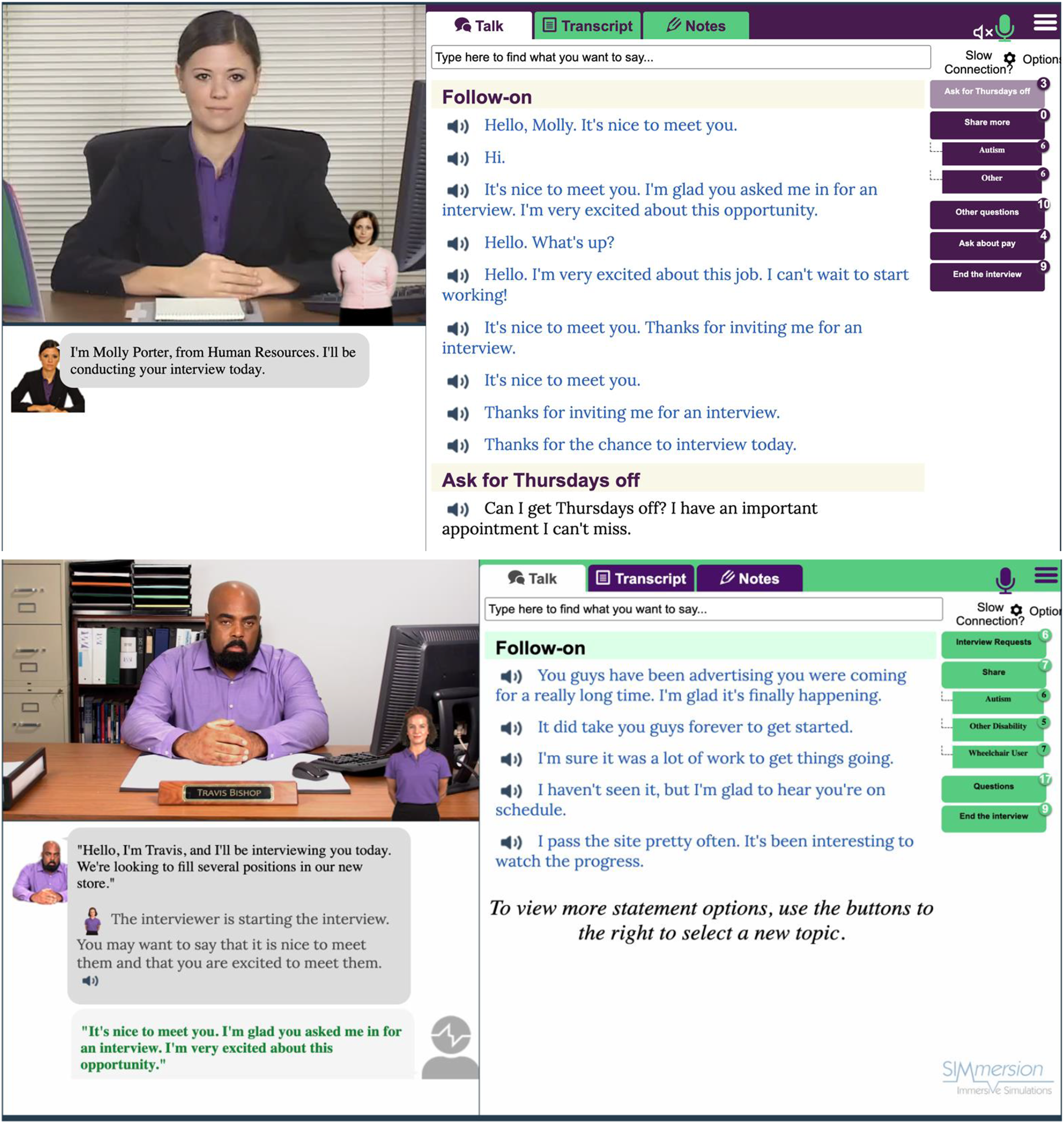
Moreover, VR-JIT uses hierarchical learning via easy, medium, and hard interviews that represent the personality of the hiring manager (e.g., friendly, professional, inappropriate). Due to a bank of hundreds of interview questions performed by the virtual hiring manager, VR-JIT can be used to repeatedly practice interviews as trainees progress from easy to hard interviews.
The second interview training intervention is Virtual Interview Training for Transition-Age Youth (VIT-TAY). Specifically, our scientific team partnered with the autism community and community and scientific advisory boards to review the acceptability, usability, and accessibility of VR-JIT and identified a series of adaptations to specifically meet the needs of autistic transition-age youth and youth with other disabilities (Smith et al., 2020b). VIT-TAY maintains the core interface and usability of VR-JIT while integrating additional evidence-based design components (e.g., scaffolding, social story telling), content-focused additions (e.g., adding new interview skills, and increasing diversity among the new virtual hiring managers (Figure 1).
Subsequently, the initial effectiveness of VIT-TAY was evaluated among 71 autistic transition-age youth in a RCT where trainees engaged with Pre-ETS and VIT-TAY. The results revealed that the Pre-ETS with VIT-TAY group improved their interview skills, interview anxiety, and had greater odds (OR = 16.0, p < .05) of competitive employment as compared to the Pre-ETS-as-usual group (Smith et al., 2021b). In addition, we conducted a quasi-experimental evaluation of VIT-TAY among 356 students with autism or other disabilities (e.g., specific learning disability, emotional disturbance) engaged in Pre-ETS within 32 special education programs. This study revealed that greater engagement with VIT-TAY was associated with significantly greater odds (OR = 1.73, p < .001) of obtaining competitive employment within six months. Notably, 48% of 117 non-job-seeking VIT-TAY trainees were competitively employed within six months as compared to 22% of 82 non-job-seeking VR-JIT trainees who were employed within six months (p < .001; Smith et al., 2022).
Moreover, the two aforementioned quasi-experimental studies evaluating the effectiveness of these interventions conducted concurrent initial implementation process outcome evaluations and found that the implementation preparation outcomes (e.g., intervention acceptability, strategies to prepare teachers, implementation feasibility) and teacher-level (e.g., number of sessions per week) and school-level (e.g., types of class room settings) practical strategies used to implement VR-JIT and VIT-TAY did not differ from one another (Smith, Sherwood et al., 2022). However, there were several notable differences in the intervention design between VR-JIT and VIT-TAY. Three examples follow.
First, VIT-TAY was designed to be more accessible than VR-JIT (e.g., lower required reading level (i.e., 4th grade reading level vs. 6th grade reading level), shorter virtual interviews (e.g., easy VIT-TAY interviews lasted approximately 10 minutes vs. easy VR-JIT interviews lasting approximately 25 minutes). Second, the newly integrated VIT-TAY social storytelling provided more immersive automated coaching and feedback. Third, VIT-TAY has greater racial diversity of virtual hiring managers (Smith, Pinto et al., 2020b).
Overall, the dissemination of these results has led to the real-world implementation of VIT-TAY (or VR-JIT) in more than 70 high school special education and community post-secondary pre-employment programs across 10 US states (including initial implementation by the State of Illinois’ Department of Health and Human Services Division of Vocational Rehabilitation) as of September 2022. Thus, there is a large-scale initiative to implement VIT-TAY (or VR-JIT) prior to validating the effectiveness of the intervention in a fully powered randomized controlled trial. Given the unexpected emergence of VIT-TAY (or VR-JIT) adoption, schools, school districts, state boards of education, and state vocational rehabilitation agencies will be interested in learning about the budget impact of preparing Pre-ETS facilitators to implement VIT-TAY (or VR-JIT). These findings are especially critical given cost could be a critical barrier to adopting and sustaining this intervention, as noted in previous work with teachers and administrators (Sherwood et al., 2023; McGoey et al., 2014). Specifically, by estimating the costs of the intervention prior to enrollment, administrators can calculate an expected cost before any trainees are enrolled in the intervention. This estimate of implementation preparation costs will allow administrators to understand the magnitude of intervention costs before receiving any return on their investment from VIT-TAY (or VR-JIT).
The field of implementation science defines the “preparation” phase as the period between when a setting (i.e., school) chooses to adopt a new intervention and when that intervention becomes available within the school (Aarons et al., 2011). This implementation preparation phase focuses on several key activities that include identifying communication channels and champions, training administrators and teachers, defining teacher roles for delivering the intervention, identifying and coordinating delivery methods (e.g., hardware and space), and adapting intervention materials. Thus, we sought to characterize the costs of implementation preparation across several schools that were evaluating VIT-TAY (or VR-JIT) effectiveness and implementation. In this study, we define the implementation preparation phase as the activities and resources required for VIT-TAY (or VR-JIT) to be available to special education students engaged in Pre-ETS (i.e., to prepare schools to implement virtual interview training), prior to students actually using the interventions. Notably, the evaluation of an intervention’s implementation preparation labor and non-labor activities is an emerging area of research in primary health care and mental health services settings (Jordan et al., 2019; Smith et al., 2020a). In this paper, we present the results of a budget impact analysis that assessed the expected short-term changes in expenditures for schools preparing to implement VIT-TAY (or VR-JIT). Given this study was the first evaluation of implementation preparation activities associated with VIT-TAY (or VR-JIT) in school settings, time spent on some implementation preparation activities was likely greater than what would be necessary during future implementation preparation activities. Thus, as a secondary exploratory aim, we conducted sensitivity analyses to estimate the costs associated with replicating the activities associated with implementation preparation of VIT-TAY (or VR-JIT) to inform future implementation.
Methods
Study Design
We used an implementation preparation design to estimate the labor and non-labor costs of preparing to implement VIT-TAY (or VR-JIT) in 43 schools. Implementation preparation is a phase of the EPIS (Exploration, Preparation, Implementation, and Sustainment) framework that guides the design and administration of implementation process evaluations (Moullin et al., 2019). Specifically, the implementation preparation phase includes the collection of labor costs incurred during meetings, communication between the schools and research team, training teachers to deliver the interventions, and supervision of these processes.
Participants
To recruit school partners to participate in quasi-experimental studies to evaluate the implementation and initial effectiveness of VIT-TAY or VR-JIT, the research team engaged in networking and relationship building with the Illinois Department of Human Services Division of Rehabilitation Services, Chicago Public Schools’ Office of Diverse Learner Supports and Services, Michigan Rehabilitation Services, and Project SEARCH (i.e., an evidence-informed Pre-ETS program with a network of more than 400 sites in the United States [Rowe et al., 2021]). Selected staff from 76 schools were trained to implement VIT-TAY or VR-JIT within local Pre-ETS programming. Subsequently, 29 schools dropped out due to competing administrative priorities. Forty-seven schools participated in the aforementioned quasi-experimental studies, 43 of which completed an evaluation of implementation preparation activities that are the focus of this study. The 43 schools were from Illinois, Michigan, and Florida, and represented city (n = 15), suburban (n = 22), town (n = 4), and rural locales (n = 2). We used the National Center for Education Statistics (NCES) locale framework to categorize schools into locales based on definitions developed by the United States Census Bureau (Geverdt, 2015). From these schools, 80 school staff members and 635 students participated.
Three participant groups were included in this study: implementation support staff (who were external scientific partners), special education administrative leaders (referenced as leaders) and teachers. Implementation support staff worked with leaders and teachers to guide their implementation of the technology and troubleshoot technology needs (e.g., getting the program to run on local devices) throughout the process. Leaders helped facilitate the implementation process between the implementation support staff and teachers. Teachers were trained by the implementation support team to orient the transition-age youth to use VIT-TAY (or VR-JIT). Some leaders also served as teachers (n = 24). In these instances, they were responsible for engaging in both administrative and teaching duties. All participants worked at educational programs in the United States (i.e., n = 32 public schools; n = 10 Project SEARCH sites; and n = 1 private school). The Project SEARCH model is a partnership between schools, state-level vocational rehabilitation services, and a community employer where students receive class-based instruction at school or an internship site and complete three internships over the course of one year (Rutkowski et al., 2006). While Project SEARCH sites may not always be schools, we refer to them as schools for simplicity. Our calculations weighed each Project SEARCH site equally with school partners; we analyzed their implementation costs the same way that we did for schools.
Time Horizon
Implementation preparation activities across four cohorts began in August 2017 (cohort 1), January 2018 (cohort 2), August 2018 (cohort 3), and January 2019 (cohort 4) and concluded after 4–6 weeks.
Perspective
We completed a budget impact analysis from the perspective of school budget holders. The analysis includes the estimated labor and non-labor costs incurred by schools during the preparation phase, prior to implementation of VIT-TAY (or VR-JIT).
Interventions
VIT-TAY and VR-JIT are computerized job interview simulators that are delivered via the internet and commercially licensed by SIMmersion LLC (www.simmersion.com). As described in the introduction, the simulators include e-learning content and mock job applications to prepare trainees to engage in the virtual interviews. Trainees then repeatedly interview with virtual hiring managers (Figure 1) that vary in mood and personality, which help facilitate a range of virtual hiring managers who can be friendly, professional, or inappropriate. The virtual interviews are facilitated by speech-recognition software and last 10–45 minutes (depending on reading speed and whether interviews occur at an easy, medium, or hard level of difficulty. Overall, VIT-TAY and VR-JIT can provide over 15 hours of unique virtual interviewing experience. See Smith, Pinto and colleagues (2020) for additional details.
Analytic Framework
To calculate implementation preparation labor costs, we used a cost calculator approach, which uses activity descriptions, activity time estimates, and participant hourly rates to calculate costs for each activity (Sullivan et al. 2014). All calculations for this study were completed in Microsoft Excel.
Data Source
Budget impact analysis input parameters for labor and non-labor costs.
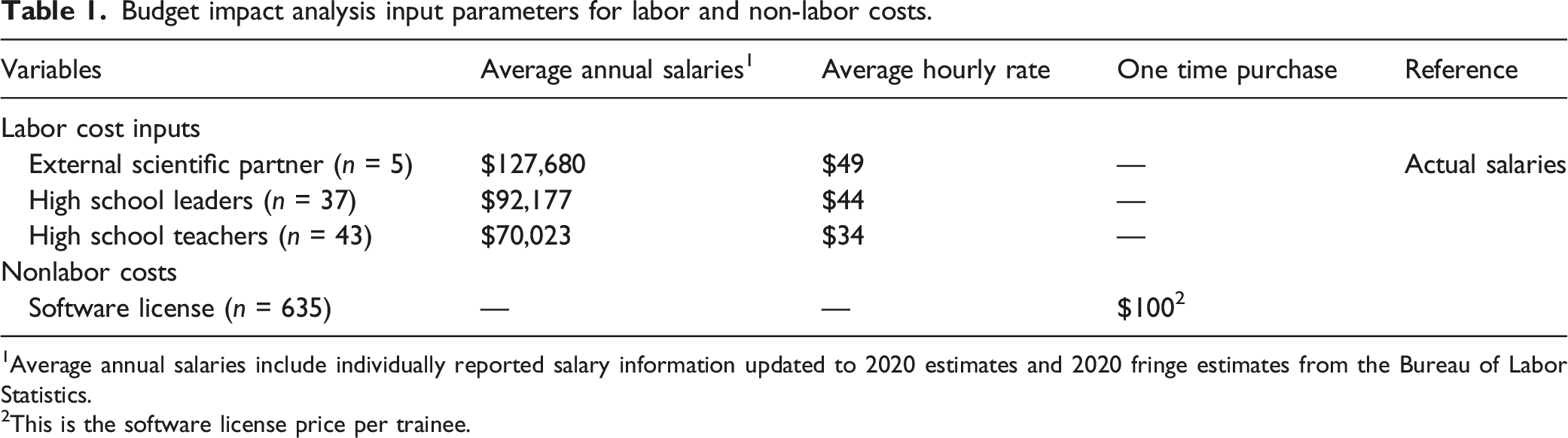
Average annual salaries include individually reported salary information updated to 2020 estimates and 2020 fringe estimates from the Bureau of Labor Statistics.
2This is the software license price per trainee.
Measures
School staff recorded how much time they spent on each implementation preparation activity. Activity data were collected weekly or biweekly during the 6–8 weeks prior to the school’s implementation of VIT-TAY (or VR-JIT). A priori labor categories were created by adapting existing implementation preparation activity surveys used in mental health settings (Smith, Graham et al., 2020a), which were then reviewed by Pre-ETS teachers and adapted for school settings. Intervention adoption and data collection were conducted in accordance with the ethical standards of the University of Michigan Institutional Review Board, and informed consent was not required.
Analysis
Labor costs were calculated using the cost calculator approach (Sullivan et al. 2014). Labor cost was estimated by multiplying the per-hour salary by the time spent on each activity. This process was completed for each activity and each participant. Collectively, these costs created our labor estimates for the study. The costs of each activity were aggregated by participant type (e.g., teacher, leader). Activities were then collapsed based on implementation preparation activity type: meeting and correspondence, materials, training, technical support, lab space/infrastructure, and supervision.
To estimate replication costs, the implementation support team generated an expected effort to complete each implementation preparation activity in another school setting. Together, the principal investigator (MJS) and project manager (BR) reviewed labor activities and generated replication efforts based on their experience with the study.
Uncertainty Analysis
To provide the schools with more guidance on implementation preparation costs, MJS and BR also discussed and generated effort ranges to use for a sensitivity analysis. The sensitivity analysis was conducted by using the effort ranges for each activity to calculate an expected cost range (Sullivan et al. 2014).
Results
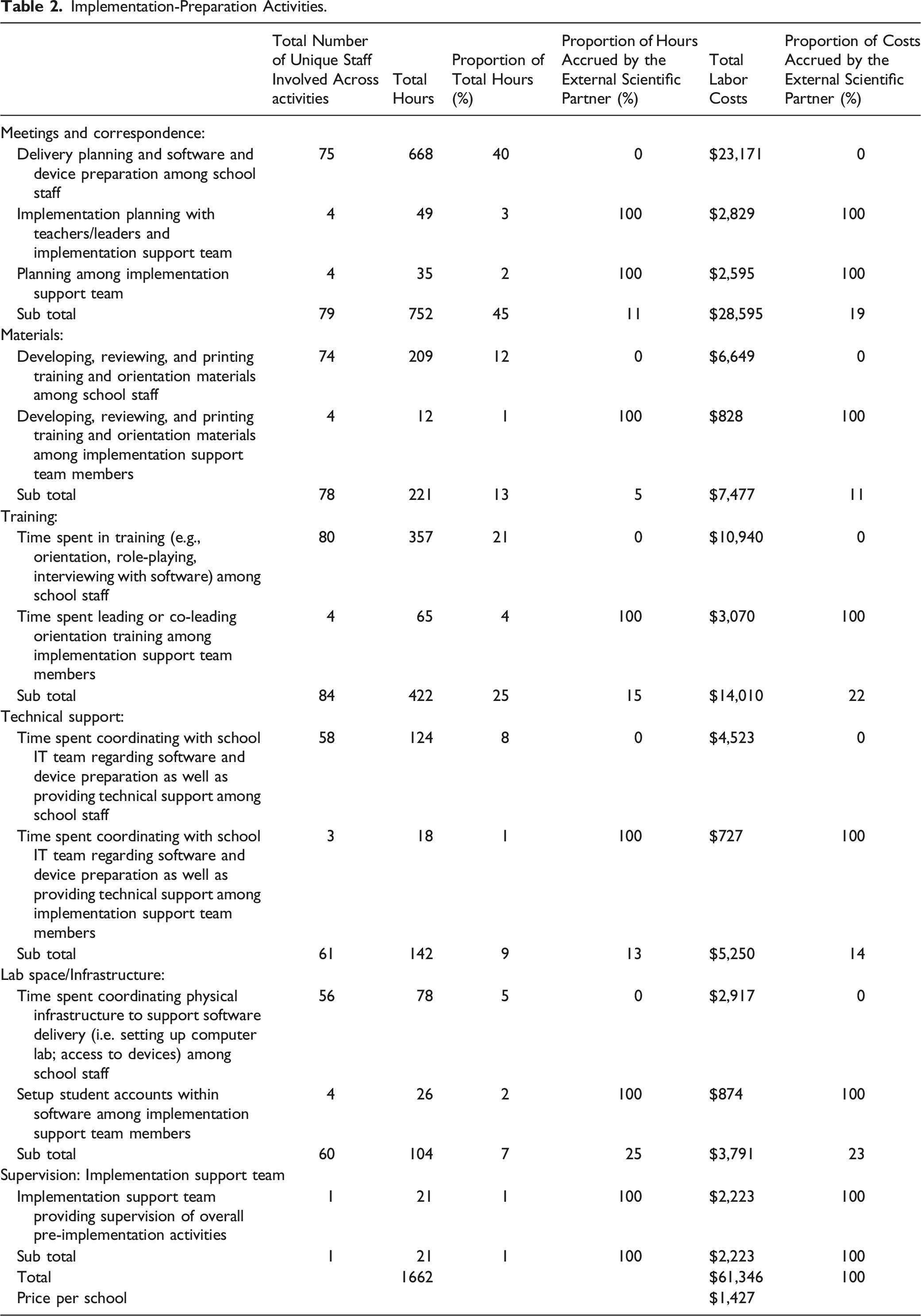
Implementation-Preparation Activities.
In addition to labor costs, VIT-TAY (or VR-JIT) cost approximately $100 per license per trainee (Table 1). This was a one-time fee based on the licensing framework from 2017 that was specific to the scientific evaluation of the interventions and does not represent current pricing.
Implementation-preparation estimate.
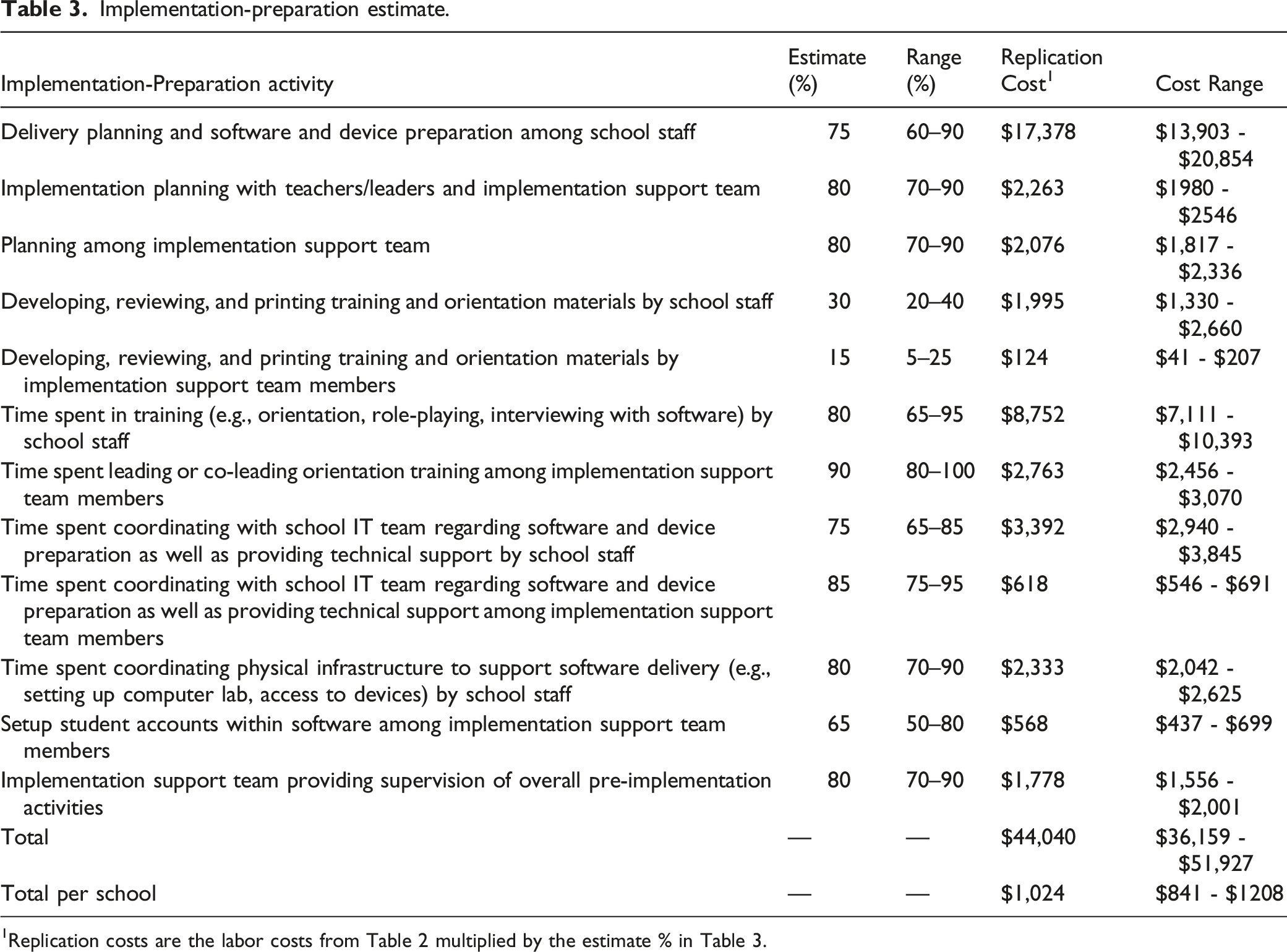
1Replication costs are the labor costs from Table 2 multiplied by the estimate % in Table 3.
Figure 2 displays the estimated cost range for each implementation preparation activity. Most activities did not vary more than plus or minus $665. On the other hand, delivery planning and software and device preparation among staff ($3,476) and time spent in training among staff ($1,641) costs may vary widely. Estimated cost range per implementation activity.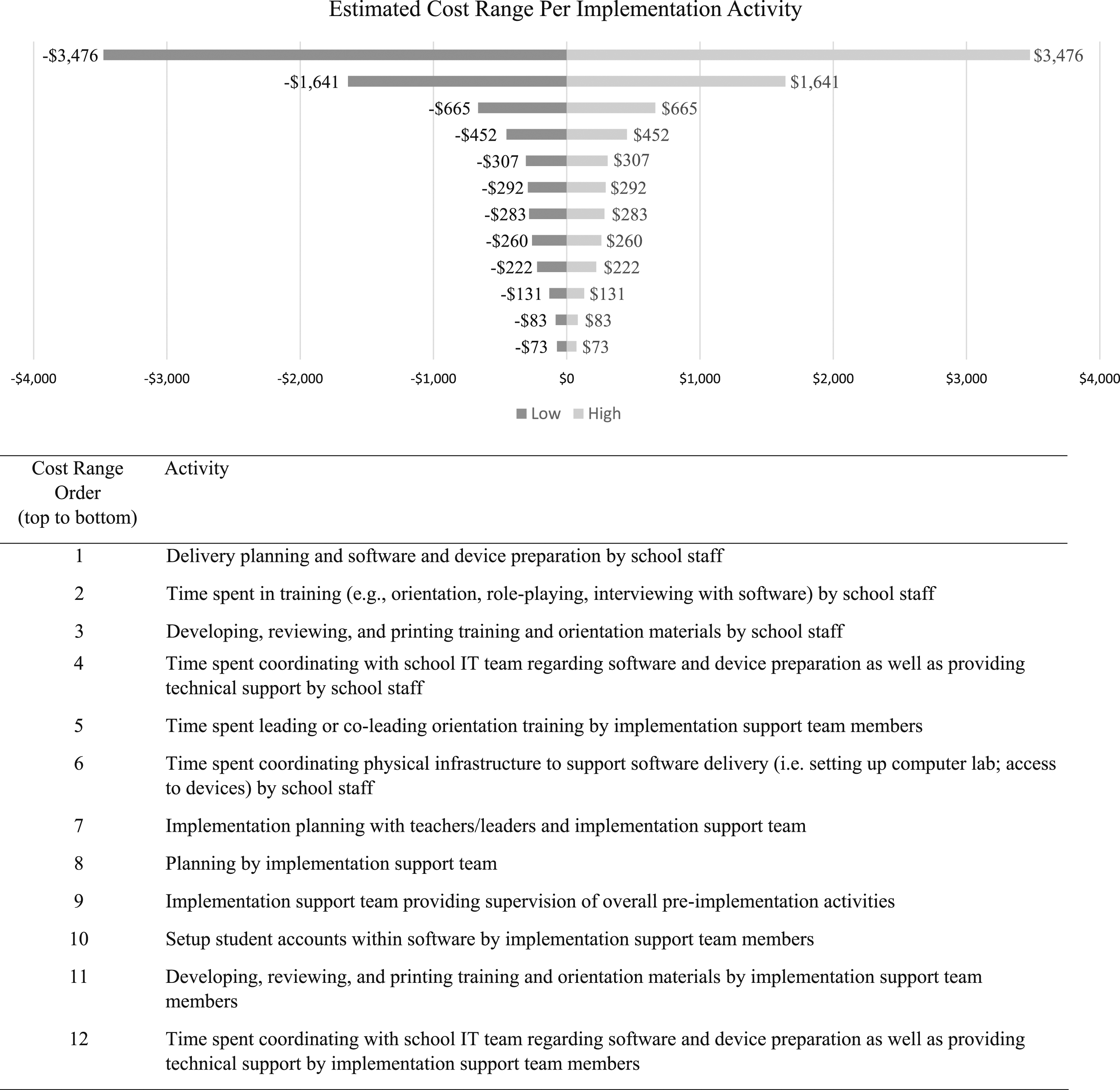
Discussion
This study determined that the labor costs associated with implementation preparation activities to prepare Pre-ETS programs to deliver VIT-TAY (or VR-JIT) were $1,427 per school. However, our sensitivity analyses determined that the labor costs would be $1,024 per school (ranging from $841 to $1,208) to replicate the implementation preparation activities with future special education programs. Most implementation preparation costs were accrued by school staff from two activities: time spent planning the delivery of software and devices, and time spent in training. Given the wide variation in these activities, we expect there is an opportunity to minimize the labor hours and reduce overall costs. Additionally, the implementation support team identified that some activities, such as setting up student access to VIT-TAY, could be completed by school staff (as opposed to the more expensive costs associated with the implementation support team). This approach could reduce costs to the school as they would otherwise pay additional fees for external implementation support. Costs could also be reduced if school staff would complete the orientation (on how to teach students to use VIT-TAY) via publicly available online resources and troubleshoot any software setup directly with SIMmersion instead of the external implementation support team.
Regarding non-labor costs, VIT-TAY (or VR-JIT) cost $100 per trainee for a one-year license. For our analysis, we assumed that participating schools had computing devices (e.g., computers, laptops, tablets) to run VIT-TAY (or VR-JIT) and headsets (with microphones) to facilitate the speech recognition functions. While most research testing the use of VIT-TAY (or VR-JIT) involves the use of headsets, the software can be used without them. Additionally, although we did not include the cost of devices in our estimates, the cost of over-the-ear headphones with an inline microphone is generally low ($10 to $20 per headset). These costs may be important for schools to consider in their decision making.
Given WIOA mandates that state level vocational rehabilitation agencies dedicate a minimum of 15% of their federal funding to Pre-ETS (approximately $545,247 federally in 2019; United States Department of Education, 2019), our estimates suggest implementation preparation costs may be covered by state grants if delivered by state-level vocational rehabilitation services. For example, the State of Illinois meets part of the 15% reserve requirement of its allotment, under the federal Vocational Rehabilitation Services program, by funding the Secondary Transitional Experience Program or STEP (https://www.dhs.state.il.us/page.aspx?item=35174). STEP helps facilitate access to Pre-ETS for local schools, districts, and special education cooperatives who receive STEP contracts to help fund services. Notably, some of these programs were involved in prior evaluations of VIT-TAY and VR-JIT (Smith et al., 2022; Smith et al., 2021c). After the conclusion of these studies, some programs used their STEP funding to cover the costs of the tools. This knowledge is especially promising given the option to further reduce costs by completing orientation online and shifting some implementation preparation activities from the implementation support team to school staff.
Future research should explore new delivery models (e.g., district-level initiatives) that financially support the needs of several schools in an area to increase the number of recipients while limiting costs. One way to do this would be to compare the implementation preparation costs of VIT-TAY between teachers and vocational rehabilitation counselors and/or vendors. Alternative strategies for funding VIT-TAY in schools could include the Elementary and Secondary School Emergency Relief (ESSER) funding or Individuals with Disabilities Education Act (IDEA, 2004) special education funding. ESSER funds can be spent on evidence-based activities that address learning loss for students including those with disabilities (American Rescue Plan Act, 2021). However, state boards of education and local school districts may have their own limits on how ESSER funds can be used. In terms of IDEA funding, IDEA has historically been underfunded by the federal government and thus puts more strain on state and local education agencies. However, this issue is beyond the scope of this paper. An additional source of funding that one school district is using to support VIT-TAY implementation is through funding obtained from the Strengthening Career and Technical Education for the 21st Century Act or Perkins V (2018). Perkins V funding is disseminated through state-level grants that in turn funds school districts and postsecondary institutions to support career and technical education programs.
Overall, implementation cost analyses are a major gap in implementation research more broadly (Eisman et al., 2021) and particularly within educational settings (Levin & Belfield, 2015). However, there are a limited number of in-field comparisons which can prove useful in comparing implementation preparation costs of VIT-TAY and VR-JIT to other evidence-based interventions in schools. For example, Positive Behavior Intervention Support (PBIS) supports a broader student audience and has been implemented in over 20,000 schools. Specifically, PBIS is a multi-tiered framework to establish school-wide behavioral support for all students and costs approximately $25,000 per school annually for meetings and training activities (Bradshaw et al., 2020). Notably, school-based coaching provides support to schools to build capacity and facilitate the implementation of school-wide multi-tiered systems of evidence-based practices, which costs schools $8,198 annually (Pas et al., 2020). However, the authors reported that schools spent an average of $984 annually for PBIS preparation and planning activities (Pas et al., 2020). Although the scope of their study used a larger sample and applies to a wider student audience, their estimates are similar to the projected $1,024 one-time cost to prepare schools to implement VIT-TAY (or VR-JIT). Another in-field implementation example, Applied Behavior Analysis (ABA), is one of the most costly autism interventions with average annual full implementation costs of $40,000 per student (Cakir et al., 2020; Chasson et al., 2007). Despite being one of the most commonly funded autism interventions, implementation preparation costs for ABA in a school setting are not yet known as ABA is often not delivered in schools due to its high cost (Rogge & Janssen, 2019). While these comparisons are helpful, PBIS, school-based coaching, and ABA are more often evaluated as comprehensive intervention programs, whereas VIT-TAY and VR-JIT are skill-focused. This discrepancy makes it difficult to conduct implementation preparation cost comparisons.
Overall, the results of this study are a critical addition to the expanding literature highlighting the potential benefits of implementing VIT-TAY within special education Pre-ETS. Notably, prior studies found VIT-TAY demonstrated initial effectiveness at improving interview skills, reducing interview anxiety and increasing access to competitive employment (Smith et al., 2021a). This literature also suggests that special education teachers and students with disabilities perceived VIT-TAY as highly acceptable and feasible to implement within the typical structure of Pre-ETS. The current study expanded this literature by reporting on the estimated amount of labor (and associated costs) that may be required for future sites to prepare to implement VIT-TAY (or VR-JIT) in special education programming. More specifically, special education administrators can reference the reported implementation preparation costs to construct realistic budgets to prepare their schools to deliver VIT-TAY (or VR-JIT). Importantly, the activities and labor required to prepare for VIT-TAY implementation could also serve as a proxy for other technology-based interventions that might be used to enhance Pre-ETS.
Limitations and Implications for Future Research
We note this study has some limitations. First, although our sample included schools from cities, suburbs, towns, and rural settings, schools from towns and rural locales were comparatively underrepresented. Thus, future research should elucidate whether there are any unique implementation preparation costs that may be relevant to schools in town and rural locales. Second, the schools were primarily public schools with only a single private school participating (that served three students). Thus, our results may not generalize to private and charter schools where there could be variation in the required implementation preparation activities. Third, public school partners received support from state-level vocational rehabilitation services. Thus, study results may not generalize to schools that receive less funding or do not have state vocational rehabilitation support; these schools should be included in future research. Fourth, this study estimated school labor costs. However, future studies should examine vocational rehabilitation labor costs or shared labor costs between schools and vocational rehabilitation agencies. Fifth, we used actual salary information to calculate our estimates. While we included schools from three states, salaries may vary beyond our sample and this needs to be considered when applying our results in cost estimations. Lastly, the results of this study may not generalize to schools with limited resources that declined to participate in this study due to understaffing and different priorities. In addition, future research is also needed to evaluate the costs of the actual implementation activities to increase our understanding of the potential cost effectiveness or return on investment of VIT-TAY (or VR-JIT).
Implications for Research, Practice, and Policy
The U.S. Department of Education has identified job interviewing ability as one of several skills to be supported through Pre-ETS (U.S. Department of Education, 2017). Moreover, studies suggest between 40% and 90% of employed youth with disabilities receiving state-supported Pre-ETS interviewed prior to their employment (e.g., Smith et al., 2021b; Smith et al., 2021a). Given the recent emergence of several job interview interventions in the literature (Kim et al., 2021), schools will need to make informed decisions based on the effectiveness and costs of these tools. However, the adoption of novel interventions by state level agencies and their contracted partners may face delays due to the limited knowledge about the upfront costs required to implement new technology-based practices (Bond et al., 2022). Thus, this study provided insight into the costs that administrators may face when preparing an infrastructure to implement VIT-TAY (or VR-JIT).
Specifically, administrators may need to weigh the balance between the labor hours required to prepare their school to implement VIT-TAY (or VR-JIT) with the costs of licensing the use of the tools themselves (e.g., $1000 per 25 student VIT-TAY licenses) while taking into account that several RCTs and quasi-experimental studies of VIT-TAY (or VR-JIT) suggest they significantly increase access to competitive employment. Administrators may also need to balance the difference between paying an external implementation support team to train all teachers to VIT-TAY implementation fidelity and the labor hours associated with training a school staff member to become a designated VIT-TAY trainer to onboard other teachers. Such an approach could reduce out-of-pocket financial costs but increase labor hours for school staff.
Conclusion
Given the emerging effectiveness of VIT-TAY at increasing employment among students engaged in Pre-ETS, the field could benefit from new knowledge on the labor and associated costs needed to prepare special education programs to deliver technology-based enhancements such as VIT-TAY. Accordingly, the estimated labor costs to prepare Pre-ETS programs to implement VIT-TAY were $1024. This estimate provides administrators with a realistic labor requirement within their budget and remove uncertainty that may reduce the likelihood of adoption. Although this estimate may help reduce barriers to adoption, further research is warranted to evaluate whether VIT-TAY provides a return on investment as an increase in the hours worked and wages earned by students with disabilities using VIT-TAY could further inform the adoption of this intervention.
Footnotes
Declaration of Conflicting Interests
The author(s) declared the following potential conflicts of interest with respect to the research, authorship, and/or publication of this article: The University of Michigan will receive royalties from SIMmersion LLC on the sales of virtual interview training for transition age youth (VIT-TAY) that was evaluated in this study. These royalties will be shared with Dr. Matthew Smith and the University of Michigan School of Social Work. Dr. Smith adhered to the University of Michigan’s Conflict Management Plan that was reviewed and approved by a University of Michigan Conflict of Interest Committee. No other authors report any conflicts of interest.
Funding
The author(s) disclosed receipt of the following financial support for the research, authorship, and/or publication of this article: This study was supported by grants from the Kessler Foundation (1003-1958-SEG-FY2016, PI: Matthew Smith). Marc Atkins was supported by the National Center for Advancing Translational Sciences, National Institutes of Health Grant UL1TR002003. Justin D. Smith was supported by the National Institute on Drug Abuse, National Institutes of Health Grant P30DA027828. The content is solely the responsibility of the authors and does not necessarily represent the official views of the Kessler Foundation and the National Institutes of Health. Elizabeth C. Danielson was supported by funding from the National Institute on Disability, Independent Living, and Rehabilitation Research (#90ARHF0003).
