




Abstract
In this second-order scoping review—that is, a broad overview of research on a particular topic, identifying key concepts and evidence gaps—we (a) provide an overview of robust (and semi-robust) findings in giftedness and talent research and (b) identify areas where giftedness and talent research has not yet produced robust (and semi-robust) findings. Of the 23 meta-analyses published between 2000 and 2023 that were identified using our search terms, 17 were categorized as robust and six as semi-robust. The most frequently considered outcome variables were achievement, cognitive processing, socioemotional factors, traits, and identification. Further topics included interventions’ effects and group differences, particularly regarding groups underrepresented in gifted education. The findings are summarized in a condensed list. The lack of standard definitions and operationalizations of crucial terms is particularly critical. We suggest that further meta-research should be used to identify robust findings on giftedness.
The empirical study of giftedness, defined as “outstanding levels of aptitude … in one or more domains” (Hodges et al., 2018, p. 147), is often traced back to Galton (1869). Since then, more than 150 years have passed, and many published and unpublished empirical studies have been carried out. This extensive research history naturally raises questions about what we currently understand regarding giftedness and talent development, the individuals who exhibit it, how to identify them, and the best ways to support their development.
A key challenge is the need for a clear understanding of which findings in gifted education and talent development are empirically well-established and which remain tentative. Talent development, understood as the systematic cultivation of potential into domain-specific excellence (Subotnik et al., 2011), depends on robust, generalizable evidence regarding the characteristics, needs, and outcomes of gifted and talented individuals. Without such a foundation, interventions risk being guided by fragmented findings or anecdotal beliefs. As emphasized by Gagné’s (2004, 2020) differentiated model of giftedness and talent (DMGT), talent development is a dynamic process shaped by the interplay of individual abilities, personal traits, and environmental catalysts. To guide this process effectively, the field needs clarity on what can be regarded as empirically robust. In this article, we address that need by synthesizing robust and semi-robust findings from meta-analyses in gifted education and talent development, thereby offering a strategic evidence base for guiding research, policy, and practice.
Unfortunately, it is not easy to find reliable literature and evaluate the truth of claims about giftedness and talent development (McBee, 2021). Such a concern goes well beyond the usual caveat about the tentative nature of scientific findings, which Flemming et al. (2020) characterized as “one hallmark of the very nature of science” (p. 18). Numerous authors have criticized the methodological quality of empirical studies on giftedness for a variety of reasons (e.g., Cao et al., 2017; Coleman et al., 2007; García-Martínez et al., 2021; H. Lee & Gentry, 2023; McBee, 2021; Stoeger et al., 2018; Ziegler & Raul, 2000), and these criticisms have been coupled with calls for “more rigor in methodologies” (Dai et al., 2011, p. 136). For example, in an expert survey, Siegle et al. (2024) reported concerns about a “dearth of rigorous empirical research in the field, generally” (p. 182) and an overreliance on “anecdotes and opinions” (p. 183). Thus, as McBee et al. (2018) pointed out, the degree of replicability cannot even be estimated, and there are good reasons to be concerned.
Reliability, Reproducibility, Replicability, and Robustness
It has been widely acknowledged that we cannot obtain absolute knowledge in the empirical sciences; we only obtain preliminary knowledge (Flemming et al., 2020). The question of what we know about giftedness and talent development today can thus only refer to tentative knowledge. Moreover, the standards by which we classify tentative knowledge are determined by social decisions within the scientific community (Shapin, 1995). In other words, any designation of tentative knowledge regarding giftedness and talent development is valid only in relation to the criterion employed. The choice of criterion is thus by no means trivial because the answers will differ depending on the criterion chosen. In our research group, we discussed four potential criteria intensively and decided to favor robustness over reliability, reproducibility, and replicability. However, we must emphasize that the discussion has been seriously complicated because there is no consensus on the meaning of these concepts, and the literature on them is complex and voluminous (Meng, 2020; National Academies of Sciences et al., 2019). For space reasons, we will only report a summary of our discussion and will not retrace the exact debate. However, we would like to point out that a decision favoring a criterion other than robustness would also have been possible.
The most general of the four criteria is reliability, which, according to the APA Dictionary of Psychology (2024), is defined as “the degree to which a test or other measurement instrument is free of random error.” A high quality of measurement is a prerequisite for proper research, but it is insufficient to ensure the credibility of findings. Reliability should not be confused with validity, that is, whether what was measured was intended to be measured (Moss, 1994). Furthermore, an on-off finding can only indicate evidence given the reproducibility crisis (Baker, 2016) and replication crisis (Wiggins & Christopherson, 2019).
Meng (2020) argued that reproducibility is fundamental to trusting reported results, asserting that it must come before replicability. Patil et al. (2016) defined reproducibility as reperforming the same analysis with the same code by a different analyst, whereas replicability involves rerunning the experiment and collecting new data. However, if we apply these definitions, very few studies of giftedness and talent development research would qualify for our study purposes (e.g., for replication, Wai et al., 2024; for reproducibility, Neff, 1938; Warne et al., 2020), although they would be essential for a solid research base on giftedness (Makel & Plucker, 2013; Plucker & Callahan, 2014). We, therefore, decided to use robustness as a criterion in the sense of Duncan et al. (2014). These authors considered findings robust if they hold across estimation methods, data sets, and demographic subgroups.
According to this understanding, robustness is very similar to constructive replication, as used by Makel and Plucker (2015) and Wai et al. (2024). These authors drew on conceptual considerations by Lykken (1968). Wai et al. contended that constructive replication varying “different construct-irrelevant design features across studies while keeping the focal constructs of interest the same across each study” and described such results as “particularly robust” (p. 4). Makel and Plucker (2015) gave two examples—S.-Y. Lee et al. (2004) and Simonton (2008)—in which previous findings were extended to different populations. In those cases, the focus was solely on testing the generalizability of earlier results. Our approach to robustness goes further by also varying estimation methods and data sets—a procedure most effectively implemented in meta-analyses (Sharpe & Poets, 2020; Yarkoni, 2020). We, therefore, conducted a second-order scoping review of meta-analyses on giftedness and talent development published since 2000.
Current Research
A solid body of valid research results provides a reliable basis for further research (Hattie, 2009). It can create certainty in interpreting phenomena and form the starting point for hypotheses, developing robust theories, and further research. Without this foundation, the results of new studies would be isolated and could not be interpreted in a broader context. Our superordinate question was thus: What do we currently know from giftedness and talent research? The two aims of our research were to provide a list of robust (and semi-robust) findings and to identify areas where giftedness and talent research has not yet produced robust (and semi-robust) findings.
Oğurlu (2020a) provided an overview of meta-analyses in gifted education, revealing that the most prevalent thematic clusters include social-emotional development, educational interventions, identification, underrepresented groups, and learning. Similarly, Dai et al. (2011) identified key research areas such as creativity, achievement versus underachievement, identification methods, and overall talent development. Importantly, talent development is not only crucial for gifted individuals but also plays a vital role in addressing real-world challenges by harnessing a diverse range of talents within society (Wai & Lovett, 2021).
Meta-analyses provide a robust means of generating broad, objective overviews of research topics by synthesizing large pools of data and reporting effect sizes (Lakens et al., 2016). By comparing findings from primary studies, they provide meaningful summaries of the research landscape (Steenbergen-Hu & Olszewski-Kubilius, 2016). Whereas Oğurlu’s (2020a) work represents an important initial step toward a comprehensive overview of meta-analytic findings on giftedness, there remains a clear need for a continuously updated and unified synthesis. Accordingly, we conducted a scoping review of meta-analyses in gifted education and talent development. Our primary objectives were to provide a comprehensive overview of the current state of research, critically assess the quality of the existing meta-analytic studies, and organize our findings into clear, concise tables.
Method
The second-order scoping review provides a broad overview of the robust and semi-robust research findings of giftedness and talent development. Following the PRISMA flowchart (Liberati et al., 2009; see Figure 1), relevant studies were first identified through an extensive but not exhaustive literature search and screened for titles and abstracts. Our search strategy employed a range of keywords related to giftedness and talent, including “gifted,” “talented,” “excellence,” “high ability,” “high achievement,” and “high intelligence.” Additionally, to capture relevant meta-analytic studies, we incorporated the term “meta-analysis” as a supplementary keyword. Flowchart of the Study Selection Process of the Second-Order Scoping Review of Meta-Analyses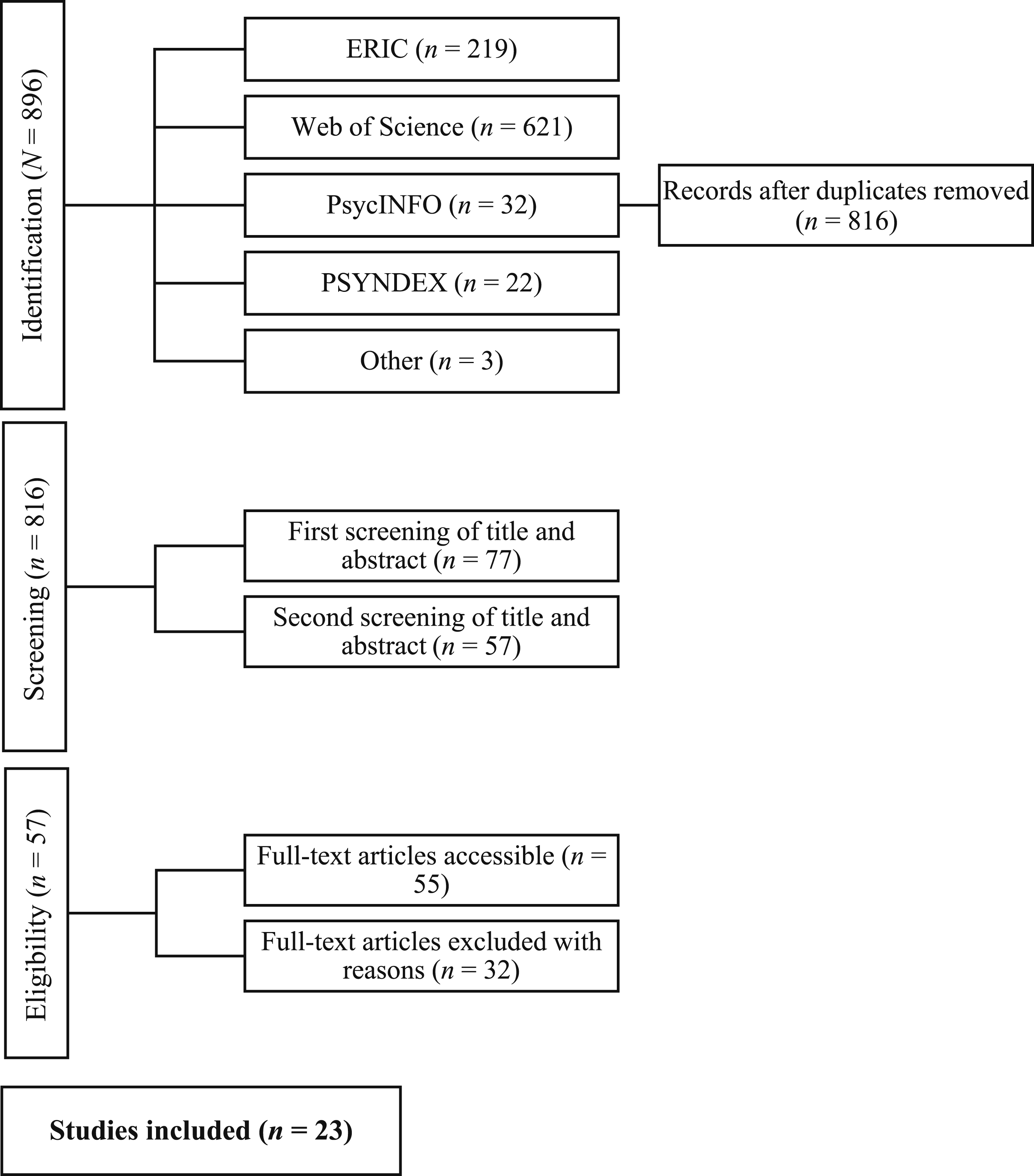
Overview of Included Meta-Analyses
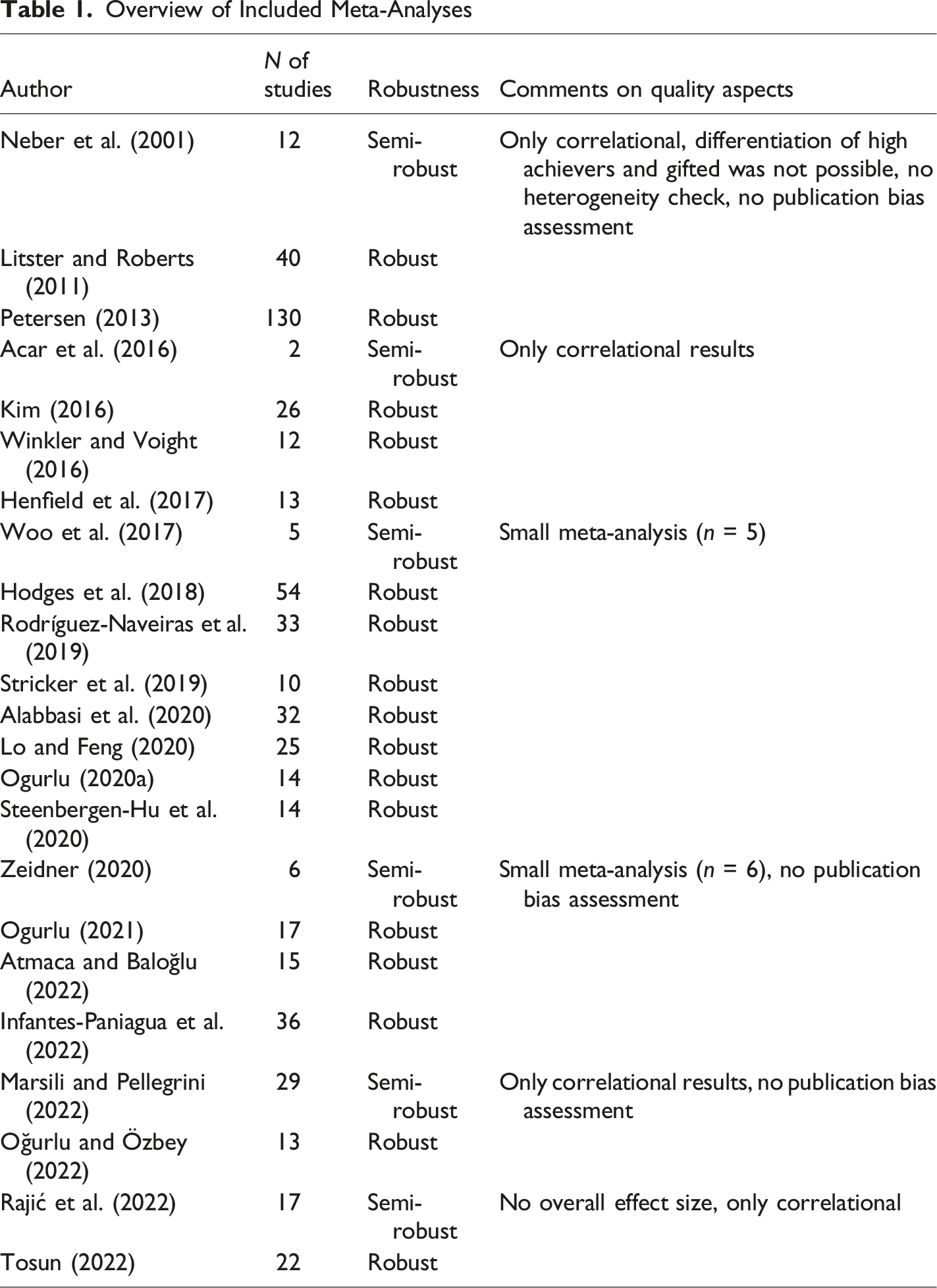
The meta-analyses were analyzed in more detail using an Excel template. Categories recorded were authors, publication year, publication type, number of primary studies included, effect size metric, heterogeneity assessment metric, publication bias assessment method, dependent variables, keywords, sample type, and main findings. The studies were clustered thematically according to the primary outcome. However, double coding was done if a meta-analysis covered several clusters thematically. Cohen’s kappas ranged from 0.70 to 1.00, with a median kappa of .82.
Results
Table 1 shows whether and which methodological flaws were identified. These were very wide-ranging and included no heterogeneity check, no publication bias assessment, little statistical information, or no overview of included studies. Of the 23 studies, six had flaws, so their findings are classified as semi-robust. A positive finding was that the methodological standards of the meta-analyses have improved over the years. Initially, heterogeneity and publication bias were hardly considered, whereas, in recent years, it has become common practice to consider both aspects (see Table 1). One serious difficulty, however, is that the definitions of giftedness and talent were highly heterogeneous. This finding corroborates McBee and Makel’s (2019) concerns.
We will present the findings grouped into five clusters according to their primary outcome variable: Achievement, Cognitive Processing, Psycho-Social-Emotional (PSE), Traits, and Identification. The three most substantial clusters are Achievement, PSE, and Traits. Only two keywords—“achievement” and “performance”—are mentioned in the Achievement cluster. In contrast, the Cognitive Processing cluster is much broader and includes terms such as “processing speed,” “higher order thinking skills,” and “working memory.” The PSE cluster is dominated by terms such as “social-emotional development,” “well-being,” and “emotional intelligence.” The Traits cluster includes studies that focus more on the stable characteristics of students such as “perfectionism.” Finally, the Identification cluster includes studies with keywords that bear the cluster name in some form.
Main Findings of the Meta-Analyses
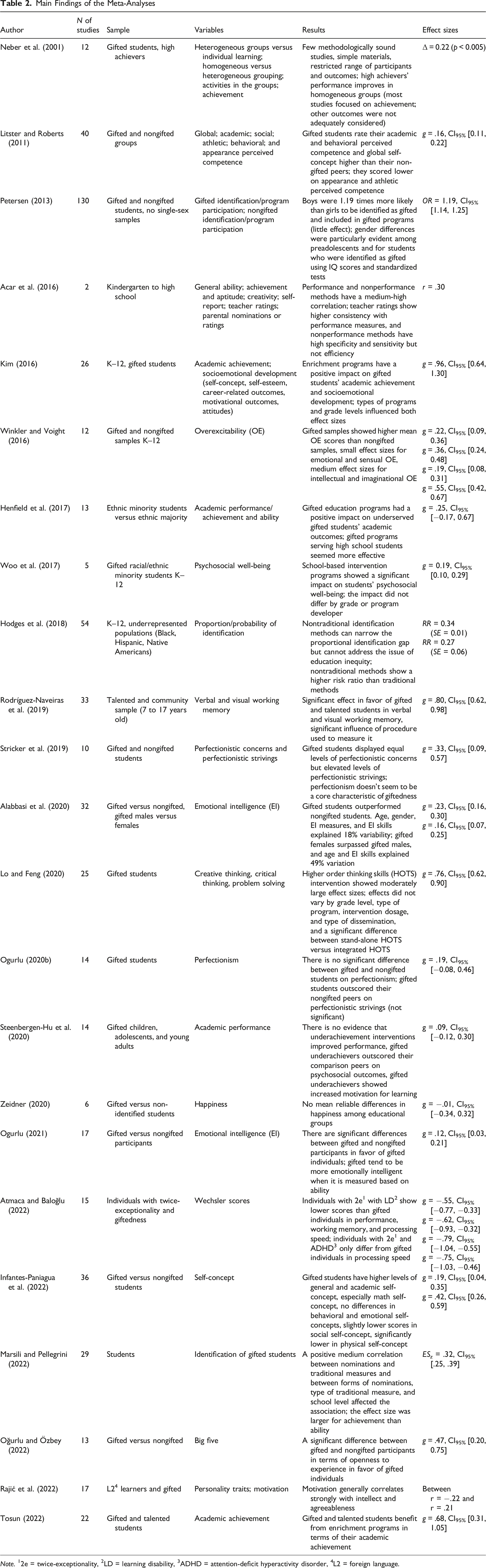
Note. 12e = twice-exceptionality, 2LD = learning disability, 3ADHD = attention-deficit hyperactivity disorder, 4L2 = foreign language.
Achievement Cluster
The six meta-analyses that fall into the Achievement cluster included primary studies with achievement or performance as an outcome. They comprised between 12 (Neber et al., 2001) and 26 (Kim, 2016) primary studies. Of these six meta-analyses, one focused on students from underrepresented groups (Henfield et al., 2017) and one included twice-exceptional (2e) students (Atmaca & Baloğlu, 2022).
The results of the Achievement cluster are mixed. Two studies indicated that gifted and talented students benefit from enrichment (Kim, 2016; Tosun, 2022), whereas Neber et al. (2001) were unable to find clear evidence regarding grouping. There is some evidence that high achievers benefit from homogeneous groups, but that meta-analysis included only 12 primary studies, so the results should be interpreted with some caution. One meta-analysis based on 13 included primary studies (Henfield et al., 2017) indicated that appropriate interventions have a positive effect on the achievement of students from underrepresented groups.
Another meta-analysis of 15 primary studies focused on twice-exceptionalities in students, that is, the combination of giftedness and either a learning disability (LD) or attention deficit hyperactivity disorder (ADHD; Atmaca & Baloglu, 2022). The focus has been on the dangers of cognitive masking, which Atmaca and Baloğlu (2022) defined as “a misperception of general cognitive ability due to inconsistent performance in different cognitive domains” (p. 277). Gifted and talented students with ADHD showed only a comparatively slower processing speed. Gifted and talented students with LD, on the other hand, show poorer overall performance on an IQ test, poorer working memory, and slower processing speed. In order to successfully identify the latter as gifted or talented, it is important to use differentiated IQ tests that can also capture subdomains of cognitive processes (Atmaca & Baloğlu, 2022). Overall, the Achievement cluster summarizes a selection of very heterogeneous meta-analyses that may nevertheless provide important information for future research.
Cognitive Cluster
The Cognitive cluster provides an overview of meta-analyses in which cognitive processes, such as memory and higher order thinking skills, were the outcome variables examined. A total of only two meta-analyses fall into this cluster. Although Atmaca and Baloglu (2022) also looked at cognitive processes, they focused primarily on outcomes related to cognitive processes (IQ test scores), so it was not included a second time in this cluster. The two meta-analyses clustered here included 25 (Lo & Feng, 2020) and 33 (Rodríguez-Naveiras et al., 2019) primary studies.
Rodríguez-Naveiras et al. (2019) compared the memory performance of gifted and talented students with non-identified students, and Lo and Feng (2020) analyzed higher order thinking skills (HOTS) interventions. Rodríguez-Naveiras et al. found that gifted and talented students have significantly better working memory for visual and verbal stimuli. However, the method of measurement significantly influences this difference. Interventions for HOTS have a significant effect on gifted and talented students and are particularly effective when they are integrated into the timetable (Lo & Feng, 2020). The effect is greatest for creative thinking skills and is independent of grade level, type of intervention, and mode of delivery. Overall, the Cognitive cluster is small and only provides evidence that gifted and talented students are superior to their peers in cognitive processing. This is only supported by two meta-analyses that include a total of 58 primary studies.
Psycho-Social-Emotional Cluster
The PSE cluster includes studies with outcomes related to students’ psychological or socioemotional experiences. These include emotional intelligence, psychosocial outcomes, social-emotional development, well-being, and perceived competence. This cluster includes six meta-analyses. The number of primary studies included ranged from five (Woo et al., 2017) to 40 (Litster & Roberts, 2011). There is some overlap with the achievement cluster when effects on psychosocial or socioemotional outcomes were analyzed in addition to achievement. In her meta-analysis, Kim (2016) examined the socioemotional development of gifted and talented students in the context of acceleration and enrichment, in addition to achievement. The analysis included 26 primary studies, and Kim concluded that enrichment has a positive effect on the socioemotional development of gifted and talented students. This effect was rather large, although it was influenced by the type of intervention and grade level.
The emotional intelligence (EI) of gifted and talented students was summarized in two meta-analyses that included 32 (Alabbasi et al., 2020) and 17 (Oğurlu, 2021) primary studies. The results show that gifted and talented students have higher EI than their non-identified peers. This appears to be particularly true when EI is measured based on ability using the Mayer–Salovey–Caruso Emotional Intelligence Test (MSCEIT; Mayer et al., 2004) rather than as a trait (Oğurlu, 2021). In addition, gifted and talented females show higher EI than gifted and talented males, although these findings are based on small effect sizes (Alabbasi et al., 2020).
In two other meta-analyses, researchers looked at studies examining the self-concept of gifted and talented students. They include 36 (Infantes-Paniagua et al., 2022) and 40 (Litster & Roberts, 2011) studies. Gifted and talented students appear to have a higher global self-concept (Litster & Roberts, 2011), but self-concept consists of different domains in which the differences are not consistent. Gifted and talented students appear to have higher academic self-concepts but lower social and physical self-concepts than their non-identified peers, and there are no differences in behavioral and emotional self-concepts (Infantes-Paniagua et al., 2022). Gifted and talented students also rate their academic and behavioral perceived competence higher than their peers and their physical and athletic perceived competence lower (Litster & Roberts, 2011). These findings suggest that gifted and talented students’ perceived competence and self-concept are congruent in the academic and physical domains but differ in behavioral self-concept.
In contrast to gifted and talented students, who have already been shown in several studies to have no more or even fewer problems than their peers (Bracken & Brown, 2006; Cornell et al., 1995; Çitil & Özkubat, 2020), evidence suggests that low-achieving students and students with learning disabilities are at greater social risk (Nowicki, 2003). Woo et al. (2017) conducted a meta-analysis of only five studies to examine the effects of interventions on the well-being of gifted and talented students from underrepresented groups. A positive effect was found that persisted regardless of grade level or type of intervention. Overall, the PSE cluster paints a positive picture for gifted and talented students in terms of psychosocial and socioemotional outcomes.
Traits Cluster
The Traits cluster includes studies that examine more stable traits of individuals. These include aspects of personality, perfectionism, and the more specific traits of happiness and overexcitability (OE). This cluster has six meta-analyses, all focusing on gifted and talented students compared to their peers. One meta-analysis (Oğurlu & Özbey, 2022) summarized 13 studies examining the Big Five in gifted and talented students. This study showed that although gifted students scored higher on Openness to Experience, there were no other differences. In another meta-analysis (Gojkov-Rajić et al., 2022), the relationship between aspects of personality and motivation as a central aspect of self-regulation was analyzed. Based on 17 studies, motivation was found to be highly correlated with agreeableness and intellect, the latter understood as an aspect of openness to experience. Two further meta-analyses with a total of 24 studies focused on perfectionism as a more specific trait in gifted and talented students (Oğurlu, 2020b; Stricker et al., 2019). The results of both systematic analyses show that gifted and talented students have higher perfectionistic aspirations but comparable perfectionistic concerns.
The two remaining meta-analyses in the trait cluster were on happiness (Zeidner, 2020) and overexcitability (Winkler & Voight, 2016), and involved comparing gifted and talented students with their non-identified peers. Although Zeidner's (2020) analysis of six studies showed no differences in happiness, Winkler and Voight’s (2016) analysis of 12 studies on OE showed higher scores for gifted and talented students. When differentiated, there are larger effect sizes for intellectual and imaginative OE than for emotional and sensual OE. Overall, gifted and talented students do not differ significantly from their non-identified peers on the traits examined. It remains to be seen to what extent these results can be generalized based on relatively small meta-analyses.
Identification Cluster
The Identification cluster includes meta-analyses that summarize studies of different methods for identifying giftedness. Of the four meta-analyses, two look at correlational studies of different methods, whereas the other two focus on the identification gap. In a meta-analysis of 35 studies, Acar et al. (2016) examined the relationship between achievement and nonachievement identification methods, and in a second meta-analysis of 29 studies, Marsili and Pellegrini (2022) compared nominations with traditional measures such as achievement tests. In both meta-analyses, achievement measures were used as a reference point for the comparison with other methods. The authors found positive correlations between performance (i.e., achievement measures) and nonperformance methods (i.e., nominations). Specifically, nonperformance methods showed high specificity and sensitivity but only low effectiveness, whereas teacher evaluations were consistent with performance measures (Acar et al., 2016). In the case of nominations and their correlation with performance measures, the relationship is influenced by the type of measure and the type of school. The effect size was found to be larger for achievement than for ability measures, and it was larger for primary school students (Marsili & Pellegrini, 2022).
In addition, boys are more likely to be identified as gifted or talented and enrolled in gifted and talented programs (Petersen, 2013). These findings are based on a meta-analysis of 130 studies and are particularly evident in preadolescents and when traditional measures—that is, IQ scores and standardized tests—are used. This identification gap is not only evident in gender but also in ethnic groups underrepresented in gifted and talented programs, who are less likely to be identified as gifted or talented (Hodges et al., 2018). Nontraditional methods that include aspects such as teacher recommendation or creativity, in addition to achievement and ability, reduce this gap but do not eliminate it (Hodges et al., 2018).
Underresearched Areas
Giftedness and talent development research has produced numerous studies with an enormously broad range of topics (e.g., Heller et al., 2002; Hoogeveen et al., 2023; Pfeiffer et al., 2018; Shavinana, 2009). Compared to this immense range, the 33 meta-analyses, each with a few outcome variables, look modest, and the list of areas where semi-robust or robust findings are not yet available is extensive. There are no recognized criteria for identifying missing areas. However, it would be appropriate to choose areas for study based on giftedness and talent models. If, for example, Sternberg’s (2005) WICS Model of Giftedness is used, which comprises four components, then robust findings are only available for creativity but not for intelligence, wisdom, or the synthesis of the components. If, on the other hand, we look at Renzulli’s (1986) three-ring model, two of the three components are represented: above-average cognitive abilities in the Cognitive Processing cluster. On the other hand, task commitment has not yet been systematically captured in meta-analyses.
Depending on the theoretical model (Sternberg & Ambrose, 2020; Sternberg & Davidson, 2005), single constructs constituting the theory are typically included in meta-analyses, but to the best of our knowledge, no meta-analysis covers the full range of any model. Even when focusing on a single component or construct of a model, it is crucial to recognize that it has rarely been fully meta-analytically supported with robust findings. This shortcoming becomes obvious when considering, for example, non-intellective prerequisites as postulated in the sea star model (Tannenbaum, 1986). The potential subcomponents of the many models are potentially vast and unknown.
With these reservations regarding the lack of criteria, we note four conspicuous blind spots in the meta-analyses about giftedness and talent development from the authors’ point of view. Firstly, the influence of environmental factors—such as access to resources, socioeconomic status, or family size—remains undisputed in its significance. However, these factors have yet to be thoroughly investigated in meta-analyses. Second, there is a lack of meta-analyses on the now widely recognized importance of the dynamic interplay of personal and environmental factors, which is considered central to talent development (Dai, 2023; Gagné, 2004). Third, meta-analyses on numerous gifted and talented subpopulations are lacking. This gap is all the more troubling as excellence gaps (Meyer et al., 2024) and twice-exceptional learners (Gierczyk & Hornby, 2021) have recently become areas of substantial interests in the gifted and talented education community. Finally, a fourth blind spot is intercultural differences. The meta-analyses about giftedness and talent development are mainly based on Western studies.
Discussion
For more than 150 years after Galton’s (1869) pioneering study, an impressive number of empirical studies on giftedness and related concepts such as talent or high abilities have been accumulated (Baccassino & Pinnelli, 2023; Hoogeveen et al., 2023). It is, therefore, an excellent time to examine what can be considered robust findings or a solid empirical basis. Robust empirical findings also offer practitioners orientation and security (Biesta, 2007; Slavin, 2002) and help them apply effective and efficient measures and avoid ineffective and inefficient measures. We followed Duncan et al. (2014), who considered findings to be robust if they hold across estimation methods, data sets, and demographic subgroups. Meta-analyses typically are examples of this (Cooper et al., 2009; Schmidt & Hunter, 2015). However, these meta-analyses must meet methodological standards. Overall, the meta-analyses on giftedness and talent development published since 2000 and included by us in the secondary scoping review met current methodological standards. Of the 23 meta-analyses, 17 could be categorized as robust. Only six had minor flaws and were therefore categorized as semi-robust. Although this is encouraging, several facts cloud the good impression.
Our second-order scoping review only included meta-analyses published after 2000 for four reasons. First, the earlier meta-analyses were not free of methodological flaws, as in the first meta-analyses published after the turn of the millennium. Second, we pragmatically avoided unnecessary duplications that would not have provided any additional information, and third, when in doubt, we opted for the more robust meta-analysis. Fourth, a further shortcoming of older meta-analyses is that the primary studies frequently exhibited methodological flaws. For example, from today’s perspective, many of the measurement instruments are outdated. Unfortunately, not all of the newer meta-analyses we have included are free of this shortcoming. However, a quantitative assessment of the shortcomings of the included primary studies is hardly possible, as there is no consensus, for example, on what counts as an outdated measurement instrument. A further problem with older primary studies is that these research results can become outdated because social, cultural, and technical conditions can change, and thus, populations can change (Kraemer & Schultz, 2005).
Another methodological problem that limits the generalizability of the findings is the samples studied, which predominantly belong to historically privileged populations. However, the meta-analyses show that different results are expected for historically underserved groups (Oğurlu, 2020b; Woo et al., 2017). In particular, the intercultural validity of findings mainly conducted with Western, educated, industrialized, rich, democratic (WEIRD) subjects is undoubtedly limited (Henrich et al., 2010).
Finally, definitional problems make consistent operationalizations and, thus, the generalizability of findings difficult (Gobo & Marcheselli, 2023). Carman (2013) pointed out that the heterogeneity of definitions of giftedness and talent entails the great danger of mixing apples and oranges. McBee and Makel (2019) have explored how dramatic the consequences can be for four popular definitions of giftedness, all used more than once in the primary studies included in the meta-analyses. They found that the percentage of gifted individuals can range from a few to almost 90%, depending on the definition. However, the example of heterogeneous criteria in the selection of samples extends beyond the operationalization of giftedness and is a pervasive problem. For example, underachievement continues to be defined inconsistently and is therefore not necessarily determined by the difference between achievement and ability (McCoach & Siegle, 2003), but rather, for example, by the discrepancy between self-perception and ability (Ramos et al., 2022) or by norm tables (O’Hare et al., 2023). As a result, the samples of primary studies also differ, which in turn makes it more difficult to identify effective interventions (Steenbergen-Hu et al., 2020). The following discussion should be viewed with these methodological caveats in mind.
Summary of Main Findings
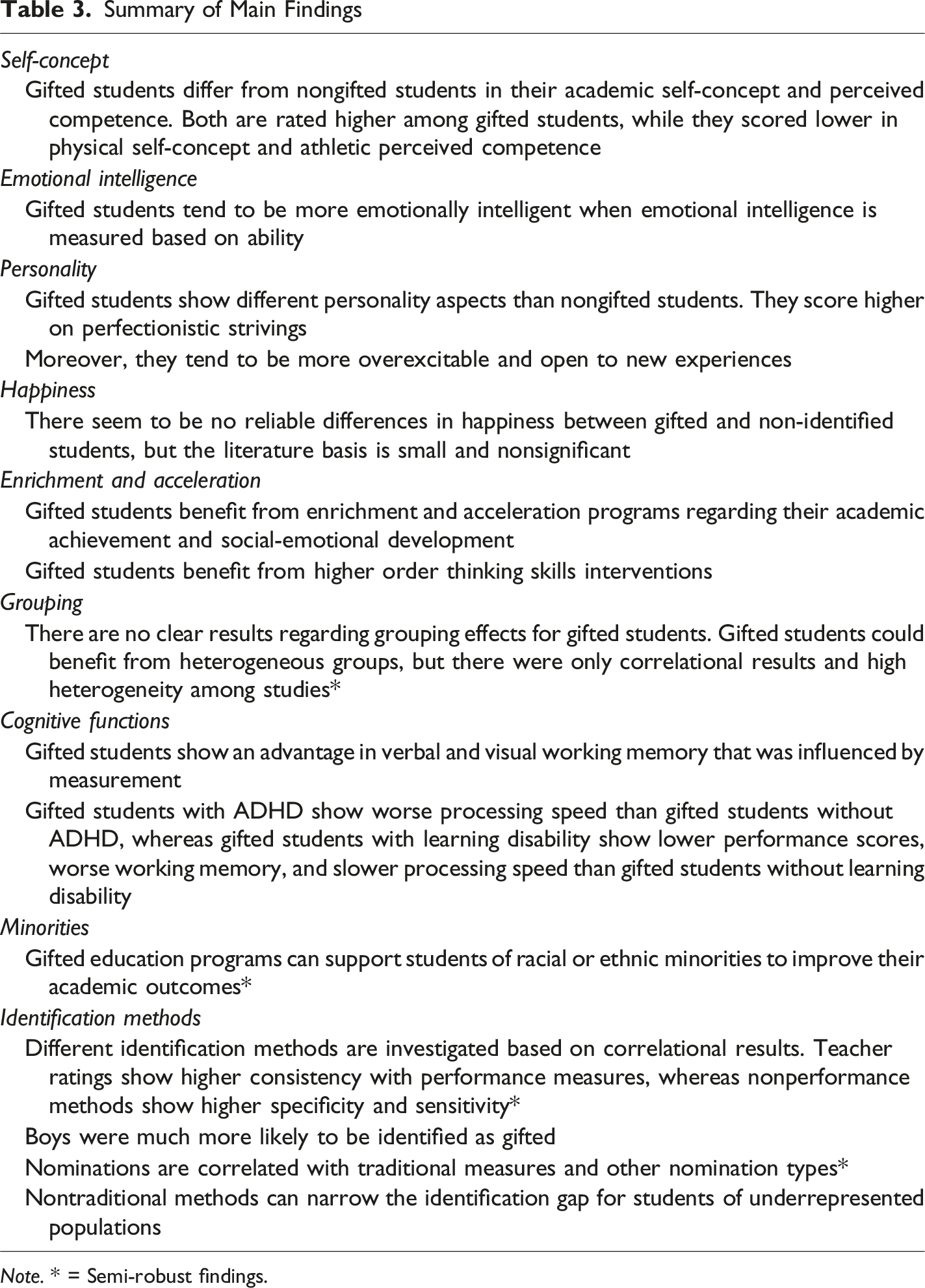
Note. * = Semi-robust findings.
A scoping review allows one to review which topics have already been investigated (Arksey & O’Malley, 2005). Also, it makes it possible to identify areas that have been little or not at all researched (Levac et al., 2010). Tannenbaum’s (1986) sea star model or its derivates, such as the DMGT (Gagné, 2020) or the Munich model of giftedness (Heller et al., 2005), posit that talent and giftedness arise from the interaction of different factors. In the sea star model, those are general ability, specific aptitude, non-intellective traits, environmental influences, and chance. When considering Table 3 through this lens, key components of the model are already addressed in the meta-analyses. The Cognitive Processing cluster and the Achievement cluster can be seen as an operationalization of the general ability and particular aptitude postulated in the sea star model. Non-intellectual prerequisites are broadly covered in the meta-analyses by the Trait and PSE clusters. On the other hand, the role of chance has not yet been systematically researched.
Giftedness is a concept that has stimulated the proliferation of numerous and diverse models (Sternberg & Ambrose, 2020). Fortunately, meta-analyses already exist on important model components that appear frequently, particularly in significant models. One example is creativity, which plays a crucial role in Renzulli’s (1986) three-ring model, among others. In contrast, surprisingly little attention has been paid in the meta-analyses to another ring of Renzulli’s model, task commitment (and related motivational constructs). This omission is surprising, as motivation is essential in other important models and there are many empirical studies on the subject. One could list other constructs that play an essential role in giftedness and talent models, but no meta-analyses are available. Examples include wisdom (Sternberg, 2005), cultural capital (Ziegler et al., 2017), and self-regulated learning (Fischer et al., 2021). At this point, we would like to call on colleagues who have designed these models or worked with them to provide their central constructs with a solid empirical basis through primary and secondary studies.
If we look at the populations examined in the meta-analyses, we find the aforementioned massive overrepresentation of privileged Western subjects (Henrich et al., 2010). It is, therefore, impossible to transfer the robust (and, to a limited extent, the semi-robust) findings to other countries and cultures. The same limitation applies to historically underserved groups. Although they are considered in the meta-analyses to some degree (Oğurlu, 2020b; Woo et al., 2017), there are many more groups affected by excellence gaps in various forms (Meyer et al., 2024). One example is the numerous 2e populations.
The lack of meta-analyses on the environment, considered important in the sea star model and its successors, and other models such as the three-ring model, the WICS model, or systemic approaches, is striking. Similarly, we have no meta-analyses of the dynamic interaction between the individual and the environment postulated in many models (Dai, 2023; Ziegler & Stoeger, 2017).
Finally, we want to point out that establishing a solid empirical basis for giftedness and talent development research does not necessarily have to take the form of meta-analyses. Their results, like all scientific results, must be viewed critically. Known problems are the reproducibility of the effect sizes or the flexibility in inclusion criteria when performing a meta-analysis (Lakens et al., 2016). In addition, further criticism arises from the specific topic of a meta-analysis. We have listed several criticisms of meta-analyses on giftedness and talent development, including the not-insignificant problem of the different operationalization of giftedness and talent in selecting study participants. Thus, meta-analyses on giftedness and talent development should be complemented by other forms of meta-research (Ioannidis, 2018).
Conclusion
The list of semi-robust and robust findings in Table 3 is the first attempt to establish evidence-based gifted education and talent development, as it clarifies where the field can build with confidence and where further foundational work is needed. Given the limitations mentioned above (e.g., samples, operationalizations), our work can be no more than a preliminary mosaic piece within emerging meta-research on giftedness and talent development. We would thus like to draw attention to the constructive discussion on replication research in gifted education initiated by Makel and Plucker (2015; Plucker & Makel, 2021) and hope that more colleagues will join in the project of meta-research on giftedness and talent development. Such efforts are vital for strengthening the empirical foundation of talent development research by synthesizing scattered findings, identifying consistent patterns, and revealing gaps in knowledge. They help advance the field by uncovering blind spots and informing future research directions.
Footnotes

Funding
The author(s) disclosed receipt of the following financial support for the research, authorship, and/or publication of this article: The review of the present paper was funded by the German Federal Ministry of Education and Research (16DWMQP02A, 16DWMQP02B).
Declaration of conflicting interests
The author(s) declared no potential conflicts of interest with respect to the research, authorship, and/or publication of this article.