




Abstract
This article provides a strategy developed for teachers in the Netherlands who participated in a 2-year course to become specialists in twice-exceptional learners. They were taught to use the Systemic Support Program for designing customized interventions for twice-exceptional learners. The aims guiding this research were to develop a better understanding of how teachers experienced the use of the Systemic Support Program and if that increased their success. To address the research aims, 78 teacher created videos presented their case studies and reflected on their competency development were analyzed. Teachers considered themselves able to design tailored interventions and enhanced their chances for success by using the strategy. The rigorous instruction and coaching sessions during their learning process were seen as significant contributors to their success.
Keywords
This article provides research into a strategy developed for teachers in the Netherlands who participated in a 2-year course to become specialists in twice-exceptional (2e) learners.
1
In its first year, the program focused on building a theoretical basis for educating 2e learners and developing a change- and solution-focused attitude for customized interventions. During the second year, teachers developed more in-depth knowledge of 2e learners. They were taught to use the Systemic Support Program (SSP) for designing customized interventions for 2e learners. This strategy was developed in 2013 and is based on a change- and solution-focused approach with origins in positive psychology. The SSP is divided into two phases: the systemic exploration (SE) followed by the phase of systemic intervention (SI) (see Figure 1). Flow chart of the systemic support program.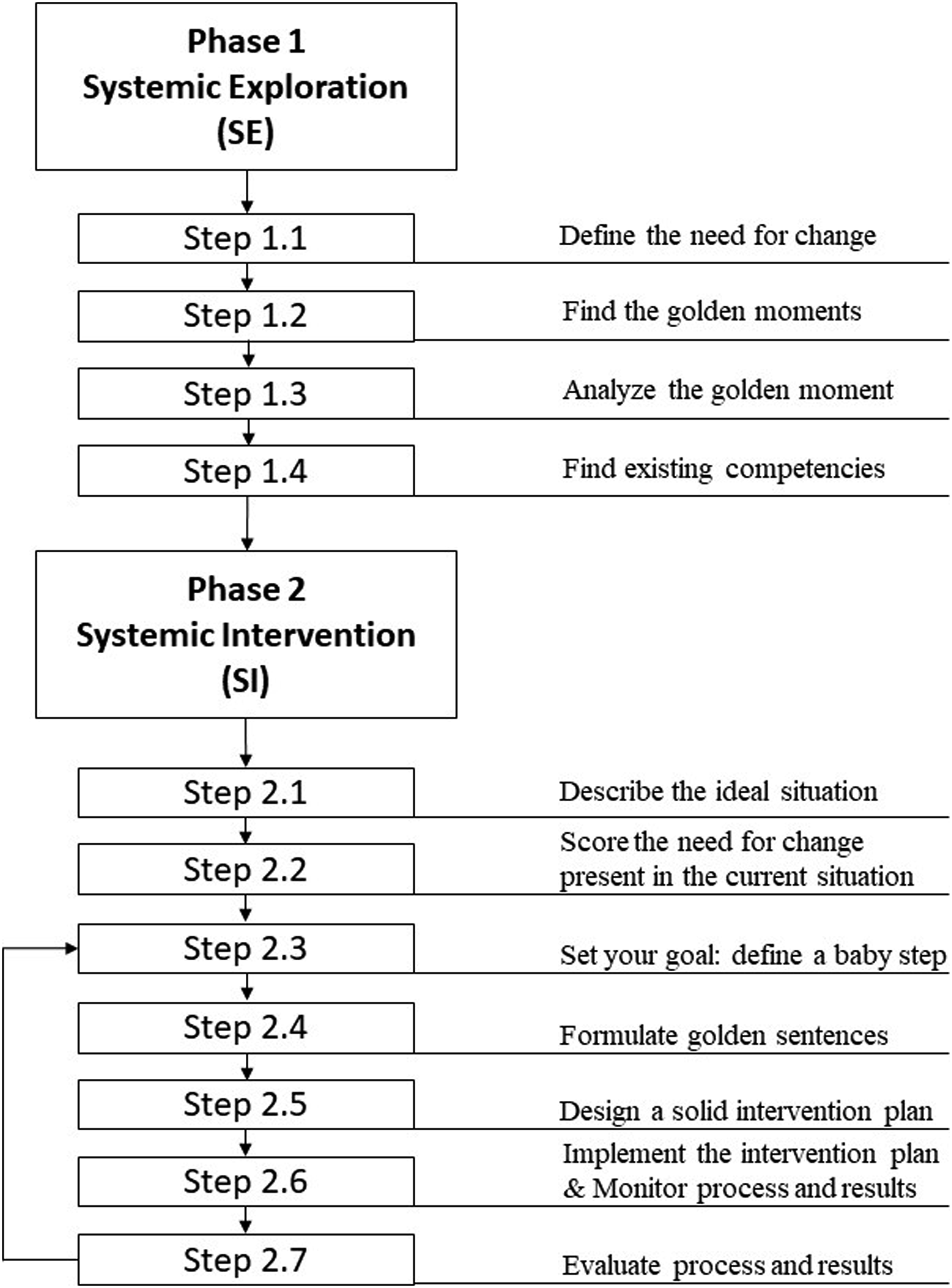
Because the course is up for major revision in 2024 it was decided that the use and effectiveness of the SSP should be evaluated. The central questions guiding this research were to develop a better understanding of (a) how participating teachers experienced the use of the SSP and (b) if from their perspective the use of the SSP increased their success in addressing the needs of 2e learners.
Background
Scientific research shows that there are no universal interventions suitable for all twice-exceptional learners (2e learners) (Foley-Nicpon & Chandler, 2018; Maddocks, 2020; Neihart, 2008; Schultz, 2012; Webb et al., 2016; Willart-Holt et al., 2013). These studies all emphasize the uniqueness of individual learner profiles and therefore advise customizing interventions as a response to their educational needs (Ronksley-Pavia, 2015). During in-service professional learning programs, focusing on 2e learners, participating Dutch primary school teachers indicate that they would like to tailor interventions, but struggle with how to do this effectively. They reported that educating 2e learners is extremely intensive, and they are reluctant to use strategies in which they consider themselves insufficiently competent. Their learning questions focused on how to work with gifted learners with learning disabilities (LD), gifted learners with developmental disorders (DD), and gifted learners who were not diagnosed otherwise but were displaying difficulties in applying executive skills (ES/NOD).
Definitions
Twice-exceptional learners have heterogeneous profiles requiring flexibility when developing intervention plans that appropriately support their needs (Schultz, 2012). For teachers to be able to design customized interventions, they need a clear understanding of 2e learners who would need an approach matching their needs. Also, both giftedness and disability are concepts that should be considered in their socio-cultural context (Ronksley-Pavia, 2015; Sternberg & Zhang, 1995).
Giftedness
For the purposes of this article, the description of giftedness refers to a learner’s developmental potential in the intellectual domain (Gagné, 2010; Subotnik et al., 2017). According to Gagné (2010), these learners have a high IQ (>120, 1.3 SD above average). They appear to have a longer attention span, a higher ability to concentrate, and a facility with abstraction, analytical thinking, and complexity of thought (Lovecky, 2004). They can excel in one or more academic domains; they can learn at a faster pace and achieve high results.
Disability Constructs
There are also many conceptions of “disability” (Ronksley-Pavia, 2015). A disability refers to a situation where an individual has a physical or mental impairment (caused by neuro-biological causes) that substantially limits them from participating in one or more major life activities (Americans with Disabilities Act, 1990). In a more current interpretation, the meaning of disability is perceived more as a non-static condition that varies under different circumstances and in different contexts (Ronksley-Pavia, 2015). Although the notion of disability is a broad concept that includes many different aspects and that these aspects affect not only education but life in general, this article focuses on teachers educating 2e learners in the Dutch educational context.
Twice-Exceptionality
Twice-exceptionality is a holistic concept referring to a situation where two exceptionalities (giftedness and a disability) coincide and interact. However, neither giftedness nor disability are homogeneous concepts. Ecological factors influence how these coinciding and interacting exceptionalities create barriers and chances for development and functioning (Baum & Schader, 2020; Trail, 2022). For this article, twice-exceptionality is defined as a long-term observation of a learner displaying traits of giftedness coinciding and interacting with the symptoms of a learning or developmental disability. Reis et al. (2014) described how an adequate definition of twice-exceptionality should include symptoms of the specific exceptionality as this provides opportunities to tune into the learner’s educational needs.
Mis- and Missed-Diagnoses
For more than 30 years, it has been observed that giftedness and an LD/DD can mask each other as giftedness can compensate for the LD/DD (Baum, 1989; Hughes, 2011; Maddocks, 2018; Webb et al., 2016). LD/DD can mask giftedness as well as setting a teacher’s focus on the LD/DD without realizing that the learner might be very talented in the domains that are not affected by the LD/DD. The third option is that giftedness and the LD/DD can mask each other simultaneously and, therefore, both exceptionalities risk not being discovered even though the student may appear to be a struggling learner.
In addition, cognitively gifted learners are assumed to be high achievers in all academic subjects. Rather, individual differences in intelligence profiles will show relative strengths and weaknesses in actual academic achievements (Atmaca & Balogu, 2022; Brody & Mills, 1997; Gelbar et al., 2022; Maddocks, 2020; McCallum et al., 2013; Webb et al., 2016).
Based on clinical experiences, de Bruin-de Boer (2004) described how sometimes disappointing results are attributed to motivational problems and underachievement rather than to a LD/DD. If teachers attribute their learner’s lack of development and performance to underachievement, educational interventions are likely to be aimed at addressing underachievement instead of an underlying learning difficulty or disability.
Optimizing Interventions
In the Netherlands, we optimize interventions using four elements: (a) stimulation, (b) compensation, (c) remediation, and (d) exemption (StiCoREx) (Schultz, 2012; van Groenesteijn et al., 2011) (see Figure 1). Stimulation primarily aims to allow the learner’s talent to develop (Baum & Schader, 2020). Compensation can be divided into compensation through ecological support and compensation achieved by using the learner’s developmental potential. The third element is remediation. Teachers should address gaps in the learner’s competencies, while also taking into consideration the characteristics of gifted learners (Besnoy et al., 2015; Foley-Nicpon & Chandler, 2018; Neihart, 2008; Pereles et al., 2009). The final component is exemption. Exemption involves releasing the learner, temporarily or otherwise, from the obligation to perform specific tasks because the persistence of the LD/DD creates a barrier the learner is currently not able to overcome. Using the elements of StiCoREx creates a first opportunity to indicate if it is likely that the learner’s observed difficulties are resistant to remediation. Figure 2 illustrates the StiCoREx process. The parallel process of StiCoREx.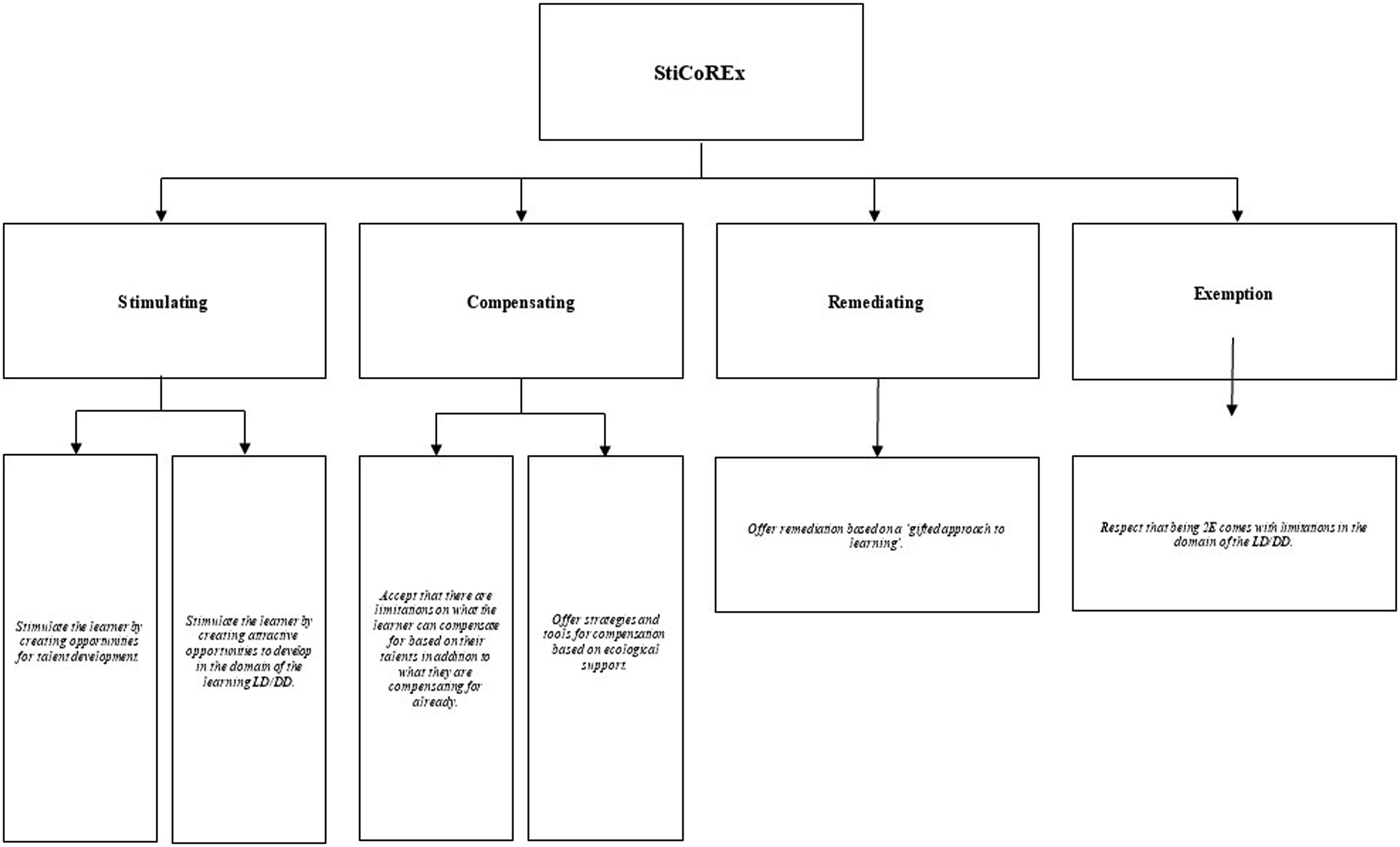
Systemic Support Program
The Systemic Support Program (SSP) addressed the need for tailoring appropriate interventions for 2e learners in their regular classrooms. SSP is based on a combination of three proven strategies: (a) the systemic approach; (b) response to intervention (RtI); and (c) the solution-focused approach. In addition, the SSP moves towards an approach led by the learner’s potential and identifying those educational barriers from keeping the learner from reaching their potential.
Since developing a learner’s potential is an important element in the SSP, the term potential was used, rather than strength. The term weakness was replaced by barriers within the SSP. Barriers to learning are raised by the interplay between the learner’s traits and their ecological system. Considering the terms potential and barriers opened the door, the ecological system accepted that barriers were created by the learner’s environment. Learning how to cope with these barriers, or even eliminating them, was a joint venture among all the educational partners in the SSP.
Systemic Approach
Learners are part of a wider ecological system (Bronfenbrenner, 1979; van Gerven, 2021; Ziegler & Stoeger, 2017) in which the actors and factors can be distinguished (see Figure 3). Actors refer to actual people (i.e., learner, teacher, family/caregivers). Factors refer to circumstances and resources used by the actors (i.e., curriculum and learning environment). The quality of the interaction between the (f)actors determines the outcome of the learner’s educational learning process (Ziegler & Stoeger, 2017). An educational partnership between the actors was paramount in developing an effective intervention program (Pameijer, 2017; van Meersbergen & de Vries, 2017). The learner's ecological system.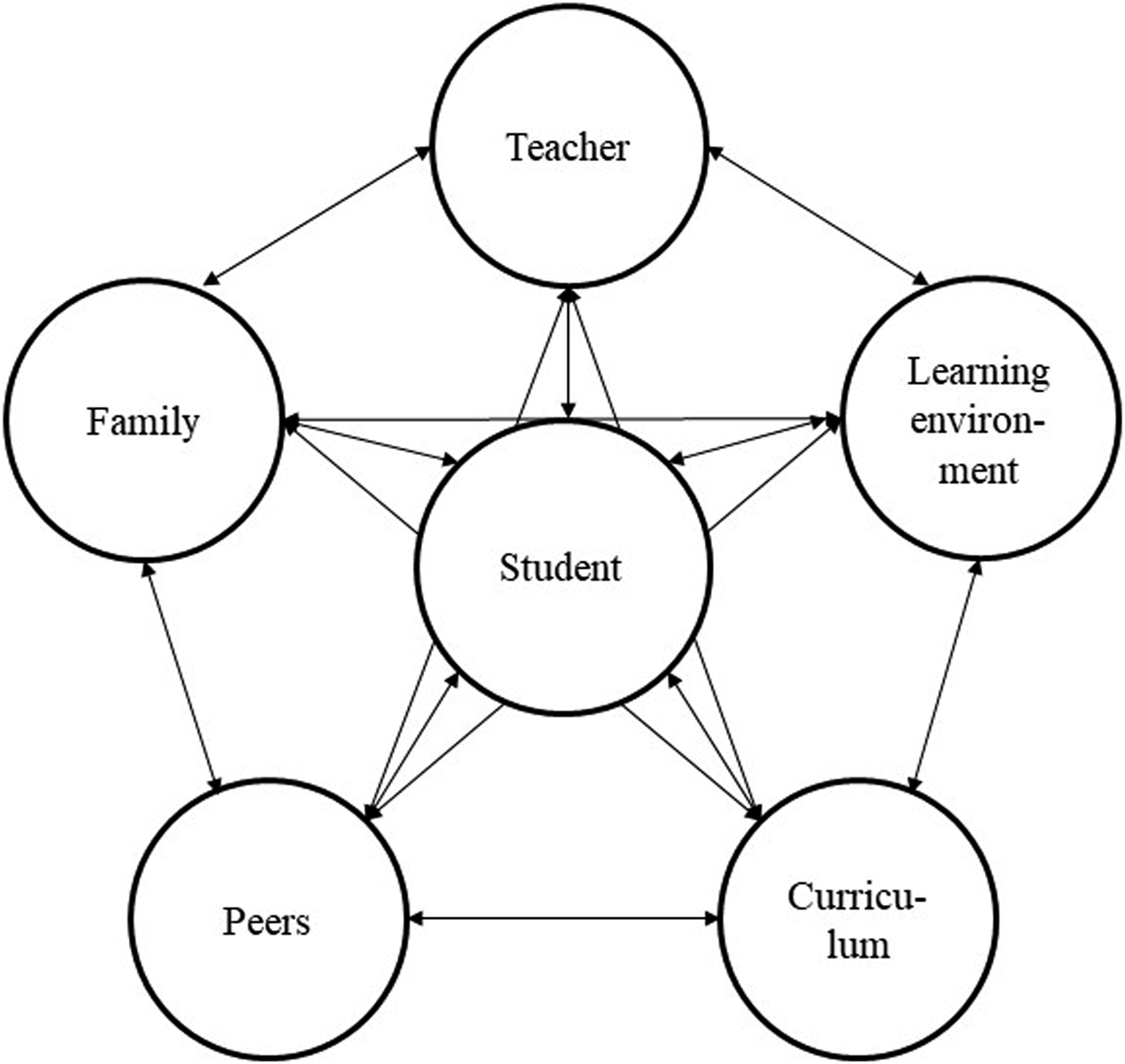
Response to Intervention
Response to Intervention (RtI) aims to improve the quality of education and support for all students (Coleman & Johnsen, 2011; Pereles et al., 2009; van Meersbergen & de Vries, 2017). Educational needs transcend curricular goals concerning the interplay of the factors impacting a learner’s developmental process. RtI assumes educators and stakeholders use a positive approach and seek opportunities for improvement (Pameijer & Van Beukering, 2007). When plannig for a potential 2e learner, care must be taken to avoid shifting the emphasis to the disability or disregarding the pupil’s giftedness (Fugate, 2020; Ronksley-Pavia, 2015).
The Solution-Focused Approach
The solution-focused approach intends to improve the current situation and addresses the need for change (Cauffman & van Dijk, 2009; De Shazer et al., 2012), including thinking about opportunities and possibilities—recognizing that a problem is not always present (Mahlberg & Sjöblom, 2008). Using strategies to optimize a learner’s functioning, indicates a need for change is not required or less severe (van Swet, 2009). By recognizing and analyzing these positive situations and comparing them with problematic moments, one can discover the influence of the ecological (f)actors in the positive situation. The results of this exploration can be used for designing interventions. Implementing a new approach, such as the solution-focused approach, is like a new routine and considered part of the learning process (Cauffman & van Dijk, 2009; De Shazer et al., 2012).
Implementing the Systemic Support Program
The Systemic Support Program (SSP) consists of two phases—Systemic Exploration (SE) and Systemic Intervention (SI) (see Figure 1). During SE teachers explore the current situation and the stipulated need for change. SI uses the results from exploration to design interventions that match the individual learner’s needs.
Systemic Exploration
The SE focuses on exploring the need for change in four major steps outlined in Figure 1. This need is experienced and defined by the educational partners and dependent on issues that to be addressed, which vary from learner outcomes to the development of different behaviors (In Coleman & Johnsen, 2011; Pameijer & Van Beukering, 2007; Pereles et al., 2009; van Meersbergen & de Vries, 2017). Questions that need to be addressed in Step 1.1 include: What do we want to change? Why do we consider this important? Why is this goal an improvement regarding the need for change? In Step 1.2, once the partners have decided upon the change, they explore when that need for change is less severe or not occurring. In the SSP, these moments are referred to as golden moments. In Step 1.3, the golden moments are analyzed and related to theory and practice. Step 1.4 asks the teacher to identify the differences between the stated need for change and the golden moments. This step illustrates when competencies for supporting the need for change already exist.
Systemic Intervention
In the next phase, the focus shifts from exploring the situation needing change to developing interventions that address the identified need(s). Teachers use theoretical resources and StiCoREx elements to find suggestions for possible interventions (see Figure 2). In Step 2.1 of the SI, educational partners describe the objective for change in terms of an ideal situation (Cauffman & van Dijk, 2009; De Shazer et al., 2012) as their starting point. In Step 2.2, the educational partners rate the need for change in the current situation using a scale from 1–10 and providing a description for their score choice. In Step 2.3, they aim to increase the existing score by the smallest step you can take tomorrow. The goal of this step should be described as concretely as possible. In Step 2.4, the educational partners express what they think would improve the situations by stating “I think things would go better if. . .” In a golden sentence the partners state what they can contribute to the interventions to be designed. Criteria for golden sentences are that the intended action can be sustained over eight weeks with the described intensity and time, using competencies that were observed during the golden moments. In Step 2.5 these golden sentences aid in designing a solid intervention plan. All educational partners contribute to the intervention plan and take ownership of their contribution, while their combined actions aim to address the jointly agreed upon objectives. In Step 2.6, the intervention plan is set in motion and the teacher monitors the process and results. These data are necessary to analyze how the success of the individual interventions. In Step 2.7, the data gathered during the implementation of the intervention plan is reviewed.
Method
The evaluation of the Systemic Support Program was approached as a multiple-case study (Bryman, 2012; Ritchie et al., 2014). The central research questions were designed to develop a better understanding of how participating teachers experienced using the SSP and if the SSP increased their success in addressing the needs of 2e learners. At the start of the evaluation process, the teachers consented to include their action research in this study. 2
Participants
The Educational Context of the Participating Teachers.
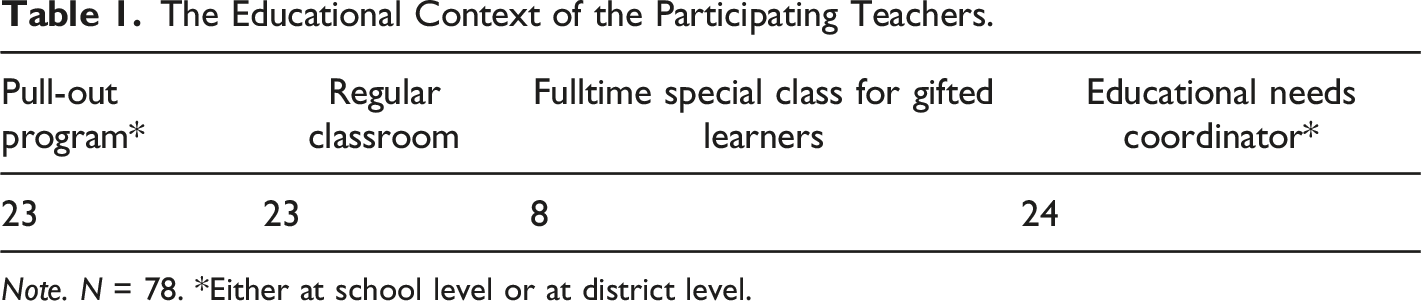
Note. N = 78. *Either at school level or at district level.
The Case Study Assignment
The primary year two assignment in the course was for each teacher to use the SSP for an individual case study while working with a 2e learner. The learner and the teacher had experienced a need for change regarding their current educational situation. All parents gave permission for their child to be the subject of a case study. Also, parent participation in the SSP process was mandatory.
Teachers were taught how to use the SSP (see Figure 4). After each instructional session, teachers applied the theory to practice. Using a template, they reported on their results as a start for their coaching sessions. The instructors provided a written “feedforward” (Hattie, 2013; William, 2011), which was discussed with the participating teachers during their individual coaching sessions. Feedforward included: (a) feedback; (b) the perspective on the teachers' zone of proximal development; and (c) feed-up for revisions. During the 10-year cycle of the course, the procedure for providing written feedforward remained consistent. Two instructors independently assessed each sub-report. Before providing the written feedforward, both instructors discussed their observations and wrote the feedforward jointly. During the coaching sessions, the instructors observed participating teachers increasing competencies. The instructors described, “seeing them getting a grip on the process and succeeding in designing effective interventions almost felt as a personal success to me” (personal communication, June 6, 2023). These observations encouraged the instructors’ ongoing investment in the teachers. Instruction protocol for the SSP.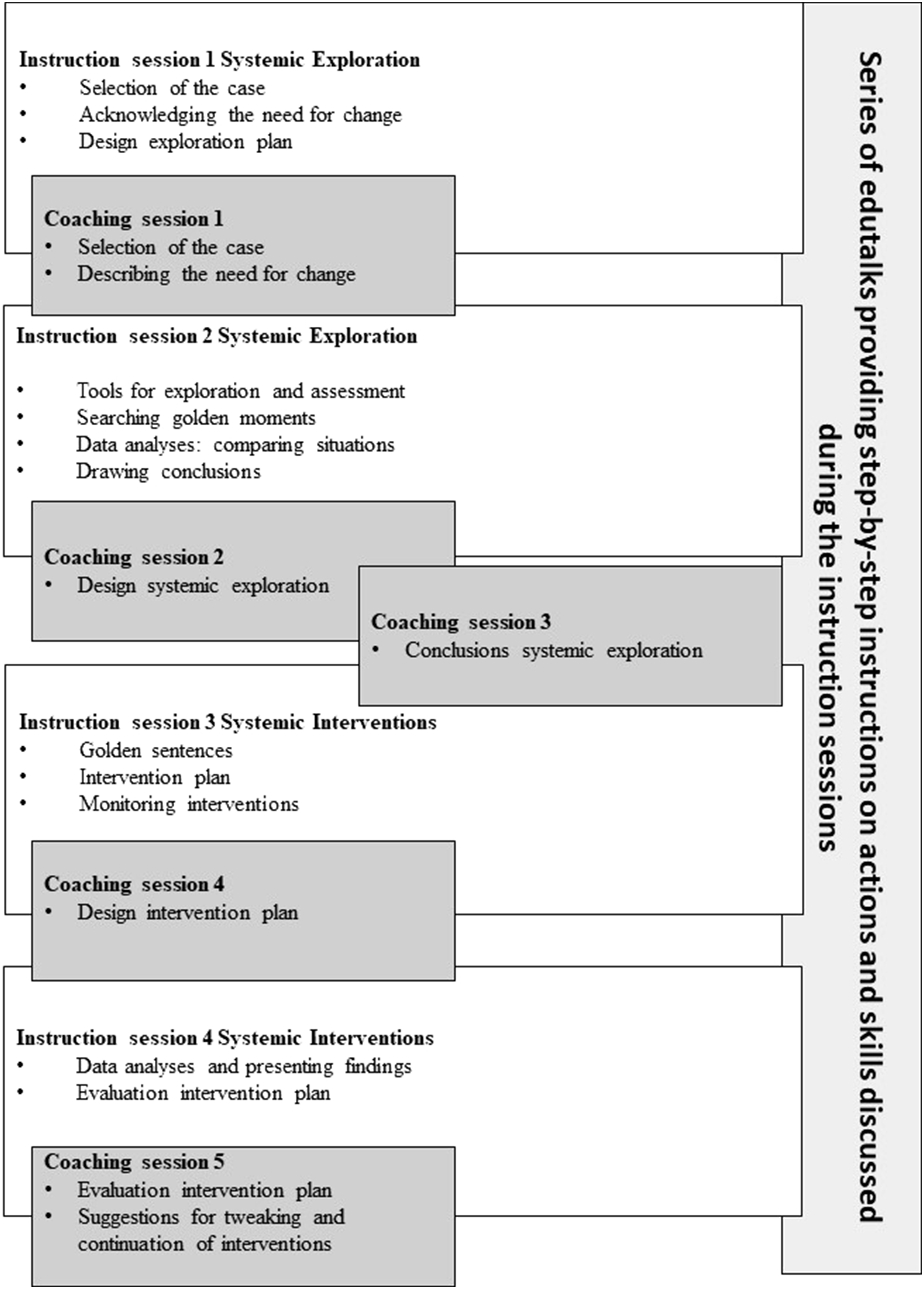
Case Study Reports
Teachers reported their results in a 7-min video structured as a PechaKucha, a video containing 20 slides combined with a voice-over explaining the case study. This method of data collection was selected as it provided a brief and attractive way for teachers to share their cases with their management, coworkers, and parent participants. The video showcased the SSP, while at the same time reported case study results.
There were six mandatory topics to address in the PechaKucha (see Figure 5). Teachers had the latitude to decide the elements used in their videos and the depth the video documented the process and results. Consequently, the quality and details of the collected data varied per report.
3
Still, as the sequence of the slides in all videos was similar and each video was the same length, it is unlikely that these differences affected the credibility of the collected data. Mandatory elements of the PechaKucha.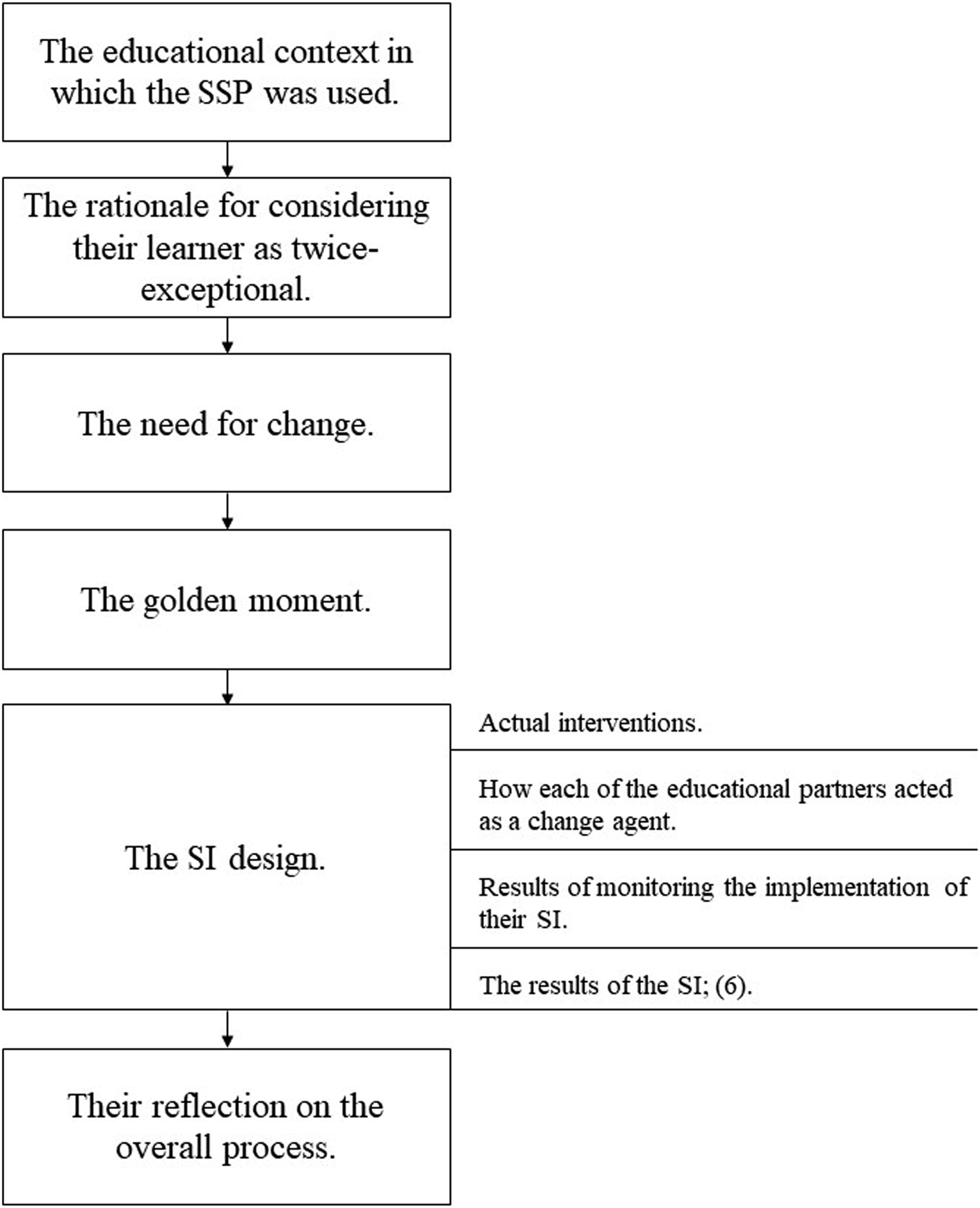
Data Management and Analyses
Evaluation Flowchart.
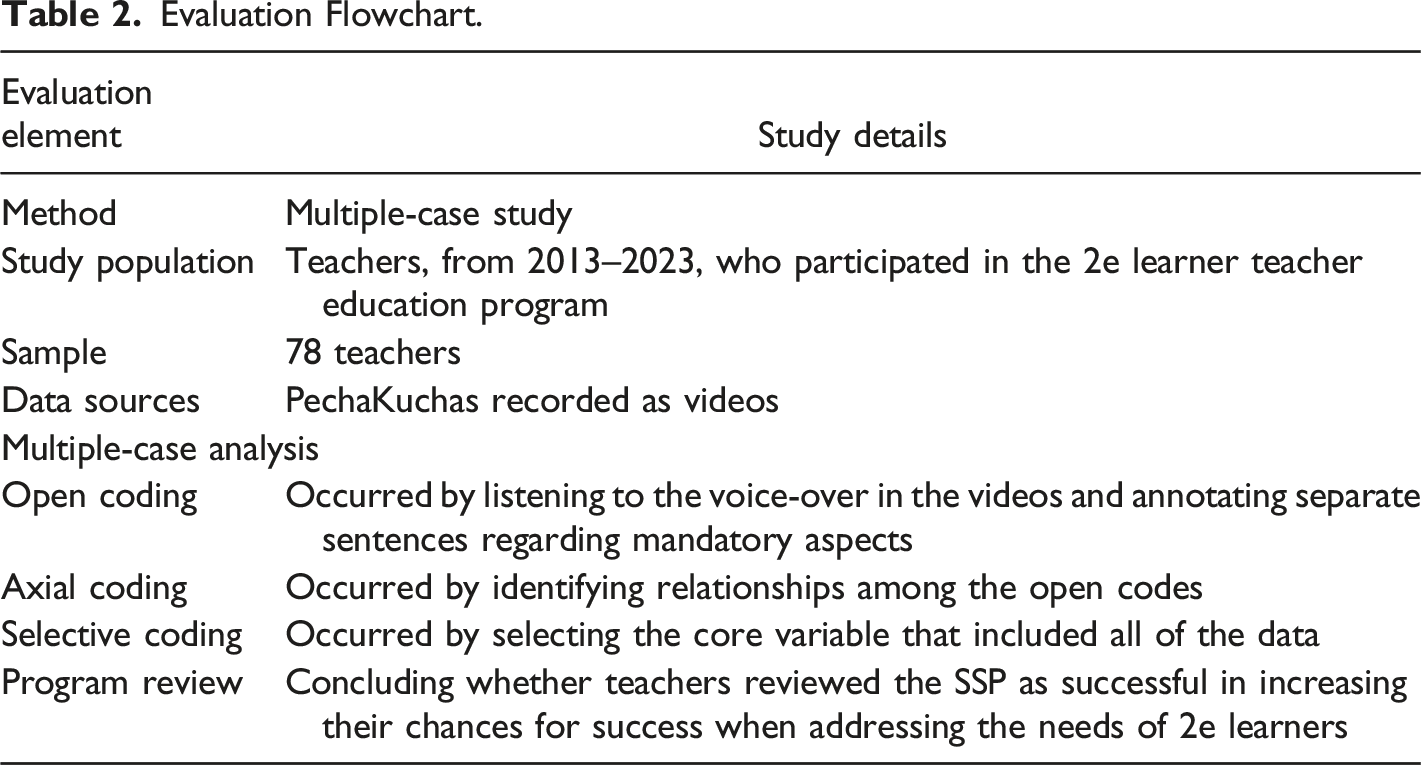
During selective coding, the coherence among data became clear. Categories and codes with not enough supporting data were removed. Data were divided into categories A and B. Category A provided data about the individual case studies. These data contributed to a better understanding of successful elements when the SSP was used to customize interventions for 2e learners. Category B provided data regarding the teachers' reflections on whether they experienced an increase in their competencies in working with 2e learners and how working with the SSP contributed to that development. Data were summarized to review the entire SSP process and its effectiveness in educational practice.
Limitations
The results of this review study applied to a particular population of teachers who were instructed to use the SSP in specific circumstances (Lewis et al., 2014). Between 2013 and February 2020, the instructional sessions were provided in an in-person context. The restrictions during the pandemic, between February 2020 and June 2023, moved the instructional process to online sessions. The instructional sessions were consistent across online and face-to-face formats. The coaching sessions changed from in-person, small study groups to individual coaching sessions online due to COVID restrictions. No teacher participated in both the in-person and the online settings, so no opportunity to compare both experiences was available. The learning process did not indicate differences in the teacher grades for their case study reports. Therefore, we cannot draw any conclusions due to changes in the instructional process.
The teachers on their competency development in the PechaKucha. During coaching sessions, the two instructors took notes about the participating teachers' progress, which are included in the individual’s personal files. Over the entirety of the course, teachers had three opportunities to self-assess their competencies in developing customized interventions for the 2e learners. Each self-assessment was combined with a criterion-based interview regarding their development. These files were sealed once the teachers graduated. They gave permission to use their PechaKucha for this study, but they did not permit the use of the personal notes or their individual assessment documents. Although possibly beneficial to the research, this information was excluded on ethical grounds.
Two teacher educators developed the SSP and the instructional process for its use, including the author of this article. During the 10 years in which data were collected, there was a team of three teacher educators who acted as lead instructors for the course. For each cohort of participants, two of the teacher educators provided the instruction and led the coaching sessions. The third member assessed all student results independently.
Two team members reviewed the effectiveness of the SSP, which was only one part of the evaluation for the entire two-year course for specialists in 2e learners. During that evaluation, the use of the SSP became its own topic for additional review. To avoid conflict of interest concerns, additional safeguards were put in place. One team member interviewed a random selection of former participating teachers about using the SSP. The summarized interviews were verified by these teachers and supported the findings reported in this article.
Findings
Selecting the Learner for the Case Study
The teachers' rationale for selecting their 2e student was a mandatory element in the PechaKucha. When a classifying diagnosis was not available, both the observed characteristics of giftedness and the symptoms of an LD/DD had to be described. Different characteristics of giftedness were mentioned, but notable similarities emerged: all selected learners were characterized as being creative thinkers, good problem solvers, and investigative learners, having specific interests, being verbally advanced, and having a strong need for autonomy. Academic achievement was reported in at least one subject and scoring in the top 10% of their classmates.
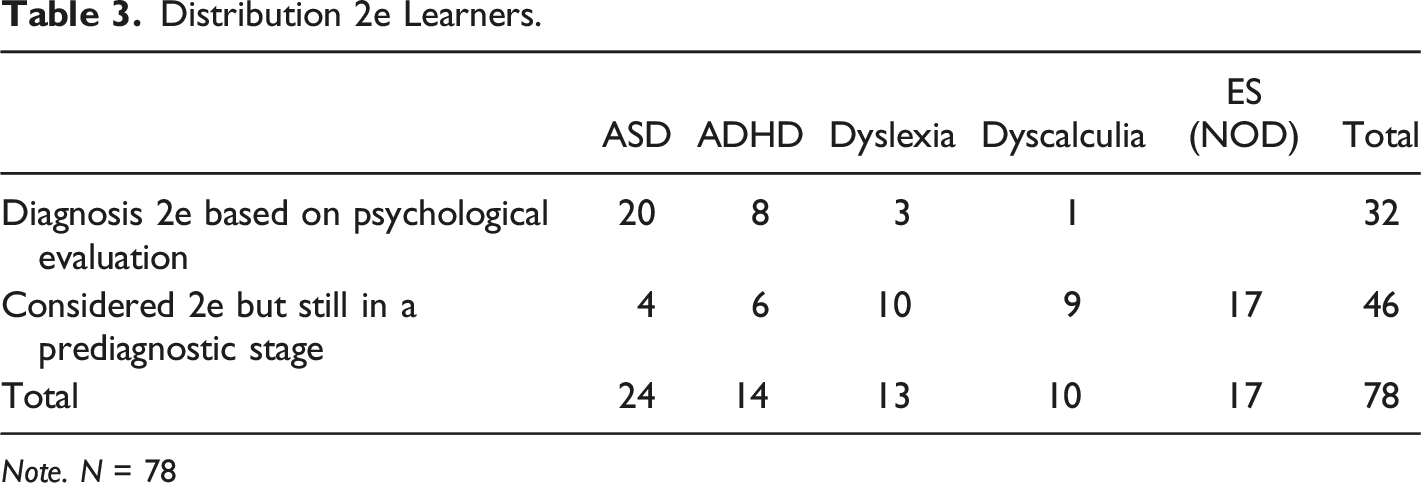
Distribution 2e Learners.
Note. N = 78
Almost a third of the case studies focused on 2e learners identified as gifted and diagnosed with Autism Spectrum Disorder (ASD). Teachers considered using the SSP as an opportunity to better meet learners' educational needs more meaningfully based on the advice presented in the psychological evaluation reports.
The number of learners (19) considered to be gifted and displaying symptoms of an LD (dyslexia/dyscalculia) without a classifying diagnosis is of note. For learners in a prediagnostic stage, teachers reported that although characteristics of giftedness were observed, the learner’s academic results lagged. Specific structural difficulties were observed for reading/spelling or math, which were previously considered a symptom of underachievement. These findings aligned with de Bruin-de Boer’s (2004) suggestion that the lack of achievement for 2e learners displaying symptoms of LD is often explained by the assumption that the learner was an underachiever. Using the SSP allowed teachers to determine the extent the observed difficulties could be considered resistant to remediation.
Discovering a (Rephrased) Need for Change
At the start of the Exploration phase, the educational partners described four areas in which they found a need for change. In all cases, the first thing to be addressed was learners' emotional outbursts of frustration; however, the descriptions of the frustrations differed for each case. The second change was a need for learners to better understand how their gifted traits and LD/DD barriers might interact. Third, educational partners wanted to address the suspected or diagnosed disability. The learners prioritized overcoming their LD more than any other need for change. Finally, the adult educational partners wanted to address learners' struggling to use effective executive skills. Notably, none of the cases indicated the original need for change did not stem from addressing the learner’s giftedness.
The need for change was explored by describing how each (f)actor in the ecological system influenced the learner’s barriers to learning. Although focusing first on what was problematic brings with it the risk of a deficit-oriented approach, an phenomenon reported by the teachers in this study (Baum et al., 2017; Fugate, 2020; Speirs Neumeister et al., 2013). The teachers described a growing awareness among the educational partners of what contributed to barriers, while simultaneously excluding a response to the learner’s extraordinary talents in the original need for change. This understanding created shifts in the defined needs for change, steering away from the deficit-oriented approach. A teacher stated, “When looking for golden moments, we all realized that there were not only problems but also successes.”
Recognizing the Golden Moments
All teachers experienced difficulties in identifying golden moments. The educational partners were initially focused on the problems. By framing the need for change to specific moments and searching for golden moments, they became aware that the observed difficulties were not always present but were connected to specific moments and circumstances. A teacher reported, Over the last two years, we all got used to my learner being angry and difficult, and we all had problems dealing with this situation. As a result, we could only think of my learner in negative language. Looking for the golden moments forced us to see this child from a positive perspective. And one morning, for the first time in two years, I found myself enjoying him as I realized that he responded with a big smile to something simple as winking at him during a group conversation. That was the biggest treasure I had found in years.
Once the need for change was framed and described, the educational partners realized that the golden moments might be found in situations when the learner’s potential was included and addressed during the learning process. Recognizing that the competencies needed for change were already apparent during golden moments increased the partners' confidence that an improvement in the situation was possible. A teacher noted, “Finding the golden moments motivates all educational partners because the golden moments hold a promise for the future.” A systematic comparison between both situations provided strategies on how to achieve improvements when addressing the learner’s abilities and barriers to learning equally.
The Systemic Exploration as Independent Intervention.
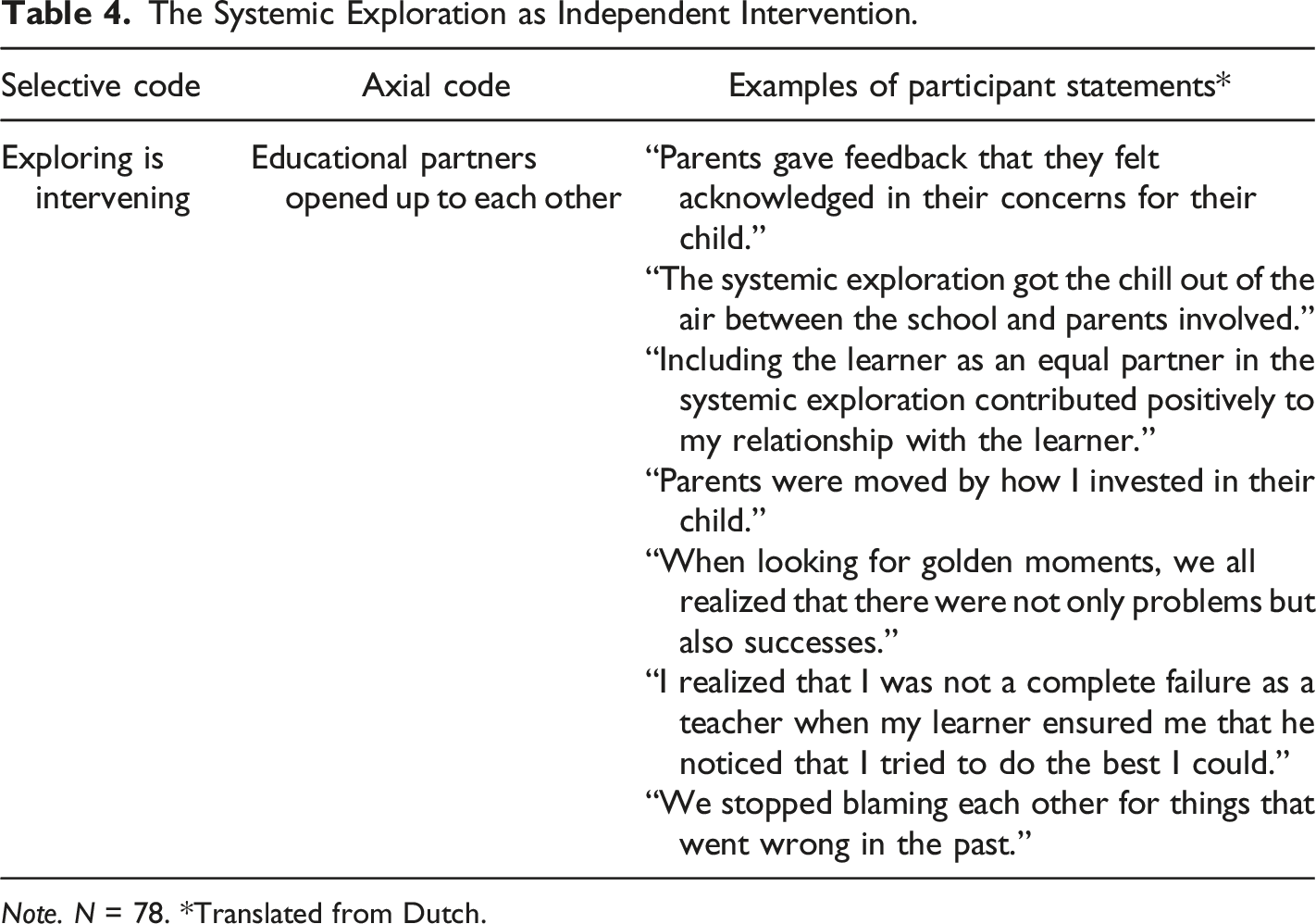
Note. N = 78. *Translated from Dutch.
Interventions
There were no identical interventions; they were tailored to individual situations, using the unique opportunities and realistic boundaries. In the PechaKuchas, the four elements of StiCoREx were recognizable. Similarities were noted in the teachers' intervention reflections. Without exception, the teachers tended to fall back on their original deficit-based need for change, stating it matched the regular practice in their educational context. The educational partners also focused on the deficit need.
In the first draft of their designs, stimulation, compensation, and remediation were mainly aimed at addressing the disability. Exemptions were not included in their first interventions. Teachers experienced difficulties focusing on the rephrased need for change. They explained that they needed a pre-scheduled moment for reflection on their actions. We started to use the question “where is giftedness in this design?” in these moments of reflection, which proved to be the actual game changer. This question forced the teachers to alter their designs by creating structural opportunities to stimulate their learner’s talents. A teacher “. . . found it difficult to let go of my old habits. Sometimes it felt as if you used a crowbar to achieve that change. I did not like that, but I needed it.”
Educational Partners as Change Agents
Involving the Educational Partners.
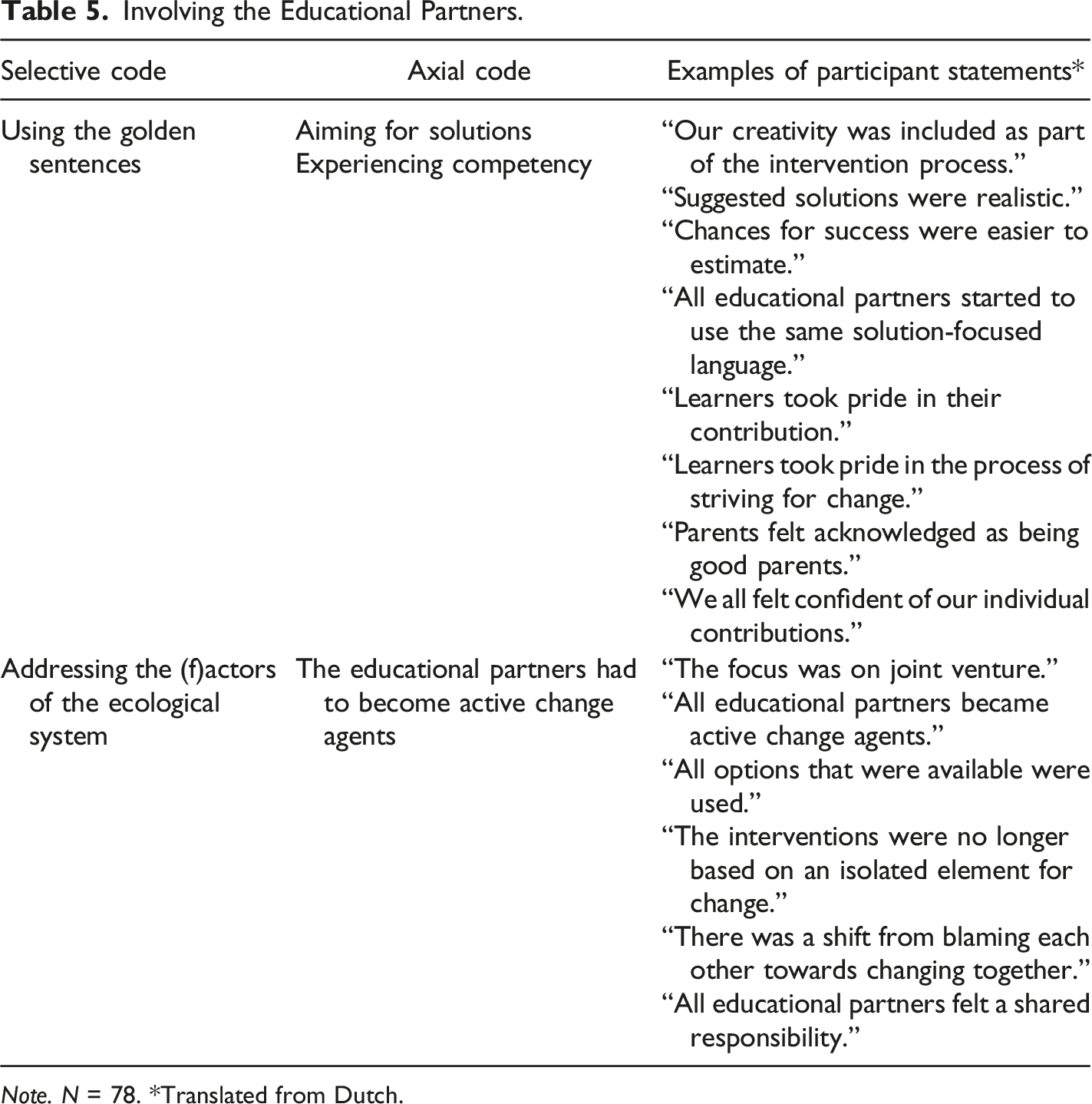
Note. N = 78. *Translated from Dutch.
Monitoring the Process
Monitoring the process of intervening had not been part of the teachers previous habits. Now, teachers and learners collaborated in designing strategies for monitoring. Having learners monitor the process ignited a sense of responsibility among all educational partners to strive for success, as they did not want to fail the child.
The monitoring process provided the teachers with a better understanding of what contributed to the success of their interventions and how perseverance was of the essence. A significant difference between previous interventions and their case study included new interventions applied for a minimum of 6–8 weeks. After this first period, all educational partners adjusted to the new approaches and difficulties in persevering during the interventions decreased and made a difference in enhancing success.
Eighteen percent of the cases designed interventions which could not be continued as rigorously as planned due a learner’s or a teacher’s illness and/or major life events for one or more educational partner. Original time frames had to be extended or interventions were reduced as the available amount of time to invest was decreased by these circumstances (e.g., during the national lockdowns due to COVID-19, schools were closed and SIs had to be altered or were put on hold).
Reports on Results
Teachers considered monitoring the results of their case study was relatively easy, as pre- and post-assessment concepts were familiar. Success was defined in terms of approaching the set objectives. These set goals were described as matching a score on their individually constructed scale questionnaires (see The Systemic Intervention, Steps 2.2 and 2.3).
Progress was reported in all cases. The most significant progress was an increase in well-being and a decline in outbursts. The pedagogical relationship between teacher and learner improved. All teachers received compliments from the learners' parents as they considered their children to be “seen and understood” by the teachers. Parents felt the interventions were meaningful responses to their child’s needs.
Even in cases where progress was not as significant as hoped, all educational partners wanted to continue the process of the Systemic Intervention. They valued the incremental steps and had recognized that the desired change was relevant and achievable in the future. A teacher reported, “Daring to focus on a small need for change is not a sign of weakness but of strength.”
Teachers' Reflections on Enhancing Their Chances of Success
Enhancing Chances for Success.
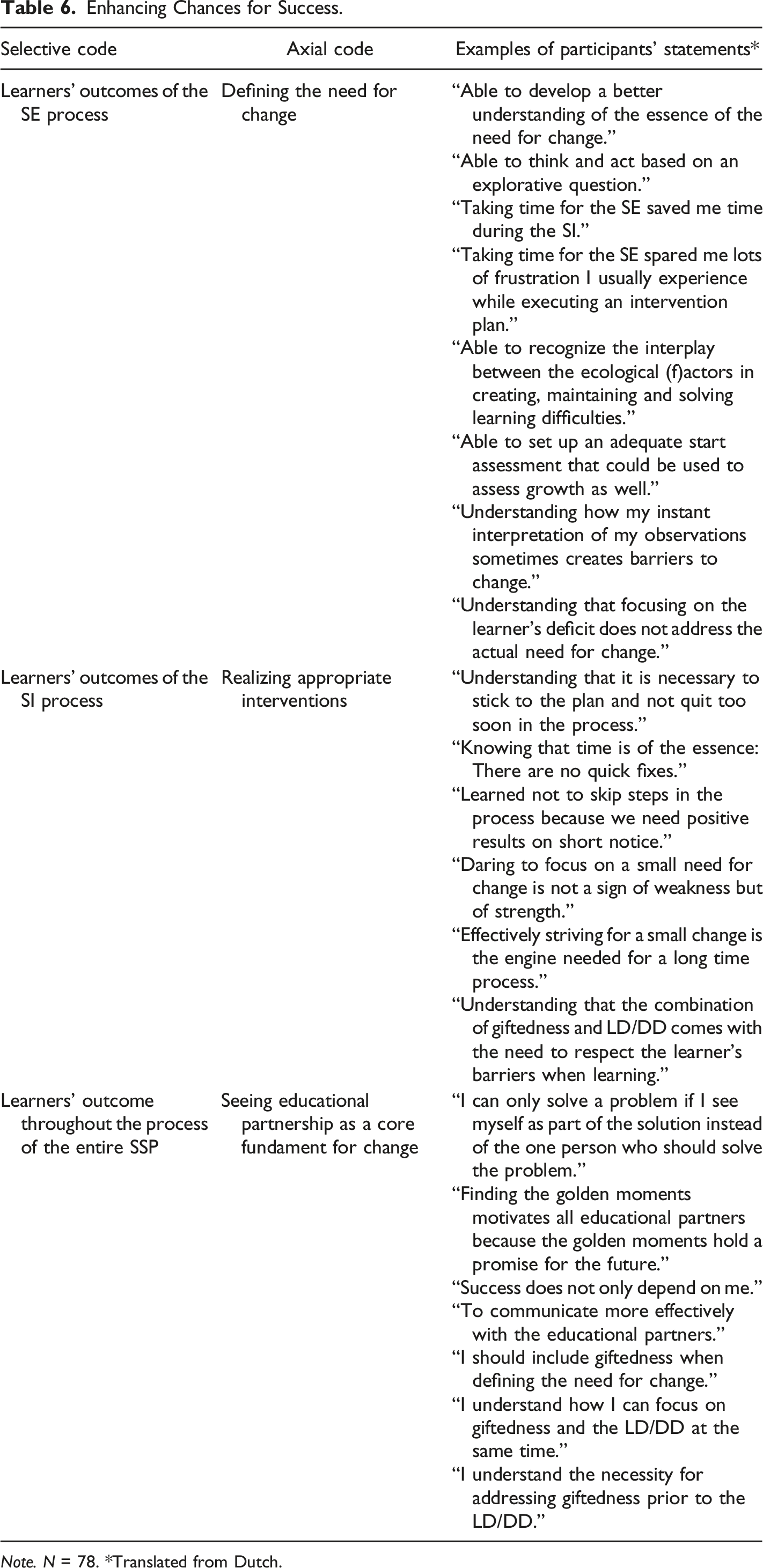
Note. N = 78. *Translated from Dutch.
Reviewing the Instructional Process and Coaching Sessions.
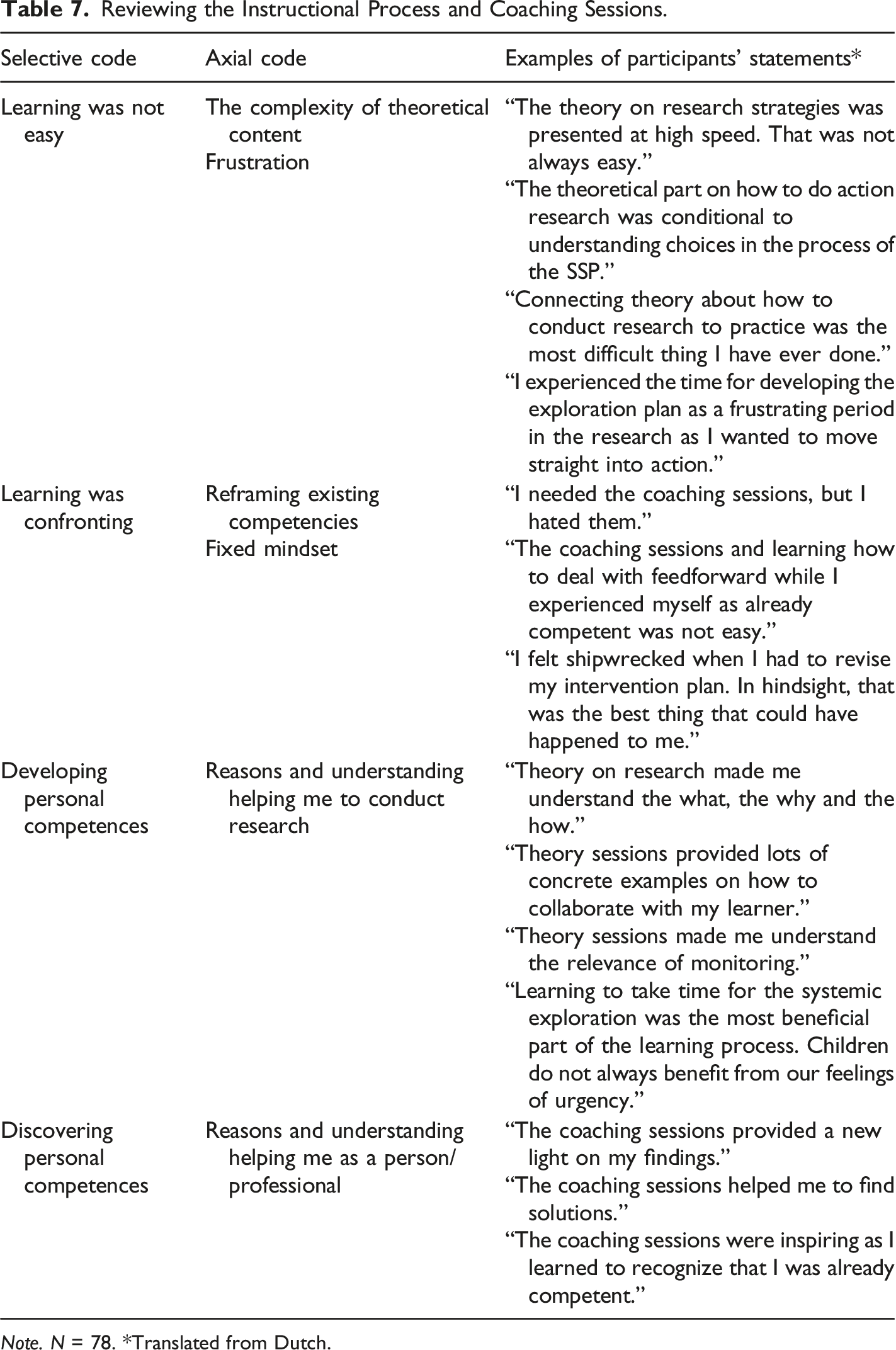
Note. N = 78. *Translated from Dutch.
The step-by-step exploration of the (f)actors within the ecological system was considered highly effective as it left no room to overlook relevant aspects of the learner’s environment. About 90% of the participating teachers found this was the most challenging part, but also the most fruitful part of their learning process. They found that their interventions were more successful than in previous situations and attributed the increased level of success to the extensive SE. As a teacher relayed, “Taking time for the SE spared me lots of frustration I usually experience while executing an intervention plan.”
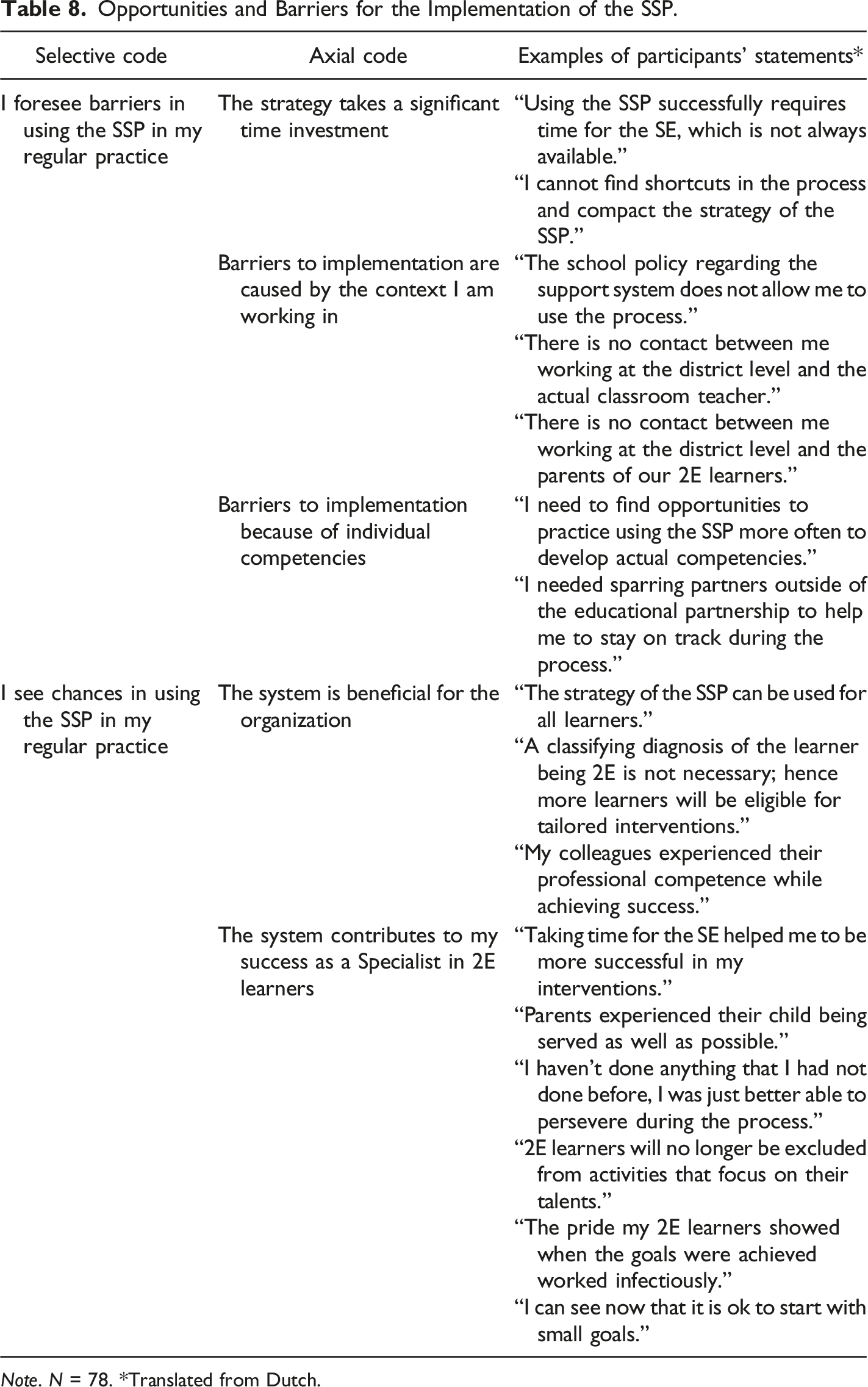
Opportunities and Barriers for the Implementation of the SSP.
Note. N = 78. *Translated from Dutch.
Discussion
The SSP was designed in 2013 as part of a two-year course for teachers to become specialists in 2e learners. The main objective focused on teachers becoming more successful in addressing the needs of 2e learners. The teachers were mainly focused on learners with LD/DD and on learners having difficulties with developing adequate executive skills. Their questions created a situation where the current approach toward 2e learners was left out of scope (Reis et al., 2014; Ribeiro Piske & Collins, 2022; Webb et al., 2016). However, as the SSP appeared to be an effective strategy for designing customized interventions, the perspective of 2e addressed in this study appears not to be a barrier for future use in a wider defined concept of what can be considered 2e.
Results of research into the competencies of Dutch teachers towards gifted education suggest that teachers experienced incompetency at the start of their two-year course were part of a wider problem (de Boer et al., 2013; van Gerven, 2021). Information about gifted education is barely included in Dutch teacher education. In 2021, the World Council for Gifted and Talented Children stated that “educators worldwide receive little information about how to educate gifted and talented children” (WCGTC, 2021, p. 2). In the Netherlands, most teachers develop competencies for educating gifted learners once they experience a specific urgency to do so when confronted with a gifted learner. Competencies developed under these circumstances hardly ever include knowledge and skills on how to educate 2e learners as they are a relatively small subgroup of the entire population of gifted learners. This lack of competency might also extend to teachers worldwide.
The personal urgency teachers experienced to develop new competencies is considered to be a fertile context for change (Bakx et al., 2021; Korthagen, 2017). This aligns with a solution-focused approach, where ownership is essential for change (De Shazer et al., 2012). Personal urgency and ownership are two concepts underpinning the need for change, and reflected by the participating teachers in this study. The participating teachers recognized that their openness to change was paramount for their professional development.
Still, participating teachers wanted to develop new competencies, they were also reluctant to use unfamiliar techniques and approaches. Their heavy caseload and the current structure of the Dutch educational support system create tension between what is desirable and what is feasible. As a result, at the start of their two-year course, they felt empty-handed.
Diery (2020) suggested that teachers find it hard to accept when evidence-based information does not match their personal experience, appearing to hold on to their existing knowledge and skills and application of educational strategies that match their personal experience. Participants of the current study suggested that part of their positive experience with using the SSP was not learning a completely new set of skills. Rather they were taught how to use their existing competencies differently. One of the participating teachers stated, “I have learned nothing that I have not done before. But what I did learn was how to use my skills more effectively, leading to more appropriate strategies for teaching my 2e [sic] learners.” The SSP process included a natural way for teachers to reflect on the situations they experienced. This matches the necessity for teachers to develop a reflective attitude, as described by Korthagen (2017) and Loughran (2015).
The limitations teachers experienced formed the rationale for the design of the SSP. The SSP provided a structure to meet the teachers' needs to design tailored interventions for their 2e learners in a regular educational context. Combining strategies for RtI, a solution-focused approach, and a systemic-focused approach appeared to be successful. Moving away from thinking in terms of strengths and weaknesses created opportunities for acceptance of intrapersonal differences in learner profiles. This provided chances for addressing talents on their own merits instead of using talents to compensate for barriers during the learning process. Baum et al. (2017) described how a talent-focused and strength-based approach appeared to be a successful way of addressing the needs of 2e learners. Similar suggestions have been proposed by Fugate (2020) and Trail (2022) and were reflected in this multiple-case study support their observations.
The results of the evaluation process included teachers reflecting on their professional development and responding positively to the program. They considered themselves more able to respond to the needs of their 2e learners, I feel capable now of identifying my 2E learners' needs as I learned to listen not only to what was said but also to what wasn’t said. I became aware of the necessity of being more positively inquisitive to the unspoken and underlying thoughts of students and parents.
Teachers realized that effective interventions are a joint effort of all educational partners, “I can only solve a problem if I see myself as part of the solution instead of the one person who should solve the problem.” They explicitly mentioned that they felt that their chances for success increased significantly. Several teachers expressed that they developed a good “Understanding that it is necessary to stick to the plan and not quit too soon in the process.”
Perceived obstacles still remained. The first phase of the SSP, the SE, were time-consuming, and teachers using the SSP worried whether this time investment was feasible in their daily practice. On the other hand, they also noticed that designing the SI took less time, and there were fewer disruptions and distractions during the implementation of the SI. They also experienced the SI as more successful. In their reflections, teachers observed a relationship between the greater time investment in the SE and the increased success of their interventions.
Conclusion
This study of the SSP aimed to better understand (a) how participating teachers experienced the use of the SSP and (b) if the use of the SSP increased teachers’ success in addressing the needs of 2e learners. This study was part of a broader evaluation of a two-year course for teachers to become specialists in educating 2e learners.
Without exception the teachers stated that their chances for successfully working with 2e learners were increased and described the SSP as a roadmap for designing tailored interventions. Although the teachers' reflections focused on their personal learning process when conducting their case study, the SSP should not be considered the sole factor contributing to the described results. Their ability to design tailored interventions was the combined result of balancing theory and practice during their entire course.
At first, the participating teachers experienced the time investment of working with the SSP conflicted with the reality of their educational practice. They focused on the time investment of the systemic exploration. This time investment was more than they were used to investing in exploring their learners' needs. However, during the phase of the systemic intervention, they experienced that this part of the process took less time than with previous interventions and that they achieved successes where previous interventions might have failed. This led to an overall positive experience with the SSP.
Their learning process in Year Two included learning how to use the SSP and developing a different attitude towards change and responding meaningfully to their learners' educational needs. The technique of using the SSP appeared to be straightforward and uncomplicated. The process of developing a different attitude toward exploring their learners' needs was experienced as confronting, but the teachers found it as necessary and beneficial for their professional and personal development.
This first review suggestsed that the instructional process during the course provided a solid base for using the SSP. Teachers experienced an increase in their competencies and they were able to design customized interventions for 2e learners. Further research into factors contributing to the successful use of the SSP is recommended to determine what additional factors contribute to the successful use of SSP.
Footnotes
Declaration of Conflicting Interests
The author(s) declared no potential conflicts of interest with respect to the research, authorship, and/or publication of this article.
Funding
The author(s) received no financial support for the research, authorship, and/or publication of this article.
