




Abstract
Investigations of differences between gifted and nongifted students have examined cognitive abilities, including intelligence quotient (IQ) differences, higher order thinking skills, and divergent thinking (DT). However, little is known about differences in problem finding (PF). Moreover, previous works on gifted students have never explored associations between PF and evaluative thinking (ET). Both PF and ET play a role in the creative process. The present study tested relationships between PF, DT, and ET and examined differences between gifted (N = 175) and nongifted students (N = 188). An analysis of variance (ANOVA) revealed significant differences between gifted and nongifted students’ PF, DT, and ET, with effect sizes (η2) ranging from 0.048 to 0.192. Gender differences were also analyzed; gifted girls scored significantly higher than gifted boys in PF fluency and originality, DT originality, and in ET in PF. Originality scores in DT and PF significantly predicted the accuracy of students’ ET (R2 = 34%–42%). Finally, canonical correlation analyses showed moderate-to-strong correlations between DT, PF, and ET scores. Limitations of this study are discussed.
Although still a matter of debate, there is evidence showing that gifted students have unique characteristics that distinguish them from other students (Clark, 1997; Davis & Rimm, 1977; National Association for Gifted Children, n.d.; Robinson & Clinkenbeard, 2008; Song & Porath, 2005; Torrance, 1981). It is important that educators, administrators, and, sometimes, even parents recognize these differences. Davis et al. (2011) proposed a comprehensive list of characteristics possessed by gifted students (see Tables 2.1–2.3; pp. 33–43). These included risk-taking, curiosity, open-mindedness, intuitive thinking, independence, self-awareness, and, most importantly, originality (Davis et al., 2011). Originality is an extremely important characteristic because it is a prerequisite for creativity (Acar et al., 2019; Runco et al., 2016; Runco & Jaeger, 2012). This is not to say that creativity is synonymous with originality; nevertheless, there is no creative product or idea without some sort of originality.
The originality of gifted students should be included in the identification process and when designing educational programs tailored to them. The majority of contemporary definitions of giftedness include creativity, as measured by different divergent thinking (DT) tests, as one of the multiple criteria for identifying gifted students (e.g., Gagné, 2005; Renzulli, 2005; Sternberg, 2005b). As for educational programs, gifted students benefit greatly from learning strategies and tactics that target creative thinking skills. This can be accomplished in many ways, some of which involve infusing originality and other creative thinking skills into the curriculum (Beghetto & Kaufman, 2010) and teaching creative strategies and tactics outside of school curriculums (e.g., Creative Problem Solving [CPS]; the Theory of Inventive Problem Solving [TRIZ]; Substitute, Combine, Adapt, Modify, Put to another use, Eliminate, and Reverse [SCAMPER]; and classic brainstorming sessions; Alnabhan et al., 2014; Runco, 2014; Starko, 2018).
Another important characteristic of gifted students is their metacognitive maturity. This can be operationalized as the ability to self-reflect and to monitor and evaluate problems (Davis et al., 2011; Sternberg, 2005a). Highly creative individuals can not only produce novel ideas but can also judge whether they have produced something worthwhile. Thus, other cognitive and metacognitive processes and skills are essential for creative behavior. These include, but are not limited to, procedural and declarative knowledge, motivation, problem finding (PF), and evaluation (Charles & Runco, 2001; Guilford, 1968; Mumford & Connelly, 1994; Runco & Chand, 1995; Runco & Smith, 1992; see Figure 1).
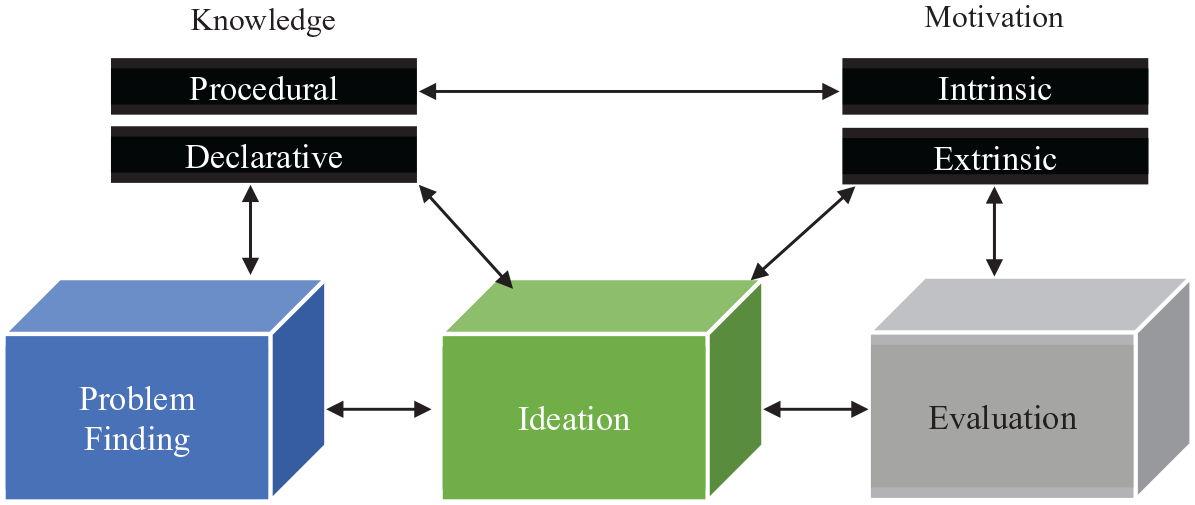
Two-tier model of creative thinking (Chand & Runco, 1992).
The last two processes—PF and evaluative thinking (ET)—are the variables of interest in this study. They represent often-overlooked dimensions of creativity (Runco & Chand, 1995). Schwanenflugel et al. (1997) compared gifted and nongifted learners regarding cognitive and metacognitive abilities and concluded that gifted students possessed higher metacognitive knowledge than nongifted elementary school children. Other metacognitive skills that have been studied in gifted individuals include planning (Grover, 1987), monitoring (Snyder et al., 2011), metacognitive knowledge (Schraw & Graham, 1997), and self-regulation (Oppong et al., 2019).
The findings of both Runco and Vega (1990) and Runco and Smith (1992) are directly relevant to our research. For instance, Runco and Vega’s (1990) study was conducted on a sample comprising 123 parents and teachers. Three DT tests, based on tests devised by Wallach and Kogan (1965), were administered. These same tests have been used many times since the original work of Wallach and Kogan (e.g., Milgram & Hong, 1993; Runco, 2013). The ET measure, as with the current study, was based on evaluating ideas stemming from the Instance test (e.g., “Name all the round things you can think of”), Uses test (e.g., “Tell me all the different ways you could use a key”), and Line Meaning tests (e.g., “List as many things as you can think of, that this figure might be or represent”; Wallach & Kogan, 1965, pp. 29–35). Canonical correlation analysis showed that DT and ET were significantly related (Rc = .52, p < .05). Runco and Smith (1992) compared the DT and inter- and intrapersonal evaluation scores of 58 undergraduate students. The same DT tests as in Runco and Vega (1990) were administered, and the same conclusion was reached: Intrapersonal evaluation scores were significantly related to DT (Rc = .45, p = .016). In summary, both studies (Runco & Smith, 1992; Runco & Vega, 1990) demonstrated that ET and DT are related and are both important for any creative problem-solving effort. However, unlike the current study, the two previous investigations were conducted on adults and a nongifted sample. Moreover, the relationship between PF and ET has not been previously investigated.
Although recent studies have concentrated on ET, they have focused mainly on aspects such as comparison between inter- and intrapersonal selection of creative ideas (Zhu et al., 2020), effects of self-affirmation, promotion focus, and positive affect on creative idea selection (de Buisonjé et al., 2017), and effect of creative instruction on creative idea selection (Rietzschel et al., 2014). One reason for this might be that people still tend to associate creativity with the generation, rather than the selection of ideas, even though both aspects play a role (e.g., Runco & Chand, 1995).
To the best of our knowledge, no empirical studies have investigated this relationship among gifted learners. This study aimed to bridge this research gap. ET is defined as an individual’s ability to accurately judge an original idea that he or she has produced. PF refers to the “ability to imagine and look for discrepancies and apparent contradictions, and it entails new hypotheses about old problems/issues or generates entirely novel questions or problems to be solved” (Carson & Runco, 1999, p. 168). With a few exceptions (e.g., Hoover, 1994; Hoover & Feldhusen, 1990; Kay, 1991, 1994; Porath, 1984; Reed, 1992; Rostan, 2005; Starko, 1989; Wakefield, 1985), PF has rarely been studied in gifted education literature, which is surprising given the importance of this psychological process (Abdulla Alabbasi et al., 2021; Einstein & Infeld, 1938; Mackworth, 1965). For instance, Hoover and Feldhusen (1990) studied the scientific PF ability of gifted ninth-grade students. The study found no significant differences between boys’ and girls’ scientific PF ability based on their performance on the Formulating Hypotheses (FH) Test.
Hoover (1994) extended the previous work (i.e., Hoover & Feldhusen, 1990) and included DT as measured by the verbal version of the Torrance Tests of Creative Thinking (TTCT). The FH test was used as a measure of PF. Hoover (1994) asked 40 gifted students to generate questions about an environmental situation or formulate hypotheses that explain the phenomenon in the problem situation. The results indicated that fluency and flexibility scores in the TTCT significantly correlated with fluency in FH, whereas flexibility in the TTCT significantly correlated with the number of good ideas (i.e., quality). No sex differences were found between gifted male and female students.
In another domain, Starko (1989) examined PF in four groups of writers: (a) professional, (b) high school students known for their ability in creative writing, (c) high school students in above-average English classes, and (d) high school students in average English classes. Participants were asked to generate ideas for potential writing projects, select their best ideas, and reflect on the strategies used to select ideas. The results showed that more able writers generated more ideas than less able writers, with girls producing more ideas than boys.
Finally, Wakefield (1985) studied the relationship between PF and DT among 23 academically gifted students. Wakefield (1985) used figural DT tests from Wallach and Kogan (1965): Pattern Meaning and Line Meaning. PF was assessed by asking participants to make a pattern/line of their own and explain all the different possibilities. Wakefield (1985) found a significant correlation (r = .75) between DT and PF. No sex differences were reported.
PF is a necessary skill (or set of skills; Abdulla & Cramond, 2018; AlSaleh et al., 2021; Runco, 1994) to prepare students for the unforeseeable future (Runco, 2016). Real-world problems are not always well defined, and they do not always present themselves to the problem solver; rather, they require definition, identification, and finding, including discovering problems that do exist or even those that will exist in the future (Getzels, 1979).
Thus, almost all models for creative processes include PF as a separate step for creative problem solving (e.g., Isaksen et al., 2000; Merrifield et al., 1962; Parnes, 1967; Wallas, 1926). PF’s importance in this regard has also been attested by a recent meta-analytic review on the relationship between PF and creativity (Abdulla et al., 2020), where the results showed that PF and creativity were significantly correlated (r = .22). Although this effect size is considered small, it is similar to the effect size reported by Kim (2008) in another meta-analysis on the relationship between DT and creative achievement.
Given these considerations, the current study aimed to answer the following questions:
What differences exist between gifted and nongifted students in terms of their PF, DT, and ET abilities?
What gender differences exist in PF, DT, and ET abilities?
Are there significant interactions between giftedness and gender with regard to PF, DT, and ET abilities?
What are the relationships among PF, DT, and ET?
Method
Participants
The participants in this study included 359 students from Grades 7 to 9 (171 boys and 188 girls). The sample consisted of both gifted students (n = 175; 82 boys and 93 girls) and nongifted students (n = 184; 89 boys and 95 girls). The participants’ ages ranged between 11 and 15 (Mage = 12.4, SD = 1.12) years. Data for the gifted students were collected from the Giftedness Academy, and data for nongifted students were randomly collected from two public schools, both in the State of Kuwait.
The Giftedness Academy is a private school for gifted students. The main emphasis of the academy is to offer an advanced curriculum to its students. In addition, the academy offers short programs in leadership, creative problem-solving, and soft skills, such as communication, time management, and negotiation. Gifted students were identified based on Renzulli’s Three-Ring Conception of Giftedness (Renzulli, 2005): (a) high scores on an intelligence quotient (IQ) test, (b) high scores on a creativity assessment, and (c) task commitment, operationalized as high grade point average (GPA).
The mean GPA was 96.93% for gifted boys and 97.05% for gifted girls; the mean GPA was 81.54% for nongifted boys and 88.54% for nongifted girls. Before data collection, each participant was asked to read and sign a consent form prepared by the authors of this study and revised by the aforementioned center (where the data were sourced) as well as the Department of Education.
Instruments
Uses test
In the current study, the Uses test was administered to assess participants’ DT ability. Three tasks from the Uses test, which were devised by Wallach and Kogan (1965), were administered: (a) uses for a spoon, (b) uses for a wheel, and (c) uses for a toothbrush. The verbatim directions for the task were as follows: People typically use everyday items for specific purposes. There are often alternative uses for the same object. For example, a newspaper could be used as a hat or a blanket, and many other things. For the following item, list as many alternative uses as you can. The more uses you can think of, the better. Do not worry about spelling.
Responses to the Uses test were scored for fluency, originality, and ET. Next, 381 different ideas were generated for the spoon task, 261 different ideas for the wheel task, and 312 different ideas for the toothbrush task. Fluency was defined as the number of different ideas related to the given stimuli. Originality was scored using a 3% cutoff. Finally, ET was scored based on students’ intrapersonal judgment of the creativity of their ideas. After completing each task, participants were asked to circle what they believed to be the most original idea among all the given responses. If the selected idea turned out to be the most original based on the 3% cutoff, a student received one point in the ET score. Fluency scores for the Uses test ranged from 3 to 22, originality ranged from 1 to 18, and ET ranged from 0 to 3.
Problem generation (PG) test
The second study instrument was the PG test (Okuda et al., 1991), which was used to assess participants’ PF ability. The PG test consists of three open-ended tasks that require participants to list as many problems as possible. These problems are related to the following subject areas: (a) home and school, (b) life situations, and (c) health and well-being. An example of a PG task is as follows: List any problems that you, as well as your friends, peers, and schoolmates (any individual who is approximately the same age as yourself) could experience. These problems can be real, or they can also be hypothetical and imaginary. Do not limit yourself; the more problems you can list, the better. Do not worry about spelling and take your time.
The PG test was scored for fluency, originality, and ET. A total of 423 different ideas were generated for the first task, which involved home and school problems; 503 different ideas were generated for the task involving life situations; and 550 different ideas were generated for the task involving health and well-being. The same method was used for scoring fluency, originality, and ET in the PG test. Fluency scores for the PG test ranged from 3 to 19, originality ranged from 1 to 17, and ET ranged from 0 to 3.
Finally, the students were asked to fill out a demographic questionnaire with items about their age and gender. Information about participants’ GPA was obtained from the previously mentioned giftedness center, where the main study data were sourced from the two public schools.
Results
Reliability
Cronbach’s alpha was used to assess the reliability coefficients for fluency, originality, and ET in the Uses and PG tests. Cronbach’s alpha coefficients for fluency, originality, and ET with the Uses test were .76, .73, and .63, respectively. Cronbach’s alpha coefficients for fluency, originality, and ET with the PG test were .83, .70, and .74, respectively.
Gifted Versus Nongifted Comparison
Several one-way analyses of variance (ANOVAs) were run to examine whether gifted and nongifted students’ scores differed in terms of fluency, originality, and ET in both the PG and Uses tests. Bonferroni correction was used to control for Type I error; thus, each ANOVA was tested with an alpha level of .008 (.05 / 6).
The results showed significant differences between gifted and nongifted students in the six dependent variables (see Table 1). More specifically, ANOVAs pinpointed significant differences between gifted and nongifted students in terms of fluency, originality, and ET in both the Uses and PG tests. First, gifted students outperformed nongifted students in terms of fluency in the PG test: F(1, 358) = 77.15, p < .001,
Means, Standard Deviations, and One-Way Analysis of Variance for Study Variables by Sample (Gifted and Nongifted) (N = 359).
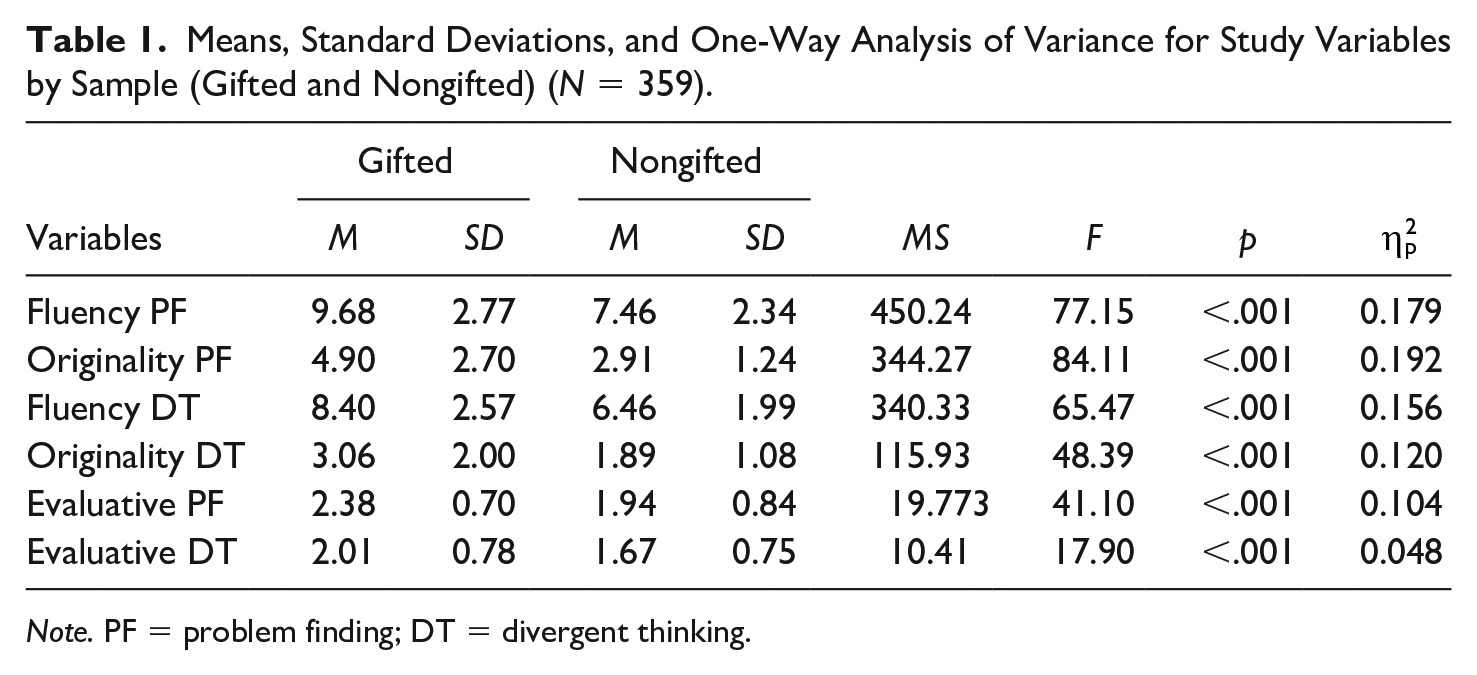
Note. PF = problem finding; DT = divergent thinking.
Male Versus Female Comparison
Another set of ANOVAs examined whether boys and girls (both gifted and nongifted) differed with regard to their DT, PF, and ET skills. Again, a Bonferroni correction was used to control for Type I error. ANOVAs pinpointed a significant gender difference in all dependent variables except fluency and ET in DT (see Table 2).
Means, Standard Deviations, and One-Way Analysis of Variance for Study Variables by Gender (N = 359).
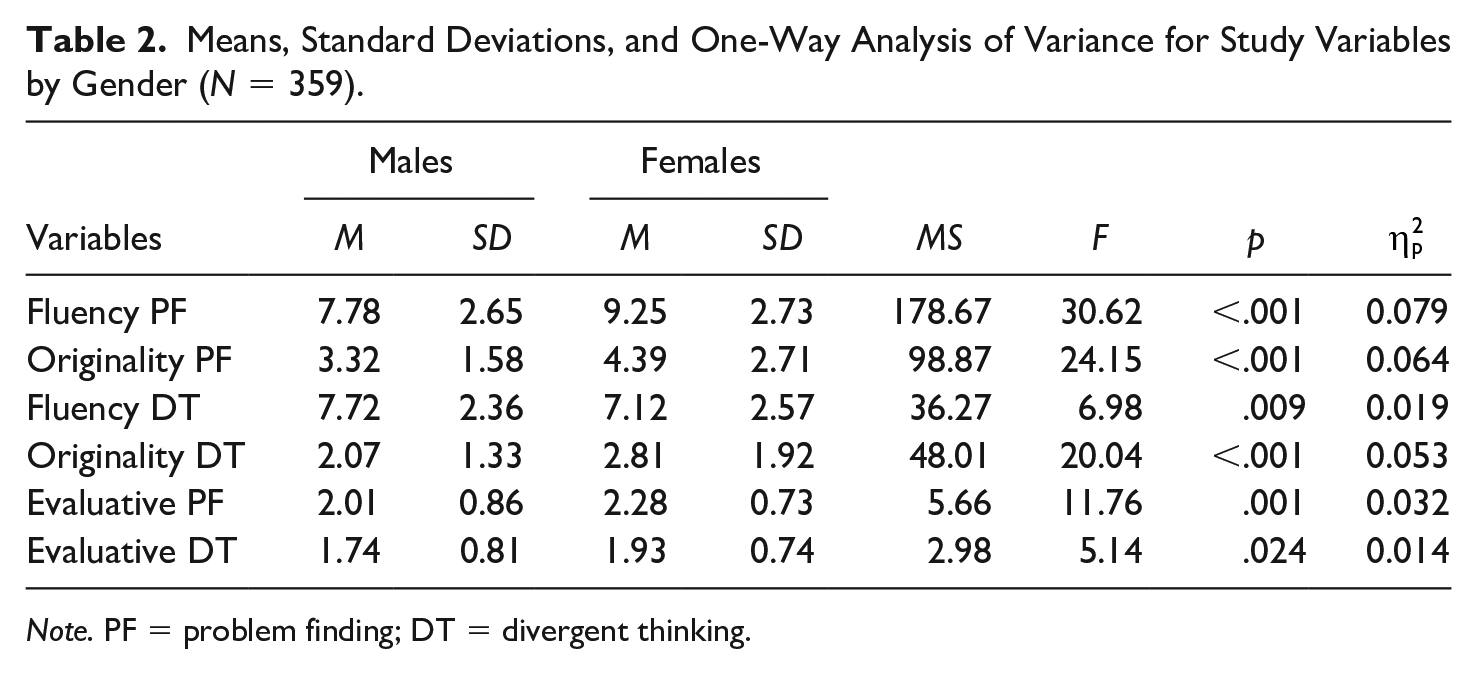
Note. PF = problem finding; DT = divergent thinking.
Girls scored higher than boys in fluency in the PG test, F(1, 358) = 30.62, p < .001,
The Interaction Between Giftedness and Gender
The third ANOVA was conducted to examine the interaction between giftedness and gender. As Table 3 shows, first, ANOVA tests indicated that gifted girls scored higher than gifted boys in fluency in the PG test, F(1, 358) = 14.48, p < .001,
Two-Way Analysis of Variance for Study Variables (Giftedness × Gender) (N = 359).
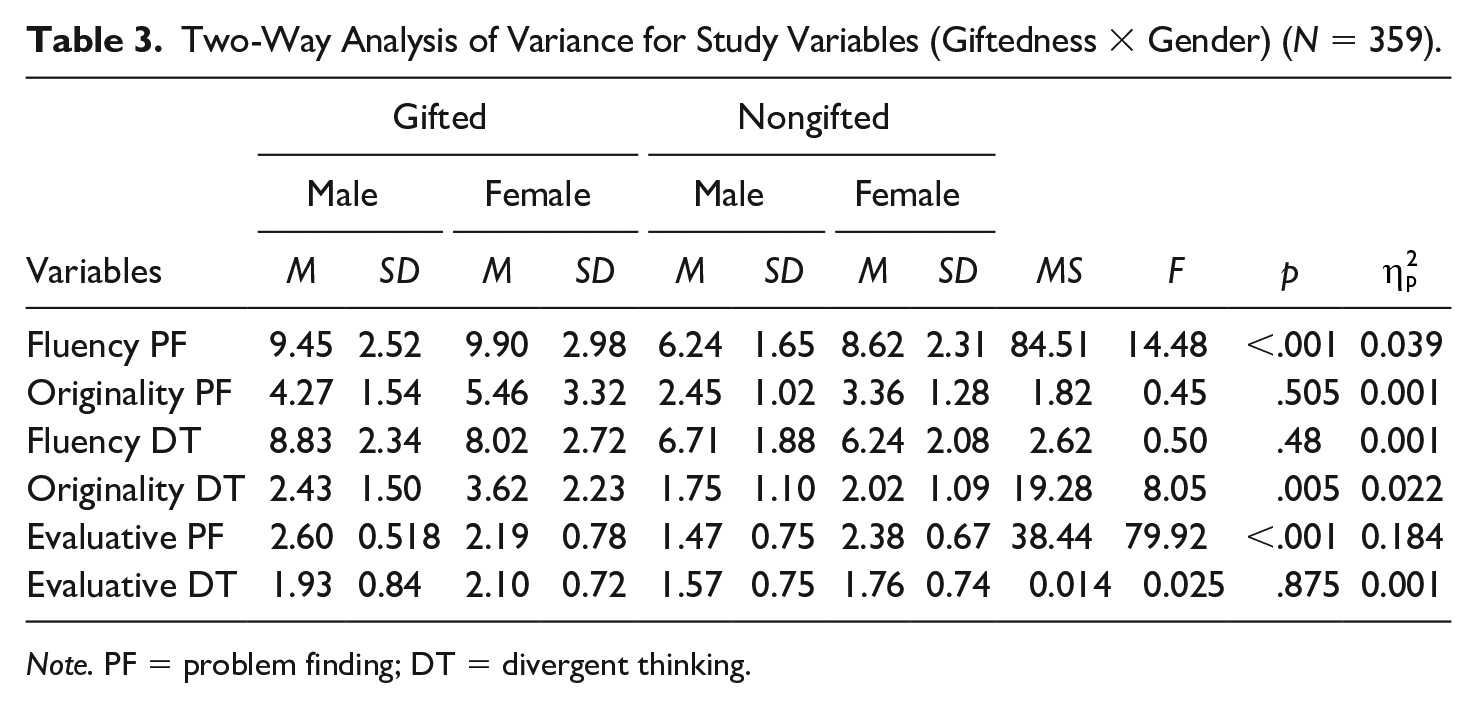
Note. PF = problem finding; DT = divergent thinking.
Finally, the results showed that there were no significant gender-based differences between gifted boys and girls in terms of their ET skills in the Uses test, F(1, 358) = 0.025, p = .875,
Correlations and Multiple Regression
Table 4 shows the correlations between the study variables for gifted and the nongifted sample. The relationship between PF and ET ranged between .29 and .58 (p < .001), whereas the relationship between DT and ET ranged between .20 and .65. The results also showed that the relationship between PF and ET differed between the gifted and nongifted samples.
Correlations Between Study Variables for Gifted and Nongifted Students.
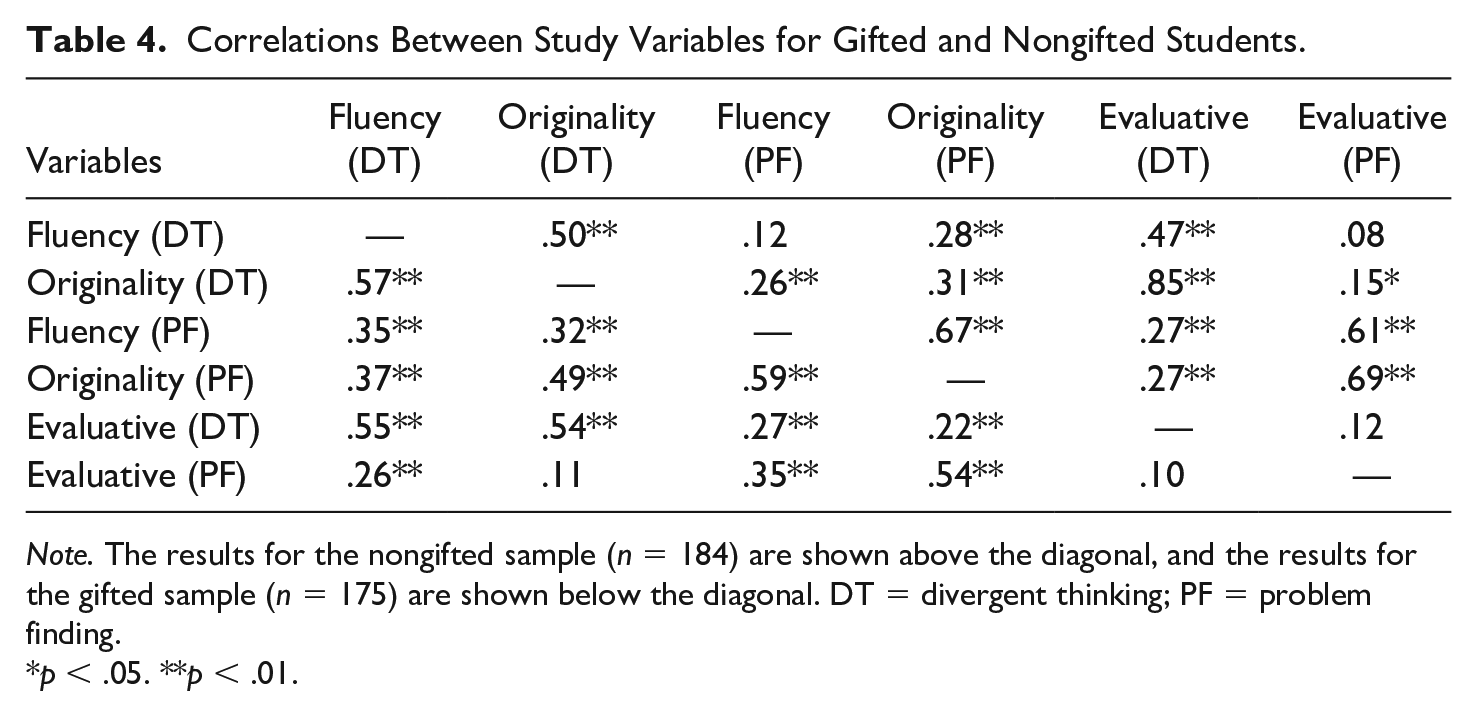
Note. The results for the nongifted sample (n = 184) are shown above the diagonal, and the results for the gifted sample (n = 175) are shown below the diagonal. DT = divergent thinking; PF = problem finding.
p < .05. **p < .01.
Canonical correlation analysis, where fluency and originality scores in PG and Uses tests were entered in set 1 and ET in both the Uses and the PG tests in set 2, showed a moderate-to-strong relationship in both gifted (Rc = .56–.65, p < .001) and nongifted samples (Rc = .71–.86, p < .001).
Finally, multiple regression analyses were conducted to examine the association between the independent variables and ET (see Table 5). The first was an analysis examining the association between DT and ET in the PG test. Stepwise regression analysis showed that originality in PG significantly predicted students’ performance in ET, R = .58, R2 = .34, F(1, 357) = 184.72, p < .001. Although the F-change in Model 2, where originality and fluency were added to the regression equation, was significant, fluency only accounted for 3.7% of the overall variance within the dependent variable. The same result was obtained when ET was entered as a dependent variable in the Uses test. Originality significantly explained 42% of the variability in ET in the Uses test, R = .65, R2 = .42, F(1, 357) = 259.99, p < .001, whereas fluency only accounted for 3.8% of the variability in ET.
Results of the Multiple Regression Analyses.
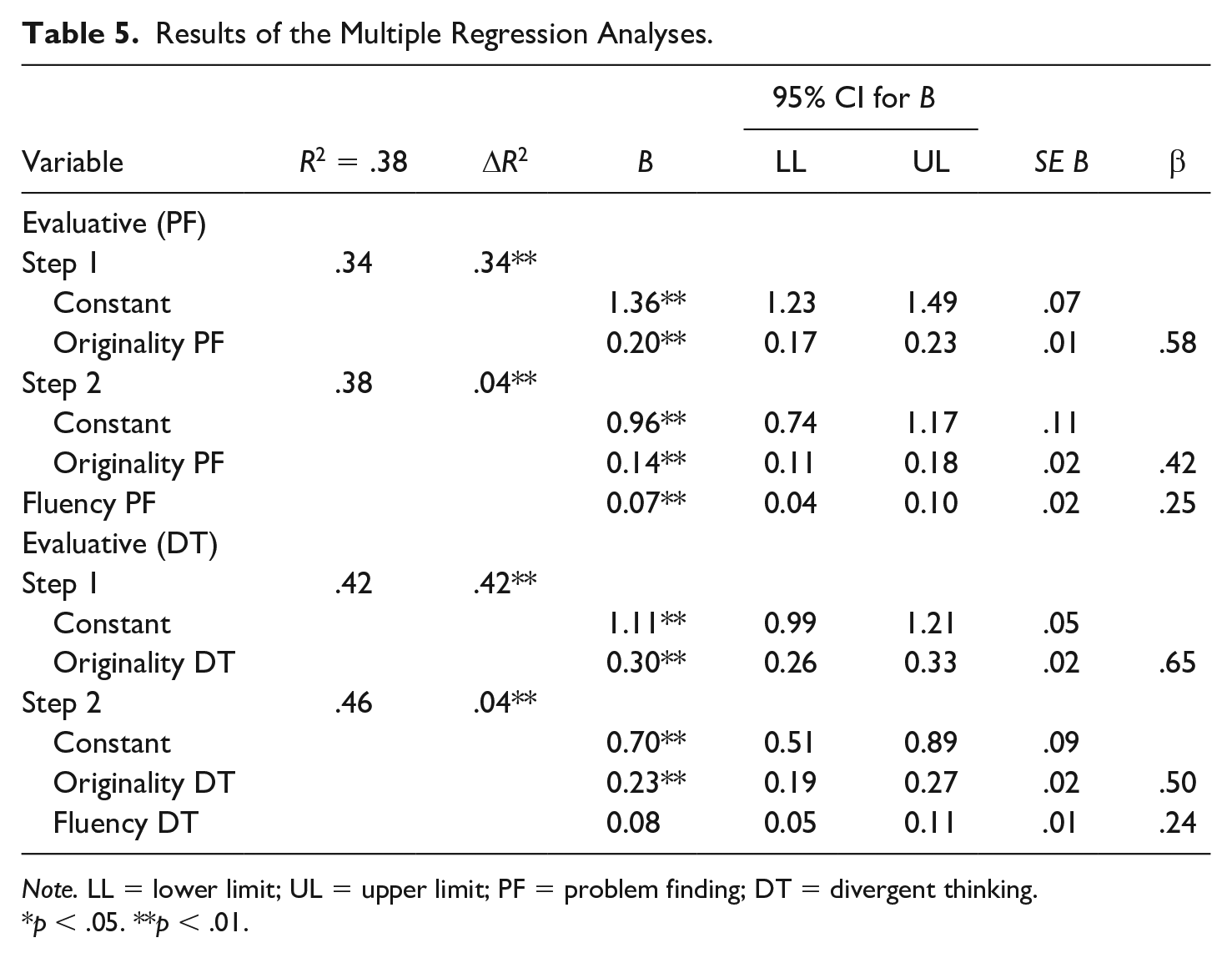
Note. LL = lower limit; UL = upper limit; PF = problem finding; DT = divergent thinking.
p < .05. **p < .01.
Discussion
These empirical results indicate significant differences between the DT, PF, and ET skills of gifted and nongifted learners. The ANOVA showed that gifted students scored higher on ET, PF, and DT than nongifted students, and there was a medium to large effect size (η2 = 0.104–0.192) except for ET in DT (η2 = 0.048). These findings demonstrate that gifted students were more capable of originating novel ideas than nongifted learners (Davis, 2003); furthermore, they also had a higher capability to evaluate the creativity of their ideas. Thus, the current study recommends that gifted programs provide more space for gifted learners to work with ill-defined problems to encourage them to find and discover novel problems, or, as Torrance (1966) put it, to be sensitive to problems and gaps in knowledge. In practical terms, teachers could, for example, employ different strategies that would encourage students to work with ill-defined problems, such as CPS and problem-based learning (PBL). For instance, in a science class on infectious diseases, the teacher might ask the students to think about different causes for one or more infectious diseases and apply the CPS process to find a novel solution to prevent the disease(s). Furthermore, teachers can employ PBL, in which students can work on situations/problems where there is a lack of information, investigating it to find solutions. An example of such a PBL exercise could be the following: “You are an inhabitant of the moon colony Luna. You wish to send a message by spotlight to your friend on Earth. You must determine at which phase of the moon your message will be best viewed” (Lambros, 2004, p. 23).
Unlike previous findings regarding gender differences in PF (i.e., Hoover, 1994; Hoover & Feldhusen, 1990; Wakefield, 1985), the ANOVA results showed that gifted girls scored significantly higher than gifted boys on fluency in PF and originality in DT, whereas gifted boys scored significantly higher than gifted girls in ET in PF. No gender differences within the gifted sample were found about (a) fluency in DT, (b) originality in PF, and (c) ET in DT. The results of this study confirmed Starko’s (1989) finding that girls showed greater fluency in PF than boys. As for gender differences in DT, the current findings are in line with some empirical and nonempirical works, which suggest that females slightly outperform males in some DT indices (Baer & Kaufman, 2008; Rejskind et al., 1992; Runco et al., 2010). Most recently, Thompson et al. (in press) conducted a meta-analysis study and concluded that females showed slightly higher creativity than males (g = .056, p < .05). However, none of these works offer a clear explanation for such a difference in DT.
Stepwise multiple regression analysis indicated that originality (but not fluency) scores in the Uses and PG tests significantly predicted students’ performance in ET. Moreover, the canonical correlation analysis results suggested that DT was moderately to highly associated with ET. In other words, this finding indicates that adolescents with high originality scores gave accurate evaluations of the creativity of their ideas. This finding is consistent with that of previous research on DT and ET (Runco, 1992; Runco & Basadur, 1993; Runco & Vega, 1990). This may be the case because both are ideational processes, and producing ideas (i.e., DT) probably helps students practice evaluating ideas. Finally, the current study confirmed the findings of Wakefield (1985) regarding the strong association between DT and PF.
This study has some limitations that are worth mentioning. First, our sample consisted of academically gifted students. Future researchers could examine the relationship between PF and ET across different types of giftedness, including musical, artistic, and scientific giftedness in students. Second, it might not be adequate to generalize the current findings to other cultures that employ different educational systems; thus, it is worth conducting similar studies in different cultures. Finally, future research could also examine the role of flexibility in ET skills, in addition to fluency and originality.
Conclusion
The current study investigated the differences in the PF, DT, and ET abilities of gifted and nongifted students, as well as the relationships between PF, DT, and ET. The results highlight the existence of significant differences between gifted and nongifted students’ PF, DT, and ET. There are clear educational implications of these findings: First, it is important to support PF skills when working with gifted students. This should, of course, be done while supporting other aspects of creative problem-solving, including DT, critical thinking, and idea evaluation. Along the same lines, it would be useful if educators provided gifted students with plentiful opportunities to work with ill-defined problems. These allow students to identify problems for themselves and to consider different conceptions and structures for the problems identified. Educators in gifted programs should be encouraged to allocate resources so that students can practice producing original ideas for ill-defined problems and evaluating the appropriateness of these ideas. All of this should support the creativity of the students.
Footnotes
Authors’ Note
This study sourced data for analysis from the Giftedness Academy in the State of Kuwait.
Declaration of Conflicting Interests
The authors declared no potential conflicts of interest with respect to the research, authorship, and/or publication of this article.
Funding
The authors received no financial support for the research and/or authorship of this article.
Author Biographies
 ).
).