



Abstract
This study statistically explored public perceptions of the risks and benefits of the agricultural application of gene editing to food crops using online surveys in the US (n = 2,050), Japan (n = 1,842), and Germany (n = 1,962). US participants exhibited the most positive attitudes toward this emerging technology. Japanese participants demonstrated similar attitudes to German participants regarding risk perceptions and demonstrated closer attitudes to US participants regarding benefit perceptions. Further, US participants did not highly differentiate between gene-edited and conventionally bred foods when compared to German and Japanese participants. Presentation of information using either animal or plant illustrations did not have any impact on risk perceptions toward gene-edited crops in the three countries, but the German and Japanese people who were given information with plant illustrations showed higher perceptions of benefit than those who were given the same information but with animal illustrations. The study results empirically indicate that despite receiving the same information under the same experimental conditions, perceptions can vary among countries. Our survey and provision of contrasting information illustrations, as well as including participants from an Asian country—Japan—in addition to Americans and Germans broadens the framework of civic epistemology.
Introduction
Emerging Gene Editing Technology
The application of biotechnology in agriculture and food has expanded internationally since the 1990s, particularly in North America and Latin America. Nevertheless, issues around genetically modified foods have engendered major social controversies. The European Union (EU) has raised safety concerns over genetically modified foods, and the US has contested the EU’s position within the World Trade Organization. The background of this transatlantic divide over GMOs has been explained in a variety of ways, including national differences in regulation and policy, trust in government, food scandals, and the influence of traditional and social media over the past thirty years (Gaskell et al. 1996; Gaskell et al. 2000; Jasanoff 2005), but it remains unresolved. Recent progress in gene editing technologies such as Clustered Regularly Interspaced Short Palindromic Repeats (CRISPR) have further complicated the issue. 1
There are great expectations for new biotechnologies and their application to breeding enhanced food crops. Gene editing enables precise modification of an organism’s DNA and is expected to remarkably shorten the time required for breeding new crops. In other words, it is a game changer for the traditional life sciences owing to its potential for wide applications in productivity, increased nutrients, abiotic stress tolerance, and environmental benefits (De Meester et al. 2020). In addition, the 2020 Nobel Prize in Chemistry was awarded to the inventors of CRISPR/Cas9, one of the most promising gene editing techniques, and this has led to widespread public interest in this technology.
Applying Gene Editing to Everyday Life and Public Perceptions
Major innovations in gene editing technologies are applied to the agricultural and food sectors, yet their application to everyday life raise political and ethical problems as well as issues related to public values and understanding (Kokotovich and Kuzma 2014). At the same time, gene editing regulations are under consideration in the US, Germany, and Japan, and these regulatory policies are based on existing GM technology that is perceived differently in either side of the Atlantic. The European Court of Justice ruled in August 2018 that gene editing should be regulated in the same way as genetically modified crops (Court of Justice of the European Union 2018), whereas the Secretary of the US Department of Agriculture announced in March 2018 that crops using gene editing technology are exempt from regulation if they do not pose plant pest risk. Countries with policies that do not regulate gene editing technology, including the US, base their policies on the premise that using it on crops and livestock is similar to conventional breeding. As a result, gene-edited soybeans are regarded as posing no additional risk to their conventional counterparts, and edible oil derived from gene-edited soybeans is available on the US market (FDA 2021). So far, no such product has been approved for release in the EU.
In this context, we seek to understand how different regulatory measures for gene editing in the US and the EU impact public perceptions. Previous studies empirically investigating public perceptions of the agricultural applications of gene editing reported apprehension about the technology in many countries (Beghin and Gustafson 2021; McFadden et al. 2019), including Norway (NBAB 2020), Japan (Kato-Nitta et al. 2019), and Australia (Critchley et al. 2018). It is essential to conduct empirical studies to determine if the attitudinal differences observed in the US and the EU toward GM foods (e.g., Jasanoff, 2005; Komoto et al. 2016) can also be observed regarding gene-edited foods. Public perceptions of the risk of agricultural gene editing do not always match with the actual risks (Krimsky and Golding 1992; Cummings et al., 2018), yet researchers do not yet have enough evidence to initiate discussion of the reasons behind this mismatch. Compared to the vast amount of literature on public perceptions of GM food, there is much less literature on public perceptions of the application of agricultural gene editing (Goddard 2022). So far, there are few cross-national comparative studies investigating public perceptions using identical survey design.
Emerging Biotechnology, Civic Epistemology, and Trust in Food Governance in the US, Germany, and Japan
When considering variations in public perceptions of new biotechnologies, it is essential to interpret the statistical results in the context of science, technology, and society (STS). Jasanoff’s (2005) theory of civic epistemology is an effective lens through which to view contemporary societies’ relationships to the state as well as to science and technology; nevertheless, we have found few empirical studies that utilize this approach. Jasanoff argues that variations in public attitude among different countries toward the application of emerging science and technology, such as GM crops, depend on political culture. Jasanoff further highlights that these differences are exemplified by the US, UK, and Germany. Likewise, much of the cross-national empirical evidence on attitudes toward GM crops has centered on the conflicting views of people in the US and the EU (Grant 2002; Pollack and Shaffer 2009), with a paucity of research about Asian countries.
The US holds the unique position of having developed most of the gene editing technologies used globally and has taken a proactive stance to applying them to agricultural crops. The EU is largely food self-sufficient and has taken a cautious approach to integrating gene editing technology into food policy (Custers, 2017). As Asia is the most populous region in the world, Asian countries have tended to be highly motivated to apply new technologies to obtain better crop yields. Asian countries generally feel the need to increase food production to support a growing population, but they must also import the technologies (Otsuka, 2019). A deeper understanding of the public perceptions of the risks and benefits of gene editing technology is needed in Asian countries.
Japan, the country where this study originated, holds a particular position between the US and EU regarding GM foods and gene editing. While Japan imports large amounts of GM crops for livestock feed as well as oilseed, the Japanese government has imposed labeling requirements and has taken a cautious stance on domestic commercial cultivation owing to strong food safety concerns from non-governmental organizations (NGOs) and consumers. NGO campaigns against GM crops in the US mostly focus on environmental concerns and criticism of global corporations, whereas in the EU these campaign focus on environmental concerns. In Japan, the strength of NGOs and consumer opposition is comparable to the EU, but Japan is closer to the US due to the large quantities of GM crops that are imported and used. When it comes to gene editing technology, the Japanese government has taken a somewhat more proactive stance than both the US and the EU by recently clarifying its regulatory policies on the application of gene editing (Hundleby and Harwood 2019). For example, in 2019, the Japanese government clarified the regulatory status of genome-edited products with the Cartagena Protocol and Food Sanitation Law (Tsuda et al. 2019). Although Japanese consumers’ attitudes are negative toward GM foods, it is worth examining their perceptions of gene-edited foods and comparing them to US and EU consumers. Empirical evidence gathered in Japan broadens Jasanoff’s (2005) civic epistemology framework.
Within the EU, public perceptions of GM foods vary from country to country. Some countries cultivate genetically modified maize (Spain and Portugal), whereas others are eager to promote organic agriculture and impose strict regulations on the cultivation of GM crops (Austria). The current study chose just one country from the EU member states owing to budget restrictions. We decided on Germany because it can be considered as being in the intermediate group for acceptance of GM crops in the EU (USDA-FAS 2020), as well as a reasonably representative country of the EU. Hence, this study examines public perceptions toward gene editing among people in the US, Japan, and Germany.
Jasanoff (2005) proposes that accountability, transparency, and the public’s trust in expert bodies are key factors when considering civic epistemologies. Such factors contribute to gaining insight into variations in public perceptions of gene-edited crops in the US, Japan, and Germany. The 2021 World Press Freedom Index (Reporters Without Borders 2021) noted that press freedom in Germany ranks thirteenth worldwide, with the US at forty-four, and Japan at seventy-one. Trust in government in these three countries, as assessed by a 2020 Organization for Economic Co-operation and Development (OECD) survey, indicates that the German public had the highest trust in government at 65.4 percent, the US was 46.5 percent, and Japan was lower at 42.3 percent (OECD 2022). National policies comprise many aspects such as science, social welfare, and economy, so citizens’ overall rating for governmental practices in general may not be suitable to the purpose of the current study focusing on public perceptions toward food application of gene editing. Therefore, this study specifically assessed the public’s trust in food governance systems in three countries that include governmental practices on food governance as well as practices in food industry.
Information Provision and Attitudes toward Applications of Gene Editing Technology to Agricultural Crops
Owing to the wide applicability of gene editing, it is applied to animal breeding in addition to plant breeding. So far, the application of GM technology to animals has been limited (i.e., Atlantic salmon), but gene editing of animals is expected to become more common soon. A recent US study found positive attitudes toward gene-edited polled cattle, and people were willing to consume the beef from these animals (McConnachie et al. 2019). The application of new technologies to animals may differ among countries for many reasons, such as animal welfare and integrity (Thompson 2020; Yunes et al. 2019). One recent study statistically examined public perceptions toward gene-edited foods in Japan (Kato-Nitta et al. 2021) and reported that Japanese people had higher benefit perceptions of gene-edited vegetables than gene-edited livestock.
According to Jasanoff (2005), differences were observed between public perceptions and trust of GM food in the US and Germany when study subjects were given scientific information. Because gene editing is relatively newer than genetic modification, public perceptions in different countries may still be shifting. Nevertheless, to understand attitudinal differences between the three countries, it is important to understand how information is presented. Based on Jasanoff’s (2005) argument, we assumed that people in the US and Germany would react differently to the same information.
Although Japan was not included in Jasanoff’s (2005) notion of civic epistemologies, NGOs in Japan have been influential for a long time—as is the case in Germany. Therefore, public perceptions in Japan may be different to those in the US but similar to those in Germany, so we used an experimental design in the current study in which survey participants were randomly assigned to two groups: one provided with information on current breeding technologies with animal illustrations, and the other with information about the same technologies but with plant illustrations. We then assessed their perceptions of the risks and benefits of gene editing of agricultural crops and observed if there were differences between the two groups in the three countries. This approach contributes to the existing literature by broadening the notion of the civic epistemology debate.
The survey period of the current study may uniquely contribute to the literature by providing useful information on policy contexts. Our surveys in the three countries were simultaneously conducted in March 2020 in the context of different regulatory status for gene editing technology in the US and EU. While the EU had decided to treat both crops and animals derived from gene editing as GMOs (i.e., subject to strict regulation), the US had declared its policy to exclude most crops derived from gene editing from regulation, while indicating that gene-edited animals were to be separately regulated in the same way as veterinary drugs. In other words, as of March 2020, Japan was the only country where both gene-edited crops and animals were expected to be exempt from regulation. In that sense, the timing of the surveys of the current study provides a unique contribution that considers the differences in regulatory approaches among the three countries when interpreting the results.
Hypotheses
How do public perceptions of the risks and benefits of gene editing technology for food crops vary among the US, EU, and Japan? A study by Komoto et al. (2016) reported that the degree of public apprehension around GM foods was France > Japan > US. A more recent study compared US and French consumers’ willingness to pay for gene-edited food, and concluded that French consumers were more conservative when it comes to new technology, and did not value it when compared to US consumers (Marette et al. 2020). In light of the above discussion and results of previous studies of international comparisons of public perceptions of GM foods, it could be assumed that public perception in Japan and Germany would indicate stronger apprehension toward GM foods owing to their stricter regulations than the US. We derive our first hypothesis from this assumption: H1: Public attitudes toward application of gene editing to food in a country with relatively strict regulations are less positive (lower benefit perceptions) and more negative (higher risk perceptions) than those in a country that has less strict regulations.
To secure a comparative perspective on gene editing, we simultaneously measured and explored public perceptions of risks and benefits toward the agricultural application of genetic modification technologies and conventional breeding. Our goal was to provide a deeper understanding of public perceptions. Krimsky (2019) categorizes gene editing and genetic modification as “molecular breeding” and explicitly differentiates them from conventional breeding. Newer technologies are often viewed as riskier than older, more established technologies (Krimsky and Plough, 1988). Therefore, data on public perceptions of gene editing and genetic modification might be similar but remarkably different from conventional breeding.
This study further explored how different information provision affects people’s perceptions of risks and benefits toward gene-edited crops in the three study countries. A recent study documented that information provision could cause attitudinal changes in people’s perceptions of food crops (Kato-Nitta et al 2019). A more recent study investigated these attitudes within Japan (Kato-Nitta et al. 2021) and found that providing information with animal illustrations or vegetable illustrations led to attitudinal differences toward gene-edited foods. Kato-Nitta et al. (2021) noted that the group provided with gene editing information using tomato illustrations perceived less benefit from gene-edited livestock than the group provided with information using pig illustrations. Following these empirical studies, we measured differences in people’s perceptions toward gene-edited crops by using identical items for the animal-illustrated information and plant-illustrated information in all three countries. By randomly assigning the respondents to the two groups in each country, the observed and the unobserved factors of the individuals could be adequately controlled, and thus the study could find the contrasting perceptions of the two groups with a simple statistical model that provided easier interpretations.
2
Therefore, the second working hypothesis is as follows: H2-1: There is a statistical difference between the group presented with animal-illustrated information, and the group presented with plant-illustrated information, regarding risk perceptions of the application of gene editing to agriculture. H2-2: There is a statistical difference between the group presented with animal-illustrated information, and the group presented with plant-illustrated information regarding benefit perceptions of the application of gene editing to agriculture.
Method
Data
This study used data from internationally conducted web surveys in the US, Japan, and Germany. Survey participants were recruited through a Japan-based member company of Gallup International with experience in international surveys. The surveys employed a uniform survey design and were conducted in March 2020 in three locations: Germany, Japan, and US. The target population in each country was aged twenty to sixty-nine, but because web surveys have inherently high coverage errors, proportionate sample allocations were made in terms of age, gender, and region to mitigate such bias according to the 2019 US census, 2019 Japanese population based on the residential register, and 2011 Eurostat census data. The sample sizes for each country were US, n = 2,667; Japan, n = 2,193; and Germany, n = 2,383. The data from the surveys excluded satisficers based on the survey company’s exclusion criteria. Satisficers (Krosnick 1991) in social surveys are refer to participants who do not make enough cognitive effort when answering the survey questions. In this study, the company excluded participants who marked logically wrong answers in demographic items, took an extremely short time to respond (approximately one-tenth of the average time) and “straight-liners” who marked the same number for all the question items. The delivered sample sizes from each country from the survey company were US (n = 2,491), Japan (n = 2,159), and Germany (n = 2,289). To further verify data quality and reliability, we set satisficer identifiers within the survey, comprising three directed-question scale (DQS) items (Maniaci and Rogge 2014), and excluded participants who gave wrong answers to all of them. Participants who marked multiple logically inconsistent answers, such as marking “gene editing technology” as both the oldest and the newest technology, were also excluded. This sample selection procedure was identical in all three countries. The final sample sizes for the current study were: US (n = 2,050), Japan (n = 1,842), and Germany (n = 1,962). The surveys were approved by the Institute of Statistical Mathematics Ethical Review Board (No. ISM19-004), Japan. All participants answered the same questionnaire items in their own languages, and their demographics are provided in Table 1.
Participant Demographics.
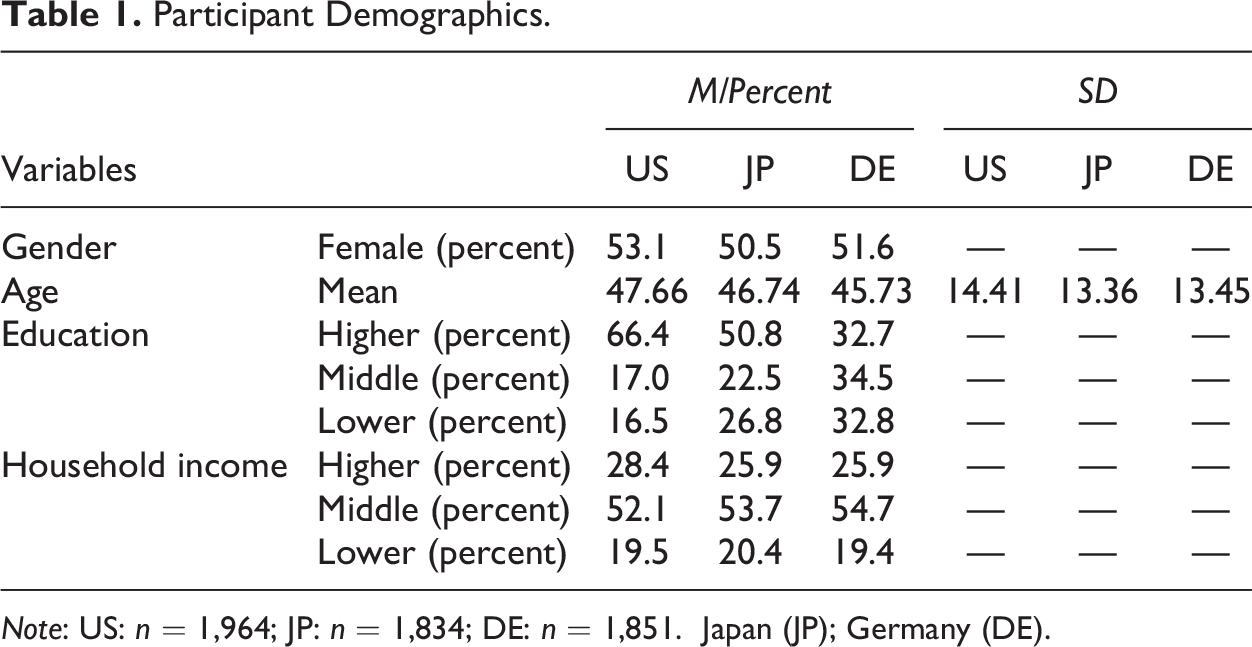
Note: US: n = 1,964; JP: n = 1,834; DE: n = 1,851. Japan (JP); Germany (DE).
Measures and Analyses
As shown in Table 1, the proportions of gender, age, and household income were about the same in all three countries, and the proportions for educational levels were slightly different. The US respondents had relatively higher educational backgrounds than the other countries. According to OECD data (OECD, 2021), about 50 percent of the population in the US attained tertiary education, about 53 percent in Japan, and about 31 percent in Germany. The educational levels of survey respondents from Japan and Germany were closely aligned with the OECD statistics, but the US survey respondents had relatively higher educational levels. This may reflect the differences in education systems among the countries, or the proportional difference of online opt-in panels among the countries, but the current data cannot provide further interpretation for this issue.
In this section, we first consider whether the degree of exposure to gene editing information is different among the three countries. Second, the split-ballot experimental design of randomly assigning the participants to two groups—the animal group, which was provided information using animal pictures, and the plant group, which was provided information using plant pictures—is explained. Third, we explain how the dependent variables of risk perceptions and benefit perceptions are constructed.
Degree of Awareness and Interest in Gene Editing Technology Information and Trust in Food Governance
Before respondents completed the survey items, we indirectly assessed their degree of exposure to gene editing information in their countries by posing the following proxy questions: “Do you know about gene (genome) editing technology?” “Do you know that genomic research has been applied to agricultural products?” and “Are you interested in the genomic research applied to agricultural products?”
Answers to these questions indicated to some extent the degree of respondents’ exposure to gene editing information. The distribution of answers is shown in Table 2.
Degree of Awareness of and Interest in Information on Gene Editing Technology by Country.
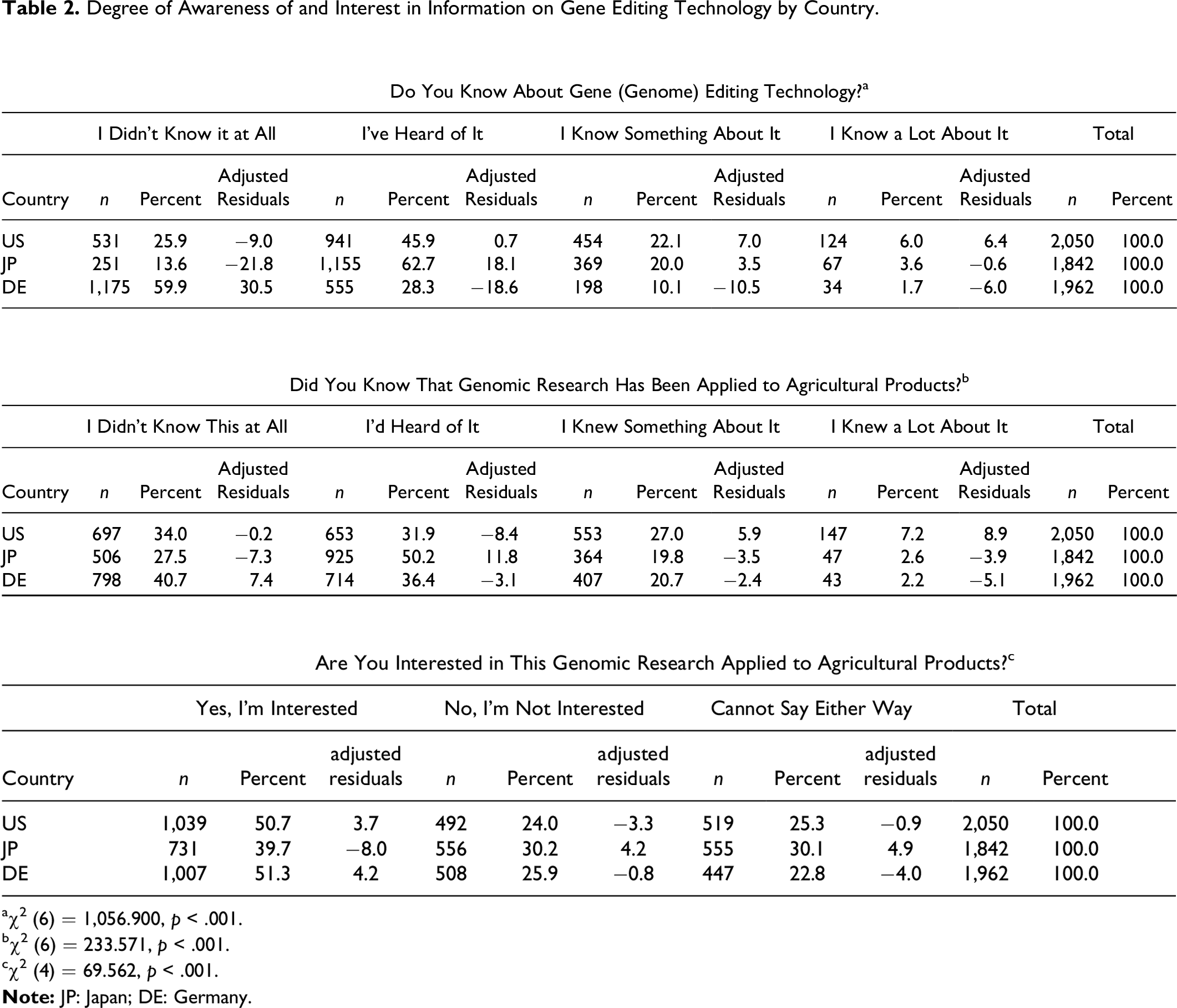
aχ2 (6) = 1,056.900, p < .001.
bχ2 (6) = 233.571, p < .001.
cχ2 (4) = 69.562, p < .001.
Respondents answered the proxy questions for degree of exposure to gene editing information before any information on the technologies was given to respondents, so the experimental conditions were not compromised. The most selected answer to the question, “Do you know about gene editing technology?” by US and Japanese people was “I have heard of it,” and most Germans selected “I do not know anything about it.” As for the question “Did you know that genomic research has been applied to agricultural products?” more people in the US answered that they “knew about it” compared to the other two countries. Japanese people answered “I’ve heard of it” more than the other two countries, and German people answered, “I didn’t know anything about it” more than the other two countries. Regarding the question on interest in genomic research as applied to agricultural products, Japanese people showed less interest compared to the other two countries. The data indicate that the German public has a high level of interest in learning more about gene editing technology but has little existing knowledge of the subject. This suggests that people in Germany had less access to information compared to the other two countries at the time of the survey.
We constructed the variable, trust in food governance, by aggregating the following four items and asking respondents to assess them on a seven-point scale: Food safety assessments conducted by the government are reliable enough. The government is committed to food safety and security. (Your country’s) food safety standards are set strictly compared to the rest of the world. Overall, (your country’s) food industry providers are committed to safety and security.
The items were used in a previous study and reliability of the scale was repeatedly confirmed via internal consistency and not influenced by the experimental conditions. The analysis of variance (ANOVA) test (F = 42.923; p < .001) and post hoc mean comparison revealed the statistical difference among the three countries indicated that people in the US had the highest trust in food governance (M = 19.115), Germany was second (M = 18.695), and Japan was last (M = 17.677). The order of the trust in food governance system in the three countries were thus slightly different from the trust in government in general mentioned in Introduction section, where Germany ranked the highest, followed by the US and Japan, which ranked lowest.
Split-ballot Experimental Design
Respondents were provided with textual information explaining genomes, as well as the agricultural applications of genome research. Next, information on the types of breeding, gene editing, genetic modification, and conventional breeding explained with text and illustrations. Gene editing technology was explained in contrast to the other breeding technologies. The information sheet given to participants is the same employed in previous studies (Kato-Nitta et al. 2019; Kato-Nitta et al. 2021).
The respondents were randomly assigned to one of the two groups who were shown either pig or tomato illustrations. This split-ballot experimental design was employed in a previous study in Japan (Kato-Nitta et al. 2021) and extended to suit the purpose of the current study by adding English and German translations. The information with illustrations for each country is shown in Figure 1.
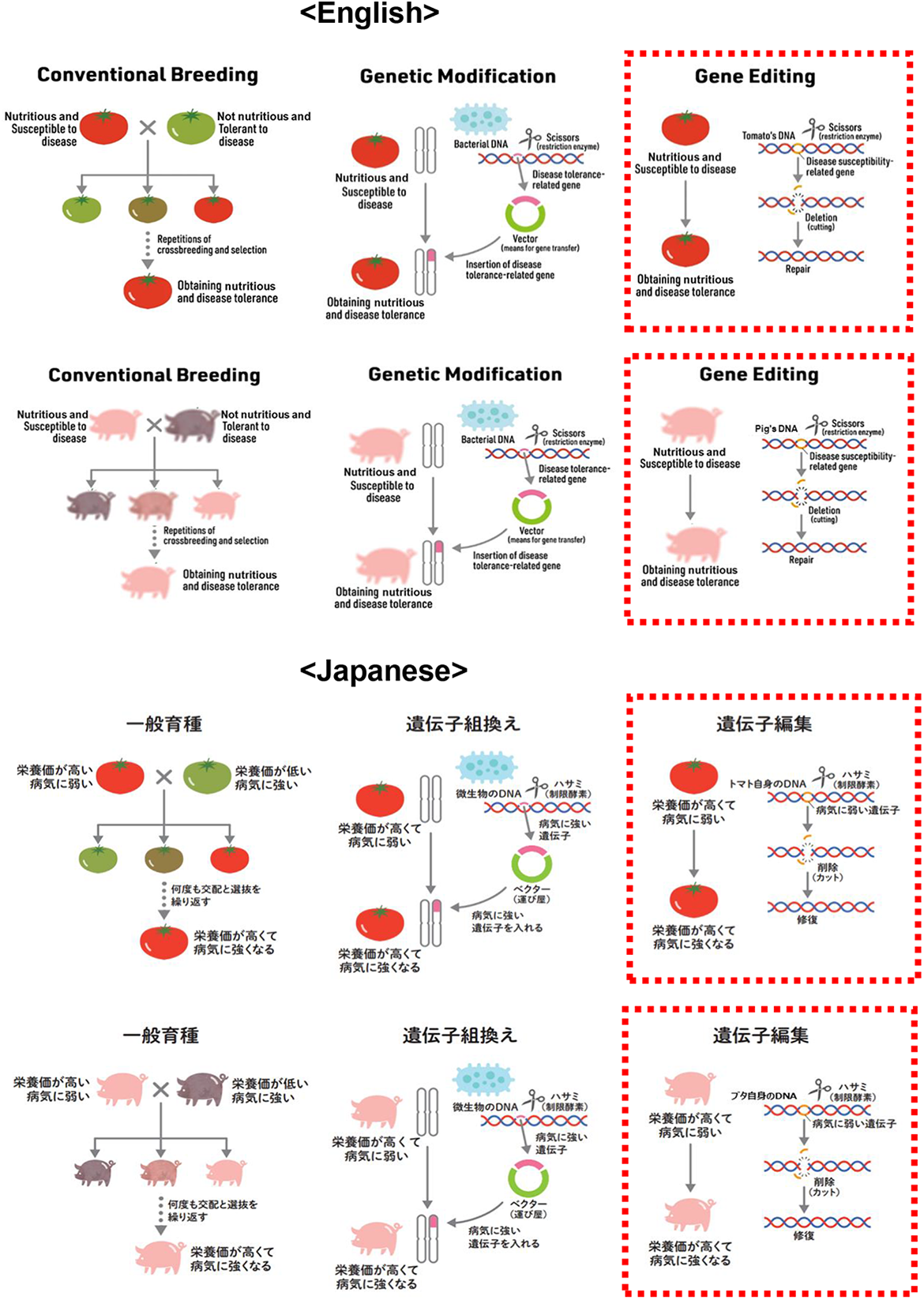
Information Provision with Illustrations (animal group and plant group) in English, Japanese, and German.
Dependent Variable Construction
Measurement of dependent variables was performed after the information was provided to the participants, and their risk and benefit perceptions were assessed using the items shown in Table 3. As such, we measured risks and benefits separately, which has been empirically demonstrated as a more suitable technique than measuring them within the same scale (Binder et al., 2012). Participants responded to these set of items three times for the application of gene editing, genetic modification, and conventional breeding. The order of the three sets of items provided to the respondents were randomized so that the order effects were adequately controlled. The items were employed from a previous study that reported reliability (internal consistency; Kato-Nitta et al. 2019) and assessed using a five-point scale (5 = agree, 4 = somewhat agree, 3 = cannot say either way, 2 = somewhat disagree, 1 = disagree). Six items to assess risk aspects were aggregated into one item to construct risk perceptions. Three items to assess benefit aspects were aggregated into one item to construct benefit perceptions. The details of aggregated items of applications of GE (gene editing), GM (genetic modification), and CB (conventional breeding) are provided in Table 3 with respective Cronbach’s alphas, means, and standard deviations of the dependent variables in the three countries. As shown in Table 3, the reliability (internal consistency) of the dependent variables of risk perceptions and benefit perceptions was confirmed in each country.
Descriptive Statistics of Dependent Variables by Country.
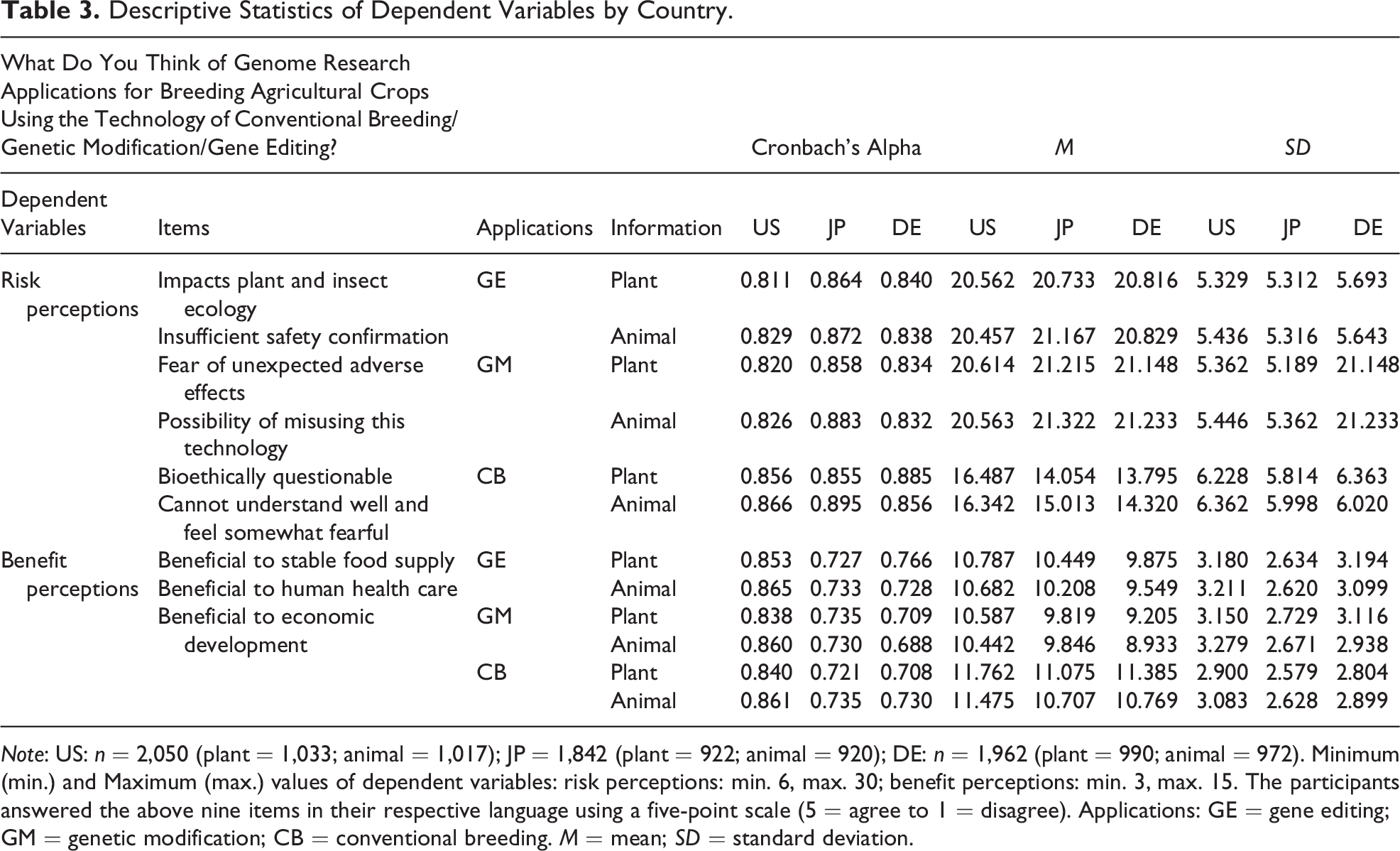
Note: US: n = 2,050 (plant = 1,033; animal = 1,017); JP = 1,842 (plant = 922; animal = 920); DE: n = 1,962 (plant = 990; animal = 972). Minimum (min.) and Maximum (max.) values of dependent variables: risk perceptions: min. 6, max. 30; benefit perceptions: min. 3, max. 15. The participants answered the above nine items in their respective language using a five-point scale (5 = agree to 1 = disagree). Applications: GE = gene editing; GM = genetic modification; CB = conventional breeding. M = mean; SD = standard deviation.
Statistical Analysis
For the first purpose of statistically examining the variations in the mean values of public perceptions of risks and benefits of the application of gene editing technology to food crops among the three countries, we first applied a multivariate analysis of variance (MANOVA) test by including both dependent variables in one model. Then, the post hoc ANOVA was applied (H1) for each dependent variable, because risk perceptions and benefit perceptions are explicitly different concepts that should be treated separately. We adopted this two-step approach to keep the inflation of type I errors to a minimum. When main effects of country were observed, multiple mean comparisons with Bonferroni correction were applied to specify the differences among countries. For the second purpose of investigating the effect of differences in information provision, that is, to confirm the overall mean differences in perceptions of risks and benefits of the application of gene editing between the animal groups and the plant groups (H2-1 and H2-2), additional t-tests were applied to each country.
Results
Mean Differences in Perceptions of Risks and Benefits
Gene editing
A two-factor MANOVA test was first conducted with risk perception and benefit perception as dependent variables, and the results showed no interaction effects between country and information provision (plant/animal): Wilk’s Λ = 0.999, F (df1 = 4, df2 = 11,694) = 0.961, p = .427. The main effects of country (group differences among the three countries) and information provision (group differences between the plant group and the animal group) were examined and found to be statistically significant: country, Wilk’s Λ = 0.980, F (df1 = 4, df2 = 11,694) = 30.162, p < .001; and information provision, Wilk’s Λ = 0.999, F (df1 = 2, df2 = 5,847) = 4.140, p = .016. After confirming the above results of the MANOVA test, we proceeded to two-factor ANOVA to separately interpret the effects on two dependent variables of risk perceptions and benefit perceptions of gene editing.
Figure 2 shows that the main effect of country was statistically significant (p = .034); the results of multiple mean comparisons revealed the following: risk perceptions for agricultural application of gene editing were US < Japan (p < .001); US < Germany (p < .001), but no statistical difference between Germany and Japan was observed. There is a main effect of country observed (p < .05), but no main effect of group was observed (p = .425). Further, no interaction effect of country by group (difference in information provision) was found in risk perceptions.
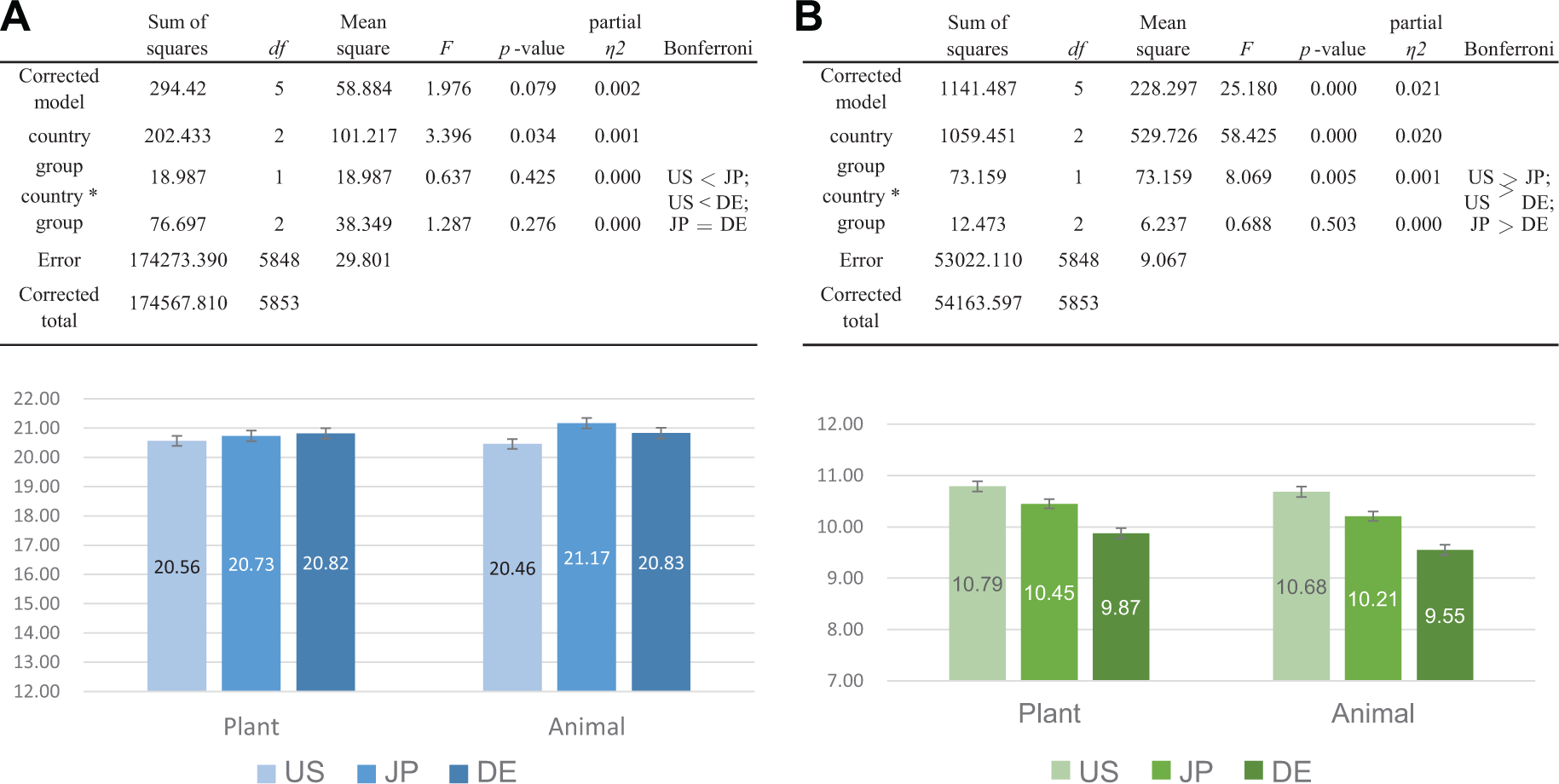
(A) Two-factor analysis of variance (ANOVA) for gene editing (risk perceptions). (B) Two-factor ANOVA for gene editing (benefit perceptions). Note. Error bars are standard errors.
The result of the ANOVA test for benefit perceptions for agricultural application of gene editing was statistically significant (p < .001). Main effects are observed for both country (p < .001) and group (p < .01), as well as interaction effect of country by group (difference in information provision) in benefit perceptions. The post hoc multiple mean comparison revealed that US > Japan (p < .001), US > Germany (p < .001), and Japan > Germany (p < .001).
There were differences among all three countries for benefit perceptions, but there was no statistical difference between Japan and Germany in terms of risk perceptions. People in the US, a country with less strict regulations for molecular breeding than the other two countries, found the highest benefit and lowest risk for agricultural applications of gene editing. Hence, H1 was supported.
Genetic modification
Figure 3 shows ANOVA test results for both risk and benefit perceptions were statistically significant (p < .01). Therefore, significant mean differences of the two dependent variables among the three countries were observed. There were main effects of country observed in both risk and benefit perceptions (p < .001), but no main effects of group or interaction effects of country by group (difference in information provision) were found in either risk perceptions or benefit perceptions. Multiple comparison of means revealed the following: risk perceptions for agricultural application of genetic modification were US < Japan (p < .001), but there were no statistical differences between the US and Germany or Germany and Japan. Benefit perceptions were US > Japan (p < .001), US > Germany (p < .001), and Japan > Germany (p < .001).
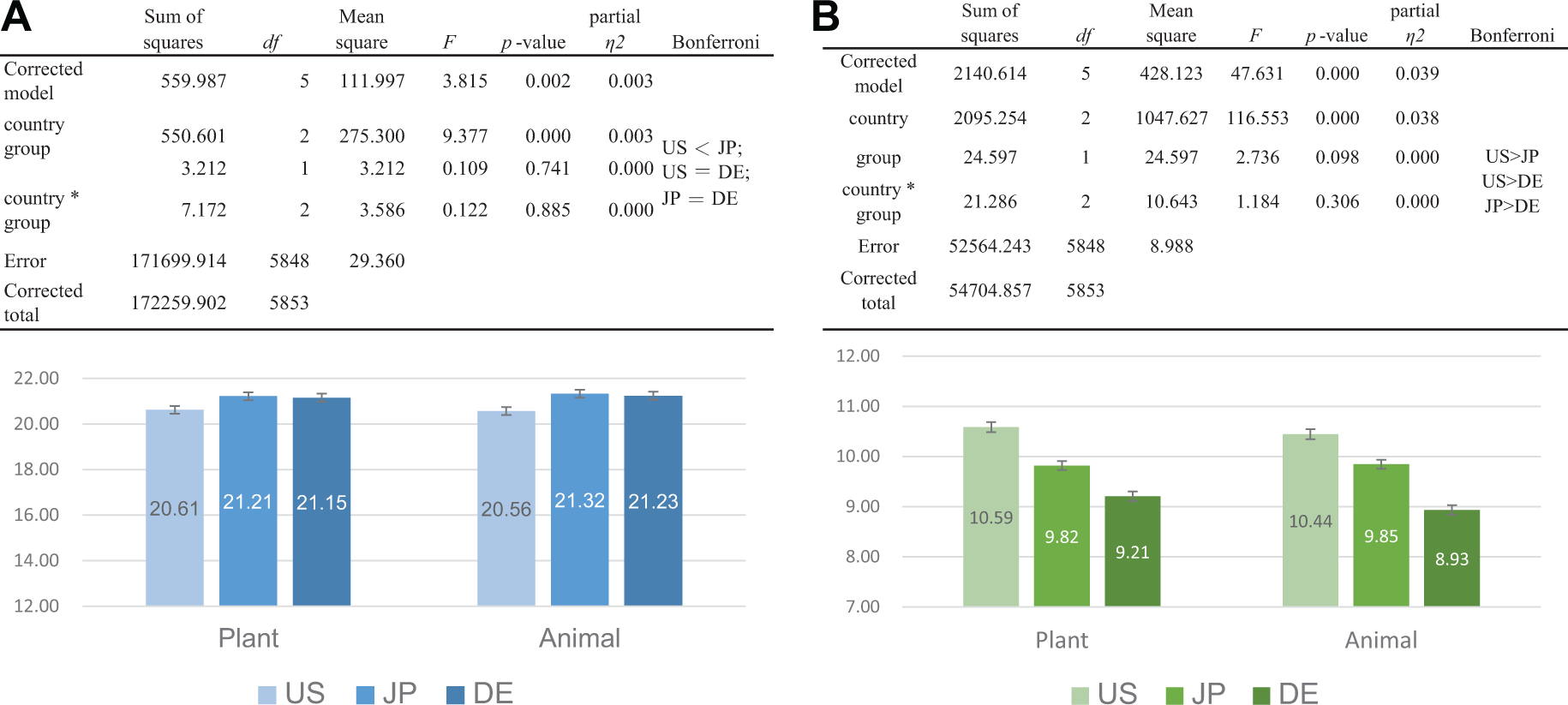
(A) Two-factor analysis of variance (ANOVA) for genetic modification (risk perceptions). (B) Two-factor ANOVA for genetic modification (benefit perceptions). Note. Error bars are standard errors.
The statistical results of molecular breeding, that is, gene editing and genetic modification, were similar. People in the US consistently found the highest benefit and lowest risk for agricultural applications of gene editing as well as genetic modification.
Conventional breeding
As shown in Figure 4, the results of ANOVA tests were statistically significant (p < .001) for both risk and benefit perceptions. Significant mean differences of the two dependent variables among the three countries were observed. The main effects of both country and group were statistically significant (p < .01) for both perceptions of risks and benefits of conventional breeding. The interaction effect of country by group was found in risk perceptions (p < .05), but no interaction effect of country by group was found in benefit perceptions.
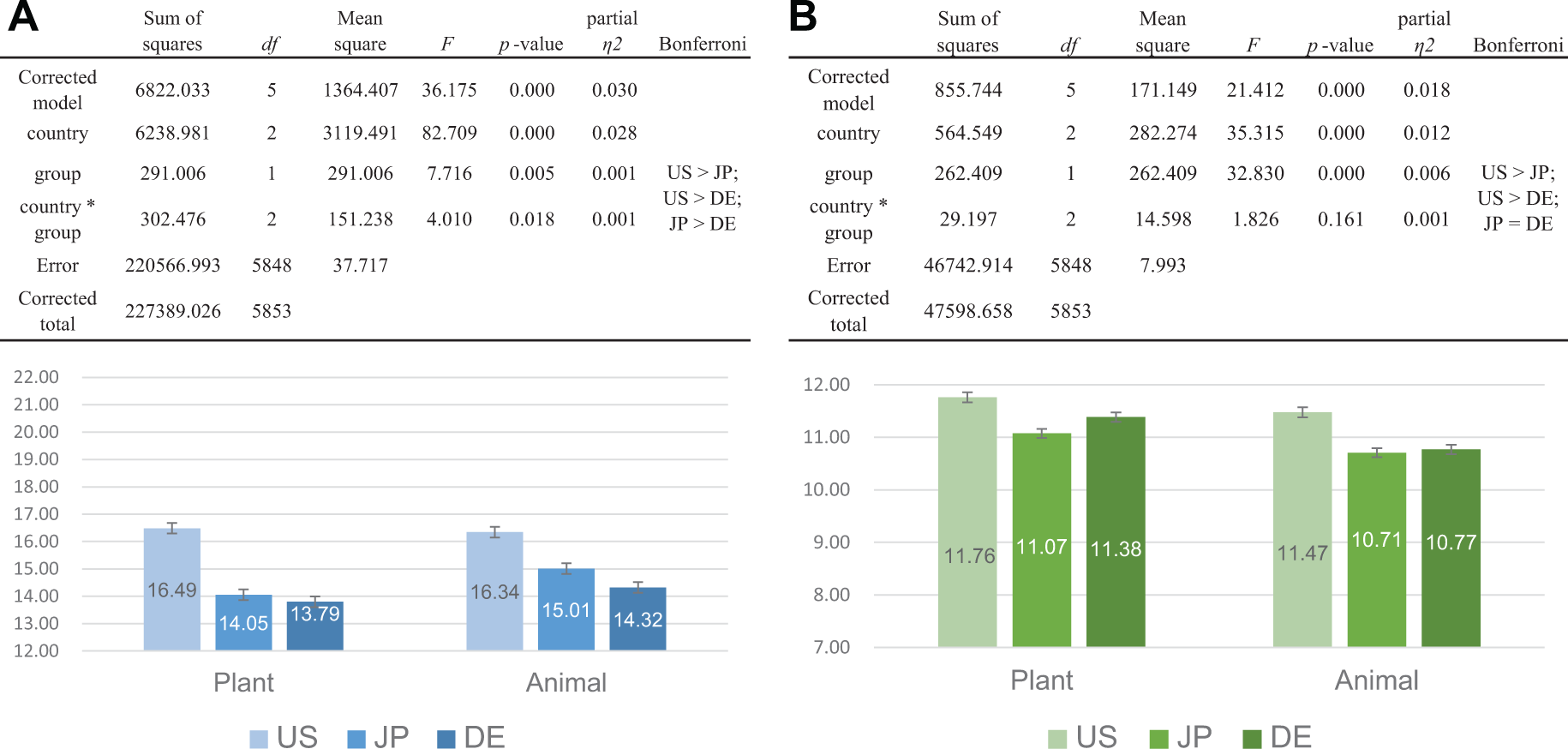
(A) Two-factor ANOVA for conventional breeding (risk perceptions). (B) Two-factor ANOVA for conventional breeding (benefit perceptions). Note. Error bars are standard errors.
The results of multiple mean comparisons revealed that there were statistical differences among all three countries for risk perceptions (US > Japan > Germany). As for benefit perceptions, the US had the highest benefit perception (US > Japan, US > Germany), while no statistical difference was observed between Japan and Germany. Contrary to molecular breeding, the US had the highest risk perceptions toward conventional breeding than Germany and Japan. Relatively speaking, people in the US did not differentiate between molecular breeding and conventional breeding to the same degree as people in Japan or Germany.
Effects of Providing Information Using Plant or Animal Illustrations, Across Three Locations
To investigate the effects of differences in information provision between the animal and plant groups for the two kinds of perceptions of gene-edited crops, t-tests were applied to each country. Results for risk perception were: Japan, t(1,840) = 1.753, p = .080; US, t(2,048) = .442, p = .658; and Germany, t(1,960) = .051, p = .959. There was no statistical difference between the animal group and the plant group for risk perceptions of agricultural applications of gene editing in all countries, as shown in Figure 2, as well statistical tests above. Therefore, H2-1 was not supported.
Results for benefit perception were as follows: Japan, t(1,840) = 1.972, p = .049, Cohen’s d = 0.092; US, t(2,048) = 0.741, p = .459, Cohen’s d = 0.033; and Germany, t (1,960) = 2.289, p = .022, Cohen’s d = 0.103. As shown in Figure 2, as well as in the above statistical results, there were statistical differences between the animal group and the plant group for benefit perceptions of agricultural applications of gene editing in Japan and Germany, but there was no statistical difference between the two groups in the US. This results indicates that despite receiving the same textual information under the same experimental settings, the effects of different illustrations shown to participants resulted in differences in benefit perceptions in two countries (Japan and Germany), that is, plant illustrations resulted in higher benefit perceptions. This was not the case among US respondents, concordant with a previous study (Kato-Nitta et al. 2021) that examined the effects of information provision on benefit perceptions of gene-edited foods in Japan. Therefore, H2-2 is supported in countries that have relatively strict regulations.
Summary of the Statistical Analyses
The figures, tables, and statistical tests provided are summarized as follows. Though the effect sizes in the statistical tests described are generally smaller than the statistical recommendation, we point out that the largest effect sizes were observed in the main effects of country. Regarding perceptions of gene editing, the response tendency of US participants was distinct from the other two countries. Japanese and German people showed relatively similar risk perceptions of gene editing, as there were no statistical differences between Japan and Germany. The benefit perceptions of gene editing differed among the three countries: US participants showed the highest benefit perceptions of gene editing, German participants showed the lowest benefit perceptions, and Japanese participants fell between the two. The US had the lowest mean values for both risk perceptions of gene editing and genetic modification, but the highest mean values for risk perceptions of conventional breeding among them all. Hence, US participants were distinct from Japanese and German participants regarding perceptions of crop applications of conventional breeding.
Regarding risk perceptions of gene editing, no statistical differences were observed between the animal group and the plant group in all three countries. Thus, in the current study, whether they were provided information with pig illustrations or tomato illustrations, risk perceptions of the crop application of gene editing were not influenced. As for benefit perceptions, statistical differences were observed between the animal group and the plant group in Japan and Germany. In this study Japanese and German participants’ benefit perceptions of agricultural application of gene editing were influenced by whether they were provided information with pig or tomato illustrations. By contrast, there was no statistical difference between the animal group and the plant group for US participants’ benefit perceptions. Therefore, the response tendency of the US was also distinct from that of the other two countries.
Discussion and Conclusion
The variations in the mean values of public perceptions of risks and benefits of the application of gene editing technology to food crops among the US, Japan, and Germany were statistically examined. The effects of differences in information provision between the animal and plant groups were statistically investigated. Overall, US participants demonstrated the most positive attitude with perceptions of highest benefit/lowest risk for applications of gene editing technology. Thus, our assumption that public attitudes toward gene editing are more positive in a country with less strict regulations than in a country with stricter regulations was valid. GMOs were introduced more than thirty years ago, and we can speculate that the use of GMOs and its regulations constitute the social context for gene editing technology, that is, path dependency may also be relevant. Although the results of this study alone cannot verify the effects of path dependency or its origins, the study provides useful information for governments to make informed decisions about emerging gene editing technologies (Suza et al. 2018).
There was no statistical difference between Japan and Germany regarding risk perceptions of the agricultural application of gene editing. This result was similar to Komoto et al. (2016) who found that apprehension toward GM food was lowest in the US when compared with Japan and France. The current study further evaluated benefit perceptions and found that Japanese participants perceived greater benefits from gene editing than German participants. Although Germany and Japan have experienced strong NGO opposition to GM foods, they had quite different attitudes toward food governance, interests in biotechnology, and awareness of on gene editing. The results of the current study showed that German participants had higher trust in food governance and greater interest in biotechnology than Japanese participants, yet they had lower awareness of gene editing: 59.9 percent of German participants and 13.6 percent of Japanese participants answered, “I do not know anything about it” in response to the question “Do you know about gene editing?” This result for Germany is in line with reports from the 2019 survey of Europeans (EFSA 2019), which showed that only 21 percent of respondents had heard of gene editing technology. One possible interpretation for the result of the current study’s relatively lower benefit perceptions in Germany is that the German participants had less exposure to information on gene editing and its benefits. This can be interpreted in different ways. One possible interpretation is Yamaguchi’s argument that in Japan various narratives regarding “expectations for new technologies” are becoming more established, and these narratives may have had an impact (Yamaguchi, 2020). She further argues that this could be explained by the notion of sociology of expectation (Borup et al. 2006; Brown et al. 2003). To date, there have been few empirical analyses of how such expectations influence public perceptions of new technologies, and we hope future studies concern this question.
US participants showed the most pronounced favorable attitude toward the application of gene editing to agriculture and conventional breeding. Among the three countries, they held perceptions for the highest benefit and lowest risk toward gene editing and genetic modification—as well as the highest perceptions of risk for conventional breeding. Such results may indicate that the US public do not differentiate between molecular breeding and conventional breeding to the same degree as German and Japanese audiences. This result is consistent with a previous study (Bain, Lindberg, and Selfa 2020) focusing on the US. We speculate that survey respondents in the US did not feel the need to distinguish between gene editing technology and conventional breeding of food crops because neither method is regulated. In fact, GM foods have been common for some time in the US, which may have also influenced participants’ attitudes.
Herman, Fedorova, and Storer (2019) point out that overregulation of technology in a country might strengthen public fears, and when deciding on appropriate regulation, national culture should be considered. Both the Japanese and German governments have enacted strict regulations for GM foods—therefore, Japanese and German participants may demonstrate similar risk perceptions of gene-edited food crops. However, as the Japanese government has now softened its stance and introduced a more proactive policy for gene-edited food than the US (Tachikawa and Matsuo 2021), Japanese participants might have moved slightly closer to the US perception of the benefits of gene-edited food. In other words, people’s risk perceptions of emerging technology could be interpreted as more conservative than people’s benefit perceptions. This result aligns with a previous study (Kato-Nitta et al. 2019) that proposed a hypothesis that the assumption of deficit model—whereby an increase in public science literacy linearly improves their acceptance of emerging science and technology—is valid for increasing benefit perceptions but not for reducing risk perceptions. Such results could be interpreted by the difference in civic epistemologies, and the current study successfully extends Jasanoff’s (2005) argument by including Japan.
Compared to Japan and Germany, US participants’ attitudes toward gene editing did not seem to be influenced by different modes of presenting information (pig or tomato illustrations). This could mean that consumers in the US did not distinguish between gene editing of plants and animals to the same degree as consumers in the two other countries, probably owing to their different civic epistemologies. This result may be rather surprising for US regulators. At the time of the survey in March 2020, the US government had proposed that gene-edited animals should be subject to strict regulation. One possible interpretation is that in the US, people tend to be more familiar with gene editing because of governmental science policies. An alternative interpretation is that because gene-edited foods are already available in US markets, they are more accepted. Another possible interpretation is that US scientists and policy makers have more successfully engaged with the public than their counterparts in Japan or Germany. Among others, researchers (Ishii and Araki, 2016; Farid et al. 2020; Ujiie 2021) have underscored the importance of scientific communication, and that the communication gap between scientists and the public can be narrowed by sincere consideration for the public’s right to know. Further studies should examine which of the above conditions of people’s familiarity, availability of actual products, or high standards of public communication of science relate to more positive attitudes toward this technology in the US have been realized.
Our empirical findings and discussion are summarized in Table 4.
Summary of the Current Study.
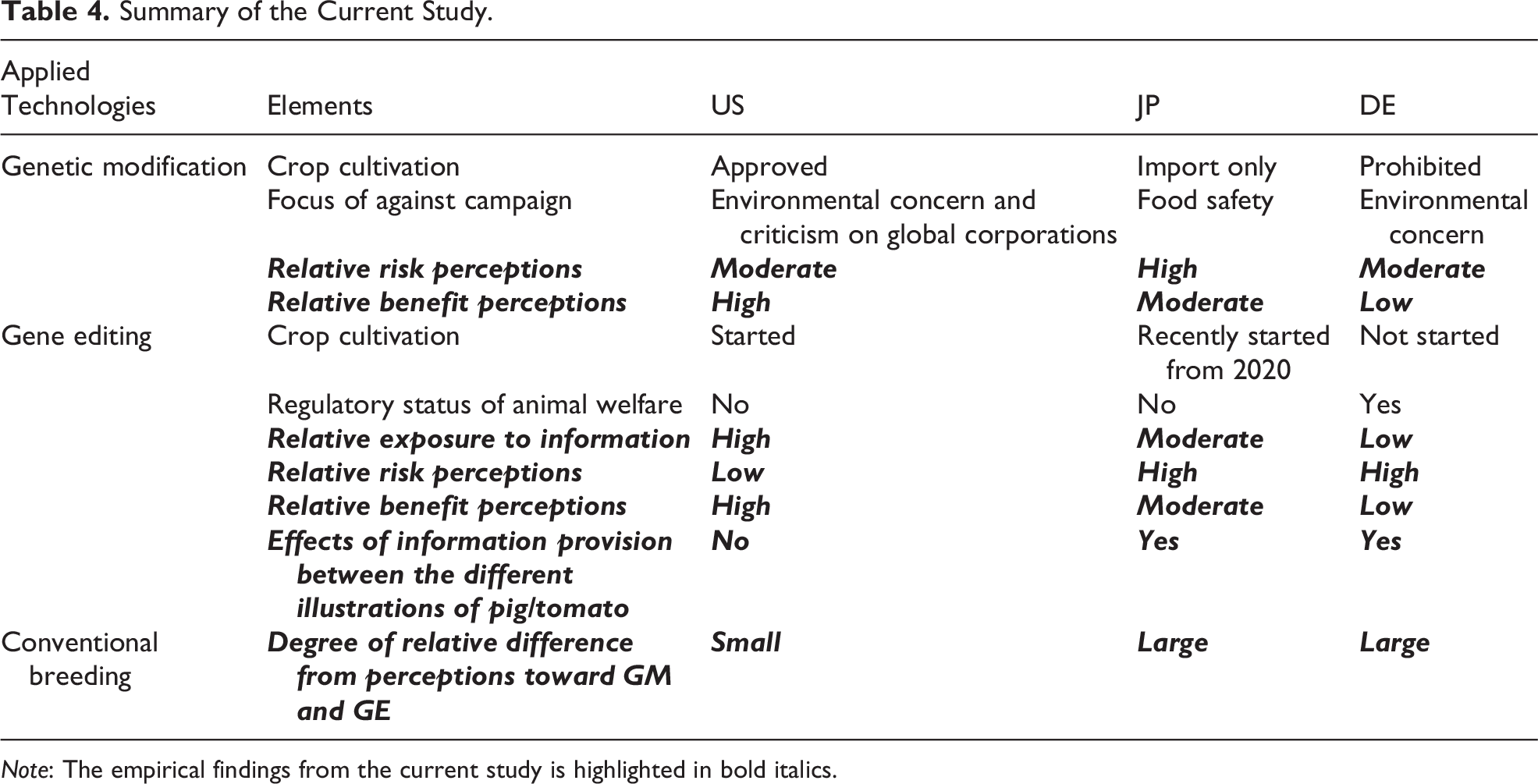
Note: The empirical findings from the current study is highlighted in bold italics.
The current study took a novel approach (1) by cross-nationally investigating people’s attitudes toward the application of gene editing to food crops, including participants from North America, Europe, and Asia and (2) by comparing responses about presenting information on gene editing using either animal or plant illustrations. There are several limitations to note. First, as we used an online survey instrument to measure public perceptions, we did not obtain external empirical data from traditional and social media. We used proxy items to indirectly assess the degree of respondents’ exposure to gene editing information through traditional and social media, and future studies should directly assess the amount of exposure in each country. Second, the study should be replicated with data that more rigorously represent the US, Japan, and Germany. Although we used proportionate sample allocation in each country to approximate the demographic distribution of the target populations, when using a web survey, the sample cannot be considered representative of the entire population of a country. Third, factors that may affect attitudes toward new breeding technologies, such as scientific knowledge, should be included in future analyses. Finally, although the current study adequately proved that the notion of civic epistemology is a useful framework to understand people’s perceptions of biotechnology in the US, EU, and Japan, the results are not adequate for situating Japan in the same epistemological context as the US or Germany, nor for proposing a new context for it. The notion of civic epistemology is relevant for international STS studies of public perception of the risks and benefits of gene-edited food crops, and further accumulation of empirical evidence, of the type presented in this study, deepens the research in this field and establishes an empirical baseline for future studies.
Footnotes
Declaration of Conflicting Interests
The author(s) declared no potential conflicts of interest with respect to the research, authorship, and/or publication of this article.
Funding
The author(s) disclosed receipt of the following financial support for the research, authorship, and/or publication of this article: This work is supported by the Japan Society for the Promotion of Science (JSPS) KAKENHI (JP16H04992; JP17K01015; JP17K13866; JP18K18436; 21K02938) and JST Program on Open Innovation Platform with Enterprises, Research Institute and Academia (OPERA) gene editing consortium grant.
