



Abstract
This study presents a new student-centered just perspective on school engagement in Finland. Using cultural-historical activity theory as a conceptual framework, it explores the views of adolescent students, school staff, and school partners through semistructured interviews (n = 29) and thematic analyses asking what adolescents find engaging in school. The findings across the three interview groups show a limited emphasis on the official object of schoolwork, namely the content taught in school, compared to a much greater emphasis on peer relations. Students’ own interests related to content they engage with in their lives outside the school remain largely disconnected from the adults’ answers and from the content of instruction. In light of these findings, this study points to the necessity even in the generally acclaimed educational system in Finland to explore ways to support school engagement so that adolescents may perceive a continuity between what is taught in school and nascent interests in their own lives. To move in this direction, the notion of object-oriented critical school engagement is proposed.
Keywords
Despite Finland’s reputation for having one of the most equitable education systems and a history of strong academic learning outcomes, there seems to be pervasive difficulty in publicly discussing what it is that students should engage in at school. A similar orientation can be seen in most studies on school engagement worldwide, in which the content of instruction and learning frequently appears as if untouchable and very hard to question. As shown in a study of the Finnish curriculum reform, even the most inclusive processes aimed at opening up this “black box” tend to lead to little or no change in the curriculum sections that received the most critical comments (Säily et al., 2021).
This current state is problematic from the viewpoint of social justice because it tacitly nourishes disengagement. As long as the content of instruction and learning remains as if in a black box that cannot be opened, the risk is to exacerbate rather than counteract students’ alienation from what they are asked to do in school. This has serious consequences, especially among the most vulnerable social groups, leading “to an accumulation of educational capital or power which advantages learners from privileged backgrounds but disadvantages others” (Choudry, 2023, p. 2).
School is where students spend a significant amount of their time. Many Finnish students do not like school, are burned out at school, are often absent or drop out, or do not find school meaningful (Määttä et al., 2020; Salmela-Aro & Upadyaya, 2020). Only 52% of Finnish eighth and ninth graders say they like school, and 20% of middle-school students have experienced school exhaustion (THL, 2023). Finland is positioned almost last in international Organisation for Economic Co-operation and Development (OECD) comparisons of student happiness in school (Salmela-Aro, 2022). The pressures, stress, and burnout students experience at school have lately been much discussed in Finland (e.g., Read et al., 2022; Salmela-Aro, 2022; Salmela-Aro & Upadaya, 2020). Similar worrisome trends are apparent on a global scale (see Bundick et al., 2014; McGorry et al., 2024; McPherson et al., 2023).
The desire to foster engagement of students in school has led to a rapid increase in research on this topic during the past few decades (e.g., Salmela-Aro et al., 2021; Wang & Degol, 2014; Zyngier, 2008). As a term, school engagement generally refers to students’ active participation, interest, and personal investment in, or even desire and passion for school activities and learning (Christenson et al., 2012). Engagement has also been characterized as the very bedrock of students’ academic experience and performance (Skinner et al., 2016). Engaged students are able to recover after setbacks and accomplish what they want to achieve, and are more likely to find school tasks to be satisfying (Wang et al., 2019).
The existing literature on school engagement tends to be dominated by studies that do not emphasize what students should primarily engage in (Ashwin & McVitty, 2015). Wong and Liem’s review (2021) notably highlights the remarkable scarcity of discourse surrounding the object of engagement within the student engagement literature, stating, “There is surprisingly a dearth of discourse on the object of engagement in the student engagement literature” (p. 15). In a similar way, Salmela-Aro et al. (2021) point out that it is imperative for researchers to make clear the object of engagement. Despite its fundamental significance, this crucial aspect appears to be largely overlooked, warranting minimal discussion within the field, as if it were placed in a “black box.”
In this context, we adopt the term black box to refer to the insufficient attention afforded to the object of engagement in the current literature. Specifically, this concept relates to the state in which the object of engagement remains undefined, unexamined, and implicitly assumed, despite its inherent relevance to the overarching concept of engagement. Generally, the term black box is employed to describe closed debates, processes, and controversies surrounding complex issues that are often challenging to confront and, as a consequence, frequently avoided (Latour, 1987). In this context, we conceptualize the black box as a space taken for granted and at the same time representing something that is difficult to talk about and is thus safely put aside (Augustsson, 2021).
This study is based on preliminary interviews conducted with eighth-grade students, school staff, and external partners, before implementing the Change Laboratory (CL) formative intervention during regular school hours (Engeström et al., 2023). These interviews offered valuable insights into participants’ daily activities and concerns, which were used as “mirror material” to facilitate collaborative reflection and analysis during the CL process (Hopwood, 2024; Lipponen et al., 2024). This research is part of a broader initiative that examines adolescents’ quest for significance (Engeström et al., 2023), exploring how young people can engage with significant issues in school. The CL method, rooted in cultural-historical activity theory, is a participatory method designed to support expansive learning and transformative agency (Sannino et al., 2016; Sannino & Engeström, 2017; Virkkunen & Newnham, 2013). It empowers participants to critically analyze their practices and collaboratively envision new possibilities for their activities.
Our inquiry, therefore, began by initiating open discussion with adolescent students, school staff, and the school’s outside partners on what students found engaging in school. The analyses of this article address (1) adolescent students’ experiences with and perceptions of the official object of school learning, and (2) relevant adults’ perceptions of students’ experiences with this official object of school learning. The official object of school learning consists of the knowledge prescribed in the curriculum and conveyed to the students by the teachers in lessons and exams.
In the following, we present an overview of the literature on school engagement, pointing out the gap our research questions seek to fill. Then we introduce our conceptual lenses stemming from cultural-historical activity theory and its core concept of object of activity. The next section describes the research setting and data, after which we present the data analysis of this study. Finally, we present a summary of the findings and discuss them as a basis for our proposal to rethink the concept of school engagement.
School Engagement in the Literature
The concept of school engagement goes back to the 1980s. It was developed to understand students’ boredom, alienation, and reasons for dropping out of school (Finn & Zimmer, 2012). Several labels are applied to this concept (see, e.g., Corso et al., 2013; Fredricks & McColskey, 2012; Wong & Liem, 2021), often seen as referring to a broad multidimensional phenomenon (Finn & Zimmer, 2012; Fredricks et al., 2004; Wang et al., 2017). We discuss this concept along the lines proposed by Skinner et al. (2016) and Wang et al. (2019), according to whom engaged students find what school offers satisfying and a significant resource for achieving their goals and recovering from setbacks.
Studies on school engagement have proliferated since the mid-1990s (e.g., de Carvalho & Veiga, 2023; Zyngier, 2008), with a sixfold increase during the past decade (Salmela-Aro et al., 2021). These studies largely focus on adolescence, are realized by means of quantitative methods, and take as their starting point students’ self-reports (e.g., Fredricks & McColskey, 2012; Salmela-Aro et al., 2021). A pervasive finding of these studies is that school engagement tends to decrease during secondary school (e.g., Fernández-Zabala et al., 2016; Patall et al., 2024). It is therefore assumed that a better understanding of school engagement would make it possible to improve students’ success in school (Fredricks et al., 2019; Lee, 2014; Reschly & Christenson, 2012).
Models of school engagement typically include three dimensions—behavioral, emotional, and cognitive (Bundick et al., 2014; Fredricks et al., 2004; Wong & Liem, 2021)—aimed at describing how students act, feel, and think when learning (Wang et al., 2019). Behavioral engagement refers to students’ participation in school activities, such as following the rules, contributing to the class discussion, and being involved in school governance (Fredricks et al., 2004). The behavioral dimension of engagement is considered foundational for both achieving positive academic outcomes and preventing dropping out.
Emotional engagement pertains to students’ affective responses to teachers, classmates, and school activities (Lee, 2014). The emotional dimension reflects experiences of positive and negative feelings, such as enjoyment and anxiety, about learning (Wang et al., 2019). A study by Lam et al. (2012) showed that students engage in school when they feel that their teachers adopt motivating instructional practices and when they have socioemotional support from their teachers and peers.
Cognitive engagement includes thoughtfulness and willingness to exert the effort necessary to comprehend complex ideas and master difficult skills. Cognitively engaged students display learning motivation and are willing to put effort into learning (Allen & Boyle, 2022). Shernoff et al. (2014) found that adolescents’ engagement increased when the perceived the challenge of the task and their own skills were high and in balance, the instruction given was relevant, and they had control over their learning environment. These authors suggest that student disengagement may stem from a perceived lack of challenge or meaning.
Some authors (Reeve & Tseng, 2011) have suggested that agency should be specifically included as an additional component of school engagement. Agentic engagement would describe students’ intentional attempts to enrich learning processes for themselves and others and to actively influence teachers’ instruction by sharing their interests, thoughts, and needs or asking questions (Reeve & Jang, 2022).
It has also been proposed that social engagement should be added as a new dimension to the meta-construct of school engagement (Fredricks et al., 2016). Social engagement represents a move beyond individual learning toward considering the importance of social interaction, collaboration, and help-seeking in schooling (Wong & Liem, 2021). Ryan et al. (2019) found that peers significantly influence youth engagement by shaping beliefs and behaviors. They provide belonging and support while creating an environment for role definition, which includes dynamics like bullying and victimization that impact engagement. Peers’ academic values and aspirations significantly influence adolescents’ school engagement (You, 2011; see also North & Ryan, 2018). In Yusof et al.’s (2018) study, students mentioned that they liked school because they could be with their friends. That study also identified teacher support as one of the vital school-contextual factors influencing school engagement.
The notion of engagement is described and measured in diverse ways across and within disciplines (af Ursin et al., 2023; Wong et al., 2024). For instance, Rowe et al. (2023) found that preservice teachers have a wide variety of conceptions of engagement, with no shared core understanding of it. Research on school engagement is characterized by theoretical diversity (Fredricks et al., 2016; Wong & Liem, 2021), and it is suggested that much more theoretical development is needed in this field (Salmela-Aro et al., 2021). More specifically, according to Wong and Liem (2021), more conceptual work is required to ascertain what the students’ specific focus of engagement might be, that is, defining the object in which students are engaged. Several authors have observed that students themselves are often excluded from discourse on and conceptualization of school engagement (Ashwin & McVitty, 2015; Pineda-Baez, 2019), which underscores the systemic structural inequalities present in education, wherein learners are consistently marginalized from essential discourse.
Finnish students’ learning outcomes have steadily deteriorated since 2006, when Finland was among the top performers in the Programme for International Student Assessment (PISA) (Ministry of Education and Culture [MEC], 2023). Although many students in Finland enjoy school and find learning valuable, a large number of them do not. It is especially worrisome that almost one-third of the students consider schoolwork worthless and irrelevant for future success, and some have questioned the intrinsic value of education (af Ursin et al., 2023). Although the drop-out rate in basic education is below 1% (Statistics Finland, 2020), only 15% of adolescent students feel enthusiastic about their schoolwork, and over 30% are exhausted. Feelings of anxiety have increased, and bullying, harassment, and violence are common (THL, 2023). The fall in the level of engagement stems from a widening gap between school practices and adolescents’ meaningful learning experiences outside school (Salmela-Aro et al., 2017). Only 11% of students feel they have good opportunities to influence the practices at school (THL, 2023).
The literature often treats school engagement as a decontextualized individual psychological trait or experience (e.g., Patall et al., 2024; Wang et al., 2019). In these studies, school engagement appears as if detached from the specific content of subject domains and types of study activities, with little attention paid to what it is that makes students engaged and how students may become practically involved in shaping their own learning content and activities. (For an example of studies that diverge from this trend, see Wong & Liem, 2021.)
To sum up, there is a need for research aimed at revealing what may drive students’ learning in school. In other words, research is needed to identify the object of school engagement among students. This article takes a step toward filling this gap by asking the following research questions:
How do different school actors perceive and engage with the content of teaching and learning in everyday schoolwork?
How are students’ interests and lived experiences reflected in their engagement with the content of schoolwork?
Building on literature emphasizing the broad and multidimensional nature of school engagement (Finn & Zimmer, 2012; Fredricks et al., 2004; Wang et al., 2017), we opted for an equally broad research perspective for the analysis presented here. Thus, our interviews did not explicitly ask the respondents to delve into specific areas of school life. We deliberately chose an open-ended stance, allowing the respondents to focus on the aspects of school life they found engaging, without imposing predefined foci from our perspective.
School Engagement and Cultural-Historical Activity Theory
Cultural-historical activity theory (CHAT) serves as the framework for this article. The choice of this theory is justified by its emphasis on what is referred to as the object of activity (Engeström, 2015). CHAT sees human activities as collective and productive endeavors driven by objects (Leont’ev, 1978). Leont’ev describes activity as a stable system where the division of labor organizes goal-oriented actions toward a collective purpose (Engeström & Sannino, 2021). A key distinction in CHAT is between activity and action—activities are persistent formations that evolve over time, whereas actions are time-bound and goal-directed (Lémonie, 2025).
In CHAT, human activity is conceptualized as an object-oriented, culturally and socially mediated, historically evolving system (Vetoshkina et al., 2017). This means that activity involves several interacting elements, including the subject, the object, the instruments, the rules, the community, and the division of labor (Engeström, 2015). In this paper, our focus is on the object rather than on a detailed analysis of the different components of the activity systems. As Leont’ev states (1978), “a constituting characteristic of activity is its objectivity” (p. 52); that is, an activity is always directed at some meaningful purpose. There is no such thing as an “objectless” activity. The object plays a central role in distinguishing different activities (Engeström, 2015; Spinuzzi, 2011).
Through CHAT lenses, students’ engagement in school is closely connected to their own object of activity, to what they find relevant and meaningful for their lives (Leont’ev, 1978). Leont’ev emphasizes that the object of activity is its true motive; it may be material or ideal, present in perception, or existing only in imagination (p. 62). The object is a collectively constructed entity (Foot, 2002), becoming significant only when it meets the needs of actors and is imbued with meaning (Engeström et al., 2002, p. 214). In this sense, “the object has drawing power and directs human efforts” (Sannino et al., 2016, p. 602). Individuals participating in an activity frequently exhibit a limited comprehension of the underlying object of their engagement, which complicates the task of clearly defining it (Engeström & Sannino, 2021). Consequently, it is imperative to inquire into, rather than make assumptions or impose predefined notions upon, the object of activity as understood by the participants involved.
Mobilizing CHAT’s emphasis on the object is in line with studies, such as that of Reber (2019), which argue that students’ quest for meaning in life has been largely neglected in schools, even with adolescents whose search for meaning is particularly salient. The strength of the CHAT concept of object is that it goes beyond the prevailing limited psychological understanding of school engagement, which tends to be primarily subjectivist (McInerney, 2009). In CHAT, the subjective experience of meaningfulness is connected to actually occurring meaning-making actions, the driver of which is the object of the activity. The interplay between the two—the subjective experience of meaningfulness and actual meaning-making actions, both driven by the object—is conceptualized in CHAT in terms of the dynamics between personal sense and societal meaning (Leont’ev, 1978).
Subjectively, meanings exist only in relation to one’s personal sense, and to fully engage with the meaning of a task, students have to develop their personal sense of it (Leont’ev, 1978). If the task does not resonate with students’ lives, they probably interpret it as uninteresting, irrelevant, or even nonsensical. Such “senses have lost their real life basis and for this reason sometimes agonizingly discredit themselves in the consciousness of the subject” (Leont’ev, 1978, p. 94). Students may thus perform poorly or disruptively if tasks are detached from their real life relevance. (Rajala & Sannino, 2015, p. 32)
Societal meanings arise out of the historical evolution of activities and artifacts that have to an extent consolidated over time and are, therefore, collectively recognizable as meaningful (Leont’ev, 1978). The objectiveness of societal meanings does not mean that these meanings are monolithic and stable (Reber, 2019). Societal meanings are contested, and they undergo change as individuals and collectives interpret and relate to these societal meanings via what they experience as their needs and motives.
An individual can develop a deeply personal and significant relationship with an object, significantly influencing their pursuit of it (Sannino, 2013). However, as Vetoskhina et al. (2017, p. 4) note, this relationship is not one-sided; objects do not possess some kind of inherent magical power over humans. Instead, in CHAT, the object of an activity is seen as an internally contradictory entity, and the internal contradictions of the object are what make the object dynamic, motivating, and future-oriented (Engeström & Sannino, 2010). The activity is driven by its object, while the object is shaped and transformed through the activity. Thus, individuals not only act upon objects but also actively select and modify them (Vetoshkina, 2018). The official object of schoolwork is school knowledge, that is, the knowledge conveyed in the content of the school subjects by means of textbooks and curricula and presented by teachers in their lessons. It is the specialized knowledge, delivered through specific school subjects, that students are not necessarily expected to acquire at home (Young, 2013). School knowledge is an inherently contradictory object because it embodies simultaneously both exchange value and use value. The exchange value of school knowledge is condensed in passing exams and gaining grades and credits. The use value of school knowledge is its potential to enable learners to understand and change the world (Engeström, 2015).
Young (2013) points out that school knowledge “enables students with access to subject-based concepts to generalize beyond their experience” (p. 111). He argues that school knowledge, defined as systematically organized content taught through formal school subjects, has lost its role in education, and there is a need to bring knowledge back. Instead of discussing what is taught and learned in school, the debate has shifted to other issues such as learning processes, skills, and competencies (Biesta, 2014), mostly treated as if they were disconnected from the content of school subjects. Discussions of what is the indispensable knowledge that students should acquire at school have been neglected (Young, 2013). As a possible solution, Young and Muller (2013) propose the notion of powerful knowledge, consisting of interconnected key concepts of the subjects taught in school. From the CHAT perspective, school knowledge is indeed potentially powerful—but only potentially. The dominance of exchange value tends to turn school knowledge into alienating fragmented facts to be memorized and reproduced to pass exams.
To discover and revive the power of school knowledge, students and teachers need to engage critically with it. Beck’s (2013) and Alderson’s (2020) constructive critiques of the notion of powerful knowledge proposed by Young and Muller (2013) point out the tension-laden and contradictory nature of school knowledge in ways compatible with the CHAT perspective presented here. The first step toward this type of object-oriented school engagement is questioning what is taught and studied in school and why. This kind of school engagement manifests itself in critical questions students might raise, such as: “Why are we studying this? Is this important and useful? What should we really study and learn in school?” This perspective aligns with the productive disciplinary engagement approach put forth by Engle and Conant (2002), which emphasizes active student participation through idea sharing and collaborative discussions, enabling students to engage critically with the subject matter as equal participants in the learning process. To sum up, for CHAT, object-oriented school engagement is in itself critical, that is, it is engagement that recognizes and deals with the inherent contradiction of school knowledge.
Lave and Wenger (1991) emphasized that learning is foundationally a process of participation in social practices. Engeström (1991, p. 252) further elaborated: “Thus, learning should be analyzed as an integral part of the social practice in which it is occurring. To change or improve learning, one should reorganize the social practice.” Inviting students to become co-designers of their learning means involving them in reorganizing the practices of schooling. However, according to Lave and McDermott (2002), schools have commodified learning to the point where students focus on outperforming peers rather than gaining collaborative insights. This leads to individual competition, resulting in alienation from genuine learning. In this context, alienation from school arises as exams, grades, and test scores become the primary focus, emphasizing exchange value over the use value of knowledge. Ultimately, this alienation disconnects students from the practical significance of their education and their potential to shape their futures (Engeström, 2015; Lave & McDermott, 2002). In other words, students are alienated from the use value of the content of learning and thus from themselves as people who could understand the world and shape their own lives (Engeström, 2015; Lave & McDermott, 2002). Next, we outline the research setting, data, and methodology.
Research Setting, Data, and Method
Basic education in Finland consists of nine years of compulsory comprehensive schooling, which generally begins when children turn seven, after one year of preschool. Compulsory education ends when the student has completed upper secondary or vocational education or turned 18. Compulsory education is free of charge. No compulsory standardized tests are used in Finnish schools. Every school follows the national core curriculum, which includes objectives and core content of different school subjects and transversal competencies determined by the Finnish National Agency for Education (FNAE, 2014).
The comprehensive schools in Helsinki adhere to the principle of inclusion, designating each pupil’s primary educational setting as the local school closest to their home. Increasingly, special education students are taught in general classrooms, where they receive the requisite support. In Helsinki, 23% of students study Finnish as a second language, while 24% receive intensified or special support. Notably, the number of immigrant students has doubled over the past decade.
The study was conducted in a suburban area with approximately 20,000 inhabitants. In terms of key social indicators, the area had a profile similar to the average of metropolitan Helsinki. About 6.3% of underage residents were child welfare clients, which was 1% higher than the city average. Additionally, 18% of the residents had a foreign mother tongue, compared to 16% citywide. Thirteen percent of the inhabitants received social assistance, while the city average was 10.4%. The unemployment rate in this area stood at 10.2%, which was 1% higher than the city average (City of Helsinki, 2020).
The study was conducted at a public comprehensive school with 500 students. Of these, 37% studied Finnish as a second language, and 38% received intensified or special support. Notably, 39% of schools in Helsinki, including the one under study, received additional positive discrimination (PD) funding from the city, aimed at promoting equality and addressing disparities in well-being among city districts.
The participants consisted of three groups: eighth-grade students, school staff members, and the school’s outside partners. The school staff members included teachers, a member of the student welfare team, a vice principal, and the principal. The school’s partners included representatives of the youth council, the local library, the municipal social work services, a nongovernmental organization (NGO), a residents’ association, and a local church. The involvement of school partners in the study was justified by their regular interactions with students. The school partners’ views were deemed valuable because they possess a unique perspective as observers of the school’s activities.
After the city granted permission to conduct the study, participants were informed in writing and orally about the research. Particular care was taken to ensure that the information provided was also as understandable as possible for adolescents speaking Finnish as a second language. Consent was obtained from the participants and their guardians.
Students’ interviews were conducted at school during school hours by three researchers. The interviewees included seven girls and five boys, all aged 14–15 years at the time of the interviews. Some participants received intensified or special support, but all followed the general curriculum. Three interviewees studied Finnish as a second language; they were offered the help of an interpreter, but none wanted it. In two interviews, a special education teacher was present at the interviewees’ request. The interviews consisted of open-ended questions about engaging and alienating issues in school. Two researchers conducted pilot interviews with two eighth-grade students to assess the structure and identify improvements for gathering more comprehensive data (Malmqvist et al., 2019).
In the tradition of CHAT studies, what is in focus is given an opportunity to emerge. Thus, the inquiry was designed so as to allow the phenomenon of interest to emerge during the data collection. We asked what the students liked and what they did not like, what was best for them and what was difficult in the school. Typical questions in addition to these basic ones were, for example, “What is your favorite school subject?” and “Would you like to change something related to schooling?” Asking such questions allowed the participants to take up content they deemed meaningful and engaging (Krapp, 2002; Slot et al., 2020). The idea was not to constrain the interviews with predetermined assumptions but rather to be open to the respondents’ own insights.
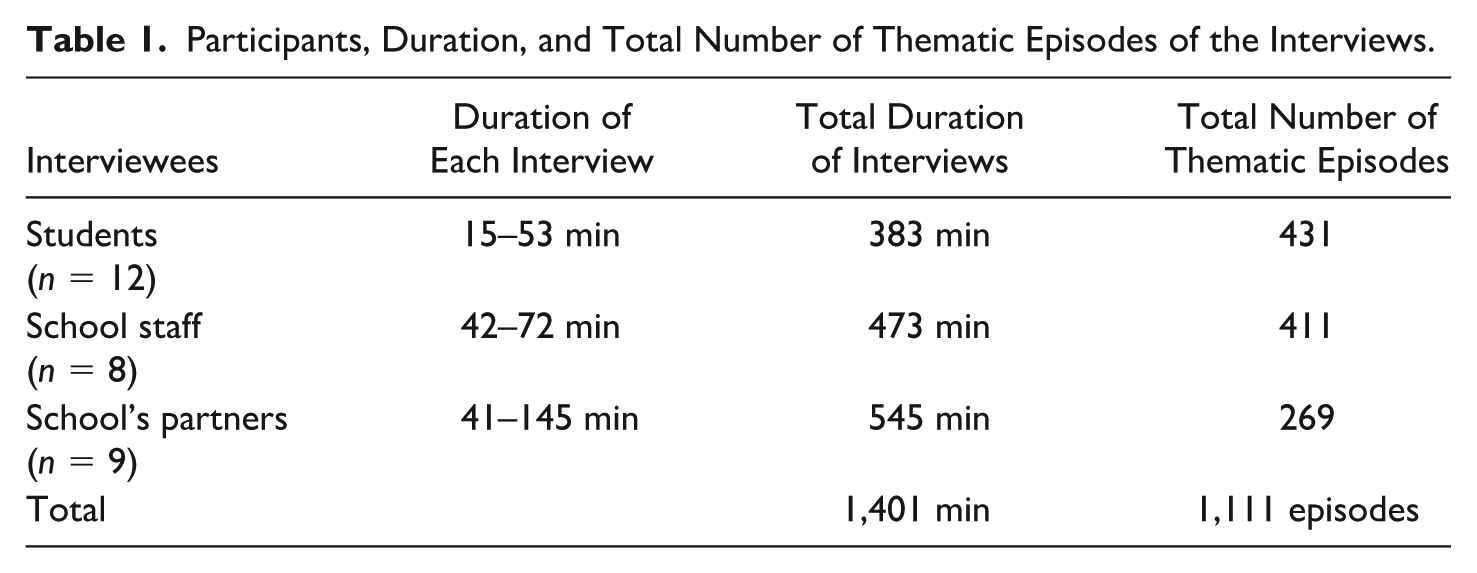
The content and structure of the adults’ interviews resembled those conducted with the students. Our priority was to ensure that all interviewees had space and time to openly elaborate on what they found important. The interviews were recorded and transcribed verbatim. Table 1 summarizes the participants and data of the study.
Participants, Duration, and Total Number of Thematic Episodes of the Interviews.
In the next section, we present the data analysis process of this study.
Data Analysis
The analysis followed an abductive procedure aimed at enriching rather than merely confirming or refuting the initial assumptions of the study (Paavola, 2021). Thematic analysis (Braun & Clarke, 2006) was used, proceeding through three steps. In the first, data-driven step, the recordings of the interviews were listened to or watched immediately after conducting each interview. Notes were taken on themes that students, school staff, and the school’s partners found either engaging or alienating in relation to school. Preliminary analysis of talk related to school revealed a predominant emphasis on peer relationships rather than on learning processes or subject-specific content. Guided by the theoretical framework, the analysis was then directed toward students’ personal interests and their participation in school activities, particularly in relation to the content of learning and teaching. The scope of the investigation was subsequently broadened to examine how students’ involvement and participation manifest not only within classroom interactions but also across the entire school environment, the city, and society at large. The notes and contents of the interviews were discussed among the four researchers in the project.
Three main themes relevant to the objectives and framework of this study were identified: school knowledge, peers, and personal interests. As a second step, all transcripts of the interviews were read several times, focusing on the three themes. The data was divided into thematic episodes, defined as an interview segment focused on a specific topic. This segment could consist of part of a speaking turn, a full speaking turn, or a combination of multiple speaking turns.
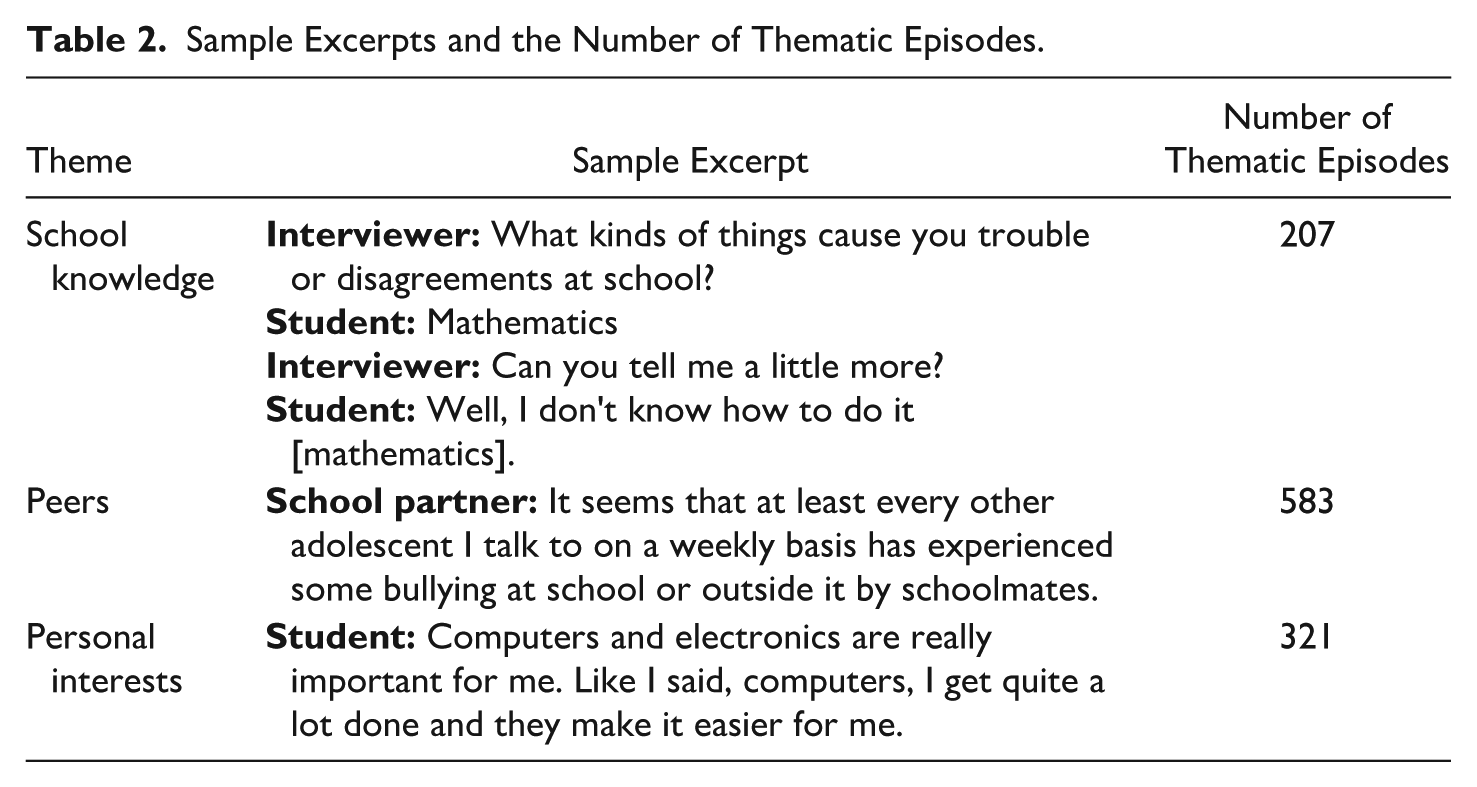
A careful reading of each transcript led to the identification of thematic episodes that were then grouped according to their contents. The thematic episodes were further scrutinized and defined, to be subsequently classified as representing one or more of the three main themes. The theme “school knowledge” concerns episodes related to school subjects, learning and teaching, and school pressures such as exams, grades, and future prospects. Episodes related to the theme “peers” include discussions about social interaction between peers, friends, bullying, and conflicts. The theme “personal interests” concerns episodes on issues that interested the students and that they felt competent about, as well as episodes reporting how students were involved in school and the broader society. Table 2 presents examples and the number of thematic episodes in each theme.
Sample Excerpts and the Number of Thematic Episodes.
As a third step, the themes were further arranged into subthemes for closer scrutiny. The school knowledge theme was divided into three subthemes: “school subjects,” “school pressures,” and “teaching and learning.” The peers theme was divided into the subthemes “peer relations”; “friends”; and “conflicts, bullying, and acceptance.” The personal interests theme was divided into the subthemes “students’ strengths,” “personal involvement,” and “students’ own things.” The subtheme “students’ strengths” refers to what students liked to engage in and what they felt they were good at, such as “I’m good at reading.” The subtheme “personal involvement” refers to activities the students were involved in or would have liked to be involved in, as shown in Excerpt 1.
Excerpt 1:
The third subtheme, “students’ ‘own things,’” emerged from respondents’ descriptions of their most cherished interests or preoccupations, typically focused on and expressed in terms of actual material objects. These are objects of activities with strong drawing power, rather than general areas of interest or limited goals. A student’s online handicraft shop is an example of a student’s own things. This student talked about the products she has made herself and sells in the store. She also described her future plans for the store, as shown in Excerpt 2.
Excerpt 2:
Findings
In the following, we first present the findings related to research question 1 (RQ1), then the findings related to research question 2 (RQ2). Of the main themes identified in the data, school knowledge and peers are related to RQ1, whereas the theme of personal interests is related to RQ2.
The Object of Schoolwork
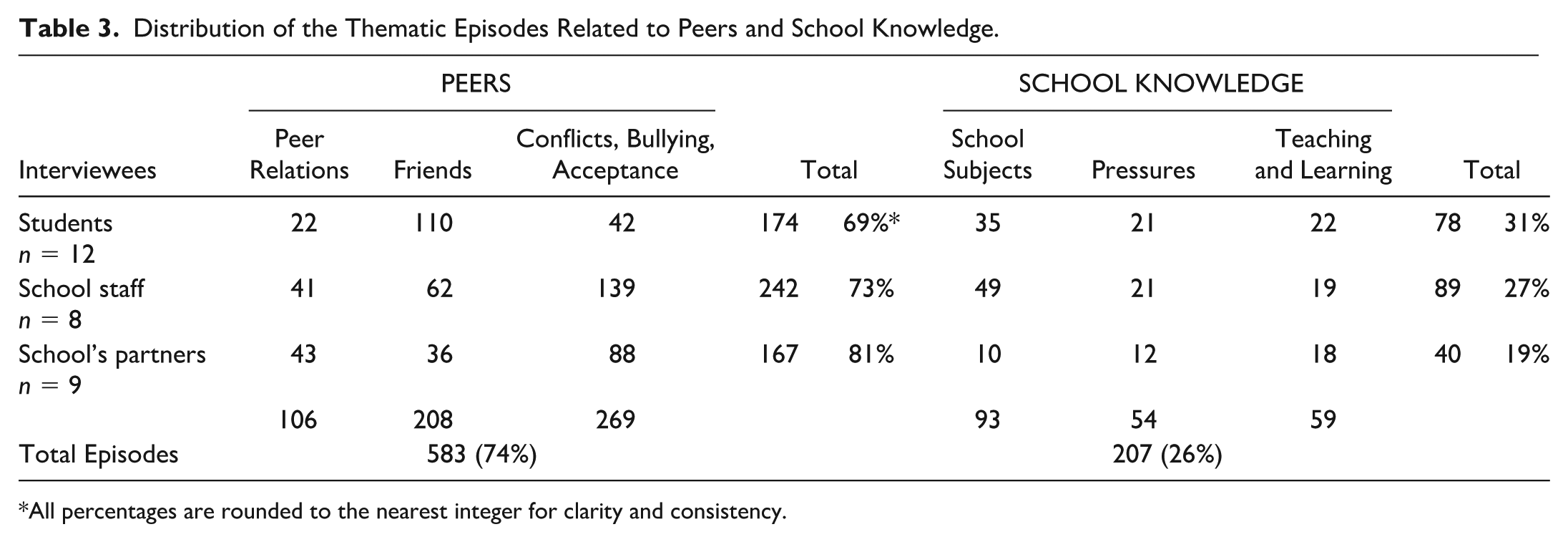
RQ1 asked: “How do different school actors perceive and engage with the content of teaching and learning in everyday schoolwork?” The participants’ responses emphasized peers in their engagement; thematic episodes related to school knowledge appeared less frequently. Table 3 exemplifies the thematic analysis by detailing the distribution of thematic episodes across these two themes and their respective subthemes.
Distribution of the Thematic Episodes Related to Peers and School Knowledge.
All percentages are rounded to the nearest integer for clarity and consistency.
Overall, three quarters of the thematic episodes dealt with peers, whereas one quarter dealt with school knowledge. In each participant group, the thematic episodes were more frequent for peers than for school knowledge. This difference was most pronounced among school partners, whose interviews contained four times more episodes on peers than on school knowledge. Friends was the subtheme most frequently raised in the students’ interviews, as exemplified in Excerpts 3 and 4.
Excerpt 3: Excerpt 4:
Conflicts, bullying, and acceptance emerged most frequently in the accounts of school staff and school partners. All these participants described concrete plans and programs aimed at preventing bullying and supporting conflict resolution among the students. As Excerpt 5 illustrates, peer relations and difficulties in them seemed to be a time-consuming topic in the daily life in school.
Excerpt 5:
The importance of friends was also underlined among school staff and school partners. Notably, none of the adult interviewees specifically stressed the importance of learning at school. Instead, two school staff members emphasized—using almost identical words—that the most crucial thing in school for students is friends, stating that “going to school mainly means friends to them,” highlighting the social aspect of schooling as perceived by adults. This minimal emphasis on the substantive content of learning was also noticeable in school partners’ discussions about the school, suggesting that peer relations are seen as more relevant to students’ daily lives than the actual content of learning.
Out of the 35 thematic episodes presented by students on school subjects, only 12 concerned the actual content of school subjects. It should be noted, however, that 10 out of the 12 students also reported that, in addition to friends, the best things at school were some of the school subjects or learning new things, as exemplified in Excerpt 6.
Excerpt 6:
Excerpt 6 emphasizes the remaining potential to reduce school alienation. However, only a small portion of students’ accounts viewed school as a place for exploring new knowledge; the issue does not seem to be motivation, but rather the lack of meaningful opportunities to engage with learning content. To foster students’ enthusiasm for learning, it is essential to incorporate a pedagogical approach that enables students to make connections to learning content, ideally in personally relevant and critically engaging ways. This approach is crucial for encouraging deeper and more sustained engagement.
School staff members produced the highest number of thematic episodes on school subjects. However, the thematic episodes concerning the content of the school subjects seldom included talk of students engaging in school knowledge. Excerpt 7, taken from an interview with a school staff member, is a rare exception in that it contains an enthusiastic description of the content of learning.
Excerpt 7:
In this excerpt, the object of schoolwork, learning English, takes on concrete significance through participation in the Amnesty Letter Marathon. The teacher emphasizes that this task goes beyond a typical assignment, connecting to real-world issues and people. This suggests that when the societal meaning of school knowledge (like English as a tool for global communication) aligns with students’ opportunities for influence and participation, the task can also gain personal meaning. From a CHAT perspective, this demonstrates how the object of school knowledge can become dynamic and motivating when linked to students’ lived experiences and aspirations, indicating its potential to counteract alienation in school.
School pressures related to exams, grades, and entrance to further studies after comprehensive school were discussed by all participant groups. Even though thematic episodes on this subtheme were not strikingly numerous, they were often quite intense in expression, for instance, when the interviewees emphasized the pressure to pass exams. However, the actual content of the exams was not mentioned at all, as Excerpt 8 illustrates.
Excerpt 8:
This example shows the typical features of excerpts in our data set, which point to school knowledge as stressful in connection with passing exams, without referring to what is actually asked in exams or what is learned in school to pass exams. This observation underscores the emphasis on the exchange value of school knowledge and its effects on students. This was also observed in relation to the future, as elaborated by a school partner in Excerpt 9.
Excerpt 9:
Teaching and learning were discussed to quite a similar extent by each group. Four students discussed “the joy of learning” and “learning new things” as essential aspects of life in school. One student reported that, in general, she liked studying. Another student mentioned that projects were interesting. School partners also mentioned projects: “students do their homework and projects in the library.” Overall, digitalization was the most frequently discussed theme in teaching and learning. In these cases, too, the interviewees did not address the actual content of school knowledge in studying, project work, and digital activities.
These findings related to RQ1 indicate that peers and social interaction were the dominant issues when the respondents were asked about the positive and negative aspects of school. The content of learning was hardly mentioned. What we refer to as the black-boxed content taught in school appears to be accomplished by means of shifting attention to other aspects of schooling, such as exam procedures or digitalization of instruction and, most prominently, issues of social interaction. From a CHAT perspective, these findings challenge how school knowledge is mediated and contested daily. How can instruction be made more visible, relevant, and engaging? How can students become active agents in constructing knowledge rather than passive recipients?
There were, however, some interesting exceptions from this dominant pattern. Four thematic episodes produced in the students’ interviews dealt enthusiastically with the significance of the content of school subjects, as exemplified in Excerpt 10.
Excerpt 10:
To sum up, related to RQ1, school was primarily seen as a place where adolescents meet other adolescents, form friendships, and practice social skills, including avoiding bullying and resolving conflicts. Emphasis on the object of schoolwork, the content of school knowledge, was very limited in all three groups.
Students’ Interests
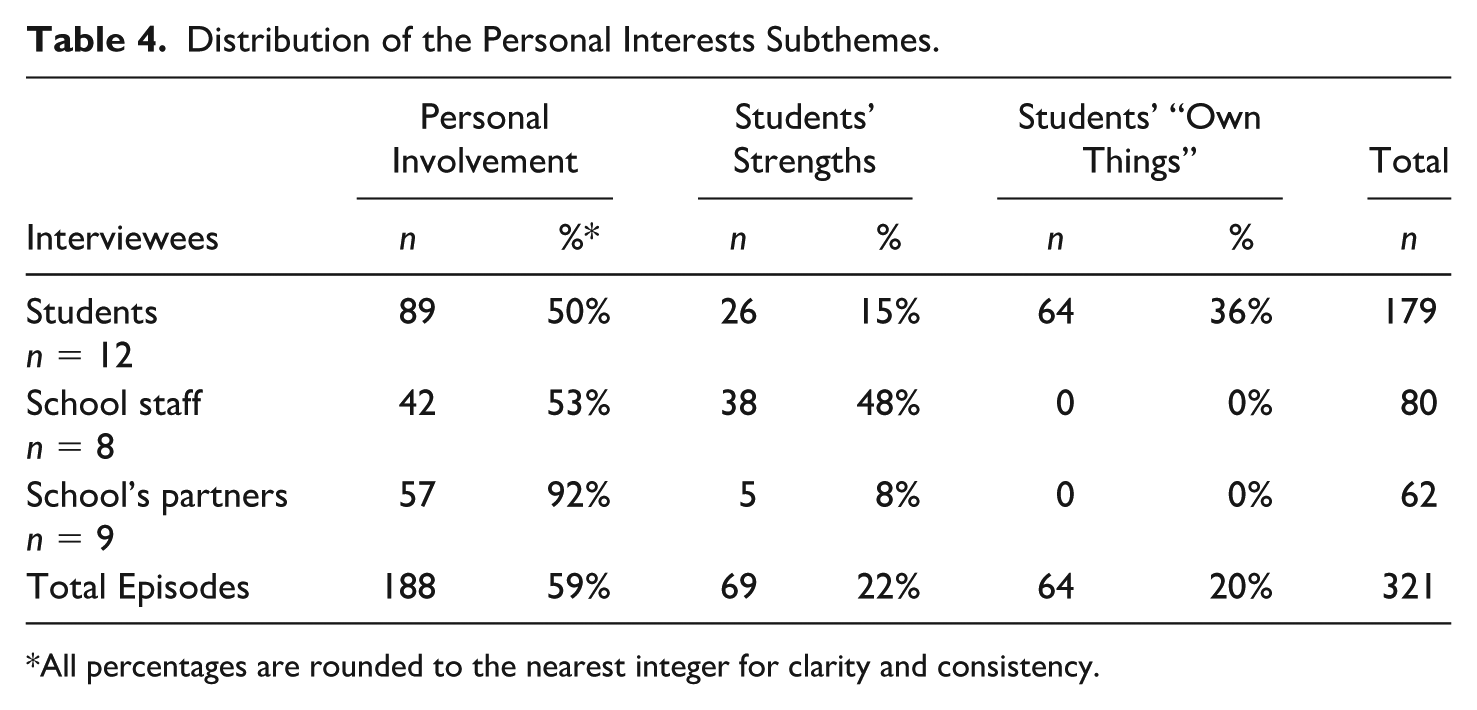
RQ2 asked: “How are students’ interests and lived experiences reflected in their engagement with the content of schoolwork?” Three subthemes were identified in the participants’ talk: “students’ strengths,” “personal involvement,” and “students’ ‘own things.’” Table 4 shows the distribution of episodes into these subthemes.
Distribution of the Personal Interests Subthemes.
All percentages are rounded to the nearest integer for clarity and consistency.
The students produced the largest number of thematic episodes on personal interests. In each interview group, personal involvement was the theme that generated the largest number of episodes. However, only students talked about their “own things,” a subtheme not discussed by the adult respondents.
The subtheme “personal involvement” covers episodes on students’ involvement in activities at the school, at the city level, and at the level of the society at large. Involvement at the school level included teaching and learning and other activities at school, such as student council meetings, getting a rubbish bin for the schoolyard, or making coffee. Table 5 shows the distribution of these thematic episodes with regard to involvement in school, city, and society.
Distribution of the Thematic Episodes Referring to Involvement in Society, School, and City.
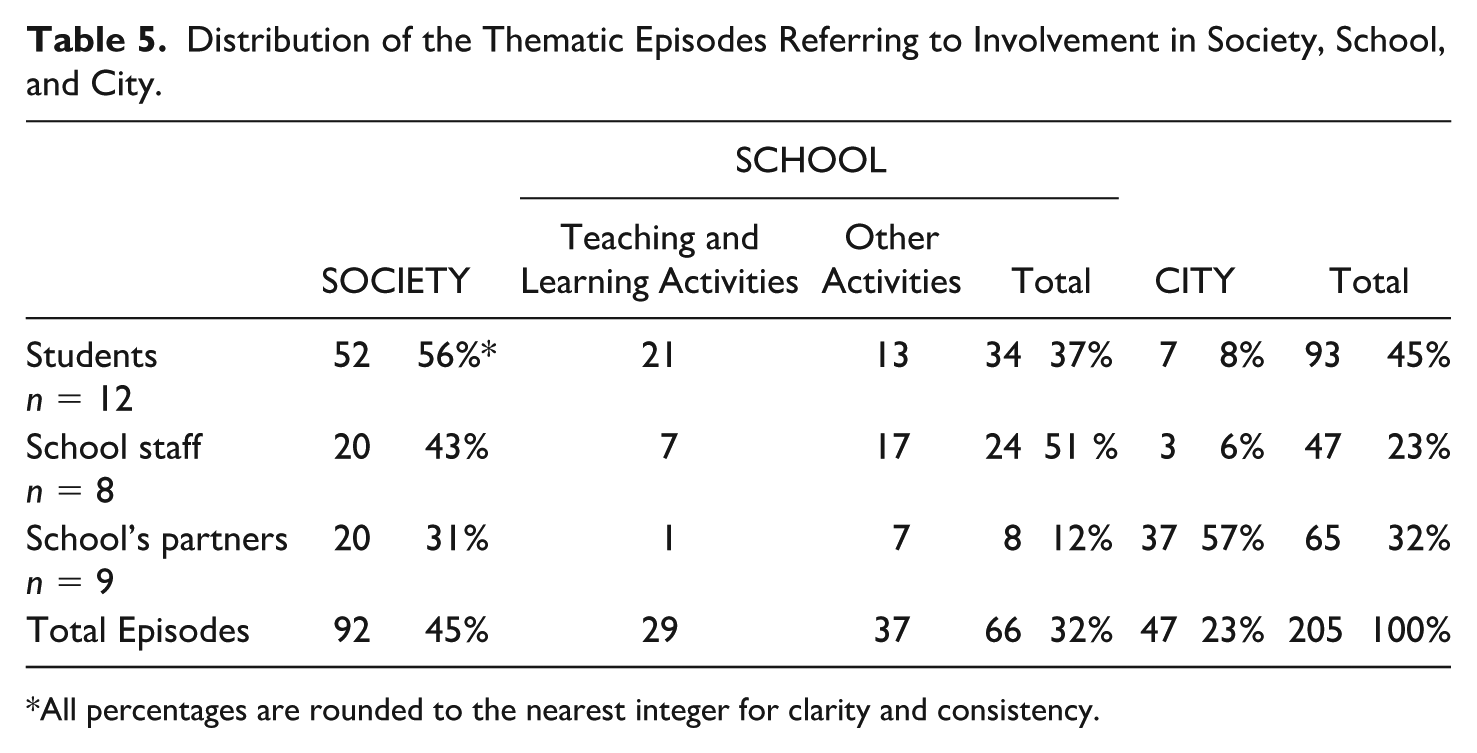
All percentages are rounded to the nearest integer for clarity and consistency.
Students generated more thematic episodes on involvement in teaching and learning than in the school’s other activities. The result was the opposite for representatives of school staff and school partners. In these thematic episodes, concrete references to the content of school knowledge were minimal. One student described the experience of involvement in a drama lesson where she was allowed to direct other students. Another example relates to writing an opinion piece on a topic chosen by the students themselves. The students also addressed issues they would like to influence at school. Two students suggested that the school should teach more essential things, like equality and diversity, that they found personally important to talk about, as illustrated in Excerpt 11.
Excerpt 11: [. . .]
Three students discussed working methods at school, suggesting more projects and group work. Two students suggested that the school should have more digital materials and use games to facilitate learning. One student suggested that there should be more physical education and less Swedish and mathematics; another one suggested that students should be taught skills they might need in the future, as illustrated in Excerpt 12.
Excerpt 12:
Excerpts 11 and 12 show that students actively engaged with schoolwork by reflecting on the kinds of knowledge they would prefer to see included in the curriculum. Rather than passively accepting standardized content, they expressed a desire for learning that is more relevant to their lives and futures. This can be interpreted as an effort to reshape the object of schoolwork toward more meaningful and future-oriented content. It illustrates how students position themselves in relation to school knowledge and how they might envision influencing the curriculum. This interpretation aligns with a CHAT-based perspective, which emphasizes the dynamic and transformative nature of learning activity. However, students’ descriptions of how their initiatives have been heard or considered were limited. The results of this study indicate that students have few and often superficial chances to participate in shaping educational content, despite mandates in the Finnish National Core Curriculum and the Basic Education Act.
Although the school exhibited efforts to incorporate students’ personal interests, such participation was largely confined to peripheral aspects of school life such as planning excursions, special days at school, and recess activities. In these areas, students had opportunities to influence, demonstrating how their voices could be acknowledged within the school community. In contrast, references to student involvement in the core content of teaching and learning were infrequent in discussions among both staff and students. This finding related to RQ2 suggests that although participation opportunities existed, they did not extend to the central curriculum. One external partner highlighted a student-led initiative to limit the number of exams to two per week. This initiative was more closely related to the core object of schoolwork, indicating a deeper engagement of students with the essential aspects of teaching and learning.
The total number of thematic episodes emanating from the students and dealing with involvement at the societal level was notable. Ten students mentioned climate change and equity as essential issues for themselves. Students mentioned Pride parades and the Black Lives Matter movement as events they joined. Three students mentioned acceptance, equity, and bullying as issues that should be discussed more in school, as shown in Excerpt 13.
Excerpt 13:
One school staff member described how students bring their own interests into the classroom, reporting that students’ experiences of participation in different kinds of events may inspire them to share their experiences during lessons. These examples support the idea that student engagement increases when the “black box” of schoolwork, the learning content, is opened, enabling students to connect their learning with their social realities and values. They also illustrate the necessity of understanding how students relate to schoolwork not only through the curriculum but also in ways that are personally meaningful and motivating, aligning with the CHAT perspective of engagement.
Overall, the content of school knowledge seems to be a black box, including from the point of view of involvement. Perhaps the most interesting potential crack in the box’s exterior was expressed by a school staff member, as reported in Excerpt 14.
Excerpt 14:
This compelling but rare excerpt may be seen as an indirect invitation for joint teacher–pupil planning of instruction. However, in the context of our study this seems to happen as if outside the limelight, in situations that rarely become objects of shared reflection that could be utilized to initiate collaborative sense-making and design with students.
The subtheme “students’ strengths” covers episodes in which students mentioned things they liked and wanted to do and what they were good at. Reading, playing a sport, music, painting, and drawing were mentioned as strengths. Some of the strengths the students highlighted were related to school subjects or working methods, such as projects and group work, or more generally to learning something new, the joy and ease of learning. Two students described as strengths their personal characteristics, such as being friendly or helpful to everyone.
Thematic episodes about students’ strengths described by school staff were related to students’ skills, hobbies, other activities in school, social skills, and how students’ strengths are supported in school. Students’ digital skills were pointed out by school staff. Interestingly, only three episodes produced by school staff members concerned students’ strengths in specific school subjects. School partners discussed students’ strengths in five thematic episodes. They identified students’ digital skills and mentioned social skills as strengths. One of the school partners explicitly named social skills as a strength that does not form a part of traditional school instruction.
The subtheme “students’ ‘own things’” emerged in the analysis as particularly important for the students, because its episodes include enthusiastic personal accounts. A total of seven students’ “own things” were identified in the data. They represented a variety of topics: history, a handicraft shop, a design studio, helping other people, electronics, the world of social media, and the stock market. One student talked about opening an investment account, following the stock market, and identifying companies worth investing in, as illustrated in Excerpt 15.
Excerpt 15:
Similarly, another student’s “own thing” was a design studio where he designed soccer clothes, collaborated with different people, and sold the products. Two students’ “own things” were partly related to school. One was a student’s broad interest in history, which was also his favorite school subject. Helping other people was important for another student. The topic was present in her daily life and part of her study plans after comprehensive school.
These examples of students’ “own things” were strong, clear, and well-defined. In addition, two somewhat more vague “own things” were mentioned. One of these was electronics. The student talked about electronics related to school, their spare time, and hobbies. In the interview, the student also discussed opportunities electronics would offer in the future. The other vague “own thing” was a social media platform and the interaction taking place there by talking, playing games, and sharing a music genre. This student’s future plans were related to working with social media, as illustrated in Excerpt 16.
Excerpt 16:
Related to RQ2, these findings regarding students’ “own things” indicate that the topics mentioned, such as history, music, or clothing design, are not necessarily distant from or in conflict with the established curriculum content. However, integrating students’ “own things” into instruction does not happen spontaneously; it requires intentional pedagogical strategies (Bundick et al., 2014). Adolescents’ “own things” to a large extent seem to be hidden and unrecognized resources in the school. None of the adults talked about the students’ “own things” in the interviews. Two of them pointed out that the curriculum and its obligations are demanding, and little time is available to explore topics outside the prescribed curricular tasks (Excerpt 17).
Excerpt 17:
School staff repeatedly used the language of positive pedagogy (O’Brien & Blue, 2018) to emphasize students’ strengths. It may be easier to discuss students’ individual psychological characteristics than the emerging activities oriented toward objects that the students may cherish as their “own things.”
Conclusions and Discussion
This study aimed to discover what adolescent students found engaging in school. The findings show that the content of school teaching and learning is scarcely discussed. In response to RQ1 (“How do different school actors perceive and engage with the content of teaching and learning in everyday schoolwork?”), our findings show that students do have opinions on the pluses and minuses of what school has to offer. This aligns with earlier studies on students’ views about school matters (Moore, 2022) and on students’ interests in discussing teaching and learning with teachers (Rudduck, 2007). However, the findings across the three interview groups show a very limited emphasis on what is supposed to be the focus of schoolwork, namely the content of school knowledge, compared to a much greater emphasis on peer relations.
The findings of this study seem to emphasize the well-established significance of friendships and peer interaction in adolescence. However, what was not emphasized by the respondents may be at least as important as what was. As noted by Damon (2009) and Reber (2019), the search for meaning becomes particularly pronounced during this developmental phase. Adolescents are engaged in a search for their own purpose and understanding of life, which goes beyond mere peer relationships. This search seems to remain largely disconnected from the content of school instruction.
Participants in this study did not discuss students’ influencing the content of school learning. Students’ opportunities to exert influence were mainly situated in other activities at school and outside school, as demonstrated in earlier research (Geurts et al., 2024). When the core object of engagement, the content of school subjects, is closed into a black box and served up in prepackaged form, it is very difficult for students to seriously engage in school or to form a meaningful relation to the object.
Nonetheless, addressing students’ school alienation along with structural inequalities within formal education entails taking serious account of students’ interests (Choudry, 2023) and intentionally creating spaces for co-constructing school content on this basis. This is particularly relevant for those who are left questioning their place within the school curriculum (Beane, 2024; Martínez-Álvarez, 2019). Creating conditions for students and teachers to establish common ground could enable them to collectively negotiate and explore new meanings and ideas (Gutiérrez, 2008).
In response to RQ2 (“How are students’ interests and lived experiences reflected in their engagement with the content of schoolwork?”), this study points at students’ strengths, the involvement initiatives available in school, the city, and society, as well as the interests students may cherish in their daily lives. These thematic areas of engagement emerge from this study as largely disconnected from the content of school instruction.
As pointed out in a teacher’s account in Excerpt 14, students question the significance of what they have to learn in school. The students involved in this study were also keen to describe and elaborate on what actually interested them. These findings indicate that creating bridges between the content of instruction and students’ own interests can open up opportunities for object-oriented and critical school engagement. Such an approach aims to amplify the voices of those who are often marginalized in the school context (Beane, 2024; McInerney, 2009). Developing pedagogical strategies that reflect students’ experiences and challenge discriminatory practices can be both engaging and transformative (Cook-Sather, 2007).
Finnish schools today are attended by a more diverse student population than ever before. This demographic shift has implications for educators who may find it increasingly difficult to connect with the students’ own interests and issues significant to them. Consequently, it is essential to provide students with opportunities to explore their personal interests as they relate to the prescribed curriculum. Students’ “own things” can be particularly relevant for such an opening up of the black box of the content of school knowledge. Through their “own things,” students have something positive to say. They can evaluate, discuss, and challenge what is written in textbooks and reflect on the knowledge imparted against their interests, pursued also outside the classroom. This approach aligns instruction with the unique cultural and social contexts of diverse learners, counteracting marginalization and exclusion.
Yonezawa et al. (2009, p. 205) point out, “Student engagement cannot simply be about teaching kids to ‘do school.’” Students need to be invited and encouraged to participate in critical questioning and active creation of the educational institutions they attend (Bjarnadóttir & Geirsdóttir, 2018; Niemi & Loukomies, 2021). Teachers and students can collaboratively learn to negotiate the curriculum (Guadalupe & Curtner-Smith, 2020). A recent review by Geurts et al. (2024) argues that it is indeed feasible to involve students in multiple roles and responsibilities in various phases of the planning and implementation of teaching and learning. This is consistent with the earlier work of Engle and Conant (2002), which illustrates students’ potential as significant contributors to the shaping of teaching and learning.
One opening in this direction is teacher–pupil planning. Literature on teacher–pupil planning is scarce, mostly from decades ago (e.g., Harmer, 1960; Kansanen & Uusikylä, 1981; Rehage, 1951). This perspective has recently resurfaced as a vehicle for cultivating meaningfulness and students’ joint decision making with teachers (Roney & Lipka, 2021). According to Beane (2024), teacher–pupil planning is a democratic process that reshapes the curriculum to center on the questions, concerns, and realities of the students who are expected to engage with it. It also respects and honors the inherent dignity of all learners (Virtue, 2021).
This study has limitations typical to exploratory research. The sample size was small, which precludes statistical generalizability of the findings. As is common in CHAT-based studies, the aim is, in fact, generativity rather than statistical generalizability. In other words, the study aims to open up new zones of possibilities for both research and educational practice (on generativity, see Ball, 2012; Sannino et al., 2016).
Along with introducing specific practices such as teacher–pupil planning, a more comprehensive conceptual reorientation is also needed. As a starting point, we suggest the concept of object-oriented critical engagement. By this, we mean open collaborative questioning of the object of schoolwork, inviting students and adults to negotiate and plan learning content in relation to the students’ interests and their life experiences beyond the classroom. Effective implementation of object-oriented critical engagement has the potential to empower students and to transform persistent inequities in school settings in ways similar to those envisioned by Martínez-Álvarez (2019), Guadalupe and Curtner-Smith (2020), and Rubin (2024). A recent activity-theoretical study (Engeström et al., 2024), which focused on adolescent students’ experiences, revealed that school often appears as a site of conflicts. A key conclusion was that by understanding the tensions the students encounter, educators can create more engaging pedagogical practices. Rather than suppressing these tensions, it is important to articulate and address them collaboratively with students.
Although in many educational contexts such a vision may sound idealistic, it is already legitimized as part of Finland’s official National Core Curriculum (FNAE, 2014): “Pupils participate in the planning, implementation, and evaluation of their own studies, joint schoolwork and learning environment.” Yet, as the findings of this study show, confirming previous research (Niemi & Loukomies, 2020), this dictum does not seem to be substantially enacted. The very existence of this formal legitimation should be taken as an invitation and springboard for experimentation and transformation efforts at all levels of the educational system.
We believe that future research should focus more on understanding why the content of instruction is often treated as a black box and what underlying mechanisms or structural factors contribute to this phenomenon, especially now that our study has identified this black box. We have provided constructive suggestions for practical approaches to address this matter. Although our paper offers some insights, it should certainly be explored in greater detail in future research. The main challenge for future research emanating from our analysis is to foster pedagogical strategies that enact the concept of object-oriented critical engagement, enabling students to pursue their own interests in dialogue with the standard curriculum. Future studies should investigate different models of joint planning of instruction and learning between students and teachers. This should be connected to research on possibilities of collaboration with external stakeholders and hubs of expertise that can enrich and expand students’ interests and “own things,” bridging the divide between school and the broader community.
This study points at three steps that should be taken in educational research and policy to move toward enacting the concept of object-oriented critical engagement: (1) shifting the focus to the content of school knowledge, that is, opening the black box in which such content tends to remain hidden; (2) bridging students’ nascent interests—what they may be already passionate about—with the content of school instruction; and (3) establishing spaces in which students can openly and critically discuss with educators what they deem as problematic in what is taught at school, making it possible for the students to shape their instruction and learn to connect with what they find engaging in their lives.
To sum up, when viewed through the lens of CHAT, school alienation appears as a logical outcome of prevailing educational practices, dominated by the exchange value of knowledge. The most important explanatory factor behind the black box phenomenon is the commodification of school knowledge, that is, the predominance of exchange value over the use value of school knowledge, upheld by increasingly pressurized practices of testing, grading, and competition, combined with curricula overfilled with prepackaged descriptive knowledge or “factoids” (Alberts, 2012; Labaree, 1997). Despite being central actors in schools, students often lack meaningful opportunities to engage with the main object of education, the content of learning. This may be counteracted by adopting and implementing the perspective of object-oriented critical engagement, which builds on greater involvement of students in criticizing, negotiating, and collaboratively shaping the content of their learning.
Footnotes
Declaration of Conflicting Interests
The authors declared no potential conflicts of interest with respect to the research, authorship, and/or publication of this article.
Funding
The author(s) declared the following potential conflicts of interest with respect to the research, authorship, and/or publication of this article: This work was supported by the Research Council of Finland under Grant [325599], Jenny and Antti Wihuri Foundation, and the Emil Aaltonen Foundation.
