



Abstract
Background/Context:
In recent years, numerous, ongoing moral panics with respect to the acknowledgment of gender and sexuality diversity within curriculum/policies have done considerable damage to Australian educators’ confidence and capacity to support gender and sexuality diverse students. Trans/gender-diverse students have been specifically targeted during this period.
Purpose:
Cisnormative microaggressions are a pervasive element of the Australian school climate, impacting trans/gender-diverse students’ relationships with school-based adults and peers and their experiences of schooling more broadly. This article seeks to contribute to scholarship exploring school well-being for trans/gender-diverse students, inclusive of students’ sense of their teachers’ concern for their personal and academic well-being, and its relationship to students’ perceptions of their school climate.
Participants:
This article explores data from trans/gender-diverse participants (n = 685) in the 2021 Free2Be. . .Yet? Australian national online survey of gender and sexuality diverse high school students in Grades/Years 7–12.
Research Design:
Using students’ self-reported data on selected quantitative measures of school climate with respect to gender and sexuality diversity, alongside perceptions of teacher concern and expectations for success, as selected indicators of school-based well-being, this research sought to identify these variables’ predictive impact on students’ sense of belonging at school.
Conclusion:
Multiple regression analyses revealed the influence of an accepting and supportive schooling environment for gender and sexuality diversity on trans/gender-diverse students’ sense of school belonging, explaining additional factor variance beyond included demographic factors or students’ sense of teacher concern and expectations. Findings add to the body of existing literature recommending professional development for educators that interrogates and seeks to redress both structural and interpersonal cisnormative microaggressions and articulates the need for gender expansiveness.
Current international advice articulates the connection between school environmental factors and student engagement and retention. This advice highlights the importance of health-promoting school environments, inclusive of “healthy school social [emphasis added] environments” that promote social connection and well-being (World Health Organization and the United Nations Educational, Scientific and Cultural Organization, 2021, p. 6). Australia has taken this up within its federal Student Wellbeing Framework, which frames inclusion and students’ connection to “school culture that values diversity” (Education Council, n.d., p. 5) as one of five central elements of school-based well-being and highlights schools’/teachers’ responsibilities to promote and safeguard this as a right of all students. Consequently, many Australian states/territories have built measures of student school-based well-being into their annual data collection and reporting, signaling their commitment to enhancing students’ school-based well-being as an important educational outcome in and of itself.
Simultaneously, numerous ongoing moral panics in the Australian context with respect to the acknowledgment of gender and sexuality diversity within curriculum/policies have done considerable damage to educators’ confidence and capacity to support the school-based well-being of gender and sexuality diverse (GSD) students, which includes ensuring, at the barest minimum, their safety within the school environment (GLSEN et al., 2019). For example, Australia’s first and only national initiative to support GSD students and provide professional development to school staff, the Safe Schools Coalition Australia (SSCA), established nationally in 2013 and federally defunded four years later, was systematically discredited by Australian media and conservative politicians over a public multiyear campaign (Law, 2017). Associated political moves have sought to enshrine silence and exclusion of GSD identities within Australian schools into legislation at both state/territory and federal levels (e.g., Australian Education Legislation Amendment [Prohibiting the Indoctrination of Children] Bill, 2020; Education Legislation Amendment [Parental Rights] Bill, 2020). A common discourse deployed within these regressive shifts is, in fact, a very familiar one: Educators’ inclusion of gender and sexuality diversity in schools confuses and sexualizes children and adolescents. The dominant message in the media for teachers, particularly as they see their own named and shamed for their efforts (Akerman, 2015), is: support gender and sexuality diversity inclusivity at your own risk.
The worst of this vitriol has been levied at trans/gender diversity and trans/gender-diverse (TGD) individuals, with ramifications for TGD members of school communities across the nation. A bill currently before the Australian Senate at the time of writing seeks to tie public school funding to their silence on the topic of gender diversity (Australian Education Legislation Amendment [Prohibiting the Indoctrination of Children] Bill, 2020), while in the Australian state of New South Wales, a similar bill proposes to remove teachers’ formal accreditation should they speak about gender diversity as a method of acknowledging and supporting TGD students (Education Legislation Amendment [Parental Rights] Bill, 2020). As similar waves of media circulate on these political maneuvers, it is unsurprising that Australian research has highlighted teachers’ concerns about adverse community reaction to and discomfort around teaching about gender and sexuality diversity (Ezer et al., 2020), despite nationally representative data showing parents’ overwhelming support for curricular inclusions (Ullman, Ferfolja et al., 2022). In the meantime, with variable, and sometimes contradictory, federal/state guidance mandating teachers’ inclusion and support of GSD students (Ferfolja & Ullman, 2020), GSD students are not guaranteed the positive, inclusive environments pledged as part of the Student Wellbeing Framework. Rather, for many, harassment and marginalization are pervasive elements of school climate, impacting these students’ relationships with school-based adults and peers and their experiences of schooling more broadly.
Against this contextual backdrop, this article sets out to explore the relationship between school climate with respect to gender and sexuality diversity and elements of school-based well-being for TGD students, using an Australian national sample of secondary students (n = 685) in Grades/Years 7–12. It begins by articulating the theoretical framework for the study and continues by exploring cisnormative microaggressions as an element of marginalizing school climates and presenting what is known about the importance of positive school well-being and how this is impacted for GSD students.
Use of Trans-Informed Theoretical Constructs
Before commencing with a review of the relevant empirical literature, it is necessary to articulate the theoretical constructs that inform this study. The constructs of cisgenderism and cisnormativity are a defining feature of the theoretical lens that informs this work and an understanding of the barriers to creating and fostering a supportive school climate for GSD students. This work starts from the premise that the exclusionary and often violent behaviors discussed in the sections to come are evidence of the mechanisms of cisgenderism—the “cultural and systemic ideology that denies, denigrates, or pathologizes self-identified gender identities that do not align with assigned gender at birth” (Lennon & Mistler, 2014, p. 63). The prevailing discourses associated with the systemic construct of cisgenderism reinforce the notion that gender is determined by assigned (binary) sex while discounting individuals’ “own understandings of their genders and bodies” and legitimizing “the mistreatment of people on the basis of their gender” (Riggs & Bartholomaeus, 2018, p. 69). Cisgenderism is further evidenced through cisnormativity—”the normalisation of cisgendering” (Ericsson, 2018, p. 140).
Cisgenderism, premised on the belief that the only legitimate gender identity is the one assigned at birth, is made visible across schooling cultures in curriculum, pedagogies, and practices, where it positions TGD individuals as outsiders. The institutionalization and normalization of cisgenderism in the education system is made visible through cisnormative schooling cultures. Such environments seek to position individuals within the binary construct of female/male, pathologizing and denigrating those who resist, or do not fit, this construct through surveillance and punishment (Foucault, 1978) and creating both socially and physically unsafe environments for TGD students (Luecke, 2018). Employing cisgenderism as a theoretical construct aids with exposing the unmarked privileging of cisnormative subjectivities and its embeddedness and taken-for-grantedness in everyday life in institutions such as schools. It instantiates gender entitlement that results in both erasing and delegitimating self-designated gender identities and trans personhood.
Within the Australian context, Ferfolja and Ullman (2020) have written about the prevailing culture of limitation—”a messy plethora of perspectives, beliefs and attitudes” (p. 3) that coalesce to “create fertile ground for the growth of a restrictive social agenda that targets (in the case of neoconservatism), and discounts (in the case of neoliberalism), the gender and sexuality diverse subject” (p. 6). This culture of limitation is made visible through the constraints, both real and imagined, that it imposes on schools and teachers in educating about gender and sexuality diversity and supporting GSD students. It takes form through school-based discrimination, social isolation, and harassment perpetuated by peers and adults, and exacerbated through limiting bureaucratic structures (Hill et al., 2021; Ullman, 2021) that undermine “teacher professionalism, student learning, and the safety and sense of belonging of minority students and teachers in schools” (Ferfolja & Ullman, 2020, p. 6). The attendant silencing and invisibility of gender and sexuality diversity in curriculum and practices is equally detrimental because it contributes to a schooling climate in which fear and misrecognition can proliferate. A culture of limitation reinforces the perpetuation of cisgenderism in schools, obscures related microaggressions and their impact, and sidelines educators’ efforts to establish what Luecke (2018) has termed gender facilitative schools.
Literature Review
Marginalizing School Climates
Inter/national research has consistently highlighted the marginalization of GSD subjectivities at school, including the verbal and physical bias-based harassment experienced by GSD young people, or young people perceived to be gender nonconforming (Bradlow et al., 2017; Hill et al., 2021; Kosciw et al., 2018; Ullman, 2015, 2017). A subset of this work has applied the concept of microaggressions as a lens to expose and articulate GSD-related harassment, with taxonomies first developed for microaggressions related to sexual orientation (Sue, 2010), then for those targeting the larger GSD community (Nadal et al., 2010). More recently, this body of work has acknowledged trans-specific microaggressions (Nadal et al., 2012) and microaggressions centered on gender identity (Nadal, 2019), stemming from pervasive cisnormativity (McBride, 2021). By and large, these taxonomies share a common set of typologies of microaggressions, several of which are of particular relevance to investigations of the school-based experiences of TGD youth, including peers’/educators’:
use of heterosexist/transphobic language, where language is mobilized for derogatory or discriminatory purposes, such as referring to a student as “it” or intentionally misusing a student’s personal pronouns;
endorsement of a heteronormative/cisnormative culture and behaviors, such as expecting a GSD student to behave in a manner deemed consistent with a heterosexual and/or cisnormative identity; and
discomfort with or disapproval of GSD experiences, such as treating GSD students and their relationships with disgust, disrespect, or criticism (adapted from Nadal et al., 2010, 2012).
TGD students’ experiences of cisnormative microaggressions have been linked to numerous negative schooling outcomes. At the most basic level, everyday experiences of TGD identity-focused marginalization, harassment, and violence at school are mentally and emotionally exhausting and significantly detract from students’ capacity for educational engagement (Miller, 2016). In their recent systematic review of the literature on the secondary school experiences of trans youth, McBride (2021) classified the findings of published work over a 15-year period (2003–2018) to identify various institutional and interpersonal microaggressions as reported by TGD students. They identified three central impacts on this cohort of students: “(1) inhibiting disclosure and encouraging inauthentic forms of self-representation; (2) reducing peer connectedness, teacher positivity, and school belonging; and (3) fostering internal shame and emotional distress” (McBride, 2021, p. 123). Taken as a whole, this body of work highlights the unique, compounding stressors to which many TGD students are subjected within the typical secondary school environment, and the findings offer further explanatory context to the research of Wilkinson et al. (2018), who found that individuals who realize their TGD identity in adolescence (e.g., during middle/high school) are less likely to continue with their schooling and obtain a four-year university degree than those who realize their identity in either childhood or adulthood.
Findings from McBride’s systematic review (2021) specifically implicate educators as perpetrators and/or facilitators of cisnormative microaggressions through their policing of binary gender presentations, rigid gender norms, and dismissal of nonbinary trans identities. Further, McBride noted the compounded impact when microaggressions are witnessed by a school-based adult, but no action is taken by these adults to address the incidents, including TGD students’ potential disengagement from the schooling environment. Large-scale research from the U.S. context highlights this phenomenon; GLSEN’s recent National School Climate Survey (Kosciw et al., 2018) showed not only reported increases in educators’ transphobic remarks in the five years between their two recent survey iterations, with nearly three-quarters (71%) of the 23,000 GSD young people reporting hearing such comments from their teachers, but also that just over half of transgender students were not permitted by teachers to use their preferred names/pronouns at school (51%). Not surprisingly, this cohort of participants was the least likely cohort to report feeling safe at school and was more than four times as likely as cisgender, same-sex attracted participants to say that they did not plan to complete high school. Furthermore, students who reported attending a school with supportive teachers were more likely to report increased academic achievement (Kosciw et al., 2018).
Research from the Australian context likewise reveals unique institutional microaggressions and points to associated outcomes for TGD students. In a recent survey of more than 6,400 GSD young people aged 14–21 years, TGD participants were much less likely to report feeling safe at their educational institutions, compared with the participating cisgender, sexuality diverse cohort (Hill et al., 2021). Looking specifically at the cohort of participating secondary school students, just over a third (34%) indicated that none of the survey’s four articulated options for gender affirmation—such as using their chosen name or pronouns, using bathrooms, using changing rooms, or wearing the school uniform aligned with their gender identity—were available to them at their school. The majority of these students reported hearing “negative remarks regarding gender identity or gender expression” at school either “sometimes”/”frequently” (a combined 70%), and less than a third (28%) indicated that they felt safe engaging in any public affection with other GSD students. In keeping with this, almost two thirds of trans young women (64%) and more than half of trans young men (54%) reported missing at least one day of school over the previous 12 months because they felt unsafe (Hill et al., 2021); notably, safety at school sits alongside school-based well-being as identified rights of children’s/adolescents’ access to quality education within Australia’s National Quality Framework (Australian Children’s Education & Care Quality Authority, 2020).
School-Based Well-Being
As highlighted in the article’s introduction, Australian state/territory-based departments of education are becoming more interested in empirical understandings of students’ social and emotional experiences of schooling, under the banner of “school-based well-being”. Within these frameworks, students’ perception of their schools’ capacity to address bullying and keep students safe is located as an element of well-being, alongside measures of students’ perceptions of supportive school structures, including empathetic and responsive teachers and students’ overall sense of school belonging and morale. 1 This focus on school-based well-being is, no doubt, motivated by a desire to attend to poor youth mental health and reverse trends in youth suicide, which remains the leading cause of death among Australians 5–17 years old (Australian Institute of Health and Welfare, 2020); GSD-identifying youth are 5 times more likely to attempt suicide than their peers (National LGBTI Health Alliance, 2020). There is, likewise, a growing awareness of the connection between various measures of school-based well-being and both academic retention and positive academic outcomes for the general adolescent population. While experiencing harassment and bullying is one of the strongest predictors of reported negative well-being for adolescents (Gutman & Feinstein, 2008), students’ positive relationships with their teachers contributes to their sense of liking school (Cemalcilar, 2010), which, in turn, has been shown to predict educational attainment (Wang & Holcombe, 2010).
Of the various measures of school-based well-being, school belonging has received increased attention in recent years because of its ability to predict a multitude of educational outcomes (Allen et al., 2021), and a measure of school belonging has been included in the OECD’s Programme for International Student Assessment (PISA) since 2000 (Willms, 2003). Specifically, adolescents’ sense of their connection and belonging at school is among the strongest predictors of both their mental health outcomes (Parr et al., 2020) and their educational engagement, positive attitudes toward learning (Ladd at al., 2009), and subsequent academic achievement (Fredricks et al., 2004; Juvonen, 2006). Importantly, students’ perceptions of school belonging and connection are malleable, given that schools’ and educators’ attention to and cultivation of positive teacher–student relationships provides a powerful mechanism by which school belonging can be strengthened (Allen et al., 2018). Research shows that when teachers are perceived by students as warm and accepting (Hughes, 2011), offer mutual respect (Anderman, 2002), and demonstrate care and availability to students (Roffey, 2012), students’ school belonging is enhanced.
International research into the schooling experiences of GSD youth has highlighted the importance of school belonging for these students, including how it is impacted by environmental stressors and microaggressions. Comparing cohorts of same/both-sex attracted and (only) opposite-sex attracted adolescents in New Zealand, Lucassen and colleagues (2014) found that those in the former cohort were significantly less likely to report feeling that they were “part of their school” and approximately 1 1/2 times more fearful of a peer “hurting or bothering them at school”. Similar results have been found in large-scale national research with GSD students (N = 3,713) from the United Kingdom (Bradlow et al., 2017), where fewer than half of participating transgender students felt that they were “part of their school community,” and more than 2 in 3 reported that bullying at school had a negative effect on their plans for future education (Bradlow et al., 2017). California-based research with one of the largest and most diverse cohort of TGD students (N = 4,778) likewise highlighted the significant, direct impact of students’ experiences of peer victimization on their reported school belonging (Hatchel et al., 2019).
The relationship between perceived support of gender and sexuality diversity by educators and GSD students’ reported school belonging has been noted across multiple studies. In a large-scale study of lesbian, gay, and bisexual-identifying secondary students (N = 1,745) in Belgium, discrimination by teachers was found to be one of only two statistically significant predictors of students’ sense of belonging within a regression model that included a number of other contextual variables (Aerts et al., 2012). More recently, national data from the United States have shown a statistically significant positive correlation between GSD students’ reports of the number of supportive school staff at their school and their sense of school belonging (Kosciw et al., 2018). This research highlighted the importance of targeted support by educators, specifically for the TGD cohort, finding that TGD participants who attended schools where school leaders disseminated official policy guidance for educators’ support of gender diversity and transition reported a significantly greater sense of belonging to their school (Kosciw et al., 2018).
The importance of TGD students’ perceived sense of connection to school-based adults has previously been highlighted through the work of McGuire and colleagues (2010), whose research with middle- and high school students revealed the mediating impact of students’ connection to adults on their feelings of school safety. Within the Australian context, where they reported that their teachers’ use of their pronouns and names was “mostly inappropriate,” TGD young people were more likely to have trouble concentrating at school, to report a drop in grades, or to leave school altogether (Jones et al., 2016)—likely due to the deleterious impact of this behavior on the student–teacher relationship. Further, TGD teachers’ positivity with respect to gender diversity, as reported by students, was shown to be a significant predictor of their sense of connection and belonging at school, explaining more than 20% of the total variance in this outcome (Ullman, 2017).
Taken as a whole, this body of work spotlights the importance of perceived teacher support for GSD student cohorts, specifically where this support is perceived to be directly relevant to countering microaggressions directed at gender-diverse and sexuality-diverse members of the community. These relationships appear to be of particular relevance to the TGD student body, where support from school-based adults is often problematically contingent on an individual student becoming “visible in order to secure their right to be recognised” (Martino et al., 2020, p. 3; emphasis in original). Accordingly, this article seeks to contribute to the growing body of scholarship exploring school well-being for TGD students, specifically school belonging and perceived personal teacher investment, and its relationship to TGD students’ perceptions of GSD bias-based harassment and school community acceptance of gender and sexuality diversity.
Methods
This article presents subcohort analysis from the second iteration of an Australian national survey of GSD secondary school students (Ullman, 2021). The Free2Be? (Ullman, 2015) and Free2Be. . .Yet? (Ullman, 2021) research reports focused squarely on the experiences of current secondary school students, aged 13–18 years, in an effort to generate a current understanding of how reported school climate with respect to gender and sexuality diversity is related to students’ school-based well-being, academic self-concept, educational behaviors, and aspirations. Given this article’s focus on a slim band of included variables—including students’ experiences of cisnormative and heteronormative microaggressions, reported relationships with their teachers, and sense of school connection—these selected measures are outlined in greater detail in the next section.
Measures
While several items in the survey sought to explore students’ perceptions of their school climate with respect to gender and sexuality diversity, this article centers on a smaller set of items that explored frequency of transphobic language within the school setting and physical harassment of GSD students. These items mimic those used in a previous iteration of this research (Ullman, 2015) and were originally inspired by the multidecade work of GLSEN (Kosciw et al., 2018, and multiple previous iterations). For each of these two behaviors (verbal transphobia and physical harassment), students were first asked about whether they had heard/witnessed this behavior (yes/no) and then to indicate its frequency over the previous month of school. Frequency was measured using a scale of 0–4, where 0 = never; 1 = once or twice; 2 = once or twice per week; 3 = several times per week; and 4 = almost every day.
An original, psychometrically validated measure of “gender climate” (Ullman, Hobby, et al., 2022) was included in the survey, with one factor of particular interest to this exploration being the six-item measure of school’s acceptance and support of gender and sexuality diversity (SAS-GSD). As can be seen in Table 1, this measure explored GSD students’ sense of freedom, comfort, and respect for gender and sexuality diversity at their school. The included measure of internal consistency (Cronbach’s alpha [α]) points to both the high overall scale reliability (< .9 is considered “excellent”; Hair et al., 2018) and the strength of the unique contribution of each of the included items.
Six-Item SAS-GSD Subscale Reliability.
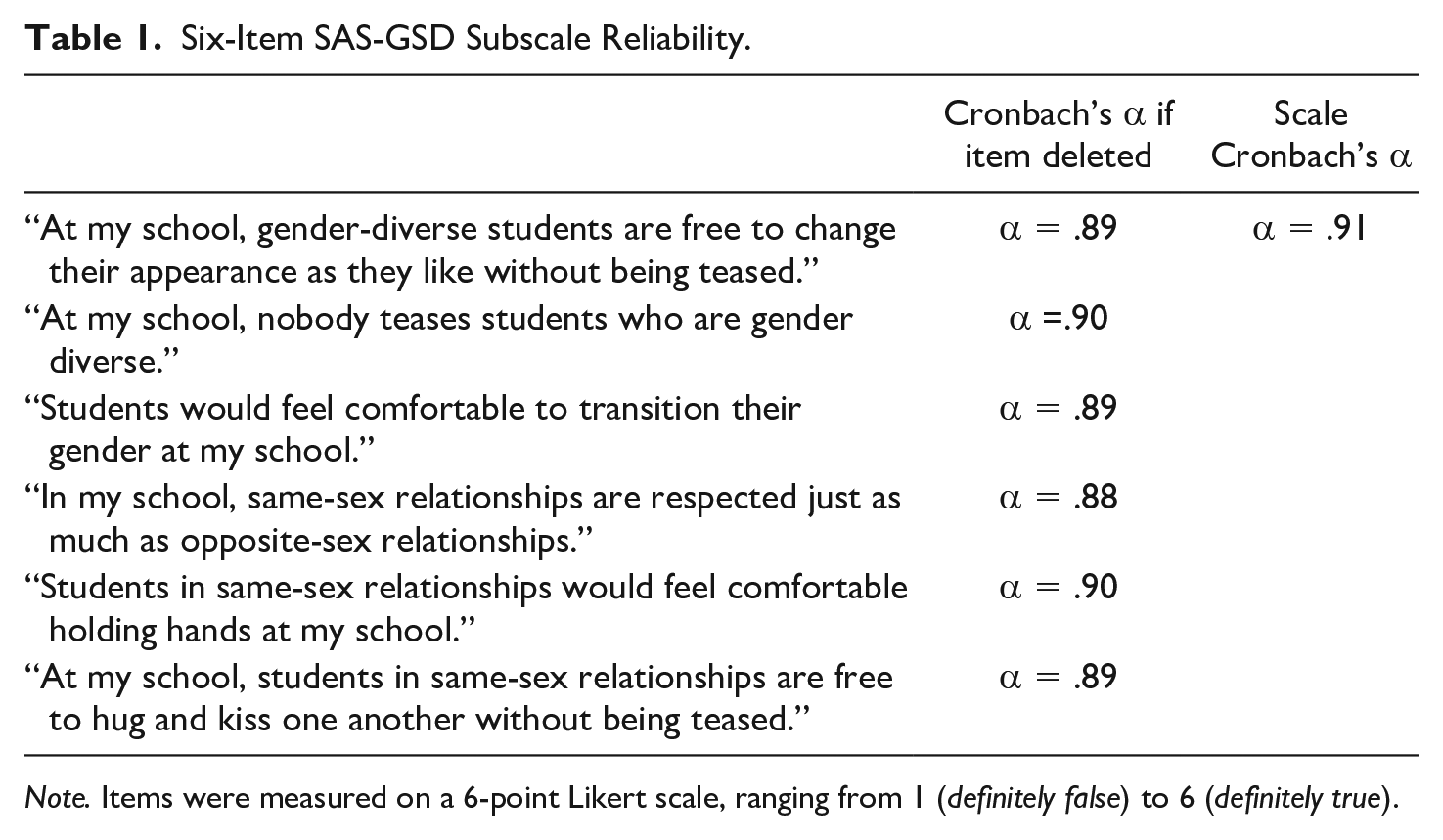
Note. Items were measured on a 6-point Likert scale, ranging from 1 (definitely false) to 6 (definitely true).
Because school-based well-being was a central focus of this study, selected subscales from a validated measure employed by public/government schools across the Australian state of Victoria, the Attitudes to School Survey (ATSS; Department of Education and Training, Victoria [DET VIC], 2018), were used to investigate relevant constructs. Given what is known about the influence of sympathetic, affirming school-based adults for TGD students (Ullman, 2017), participants’ sense of their teachers’ high expectations for (their) success and their reported sense of teacher concern were isolated as central subscales of interest to this study. Further, given the known relationship between school belonging/connection and positive schooling outcomes, both academic and nonacademic (Juvonen, 2006; Ladd et al., 2009), this variable, measured through the ATSS as sense of connectedness, was positioned as the dependent variable/outcome of interest. Table 2 provides a sample item and reliability indices for these three measures.
ATSS Selected Measures.
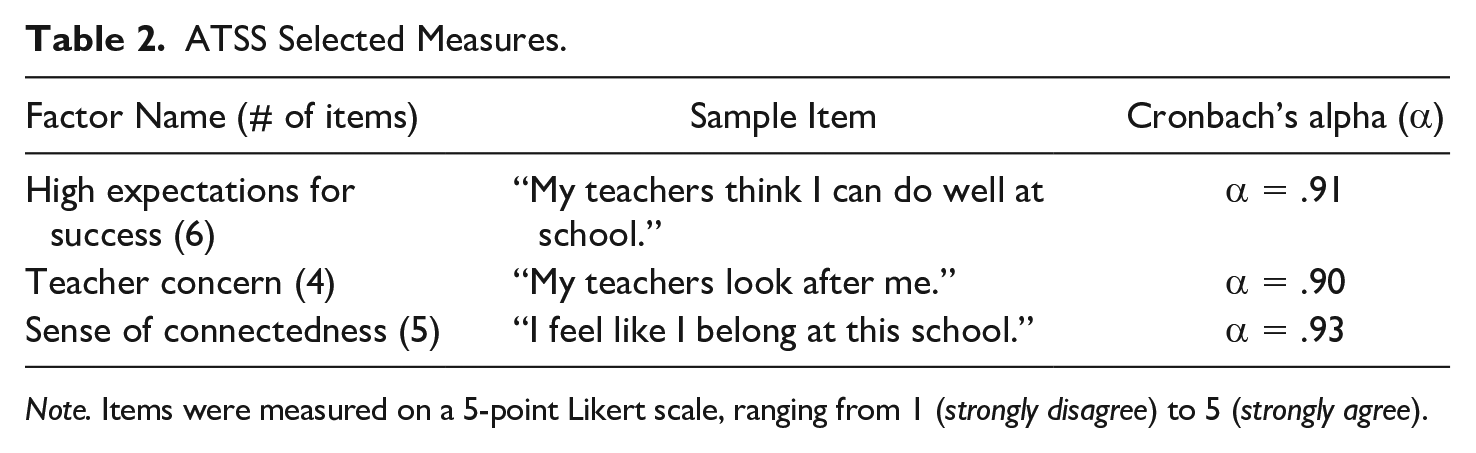
Note. Items were measured on a 5-point Likert scale, ranging from 1 (strongly disagree) to 5 (strongly agree).
Participants
Participants for this anonymous online self-report survey were recruited using targeted advertising via social media (e.g., Facebook and Instagram), as with the previous iteration of the survey (Ullman, 2015). The recruitment posts were shown to Australian teens between 13 and 18 years old who had “liked” Facebook pages or groups for organizations associated with gender and sexuality diverse communities or indicated on their profiles that they were “interested in” people of the same (self-identified) gender identity. Participants were provided with an online participant information sheet and were required to indicate informed consent before survey commencement. Parental consent was not required, and the study had institutional ethical approval. Responses were screened for duplicates and to ensure demographic fit; additionally, four internal “attention check” items allowed for the identification of malicious or fraudulent responses. 2 The final data set was thus reduced to 2,376 usable responses.
Using two survey items, participants’ assigned sex at birth and their current gender identity, n = 685 students (28.8%) were identified as trans/gender diverse (TGD); this sample included individuals reporting a binary transition, individuals who identify as gender nonbinary, individuals who are questioning their gender identity, individuals whose gender identity is more fluid or expansive, and individuals who rejected gender identity labels (Table 3). The predominance of participants assigned female at birth (84% of the total sample) goes part of the way to explaining the larger percentages of this cohort within Table 3. Larger percentages of participants in this cohort assigned female at birth are in keeping with other Australian research with TGD young people, both large-scale (Strauss et al., 2020) and smaller scale (Kozlowska et al., 2021), and may have something to do with demographic trends in social media usage for this age group (Anderson & Jiang, 2018). Further, as shown in Table 3, TGD participants were students across Australia’s three schooling sectors (public/government; Catholic; independent) and were broadly reflective of Australia’s cultural diversity.
TGD Participant Demographics.
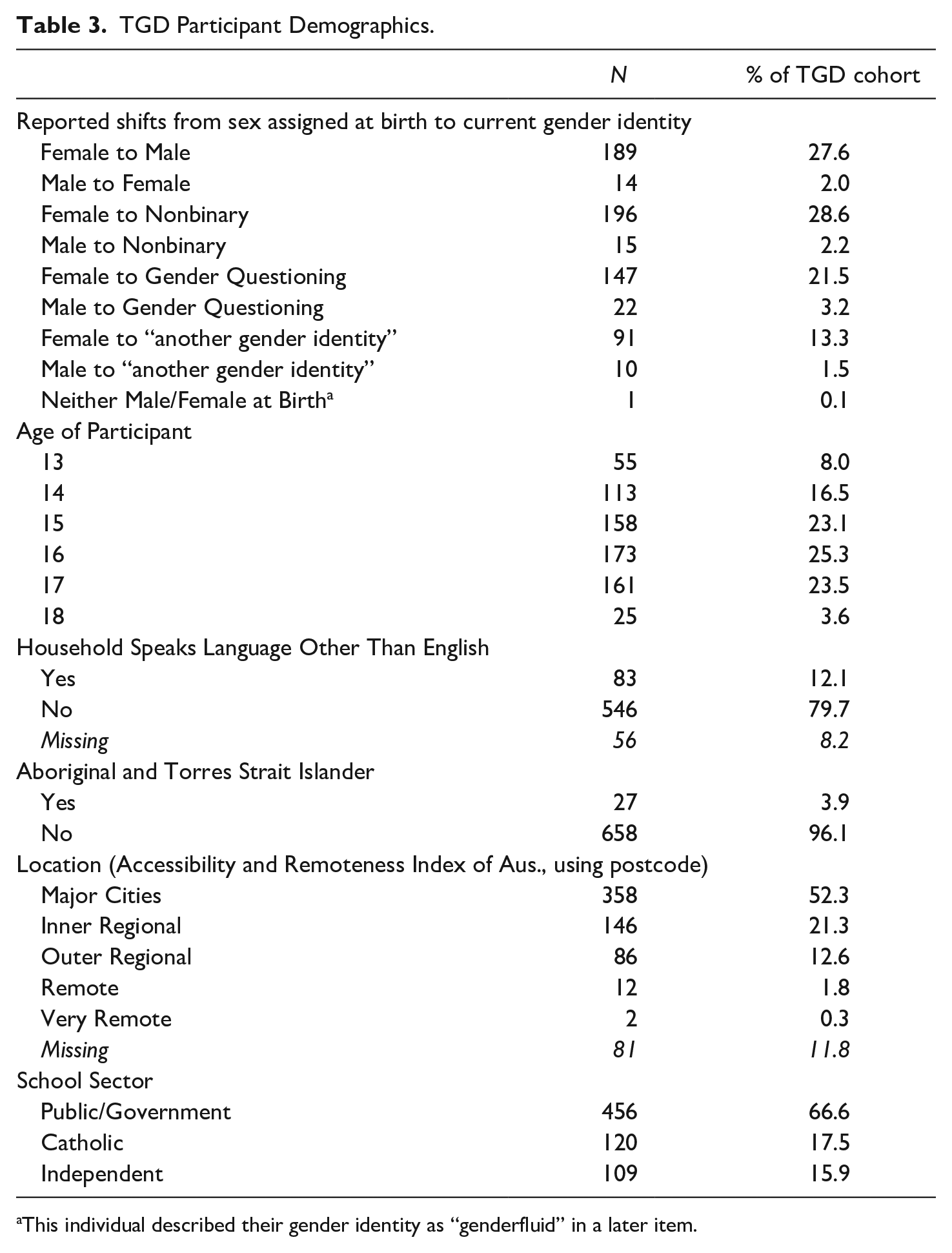
This individual described their gender identity as “genderfluid” in a later item.
Results
School Climate
Just over 85% (n = 584) of the TGD cohort of students reported that they had heard students at their school “use negative phrases or terms to describe people who are gender diverse or identify as transgender,” with just over half of the eligible cohort (56.2%; n = 325) reporting hearing this type of language at school on a weekly basis (total eligible cohort M = 1.99; SD = 1.19). Likewise, 34.3% (n = 235) had seen “physical harassment at school that was related to the victim being same-sex attracted or gender diverse” (or presumed by peers to be GSD), with almost one third of the eligible cohort (31.7%; n = 74) reporting seeing this type of physical harassment on a weekly basis (total eligible cohort M = 1.37; SD = 1.00).
A comparison of mean scores on the six-item SAS-GSD scale measure revealed that TGD students who had heard transphobic language at their schools or had witnessed targeted physical harassment of GSD students reported statistically significantly lower school acceptance and support for gender and sexuality diversity (Table 4), with scores sitting between “mostly false” (2) and “somewhat false” (3). Mean score differences across TGD student subcohorts who had/had not heard or witnessed these behaviors revealed a large effect size (> .80; Cohen, 1988).
Independent Samples Mean Comparison, SAS-GSD.
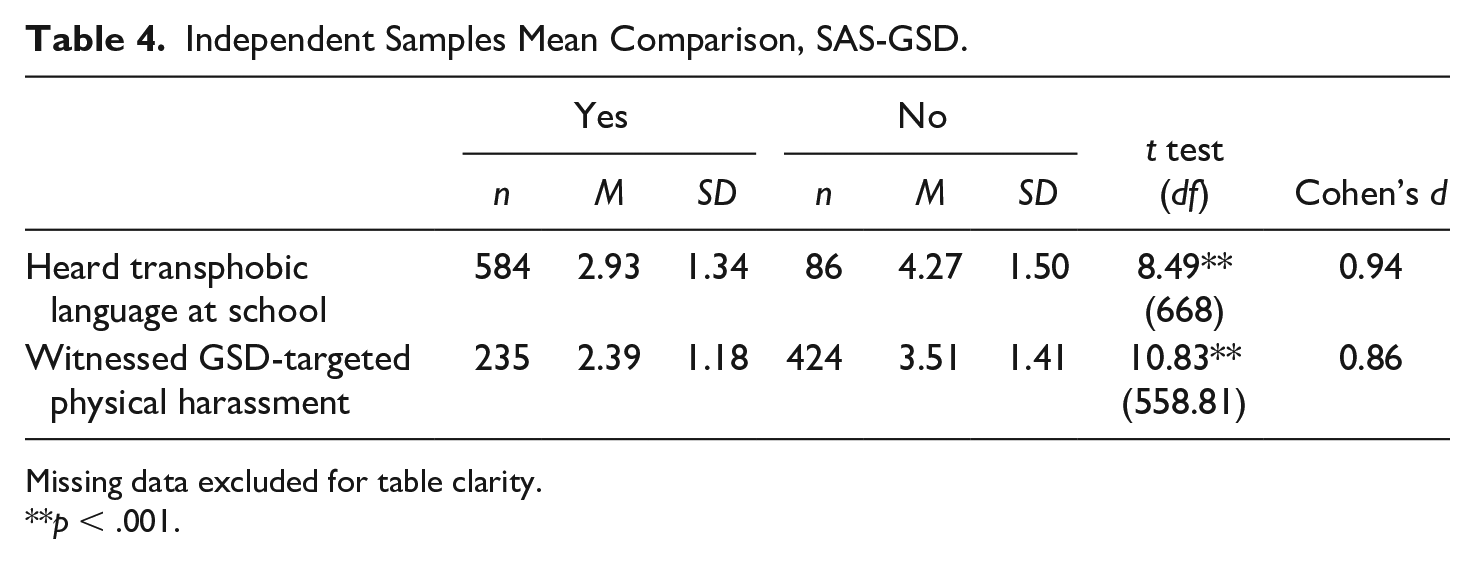
Missing data excluded for table clarity.
p < .001.
School-Based Well-Being
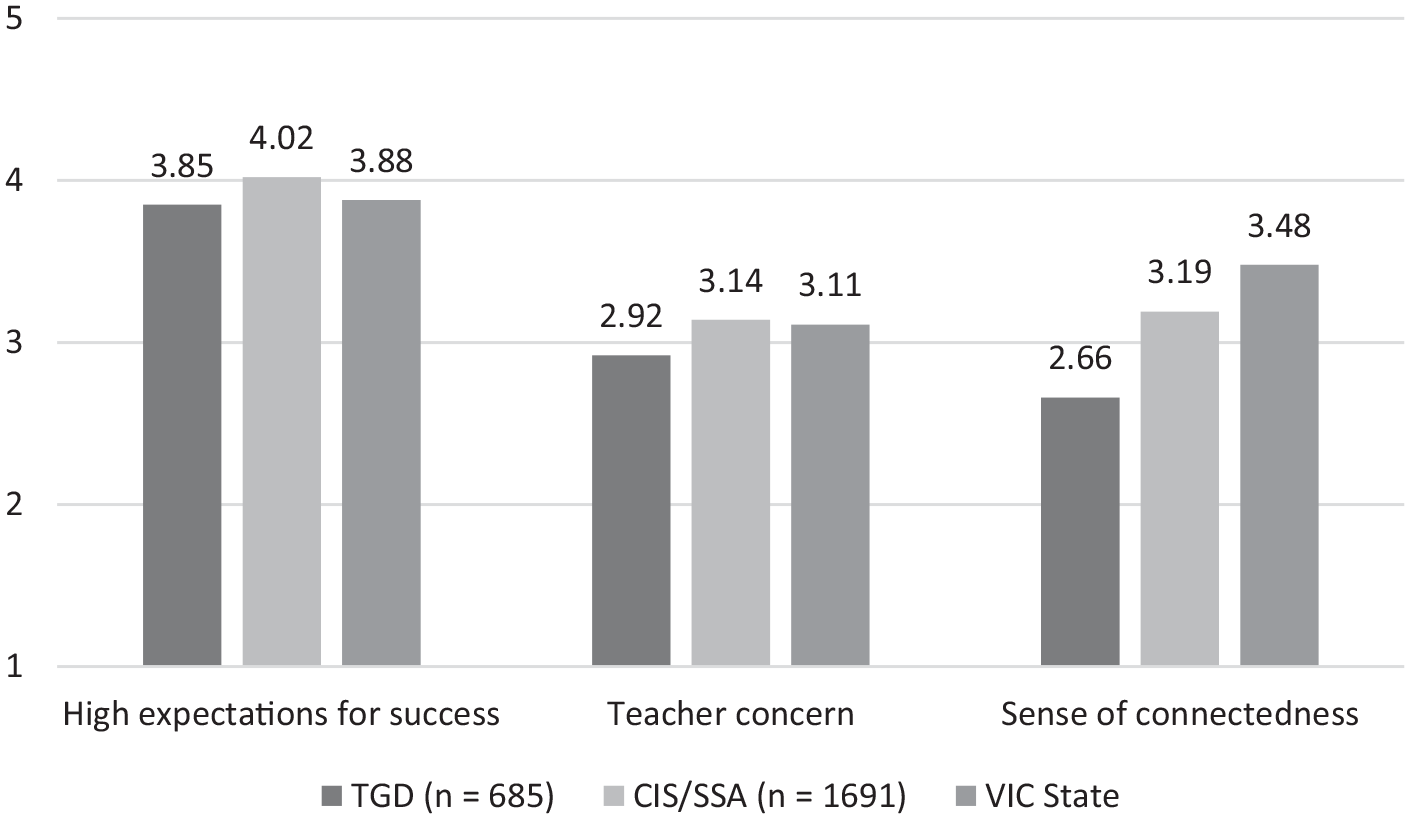
Comparing the cohort of TGD participants with both the cisgender, same-sex attracted (CIS/SSA) survey participants and mainstream government (public) school student data from across the Australian state of Victoria (VIC), 3 TGD survey participants reported marginally lower well-being scores across the two included subscales of the ATSS measure that examined sense of teacher expectations and concern. As shown in Figure 1, the largest mean score differences were visible within the “sense of connectedness” measure of school belonging, with TGD students in this study scoring almost a full point lower than the mean score of secondary students from across Victoria.
Independent samples mean comparison, TGD and CIS/SSA participants.
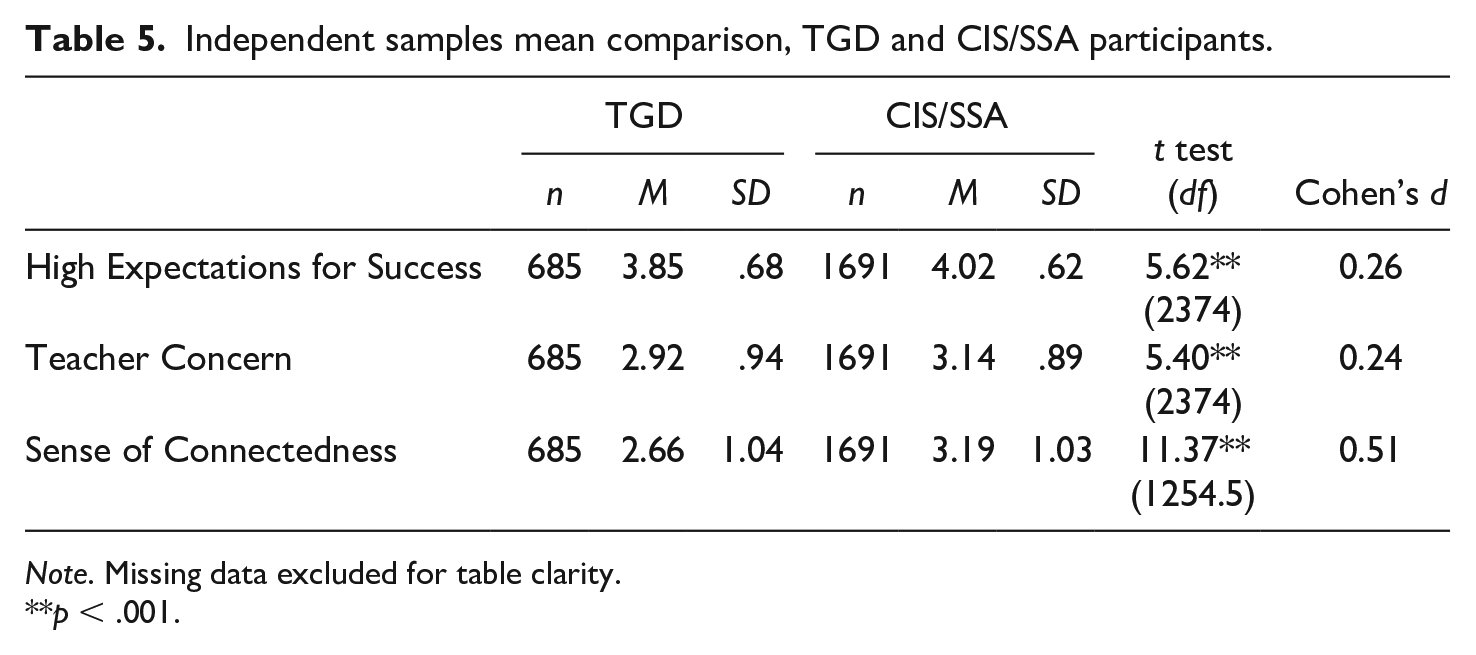
While mean scores could not be responsibly statistically compared between the current survey cohort and Victoria state data, comparisons between the TGD and CIS/SSA participants showed statistically significant mean score differences for these two groups (Table 5). While effect sizes were in the “small” range (≈ .20) for the two measures of teachers’ expectations and concerns, mean score differences revealed a medium effect size (≈ .50) for students’ sense of connectedness (Cohen, 1988).
Independent samples mean comparison, TGD and CIS/SSA participants.
Note. Missing data excluded for table clarity.
p < .001.
Influences on School Belonging
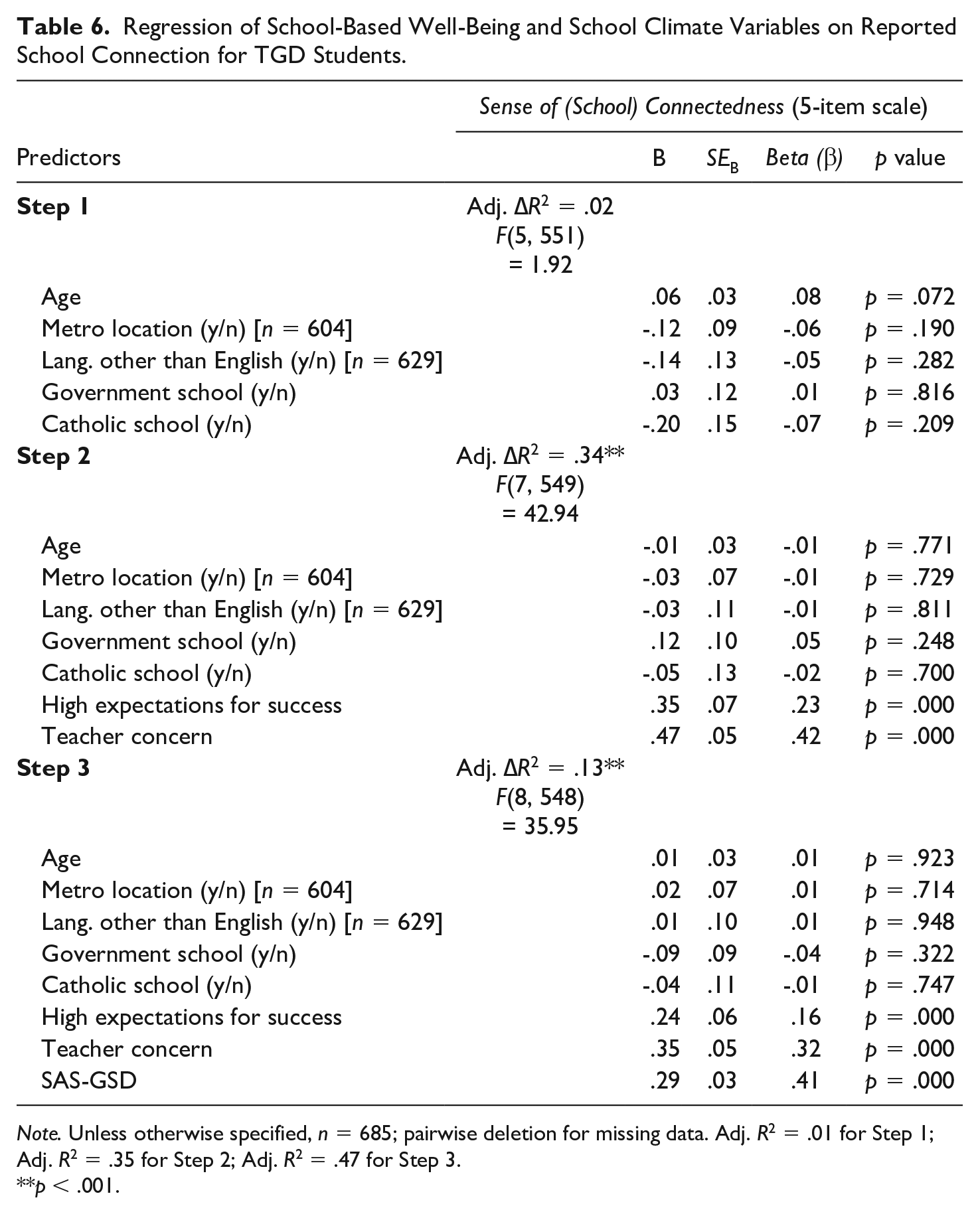
To better understand the relationship between TGD students’ reports of their school climate with respect to gender and sexuality diversity, their sense of their teachers’ care for and investment in them, and their sense of connection and belonging at school, a hierarchical multiple regression analysis was conducted (Table 6). Predictors were included in the model using the Enter method, and diagnostic tests concluded that all relevant measurement assumptions related to multicollinearity, homoscedasticity, and independence were met.
Regression of School-Based Well-Being and School Climate Variables on Reported School Connection for TGD Students.
Note. Unless otherwise specified, n = 685; pairwise deletion for missing data. Adj. R2 = .01 for Step 1; Adj. R2 = .35 for Step 2; Adj. R2 = .47 for Step 3.
p < .001.
Selected demographic variables were included as Step 1 of the model, including participants’ age, location, whether they speak a language other than English, and the type of secondary school they attend; however, as a set, these explained just 2% of the total adjusted variance in TDG students’ sense of connectedness at school. Step 2 shows that the addition of two variables measuring TGD students’ beliefs about their teachers’ personal investment in them (high expectations for success and teacher concern) explained another 34% of the total adjusted variance. The SAS-GSD measure of the school community’s acceptance and support of gender and sexuality diversity was added in Step 3, accounting for an additional 13% of variance in TGD students’ sense of connectedness to school and, with other included predictors, explaining almost half of the total scale variance (adj. R2 = .47). None of the included demographic variables served as significant predictors of students’ sense of connectedness in any of the three steps.
Discussion
In terms of participating students’ reports of their school climate with respect to gender and sexuality diversity, majority numbers of participants (85%) heard transphobic language used at school, with just over half of this cohort hearing such language at school on a weekly basis. Where participating TGD students attended schools in which they heard/witnessed transphobic language and physical harassment of GSD peers, they reported significantly lower evidence of cultural support, respect, and comfort for GSD students on the original SAS-GSD measure. The prevalence and apparent “snowballing” of cisnormative microaggressions reported here echoes previous research detailing the pervasiveness of victimization of TGD students by their peers (Hatchel et al., 2019) and TGD students’ exposure to associated violence and physical harassment at school (McBride, 2021).
With the integration of measures of school-based well-being used across the Australian state of Victoria (ATSS; DET VIC, 2018), this project was able to compare self-reported well-being outcomes from both TGD and cisgender, same-sex attracted students to statewide averages. Findings showed that, while TGD students’ sense of their teachers’ expectations for their success were essentially on par with that of high school students across Victoria, their sense of teachers’ concern for their well-being was roughly 1/5 of a scale point lower than this cohort. This finding points to an erosion of assumptions of teacher concern where school climates are experienced as cisnormative, marginalizing, and potentially dangerous. Given the value of quality teacher–student relationships as a protective factor against poor mental health and drug and alcohol use among TGD adolescents (Gower et al., 2018), such findings are notable.
Looking at the central variable of interest, school connectedness/belonging, indicates that TGD students’ average sense of school connection was significantly lower than that of cisgender, same-sex attracted participants, with a medium effect size and almost a full point lower than Victoria’s statewide averages. Previous large-scale research with TGD students has shown that experiences of peer marginalization are associated with diminished school belonging for this cohort (Hatchel et al., 2019) and predict a range of poor mental health outcomes (Strauss et al., 2020). As McBride (2021) concluded from their systematic review of 83 empirical articles from the field, TGD students’ experiences of cisnormative microaggressions coalesce to reduce “peer connectedness, teacher positivity, and school belonging” (p. 123), herein apparent within reported regression analyses highlighting the predictive power of both positive teacher–student relationships and supportive school climate on school connectedness.
In most important ways, school-based adults serve as the moral arbiters with respect to the framing and visibility of GSD subjectivities within school environments, as TGD students and their families are acutely aware (Ferfolja & Ullman, 2021). Results from this research spotlight the predictive influence of TGD students’ sense of their teachers’ personal investment in them—both academically and socially—on their sense of connection and belonging at school, above and beyond the influence of multiple demographic and school contextual variables, and they independently explain 34% of the total variance of this measure. The addition of the SAS-GSD measure to this model explained a further 13% of the variance of TGD students’ sense of belonging at school. The brief SAS-GSD measure taps into the ways in which a cisnormative school climate can “inhibit disclosure . . . encouraging inauthentic forms of self-representation” (McBride, 2021, p. 123) for TGD students; accordingly, this result speaks to the relationship between students’ experiencing an open, supportive, and inclusive environment for TGD students and feeling personally invested in and connected to their school. Given previous international research that has documented how TGD students’ sense of their teachers’ expectations and their reported school belonging increases the odds of their academic achievement with a nationally representative student sample (Fenaughty et al., 2019), results of this analysis have important implications for the Australian setting.
Limitations and Future Directions
This project includes one of the largest known samples of Australian TGD high school students to date, although participants were self-selecting; accordingly, results from this research cannot be viewed as representative of the national population of TGD students. While there are significant practical challenges with respect to obtaining a random sample of this cohort through Australian schools for a variety of sociocultural/political reasons documented elsewhere (Ferfolja & Ullman, 2020), as Australian states and territories increasingly collect school-based well-being data, adding a more accurate measure of gender identity to their demographics would move the field closer to a representative database and enable important comparative analysis.
The large majority of the cohort of TGD young people included in this project indicated that they were assigned female at birth, in keeping with other Australian national research with higher percentages of TGD participants assigned female at birth (Callander et al., 2019). Additionally, just 29% of the TGD participants in this sample identified with a binary gender transition (e.g., male to female/female to male), with the large majority of this cohort identifying as nonbinary, as questioning their gender identity, or with another gender-diverse identity. Results align with international research showing increasing numbers of young people identifying as nonbinary or otherwise outside the gender binary (The Trevor Project, 2021). Further research in the Australian context would benefit from additional examination by TGD student gender identity, including binary, nonbinary, and other gender-diverse identities, and young people unsure about or questioning their gender identity.
Given the sample size of TGD students in this research, a decision was made to examine the cohort as a whole, thus preserving statistical power. Of course, TGD students’ experiences are not homogeneous; rather, “they are shaped by vectors of privilege/disadvantage associated with (dis)ability, age, (non)binary gender, class geography, ‘race’ and sexuality” (McBride, 2021, p. 126). Across the Australian school system, policy, curricular visibility, and guidance for teachers vary significantly by state/territory with respect to gender and sexuality diversity; further, the private school–public school divide is both racialized and classed, with impacts for teacher training and support in this area. Future projects with larger participant samples would benefit from additional subcohort investigations, accordingly.
Finally, the conclusions drawn from a quantitative exploration such as this one are only as robust as the measures of the constructs employed in the research. Although the individual items comprising the previously validated six-item SAS-GSD measure cluster together as a single factor (Ullman, Hobby, et al., 2022), these ask young people to reflect on the experiences of students in same-sex relationships as well as gender-diverse students at their school. Of course, while there may be some overlap across these cohorts, it is critical to recognize the differential experiences described in this set of items and not to conflate these as “other.” Further, while the measure of teacher concern from the ATSS (DET VIC, 2018) was chosen to allow comparisons with statewide data, it is important to critically consider the conclusions that can be derived from its use. Notably, students’ impression of their teachers’ “concern” for them as an individual does not, in and of itself, indicate the absence of harm—particularly at a systemic, institutional level. Rather, as Luecke (2018) outlined in their description of a gender facilitative school, school-based adults need to be “on the alert and have a united commitment to action” (p. 280) to address aggression and microaggression rather than treat these as individual instances or anomalies.
Conclusions/Recommendations
Results from this project highlight the measurable impact of cisnormative microaggressions on TGD students’ sense of school belonging, above and beyond the impact of personal relationships they may have with their teachers. In light of existing research that points to the shortcomings of supportive school structures designed for sexual minority students for adequately addressing the effects of transphobia and cisnormativity (Fenaughty et al., 2019), this article adds to the growing body of empirical support for teacher professional development and curricular supports specific to TGD identities; these include training for school and state/territory departmental leaders as they craft and communicate protective policies for this cohort of students (De Pedro et al., 2016; Kean, 2021; Luecke, 2018; McGuire et al., 2010).
This research points to a positive school climate for TGD students as an important prerequisite for their school belonging. It provides valuable support for critiques of an individualistic approach to supporting TGD students (Martino et al., 2020) that require the “embodied presence and visibility of the transgender student as a basis for ensuring their recognisability” (p. 1) and providing adequate support for their school-based well-being. Visible, “out” TGD students should not have to be the catalyst for schools’ proactivity in this area; rather, schools must understand, acknowledge, and seek to ameliorate cisnormative microaggressions at both institutional and interpersonal levels in order to provide TGD students a safe(r) space where they can be as in/visible as they wish, connect with schooling, and reach their full potential.
Importantly, these results portend the ongoing negative ramifications for students and school communities should Australian legislation and/or educational policy enshrine silence and invisibility of gender diversity in schools into law. These ongoing debates blatantly expose the overt discrimination levied at this student cohort even in the face of a national Student Wellbeing Framework, ostensibly written for all Australian students, propagating confusion for educators and doing measurable damage.
Footnotes
Declaration of Conflicting Interests
The author declared no potential conflicts of interest with respect to the research, authorship, and/or publication of this article.
Funding
The author disclosed receipt of the following financial support for the research, authorship, and/or publication of this article: The research described in this article was funded by Western Sydney University. The author received no further financial support for the authorship and/or publication of this article.