



Abstract
Many American states have adopted No More Stringent (NMS) laws, which are intended to curb the ability of environmental protection agencies to issue strict rules regulating pollution. This study leverages variation in scope, restrictiveness, and duration of NMS laws to assess their efficacy in constraining the behavior of environmental regulators. Results from a set of panel data models indicate that NMS laws with broader scope and greater restrictiveness are associated with significantly lower environmental compliance costs. Thus, despite the possibility of strategic behavior by implementing agencies, these laws appear to effective in achieving their proponents’ aims of reducing the regulatory burdens imposed on industry.
Introduction
To what extent are legislatures able to induce compliance in bureaucratic agencies by imposing statutory constraints on bureaucratic policymaking? The question is rarely discussed, but central to democratic governance in the modern administrative state. Directives spelled out in statute are the most forceful mechanisms that legislatures have to control the behavior of administrative agencies. Mandates or prohibitions on agency behavior give bureaucrats clear orders with which they are legally required to comply. In theory, there should be little doubt as to the outcome.
Yet there is doubt. Administrative agencies themselves are strategic actors, and they may respond to these requirements in ways that seek to advance their own policy goals. Especially in cases where there is a clear agency mission, the agency may seek to challenge or subvert directives from political officials that they view as being inconsistent with that mission (O’Leary 2014; Wilson 1989). As discussed in more detail below, a growing body of theoretical (Gailmard 2002) and empirical (Acs 2016; Potter 2019; Raso 2015; Woods 2018) evidence suggests that agencies can, at times, implement laws in ways that serve to further their own policy objectives. Such evidence calls into question the effectiveness of statutes attempting to constrain the actions of administrative agencies.
This study addresses the question of whether statutory constraint effectively restricts the actions of bureaucratic agencies within the context of “No More Stringent” (NMS) laws, which have been widely adopted among the American states. These laws are explicitly designed to curb the ability of state environmental agencies to issue strict rules regulating pollution by prohibiting state regulations from exceeding federal minimum standards. The analyses leverage variation across states and time in the scope, restrictiveness, and duration of NMS laws to ascertain their effectiveness in constraining environmental regulators. Results from a set of panel data models indicate that the NMS laws with broader scope and greater restrictiveness are associated with lower levels of environmental compliance costs, a key indicator of regulatory stringency. Thus, in this case at least, statutory mechanisms appear to be effective in limiting the regulatory assertiveness of state environmental agencies.
Policy Delegation and Statutory Constraint
The delegation of policymaking authority to government agencies is a defining feature of modern industrial societies. This fact has sparked concern in some quarters over whether government agencies lie outside the realm of democratic accountability (e.g., Lowi 1979). In delegating this authority, however, political officials do not necessarily abdicate all control over the direction of public policy. Legislators may limit agency discretion through a variety of means, including specifying in statute what actions administrators may—and may not—take (Epstein and O’Halloran 1999; Huber et al. 2001). Statutory mechanisms that legislators may employ to set boundaries on agency behavior include procedural requirements, reporting requirements, consultation requirements, appointment limits, and statutorily imposed mandates and deadlines, which sometimes include “hammer” provisions that automatically impose penalties if deadlines are not met (Epstein and O’Halloran 1999; Kerwin and Furlong 2019). Legislators, however, face a tradeoff in this initial delegation decision. Statutory constraints on agency discretion may provide the legislature more policy control, but at the expense of flexibility and technical expertise (Bawn 1995).
Statutory constraint may not only be used as a means of restricting the agency, but the current governor and future governors and legislators. Empirical studies suggest that divergent policy preferences may lead the legislature to be wary of delegating policy authority to the executive branch, leading it to legislatively circumscribe bureaucratic discretion under conditions of divided government (Epstein and O’Halloran 1999; Farhang and Yaver 2015; Huber et al. 2001; Taratoot and Nixon 2011). In addition, political officials have many tools that they may use to direct the bureaucracy, and therefore legislatures may be concerned about the possibility of coalitional drift, that is, changes in legislative or executive preferences in the future. The greater the likelihood that future governing coalitions will have different policy preferences than the current one, the more likely political officials are to attempt to “lock-in” their policy preferences via constraining statutes (de Figueiredo and Vanden Bergh 2004; Horn 1995).
The implicit assumption of much of this literature is that statutory constraints matter, that is, they are generally an effective means of controlling bureaucratic behavior. At the same time, there is recognition that agencies may not always faithfully follow the wishes of those who laid out the law. It has long been known that bureaucrats may work to sabotage policy directives that they disagree with (Brehm and Gates 1999; Gailmard 2002; O’Leary 2014; Wilson 1989). In part, this may take the form of strategic interpretation of statutory mandates, especially during the process of promulgating agency rules. Potter (2019) finds that agencies use their discretion over a variety of aspects of the rulemaking process—including timing, the structure of the commenting process, and the length and complexity of proposed rules—as a means of evading political oversight with the intent of accomplishing agency policy goals. Her analyses suggest, for instance, that agencies speed up the rulemaking process when political officials are sympathetic and delay it under more unfavorable political conditions, thereby increasing the probability that the agency’s policy decisions are not challenged.
Along the same lines, Raso (2015) finds that agencies may strategically employ legal exemptions to avoid public notice and comment, an important component of “fire alarm” oversight (McCubbins and Schwartz 1984). Other studies suggest that agencies may manipulate required cost-benefit analyses in ways that support their own aims (Woods 2018). Although much of the literature on strategic agency behavior focuses on agencies’ pursuit of policy goals consistent with their mission or culture, other studies suggest that agency responsiveness to current elected political officials may lead to agency efforts to evade, curtail, or not comply with statutory mandates (Acs 2016; Yaver 2015). In the environmental arena, for instance, the first Trump Administration took several steps to redefine or limit the applicability of existing statutory language that was intended to promote pollution control. Among the most far reaching and controversial of these were attempts to limit the EPA’s ability to regulate effluent emissions under the Clean Water Act by redefining what constitutes a “navigable waterway,” and to limit regulations promoting a shift to renewable energy sources by interpreting certain provisions of the Clean Air Act as applying only to existing power plants (Konisky and Woods 2018; Shafie 2020).
Thus, while much of the literature on statutory controls implicitly assumes their effectiveness in controlling agency policy actions, an emerging literature suggests that this effectiveness may be limited by strategic agency behavior, either in pursuit of the agency’s own policy aims or in response to pressures from contemporaneous political officials. In light of these findings, it is important to assess the effectiveness statutory control mechanisms, a question that the existing literature has rarely addressed. To do so, it is helpful to examine statutes that provide relatively clear, unambiguous policy directives to agencies. This study examines one such set of statutes, NMS laws in the American states.
“No More Stringent” Laws
Many federal environmental laws in the U.S. utilize a system of partial preemption that allows states to implement and enforce them (Fowler and Birdsall 2021; Woods 2006, 2022). States may promulgate their own regulations in these areas, so long as they comply with minimum federal standards. Federal law thus sets a floor below which state environmental regulations may not fall. States may, however, choose to regulate pollution emissions more aggressively.
NMS laws are intended to constrain the ability of state environmental agencies to promulgate environmental regulations that are more stringent than the relevant federal minimum standards. The earliest NMS laws were passed in the mid-1970s in response to landmark federal environmental legislation such as the Clean Air Act, Clean Water Act, and Resource Conservation and Recovery Act, which governs the disposal of hazardous solid waste. After a lull, many states adopted them in the 1980s and 1990s, and they have continued to be adopted since, albeit at a slower pace (Woods 2021). Thus, rather interestingly, at the same time many states are going beyond the federal government in the environmental arena by adopting policies designed to promote renewable energy generation and combat climate change (Bromley-Trujillo and Poe 2020; Bromley-Trujillo et al. 2016; Fowler and Breen 2013; Matisoff 2008; Stoutenborough and Beverlin 2008; Zhang et al. 2024), many other states—and sometimes the same states—are attempting to minimize stringent regulation in traditional areas of pollution control such as air and water quality (Hecht 2004; Heermans 2011; Organ 1995; Woods 2021).
Research suggests that state adoption of NMS laws is partially driven by prior adoption of broad NMS laws in neighboring states, as well as by high compliance costs relative to economic competitors, each of which is suggestive of an interstate competition dynamic that could lead to an environmental race to the bottom (Woods 2021). Important intrastate factors include unified Republican political control of state government, anti-environmental public opinion, and adoption of a prior NMS law (Woods 2021). Significant counterexamples do occur: there are several instances of NMS adoption under unified Democratic control, for instance, and at times even conservative governors may attempt to resist what they view as legislative overreach into executive branch affairs, as with then Governor Mike Pence’s veto—later overridden—of NMS legislation in Indiana in 2017.
The clear intent of NMS laws is to reduce the environmental regulatory burden imposed on industry. This is evident in the rhetoric employed by their supporters, who commonly reference “overregulation,” “red tape,” and the need to make industry competitive (McElfish 1995; Organ 1995). Concerned about the effect of water pollution regulations on their economically important timber industry, for instance, in 1991 Oregon passed a NMS law that barred their state environmental agency from “promulgat[ing] or enforc[ing] any effluent limitation upon nonpoint source discharges of pollutants resulting from forest operations on forestlands,” unless mandated under the federal Clean Water Act (quoted in State Environmental Resource Center [SERC] 2004).
However, their effectiveness in reducing this burden is not assured. Direct noncompliance is probably rare, but there are a variety of compensating behaviors that state environmental agencies could engage in to mitigate the effects of these laws on overall levels of regulatory stringency. Agencies could, for instance, promulgate stringent regulations in areas in which the federal government does not set minimum standards (Sapat 2004), which would not typically be covered by NMS laws. Agencies could also change how they implement existing environmental regulations. Formal rules, after all, are just part of the process of implementing environmental policy, and their effect often hinges on how they are put into practice. One implementation change agencies could make is to write more stringent permits. Permits are detailed instructions governing allowable pollution discharges from individual facilities. They essentially apply broad regulations (such as those covered by NMS laws) to specific cases, but there is often a wide degree of agency discretion in determining permit standards (Hoornbeek 2011; Woods 2022, 2025). Finally, agencies could alter their inspection and enforcement practices, such that they inspect facilities more regularly and enforce existing laws more stringently, another area of substantial agency discretion (Cline and Davis 2007; Hopper 2017, 2020; Liang et al. 2020; Lynch et al. 2019; Ozymy and Jarrell 2011; Sjoberg and Xu 2018). In short, there are several actions that agencies could take that could potentially counter the effects of NMS laws on overall levels of regulatory burden faced by industry.
Empirical assessment of the effectiveness of NMS laws in circumscribing agency regulatory activity is virtually nonexistent. Analyzing data from a survey of state air pollution control directors, one study did find that the presence of NMS laws is associated with greater perceptions of legislative influence on setting and enforcing regulatory standards (Woods 2008). The analyses presented here, however, go beyond such perceptual approaches, focusing instead on an objective indicator of environmental regulatory stringency within a state: the private costs of compliance with environmental regulations. The analyses assess three attributes of NMS laws that may be expected to affect these costs: their scope, restrictiveness, and duration.
Attributes of NMS Laws
There is a significant amount of heterogeneity in NMS laws across states. To capture this, scholars performing a detailed examination of state NMS statutes in an individual environmental policy arena could develop a fine-grained, policy-specific classification system (see, e.g., Hecht 2004). Since the purpose of this study is to evaluate the overall effects of NMS laws within a state, it does so using a broader set of characteristics that can be uniformly applied across many types of NMS laws. 1
The first of these is the substantive scope of the NMS laws in a state. Many NMS laws focus on specific types or sources of pollution, particularly water pollution, air pollution, hazardous waste, or leaking underground storage tanks (Organ 1995; Woods 2021). Others, however, have general applicability across all forms of environmental regulation. Laws with broader applicability can be expected to have a greater impact on overall levels of environmental regulatory stringency. 2
The second important attribute is the restrictiveness of these laws. Many NMS laws are considered “qualified” or “conditional” laws that do not completely prohibit agencies from setting regulatory standards that are more stringent than those in federal statute, but make the process of doing so more challenging, time consuming, or cumbersome. These laws may require that agencies provide a detailed economic impact analysis or other written justification to the legislature before promulgating such a rule. Utah’s 1987 NMS law, for instance, bars its state environmental agency from adopting regulations more stringent than federal minimum standards unless the agency makes a written finding based on scientific evidence that corresponding federal regulations are not adequate to protect public health and the environment of the state. That finding must be accompanied by an opinion evaluating the public health and environmental studies that is presented to the legislature for approval.
Restrictions such as those in Utah’s law would clearly be expected to reduce the volume of new state-initiated environmental regulation. Some conditional NMS laws, however, go even farther, and only allow state agencies to exceed federal minimum standards under emergency conditions, such as a serious, imminent threat to public health. At the extreme end of the restrictiveness scale are unconditional laws. These laws contain blanket prohibitions against issuing regulations that are more stringent than federal minimums under any circumstances. In these states the federally imposed “floor” effectively becomes a state imposed “ceiling.”
Finally, NMS laws should have greater overall impact on compliance costs the longer they have been in effect. A NMS law that comes on the books in a given year would be expected to have little immediate impact on regulatory stringency, which would be predominately driven by rules that are already in place. However, the effect of NMS laws should accumulate over time, as new regulatory actions are constrained by NMS policies governing the rulemaking process.
Data and Method
Dependent Variable
The following analyses assess the effectiveness of NMS laws in reducing the environmental regulatory burdens imposed on industry. These burdens are explicitly the focus on NMS laws, as noted by Organ (1995) who states: “State legislatures . . . may decide to protect local industry from additional compliance costs by precluding state environmental agencies from promulgating rules or regulations that impose additional demands on the regulated community” (p. 1388).
For regulated industries, the costs of compliance with environmental regulations can be significant. Consider the Clean Air Act’s New Source Performance Standards (NSPS), which require significant upfront capital investment in pollution controls that must constitute a Best System of Emission Reduction, as well as additional operating expenses for monitoring, reporting, maintenance, and potential delays or shutdowns associated with maintaining compliance (United States Environmental Protection Agency [U.S. EPA] 2024). In a survey of state clean air directors conducted in the late 1990s, 21 percent of respondents indicated that their state exceeded US EPA minimum NSPS regulations (Potoski 2001). In these states such costs are likely to be even higher.
The dependent variable is operationalized using Levinson’s (2001) industry-adjusted index of state environmental compliance costs. The index is constructed from state-level data on private pollution abatement and control expenditures, which were compiled annually by the U.S. Census from 1973 to 1994. The index adjusts the raw Census data to account for differences in the composition of industries across states, such that it represents the average pollution abatement costs per dollar of state output if each firm in the state conformed to the national average for its industry. This measure has been utilized as a proxy for environmental regulatory stringency in a variety of other studies (Daley et al. 2007; Fredriksson and Millimet 2002; Woods 2015, 2024). 3
Core Independent Variables
Based on the forgoing discussion, the analysis includes a measure of the overall intensity of NMS a state’s NMS laws, which captures three sources of variation (1) the substantive scope of the NMS laws, (2) the restrictiveness of the NMS laws, and (3) the amount of time the NMS laws have been in effect. In addition, separate models are run that estimate the effect of each of these attributes independently. Details on the construction of each of these measures are provided in Table 1.
NMS Variable Construction.
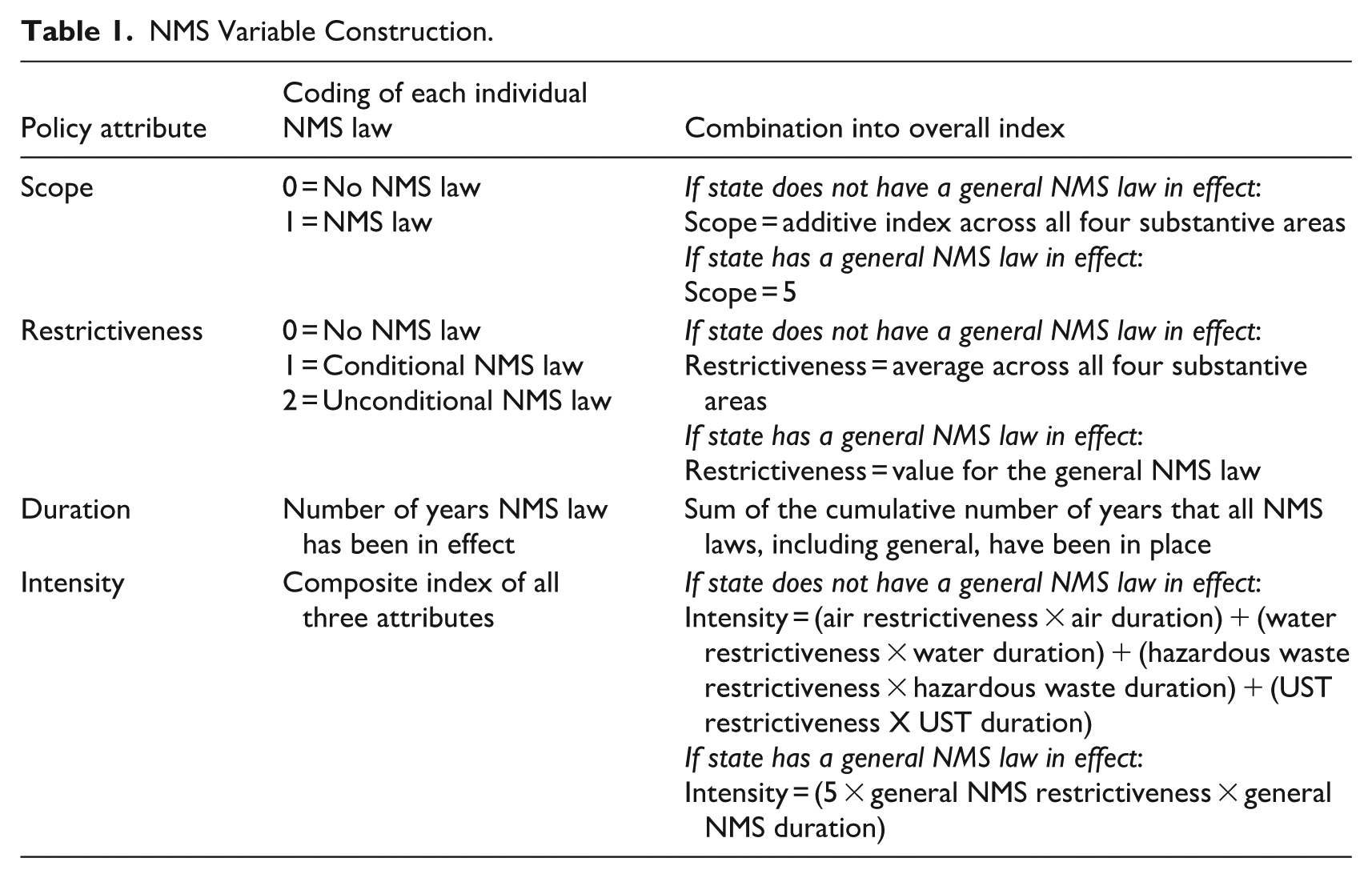
As indicated by the table, with the exception of the duration variable general NMS laws are treated differently in the coding scheme than NMS laws that apply only to a specific substantive area. If a state does not have a general NMS law, for instance, the scope of a state’s NMS laws is simply measured as an additive index of dummy variables indicating the presence or absence of NMS laws across each of the four areas assessed: air pollution, water pollution, hazardous waste, and underground storage tanks. A state with a general NMS law, on the other hand is given a value of 5, which accounts for the fact that all four of these environmental arenas, as well as any other type of environmental rulemaking not included in them, is covered by the general law. This operationalization utilizes the same approach that Woods (2021) used to capture differences in the scope of these laws.
The restrictiveness of NMS laws, which is captured in a simple three-point scale ranging from 0 = no NMS law to 2 = unconditional NMS law in each area, is represented by the mean value of the individual areas for states without a general NMS law, but takes on the restrictiveness value of the general NMS law if the state has one. The intensity measure is then calculated using the restrictiveness value for each individual law weighted by its time in effect, and then these individual values are summed across all four areas. For states with a general NMS law the restrictiveness value of that law is used instead, weighted by five to represent the fact that it applies across all four areas and any additional environmental rulemaking, using similar logic as that applied to the scope variable.
The one variable that does not follow the approach of treating general NMS laws separately is that for duration. Since the standalone duration variable is only intended to capture the impact of time, exclusive of scope or stringency, it is simply operationalized as the aggregate number of years that each NMS law has been in effect, summed across all NMS laws in effect in a given year.
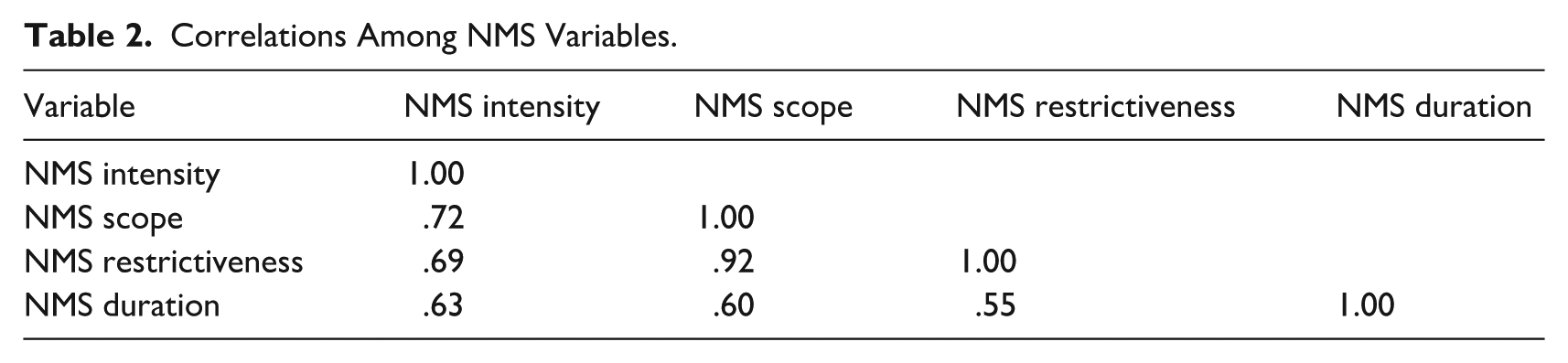
Table 2 presents correlations among the variables representing different NMS attributes. As might be expected, all of the variables are positively correlated. The correlations among the variables are generally moderate, ranging from .55 to .72. The exception is NMS scope and restrictiveness, which are highly correlated at .92.
Correlations Among NMS Variables.
Control Variables
A variety of control variables are also included in order to capture the effects of other intrastate factors that may influence the stringency of environmental regulation. These variables assess the effects of factors related to each state’s political, institutional, economic, problem, and policy context, and closely follow those used in other studies assessing environmental compliance costs (Daley et al. 2007; Woods 2015).
Several variables are included to represent the state’s political context. Regulatory decision-making may be responsive to the policy preferences of elected political officials and the mass public. The models therefore include dummy variables indicating unified Republican or unified Democratic control of state government (Klarner 2003), with the expectation that Democratic governments will push for more stringent environmental regulation. Divided government forms the omitted reference category. In addition, a dynamic measure of citizen ideology (Berry et al. 2013) is included as a covariate, with the expectation that a more liberal mass citizenry will lead to more aggressive environmental regulation.
Another important facet of a state’s political context is its interest group environment. States in which manufacturing industries wield significant political power may regulate less aggressively than states with less powerful industries. This power is often expected to be a function of industry’s economic importance in the state. Manufacturing employment per capita is included as a proxy measure of manufacturing industry’s economic clout (Ringquist 1993). 4 On the other side of the ledger are organized interest group pressures for greater environmental protection. These are operationalized as annual per capita Sierra Club membership (Woods 2024).
State institutions may also matter. Some work suggests that state agencies with a dedicated environmental focus may protect the environment more stringently than agencies that combine environmental protection with natural resource or health functions (Hopper 2017, 2020; Woods 2024). The models accordingly include a dummy variable for whether the state agency is a dedicated environmental protection agency (or “mini-EPA”). The institutional resources of political officials may also impact environmental regulation. Prior research has found that states in which the legislature (Daley et al. 2007; Woods 2015) and governor (Woods 2015) has the power to review and veto administrative rules have lower levels of regulatory stringency. This study thus includes variables representing the strength of the legislative and gubernatorial rule review powers in the model. 5
Regulation may also respond to state economic conditions, with states in poorer economic climates facing greater pressure to lower regulatory standards. The state’s lagged unemployment rate is thus included as a general indicator of the state’s overall economic circumstances. 6 Gross state product per capita is included as a measure of state wealth, a general contextual variable that is often important in policy research. Wealthier states may be more able to afford stronger environmental protection regimes, but they also have greater fiscal capacity to shift the burdens away from regulated industry and onto taxpayers, thereby “socializing the costs of regulation” (Feiock and Rowland 1990). The analyses also include the state’s industrial energy price, calculated as the average cost per 1,000 BTUs. 7 When factor input prices are low, industry will on average be more profitable, thus government may be more likely to impose greater regulatory burdens on industry. In addition, high input prices may lead companies to generate process improvements that reduce pollution as a way to improve efficiency, thereby causing regulatory compliance costs to decrease (Hart and Ahuja 1996).
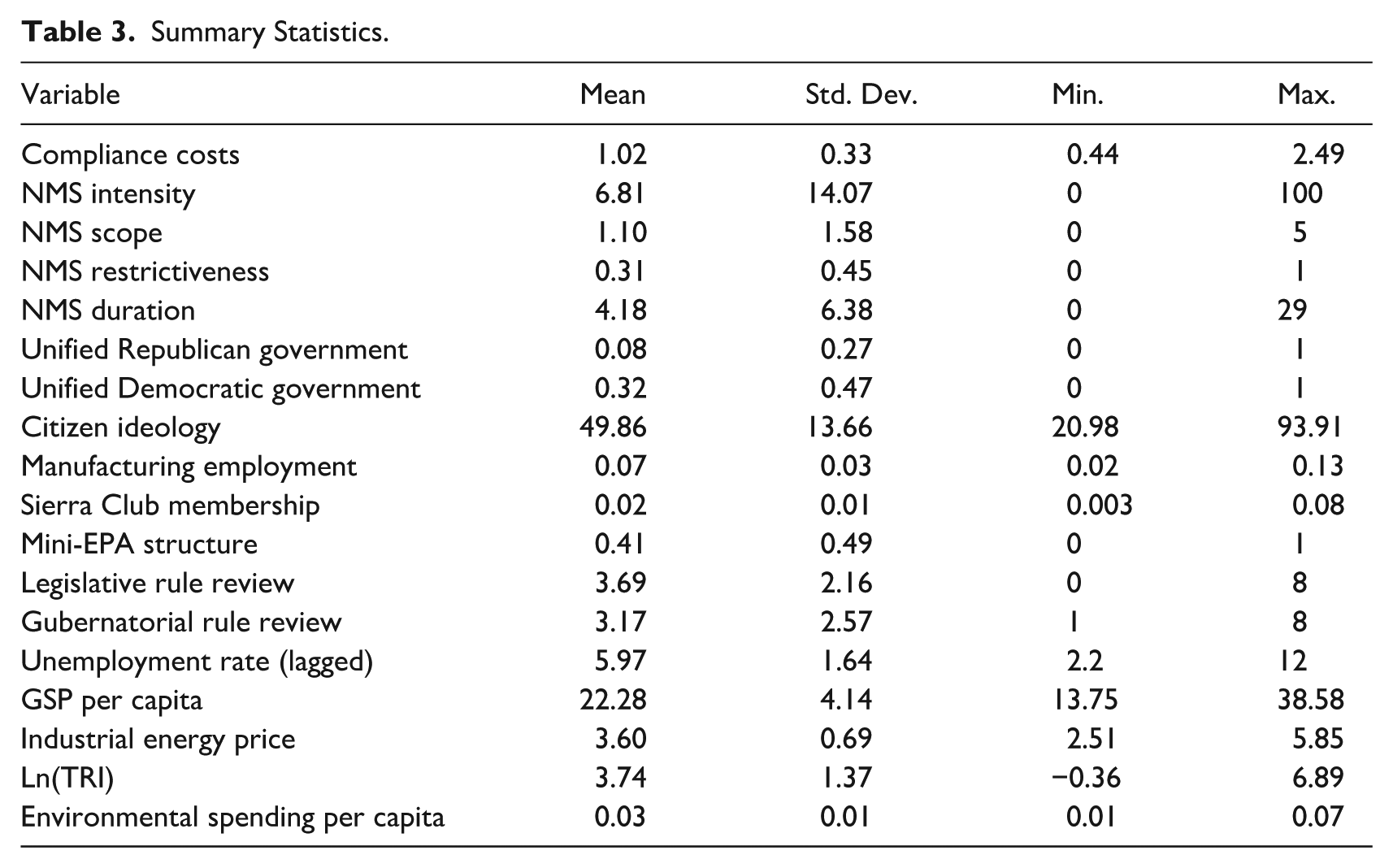
States with more serious environmental problems may produce more stringent environmental regulations, a form of policy matching (Lowry 1992). The analyses accordingly employ an indicator of toxic emissions in the state, which comes from the U.S. EPA’s Toxics Release Inventory. This variable is measured as the natural log of the total tons of toxic releases into air, water, and ground, and is employed as a general measure of the environmental conditions in a state (Daley et al. 2007; Fowler 2019; Fowler and Kettler 2021). Finally, the models control for overall state commitment to environmental protection by including a variable representing per capita state spending on natural resources and the environment. 8 Summary statistics for the dependent and independent variables are presented in Table 3.
Summary Statistics.
Geographical and Temporal Variation
Although the earliest state adoptions were in the mid-1970s, diffusion of NMS laws was initially slow, and by 1986 only six states had NMS laws in any of the areas covered by this study. There was then a period of rapid expansion starting in 1987 and continuing through the mid 1990s. In order to assure sufficient variation in the NMS variables of interest, the dataset is therefore limited to the last seven years for which compliance cost data are available (e.g., from 1988 to 1994). 9 The diffusion of NMS laws over this period is illustrated in Figure 1.
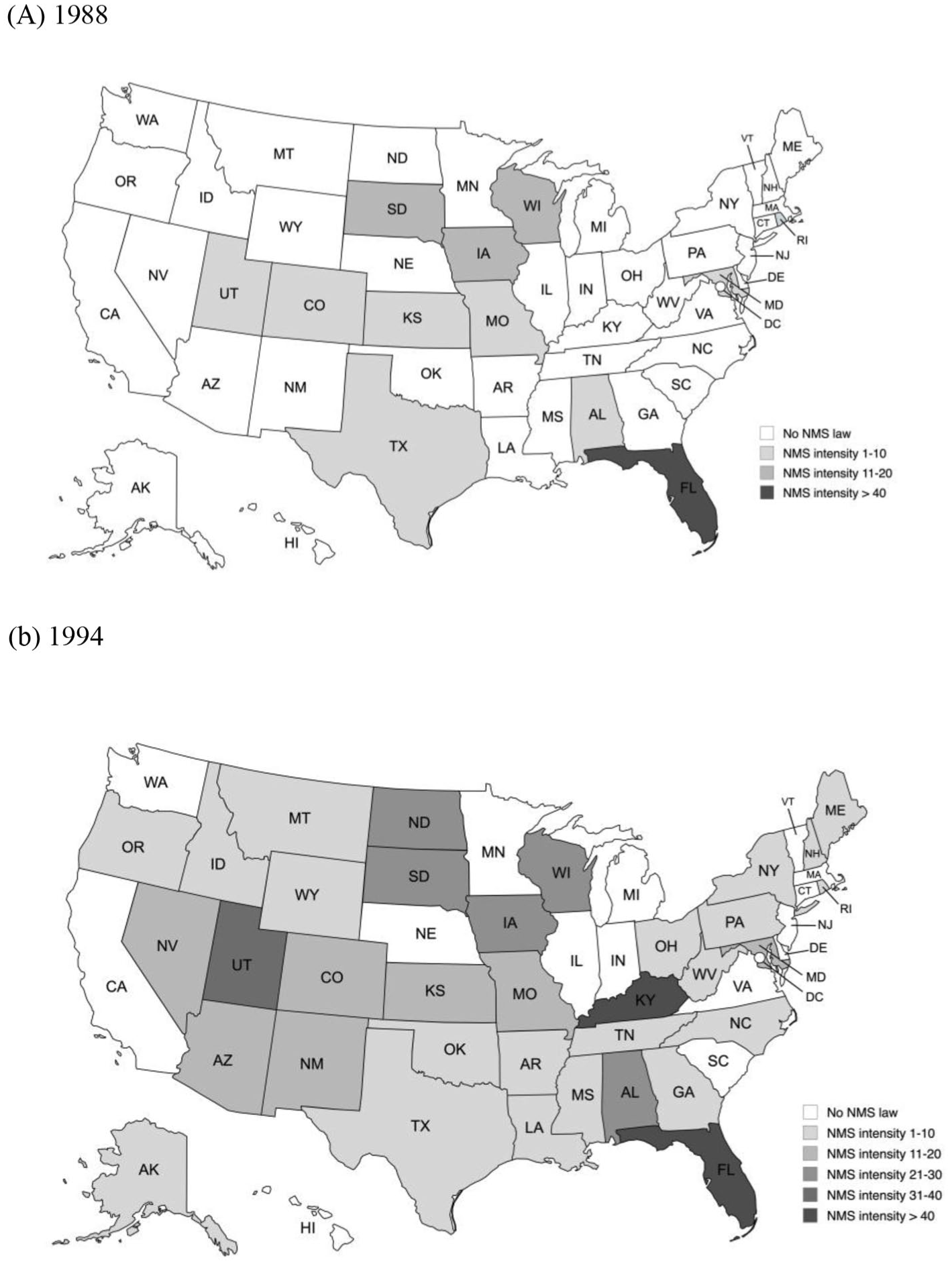
No More Stringent law intensity across states and time. (A) 1988 and (b) 1994.
As can be seen in the top panel, eleven states had NMS laws in 1988, mostly in the South, Midwest, and intermountain West, but there is relatively little variation in intensity. By 1994 however, the map looks substantially different. The total number of states with NMS laws has grown to 37, they have penetrated every region of the country, and there is greater overall variation in NMS intensity across the states that have adopted these laws.
Though the dataset ends in 1994, the analyses reported here may provide insights regarding the ongoing effect of NMS laws on environmental compliance costs. Indeed, the geographic landscape of NMS laws looks similar today as it did in 1994. Though sporadic adoptions continued into the 2010s, most new adoptions ended by the mid 1990s (Woods 2021). Existing laws have occasionally been modified. Often these changes have little or no substantive impact, but some of them have served to make NMS laws more restrictive. There have been few changes that make existing laws less restrictive, and there have only been two known cases of a NMS law being repealed outright. 10
Moreover, both the literature on NMS laws and the broader literature on statutory control of the bureaucracy posit general relationships that are not bound to a particular period of time, suggesting that the findings of this study may be relevant to today’s debates over the effects of NMS laws, and of efforts at statutory control of the bureaucracy more generally.
Estimation Procedure
The dataset consists of pooled observations from forty-seven contiguous American states, with Nebraska being excluded because if its nonpartisan legislature. Though there were many new NMS law adoptions during the 1988–1994 period covered by these data, most state-year observations are constant or slowly changing for the core independent variables, making them weakly time-invariant, so a fixed effects specification is not appropriate. The models are therefore estimated using a Prais–Winston generalized least squares procedure that corrects for autocorrelation, an approach that is similar to that employed in other studies of state environmental regulation where the independent variables of interest are slowly changing (e.g., Hopper 2017, 2020; Woods 2024). The models also employ panel-corrected standard errors to deal with heteroskedasticity across panels.
Results
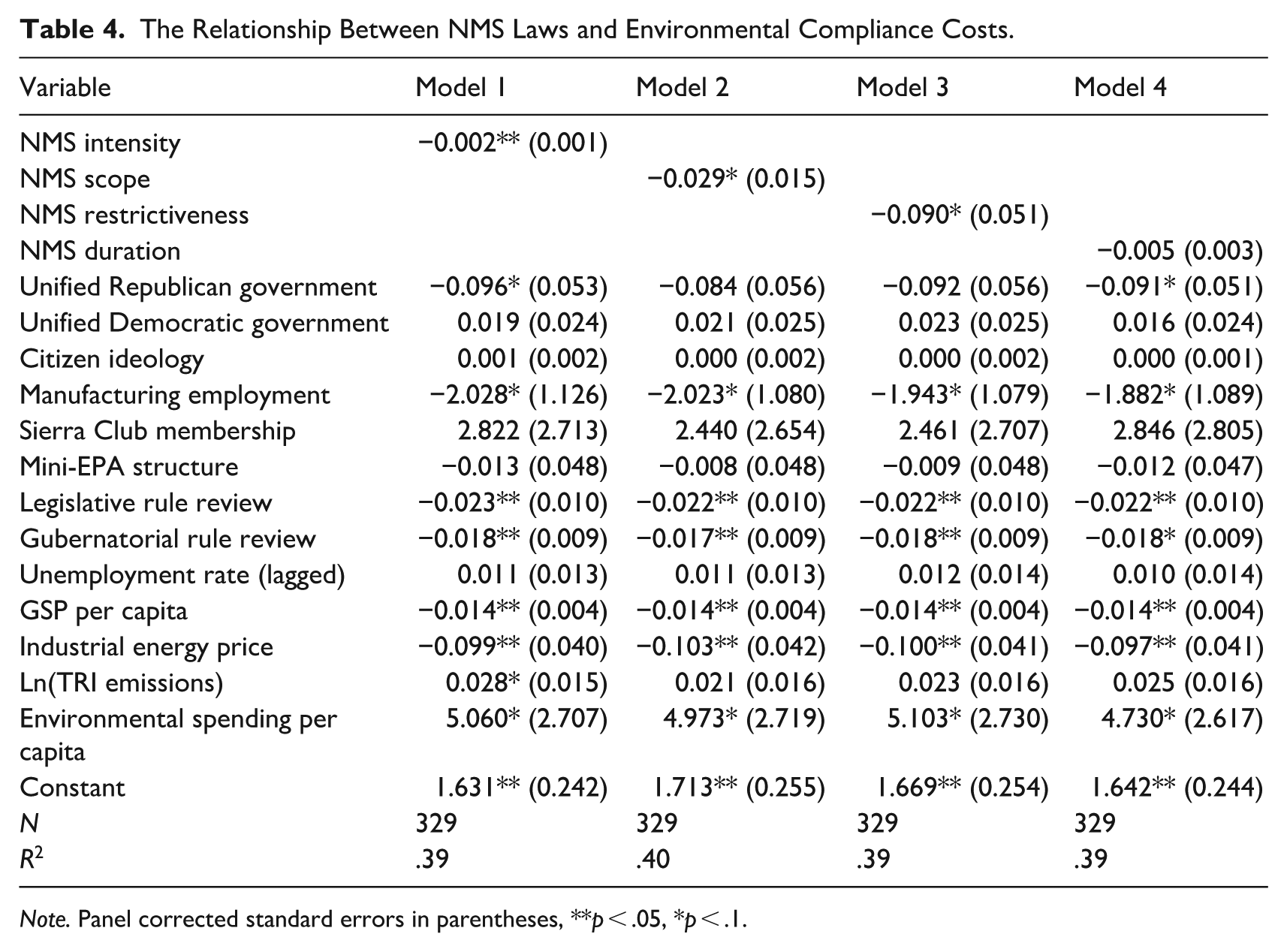
The results are presented in Table 4. Column one presents the results of the first model, in which the composite index of state NMS law intensity that is designed to capture all three of the theoretically relevant attributes discussed above—scope, restrictiveness, and duration—is employed. This variable is negative and highly significant, indicating that, in combination, more comprehensive and stringent NMS laws that have been in place for a longer period of time are significantly associated with lower environmental compliance costs imposed on industry.
The Relationship Between NMS Laws and Environmental Compliance Costs.
Note. Panel corrected standard errors in parentheses, **p < .05, *p < .1.
Several of the other independent variables are statistically significant as well. These include variables designed to capture the state political environment: unified Republican governments are, as expected, associated with lower environmental compliance costs, as are higher levels of manufacturing employment per capita, a proxy for manufacturing industry strength. In terms of state institutions, formal gubernatorial and legislative powers to review and veto administrative rules are associated with lower compliance costs, a finding consistent with prior research. Economic factors matter as well, with both higher industrial energy prices and greater state wealth being negatively related to compliance costs, the latter suggesting that wealthier states may socialize the costs of environmental protection by choosing alternative policy tools involving direct government involvement to achieve environmental protection goals. Finally, factors related to the problem and policy environment were found to have an impact, as both toxic emissions and state environmental spending are positively associated with compliance costs. These results are broadly similar across the other models as well.
Models 2–4 assess the independent effects of each of the NMS policy attributes discussed above. Both the variable designed to capture the scope of a state’s NMS laws (in terms of the number of policy areas affected) and the variable designed to capture their restrictiveness (in terms of an agency’s ability—or lack thereof—to exceed federal minimums under any circumstances) are found to have a significant negative effects on environmental compliance costs. This is not surprising, given the high level of correlation between them. Only the aggregate duration of NMS laws does not demonstrate a statistically significant effect, though the variable is negatively signed and comes fairly close to significance at conventional levels (p = .17). This, in combination with the highly significant effect of the composite measure employed in model 1, may suggest that all three attributes may jointly combine to generate an overall reductive impact of NMS laws on state environmental regulation.
Interpreting the magnitude of these effects is complicated by the differing scales of the core independent variables. To facilitate comparison, standardized effects were calculated to represent the effect of a one standard deviation change in the variable on the dependent variable, holding all other independent variables at their mean. These effects are presented in Figure 2.
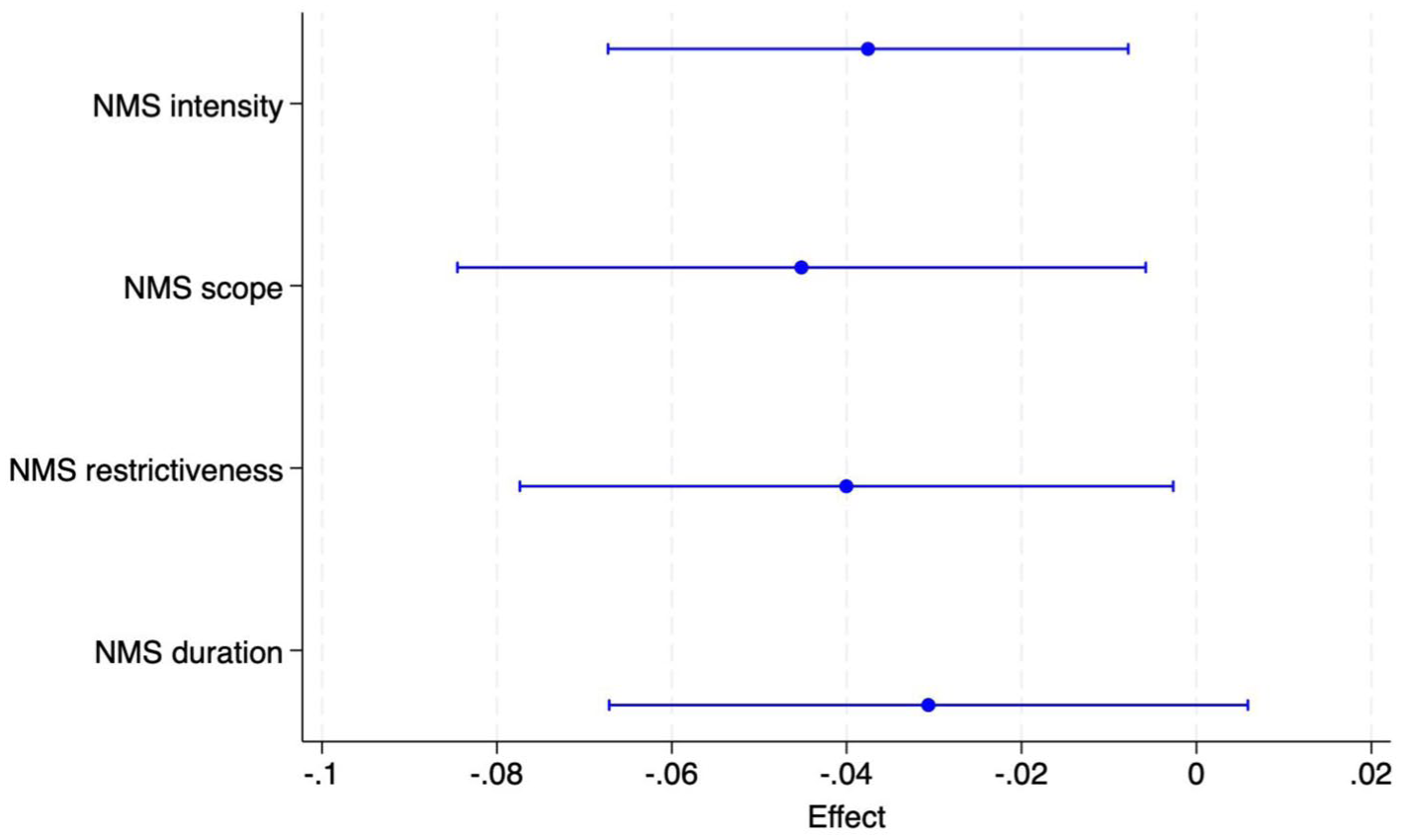
Standardized effects of No More Stringent law attributes.
As the figure demonstrates, the magnitude of the significant independent variables is fairly similar, with the effect of a one standard deviation change in NMS intensity, scope, and restrictiveness leading to a decrease in environmental compliance costs that ranges between 0.037 and 0.045. Recall that the environmental compliance costs measure has a mean of 1.2. At its mean, therefore, a one standard deviation increase in NMS scope, which has the largest substantive effect, is associated with a 4.4 percent reduction in environmental compliance costs, all else constant. Overall, the variables representing the scope and restrictiveness of NMS laws each have a slightly larger reductive effect than that for overall NMS intensity, possibly due to the fact that the intensity measure includes a duration component, which has the weakest substantive effect when estimated independently (in addition to failing to achieve statistical significance).
Conclusion
The analyses presented here suggest that NMS laws may effectively constrain the ability of state environmental agencies to promulgate stringent environmental regulations. The findings indicate that a composite measure of NMS scope, restrictiveness, and duration is negatively related to the costs of environmental compliance imposed on industry. Two specific attributes of NMS laws—their scope and restrictiveness—were found to be negatively associated with compliance costs as well.
These findings appear to indicate limitations to the strategies of noncompliance that have been identified in an emerging body of literature that focuses on the ability of bureaucratic agencies to strategically circumvent statutory mandates. Whatever strategies state environmental agencies may be employing to offset the effects of NMS laws—whether it be strategic implementation, delay, compensatory increases in areas not covered by the law, or outright defiance—these results suggest that they are not enough to completely compensate for the mandates embedded in statute. Such strategies, if they are being employed, may partially mitigate the effects of NMS laws, but these laws still appear to have a significant reductive impact on the overall stringency of environmental regulation, with broader and more restrictive statutes having the greatest effect.
Although these results provide suggestive evidence of NMS effectiveness, care must be taken in asserting causality due to the nonrandom adoption of these laws. That is, more politically conservative states may adopt NMS laws with broader scope and greater restrictiveness, and thus the negative associations observed here may at least partially reflect the fact that more conservative states also prefer less aggressive levels of environmental regulation. To the extent possible, the empirical models estimated here control for this by including numerous control variables for partisanship, ideology, and interest group pressures. It is also worth noting that partisan ideological differences are less likely to be drivers of NMS scope and stringency during the time period covered by this study, which ends in 1994, than they would in the more polarized political environment that followed. These caveats notwithstanding, future research may attempt to more carefully disentangle causality, perhaps by employing quasi-experimental methods.
This task is complicated by the wide variety of individual NMS restrictions, the effect of which would probably need to be assessed independently. One approach might be to examine the effects of media-specific NMS laws (e.g., air, water, or hazardous waste) on compliance costs in specific areas. This would allow more targeted inquiry into the effects of NMS laws in those regulatory arenas. Such compliance cost data do exist, but there is a substantial amount of missing data for specific states, presenting a significant hurdle that would need to be overcome.
Another limitation of this study is the time period covered. Although the large majority of current NMS laws were adopted by the end of the time period analyzed here, NMS laws are now slightly more numerous, and more stringent, than they were during this period (Woods 2021). Future research may seek to cover a longer and more recent timeframe. Since the Census Bureau’s annual pollution abatement expenditures data series ends in 1994, this would, in all likelihood, require the development of new time-varying measures of environmental regulatory stringency in the American states.
More broadly, these findings point to the need for careful empirical evaluation of the effects of statutory restrictions on bureaucratic behavior. A variety of theoretical, anecdotal, and quantitative evidence suggests that, at least in some circumstances, agencies may seek to challenge or subvert directives from political officials that they view as being inconsistent with their mission or their conception of the public interest. Additional research—across other policy domains and levels of government—is necessary to establish the pervasiveness of such strategies, and to clarify the conditions under which agencies engaging in such resistance are successful in achieving their policy aims. The converse is also true: much work remains to be done to determine the effectiveness of statutory control mechanisms in constraining bureaucratic behavior, and to determine the conditions under which these mechanisms are more, or less, effective.
These avenues of inquiry are becoming increasingly important against the current political backdrop, in which there is significant movement to rein in the administrative state at all levels of government. One example of this is the passage of Regulations from the Executive in Need of Scrutiny (REINS) style acts, which require new agency rules to receive legislative approval before they can go into effect if they impose costs estimated to be above a specific threshold. These acts have been adopted by ten states, including five in 2025 alone. The results of this study suggest that these and other attempts to control bureaucratic behavior should be taken seriously, as they could have significant impacts on regulatory outputs, and, ultimately, citizens’ quality of life.
Footnotes
Acknowledgements
The author thanks Amanda Jones for helpful research assistance.

Ethical Considerations
There are no human participants in this article and informed consent is not required.
Funding
The author received no financial support for the research, authorship, and/or publication of this article.
Declaration of Conflicting Interests
The author declared no potential conflicts of interest with respect to the research, authorship, and/or publication of this article.
Data Availability Statement
The data used for this study are available from the corresponding author on request.*