




Abstract
Juneau, Alaska, kept COVID-19 deaths lower than in other similar jurisdictions. We argue that adaptive leadership—the early decisions and actions of Juneau’s leaders, effective communications, and emergent new collaborative structures—in the context of municipal ownership of key assets enabled Juneau’s success. The result of 61 interviews and follow-up research, this case study contributes a better understanding of which institutional design, communication, and collaborative factors mattered in responding to the pandemic. Adaptive leadership provides a better explanation for Juneau’s success than alternatives that focus on its isolation, home-rule status, and socio-economic structure.
Keywords
Introduction
“It’s all consuming; there’s nothing we’re doing that is unrelated to COVID-19.”
“[We] junked the rule book on the way we normally do business.”
Beginning in early 2020, the novel coronavirus (COVID-19) pandemic confronted every city in the world, forcing mayors, city councils, and city managers to act swiftly to protect their citizens (Benton, Rissler, and Wagner 2020). The United States’ response to the virus exposed the vulnerabilities of a federal system that suffers from partisan fractures (Kincaid and Leckrone 2020) and distributes decision-making power among local, state, and federal authorities, even during a national health crisis that requires a targeted response (Benton 2020; Haffajee and Mello 2020). At the outset of the pandemic, the dire threat posed by COVID-19 demanded that local governments adapt rapidly, instituting policies and procedures without, for the most part, the backing of state and national mandates (Wright 2021). Fortunately, many local governments rose to the COVID-19 challenge, providing leadership in the face of substantial revenue and budget uncertainties (Dzigbede, Gehl, and Willoughby 2020). Why were some cities able to perform better than others?
While the pandemic sparked an explosion of immediate analysis among public administration scholars, more than two years after the initial lockdowns, it is now possible to answer some of the initial questions. What kind of leadership is most effective and in which specific local conditions (Turrini, Cristofoli, and Valotti 2020; Weng et al. 2020)? What kind of communications provide the best compliance (Fu, Ma, and Wu 2020)? How can local government leaders best overcome silos between emergency response agencies and health care providers (Wolf-Fordham 2020) (Figure 1)?
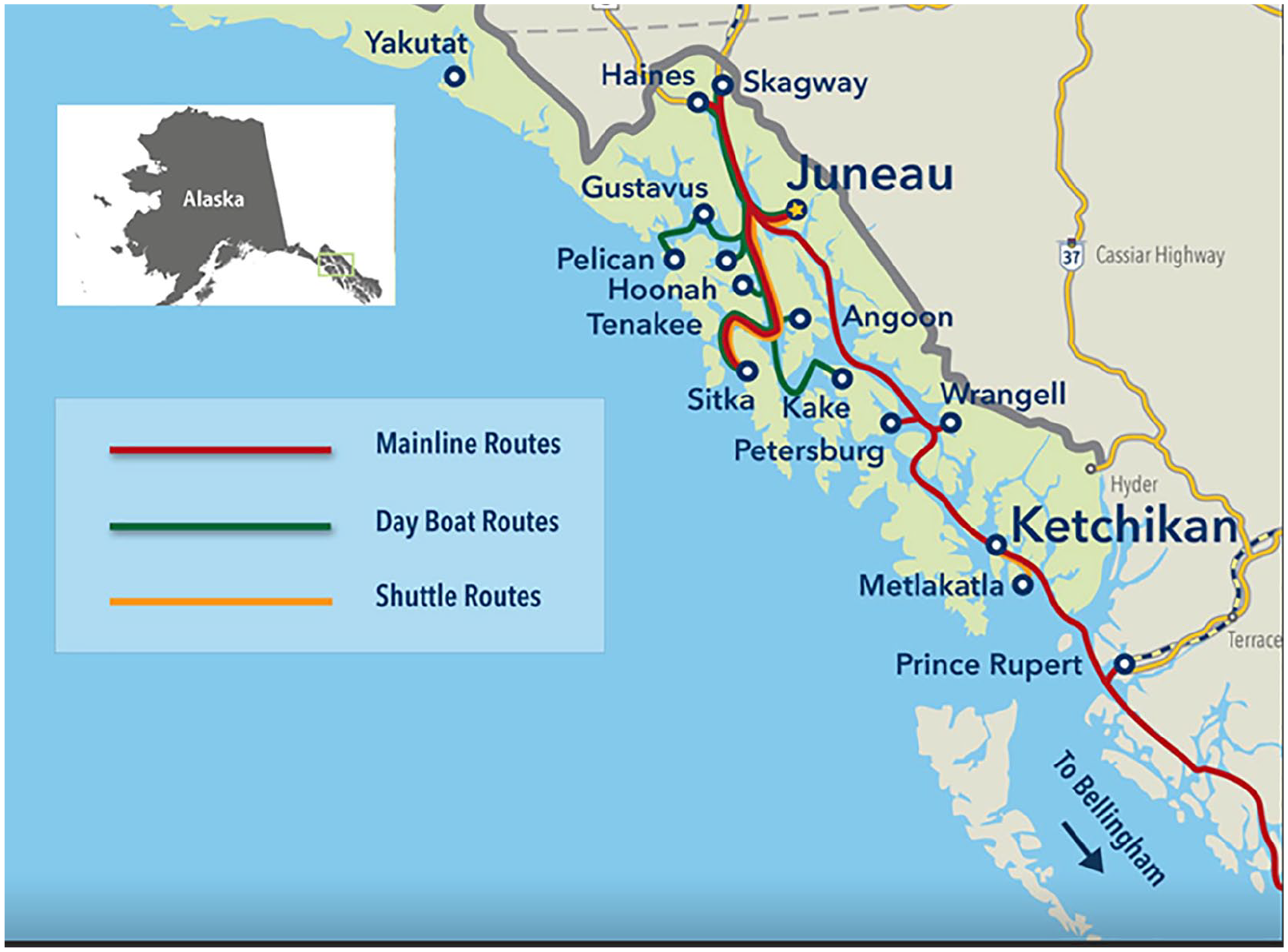
Map of Southeast Alaska showing the Alaska Marine Highway (ferry service) routes to communities. Juneau lacks access to the Alaskan and Canadian road system except via ferry.
A small, isolated, coastal community, Juneau, Alaska, stands out as a particularly successful example of adaptive leadership addressing COVID-19 within a complex system (Table 1). First, the early decisions and actions of the City and Borough of Juneau 1 (CBJ) Assembly and Manager created an administrative system that facilitated making evidence-based decisions and implementing them. Second, regular communications by a trusted city manager ensured that the population supported leadership actions. Third, emergent new collaborative structures with community stakeholders, particularly the local Indigenous Alaskan community, brought additional resources to the effort. In working across agencies and groups, municipal ownership of key assets—the local airport, hospital, convention center, dock, and harbors—made it easier for city and borough officials to act quickly and efficiently. As a result of its early response measures, Juneau has, to date, the highest vaccination rates, among the lowest coronavirus cases per 100,000 population, and among the fewest deaths among other home rule boroughs (counties) in Alaska (Table 1). Understanding this successful response helps develop the new research agenda for U.S. local governments proposed by State and Local Government Review with an emphasis in particular on institutional design, public engagement, and collaboration (Bowman et al. 2020).
Alaska Home Rule Boroughs and COVID-19 Data.
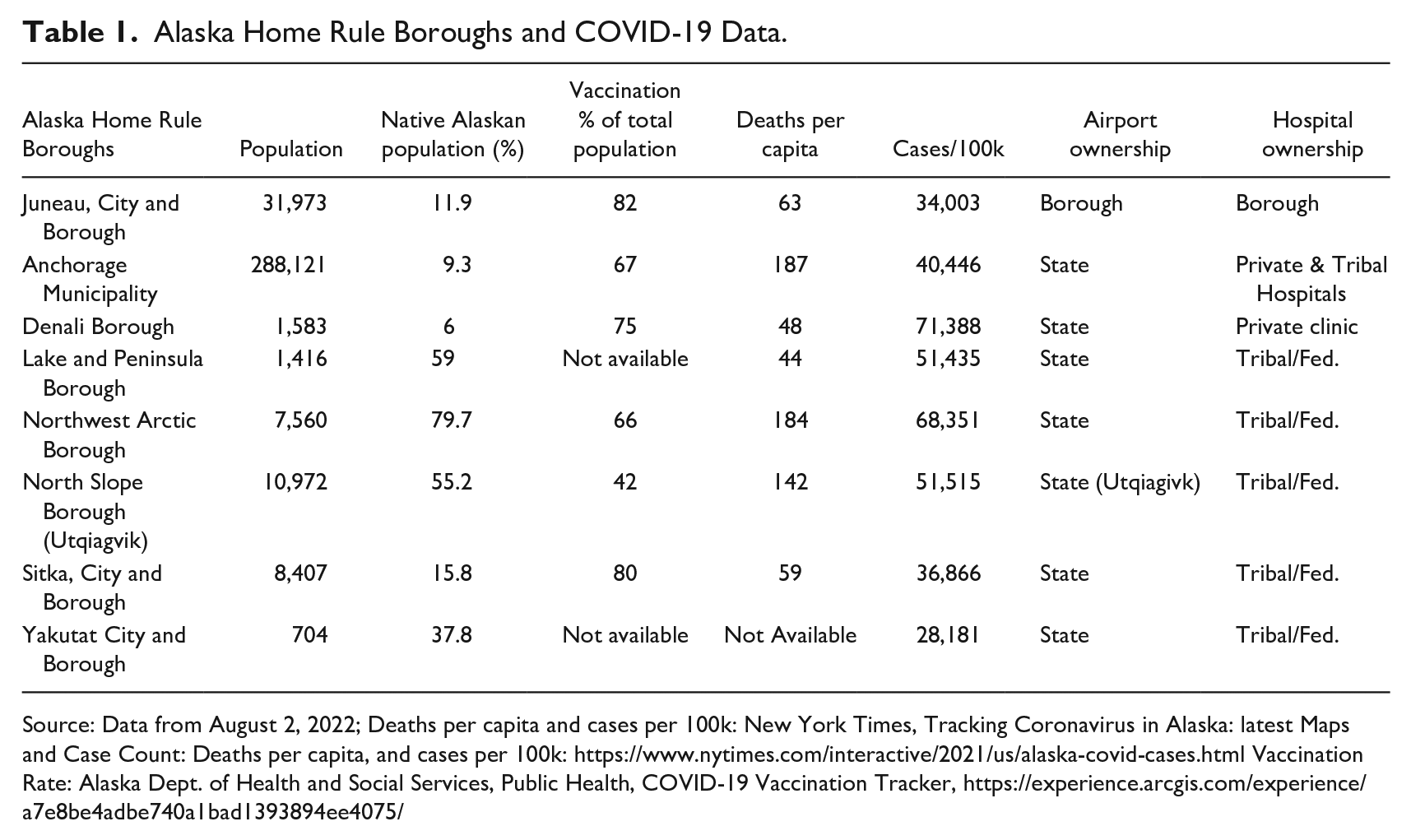
Source: Data from August 2, 2022; Deaths per capita and cases per 100k: New York Times, Tracking Coronavirus in Alaska: latest Maps and Case Count: Deaths per capita, and cases per 100k: https://www.nytimes.com/interactive/2021/us/alaska-covid-cases.html Vaccination Rate: Alaska Dept. of Health and Social Services, Public Health, COVID-19 Vaccination Tracker, https://experience.arcgis.com/experience/a7e8be4adbe740a1bad1393894ee4075/
How did CBJ keep its COVID-19 case rate so far below other Alaskan Home Rule Boroughs? To answer this question, we first lay out our theoretical framework, examining the work of adaptive leadership within complex systems. Next, we explain our method of using a single case study with numerous interviews. We then examine the data we found, drawing the connection between our causal argument and the COVID-19 results. In particular, we show how the successful response depended on the initial leadership decisions, effective communication, and emergent group formation, within the context of CBJ owning the local airport, hospital, and other infrastructure. We lay out three alternative explanations that compete with our analysis—Juneau’s geographic isolation, home-rule status, and beneficial socio-economic structure—and explain why our approach is more compelling before concluding.
Theoretical Framework
We start by characterizing Juneau as a complex system to highlight the most salient features presented by COVID-19. Complexity science was originally developed in the natural sciences and subsequently began to influence social sciences, such as organizational theory and management (Maguire and McKelvey 1999; Pressman and Wildavsky 1973/1983; Stacey 1995). Complexity theory offers guidance for analyzing complicated, unprecedented, and nonlinear governmental challenges, like those presented by the COVID-19 pandemic, and can be useful for understanding a government’s systemic response to such a challenge (Begun and Jiang 2020), as well as the behavior of affected social systems (Angeli and Montefusco 2020). Complexity is often used to analyze health care dynamics (Bar-Yam et al. 2013; McDaniel and Driebe 2001), and the complexity lens has proven useful for gaining insights into the behavior of social systems affected by COVID-19 (Angeli and Montefusco 2020).
Extrapolating from the complexity literature to Juneau, three prominent characteristics are relevant for public administration and the COVID-19 pandemic: non-linear, self-organization, and co-evolution (Klijn 2008). In other words, when Juneau’s leaders confronted the COVID-19 challenge, they faced a situation in which no one could predict what would happen and many alternatives were possible, groups that were formally autonomous from the government and each other could find ways to work together, and the various actions taken by public and private entities would have an impact on each other. A complex adaptive system is formally defined as “a collection of individual agents with freedom to act in ways that are not always totally predictable, and whose actions are interconnected such that one agent’s actions change the context for other agents” (Plsek and Greenhalgh 2001).
Adaptive leadership is central to complexity theory (Onyx and Leonard 2010). Addressing the COVID-19 pandemic was a problem that could not be solved by applying “current technical know-how or routine behavior” (Laur et al. 2021). New, dynamic and holistic approaches such as those integral to adaptive leadership were required. We define adaptive leadership as integrating “scientific and other types of knowledge into policies to advance the common interest in particular contexts through open decision-making structures (Brunner et al. 2005).” We argue that this type of leadership was particularly important because in addressing COVID-19, it was necessary for Juneau’s leaders to combine an understanding of scientific knowledge with their knowledge of local conditions and the kind of knowledge that Native Alaskans could provide based on their history with the 1918 pandemic and oral traditions passing down how to address it. We operationalize the concept of adaptive leadership with a focus on the decision-making structure a municipality leadership employs, the leadership’s ability to communicate decisions and information in an open way, and the leadership’s ability to work with groups both inside and outside government. This focus on (1) information-processing and decision-making structure, (2) communicating with constituents, and (3) working across boundaries form the core of municipal government operations (Nelson and Stenberg 2018; Newell 2004).
Three findings from our research suggest that, in responding to the pandemic, CBJ politicians and managers demonstrated adaptive leadership. First, in rising to meet this unprecedented challenge, local leaders, beginning with the CBJ Manager and the Mayor and other eight elected officials on the CBJ Assembly, made evidence-based and transparent decisions about how to organize their work at the crucial initial stage that increased governance capacity (Yang 2020). Second, CBJ leaders communicated effectively with the local population to gain support for their decisions. Third, the CBJ collaborated with local NGOs and Alaska Native entities, individual experts, and volunteers to form seven new task forces to address specific needs, such as isolating and caring for the homeless, distributing food, and stabilizing the local economy. This adaptive leadership benefitted from the CBJ’s existing institutional structure which gave local government control over the enterprise boards that manage Juneau’s airport and hospital—facilities with crucial roles to play in the capital city’s pandemic response. In the remaining part of this theoretical overview, we unpack the three elements of the adaptive leadership and the benefits of cities owning key pieces of infrastructure.
The first steps in adaptive leadership were the steps the key players took to increase CBJ’s governance capacity at the very beginning of the pandemic. Here we define governance capacity as capacity for analysis, coordination, regulation, and delivery (Lodge and Wegrich 2014). Increased analytical capacity focuses not only on the ability to obtain accurate and trustworthy information, but having the time and ability to analyze the information and take action. Coordination capacity is the ability to work with other groups both inside and outside the government. Regulation is the ability to control processes and conduct the oversight needed to ensure decisions are implemented. Delivery is the ability to ensure that the population receives services and that order is maintained. The state needs these governance capacities to ensure that it has the ability to address the challenges that it confronts. In East Asia, for example, the interaction between quick and effective leadership and well-designed existing healthcare infrastructure proved valuable for keeping COVID-19 cases low (An and Tang 2020).
Second, delivering an effective response to COVID-19 requires effective communication to ensure the population understands and actively supports the decisions of policy makers (Dzigbede, Gehl, and Willoughby 2020; Novak et al. 2019). In the case of Juneau, we show that effective communications were crucial to ensuring that the population took the necessary measures to reduce the spread of the virus. The importance of local context makes it hard to generalize best practices in communication techniques. Nevertheless, it has become even more difficult for officials at the local level to communicate effectively. Today the availability of local news sources is dropping (Hayes and Lawless 2021) and there is growing distrust of the sources of information and the messengers delivering them. Partisanship also plays a role—county websites are less likely to mention COVID in areas with a heavily Republican electorate (Hansen et al. 2021). Likewise, publicizing inaccurate information at the regional level, such as understating the number of COVID deaths, reduced the willingness of citizens to take effective anti-virus measures, leading to higher death rates in Russia (Lamberova and Sonin 2022) and undermined confidence in government in Puerto Rico after Hurricane Maria (Andrade et al. 2020). Nevertheless, research has shown that there are ways for skilled communicators to break through the noise. For example, social identity theory shows that a message is more likely to be received if it comes from a member of one’s “in-group” since such social groups were once necessary for survival in a hostile environment (Sinatra and Hofer 2021).
The ability to build strong ties with local groups inside and outside of government is the third crucial part of adaptive leadership. Leadership in crisis is often influenced as much by an individual’s effectiveness in working in networks collaboratively as it is by the person’s position within established hierarchical parameters (Kapucu and Van Wart 2008). While we include networking functions in our operationalization of adaptive leadership, there is nothing new about working across public and private groups to share knowledge, coordinate action, and create solutions. Others analyses of this type of leadership for addressing complex problems for which standard solutions are inadequate describe it as “interactive political leadership,” highlighting the ability of working with various groups to democratize formal democratic institutions (Sørensen and Torfing 2018) or collaborative governance regimes (Emerson and Nabatchi 2015a, 2015b). The use of such techniques can bring numerous benefits, such as “improved coordination of activities, better leveraging and pooling of resources, increased social capital, enhanced conflict management (prevention, reduction, and resolution), better knowledge management (including generation, translation, and diffusion), increased risk-sharing in policy experimentation, and increased policy compliance” (Emerson and Nabatchi 2015b). While there are many issues in defining, operationalizing, and measuring these concepts, we propose that the outcome of fewer COVID-19 rates in Juneau provides one indication of the success of such techniques.
Beyond these three features of adaptive leadership, a key institutional feature of Juneau greatly facilitated the ability of the CBJ government to coordinate with the local hospital and airport—the municipality owned them. Ownership of assets like these is often considered a burden for local governments since they are expensive to purchase and require expensive maintenance. However, owning key assets shaped the way that Canadian cities responded to COVID-19 (Sayers, Alcantara, and Armstrong 2022). Cities with high shares of non-financial assets were able to declare their own states of emergency, while cities with few assets closed their city halls and did not declare states of emergency. The study by Sayers, Alcantara, and Armstrong looks at local ownership of physical assets overall. We can take the argument farther in identifying exactly what kinds of assets matter and why these particular assets were important for the outcome we examine, better performance in addressing the pandemic. We show that Juneau benefited from the ownership of the hospital and airport and that these assets helped CBJ leaders deliver more effective policies.
Figure 2 lays out our logic model. In addressing the complexity of responding to COVID-19, the CBJ government was subordinate to the federal government and state governments. The federal government provided considerable financial support through the CARES Act and the American Rescue Plan, though undermining the coherency of the overall response with inconsistent messaging. Alaska’s Republican governor was relatively slow to issue orders though he did work closely with the state’s Chief Medical Officer Anne Zink, whom interviewees universally described as competent and effective. Nevertheless, despite its subordination to higher levels of government, the local government is the key to understanding the COVID-19 results in Juneau. With ownership of the local hospital and airport, the key factor was adaptive leadership, defined here as the initial shaping of the CBJ’s emergency response administrative structure, its communications program, and its ability to work with a wide range of government agencies and societal groups.
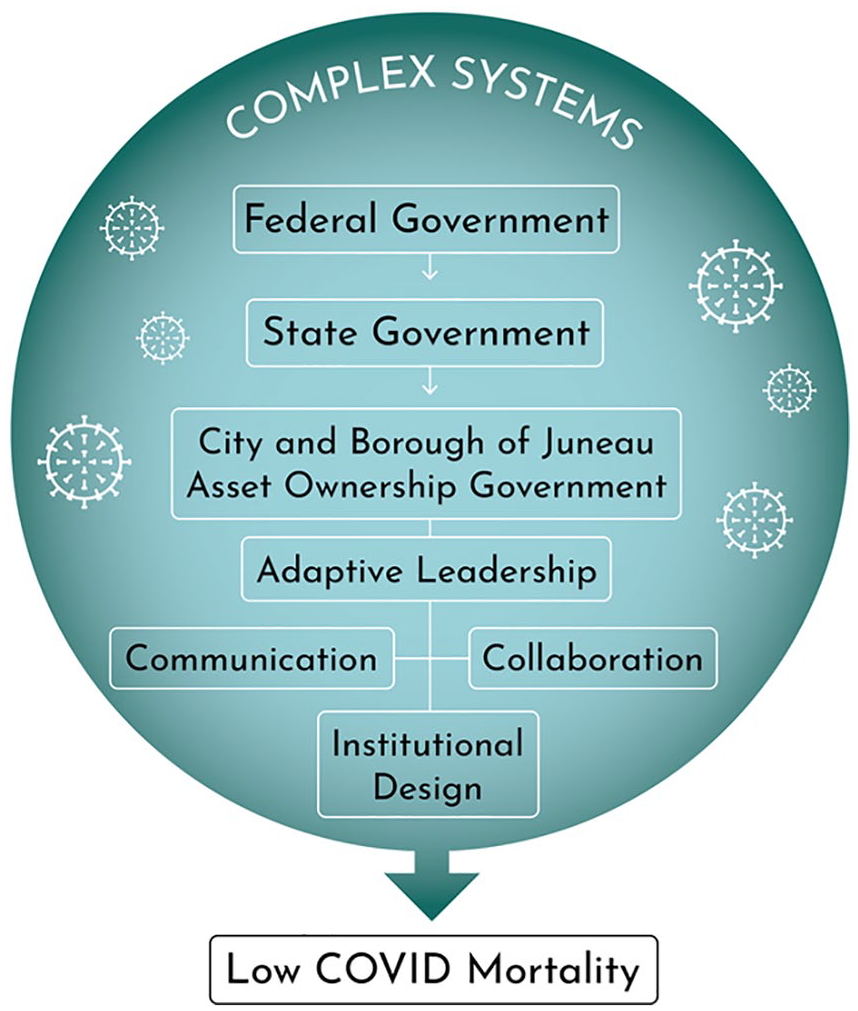
Logic model of theoretical framework.
Methods
The six-member interdisciplinary research team applied an embedded single-case methodology to explore Juneau’s early response to COVID-19 (Yin 2018). We chose Juneau because it is an example of a relatively successful local response to the pandemic. The single-case approach offered a distinct opportunity to examine the extreme and unusual circumstances of the pandemic’s impacts in a particular location and to document and analyze Juneau’s response. The case study methodology allowed us to identify key characteristics of Juneau’s response that led to a relatively successful outcome, linking the leadership factors with the COVID-19 death rates. The data we gathered detail the causal links and mechanisms, explaining how the factors we identified in the theoretical framework led to the COVID-19 results on the ground. Such single case study projects help policy makers solve problems and advance intellectual inquiry by facilitating empirical generalizations (Barzelay 1993).
Of course, the case study method only tells us about Juneau, but it can be a useful guide to thinking about comparative studies where the impact of specific factors, such as adaptive leadership, can be tested in measurable ways. There are dangers in selecting cases on the dependent variable, namely that the causes chosen for success may also be present in cases which are not successful, but such studies are useful for understanding the details of particular cases and developing insights (Geddes 1990). Our research adds to a growing body of work that is examining local government performance during the pandemic. For example, a 2020 study of Canadian cities found that “municipal population size and local COVID-19 case totals are strongly related to municipal policy aggressiveness” while ideology and regional cluster in local policy diffusion also played roles (Armstrong and Lucas 2020). Over time, we hope that our research will help to develop a more nuanced understanding of what shaped local government policy-making during the pandemic and which policies were the most effective.
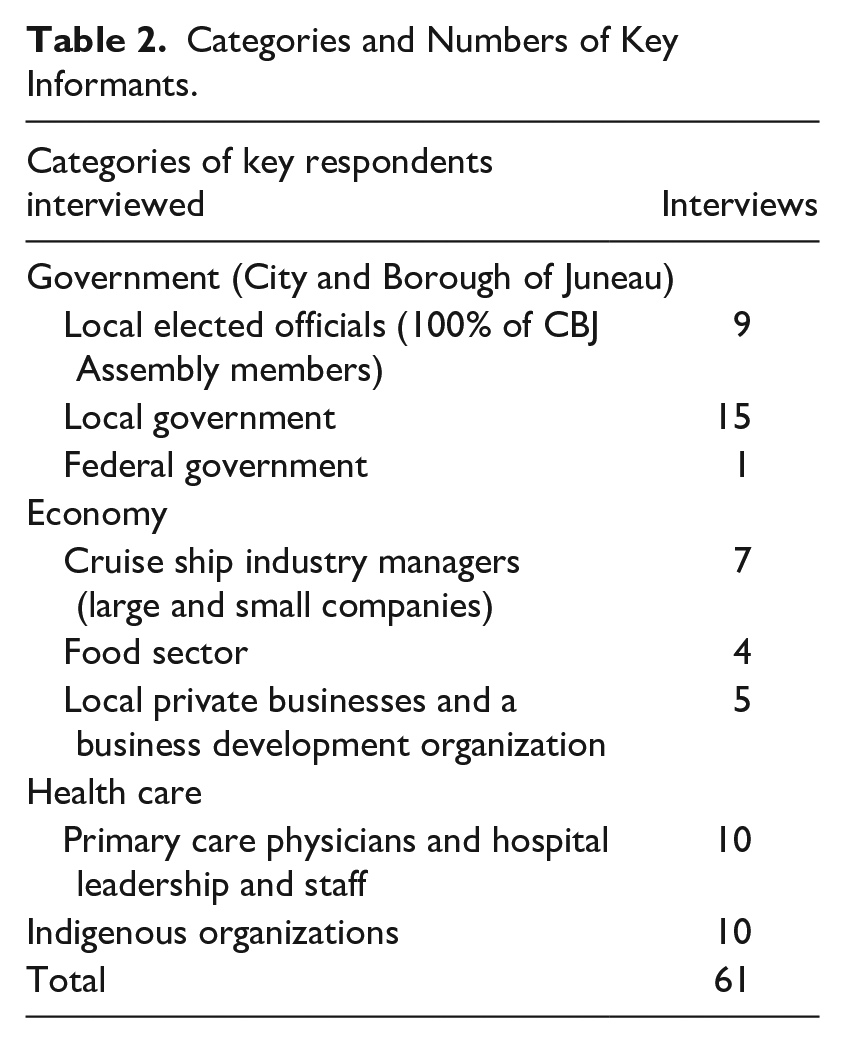
We focused our interviews on those working on the front lines to learn the mechanics of Juneau’s response (Benton, Rissler, and Wagner 2020). We interviewed leaders in local government, Indigenous organizations, the health care sector, and in private business (Table 2). The research team conducted 61 in-depth interviews between June and August 2020. Almost every individual we contacted agreed to speak with us. Three of the researchers who live in or have ties with Juneau identified the key informants through their personal contacts and snowballing techniques. All the interviews were conducted online using Zoom teleconferencing with each interview lasting approximately one hour (Archibald et al. 2019; Howlett 2021). The interviews consisted of asking open-ended questions to guide the discussion. The questions were tailored to each of the four areas while maintaining a set of consistent questions for horizontal comparability. The interview script is available in the Supplemental Material. All interviews were recorded, transcribed, and coded for thematic comparison. The responses to the questions were analyzed by reducing the recorded text from the zoom teleconferencing manually into a table. The table was constructed with major themes and patterns using direct quotes and codes (Saldana 2009). The patterns and codes were analyzed to inform the study findings. The thematic coding is also available in the Supplemental Material.
Categories and Numbers of Key Informants.
Results
In the first phase of Juneau’s response to COVID-19 in 2020, we found three major hallmarks of adaptive leadership to be present: quick decision-making on defining key governance structures, effective communications, and the emergence of collaborative institutional structures. These leadership elements benefited from the CBJ’s ownership of key assets.
Quick Definition of Institutional Structure for Addressing the Pandemic
Before the Governor of Alaska issued any statewide COVID-19 mandates in mid-March 2020, the CBJ Assembly and City Manager had begun identifying who would make the key decisions in response to the pandemic. During the last week of February 2020 and first week of March, CBJ’s Emergency Program Manager and Manager began briefing the Mayor and Assembly members, adjusting city meetings and government offices to restricted access while moving toward online meetings. On March 16, 2020, the CBJ Assembly and Mayor unanimously approved CBJ Resolution 2884 which officially declared a local emergency, requested state and federal funds, and delegated the CBJ Manager emergency powers to “implement any orders necessary” (City and Borough of Juneau Assembly 2020).
However, the CBJ Manager disagreed with this approach and successfully argued against centralizing decision making in his office, convincing Assembly members that they needed to be integrally involved in the decisions that would drive the response. Over the following months, the Assembly met in grueling hours-long meetings two to three times a week to discuss and make decisions openly in response to COVID-19. Regular monthly CBJ Assembly meetings were broadcast across the region on KTOO, the Juneau-based public broadcasting radio station. Having the Assembly take the lead in defining the COVID policy gave the overall process greater legitimacy among the population.
In an effort to improve his capacity to provide leadership across CBJ resources, one of the first actions the Manager took was to direct the Deputy Manager to lead a new Emergency Operations Center (EOC) and manage the CBJ departments that reported to it. The CBJ Manager told our team that he did not want to lead or participate in the EOC because he worried it would take too much of his time to do detailed management when he needed to focus on the bigger picture. With the Assembly grappling with high-level day-to-day decision making on COVID-19-related issues and having delegated the day-to-day management of COVID-19 response to the deputy and the Assembly, the Manager was able to develop a broad vision of what needed to be done and sustain a holistic view of the progress and effectiveness of the response.
The CBJ Manager’s delegation of authority over the EOC to the Deputy Manager had important benefits for the CBJ’s handling of the pandemic because it allowed the Manager to better process the flow of information about the pandemic and ensure that key members of the local government had the right kind of data to guide their decision making. A key driver for the independent collaboration of units within a city government is the provision of a common information base. The flow of information through the government’s key agencies depends on connections both within organizations (Bodin and Crona 2009) and among them (Berkes 2009). Early on, the City Manager’s Office established daily internal meetings with the Deputy Manager (EOC), Mayor, Assembly, and key city department staff for updates on the COVID-19 response. With the relative autonomy that he had carved out from the quotidian work of managing the pandemic response, the CBJ Manager was able to give the members of his team the informational support that they needed.
The clear structure allowed for quick and effective decisions. On March 14, 2020, Juneau closed all its public schools and public facilities, and on March 16th CBJ approved Resolution 2884 which provided additional emergency measures including making available “as necessary personnel to deal with the emergency,” and declaring that “municipal departments, agencies, and/or personnel may be transferred or altered in function for the purpose of performing or facilitating performance services responsive to this emergency” (City and Borough of Juneau 2022). Across the U.S., states that made prompt declarations of emergency and school closure orders enjoyed lower mortality from COVID-19, while each day of delay on either intervention increased mortality risk by 5%–6% (Yehya, Venkataramani, and Harhay 2020).
Linking back to our theoretical framework, the CBJ actions clearly increased administrative capacity. By delegating direction of the EOC and requesting that the Assembly continue to make day-to-day decisions, the city manager created more analytical capacity by giving himself time to think and process the information coming into the city and borough government. Although the CBJ Manager formally did not centralize power, his ability to see the big picture gave him authority within the CBJ structure and allowed him to lead it effectively. The clear division of labor between the EOC, the Assembly, and the Manager made it easier for the CBJ to deliver the services to the citizens that they expected from the government, thereby increasing its legitimacy (Christensen, Laegreid, and Rykkja 2016). Likewise, the Assembly and the EOC had the ability to provide oversight. Figure 3 lays out the formal organizational structure CBJ used to respond to the COVID-19 pandemic. Most importantly, the CBJ Manager was centrally embedded in the process.
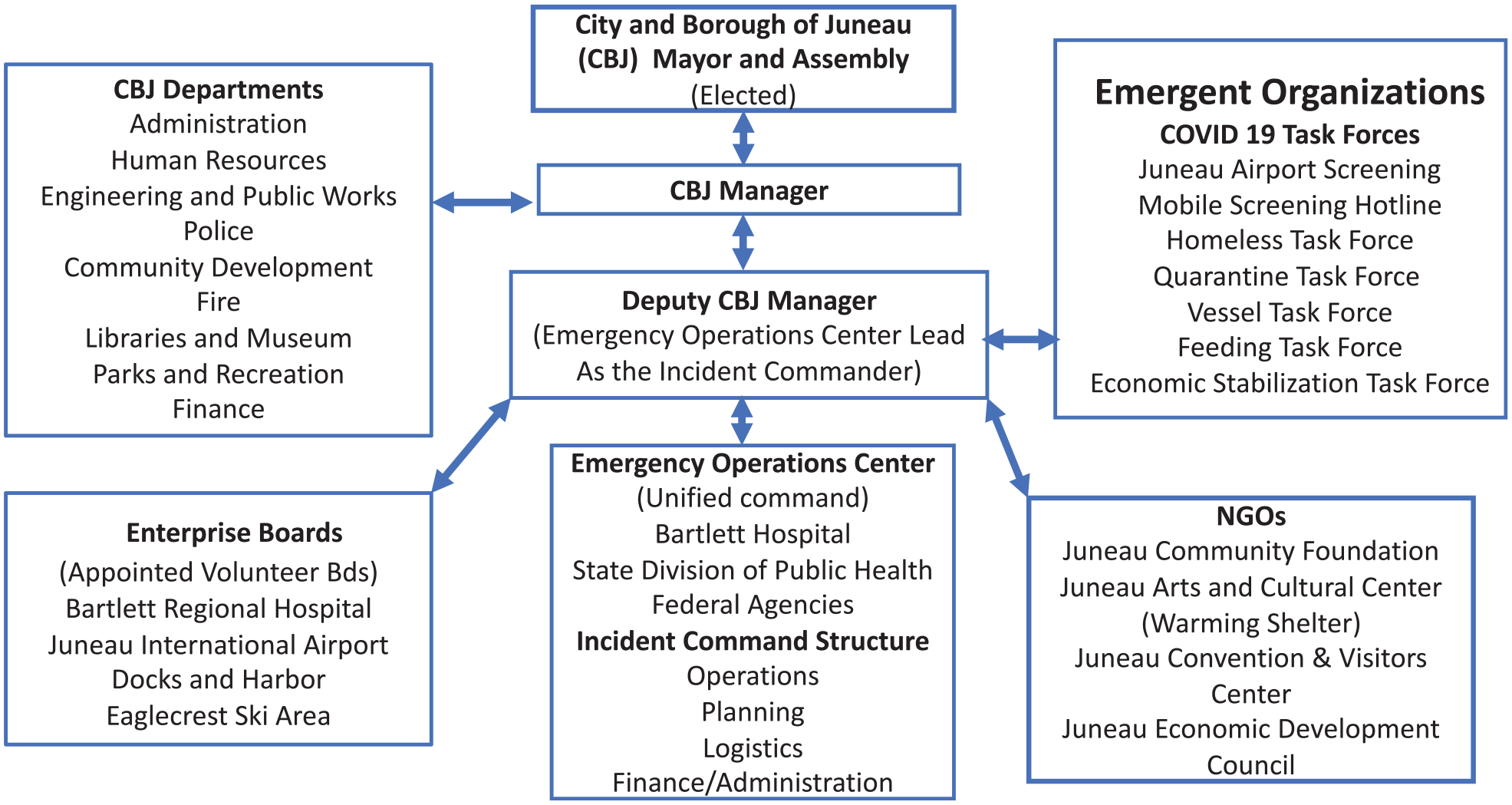
Juneau, Alaska’s COVID-19 institutional organizational response structure.
Clear, Transparent, and Consistent Communication
“It’s a communications crisis, not just a health crisis.”
The second feature of the CBJ’s effective leadership was the Manager’s clear communication of pandemic response goals and methods to residents of the borough and the wider surrounding region via daily radio updates. The purpose of these broadcasts was to reach a variety of different audiences simultaneously. Public health information had to be communicated across a range of health literacy levels, while reports needed to be carefully aligned with public health authorities’ messaging to avoid the dissemination of conflicting or incorrect information. As the Manager told us,
At the level of ideology, this meant providing cross-cultural communication between individuals and groups of people that have different political belief systems. It also meant trying to draw links between government and business, bridging a divide in which the government’s core values are open, deliberative, careful, thoughtful, considerate, and slow and the private sector is quick, expedient, efficient, and profitable.
In March and April of 2020, the CBJ strengthened its public information office by increasing the staff from one half-time public information position to eight full-time employees. Considering the lack of consistent and conflicting health information and erratic leadership coming from the federal government (Hatcher 2020), and the state’s initial slow response, CBJ leadership immediately recognized the need to reinforce public information capacity. The communications team was expanded by reassigning staff from departments and facilities where activities were being put on hold. A diversity of communications methods was deployed, from the usual broadcasting of CBJ Assembly meetings to a new CBJ COVID-19 web page with dashboards and links to resources and statistics. For the first two months of the pandemic, the CBJ Manager and Mayor reported daily on the radio. As the health crisis extended over months, the city website evolved to include information organized into four mitigation “Alert Levels.” These included directives about wearing masks, social distancing, providing personal services, and gathering in groups or in restaurants, bars, and gyms, as well as information for those seeking assistance (Figure 4). Vaccination resources were added in 2021. While CBJ did not keep statistics on site usage, it received frequent emails or phone calls from a variety of residents to the COVID Hot Line to complain if the COVID-19 Dashboard was not posted daily at the stated time during 2020, demonstrating public engagement (R. Barr, Personal Communication, August 18, 2022).
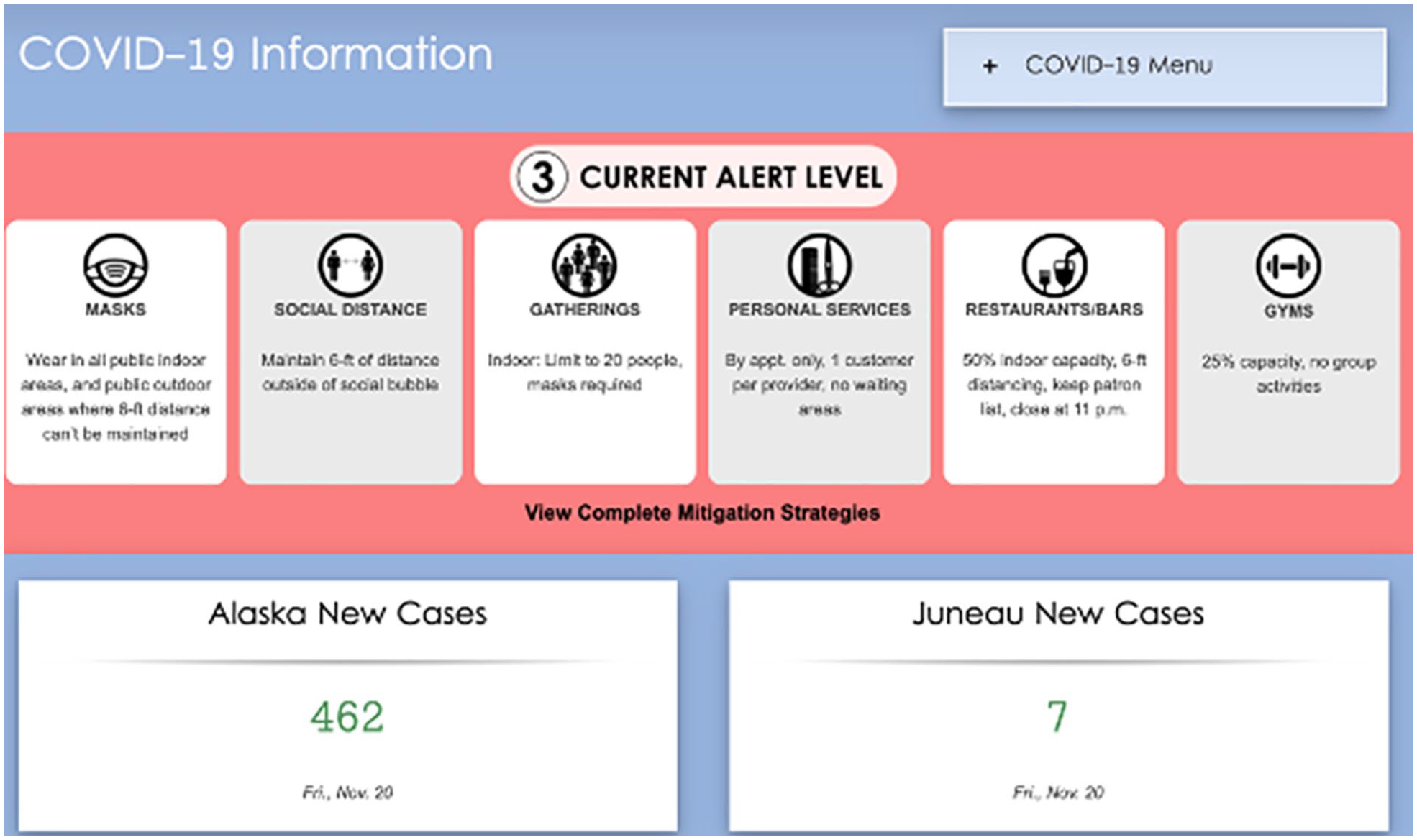
City and Borough of Juneau COVID-19 dashboard (December 2020).
In terms of the communication piece of adaptive leadership, CBJ’s actions followed best practice guidance. The city manager and mayor were in front of the public frequently, working to assure constituents that they were taking action. The local government devoted considerable resources to the issue. And, most importantly, the Manager put thought into how best to overcome increasing distrust in government sources while seeking ways to communicate to the public and private sector groups that make up Juneau society.
Collaborative Decision Making
Here we examine how CBJ officials were able to coordinate with groups external to the local government. In the next section we examine how it worked with the hospital and airport, entities that CBJ owned.
Within months of the declaration of an emergency, the CBJ Manager, Mayor, and nonprofit organizations mobilized resources to create seven new subject-specific task forces to respond to the pandemic: Juneau Airport Screening, Mobile Screening Hotline, Homeless, Quarantine, Vessel, Feeding, and Economic Stabilization (Figure 3). In addition, other task forces emerged from within existing nonprofit organizations and agencies to provide basic resources, such as food, shelter, and COVID-19 testing facilities.
The seven CBJ-initiated task forces were staffed with both reassigned employees and new hires. Citizens also volunteered to serve on the task forces, demonstrating the community’s collaborative spirit as well as CBJ’s adaptive leadership approach to managing the response. These task forces were originally considered temporary; however, given the lingering challenges of new COVID-19 variants since we concluded our interviews, select task forces are likely to continue for some time. Examples of outcomes from the Economic Stabilization Task force were recommendations to the CBJ Assembly to use $1 million of CARE ACT funds to improve Parks and Recreation, Eaglecrest Recreation Area and trails, and employment training programs for furloughed, unemployed, and underemployed people; and to prevent eviction and homelessness. The Economic Stabilization Task Force helped establish the Sustainability Grant Program using $3.5 million for assisting local business owners who suffered 25% or more loss of revenue. Both recommendations were adopted by the CBJ Assembly and implemented (City and Borough of Juneau 2022).
In addition to the taskforces, key to the success of efforts by Juneau leaders was their ability to obtain buy-in from a coalition of social groups that make up the local population. Considering Alaskan Natives were at increased risk for COVID-19 illness, associated hospitalization, and related deaths (Ward et al. 2022), the most important organization among these were tribal and Indian Health Service entities. Juneau’s approximately 3,500 Alaska Natives (U.S. Census Bureau 2019) are served by the Southeast Alaska Regional Health Consortium (SEARHC) at the Ethel Lund Medical Center and its medical, dental, and behavioral health clinics. Given their experience with the 1918 pandemic and powerful memories of that event as passed down through the tribes’ strong oral tradition, Juneau’s Indigenous groups quickly acted on their own, for the most part separate from the CBJ government (Manson and Buchwald 2021). In early March 2020, the Central Council of Tlingit and Haida Indian Tribes of Alaska (CCTHITA), established an Emergency Operations Center to address the hardships brought on by the arrival of COVID-19. Headquartered in Juneau, CCTHITA is one of only two federally recognized tribes in Alaska providing a variety of services to tribes in Southeast Alaska such as business development, education, employment training, and social services (CCTHITA 2022). This centralized body proved essential in coordinating the response among local Alaska Natives. As one Indigenous informant explained, “I think now Tlingit and Haida, and probably many other places around the world, are looking at the Emergency Operations Center as a tool to use in the event of any type of emergency.”
Similarly, Sealaska, the regional Native corporation established under the 1971 Alaska Native Claims Settlement Act which is headquartered in Juneau, immediately took steps toward addressing the community’s needs. Sealaska is a for-profit Native Corporation consisting of Native villages in Southeast Alaska along the Pacific Coast. A board member of Sealaska recounted how the corporation “set aside a million dollars and called it our ‘COVID Relief Fund’ or ‘Emergency Relief Fund.’” The corporation used the funds to help sustain organizations working on the front lines, including at the food bank and homeless shelters, to assist citizens affected by the pandemic.
In rapidly rising to the occasion, CCTHITA and Sealaska drew on the history of Indigenous mutual aid, the idea that resources are divided among community members according to need. “I have been in spaces virtually with Elders. They’ve shared some advice with youth to remind folks that, as Indigenous people, we are resilient. We faced many, many tragedies. We hold that resiliency,” one leader explained.
These collaborative efforts among governments, health care providers, and community leaders helped to bridge gaps in caring for underserved and otherwise vulnerable residents. The federal Indian Health Service-funded Southeast Alaska Regional Health Consortium’s (SEARHC’s) facilities made testing and, later, vaccination services available to the general public. SEARHC’s Front Street Clinic worked with the CBJ to educate people experiencing homelessness and suffering from substance abuse disorders and mental illness on how to get a spot in the shelter the city set up in the CBJ-owned and operated Centennial Hall Convention Center.
Research shows that strong social ties in a community facilitate more effective responses in crisis situations (Aldrich 2012, 2019). The government effort worked to build on societal ties that were developing spontaneously. A Tlingit social worker told our interviewer how she saw COVID-19 bringing the community together: “Yes, just like the way it used to be a long time ago. We’re all helping one another. People are delivering groceries to those who cannot shop, sharing food they have grown or harvested, checking on the welfare of Elders and families, and delving into their deep-rooted ancestral knowledge to survive.”
Fortunately, the community of Juneau, with its strong Indigenous knowledge network, was generally receptive to the government’s public health messaging. Of the 10 Tlingit and Haida people interviewed for this research, all spoke of resiliency, worldview, and the importance of cultural values and knowledge and adaptation to get through any crisis.
The Role of Publicly Owned Infrastructure
The Juneau International Airport and Bartlett Regional Hospital, both of which serve as regional hubs for northern Southeast Alaska, are owned by the borough and governed by boards of directors appointed by the CBJ Assembly. The CBJ Manager took advantage of Juneau’s ownership of these resources during the pandemic by issuing directives that sought to coordinate their actions.
Juneau was able to purchase these assets because of its home rule status. The home rule form of government chosen by Juneau’s leaders ensured “maximum local self-government” under state law, allowing local government to act on all matters not explicitly prohibited by state law or charter (Alaska Statute 29.10). Juneau has strong motivation to invest in these and other public assets, including Centennial Hall Convention Center, Eaglecrest Ski Area, and a city-supported statewide legislative broadcast service, to maintain its status as the Alaska state capital. Representatives from other parts of the state had complained that Juneau is remote from the populations centers and sought to move the capital onto the Interior road system, closer to where most residents live (McPhee 1976/1991).
CBJ acquired the local airport from the federal government in 1953 (City and Borough of Juneau 2016). As a result, when faced with the COVID-19 pandemic, borough administrators were already closely involved in airport management and easily took the decision to conduct in-terminal testing of arriving passengers. Given its limited resources to care for large numbers of sick individuals, the CBJ’s primary strategy at this point was to slow the virus’ arrival. Among the first decisions the Manager made was to direct the local fire department to set up stations at the airport to provide voluntary temperature checks for arriving passengers—a response made possible by Juneau’s ownership of both its fire department and airport. In our interviews with local citizens, many told us they were impressed with the effort and effectiveness of CBJ’s response in terms of the widespread availability of testing and vaccinations. Juneau was not the only municipality in Alaska to own its own airport (Table 1) and place testing facilities there, but ownership made coordination easier.
Similarly, CBJ’s acquisition of Juneau’s only hospital from the Catholic church in 1965, and its later replacement with a modern facility, Bartlett Memorial Hospital (now Bartlett Regional Hospital), at its current location, made coordination of local testing, collaboration with the Native Alaskan SEARHC providers, and deployment of emergency COVID-19 treatment much easier than if, as was the case in most U.S. cities, the CBJ had had to negotiate with a private for-profit community hospital. As owners, the CBJ already had in place at the hospital an efficient management structure and was able to avoid the burdens associated with private contracting and procurement processes and decentralized decision making that would have delayed implementation of the emergency response capability of the entire city.
Armed with information provided by local government and their professional networks, hospital staff set up a physician leadership group and activated its Incident Command System (ICS) early. On February 20, 2020, prior to any COVID-19 cases being identified in Juneau, Bartlett Regional Hospital began preparing for the possibility of receiving infected cruise ship visitors. The ICS was used to manage changes to physical facilities and work protocols, align operations between medical facilities and city government teams, and ensure cohesive crisis communications. Early operational changes included canceling elective medical procedures, updating personal protective equipment (PPE) requirements, keeping stocks of supplies, and training staff on new protocols. Guidance from the state Department of Health and Social Services and access to the leadership of community partners, including SEARHC and public housing providers, helped maintain coordination across the health sector.
As Lindy Jones, Director of the Emergency Department at Bartlett Regional Hospital, noted,
One of the best things about Juneau is we are pretty prepared, and part of it is that our hospital is run by our city. . .. [The city and hospital] really worked well together. And when we needed to stand up our testing center, we were able to pull in the fire department, we were able to pull in the school nurses, and we were able to pull in the hospital.
Specifically, the city’s ownership of the hospital and its control of other city agencies made it much easier for the city and hospital managers to pull together the resources they needed.
City officials early on identified the critical roles of testing and contact tracing. As Juneau began to examine what kind of testing equipment to purchase, hospital administrators expressed concerns about the impact on the hospital’s bottom line. With no national guidance concerning testing strategies or reimbursement of costs yet available, state and local governments were making their own decisions based on local priorities and expertise. City officials on June 8th, 2020, adopted Ordinance 2019-06(A) to appropriate $700,000 for COVID testing equipment to be operated by Bartlett Regional Hospital and funded by the CARES ACT and, by March of 2021, the hospital was testing, with results processed locally and reported within 24 hours. Medical procedures by hospital staff became adjusted to include COVID precautions as well as redesigned entries to the hospital for new restrictive screening for visitors and patients. Like other jurisdictions that employed extensive testing (Neilan et al. 2021), Juneau enjoyed a reduction in transmission and infection as a result of this investment.
In our interviews, health care sector representatives often cited pre-existing relationships, formal and informal, as big reasons that government leaders were able to connect with their constituents. Structurally, the community benefited from historically easy access and close communication among leaders of different sectors who shared a common concern for public safety. High levels of trust in the opinions of professionals were reported across the health care sector, as was a general sense of readiness to step up and assume new roles and responsibilities. Non-clinical staff were taught to screen patients for symptoms of COVID-19, medical staff were trained on new PPE protocols, and community-based practitioners reviewed inpatient management techniques. Physician and nursing leaders who did not have formal training in infectious disease medicine or microbiology diagnostics built subject-matter expertise through professional networks, online platforms, and resources disseminated by academic medical centers. Overall, a culture of adaptation and self-reliance, in which people took on new personal and professional roles to support the needs of their isolated community, served Juneau’s medical sector well in the early phase of COVID-19 crisis response.
Alternative Explanations
We argue that adaptive leadership within complex systems—the early decisions and actions of the CBJ Assembly and Manager, effective communications, and emergent new collaborative structures with community stakeholders, particularly the local Indigenous Alaskan community—in the context of municipal ownership of key assets made it possible for Juneau to keep the number of COVID-19 deaths lower than in other communities. In addition to providing evidence supporting our argument, in the following section we lay out a number of alternative explanations for Juneau’s relatively low COVID death rate and show why these explanations are not as effective as the one that we propose.
One alternative explanation is that Juneau’s remote location, isolation from the road system (Figure 1), and resulting unusual ability to control arrivals through the only entry points at the airport and waterfront terminal made it possible to block people infected with the COVID virus from entering the city and therefore reducing the number of deaths. Comparable cases of isolated communities can be found in the small Pacific Island nations and in remote Indigenous communities in the Arctic region. For countries like Kiribati, Palau, Tonga, and the Solomon Islands, simply closing the border and blocking arrivals was an effective way to ensure that no COVID reached their shores (Browne 2022; Gay et al. 2022). However, when these islands opened up after two years of isolation, they were immediately impacted by the spread of the virus. In those cases, the isolation worked to eliminate COVID, but imposed such extreme economic and social pressures on residents that the policy was not sustainable over the long term, and when borders opened the communities faced the same problems as all others around the world. Similar problems confronted the isolated Arctic communities (Petrov et al. 2021). Isolation, in and of itself, did not provide a workable policy and Juneau’s adaptive leadership has been more effective at meeting society’s needs over the long term.
A second alternative explanation could be that a structural feature, such as home rule, a city’s ability to determine the form and structure of its government in accordance with local needs, was the key to Juneau’s success. “With every decision focused on COVID-19, Juneau’s home rule status provided the authority leaders needed to act swiftly,” the CBJ Manager told us. In contrast, countries like India, that initially relied on a centralized response, did not perform well (Shringare and Fernandes 2020). Certainly, home rule allowed Juneau’s leaders the freedom to adopt effective policies, but on its own, home rule did not always provide successful outcomes. As the data in Table 1 show, home rule entities in Alaska had varying results, ranging from 44 deaths per 100,000 population to 187. Juneau is on the lower end of this range, with 63 deaths, suggesting the actions of the city leaders were effective. The other boroughs with few deaths had much smaller populations (8,407 or fewer residents) compared to Juneau’s approximately 32,000. Like Juneau, these entities combine city and county government, increasing coordination. Further evidence for our claim that home rule was not decisive comes from the finding looking at data across the U.S. that there was no meaningful correlation between home rule and the rate of COVID-19 local actions (Patton et al. 2022). Similarly, another study found no relationship between home rule and premature mortality, though it did support our argument that county government structure mattered in public health outcomes (Costich and Patton 2012). Ultimately, home rule simply empowered local leaders and some, like those in Juneau, used this power effectively.
A third alternative explanation is that Juneau was better off than other cities in Alaska in terms of the socio-economic characteristics of its population and therefore had better outcomes. One could argue, for example, that Juneau did better than other places because its residents benefited from greater wealth, higher incomes, more education, and a strong Indigenous knowledge network, with a powerful oral tradition fostering caution due to memories of the 1918 pandemic (Brudney and Yoon 2021; Petrov et al. 2021). Generally, as Table 3 shows, Juneau does perform better on these indicators than other areas of Alaska that had higher death rates. However, one of the key indicators of a high risk of death from COVID-19 was age (Bollyky et al. 2022; COVID-19 Forecasting Team 2022; Mallapaty 2020; Pijls et al. 2021). Juneau has a slightly greater percentage of individuals over 65 than other areas. Arguably, the significant presence of elderly residents offsets the benefits of the other groups and again indicates support for our argument.
Socio-Economic Factors in Alaska Cities.
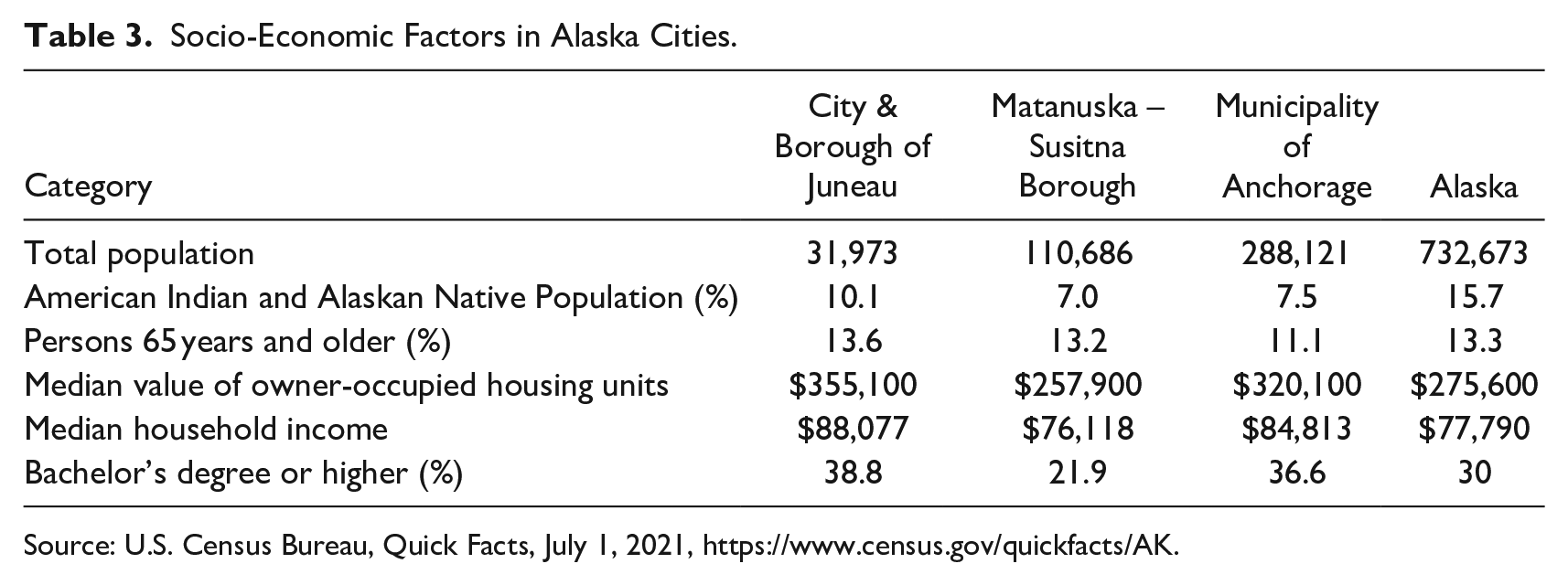
Source: U.S. Census Bureau, Quick Facts, July 1, 2021, https://www.census.gov/quickfacts/AK.
Conclusion
As the COVID-19 threat approached, Juneau’s local government responded quickly and effectively. Juneau’s low COVID-19 infection and death rates so far attest to the CBJ’s adaptive leadership in promptly and effectively managing the complex systems surrounding the pandemic. Institutionally, CBJ leaders benefitted from the borough’s home rule government structure and its ownership of the community’s primary response facilities. Leadership put these conditions to best advantage by rapidly setting up an effective institutional structure for the local government, dramatically increasing communication resources to stay connected with the community, and working with other key players outside of government, especially the local Native Indigenous community. Our explanation for Juneau’s success performs better than alternative analyses that focus on Juneau’s isolated location, home rule status, and its socio-economic structure.
This research allows us to answer some of the questions first raised when the pandemic began. In addressing the complex problems the pandemic presented, Juneau’s adaptive leadership in the conditions where the combined city and country government owned the local hospital and airport proved to be effective in keeping mortality rates low. This finding adds more nuance to our understanding of what kind of non-financial assets are most helpful for making cities more effective. More municipal ownership of hospitals and airports, or at least better coordination with them, might improve service delivery to the population in other cities. The CBJ’s early decision to give the city manager breathing room to process the information coming in and examine the big picture increased the capacity of the CBJ government to break down silos both within the government and between the government and society. Giving the CBJ manager a freer hand, with less day-to-day responsibility, provides a model of leadership for how cities can effectively manage data and evidence and use it to best effect in policy making and implementation. The constant communications from CBJ leaders and the consistent and timely publication of accurate information demonstrate the strength of these basic techniques for maintaining public engagement. Juneau’s substantial investment in communication resources and daily addresses by the city leaders won universal praise from our interviewees. Taken together, these findings explaining Juneau’s success help us to better account for the variation in mortality levels among American cities in responding to the pandemic.
This research further refines our understanding of adaptive leadership in complex situations. We define adaptive leaders as focusing on institutional design, communications, and collaboration across public agencies and with groups in society. Highlighting these three aspects of leadership provides guidance for future studies of local government responses to COVID-19 and other types of crisis management. Our work shows the complicated interplay between the structure of local government design and choices city managers make in allocating resources to communication and outreach efforts. In particular, we emphasized the importance of freeing up a key leader to process information and devise appropriate responses. The research also added evidence that municipal ownership of non-financial assets, such as the local hospital and airport, are important background conditions.
This research pushes forward the State and Local Government Review agenda on how to study local governments going forward. Next steps include additional case studies to more fully understand what kind of leadership and institutional interplay works best in keeping mortality rates low. Multidisciplinary teams like ours could further integrate the literatures on local government and public health to understand more deeply the connections between local government leadership and structure and public health outcomes. These new projects will provide hypotheses for further testing through large-n studies.
Policymakers also can benefit from these findings. First, in emergency situations, administrative structures should make sure that the central leader has the freedom to see the big picture in guiding responses and that municipal leadership does not have the burden of managing day-to-day responses. Communications should be a central priority, drawing on the insights of an actor like the CBJ Manager in this case. Likewise, government leaders should put in place mechanisms that make it possible to insert public input directly into policy making, as the COVID-19 taskforces did.
Supplemental Material
sj-pdf-1-slg-10.1177_0160323X221136504 – Supplemental material for Juneau, Alaska’s Successful Response to COVID-19: A Case Study of Adaptive Leadership in a Complex System
Supplemental material, sj-pdf-1-slg-10.1177_0160323X221136504 for Juneau, Alaska’s Successful Response to COVID-19: A Case Study of Adaptive Leadership in a Complex System by James E. Powell, Robert W. Orttung, Sean Asikłuk Topkok, Hana Akselrod, Joseph Little and Peggy Wilcox in State and Local Government Review
Footnotes
Declaration of Conflicting Interests
The author(s) declared no potential conflicts of interest with respect to the research, authorship, and/or publication of this article.
Funding
The author(s) disclosed receipt of the following financial support for the research, authorship, and/or publication of this article: This article was funded by the National Science Foundation ( 2028928).

Supplemental Material
Supplemental material for this article is available online.
Notes
Author Biographies
References
Supplementary Material
Please find the following supplemental material available below.
For Open Access articles published under a Creative Commons License, all supplemental material carries the same license as the article it is associated with.
For non-Open Access articles published, all supplemental material carries a non-exclusive license, and permission requests for re-use of supplemental material or any part of supplemental material shall be sent directly to the copyright owner as specified in the copyright notice associated with the article.
