




Abstract
High-quality construction of public health system is the key to maintain social economic activities be ordered and stable. The aim of this study is to understand whether public health development can promote economic growth and how. We construct a public health development index combining the variables of local pollution control and health care by EVM method. Based on the panel data of Chinese 283 cities from 2004 to 2017, fixed effect model and two-stage least squares model are used to test the impact of public health development on economic growth. Then, we discuss the heterogeneous impact of public health development on economic growth though the threshold regression model, under different government intervention, employment population scale and urbanization ratio. What’s more, we discuss the possible transmission effect of three human capital mechanisms, namely mortality, consumption rate and employment population size between public health development and economic growth. The conclusions are: (1) For every 0.1 unit increase in public health development, the growth rate of real GDP can be increased by 5 percentage points, which can drive the nominal GDP growth by about 0.17 percentage points. (2) Public health development can promote economic growth regardless of the scale of urban employment population. Only when the urbanization ratio exceeds 70.87 and the government intervention level is lower than 0.058, the development of public health is conducive to the improvement of urban economic development. (3) Public health development helps to promote economic growth, mainly through two paths, reducing mortality and increasing human capital accumulation. And, reducing mortality is more conducive to urban economic growth than increasing human capital accumulation.
Highlights
(1) For every 0.1 unit increase in public health development, the growth rate of real GDP can be increased by 5 percentage points, which can drive the nominal GDP growth by about 0.17 percentage points. (2) The heterogeneous regression results show that public health development can promote economic growth regardless of the scale of urban employment population. Only when the urbanization ratio exceeds 70.87 and the government intervention level is lower than 0.058, the development of public health is conducive to the improvement of urban economic development. (3) Public health development helps to promote economic growth, mainly through two paths, reducing mortality and increasing human capital accumulation. Moreover, reducing mortality is more conducive to urban economic growth than increasing human capital accumulation.
Introduction
Globalization promotes the international trade of goods and the cross-border exchange of people. And, infectious diseases, which do not respect national boundaries, spread rapidly in the international community and have a profound impact on global politics and economy (Mccausland 2020). By the end of June 2021, the COVID-19 outbreak in 2019 had spread to more than 200 countries, with 183 million confirmed cases and 3.96 million deaths worldwide. According to Organization for Economic Cooperation and Development (OECD) estimates, the COVID-19 outbreak will halve global economic growth and lead to economic recession in some countries in the future, casting a shadow on global economic prospects. With the fragile and unbalanced recovery of the global economy, the problems of low growth, high debt and high income gap will be further aggravated (Tachmatzidis 2020). Thus, facing the epidemic, governments have taken unprecedented economic control measures to ensure the smooth operation of the national economy (Ceylan et al. 2020). Furthermore, under the threat of transnational infectious diseases, global health governance and economic growth have become an important issue in the international community (Aguilar et al. 2021).
The residents’ demand for health is also increasing, and their demands for good public health and medical conditions are becoming more and more intense. According to the data of medical and health from World Bank Database, the average life expectancy of developed countries such as the United States, the United Kingdom, Germany, Sweden, Denmark and Norway is over 78 years old, and their average medical expenditure is generally over USD 4000. In Asia, only Japan and Singapore is with higher per capita medical expenditure and life expectancy, the average medical expenditure is 3733 and 2280 dollars, and the life expectancy is 84.1 and 82.9 years respectively. Meanwhile, with the development of public health is making great progress, such as the improvement of medical level, medical security system and living environment, the health level of workers in China has been greatly improved (Yuan et al. 2020), China’s total medical and health expenditure increased from 5025.93 billion yuan in 2001 to 59,121.90 billion yuan in 2018, with a compound annual growth rate of 15.60 percent. In 2000, China’s average health expenditure was just 361.9 yuan, reaching 4148 yuan by 2018, 11 times that of 2000, while life expectancy was extended from 71.4 years to 77 years.
Actually, public health is the premise and foundation of sustainable economic development. In the UN’s Vision 2030 of 17 Sustainable Development Goals (SDGS), good health and well-being is the third most important goal, next to nopoverty and no hungry. It is emphasized that good public health development is essential for sustainable and stable economic growth. On the one hand, the development of public health itself has positive externalities; on the other hand, from the perspective of human capital investment theory, the development of public health increases the health stock and then significantly promotes economic growth (Zhao et al. 2012). The related fields mainly include health economics, public economics and economic growth theory, which try to explain the relationship between public health development and economic growth. For example, the impact of public health on economic growth was reflected by the endogenous and spillover effects of human capital. With the arrival of the new epidemic, China’s strict prevention and control policies, and good public health support have maintained sustained economic growth compared with negative economic growth in other countries.
However, economic growth in turn will restrict and affect the stock and level of public health. For example, the change of life style, environmental pollution and destruction, social income inequality and its derived health inequality of residents all reflect the constraints of economic growth on the development of public health. And, China is relatively short of medical and health resources, and there is a relative gap between urban and rural areas and between regions. Especially in the background of the global pandemic of the COVID-19, the economic development of all countries in the world has been impacted differently. Because of Chinese core position in the global and supply chains, continuous supply chain disruption may affect Asia and even the global economy. At the same time, the restrictive measures taken by other countries due to the epidemic may also cause the interruption of international trade, affecting the normal operation of China’s industrial chain (Ryter et al. 2021). Furthermore, the COVID-19 has greatly affected the health level of workers, thereby reducing its work efficiency and hindering economic development. Therefore, how to effectively prevent and control diseases under the COVID-19? How to satisfy the public health and medical needs with less health resources? How to effectively improve the health level of residents and maintain stable economic operation? In the special period of COVID-19 spreading, these questions have been particularly important.
Thus, we measure the development level of urban public health from the perspectives of pollution control and health care, and discuss the impact of public health development on urban economic growth in China. Then, we discuss the heterogeneous impact of public health development on economic growth under different levels of government intervention, employment population scale, urbanization ratio. Finally, we analyse the possible transmission mechanism of public health development on economic growth. Therefore, this paper not only points out the direction for the development of public health and economic growth in China, especially in the context of the COVID-19 pandemic, but also provides empirical support, the development of public health and the stimulation of economic vitality in developing countries.
The rest of the paper is structured as follows: the second part is literature review; the third part constructs the empirical model and variable explanation; the fourth part discusses the baseline regression, heterogeneity analysis and mechanism analysis of public health development on economic growth; the fifth part is the discussions; the last part is the main conclusions and policy implications.
Literature Review
Economic Growth
Economic growth is a quantitative concept that refers to the increasing level of economic output in a region over a given time, which can be measured by regional GDP, per capita GDP growth or per capita disposable income growth. At present, scholars’ research on economic growth can be divided into three stages: The first stage emerged in the early 20th century, represented by Harrod (1933), with the key assumptions that the “capital-output ratio” was seen as an exogenous variable, interest rates were fixed, and capital and labour elements were irreplaceable. It inferred that capital accumulation was the only driving force for economic growth. In the second stage, Solow (1957) relaxed the hypothesis that capital and labor factors are irreplaceable, and increased exogenous technological progress in the production function. The empirical results showed that labor and capital input can only explain 12.5 percent of economic growth, while exogenous technological progress can explain 85 percent of that; The third stage, represented by Romer (1986, 1990), relaxed the exogenous assumption of technological progress. The main point was that the rate of technological progress determines the equilibrium growth in the long-term economic growth, so it is also called endogenous growth theory.
It can be seen that the important reason for economic growth is the improvement of productivity, and the core elements are capital, labor and technological progress. For a country, due to the diminishing marginal effect of labor and capital investment, the original investment-oriented economic development mode will face serious bottleneck constraints after the economic development reaches a certain stage. For example, in the development process of China, the rapid economic growth mainly depends on resources, capital, labor factor inputs and large-scale infrastructure construction support. (Fu et al. 2014; Zilibotti 2017), but after the per capita GDP exceeds US $10000 in 2019, the consumption of resources and environment will increase exponentially with every percentage point of economic growth. Therefore, we must rely on the improvement of total factor productivity to achieve long-term and steady economic development (Kruseandersen 2017). At the same time, human capital is one of the main factors affecting technological progress and improving total factor productivity. The development of public health is bound to affect the physical condition and health of workers, such as government investment in medical and health undertakings, social medical security system, urban green environment and pollution. Healthy workers are full of energy and creativity in terms of physical strength and energy. They are more productive and can earn higher income. Especially for developing countries, diseases and disabilities have greatly reduced the hourly wages of workers. The industrial structure of developing countries depends more on labor input compared with developed countries. Therefore, this paper discusses the impact of public health development on economic growth for China, thereby providing experience reference for other developing countries.
Public Health Development and Economic Growth
The existing researches focus on the mechanism of public health on economic growth is mainly on its impact on human capital, which is an important part of the health level of human capital (Acemoglu and Johnson 2007). According to the life cycle theory, the increase of life expectancy will increase the savings of rational man in working period and promote capital accumulation and economic growth. From this perspective, the investment in public health will have an endogenous effect on economic growth (Bretschger et al. 2017). Therefore, this paper reviews the relationship between public health development and economic growth from the perspective of human capital in the endogenous growth theory, which can be divided into the following two categories:
The first category researches the impact of government public health expenditure on economic growth.The economic growth effect of public health expenditure mainly comes from two aspects: on the one hand, the positive externality brought by the public characteristics of public health products. On the other hand, the direct public health investment can improve the health level of labors, leading to the economic growth effect. Arrow et al. (1970) made a pioneering contribution, they assumed that government expenditure is productive. On this premise, they put the public capital stock variables into the macro production function. They believed that government expenditure on public utilities can bring benefits to private investment. However, government expenditure only has an impact on economic growth in the short term, but it dose not have an impact on steady-state economic growth. Liu & Zhang (2008) made an empirical analysis from 1981 to 1999 on China by using the public capital model of endogenous economic growth theory. They found that Chinese public health expenditure has a direct negative effect on economic growth, however, the increase of public health expenditure increases the marginal elasticity of human capital, which has an indirect contribution to real economic growth. De Mendonça & Baca (2017), taking 75 developing countries as an example, believed that public health expenditure can help promote economic growth. To sum up, from the perspective of human capital investment theory, the increase in health stock caused by the health investment from government is a kind of human capital investment, which will inevitably lead to economic growth. Moreover, there are externalities in public health services. On the one hand, the negative externalities of health service market will lead to the output of health products contrary to the best social demand, which requires the government to expand public health expenditure to make up for the gap between them. On the other hand, as a special public production, health service has consumption externality. That is to say, people can improve their health status, raise their working productivity and promote economic growth by consuming health services and products.
The second category studies the impact of pollution on economic growth. Nordhaus and Weitzman (1992) believed that pollution will not only harmful to the health level of workers, but also will cause an annual economic growth rate loss of 0.04 percentage points in a long period. Chen (2009) pointed out that the continuous accumulation of pollution emissions will continuously reduce the environmental carrying capacity and natural environmental quality of the whole society, and bring negative externalities to the output or quality of each economic unit or even the whole economy. To sum up, environmental pollution will affect economic development through the following two ways. Firstly, cities with serious pollution will significantly reduce the attractiveness of human, thereby limiting the increasing returns to scale and agglomeration effects of cities, which will slow down the urban economic development (Connor et al. 2016). Secondly, pollution will destroy the accumulation of human capital, and human capital is one of the most important factors to promote economic development. Thus, environmental pollution mainly inhibits economic development by slowing human capital accumulation and reducing urban attractiveness (Del & Lopez-Garcia 2020).
The three marginal contribution of this paper is as follows: (1) Most literatures ignore the welfare loss caused by environmental pollution in the process of economic growth, and environmental pollution may also affect economic development by reducing the accumulation of human capital. This paper constructs the urban public health development index system from the urban pollution control and health care level, and it then discusses the impact of public health development on economic growth from the urban pollution control and health care level. (2) This article discusses how the development of public health affects economic growth from multiple dimensions. This paper focuses on the role of human capital mechanism in public health development and economic growth through mortality, human accumulation and consumption rate; it also compares the direction and magnitude of the effects of the three approaches on economic growth, and it further details the transmission effect of human capital on public health development and economic growth. (3) This article explores the heterogeneous effects of public health on economic growth. It examines the differences in the paths of economic growth caused by public health development under different employment population sizes, government intervention levels and urbanization levels. Therefore, it enriches the empirical research on the effect of public health development on economic growth, and puts forward more targeted policy recommendations based on the specific situation of Chinese cities.
Models, Variables and Data
Establishment of Empirical Model
Based on the Romer (1990)’s endogenous growth theory, the influence mechanism of public health development on economic growth is as follows: the improvement of public health development will improve the health level of workers, increase theirs life expectancy, and then affect urban economic growth. The baseline regression model is as follows:

Among them, Ggrit is the GDP growth rate of city i in t year, Inoeit is the technical level, Pubhit is the index of urban public health, Cont is control variables, t is the unobservable time variable and α is the unobservable individual variable representing time and city fixed effect.
Variables
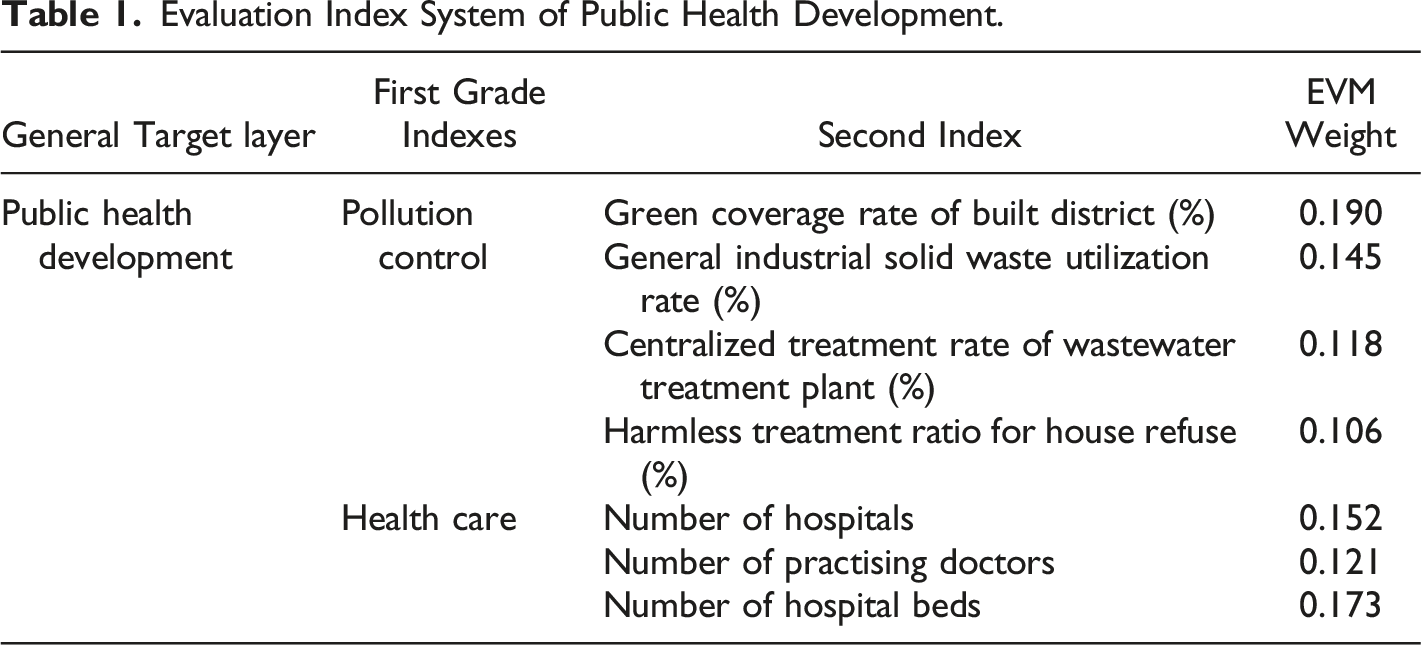
(1) Explained variable: Annual growth rate of GDP. This paper analyzes the nominal growth rate and real growth rate of urban GDP. (2) Core explanatory variable: Public health development. The development of urban public health includes a wide range of contents, such as environment, medical level, etc. In this paper, the development of public health is divided into pollution control and health care (Suparmi et al. 2018). Table 1 is the index system of public health development, and selects EVM method to give weight. Evaluation Index System of Public Health Development.
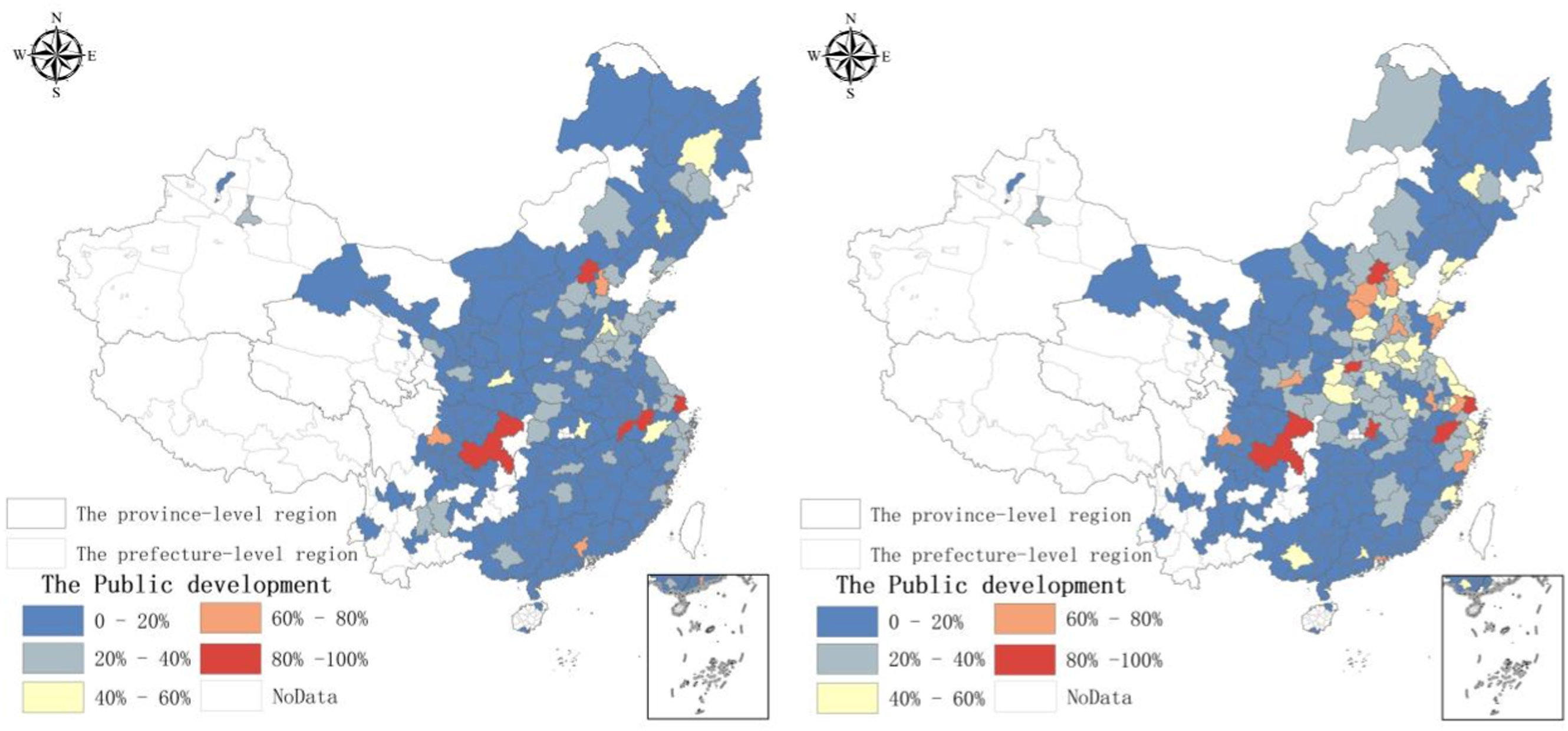
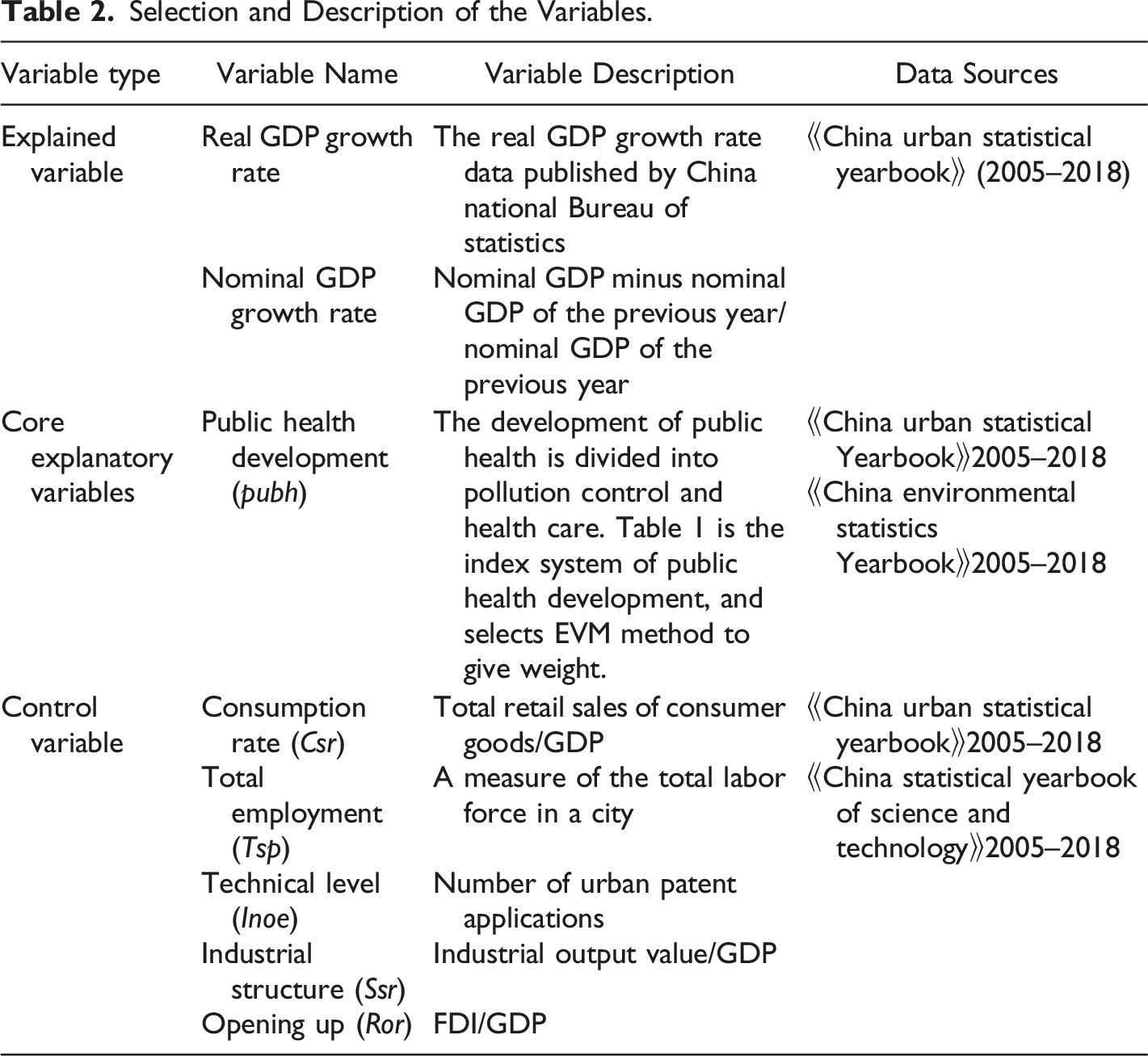
According to China’s urban health development index from 2004 to 2017, ArcGIS is used to draw the schematic diagram of that in 2004 and 2017. It can be found that the development level of urban public health in China has improved to varying degrees from 2004 to 2017 in Figure 1. Nevertheless, it has not changed the current situation of low public health index in most cities. Furthermore, most cities with better public health development are located in the eastern region or provincial capital cities, showing obvious regional heterogeneity. (3). Control variables: ① Technical level. This paper uses the number of invention patents applied by cities to represent the level of technological innovation. ② Consumption rate. In many classical models, there is a basic assumption of complete conversion from savings to investment (Solow 1957). However, in reality, due to the flow of capital between countries and the lack of effective investment, this conversion is not complete (Baxter & Crucini 1993), especially for cities, even if the savings can be converted into investment. Therefore, the inevitable control variable in economic growth is savings. However, limited by the availability of data, this paper chooses consumption rate to measure the status of savings, inferred by Lei & Gong (2014) using the ratio of total retail sales of consumer goods to GDP as the consumption rate. ③ Total employment. As labor force is one of the important variables in the production function, for China, the rapid economic growth after 1978 is largely caused by the demographic dividend of labor transfer caused by urban-rural dual structure (Ming & Gao 2011). Therefore, the change of labor force is also an important factor affecting economic growth. ④ Industrial structure: Since the reform and opening up, industry has been the main force of China’s economic growth, so this paper uses the proportion of industrial output value in GDP to measure the urban industrial structure. ⑤ Opening up: As for China, due to its strong manufacturing industry and insufficient domestic demand, opening up is an important force affecting economic growth. Therefore, this paper selects the actual use of foreign capital to measure the degree of opening up (Yao & Yu 2009). Table 2 shows the detailed description of all the variables. The index of Chinese urban public health in 2004 and 2017. Selection and Description of the Variables.
Empirical Regression Results and Discussion
Baseline Regression
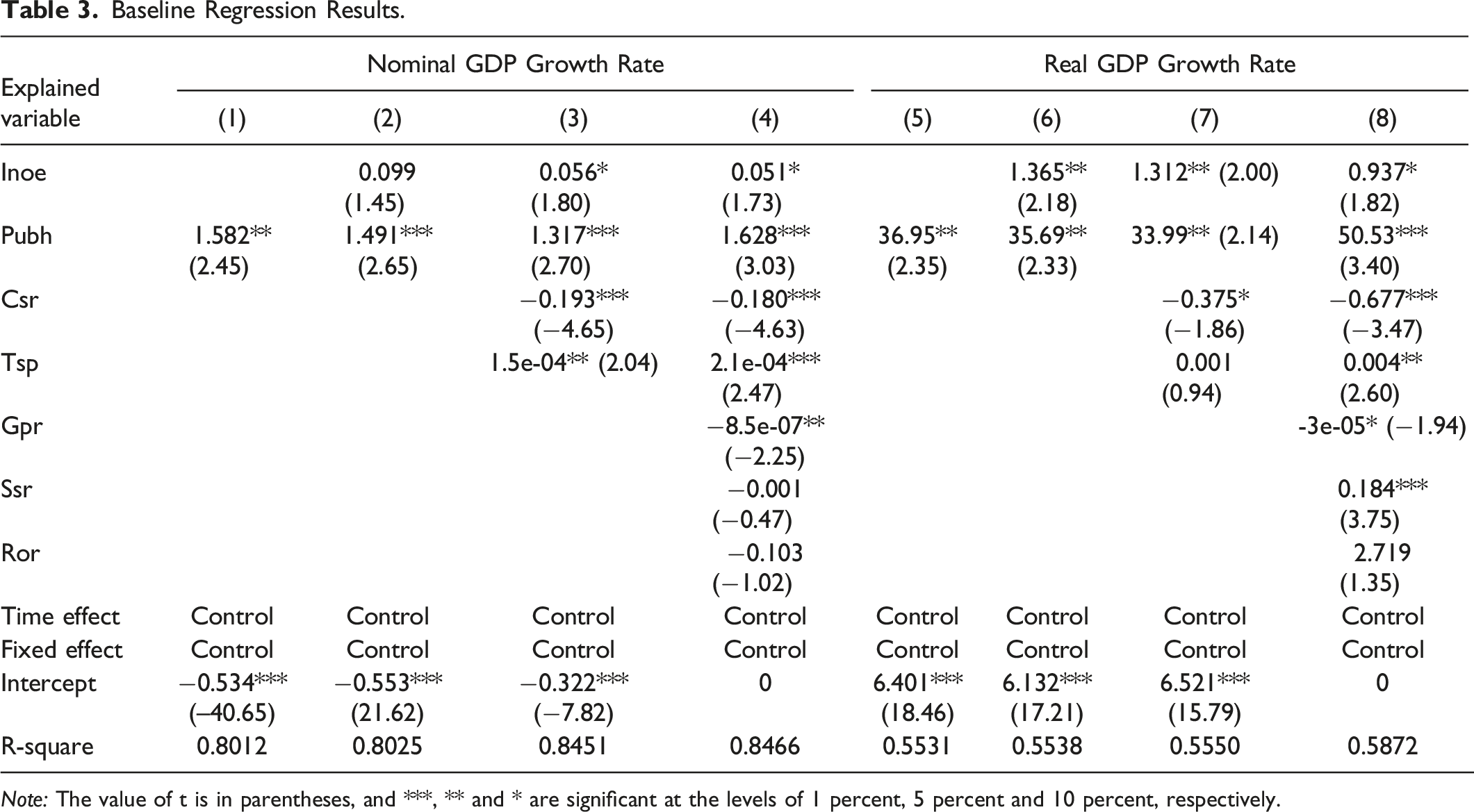
Through the F-test of the “city” dummy variable, the individual effect is significant at the 1 percent significance level, and the original hypothesis shows that there is no individual effect will be rejected. After the Hausman test, the p-value is less than 0.01. Therefore, this paper selects the fixed effect model for panel model regression. B-P test and Pesaran (2015) method were used to test the heteroscedasticity and cross-sectional correlation, respectively. The results show that the equation has heteroscedasticity and cross-sectional correlation problems at the 1 percent significance level. If not treated, the significance test of statistical results is invalid. Therefore, this paper selects Driscoll-kraay standard error to estimate the significance level of the core explanatory variable (Driscoll & Kraay 1998), which deals with cross-sectional correlation and heteroscedasticity problems. This method improves the original statistics of significance test. The regression results are as follows:
Baseline Regression Results.
Note: The value of t is in parentheses, and ***, ** and * are significant at the levels of 1 percent, 5 percent and 10 percent, respectively.
As for control variables, technological innovation can increase the real growth rate of GDP by 0.0937 percentage points for 0.1 unit increase, but it can only drive the nominal GDP by 0.0051 percentage points. Since the reform and opening up, through technological innovation and institutional innovation, China has liberated the shackles of labor factors, capital factors, technological factors and other production factors in the period of planned economy. China also improved labor productivity, capital productivity and total factor productivity, promotes its economy to achieve unprecedented long-term and high-speed growth.
Secondly, every 0.1 percentage point increase in consumption rate will reduce the real GDP growth by 0.06 percentage points, which indicates that the economic growth of Chinese cities is largely driven by investment and export. The pulling effect of consumption on China’s economic growth is gradually weakening. In the early stage of reform and opening up, consumption is the most important force to stimulate economic growth. However, in the process of marketization, urbanization and internationalization, unreasonable income distribution and lagging transformation of public expenditure seriously restrict the growth of consumption, making the pulling effect of consumption on the economy more and more weak.
Thirdly, although the increase of industrial share contributes to economic growth, China’s rapid economic development still faces the problem of unreasonable industrial structure. The main reason is that most of China’s products are low value-added, low technology and labor-intensive products, and the overall industrial competitiveness is not strong enough. Iron and steel, cement, electrolytic aluminum, flat glass, shipbuilding and other industries have great pressure to resolve overcapacity. Moreover, the contradiction between resources and environment is acute. In 2020, China’s GDP will account for 17 percent of the world’s GDP, but it will consume more than half of the world’s steel, cement and coal. China’s environmental carrying capacity is close to the upper limit, and 70 percent of the cities are not up to the standard of air quality, which seriously endangers the physical and mental health of Chinese residents.
Fourthly, the real GDP can increase by 0.004 percentage points when the total number of employment increases by 10,000. Although there is a significant positive correlation between them, the coefficient is small. This is because China’s aging population is accelerating, and the total population of working age is beginning to decline. Starting from 2012, there will be an annual reduction of 2.3 million labor force, and there will soon be an inflection point for the transfer of rural surplus labor force. Besides, China’s labor costs rise rapidly. Since 2000, China’s nominal wage growth has continued to rise, and labor costs in most Southeast Asian countries are only 50 percent of China, or even less than 20 percent in some cases. These situations indicate that the “demographic dividend” has been weakening. Although the “demographic dividend” is declining, it is replaced by the human capital dividend. With the continuous transformation of China’s economic development mode, the contribution of labor force to economic growth has also undergone profound changes, and high-quality human capital has become a more important new source of driving force.
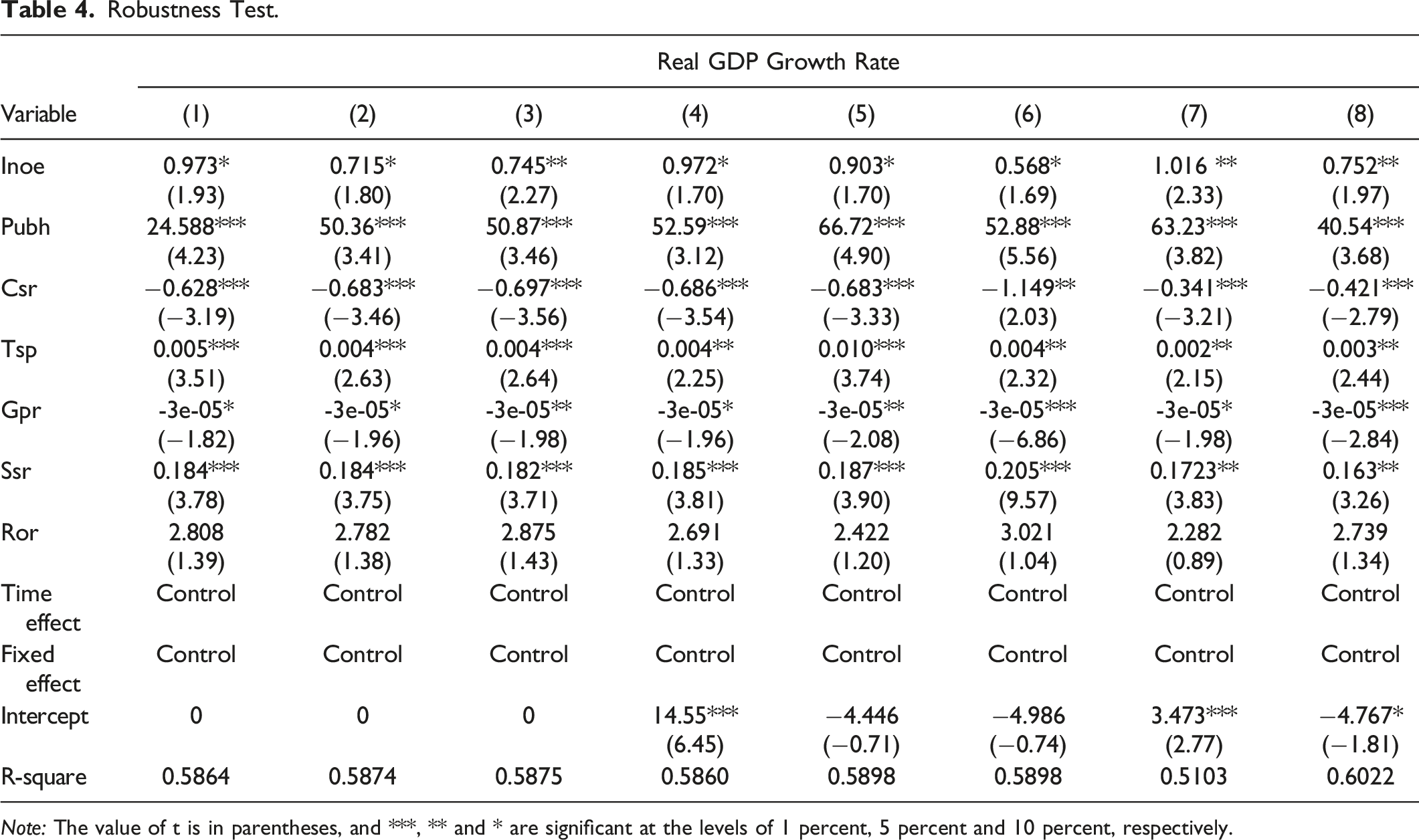
Robustness Test
Robustness Test.
Note: The value of t is in parentheses, and ***, ** and * are significant at the levels of 1 percent, 5 percent and 10 percent, respectively.
Endogeneity Test
Although the two-way fixed effect model can largely reduce endogeneity, it cannot be completely eliminated. According to the above statement, regions with rapid development are more likely to plan more hospitals and attract more doctors to work locally, it is likely to have a two-way causal relationship. Therefore, this paper attempts to use the instrumental variable method to deal with the potential endogenous variable-public health development.
We think number of hospitals (Noh) in 1948 and number of green design patents granted (Nog) can be used as instrumental variables for public health development index in a certain city. First, the number of hospitals in 1948 did not affect the economic growth rate during the study period, but it laid a foundation for the development of regional public health during the study period, and therefore it had a significant positive correlation with the development level of public health. Second, the number of green design authorization in a city does not directly affect economic growth, but it represents the enhancement of regional environmental protection awareness. So it has a significant positive correlation with the development of public health. The data source of the former is from the local Chronicles of various regions during the Republic of China, while the data of the latter is from the patent database of CNKI. The missing samples are assigned as 0.
Therefore, Noh and are taken as instrumental variables. Three tests are needed to test whether instrumental variables are applicable. The first is under-identification test. The original hypothesis is that there is under-identification, or that instrumental variables are independent of endogenous variables. In this paper, Kleibergen-Paaprk LM statistic is used to test, and the result shows that p-value is 0.0555, so there is no problem of insufficient recognition at 10 percent significance level. The second is the weak instrumental variable test, which is a further test of under-identification. The original hypothesis is that instrumental variables have a strong correlation with endogenous variables. After calculation, the Cragg-Donald Wald F statistic is 92.468, so it can be considered that the correlation between them is high. Finally, the over-identification test is used to test the rationality of instrumental variables. The Hansen J statistic in this paper is 0.011, and the p value is 0.9162. Therefore, it is reasonable to accept the original hypothesis and set the instrumental variable.
After 2SLS regression, the coefficient of the predicted value of public health development is 11.13, and the p-value is 0.001. Therefore, even if there are endogenous problems, the driving effect of public health development on economic growth is still significantly positive.
Threshold Characteristics
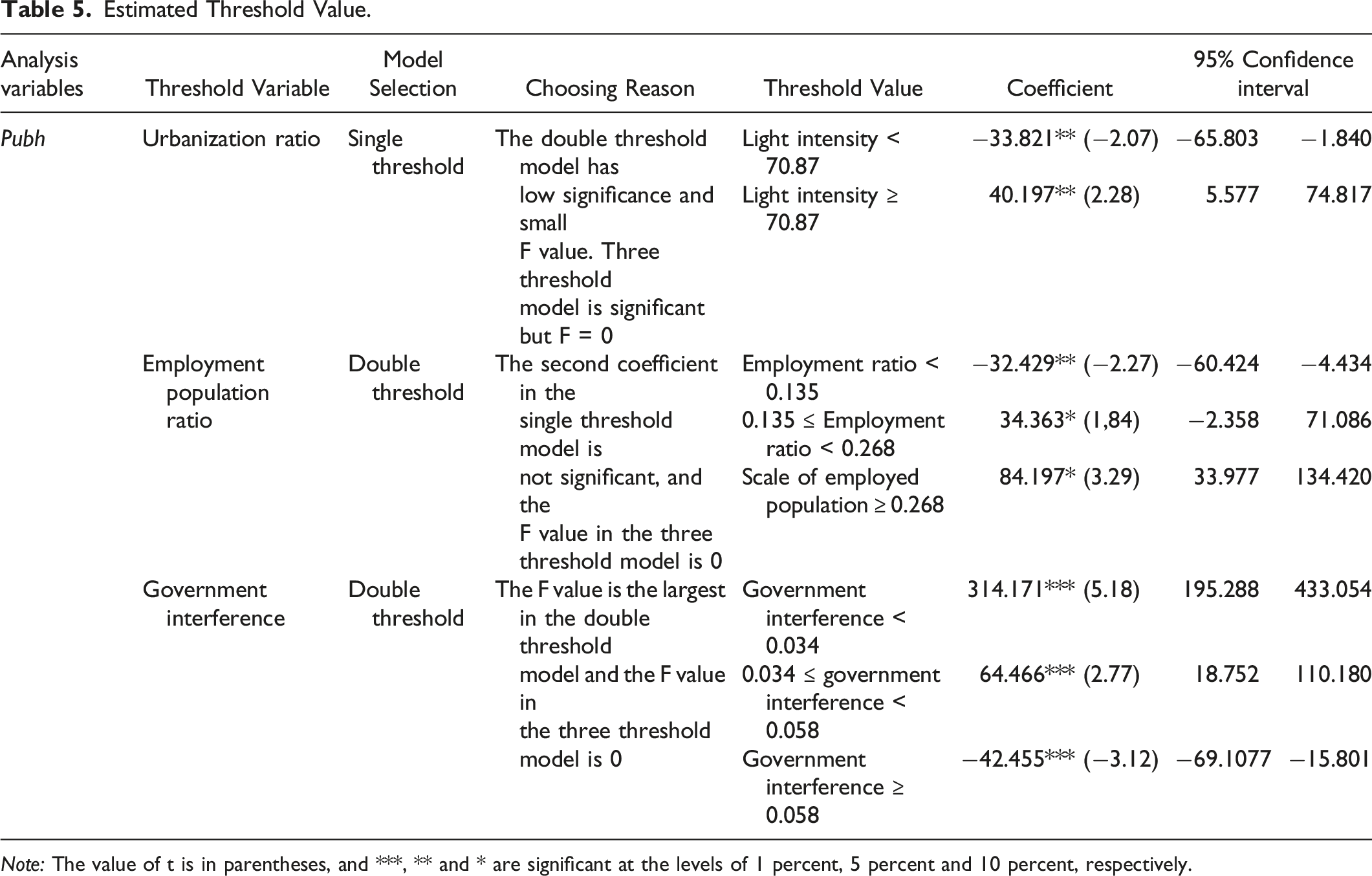
In China, highly developed regions such as the Yangtze River Delta and the Pearl River Delta may have reached or approached the steady economic growth rate, but there are still many underdeveloped regions in the central and western regions with low marketization, extensive local protection and low labor quality, which make it necessary to further develop (Deng & Bai 2014). This paper selects the level of government intervention, urbanization and the scale of the employed population as the threshold values to analyze the threshold effect of public health development on economic growth. This paper uses the proportion of government expenditure in GDP as the proxy variable of government intervention; and DMSP/OLS stable night light as the proxy variable of urbanization ratio (Ke et al. 2022); the scale of the employed population represents the attraction of the region to employment. According to Hansen (1999), the threshold model is set as formula (2)–(4):


Estimated Threshold Value.
Note: The value of t is in parentheses, and ***, ** and * are significant at the levels of 1 percent, 5 percent and 10 percent, respectively.
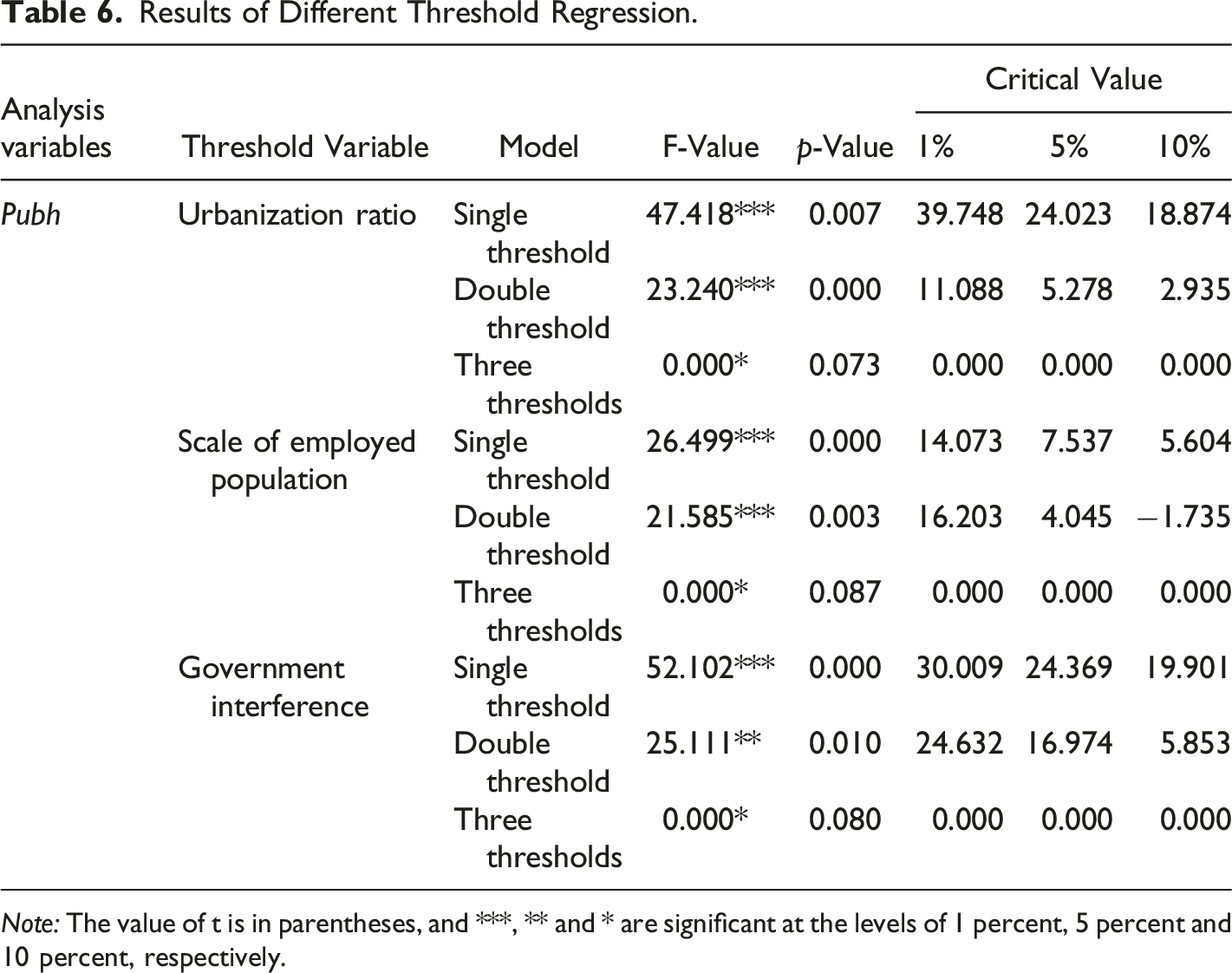
Results of Different Threshold Regression.
Note: The value of t is in parentheses, and ***, ** and * are significant at the levels of 1 percent, 5 percent and 10 percent, respectively.
When we take the scale of employment population as a threshold variable, there is a significant double threshold effect between public health development and economic growth. The impact of public health development on the real growth rate of GDP in cities with the employment population scale below 0.139 is significantly negative, while the impact of public health development on that of cities with the employment population scale between 0.139 and 0.315 is significantly positive. It indicates that the higher the employment population size, the greater the pulling effect of urban public health development on the economy. The possible reason is that for cities with low scale of employment population, there is a large outflow of population, and it is difficult to retain and attract labors. At this time, all kinds of resources used to develop the real economy are used to support the development of public health, and the economic growth rate will be reduced due to the inefficient allocation of social resources. However, for cities with a large number of employed people, government will improve the livability of cities in order to retain talents, so as to attract more human capital.
When we take the level of government intervention as a threshold variable, there is a significant double threshold effect between public health development and economic growth. When the level of government intervention is lower than 0.34, public health development can significantly promote economic growth. When the level of government intervention is between 0.034 and 0.058, public health development still has a significant positive effect on economic growth. When the level of government intervention is higher than 0.058, the development of public health is not conducive to economic growth. It can be found that appropriate government intervention to improve public health development is conducive to the improvement of residents’ health level and the production efficiency of workers. However, excessive government intervention is not conducive to the improvement of urban marketization level, not conducive to stimulating the vitality of market economy, hindering the improvement of economic development level.
Mechanism Analysis
The Mediating Effect of Mortality Rate
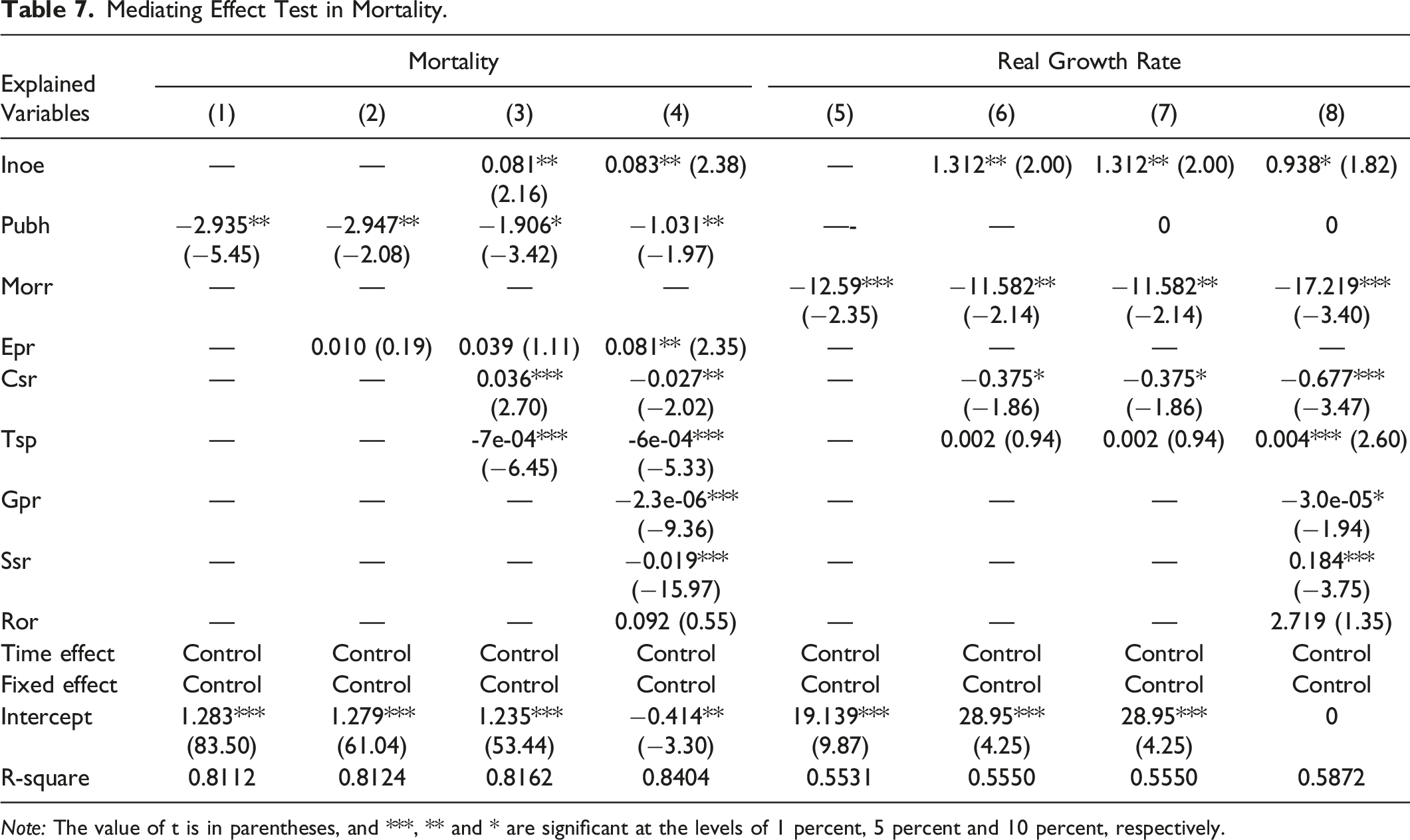
The previous analysis shows that public health development can significantly and steadily affect the actual growth rate of Chinese urban economy. On the contrary, poor health status of residents will hinder economic development through a variety of mechanisms. First of all, the poor personal health of residents will lead to the reduction of labor productivity and the loss of social welfare (Banister 1998). For individuals, poor personal health status will lead to increased psychological burden, decreased personal income level and shortened life expectancy. For workers, poor health conditions will not only affect the production efficiency of individual workers, but also have negative impact on the productivity efficiency. Secondly, poor health status may hinder residents’ access to education, and the level of education is closely related to residents’ personal contribution to the national economy. As a result, poor health may affect economic growth. Thirdly, from the perspective of the whole country, poor health conditions will cause a decline in the proportion of productive population in the total population of a country, resulting in a decrease in the number of employed people. Life expectancy data at the urban level are difficult to estimate, but can be measured by mortality.
Although in addition to public health development, important factors affecting mortality include the age structure of the population, and regions with more serious aging tend to have higher mortality. This paper argues that the employment population size can be used to control this part of the factors, because one of the great differences between China and western countries is that the unemployment rate in China is often very low (Feng & Guo 2019). Therefore, the total number of urban employment can basically measure the number of working-age workers. This paper argues that controlling this part and the fixed effect of the city can better control the impact of population age structure on mortality. Therefore, the first mediating effect model established is as follows:

Mediating Effect Test in Mortality.
Note: The value of t is in parentheses, and ***, ** and * are significant at the levels of 1 percent, 5 percent and 10 percent, respectively.
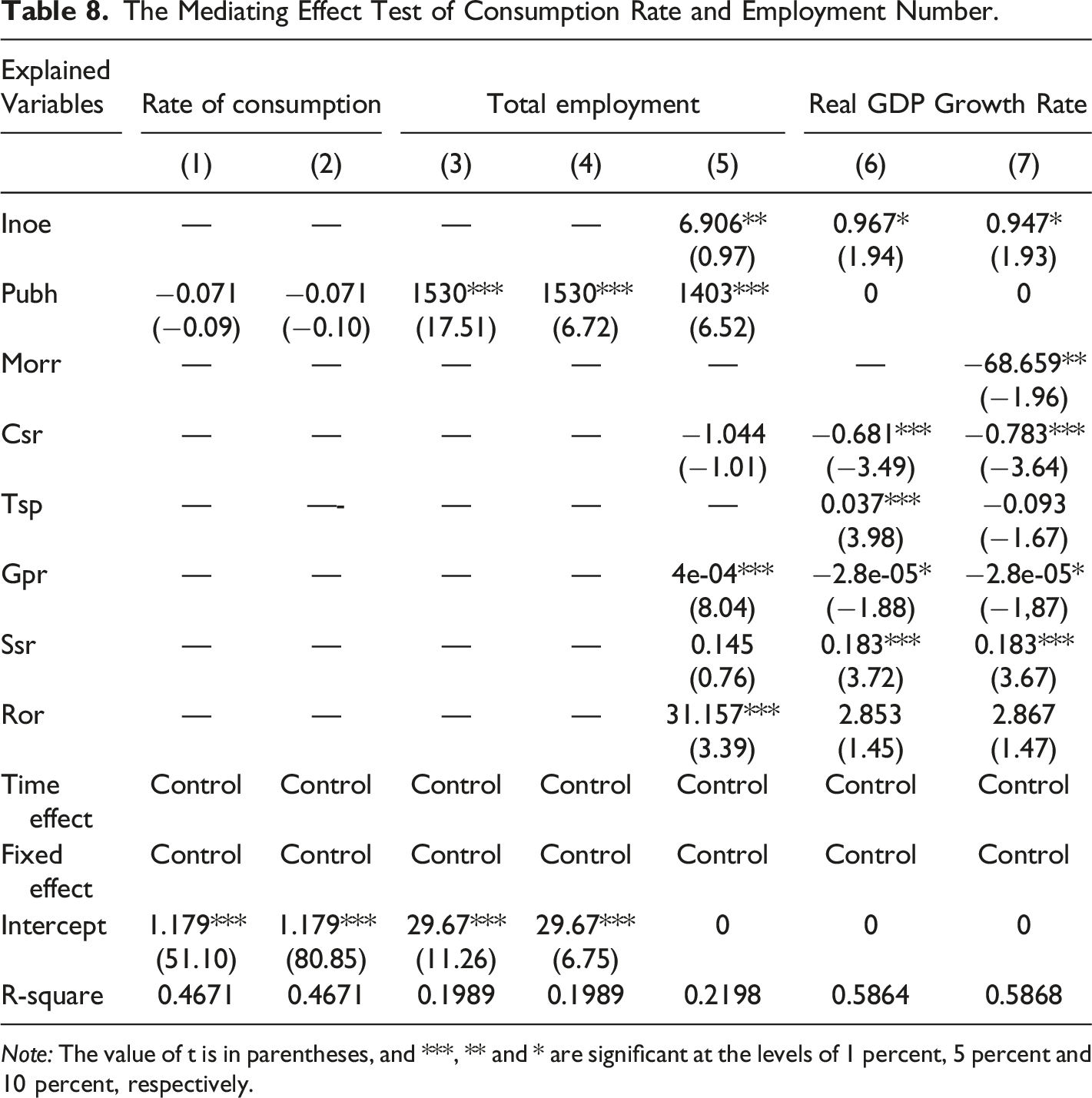
The Mediating Effect of Consumption Rate and Employment Rate
On the one hand, the development of public health will improve the consumption level of residents and reduce the savings rate (Gruber & Yelowitz 1999), thus it affecting the accumulation of capital and further affecting economic growth. On the other hand, the development of public health will also attract more labor force to work here, and healthy labor force is more inclined to increase working hours and labor intensity, so as to improve the level of human capital in the region, and thus promote the regional economy (Garthwaite et al. 2014). It can be found that the above two mechanisms are the control variables in the impact of public health development on economic growth. Although the multicollinearity judged by variance expansion factor does not exist in baseline regression, the possibility of the above two mechanisms is still not ruled out. Then we will discuss whether public health development can affect economic growth by increasing the amount of human capital and changing the consumption rate. Similar to the previous section of this part, this paper first establishes the following model:

The Mediating Effect Test of Consumption Rate and Employment Number.
Note: The value of t is in parentheses, and ***, ** and * are significant at the levels of 1 percent, 5 percent and 10 percent, respectively.
Discussions
Some papers are basically consistent with our conclusion that the development of public health promotes economic growth (Tambo et al. 2019; Zhao et al. 2012; Zhao and Wang 2020); Investment in renewable energy can also reduce air pollution, improve public health care and promote economic growth (Mujtaba and Shahzad 2021). In addition, from the perspective of spatial correlation, some scholars found that although the development of public health in China promoted the economic development on the whole, except the development of primary health care per capita has a negative effect on economic growth, and the impact of public health development on economic growth in different regions is heterogeneous (Wang 2015). In contrast, Khan et al. (2020) found that increased public health spending and poor environmental performance undermined economic growth with low efficiency and low labor productivity.
In addition, this paper also has some shortcomings. Firstly, if the types of public health services can be further refined in the future, we can promote economic growth through public health more targeted. Secondly, this paper does not consider the spatial correlation between cities, and increasing the spatial distance and other indicators can make the empirical results more consistent with the reality. In future studies, the spatial distance can be embedded into the model and the types of public health can be further refined to make the results more objective and accurate.
Conclusions and Suggestions
This paper constructs the index of urban public health development from two aspects of urban pollution control and health care. Through endogenous test and robustness test, it is concluded that public health development contributes to the economic growth. Besides, through the threshold regression model, this paper discusses the heterogeneity of public health development on economic growth under different urbanization ratio, employment population scale and government intervention level. Furthermore we discuss the mediating effect of mortality, human accumulation and consumption rate between public health and economic growth, and we obtain the following main conclusions: (1) The baseline regression shows that public health development contributes to the improvement of economic growth, and the impact of public health on the real GDP growth rate is much stronger than that on the nominal growth rate. Furthermore, this paper takes the number of hospitals in 1948 and number of green design patents granted as instrumental variables, and we still can get the positive correlation between public health development and economic growth. In addition, this paper conducts a robustness test on the baseline regression results by controlling the city-year-joint fixed effect in the baseline regression model, replacing the measurement index of explained variables, reconstructing the weight of public health development index, replacing the control variables, eliminating the sample extreme points, and controlling the lagged term of explained variables. As a result, public health development still has a significant positive effect on economic growth. Therefore, if the government increase investment in health development, improve the governance of urban environmental pollution will help to promote urban economic growth. Consequently, government should further increase the investment in urban public health, establish a more perfect mechanism for prevention and control of infectious diseases, and improve the residents’ medical insurance system. At the same time, government should also pay attention to the pollution control and green environment construction of a city. It’s better to constantly promote technological innovation, and pay attention to promoting green economic growth while maintaining high-speed growth. (2) The heterogeneity analysis of public health development and economic growth shows that: Firstly, when we take urbanization ratio is taken as the threshold variable, there is a single threshold effect between public health development and economic growth. Only if the level of urbanization exceeds 70.87, there is a positive correlation between public health development and economic growth. Secondly, when we take the scale of the employed population as the threshold variable, there is a significant double threshold effect between public health development and economic growth, and with the increase of employed population, public health development plays a significant role in promoting economic development. Thirdly, when we take government intervention as a threshold variable, there is a significant double threshold effect between public health development and economic growth. If the level of government intervention exceeds 0.058, the development of public health is not conducive to the improvement of economic development. Therefore, it is necessary to increase government investment in public health, and further attract the agglomeration of higher-quality human capital in cities. What’s more, it is better pay more attention to the improvement of urban functions and the public service capacity, and establish a modern urban governance system, and improve the management ability of cities. (3) Public health development helps to promote economic growth, which is mainly achieved by reducing mortality and improving human capital accumulation. The mediating effect of public health development on reducing mortality is greater than that of human capital accumulation. First of all, government should continue increasing the investment in health and further enhance the proportion of public health financial investment. Government should also ensure the financial support for the normal operation of the disease control system and narrow the gap between urban and rural areas. Secondly, public health services should be reasonably developed according to the basic situation of urban employed population. To promote labor productivity for economic growth the governments of cities with high employment population should further increase investment in public health and adjust relevant health policies, not only to meet the needs of residents’ various medical services, but also improve the accessibility of public health services for low-income workers. However, for cities with large population loss and low employment scale, excessive resources should not be invested in public health development, public health services should be matched with population conditions to ensure people’s medical service needs.
Footnotes
Declaration of Conflicting Interests
The author(s) declared no potential conflicts of interest with respect to the research, authorship, and/or publication of this article.
Funding
The author(s) disclosed receipt of the following financial support for the research, authorship, and/or publication of this article: This work was supported by the National Social Science Fund of China (Grant No. 20BGL192); the National Social Science Fund of China (Grant No. 21BGL248); 2022 Research Topics of Henan Federation of Social Sciences (Grant No. SKL-2022-2422); 2022 Nanyang Institute of Technology Interdisciplinary Research Project (Grant No. NGJC-2022-13).
