



Abstract
This paper examines how short-term rentals are changing living conditions and the composition of the population in affected parts of a town. First, to analyze the relation between quality, distance, and rents, we develop a spatial monocentric city model with varying housing quality levels. Second, for 200 m grids in the city of Berlin (Germany) in 2019, we show that the proportion of low and medium quality residential units correlates positively near the city center with the probability of Airbnb listings and the number of these listings, but negatively in the suburbs. Third, applying fixed effect and IV strategies, we investigate the impact of Airbnb listings on living conditions and the composition of the population in the almost 450 planning areas of Berlin in the years 2016–2019. We show that Airbnb offers increase the number of residents with long periods of residence and reduce the number of residents in low-quality residential environments, but we do not find above-average effects on socially weak groups.
JEL Classification: R21, R31, Z32
Introduction
In metropolitan areas with knowledge-based industries and in cities with natural and man-made amenities, rents and property prices have been rising for years. Life in these regions is becoming unaffordable not only for the low-skilled and their families but increasingly also for the middle class. The affordability crisis has negative economic, social, and political consequences. The demographic development (aging, immigration, and shrinking household size) and increasing positive agglomeration effects are primarily responsible for the price increase. In addition, short-term rentals to business travelers and above all to tourists via platforms (particularly Airbnb) that have been brokered since the beginning or mid-2010s have increased. Housing is being converted: Apartments and rooms for travelers are being converted from apartments that are used for the long term. Short-term rentals are squeezing housing for regular tenants and further increasing rents and property prices (Horn and Merante, 2017; Barron et al., 2018; Ayouba et al., 2020; Garcia–López et al., 2020; Koster et al., 2019; Chen et al., 2019). Externalities associated with noise, in particular, have a negative impact on residents (Filippas and Horton, 2018). Not only residents but also hotels, whose competitive position is deteriorating, are affected by platform-mediated short-term rentals of apartments and rooms (Zervas et al., 2017). For tourists, traveling to attractive destinations is easier and cheaper (Tussyadiah and Pesonen, 2016). The residents of the affected districts fear competition in the housing market and suffer from overcrowding. The rapid development of short-term rentals of apartments and rooms in residential areas is the subject of fierce public debate and is provoking political counter-reactions. The supposed beneficiaries of such regulation are urban voters; Airbnb guests do not have voting rights in the communities. Therefore, short-term rentals are increasingly restricted by regulation (Hajibaba and Dolnicar, 2018; Aguilera et al., 2019).
The political explosiveness of short-term rentals is exacerbated by the fact that they are likely to displace residents in a socially selective way and thus promote gentrification (Wachsmuth and Weisler, 2018). On the one hand, short-term rented residential units are not evenly distributed across the city area; on the other hand, the selection of newly built or converted residential units for this purpose is not random but is determined by economic considerations. The decisive factor is whether high-quality or low-quality living space is used for short-term rentals and whether economically weaker or stronger residents are being squeezed out of the attractive residential areas. An analysis of the decision-making situations of landlords, tenants, and homeowners allows conclusions to be drawn as to which social groups are being pushed out by new forms of short-term rentals: tenants with low credit ratings and unstable living conditions. Unlike tenants, homeowners benefit from higher prices. Owner-occupiers are less likely to reallocate their homes to the short-term rental market (Barron et al., 2018). Therefore, tenants with a comparatively low income rather than homeowners are displaced. Landlords opt for short-term rentals if a property is not suitable for regular renting or the transaction costs for new rentals and monitoring are low. Individual rooms and complete apartments with high levels of noise pollution or in poor condition, which tenants are willing to accept only temporarily, are badly suited for permanent rentals. However, apartment quality also has a negative impact on rentability and rent for short-term rentals. Short-term rental contracts are also suitable only for rent-oriented landlords who are not interested in the social environment of the apartments. Apartments that have a comparative advantage for being rented out to travelers are otherwise likely to be rented primarily by socially and economically weak people due to the associated apartment characteristics. Members of this group of people are disadvantaged on the rental apartment market compared to tenants with a higher credit rating and often have to accept comparatively expensive apartments.
In this paper, we investigate whether short-term rental contracts tend to replace permanent use in low-quality rather than high-quality apartments and tend to displace economically weak rather than strong people in the city of Berlin, the capital of Germany.
First, to hypothesize on the effects of short-term rentals on housing markets and sociodemographics in affected neighborhoods, we develop an urban economics model with varying housing quality. From the model, we learn that the displacement effects of platform-based housing offers vary in size for different apartment qualities and locations. Unsurprisingly, based on realistic assumptions about the importance of travel costs for tourists and business people, on the one hand, and regular tenants, on the other hand, the model shows that Airbnb will push out regular tenants closest to the city center the most. However, it can also be derived from the model that the strength of the displacement effects for different quality segments of the housing market depends on the proximity to the center and that the direction and strength of this relationship depend on the underlying willingness to pay for the quality of Airbnb users. The analysis of several income classes tells us that the income-class-related incidence of Airbnb rentals depends on the local transport infrastructure and the supply of public goods in the center.
Second, we demonstrate for 200 m grids in the city of Berlin in 2019 that, in line with the predictions from the theoretical model, close to the city center, low-quality housing and medium quality housing are positively correlated with Airbnb listings when we control for distance to the center, land values, and land use regulation. In the suburbs, the correlation is negative.
Third, to identify the causal effect of Airbnb listings on average housing conditions and the composition of the population in the affected neighborhoods, we employ a two-way fixed-effect approach and an instrumental variable approach. Using the spatial structure of listings in other European cities as instruments for Airbnb listings in Berlin, we purge the estimates from Berlin-specific spatial relations between Airbnb listings and residential environment characteristics. We give the instrument a shift-share structure in order to eliminate the direct impact of the upgrading of the central areas on the instrument. We show that more offers of short-term housing via Airbnb increase the number of residents with long periods of residence and reduce the number of residents in low-quality residential environments, although not very strongly. From this, we conclude that short-term leasing via platforms changes the housing available for regular tenants and also has an impact on fluctuation. However, we could not identify any specifically affected socially weak groups.
With this paper, we primarily contribute to research into the causes of gentrification in attractive inner-city areas. In focusing on platform-mediated short-term rentals and apartment quality, we address relationships that have not yet been sufficiently analyzed in the literature. The paper shows theoretically and empirically that platform-mediated short-term rentals have different effects on apartments of different quality. Due to the increasing displacement of residents of simple dwellings and dwellings with greater fluctuations, short-term rentals to tourists and business-people are increasing gentrification, especially in the city center’s districts. Since Airbnb is the dominant platform for short-term rentals, the paper specifically contributes to the discussion about increased gentrification by Airbnb.
The paper is organized as follows. Section 2 provides a short literature review. To support our basic hypotheses, Section 3 develops the theoretical background. Section 4 presents the data and institutional background. Section 5 shows results on the effects of quality on the number of Airbnb listings. Then, Section 6 develops the empirical model on the causal effects of Airbnb listings and describes the results. Section 7 draws conclusions from these findings.
Literature Review
The tourism economics literature analyzes the determinants of short-term-rental demand and supply. Using a data set of all Vienna Airbnb listings for 1 year, Gunter and Önder (2018) show that listing size, number of photos, and responsiveness of the host are positively correlated with bookings via Airbnb, but listing price, distance from the city center, and response time of the host are negatively correlated with such bookings. Employing a mixed effect negative binomial model, Yang and Mao (2018) analyze determinants of Airbnb supply for 28 major US cities and also demonstrate that stricter regulation significantly decreases Airbnb unit supply. Benítez–Aurioles (2018) illustrates for the Spanish cities of Barcelona and Madrid the negative effect of distance to the center on Airbnb demand. In a 2SLS regression, she finds a similar price elasticity of demand in both cities but the greater sensibility of demand with respect to distance to the center in Barcelona than in Madrid. Economists also examine how the sharing economy affects the hotel industry. Analyzing Airbnb’s entry into the state of Texas, Zervas et al. (2017) find that Airbnb has a substantial detrimental impact on hotel revenue. Cheap hotels and hotels in which only tourists stay are most affected. Hotel prices fall most sharply in times of particularly high demand. Estimating a model of competition between price-setting hotels and price-taking peer hosts with data from major US cities, Farronato and Fradkin (2018) study welfare effects of Airbnb. They show that welfare gains are concentrated in places and times when hotels are capacity constrained. As Zervas et al. (2017) discovered, Farronato and Fradkin (2018) find that peer hosts expand supply and keep hotel prices low, especially at peak times.
The urban economics literature focuses on the impact of Airbnb on housing rents and prices. Analyzing the growth of Airbnb in Boston neighborhoods, Horn and Merante (2017) show that an increase in Airbnb listings is associated with an increase in asking rents. Using the number of establishments in the foodservice and accommodations industry interacting with the Google search interest as an instrument, Barron et al. (2018) demonstrate that, for the entire United States, Airbnb has a positive impact on house prices and rents, which is stronger if the share of owner-occupiers is low. They also show that the entry of Airbnb does not affect the total supply of housing. Estimating a hedonic equation for every single city on individual data for apartments, Ayouba et al. (2020) show that the density of Airbnb rentals puts upward pressure on rents in some French cities but has no significant effect in other cities. Employing panel fixed-effects models with neighborhood-specific time trends, an instrumental variable shift-share approach with proximity to tourist amenities as an instrument, and event-study designs, Garcia–López et al. (2020) show that, in the city of Barcelona, Airbnb has raised rents and transaction prices. The estimated impact in neighborhoods with high Airbnb activity is substantial. Using home-sharing ordinances as a quasi-experiment and applying a panel regression-discontinuity design around the cities’ borders and a difference-in-difference approach, Koster et al. (2019) show for Los Angeles County that ordinances substantially reduced listings, housing prices, and rents. Taking advantage of the regulatory differences across the city and employing a difference-in-discontinuity approach, Valentin (2020) demonstrates for New Orleans that short-term-rental regulation has strong spatial spillover effects as usage in neighboring areas near those most impacted by the regulated areas increase. Leveraging a city-specific Airbnb-platform policy in New York City, San Francisco, and Portland that caps the number of properties a host can manage in a city, Chen et al. (2019) find that rents in the rental market and home values in the housing market drop after the platform policy is introduced, whereas the price-to-rent ratio stayed relatively constant over time. More broadly, urban economists also examine the effect of housing for tourists on local economic development. For example, analyzing the “Swiss Second Home Initiative," which banned the construction of new second homes in desirable tourist locations, Hilber and Schöni (2020) show that the ban substantially reduced primary home prices, increased secondary home prices, and increased unemployment in the affected areas.
There is also great interest among sociologists and economists in the social balance of the effects of increased short-term rentals. Estimating a structural model, Calder–Wang (2020) recently found that Airbnb increases rents, and the associated burden falls most heavily on high-income, educated, and white renters because they prefer locations that are most desirable to tourists. Examining the short-term rental market in New York City, Wachsmuth and Weisler (2018) report that Airbnb induces gentrification. They argue that Airbnb has introduced revenue flow into housing markets that is systematic but geographically uneven, creating a new form of rent gap in culturally desirable and internationally recognized neighborhoods.
Theory on Quality Selection
For the theoretical analysis of the relationship between short-term rentals and apartment quality, we focus on differences in the trade-off between quality and distance between short-term renters and regular tenants and account for income differences between regular tenants. 1
To model the trade-off between housing quality and distance, we set up a standard monocentric linear open city model. Each household derives utility, u, from consumption, x, housing, h, and housing quality, q. The utility function,


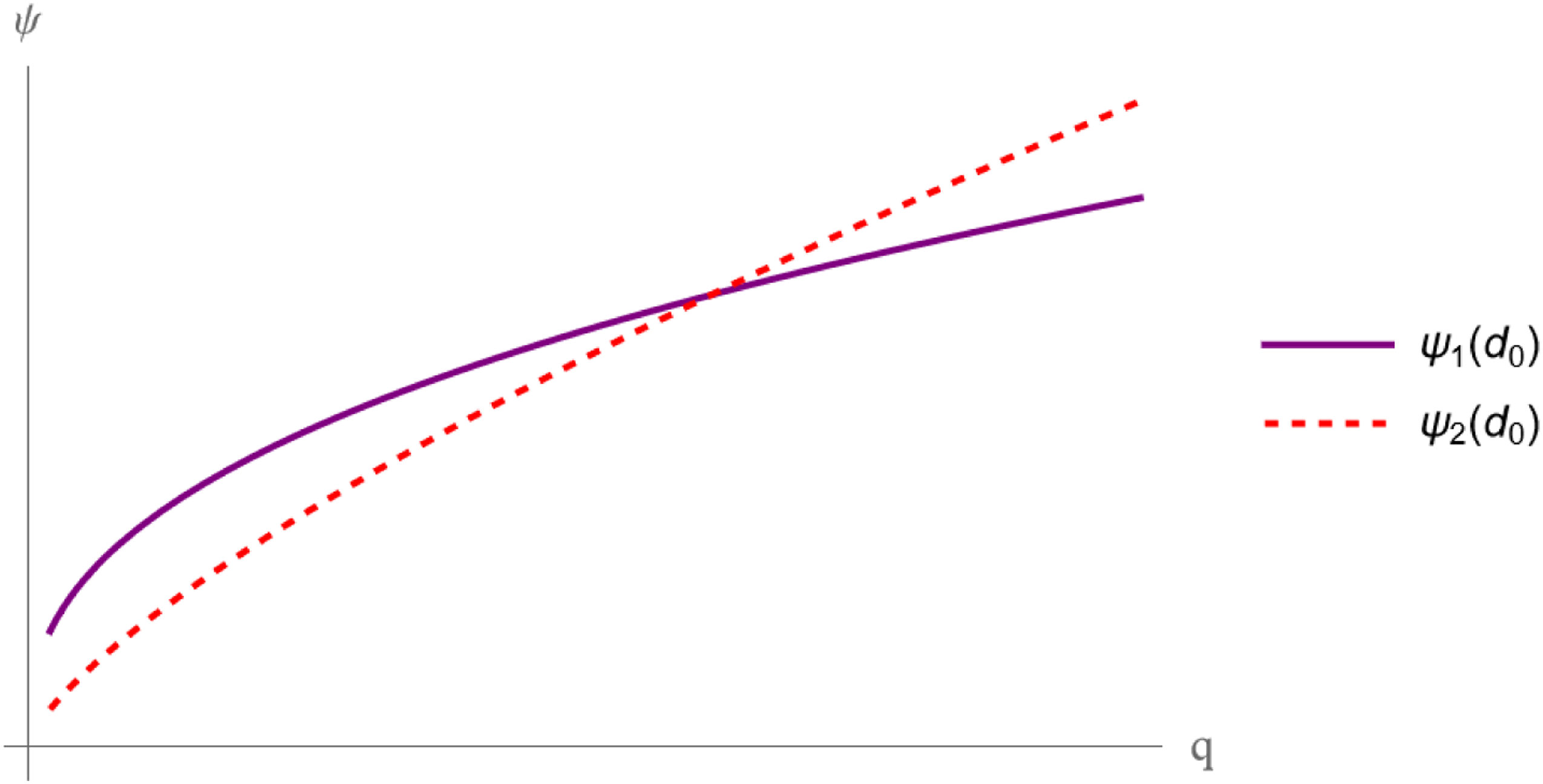
The bid rent increases as quality increases because for a given utility level the consumption level declines. For longer distances, travel costs are higher and, therefore, the bid rent for housing is lower.
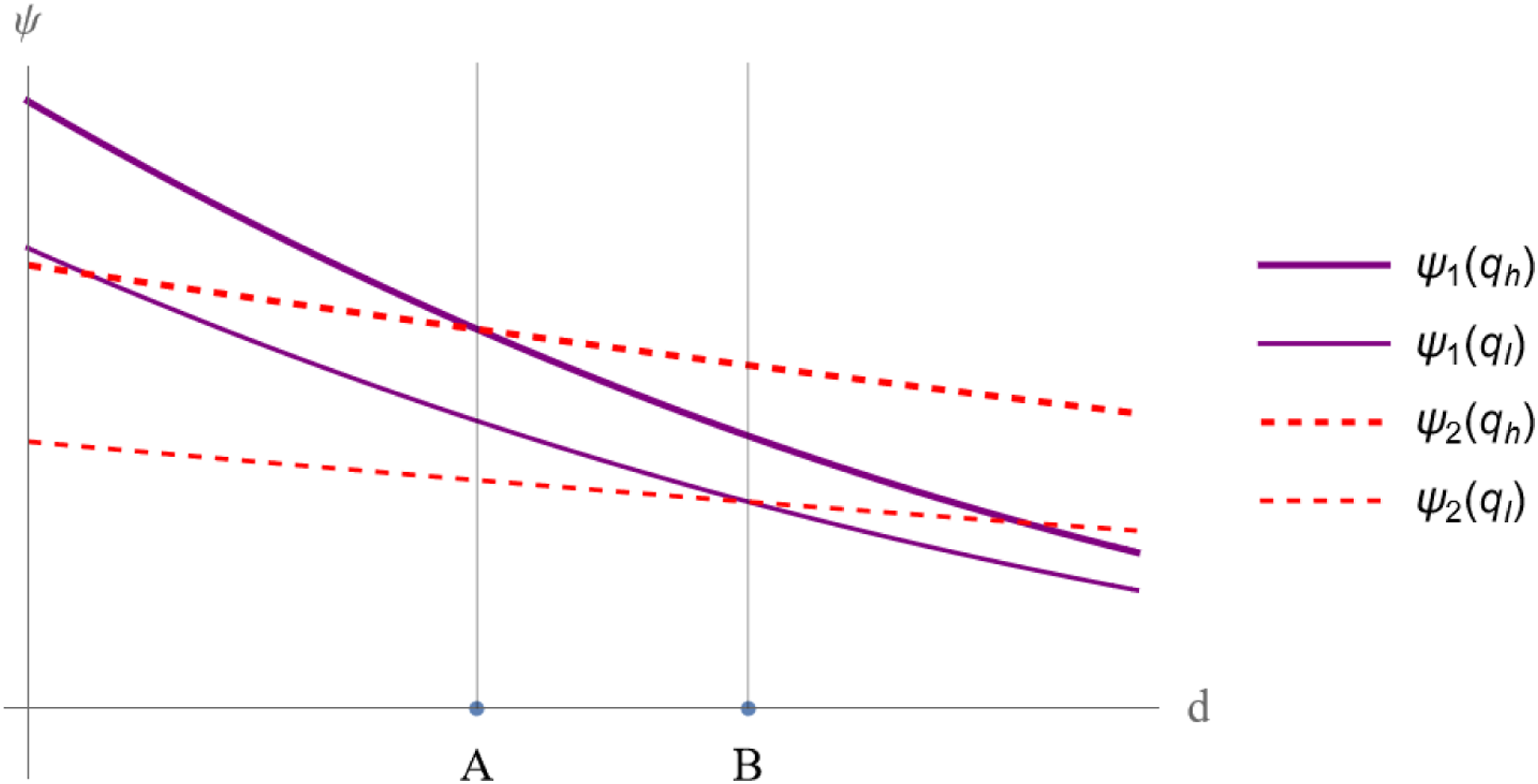
To analyze the relationship among quality, distance, and bid rents for permanent residents and travelers, we assume Cobb–Douglas utility, Iso-bid-rent curves of two household types for varying quality and distance. Bid-rent curves of two household types for varying quality. Bid-rent curves of two household types for two quality levels: case 1. The figure shows bid rents for short-term tenants, y1, and for regular tenants, y2, for both high quality, qh, and low quality, ql. A and B indicate intersection points of bid-rent curves.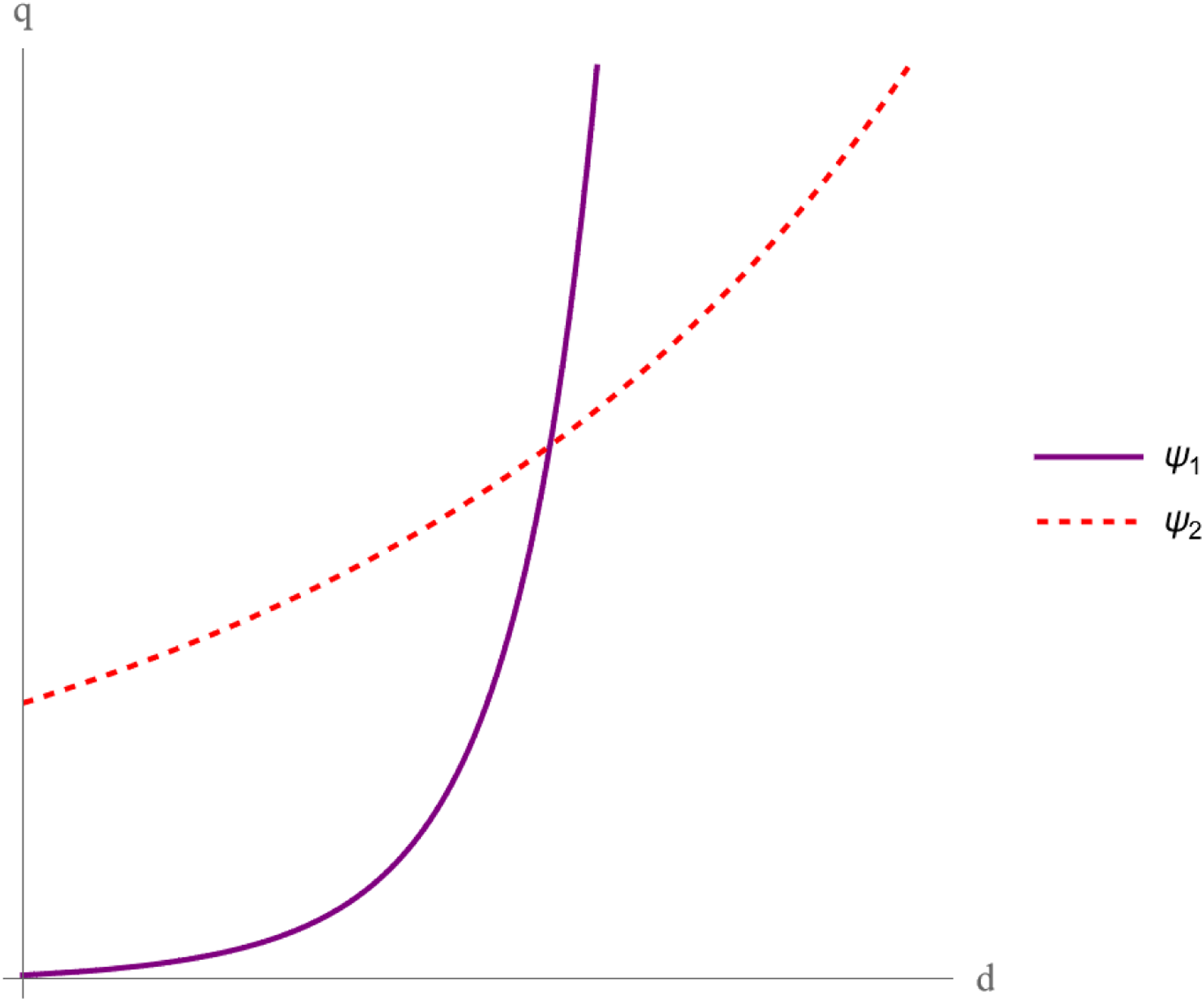
Next, we analyze the urban equilibrium in a symmetric open linear monocentric city with absentee landlords and two types of households with perfect mobility, modeled as continuums of agents, where the utility level of each household type is determined outside the city and



If Figure 3 showed equilibrium bid-rent curves, households of type 1 would live in high-quality dwellings in the area [0, A] and in low-quality dwellings in the area [0, B], whereas households of type 2 would reside in high-quality dwellings in the area [A,
More generally, equation (2) implies that the higher the marginal travel expenses, the lower the level of utility, and the higher the income, the steeper the bid rent is. At every intersection of bid-rent curves, the household type with the steeper bid-rent curve lives closer to the center than the other household type.
We are now applying this model explicitly to Airbnb rentals. The reference situation is a short-term equilibrium, in which only type 2 households, the regular tenants, live in the city and use the entire living space. 6 When type 1 households enter the city through Airbnb, they completely displace type 2 households near the center and partially displace them in a medium-distant area. The composition of the population does not change on the outskirts. In the center, both type 2 tenants of low-quality apartments and type 2 tenants of high-quality apartments are displaced, while in the middle area, only type 2 residents of low-quality apartments are displaced. Overall, the crowding-out effect is stronger for tenants of low-quality apartments than for those of high-quality apartments, but it is not equally strong everywhere. 7
The general message of this two-type model is that the crowding-out effects of platform-based housing offers for short-term tenants vary in size for different apartment qualities and locations. Assuming that the inner-city travel times and costs are of comparatively great importance for short-term tenants compared to the quality of the apartment, this model supports the specific hypothesis that apartment offers for travelers via platforms such as Airbnb displace regular tenants closer to the center than to the outskirts.
With the additional assumption that travelers are generally less willing to pay for quality than regular tenants (as assumed in Figure 3), we can derive from this model the specific hypothesis that in medium distance to the center, primarily regular tenants of low-quality apartments are displaced. This also suggests that the proportion of low-quality housing displacements in the majority of neighborhoods is greater than the proportion of high-quality housing displacements. If, on the other hand, travelers were generally more willing to pay for quality (as assumed in Figure 4)
8
, in medium distance to the center, platform rents would primarily displace regular tenants of high-quality apartments. Bid-rent curves of two household types for two quality levels: case 2. The figure shows bid rents for short-term tenants, ψ1, and for regular tenants, ψ2, for both high quality, qh, and low quality, ql. A′ and B′ indicate intersection points of bid-rent curves.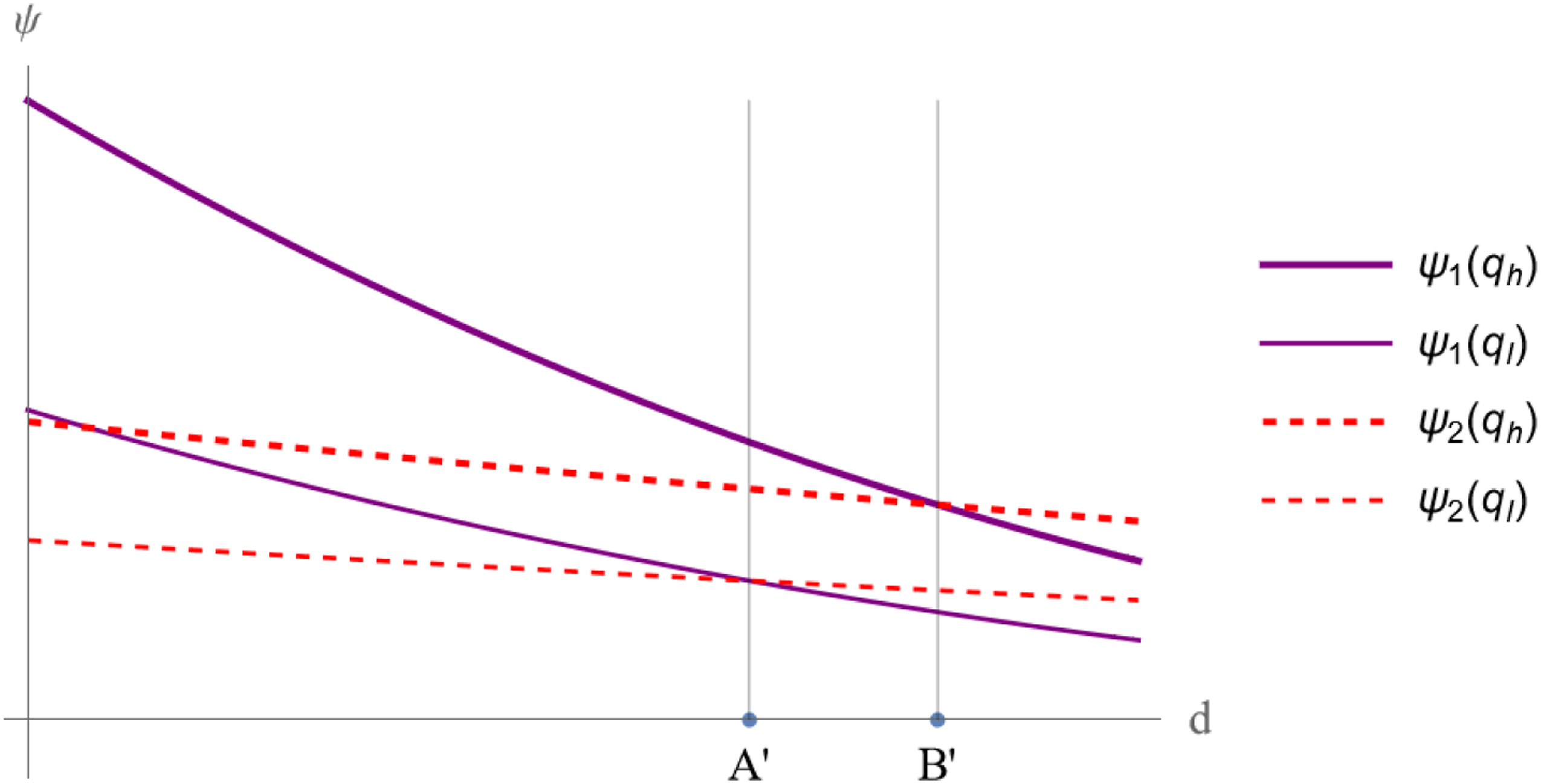
To be able to describe the displacement effects in a more differentiated manner, we are expanding the model to include a third household type: poorer permanent tenants (type 3 households). Otherwise, the model structure remains unchanged. We assume that poorer regular tenants live closer to the center in spatial equilibrium than the richer regular tenants due to the relatively low income elasticity of the commuting costs in the absence of travelers (see the bid-rent curves Bid-rent curves of three household types for two quality levels. The figure shows bid rents for short-term tenants, ψ1, for regular rich tenants, ψ2, and for regular poor tenants, ψ3, for both high quality, qh, and low quality, ql. Ao, Bo, and C indicate intersection points of bid-rent curves.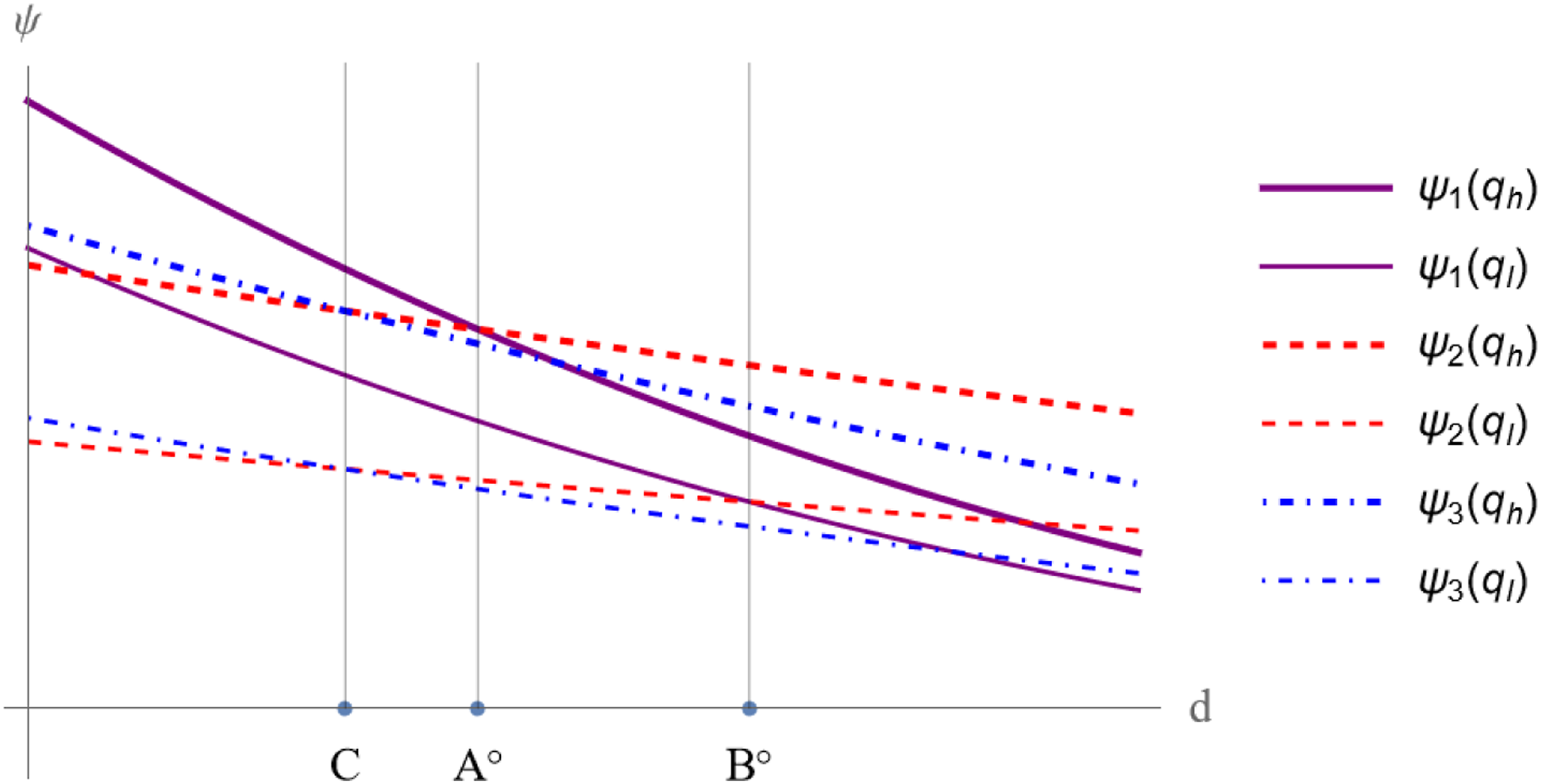
With this model variant, we have demonstrated that short-term tenants are primarily displacing the income class that lives close to the center. If the income elasticity of the commuting costs is relatively low, these would be the poorer households; if the income elasticity of the commuting costs was relatively high, this would be the richer households. Amenities available in the center that richer households primarily use, which are not included in the model, would also lead to the displacement of the rich. In summary, it follows from the analysis of several income groups that the incidence of Airbnb rentals depends on the local transport infrastructure and the supply of public goods in the center.
Institutions and Data
Berlin is the capital and the largest city of Germany, with 3.75 million inhabitants (June 30, 2019). Most people who live in Berlin are renters; the homeownership rate was less than 20 percent in 2017 (Voigtländer and Sagner, 2019). Rents in Berlin were lower in 2009 than in many other German cities but have risen sharply since then due to strong internal and international migration and low construction activity. Berlin had reached a rent level similar to that of Hamburg in 2019, and in only Munich, Frankfurt, and Stuttgart was the rent level significantly higher. From 2009 to 2019, the average offered rent (excluding heating costs) increased by 104 percent in Berlin and only 62 percent in Munich (Immowelt, 2019). To protect tenants, the rental market in Germany is strictly regulated. Rental contracts are generally unlimited and can be terminated by the landlord only in justified exceptional cases. Rent increases may not exceed certain limits. The rental law has been tightened several times in recent years so that since 2015 upper limits for rents have also applied to newly concluded rental contracts (so-called “rent price brake”; for an analysis of this instrument, see Mense et al., 2019). The rent index defines reference values for these upper limits, which differ according to the quality of the living environment, the year of construction, the size, and certain characteristics of the dwelling, and are regularly adjusted.
Since the 2001 administrative reform, Berlin has been made up of 12 districts. For urban planning purposes, the city is divided into three levels of areas: 60 prediction areas, 138 district areas, and 447 planning areas (December 31, 2018). The units were derived from social units, which respect natural or man-made borders, for example, main roads or rivers. The areas were formed in such a way that, on the one hand, they ensure homogeneity, and on the other hand, they are sufficiently large to guarantee anonymity. On January 1, 2019, a new planning area was set up for a recently developed area, and the boundaries of three existing planning areas were slightly changed. For our analysis, we choose the highest spatial resolution available and use social and geographical data for planning areas.
Our work relies mainly on data sets of Airbnb listings in various cities, including Berlin, on population data of planning areas in Berlin, and on geodata. First, we acquired monthly data on Airbnb listings in Berlin and various other European cities from Inside Airbnb (cc0 1.0), starting in 2015 (different starting months in different cities). The monthly data on Airbnb offers that we use include data about the unit offered for short-term rental (in particular, room type and price), on the host, and on the geocoded location of the unit provided by Airbnb as well as on the neighborhood where the unit is located. Since the platform Airbnb coarsens the location of the objects in its public object descriptions, we cannot carry out an analysis at the level of the individual objects with exact geocoding. Since Airbnb listings for Berlin have been available only since October 2015, we exclude 2015 in our impact analysis based on annual data. 10
Second, the Statistical Office Berlin-Brandenburg provides annual population data for the planning areas in Berlin (cc-by, 4.0) which we accessed via www.govdata.de. The Statistical Office Berlin–Brandenburg provides annual data from 2008 until 2019 for the planning areas on housing conditions, total population, the gender and age distribution, and the number of foreigners and persons with migration background (Amt für Statistik Berlin–Brandenburg, 2019). For most variables, data from previous years are also provided, but we do not use these for our analysis.
Third, Berlin's Senate Department for Urban Development and Housing provides geodata for Berlin (Geoportal Berlin, 2019; Umweltatlas Berlin, 2019), including shapefiles of districts and planning areas and web feature services on housing units. These data enable us to calculate distances between the centroids of the planning areas and the city center, as well as between every single unit offered for short-term rental and any location in Berlin of interest to us. To this end, we use the data on housing units prepared for rental control measures (394,889 units). These data include a categorical variable on residential environment quality (Wohnlage) and a binary variable that indicates whether there is substantial noise pollution. Furthermore, we can determine in which planning area each listed unit is located. 11 Moreover, we use data on standard land values (Bodenrichtwerte) collected by Berlin's Board of Expert Valuers (Gutachterausschuss für Grundstückswerte) (1129 spatial units), data on the of floor area ratios (FARs), and the building coverage ratios (BCRs) taken from the cadastral land register (25,352 spatial units), data on the period of construction taken from the 2011 census, and data on the completion of buildings from 2011 to 2015 provided by the Statistical Office for Berlin-Brandenburg (13,091 spatial units).
Residential Quality and the Use of Short-Term Rentals
Airbnb listings are not randomly distributed across Berlin, as Figure 6 demonstrates for 2019. In this section, we examine the likelihood that at least one unit was listed on Airbnb in 2019 in the area of interest, as well as the number of these listings. The observations of our estimate are 200 × 200 m grid units in Berlin (22,954 observations). In part of the analysis, the dependent variable is a binary variable with the value 1 if an offer on Airbnb was listed in this grid unit at least once in 2019. Otherwise, the value is 0. In the other part of the analysis, the dependent variable is the number of Airbnb listings in the respective grid unit in 2019. To analyze the likelihood of Airbnb listings, we perform binary logistic regressions. To examine the number of listings, we consider listings as count data and carry out Poisson regressions. Spatial distribution of Airbnb listings in Berlin 2019.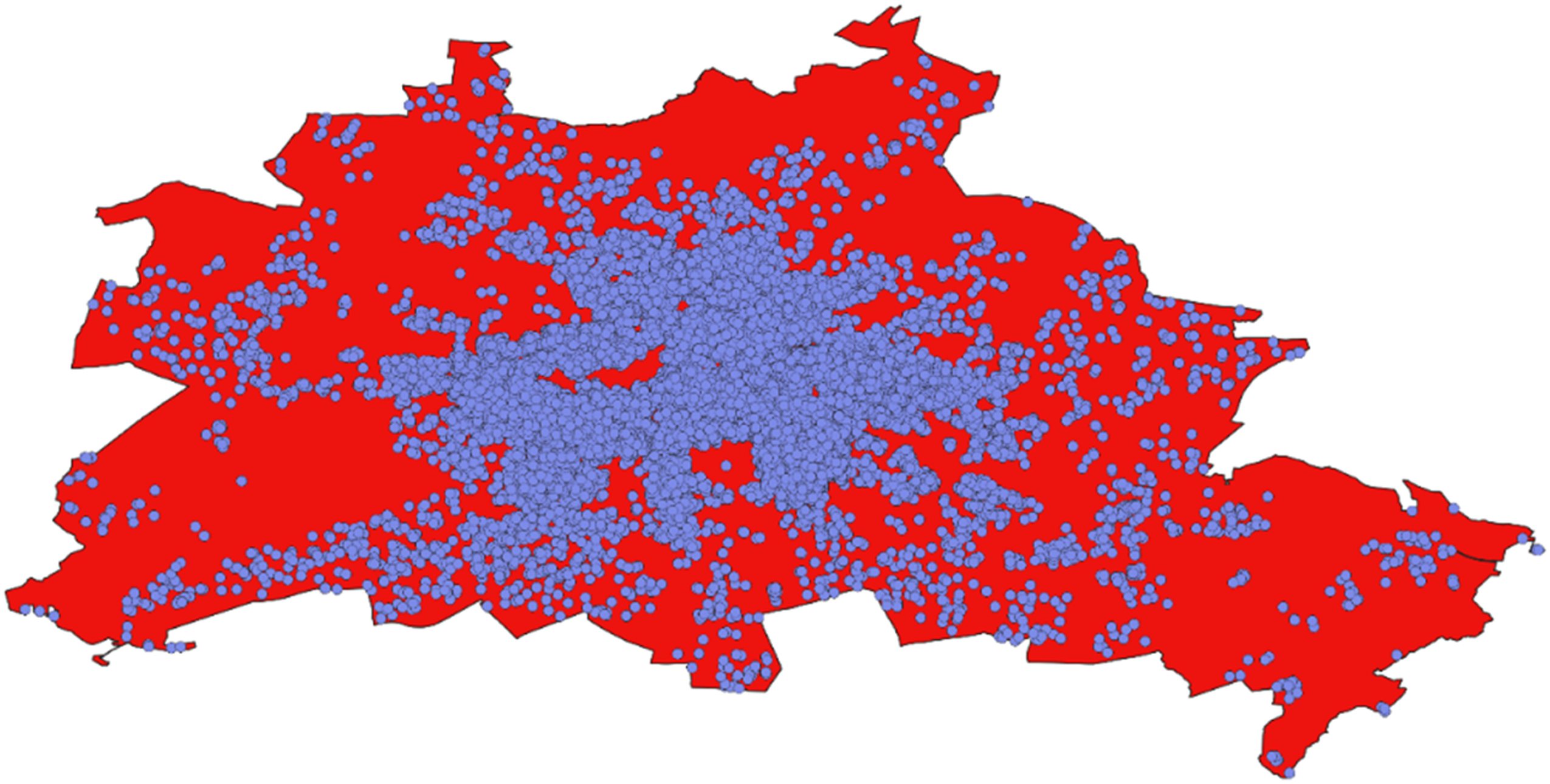
The focus of our interest is the quality of the residential environment. We measure the quality of the residential area using the shares of housing units with a high-quality residential environment, a medium-quality residential environment, and a low-quality residential environment. The high-quality share is our reference category. As an extension, we differentiate between housing units that are exposed to noise pollution and those in quiet surroundings. We also account for the total number of addresses in the grid unit (addresses). Figure 7 illustrates the pattern of addresses and Airbnb listings for a selected grid unit close to the city center and the surrounding area. Airbnb listings and residential addresses. The figure shows the distribution of Airbnb listings, and addresses of low quality, medium quality and high quality, in one arbitrarily selected area in the city center.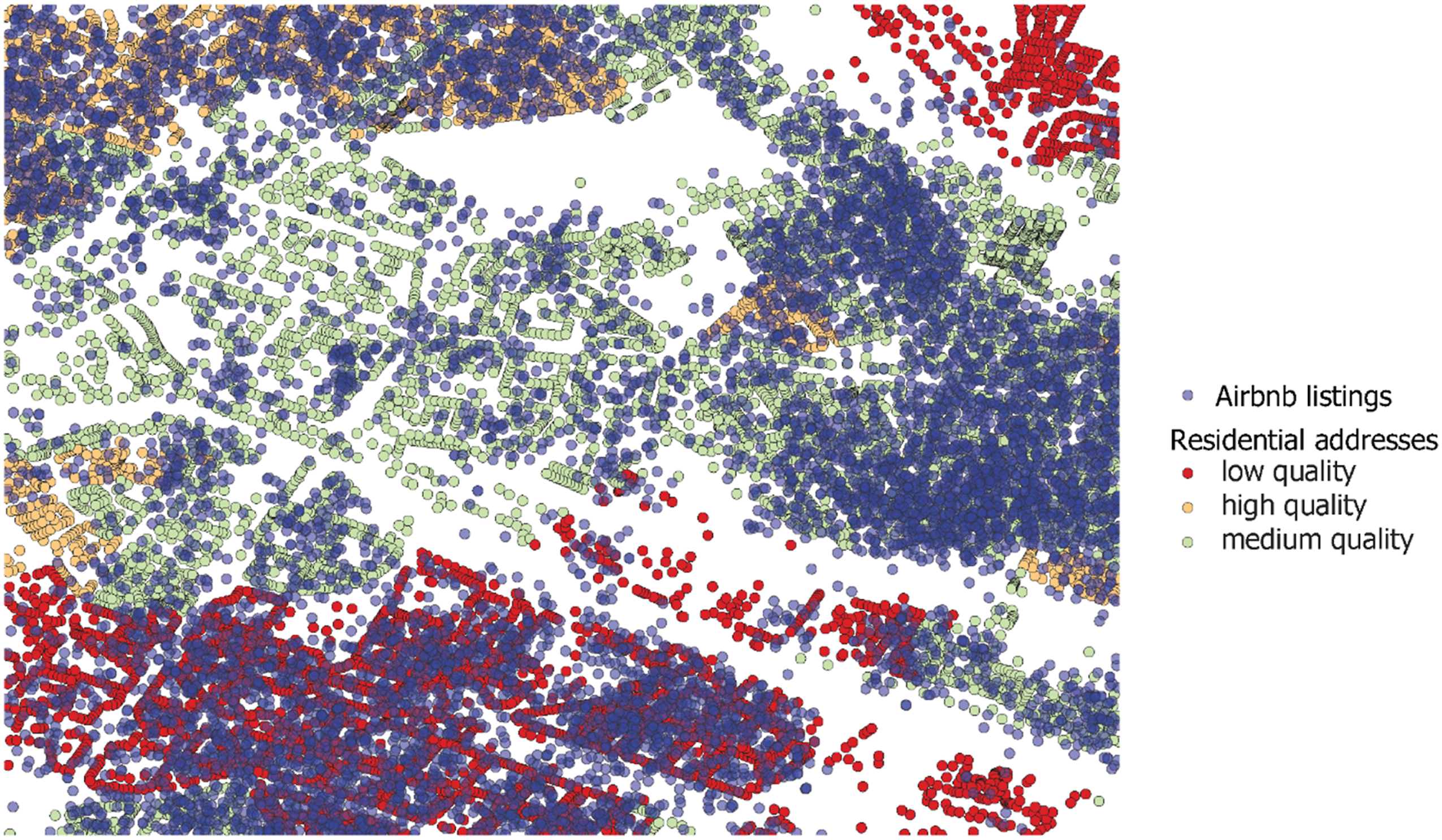
Since locations of Airbnb listings are obscured in our data, a housing unit that is offered for short-term rental might actually be located not in the grid it is assigned to, but rather in a neighboring grid. To account for these spatial spillovers, we include the total number of addresses in the eight neighboring grid units as controls (neighboring grid units’ addresses). In order to capture accessibility, we include the distance to the city center, which is of interest to both tourists and business people, as a control variable (distance center). In all specifications, we also include district fixed effects. In addition, we consider the FAR, the BCR, and the standard land value in the respective small area as control variables since we assume that taller and denser buildings will increase the number of residential units available for short-term rentals. However, the direction of the relationship between short-term rental and higher land values is not obvious since better conditions for both regular and short-term renting can increase the land value. Since the reference rental values increase over time, as determined by the rent index in Berlin, and depend on the period of construction, the period of construction also determines the landlord’s scope for regular rents. To control for this relation, in a robustness test, we use construction-period fixed effects (not explicitly shown in the paper). Hence, our basic underlying equations for the estimations without and with interaction effects of quality shares, quality, and distance to the center look like


For many grid units, zoning rules that do not allow housing apply, for example, for forests, parks, and also industrial zones. About 64 percent of the grid units are, at least in part, intended for residential use (residential zone). However, since exceptions are possible to a limited extent, we also observe residential use in areas that are actually reserved for other purposes. In addition, the information on the type of land use is only available at the block level so that measurement errors occur due to the necessary assignment to grid units. For 66 percent of the grid units, we have actual addresses. The remaining grid units are not taken into account in the regressions. 10 percent of the grid units considered are not in a residential zone.
Logistic and Poisson Regressions of Airbnb Listings.
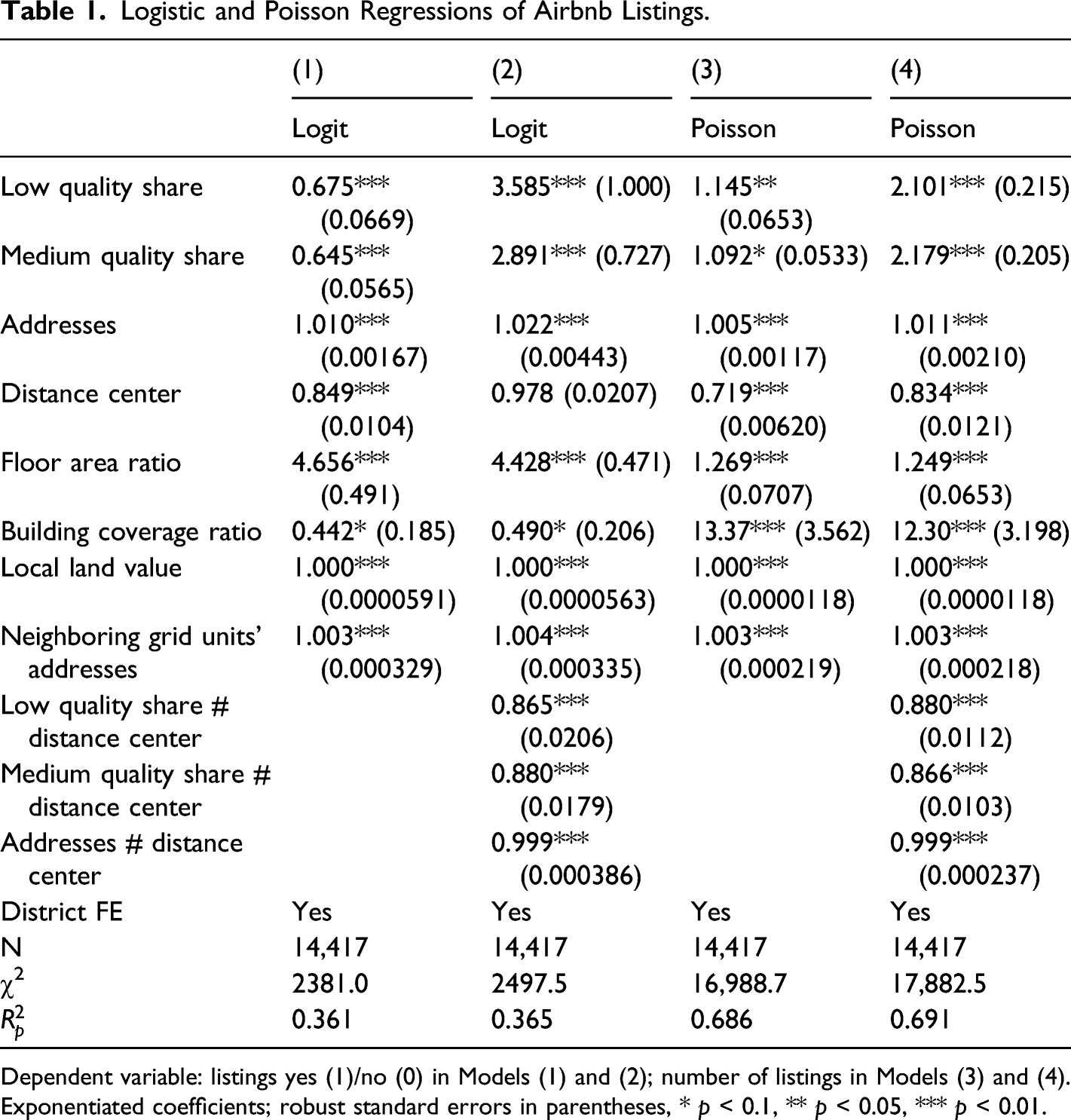
Dependent variable: listings yes (1)/no (0) in Models (1) and (2); number of listings in Models (3) and (4).
Exponentiated coefficients; robust standard errors in parentheses, * p < 0.1, ** p < 0.05, *** p < 0.01.
First, all control variables have consistent plausible odds ratio sizes across the four specifications, which increases confidence in the chosen models. Distance between the location and the city center reduces the likelihood and the number of short-term rental offers as expected. The large odds ratio of the FAR reflects the greater availability of space. In contrast, a higher BCR reduces the likelihood of listings but increases the number of listings. Denser areas are less attractive per se for travelers, but if they are otherwise attractive, landlords use the opportunity to offer more units more regularly. Higher local land values affect short-term rentals very little. As expected, more addresses available for housing in the considered grid and the neighboring grids increase the likelihood and number of listings.
Second, the odds ratios of the main variables of interest, the quality shares, show an interesting pattern. As compared to the reference category, that is, the share of high-quality environment, on average, low and medium-quality housing environment units are less likely to be chosen for short-term rentals, but their numbers are slightly higher. Models (2) and (4), which include interactions with distance to the center, reveal that at the city center, both low and medium quality positively impact the likelihood of being listed and the number of listings. As the distance to the city center increases, these types of housing units are less likely to be used for short-term rentals, and their numbers decline if compared with high-quality environments. If interaction terms are included, then the influence of the quality of the environment on the mere existence and frequency of listings is similar. Without interaction models, logistic and Poisson regression show different effects. The lack of consistency in the results without taking into account the interdependence of quality and distance to the city center suggests that the interaction is indeed essential for Airbnb use.
Logistic and Poisson Regressions of Airbnb Listings Differentiated According to Noise.
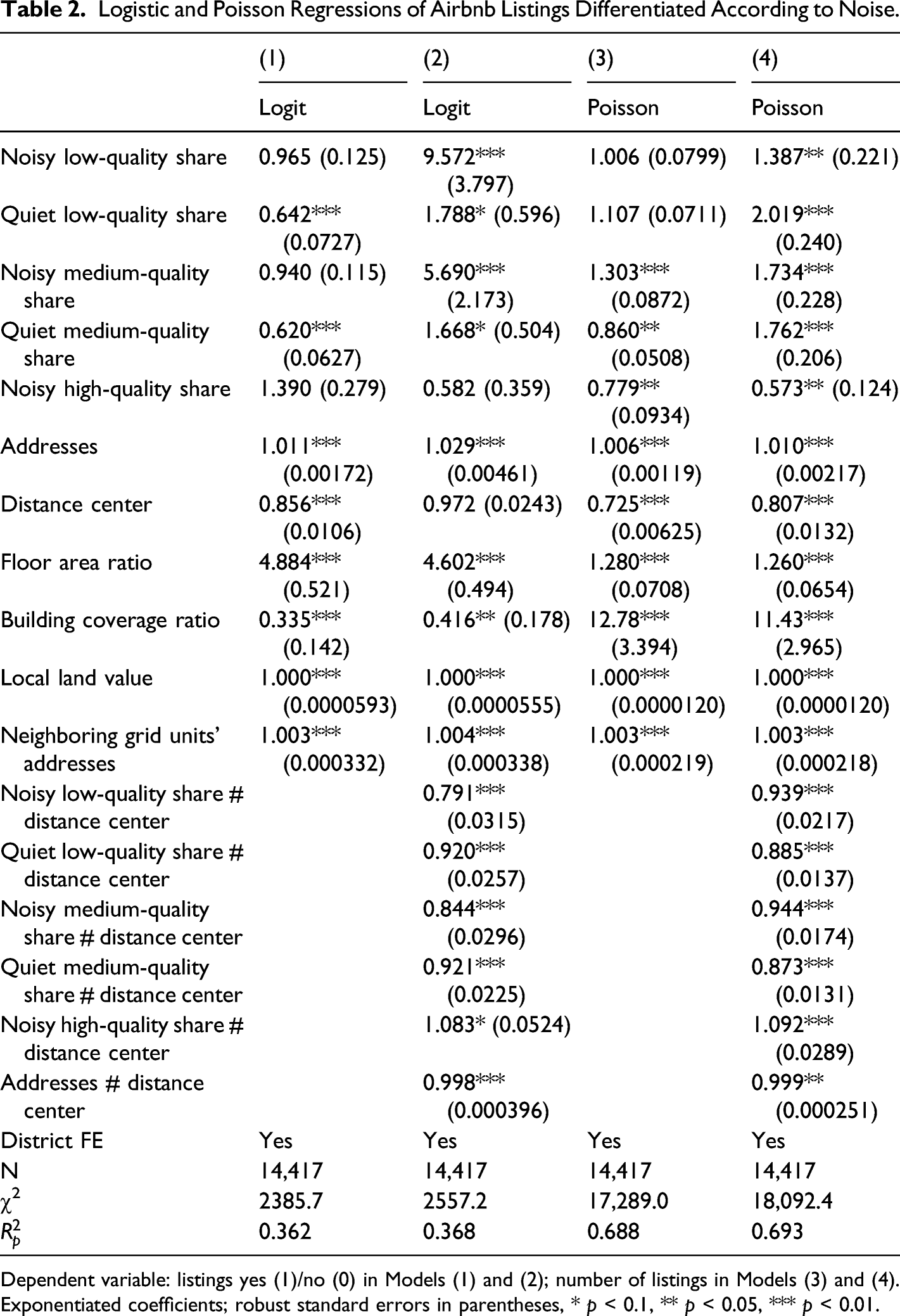
Dependent variable: listings yes (1)/no (0) in Models (1) and (2); number of listings in Models (3) and (4).
Exponentiated coefficients; robust standard errors in parentheses, * p < 0.1, ** p < 0.05, *** p < 0.01.
Altogether, a greater share of housing units with lower-quality living environment is associated with more listings in the city center but with fewer listings in the suburbs. This suggests that short-term tenants are more willing to sacrifice quality for proximity to the city center than are regular tenants.
Effects of Short-Term Rentals on the Neighborhood
To investigate the effects of short-term rentals on the living conditions and composition of the population of the affected neighborhoods and to identify causal effects, we carry out panel analyses and use an instrumental variable approach. The planning areas are the observational units, and we use annual data. The estimation equations are

To take into account the endogeneity of Airbnb listings, we also conduct an instrumental-variable analysis, where we use the spatial structure of listings in other European cities as instruments. These instruments purge the estimates from Berlin-specific spatial relations between Airbnb listings and the outcome variable. However, the change in the spatial distribution of Airbnb offers in the years 2016–2019 in other European cities as well as in Berlin is likely to be correlated with a stronger appreciation of the urban areas close to the center and a corresponding increase in property prices and rents in the center. This rise in price, in turn, has a direct impact on our dependent variables. Therefore, the exclusion restriction may not be fulfilled if the spatially differentiated changes to the Airbnb offers are used directly as instruments. To account for this, we also use a shift-share-type instrument, which we trust more. We cannot use the spatial distribution of the listings in the past in Berlin as the time-invariant base of the instrument, as there were no Airbnb offers further back. For our shift-share type instrument, we use the spatial distribution in 2016 in European cities as a basis and determine the values for 2017–2019 based on the total change in Airbnb offers in the respective cities. This means that the upgrading of the centers during the study period has no direct impact on the instrument.
To construct our instrument, we sort the Airbnb offers in the respective European city for each month based on the distance to the city center. We then re-scale the distance by dividing the distance by the maximum distance of an offer from the city center in that year so that the re-scaled distances are in the interval [0, 1]. For each planning area in Berlin, we determine the correspondingly scaled distance of the respective centroid to the city center. We assign each Airbnb offer in the considered European city to a planning area in Berlin, so that the difference between the (newly scaled) distances to the respective city center is minimized. The offers of the respective European city assigned to Berlin planning areas are added up monthly. We use the generated variable for a single city (Amsterdam), or a weighted sum of several European cities (Amsterdam, Barcelona, Paris, Vienna) as an instrument for the number of Airbnb offers in the corresponding planning area of Berlin. The weights are the inverse of the maximum number of listings in the respective city, implying that cities rather than single listings get similar weights. We select Amsterdam as the main reference city because the time span in which data are available is most similar for Berlin and Amsterdam. For every year, the instruments based on a single city and a set of European cities are highly correlated (>0.93).
We use various variables to measure the living conditions and composition of the population in the affected neighborhoods. First, the Statistical Office for Berlin–Brandenburg provides the percentage of residents who have lived in the same house for more than 10 years in relation to all residents who are at least 10 years old (stay 10+ years). Second, we calculate the share of residents who live in a low-quality residential environment. A low-quality residential environment is characterized by densely built-up areas, neglected streets, poor building conditions, and unfavorable transport connections (low-quality residential environment). 12 Third, the data set also contains information on the share of residents who are exposed to street noise, rail traffic noise and aircraft noise in their homes (noisy areas). Fourth, the statistics include the share of foreigners (foreigners) and on the share of people with a migration background (migration background) 13 and other socio-demographic variables. 14
We can use the variables stay 10+ years, low-quality residential environment, and noisy areas to determine whether short-term rentals are primarily offered in houses with relatively poor living conditions and are pushing out their most likely economically weak previous residents. The variables foreigners and migration background indicate whether more short-term rentals cause people who are economically weak due to their demographic characteristics to leave their homes comparatively often.
Effects on Stay 10+ Years.
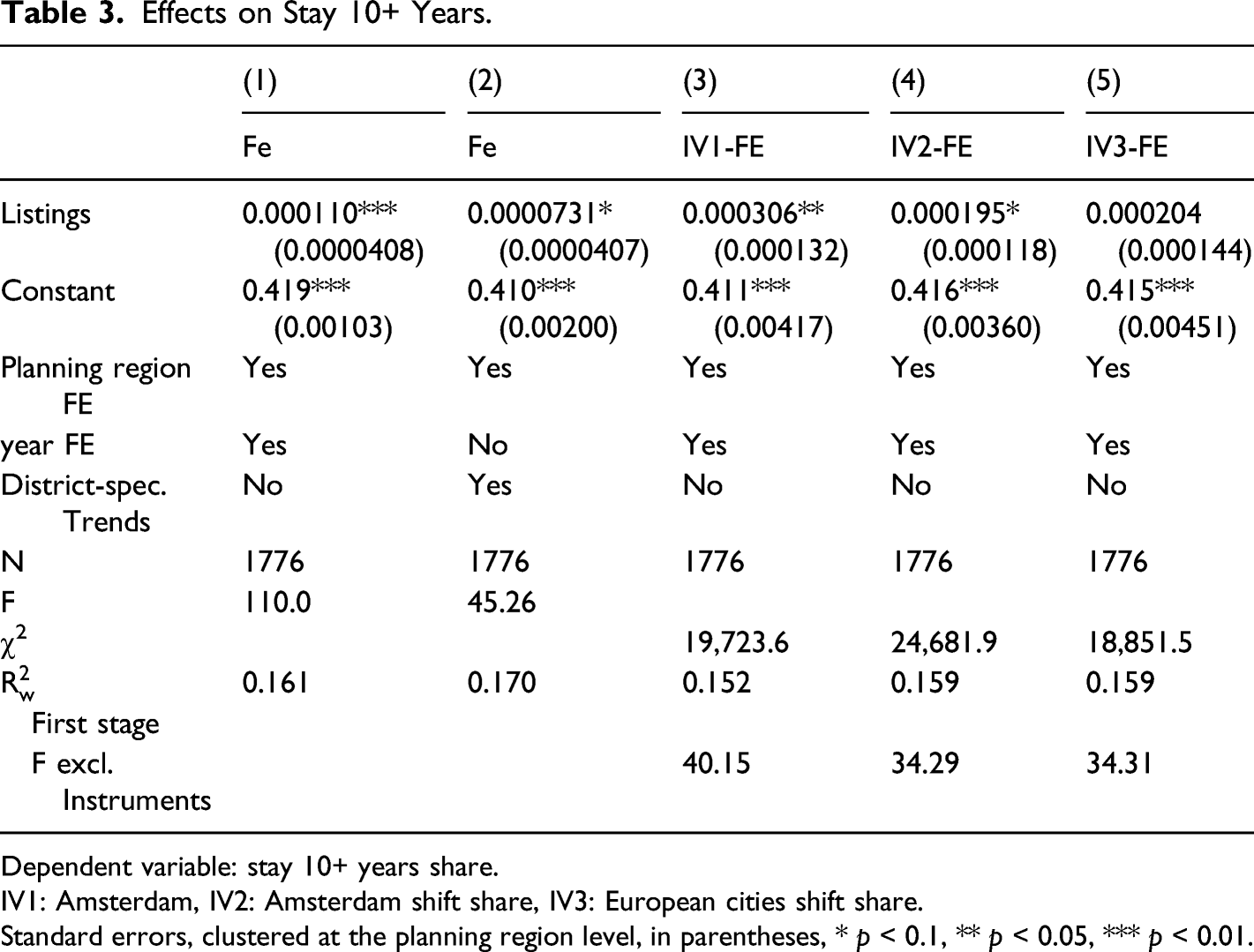
Dependent variable: stay 10+ years share.
IV1: Amsterdam, IV2: Amsterdam shift share, IV3: European cities shift share.
Standard errors, clustered at the planning region level, in parentheses, * p < 0.1, ** p < 0.05, *** p < 0.01.
Effects on Low-Quality Residential Environment.
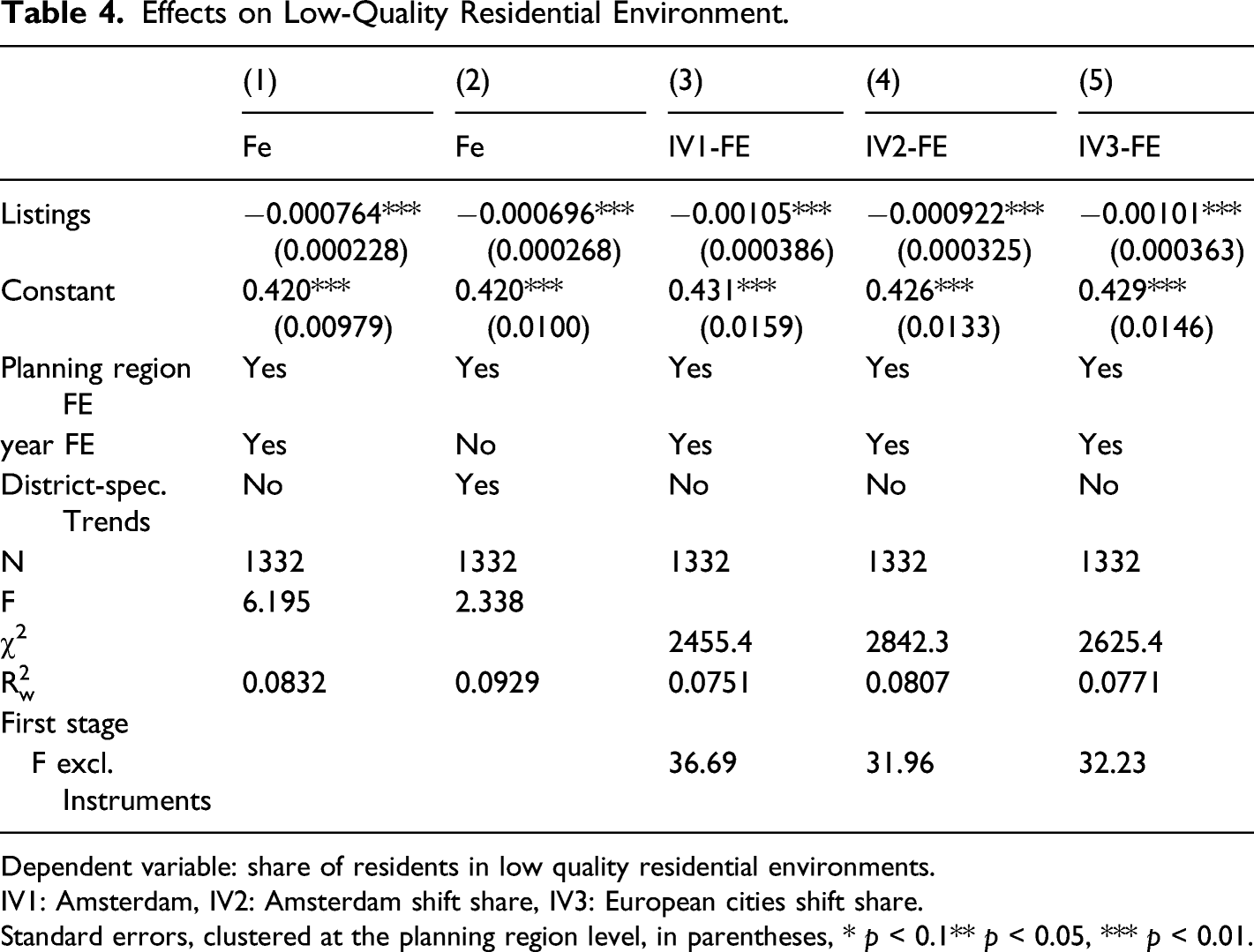
Dependent variable: share of residents in low quality residential environments.
IV1: Amsterdam, IV2: Amsterdam shift share, IV3: European cities shift share.
Standard errors, clustered at the planning region level, in parentheses, * p < 0.1** p < 0.05, *** p < 0.01.
Based on our preferred IV estimation, Model (4), one additional Airbnb offer in every month of the respective year increases the share of long-term tenants by 0.0195 percentage points. In other words: to get a one percentage point increase, more than 50 additional listings are required. Since in 2019, the average monthly number of Airbnb listings in a planning region is 54, this roughly means doubling the number of listings. Accordingly, one additional Airbnb offer reduces the share of residents in low-quality residential environments by 0.09 percentage points, implying that the effect is about five times greater. However, the magnitude of the social impact Airbnb has on the neighborhood is still rather small.
For our main outcome variables, the IV coefficients, in particular of Model (3), are larger than the fixed effect coefficients. This may raise concerns about the exclusion restriction, which we address with an additional regression. It may also be driven by mitigating reverse causal effects if long-term tenancies reduce the likelihood of an Airbnb listing and low quality increases it. For the latter, we provided some evidence in the previous section. However, inspired by Garcia–Lopez et al. (2020), we carry out event-study regressions to check the exogeneity of the instrument. To that end, we regress our two main dependent variables on the time-invariant part of the instrument interacting with an annual dummy. Figure 8 in the Appendix shows that for Berlin, the dependent variables, stay 10+ years and low-quality residential environment, only react to Airbnb listings in Amsterdam from 2015 on, when more than 10,000 Airbnb offers were listed for Berlin for the first time. Before that, the instrument has no visible influence on the dependent variables. The instrument based on the set of European cities leads to comparable results. These results increase our confidence in the instrument. Effect of the shift-share instrument on main outcome variables. The figure shows the effect of the time invariant part of the instrument based on Amsterdam’s listings in 2016 (a) on the share of long-term tenants (stay 10+ share) and (b) on the share of residents in low-quality residential environments using 2014 as reference year.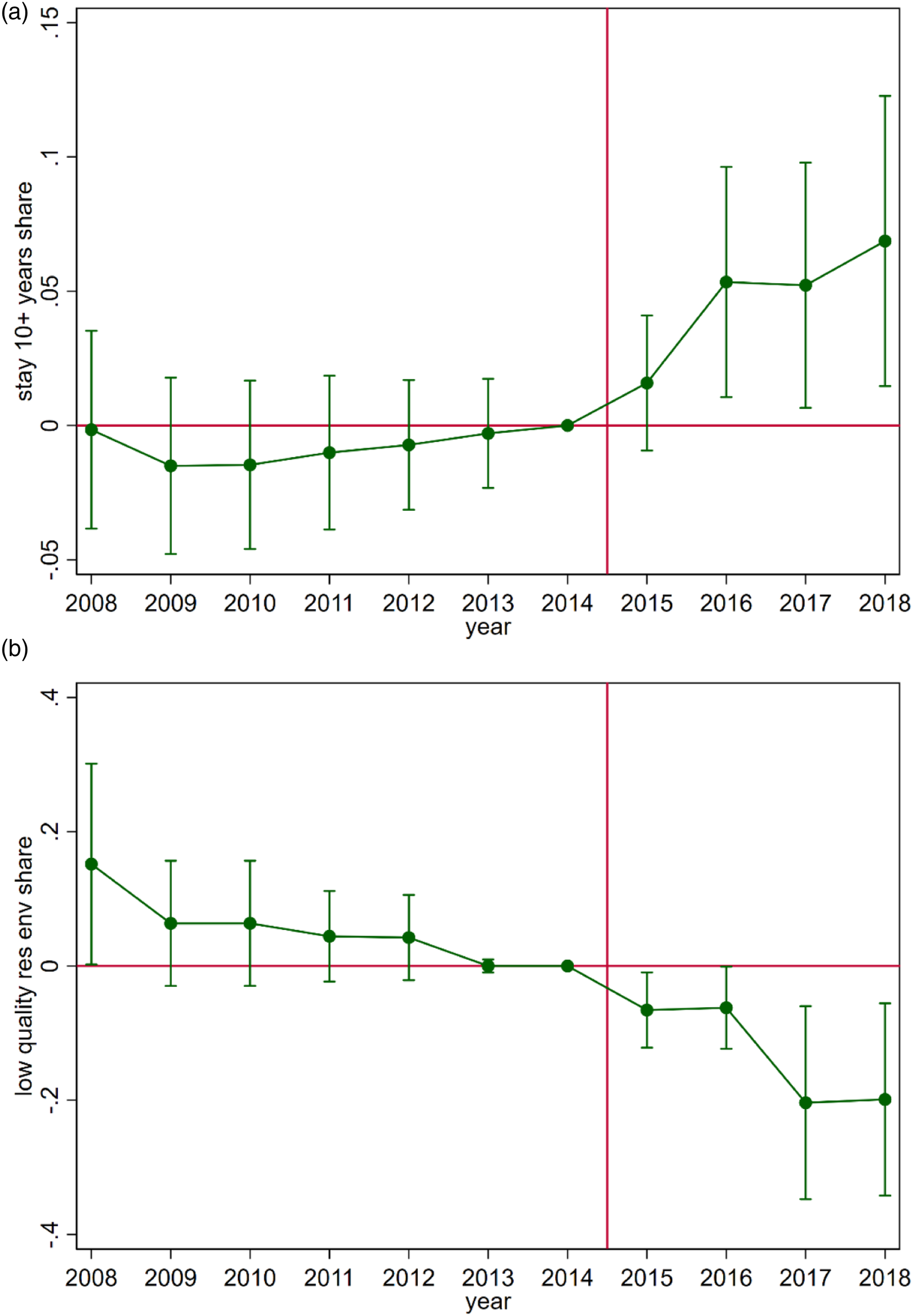
The empirical findings are in line with economic decision-making models. First, the increasing proportion of long-term residents indicates displacement, especially of short-term regular tenants. Under the conditions of German tenancy law, not only apartment owners but also long-term tenants are not likely to move from the apartment. Homeowners are probably not affected because homeowners are less mobile than tenants and are not threatened by the termination of the tenancy. However, regular tenants are strongly protected by the German rental laws regulating the termination of the rental contract by the landlord. Since existing rents rise much more slowly than new contract rents, the lock-in effect increases with the length of time and the willingness to leave the apartment decreases.
Second, short-term rentals reduce the proportion of residents in low-quality residential environments, as these apartments are more likely to be rented than self-occupied and are more suitable for temporary use than for permanent use. This finding confirms the theoretical result that quality is an important determining factor for the extent of displacement.
Conclusion
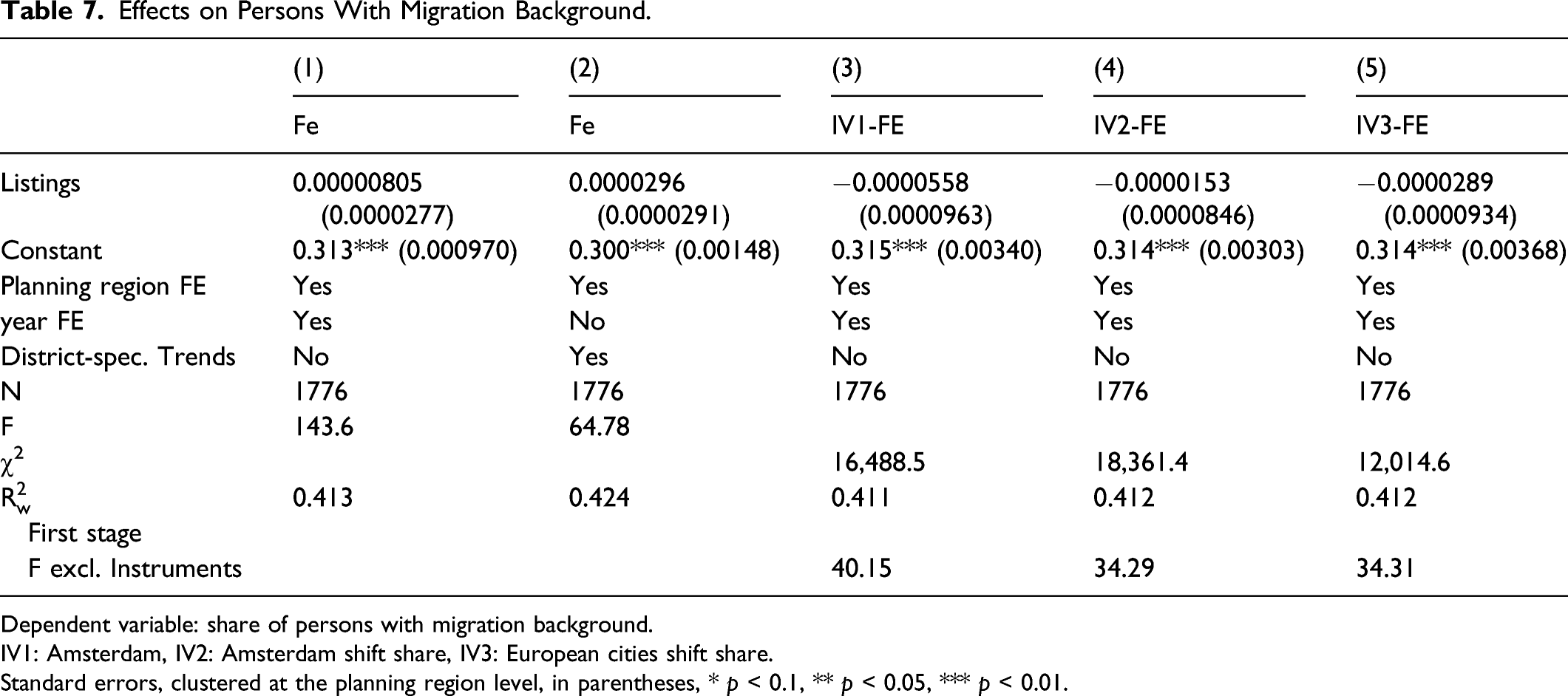
This paper studied how short-term rentals are changing average housing conditions and the composition of the population in the affected neighborhoods. We investigated the relation between Airbnb listings on the one hand and characteristics of the population and living conditions in the almost 450 planning areas of the city of Berlin (Germany) on the other. We demonstrated that, while in the suburbs, the share of low and medium quality units is negatively correlated with the probability of having Airbnb listings and the number of those listings close to the city center, the correlation is positive. In order to identify the causal effect of Airbnb listings on the affected neighborhoods, we not only used panel data but also used the spatial structure of listings in other European cities as instrumental variables. We showed that more offers for short-term use of housing via Airbnb increase the number of residents with long periods of residence and reduces the number of residents in low-quality residential environments. We did not find any effects on noise exposure, migrants, and foreigners.
Footnotes
Declaration of Conflicting Interests
The author(s) declared no potential conflicts of interest with respect to the research, authorship, and/or publication of this article.
Funding
The author(s) received no financial support for the research, authorship, and/or publication of this article.
Notes
Appendix
Effects on Persons With Migration Background.
| (1) | (2) | (3) | (4) | (5) | |
|---|---|---|---|---|---|
| Fe | Fe | IV1-FE | IV2-FE | IV3-FE | |
| Listings | 0.00000805 (0.0000277) | 0.0000296 (0.0000291) | −0.0000558 (0.0000963) | −0.0000153 (0.0000846) | −0.0000289 (0.0000934) |
| Constant | 0.313*** (0.000970) | 0.300*** (0.00148) | 0.315*** (0.00340) | 0.314*** (0.00303) | 0.314*** (0.00368) |
| Planning region FE | Yes | Yes | Yes | Yes | Yes |
| year FE | Yes | No | Yes | Yes | Yes |
| District-spec. Trends | No | Yes | No | No | No |
| N | 1776 | 1776 | 1776 | 1776 | 1776 |
| F | 143.6 | 64.78 | |||
| χ2 | 16,488.5 | 18,361.4 | 12,014.6 | ||
|
|
0.413 | 0.424 | 0.411 | 0.412 | 0.412 |
| First stage | |||||
| F excl. Instruments | 40.15 | 34.29 | 34.31 |
Dependent variable: share of persons with migration background.
IV1: Amsterdam, IV2: Amsterdam shift share, IV3: European cities shift share.
Standard errors, clustered at the planning region level, in parentheses, * p < 0.1, ** p < 0.05, *** p < 0.01.