



Abstract
Research on the influence of internal and external stakeholders on diversity outcomes within organizations has grown in the past decade. Across multiple macro and micro theoretical domains, this body of research has examined various diversity outcomes at different organizational levels. Through an integrative review of literature from management, sociology, psychology, and entrepreneurship, we highlight the channels and pathways of influence and the underlying mechanisms through which four major stakeholder groups—organizational actors, resource exchange partners, institutional actors, and societal forces—impact diversity outcomes in organizations. We discuss future research directions, empirical and conceptual, and present a promising path for future studies to unpack the complex relationships between stakeholders and organizations regarding diversity issues, particularly at the intersection of multiple stakeholders and diversity aspects.
Keywords
Over the past decade, an extensive body of research has examined the antecedents of organizational diversity and diversity management practices at the individual, organizational, and extraorganizational levels of analysis. At the individual level, research has primarily examined the attributes, values, and preferences of managers and employees (Briscoe & Joshi, 2017; Dang & Joshi, 2023; Dwivedi, Gee, Withers, & Boivie, 2023). At the organizational level, scholars have focused on aspects such as culture, climate, and firm-level practices (Conzon, 2023; Padavic, Ely, & Reid, 2020). In contrast, research at the extraorganizational level has explored how entities such as shareholders, social activists, and various regulatory bodies shape diversity outcomes related to the hiring, retention, and promotion of underrepresented groups in the workplace (Akchurin & Lee, 2013; Castellaneta, Conti, & Kacperczyk, 2020; Mitra, Post, & Sauerwald, 2021). Indeed, building on varied theoretical perspectives across sociology, economics, and psychology, scholars have highlighted several factors within and beyond the organizational landscape that impact diversity outcomes within organizations (e.g., Castilla, 2015; Dobbin, Schrage, & Kalev, 2015; Ip, Leibbrandt, & Vecci, 2020; Leslie, Mayer, & Kravitz, 2014).
While prior research offers valuable insights, it remains fragmented and hinders a holistic understanding of the stakeholder–diversity relationship. Studies tend to isolate stakeholder groups or focus on diversity initiatives within specific organizational contexts, overlooking the intricate interdependencies across stakeholders. This siloed approach limits our understanding of how stakeholders influence diversity outcomes (Cronin & George, 2023) and fails to create a domain identity critical to attracting and creating dialogue among scholars from distinct disciplines working on the topic. In this review, we address this limitation in the literature by adopting a stakeholder lens to organizational diversity research and offering a nuanced but integrated examination of the stakeholder-diversity dynamic (Hideg, DeCelles, & Tihanyi, 2020; Joshi, Oh, & DesJardine, 2024). Specifically, we combine research on diversity from the micro perspectives, including studies on social bias, stereotyping, and discrimination, with research on macro perspectives, including institutional theory and neostructural approaches. This integrated approach enables us to study the pathways and the underlying sociopsychological mechanisms of stakeholder influences on diversity. It also sheds light on how, if at all, macro theories have been applied to understanding microlevel phenomena related to diversity (e.g., how demographic trends in the labor market shape organizational actors’ recruitment decisions within firms) and how micro theories have been used to explain macrolevel external stakeholder groups’ impact on diversity outcomes (e.g., how stereotypes and biases impact how investors evaluate firms). As such, we synthesize existing research, illuminate both the granular intricacies and the broader structural underpinnings of this complex phenomenon, examine the multifaceted influence of stakeholders on diversity (Cronin & George, 2023; McNamara & Schleicher, 2024), and outline a common ground needed to create an identity and dialogue among scholars from varied disciplines working in this domain.
Drawing on stakeholder theory (Freeman, 1984), which focuses broadly on how stakeholders (i.e., constituents and entities who are affected by and who affect the organization) impact organizations (Frooman, 1999), we seek to understand who the stakeholders that shape diversity outcomes are, how they influence these outcomes, and what aspects of diversity and diversity-related practices they impact. We accomplish this by taking a holistic view of the relationship between stakeholders and diversity. Existing reviews have described the impact of a limited set of stakeholders on singular diversity outcomes or have not explored how stakeholders influence organizational diversity at all (for a comprehensive set of reviews in both these areas, refer to Tables OA1a and OA1b in the online appendix). We overcome these drawbacks by providing an integrated review of diverse stakeholders and their impact on multiple facets of diversity at different hierarchical levels within the organization.
By developing a stakeholder-centric perspective on organizational diversity, we contribute to advancing this stream of research in three ways. First, we provide novel insights into the dynamic stakeholder-diversity relationship by identifying different mechanisms or channels through which stakeholders influence diversity outcomes. Because stakeholders have unique relationships with organizations and, more importantly, represent diverse values, needs, and expectations, they vary in how they shape organizational diversity and what outcomes they impact. Our comprehensive review applies a multistakeholder lens to uncover the diversity-related influence of heterogeneous stakeholders.
Second, our review highlights how various stakeholders shape decision-making processes related to diversity at different levels within the firm. As diversity, equity, and inclusion (DEI) becomes a more salient issue for organizations and society (Ely & Thomas, 2020; Hunt, Layton, & Prince, 2015), stakeholders are increasingly articulating their values, expectations, and diversity-related needs (Harjoto, Laksmana, & Lee, 2015). In doing so, they seek to wield their influence and provide input in organizational decisions (Harrison, Bosse, & Phillips, 2010; Savage, Nix, Whitehead, & Blair, 1991). Given the interdependent relationship between organizations and stakeholders (Crane, 2020) and the increasing levels of stakeholder engagement on diversity issues (Knippen, Shen, & Zhu, 2019), developing a comprehensive understanding of the stakeholders’ impact on organizational diversity is theoretically important.
Last, we offer a promising agenda for future research based on the emerging insights from our review. Our detailed examination of this literature reveals several stakeholder clusters and their channels of influence. Some of these stakeholder groups (e.g., organizational actors) and their pathways of influence, such as formalization of practices (Abraham, 2017; Castilla, 2015; Dobbin et al., 2015; Kalev, 2014; Klein, Hill, Hammond, & Stice-Lusvardi, 2021) and gatekeeping (Biggerstaff, Campbell, & Goldie, 2024; Dwivedi, Joshi, & Misangyi, 2018; Guldiken, Mallon, Fainshmidt, Judge, & Clark, 2019), have been extensively examined by extant research. However, others (e.g., governance intermediaries, like analysts and media) have received scant attention. Additionally, while some theories have been predominantly utilized in the literature (e.g., social role theory), others (e.g., attention-based view; see Dwivedi & Paolella, 2024) remain neglected. The interdependencies among stakeholders have also not been fully explored. These oversights provide fruitful avenues for future research.
In the following section, we first present our methodological scope and outline the review process. Then, we review how different groups of stakeholders influence diversity outcomes in firms and emphasize the pathways of influence and the underlying mechanisms for each group. Finally, we outline an agenda for future research.
Scope and Organization of the Review
Corpus of Articles
We conducted a systematic literature review (Hiebl, 2023; Short, 2009; Tranfield, Denyer, & Smart, 2003) of studies at the intersection of stakeholders and organizational diversity. Following McNamara and Schleicher (2024), we adopted a multidisciplinary approach to review research in high-impact top management, psychology, entrepreneurship, and sociology journals. The journals we reviewed include the Academy of Management Journal, Academy of Management Review, Academy of Management Annals, Administrative Science Quarterly, Organization Science, Management Science, Journal of Management, Strategic Management Journal, Journal of Applied Psychology, Personnel Psychology, Organizational Behavior and Human Decision Processes, Strategic Entrepreneurship Journal, Entrepreneurship Theory and Practice, Journal of Business Venturing, American Journal of Sociology, and American Sociological Review. We focused on journals with a high impact factor because these journals significantly influenced scholarship within these domains. Like prior reviews (Leslie & Flynn, 2024), we aim to offer a comprehensive (though not exhaustive) integration of the diversity and stakeholder literature. We aim to address the fragmentation in the current literature by synthesizing and evaluating knowledge on both topics. We searched for papers published from 2013 to 2024 because, as shown in Figure OA1 (see online appendix), there has been a steady increase since 2013 in studies published in highly regarded management journals that reference both stakeholders and diversity. Given the extensive literature on stakeholders and diversity across the macro and micro domains, our initial search yielded a substantial number of articles (N > 2,000).
Identification and Coding
Figure OA2 in the online appendix provides a detailed flowchart of our literature search and coding process. In the interest of brevity, we provide a brief overview here. We adopted a three-step procedure to create our database of papers. First, on the basis of a preliminary literature review, consultations with prior reviews in these areas, and an examination of stakeholder and diversity-related keywords used in macro and micro journals, we identified a list of relevant search terms for both internal (e.g., “team,” “supervisor”) and external (e.g., “investors,” “government”) stakeholders and a wide range of diversity outcomes (e.g., “wage,” “promotion,” “hiring”). 1 Using these search criteria, our initial Web of Science database search yielded 2,764 records. To verify the comprehensiveness of our search strategy, we adopted the recommendations by Siddaway, Wood, and Hedges (2019) to identify a set of critical articles that a priori met the inclusion criteria (see list of exemplary papers in Table OA2 in the online appendix). These exemplary papers validated our search strategy, confirming that our initial search effectively captured the relevant papers.
In the second stage, two of the authors, along with two independent coders, screened and manually coded all the articles to determine relevance to the study, that is, if the paper focused on the relationship between stakeholders and diversity outcomes related to hiring, representation, promotion, or pay disparity for women and minorities or investigated diversity practices such as recruitment practices, flexible work arrangements, mentoring, and workplace experiences. Borderline cases were resolved by consensus between the coauthors. This process retained 419 articles.
In the final stage of coding, the authors independently read the full texts of 419 articles to determine which articles related most to the focus of the review. In particular, the authors coded the independent and dependent variables for the articles retained after the prior rounds of screening. This detailed analysis led to the exclusion of 216 articles that did not meet the criteria. Out of the remaining 203 articles, 109 explicitly theorized or empirically tested the effect of a stakeholder on an organizational diversity outcome. We also found 41 articles where the stakeholder was explicitly mentioned and theorized, though not always empirically tested. We included both types of articles in our list. Finally, we also retained a smaller subset of illustrative articles where the stakeholder group had not been explicitly identified nor alluded to by the authors, but we (as readers) could theoretically extrapolate and infer the role of a stakeholder group. Although this list is not exhaustive, we have included them in our review as exemplar studies where stakeholders were indirectly deduced, not directly theorized or tested (e.g., Tonoyan, Strohmeyer, & Jennings, 2020). The final dataset comprised 174 articles that met these criteria. Table OA4 in the online appendix provides a detailed overview of the studies included in this review.
Three authors coded and discussed the final 174 articles to identify specific stakeholders, diversity outcomes, pathways of influence, underlying mechanisms of stakeholder influence, theoretical frameworks, and the key findings of each article. The authors compared their coding processes and discussed each article to reach a consensus about the identification and coding. We resolved disagreements through discussion to ensure consistency and reliability in the coding process (Scandura & Williams, 2000). Once consensus was reached, higher-level codes were assigned to categorize mechanisms into the broader “pathway of influence” buckets. On the basis of this final coding, we structured the articles into four distinct stakeholder clusters, each representing key actors and mechanisms influencing diversity outcomes.
Organization of the Review
Broadly, we identified internal and external stakeholders, as defined by extant stakeholder research (Carroll, 1989; Freeman, 2003), through our coding. The key internal stakeholders included frontline hiring managers (Lane, Lakhani, & Fernandez, 2023), company leadership, such as executives and board directors (Corwin, Loncarich, & Ridge, 2022), higher-level supervisors (Briscoe & Joshi, 2017), and rank-and-file employees who may act as change agents within the firm. Similarly, various external stakeholders were researched, including customers, investors (Greenberg & Mollick, 2017), shareholders, regulatory bodies (Castellaneta et al., 2020), media and external evaluators (Chu, 2021; Park & Westphal, 2013), and actors involved in social movements and mega-events (Akchurin & Lee, 2013). On the basis of our coding, we organized these stakeholders into four distinct stakeholder groups that influence organizational diversity outcomes through various mechanisms.
In the following sections, we discuss each stakeholder group, highlight who comprises each group, examine what organizational diversity outcomes are influenced, and elaborate on how these stakeholders impact diversity through distinct pathways of influence. We summarize the key insights from the literature for each stakeholder cluster and offer extended, detailed summaries for each pathway of influence in Table OA3 in the online appendix.
How Do Organizational Actors Influence Organizational Diversity Outcomes?
Organizational actors are individuals or groups within the firm that play a crucial role in shaping diversity outcomes. They do so by interacting with, making decisions for, and having relationships with underrepresented groups. These actors include (a) top management team members and senior executives, who make major decisions for the organization; (b) the board of directors, which oversees the management practices; (c) middle managers, who serve as the link between senior leadership and frontline employees; and (d) employees, who carry out the day-to-day operations and implement strategies set by the management. Our review suggests that these stakeholders shape organizational diversity outcomes by enacting formal, in-role responsibilities and engaging in informal, extrarole behaviors. In the next section, we describe each pathway of influence and highlight the underlying mechanisms through which such effects occur.
In their formal roles and official capacities, organizational actors shape diversity outcomes such as recruitment, hiring, promotion, retention, and compensation through interpersonal interactions, decision-making processes, and policy design and implementation. Indirectly, their cognition, decision-making, and leadership styles influence underrepresented employees’ perceptions and everyday work experiences. Formally, organizational actors impact diversity outcomes in four distinct ways: formalizing the rules, routines, and practices of the firm; gatekeeping access to organizational resources, including power, position, and rewards; mentoring and sponsoring; and shaping narratives and signals about diversity in the organization. Beyond their formal influence, organizational members can also influence diversity informally through actions and initiatives and informal actions such as advocacy and activism. Such extrarole behaviors undertaken by organizational actors often result in allyship behaviors that sustain and promote diversity within organizations (see Figure 1).
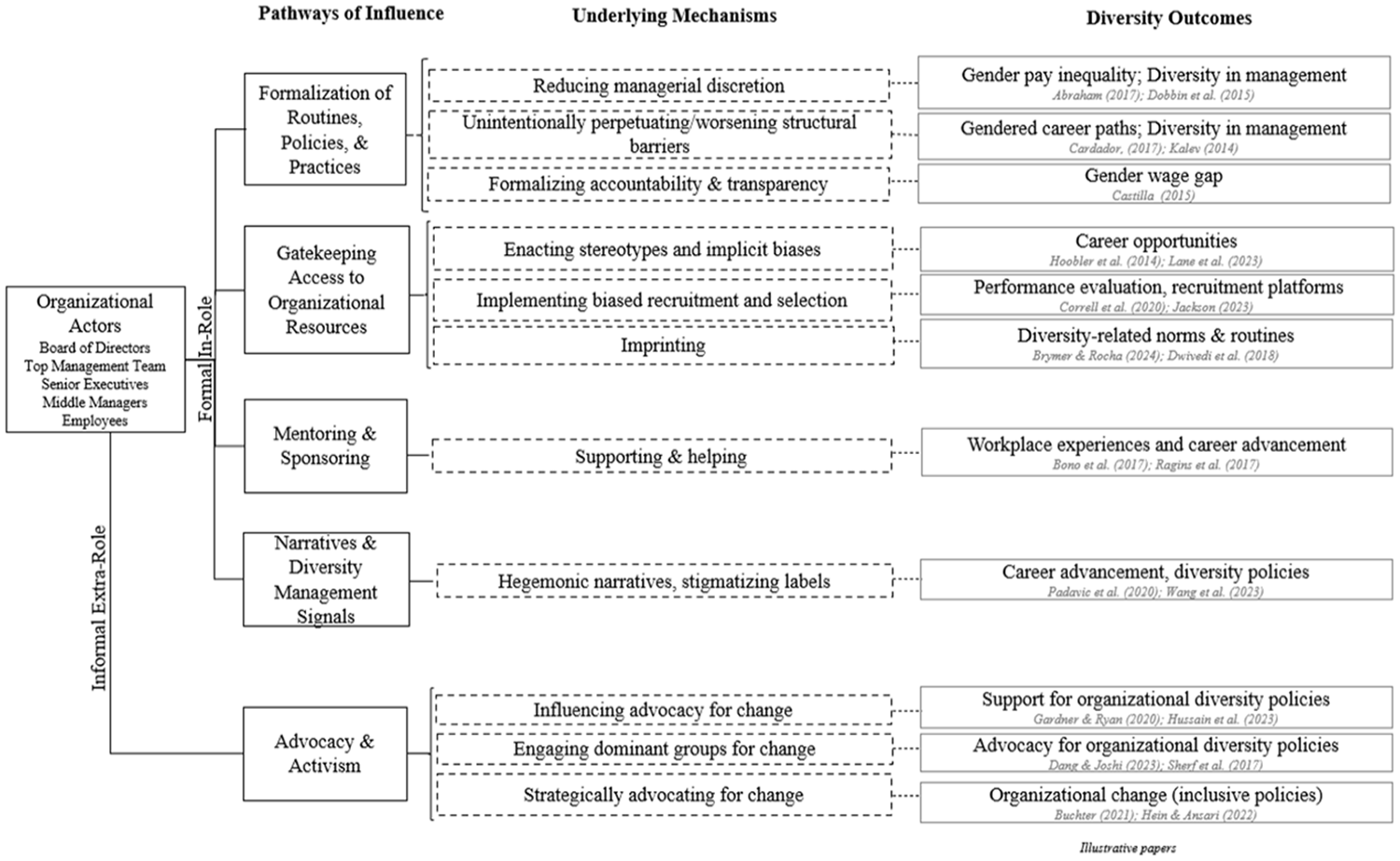
How Internal Stakeholders Influence Organizational Diversity
Formal In-Role Pathways of Influence: Formalization of Routines, Policies, and Practices
Organizational members at the highest levels of hierarchy, such as senior executives, the board of directors, and top managers, have the formal authority to design and formulate policies and procedures related to organizational diversity. Formalized personnel systems can reduce gender inequality by constraining decision-makers’ biases (Anderson & Tomaskovic-Devey, 1995; Baron, Hannan, Hsu, & Koçak, 2007; Elvira & Graham, 2002; Pfeffer & Cohen, 1984; Reskin & McBrier, 2000). However, studies based on neostructural and feminist theories of inequality caution that formalization can itself be gendered and racially biased (Kalev, 2014) and, therefore, not always beneficial to underrepresented groups.
Reducing managerial discretion
On the one hand, formalization establishes clear guidelines, procedures, and criteria for decision-making processes, ostensibly reducing the likelihood of subjective biases influencing outcomes. At the same time, however, formalized organizational practices also reduce the supervisor’s managerial discretion to redress inequality for minority and underrepresented subordinates. This reduction in discretion could be detrimental to diversity practices, especially when women managers attempt to correct structural biases within organizations. For example, Abraham (2017) finds evidence of lower gender pay inequality in less formalized components of pay for employees reporting to a female manager, suggesting that less formalized pay systems are effective for achieving gender pay equity in settings where women are in managerial roles and oversee employees in lower-status positions. Furthermore, by reducing managerial discretion, formalization may also trigger resistance among managers. Formalization of the firm’s practices, both broader personnel practices and diversity-related initiatives, makes internal managers resist adapting traditional firm practices to respond to external or internal demands for change (Dobbin et al., 2015; Mun & Jung, 2018).
Unintentionally perpetuating or worsening structural barriers
Formalization may also unintentionally perpetuate or worsen structural barriers by reinforcing biases against minorities (Chan & Anteby, 2016; Ray, 2019; Ridgeway, 2006). For example, Kalev (2014) shows how the formalization of downsizing criteria (i.e., layoff rules based on tenure and position of employees) during restructuring hurts women and minorities. These seemingly gender- and race-neutral rules inherently disregard and overlook the complex contextual factors that contribute to disparities in tenure and positions achieved by underrepresented individuals. As such, the formulation of work roles, routines, and practices inadvertently overlooks in-built systemic barriers faced by marginalized groups, leading to the persistence of structural and social biases against them (Cardador, 2017; Van Laer & Essers, 2024).
Formalizing accountability and transparency
On the other hand, formalizing accountability and transparency in organizational practices enables workplace diversity and reduces inequality. Castilla (2015) underscores the significance of accountability and transparency in pay decisions, revealing its potential to mitigate pay gaps for underrepresented groups. Through longitudinal analysis of a large private firm, this study demonstrates a reduction in pay disparities when accountability and transparency measures in performance-based reward systems are implemented. Kalev (2014) also demonstrates the role of antidiscrimination accountability in mitigating the disparate impact of downsizing policies on underrepresented groups in the firm. Recently, Trzebiatowski, Jiang, Zhang, Edkardt, & Kim (2024) propose a signal-set approach to test joint effects across diversity practices (resource, nondiscrimination, and accountability) on women and racialized nonleader and leader turnover. They find that higher resource practices decreased turnover rates when safeguarding practices (nondiscrimination and accountability) were high and congruent. Resource practices are less helpful in reducing the nonleader turnover rate when safeguarding practices are mixed.
Formal In-Role Pathways of Influence: Gatekeeping Access to Organizational Resources
Some organizational actors, such as CEOs, senior managers, board members, supervisors, and hiring managers and recruiters, serve as gatekeepers of hiring, promotions, compensation, and resource allocation decisions that shape the representation and experiences of different demographic groups within the firm through their formal authority over personnel decisions. Our review examines the cognitive processes, decision-making heuristics, and contextual factors that drive gatekeepers’ diversity-related actions. It also focuses on the mechanisms through which these organizational actors impact diversity. We organize this research into three sections: enacting implicit biases, implementing recruitment and selection practices, and imprinting.
Enacting stereotypes and implicit biases
The most researched aspect of gatekeepers’ influence on diversity outcomes involves enacting stereotypes and implicit biases, primarily focusing on gender and racial bias. For instance, Lane et al. (2023) find that science, technology, engineering, and mathematics (STEM) recruiters stereotyped women as a poor fit for leadership training programs for positions requiring technology, data, and quantitative skills. Stereotypes about career motivation also emerge as a critical cognitive mechanism shaping gatekeepers’ decisions (Hoobler, Lemmon, & Wayne, 2014). For example, when it comes to job offer decisions, Rivera (2017) shows that academic hiring and search committees favor men or single women over women with partners, especially those with high-status career partners because they are considered not “movable.”
Beyond biases about gender and race, Sharps and Anderson (2021) find that job candidates from working-class backgrounds were perceived as less competent because they displayed less “disjoint agency” (e.g., assertive behavior) during hiring interviews. Further, gay male job candidates are seen as better fits for stereotypically feminine occupations, like nursing and teaching. In contrast, straight male candidates are seen as a better fit for stereotypically masculine occupations, like engineering and management, due to gatekeepers’ perceived (mis)alignment between sexual orientation stereotypes and gendered job roles (Rule, Bjornsdottir, Tskhay, & Ambady, 2016).
Such biases are not limited to gatekeepers from middle- and lower-level ranks. High-ranking gatekeepers’ values and beliefs, such as their liberal ideology, shape the application of biases and stereotypes to hiring, promoting, and allocating rewards (Briscoe & Joshi, 2017; Carnahan & Greenwood, 2018). Biggerstaff et al. (2024) show how CEOs’ display of exclusionary logic (reflected in their membership in golf clubs) manifests in fewer women in executive roles and a more significant gender pay gap in compensation for male and female top managers. In contrast, using survey data, Dwivedi et al. (2023) show that CEOs’ diversity-valuing behaviors mitigate the “push” factors, such as workplace barriers and disadvantages, by positively affecting women executives’ psychological safety, reducing women’s turnover in executive roles.
Irrespective of their rank, gatekeepers’ gender and racial biases become salient under specific conditions. For instance, Botelho and Abraham (2017) discuss how double standards (by which women are unfairly held to stricter standards than men) are most likely when evaluators face heightened search costs related to the number of candidates being compared or higher levels of uncertainty due to variations in the amount of pertinent information available. At the same time, biases can also be mitigated in some contexts. For instance, among NBA players, repeated interactions that establish familiarity between racially dissimilar coaches and players reduced racial bias in play time (Zhang, 2017). Similarly, gatekeepers who believed leadership potential was widely distributed (i.e., a universal mindset) exhibited less gender bias in selecting leaders than those who believe high leadership potential is not uniformly distributed (nonuniversal mindset; Liu, Rattan, & Savani, 2023). Gatekeepers’ experience level and focus on work-readiness skills also influence the retention of first-time women workers (Ranganathan, 2018).
Research also shows that organizational identification can inadvertently trigger a “blindness” toward organizational inequalities among high-ranking gatekeepers. For instance, To, Sherf, and Kouchaki (2024) reveal how the psychological experience of holding status and power (of managerial positions) increases organizational identification, motivating managers to see their workplaces as more equitable than they are. However, resistance to diversity may be more willful for other high-status gatekeepers. Dezső, Ross, and Uribe (2016) show that a male-majority top management team perceived larger numbers of women executives as more threatening, fueling resistance to substantial increases in women’s representation. Knippen et al. (2019) also find that while external pressures lead firms to increase female board representation, they are more likely to do so by creating new board seats rather than replacing male directors. External pressure heightens the salience of gender for gatekeepers, activating in-group favoritism among male incumbents. Consequently, these gatekeepers maintain the status quo by preserving men’s power.
A well-established research stream shows that gatekeepers’ biases and related decision-making can shape recruitment dynamics and have downstream consequences for underrepresented groups. For instance, Fernandez-Mateo and Fernandez (2016) note that women candidates are slightly less likely to be interviewed than men at the start of the hiring process. However, once interviewed, their chances of being hired become equal. Such recruitment dynamics can have a lasting impact on women and minorities. Brands and Fernandez-Mateo (2017) show that past rejections can trigger belonging uncertainty for women because they raise concerns about fit and belongingness in senior executive roles due to negative stereotypes about women in leadership. Other more nuanced effects of gatekeepers’ decision-making have also received attention. Chang, Kirgios, Rai, and Milkman (2020) demonstrate that decision-makers are less likely to prioritize diversity when making a single hire because it is less salient than when making multiple hires simultaneously. Relatedly, gatekeepers’ diversity judgments can be biased by spillover effects. Daniels, Neale, and Greer (2017) show that when people perceive diversity to be high on one dimension (e.g., race), they judge diversity as high on other dimensions (e.g., gender) regardless of actual diversity.
However, having women in gatekeeping roles may help mitigate these biases. For example, the presence of a woman on the board’s nominating committee ensures robust searches that include more women candidates and increases the likelihood of adding female directors (Guldiken et al., 2019). Similarly, Cohen and Broschak (2013) find that as the proportion of female managers in a firm increases, so does the number of newly created management positions filled by women. The allocation of these roles to men initially rises but later plateaus and even turns negative. More recently, Dwivedi and Paolella (2024) show that firms with relatively more women in senior management compared with their industry peers tend to allocate fewer attentional resources, time, and effort toward internal diversity practices, inadvertently hurting the recruitment of women at lower levels. However, higher representation of women on the firm’s hiring and diversity committees mitigates this negative cross-level effect. This research highlights the positive effect women in gatekeeping roles have on diversity.
A growing body of research examines the normative mechanisms shaping gatekeepers’ decisions. For instance, Chang, Milkman, Chugh, and Akinola (2019) identified a “twokenism” phenomenon whereby the descriptive social norm of having two women on a board led prominent firms to include exactly two female directors but resisted further increases. Gatekeepers, motivated by impression management concerns, sought to conform to norms and avoid negative scrutiny. Similarly, Childress, Nayyar, and Gibson (2024) examine the racialized expectations and tokenistic constraints attached to the postcolonial literature category in 1980s-to-’90s British publishing. When a non-White author was first awarded in the emerging category, racialized expectations created tokenistic constraints on the inclusion and consecration of subsequent non-White authors, creating competition for limited “diversity slots.”
Other contextual factors, such as the organization’s performance, have also received attention from scholars. Highlighting the “glass cliff” effect, Cook and Glass (2014) find that occupational minorities are more likely than White men to be promoted to the CEO position of weakly performing firms. However, they are also more likely to be replaced by White men if firm performance declines during their tenure. While Hill, Upadhyay, and Beekun (2015) argue that boards pay women CEOs more because they appreciate the rare perspectives and unique value that minority CEOs can bring to the organization, Gupta, Mortal, and Guo (2018) did not find support in a replication study. More recent research shows that firm performance and diversity are complexly intertwined. Jung, Lee, and Park (2023) reveal how negative performance feedback (i.e., underperformance relative to aspirations) differentially affects two forms of board diversity. While underperformance leads board members to seek more diverse expertise among directors to address the performance shortfall, underperformance also exacerbates preferences for demographic similarity among board members, reducing racial and gender diversity (see also Balachandran, Wennberg, & Uman, 2019).
Implementing biased recruitment and selection
Beyond enacting biases, gatekeepers influence diversity outcomes through recruitment and selection practices. For instance, Jackson (2023) highlights managers’ preferences for traditional recruitment platforms (where the modal candidate was White) and resistance to targeted recruitment platforms (where minority candidates were targeted) based on espoused “repugnant market concerns” (i.e., the perceived objectification, exploitation, and race-based targeting of racial minorities). Application endorsements—a common, often informal, recruitment practice used to signal support for certain applicants—significantly boosted White male applicants’ chances of admission (Castilla, 2022).
Language use in recruitment and selection has also received attention in research. Castilla and Rho (2023) experimentally manipulated the femininity of wording in job postings and recruiter self-presentations, finding minimal impact on gender disparities in job applications. While well intentioned, employers’ efforts to use gender-inclusive language may not substantially advance diversity. In contrast, Correll, Weisshaar, Wynn, and Wehner (2020) reveal the consequential role of language in performance evaluations. Analyzing performance reviews, they show that managers use language differently to describe men and women and value behaviors based on gender. Men’s and women’s technical abilities are described similarly, but women are more likely to be seen as “too aggressive” and men as “too soft.” Also, behaviors like “taking charge” are strongly associated with higher performance ratings for men than for women.
Imprinting
Last, gatekeepers’ identities and experiences can also shape diversity outcomes by imprinting organizational roles and structures. For example, the gender of microfinance loan managers influences the borrower’s subsequent expectations (Doering and Thébaud, 2017). When borrowers first interact with a manager in a gender-balanced role, they form gendered expectations based on the initial manager’s gender. Gender stereotypes and status beliefs fill in role ambiguity, leading the role itself to become “tinged” with gendered expectations. Thus, the imprinting of gendered expectations constrains the perceived legitimacy and authority of subsequent male and female role occupants.
Similarly, Chang and Kirgios (2024) suggest that demographic stickiness—where individuals choose replacements with the same demographic identity—can sustain progress in diversifying managerial roles. The stickiness makes backsliding less likely as diversified roles become stable. The stickiness of imprints has also been demonstrated in the context of CEO succession events. Dwivedi et al. (2018) find that in CEO succession involving women, women’s success was more likely when (mostly male) predecessors left a “gender-inclusive” imprint on the gatekeeping role. These mechanisms alter the “male-typed” leadership schemas that disadvantage women and foster enabling conditions for women’s success.
Conversely, Brymer and Rocha (2024) show that a founder’s affiliation-based hiring, preferentially selecting early employees of the same demographics, may generate homogeneity that persists as the start-up grows. Such early affiliation-based hiring imprints the firm with exclusionary norms and routines that constrain diversity in the long term. Thus, the initial conditions set by leaders and founders can have enduring effects on workforce composition.
Formal In-Role Pathways of Influence: Mentoring and Sponsoring
Supporting and helping
Organizational actors can also impact diversity outcomes through mentoring—engaging in a high-quality relationship that provides advice and developmental support in an interpersonal context (Barrymore, Dezső, & King, 2022; Bono et al., 2017; Ragins, Ehrhardt, Lyness, Murphy, & Capman, 2017)—and sponsorship—leveraging their own social and reputational capital to help in their protégés’ advancement (Foust-Cummings, Dinolfo, & Kohler, 2011). By providing traditional career development and relational (learning, inspirational) resources and buffering racial and ethnic minorities from the adverse effects of stressful organizational experiences, mentors help individuals from underrepresented groups maintain their organizational commitments. Minority employees exposed to ambient discrimination at work are less likely to experience a loss of commitment at work if they are in high-quality mentoring relationships compared with those lacking a mentor (Ragins et al., 2017). Ranganathan and Shivaram (2021: 3299) show that female managers motivate their female subordinates by engaging in scut work, that is, “voluntarily getting their hands dirty to perform subordinates’ routine task,” which leads to greater female subordinate productivity. However, when such supervisory mentoring and sponsorship is withdrawn, it can impair women’s career advancement (Bono et al., 2017; McDonald & Westphal, 2013).
Formal In-Role Pathways of Influence: Narratives and Diversity Management Signals
Hegemonic narratives and stigmatizing labels
Organizational actors can perpetuate the status quo and stall organizational change by reinforcing certain narratives and signaling values through various diversity management practices. For instance, utilizing a systems-psychodynamic framework, Padavic et al. (2020) highlight how the hegemonic narrative of a 24/7 work culture portrayed men as ideal workers free from family care responsibilities and reinforced systemic inequality against women. Relatedly, the use of racially stigmatizing labels to depict COVID by organizational leaders significantly reduced perceptions of interpersonal justice and engagement while increasing emotional exhaustion among Asian employees (Jun & Wu, 2021). However, studies also show that labels can aid in generating support for diversity issues. Wang, Whitson, King, and Ramirez (2023) contend that employees with a high feminist identification were more likely to support feminist-labeled organizational policies (such as #MeToo) than unlabeled policies. Thus, labeling organizational policies in ways that align with employees’ collective identification may mobilize support.
Organizational actors and decision-makers, including senior managers and executives, shape diversity by conveying dominant narratives and various diversity management signals. Olsen and Martins (2016) suggest that organizational signals that show instrumental, integrative, or assimilative values in diversity management affect recruits’ perceived attractiveness toward the organization. Recruits were attracted to diversity signals based on their ethnicity and the racial-ethnic makeup of their communities. Other researchers have also demonstrated the benefits of signaling diversity through specific human resources practices for sexual minority employees, such as lesbian, gay, bisexual, and transgender (LGBT) individuals (Bradley, Moergen, Roumpi, & Simon, 2023), as well as for older workers (Boehm, Kunze, & Bruch, 2014).
Informal Extrarole Pathway of Influence: Advocacy and Activism
Organizational actors, such as employees, managers, senior leaders, and frontline staff, can directly and indirectly impact diversity outcomes through their discretionary extrarole behaviors, such as activism and advocacy. As insiders, these actors occupy a unique vantage point and can influence diversity outcomes not only through their formal roles and responsibilities but also through their informal behaviors (Buchter, 2021; Hein & Ansari, 2022; Hussain, Tangirala, & Sherf, 2023; Johnson, Joshi, & Kreiner, 2023; Prengler, Chawla, Leigh, & Rogers, 2023; Sherf, Tangirala, & Weber, 2017; Thoroughgood, Sawyer, & Webster, 2021).
Influencing advocacy for change
The key mechanism through which organizational actors influence diversity informally is through their bottom-up grassroots-level advocacy and activism (Gardner & Ryan, 2020; Hussain et al., 2023). Hussain et al. (2023) demonstrate that decision-makers evaluate the legitimacy of advocacy groups based on their gender composition. They find that mixed-gender groups have the most positive impact, compared with women-only and men-only coalitions, resulting in greater managerial support for proposed diversity issues. Similarly, Gardner and Ryan (2020) show that the race of the promoter impacted perceptions of self-interest, with non-White promoters being perceived as more self-interested than White promoters in advocating for the same diversity initiative. These perceptions of self-interest were negatively related to positive attitudes and support for the diversity issue being promoted. In contrast, Prengler et al. (2023) suggest that minority employees, such as Black police officers, may informally leverage their membership in highly racialized organizations to challenge policies, procedures, and practices that sustain discrimination.
Engaging dominant groups for change
Research has also focused on the factors that motivate members of dominant groups to engage in diversity-related change efforts. For instance, Sherf et al. (2017) demonstrate that men, despite positive attitudes toward gender equality, hesitate to advocate for women because they believe they lack psychological standing on these issues due to their limited experience of discrimination and bias. The lack of psychological standing serves to silence potential male allies. On the other hand, several scholars, such as Dang and Joshi (2023) and Kundro, Neely, and Muir (2024), illustrate how actors belonging to dominant groups have an important role in empowering employees to engage in diversity advocacy by modeling moral behavior, fostering psychological empowerment, and challenging discriminatory norms. After witnessing the sustained moral examples set by supervisors, subordinates experience psychological empowerment, that is, increased competence and autonomy to take similar virtuous actions around diversity (Kundro et al., 2024). Similarly, employees from advantaged social groups with liberal political ideology engaged in ally work and changed organizational practices to support disadvantaged coworkers (Dang & Joshi, 2023).
Strategically advocating for change
Many studies also zero in on internal change agents’ strategies to advocate for diversity-related change and several mechanisms influencing this relationship. Buchter (2021) examine how LGBT activists in five major French companies crafted specific corporate diversity programs to be more inclusive of sexual minorities. These activists developed and disseminated support structures through ready-to-use “implementation resources,” such as awareness campaigns, training programs, communication tools, and monitoring systems, that enabled companies to implement diversity commitments related to LGBT employees. Using the concept of bridgework or relational brokerage, Johnson et al. (2023) demonstrate that employee advocates and allies persuaded others in the organization to view stigmatized group members as valuable and facilitated relationships between the stigmatized and nonstigmatized groups. Studying a large, sheltered workshop in Germany, Hein and Ansari (2022) demonstrate that disabled workers enlisted powerful allies to overcome paternalistic protection and seek emancipation from benevolent marginalization. Similarly, Thoroughgood et al. (2021) find that nonstigmatized employees positively impact transgender colleagues by acting as allies, publicly opposing mistreatment and noninclusive policies (oppositional courage), and enhancing their sense of value and esteem.
Summary of the Influence of Organizational Actors on Diversity Outcomes
In summary, our review sheds light on the influence of various organizational actors on different aspects of diversity. On the one hand, formalized policies and practices (by powerful actors) can mitigate bias in compensation and reward practices by establishing clear guidelines. On the other hand, it can have the unintended consequence of perpetuating structural inequality by reducing managers’ ability and discretion to support underrepresented groups and reinforcing gendered and racially biased policies and practices. Recent studies examine the interactive effects of multiple formal diversity practices (such as nondiscriminatory practices and accountability practices) that can lead to varied diversity outcomes based on their additive or noncongruent influence, thus stimulating an exciting area of future research.
Similarly, organizational actors in power are influenced by their biases, mental models, and stereotypes, reproducing demographic inequalities that affect diversity outcomes such as hiring and promotion. However, interventions, like having women in gatekeeping roles and committees, encouraging repeated interactions, and inculcating an inclusive mindset, can mitigate bias. Additionally, formal mentoring and sponsorship and informal grassroots advocacy and allyship involving dominant groups positively affect diversity outcomes. The evidence clearly shows the importance of involving dominant groups in efforts to enact change and integrate underrepresented groups in the workplace. Finally, organizational actors’ use of narratives, language, and labels can hinder or promote diversity outcomes based on valence.
How Do Resource-Exchange Partners Influence Organizational Diversity Outcomes?
Resource-exchange partners are stakeholders, including investors (equity), lenders (debt), customers (products or services), suppliers (raw materials), and interorganizational partners (knowledge, competencies, etc.), that are currently in or are contemplating entering a resource-exchange relationship with the firm (see Figure 2). Because resources are critical for the firm’s survival and growth, firms often depend on these exchange partners. This dependence grants considerable power to the partners, enabling them to shape the firm’s strategies and practices, including workforce diversity (Emerson, 1964; Hillman, Withers, & Collins, 2009; Pfeffer & Salancik, 1978). Extant research has focused on how these partners’ decisions, reciprocal expectations, and perceptions, influenced by gender stereotypes and social categorization processes, shape diversity outcomes (see Joshi et al., 2024).
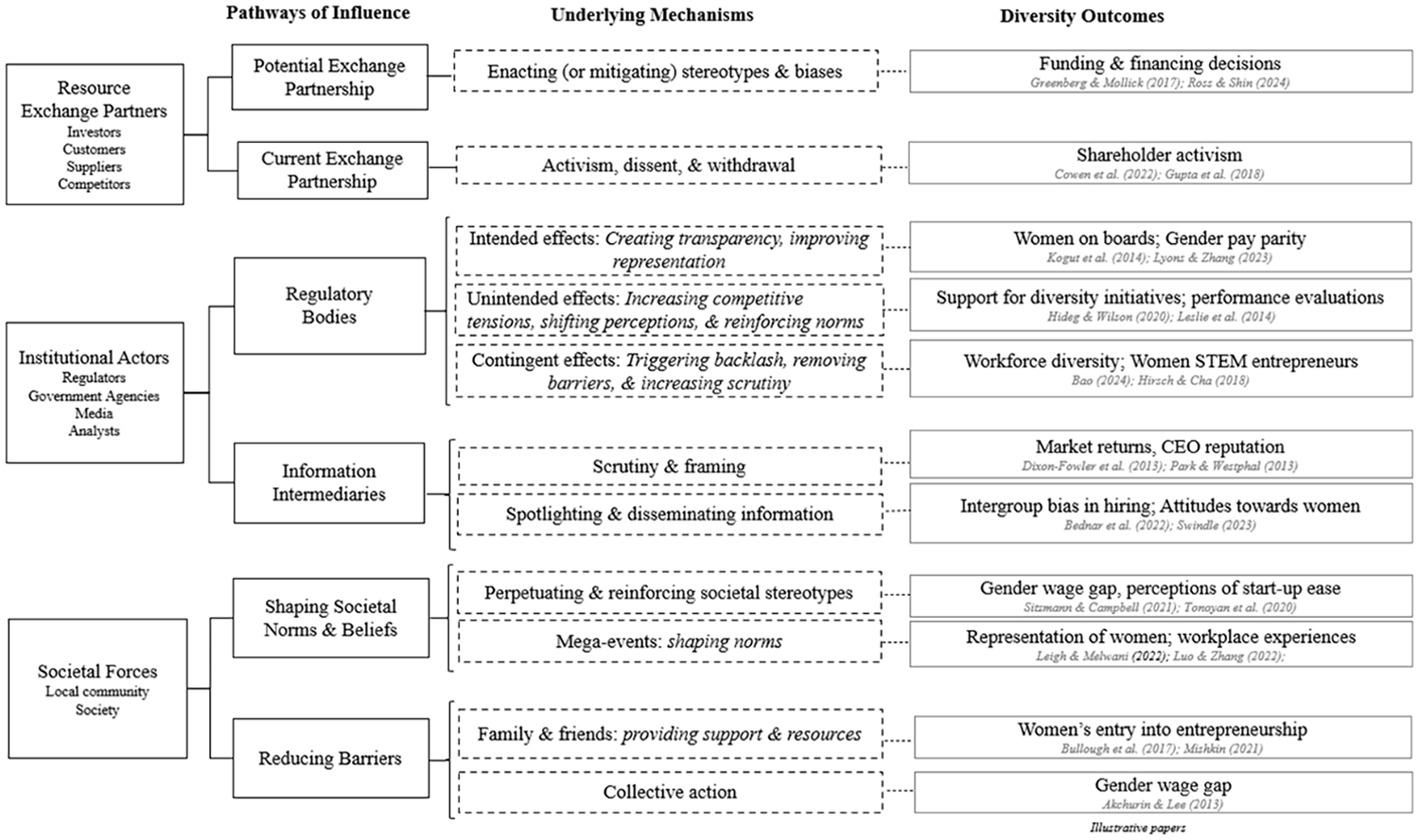
How External Stakeholders Influence Organizational Diversity
Potential Exchange Partners’ Pathway of Influence
Enacting (or mitigating) stereotypes and biases
Potential exchange partners carry age, gender, and race-based stereotypes and biases, influencing partners’ initial decisions to engage with the firm. Gender stereotypes and biases penalize founders whose demographic attributes or behaviors are misaligned with resource providers’ gendered prototypes of the “successful entrepreneur” (Balachandra, Briggs, Eddleston, & Brush, 2019; Kanze, Huang, Conley, & Higgins, 2018; Malmström, Johansson, & Wincent, 2017; Seigner, McKenny, & Reetz, 2024). Nguyen, Hideg, Engel, and Godart (2024) find that evaluators’ benevolent sexism contributes to the gender gap in start-up viability perceptions and funding outcomes, as these actors have a patronizing yet positive attitude toward women but favor men due to perceptions of a stronger “fit” between men and the entrepreneur role. This suggests that the gender gap in entrepreneurship is driven not only by an anti-women bias but also by pro-men favoritism. In microfinance organizations, unconscious preferences also impact outreach efforts through gender-biased language (Drori, Manos, Santacreu-Vasut, Shenkar, & Shoham, 2018).
Recent research examines the conditions that mitigate bias and discrimination in entrepreneurial financing. For instance, Fellnhofer and Deng (2024) show that when investors consciously focus on the merits of the investment opportunity, they can bypass the influence of unconscious gender stereotypes in reward-based crowdsourcing contexts. Ross and Shin (2024) demonstrate that data-driven, impersonal lending techniques reduce subjective biases, leveling the playing field for women entrepreneurs. Similarly, active homophilous support from female funders to female founders in crowdfunding due to “activist choice homophily” (Greenberg & Mollick, 2017) can help address inequality (Zhang, Wong, & Ho, 2016).
Interestingly, however, gendered attributions can sometimes lead to a backlash. In male-dominated environments, observers attribute female entrepreneurs’ success to gender homophily rather than merit when they are supported by other women, making it harder for these female entrepreneurs to secure future funding (Snellman & Solal, 2023). As another example, Xu, Ou, Park, and Jiang (2024) find that when women’s representation in the decision-making groups of the venture capitalist firms increased, threat perceptions among men and conforming behavior among women due to concerns about the firm’s legitimacy led to hesitation in funding women-led businesses.
Current Exchange Partners’ Pathway of Influence
Activism, dissent, and withdrawal
Resource-exchange partners in an ongoing, current relationship with the firm influence diversity practices through activism, dissent, threat of exit, and withdrawal of support or guidance. Focusing on investor activism, Gupta, Han, Mortal, Silveri, and Turban (2018) find that gender role stereotypes lead activist investors to publicly target and threaten female CEOs more than male CEOs, even after controlling for firm performance and other factors. Similarly, Cowen, Montgomery, and Shropshire (2022) show that retail investors are more likely to support activist campaigns against female-led firms versus male-led firms despite evaluating female and male leaders similarly. This discrepancy is explained by the shifting-standards model of gender bias, where investors use lower standards to evaluate female CEOs’ leadership relative to that of male CEOs when forced to choose sides in a proxy contest.
Current resource-exchange partners can also shape organizational practices through dissent. Mitra et al. (2021) propose a threat-contingency model to examine how self-interested decision framing and attributional biases against women are activated in some situations, such as firms’ underperformance and media controversies such that initial leniency toward female directors turns into greater dissent among shareholders. Apart from dissent, research has also identified the threat of exit from ongoing exchange relationships as an influence on the firm’s diversity practices. Resource-exchange partners, such as customers, may make biased decisions and threaten to exit from ongoing relationships with firms because of societal stereotypes. For instance, Cowen and Montgomery (2020) find that to ensure the continuation of an ongoing exchange relationship with a resource partner, female CEOs must take more responsibility and issue unqualified apologies to achieve similar consumer responses as male CEOs. Similarly, highlighting how racial biases lower the purchase intentions, willingness to pay, and overall patronage of customers toward companies with Black leaders, Avery, McKay, Volpone, and Malka (2015) show that consumers are likely to negatively stereotype Black leaders during times of poor company performance, viewing them as incompetent and incongruent with leadership prototypes. This devaluation extended to the products or services and the organization, reducing customer patronage (Avery, McKay, & Volpone, 2016).
Summary of the Influence of Resource-Exchange Partners on Diversity Outcomes
Resource-exchange partners, such as investors, lenders, customers, suppliers, and interorganizational partners, have considerable power to shape diversity due to the firm’s dependence on their resources. Potential resource-exchange partners inadvertently rely on stereotypes and biases related to age, gender, and race that can disadvantage firms led by underrepresented leaders. These biases influence their decision-making criteria and investment behaviors, creating barriers for older and female entrepreneurs. While investors from underrepresented groups and data-driven lending techniques can mitigate these disadvantages, biased attributions of underrepresented groups’ success can exacerbate them. Current exchange partners can also impact firms’ diversity practices through activism, dissent, and the threat of exit or withdrawal of support. Gender role stereotypes and attributional biases against women and minorities shape resource-exchange partners’ attitudes and actions toward underrepresented founders and leaders.
How Do Institutional Actors Influence Organizational Diversity Outcomes?
Research on diversity outcomes has also focused on institutional actors, including regulatory bodies (i.e., regulators) and information intermediaries (i.e., intermediaries). Regulatory bodies, such as national and local lawmaking bodies, government policymakers, and regulatory enforcers, influence diversity outcomes in organizations by passing legislation and enforcing compliance with diversity-related rules and regulations. Intermediaries such as media outlets, analysts, and social media platforms shape public perceptions, discourse, and attitudes toward diversity by spotlighting, framing, and disseminating information.
Regulatory Bodies’ Pathway of Influence
Regulatory bodies play a crucial role in promoting diversity by developing and enforcing formal policies that mandate change, monitor compliance, and provide guidelines to firms on diversity issues. Through legislative power, authority, and legitimacy, these stakeholders shape outcomes for women and minorities in organizations (Dobbin, 2009; Dobbin & Kalev, 2017; Dobbin, Kim, & Kalev, 2011) and formulate and implement laws and policies that influence diversity practices. Examples of such laws and policies include gender quotas, affirmative action programs, family-related policies, and pay transparency policies. Although these laws and legislative policies guide organizational actions and decisions about underrepresented groups, we find mixed evidence for their effectiveness.
Intended Effects: Creating transparency and improving representation
Kogut, Colomer, and Belinky (2014) suggest that government-mandated gender quotas can benefit gender diversity on corporate boards. By requiring a minimum percentage of women on boards, such as a 20% gender quota on corporate boards, these rules help create a critical mass of women directors who attain centrality and influence in corporate governance. Similarly, Lyons and Zhang (2023) find that salary transparency policies improve gender pay parity by reducing information asymmetries, particularly motivating high-visibility organizations to address and narrow gender pay gaps. Focusing on labor rights policies as a structural aspect enacted by regulators, Kerrissey (2015) demonstrates that nations with stronger protections for collective labor rights consistently exhibited lower levels of income inequality.
Apart from structural change, laws and policies enacted by regulatory actors entice unengaged women and minorities to participate in economic activities. For instance, Niederle, Segal, and Vesterlund (2013) show that gender quotas in competitive hiring environments, such as elite job recruitment processes, increase the probability of women being selected and encourage more high-performing women to enter these competitions. They also find that merely mentioning an affirmative action policy with gender quotas, even without enforcing it, increased tournament entry rates among high-performing women.
Unintended Effects: Increasing competitive tensions, shifting perceptions, and reinforcing norms
Regulatory actors can also have unintended adverse effects on diversity. Because pro-diversity laws and policies may be seen as violations of meritocratic practices, Ip et al. (2020) show that while quotas are perceived as fair and effective in environments where women face significant disadvantages, gender quotas for managerial roles provoke a backlash and undermine manager–subordinate relationships, especially in environments where women are not seen as disadvantaged. Similarly, Arshed, Chalmers, and Matthews (2019) find that the perceived lack of legitimacy of mandated quotas negatively affects women’s representation in entrepreneurship. Leibbrandt, Wang, and Foo (2018) also highlight an exacerbation of competitive tensions because of gender quotas, leading to peer sabotage, particularly from other women.
These policies can also have spillover consequences on other firms. Zhang (2022) finds that affirmative action bans in public sectors shifted corporate leaders’ perceptions about the legitimacy of equal employment opportunity initiatives in private firms. Consequently, after state-level bans were enacted, the promotion rates of Black employees into management positions slowed by over 50% in private firms, particularly those headquartered in states with the bans. Essentially, these bans emboldened the conservative biases of these CEOs.
Laws and policies promoting diversity may unintentionally disincentivize targeted groups from participating in some economic activities. Thébaud (2015) argues that supportive work-family institutions reduced the need for women to pursue entrepreneurship to balance work-life tensions. This lowered the female representation in entrepreneurship despite increased growth-oriented and innovative business ventures among women. Additionally, Castellaneta et al. (2020) find that institutional reforms disrupt existing support networks and lead to wage stagnation and wider gender pay gaps, especially for senior women. Moreover, affirmative action plans can also unintentionally trigger a “stigma of incompetence,” leading to negative perceptions and performance evaluations from external evaluators (Leslie et al., 2014).
Laws and policies aimed to promote diversity practices can inadvertently trigger identity threats among dominant groups and cause resistance. For instance, Hideg and Wilson (2020) argue that dominant-group members may experience diversity efforts as threatening their group’s collective esteem and social identity, particularly when past injustices committed against minority groups are used as justification for contemporary inclusion policies. To cope with this identity threat, they then engage in identity-defensive responses, effectively rejecting the minority-supportive diversity initiatives. Further, laws and policies may also unintentionally reinforce and institutionalize gender norms. For instance, in the German context, Gangl and Ziefle (2015) show that generous parental leave policies inadvertently promoted and signaled endorsement of gender norms and expectations around motherhood, necessitating lengthy career hiatuses and prioritizing household and childcare duties. Women (rather than men) predominantly shouldered the burden of childcare and availed lengthy periods of employment interruption and absences from the workplace, reducing women’s long-term labor force participation rates.
Contingent Effects: Triggering negative reactions from other stakeholders, removing barriers, and increasing scrutiny
While the articles discussed so far have focused on the main effects, several studies have identified that these effects are contingent on other factors. Hook and Paek (2020) explore the contingency effects of national family policies, like parental leave and public childcare provision, on societal wage inequality. They find that when wage disparities are more extreme, family policies that offset childcare costs enable more disadvantaged, lower-earning mothers to enter the workforce by reducing the appeal of remaining full-time caregivers and homemakers. However, longer durations of paid parental leave deterred maternal employment as earnings inequality increased. Examining other institutional actors as contingency factors, Hirsh and Cha (2018) find that employment discrimination lawsuits can influence corporations to improve workforce diversity practices and outcomes only when litigation triggers adverse investor reactions and the stock price declines, or when media coverage generates public backlash.
In focusing on the contingency effects of sectoral settings, Bao (2024) finds that the U.S. Affordable Care Act (ACA) health care reform led to positive changes in entrepreneurship rates for women in STEM fields, where women have high levels of human capital and earning potential. No such benefit was found in other settings. As women disproportionately shoulder health care burdens within households, ACA reform removed the barriers created by greater reliance on employee-sponsored health care reform for women compared with men and enabled them to act entrepreneurially.
Prior studies have also focused on firm characteristics as contingencies. Knight, Dobbin, and Kalev (2022) examine the contingency effects of firm size. Drawing on job autonomy and group conflict theories, they posit that discrimination lawsuits filed by women and minorities for entry into high-status managerial roles are viewed as an implicit challenge and disruptive to existing workplace hierarchies. However, in larger firms, diversity litigation heightens scrutiny from external stakeholders, like investors, regulators, and the public, forcing them to comply or face reputation costs. Thus, litigation against larger and more visible firms increased the proportional representation of women and minorities in managerial roles. Tsolmon (2024) highlights the contingent effects of the firm’s quality signals, finding that improved financial reporting and disclosure standards for public companies in Europe increased the visibility of managerial talent to external hiring markets, which reduced evaluators’ reliance on gender stereotypes. This led to a 60.6% increase in the likelihood that women in executive roles would be recruited for career promotions at other firms compared with men. However, these positive effects depend on the quality signaling of the executive’s original firm, influenced by financial performance and sociocultural attitudes toward gender norms in the local and regional context.
Information Intermediaries’ Pathway of Influence
The primary function of information intermediaries, like the media, ranking agencies, and analysts, is to “bring new information, ideas, and opinions, then disseminate them down to the masses, and thus influence the opinions and decisions of others” (Gökçe, Hatipoğlu, Göktürk, Luetgert, & Saygin, 2014: 673). By scrutinizing and framing specific issues and sharing and spreading information, these intermediaries spread or change social norms around diversity.
Scrutiny and framing
Intermediaries scrutinize existing biases within organizational practices, drawing attention to diversity issues and triggering change. For example, Pope, Price, and Wolfers (2018) find that, by raising awareness of racial bias among professional basketball referees, widespread media coverage of an academic study in May 2007 subsequently reduced bias through voluntary behavior changes by individual referees, adjustments by players, and changes in referee behavior due to institutional pressure.
However, the media’s portrayal of women CEOs as highly entitative and homogenous rather than as unique individuals can reinforce and negatively impact firms with women leaders. This application of group membership rather than individual characteristics, triggered by media coverage, causes firms with women CEOs to experience negative abnormal returns when a new woman CEO is appointed (Dixon-Fowler, Ellstrand, & Johnson, 2013). Research also indicates that when the media attributes performance issues to internal causes for firms with minority CEOs, it hurts their reputation (Park & Westphal, 2013). This underscores the significant influence of journalists, as representatives of media stakeholders, in framing and shaping perceptions of underrepresented leaders.
Ranking agencies’ evaluation criteria can also influence public and firms’ perceptions about what is valuable, leading to outcomes that may inadvertently hinder diversity efforts. Primarily focusing on ranking agencies as intermediaries, Chu (2021) highlights that the enrollment of disadvantaged students in higher education institutions is adversely affected by ranking agencies because organizations reallocate their resources to optimize the ranking criteria, which reduces focus on diversity and disadvantaged minority students.
Spotlighting and disseminating information
In showing how intermediaries shape societal attitudes, Swindle (2023) highlights that exposure to antiviolence scripts through mass media increased the likelihood of individuals stating their rejection of men’s violence against women, while exposure to content featuring patriarchal gender stereotypes did not. This suggests that the widespread dissemination of antiviolence scripts by influential stakeholders (international development organizations and domestic nongovernmental organizations [NGOs] and activists) shapes public discourse and influences individual attitudes in societies toward women and minorities.
Intermediaries’ dissemination of information may also affect immediate organizational outcomes. While women and less connected entrepreneurs got less coverage in traditional channels and could not reduce information asymmetry with investors, Wang, Wu, and Hitt (2024) show that social media, specifically Twitter, helped reduce information asymmetry in the venture capital markets by allowing these entrepreneurs to signal quality and provide information to potential investors. This effect was stronger for those facing the greatest information asymmetry. Intermediaries can also trigger psychological responses that indirectly influence diversity outcomes. For example, Bednar, Westphal, and McDonald (2022) find that the media coverage of #MeToo hindered director appointments of racial minorities and individuals without prior connections because corporate leaders’ psychological responses (uncertainty and intergroup anxiety) to media coverage of #MeToo amplified the tendency to exhibit similarity-attraction and ingroup favoritism in the evaluation of potential candidates for board positions.
Last, focusing on intermediaries’ coverage of topics or dissemination of information, extant research found that the presence of underrepresented groups in intermediary organizations may not necessarily lead to increased coverage or representation of these groups. Shor, van de Rijt, Miltsov, Kulkarni, and Skiena (2015) note that societal-level inequalities, such as the dominance of men in top organizational positions, were the primary determinants of continued gender differences in coverage. Interestingly, while women received greater exposure in newspaper sections led by female editors and in newspapers with higher female representation on editorial boards, these associations are not causal. These authors find that increasing the proportion of female members on editorial boards did not significantly increase the coverage of women. Further, replacing the female member with a male member did not influence the coverage of women, indicating that improving female representation in media agencies might not be a viable path for increasing female coverage in media.
Summary of the Influence of Institutional Actors on Diversity Outcomes
Institutional actors like regulatory bodies and governments shape diversity outcomes by developing and enforcing formal policies, such as quotas, pay transparency guidelines, and family-related policies. Our review finds mixed evidence of their effectiveness. For instance, although government-mandated quotas can create a critical mass of women on corporate boards and pay transparency laws can improve gender pay parity, these regulations can also trigger backlash effects, disrupt existing support networks, trigger identity threats among beneficiaries and dominant groups, and institutionalize gendered norms. Similarly, though family policies may lead to employer discrimination and stifle women’s advancement, such policies facilitate the entry of disadvantaged, lower-earning mothers into the workforce in high-inequality settings or encourage women to enter growth-oriented forms of entrepreneurship where institutional arrangements reconcile work and family conflict without marginalizing women.
Intermediaries such as media outlets, ranking agencies, analysts, and social media platforms shape diversity outcomes by influencing public perceptions, triggering change by scrutinizing existing biases and spotlighting and disseminating information. While they can positively influence diversity by drawing attention to diversity issues and prompting action, their framing of underrepresented groups, such as female CEOs or minority leaders, can also perpetuate negative stereotypes and hinder diversity efforts. They can also help reduce information asymmetry for women and less connected entrepreneurs by providing a platform to signal quality and share information with potential investors. However, this can have unintended consequences as well by triggering negative psychological responses from decision-makers against women and minorities, hindering progress toward diversity.
How Do Societal Forces Influence Organizational Diversity Outcomes?
Broader communities and society significantly shape organizational behavior (Freeman, 1994), particularly by being carriers of norms, stereotypes, and beliefs. Although distant from organizations, collective entities embedded in the broader society may have a vested interest in diversity and exert pressure on organizations by mobilizing public opinion, advocating for policy changes, and raising awareness about systemic inequalities. They can also provide support and resources to underrepresented groups. Moreover, organizations operate within the broader context of society and are influenced by society’s demands, expectations, and values.
Shaping Societal Norms and Beliefs as a Pathway of Influence
An emerging body of research has explored how local communities and broader society shape organizational diversity through norms and beliefs deeply engrained within them (Hoi, Wu, & Zhang, 2018; Zhang, Briscoe, & DesJardine, 2023). These norms and beliefs influence organizational culture, hiring practices, and the overall inclusiveness of the work environment, broadly shaping attitudes toward diversity in that community (Leigh & Melwani, 2019). While some studies have investigated how variation in these norms and beliefs can promote diversity, research has predominantly found that societal forces perpetuate and reinforce stereotypes, limiting opportunities for underrepresented groups.
Perpetuating and reinforcing societal stereotypes
Societal norms in local communities can perpetuate stereotypes about women’s gender roles in the labor market, limiting their access to entrepreneurship-relevant resources and opportunities. This results in women having less favorable perceptions of start-up ease (Hechavarría, Terjesen, Stenholm, Brännback, & Lång, 2018; Tonoyan et al., 2020) and being less likely to participate in the formal economy (Newman & Alvarez, 2022), thus limiting their access to resources and opportunities for growth. Research has also noted that exposure to gendered labor markets often structurally confines women to nonmanagerial positions, female-dominated occupations, and sectors of the labor market in traditional employment where they accumulate less entrepreneurship-relevant resources or experiences and opportunities. Additionally, research has investigated how another dimension of the broader social context—religiosity—can systematically influence diversity outcomes. Religiosity often promotes gender-differentiated social expectations, contributing to a larger gender wage gap in religious cultures compared with secular ones (Sitzmann & Campbell, 2021). Such a cultural environment in societies reinforces innate traditional values and stereotypes, advantaging men over women in wage allocation and maintaining power differences due to gender-biased treatments.
Mega-events
Significant societal movements and events, such as #MeToo or violent crimes, also shape beliefs and perceptions toward women and minorities. Using a dataset of 4,188 Hollywood projects between 2014 and 2019, Luo and Zhang (2022) find that, following the #MeToo movement, producers previously associated with Harvey Weinstein were more likely to collaborate with female writers, driven by a desire to mitigate reputational risk (due to prior association with Harvey Weinstein) and an increased intrinsic motivation to bring change to the abusive culture because of the social movement. Conversely, exposure to violent crimes heightens stakeholders’ (such as hiring managers) racial stereotypes and biases, leading to lower callback rates for Black applicants in job interviews (Mobasseri, 2019). Similarly, Leigh and Melwani (2022) theorize that such events traverse organizational boundaries, negatively affecting work behavior. Racial minority employees who share their identity with the victims of the event become vicarious victims themselves, experiencing the embodied threat of personal harm. This compels them to suppress their feelings of threat at work, consuming psychological resources and leading to work withdrawal, work avoidance, and decreased social engagement.
Reducing Barriers as a Pathway of Influence
Research has examined the various ways in which the adverse effects of societal norms and beliefs about diversity are resisted or overcome. Through social support and collective action, societal forces can positively impact diversity by challenging societal stereotypes and biases.
Family and friends’ support
Research has highlighted that underrepresented individuals may overcome the disadvantages associated with societal norms and beliefs about diversity with the support of family and friends. Bullough, Renko, and Abdelzaher (2017) argue that a balance of collectivism and individualism at the in-group level is most conducive to women’s business ownership. Individualistic cultures allow women to pursue individual goals, while collectivistic cultures provide emotional and financial resources and professional support.
Similarly, Bird and Wennberg (2016) show that the relational embeddedness of immigrants with their families, including native spousal relationships, influences their economic integration by facilitating access to the family’s financial resources, advice, and support that positively influence entrepreneurial success (Bird & Wennberg, 2016; Bullough et al., 2017). However, such familial support is imbalanced in favor of sons, leading to reduced human capital transfer from father to daughter when there are sons in the family. This limits entrepreneurial opportunities for daughters, indicating intergenerational effects (Mishkin, 2021). Last, personal exposure to women’s disadvantages through their daughters has been shown to reduce founders’ reliance on stereotypes. For instance, Wu, Naldi, Wennberg, and Uman (2024) find that male founders’ fatherhood of daughters increased female representation on the board of their ventures.
Collective social action
Collective social action refers to the coordinated efforts of individuals, groups, and organizations to achieve a common goal related to social change or to address societal issues. Extant research suggests that not all collective action successfully promotes diversity. Akchurin and Lee (2013) examine various women’s associations and the heterogeneity in their influence on the gender income gap. They find that women’s organizations with access to institutional politics through direct advocacy or ties to unions or professional associations are the most effective at promoting gender earnings equality. Professional women’s advocacy groups work with professional associations, civil rights groups, and allies within the state to reduce the income gap through legal mobilization and battles for pay equity and equal opportunity rights. In contrast, women’s groups associated with popular movements tend to lack access to the necessary policy channels and cannot address income inequality directly.
Summary of the Influence of Societal Actors on Diversity Outcomes
Individuals in society and broader communities shape organizational diversity outcomes by perpetuating stereotypes and limiting opportunities for underrepresented groups through societal norms and beliefs. However, these norms and beliefs can be subject to change and resistance through support from family and friends, collective social action, and salient social movements or events. Societal norms in local communities can reinforce stereotypes about women’s roles, limiting their access and opportunities in the labor market and entrepreneurship. Exposure to gendered labor markets or religious norms confines women to nonmanagerial roles and female-dominated occupations. Societal events such as the #MeToo movement or incidents of violent crime can also shape beliefs and perceptions toward women and minorities. These events can lead to positive changes, such as increased collaboration with underrepresented groups, or adverse consequences, such as heightened racial stereotypes and biases, lower callback rates for minority job applicants, and adverse effects on the work behavior and well-being of minority employees. However, such adverse effects can be resisted or overcome. Family and friends can provide resources, emotional support, and access to networks that facilitate entrepreneurial success for underrepresented groups. Collective social action by women’s associations and activists can shape public opinion and promote women’s welfare.
Overall Summary
Our review of the different stakeholder groups, including organizational actors, resource-exchange partners, institutional actors, and societal forces, suggests that these actors shape diversity outcomes through distinct channels and pathways of influence. Yet, some stakeholders overlap in their underlying mechanisms, while others differ in their approach and impact. We analyze and compare the various pathways and underlying mechanisms across stakeholders to better understand how these actors similarly and differentially impact diversity. First, our review reveals that organizational actors (e.g., gatekeepers) and resource-exchange partners (e.g., investors) rely on stereotypes and biases that disadvantage underrepresented groups. For example, gatekeepers within organizations may enact gender and racial biases in hiring and promotion decisions. At the same time, potential resource-exchange partners may unintentionally base their relationship entry and exit decisions on stereotypes and biases, inadvertently disadvantaging firms led by underrepresented entrepreneurs and leaders.
Similarly, organizational actors, such as executives and managers, can impact diversity outcomes through their narratives and signaling. At the same time, institutional actors, such as information intermediaries, and mega-events can also shape public perceptions and discourse around diversity issues by presenting and sharing targeted information. Likewise, organizational actors and regulatory bodies can influence diversity outcomes by establishing guidelines, procedures, and criteria related to diversity. Organizational leaders can put internal policies and practices in place, while regulatory bodies may create laws and policies that organizations must follow. Finally, mentors and sponsors within firms can provide crucial resources and support for underrepresented groups. Externally, resource-exchange partners, friends, and family can also shape the outcomes of underrepresented individuals by sharing (or withholding) resources, access to networks, and guidance and support. Finally, internal actors can drive change through informal advocacy, while external stakeholders may rely on collective social action and social support to challenge existing norms and beliefs.
Second, internal and external stakeholders can also vary significantly in their underlying mechanisms of influence. Organizational actors, particularly those in leadership roles, directly impact diversity outcomes through their actions and decisions. External stakeholders, such as institutional actors and societal forces, often shape diversity outcomes indirectly by impacting the broader context in which organizations function. We also observe that organizational actors often influence diversity through formal mechanisms, such as implementing policies, practices, and decision-making processes. In contrast, many external stakeholders (though not all), such as activist shareholders and exchange partners, tend to rely more on informal mechanisms, such as dissent and threat of exit, to influence organizational diversity practices. The scope of influence also varies between internal and external stakeholders. Organizational actors primarily influence diversity within their organization. At the same time, external stakeholders, such as regulatory bodies and societal forces, can have a broader impact on diversity outcomes across multiple organizations and industries. Formalization by regulatory bodies often comes with the necessity for legal compliance at the country level. It can result in penalties or sanctions if the organizations fail to meet these regulatory requirements. In contrast, formalization by organizational actors may have limited enforceability and could face resistance from managers. Organizations must consider the synergies and misalignment in these underlying mechanisms to leverage the strengths of both internal and external stakeholders in addressing the unique challenges they face toward creating more diverse, equitable, and inclusive environments.
An Agenda for Future Research
This article reviewed the extensive literature on organizational diversity from a stakeholder perspective published over the past 12 years. Our cross-disciplinary review examined how stakeholders impact diversity outcomes and practices within firms. Figure 3 offers a comprehensive overview of the stakeholder impact on organizational diversity, serving as a guide to identify the most promising areas for future research. In our review, we identified several key themes in the extant literature, highlighting the need for future studies to explore how different stakeholders affect organizational diversity outcomes: (a) unpacking the multistakeholder lens on diversity outcomes within organizations; (b) uncovering additional dimensions of diversity and stakeholder categories and additional examination of stakeholder categories previously covered in extant research; (c) bridging the micro-macro theoretical divide and identifying new mechanisms of stakeholder influence; (d) examining the bidirectional dynamics of the stakeholder-organizational diversity relationship; and (e) advancing global perspectives on stakeholder influences and organizational diversity. We highlight potential research questions to guide future investigations (Table OA6 in the online appendix).
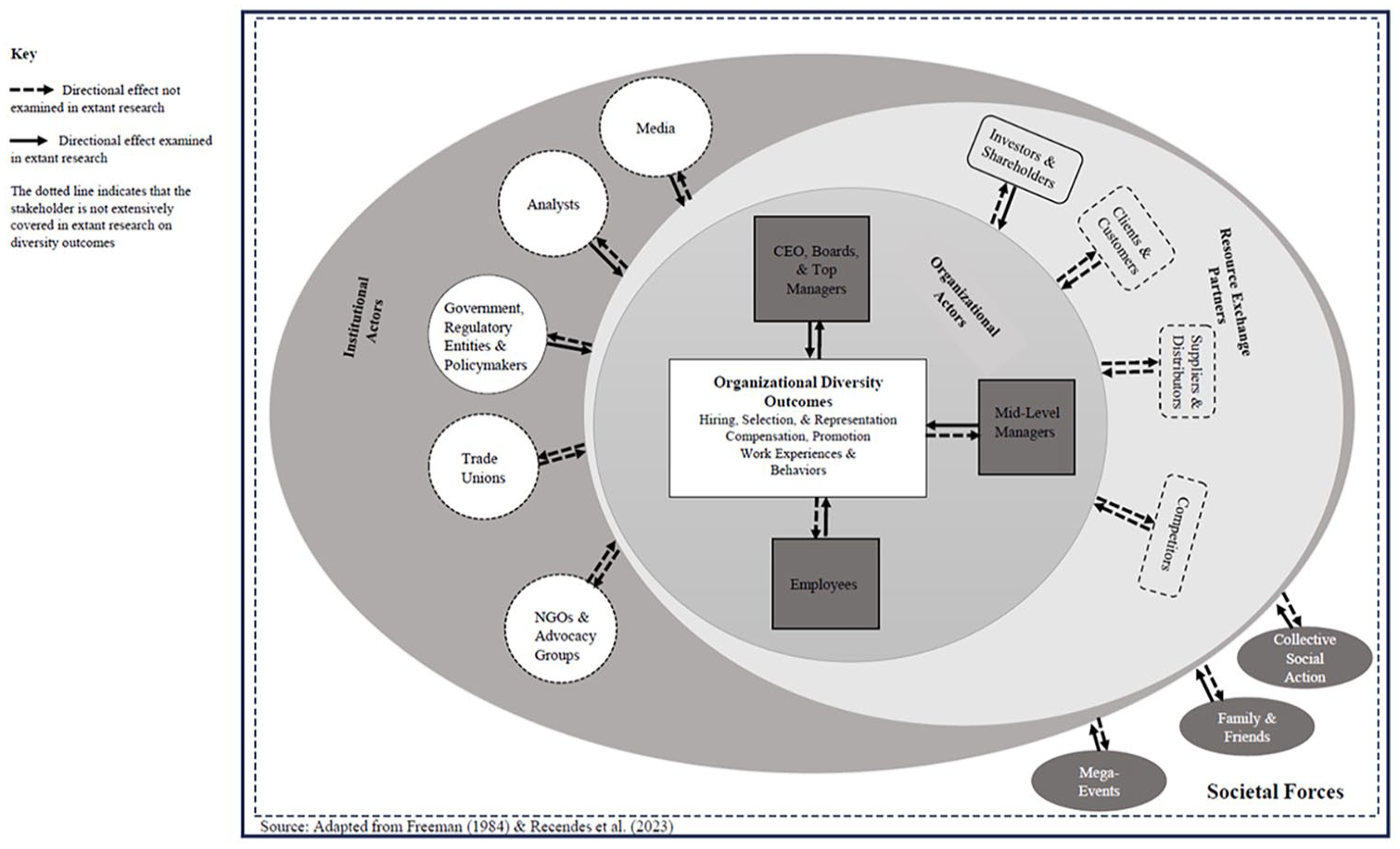
Mapping Different Stakeholder Groups and Their Impact on Organizational Diversity
Unpacking the Multistakeholder Lens on Diversity Outcomes Within Organizations
According to the stakeholder theory, firms are motivated to maintain cooperative relationships with stakeholders to secure their ongoing support and participation in joint value-creation activities (Clarkson, 1995; Parmar, Freeman, Harrison, Wicks, Purnell, & Colle, 2010). One way to achieve this cooperation is to respond to and create alignment with the values and strategic needs of the stakeholders (Bundy, Shropshire, & Buchholtz, 2013). This organizational need to achieve “fit” with the stakeholder underlies the stakeholder’s ability to influence diversity outcomes within firms. However, the extent to which a stakeholder can influence any firm depends on their power, legitimacy (social acceptability of their demands), and the urgency to influence firm outcomes (Mitchell, Agle, & Wood, 1997). Firms are most likely to be influenced by salient and legitimate stakeholders because, without their support, a firm may not be able to achieve its strategic goals (Clarkson, 1995). Alternatively, maintaining cooperative relationships by fully responding to the stakeholders can be costly for the firms and may not necessarily lead to better short-term economic value. Therefore, it can be subject to internal and external contingencies.
Further, because stakeholders vary in power, legitimacy, and urgency, they differ in their abilities to influence diversity outcomes within the firm and may have conflicting interests in influencing organizational diversity. However, this variance across multiple stakeholders in how they influence diversity outcomes has yet to be adequately explored in extant research.
Varying salience of stakeholders
Extant research has extensively examined the individual effects of primary stakeholders—like employees and top managers on the internal side and regulators on the external side. Prior research suggests that firms invest in building better relations with primary stakeholders (versus secondary stakeholders) since they help firms develop intangible and valuable assets that lead to long-term sustainable competitive advantage and improved financial performance. Our review highlights that research has focused disproportionately on the influence of one set of primary stakeholders (employees and top managers) on diversity outcomes compared with the other primary stakeholders (customers, suppliers, and local communities). Hence, it is less well understood what factors determine the heterogeneity in the salience of the stakeholders concerning diversity outcomes and how their impact varies based on their varying power, legitimacy, and urgency. For example, to what extent is the salience of a primary stakeholder for diversity issues determined by their firm-specific knowledge, proximity, direct, unfiltered access, and control of resources and capabilities? When it comes to diversity issues, are primary stakeholders who have deep insight into the inner functioning of the firm (e.g., top managers) more salient and influential than stakeholders who are more distant and rely only on secondary sources of information about the firm (e.g., investors)? Does this variation in stakeholder salience explain why firms respond symbolically to some stakeholder diversity demands versus others?
Further, while we know a lot about how these salient stakeholders influence the firms’ diversity outcomes, other primary (e.g., Environmental, Social, & Governance (ESG) activist hedge funds that have power and legitimacy) and secondary (e.g., NGOs and advocacy groups that have relatively lower power and legitimacy) stakeholders have been ignored. Historically, secondary stakeholders have had limited influence over firm outcomes since investing in relationships with secondary stakeholders that are not aligned with the primary stakeholder interests may hurt shareholder value and firm performance (Hillman & Keim, 2001). However, as diversity pressures from these secondary stakeholders have increased in recent years, these less salient stakeholders have also begun to voice concerns about diversity-related outcomes (Porter, 2021; Weissman, 2020). For example, although labor unions have declined in power in recent years (Ferguson, 2015), they have gained significant support from younger generations of employees in the United States and worldwide (White House, 2022). This growing support has made labor unions more willing to prioritize diversity concerns as a central issue in the workplace (AFL-CIO, 2024). Given this heightened urgency, firms may be inclined to address labor unions’ diversity demands, especially when backed by more salient stakeholders, like regulatory bodies. This raises critical questions about the factors that enable certain secondary (or less salient) stakeholder groups to gain salience over time. Based on the literature on spillover effects, it is expected that secondary (or less salient) stakeholders with strong reputations for advocating diversity will become more salient and influential for diversity.
Future studies could explore the interrelated dynamics among multiple stakeholders with varying salience. Whether the increasing diversity demands from salient stakeholder groups, like regulatory authorities, create a bandwagon effect for unions and other less influential stakeholders remains to be determined. Future research could explore how stakeholders with lower influence strategically leverage or distance themselves from the diversity-related agenda of more influential actors to advance their goals. Is, at the minimum, diversity influence from one or more salient primary stakeholders necessary along with secondary stakeholder(s) for achieving structural and substantive diversity-related organizational change? On the basis of our review, we anticipate the combined effects of stakeholders of varying salience will lead to heterogeneity in diversity outcomes. Exploring these aspects could be a fruitful avenue for future research.
Synergistic effects of multiple stakeholders
Our review revealed that one of the broad challenges with research in this domain is that despite similarity in diversity interests across stakeholders (Akchurin & Lee, 2013; Arshed et al., 2019; Granados, Rosli, & Gotsi, 2022), most studies typically focus on one stakeholder at a time due to both theoretical and empirical reasons. While examining the combined effects of more than one external stakeholder group in a single study is challenging, future research can apply a multistakeholder lens as it has the potential to provide crucial insights into the mechanisms through which stakeholders jointly and synergistically impact organizational diversity (Gorbatai, Younkin, & Burtch, 2023; Kalnins & Williams, 2021; Yu, Fei, Peng, & Bort, 2024).
Our literature review found that although different stakeholder groups influence diversity mainly through distinct pathways of influence, the underlying mechanisms across some stakeholders are similar. It would be interesting to explore if overlapping mechanisms enable the formation of effective coalitions among diverse stakeholder groups to advance organizational diversity and inclusion efforts. For example, both organizational actors’ (e.g., top executives) gatekeeping and resource-exchange partners’ (e.g., investors’) decisions to enter potential exchange relationships with firms are shaped by stereotypes and biases that impact their cognition and decision-making processes (in Figures 1 and 2). Shared cognition may enable senior managers and investors to join forces to either jointly promote or hinder progress on diversity. For example, firms with more senior women executives may be more responsive to the diversity demands of ESG investors, forming coalitions with these external supporters of diversity to institutionalize change. Such combined efforts can provide a lens on how the collective beliefs of different stakeholders cocreate and diffuse diversity outcomes. Future research could examine when and how such coalitions of stakeholders can overcome potential conflicts with other stakeholders and align their efforts toward common diversity goals.
Similarly, internal and external stakeholders’ synergistic and joint effects provide additional avenues for future research (Dobbin et al., 2015; Dwivedi, Misangyi, & Joshi, 2021). A more nuanced understanding of how external stakeholder groups (such as investors and financial analysts) interact with internal stakeholders (like the board of directors and top managers, respectively) to shape diversity within firms is much warranted (Mun & Jung, 2018). For example, shareholder resolutions represent a public forum for investors to voice priorities and concerns to the board of directors over corporate policies on various ESG issues, like diversity. Similarly, financial analysts interact with and question the CEO and the top executives on relevant issues facing the firm during quarterly and yearly conference calls. These contexts can provide rich textual datasets for analyzing the interactive effects between these stakeholders. Future studies could do a content analysis of these shareholder resolutions or qualitatively study the conversations between top managers and analysts. This could help answer specific research questions, such as: to what extent do organizational decision-makers prioritize diversity concerns raised by ESG investors compared with other investors? How does the visibility and intensity of media coverage of diversity issues influence organizational decision-makers’ attention to diversity concerns that ESG investors raise? Are some decision-makers (e.g., humble, charismatic CEOs or those with international or NGO experience) more likely to prioritize diversity demands from external stakeholders (such as ESG investors)? On the basis of insights from our review, we propose that organizational decision-makers will likely prioritize diversity concerns ESG investors raise as the level of ESG investments and interventions (such as shareholder proposals) by such stakeholders increase. Such a line of inquiry has critical theoretical implications as it necessitates future studies to integrate macro- and microlevel theories, such as institutional and legitimacy theories, or upper-echelons theory with social psychological theories to examine the interactive effects of multilevel stakeholders. It would help us further understand why and how multiple stakeholder groups might interact to create intended or unintended effects on diversity.
Misaligned or conflicting interests of multiple stakeholders
As our review revealed, prior research has predominantly focused on stakeholders in silos. As such, how different stakeholder groups’ misaligned or even conflicting interests impact organizational diversity remains unclear. Future studies can examine the potential tensions and trade-offs when multiple stakeholder groups simultaneously engage in activities based on misaligned or conflicting interests. An intriguing research question is whether the social justice–oriented activism of NGOs and local community groups aligns with the business-focused approach of internal executives and managers. For instance, if an NGO publicly criticizes a company for lacking diversity in leadership and frames it as a social justice issue, this external pressure can provide internal activists with an opportunity to persuade senior leaders that improving diversity is both ethically right and strategically vital for the company’s reputation and employee morale. However, suppose community groups advocate for overhauling hiring and promotion practices to address systemic bias, while internal managers prefer minor adjustments to minimize cost and disruption. In that case, this misalignment of social justice with business interests can lead to a stalemate. Exploring these dynamics may help uncover meaningful insights.
Future research can explore the differential influence of “supportive” versus “oppositional” stakeholders on diversity outcomes. Many stakeholders increasingly hold organizations accountable for their diversity policies and outcomes as DEI issues gain prominence. NGOs and advocacy groups exert pressure through social advocacy, such as the Human Rights Campaign’s annual Corporate Equality Index (CEI), which rates large U.S. employers on their policies and practices. These ratings spotlight the firms’ performance on diversity outcomes and are used by corporate clients and investors for evaluations. Conversely, conservative stakeholders’ anti-DEI sentiments and “anti-woke activism” have led to increased lobbying against diversity practices, creating a complex landscape of support and opposition that organizations must navigate.
Thus, while some stakeholders push for greater diversity and inclusion, other stakeholder groups may be motivated to maintain the status quo due to vested interests or personal values and biases. Whose framing and efforts tend to prevail when pro-diversity and anti-diversity stakeholders confront each other, and what are the trade-offs in how firms manage these stakeholders? Future research could examine how these countervailing influences impede progress toward organizational diversity. For example, how do NGOs and social advocacy groups championing diversity navigate the challenges posed by the anti-DEI legislation in states where such restrictive laws are in effect? What strategies do they leverage to promote DEI and counteract the negative impacts of anti-DEI laws? Examining such interrelated influences of multiple stakeholders can provide fruitful avenues for future research.
Uncovering Additional Dimensions of Diversity and Stakeholder Categories and Additional Examination of Stakeholder Categories Previously Covered in Extant Research
Uncovering additional dimensions of diversity
While existing research has primarily focused on gender and race, the experiences of employees with disabilities, neurodivergence, and chronic illnesses, as well as sexual minorities, remain understudied. It would be interesting for future research to explore how stakeholders influence intersectional dimensions of diversity. For example, LGBT rights have been the focus of several media and sports controversies in recent years. How do such media controversies influence the design and implementation of organizational diversity policies? Do organizations alter their diversity practices in response to negative or positive media coverage of LGBT issues? Another potential research question pertains to how media frames shape perceptions of intersectional issues in firms (e.g., how leaders view the experiences of people of color) and how this impacts organizational diversity initiatives. Finally, how firms manage their diversity strategies across dimensions has also yet to be explored. Recent research suggests that firms substitute their performance on one diversity dimension (gender) for another dimension (race) (Mawdsley, Paolella, & Durand, 2023; Siegel, Pyun, & Cheon, 2019). Future research could explore whether the predominant focus on racial and gender issues takes firms’ attention away from other demographic minorities.
Uncovering additional stakeholder categories
While extant research has focused mainly on primary stakeholders, such as employees, managers, executives, investors, and regulatory bodies, the emergence of new pro-diversity stakeholders merits further investigation. One such stakeholder group includes pro-diversity customers. In recent years, customers have increasingly prioritized diversity when choosing which products to buy and companies to support. An example is how customers have recently used social media campaigns like #PullUpOrShutUp to call out fashion and beauty firms lacking diversity in their products and marketing campaigns (Krause, 2020). These pressures have instigated changes in the beauty industry (Ware, 2020) and provide a rich avenue for examining the public pressure and social media tactics stakeholders use to influence firms on diversity issues. On the basis of the stakeholder theory, we would expect an increase in social media engagement from such customers about these issues to be associated with customer-facing improvement in branding and product initiatives and internal changes in the gender and racial representation in the upper echelons.
Similarly, NGOs and advocacy groups have also been relatively understudied. As mentioned, organizations like the Human Rights Campaign and unions and labor organizations are increasingly shaping diversity by benchmarking and spotlighting firms’ diversity practices (HRC Staff, 2024). Resource dependence theory suggests that firms engage more with critical resource stakeholders. As advocacy groups and labor unions gain power through public support, their ability to influence firms’ diversity practices through collective bargaining may increase.
Additional examination of stakeholder categories previously covered in research
Certainly, underexamined stakeholders deserve attention; nonetheless, our understanding of the stakeholders previously covered in extant research, such as media and competitors, may also benefit from further examination. These stakeholders have received limited attention. Future research could shed light on the novel mechanisms they use to influence firms. For example, existing research on how media shapes consumer behavior and corporate reputation provides a foundation for examining the influence of media on organizational diversity. Prior literature suggests that as media coverage of diversity issues grows, it may make organizational shortcomings related to diversity more visible, increasing the scrutiny and external pressure on firms. On the basis of evidence from Hirsh and Cha (2018), we expect increased scrutiny to enhance the effectiveness and implementation of diversity policies and practices within organizations. At the same time, our review suggests that such media-driven pressure could trigger unintended consequences, like backlash for minorities at the individual level (Bednar et al., 2022). These may provide fruitful opportunities for future research. Although the effects of investors have been examined, examining the effects of emerging pro-diversity investors (e.g., ESG investors, gender lens investors) and the heterogeneity in different types of investors, such as dedicated versus transient investors or retail investors, and their influence on diversity outcomes could open new theoretical research areas.
Similarly, our review revealed that mentoring and sponsorship as pathways of influence for gatekeepers have received limited attention. Future research can examine the different forms of mentoring—structured mentorship programs, informal and ad hoc mentoring, sponsorship, supervisor versus nonsupervisor mentoring—and how these affect the career trajectories of underrepresented groups. Finally, the advent of artificial intelligence (AI) in human resources processes (such as targeted recruitment strategies and hiring algorithms for screening applicants) creates a new area to examine how these AI processes alter the influence of organizational actors and existing labor laws (e.g., antidiscrimination) on workplace equality. Methodologically, future research could utilize new data, design, and methodologies, including lab and field experiments, to overcome the empirical challenges of establishing causality for stakeholders previously examined (Ferguson, 2015; Frake, Hagemann, & Uribe, 2024).
Undertake a Multilevel Investigation to Bridge the Micro–Macro Divide and Identify New Mechanisms of Stakeholder Influence
Another major challenge we observed in our review concerns the lack of research that bridges the macro and micro domains. Current research on organizational actors and resource-exchange partners relies predominantly on micro theories such as social categorization, homophily, and stereotyping to explain individual differences in perception and behavior. On the other hand, studies examining the effects of institutional and societal actors draw mainly on macro theories such as neoinstitutional and social movement perspectives to examine the influence of external pressure (see Table OA5 in the online appendix). This theoretical segregation between the macro and micro realms limits our understanding of how individual stakeholders are shaped by and actively shape the larger sociocultural and institutional environment. Despite several calls in the literature for cross-boundary work to examine complex social issues like organizational diversity (Cowen, Rink, Cuypers, Grégoire, & Weller, 2022; George, Howard-Grenville, Joshi, & Tihanyi, 2016), scholars have paid limited attention to how individual and organizational actions intersect across both macro and micro levels.
This represents a promising direction for future research. In particular, Coleman’s (1990) framework is particularly useful for understanding the cross-level connections between and among external and internal stakeholders necessary for developing an integrated theory that bridges macro and micro levels. It may help shed light on the macro-to-micro, micro-to-micro, and micro-to-macro mechanisms underlying the relationship between organizations and stakeholders concerning diversity. Such theorizing, along with testing of these causal pathways, would lead to a more nuanced understanding of how external stakeholder groups (such as investors and financial analysts) shape diversity within firms by differently influencing different internal stakeholders (like the board of directors, top managers, mid-managers, and employees). Applying Coleman’s (1990) boat model implies that the (individual or collective) pressure from external stakeholders may be felt differently by different constituents within the firm and across firms and industries. While these constituents may respond differently to the same pressures based on their values, interests, and volition, the aggregation of constituents’ responses could also jointly manifest into organizational diversity-related actions and outcomes. Yet, the siloed theoretical approach that extant research has adopted so far in explaining the influence of specific stakeholder categories has curtailed our ability to explain such joint influences.
One potential area for future research to integrate the macro-micro divide is how resource-exchange partners influence diversity outcomes. Like Cowen, Montgomery, and Shropshire (2022), scholars could draw on advances in cognitive psychology to unpack the heuristics and mental models that underlie these external stakeholders’ individual or joint pressure for diversity and their evaluation of women and minority leaders. Experiments and vignette studies can examine how suppliers and customers process diversity signals, react to societal events, or make trade-offs between diversity and other firm-related attributes. Such research could help practitioners design diversity initiatives that align with and shape stakeholders’ cognitive processes.
Future studies can also employ multilevel theorizing and methods to understand the mechanisms connecting stakeholder pressures, intraorganizational processes, and diversity outcomes. For example, at the macro level, the discourse of “diversity management” that emerged in the 1980s and ’90s in the United States has shaped how organizations frame and approach diversity issues (Kelly & Dobbin, 1998). This discourse emphasized a business case rationale for diversity, focusing on the instrumental benefits of diverse talent for organizational performance. It has influenced how individual managers and employees make sense of diversity issues at the micro level. Yet, social narratives around diversity are in flux (Shaffer & Torrez, 2024). One potential research question emerging from this is, given the changing social landscape around diversity, how might the shifts in a firm’s messaging about diversity shape supervisors’ attitudes and decision-making toward underrepresented groups at the lower levels?
Similarly, stakeholders’ cognitive schemas about which industries are “appropriate” for women and racial minorities are often derived from broader societal stereotypes and status beliefs about gender and racial differences in competence (Cardador, 2017; Tonoyan et al., 2020). Yet, by acting on these perceptions and biases in their interactions with firms (e.g., selection decisions), stakeholders can cumulatively lead to industry-level differences in gender or racial composition, creating a self-fulfilling cycle. This has been evident from studies set in the male-dominated law industry. Future research may explore how industry-level diversity initiatives might counteract some of these dynamics. Related to the legal field, we propose that industry-wide initiatives to promote diversity, such as those designed by the Minority Corporate Counsel Association in partnership with the general counsels of several client firms, can create trickle-down effects on individuals belonging to underrepresented groups at the lower levels. This is because the buy-in and signaling effects from clients who demand diversity, with consequences for firms that do not comply, may necessitate that firms make substantive changes to their organizational practices, leading to downstream individual effects. Overall, developing a theory and testing models that seek to explore multilevel aspects in this domain has the potential to facilitate a better understanding of stakeholder–organizational diversity links.
Examining Bidirectional Dynamics of the Stakeholder–Organizational Diversity Relationship
Extant research has paid limited attention to how organizational diversity may reciprocally influence stakeholder engagement. Examining this knowledge gap is crucial for advancing a more comprehensive understanding of the bidirectional relationship between stakeholders and organizational diversity (i.e., how stakeholders influence organizational diversity and vice versa). Future research could examine whether organizational diversity can inform and influence diversity perceptions among stakeholder groups. Shor et al. (2015) serve as one example to showcase the reverse influence of organizational diversity in the top leadership of media firms on the intermediaries’ coverage of women and minorities. While this body of research has heavily relied on institutional, social psychology, and sociological lenses to examine the influence of stakeholders, future research can integrate insights from other literature to examine the reciprocal effects of organizational diversity on stakeholders.
The influence of diversity on internal stakeholders’ perceptions and behaviors
Stakeholders’ experiences within organizations may shape their activism. Stakeholders’ behaviors and perceptions evolve through their constant sensemaking and enactment (Basu & Palazzo, 2008; Maitlis & Christianson, 2014). Therefore, their experiences of exclusion or inclusion within organizations can influence their stance toward diversity. Employees who experience discrimination may become more attuned to and critical of their organizations’ diversity-related shortcomings. Conversely, employees who feel valued and included may be more likely to trust and positively evaluate their organization’s diversity efforts, even in the face of external pressures. The group engagement model (Tyler & Blader, 2003) suggests that fair and inclusive treatment by an organization can bolster employees’ identity and promote cooperation.
The influence of diversity on external stakeholders’ perceptions and behaviors
Just as organizational diversity practices shape internal stakeholders’ experiences, they also send signals to external stakeholders. Scholars should also investigate how organizational diversity practices and culture can shape the evaluations and engagement of external stakeholders. For example, signaling theory suggests that job seekers use cues like diversity awards and images on the company’s website to understand an organization’s stance toward diversity and inclusion. Prospective employees from underrepresented groups may be susceptible to these cues, which signal to attract or repel these stakeholders before they enter the organization. Similarly, customers and investors increasingly use organizations’ DEI policies and practices to proxy for trustworthiness and value alignment. External stakeholders may withdraw support or disengage from the relationship if they perceive a misalignment.
Advancing Global Perspectives on Stakeholder Influences and Organizational Diversity
Finally, our review revealed several aspects of the stakeholder influence on diversity outcomes that have been explored in both the U.S. and the global contexts. Past studies have examined how workplace practices and societal norms impact women’s labor market participation and entrepreneurship across multiple countries (Brinton & Oh, 2019; Yang, Jiang, & Konrad, 2024; Yang, Kacperczyk, & Naldi, 2024). The workplace experiences of different demographic groups, such as older employees (Boehm et al., 2014; Kulik, Perera, & Cregan, 2016), LGBT activist employees (Buchter, 2021), disabled workers (Hein & Ansari, 2022), immigrants (Dwertmann and Kunze, 2021), and Muslim employees (Van Laer & Essers, 2024), have also been explored in international settings. Overall, scholars have examined the influence of multiple stakeholders, like organizational leaders, customers, regulators, and governmental agencies, on diverse outcomes, including hiring practices (Balachandran et al., 2019; Brymer & Rocha, 2024; Damaraju & Makhija, 2018), mentoring opportunities (Ranganathan & Shivaram, 2021), and several entrepreneurial outcomes (Arshed et al., 2019), in global contexts. Several interesting themes for future research emerge from our synthesis of this literature.
Examining intersectionality and context-specific diversity dimensions in global settings
While studies in the United States primarily focus on gender and race, those based in an international context have examined unique and distinct categories of employees, such as LGBT activists and disabled workers, enhancing our understanding of diverse markers of diversity and highlighting the importance of non-U.S. contexts for exploring less researched areas of diversity (Amis, Brickson, Haack, & Hernandez, 2021). Future studies should explore dimensions of diversity beyond gender and race, especially in non-U.S. contexts, where other forms of diversity may be more salient. Investigating less studied aspects of diversity in international settings, such as caste in India, ethnicity in African countries, like Ghana, or regional identities in several European nations with strong internal cultural divisions, can provide a more nuanced picture of how stakeholders influence diversity globally. This approach can also help uncover the intersectional dimensions of these relationships, such as how multiple intersecting identities (e.g., gender, race, religion, disability status, sexual orientation) shape organizational experiences and outcomes in different cultural settings. For instance, how does the work experience of a Muslim woman in a Western corporate setting differ from that of her counterparts in Southeast Asia or the Middle East? Future research can unpack these variations and help establish more effective diversity initiatives worldwide.
Additionally, we found that studies set in international contexts often utilized grounded theory and rich ethnographic or field data in addition to the publicly available databases used in U.S.-based studies. This methodological rigor and richness add significant value to the literature, providing direction and guidance for future research set in the United States and globally. For example, scholars can leverage exogenous events, such as changing regulations on workplace policies or diversity-related laws in different countries, as unique contexts for establishing causal relationships between diversity-related policies and organizational outcomes.
Examining the role of institutional actors in shaping diversity outcomes in non-U.S. contexts
While we found non-U.S.-based studies across all our stakeholder groups, a notable gap exists in examining institutional actors, such as media or analysts, in international contexts. Media, as a powerful institutional actor, can significantly influence diversity-related outcomes. However, media entities are often censored, managed, or controlled by governments in many countries, affecting their independence and autonomy. This gap, therefore, presents a fruitful area for future research to consider the interactive (reinforcing or conflicting) influence of media and government on diversity-related outcomes across nations.
Relatedly, future studies can also examine how the influence of media on organizational diversity varies in countries with different levels of press freedom. For instance, how do state-controlled media systems shape diversity narratives compared with media that are more independent and influenced by global norms? Another important area for investigation is the role of social media platforms in shaping narratives and influencing organizational diversity practices across different cultural contexts. Scholars could explore how platform-specific features, user behaviors, and regulatory environments in different countries affect the spread and impact of diversity-related information.
Financial analysts represent another key institutional actor whose role in shaping diversity in non-U.S. contexts has yet to be examined. Future studies could investigate whether analysts in countries with strong diversity regulations, such as Norway or New Zealand, place more emphasis on diversity compared with those in countries with less stringent regulations. Understanding these variations could provide insights into how financial markets in different contexts incentivize or disincentivize organizational diversity efforts. The role of regulatory bodies in shaping diversity outcomes also merits closer examination in non-U.S. contexts, especially from an intersectional perspective. Future research should conduct comparative studies of how regulatory bodies in different countries differ in their approach to diversity across multiple demographic dimensions and examine how the variations in regulatory power, focus, and enforcement strategies affect organizational diversity outcomes. By exploring how institutional actors influence diversity practices across different cultural, political, and economic landscapes, researchers can contribute to a more nuanced and globally relevant understanding of stakeholder influence on organizational diversity.
Practical Implications
Our review of how various stakeholder groups influence organizational diversity has several implications for managers, executives, policymakers, and other practitioners seeking to promote diversity in organizations. First, our review highlights the importance of internal organizational actors, especially those in leadership and gatekeeping positions, in shaping diversity outcomes. We find that individual-level biases, mental models, and decision-making processes of managers can perpetuate or mitigate inequalities in hiring, promotion, compensation, and other diversity-related outcomes. This suggests the importance of stakeholder interventions for improving organizational diversity. Organizations should establish clear criteria and accountability for personnel decisions and implement data-driven, standardized decision-making processes in hiring, promotion, and compensation. Simultaneously, firms should also empower managers and leaders to proactively support underrepresented groups through mentoring, sponsorship, and allyship.
Second, our review highlights that formalization can be a double-edged sword—while well-designed formal practices can mitigate bias, they can also reduce managerial discretion and unintentionally reinforce structural biases. Third, a key takeaway from our review is that organizations are well advised to recognize the increasingly critical role that external stakeholders play in organizational diversity issues. These stakeholders, such as investors and customers, increasingly make decisions based on diversity-related considerations. Organizations that are transparent about their DEI practices and proactively manage expectations from these stakeholders may attract resources and gain legitimacy. We also find that antidiscrimination laws and affirmative action policies implemented through regulatory and legislative actions, while well intentioned, can sometimes trigger resistance or have unintended consequences like reinforcing gender norms. Therefore, policymakers and regulators must consider both coercive pressures and normative influences when implementing diversity-related policies.
Fourth, organizations are embedded within broader communities and societies whose norms and beliefs around diversity strongly shape the workplace. Recognizing these influences, organizations must develop targeted initiatives, such as community outreach programs, to promote diversity. For global organizations, the challenge of managing diversity is compounded by varying cultural contexts and regulatory environments. In such contexts, firms may benefit from flexible diversity strategies that can be adapted to different cultural and regulatory landscapes and help balance global diversity standards with local implementation. Finally, our stakeholder framework suggests that diversity is a multilevel, multistakeholder phenomenon. Advancing diversity in organizations requires a coordinated effort to engage multiple internal and external stakeholders and consider the often conflicting demands and expectations of these various groups. Organizations that tailor their diversity strategy to their unique context, stakeholders, and challenges may be best positioned to effectively navigate this complex stakeholder landscape and create truly inclusive environments that simultaneously benefit diverse employees and the firm.
Conclusion
In this review, we developed an integrated multistakeholder perspective for understanding how different stakeholder groups influence diversity outcomes. Our review reveals that stakeholders vary considerably in proximity, power, values, and expectations, leading to distinct pathways for influencing diversity policies, practices, and outcomes. Stakeholders can either promote or undermine equality and inclusion for underrepresented groups. By categorizing different stakeholders, mapping their mechanisms of influence at multiple levels, and highlighting contextual differences, we provide a road map to guide future research in this rapidly growing domain. We call for studies to incorporate understudied but increasingly prevalent stakeholder groups, analyze complex dynamics between multiple stakeholders, and explore effects across a broader set of stakeholder and diversity issues. In conclusion, we advance our theoretical understanding of the stakeholder lens on organizational diversity and provide guidance for leveraging stakeholder influence to achieve more equitable and inclusive organizations.
Supplemental Material
sj-docx-1-jom-10.1177_01492063241280718 – Supplemental material for A Stakeholder Perspective on Diversity Within Organizations
Supplemental material, sj-docx-1-jom-10.1177_01492063241280718 for A Stakeholder Perspective on Diversity Within Organizations by Priyanka Dwivedi, Yashodhara Basuthakur, Sridhar Polineni, Srikanth Paruchuri and Aparna Joshi in Journal of Management
Footnotes
Acknowledgements
We sincerely thank the associate editor, Professor Cuili Qian, and two anonymous reviewers for their invaluable guidance and feedback throughout the review process.
Correction (November 2024):
The article has been updated to correct a reference and its corresponding citation. The original reference “Trzebiatowski, T., McCluney, C., & Hernandez, M. 2023” has been replaced with “Trzebiatowski, T., Jiang, K., Zhang, Z., Eckardt, R., & Kim, Y. A. 2024.”

Supplemental material for this article is available with the manuscript on the JOM website.
Notes
References
Supplementary Material
Please find the following supplemental material available below.
For Open Access articles published under a Creative Commons License, all supplemental material carries the same license as the article it is associated with.
For non-Open Access articles published, all supplemental material carries a non-exclusive license, and permission requests for re-use of supplemental material or any part of supplemental material shall be sent directly to the copyright owner as specified in the copyright notice associated with the article.
