



Abstract
Prior work on supervisor bottom-line mentality (SBLM) has suggested it represents a static, unbending focus, with supervisors so focused on the bottom line that they discount ethical considerations. We propose that SBLM varies, within-person, given various factors in a supervisor's work life that pull and push their attention to and away from the bottom line across their workweeks. We theorize that the varying nature of SBLM elicits anxiety in employees that is exhausting because, on the days supervisors give greater emphasis to the bottom line, employees must abandon the comfort of their routines to produce bottom-line results. Ultimately, this experience motivates employee unethical behavior (i.e., coworker undermining). We also predict that, by providing employees support and guidance, supervisors’ steadfast commitment to ethics (i.e., between-person ethical leadership perceptions) influences the degree to which exhausted employees undermine their coworkers. Results from three experience-sampling methodology studies using diverse samples of working adults support our predictions. In Study 3, we also test assumptions in our theorizing with research questions about potential antecedents of SBLM variability and the moderating effects of ethical leadership. These results revealed that supervisor daily ratings of their leader's BLM and the supervisor's own job demands prompted SBLM variation. In addition, supervisor daily ratings of their own BLM were related to employee-rated daily SBLM. Second, while ethical leadership varies within-person, within-person perceptions did not moderate effects; only between-person perceptions (or employee perceptions of their supervisor's general commitment to ethics) did. Implications for theory and research are provided.
A number of business scandals provide evidence of supervisors prioritizing profitability over ethical considerations. For instance, Boeing executives rushed the production of the 737 Max jet, allegedly ignoring their engineers’ concerns about the plane's safety systems. Within 2 years, two of these jets crashed, killing hundreds of people, with Boeing engineers contending that the catastrophes were a direct result of their leaders’ prioritizing profits over safety (Kitroeff, Gelles, & Nicas, 2019). As another example, a New Jersey hospital recently placed an administrator on leave after discovering that he kept vegetative transplant patients alive to secure higher survival rates, which were tied to his rewards (Chen, 2019). Unfortunately, these are not isolated incidents. These and other scandals highlighted in the popular press have pointed to the role of a manager's sole focus on the bottom line in motivating employee unethical acts (e.g., Volkswagen emissions scandal, Wells Fargo fraudulent accounts).
This sole focus on bottom-line outcomes is captured by the construct of supervisor bottom-line mentality (SBLM), a supervisor's “one-dimensional frame of mind that revolves around bottom-line outcomes” (Greenbaum, Mawritz, & Eissa, 2012: 343). Scholars have argued that SBLM is an unrelentingly, exclusive focus on the bottom line that disregards ethics and thus motivates employees to engage in unethical acts, presumably to meet their supervisors’ bottom-line demands (for reviews, see Mitchell, Rivera, & Treviño, 2023; Treviño, den Nieuwenboer, & Kish-Gephart, 2014). We question the validity of these arguments. First, supervisors do not have to be continuously laser-focused on the bottom line, day in and day out, to motivate employee unethical conduct. Instead, it is likely that their SBLM varies over a workweek, and this varying bottom-line attention may still motivate employee unethical behavior. Second, supervisors may raise their focus on the bottom line but also display an unwavering commitment to ethics that can aid employees in dealing with raised bottom-line needs. Although profit is a paramount priority for managers, their priorities can fluctuate based on daily challenges and demands that can be matched with supervisors consistently emphasizing ethics as a mandate in how employees approach job efforts (Smith & Kouchaki, 2021). Given varying supervisor goals and the continual importance of ethics (Carroll, 1991), we propose that supervisors’ attention to the bottom line is not constant, and they can also embrace a general management style that emphasizes ethics and should reduce unethical employee behavior.
Our work addresses this research agenda in multiple ways. First, we propose SBLM varies day-to-day, consistent with Beal (2012: 615), who argued that “even the most static of constructs are . . . quite variable over time.” Work conditions fluctuate, focusing supervisors’ attention on certain outcomes one day and other outcomes other days (McCormick, Reeves, Downes, Li, & Ilies, 2020). Similarly, leadership scholars (e.g., McClean, Barnes, Courtright, & Johnson, 2019) have argued that while leadership styles have largely been assumed to be static, evidence suggests they vary within-person, which has substantial implications for leaders and employees. Second, from principles of anxiety (Cheng & McCarthy, 2018) and conservation of resources (COR; Hobfoll, 1988, 2001), we theorize SBLM variability reflects an episodic performance demand that has detrimental consequences. Anxiety theory (Cheng & McCarthy, 2018) proposes that episodic performance demands require raised performance efforts on certain days, which elicits anxiety and subsequent exhaustion. COR articulates that exhaustion from performance demands motivates defensive, aggressive, and strategic behavior intended to create needed outcomes without expending much energy. Thus, we argue SBLM variability will prompt an anxiety-exhaustion experience that will motivate employees to undermine their coworkers (i.e., “behavior intended to hinder, over time, the ability to establish and maintain positive interpersonal relationships, work-related success, and favorable reputation”; Duffy, Ganster, & Pagon, 2002: 332)—a specific form of unethical behavior that can allow exhausted employees to easily advance themselves by marginalizing others (Duffy, Scott, Shaw, Tepper, & Aquino, 2012). Third, and in line with COR theorizing, we consider how supervisors can address the anxiety-exhaustion experience of SBLM variability with their general leadership style—their patterned, between-person typicality—that can serve as a resource that reduces the likelihood that employees undermine coworkers. Specifically, ethical leadership (i.e., supervisors’ patterned commitment to ethics; Brown, Treviño, & Harrison, 2005) should serve as a guidepost for employees on how to maintain a focus on ethics while meeting job demands.
By addressing these critical issues, our work makes several contributions to theory and practice. First, we advance the SBLM literature by expanding its conceptualization from a static phenomenon to a varying construct. In their recent review of the BLM literature, Greenbaum, Mawritz, and Zaman (2023) argued that while SBLM has been considered a generalized orientation, workplace dynamics make it likely that SBLM can be a state, and they tasked scholars to explore its state-like nature. Experience-sampling-method (ESM) scholars have made similar claims, suggesting there is value in examining within-person dynamics of leader behavior because such experiences have implications for employees that are likely lost when studied between-person (see Beal, 2015; Gabriel et al., 2019; McCormick et al., 2020; N. P. Podsakoff, Spoelma, Chawla, & Gabriel, 2019). In this vein, leadership scholars have concluded that there is “little theoretical guidance” on how leader behavior variability impacts employees and the “literature would benefit from a more granular view of dynamism” (McClean et al., 2019: 493). Thus, we contribute to the literature by utilizing anxiety theory and COR principles to explore the effects of SBLM variability. Second, our integration of anxiety and COR theories contributes to SBLM research but also aids future scholarship on reactions to stressful events. Although both theories explain downstream effects of performance demands on employee self-regulatory resources, they are often applied separately to explain stress experiences (see Sonnentag, Tay, & Shoshan, 2023). Yet, both have limitations that can be offset by each other, and together they provide insights regarding the effects of SBLM variability. Anxiety theory suggests the consideration of anxiety as a mechanism, which has not received theoretical attention within COR (see Hobfoll, Halbesleben, Neveu, & Westman, 2018), and COR extends anxiety theory by highlighting differing behavioral reactions and how a supervisor’s general leadership style can serve as a resource in an anxiety-exhaustion experience. Third, our research adds to the SBLM, ethics, and leadership literatures by explaining how supervisors’ general ethical leadership style is beneficial in guiding employee reactions to supervisors’ varying demands across their workweek. Ethics scholars have tasked researchers to enlighten theory and practice on how supervisors can address bottom-line needs in an ethical fashion (see Mitchell et al., 2023, Treviño, Brown, & Hartman, 2003). In short, we suggest a supervisors’ overall commitment to ethics serves as a resource that offsets employees’ daily, negative reactions to SBLM variability.
SBLM Variability
Supervisors are often given performance objectives that are tied to the “bottom line” (Cappelli, 1999; T. Lee & Duckworth, 2018)—contributions toward organizational profits (Pringle & Longenecker, 1982). Accordingly, supervisors face pressures to meet bottom-line needs and manage their employees in ways that accommodate the bottom line. From time to time, supervisors may solely focus on efforts to raise financial outcomes (Greenbaum et al., 2012) and orient employees toward bottom-line results (Greenbaum et al., 2023). Although scholars have treated SBLM as a general orientation of how supervisors approach their work (e.g., Eissa, Wyland, Lester, & Gupta, 2019), Greenbaum et al. (2023) articulated that SBLM can also be a state, induced by context. Similarly, seminal work by Wolfe (1988) explained that because organizations are multivalent systems responsible for upholding multiple values beyond financial viability, individuals can hold a varying bottom-line focus across their workweek. Our work extends these ideas by suggesting SBLM does not always represent a static orientation; it can vary across a workweek based on a supervisor's differing demands and changing work context.
We consider two theoretical perspectives that support the notion that SBLM can vary within-person. First, anxiety theory suggests performance demands occur in ebbs and flows across employees’ workweeks (Cheng & McCarthy, 2018). These episodic performance demands occur at the within-person level and stem from supervisors articulating performance needs to employees in a sporadic fashion. Employees are then tasked with raising their performance over a short period of time to address emergent performance needs. As Cheng and McCarthy (2018: 544) explained, “Performance episodes within a given workday are often segmented.” At times, the demands of the day require employees to devote attention to raising performance, but at other times, they are not. Accordingly, we suggest SBLM variability represents a form of episodic performance demand, where supervisors gear employees’ attention toward facilitating bottom-line outcomes at higher or lower levels across their workweek.
Second, recent advances in the leadership literature (see McClean et al., 2019) make similar arguments about the varying nature of leader behavior. Supervisors face changing demands that push and pull their attention to differing objectives over time (e.g., Beal, 2012; Shah, Friedman, & Kruglanski, 2002; Shah & Kruglanski, 2002). Thus, SBLM should fluctuate, varying with demands from top management, customers, or coworkers that emphasize the need to secure bottom-line outcomes at differing levels across a workweek (Becker, Belkin, Conroy, & Tuskey, 2021; Rosen, Simon, Gajendran, Johnson, Lee, & Lin, 2019). As supervisors face varying bottom-line directives, they “reconfigure and protect knowledge assets, competencies, and complementary assets with the aim of achieving a sustained competitive advantage” (Augier & Teece, 2009: 412). For example, supervisors may be solely focused on the bottom line in the face of performance deadlines, to look good for an upcoming performance review, to secure a client, or when pressured by higher-ups to meet bottom-line metrics. Supervisors’ raised focus on the bottom line has them reorient their actions to attain bottom-line outcomes without being distracted by factors that could impede their goals (Shah et al., 2022; Shah & Kruglanski, 2002).
Hypothesis 1: SBLM will vary within supervisors over time.
Accounting for the Consequences of SBLM Variability for Employees
Responding to supervisors’ varying bottom-line directives can be challenging for employees. Cheng and McCarthy's (2018) theory of workplace anxiety explains the connection between varying performance demands and anxiety. They argued that episodic performance demands, such as SBLM variability, create a varying focus on raising performance efforts across a workweek. Thus, on days that performance demands are higher, employees experience anxiety because they are required to move away from the comfort of their task routines toward efforts to address demands. In turn, this anxiety expends self-regulatory resources and exhausts employees.
Like anxiety theory, COR suggests performance demands (i.e., SBLM variability) diminish self-regulatory resources (i.e., exhaustion; Hobfoll, 1988, 2001), but it extends anxiety theory by specifying the type of behavior likely to emerge. COR articulates that employees seek to protect their self-regulatory resources, and in the face of drain, they engage in defensive (even unethical) acts to conserve their remaining resources (see Halbesleben, Neveu, Paustian-Underdahl, & Westman, 2014). COR also suggests that a supervisor's general leadership style can serve as a resource that can guide exhausted employees (Halbesleben et al., 2014). Thus, integrating anxiety theory with COR offers a strong foundation for our proposal that SBLM variability (as an episodic performance demand) will instigate anxiety that will be exhausting and motivate unethicality (i.e., coworker undermining), which can be offset by supervisors’ general ethical leadership style (i.e., ethical leadership). Our model is presented in Figure 1.
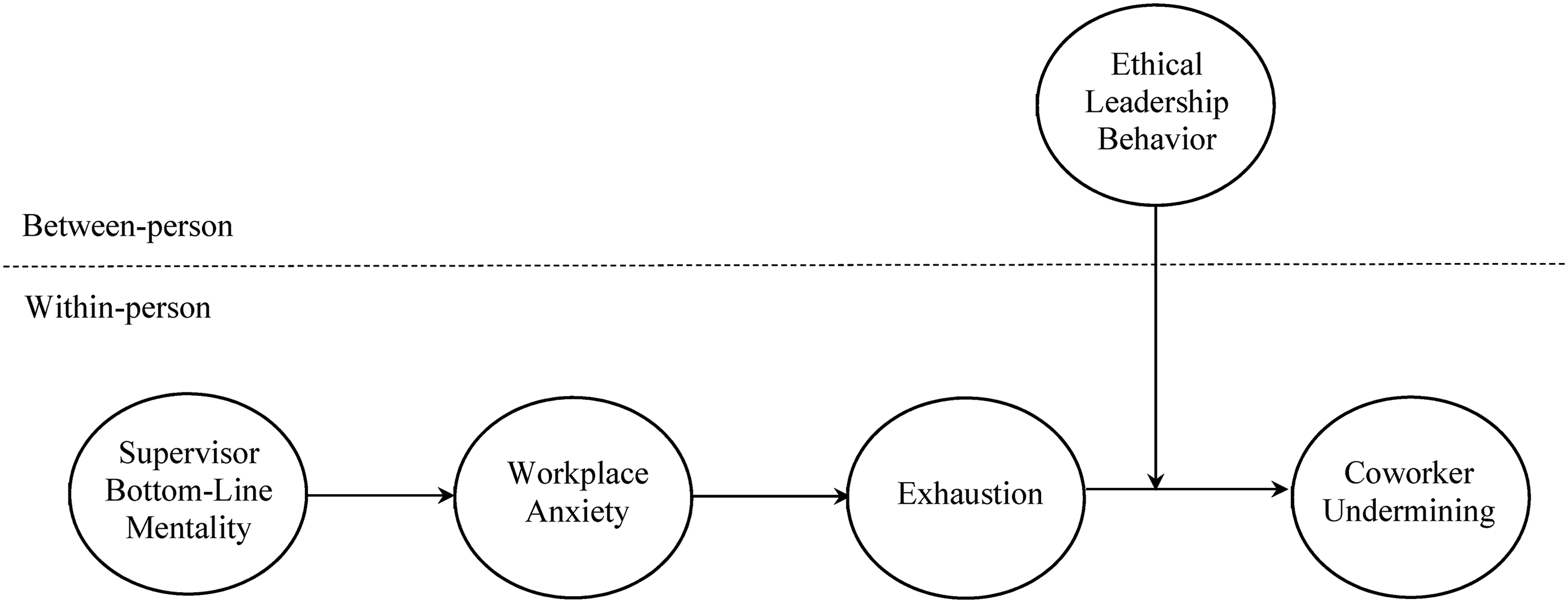
Theoretical Model
SBLM Variability and Employee Anxiety and Exhaustion
Employees prefer “flow” at work, where they become immersed in their tasks across their workweek and they create generalized work patterns that aid in accomplishing performance goals (e.g., Demerouti, 2006). These normalized routines allow employees to utilize socially structured procedures and set time frames to accomplish job duties, setting them on a trajectory for success. This planned approach to work allows employees to efficiently meet deadlines, complete tasks, and perform well (e.g., Barling, Cheung, & Kelloway, 1996; Evans & Davis, 2005). For these reasons, research has demonstrated that set routines reduce employees’ work strain associated with job demands, allowing them comfort in smoothly accomplishing performance objectives (Claessens, van Eerde, Rutte, & Roe, 2004).
Yet, anxiety theory (Cheng & McCarthy, 2018) suggests that performance requirements often fluctuate, which can interrupt the comfort of employees’ routines. As performance requirements vary from time to time, employees’ typical work patterns are disrupted, requiring them to reorient their actions to address nonroutine demands. Supervisors express “episodic performance” demands to raise employee performance in the short term. With SBLM, supervisors communicate bottom-line directives to employees (Wolfe, 1988), who then feel pressured to contribute to the bottom line (Farh & Chen, 2018). However, owing to the ebbs and flows of supervisors’ own dynamic work environments and changing job demands, their emphasis on bottom-line outcomes should vary (i.e., SBLM variability), creating episodic performance demands for employees. The times supervisors raise their focus on the bottom line interrupt employees’ normal workflow, moving them away from their routines (Leroy & Glomb, 2018) and requiring them to alter their work patterns to raise bottom-line outcomes.
In this respect, anxiety theory suggests that episodic performance demands, such as SBLM variability, trigger a transient state of anxiety, “reflecting nervousness, uneasiness, and tension about specific job performance episodes” (Cheng & McCarthy, 2018: 3). Therefore, we argue that the varying nature of SBLM triggers anxiety in employees. Given the difficulty of stopping routines and switching gears as well as the potential uncertainty of raising bottom-line outcomes adequately (Becker et al., 2021; Cheng & McCarthy, 2018), when SBLM is high, employees experience the need to alter their routines, pushing aside and neglecting normal tasks, leaving them to double their efforts to deal with delayed tasks after bottom-line concerns are addressed.
Hypothesis 2: Within-person, SBLM will be positively related to anxiety.
Theory (Cheng & McCarthy, 2018) further proposes that anxiety elicited from episodic performance demands (i.e., SBLM variability) produces exhaustion or “feelings of being emotionally overextended and exhausted by one's work” (Wright & Cropanzano, 1998: 486). Anxiety is an intrusive, self-deprecating experience that consumes energy because of worries and doubts about one's ability to address demands. This stewing depletes self-resources or energy, leaving employees exhausted (Halbesleben & Buckley, 2004; Maslach & Jackson, 1981). Similarly, COR theory proposes that employees hold a finite pool of self-resources (e.g., fortitude, stamina) that provide energy to accomplish tasks (Hobfoll, 1988), and demands deplete these self-resources, resulting in exhaustion. Indeed, scholars have argued that anxiety triggered by stressful events represents a symbolic threat of potential failure that depletes self-resources, creating exhaustion (Quinn, Spreitzer, & Lam, 2012). For instance, Fu, Greco, Lennard, and Dimotakis (2021) found that anxiety experienced during the COVID-19 pandemic generated employee exhaustion. We contend that day-to-day, as employees perceive their supervisors raise their focus on the bottom line, they will experience anxiety that will leave them exhausted.
Hypothesis 3: Within-person, anxiety is positively related to exhaustion and mediates the relationship between SBLM and exhaustion.
SBLM Variability and the Indirect Effects on Coworker Undermining
Workplace anxiety (Cheng & McCarthy, 2018) and COR principles (Hobfoll, 2001) propose that anxiety and its subsequent exhaustion from episodic performance demands give employees little energy to engage in goal-directed behavior. COR suggests that exhaustion motivates employees to conserve self-resources with behavior that provides easy solutions to address demands (see Halbesleben et al., 2014). Exhausted employees aim to preserve their self-resources with strategically defensive acts that require less energy (Hobfoll et al., 2018). Even if such acts do not fully address the problem, the smaller use of energy aids in offsetting dwindling self-resources (Hobfoll et al., 2018). Performance demands motivate employees to enhance profits, but exhausted employees lack energy to raise efforts, which pushes them to give into temptations to address demands through other means. For instance, research has shown that exhaustion motivates employees to engage in unethical behavior to address performance demands—lying, deceiving, and undermining others to easily accomplish tasks (e.g., Gino, Schweitzer, Mead, & Ariely, 2011; Mead, Baumeister, Gino, Schweitzer, & Ariely, 2009). Exploiting others is an easy win by offering actors a simple solution to obtaining bottom-line results (Gneezy, 2005). Thus, undermining others allows exhausted individuals a way to conserve self-resources while getting what they want at others’ expense (Wiltermuth, Newman, & Raj, 2015).
Accordingly, we propose that the anxiety-exhaustion experience of SBLM variability results in coworker undermining because these acts hinder coworkers’ abilities to be successful (Duffy et al., 2002, 2012). Undermining involves aggressive acts (e.g., belittling, withholding information) that increase one's standing in relation to others (Strongman, 2013). To increase their own standings, employees undermine coworkers to minimize coworker outcomes, which makes them look bad to supervisors (Eissa & Wyland, 2016). In this way, undermining bolsters the actor's performance outcomes at the expense of others (Duffy et al., 2012). Indeed, research has shown that coworker undermining represents harm against others for self-gain and provides underminers an easy way to be viewed as higher performers than their undermined coworkers (Crossley, 2009; Reh, Tröster, & Van Quaquebeke, 2018). In all, these arguments suggest that SBLM variability sets in motion an anxiety-exhaustion experience that should promote coworker undermining. The anxiety experienced from raised bottom-line demands will exhaust employees and, per COR (Halbesleben et al., 2014), motivate them to address bottom-line demands through easy, strategic, unethical acts—namely, coworker undermining.
Hypothesis 4: Within-person, SBLM will be indirectly and positively related to coworker undermining through the mediating effects of anxiety and exhaustion.
The Cross-Level Moderating Influence of Ethical Leadership
COR theory (Hobfoll, 1988, 2001) also considers how supervisors influence exhausted employees’ reactions to fluctuating job demands. Supervisors, as relevant role models (Bandura, 1986), can provide guidance to these employees on how to appropriately respond to performance demands (Halbesleben et al., 2014; Hobfoll et al., 2018). In this respect, supervisors’ general (between-person) leadership styles provide employees with consistent guidance regarding how to appropriately work to protect their self-resources, limiting their engagement in coworker undermining. More specifically, we theorize that supervisors’ demonstration of ethical leadership can serve as a critical guidepost for employees experiencing exhaustion from episodic performance events, such as on the days supervisors more strongly focus on the bottom line.
Ethical leadership is “normatively appropriate conduct through personal actions and interpersonal relationships, and the promotion of such conduct to followers through two-way communication, reinforcement, and decision-making” (Brown et al., 2005: 120). Leaders who display ethical leadership continuously communicate and promote an ethical agenda and regularly mentor employees on how to address goals in an ethical manner. Ethical leaders set standards, procedures, and rules that are aligned with moral principles and hold employees accountable to ethics by rewarding ethical behavior and punishing unethical acts. Supervisors who embody ethical leadership consistently emphasize ethical norms, and their employees understand that ethics is a priority and criterion from which their behavior is judged.
The foundation of ethical leadership is moral consistency, which represents patterned behaviors, communications, and decision-making that emphasize ethics over time (Lemoine, Hartnell, & Leroy, 2019: 156). This moral consistency is demonstrated in the moral-person and moral-manager dimensions of ethical leadership (Treviño, Hartman, & Brown, 2000). A supervisor is viewed as a moral person when they regularly display ethical character and altruistic motivation and exude honesty and integrity in everything they do. A supervisor is viewed as a moral manager when they construct ethical strategies and structures, continually fortify ethics as a mandate, and consistently ensure accountability by rewarding and disciplining based on ethical standards. Treviño et al. (2000) noted that inconsistency in the display of either dimension of ethical leadership means supervisors fall short of providing strong ethical guidance, resulting in the leader being considered hypocritical, morally mute, or unethical. These arguments suggest that within-person variations of ethical leadership would be insufficient in offsetting the exhaustion and subsequent anxiety produced by SBLM variability, because within-person variations signal an inconsistent emphasis on ethics in day-to-day interactions with employees. A lack of continued emphasis on ethics suggests these leaders do not structure the work environment in a manner that constantly upholds ethics (e.g., rules, communications, rewards), are unreliable in their discussions about ethics, or are disingenuous in their ethical approach (Treviño et al., 2000). Consequently, variation in ethical leadership would likely be viewed as an inauthentic commitment to ethics.
By comparison, supervisors who display a general style of ethical leadership provide employees with ongoing ethical guidance, resources, and structures to overcome motives to engage in unethical behavior (Brown & Mitchell, 2010; Brown & Treviño, 2006). Ethical leadership behaviors are “socially salient against an organizational backdrop that is often ethically neutral at best” (Brown & Treviño, 2006: 597). Thus, research has found that when employees face ethical dilemmas, ethical leadership provides relevant information to guide employees’ adherence to ethical standards (Kuenzi, Mayer, & Greenbaum, 2020; Mayer, Nurmohamed, Treviño, Shapiro, & Schminke, 2013). Therefore, per COR theorizing, we argue that supervisors’ general style can be a resource, aiding employees through their exhaustion from SBLM variability. COR suggests that exhaustion can motivate coworker undermining, but employees who perceive that their leaders offer support in their consistent commitment to ethics (i.e., between-person ethical leadership) will be less likely to fall prey to the temptation to undermine coworkers to address high SBLM demands.
Hypothesis 5: Ethical leadership will moderate the positive relationship between exhaustion and coworker undermining, such that the relationship will be weaker when ethical leadership is higher than lower.
Similarly, we suggest that ethical leadership will be particularly valuable the times SBLM is high. Our arguments are consistent with Treviño et al.'s (2003) qualitative findings that supervisors balance pressures to enhance profits with ethical strivings. Supervisors’ demands to raise profits fluctuate, prompting a varied focus on the bottom line, day-to-day. Yet, supervisors can regularly—across days—emphasize ethics in the obtainment of the bottom line. Even on the days supervisors are focused on bottom-line outcomes, a continuous display of ethical leadership can help employees perceive the need to meet bottom-line goals in ways that are consistent with ethical standards (Treviño et al., 2003). Thus, supervisors may temporarily emphasize the bottom line from time to time, which will enhance employee anxiety and subsequent exhaustion, but a supervisor's general commitment to ethics will provide anxious, exhausted employees with ethical guidance that will reduce their unethical, undermining reactions. By contrast, the times supervisors raise their focus on the bottom line, anxious and exhausted employees who lack ethical leadership will be more likely to undermine coworkers.
Hypothesis 6: The positive indirect effect of SBLM on coworker undermining through anxiety and exhaustion will be weaker when ethical leadership is higher than lower.
Overview of Methods
Because we suggest SBLM varies, we conducted three ESM studies to test this idea with our predictions. Each study builds from each other. Study 1 examines whether SBLM varies within-person and then tests the proposed relationships for SBLM variability, anxiety, exhaustion, and coworker undermining (Hypotheses 1 through 4). Study 2 replicates Study 1 (Hypotheses 1 through 4) and builds upon Study 1 by investigating the proposed cross-level moderating effect of ethical leadership (Hypotheses 5 and 6). Study 3 also tests all predictions, replicating findings of Studies 1 and 2, and it addresses lingering assumptions by formulating and testing two research questions regarding whether (a) supervisors’ work factors drive their own SBLM and (b) fluctuating daily ethical leadership, as opposed to consistent ethical leadership, offsets the employee exhaustion that motivates undermining. Thus, Study 3 tests the assumption that differing work factors influence SBLM variability and measures ethical leadership within-person, allowing us to explore its moderation effects both between-person and within-person.
Study 1
Sample and Procedure
We collected data from a panel of full-time working adults through CloudResearch (an online resource that enables researchers to send surveys to a preselected panel of Amazon Mechanical Turk workers who fit eligibility requirements; Litman, Robinson, & Abberbock, 2016). Participants completed a onetime survey to screen for their availability (e.g., work absences during the 10 days of the study) and eligibility (e.g., supervisor interaction frequency, typical work start and end times, work status) and to provide demographics and ratings for control variables. A week after the registration, participants received two surveys each day for 10 working days. Of the 166 participants who met our eligibility requirements, 121 completed daily surveys. The first daily survey (including SBLM and anxiety measures) was distributed at noon (closing at 2:30 p.m.). The second daily survey (including exhaustion and undermining measures) was distributed at 4:00 p.m. (closing at 8:30 p.m.). Participants were compensated $0.50 for the prescreen survey, $2 for the registration survey, $0.50 for each completed daily morning survey, $1 for each completed daily evening survey, and bonuses ($3.50 for completing all 10 surveys the first week, $4.00 for completing all 10 surveys the second week, and $5 for completing all 20 surveys for the study). We removed individuals who failed attention-check items (Meade & Craig, 2012) and conducted multivariate outlier analysis in Mplus to detect influential outliers (Aguinis, Gottfredson, & Joo, 2013); no participants met our criterion for low conscientiousness (Cook's D scores greater than three standard deviations above the mean). The final sample had 113 participants (93.39% response rate), containing 966 observations (85.49% response rate; the average number of observations per participant was 8.55). On average, participants were 37.19 years old (SD = 8.47) and worked at their company 7.66 years (SD = 6.34), 51.3% of the sample identified as female, 80.5% identified as Caucasian, and 48.7% held nonsupervisory positions. Participants worked in a variety of industries (e.g., education, finance, health care, retail).
Measures
Following best practice for ESM studies (e.g., Gabriel et al., 2019) to capture within-person variations (SBLM, anxiety, exhaustion, and coworker undermining), measures were adapted to ask about daily experiences. Also, following best practice (see Beal, 2015; Uy, Foo, & Aguinis, 2010) to reduce survey fatigue and without compromising the psychometric properties of the measures, where possible, we shorted measures (e.g., anxiety, exhaustion, coworker undermining). Unless noted, items were rated on a 5-point scale (1 = strongly disagree, 5 = strongly agree). Reliabilities represent averages across days.
SBLM. Participants rated their supervisors’ SBLM each day with four items from Greenbaum et al.'s (2012) BLM measure (e.g., “TODAY, my supervisor has been highly concerned with meeting the bottom line”; α = .94).
Anxiety. Participants rated their anxiety each day with five items from Shaver, Schwartz, Kirson, and O’Connor (1987), using a 5-point scale (1 = very slightly or not at all, 5 = extremely; e.g., “Anxious”; α = .94).
Exhaustion. Participants rated their exhaustion each day with four items from Pugh, Groth, and Hennig-Thurau's (2010) measure (e.g., “Exhausted”; α = .94).
Coworker undermining. Participants rated their coworker undermining each day with four items from Duffy, Shaw, Tepper, and Scott's (2006) seven-item measure (see Appendix A for validity evidence of the reduced measure; e.g., “Criticized another coworker”), using a 5-point scale (1 = never, 5 = always; α = .83).
Control variables. Although the ESM design accounts for trait differences within-person, scholars recommend controlling for trait affectivity to reduce the potential for common-method variance (CMV) bias (Gabriel et al., 2019; Lanaj, Gabriel, & Jennings, 2023; P. M. Podsakoff, MacKenzie, & Podsakoff, 2012). We did so with Watson, Clark, and Tellegen's (1988) 10-item trait affect measures (a sample item for negative affect is “Upset” and positive affect is “Excited”; negative affect, α = .92; positive affect, α = .93). We also followed ESM best practice (Gabriel et al., 2019) and controlled for prior-workday lagged assessments of each endogenous construct (prior-day anxiety, exhaustion, and undermining), allowing us to isolate changes in dependent variables from prior-day experiences and behaviors. We also examined the relevance of the control variables and with or without controls (see Appendix B), and the results did not change with or without controls.
Results and Discussion
Descriptive statistics and correlations. The means, standard deviations, reliabilities (averaged across days), and correlations among study variables are presented in Table 1.
Study 1 Descriptive Statistics and Correlations
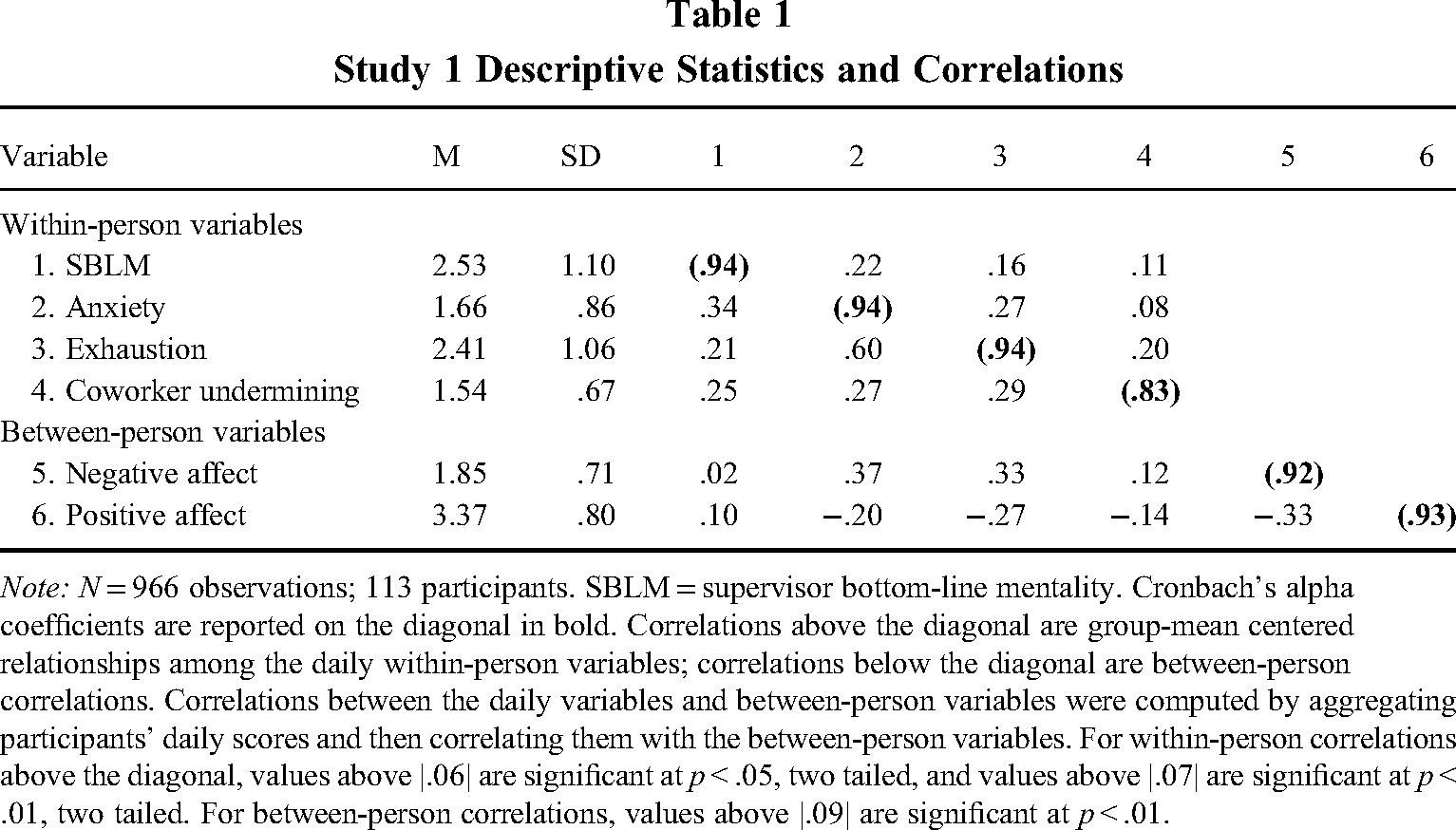
Note: N = 966 observations; 113 participants. SBLM = supervisor bottom-line mentality. Cronbach's alpha coefficients are reported on the diagonal in bold. Correlations above the diagonal are group-mean centered relationships among the daily within-person variables; correlations below the diagonal are between-person correlations. Correlations between the daily variables and between-person variables were computed by aggregating participants’ daily scores and then correlating them with the between-person variables. For within-person correlations above the diagonal, values above |.06| are significant at p < .05, two tailed, and values above |.07| are significant at p < .01, two tailed. For between-person correlations, values above |.09| are significant at p < .01.
Confirmatory factor analysis (CFA). Multilevel CFA using Mplus Version 8.5 (Muthén & Muthén, 2012) specifying four factors for the four variables in our hypothesized model showed adequate fit to the data (χ2 = 319.59, df = 113, p = .00; comparative fit index [CFI] = .98; root mean square error of approximation [RMSEA] = .04; standardized root mean square residual [SRMR] within = .06). It was a better fit than alternative models, such as a three-factor model, where items for anxiety and exhaustion were combined on one factor (χ2 = 1585.04, df = 116, p = .00; CFI = .83; RMSEA = .11; SRMR within = .09), and a one-factor model, which showed a poor fit to the data (χ2 = 5854.83, df = 119, p = .00; CFI = .32; RMSEA = .21; SRMR within = .20), providing evidence of discriminant validity for our measures.
Data analysis approach. Because the data are composed of observations nested within individuals, we used multilevel path analysis procedures using Mplus Version 8.5 (Muthén & Muthén, 2012). Note that we used ESTIMATER = BAYES to ensure the full decomposition of our endogenous variables when estimating the random slopes (Asparouhov & Muthén, 2018). The exogenous variable, SBLM, was person-mean centered and specified only at the within-person level. We also estimated the same model with robust full maximum-likelihood estimation (MLR), and the effect sizes were identical for all effects except for the random slopes involving endogenous variables whereby those effects were larger using MLR, which is to be expected given that it was using the full variance for anxiety and exhaustion at the within-person level. Thus, the more appropriate estimates were from the Bayes estimation. These procedures model and control for the variance in and among the constructs that reside at the between-person level (Preacher, Zyphur, & Zhang, 2010), providing unbiased parameter estimates at the within-person level. We first examined the within-person variance (σ2) of our daily variables, and the results show the daily variances demonstrated sufficient within-person variance to test the predictions (SBLM = 34%, anxiety = 36%, exhaustion = 46%, and coworker undermining = 45%). Within the leadership literature, the within-person variance of variables seems to range from about 26% to 60% in general, with scholars suggesting that around 30% is “considerable” within-person variance (e.g., Johnson, Lanaj, & Barnes, 2014; Lanaj, Johnson, & Lee, 2016). 1 Therefore, although there is considerable between-person variance in SBLM, the within-person variance still suggests substantial within-person fluctuation that is important to examine.
We adopted Preacher et al.'s (2010) recommended procedures to test our hypothesized model. Error variances and correlations were not constrained to be fixed, and the within-person predictor was group-mean centered. Because our overall model included indirect effects, we integrated these procedures with Preacher, Rucker, and Hayes’s (2007) suggestions for mediation. The direct effects of SBLM were controlled for in the equations for the dependent variables. The within-person incremental variance explained by our model was computed with pseudo R 2 values, following Raudenbush and Bryk's (2002) Equation 4.20 (see Table 2).
Study 1 Multilevel Analyses Results
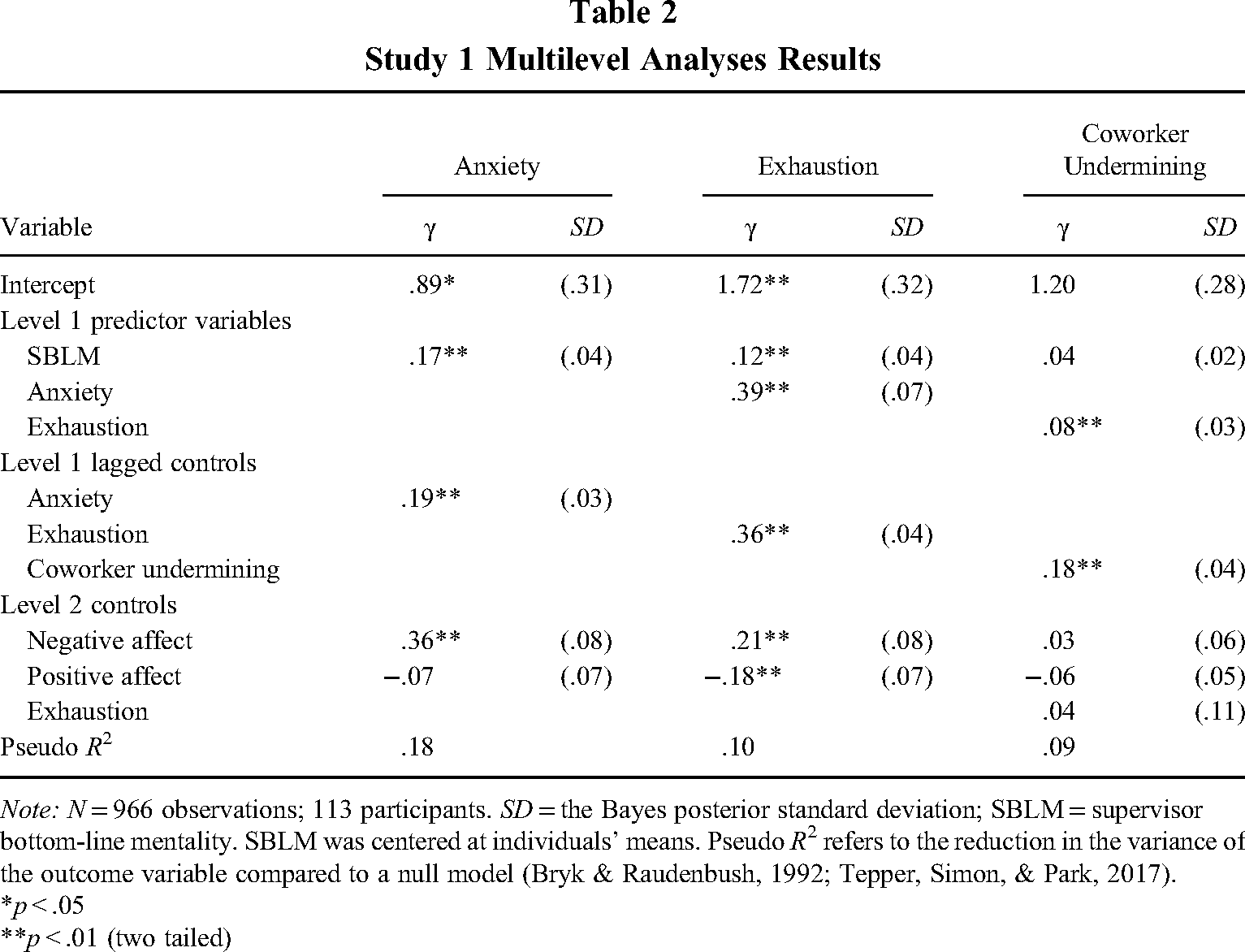
Note: N = 966 observations; 113 participants. SD = the Bayes posterior standard deviation; SBLM = supervisor bottom-line mentality. SBLM was centered at individuals’ means. Pseudo R2 refers to the reduction in the variance of the outcome variable compared to a null model (Bryk & Raudenbush, 1992; Tepper, Simon, & Park, 2017).
*p < .05
**p < .01 (two tailed)
Hypothesis testing. As an exploratory inquiry related to Hypothesis 1, participants were asked to “please indicate on the sliding bar how much your supervisor's focus on the bottom line changed day-to-day over the past month” on a scale of 0 to 100. Responses ranged from 5 to 100, with a median of 49 and a mean of 45.34 (SD = 23.97), indicating that day-to-day fluctuations in SBLM were common and that no supervisors exhibited a static SBLM. Further supporting Hypothesis 1, SBLM varied day-to-day at the within-person level (34%, intraclass correlation [ICC] = .42, 95% confidence interval [CI] [.39, .46]). Supporting Hypothesis 2, SBLM was positively related to anxiety (γ = .17, SD = .04, p = .00, pseudo R2 = .18). Supporting Hypothesis 3, SBLM was indirectly and positively related to exhaustion through anxiety (.06, SD = .02, 95% CI = .032, .108, pseudo R2 = .10). Supporting Hypothesis 4, SBLM had a positive serial indirect effect on coworker undermining through anxiety and exhaustion (.01, SD = .00, 95% CI = .002, .011, pseudo R2 = .09). Notably, serial indirect effects trend toward smaller values (cf. Lanaj, Gabriel, & Chawla, 2021; Sonnentag, Eck, Fritz, & Kühnel, 2020). Moreover, the pseudo R2 provides useful information because it represents the amount of variance explained in our outcomes by the hypothesized model, calculated by the reduction in residual variance of each outcome variable compared with a null model, thereby providing more information on the interpretability of these results (e.g., referencing the degree of explained variance of SBLM on coworker undermining through our mediators). Scholars have argued that a pseudo R2 of .04 is considered a small-to-moderate effect to explain relationships among attitudes and behaviors (e.g., Vacha-Haase & Thompson, 2004).
Discussion. Our Study 1 results suggest SBLM varies within-person. This finding aids in broadening the conceptualization of SBLM beyond an orientation to a state that has implications for employees (Greenbaum et al., 2023). Supporting our theorizing, SBLM variation sets in motion an anxiety-exhaustion experience that motivates employees to undermine their coworkers. SBLM variation jars employees away from their routines, eliciting anxiety that drains self-regulatory resources. Without sufficient energy to maintain appropriate behavior, employees turn to undermining because it is an easy, strategic, yet unethical way to help them look good.
Although scholars have demonstrated benefits and validity of using crowdsourcing panels (e.g., Walter, Seibert, Goering, & O’Boyle, 2019), such as offering a platform of demographically diverse working adults (e.g., Buhrmester, Kwang, & Gosling, 2011), skeptics have questioned the generalizability of these data compared with other sources of data. Because crowdsourcing samples are unsupervised with responses linked to incentives, participants may not take the surveys seriously or be honest in responding (see Chandler & Shapiro, 2016, for a review). Thus, we conducted a second study to test our predictions and replicate our findings using a different sample. We also used Study 2 to test ethical leadership as a moderator.
Study 2
Sample and Procedure
We again used an ESM design, allowing us to examine within-person effects and test the between-person moderating effects of ethical leadership. We recruited full-time working adults from a professional MBA program at a southeastern university in the United States. The MBA program asked us to limit the ESM survey frequency to two surveys each week, as these professionals worked full-time and went to school around their busy schedules. Thus, we collected data from two surveys a week for 5 weeks (10 surveys total), which ESM scholars have argued breaks up the monotony of ESM surveys, reducing participant fatigue (Gabriel et al., 2019), and which has been shown to sufficiently capture variation needed to test within-person effects (e.g., Thau & Mitchell, 2010). Thus, participants completed an initial registration survey (which included eligibility criteria: participants had to be an adult, work full-time [at least 35 hr a week], and have regular interactions with their supervisors and coworkers) and measures of ethical leadership, controls, and demographics. Then, we followed up with twice-a-week surveys across 5 weeks to complete the within-person variable measures.
Participants were compensated $2.50 for completing each survey and received a $10 bonus for completing all surveys. A total of 118 participants took the registration survey. Analyses were conducted using a stacked data file in Mplus so that missing data for any given data collection time point were omitted; but if complete data existed for other within-person time points, they were retained and used in the analyses. As with Study 1, participants were removed for failing attention-check items (Meade & Craig, 2012). In an additional test to examine conscientiousness in responses, we conducted multivariate outlier analysis in Mplus to detect influential outliers (Aguinis, Gottfredson, & Joo, 2013) and omitted two participants with Cook's D scores greater than three standard deviations above the mean. In particular, these individuals were removed based on the survey completion time (having completed surveys within 1–2 min). We ran the analyses with and without these outliers, and all effect sizes (to rounding) and conclusions were the same. The final sample included 873 total observations, nested within 100 participants. The average number of observations completed per participant was 8.73. On average, participants were 30.44 years old (SD = 5.39) and worked at their company 3.77 years (SD = 2.63); 53% of the sample identified as female, 70% identified as Caucasian, and 55% held nonsupervisory positions. Participants worked in a variety of industries (e.g., finance, insurance, real estate, information systems).
Measures
As with Study 1, we adapted the instructions of the measures to reference twice-a-week surveys. Surveys were distributed on Mondays and Thursdays for 5 weeks, and participants were asked to reference the last completed survey (“Since the last survey”). That is, for the Monday survey, participants were asked to consider the prior Thursday and Friday when answering the questions, and for the Thursday survey, participants were asked to consider the prior Monday, Tuesday, and Wednesday when answering the questions. We used the same measures as in Study 1 for SBLM (α = .98), anxiety (α = .93), and coworker undermining (α = .81). Like Study 1, we controlled for trait affect with the same measures used in Study 1 (trait negative affect, α = .84; positive affect, α = .89), and we examined if the results changed with or without the control variables included in the analyses. The results were unchanged (see Appendix B). Participants responded to the following measures on a 5-point scale (1 = strongly disagree, 5 = strongly agree). As in Study 1, we used as few items as possible without compromising the measures’ psychometric properties (Beal, 2015; Uy et al., 2010).
Exhaustion. Participants rated their exhaustion each day with four items from Maslach and Jackson's (1981) nine-item measure (e.g., “I have felt burned out from my work”; α = .91).
Ethical leadership. Participants rated their supervisors’ displayed ethical leadership with Brown et al.'s (2005) 10-item measure (e.g., “My supervisor disciplines employees who violate ethical standards”; α = .85).
Results and Discussion
Descriptive statistics and correlations. The means, standard deviations, reliabilities (averaged across days), and correlations among study variables are presented in Table 3.
Study 2 Descriptive Statistics and Correlations
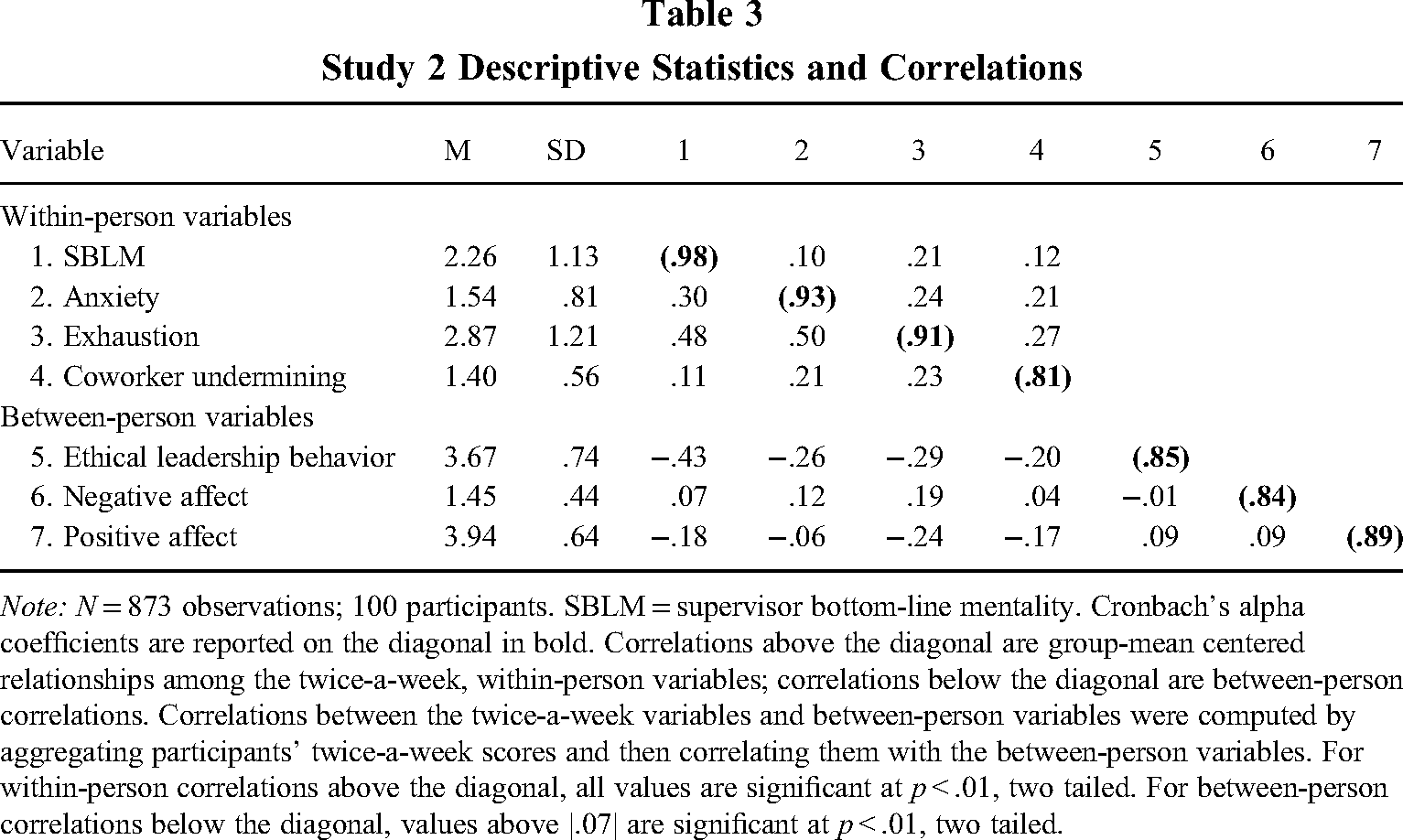
Note: N = 873 observations; 100 participants. SBLM = supervisor bottom-line mentality. Cronbach's alpha coefficients are reported on the diagonal in bold. Correlations above the diagonal are group-mean centered relationships among the twice-a-week, within-person variables; correlations below the diagonal are between-person correlations. Correlations between the twice-a-week variables and between-person variables were computed by aggregating participants’ twice-a-week scores and then correlating them with the between-person variables. For within-person correlations above the diagonal, all values are significant at p < .01, two tailed. For between-person correlations below the diagonal, values above |.07| are significant at p < .01, two tailed.
CFA. We conducted a multilevel CFA using Mplus Version 8.5 (Muthén & Muthén, 2012) specifying five factors for variables in our hypothesized model. The measurement model provided an adequate fit to the data (χ2 = 299.92, df = 148, p = .00; CFI = .98; RMSEA = .03; SRMR within = .03, SRMR between = .07). It was a better fit than alternative models, such as a four-factor model, where items for anxiety and exhaustion were combined on one factor (χ2 = 1198.85, df = 151, p = .00; CFI = .84; RMSEA = .08; SRMR within = .11; SRMR between = .07), and a two-factor model, where items for SBLM, anxiety, exhaustion, and coworker undermining were combined on one factor (χ2 = 4065.33, df = 154, p = .00; CFI = .40; RMSEA = .16; SRMR within = .23; SRMR between = .07), providing evidence of discriminant validity for our measures. Note that our four-factor model is consistent with the three-factor model in Study 1, and the two-factor model is consistent with the one-factor model in Study 1. The difference is that ethical leadership was only a between-person variable and so it was separate.
Data analysis approach. Like Study 1, we examined the within-person variance (σ2) of the twice-a-week variables, which showed sufficient within-person variance to test the predictions (SBLM = 18%, anxiety = 33%, exhaustion = 22%, and coworker undermining = 36%). Notably, by comparison to Study 1, the SBLM within-person variance percentage was lower, but a meta-analysis by N. P. Podsakoff et al. (2019) suggests that this percentage is in the range of within-person variance of stressors in published studies. Thus, we used the same procedures for multilevel path analysis with Bayes estimation as we did in Study 1 with Mplus Version 8.5 (Muthén & Muthén, 2012). These procedures allow us to model and control for the variance in and among the constructs that reside at the between-individual level (Preacher et al., 2010), providing unbiased parameter estimates at the within-person level and to test our cross-level moderating effects.
We also adopted procedures recommended by Preacher et al. (2010) to test our hypothesized model. Error variances and correlations were not constrained to be fixed, the between-individual variables were grand-mean centered, and the within-individual predictor (i.e., SBLM) was group-mean centered. The analyses were the same as Study 1, except for controlling for daily prior-day criterion variables, as the data were collected twice a week and not daily. Given that our overall model included the moderation of indirect effects, we integrated these procedures with Preacher et al.'s (2007) suggestions for moderated mediation (see Table 4).
Study 2 Multilevel Analyses Results
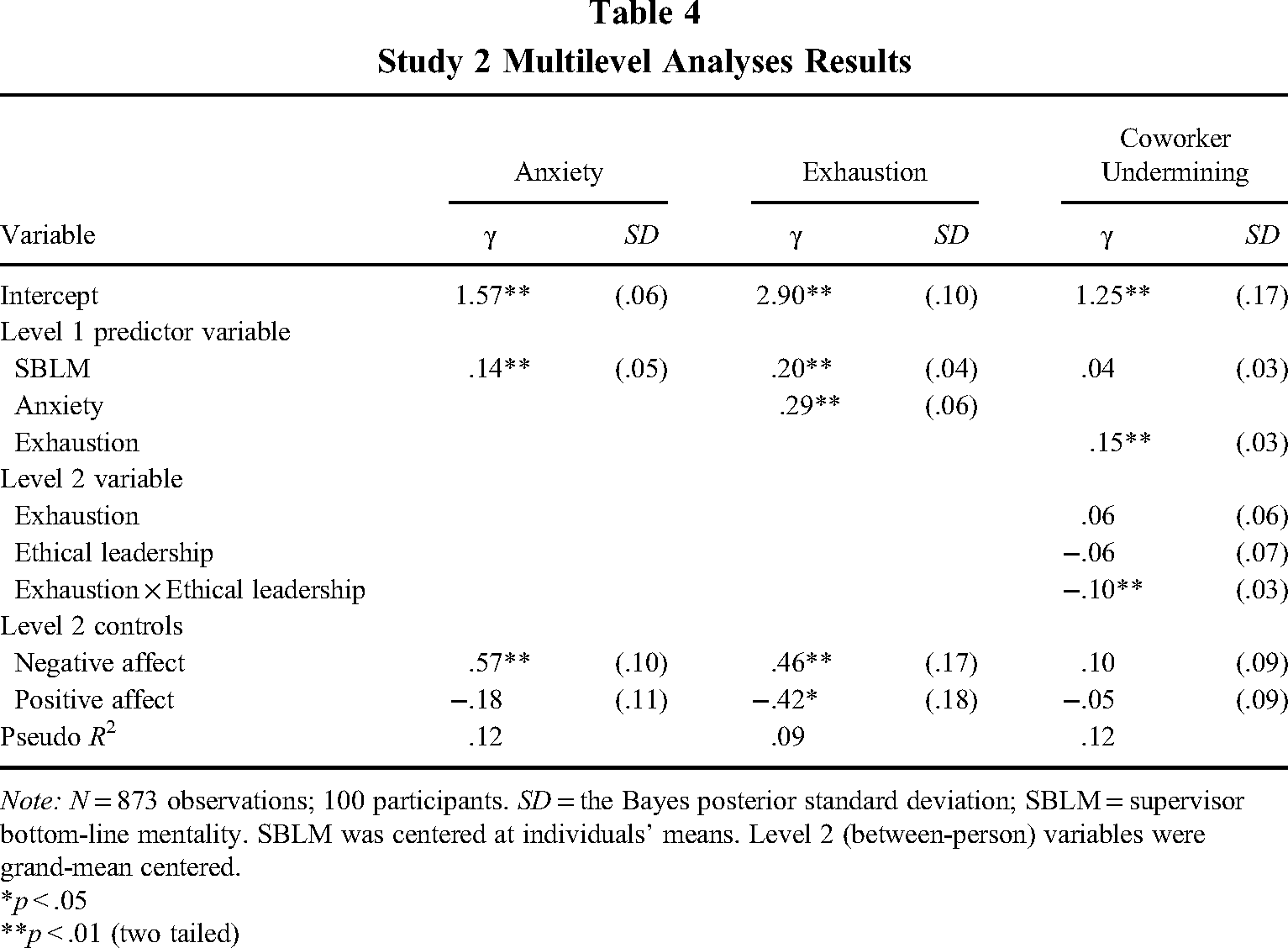
Note: N = 873 observations; 100 participants. SD = the Bayes posterior standard deviation; SBLM = supervisor bottom-line mentality. SBLM was centered at individuals’ means. Level 2 (between-person) variables were grand-mean centered.
*p < .05
**p < .01 (two tailed)
Hypothesis testing. Supporting Hypothesis 1, SBLM varied within-person (18%; ICC = .27, 95% CI [.25, .30]). Supporting Hypothesis 2, SBLM significantly and positively related to anxiety (γ = .14, SD = .05, p = .00, pseudo R2 = .12). Supporting Hypothesis 3, SBLM indirectly and positively influenced exhaustion through anxiety (.04; SD = .02, 95% CI [.008, .082], pseudo R2 = .09). Supporting Hypothesis 4, SBLM's serial indirect effect on undermining through anxiety and exhaustion was positive and significant (.01; SD = .00, 95% CI [.001, .012], pseudo R2 = .12). Supporting Hypothesis 5, ethical leadership moderated the relationship between exhaustion and undermining (γ = −.10, SD = .03, p = .00), and the relationship was weaker when ethical leadership was higher (γ = .07, SD = .04, 95% CI [−.002, .152]) than lower (γ = .22, SD = .03, 95% CI [.162, .281]; see Figure 2). Supporting Hypothesis 6, the positive indirect effect of SBLM through anxiety and exhaustion on undermining was weaker when ethical leadership was higher (.00; SD = .00, 95% CI [.000, .008]) than lower (.01; SD = .00, 95% CI [.002, .019]). Notably, despite CI overlap, research has regarded a change in significance between high and low levels of a moderator as adequate evidence of significance of the conditional indirect effects within a serial moderated-mediation model—the presence of zero within the CI is indicative of a nonsignificant effect (Deng, Coyle-Shapiro, Zhu, & Wu, 2022; Lanaj et al., 2021).
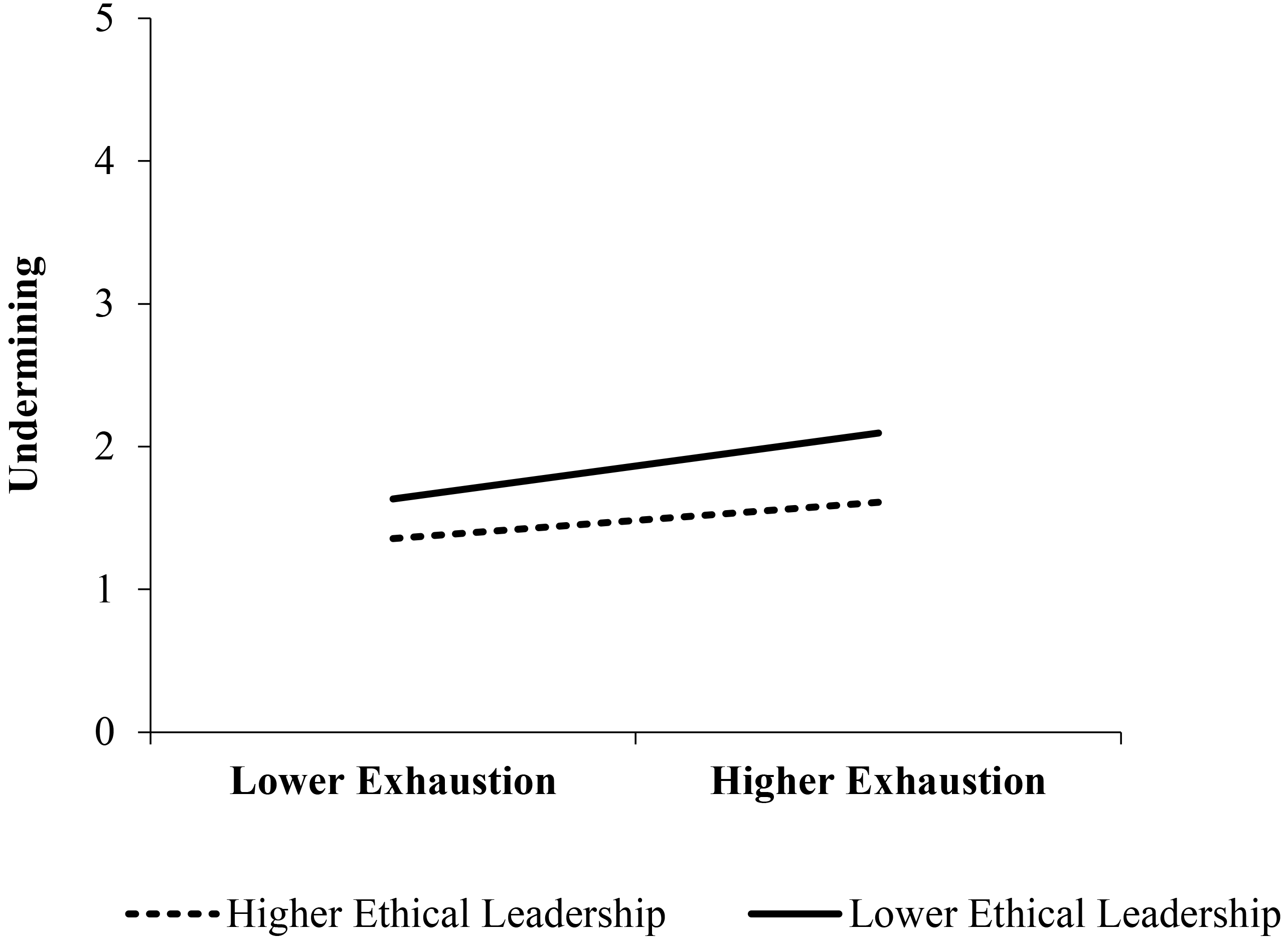
Study 2 Cross-Level Moderating Effects of Ethical Leadership on the Relationship Between Exhaustion and Coworker Undermining
Discussion. Study 2 replicated the Study 1 findings and offered an opportunity to test our cross-level moderation predictions about ethical leadership. The results support COR principles that supervisors’ generalized style of leadership can be a resource for employees when they experience exhaustion from SBLM variability. Consistent with our proposals, between-person ethical leadership attenuated the effects of exhaustion on coworker undermining and the overall indirect effect of SBLM on coworker undermining (through anxiety and exhaustion). Exhausted employees were less likely to undermine coworkers when they perceived their supervisors had a continual commitment to ethics.
Despite the strengths of Study 2, there are limitations we sought to address in Study 3. First, the prior studies asked participants to ensure they worked in an environment with coworkers and had continued interactions with their supervisors. Nevertheless, we neglected to ask participants whether they interacted with their supervisors daily, which we address in Study 3. Second, although the findings replicated, there were differences between Studies 1 and 2, such as lower SBLM within-person variance in Study 2 and some correlation differences. Regarding the within-person variance difference, N. P. Podsakoff et al. (2019) found that within-person variation is attributable to design and sample characteristics. Thus, it could be that the lower Study 2 within-person SBLM variance was due to sample or design differences (Study 2 was a twice-a-week ESM and Study 1 a daily ESM). Utilizing a daily ESM in Study 3 allows us to test this assumption. Further, correlational differences, such as that between SBLM and exhaustion (Study 1 = .21 vs. Study 2 = .48), may be attributed to the different exhaustion measures used across the studies. It may also be attributed to different samples or sample sizes. In Study 3, it was important to collect data from a larger sample of working adults for cross-validation to address the potential limitations and strengthen our conclusions. Third, in Study 3, we sought to directly test underlying theoretical assumptions: (a) that factors in supervisors’ workday can prompt variation in their BLM and (b) that a generalized pattern of ethical leadership (as a between-person perception vs. within-person variation in perceptions) moderates the effects. We designed Study 3 to collect data from supervisors on their perceptions of their own BLM and likely antecedents of their BLM variation, and we collected data on daily ethical leadership, allowing us to examine both its within-person and between-person moderation effects.
Study 3
Two embedded assumptions in our theorizing deserve attention. First, we have argued that SBLM variability occurs because supervisors’ attention to the bottom line varies with differing factors that they face across their workweeks. Greenbaum et al. (2023) argued that SBLM can be examined as a state because supervisors focus on differing objectives throughout a workweek. Empirical evidence supports these ideas. For instance, research has shown that leaders’ behavior variability can be influenced in an imitative, trickle-down manner (e.g., Chan et al., 2022; Zhang, Zhang, Xiu, & Zheng, 2020). Indeed, at the between-person level of analysis, Greenbaum et al. (2012) found that SBLM influences employees’ BLM, leaving open the possibility that SBLM is affected by the supervisor's bottom-line focus day-to-day. Leadership scholars have also argued that the primary reason leader behaviors vary is because leaders face stressors and job demands that alter their attention day-to-day (McClean et al., 2019). In support of these ideas, Rosen et al. (2019) found that supervisor behaviors vary from their daily job demands (i.e., email demands), fluctuating leader behaviors with the highs and lows of demands. For these reasons, we suggest that SBLM variation is likely influenced by varying job demands and coworker competitiveness.
Second, our arguments about ethical leadership's cross-level moderation effects propose that a continued, steadfast display of ethical leadership—between-person perceptions, not a within-person perception—moderates the relationship between exhaustion and coworker undermining and the indirect effect of SBLM variability on coworker undermining through anxiety and exhaustion. These arguments are based on COR principles that supervisor behaviors act as a resource for employees and on ethical leadership theory (Brown et al., 2005; Treviño et al., 2000) that suggests a supervisor's unwavering commitment to ethics raises employees’ awareness of the importance of ethical values. Ethical leadership scholars have also argued that moral inconsistencies are insufficient to direct employees’ own ethical behavior (Treviño et al., 2000). Still, the idea deserves empirical attention, particularly in consideration of whether ethical leadership, as a within-person perception, moderates the effects and if upticks in ethical leadership offset the exhaustion that motivates coworker undermining.
Sample and Procedure
Study 3's daily ESM included full-time working adults, recruited through ResearchMatch (Harris et al., 2012), a registry supported by the National Institutes of Health where volunteers consent to be contacted about research opportunities (cf. Muir, Sherf, & Liu, 2022). The recruitment ad outlined study requirements and asked participants to nominate a supervisor (who provided ratings for our supplemental analyses). Participants completed a onetime survey that screened for their availability (e.g., planned work absences during the 10 days of the study), eligibility (e.g., frequency of supervisor interaction,2 typical work start and end times, work status), demographics, and control variables. A week later, participants received two surveys each day for 10 working days—one at 11:30 a.m. (closing by 3:00 p.m.) that included SBLM and anxiety measures and another at 4:30 p.m. (closing by midnight) that included exhaustion, ethical leadership, and undermining measures. Of the 192 who were eligible, 172 completed daily surveys. Participants received $4 Amazon gift cards for the registration survey, $1 for each completed daily morning survey, $1 for each completed daily evening survey, and a bonus of $10 for completing all surveys. As with the previous studies, individuals who failed attention-check items were removed. Like Study 2, we conducted multivariate outlier analysis and omitted five participants with Cook's D value greater than three standard deviations above the mean (Aguinis et al., 2013). 3 The final sample contained 1,460 observations (99.29% response rate) from 155 participants (90.11% response rate). Observations were nested within participants. The average number of observations per participant was 9.42. On average, participants were 35.77 years old (SD = 11.95) and worked at their company 6.65 years (SD = 5.27); 44.2% of the sample identified as female, 64.9% identified as Caucasian, and 54.5% held nonsupervisory positions. Participants worked in a variety of industries (e.g., education, finance, health care, retail).
Measures
We used the same measures as in Study 2 for SBLM (α = .92), anxiety (α = .94), ethical leadership (α = .90), and coworker undermining (α = .93) and used the same measure from Study 1 for exhaustion (Pugh et al., 2010; α = .94). To test our research questions, supervisors rated their own BLM (α = .78) and their supervisor's SBLM (α = .90) with the Study 2 measure and rated their job demands with Van Yperen and Hagedoorn's (2003) 10-item measure (e.g., “TODAY, I have too much work to do”; α = .93) and coworker competitiveness with Fletcher and Nusbaum's (2010) four-item measure (“TODAY, I felt that I would be acknowledged for my accomplishments only if I outperformed others”; α = .95). To conduct supplemental analyses on whether ethical leadership moderates the effects within versus between-person, we measured ethical leadership daily, obtaining the person means across days to generate the between-person measure of ethical leadership. We again controlled for trait affect with the measures used in Studies 1 and 2 (negative affect, α = .94; positive affect, α = .93) as well as prior-workday lagged assessments of each prior-day anxiety, exhaustion, and undermining (as in Study 1). We examined the relevance of the control variables and with or without controls (as in Studies 1 and 2), and the results did not change with or without controls (see Appendix B).
Results and Discussion
Descriptive statistics and correlations. The means, standard deviations, reliabilities (averaged across days), and correlations among study variables are presented in Table 5.
Study 3 Descriptive Statistics and Correlations
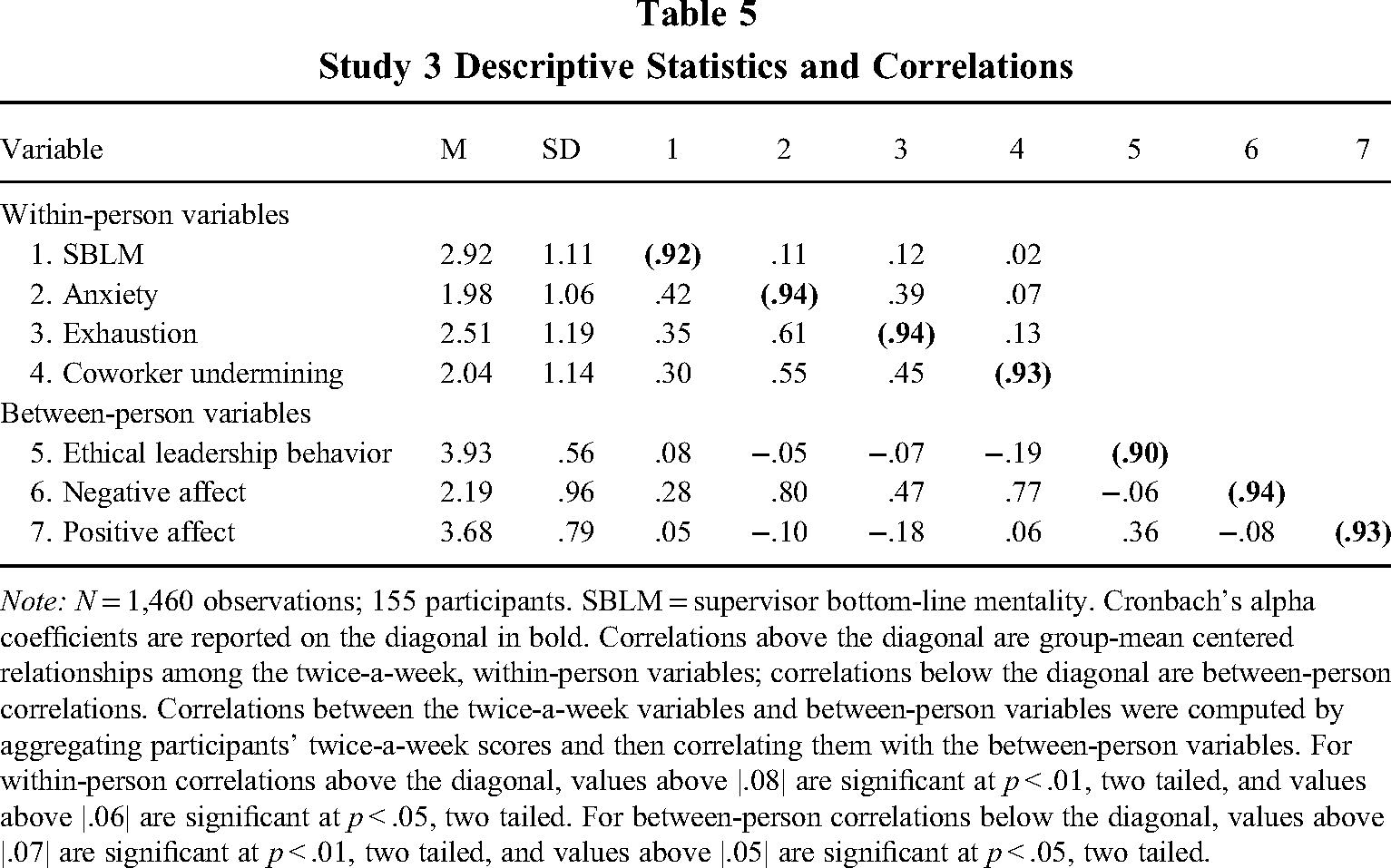
Note: N = 1,460 observations; 155 participants. SBLM = supervisor bottom-line mentality. Cronbach's alpha coefficients are reported on the diagonal in bold. Correlations above the diagonal are group-mean centered relationships among the twice-a-week, within-person variables; correlations below the diagonal are between-person correlations. Correlations between the twice-a-week variables and between-person variables were computed by aggregating participants’ twice-a-week scores and then correlating them with the between-person variables. For within-person correlations above the diagonal, values above |.08| are significant at p < .01, two tailed, and values above |.06| are significant at p < .05, two tailed. For between-person correlations below the diagonal, values above |.07| are significant at p < .01, two tailed, and values above |.05| are significant at p < .05, two tailed.
CFA. We conducted multilevel CFA using Mplus Version 8.5 (Muthén & Muthén, 2012) specifying five factors for the five variables in our hypothesized model. The results for the measurement model provided an adequate fit to the data (χ2 = 396.21, df = 148, p = .00; CFI = .97; RMSEA = .03; SRMR within = .03, SRMR between = .05), and it was a better fit than alternative models, such as a three-factor model, where items for anxiety and exhaustion were combined on one factor (χ2 = 1732.181, df = 151, p = .00; CFI = .84; RMSEA = .08; SRMR within = .07; SRMR between = .05), and a two-factor model, where the items for SBLM, anxiety, exhaustion, and coworker undermining were combined on one factor (χ2 = 4349.60, df = 154, p = .00; CFI = .56; RMSEA = .14; SRMR within = .15; SRMR between = .05), providing evidence of discriminant validity for our measures.
Data analysis approach. As with Study 1, we examined the within-person variance (σ2) of the variables, and the results show the daily variances demonstrated sufficient within-person variance to test the predictions (SBLM = 28%, anxiety = 24%, exhaustion = 35%, and coworker undermining = 15%). We followed the same analytic procedures for multilevel path analysis with Bayes estimation as we did in Studies 1 and 2 using Mplus Version 8.5 (Muthén & Muthén, 2012). The results are presented in Table 6.
Study 3 Multilevel Analyses Results
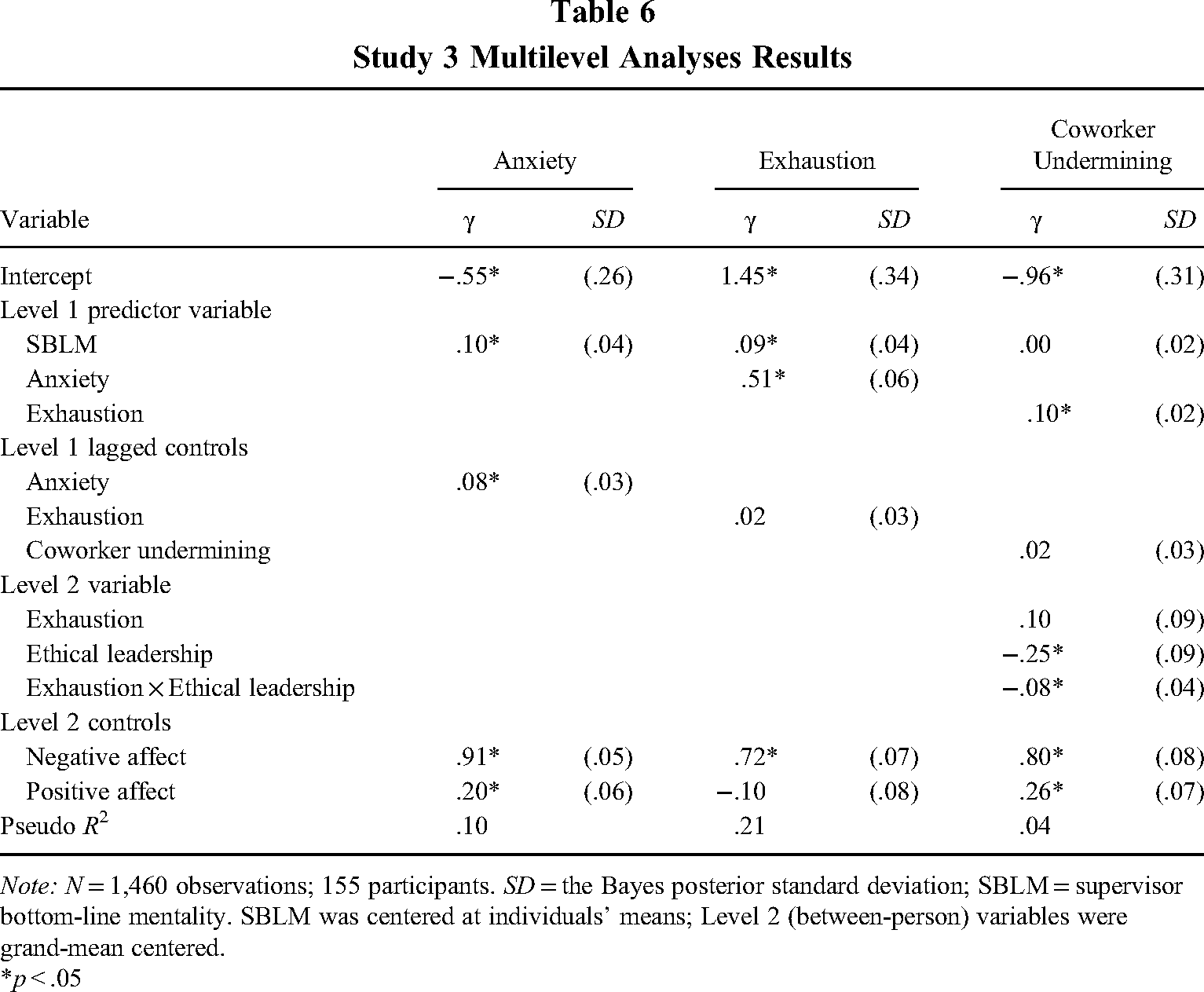
Note: N = 1,460 observations; 155 participants. SD = the Bayes posterior standard deviation; SBLM = supervisor bottom-line mentality. SBLM was centered at individuals’ means; Level 2 (between-person) variables were grand-mean centered.
*p < .05
Hypothesis testing. Supporting Hypothesis 1, SBLM varied within-person (28%; ICC = .36, 95% CI [.33, .38]). Supporting Hypothesis 2, SBLM significantly and positively related to anxiety (γ = .10, SD = .05, p = .02; 95% CI [.004, .180], pseudo R2 = .10). Supporting Hypothesis 3, SBLM had an indirect and positive effect on exhaustion through anxiety (.05; SD = .02, 95% CI [.002, .092], pseudo R2 = .21). Supporting Hypothesis 4, SBLM had a positive serial indirect effect on coworker undermining through anxiety and exhaustion (.004; SD = .00, 95% CI [.001, .010], pseudo R2 = .04). Supporting Hypothesis 5, ethical leadership moderated the effect of exhaustion on undermining (γ = −.08, SD = .04, p = .02); the relationship was weaker when ethical leadership was higher (γ = .05, SD = .03, 95% CI [−.007, .106]) than lower (γ = .14, SD = .03, 95% CI [.071, .205]) (see Figure 3). Supporting Hypothesis 6, SBLM's indirect effect on undermining through anxiety and exhaustion was weaker when ethical leadership was higher (.00; SD = .00, 95% CI [.000, .007]) versus lower (.01; SD = .00, 95% CI [.001, .015]).
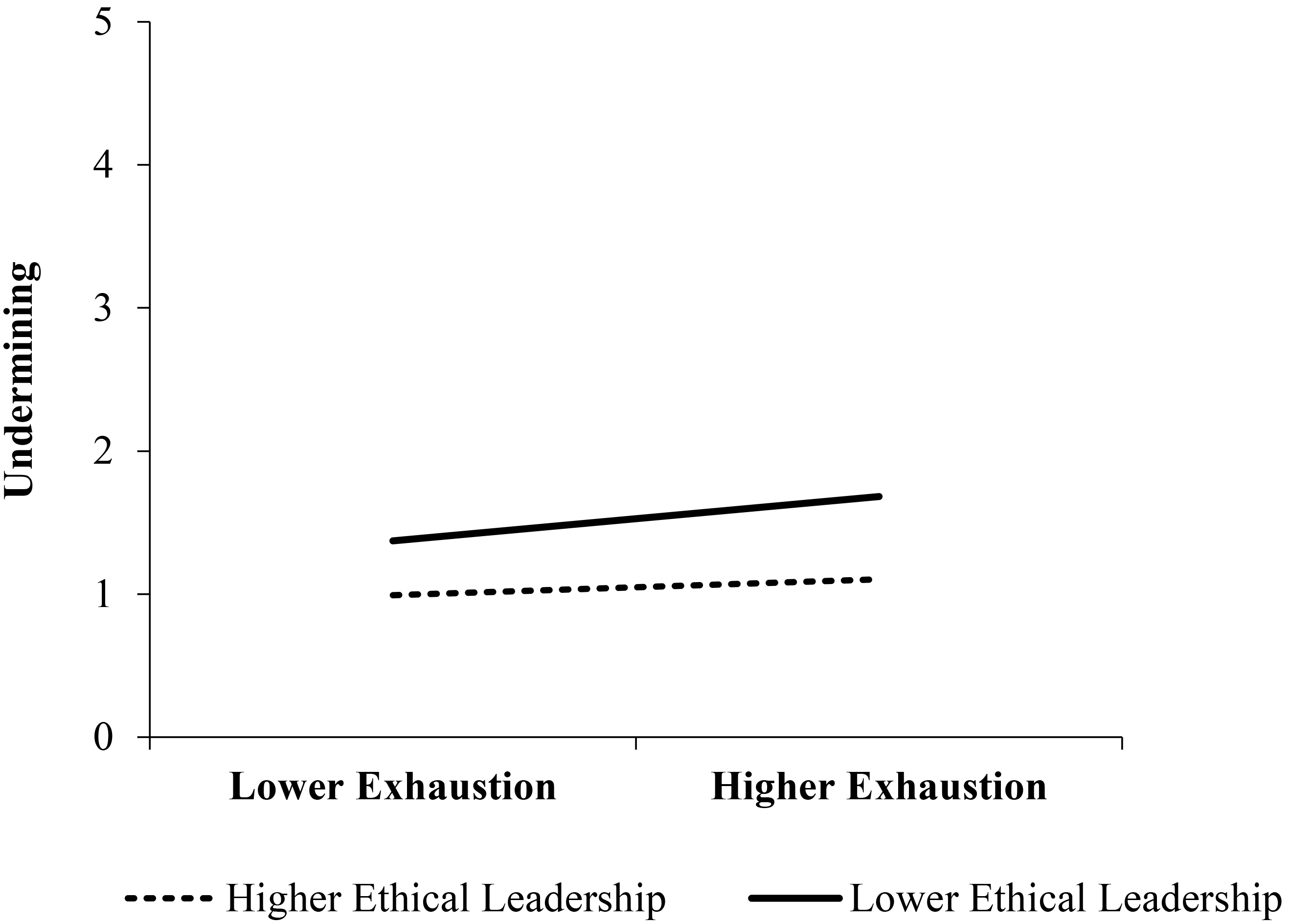
Study 3 Cross-Level Moderating Effects of Ethical Leadership on the Relationship Between Exhaustion and Coworker Undermining
Research question testing. Supervisor ratings of their own BLM, their supervisor's SBLM, and their job demands and coworker competitiveness demonstrated sufficient within-person variance to test the predictions (supervisor-reported BLM = 29%, supervisor's leader BLM = 31%, job demands = 37%, and coworker competitiveness = 26%). For Research Question 1, the results (see Appendix C) showed that the supervisors' own BLM related to their leader's BLM (γ = .21, SD = .04, p = .00) and their job demands (γ = .07, SD = .04, p = .03), whereas it was not related to coworker competitiveness (γ = .02, SD = .03, p = .18). For Research Question 2 (see Appendix D), the Exhaustion × Within-Person Ethical Leadership interaction term was not significant on coworker undermining (γ = −.01, SD = .01, p = .36).
Discussion. Study 3 replicated our prior findings, supporting our theorizing that SBLM varies across the workweek and, when employees perceived SBLM upticks, they had to reorient their efforts that prompted anxiety and exhaustion, which motivated coworker undermining. Study 3 also demonstrated that supervisors can offset the exhaustion from episodic SBLM with their general ethical-leadership style. Yet, there are other theoretical nuances to emphasize from Study 3. First, our findings for Research Question 1 provided empirical evidence supporting our theoretical arguments that were based on the assumption that SBLM variability ebbs and flows with supervisors’ differing goals and demands. We found that supervisors’ leader's BLM and their job demands influenced these supervisors’ SBLM variability. Second, our findings for Research Question 2 provided empirical evidence of our assumption that between-person ethical leadership, not within-person, attenuates the effects of exhaustion. We found that displaying an inconsistent commitment to ethics does not offset the damaging, anxiety-exhausting effects of SBLM variability, which supports the notion that employees need to perceive that their supervisors' commitment to ethics is unwavering for ethical leadership to moderate the effects.
Of course, despite the strengths of Study 3, it is not without limitations. Like Studies 1 and 2, the data were collected by one source, which may enhance the likelihood of CMV bias. As with our prior studies, we utilized a survey design that separated our variables and controlled for prior-day experiences as well as trait affect. Although a secondary source of variables might have been beneficial, the use of the same source was critical, given our propositions. That is, the within-person experience specified in our hypotheses rely on (a) the employee's perception of their supervisor's focus on the bottom line across their workweek, (b) the employee's anxiety, (c) the employee's experience of exhaustion, and (d) the employee's self-reports of coworker undermining, which has been demonstrated to be more accurate when self-reported than when reported by others (Carpenter, Rangel, Jeon, & Cottrell, 2017). Critical to the process, however, is employees’ perceptions of SBLM over the workweek, particularly given that supervisors and employees often view the supervisors’ behaviors differently (Graen & Uhl-Bien, 1995). Notably, because we collected supervisor-reported data on SBLM in Study 3, we conducted a follow-up test of our hypotheses, replacing employee-reported SBLM with supervisor-reported own BLM, and the results were not supportive—meaning, for employees’ anxiety-exhaustion experience, it does not matter whether supervisors believe they are focused on the bottom line day-to-day; it matters only if employees perceive that their supervisors’ BLM fluctuates across their workweeks. 4
Last, we noted some differences in the within-person variance of SBLM and correlations from Study 1 to Study 2. The differences might be attributed to differences in designs (with Study 1 being a daily ESM and Study 2 a twice-a-week ESM). Study 3, like Study 1, utilized a daily ESM, and the percentage of within-person variance was consistent with that of Study 1 and published work (N. P. Podsakoff et al., 2019). Thus, it may be that the lower SBLM within-person variance in Study 2 is attributed to the twice-a-week ESM design (N. P. Podsakoff et al., 2019). In relation to correlational differences, the Study 3 correlations (e.g., between SBLM and exhaustion) were consistent with Study 1. Still, despite slight differences across the three studies, the correlations and findings displayed consistent significance patterns across the studies.
General Discussion
Our results demonstrated that SBLM varies, and its variability has implications for employees. Supervisors’ raised focus on the bottom line from time to time disrupts employees’ job routines and forces efforts to raise bottom-line outcomes. Ultimately, this experience heightens employees’ anxiety that drains their self-regulatory resources, leaving them exhausted. Exhausted employees lack energy to maintain appropriate behavior and engage in unethical acts to offset bottom-line demands. That is, they undermine coworkers because it helps undercut coworkers for the employees’ own self-gain. Importantly, we theorized a critical moderator and demonstrated that supervisors’ resolute commitment to ethics reduces the likelihood that employees respond to the SBLM-elicited anxiety and exhaustion by undermining coworkers.
Theoretical Implications
Our work has implications for theory. First, we expand the SBLM conceptualization, which scholars have mainly examined as a static, exclusive focus on the bottom line (see Moore & Gino, 2013; Treviño et al., 2014). Greenbaum et al.'s (2023) BLM literature review tasked scholars to consider whether, how, and why SBLM might fluctuate across a workweek. Our work answers this call by showing that SBLM varies and by demonstrating that supervisors’ leader's BLM and their job demands prompt a varying focus on the bottom line. Our reframing of SBLM as within-person reshapes the understanding of the construct. Leadership scholars have argued that focusing only on between-person effects of leader behavior (McClean et al., 2019) may miss meaningful associations of the same concept studied at the within-person level (Beal, 2015; Gabriel et al., 2019; McCormick et al., 2020; N. P. Podsakoff et al., 2019). Thus, studying SBLM variability holds promise for unveiling its complexities and potential impact on employees and organizations. Some supervisors may have innate tendencies to consistently focus on bottom-line pursuits and disregard other priorities, but not all do. Given that organizations are multivalent systems (Wolfe, 1988), supervisors’ job responsibilities fluctuate, and their bottom-line focus varies based on the demands of the day. Indeed, much attention has been given to how fluctuating job demands influence employees’ daily lives. In that respect, SBLM variability and the factors that feed into this fluctuating state deserve attention, as do its effects on employees. It may be that past cross-sectional or between-person designs to examine SBLM (e.g., Greenbaum et al., 2012) tell a limited story about its implications to supervisors, employees, and the work environment. Acknowledging that SBLM can represent a state that varies and exerts influence aids future research in uncovering how and why other factors contribute to episodic SBLM and its daily impact on work-unit functioning.
Second, our integration of anxiety theory with COR extends both theories as well as the SBLM literature. Cheng and McCarthy's (2018) anxiety theory speculates that episodic performance demands elicit anxiety that is exhausting, given the need to raise efforts in the short term to address performance demands. Our results are consistent with these ideas, but anxiety theory was not useful in explicating further downstream effects. Thus, we incorporated ideas from COR to examine coworker undermining as a dysfunctional outcome of SBLM variability. Although COR does not discuss anxiety specifically, COR (like anxiety theory) articulates how performance demands are exhausting and motivate subsequent unethical behaviors, like undermining. Moreover, COR offers insight on how supervisors can address the effects of episodic performance demands (i.e., SBLM variability) with their generalized leadership style (i.e., ethical leadership). Therefore, our theoretical integration allowed us to address Greenbaum et al.'s (2023) call for research that theoretically explains the effects of SBLM as a state. In addition, the integration extends both theories by demonstrating their combined utility in explaining organizational phenomena, such as SBLM variability.
Third, the moderating role of ethical leadership extends the leadership, ethics, and COR literatures. McClean et al. (2019) tasked scholars to consider how a leader's fluctuating and general styles intersect to influence employee reactions. In addition, ethics scholars have questioned if leaders can maintain a continual commitment to ethics while also demonstrating a bottom-line focus (Treviño et al., 2014). We drew from COR to explain why between-person ethical leadership offsets exhaustion prompted by SBLM variability. We found that ethical leadership as a general style is a resource for employees exposed to SBLM variability, deterring exhausted employees from undermining coworkers. Also, our research demonstrated that ethical leadership exhibits within-person variability, but this variability was insufficient in offsetting the anxiety-exhaustion experience of SBLM variability. Thus, we support McClean et al.'s assertion that while certain leader behaviors vary, other behaviors can represent a generalized style that shapes employee reactions to demands across the workweek. Also, this finding demonstrates the theoretical relevance of examining SBLM within-person and ethical leadership between-person—ethical leadership serves as a guidepost that offsets exhaustion from SBLM variability and reduces unethicality. Hence, supervisors can demonstrate resoluteness toward ethics and raise attention to the bottom line when needed. To offset the effects of a raised bottom-line focus, supervisors cannot temporarily attend to ethics; a transient focus on ethics does not serve as a resource for employees or deter their inclinations to address their exhaustion with unethical acts.
Limitations and Future Research Directions
We acknowledge limitations of our work. First, our data were self-reported, which may influence CMV (P. M. Podsakoff et al., 2012). Following scholarly recommendation to reduce CMV in ESMs (Gabriel et al., 2019), we group-mean centered our within-person variables, temporally separated our constructs, controlled for negative and positive affect, and controlled for lagged variables in the daily ESMs (Studies 1 and 3), which helps to remove the likelihood of transient states biasing Level 1 relationships. We also incorporated and demonstrate ethical leadership as a moderator, which scholarship has shown cannot be inflated by CMV but could be deflated by it (see Siemsen, Roth, & Oliveira, 2010).
Further, given our predictions, self-report data for testing the hypotheses were essential. Self-reporting of unethical behavior is the most valid, accurate rating for these behaviors (Carpenter et al., 2017). Also, COR proposes that understanding how job demands (i.e., SBLM) are internalized by employees over time is needed to track reactions (Hobfoll, 1988; Hobfoll et al., 2018), meaning self-ratings of SBLM, anxiety, and exhaustion were needed. Indeed, the Study 3 supplemental analyses illustrated this point: Supervisor-rated SBLM related to employee-rated SBLM, but only employee-rated SBLM instigated the anxiety process (and so supervisor-reported SBLM was insufficient for hypotheses testing). This finding is consistent with research that has shown that employees and supervisors do not always interpret supervisor behavior in the same way, and employee perceptions of supervisors more intensely impact their reactions (e.g., Fehn & Schutz, 2020). Still, we acknowledge the possibility that same-source reports can raise CMV (P. M. Podsakoff et al., 2012), which suggests future scholarship should consider separate sources of data or perhaps study this phenomenon experimentally.
Additionally, there are notable design differences between Study 2 and the other studies. Study 2 employed a twice-a-week ESM, whereas the other studies were daily ESMs. Because Study 2 participants were balancing full-time employment with their MBA program, we limited their obligation to twice a week while still capturing variability in the variables, which scholars have argued can reduce participant fatigue (Gabriel et al., 2019) and adequately capture variation in leadership phenomena (e.g., Thau & Mitchell, 2010). Still, Study 2 SBLM variability (18%) in comparison to that in Studies 1 (34%) and 3 (28%) may be explained by the twice-a-week ESM design, suggesting SBLM variability may be better studied in a daily ESM. Thus, future work should consider the timing of data collection for within-person designs.
There are other areas for future research that may emerge from our work. Anxiety theory (Cheng & McCarthy, 2018) has other nuances that could provide areas of future research on SBLM variability. Future research could examine whether jobs involving emotional labor or job characteristics raise or reduce the anxiety experience. Perhaps certain jobs or job characteristics (e.g., high autonomy) are particularly exhausting in the face of episodic SBLM. Similarly, COR is a rich theory that predicts how employees conserve (as we suggested) but also enrich their self-resources. It may be that employees seek to enhance their skills or abilities to handle upticks in SBLM. For instance, political skill (i.e., the ability to effectively understand others and influence them to accomplish personal and organizational objectives) may help with managing demands by enabling aid from others (see Ferris et al., 2007), thereby enriching self-resources. Last, researchers may consider other consequences and antecedents of SBLM variability, such as how employees effectively raise bottom-line outcomes, or take a supervisor-focused account of SBLM variability. Examining other supervisor stressors at work (e.g., customer demands) or outside of work (e.g., childcare concerns) may contribute to the ebbs and flows of SBLM. Further, our results suggested employees and supervisors both perceive SBLM fluctuations, and emerging work has shown that agreement or disagreement can explain interesting outcomes, and so these different source perceptions may be an important avenue for future scholarship.
Managerial Implications
Our work suggests that SBLM varies, which negatively affects employees and thus has important practical implications for organizations. Our findings that SBLM variability prompted employee anxiety, exhaustion, and coworker undermining give insights into its costly nature. Undermining behaviors are costly (e.g., Borak, 2018) because they tarnish relationships, diminish employee performance and well-being, elicit similarly dysfunctional actions, and motivate employees to withdraw or leave organizations (e.g., Duffy et al., 2002; Kammeyer-Mueller, Wanberg, Rubenstein, & Song, 2013; K. Y. Lee, Kim, Bhave, & Duffy, 2016). In addition, SBLM's variability can be costly in that it impacts employee anxiety and exhaustion, which can motivate additional dysfunctional employee outcomes, such as decreases in productivity (see Cheng & McCarthy, 2018). Hence, our work highlights the importance of managing (and mitigating) the detrimental effects of SBLM variability.
At first blush, our results might suggest that the solution is for supervisors to avoid taking on exclusively a bottom-line focus. However, that suggestion is impractical because financial viability is an overarching goal in organizational life (Venkatraman & Ramanujam, 1986), meaning supervisors must focus on the bottom line from time to time to maintain organizational financial stability. Given this, our findings for the moderating effect of ethical leadership offer a solution by showing that supervisors who display ethical leadership as a general style can reduce the costly outcomes of SBLM variability. This finding should not be taken lightly. A main takeaway of our work is that a supervisor's steadfast commitment to ethics (i.e., between-person ethical leadership) is sufficient to reduce coworker undermining. Conversely, a lack of consistency to ethics raised employees’ efforts to undermine their coworkers. Our results show that supervisors cannot intermittently raise attention to ethics, even at times when their focus on SBLM is raised over time, because employees do not attend to temporary upticks in supervisor ethical leadership. Instead, it is only a general commitment to ethical leadership that guides their behavior. Ethical leadership enables employees to recognize ethics as a priority even in the face of episodic SBLM that may pressure unethicality. As such, it is prudent for organizations to emphasize ethical leadership in supervisors’ continued work style, perhaps through training interventions and mentorship (Lanaj, Foulk, & Erez, 2019; Neube & Wasburn, 2006), as ethical leadership can prompt adherence to ethical standards in pursuit of the bottom line (Brown & Treviño, 2006). In addition, organizations should work to build ethical climates to reduce the likelihood of unethicality (Kuenzi et al., 2020). Managers should ensure that human resources practices (e.g., recruitment, selection, orientation) consistently encourage ethical decision-making and that reward systems are structured in ways that hold employees accountable. Rewards and punishments should create explicit ethical expectations for all organizational members.
Conclusion
We found that SBLM varies over time, which elicits employee anxiety, exhaustion, and unethicality. SBLM variability disrupts employees’ natural workflow—when it is high, employees break away from the comfort of their routines. The discomfort of these episodes instigates anxiety that exhausts employees and motivates coworker undermining. The silver lining is that supervisors can manage employee unethical reactions with a general ethical-leadership style. Because SBLM episodes may ultimately threaten the bottom line, supervisors’ consistency in ethical leadership can help reduce costly employee reactions.
Supplemental Material
sj-docx-1-jom-10.1177_01492063231196553 - Supplemental material for Oh the Anxiety! The Anxiety of Supervisor Bottom-Line Mentality and Mitigating Effects of Ethical Leadership
Supplemental material, sj-docx-1-jom-10.1177_01492063231196553 for Oh the Anxiety! The Anxiety of Supervisor Bottom-Line Mentality and Mitigating Effects of Ethical Leadership by Marie S. Mitchell, Andrea L. Hetrick, Mary B. Mawritz, Bryan D. Edwards and Rebecca L. Greenbaum in Journal of Management
Footnotes

Notes
APPENDIX A
To aid in reducing survey fatigue (Gabriel et al., 2019), we shortened Duffy et al.’s (2006) seven-item measure to a four-item measure. We examined the factor structure of a measurement model with the seven-item measure compared with the four-item measure, and examined our predictions comparing the seven-item with the four-item measure, using data collected for a larger, unpublished study of 151 undergraduate students from a research pool at a southeastern university (Mage = 20.81, SD = 1.70; Mcompany tenure = .88 years, SD = 1.29; 54% = female). Students worked at least 10 hr per week and had regular interactions with supervisors and coworkers. Participants worked in a variety of industries (e.g., finance/insurance, education, retail). The hypotheses were tested with the same procedures used in Studies 1 through 3.
APPENDIX B
Study 3 Multilevel Analyses Results Without Control Variables
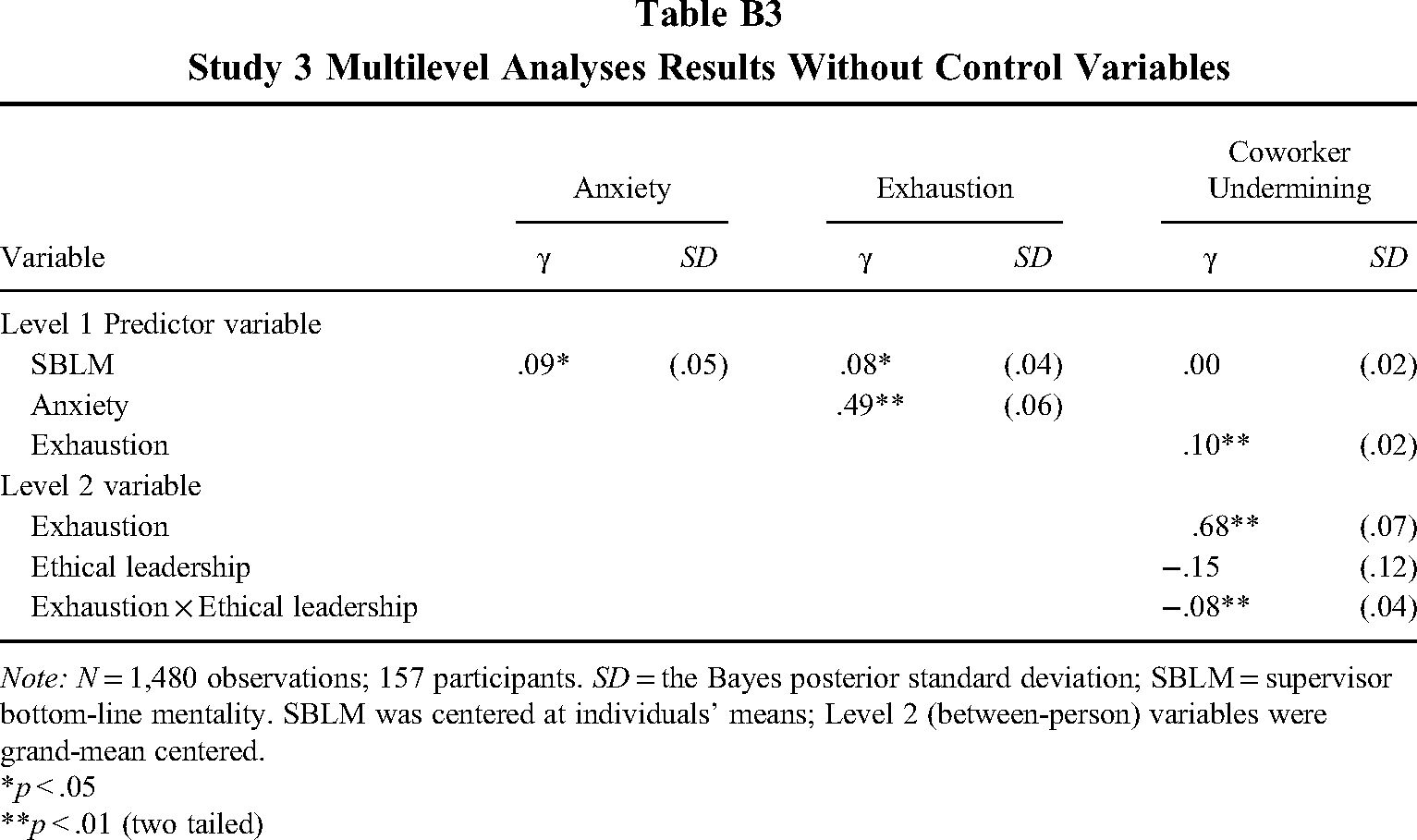
| Anxiety | Exhaustion | Coworker Undermining | ||||
|---|---|---|---|---|---|---|
| Variable | γ | SD | γ | SD | γ | SD |
| Level 1 Predictor variable | ||||||
| SBLM | .09* | (.05) | .08* | (.04) | .00 | (.02) |
| Anxiety | .49** | (.06) | ||||
| Exhaustion | .10** | (.02) | ||||
| Level 2 variable | ||||||
| Exhaustion | .68** | (.07) | ||||
| Ethical leadership | −.15 | (.12) | ||||
| Exhaustion × Ethical leadership | −.08** | (.04) | ||||
Note: N = 1,480 observations; 157 participants. SD = the Bayes posterior standard deviation; SBLM = supervisor bottom-line mentality. SBLM was centered at individuals’ means; Level 2 (between-person) variables were grand-mean centered.
*p < .05
**p < .01 (two tailed)
APPENDIX C
Multilevel Analyses Results for Predictors of Supervisor Bottom-Line Mentality
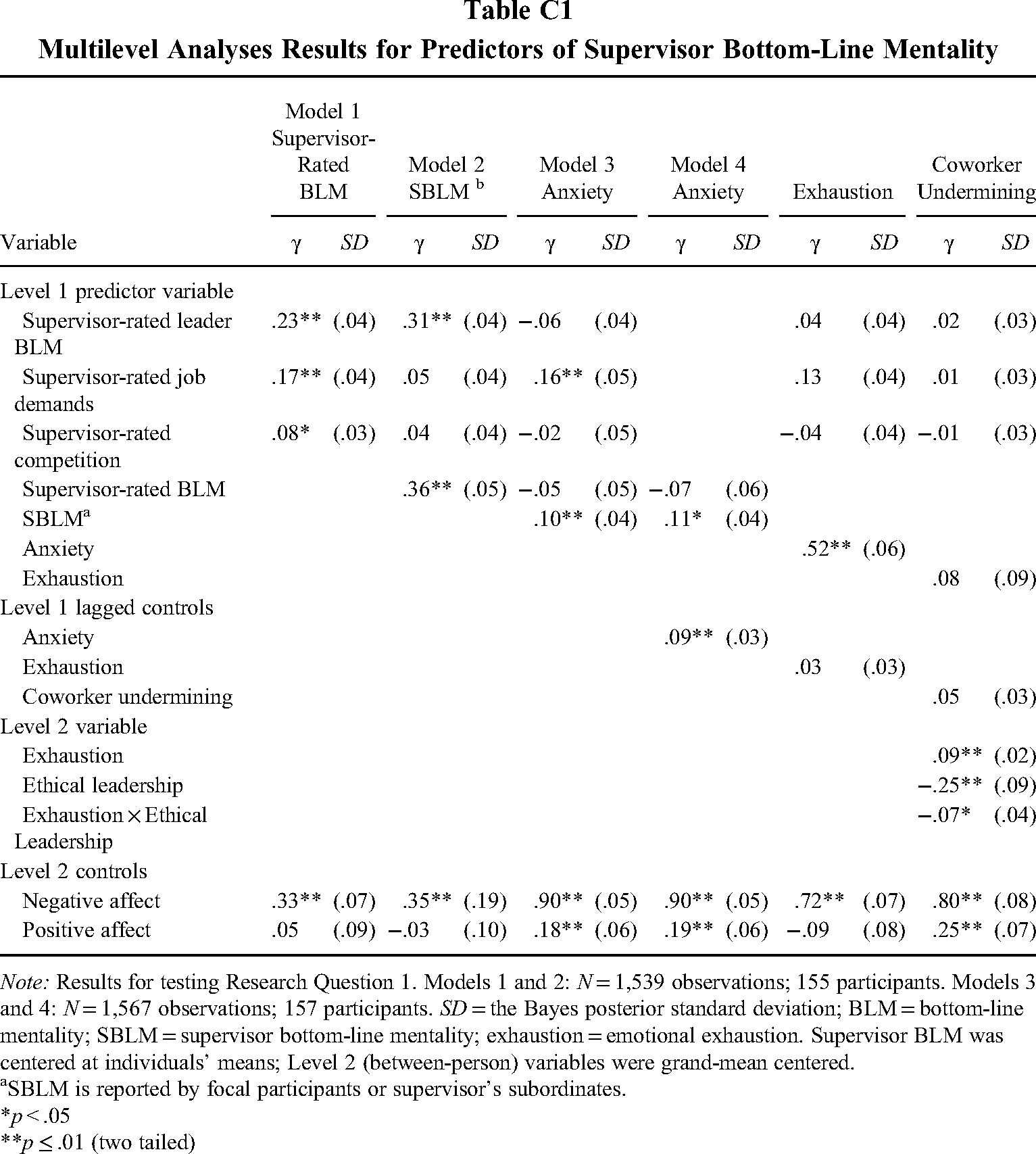
| Model 1 Supervisor-Rated BLM | Model 2 SBLM b | Model 3 Anxiety | Model 4 Anxiety | Exhaustion | Coworker Undermining | |||||||
|---|---|---|---|---|---|---|---|---|---|---|---|---|
| Variable | γ | SD | γ | SD | γ | SD | γ | SD | γ | SD | γ | SD |
| Level 1 predictor variable | ||||||||||||
| Supervisor-rated leader BLM | .23** | (.04) | .31** | (.04) | −.06 | (.04) | .04 | (.04) | .02 | (.03) | ||
| Supervisor-rated job demands | .17** | (.04) | .05 | (.04) | .16** | (.05) | .13 | (.04) | .01 | (.03) | ||
| Supervisor-rated competition | .08* | (.03) | .04 | (.04) | −.02 | (.05) | −.04 | (.04) | −.01 | (.03) | ||
| Supervisor-rated BLM | .36** | (.05) | −.05 | (.05) | −.07 | (.06) | ||||||
| SBLM a | .10** | (.04) | .11* | (.04) | ||||||||
| Anxiety | .52** | (.06) | ||||||||||
| Exhaustion | .08 | (.09) | ||||||||||
| Level 1 lagged controls | ||||||||||||
| Anxiety | .09** | (.03) | ||||||||||
| Exhaustion | .03 | (.03) | ||||||||||
| Coworker undermining | .05 | (.03) | ||||||||||
| Level 2 variable | ||||||||||||
| Exhaustion | .09** | (.02) | ||||||||||
| Ethical leadership | −.25** | (.09) | ||||||||||
| Exhaustion × Ethical Leadership | −.07* | (.04) | ||||||||||
| Level 2 controls | ||||||||||||
| Negative affect | .33** | (.07) | .35** | (.19) | .90** | (.05) | .90** | (.05) | .72** | (.07) | .80** | (.08) |
| Positive affect | .05 | (.09) | −.03 | (.10) | .18** | (.06) | .19** | (.06) | −.09 | (.08) | .25** | (.07) |
Note: Results for testing Research Question 1. Models 1 and 2: N = 1,539 observations; 155 participants. Models 3 and 4: N = 1,567 observations; 157 participants. SD = the Bayes posterior standard deviation; BLM = bottom-line mentality; SBLM = supervisor bottom-line mentality; exhaustion = emotional exhaustion. Supervisor BLM was centered at individuals’ means; Level 2 (between-person) variables were grand-mean centered.
SBLM is reported by focal participants or supervisor's subordinates.
*p < .05
**p ≤ .01 (two tailed)
APPENDIX D
Multilevel Analyses Results Ethical Leadership as a Within-Person Moderator
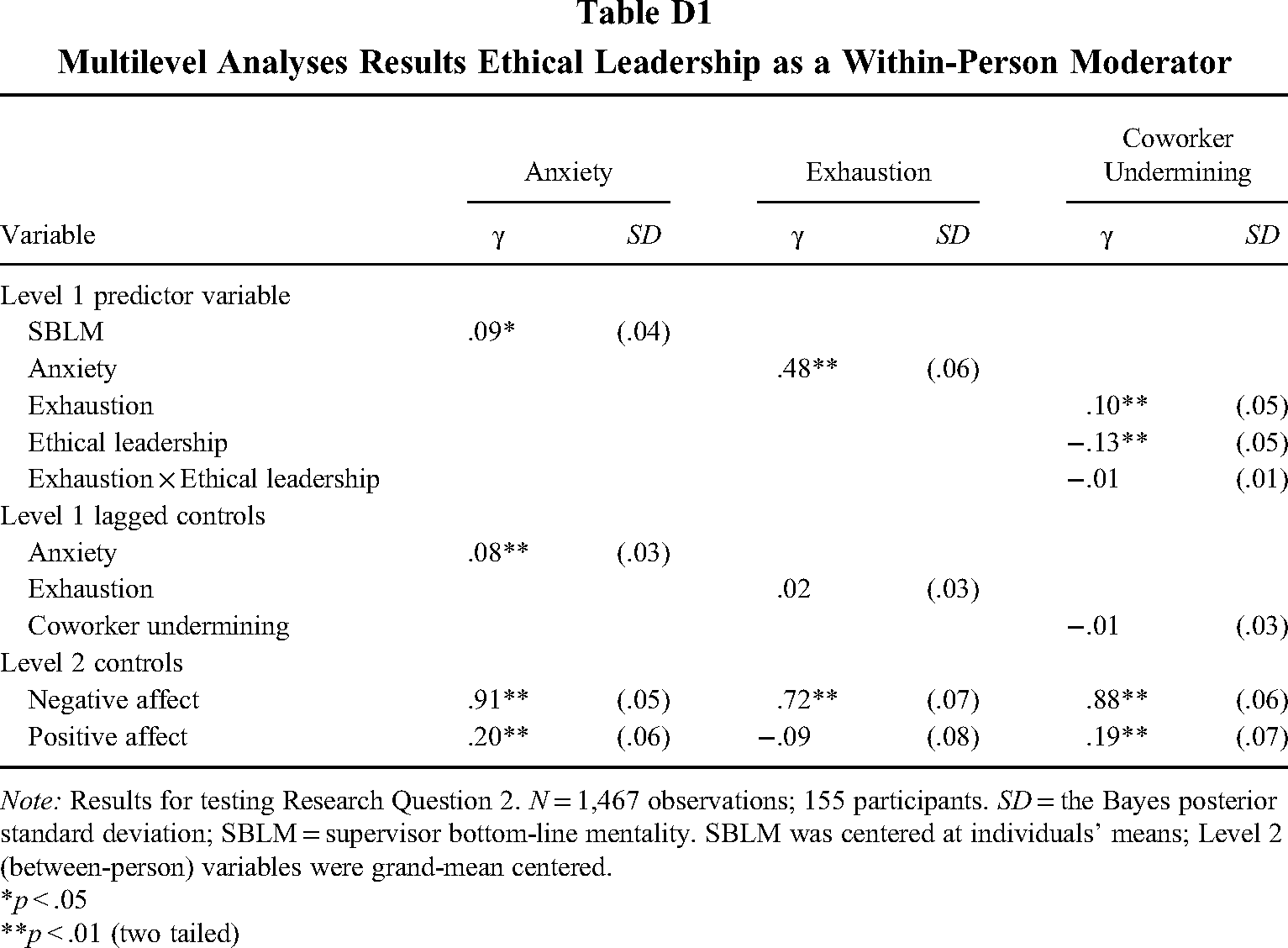
| Anxiety | Exhaustion | Coworker Undermining | ||||
|---|---|---|---|---|---|---|
| Variable | γ | SD | γ | SD | γ | SD |
| Level 1 predictor variable | ||||||
| SBLM | .09* | (.04) | ||||
| Anxiety | .48** | (.06) | ||||
| Exhaustion | .10** | (.05) | ||||
| Ethical leadership | −.13** | (.05) | ||||
| Exhaustion × Ethical leadership | −.01 | (.01) | ||||
| Level 1 lagged controls | ||||||
| Anxiety | .08** | (.03) | ||||
| Exhaustion | .02 | (.03) | ||||
| Coworker undermining | −.01 | (.03) | ||||
| Level 2 controls | ||||||
| Negative affect | .91** | (.05) | .72** | (.07) | .88** | (.06) |
| Positive affect | .20** | (.06) | −.09 | (.08) | .19** | (.07) |
Note: Results for testing Research Question 2. N = 1,467 observations; 155 participants. SD = the Bayes posterior standard deviation; SBLM = supervisor bottom-line mentality. SBLM was centered at individuals’ means; Level 2 (between-person) variables were grand-mean centered.
*p < .05
**p < .01 (two tailed)
References
Supplementary Material
Please find the following supplemental material available below.
For Open Access articles published under a Creative Commons License, all supplemental material carries the same license as the article it is associated with.
For non-Open Access articles published, all supplemental material carries a non-exclusive license, and permission requests for re-use of supplemental material or any part of supplemental material shall be sent directly to the copyright owner as specified in the copyright notice associated with the article.
