



Abstract
Role congruity theory proposes that bias may arise from the perceived incongruity between stereotypes about a social group and expected requirements for success in a social role. Since its introduction, with a focus on gender roles and the development of prejudice against female leaders, management scholars have applied role congruity theory to understand the emergence and consequences of prejudice in a wide range of organizational settings. We provide a review of management research that has incorporated role congruity theory. In this review, we first identify the key constructs and predictions that underlie the theory. Then, we summarize the adoption of the theory in the management literature based on the effects of role incongruity on target evaluation, outcome, and adaptation. Lastly, we suggest potential areas for future development of the theory, including the expansion of the theory to include social roles beyond gender, the examination of multilevel and multidimensional role incongruity effects, and other relevant emerging topics. We hope that this review will promote the accessibility of role congruity theory to management researchers and stimulate the development and application of the theory in the field of management.
Keywords
In 2002, Eagly and Karau introduced role congruity theory to explain how and why people develop prejudice against female leaders. Extending from the logic that people are likely to hold shared expectations about the attributes of roles that are defined by social categories, such as demographic groups, occupational positions, or other relevant status characteristics (Biddle, 1979; Eagly, 1987), the theory suggests that negative evaluations may emerge when incongruity exists between expectations about two social roles simultaneously held by the same person. Based on this argument, the authors developed testable predictions about two forms of prejudice that investigate both the prevailing female disadvantages in leadership positions and the negative reactions to agentic behavior by female leaders. Role congruity theory provides a valuable perspective to assess the effects of prejudice in the workplace, which paves the way for social science scholars to examine the differences among various types of prejudice and the mechanisms underlying their formation.
Given its particular relevance, role congruity theory has gained considerable scholarly attention within the field of management. For instance, management scholars have frequently applied the theory to explain the existence of gender-based prejudice and its consequences in the workplace. For the most part, management studies in this research stream revolve around issues such as pay inequality, barriers to promotion, and leadership ineffectiveness among individual organizational actors such as employees and executives (e.g., Hoobler, Wayne, & Lemmon, 2009; Klein, Chaigneau, & Devers, 2019; Wang, Markóczy, Sun, & Peng, 2019). In addition, management scholars have expanded the use of role congruity theory by delineating how gender-based stereotypes against individual executives might lead to organizational-level outcomes, such as commercialization of social ventures, initial public offering (IPO) evaluations, and firm strategic orientation (e.g., Bigelow, Lundmark, Parks, & Wuebker, 2014; Tang, Nadkarni, Wei, & Zhang, 2021; Uzuegbunam, Pathak, Taylor-Bianco, & Ofem, 2021). Overall, the profound influence and the increasing popularity of role congruity theory in the field of management have been remarkable.
Over the last two decades, the application of role congruity theory within management literature has seen a notable increase in popularity. In this review, we have identified 163 empirical studies that leveraged role congruity theory in the examination of management issues. While 149 studies (91.4%) in our article pool utilized the theory to examine female gender roles in the workplace, some recent studies have made an effort to extend the application of this theory (e.g., Anglin, Courtney, & Allison, 2022a; Um, Guo, Lumineau, Shi, & Song, 2022; Zhan, Uy, & Hong, 2020). This is primarily because social roles beyond gender have gained increasing visibility in emerging organizational research, which provides an opportunity for role congruity research to expand beyond Eagly and Karau's (2002) sole focus on gender roles. For example, role congruity theory might help explain stereotypes against social groups defined by other characteristics, such as age and race (Koenig & Eagly, 2014). Thus, it is important to consider how role congruity theory might help explain stereotypes arising from incongruity among various social roles as well as in a wide range of emerging management contexts.
As such, our review of role congruity theory can contribute to the management literature in at least three ways. First, as the first comprehensive review of role congruity theory in the management domain, our study clarifies the theory's main concepts and illustrates its key predictions. Second, we synthesize and summarize contributions made by extant management research involving role congruity theory, thereby providing an overview of the current application and ongoing development of role congruity theory in the management literature. Third, based upon our review of the theory and literature, we explore and discuss the potential extensions of role congruity theory in the management discipline. We are hopeful that this review serves to promote the accessibility of role congruity theory to more management researchers and inform the development of the theory in the evolving organizational contexts.
Foundations of Role Congruity Theory
The origination of role congruity theory is grounded in the concepts of role theory and social role theory. Role theory (Biddle & Thomas, 1966) assumes that expectations toward roles are learned through experience, and that individuals are generally aware of the expectations they hold. While role theory recognized the difference in gender roles, it did not offer a definitive explanation for why such differences emerged and persisted. To that account, Eagly (1987) proposed social role theory, which views gender differences in social behavior as arising from the societal division of labor between genders (Eagly, 1997). The division of labor is mediated by psychological and social processes. One set of processes implies that the expectations associated with gender roles pressure men and women to behave consistently with the gender-typical work roles. By this account, differentiated expectations foster gender roles by which women (and men) are expected to have characteristics that equip them for gender-typical work roles. The second process implies that men and women acquire different skills and beliefs through their participation in relatively gender-segregated roles throughout their lives. For example, men are more likely to develop skills needed to demonstrate agentic behavior through their greater participation in competitive sports. Therefore, gender-differentiated behaviors are socially modeled and considered a function of society and culture. In formulating role congruity theory, Eagly and Karau (2002) adopted concepts from both role theory and social role theory. They note that people often hold stereotypical expectations for persons who are in a particular social position or belong to certain social categories. These stereotypical expectations describe the evaluator's beliefs about the attributes and behavioral tendencies the person who is under assessment should possess (Biddle, 1986; Eagly, 1987). Based on this idea, Eagly and Karau (2002) further argue that the incongruity between two social roles that a person simultaneously occupies might negatively influence the evaluation of that person as the holder of either role. For example, in their seminal article, Eagly and Karau (2002) argue that incongruity exists between female gender roles and leadership roles; they state that female leaders are less likely to receive favorable evaluations than male leaders because of the incongruity. They further contend that negative evaluations of women leaders persist even if a female leader behaves congruently with the expectations of a leadership role.
Role Congruity Theory Concepts
To articulate role congruity theory, it is important to clarify the prominent concepts that are relevant to the development of the theory. We list the definitions of concepts that are crucial to understanding role congruity theory (see Table 1) and discuss each of them in this section.
Key Role Congruity Concepts
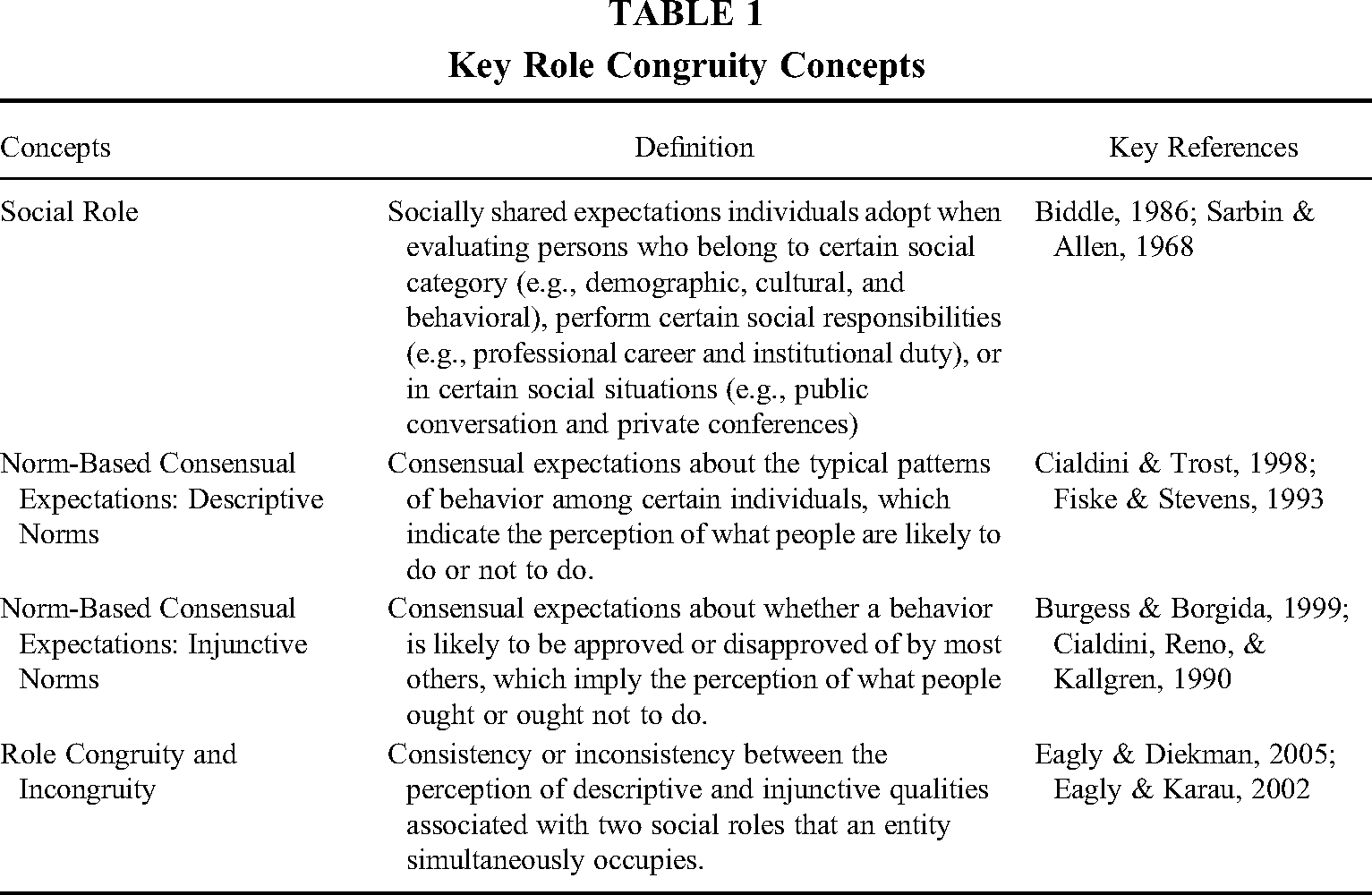
In contrast, injunctive norms reflect the consensual expectation about the ideal patterns of behavior by people with certain social roles. That is, injunctive norms speak to the expectation of what a person belonging to certain social categories ought to do. The development of injunctive norms is based on the perception about what kinds of behavior exhibited by the people in certain social roles are likely to receive approval or disapproval from others. This type of norm is involved in most role-based evaluation processes because it assists individuals in distinguishing what social behavior should be considered acceptable or unacceptable in daily interactions (Cialdini & Trost, 1998). For example, prior research has shown that female practitioners are more likely to receive approval for presenting communal qualities, while male practitioners are more likely to receive approval for presenting agentic qualities in the workplace, because perceivers are likely to believe that females and males are ideally aligned with communal qualities and agentic qualities, respectively (Wood, Christensen, Hebl, & Rothgerber, 1997).
Notably, although descriptive and injunctive norms are distinct types of norms conceptually, the overlap between these norms within a role is common in practice. This overlap occurs when the prescriptive value people hold for a social role matches with the action or behavioral representation of most members of the social role. For example, wearing a formal business suit at public events might be considered both a descriptive and injunctive norm for the role of corporate executives. Conversely, it is also possible that the descriptive norms of a role might conflict with the injunctive norms of the role. This conflict happens when most members of the social role exhibit behavior that is inconsistent with the prescriptive values other people hold for the role (McDonald, Fielding, & Louis, 2013). For example, engaging in philanthropy is likely to be viewed as an injunctive norm for most people, because it refers to what the society believes these people should do (i.e., the consensual expectation about the ideal patterns of behavior). However, engaging in philanthropy might not be the descriptive norm for most people because it does not represent how the society regularly observes what most people actually do (i.e., the consensual expectation about the typical patterns of behavior).
In the initial development of role congruity theory, Eagly and Karau (2002) suggested that prejudice against female leaders might originate from two different types of role incongruity perceptions. The authors, for example, argue that role incongruity perceptions are a product of the inconsistency between the communal qualities that evaluators tend to associate with female gender roles (i.e., descriptive norms of female gender roles) and the agentic qualities that evaluators link to the requirement of leadership roles (i.e., injunctive norms of leadership roles). In addition, Eagly and Karau (2002) note that negative evaluations persist, in the form of backlash (Okimoto & Brescoll, 2010), even when a woman conforms to the injunctive expectations of her leadership position. This is because her behavior that is congruent with the injunctive norms of leadership roles might be, in fact, incongruent with gender roles and the common expectations people hold for women in society (i.e., injunctive norms of female gender roles). In this context, the emergence of role incongruity perception by itself follows the theoretical groundwork constructed by social role theory (Eagly, 1987; Eagly, Wood, & Diekman, 2000) and role theory (Biddle, 1979). In this sense, role congruity theory is consistent with social role theory and role theory in that these role-based theories all propose that the violation of expectations based on one socially defined category (i.e., one's social role) might result in the emergence of a negative evaluation. However, the concept of role incongruity perception reaches beyond these examinations for a single social role and starts to consider how individuals might evaluate a person regarding two different social roles the person occupies simultaneously, and how inconsistency or consistency between the norm-based expectations of two social roles influence the evaluation process (Eagly & Karau, 2002).
Role Congruity Theory Predictions
Role Congruity Theory in Management
To provide an overview of the current state of role congruity theory in the management literature, we undertook an extensive literature search for role congruity theory articles published in management journals as of May 2022 in two steps. In the first step, we identified a list of journals representative of publications in management research. We started this process by including management journals that were present in the Financial Times 50 Journals list. In addition, we used the Chartered Association of Business Schools Academic Journal Guide 2021 to include journals ranked above 3 in the following fields: “Entrepreneurship and Small Business,” “General Management, Ethics, Gender, and Social Responsibility,” “Human Resource Management and Employment Studies,” “Organization Studies,” “Psychology (Organizational),” and “Strategy.” This process resulted in a final list of 83 journals that are highly regarded among management scholars (see Appendix A in the online supplement for the full journal list). In the second step, we identified articles that rely on role congruity theory as an integral part of their theoretical development. To do so, we first used Google Scholar to systematically search for studies that cited Eagly and Karau's (2002) role congruity theory in each journal included in our list. To be as comprehensive as possible, we also searched online and electronic databases for relevant studies that did not cite Eagly and Karau (2002) but discussed key terms such as role congruity or role incongruity in their manuscripts. In total, we identified 658 articles. To illustrate the development of role congruity theory in the field of management, Figure 1 shows a continuous increase in the number of studies published in highly regarded management journals that reference role congruity theory and a steady rise in the number of citations across various social science disciplines.
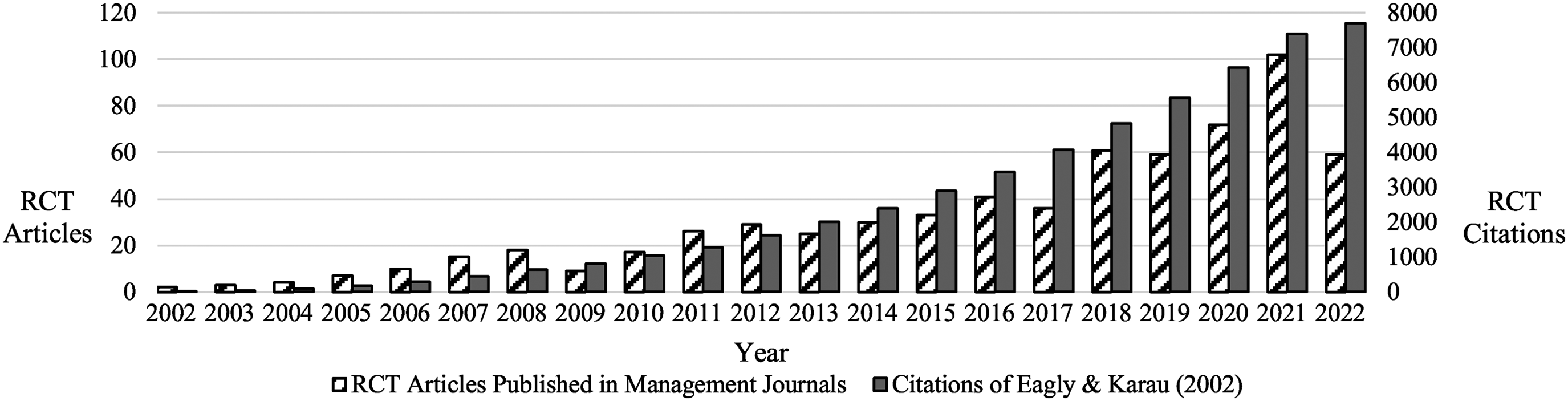
Role Congruity Theory Publications and Citations
During the literature search, we noticed that the majority of role congruity studies in management (75.22%; 495 of 658 studies) only briefly mentioned the notion of role congruity, or use Eagly and Karau's (2002) study as a reference to the concept of role expectancies or as a reference for the selection of control variables. These studies did not develop their hypotheses based on the concept of role comparison, nor did they directly examine the effects of role congruity. This incomplete adoption of the theory in management suggests that, despite the increasing familiarity of management research with role congruity theory, there has been relatively a little direct exploration of the theory in management. Thus, to ensure the relevance of this review, we conducted an initial evaluation to eliminate (a) articles in which the authors did not explicitly discuss or reference the concept of role congruity or role incongruity, (b) articles in which the authors only discussed or referenced the concept of role congruity or role incongruity in their methodology section, and (c) articles in which the authors only discussed or referenced the concept of role congruity or role incongruity in their introduction or discussion sections. We also conducted an evaluation to ensure that all articles included in our study leverage role congruity theory to develop at least one hypothesis. In total, there are 163 studies included in our review of research relying on role congruity theory.
All the studies included in this review of research are summarized in Table 1A in the online supplement. For each study in this table, we highlight the empirical context, dependent variable, the source of the role incongruity, and the level of analysis. There is a great breadth of topics covered in these studies, with different research questions and analytical considerations. To provide an overview of extant research on role congruity theory in the field of management, Figure 2 organizes the research into three categories based upon what they examine: role incongruity effects on (1) target evaluations, (2) target outcomes, and (3) target adaptation.
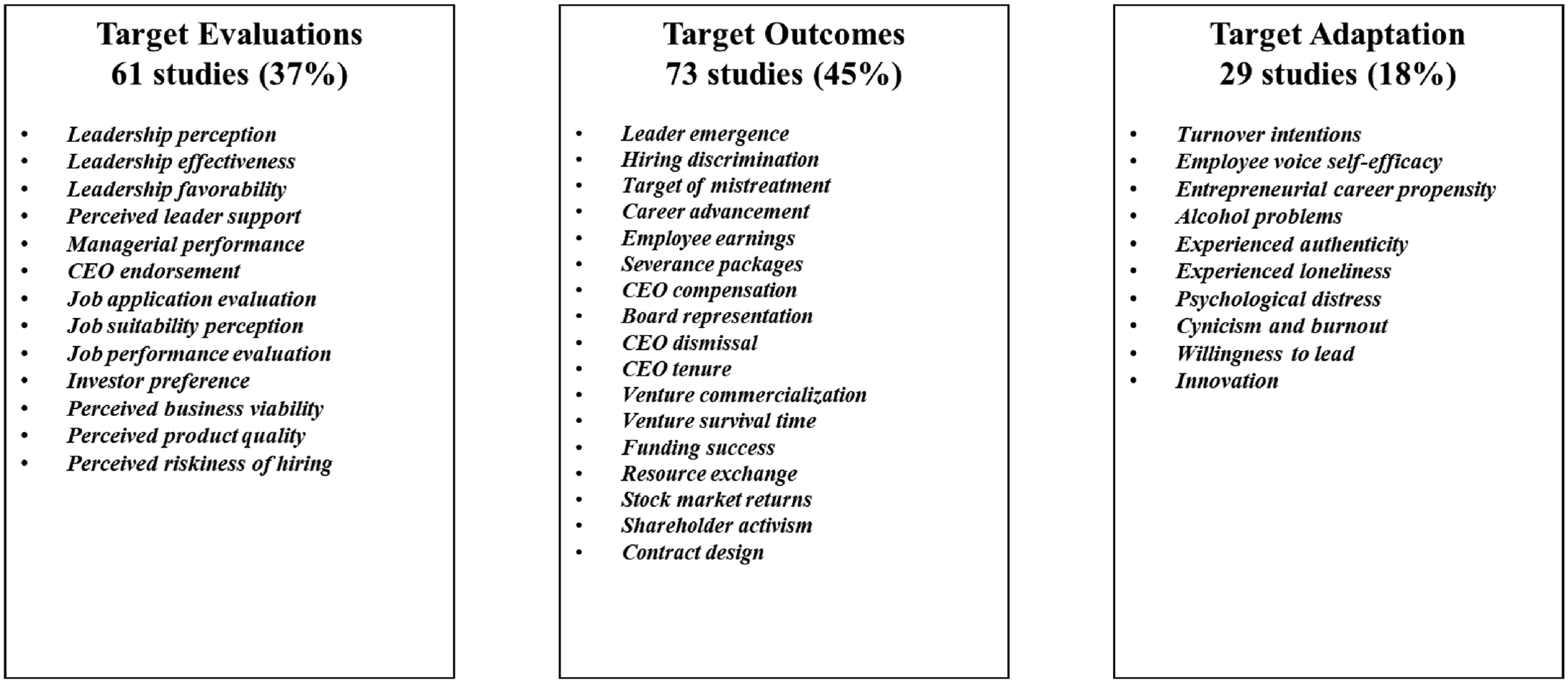
Applications of Role Congruity Theory in Management Research
Role Incongruity Effects on Target Evaluations
Since the inception of role congruity theory, a number of management scholars have applied the theory to understand how role (in)congruity perceptions might result in evaluation bias in organizational contexts. In our review, we identified 61 of 163 (37.42%) empirical studies that fall into this category. The primary prediction underlying this research stream is that inconsistency between the expectations of two social roles is likely to elicit biased and unfavorable evaluations against the individuals who occupy both roles simultaneously (Eagly & Diekman, 2005). In this research, some scholars build upon the work of Eagly and Karau (2002) by further examining how incongruity between female gender roles and leadership roles may lead to low perceived leader suitability and typicality among potential female candidates. For example, Acar and Sümer (2018) found that individuals were more likely to evaluate male leaders as suitable under good organizational performance and female leaders as suitable under bad performance. They also found that this effect was stronger among individuals with a hostile sexist attitude. In a multimethod study that examines female leadership, Merluzzi and Phillips (2022) found that individuals were likely to evaluate analytically talented single women as the least favorable for a leadership promotion, compared to single men, married women, and married men. This assessment of gender and marital status together is a form of intersectionality, which suggests that bias results from a simultaneous membership in multiple social groups, resulting in greater social inequality for members of multiple groups that society associates with lower social status (Crenshaw, 1989; Rosette, de Leon, Koval, & Harrison, 2018). Crenshaw's (1989) seminal work on intersectionality illustrated the limitations in extant research that only takes one characteristic into account (e.g., race or sex) as a source of disadvantage, therefore suggesting the need to assess multiple characteristics simultaneously.
In addition, scholars have also suggested that this incongruity may result in negative perceptions of leadership effectiveness, competence, and favorability, even after the female leader assumes the leadership position. For example, Kim, Harold, and Holtz (2022) found that employees tended to rate abusive female leaders as less effective than abusive male leaders. However, they found that employees were less likely to attribute the abusive behavior of those female leaders to their internal characteristic compared with male leaders. This finding is interesting as it suggests that perceptions of role incongruity may also influence how individuals make attributions about the actions of others.
Scholars have also highlighted that female employees who are not in a leadership position may suffer from biased evaluations because organizational evaluators may perceive female gender roles as incongruent with occupational roles at large (Joshi, Son, & Roh, 2015; Stone, Foster, Webster, Harrison, & Jawahar, 2016). For example, Caleo (2016) focused on how gender role prescriptions might influence reactions to work behavior and illustrated that female employees were likely to receive more negative evaluations for violating interpersonal justice, as individuals often associated female gender roles with interpersonal sensitivity. Interestingly, depending on the nature of the employment or task, gender-based biased evaluations may emerge against not only female but also male employees. For example, scholars have shown that male workers tend to receive higher job performance ratings in male-dominated industries compared with female workers, while female workers are also likely to receive more favorable job performance evaluations in female-dominated industries compared with male workers (Wee, Newman, Song, & Schinka, 2021).
Following a similar logic, scholars have also explored whether sexual orientation may drive perceptions of organizational evaluators. Along these lines, Hancock, Clarke, and Arnold (2020) validated that people might develop occupational stereotypes about different sexual orientations. Rule, Bjornsdottir, Tskhay, and Ambady (2016) found that gay men were likely to be perceived as suitable for female-dominated occupations, such as nurses and pediatricians, while straight men were perceived as suitable for male-dominated occupations, such as engineers and surgeons. In addition to individual-level evaluation bias, scholars have also examined the link between leader-gender congruity and organizational-level evaluation bias. For example, in a field experiment, Abraham and Burbano (2022) showed that the congruity between leadership gender and social claims made by organizations (e.g., environment and community commitments) boosted job seeker interest to apply because people were likely to perceive many social claims as gender-typed, and job seekers were likely to perceive organizations that make gender-congruent social claims as credible and equitable employers. Moreover, Lee and Huang (2018) suggest that the incongruity between female gender roles and entrepreneur roles may cause female-led ventures to be perceived as less viable than male-led ventures.
Role Incongruity Effects on Target Outcomes
Another focus in role congruity research is to study the outcomes of role incongruity effects. In our literature search, we identified 73 of 163 (44.78%) articles in this category. Scholars in this research stream explored the material consequences of role incongruity perceptions in organizational contexts. A number of studies suggest that role incongruity perceptions might cause low promotability among female employees because expected characteristics about women are likely to be incongruent with the qualities required for performing leadership duties. For example, Schlamp, Gerpott, and Voelpel (2021) found that men were more likely to be promoted as leaders than women when engaging in task-oriented behavior. Schock, Gruber, Scherndl, and Ortner (2019) found that women were less likely to emerge as leaders when they failed to temper their agentic characteristics with communal characteristics. Similarly, scholars have highlighted that female candidates may face hiring discrimination during job interviews because of gender-occupation incongruity. For example, in a field study, Esch, Hopkins, O'Neil, and Bilimoria (2018) found that moderately qualified female candidates were likely to be perceived as riskier than their male counterparts, which might ultimately lead to low likelihood of being hired. Cheung and colleagues (2022) provided evidence that subtle discrimination might exist against working mothers in both resume screening and interview evaluation processes. They also found that mothers were likely to receive more negative evaluations than non-working mothers during these processes, suggesting that hiring discrimination is likely to intensify when a female candidate is a mother. Based on the same logic, studies have also shown that incumbent female managers and executives who are female are more like to experience career derailment and position termination than those who are male. For example, Bono and colleagues (2017) found that female managers were more likely to be derailed than their male counterparts when poor interpersonal behavior was observed, even though they were less likely to exhibit such behavior in the workplace. Gupta, Mortal, Silveri, Sun, and Turban (2020) found that, among public firms, female CEOs were more likely to experience a dismissal than male CEOs regardless of firm performance. Taken together, these studies provide evidence for how role incongruity effects may disadvantage women in the workplace.
Scholars have also adopted role congruity theory to investigate the effects of role incongruity perceptions on compensation plans for women in the workplace. Within this research stream, some researchers focus on the compensation gap between males and females at the executive level. For instance, Wang and colleagues (2019) showed that the mismatch between female gender roles and leadership roles might lead to the compensation gap between female CEOs and male CEOs in Chinese publicly listed firms. However, Klein and colleagues (2019) found that the value of initial severance agreements for female CEOs was higher than that for male CEOs, because role incongruity perceptions might exacerbate the perceived probability of termination among female candidates. In addition to executive compensation plans, scholars have provided evidence that role incongruity perceptions may result in the gender wage gap among female employees at large. For example, O’Neill and O’Reilly (2011) tracked the incomes of MBA graduates over an 8-year period and found that female graduates were likely to receive less income than male graduates. Relatedly, Wiedman (2020) examined the compensation gap between female and male faculty in academia and found that female professors received lower rewards for coauthored research than male professors.
Moreover, scholars have started to investigate the influence of role incongruity perceptions on organization-level outcomes in recent years. For example, some studies focus on mature corporations and show that gender-leader role incongruity at the executive-level may adversely influence investor assessments of the firm (Bigelow et al., 2014), firm growth (Yacus, Esposito, & Yang, 2019), the likelihood of shareholder activism (Gupta, Han, Mortal, Silveri, & Turban, 2018), and stock returns (Jeong & Harrison, 2017). Moreover, studies that focus on entrepreneurial ventures have shown that gender-founder role incongruity may negatively impact venture commercialization (Uzuegbunam et al., 2021), venture survival time (Yang & Triana, 2019), funding performance (Cowden, Creek, & Maurer, 2021; Liao, 2021), financing opportunity (Anglin et al., 2022a; Eddleston, Ladge, Mitteness, & Balachandra, 2016), and selection for an acceleration program that supports the business development of startups (Yang, Kher, & Newbert, 2020).
Role Incongruity Effects on Target Adaptation
While most role congruity research has focused on the external implications of role incongruity perceptions, some studies have revealed that individuals may make internal adjustments to behaviorally or psychologically adapt when they are seen as being role incongruent (Diekman & Eagly, 2008; Eagly, 1987). This is because individuals tend to integrate their social roles into their self-concepts through the process of socialization, which motivates them to think and act in line with their perceived social roles (Feingold, 1994). In our literature search, we identified 29 of 163 (17.79%) articles in this category. For example, scholars have shown that the anticipation of being labeled as role incongruent may lead female employees to have low motivation and willingness to fulfill leadership roles in organizations. Bark, Escartín, Schuh, and Van Dick (2016) found that female employees were less likely to develop power motivation than male employees, which negatively influences leadership role occupancy among female employees. They argued that the reason for this relationship is that the socially shared expectations about female gender roles are likely to circle back to influence their self-standard, preferences, and exhibited behavior (Eagly, 1987). In other words, females tend to feel the urgency to act in line with how they are socially perceived by others. Brueckner, Bosak, and Lang (2021) found a similar effect in Standard and Poor's 1500 companies, where female CEOs tended to express lower power motivation than male CEOs. However, Chen and Houser (2019) found that positive feedback about women's performance in groups would significantly improve their willingness to lead, even in male-dominated environments.
Moreover, scholars have found that concerns about being seen as incongruent with female gender roles likely cause women to be self-restrained in other research contexts. For example, Ingersoll, Glass, Cook, and Olsen (2019) found that female CEOs of Standard and Poor's 1500 companies are less likely to exhibit narcissism. Yang and Barth (2015) found that concerns about incongruent perception pushed female individuals to pursue careers that would involve interacting with people. Furthermore, Eibl, Lang, and Niessen (2020) found that female employees reported lower levels of self-efficacy than did male employees, which rendered them less willing to speak up in the workplace. Yan, Tangirala, Vadera, and Ekkirala (2022) replicated this finding and further found that having an opportunity to observe female, as opposed to male, leaders speaking up was likely to counteract this inhibiter of voice from female employees. Finally, in addition to behavioral adjustments, concerns about being deemed to be role incongruent are likely causes of stress, loneliness, and psychological distress among female workers (Chadwick & Raver, 2019; Moore, Sikora, Grunberg, & Greenberg, 2007; Ong, 2021).
Although role-related self-adaption was one of the central parts of the original framework Eagly and Karau (2002) used to develop role congruity theory, this line of research has yet to receive much scholarly attention based on our review. One distinction that sets apart role congruity studies that focus on target adaptation from those that focus on target evaluations and outcomes is the consideration of the target's self-awareness about the role incongruity perceptions. This line of studies shows that the consideration of role congruity theory may not be limited only to contexts where external evaluation is involved but might also be applied to contexts where the role incongruity perceptions are prone to being perceived by the target. In other words, when it comes to role incongruity effects, it is important to take into account the possibility that the target of role incongruity perceptions may proactively adapt themselves to these perceptions.
Future Research
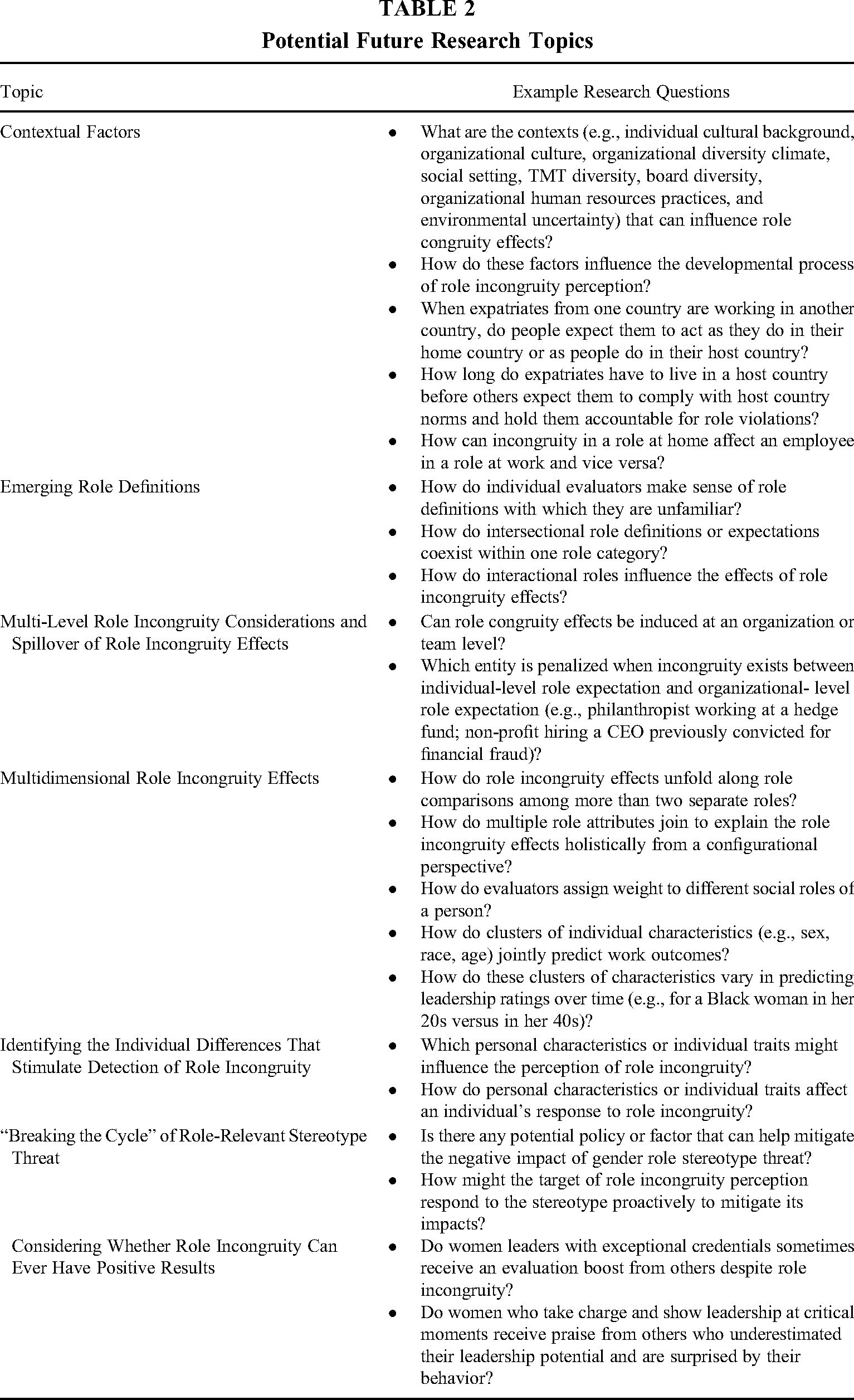
Management scholars have made noteworthy progress toward understanding the implications of role congruity effects in organizational settings. This line of research has primarily focused on prejudice that arises from gender-based role incongruity perceptions. However, scholars in management could potentially expand the scope of the theory greatly beyond its origins and heavy focus on gender (Anglin, Kincaid, Short, & Allen, 2022b; Horowitz, Brown, & Cox, 2019; Koenig & Eagly, 2014). For instance, in light of contemporary social movements such as Black Lives Matter, Stop Asian Hate, and the ongoing movement for LGBTQ+ rights, one potential expansion would be to apply role congruity theory to understanding prejudice against demographic-based social roles such as age and race. Additionally, it would be of interest to investigate whether social roles defined by other characteristics, such as personal religion, professional ability, and immigration status, may elicit perceptions and stereotypes of role incongruity in management contexts. The present review identifies several areas where future research could advance our understanding of role (in)congruity effects (i.e., contextual factors, emerging role definitions, multilevel role incongruity considerations, multidimensional role incongruity effects, identifying individual differences that stimulate detection of role incongruity, breaking the cycle of role-relevant stereotype threat, and considering whether role incongruity can ever have positive results). Table 2 provides an overview of potential routes for future research on role congruity theory.
Potential Future Research Topics
Contextual Factors
Contextual factors are important when considering role congruity effects because people may form fundamentally different expectations for a social role under different conditions. However, we only found a few studies in our review that attempted to investigate contextual factors that potentially moderate role incongruity effects (e.g., Parker et al., 2020; Um et al., 2022; Yang & Triana, 2019). Therefore, a fruitful avenue for future research on role congruity theory is to explore the contextual factors that may influence the emergence of role incongruity perceptions in organizational contexts or mitigate such influence. For example, organizational culture can influence perceptions of role incongruence and so can country culture.
In the formulation of role congruity theory, Eagly and Karau (2002) shed light on other possible factors that moderate role (in)congruity effects. For example, in the examination of prejudice arising from gender-leader incongruity, they suggest that factors (a) resulting in variability in defining leader and gender roles, (b) affecting how perceivers weigh each role, and (c) shaping personal approval of common definitions of each role could moderate the effects. Role congruity theory studies have mainly focused on the second and third moderating factors mentioned above. For example, some scholars who focus on the weight given to roles argue that salience of the demographic characteristics might drive the perception of incongruity (Parker et al., 2020; Wang et al., 2019). Other scholars who are interested in the personal approval of role definitions suggest that there will be less perceived incongruity when the perceiver belongs to the same social category as the person being evaluated (Rocha & Van Praag, 2020).
We encourage scholars to further consider contextual factors that might influence the fundamental definitions of various roles in organizations along with expectations about these roles. Along these lines, future research should also investigate the extent to which country cultural expectations are applied (or not applied) to expatriates on international assignments. For example, what role expectations exist for someone from a particular country versus someone who is not from that country? Are individuals subject to role expectations of that culture or local organization? What are role expectations for an American expatriate working in a collectivistic country culture (e.g., China) in an interdependent organizational role? The United States is more individualistic (emphasizing the individual) while China is more collectivistic (emphasizing the group; House, Hanges, Javidan, Dorfman, & Gupta, 2004), leading to the question of whether an American expatriate would be expected to behave independently or behave communally.
One of the most common mistakes expatriates make is not preparing themselves for the social norms of another country (Horwath, 2018). It would be interesting to examine not only what social role expectations country nationals have of the expatriates they host, but also what happens when expatriates violate those social role norms. Important moderators of this relationship may be the job role of the expatriate, how long they have lived in the host country, the degree of task interdependence in their jobs, and the degree of individual freedom in the host country. For instance, in Malaysia, it is expected that you give or receive any object using two hands (Cultural Atlas, 2022). A U.S. expatriate in Malaysia who has only been in the country for 1 week would likely be forgiven or educated for such a mistake, but someone who has been in the country for 1 year should know better and has committed a violation. Future research should examine the expectations host country nationals have of expatriate guests and important boundary conditions that shape social role expectations and others’ reactions to role violations.
Scholars can also investigate how a role incongruity effect in one domain (e.g., household) can spill over to other roles in other domains (e.g., workplace). For example, when a stay-at-home dad applies to re-enter the workforce after being unemployed for 20 years, some employers may question his work ethic because he has violated the traditional expectation of the head of the family (i.e., traditional male head of household role) to be the breadwinner (Bianchi, Robinson, & Milkie, 2006). Social roles may also enhance the incongruity between other characteristics and roles. For instance, Cheung and colleagues (2022) imply that there may be social roles which enhance descriptive and injunctive norms, such as motherhood, further reinforcing female gender role stereotypes for job candidates in the selection process, leading to the perception that a candidate is incongruent for a role that is stereotypically masculine.
Another interesting direction for considering contextual factors in future role congruity research lies in a refined approach to integrate attribution theory and other relevant theoretical perspectives to better explain how the context might influence one's interpretations of actors’ role-incongruent behaviors. For example, the current role congruity theory perspectives are not sufficient to explain someone's positive deviations from their gender roles (e.g., a male CEO demonstrating sympathy towards employees holding work visas and therefore being reluctant to lay them off, or a female CEO showing unprecedented yet much needed boldness in organizational restructuring). In this regard, attribution theory (Kelley, 1972) could be helpful with its discounting or augmentation principles; the discounting principle describes that one is less likely to attribute unexpected behaviors under situational pressures to the actor's behavior-correspondent disposition, while the augmentation principle indicates the opposite. In sum, role incongruence can affect attributions people make about others.
Emerging Role Definitions
In the formulation of role congruity theory, Eagly and Karau (2002) stressed that, to improve the predictive power of the theory, it is important to take into account the variability of role definitions in different cultural and social situations. For example, they indicate that variation in defining leader and gender roles might largely change the formation of role incongruity perception. Despite these insightful comments, most role congruity research has traditionally considered only the generic definitions of leader roles (i.e., masculinity of leaders) and gender roles (i.e., communality of females). This exclusivity hinders the theory from providing insights into a wider range of emerging phenomena in the workplace.
For example, with the advancement in social acceptance of the lesbian, gay, bisexual, transgender, queer, intersex, and asexual (LGBTQIA) community, the definitions of gender roles have gradually diversified in many contexts (Anteby & Anderson, 2014). In considering how role congruity theory would apply to future research on members of the LGBTQIA community, it is important to think about important caveats such as whether the person is “out” at work and has revealed their identity and whether a person's true sexual orientation or gender identity is visible to others such that it could trigger social role expectations. For example, in the case of a lesbian woman who identifies and presents as butch, which is an expression of masculinity (University of California at Davis, 2022), the identity may be visible to others and may therefore trigger expectations that this woman may behave in a somewhat more masculine manner than the average heterosexual woman. If that is the case, then stereotypes about femininity and appropriate womanly behavior (which usually disadvantage women compared to men in corporate leadership situations) may not be triggered. Instead, a butch lesbian woman might be associated with more agentic characteristics that are traditionally associated with leadership (Eagly, 1987), thereby making others more accepting of her leadership.
Next, we consider people who are transgender, which refers to people who were assigned the wrong gender at birth (University of California at Davis, 2022). For example, someone who was assigned as being a female at birth may realize as they age that their true gender identity is male, or gender nonbinary, genderqueer, genderfluid, or some other gender identity (University of California at Davis, 2022). Future research will need to determine exactly how role congruity theory may apply (or not apply) to transgender people at work. Because there is potential for ambiguity of expected gender roles in the case of someone who is transgender, there may be uncertainty on the part of observers about what appropriate gender roles should be. For example, there is a wide range in appearance among transgender people. On the more visible end of the continuum, one might have a trans woman who has recently affirmed her true gender identity as a woman and is starting to wear more feminine shirts, long eyelashes, or press-on fingernails. Here, there may be both visibility of the social role and uncertainty about what gender role expectations to apply on the part of perceivers, due to ambiguity. On the less visible end of the continuum, one may have a trans woman who has taken hormones, had gender reassignment surgery, and appeared indistinguishable from a heterosexual woman who was assigned female at birth. For example, Caroline Cossey, a British trans woman, is a successful model who both starred as a James Bond girl in the film For Your Eyes Only and also posed for Playboy magazine (Mitchell, 2021). Caroline Cossey was considered the epitome of womanly beauty, and while she was not “out” at the time she starred in a James Bond movie, she would have been subject to the gender role stereotypes associated with women because perceivers clearly identified her as a woman. Therefore, future research should unpack whether and how role congruity theory applies to gender role expectations towards members of the LGBTQIA community, depending on the visibility of the role and the ambiguity associated with it for perceivers applying gender role expectations.
Multilevel Role Incongruity Considerations
Most contemporary role congruity studies have focused on the stereotypical perceptions that emerge from the incongruity comparison between two individual-level roles (e.g., Avery, McKay, & Volpone, 2016; Caleo, 2016; Hoobler et al., 2009). In our updated literature review, we found that only 31 of 163 (19.01%) of the empirical studies investigated role congruity effects beyond the individual level. Of these articles, 24 studies focused on how role incongruity perceptions against individual employees and executives might influence organizational outcomes, seven studies included discussions about team-level outcomes, and only one study related to project-level outcomes. This provides opportunities for development in role congruity theory as the current framework does not describe how shared mental models conceptualized at the team level transmit top-down to influence individual-level effects of role incongruity (e.g., Hora, Lemoine, Xu, & Shalley, 2021), nor does it specify how individual-level effects of role incongruity (e.g., female CEO discriminated against in her leadership evaluations) transmit bottom-up to influence organizational-level outcomes (e.g., execution of employment policy, corporate social responsibility). In this regard, we encourage scholars to explicitly describe the properties of role congruity theory that can be applied at higher levels of theorizing. For instance, the incongruity between a gender role and a leader role at the CEO level might lie in the shared perceptions of all members of an organization and, therefore, the affected aggregate effort of all members contributes to the variance in the execution of equal employment policies during the hiring process. Alternatively, such incongruity biases might lie only in the shared perceptions of middle-level management who through their leadership process might influence business-unit level fair employment practices.
Another possible direction is to examine whether and how socially shared expectations may apply to organizations based on social norms and the observable elements of these entities. This is important, because focusing on social roles that organizations play expands the necessity to look at multiple stakeholders, as there can be a multitude of stakeholders with heterogeneous motives and utility functions (Bridoux & Stoelhorst, 2013; Harrison, Bosse, & Phillips, 2010). For instance, people may develop certain expectations regarding non-governmental organizations (NGOs) that are different from typical for-profit businesses. These expectations might include the NGO having a social mission and operating independently from other businesses, making the organization a non-profit. When stakeholders encounter facts that are incongruent with these expectations, how will that impact the organization, and how will different stakeholders react to such incongruence? For example, the Marine Stewardship Council (MSC) is an NGO that tries to protect marine life. They have a certification (label) that guarantees the fish products that use this certification do not harm the marine ecosystem from bycatching (where other marine animals such as dolphins or sharks unintentionally get caught in the fishing process). Therefore, consumers would choose this product, instead of others without the label, as a socially responsible and sustainable product. However, a documentary revealed that 80% of MSC's funding comes from licensing fees that the fishing industry pays which can create a conflict of interest (White, 2016). When an employee at this NGO realizes that the majority of its operational funding comes from collecting label licensing fees from companies that the organization is supposed to monitor, how will the employee react? How will consumers react to this label and product?
Multidimensional Role Incongruity Effects
To date, most role congruity studies in management only focus on gender or leadership role congruity perceptions in the workplace. However, evidence has shown that the conceptualization of social roles is not limited to gender and leadership roles (Koenig & Eagly, 2014). Thus, we encourage scholars to examine role congruity theory beyond the gender setting Eagly and Karau (2002) originally adopted. Studies in this research direction might need to provide additional clarification of the shared expectations (i.e., stereotypes) associated with these underexplored characteristics in each specific research context (Rosette et al., 2018). For example, researchers have extended the idea of role incongruity to examine how the interaction between racial roles with professional roles might shape evaluations in organizations. The underlying argument involved in this line of research is that race-occupation incongruity can also be an important source of stereotypical perception. To support this view, studies have investigated the extent to which race-occupation incongruity may negatively influence leadership perceptions (Sy et al., 2010), service performance judgments (Grandey, Houston, & Avery, 2019), and consumer ratings (Avery et al., 2016). In addition, scholars have borrowed from role congruity theory to explain age-based stereotypes. For example, Guillén and Kunze (2019) found that older managers are more likely to receive lower performance ratings and less favorable promotability appraisals because their supervisors tend to hold negative stereotypical beliefs against older employees. Lastly, recent studies have started to explore the mechanisms of role congruity effects that reside outside of demographic-based expectations. For example, Um and colleagues (2022) examined how language might induce function-based role incongruity perceptions among external evaluators about corporate executives. These scholars found that banks are likely to employ strict debt contract covenants (i.e., to exercise caution with a firm) when they perceived a high possibility of hazards from the incongruity between a CFO's language and their function-based expectations (as manifested through CFO language during earnings calls that is cautious or uncertain about the company's financial future when their descriptive duties are to provide financial stability).
We note that multidimensional role incongruity effects are both similar to and different from the intersectionality research we previously mentioned (Crenshaw, 1989). Although they both take multiple categories of group membership into account, intersectionality has traditionally focused on demographic attributes such as sex, race, age, and sexual orientation, while multidimensional role incongruity effects may include demographic attributes or other forms of occupational and social roles a person may fill. Therefore, a related extension to role congruity theory is to investigate how role incongruity effects unfold along role comparisons among more than two separate roles. In this regard, social role theorists have suggested that individuals might have multiple social roles concurrently (Biddle, 1986; Eagly, 1987; Marks, 1977). For example, even solely focusing on demographic-based roles, a person can be categorized according to different characteristics, such as gender, race, and age. When including functional roles, the same person might serve in different domains, such as the household or workplace. This concept of role multiplicity is a well-documented phenomenon in the management literature (e.g., Ruderman, Ohlott, Panzer, & King, 2002), where scholars argue that employees might view the involvement of multiple social roles as either a resource or a burden, depending upon the nature of the task or environment. To this end, we recommend future research adopt a configurational theorizing approach to study the interdependent effects of each role (i.e., causal complexity) involved in driving role incongruity perception (e.g., Furnari et al., 2021). This approach views each research subject as a different role configuration that consists of multiple role attributes and explains the role incongruity effects holistically from a configurational perspective. The advantage of this approach is that it not only captures how and why different social roles might combine in the eyes of evaluators, but it also highlights that different role perceptions about an individual might join to lead to role incongruity effects.
While existing research on role multiplicity has predominantly taken a configurational view of the various roles associated with perceived stereotypes as they seek to understand how the independence and the interplay of multiple roles (e.g., gender and race) may strengthen or weaken role-relevant stereotype biases, it nevertheless reflects a static variable-centered strategy (Gabriel, Campbell, Djurdjevic, Johnson, & Rosen, 2018) in which the significant variance explained in the outcomes is attributed to the variance of the particular predicting variable at a certain time point. For example, previous research found that females or Black Americans are disproportionately discriminated against on evaluations of their leadership effectiveness (Feagin & Sikes, 1994; Koenig, Eagly, Mitchell, & Ristikari, 2011). However, this approach cannot effectively describe if gender or race, or the interplay of both, vary in their predictive power on biased evaluations of leadership effectiveness over time. More specifically, the configurational approach cannot explain why some Black females in their early-career stage might be judged differently on their leadership effectiveness than when they are in their mid-career stage.
In this regard, recent methodological advancements in organizational research, such as the integration of longitudinal modeling and Latent Profile Analysis (LPA), make it possible for researchers to take a profiling approach, based on a dynamic person-centered strategy (Gabriel et al., 2018; Howard & Hoffman, 2018), to better understand not only what type of individuals are more likely to suffer from role incongruity biases, but also whether different sets of clusters of individuals with various personal attributes emerge over time as victims. Briefly, the purpose of LPA is to identify over time the emergence of unique clusters of individuals with different configural profiles of personal characteristics or attributes (e.g., Campion & Csillag, 2021; Chawla et al., 2021; Woo, Jebb, Tay, & Parrigon, 2018). Positioning LPA in a longitudinal context, researchers can study the evolving nature of change over time in personal attributes that may ultimately account for the emergence of various clusters of individuals that are differentially associated with workplace outcomes. For example, using this approach we may be able to find patterns of potential biases over a time span of 2 or 3 decades in a company's executive succession planning program (Beeson & Valerio, 2012; Lyness & Thompson, 2000). While female senior managers may consistently receive biased evaluations over the years, it is possible that other key factors besides gender roles, such as race, national origin, educational background, and professional experience could serve as latent indicators of biases and may change over time. This longitudinal LPA approach, therefore, can also enrich theory development of role congruity theory to focus not on social roles, norms, or expectations as a source of perceived incongruity, but also on the dynamic emergence of clusters of personal attributes that weigh differently towards explaining role-relevant biases. This is consistent with recent findings and suggestions such that latent profiles may have a temporal focus and, therefore, theory development should be able to explain the emergence of different profile patterns at different time points and the overall trajectories across time (Shipp, Gabriel, & Lambert, 2021).
Identifying the Individual Differences That Stimulate Detection of Role Incongruity
Another way to expand role congruity theory is to examine the individual differences that increase the likelihood of perceiving role incongruity. For example, Acar and Sümer (2018) stated that people who are higher in hostile sexism were more likely to perceive role incongruity compared to those lower in hostile sexism. Similarly, we believe that those higher in social dominance orientation (SDO)—a trait associated with a desire to adhere to the existing social order and maintain a system whereby groups deemed to be superior should have power over other groups deemed to be inferior (Sidanius & Pratto, 1999)—will be more likely to perceive role incongruity. Research shows that people who are higher in SDO respond more negatively to African American beneficiaries of affirmative action than those lower in SDO (Aquino, Stewart, & Reed, 2005) because higher SDO individuals want to reinforce the social hierarchy while programs such as affirmative action attenuate the social hierarchy by providing opportunity to groups that have experienced more discrimination. According to Sidanius, Liu, Shaw, and Pratto (1994), SDO is strongly and positively correlated to racism and social conservatism, which may be other traits that trigger perceptions of role incongruity. Moreover, Nosek and colleagues (2007) presented findings measuring implicit (i.e., subconscious) bias with over 2.5 million participants which revealed that 80% of participants showed implicit bias favoring younger people over older people, 68% of participants showed implicit bias favoring Whites over Blacks, and 76% showed a pro-abled implicit bias compared to people with a disability. On the gender and science/humanities test, 72% of the sample implicitly associated males with science and females with humanities, and on the gender and family/career test, 76% of the sample implicitly associated males with careers and females with family (Nosek et al., 2007). In sum, future research can expand role congruity research by testing these individual traits (hostile sexism, SDO, racism, social conservatism, implicit bias), and others, to assess whether role incongruity is more attention-grabbing for people with high levels of these traits, and what that means for bias in perception and backlash toward those who are seen as incongruent.
“Breaking the Cycle” of Role-Relevant Stereotype Threat
Another intriguing (but relatively ignored) area in our review concerns the association between role incongruity and stereotype threat. Stereotype threat is defined as a situation where employees are afraid of being judged negatively due to their group membership (Steele & Aronson, 1995). Stereotype threat and the anxiety it produces are pronounced when a member of a minority group is being evaluated on a task where their group normally does not perform well (i.e., there is an incongruity between the person and the role they are performing). Moreover, the person's concerns are driven by fear of being judged harshly and inadvertently doing something that confirms the stereotypical view of one's group (Steele, 1997; Steele, Spencer, & Aronson, 2002). For example, when Black and White students were asked to take a difficult test in a laboratory setting and told that the test would assess their abilities and limitations, White students were unaffected by the instructions, but Black students showed reduced performance (Steele & Aronson, 1995). It is believed that priming stereotype threat among minority group members (e.g., women, racial/ethnic minorities) can result in anxiety and performance decrement because it highlights that they are working in an area where others from their group typically are not employed or exhibit relatively weaker performance compared to the majority social groups (e.g., Whites, men; Steele & Aronson, 1995). It is important to note that stereotype threat only affects individuals who are highly competent in the domain under investigation. In other words, the extent of the stereotype threat depends upon the degree to which one's identity hinges upon the outcomes one experiences in that domain (Nguyen & Ryan, 2008; Steele et al., 2002). For example, a female computer scientist who works in computer programming and identifies strongly as being a programmer will be more affected by stereotypes than another woman who does not care about performing well in the computer science domain (Cadinu, Maass, Frigerio, Impagliazzo, & Latinotti, 2003; Nguyen & Ryan, 2008). A fruitful area of future research is to examine what organizations and employees themselves can do to proactively mitigate stereotype threat and the deleterious effects it has on those who experience threat due to role incongruity.
Future research on stereotype threat should examine how, and under what conditions, stereotype threat affects women and minority leaders, as well as what contexts can mitigate its negative outcomes. For instance, Dwivedi, Misangyi, and Joshi (2021) presented the surprising finding that leadership endorsements of new women CEOs are associated with shorter longevity for those CEOs. This effect was attenuated if the CEO was an insider (meaning they had been an executive at that firm for at least 2 years prior to becoming CEO) or if that firm had a larger number of female executives on the top management team and board of directors in the CEO succession year. It appears that the more novel, or incongruent, the new woman CEO is to that setting, the more push-back she may receive. Future research should examine whether women and minority CEOs who take the helm of a company that has already had a different pathbreaking (i.e., incongruent) CEO will have an easier time of it. For instance, Ursula Burns became the first Black woman CEO of a Fortune 500 firm, Xerox, in 2009, but she was a Xerox veteran and also took over from another woman CEO, Anne Mulcahy. Because Mulcahy had already broken the gender-based glass ceiling at Xerox, perhaps that made the transition to CEO smoother for Burns who presented a new form of incongruence on only one dimension (i.e., race). If a firm has only ever had one woman or minority CEO in the past, the reception that a new woman or minority CEO receives may also depend on how the previous incongruent CEO performed. Is it possible that past performance by the incongruent CEO could create a positive halo effect (if good) or a negative horns effect (if bad) for a new CEO who resembles them demographically? How many of these incongruent CEOs does a firm need to have before such stereotypes go away altogether? For instance, if a firm has already had two or three women or minority CEOs, would a new woman or minority CEO be seen as incongruent at all? Moreover, organizations with cultures that are open to diversity, equity, and inclusion, may be more likely to have female CEOs/top leaders to begin with. Future research may examine this.
In addition to identifying contextual factors that might help mitigate the negative impact of gender role stereotype threat, previous research also pointed out possibilities that actors (i.e., the targets of stereotype threat) themselves might play a proactive part in this process. For example, Cadinu, Maass, Rosabianca, and Kiesner (2005) found that the experience of gender stereotype threat could trigger women's negative thinking, which subsequently resulted in their underperformance on tasks. Similarly, in a broader sense, Steele and Aronson (1995) found that those targeted for negative stereotypes who were associated with a minority group were more likely to experience diversion of attention onto irrelevant concerns or anxiety and, subsequently, performance deficits as they assumed roles presumed to be biased towards their minority group membership. A workplace example of stereotype threat would be that Black women working in computer science, who identify strongly with their profession, may experience stereotype threat if they hear White men colleagues claim that women and minorities tend to not do as well as men in STEM fields (science, technology, engineering, and math) and that affirmative action programs may have helped underqualified women or minorities obtain STEM degrees and jobs. 1 These unfortunate yet practically prevailing circumstances highlight the possibility that targets of role-relevant stereotype threat might be able to combat such role-oriented disadvantages via stronger self-regulatory effort. For example, individuals who are prone to positive self-affirmation (e.g., those with positive self-enhancement tendencies) might be more likely to apply an ego-enhancing mindset and, therefore, alleviate the impact that role-relevant stereotype threat has on them (Martens, Johns, Greenberg, & Schimel, 2006).
Considering Whether Role Incongruity Can Sometimes Have Positive Results
Finally, we ask whether all the outcomes of role incongruence always have to be negative. We assessed the articles included in the literature search to categorize whether the results of the incongruence were positive, negative, neutral, or both positive and negative. Of the 163 articles included in this review, no articles revealed a purely positive outcome of role incongruence, 41 articles revealed a neutral outcome, 10 articles revealed both positive and negative outcomes, and 98 articles revealed negative outcomes of role incongruence. Therefore, based on the data we collected, we would say that role incongruity is not always negative, but it does seem to be negative almost all of the time. Then where are the exceptions?
We encourage future research to examine if and when individuals who do not match social expectations could potentially be overrated. For example, when women outperform the expectations that others have about them, they can surprise others who underestimate them and, in turn, receive high evaluations. Rosette and Tost (2010) reported a qualified woman leader advantage for women who had exceptional credentials. According to Lanaj and Hollenbeck (2015), women who violated traditional expectations were also rewarded for going beyond what was expected of them. Specifically, women leaders were attributed with higher levels of leadership emergence when they engaged in assertive and proactive leadership behaviors rather than the typical communal behaviors expected of them (Lanaj & Hollenbeck, 2015).
Conclusion
In this review, we describe and clarify the basics of role congruity theory. In addition, based on a review of 163 studies, we document and discuss the current development of role congruity theory in the management literature. Moreover, we provide a roadmap for future research to further expand upon and develop the application of role congruity theory.

References
Supplementary Material
Please find the following supplemental material available below.
For Open Access articles published under a Creative Commons License, all supplemental material carries the same license as the article it is associated with.
For non-Open Access articles published, all supplemental material carries a non-exclusive license, and permission requests for re-use of supplemental material or any part of supplemental material shall be sent directly to the copyright owner as specified in the copyright notice associated with the article.
