



Abstract
Internal mobility, or movement of individuals within organizations, is a frequently occurring phenomenon that can have ripple effects throughout organizations. Internal mobility can impact individuals, units, and organizations and several decades of work on the topic provide evidence of its causes and consequences. While a recent uptick in research on internal mobility aligns with upward trends in the use of internal labor markets within organizations, the literature is currently not well integrated with a variety of terms and characteristics used to describe internal mobility, siloed single-level research on either individual or organization perspectives, and poor integration with other forms of mobility that makes it difficult to fully understand its impact. This review of the 202 articles on internal mobility reconciles these issues by defining internal mobility, creating a model based around the two primary types of internal mobility, transfers and promotions, and integrating research from varied organizational actors (individuals, organizations) that cause and are affected by internal mobility. This review culminates with a future research agenda designed to extend research on internal mobility.
Mobility is foundational to career trajectories (Pfeffer & Cohen, 1984), and relevant research is divided into two streams: external mobility, or mobility between organizations, and internal mobility, or mobility within organizations. Both external and internal mobility literatures have long histories from scholars hailing from a wide variety of disciplines, including economics, organizational behavior, organizational theory, political science, psychology, and sociology (e.g., Althauser & Kalleberg, 1981; Doeringer & Piore, 1971; Malcomson, 1984; March & Simon, 1958; Mobley, 1977; Pfeffer & Cohen, 1984; Porter & Steers). Such wide-spanning interest reflects the foundational role of mobility in our understanding of work. Research in both areas addresses the antecedents and consequences of mobility, including their implications for individuals (e.g., Kristof-Brown, Zimmerman, & Johnson, 2005) and organizations (e.g., Groysberg & Lee, 2009; Park & Shaw, 2013). However, attempts to synthesize mobility research have largely focused on external mobility, evidenced by over a dozen recent reviews on the topic (e.g., Hom, Lee, Shaw, & Hausknecht, 2017; Lee, Hom, Eberly, Li, & Mitchell, 2017), whereas literature on internal mobility remains disjointed.
The lack of a cohesive view of internal mobility is puzzling due to its prevalence in organizations (Krell, 2015); calls to attend to research on internal mobility both from scholars (e.g., Lee et al., 2017) and practitioners (e.g., Korn Ferry, 2023); evidence that internal hires perform better and cost less than external hires (Bidwell, 2011; DeOrtentiis, Van Iddekinge, Ployhart, & Heetderks, 2018); and an existing, albeit scattered, stream of scholarly interest in the topic spanning over 50 years (e.g., Bidwell, 2011; Bidwell & Keller, 2014; Dalton, 1997; Dlugos & Keller, 2021; Feldman & Brett, 1983). The lack of a holistic view of internal mobility can be partially attributed to the disorganization of the literature, with a variety of terms (e.g., transfer, intraorganizational mobility) and features (e.g., vertical: promotions; horizontal: transfers) used to describe internal mobility that have resulted in three pressing problems.
First, while internal mobility occurs frequently—with some evidence it may account for between 42% to 72% of positions filled (Bidwell & Keller, 2014; Crispin & Mehler, 2013), we still lack an understanding of the foundational properties of internal mobility, including the distinction between its two main types—transfers and promotions—because relevant literature remains fragmented by incomplete or vague descriptions. Such fragmentation prevents researchers from fully understanding what makes transfers and promotions similar and distinct from each other and from other organizational phenomena. Second, internal mobility is comprised of both individual and organizational components, yet without an integrative review, it is difficult to build a comprehensive understanding of how individuals and organizations jointly contribute to internal mobility. Third, it is unclear how internal mobility intersects with other research areas. Although researchers have proposed that internal mobility is distinct from other forms of mobility and thus requires distinct theories and perspectives to adequately explain its theoretical importance (Dalton, 1997), more work is needed to better understand its unique impact, including how it can be integrated with other literature and concepts. Together, the fragmentation, lack of multilevel perspective, and inability to connect internal mobility to other research areas has slowed the progression of literature on internal mobility, even as its prevalence continues to grow.
Inspired by a recent surge of scholarly interest (e.g., Bidwell & Keller, 2014; Dlugos & Keller, 2021; Kacperczyk & Balachandran, 2018; Keller, 2018), the aim of this review is to present a comprehensive review of internal mobility and, in doing so, (1) integrate splintered strands of internal mobility research to better understand the phenomenon; (2) build a conceptual model of the precursors and outcomes of internal mobility by integrating the multilevel actors (e.g., individual, organizations) involved in internal mobility and pointing to theoretical explanations for the precursors and outcomes of internal mobility; and (3) advance an agenda for future research with suggestions designed to better our understanding of internal mobility as well as reveal connections to other literature to illuminate the influence and impact of internal mobility on individuals and organizations. This review begins by identifying the historical traditions that underpin internal mobility and defining the construct of internal mobility, followed by an overview of the scope of the review. We then present the model revealed through the iterative review and provide potential future research directions on the topic of internal mobility.
Historical Traditions and Definition
Internal Labor Markets
Internal mobility research often draws directly or indirectly from work on internal labor markets (ILMs). ILM research, in turn, is rooted in both economic and sociological traditions and is broadly defined as the systems, rules, and procedures through which organizations fill job vacancies (Althauser & Kalleberg, 1981; Doeringer & Piore, 1971). The topic of ILMs was popularized through the works of Pfeffer and Cohen (1984), Osterman (1984), Doeringer and Piore (1985), and Althauser (1989) among others who recognized a change in the nature of employment. Specifically, they noted that (1) internal hiring was critical because employees anticipated spending most of their careers in a single organization, and (2) the forces driving ILMs were fundamentally different than those driving external labor markets, such as the assumptions that pricing, allocating, and training are controlled directly by market forces. Instead, ILMs are governed by internal rules and procedures that are partially shielded from external competitive forces (Doeringer & Piore, 1985). Although the precise features of ILMs are debatable (Althauser, 1989), the central premise is that individuals enter organizational job ladders at entry-level positions and all other positions within the internal market are subsequently filled by promotion or transfer, activities governed by rules or procedures instituted by the organization (Doeringer & Piore, 1985; Osterman, 1984). Although ILMs continue to be crucial to internal mobility researchers (e.g., Benson & Rissing, 2020), this perspective relies on several assumptions—namely, that internal mobility is controlled by organizations, uniformly applied to employees, and primarily serves to push internal employees upwards.
Boundaryless Careers
The assumptions underlying ILMs complicate their applicability to modern internal mobility because internal mobility norms evolve as employer-employee relationships change. For instance, factors such as increased outsourcing, the increased use of variable incentive pay, reduced employee benefits, and the increased frequency of reorganizations resulting in layoffs (Bidwell, Briscoe, Fernandez-Mateo, & Sterling, 2013) all change employee expectations about the psychological contract between employer and employee (Cullinane & Dundon, 2006). Thus, employee trust in employers has eroded, helping drive the rise of boundaryless careers (Arthur & Rousseau, 1996; Capelli, 1999). Boundaryless career research suggests that employee career structures are increasingly uncertain and flexible (Littleton, Arthur, & Rousseau, 2000) and involve a blend between internal and external movement. One critical insight of this work for internal mobility is that careers are becoming individualized because employees have more control over their own mobility (Inkson, Gunz, Ganesh, & Roper, 2012) and thus can be autonomous agents of their own mobility patterns. Additionally, such individualization means employees do not always enter organizations at entry-level positions (e.g., DeOrtentiis et al., 2018) nor do rules and procedures apply uniformly to all employees (e.g., Roth, Purvis, & Bobko, 2012).
Integrating insights from ILMs with work on boundaryless careers suggests while internal mobility may be driven by organizational factors, including the systems or rules suggested in ILM literature (e.g., Doeringer & Piore, 1985), these rules can be subject to external forces (e.g., economic conditions; Hassard, Morris, & McCann, 2012) and can change or be dependent upon individual factors—such as demographics (e.g., Bernardin, Konopaske, & Hagan, 2012), individual attitudes (e.g., Campion, Cheraskin, & Stevens, 2022), or individual differences in human capital or performance (e.g., Ng, Eby, Sorensen, & Feldman, 2005). This suggests internal mobility is not uniform within organizations, is not always controlled or instigated by organizations, and does not always follow predictable upward patterns. In combination, this means we must consider organizations and individuals to fully understand internal mobility.
Internal Mobility Definition
Internal mobility can be defined as employee movement within the boundaries of an organization. This definition combines insights from ILMs that acknowledge that organizations can institute predictable rules or structures to facilitate internal mobility, while allowing for the evolving nature of boundaryless careers, where external forces and individual factors play a role in internal movement typically overlooked in ILM literature. As individual and organizational views and uses of internal mobility have become more diverse, researchers must necessarily pull from a wider variety of theories beyond ILMs to explain when, why, and how internal mobility occurs. For instance, scholars have used firm-specific human capital arguments to explain why internal mobility results in the preservation of firm-specific human capital, which can lead to higher performance at both individual (e.g., DeOrtentiis et al., 2018) and collective (e.g., Reilly, Nyberg, Maltarich, & Weller, 2014) levels. Although the theoretical frameworks and literature that internal mobility researchers borrow from continues to broaden, what unites internal mobility researchers is a push toward understanding internal mobility as a dynamic tool to utilize, develop, or optimize talent within the organization through movement. Thus, as revealed through this review, internal mobility often addresses the tensions organizations and individuals face in using movement to facilitate matches between individuals and their job roles (e.g., Ortega, 2001) and groups (e.g., Weller, Hymer, Nyberg, & Ebert, 2019), which have implications for individual (e.g., Bidwell, 2011) and organizational (e.g., DeOrtentiis et al., 2018) outcomes. Although internal mobility is often used to facilitate matches by altering how the existing pool of employees are collectively utilized (Weller et al., 2019), this review also found that internal mobility is nuanced and can be divided into two main forms of internal mobility—horizontal and vertical—that are functionally distinct. Horizontal mobility is primarily examined as “transfers” and so, for simplicity, from this point forward we will use the term transfers to designate all forms of horizontal internal mobility. Likewise, the vast majority of research that addresses vertical mobility focuses on promotions and for the same reasons we will hereafter use the term promotions to refer to all vertical internal mobility.
Transfers
Transfers occur when individuals maintain the same job rank and move laterally to a new unit in the organization—for instance, a middle manager who accepts a new position as a middle manager in a different unit within the organization. This construct is most frequently measured through an “event” approach, meaning each transfer is recorded either by accessing organizational data where mobility instances are noted in HR records or systems (e.g., Keller, 2018) or by surveying respondents to ask if they have moved to a new unit within the organization over some period of time (e.g., Armstrong-Stassen, 2003). This event approach allows researchers to examine individual outcomes associated with transfers such as turnover, burnout, and commitment (Benson & Rissing, 2020; Dunford, Shipp, Boss, Angermeier, & Boss, 2012; Murrell, Frieze, & Olson, 1996) and to compare internal and external mobility events (e.g., Bidwell & Keller, 2014). In rarer cases, researchers may also examine how the transfer of critical employees result in collective outcomes (e.g., Cornelius, Gokpinar, & Sting, 2021), aggregate the number of transfer events to operationalize collective transfers as a rate (e.g., Reilly et al., 2014), or conduct qualitative interviews with HR executives to determine transfer patterns (e.g., Signoretti, Pederiva, & Zaninotto, 2022).
Research on transfers often focuses on organizations and/or individuals’ motivations to utilize transfers to maximize their present or future outcomes by moving away from an undesirable outcome (e.g., dissatisfaction with a current workgroup) or moving toward a desirable one (e.g., the desire to gain skills through a new job opportunity). Although the benefits, drawbacks, and reasons behind transfers are often multidimensional and complex (Dalton, 1997), organizations engage in this form of internal mobility to learn more about current employees (e.g., Ortega, 2001), build human capital and reduce uncertainty associated with employees’ current skills or future potential (e.g., Bidwell & Keller, 2014), or to respond to current strategic demands (e.g., Hassard et al., 2012). Individuals are similarly motivated to utilize transfers to maximize their own outcomes. However, given the benefits of transfers are often unclear and individuals’ perceptions and beliefs regarding transferring may be mixed (Ostroff & Clark, 2001), individuals frequently take time to understand potential transfer opportunities and may be driven by both their satisfaction with their present circumstances (e.g., Dalton & Todor, 1993), as well as their beliefs in the future benefits of transferring for their career advancement (e.g., Burke & Moore, 2000). Therefore, research on transfers centers on understanding when, why, and how organizations and/or individuals may seek to utilize transfers to optimize the current or future use of talent within the organization.
Promotions
Promotions occur when individuals move up in job rank within or between units—for instance, an assistant manager who is promoted within their unit to general manager. Similar to transfers, this construct is often measured through changes reflected in organizational records. Specifically, changes to job level, job title, or compensation are often used to determine promotions events (e.g., Bidwell, 2011; Carnahan & Greenwood, 2018). Promotions may also be measured through surveys sent to individuals (e.g., Seibert & Kraimer, 2001) or, in rarer instances, the attractiveness of candidates for promotion can be evaluated through experimental studies (e.g., Seibert & Kraimer, 2001). While promotions often happen within the employee's current work group or team, promotions can also be paired with transfers when individuals move to new units and experience a change in job level simultaneously (e.g., Bidwell, 2011). Some researchers also measure collective promotions using HR policies (Armstrong et al., 2010).
Unlike transfers, promotions are almost always viewed positively and used as a reward to sustain motivation, provide recognition, or increase the scope or difficulty of employees’ job duties (Kosteas, 2011; Rosenfeld, 1992). Thus, the primary theoretical emphasis for researchers in this area revolves around understanding when and why a particular selection method is utilized, who is selected for these opportunities, what biases or complicating factors can limit the efficiency of the process, and whether the selected individual(s) result in benefits to the individual or organization. This includes investigating which organizational (e.g., HR systems, managerial influence) and individual (e.g., individual demographics, human capital, social connections) factors determine who is selected for promotions opportunities, particularly when promotions opportunities are restricted or rare (DeVaro, 2006). Organizational methods for selecting often focus on how selection occurs through HRM systems (Bernardin et al., 2012) but are complicated by managerial choice (Dlugos & Keller, 2021) and external forces (Bennett & Levinthal, 2017). Though individuals can be proactive agents of their opportunities and can engage in efforts to increase their likelihood of being selected for promotions (Hirschi & Spurk, 2021), research on individual-level factors also focus on conditions that increase or decrease the likelihood of selection that are unrelated to individuals’ proactive efforts (e.g., demographic characteristics). Therefore, research on promotions focuses on understanding how these organizational and/or individual factors lead to the selection of employees for desirable higher-level positions within the organization.
Scope of Review
To offer a comprehensive review of internal mobility, a detailed search of the literature was conducted by following several steps. First, a database search in Web of Science was conducted for articles using search terms such as transfer*, job transfer*, job rotation*, promotion*, internal mobility*, and intraorganizational mobility* in relevant journals, including the Academy of Management publications, Administrative Science Quarterly, Human Resource Management, Human Resource Management Journal, Journal of Applied Psychology, Journal of Management, Journal of Management Studies, Journal of Vocational Behavior, Management Science, Organizational Behavior and Human Decision Processes, Organizational Science, Personnel Psychology, and Strategic Management Journal, resulting in 1,329 potential articles published from 1970–2022 (including in-press articles). Second, reference sections of seminal articles were searched to obtain additional relevant articles that may be relevant but fell outside the initial set of journals. This process yielded an additional 24 potential articles. Third, each abstract was read to eliminate articles that fell outside the topic of internal mobility—for instance, the search term “promotion” resulted in some irrelevant articles on regulatory focus (i.e., promotion-focus) that were unrelated to internal mobility and thus eliminated. A total of 566 potentially relevant articles were identified. Fourth, after reading each potentially relevant article in detail, articles were eliminated that were not relevant to the topic of internal mobility. Eliminated articles include empirical articles that did not include internal mobility in their samples and conceptual or theoretical articles that did not explicitly address internal mobility. Some examples of topics that were eliminated include knowledge transfer that did not involve internal mobility (e.g., Oldroyd, Morris, & Dotson, 2019), social capital that did not address internal movement (e.g., Oh, Chung, & Labianca, 2004), and interorganizational promotions (e.g., Kilduff, Crossland, Tsai, & Bowers, 2016).
This review also does not cover certain topics, including demotions, geographic relocations, CEO succession events, and talent management literature. Demotions, where individuals are moved to a lower hierarchical job level within the organization, are typically punitive, relatively rare, and are explained by theoretical perspectives that fall outside the scope of this review (Carson & Carson, 2007; Hennekam & Ananthram, 2020). Literature on geographic relocations, CEO succession, and talent management are all robust and have been served by recent reviews (Collings & Mellahi, 2009; Cragun, Nyberg, & Wright, 2016; Harvey & Moeller, 2009) and, while related, do not hail from the same theoretical traditions (i.e., ILMs, boundaryless careers) that are utilized in internal mobility and thus are also not included in this review. After eliminating nonrelevant articles, the final sample contained 202 articles (23 conceptual, 179 empirical). An overview of this process is included as a PRISMA diagram in Figure 1 (Page et al., 2021).
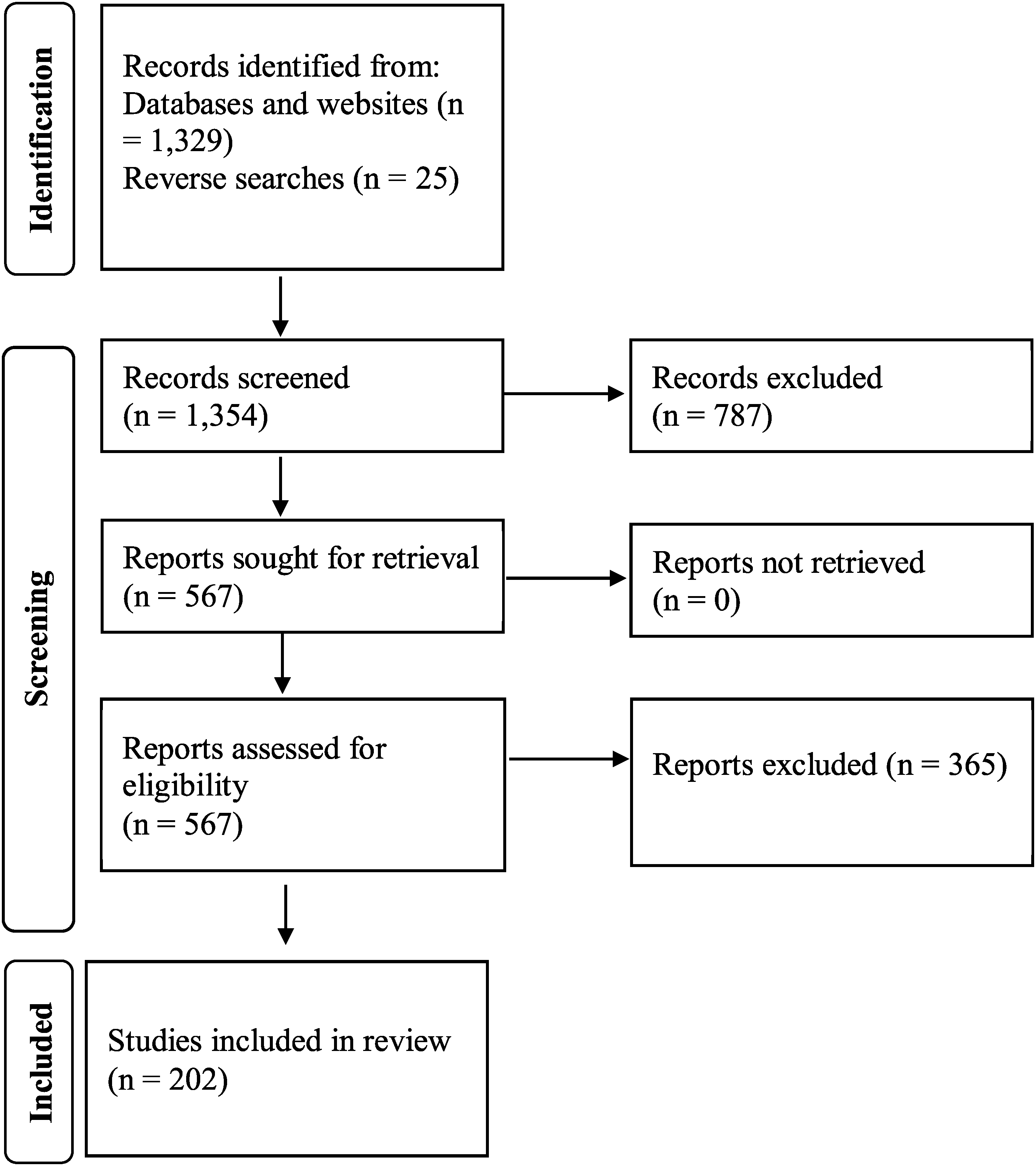
PRISMA Flow Diagram of Internal Mobility Systematic Review
Model of Internal Mobility
Comprehensively reviewing the literature garnered insights into the two main types of internal mobility—transfers and promotions. A total of 43 (33 empirical, 10 conceptual) articles addressed transfers while 168 (153 empirical, 15 conceptual) articles addressed promotions. Given the internal mobility process is influenced by both individuals and organizations, the review process provided further insights into the distinct individual and organizational factors that precede (individual precursors, organizational precursors) and follow (individual outcomes, organizational outcomes) both types of internal mobility. An additional section for methodological concerns and issues was also included to review current methodological challenges associated with internal mobility. The conceptual model was developed iteratively by coding each of the 202 articles by type (transfers and/or promotions) and level (individual, organizational) to build a comprehensive understanding of the phenomenon. Although conceptual and empirical articles are included in this review, the discussion of results focuses on the most relevant empirical findings in each category unless otherwise noted. An overview of the resulting conceptual map is included in Figure 2.
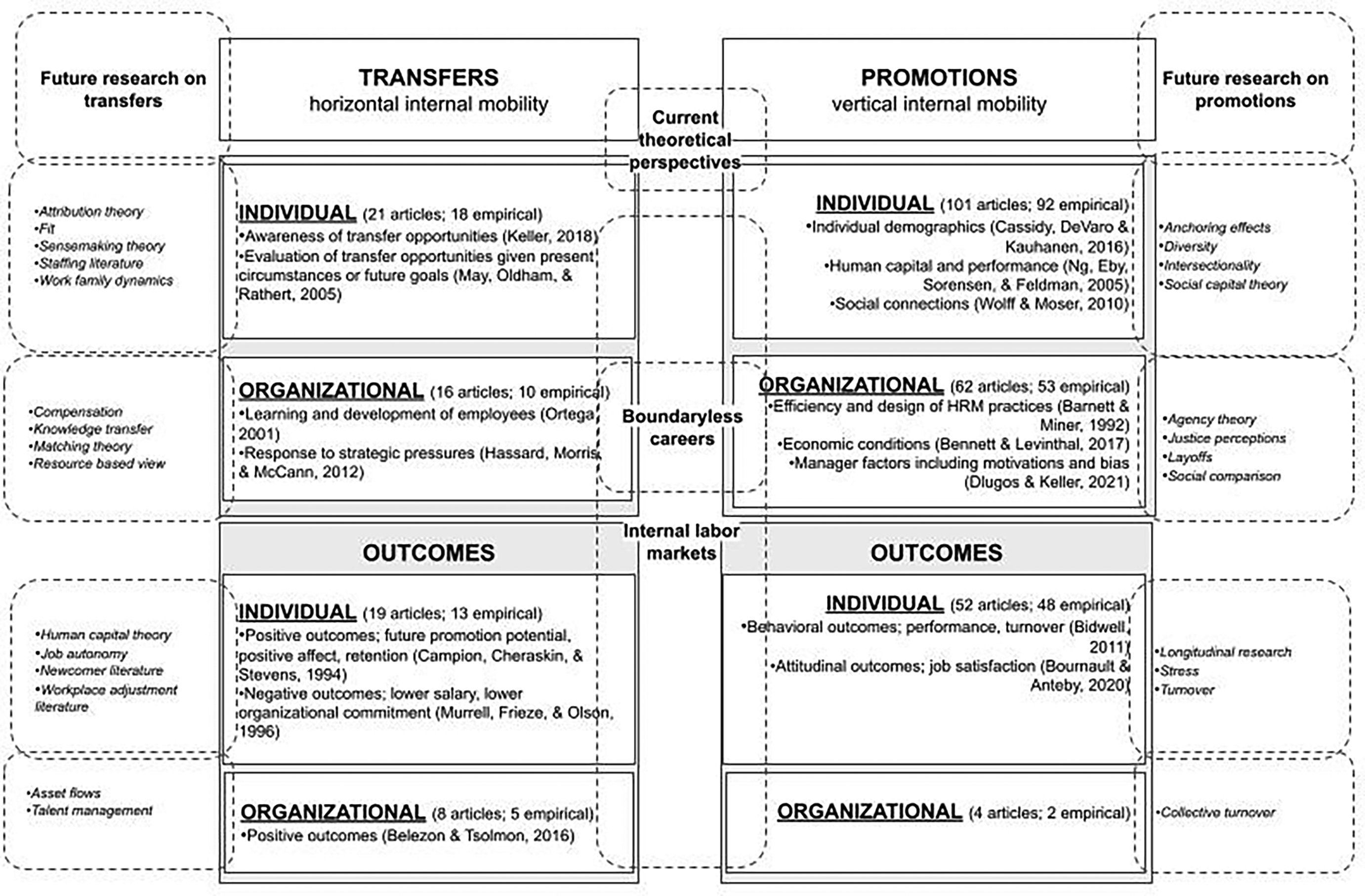
Conceptual Model of Internal Mobility
Transfers
Individual Precursors
Individuals are often motivated to engage in transfers to optimize some aspect of their work situation. However, to make determinations regarding whether transfers can be utilized to optimize individualized career objectives, individuals often need to first gain awareness of an opportunity before evaluating their present situation and future goals to determine if the opportunity will be advantageous. The 21 articles (18 empirical, 3 conceptual) in this category center on these two factors—awareness and evaluation—which both influence individuals’ views, motivations, and/or willingness to engage in transfers.
Awareness. At the simplest level, recent reviews of recruitment literature found that individuals’ awareness, attention, and/or interest in opportunities can be a crucial first step toward transferring internally (Breaugh, 2008; 2013). Researchers further suggest how individuals find out about these internal positions is consequential to the success of the move. For instance, individuals can enter new units laterally by applying to internal job postings (posting) or by finding out about new positions through social connections (slotting) (Marsden & Gorman, 1999; Pinfield, 1995). Keller (2018) finds evidence that posting may result in higher-quality internal applicants who go on to earn higher salaries, have higher performance ratings, and have less turnover compared to slotting. Meaning, transfers may be more effective when individuals self-select into desired roles. This may be because individuals who apply for positions do not rely solely on social connections to learn about the role and thus are likely more proactive in obtaining objective information, including critical or negative information, making them better positioned to understand if the role fits their interests, goals, and skill-set prior to moving.
As individuals build awareness of internal positions, they use the information they gain to develop perceptions of the benefits or risks associated with transfer opportunities that determine their likelihood of seeking out and ultimately accepting these opportunities (Campion et al., 2022). As a whole, research in this area suggests that the way individuals discover new opportunities and the positive or negative meaning they attach to such information can be consequential. However, a cohesive view of the process through which individuals learn about transfers, including the content of the information they gain prior to moving and the relative influence of the sources from which they gain information (e.g., coworkers, job postings), does not yet exist. Although recruitment and selection literature may be a helpful starting point (Ployhart, Schmitt, & Tippins, 2017), it often focuses on issues related to attracting organizational outsiders as opposed to understanding what makes internal mobility more or less attractive to internal applicants who may learn about internal units in distinct ways.
Evaluation. A second individual precursor to transfers includes the evaluation process individuals undergo after learning about potential opportunities. Individuals are motivated to engage in transfers when the perceived benefits outweigh the costs of making a change, and thus they engage in an evaluation process to weigh the pros and cons of transfer opportunities. This evaluation process may include consideration of both their current situations and/or their future goals. For instance, individuals may seek out opportunities to move when they are dissatisfied with fit in their current positions, particularly when such dissatisfaction is attributed to unit-specific (e.g., supervisor) factors, which can be addressed through internal mobility, as opposed to organization-specific (e.g., organizational culture) factors (e.g., Dalton & Todor, 1993; May, Oldham, & Rathert, 2005), which may prompt turnover (O'Reilly, Chatman, & Caldwell, 1991; Vandenberghe, 1999). Though, given that an individual's evaluations of their work-group and organization fit are often correlated (Kristof-Brown et al., 2005), it is unclear how individuals disentangle their dissatisfaction with organizations, groups, supervisors, and jobs to choose between moving internally or leaving the organization entirely.
Individuals may also consider factors outside the workplace when determining satisfaction with their current work situation, including the availability of alternatives in external job markets (Ostroff & Clark, 2001) or satisfaction with their work-life balance (Campion et al., 2022). For instance, health (e.g., stress level) is often a critical factor that individuals consider when making evaluations, and individuals may be more hesitant to accept opportunities that negatively impact their health, even if they believe the move would positively impact their career (Campion et al., 2022). Although this work suggests factors outside the workplace matter in the transfer evaluation processes, the variety of external factors that may influence individuals’ evaluations of their work arrangements as well as the individual differences that determine the weight that individuals give to work versus nonwork factors are unknown. Perhaps drawing from work on work-family dynamics (e.g., Byron, 2005) would provide insight into the variables that may be most influential toward determining when individuals may prioritize nonwork factors as well as when and why they may perceive transferring to threaten or enhance their roles outside the workplace.
In addition to evaluations of their present circumstances, individuals’ evaluations of their future goals can similarly prompt differences in their views toward transfers. For instance, individuals may attempt to use transfers to obtain skills or experiences that make them more desirable candidates for promotion opportunities (e.g., Ostroff & Clark, 2001; Noe & Barber, 1993) or to learn about opportunities that may better align with their future goals (e.g., Eriksson & Ortega, 2006). Transferring for career advancement or fit reasons are often prompted by differences in individuals’ human capital. Individuals with higher human capital tend to move for career advancement reasons (e.g., Campion, Campion, & Campion, 1994) whereas those with lower human capital tend to move to facilitate better fit (e.g., Bidwell, 2011). Although it is clear that individuals move for different reasons, it is unclear if there are differences in how individuals interpret transfers. It may be that formal organizational programs (e.g., structured rotational programs) or informal social networks help individuals build narratives regarding the purpose of a particular transfer opportunity. Or, it may be that other unexamined individual differences (e.g., regulatory focus) cause individuals to interpret transfers in unique ways. However, research is lacking in these areas and may benefit from theoretical perspectives that help explain individuals’ sensemaking processes (e.g., Weick, 1995).
Research also offers little insight into what motivates transfers for individuals with average levels of human capital. It could be that these individuals are less likely to seek out or be chosen for transfer opportunities given they may not perform poorly enough to signal a misfit or high enough to suggest they would benefit from the exposure to new skills or knowledge often gained through mobility. If transfers are less likely for average performers, it may mean that a disproportionate number of average level human capital employees drive unit cultures and will develop higher levels of unit-specific human capital (Ployhart, Iddekinge, & Mackenzie, 2011). They may also be prone to higher turnover risk in cases where their mobility needs are not being met (Dlugos & Keller, 2021). Further clarity in this area may be consequential to research on teams (Ilgen, Hollenbeck, Johnson, & Jundt, 2005), human capital resources (Ray, Essman, Nyberg, Ployhart, & Hale, 2023), and talent management (Collings, Scullion, & Vaiman, 2015), all of which seek to understand how the construction and maintenance of teams affect their utilization.
Organizational Precursors
Organizations may move employees to facilitate better fit or develop particular knowledge, skills in employees, or in response to strategic demands. The 16 articles in this category (10 empirical, 6 conceptual) center on these two motivations—learning/development and strategic pressures—which push or pull organizations toward utilizing transfers to optimize their use of talent within the organization.
Learning and development. Employee learning and development refers to the motivation for organizations to learn about, socialize, control, and/or develop their existing pool of employees. These motivations are all related to an organization's desire to improve or optimize their existing employees in a way that is beneficial to the organization (e.g., Eriksson & Ortega, 2006). This learning is important for establishing better fit because organizations can use transferring to gain information regarding individuals’ underlying attributes, which may be revealed as they engage in different job roles or interact with new team members. This is particularly effective when employees are at early career stages where there is little prior information about the variety of knowledge, skills, and abilities they may possess (Ortega, 2001), and thus it is particularly challenging to make determinations of fit. Additionally, learning about employees makes it easier to sort them into jobs based on their specialized or general abilities (Baker, Gibbs, & Holmstrom, 1994). Thus, without transfers, it is difficult for organizations to understand the strengths and weaknesses of their talent pool to make determinations regarding where an individuals’ skill sets can be best utilized. Transfers can also be used by organizations as a tool to develop their employees. For instance, transfers can make employees more well-rounded by increasing the variety of job tasks they are able to perform (Signoretti et al., 2022) or facilitate their social connections. For instance, when managers are moved internally for socialization purposes, mobility can facilitate the growth of manager's social networks and help organizations identify or develop the manager's values (Edström & Galbraith, 1977). Meaning, transfers can be used to develop both human and social capital by selectively exposing individuals to new or desirable experiences.
In addition to using transfers to develop employees by matching them to positions where they can obtain relevant human or social capital, there is also evidence organizations view transfers holistically. Meaning, organizations may also consider the fit between employees, including how their underlying skills and relationships enhance or detract from each other to maximize the organization's collective use of talent, as suggested in recent conceptual work (Weller et al., 2019). Although fit is often drawn upon broadly to explain why organizations are motivated to make these moves, precision in explaining which elements of fit are considered and how organizations simultaneously consider all possible matches or potential combinations does not exist. One specific way organizations facilitate the collective development of their employees through transfers is by utilizing it as a tool to infuse new information into units (Stadler, Helfat, & Verona, 2022). Although this area of research is relatively new, it has implications for overcoming impediments to knowledge transfer (e.g., Kogut & Zander, 1993) by highlighting it may be more efficient to move individuals with desired knowledge rather than keeping them in their current positions and attempting to incentivize them to share information with others (Szulanski, 2000). This line of research also opens the possibility to explore how transfers could be valuable for spreading other types of behaviors, affect, or cognition.
Strategic pressures. Another organizational precursor to transfers is pressures organizations face to remain competitive, which motivate or change their use of mobility. For instance, organizations that downsize may offer fewer promotions and more opportunities for transfers (Hassard et al., 2012). This is because downsizing frequently leads to constraints in financial resources (e.g., Cascio, Chatrath, & Christie-David, 2021), including salary, which minimize the capacity to provide raises that often accompany promotions but not transfers. Downsizing may also be paired with hiring freezes (Feldman, 1996), which restrict an organization's ability to bring in external applicants, leading to an increased reliance on internal talent. This increases the use of transfers (Signoretti et al., 2022), particularly when downsizing does not uniformly impact all units, leaving holes in strategically important positions or understaffing, which can be addressed through transferring. Structural changes can also result from an organization's internal needs, which drive the creation or prioritization of specific job roles. For instance, organizations may utilize transfers to fill open positions with high performance variability given the importance of properly staffing those positions (Bidwell & Keller, 2014). This suggests that transfers can be an important vehicle to strategically divert talent to the most critical units or positions. Given organizational structures are becoming increasingly flexible (Sydow, Lindkvist, & DeFillippi, 2004; i.e., temporary project-based teams), this work implies transfers could become a common way to dynamically grow and shrink team sizes to adjust to dynamic organizational structures. This area of research also implies transfers can be an important strategic tool, yet strategic theories and perspectives (e.g., dynamic capabilities, real options theory, resource-based view) are rarely incorporated to understand organizations’ strategic motivations for utilizing transfers. Instead, the efficacy of these decisions is often examined from an HR lens, providing little insight beyond the traditional ILM perspective regarding when and why transfers are strategically utilized.
Individual Outcomes
Although transfers are often motivated by an individual's desire to improve present or future outcomes, individuals do not have uniform transfer experiences, leading to different outcomes. These 19 (13 empirical, 6 conceptual) articles address both positive and negative outcomes of transfers that reflect the uncertainty that can be introduced in the mobility process.
Positive outcomes. There are many instances where transferring improves individual outcomes. Individuals who transfer have the knowledge and experience to negotiate more competitively (Keller, 2018); are more likely to be promoted; have more positive affect (Campion et al., 1994); and are less likely to quit (Benson & Rissing, 2020), leading to increased skills and satisfaction. However, the positive relationship between transfers and individual outcomes may be dependent on the difficulty of the job role, the similarity between the pre- and post-job roles, the level of perceived support (Pinder & Schroeder, 1987), and the effective use of coping strategies to manage the transition (Latack, 1984), suggesting that adjustment to the new role may be crucial to transfer success.
Negative outcomes. Transfers can also lead to an increased risk of burnout (Dunford et al., 2012), lower organizational commitment, and lower future increases in salary (Murrell et al., 1996). Further, there is no evidence that individuals who experience multiple transfers learn to transfer more efficiently (Pinder & Schroeder, 1987). Meaning, transfers may continue to be disruptive, even for those with prior experience moving. This finding mirrors work on external mobility, which finds that individual performance is often dependent on the contextual setting (Groysberg, Lee, & Nanda, 2008) and can decline after mobility even when individuals perform the same job (Huckman & Pisano, 2006). Thus, although it is intuitive that transfers should be relatively straightforward due to the preservation of firm-specific elements (e.g., organizational culture) that can aid in the transition process, transferring can still erode the elements that drive an individual's success. Negative outcomes may be driven by the loss of unit-specific knowledge (Campbell, Saxton, & Banerjee, 2014) and the lower levels of support often offered or sought out by internal movers (Feldman & Brett, 1983). However, there is no framework in place to discuss when and why transfers may be most disruptive to individuals. The mixed outcomes associated with transfers suggests transferring may provide increased career opportunities and reduced dismissal risk but can take an emotional toll on employees who must adjust to new units when they move. Given it is not clear when and why transfers are instigated by individuals or organizations, it may be that individuals with more autonomy in the transfer process may be more likely to have positive outcomes (Gellatly & Irving, 2001). It is also possible outcomes of the move are dependent on underexplored factors such as the job role, unit, and supervisor. However, future research is needed to better understand the variety of conditions that may explain when and why transfer outcomes may be positive or negative.
Organizational Outcomes
Only 8 (5 empirical, 3 conceptual) articles address the collective outcomes of transfers. The lack of research in this area is likely due to the fact that it is less common for transfers to be conceptualized as a collective construct (e.g., aggregated to a rate) or for researchers to examine how a transfer event results in collective outcomes. Work in this area has found a positive relationship between transfers and a variety of collective outcomes, including improving innovation (Cornelius et al., 2021), cross-unit social capital (Gray, Bunderson, Boumgarden, & Bechara, 2019), customer satisfaction (Reilly et al., 2014), and competitive advantage (Belenzon & Tsolmon, 2016) as well as a reduction in absenteeism (Dalton & Meschl, 1992). Together, these outcomes suggest increasing transfers can have a positive impact, yet crucial outcomes, including organizational financial performance, have not yet been explored, making the financial implications of transfers unknown.
One factor complicating research on organizational outcomes associated with transfers is that at least two units within the organization are simultaneously impacted as individual(s) transfer out of and into units simultaneously. Thus, understanding the complete ramifications of transfers are challenging given it may positively benefit one unit while harming another. The need to understand the net benefits or costs of transfers has been an enduring question that has remained unanswered within this literature for decades (Dalton, 1997), yet only one article simultaneously examined effects of transfers in and out on collective outcomes. These researchers found transfers in had no effect on their outcome variable—collective patient satisfaction—while transfers out had a negative impact (Reilly et al., 2014). Although Reilly and his colleagues’ work provides a starting point for answering this question, transfers were not the foci of their paper, and they grounded their work in a collective turnover theory (CET theory; Nyberg & Ployhart, 2013), which was not designed to explain the dynamics of transfers. Both the lack of attention to the net benefits of transfers and the lack of attention to a wider variety of potential collective outcomes associated with internal mobility, including both distal (e.g., financial measures, collective performance) and proximal (e.g., team cohesion, collective engagement) outcomes, leaves questions regarding the full impact transfers may have on organizations.
Promotions
Individual Precursors
A total of 101 articles explore how individual differences impact promotions. Individuals are motivated to engage in promotions to reap the rewards (e.g., higher status, higher compensation); however, this review revealed that the odds of being selected may be influenced both by passive individual differences (e.g., gender, race) and proactive efforts toward being a more competitive candidate (e.g., developing relevant human and social capital).
Individual demographics. Most articles on individual demographics as a precursor to promotions focus on gender. These articles generally find that women are held to higher standards and ultimately less likely to be promoted than men (Cassidy, DeVaro, & Kauhanen, 2016; Lyness & Heilman, 2006). Three key reasons are posited for why women are less likely to be promoted. First, although current performance is often cited as a key reason for promotions (e.g., Peter & Hull, 1969), high performance does not always result in promotions for women. For instance, meta-analytic results show that on average women have higher performance ratings than men but are still promoted less (Roth et al., 2012). This is compounded by the challenge that women receive in being evaluated—even when women objectively perform equally to men, they often receive lower subjective ratings of future potential (Ugarte & Rubery, 2021) and their promotions are viewed as riskier (van Esch, Hopkins, O'Neil, & Bilimoria, 2018). This suggests women's promotions are affected by biases held by managers or inequities ingrained in the system. Indeed, when managers have sexist beliefs, which can carry over from prior experiences (Phillips, 2005), they are less likely to interact with women, leading to lower promotion likelihood (Watkins et al., 2006). Thus, perhaps, not surprisingly, women are more likely to be promoted when promotion processes are standardized (e.g., government offices; Powell & Butterfield, 1994) or when performance scores are relative (Bohnet, 2016).
A second reason for lower promotion likelihood is that women are often perceived to have lower fit for higher-level positions (Lyness & Heilman, 2006). The negative effects of perceived misfit can be exacerbated in non-stereotypical jobs or industries (e.g., Lyness & Heilman, 2006; Tharenou, 2001). This occurs because the incongruity between stereotypical female (i.e., sweet, caring) and male (i.e., tough, aggressive) attributes cause more negative expectations based on the greater perceived lack of fit (Heilman, 1995, 2001). A perceived lack of fit for higher positions also can arise because women's domestic and work roles are often viewed as incompatible. For instance, managers view women as having greater work-family conflict compared to men, which leads to lower assessments of promotability and fewer nominations for promotion (Hoobler, Wayne, & Lemmon, 2009). Although person-organization fit theory (Kristof, 1996; Kristof-Brown, 2000) is the predominant framework used to make such arguments about women's promotion viability, the theory is rarely applied to explain how misfit does (or does not) impact male promotions. Although, one article did find evidence that men may similarly face difficulties being promoted while performing nontypical job duties (Bode, Rogan, & Singh, 2022). Given recent societal shifts in how individuals think about their gender (e.g., approximately 1.2 million individuals in the United States now identify as nonbinary; Wilson & Meyer, 2021), future research will likely need to combine fit theory with theories that recognize the evolving nature of demographic identities (e.g., Clair, Humberd, Rouse, & Jones, 2019; Liu, Park, Hymer, & Thatcher, 2019).
Third, women are more likely to face glass ceilings, which can reduce future promotion likelihood (Bryant, 1984). Women's promotions, compared to men, slow as they reach higher levels of the organization (Lyness & Judiesch, 1999). Additionally, the advancement of women may be less linear than men in that they more often skip job levels at lower levels on job ladders, accelerating more quickly but slowing once they have reached higher-level positions (Bonet, Cappelli, & Hamori, 2020). Even when women are promoted, they are often disproportionately exposed to emotional strain or work intensity (Chan & Anteby, 2016) and put in top positions at poor-performing firms (Cook & Glass, 2014), giving the illusion of opportunity while making it increasingly difficult to demonstrate the high performance needed for future promotions. Although women benefit from more structured advancement programs (e.g., Powell & Butterfield, 1994), it may be challenging to standardize advancement to top-level positions, which often utilize informal selective hiring practices that preserve homogeneity (Nielsen, 2009). Thus, future work on promotions should consider promotion to mid-level (e.g., middle manager) positions distinct from promotions to top-level positions (e.g., top management team), as there may be unique challenges and processes women face when attempting to be promoted to different positions in an organization's hierarchical structure.
Although gender is the primary demographic examined in relation to individual causes of promotions, race, age, sexual orientation, and attractiveness have also been examined. White employees are more likely to be promoted compared to other races (Bernardin et al., 2012; Powell & Butterfield, 1997), and programs to support promotion opportunities for people of color may be viewed as a threat to promotions by white employees (James, Brief, Dietz, & Cohen, 2001). Promotions are also less likely for older employees (Pritchard, Maxwell, & Jordon, 1984) and those who identify as gay or lesbian (Ragins & Cornwell, 2001). In contrast, there are promotion advantages for those who are viewed as more attractive (Morrow, McElroy, Stamper, & Wilson, 1990; Nault, Pitesa, & Thau, 2020). Although these findings both mirror and contribute to research on diversity (e.g., Van Dijk, Meyer, Van Engen, & Loyd, 2017), given that promotions are often dependent on manager recommendations, these results raise questions about how organizations can create more equitable opportunities for promotion. Given that who is promoted can have ripple effects by sending signals about fairness (e.g., Zhu, Chen, Wang, Jiao, & Yang, 2022), improving equity in promotion decisions is crucial. Additionally, although significant research has been done on the relationship between gender and promotions, there has been comparatively less literature on other demographic attributes. Given that individuals simultaneously belong to multiple demographic categories and possess unique intersectional identities (Crenshaw, 1989), research may be oversimplifying how multiple demographic identities intersect to drive promotion patterns.
Human capital and performance. Beyond individual demographics, both conceptual and empirical work finds that, unsurprisingly, higher levels of human capital and performance increase the likelihood of promotions (Arthur, Edwards, & Barrett, 2002; Ng et al., 2005; Tharenou, 2001; O'Reilly & Chatman, 1994; Pettit, Doyle, Kim, & Hurwitz, 2022). Research also finds that prior promotions (Pettit et al., 2022) and initial performance impressions (Black & Vance, 2021) impact future promotions, perhaps by sending signals of future potential. However, although initial impressions of human capital can impact chance of future promotions, by using a sample of minor league baseball players, Black and Vance (2021) found that the relationship weakens as managers replace initial human capital impressions with evaluations of on-the-job experience. Additional longitudinal research may help uncover the tension between initial impressions (i.e., anchoring effect) and on-the-job performance used to make promotion decisions. Industry or job norms can also change how performance is evaluated in promotion decisions. For instance, performance on standardized tests is a common consideration for government workers (e.g., Arthur et al., 2002), whereas subjective assessments of individuals’ performance over time is more common in white-collar positions (Alessandri, Cortina, Sheng, & Borgogni, 2021). Overall, there is a positive relationship between human capital and/or performance and promotions, but the ways organizations define and evaluate human capital and performance are quite varied.
Personality factors also impact promotions, including high proactivity (Kilduff & Day, 1994) self-monitoring (Seibert, Crant, & Kraimer, 1999), extraversion (Seibert & Kraimer, 2001), self-efficacy (Dimotakis, Mitchell, & Maurer, 2017), ambition (Hirschi & Spurk, 2021), and secure attachment style (Feldman & Ng, 2007). These factors highlight that individuals with higher degrees of engagement or investment in their own development can gain increased visibility, which may help them better build or showcase their human capital, as suggested in Dimotakis and coauthors’ (2017) work on the relationship between self-efficacy and feedback seeking in promotion decisions. However, more work is needed to understand the mechanisms that cause these personality traits to result in a higher likelihood of promotion.
Social connections. The relationship between individuals and their supervisors also affects promotion opportunities because connections to those higher in the organization can facilitate promotions (Gubbins & Garavan, 2016). The likelihood of relationships developing may be dependent on the similarity between individuals and their supervisors (Schaubroeck & Lam, 2002), and these connections can lead to promotion opportunities in unique ways. For instance, supervisors can facilitate internal mobility when they advance and bring their subordinates along with them (Katz, Tushman, & Allen, 1995), or managers can use their influence to promote subordinates with whom they have higher quality relationships (Katz & Tushman, 1983). Research also finds that individuals can use relationships strategically to proactively facilitate their own promotions. For instance, those with secure attachment styles may more proactively build coalitions that increase the likelihood of subsequent promotions (Ronen & Zuroff, 2017). Additionally, individuals may strategically alter the size and use of their social networks to identify advancement opportunities (Wolff & Moser, 2010) or utilize formal mentorships to increase the likelihood of promotions (Singh, Ragins, & Tharenou, 2009) and the number of promotions individuals receive (Aryee, Wyatt, & Stone, 1996). Although it is clear that social connections facilitate promotions, it remains unclear precisely how the social connections needed for promotion can be facilitated and what aspects of social connections are most likely to lead to promotions and why.
Organizational Precursors
Organizations often utilize selection systems, including developing rules or processes outlined in the ILM perspective, to make efficient decisions regarding promotions decisions. However, organizational decisions, including promotion choices, are often carried out by managers and are influenced by economic conditions. Thus, these 62 (53 empirical, 9 conceptual) articles focus both on the HRM systems organizations may use to facilitate promotions and also on complicating factors—such as managerial choice and economic conditions—which complicate the efficiency of such systems.
HRM practices. Organization's collection of HRM practices influence promotions in several ways. Organizations can use training or development programs to equip employees with the firm-specific skills needed to succeed at upper levels of the organization (e.g., Tharenou, 2010) or can influence promotions through hiring practices (Barnett & Miner, 1992), pay systems (Dencker, 2009), and skill sorting (Biddle & Roberts, 1994). These practices often impact the promotions of those at different hierarchical levels in unique ways. For instance, the practice of hiring temporary employees can create a “hidden escalator” for some core employees by speeding rates of promotion for those at upper job ranks but slowing advancement for permanent workers at lower job ranks. This occurs because temporary workers may create competition by filling positions lower-level workers may have otherwise been promoted into but pose little threat to those in higher-level positions, which are often more reliant on firm-specific capital (Barnett & Miner, 1992). Similarly, there is evidence that policies related to bonuses or salaries that often accompany promotions vary across different groups due to differences in bargaining power across job levels (Dencker, 2009). Thus, the organizational practices on promotions differ depending on individuals’ job levels and are not uniformly applied within the organization.
The nonuniformity of HRM practices and policies can also be observed in the creation of practices aimed toward facilitating the promotions of particular groups of employees. One group that organizations often target for promotion are high performers. To identify high performers, organizations can institute appraisal systems (Bernardin et al., 2012) that are particularly effective during employee's early career stages because it increases their labor productivity (Yoon & Sengupta, 2019), ensuring that high performers are effectively utilized. Another group that organizations may target for promotion include those with certain demographic attributes who have previously been disadvantaged in promotion decisions. This often happens through the adoption of affirmative action programs, which both conceptual and empirical work suggest can help ensure equal employment opportunities to combat established systems that perpetuate inequalities (Amis, Mair, & Munir, 2020; Bonet et al., 2020). A meta-analysis on affirmative-action programs finds evidence that such programs increase promotions for minority employees but can solicit mixed reactions from employees not directly benefiting from them particularly by altering others’ perceptions of justice (Harrison, Kravitz, Mayer, Leslie, & Lev-Arey, 2006). Negative responses to affirmative action programs can be problematic by reducing motivation or performance, although research suggests that negative reactions may be mitigated through diversity training (Armstrong et al., 2010). This suggests that when promotion policies are aimed at a subset of employees, organizations will need to consider the reactions from others not benefiting directly from the program to determine how collective outcomes will be impacted and how perceptions of injustice triggered by these programs may be mitigated.
Research focusing on how HRM systems facilitate promotions sometimes assumes that promotions are somewhat flexible. Meaning, organizations have the power to increase the number of higher-level positions and can offer promotions to any employee as a reward for high performance. However, in some cases, promotion opportunities are inflexible—that is, someone must leave for a position to open. Organizations can create competition for these positions through instituting promotion tournaments. Research on promotion tournaments suggests promotions are often a desirable reward (DeVaro, 2006) and can increase employee's motivation and performance (Connelly, Tihanyi, Crook, & Gangloff, 2014). However, there is evidence that the design of these tournaments impacts their effectiveness. For instance, when there are more prizes (i.e., more promotion opportunities) employees tend to decrease effort and when there are more employees vying for the promotion, employees tend to increase effort (Orrison, Schotter, & Weigelt, 2004). This suggests that not all promotion tournaments will result in desirable motivational increases (DeVaro, 2006), meaning organizations should carefully consider the design of such tournaments to avoid detrimental effects noted in literature on top-management teams, such as increased turnover (e.g., Chan, Evans, & Hong, 2022), unproductive sabotage from competitors (Chen, 2003), or selective shirking on tasks deemed irrelevant to their promotion chances (DeVaro & Gürtler, 2016).
Economic conditions. Economic conditions both determine an organization's attributions of employee actions (e.g., Sirola & Pitesa, 2018) and the total amount of financial resources organizations have available to allocate toward promotions. For instance, using a formal modeling approach, Bennett and Levinthal (2017) find in times of organizational growth, organizations may increase the use of promotions because they possess the financial resources needed to compensate upper-level positions. Alternatively, in times of organizational decline, organizations will often downsize (Budros, 1999), which can restrict promotions because higher-level positions are often eliminated to cut back on costs. This leaves organizations with challenges regarding how to manage plateauing careers (Ettington, 1997) or how to manage the change in meaning of a promotion within flatter organizational structures (Prince, 2003). Thus, although an organization's use of internal mobility is partially determined by economic conditions, which influence the availability of financial resources, the restriction of opportunities resulting from poor economic conditions can create challenges for organizations regarding how to frame reduced opportunities for advancement, given individuals may be more likely to leave when they believe their careers are stalled (Yang, Niven, & Johnson, 2019).
Manager factors. In addition to economic conditions and HRM systems, managers are also a central organizational cause of promotions. First, a manager's motivations may impact the choices that they make in regards to facilitating or preventing promotions. Managers are often the closest agents to employees and thus often have more information or insight into their subordinate's potential (e.g., Findley, Giles, & Mossholder, 2000). In some cases, managers may use this privileged information to their own advantage, which can influence promotions’ patterns. For instance, managers may sometimes attempt to prevent internal mobility by withholding information about their employees in order to hoard talent (Dlugos & Keller, 2021; Friebel & Raith, 2010). This is problematic given that conceptual work suggests that the process needed to match individuals to ideal jobs is enabled by the efficient sharing of information between managers (Weller et al., 2019), but much more research is needed to determine how organizations may overcome this agency problem (Eisenhardt, 1989).
In addition to their motivations, managers’ perceptions may be important drivers of mobility. For instance, managers offer promotion opportunities based on their observations and evaluations of employee performance (Bidwell & Mollick, 2015), which may be influenced by moods (Forgas, 1995) or context (Johns, 2006), leading to a certain degree of subjectivity. Although these perceptions can facilitate movement, they can also act as a limitation to the mobility of employees. For instance, managers’ perceptions of work-family conflict can lessen the likelihood of advancement (Hoobler et al., 2009). A manager's own movement patterns also influence the perceptions and subsequent mobility of subordinate employees. For instance, whether managers are perceived to move for positive or negative reasons impacts subordinate mobility patterns (i.e., turnover) based on the meaning they attribute to their manager's departure (Baek, Bidwell, & Keller, 2022). The most pressing point of confusion in this research area is that the organization's unique promotion policies are rarely identified by researchers, resulting in competing assumptions that make it difficult to integrate research in this area. For instance, in some organizations a position must be vacated to promote an employee; in other cases positions can be created for employees with high performance or as an incentive to reduce turnover. The inclusion of more details about the organizational control and level at which promotions occur may help better contextualize future research in this area.
Individual Outcomes
Promotions are generally considered to be positive, so most of the 52 (48 empirical, 4 conceptual) relevant articles focus on associated benefits. However, as promotions require adjustment to new roles and developing new relationships, the outcomes associated with promotions are nuanced and include both behavioral (e.g., performance) and attitudinal (e.g., job satisfaction) components.
Behavioral outcomes. The most common individual outcome of promotions is individual performance. After promotion, individuals perform better compared to external hires at the same level (Arnold, Van Iddekinge, Campion, Bauer, & Campion, 2021; Bidwell, 2011). However, when examining within-person changes, an individual's performance ratings often decline after a promotion (Lam & Schaubroeck, 2000), perhaps due to increased expectations (Jamal, 1984) or, as suggested in conceptual work, difficulties adjusting to their new roles (Louis, 1980). Thus, promoted individuals may perform better compared to externally hired counterparts but may experience performance declines relative to their prior performance. To better understand the relationship between promotions and performance, researchers should use a longitudinal approach to determine when declines in performance occur, including if changes in performance effects are temporary or enduring and how long it takes for external talent to catch up to performance levels of internal hires (DeOrtentiis et al., 2018).
Another objective individual outcome frequently examined is turnover. Researchers often find a negative relationship between promotions and turnover (Bidwell, 2011; Nyberg, 2010; Stumpf, 2014). Further, recent findings suggest that the speed of promotions (Weng & McElroy, 2012), and even the belief that promotions will occur, can decrease subsequent turnover (Seibert, Kraimer, Holtom, & Pierotti, 2013). However, there are questions regarding whether decreases in turnover are driven by the promotion itself or by changes to salary that often accompany promotions (Markham, Harlan, & Hackett, 1987). For instance, when controlling for compensation increases, promotions were actually found to increase turnover because individuals had more visibility on external job markets (Trevor, Gerhart, & Boudreau, 1997). Indeed, it seems promotions can increase voluntary turnover if the promotion draws attention from external organizations (Lee, Gerhart, Weller, & Trevor, 2008), when compensation attached to the promotion is not sufficient (Nyberg, 2010) or when individuals jump multiple job levels at once (Salamin & Hom, 2005). Thus, in some cases, promotions elicit increased employee commitment, which reduces turnover, while in other cases, promotions lead to increased opportunities outside of the organization that can increase turnover. Future research should more closely examine the complexities of this relationship.
Attitudinal outcomes. Subjective outcomes, such as job satisfaction and stress, are also addressed in promotion research. In general, the relationship between promotions and job satisfaction is positive (Johnston, Griffeth, Burton, & Carson, 1993) but can be negative in cases where promotions do not meet individuals’ expectations (Bourmault & Anteby, 2020) or when preceded by frequent transfers (Murrell et al., 1996)—perhaps suggesting that satisfaction is dependent upon individualized views of career advancement. Promotions can also be associated with higher levels of stress due to increased job demands (Moyle & Parkes, 1999), but individuals can also experience stress when promotion opportunities are restricted (Latack, 1984). It may also be that stress associated with promotions may be socially dependent, where viewing the mobility of others creates a social comparison effect (e.g., social contagion; Christakis & Fowler, 2013), or that one's own beliefs and attitudes regarding the relationship between promotions and success can shape stress reactions. An updated view of how promotions relate to stress may be beneficial because environmental changes including increased technology, changing social dynamics, and economic challenges have changed the ways individuals view and experience stress (Almeida et al., 2020).
Denied promotions. A growing body of research has begun to examine reactions to being denied a promotion. Denied promotions occur when individuals apply for a promotion and are rejected yet remain employed by the organization. Denied promotions can increase an individual's desire to leave (Foley, Kidder, & Powell, 2002) due to perceptions of inequity (Schwarzwald, Koslowsky, & Shalit, 1992), reduced confidence in advancement opportunities (Foley et al., 2002), and unmet expectations (Schaubroeck & Lam, 2004). However, rejected employees are less likely to turnover when the rejection is viewed as fair (Zhu et al., 2022), if they can craft growth-based narratives (Vough, 2017) and when they are interviewed by the hiring manager and lose to other internal applicants (Dlugos & Keller, 2021). This suggests that the negative effects of denied promotions may be partially dependent on how rejected employees interpret them. Therefore, organizations should be conscious of what signals they send with a denied promotion and aid employees in interpreting and positively framing these experiences to prevent future turnover after failed promotions attempts.
Organizational Outcomes
Only four articles (two empirical, two conceptual) address the collective outcomes of promotions; hence, the implications for promotions at the organizational level are relatively unknown. One challenge with understanding the collective outcomes associated with promotions is that the rate of promotions for some organizations may be relatively fixed—the percentage of promotions available each year may be dictated by upper-level management or the timing of promotions may be isolated to a particular time of year. These details are rarely provided by researchers but can complicate the use of promotion rates. Another approach to understanding organizational outcomes associated with promotions may be to follow suit of an exemplar paper in this area, which compares the collective performance of subordinates led by internally promoted managers versus externally hired managers (DeOrtentiis et al., 2018). This approach considers the collective outcomes that may be triggered by promotion events of individuals in strategic positions (e.g., managers), including the collective emergent reactions of teams that may drive differences in their behaviors, such as performance.
Methodological Concerns and Issues
In general, a challenge of integrating researchers interested in internal mobility research has led to a lack of precision in defining, conceptualizing, and measuring both types of internal mobility. Authors who define internal mobility frequently use broad definitions, such as “a move between jobs within the same organization” (Keller, 2018; p. 850). Although such definitions are accurate and distinguish between internal mobility and other constructs, they also allow for varying interpretations. For instance, this review found that a wide range of factors can change during internal mobility; internal mobility may be conceptualized as a relatively permanent (Reilly et al., 2014) or temporary change (Ortega, 2001), may require a change in function (Pinder & Schroeder, 1987) or be a similar function (Murrell et al., 1996), and it can be instigated by an individual (Campion et al., 2022) or by an organization (Ostroff & Clark, 2001). Hence, because there are potential differences in both the type and number of elements that change, if they are not explicitly described, construct confusion can make it unclear which theoretical frameworks are appropriate.
One way to address the lack of precision in internal mobility conceptualizations could be to follow suit of researchers who study short-term lateral mobility or job rotations (e.g., Eriksson & Ortega, 2006; Ortega, 2001). Their assumptions and description of the phenomena are often stated early, and there is a specific term, job rotations, to signal the type of internal mobility being discussed. The challenge with this approach is that a wide range of naming conventions and definitions could lead to the proliferation of the construct and job rotations may represent just one element of change that occurs during internal mobility. Thus, another way to address this may be to think of internal mobility as a continuum defined in terms of both the type and number of elements that change. Building a typology of elements that could change during internal mobility would provide researchers with an organizing framework to conceptualize internal mobility to provide a basis for discussing features of the internal change so that future research can be more effectively integrated and compared.
In addition to confusion around defining internal mobility, approaches to measuring internal mobility are also quite varied. While an event-based approach is common, researchers also measure the number of instances of internal mobility individuals experience (Seibert, Kraimer, & Liden, 2001), the speed of internal mobility (Bidwell, 2011), the number of hierarchical levels moved during internal mobility (Salamin & Hom, 2005), intentions to engage in internal mobility (May et al., 2005), and desirability of or belief in internal mobility opportunities (Singh, 1998). Although the variety of measures and approaches to internal mobility is a strength of the literature because researchers may be capturing different aspects of the internal mobility process, it is also problematic given that these distinct measurement approaches are all referred to broadly as “internal mobility,” leading to confusion regarding the alignment between theoretical and measurement approaches. Thus, when using the term internal mobility, researchers must be explicit in describing measurement choices such as the source (e.g., archival, survey), timing, objectivity (e.g., intentions, perceptions, or actual mobility), hierarchical job levels examined, and the level of analysis (e.g., individual event, internal mobility rate) as well as explaining how these measurement choices are linked to their conceptual framework. Of particular importance for future research should be if or how internal mobility may be measured at collective levels given that research on the collective outcomes sometimes assumes that internal mobility can be aggregated without theoretically explaining how or why.
Another trend concerns the selection and use of data. Theoretical and empirical evidence both find that internal mobility can be industry, organization, and even job specific (e.g., Althauser, 1989), yet researchers rarely call attention to when and how their samples may be unique and how their findings would (or would not) generalize. For instance, results from studies using investment bankers (e.g., Bidwell, 2011) may differ from results using retail workers (e.g., Campion et al., 2022) because opportunities for promotion and mobility patterns may differ, as evidenced by the few studies that simultaneously investigate multiple job types (e.g., Andresen et al., 2022; Campion et al., 2022). Frequently, studies draw from only a single organization (e.g., Benson, Finegold, & Mohrman, 2004; Catano, Darr, & Campbell, 2007; Ronen & Zuroff, 2017). Although this offers an opportunity to understand the unique internal labor markets of an organization in detail, researchers typically do not offer a discussion of the features of that organization's mobility patterns, making it difficult to integrate findings across samples. Thus, discussion of why or how samples impact internal mobility, including how it generalizes, will help set boundary conditions.
Additionally, the treatment of time in studies on internal mobility also varies. It is unclear how long internal mobility lasts (i.e., how long after internal mobility occurs should an individual be considered an internal mover) and how long internal mobility impacts outcomes. Some researchers have measured mobility as mobility that occurs within the month (Reilly et al., 2014) or within the year (Bidwell, 2011). Research has found internal mobility impacts outcomes after three months (Fisher & Shaw, 1994), six months (Feldman & Brett, 1983), one year (Armstrong-Stassen, 2003), a year and a half (Latack, 1984), or two years (DeOrtentiis et al., 2018). Some research has utilized longitudinal data, finding that the relationship between internal mobility and outcomes changes over time (Dunford et al., 2012)—meaning that when the outcome variables are collected is consequential. Although it is likely that some decisions regarding the time outcomes are measured is based on data availability, going forward it will be important that these decisions are theoretically driven, and it is clear that much more longitudinal research is needed to determine when the effects of mobility are strongest and the duration of those effects.
Future Research Directions
Internal mobility has been foundational to maintaining trust in employer-employee relationships by providing employees with a predictable view of their career journeys while allowing employers to effectively motivate and properly staff organizations. However, the nature of work has changed such that individuals no longer anticipate spending their entire careers within a single organization. Therefore, the purpose of internal mobility has shifted. Internal mobility is no longer solely an organizational tool to efficiently move workers in uniform patterns and instead reflects a complex tension between employees and employers who vary in their motivations, usages, and reactions to internal mobility, leading to significant variation in the forces that lead to internal mobility as well as variation in the outcomes organizations and individuals can anticipate. Thus, although ILMs have been a powerful framework for understanding internal mobility when it is wholly managed by organizations, the evolving, individualized nature of modern internal mobility is such that it cannot be fully understood without building and/or incorporating theory that acknowledges and explains differences that have emerged in organizations’ and individuals’ approaches, views, expectations, strategies, reactions, and responses to internal mobility. Therefore, the overarching goal for future research must be to shed assumptions of uniformity that limit current understandings of internal mobility and its associated processes and instead embrace the great variety revealed through this review as an opportunity to explain the multifaceted reasons internal mobility occurs as well as build a better understanding regarding when and why internal mobility is beneficial.
One general observation is that internal mobility research is lopsided. Although some areas of internal mobility have received substantial attention (e.g., gender and promotions), just 21% of articles reviewed addressed transfers and only 20 articles examined both transfers and promotions simultaneously. Though estimating the prevalence of transfers is difficult, they may be disruptive by creating problematic vacancy chains that cause ripples of subsequent internal mobility throughout the organization (Dalton, 1997). Therefore, oversight of transfers likely means the full implications of increased internal mobility remain unknown. We provide several specific areas for future research (Table 1) that map onto our conceptual model (Figure 2) and attend to the most pressing problems in each category.
Overview of Internal Mobility Future Research Directions
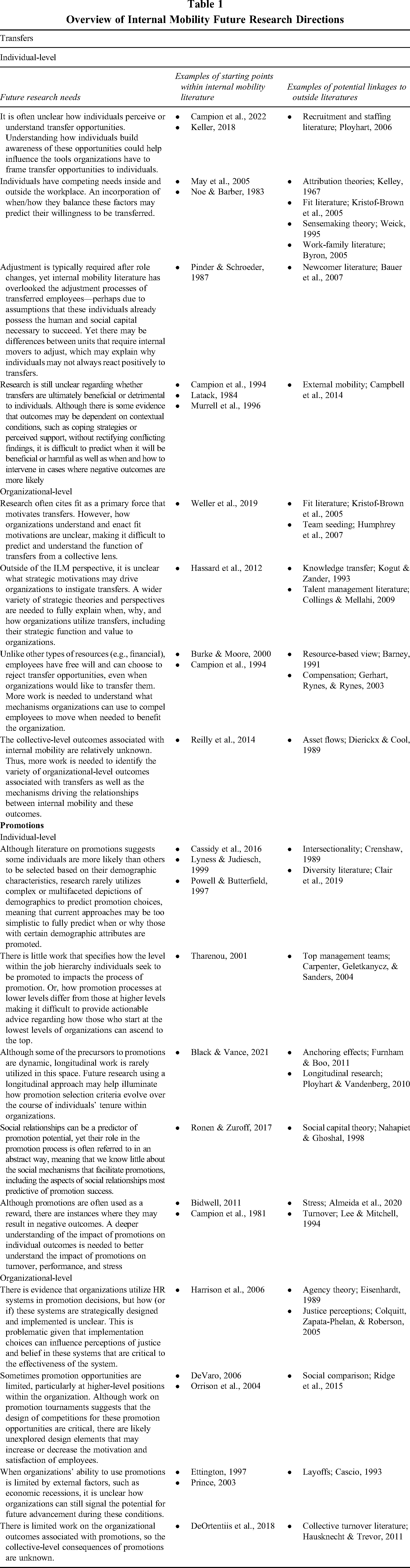
Transfers
Individual Level
The first opportunity for future research on individual-level transfers includes better understanding the process through which individuals build awareness of transfers. This question is important because a unique feature of transferring is that it can be utilized for a wide variety of purposes (e.g., misfit, career advancement) so there is no inherent notion of whether it is positive, neutral, or negative. It is likely impressions around transfers are formed based on the sources individuals choose to draw information from including the organizational norms (e.g., historical meaning organizations attach to transfers), features of the mobility opportunity (e.g., marketing as a fast track to career progression), characteristics of the units the individual departs and joins (e.g., the unit's reputation within the organization), and/or individual differences (e.g., individuals’ prior experiences transferring). Although staffing literature provides a helpful starting point regarding why the source of information utilized matters (Ployhart, 2006), that literature often focuses on external applicants, who may not have access to the same types of information and sources. For instance, internal applicants likely learn from their own direct observations of other units within the organization, an opportunity typically unavailable to outsiders. It is likely the richness and variety of sources internal movers utilize to learn about transfers will drive variance in the speed with which individuals gain information, the amount of total information gained, the content of information sought out, and the valence attached to transfers opportunities—all of which likely determine the likelihood of transfers occurrence and the success of a move. However, beyond work that distinguishes between two distinct methods for entering internal positions—positing and slotting (e.g., Keller, 2018)—the ways individuals collect information and attach meaning to transfer opportunities remains virtually unknown.
The second opportunity identified through this review is better understanding the decision process individuals undertake when transferring, including the factors within and outside the organization individuals consider as well as the weight individuals give to these factors. The limited attention to research in this area is likely due to the fact that ILMs have been the dominant theoretical lens used to examine internal mobility (Doeringer & Piore, 1971), which necessarily takes an organization-centered view of transfers. However, employees are unlike other types of organizational resources in that they have free will (Coff, 1997; Wright, Dunford, & Snell, 2001), and increasing evidence suggests individuals have more autonomy and control over their mobility processes (Inkson et al., 2012), including instances where they instigate or undertake a decision process to determine if they want to accept a mobility opportunity. Thus, researchers are just beginning to incorporate theoretical perspectives that allow for exploration of the individual approach to internal mobility—including the decision-making process individuals undergo prior to engaging in transfers.
One avenue for future research in this area is to attend to features individuals consider within the workplace. Although misfit within one's current unit is often identified as a source of dissatisfaction that motivates an individual's desire to move horizontally (May et al., 2005), it is unclear which aspect of fit they consider (e.g., person-job, person-group, person-supervisor) and how individuals disentangle unit versus organization-specific factors in their decision-making process. For instance, if individuals perceive a misfit with their supervisor, what cues prompt individuals to attribute their experience to an isolated interpersonal incident with their manager versus a widespread issue that impacts all managers within their organization? Drawing upon attribution theories (Hewett, Shantz, Mundy, & Alfes, 2018; Kelley, 1967; Kelley & Michaela, 1980) or sensemaking theory (Weick, 1995) to explain when and why individuals assign meaning to their experiences could help illuminate when and why individuals extrapolate their experiences to the unit versus organization level. Disentangling these features is challenging because unit and organizational evaluations of fit are often correlated (Krell, 2005), yet how these decisions are made is consequential because dissatisfaction with units can prompt internal mobility (Dalton & Todor, 1993) while dissatisfaction with organizations likely prompts turnover (O'Reilly et al., 1991).
Additionally, researchers should consider the factors outside the workplace that impact an individual's transfer decisions. Recent work suggests that factors outside the workplace can be stronger predictors of transfers than factors within the workplace (Campion et al., 2022). Although this work implies that what happens outside the workplace is consequential, beyond stress, this work has not yet looked at additional factors that influence transfers. Literature on expatriates suggests that when engaging in geographic moves, individuals consider how such moves will impact their social support networks and families and are less willing to move when it is perceived to negatively impact their life outside the workplace (e.g., Shaffer & Harrison, 1998; Shortland, 2015). Even when not moving geographically, as is often the case in transfers, it is possible that perceptions of the impact to their families (e.g., disruption of routines due to changing work hours) will be a strong consideration in their willingness to accept these opportunities. Drawing from work-family literature (Byron, 2005), researchers could bring in theoretical perspectives to explain when and why spillover is most likely to occur and thus most likely to impact transfer decisions. Given evidence both factors inside and outside the workplace impact transfer decisions, researchers who combine this work could also make a contribution by building a more comprehensive view of the complexity involved in transfer decision-making processes.
A third opportunity for research on transfers includes examining the adjustment process that occurs following a transfer. Though adjustment is often alluded to in research on transfers, it is infrequently explicitly included in researchers’ theorization or measured directly, meaning that research currently lacks an understanding of precisely how internal movers integrate into units including how individuals proactively engage in efforts to adjust, how established unit members facilitate or harm internal mover's socialization, and how long internal mover's adjustment process lasts. A lack of attention has made it difficult to link transfers to outcomes because the proximal intervening processes that explain why transfers impact outcomes is missing. It may be that inattention to adjustment processes is driven by assumptions that internal movers already possess the skills, social networks, or organizational knowledge to perform immediately (Campbell et al., 2014; Feldman & Brett, 1983; Moyle & Parkes, 1999), however. Given that individuals who experience multiple moves still find the process disruptive (Pinder & Schroeder, 1987), this is unlikely to be the case. Perhaps a starting point for examining adjustment processes following transfers could be to draw from newcomer literature. Although newcomer literature focuses on the socialization of organizational outsiders, researchers have made strides in identifying critical components of adjustment (e.g., role clarity, self-efficacy, social acceptance; Bauer, Bodner, Erdogan, Truxillo, & Tucker, 2007) and have recognized adjustment as the crucial intervening process that leads to successful integration into units (e.g., Fang, Duffy, & Shaw, 2011). Combining this work with unique components of internal movers’ adjustment could lead to joint contributions to transfers and newcomer literature.
One last opportunity for researchers in this area is to further investigate the mixed findings regarding whether transfers result in positive or negative outcomes. It may be that these mixed findings occur due to differences between individuals (e.g., level of individual autonomy in mobility decisions) or are reflecting within-person changes that occur over time that could be illuminated if researchers incorporate longitudinal approaches, given most empirical research in this category was conducted between 1980–2000 when the use of cross-sectional approaches was common. It may also be that these mixed findings reflect the complexity of transfers and that individuals simultaneously experience positive and negative reactions that must be processed, reflecting that a yet-unexplored sense-making process transfers experience.
Organization Level
The first opportunity for future research related to organizational-level perspectives on transfers includes better understanding of how organizations think about fit as a precursor to transfers. Although fit is frequently called upon as a primary motivator for organizations instigating transfers (Weller et al., 2019), approaches in the literature have been abstract. Meaning, it is unclear what “fit” means in the context of internal mobility. This is problematic given fit theory is often considered crucial to explaining transfers, yet which aspect of fit organizations attend to, how they simultaneously consider the fit of multiple individuals within the organization, and how organizations determine that good fit has been achieved all prohibit greater insights into the relationship between fit and internal mobility. It is unclear if organizations try to facilitate a particular type of fit based on their strategic objectives (e.g., social capital fit on interdependent teams) or prioritize the fit of certain key individuals within the organization (i.e., stars). It may also be that they take an approach suggested by teams researchers who conceptualize fit as a seeding process (e.g., Humphrey, Hollenbeck, Meyer, & Ilgen, 2007) whereby ideal teams are constructed by jointly maximizing all members. However, given it is unclear how organizations determine and define “good fit,” researchers have not yet explored how organizations evaluate if internal moves were successful that may be important to determining organization's willingness to continue to engage in transfers in the future. It seems that researchers may point to performance as an indicator of good fit, but without directly measuring aspects of fit, questions remain regarding the validity of fit as a proposed mechanism and opens the door for exploration into other mechanisms that may explain when and why organizations are motivated to move individuals.
A second opportunity for future research in this area involves investigating how organizations strategically utilize transfers. Researchers often imply organizations engage in transfers to meet their strategic needs or demands—including addressing staffing concerns or responding to economic conditions. However, more work is needed to more explicitly link strategic theories to internal mobility to better explain when and why it occurs. One way to link strategic perspectives to internal mobility literature could be to discuss the relationship between organizational structure and transfers. For instance, many organizations are becoming increasingly project-based and dynamic (Bakker, 2010; Hobday, 2000). Although some organizations deal with this by holding extra human resource slack (Lecuona & Reitzig, 2014), utilizing seasonal or temporary workers (Burgess & Connell, 2006), or downsizing when projects are completed (Cascio, 1993), these approaches can be costly. Increasing the use of internal mobility may be a way to quickly divert talent to the most crucial or pressing problems to respond dynamically to the creation and end of projects. Additionally, given units rarely contribute uniformly to organization's strategic objectives, it may be that organizations dynamically allocate talent to the most crucial roles or units, as suggested in talent management literature (Collings & Mellahi, 2009), or organizations may use internal mobility strategically to address impediments to knowledge transfer (Kogut & Zander, 1993).
A third opportunity for future research includes incorporating a better understanding of the human element into organizational perspectives on transfers. A crucial struggle for researchers attempting to utilize a resource-based view (RBV; Barney, 1991) to understand human resources (e.g., Nyberg, Moliterno, Hale Jr, & Lepak, 2014) continues to be discrepancies between properties of human and nonhuman resources. Thus, to further research in this area, it is likely researchers will need to shift from an ILM perspective, focused solely on the design of internal practices and policies, to building an understanding regarding how organizations may convince, encourage, or help facilitate an individual's likelihood of engaging in transfers. This shift in perspective opens the door to research examining the interplay between organizations and individuals, including investigation into the negotiation process organizations likely engage in when attempting to convince individuals to move internally. It is possible that organizations utilize incentives (e.g., pay; Gerhart, & Rynes, 2003) to get individuals to engage in desired mobility patterns. For instance, organizations may offer pay raises to employees willing to move horizontally to a team with more demand. Alternatively, it is possible organizations can manage individuals’ expectations through the messaging they utilize—marketing transfers as a fast track to advancement or formally recognizing individuals as “team players” when they engage in necessary internal moves. Perhaps another way organizations could manage individuals’ expectations is in the use of formal rotation programs. Although these programs are common and are often purported to eliminate boredom and broaden individual human capital (Burke & Moore, 2000; Campion et al., 1994), it is unclear if organizations design these programs strategically, perhaps considering the types of units or the order of units through which individuals rotate. For instance, it may be that individuals who start in less desirable units and move to units that are more desirable could create a comparison effect whereby their satisfaction is increased due to their relatively better work experience and vice versa. But the role of organizations in crafting transfer journeys has not yet been investigated.
Lastly, it is evident much more research on organizational outcomes associated with transfers is needed to address a larger variety of collective outcomes. The most pressing issue of concern in this area is that there currently is no understanding of the net costs and benefits of transfers. Broader mobility research generally presumes that flows into the unit are beneficial because they increase the total level of human capital and improve working conditions of other unit members whereas flows out of the unit are often presumed to be generally negative for similar reasons (Call, Nyberg, Ployhart, & Weekley, 2015; Reilly et al., 2014), as supported by logic used to explain the accumulation and flow of assets (Dierickx & Cool, 1989). However, transfers are unique in that this negative and positive effect happens simultaneously. Although prior conceptual work (Dalton, 1997) has recognized the potential hidden costs of transfers due to a domino effect, researchers have still not provided empirical evidence regarding whether the benefits of transfers outweigh the costs. There are likely a variety of complicating factors that would determine whether organizations would experience a net positive or net negative effect, including features of the unit transfers enter or depart (e.g., the strategic importance of the unit), features of the employees within both units (e.g., current levels of human capital), or features of the individual that moves (e.g., network position within the unit). This is problematic given that even if transfers help one unit, they may do more harm through their negative impact to another unit.
Promotions
Individual Level
The first opportunity for future research on promotions at the individual level includes building a more accurate and updated understanding of the relationship between individual differences and promotion processes. Although literature on the relationship between demographics, particularly gender, and promotions is robust (101 articles), it lacks insights from recent advancements made in both diversity and identity literatures that recognize the complexity of social identities. Increasingly scholars are recognizing that the way people view themselves and others is flexible, nuanced, and multidimensional (Nkomo, Bell, Roberts, Joshi, & Thatcher, 2019). For instance, diversity scholars have suggested individuals possess identities that do not fit into established categorical systems (Clair et al., 2019). Thus, the theoretical perspectives we currently rely on to explain work-related phenomena, including promotions, may not fully align with emerging noncategorical self-views.
A second opportunity for advancing research in this area is better understanding differences or similarities between promotion processes at different hierarchical levels within the organization. Research on promotions often considers the rise from entry-level to mid-level positions (e.g., Tharenou, 2001) and emphasizes how some individuals can be stopped from ascending further due to glass ceilings that inhibit further advancement (Bryant, 1984). Although literature on promotions often focuses on how the human capital or social capital that individuals possess leads to increased odds of being selected, this work does not provide insights into what helps individuals jump the gap from mid-level positions to the upper echelons of the organization. This is because the processes, evaluators, and criteria needed to ascend to different hierarchical levels likely differ yet are rarely explicitly compared. It is unclear if individuals proactively adjust their skill sets or efforts to continue their upward mobility or if the inability to effectively adjust their skill sets can lead to demotions (Carson & Carson, 2007). This should push researchers to both recognize how job level impacts the generalizability of findings, given different selection rules for different job levels means promotions rules are likely not fully generalizable across job levels, and to better integrate established work on top management teams, boards, and CEO succession (e.g., Carpenter, Geletkanycz, & Sanders, 2004) with promotion literature to provide insights into the full scope of vertical movement within organizations.
A third opportunity includes investigating the promotion process over time. Prior work suggests many factors contribute to promotion selection decisions, including individual performance (Alessandri et al., 2021) and manager perceptions (Bidwell & Mollick, 2015). However, even though many of the factors often discussed as precursors to individuals’ promotions are dynamic, most research takes a static approach to investigating promotion processes. Therefore, changes to individuals and changes to how managers evaluate individuals are rarely examined. One article from this review did examine how manager's impressions of potential can become replaced by more job-relevant information over time (Black & Vance, 2021). However, it is unclear precisely when, why, and how these changes between evaluation criteria evolve over time. It may be that individuals who make large leaps in their human capital as opposed to slow incremental changes may be better slated to receive promotions, even when the absolute improvement is similar, given big changes may be more likely to attract attention from managers (e.g., Barberis, 2013).
A fourth opportunity in this area is to bring more nuance to understanding the relationship between social networks and promotions. Although social capital is often touted as an important facilitator of promotions (e.g., Ronen & Zuroff, 2017), depictions of its role in the process have been vague. Meaning, it is unclear how social relationships lead to or prevent promotions. Literature on social capital and social networks are well developed (e.g., Carpenter, Li, & Jiang, 2012; Nahapiet & Ghoshal, 1998), and drawing from this literature would likely add precision and illuminate the mechanisms that link relationships to promotions. It may be that some individuals utilize ties outside the organization that can be leveraged to obtain promotions or that those with many weak ties versus strong ties obtain promotions through different means (Granovetter, 1973). Although researchers have primarily focused on the relationship between individuals and managers in promotion processes (e.g., Gubbins & Garavan, 2016), it may also be that relationships to others in the unit may also influence promotions—perhaps by providing support or by sabotaging opportunities (Chiaburu & Harrison, 2008). Further consideration of the types of network positions or the types of content contained in relationships may provide additional clarity regarding how relationships influence promotion processes.
Lastly, there is a need to better understand the relationship between promotions and individual outcomes. One area ripe for opportunity is better understanding the relationship between promotions and turnover. Although some suggest promotions can be an important tool for preventing turnover due to increases in pay and motivation that make the organization more attractive (Bidwell, 2011), promotions also carry the risk of drawing attention from external organizations that can increase the likelihood of turnover, particularly for high performers (Trevor et al., 1997). It is possible this difference can be explained by industry or job level—but understanding when promotions may trigger turnover is important for organizations who may want to reduce this possibility. Additionally, while promotions are often assumed to be desirable to individuals, individuals do not always accept promotion opportunities (Campion, Lord, & Pursell, 1981). One explanation could be perceptions of stress associated with the position make the potential gains associated with promotions to be evaluated less positively. However, a deeper examination into how individuals perceive and experience stress during the promotion process is needed. There is also a lack of clarity in understanding the impact of promotions on performance—evidence suggests performance compared to external applicants is higher (e.g., DeOrtentiis et al., 2018) but is lower relative to their prior performance (e.g., Lam & Schaubroeck, 2000). Meaning, to fully understand the impact of promotions on performance researchers must investigate how long performance declines last for internal movers and how long it takes external applicants to catch up (DeOrtentiis et al., 2018), including how organizations can help facilitate speedier adjustment to new roles.
Organizational Level
A first area for opportunity includes better understanding the selection systems that promote internal mobility, including their efficiency and design. Although this review revealed organizations utilize HR systems in promotion decisions, it is less clear how organizations determine the efficiency of these systems and/or how HR systems work in tandem to prepare employees for higher-level roles. It is likely that efficiency in developing and retaining talent will have implications for the quality and efficiency of promotion decisions; however, the ways HR systems may fit together to impact the efficiency of promotion choices is unclear. Another factor complicating the use of systems in promotion decisions is the treatment of different subgroups (e.g., high potentials) that may influence the perceived justice associated with these mobility systems from those not directly benefiting from these systems (Harrison et al., 2006). Researchers may consider investigating how collective perceptions of injustice could lead to negative organizational outcomes (Colquitt, Zapata-Phelan, & Roberson, 2005) as well as how organizations can overcome these perceptions. It is also possible that differences in the efficiency of these systems is driven by manager bias, which may lead to inefficiencies in the exchange of information between organizational actors. Drawing from literature on agency theory (Eisenhardt, 1989) may help understand how this issue can be resolved.
A second opportunity for future research includes clarifying the most effective way to design promotions in cases where promotion opportunities are limited. Although prior work has focused on competitive processes (i.e., promotion tournaments; DeVaro, 2006), it is likely that promotion tournaments can have unintended consequences—including losing high performers (Chan et al., 2022). Further, while researchers have begun to investigate the most effective ways to design these tournaments (Orrison et al., 2004), there may be yet unexplored elements including if and when organizations communicate that individuals are part of the tournament, how early promotion tournaments should start, and if such tournaments are uniformly effective in different job industries, organizational cultures, and job roles. It may also be beneficial to consider how changing work environments, including an increase in virtual and hybrid work arrangements, may challenge how promotion tournaments work given they are often dependent on social comparison literature (Ridge, Aime, & White, 2015), which assumes individuals can view and evaluate other employees' performance relative to their own to adjust their levels of effort. It may be that they are less effective in virtual environments or that the mechanisms that drive them differ. It may also be that individuals who spend more time in-person may have an advantage given their efforts can be more easily observed and they can be given feedback more readily.
A third opportunity includes better understanding how organizations whose promotions are restricted by external conditions, such as economic recessions, change how they manage or utilize their talent. Promotions are a critical tool that organizations use to maintain positive employer-employee relationships. However, this relationship is contingent upon employees’ beliefs that they stand to gain from continued organizational commitment. Thus, when external conditions reduce the number or promotion opportunities (e.g., layoffs) or rewards (e.g., pay), attached to promotion opportunities, it is unclear what other tools organizations can use to maintain individuals’ beliefs in future progression. It may be that organizations can slow the time between promotions to show commitment to upward mobility without as many intermediary steps or that organizations need to be more strategic about prioritizing promotions of the most critical employees to avoid problematic turnover. A last broad area for future research includes better understanding organizational outcomes associated with promotions. Research in this area is not well developed; therefore, a variety of approaches to broadening the area of research are possible, including better understanding how rates of promotions impact collective outcomes or following literature on collective turnover (e.g., Pieper, Maltarich, Nyberg, Reilly, & Ray, in press)—how the internal mobility of key unit members leads to collective reactions to the departure.
Conclusion
It is rare to find an employee or organization that has not been meaningfully impacted by internal mobility. Yet, while internal mobility is a common occurrence, this review found it is hard for researchers to find general agreement on what internal mobility is, why it occurs, and its associated outcomes. Although research has been typically divided based on the direction of the internal mobility (transfers, promotions), fruitful topics for future internal mobility research include more fully embracing the richness of the phenomenon and exploring ways to develop and test theories on the topic. This review organized research spanning multiple decades and touching upon actors at multiple levels of the organization (i.e., individuals, organizations) to provide a comprehensive collection of findings to help researchers fully understand internal mobility. As the field continues to grow, and internal mobility continues to be a prevalent and impactful phenomenon within organizations, this review provides a path forward to understanding its impact on organizations more fully.
