



Abstract
Employees with disability-related communication impairment often experience isolation from professional connections that can negatively affect their careers. Management research suggests that having lower quality leader relationships can be an obstacle to the development of professional connections for employees with disabilities. However, in this paper we suggest that lower quality leader–member exchange (LMX) relationships may not be a uniform hurdle for the professional isolation of employees with disability-related communication impairment. Drawing on psychological disengagement theory, we predict that employees with more severe, rather than less severe, communication impairment develop resilience to challenges in lower quality LMX relationships by psychologically disengaging from professional connections and, in turn, bear fewer negative consequences of professional isolation on career outcomes. In two studies of deaf and hard of hearing employees, we find that in lower quality LMX relationships employees with more severe communication impairment perceive being less isolated than employees with less severe communication impairment, and, in turn, report better career outcomes. Overall, our findings suggest that employees with more severe communication impairment may develop effective coping strategies to manage challenges of perceived professional isolation for career outcomes when in lower quality LMX relationships.
In examining barriers to inclusion faced by employees with disabilities 1 —a term that encapsulates impairments, activity limitations, and participation restrictions (World Health Organization [WHO], 2011)—researchers have noted the importance of understanding how, why, and the conditions under which career outcomes can be improved (Beatty, Baldridge, Boehm, Kulkarni, & Colella, 2019; Feldman, 2004; Kulkarni & Gopakumar, 2014). In particular, organizational scholars have taken a keen interest in how the quality of the relationships between employees with disabilities and their supervisors influences important work outcomes, such as accommodations provided, job performance, and job satisfaction (Colella & Varma, 2001; Dwertmann & Boehm, 2016; Lyubykh, Ansari, Williams-Whitt, & Kristman, 2020). Extant research has examined how employee disability status affects the quality of leader–member exchange (LMX) relationships, which is defined as the extent to which the employee–supervisor relationship is characterized by reciprocal exchanges based on trust, respect, obligation, and commitment (Graen & Uhl-Bien, 1995; Liden, Sparrowe, & Wayne, 1997). Such research has found that employees with disabilities can face barriers to higher-quality LMX relationships (Colella & Varma, 2001), especially when their supervisor does not also have a disability (Dwertmann & Boehm, 2016). However, we know comparatively less about how the quality of LMX relationships between employees with disabilities and their supervisors, as a relational context, plays a role in alleviating or magnifying the consequences of disability-related hurdles on career outcomes for employees.
Previous research has investigated how the quality of employees’ relationships with their supervisors can help buffer the negative consequences of interpersonal challenges (e.g., stigma, discrimination) related to their work and career outcomes (Cianni & Romberger, 1995). Findings have shown that in higher-quality LMX relationships supervisors provide their employees with elevated levels of support (Scandura & Schriesheim, 1994; Wakabayashi & Graen, 1984); consequently, employees in higher quality LMX relationships tend to view their work and career outcomes more positively. Specifically, employees in higher-quality LMX relationships feel more empowered (Young, Glerum, Joseph, & McCord, 2021), have more positive emotions and attitudes in their work roles (Matta, Scott, Koopman, & Conlon, 2015), and feel more satisfaction with career prospects (Raghuram, Gajendran, Liu, & Somaya, 2017). Additionally, employees in higher-quality LMX relationships are more motivated toward performance (Dwertmann & Boehm, 2016) and extrinsic career success aims, including promotions and salary (Kraimer, Seibert, & Astrove, 2016). Thus, whereas higher-quality LMX relationships might buffer negative consequences of interpersonal challenges and enhance employees’ career attitudes and extrinsic success, lower-quality LMX relationships may exacerbate impediments to positive career outcomes and negatively affect employees’ career attitudes and extrinsic career success (Bolino & Turnley, 2009).
In this paper, however, we suggest that not all employees will bear the negative brunt of lower-quality LMX relationships with respect to their career attitudes and extrinsic career success. We contend that some employees with disability-related communication impairment develop resilience to the interpersonal challenges that occur in lower-quality LMX relationships, and that the severity of their communication impairment influences their degree of concern about engaging with others in their profession. As such, we suggest that employees with more severe disability-related communication impairment are likely to have lower perceived professional isolation, and experience fewer negative career outcomes.
Nearly all prior management theory and research detailing how employees with disability-related communication impairments 2 —which include conditions such as hearing disabilities (Baldridge & Kulkarni, 2017), anxiety (Heerey & Kring, 2007), and visual disabilities (Garcia et al., 2017)—experience interpersonal challenges at work have adopted an interpersonal stigma perspective. Stone and Colella's (1996) seminal theoretical model of the treatment of employees with disabilities illustrates the relationship between the severity of one's disability-related communication impairment and the occurrence of challenging interpersonal stigmatizing interactions. That is, employees with more severe communication impairment tend to experience greater stigmatization from their coworkers, which gives rise to more interpersonal challenges (e.g., discriminatory behaviors and avoidance) and makes them more prone to experiencing isolation at work, and its negative consequences (Beatty et al., 2019).
We offer an additional, more subjective perspective. Drawing from psychological disengagement theory (Crocker & Major, 1989; Major, Spencer, Schmader, Wolfe, & Crocker, 1998; Steele, 1997), we predict that, in lower-quality LMX relationships, employees with more severe (vs. less severe) communication impairment are more (vs. less) likely to cope with potential interpersonal challenges by disengaging psychologically with respect to their concern about professional connections, thereby resulting in lower perceived levels of isolation and, thus, fewer negative consequences in relation to their career attitudes and extrinsic career successes. Our arguments are inspired by a growing body of research demonstrating how people with disability-related communication impairments, such as hearing disabilities, develop resilience and cope in the face of interpersonal challenges (e.g., Johnson, Cawthon, Fink, Wendel, & Schoffstall, 2018). Our arguments are also inspired by stigma theory showing how stigmatized employees cope with potential interpersonal challenges by disengaging psychologically from interpersonal domains wherein they do not see themselves performing well (DeJordy, 2008).
In this paper, we examine the moderating role of LMX quality on the downstream consequences of disability-related communication impairment with respect to perceptions of professional isolation and career outcomes (attitudes and extrinsic successes). We spotlight perceived professional isolation—defined as the perception of being out of touch with or cut off from professional contacts (Golden, Veiga, & Dino, 2008)—as a subjective mechanism that explains the association between communication impairment severity and career outcomes. To this end, we focus on self-reported career attitudes (satisfaction and commitment) and extrinsic career success (promotions and salary), as previous research suggests that subjective assessments of career outcomes outperform objective extrinsic success (e.g., high salary) in predicting people's feelings about their own career success and overall wellbeing (Poole, Langan-Fox, & Omodei, 1993). Additionally, career attitudes and extrinsic success have commonly been used as indicators of subjective (intrinsic) and objective (extrinsic) career outcomes in previous research (see Ng, Eby, Sorensen, & Feldman, 2005; Spurk, Hirschi, & Dries, 2019). 3 A picture of our overall model is provided in Figure 1. As can be seen in the model, we examine how perceived professional isolation mediates the relationship between severity of communication impairment and career outcomes (career attitudes and extrinsic success), and how these indirect effects are moderated by LMX quality.
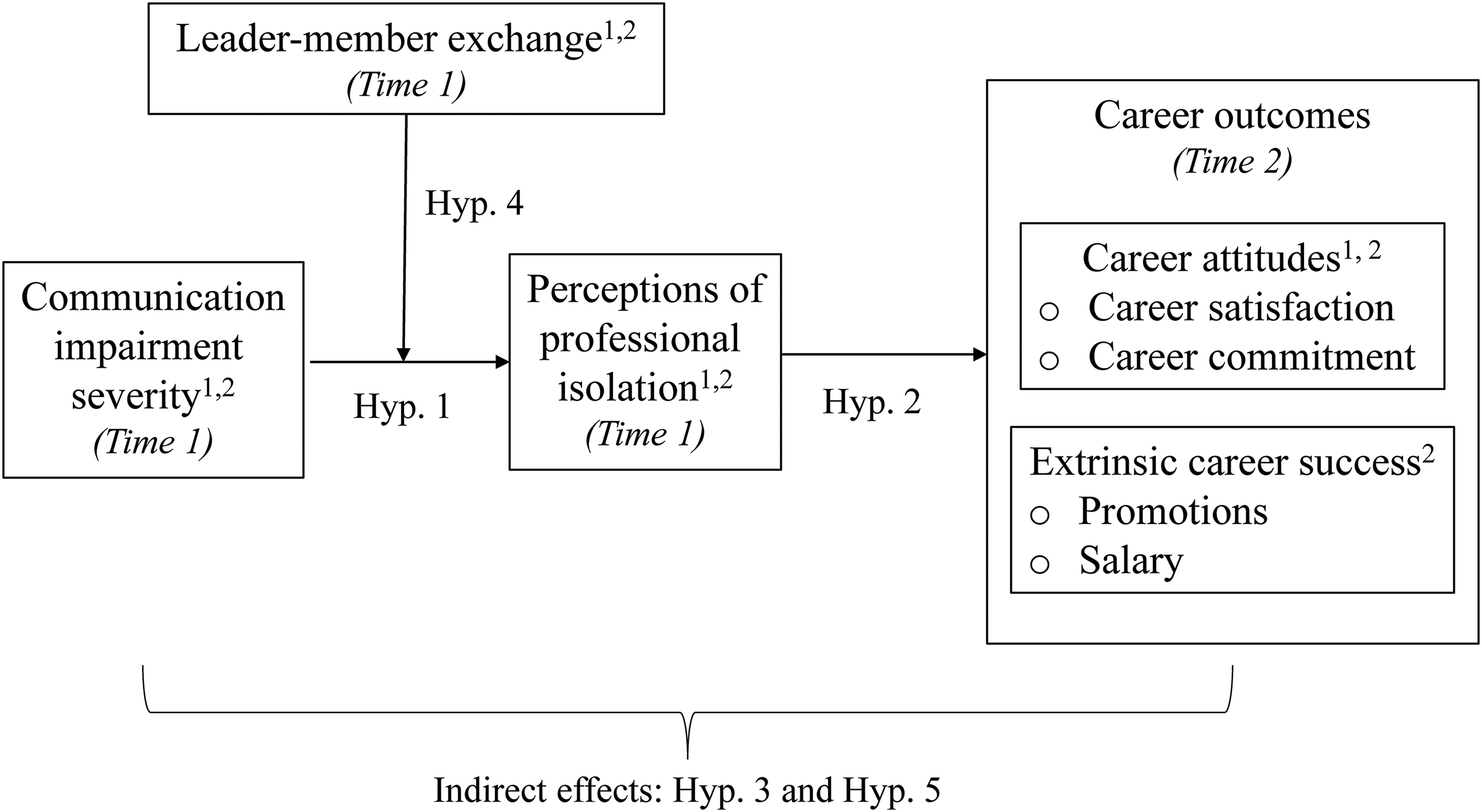
Overall Model
Our research contributes to the extant body of knowledge relating to (1) the role of LMX quality in the career outcomes of employees with disability-related communication impairment, and (2) the workplace treatment of employees with disability-related communication impairment. First, we expand the current understanding of the moderating role of LMX quality in the relationship between disability-related communication impairment and career outcomes. Previous research examining the association between disability and LMX quality has primarily investigated how disability status and severity influence the development of LMX relationships (Colella & Varma, 2001; Dwertmann & Boehm, 2016; Lyubykh et al., 2020). For example, Colella and Varma (2001) have suggested that non-disabled supervisors’ negative performance expectations and stereotypes of employees with disabilities contribute to lower-quality LMX relationships. Drawing on the similarity-attraction paradigm, Dwertmann and Boehm (2016) found that LMX quality is higher when both the supervisor and employee have disabilities, and worse when the employee has a disability but the supervisor does not. More broadly, research has found that lower-quality LMX is linked to a reduction in the quality of support and resources offered to employees by their supervisors, which, in turn, diminishes employees’ career attitudes (Raghuram et al., 2017) and hinders their extrinsic career success (Kraimer et al., 2016). We expand on previous research by highlighting how the repercussions of lower-quality LMX relationships vis-à-vis career outcomes will not be experienced the same by all employees, particularly those with more severe disability-related communication impairment. We suggest that the severity of an employee's disability-related communication impairment will affect how they cope with the interpersonal challenges that occur in lower-quality LMX relationships. Leveraging insights from psychological disengagement theory, we propose that employees with communication impairments of greater severity are more likely to disengage psychologically from professional connections. This psychological disengagement will, in turn, affect these employees’ sensitivity to self-perceived professional isolation, consequently impacting their career outcomes.
Second, regarding research and theory on the treatment of employees with disability-related communication impairment, we offer novel insights into how disability characteristics relate to perceptions of professional isolation. Most existing research and theory suggest that more severe (vs. less severe) disability-related communication impairment will be associated with worse isolation outcomes via interpersonal stigma challenges (e.g., discriminatory behaviors and avoidance from coworkers; Beatty et al., 2019; Jones et al., 1984; Stone & Colella, 1996). Communication impairments can be disruptive to interactions with coworkers, and coworkers sometimes respond in ways that stigmatize employees with communication impairments, for instance, by avoiding them. However, we suggest that the severity of a person’s communication impairment will also impact their perception of professional isolation via their subjective experience of it. Previous research and theory that adopts an interpersonal stigma perspective would suggest a positive relationship between the severity of a person's communication impairment and their professional isolation; in contrast, we draw on insights from psychological disengagement theory to show that a negative relationship may also exist between impairment severity and perceptions of professional isolation via the subjective mechanism of psychological disengagement. In doing so, we expand the research and theory on the treatment of employees with disability-related communication impairments by introducing an additional subjective perspective to the intrapersonal experience of professional isolation.
This paper includes two studies. In Study 1, we examine the relations between communication impairment severity, LMX quality, perceptions of professional isolation, and career attitudes (satisfaction and commitment). In Study 2, we build on Study 1 by testing the hypotheses with the additional outcomes of extrinsic career success (promotions and salary) and by accounting for employees’ self-reported actual level of connection in the analyses. In both Studies 1 and 2, we operationalize communication impairment severity as hearing loss severity and test our hypotheses with samples comprising deaf/hard of hearing (DHH) employees. We focus on DHH employees because the career implications of hearing disabilities are of increasing interest for managers, employees with disabilities, and their organizations (Dwertmann, 2016). This growing interest in hearing disabilities—defined as at least some limitation in one's ability to hear and understand spoken communication (Nelson, Nelson, Concha-Barrientos, & Fingerhut, 2005)—is largely due to its prevalence and expected growth worldwide. Indeed, over 432 million adults are currently living with hearing disabilities globally, with this number projected to be over 700 million people by 2050 (WHO, 2021). Moreover, as people age, hearing loss becomes much more common. In the United States, for example, only 3.2% of people aged 20 to 29 have hearing disabilities compared to 44.9% of people aged 60 to 69 (Lin, Niparko, & Ferrucci, 2011). With people in many nations now working until older ages, hearing loss is rapidly becoming a natural part of many people's careers. Furthermore, advances in assistive technologies for hearing loss (e.g., hearing aids, cochlear implants) mean that DHH employees are now more likely to work in mainstream organizations and rely on spoken communication (Baldridge & Kulkarni, 2017; Beatty et al., 2019), which highlights the importance of understanding how hearing loss affects perceptions of professional isolation and career outcomes among this segment of the workforce.
Theory and Hypotheses
Communication Impairment Severity and Perceptions of Professional Isolation
Many disability conditions impact communication (e.g., hearing loss, anxiety, vision loss, aphasia), and disability-related communication impairment is often associated with isolation from others. In this paper, we focus on perceptions of professional isolation because there is considerable evidence suggesting that people with disability-related communication impairments experience isolation at work, which can be detrimental to their career outcomes (Baldridge & Kulkarni, 2017; Heffernan, Coulson, Henshaw, Barry, & Ferguson, 2016). Perceptions of professional isolation are higher when a personal desire for connection with one's colleagues is thwarted (Golden et al., 2008). Importantly, perceptions of professional isolation are based on a subjective feeling that is rooted in a personal desire for connectedness, which is related to, but distinct from, an employee's actual level of connection to their colleagues. Therefore, different employees with identical levels of actual connection can perceive different levels of professional isolation.
Most prior research examining how disability-related communication impairment contributes to perceptions of isolation has focused on interpersonal stigma and negative treatment from coworkers (Beatty et al., 2019; Jones et al., 1984; Stone & Colella, 1996). Within this framework, employees with more severe (vs. less severe) communication impairment are expected to experience more awkward, anxious, and frustrating interactions with coworkers (Heffernan et al., 2016), and have a harder time building and maintaining professional connections. However, we further contend that the subjective anticipation of interpersonal challenges also plays a role in how employees psychologically cope with anticipated challenges.
According to psychological disengagement theory, people cope with potential stigma and related difficulties by disengaging and disidentifying from certain life domains when they know that engaging and identifying with those domains will cause harm to certain self-views (Major et al., 1998; Steele, 1997). Disengaging involves defensive self-detachment from outcomes in a domain, such that feelings of self-worth are not dependent on successes or failures in that domain. Individuals can disengage by changing personal standards and reducing the centrality of the domain to their self-concept (Crocker & Major, 1989). For example, research shows that, as people age and lose hearing, they selectively disengage from aspects of their social life where they struggle to hear, and instead embrace having fewer and deeper connections (Johnson & Barer, 1992).
Many employees with disability-related communication impairment use assistive technologies (e.g., hearing aids, screen readers, dictation software) to help them communicate with colleagues. In this paper, we focus on severity of communication impairment without use of assistive technologies (e.g., without the use of hearing aids). We made this decision because psychological disengagement theory posits that the extent to which people psychologically disengage from a domain is predicated on their personal understanding of their identity (Steele, Spencer, & Aronson, 2002), and we suggest that communication impairment without the use of assistive technology is more informative of how employees understand their identity than communication impairment with the use of assistive technology.
To elaborate, for employees with disability-related communication impairment, personal identity can be informed by subjective appraisals of a variety of factors, including medical diagnosis, severity of impairment (e.g., hearing loss severity), disability-related legislation, and treatment from others (Santuzzi & Waltz, 2016). While both aided and unaided severity can be important to identity, unassisted communication impairment severity is more central to how employees understand their diagnosis, and how they feel about their interactions with professional connections. Indeed, research suggests that the benefits of assistive technologies for communication vary across situations and contexts (Gatehouse, Naylor, & Elberling, 2003). Assistive technologies are sensitive to technology-related difficulties (e.g., dead hearing aid batteries, hardware failures) and environmental disruptions (e.g., background noises, poor lighting), which means that their usefulness for communicating with professional connections can be unreliable at times. Furthermore, since medical diagnosis often occurs without the use of assistive technologies (e.g., hearing tests used to diagnose hearing loss severity are typically performed without the patient wearing hearing aids), unassisted communication impairment is more reflective of how these employees understand their diagnosed severity (American Speech-Language-Hearing Association, 2005). Thus, we hold that unassisted communication impairment severity plays a more pertinent role in how employees understand themselves and their relationships with their professional connections in their daily lives.
Psychological disengagement theory suggests that employees with more severe (unassisted) communication impairment will perceive lower levels of professional isolation compared to employees with less severe (unassisted) communication impairment. This premise is predicated on the principle that the severity of a person's impairment affects how they anticipate performance in the domain of professional connections, where communication impairment could give rise to challenges. Compared to employees with less severe impairment, employees with more severe impairment will impart less importance on professional connections for their self-concept and will therefore care less, and be less sensitive to fewer professional connections, and perceive lower professional isolation.
Hypothesis 1: Communication impairment severity is negatively related to perceptions of professional isolation.
Perceptions of Professional Isolation and Career Outcomes
We now consider how perceptions of professional isolation relate to career outcomes, including career attitudes and extrinsic success. Regarding career attitudes, career satisfaction refers to employees’ feelings and cognitions about the status and progression of their career (Martins, Eddleston, & Veiga, 2002), while career commitment is defined as their attachment to their vocation or profession (Blau, 1989). An employee's career commitment is negatively associated with their desire to withdraw from their career (Chang, 1999). It is critical to understand subjective career attitudes because negative attitudes are associated with withdrawal from one's profession (e.g., Chang, 1999) and poorer well-being (Poole et al., 1993), as well as additional challenges to career sustainability for employees with communication impairment (Beatty et al., 2019).
We expect perceptions of professional isolation to relate to career attitudes by affecting how employees think and feel about their career progress. When employees with disability-related communication impairment perceive themselves as being professionally isolated, they are likely to feel unfulfilled with regards to their connection to others in their profession who could provide them with career-advancement opportunities (Golden et al., 2008). As a result, employees with higher levels of self-perceived professional isolation are likely to have negative feelings and cognitions toward their career, thus causing them to become more dissatisfied with it. Similarly, employees with higher levels of self-perceived professional isolation are also less likely to have access to training or developmental opportunities and are less likely to learn about alternative and more desirable jobs (Golden et al., 2008). These employees are therefore less likely to feel that their job is meeting their career needs (Chang, 1999) and will be less committed to their career.
Promotions and salary are frequently used as indicators of extrinsic career success (Bagdadli & Gianecchini, 2019; Spurk et al., 2019), as pay raises and promotions are typically used by organizations to reward employees’ professional achievements. We expect perceptions of professional isolation to relate to extrinsic success by affecting the extent to which employees dedicate personal resources toward achieving their career aims. Employees with higher levels of self-perceived professional isolation are more likely to feel they do not have access to influential connections and information that can be helpful in performing their job or getting their strengths and achievements recognized. Thus, these employees are less likely to feel that they can effectively achieve their career aims (Golden et al., 2008). In line with a resource management perspective on career success (Spurk et al., 2019), employees who perceive higher levels of professional isolation and lower levels of self-efficacy are less likely to draw on personal resources (e.g., confidence, knowledge) to attain their career aims. As such, employees who do not dedicate personal resources to their performance or to building relationships with influential connections are less likely to be viewed positively by managers or organizational representatives responsible for making promotion and salary decisions (Allen, 2006).
Hypothesis 2: Perceptions of professional isolation are negatively related to career outcomes (attitudes and extrinsic success).
Indirect Effects of Communication Impairment Severity on Career Outcomes via Perceptions of Professional Isolation
We also expect perceptions of professional isolation to partially explain the relationship between communication impairment severity and career outcomes. Sensitivity to suboptimal professional connections may worsen perceptions of professional isolation among employees with less severe communication impairment, and these employees will feel less satisfied about, and committed to, their careers. As a result, these employees will invest fewer personal resources to attain promotions and salary increases. In contrast, employees with more severe communication impairment will be less sensitive to professional isolation and feel less negative about their careers. Thus, these employees will be more likely to invest more personal resources toward attaining promotions and salary increases.
Hypothesis 3: Perceptions of professional isolation mediate the relationship between communication impairment severity and career outcomes (attitudes and extrinsic success).
LMX Quality Moderates the Communication Impairment Severity—Professional Isolation Perception Relation
In higher-quality LMX relationships, employees are likely to feel that they have access to the support, resources, feedback, and communication needed to be successful and to advance in their careers (Bolino & Turnley, 2009; Kacmar, Zivnuska, & White, 2007). Under the conditions of higher-quality LMX relationships, supervisors will provide employees with disability-related communication impairment with affective- and resource-based support to help them deal with potential interpersonal challenges. In addition, supervisors will be more likely to support their employees in developing professional connections, for example, by helping them to form mentor–mentee relationships with other professionals in their field (Feldman, 2004; Kulkarni & Gopakumar, 2014). As a result, employees will feel more positive about themselves and their work, and empowered, motivated, and psychologically safe to engage in the sort of interpersonal risk-taking that can bring them closer to other professional connections (Nishii & Mayer, 2009). Therefore, higher-quality LMX relationships will help compensate for the influence of communication impairment severity on perceptions of professional isolation.
In lower-quality LMX relationships, the supervisor and employee do not know each other as well, and most interactions consist of formal exchanges of instrumental resources as defined by the employment contract, rather than interpersonal concern and support (Bolino & Turnley, 2009; Anand, Vidyarthi, Liden, & Rousseau, 2010). Under the conditions of lower-quality LMX relationships, supervisors are less likely to provide the affective- and resource-based support that employees with disability-related communication impairment require to deal with interpersonal challenges. Instead, employees in these circumstances are left to navigate communications with professional connections on their own. Therefore, the severity of communication impairment will have a stronger effect on employees’ perceptions of professional isolation in lower-quality LMX relationships. We expect that employees with more severe communication impairment will cope with potential interpersonal challenges by psychologically disengaging from professional connections, thus making them less likely to bear the brunt of lower-quality LMX relationships with respect to perceptions of professional isolation. In contrast, employees with less severe impairment will identify be more psychologically engaged with professional connections, and will thus be more troubled by the lack of supervisory support in building professional connections provided in lower-quality LMX relationships. Overall, in lower-quality LMX relationships, employees with less severe communication impairment will perceive higher levels of professional isolation compared to employees with more severe communication impairment.
Hypothesis 4: Communication impairment severity and LMX quality interact in predicting perceptions of professional isolation, such that, when LMX quality is lower (vs. higher), communication impairment severity will be negatively related to perceptions of professional isolation (vs. non-significantly).
Moderating Role of LMX Quality on the Communication Impairment Severity—Professional Isolation Perceptions—Career Outcomes Indirect Effects
Integrating our prior arguments, we now consider how LMX quality moderates the indirect effects of communication impairment severity and career outcomes via perceptions of professional isolation. Under conditions of lower- (but not higher-) quality LMX, employees with more severe (vs. less severe) communication impairment are more likely to cope with the lack of support from their supervisor by psychologically disengaging from the domain of professional connections. Due to their greater psychological disengagement from professional connections, employees with more severe communication impairment are less likely to feel the effects of their impairment on perceptions of professional isolation and downstream career outcomes compared to those with less severe communication impairment. Accordingly, under conditions of lower-quality LMX, employees with more severe communication impairment will perceive lower levels of professional isolation and experience fewer associated negative implications with respect to their career attitudes and extrinsic success. In contrast, employees with less severe communication impairment will perceive higher levels of professional isolation and be more likely to have negative career attitudes due to feeling less positive about their career progress. In addition, employees with less severe communication impairment will also experience lower levels of extrinsic career success because they will feel less efficacious in achieving their career goals. Consequently, these employees will dedicate fewer personal resources toward career aims that offer opportunities for extrinsic rewards.
Hypothesis 5: LMX quality moderates the indirect effect of communication impairment severity on career outcomes (attitudes and extrinsic success) via perceptions of professional isolation, such that the indirect effects are significant when LMX is lower, but not when it is higher.
Study 1
In Study 1, we report on a survey study of DHH employees with whom we test the relations between communication impairment severity, LMX quality, perceptions of professional isolation, and career attitudes (satisfaction and commitment).
Study 1: Methods
Participants and Procedure
We recruited participants electronically through organizations and websites serving DHH persons in the United States. The inclusion criteria required participants to be 18 years of age or older, employed fulltime, self-identify as DHH, and to be working in a mainstream organization (where the main form of communication is spoken words). We adopted a time-lagged design wherein data was collected via surveys at two time points (Time 1 and Time 2) approximately 3 months apart. In the Time 1 survey, participants completed measures relating to their demographic information, hearing loss severity, perceptions of professional isolation, and LMX. In the Time 2 survey, participants completed measures designed to capture their career attitudes.
The participants were not paid, but they were given an opportunity to be entered into a draw for an iPad Pro. Initially, 626 participants completed the Time 1 survey, with 222 going on to complete the Time 2 survey as well (repeated response rate of 35%). Of those who completed the Time 2 survey, 15 were removed from the data because they either reported having “normal” hearing (no hearing loss), or that they worked in an organization in which sign language is predominantly used. We removed respondents who predominantly used sign language at work because we were interested in DHH employees working in mainstream organizations. An additional 26 cases were removed because they did not complete one or more measures of the focal study variables (i.e., hearing loss severity, LMX quality, and professional isolation). 4 This resulted in a final sample of 181 participants. The final sample had an average age of 33 years (SD = 11.38), with 79% of respondents identifying as women (21% men). In terms of racial and ethnic identity, 89% were White, 3% were Native American, 2% were Asian, and 2% were Black (4% did not indicate a race/ethnicity). The participants worked in a variety of industries, including government, education, finance, hospitality, medical/social services, and other services, and they held a range of jobs, such as accountant, account manager, client service representative, director, teacher, nurse, IT service provider, and consumer support engineer. Since we retained 181 of the 626 initial surveys collected, we assessed our data for potential non-response bias (Rogelberg & Stanton, 2007). Independent samples t tests revealed no significant differences between the participants who completed the Time 1 and Time 2 surveys with respect to the core study variables (i.e., hearing loss severity, perceptions of professional isolation, and LMX quality), thus indicating no evidence of non-response bias.
Measures
Hearing loss severity
We operationalized hearing loss severity as our measure of communication impairment severity. Hearing loss severity was assessed using a hearing loss classification system that is commonly applied in hearing loss medical diagnosis (Clark, 1981). Using a 6-point scale, we asked participants to indicate their overall hearing loss severity without the use of assistive technology, such as hearing aids or cochlear implants (i.e., 1 = normal/no loss, 2 = mild, 3 = moderate, 4 = severe, 5 = profound, and 6 = total). The participants’ self-reported (unassisted) hearing loss was as follows: 37% reported severe hearing loss (71–90 db HL), 5 33% reported profound hearing loss (>90 db HL), 17% had moderate hearing loss (41–55 db HL), 13% indicated that they had total hearing loss, and 0.5% reported only a mild loss of hearing (26–40 db HL).
Perceptions of professional isolation
We assessed perceptions of professional isolation using the 7-item scale developed by Golden and colleagues (2008). Participants were asked to indicate the extent to which they felt a certain way about their career (1 = rarely, 5 = most of the time). An example item from this scale is, “I feel left out on activities and meetings that could enhance my career” (α = .94).
Leader-member exchange quality
We assessed LMX quality using Graen, Novak, and Sommerkamp’s (1982) 7-item scale. Using this scale, participants indicated the extent to which they agreed with statements about their experiences with their supervisor (1 = strongly disagree, 7 = strongly agree). The following is an example of an item from this scale: “My supervisor understands my problems and needs” (α = .94).
Career satisfaction
We adapted a 3-item measure of job satisfaction from Grandey, Fisk, and Steiner (2005) to assess career satisfaction. The participants were asked to indicate the degree to which they agreed (1 = strongly disagree, 5 = strongly agree) with items such as, “In general, I like my career” (α = .91).
Career commitment
We adopted Blau's (1989) 7-item measure of career commitment and asked participants to indicate their level of agreement (1 = strongly disagree, 7 = strongly agree) with items such as, “I definitely want a career for myself in my current profession” (α = .87).
Confirmatory factor analysis
Given that all measures were assessed using self-reported responses, we conducted a confirmatory factor analysis (CFA) of the core study variables (excluding single-item hearing loss severity) to examine whether there was enough evidence to treat the constructs separately. The CFA revealed that the fit of a four-factor model was acceptable (χ2 [df = 24] = 539.10, p < .001, RMSEA = 0.08; 90% CI [0.07, 0.09], CFI = 0.92) and significantly better than a single-factor model (χ2 [df = 252] = 2185.74, p < .001, RMSEA = 0.19; 90% CI [0.19, 0.20], CFI = 0.44, Δχ2 [6] = 1646.64, p < .05), a three-factor model in which LMX and perceptions of professional isolation form one factor (χ2 [df = 249] = 1419.02, p < .001, RMSEA = 0.15; 90% CI [0.14, 0.16], CFI = 0.66, Δχ2 [3] = 879.92, p < .05), and a two-factor model in which career satisfaction and career commitment also comprise one factor (χ2 [df = 251] = 1542.47, p < .001, RMSEA = 0.16; 90% CI [0.15, 0.17], CFI = 0.63, Δχ2 [5] = 1003.37, p < .05).
Controls
We controlled for three additional variables: assisted hearing loss severity, disability onset age, and frequency of interaction with supervisor. First, assisted hearing loss severity was used to gauge the respondents’ degree of hearing loss with use of assistive technology (e.g., hearing aid, cochlear implant). We controlled for assisted hearing loss severity because, as noted earlier, unassisted communication-impairment severity is more pertinent to psychological disengagement. Assisted hearing loss severity was assessed by asking participants to classify their overall hearing loss while using assistive technology. The results were as follows: 36% of participants indicated they had mild (assisted) hearing loss, 41% reported moderate (assisted) hearing loss, 13% indicated severe (assisted) hearing loss, 4% said they experienced profound (assisted) hearing loss, and 2% reported total (assisted) hearing loss. Second, we controlled for disability onset age because previous research has found that age at disability onset influences how DHH adults view themselves and their work (Baldridge & Kulkarni, 2017) and the extent to which employees with disabilities perceive discrimination (Moore, Konrad, Yang, Ng, & Doherty, 2011). To assess disability onset age, we asked participants to indicate the age at which they first became deaf or hard of hearing as a value in years. Third, we controlled for frequency of interactions with supervisors because we wanted to account for the possibility that the results may be alternatively explained by the frequency with which a participant interacts with their supervisor, rather than LMX quality. To this end, the participants were asked to indicate how many times per month they typically interacted with their supervisor.
Study 1: Results
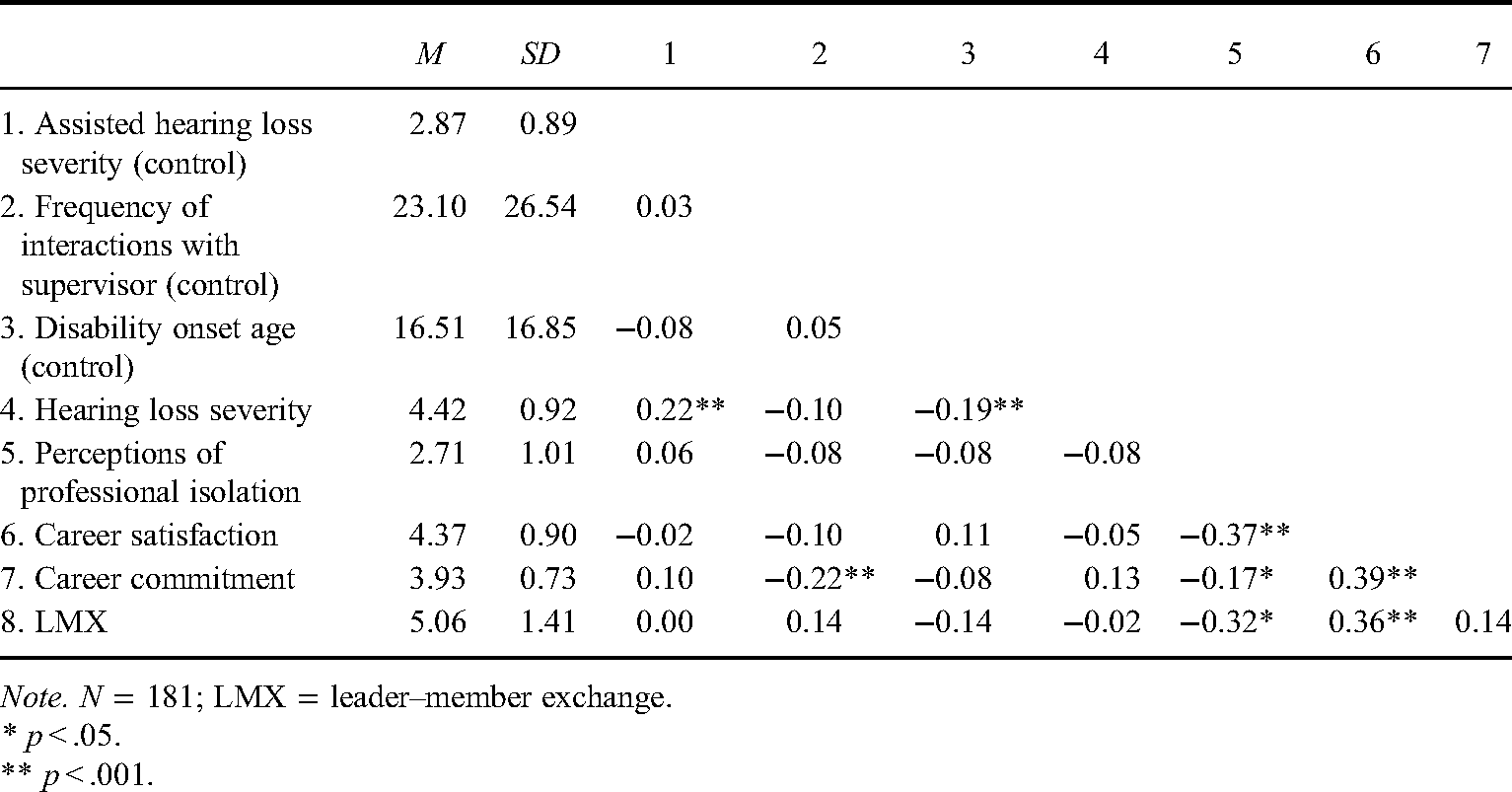
The descriptive statistics and inter-correlations for the variables in Study 1 are summarized in Table 1. To ease interpretation, we standardized all continuous variables included in the model.
Descriptive Statistics and Inter-Correlations for Controls and Variables (Study 1)
Note. N = 181; LMX = leader–member exchange.
* p < .05.
** p < .001.
Hypothesis Testing
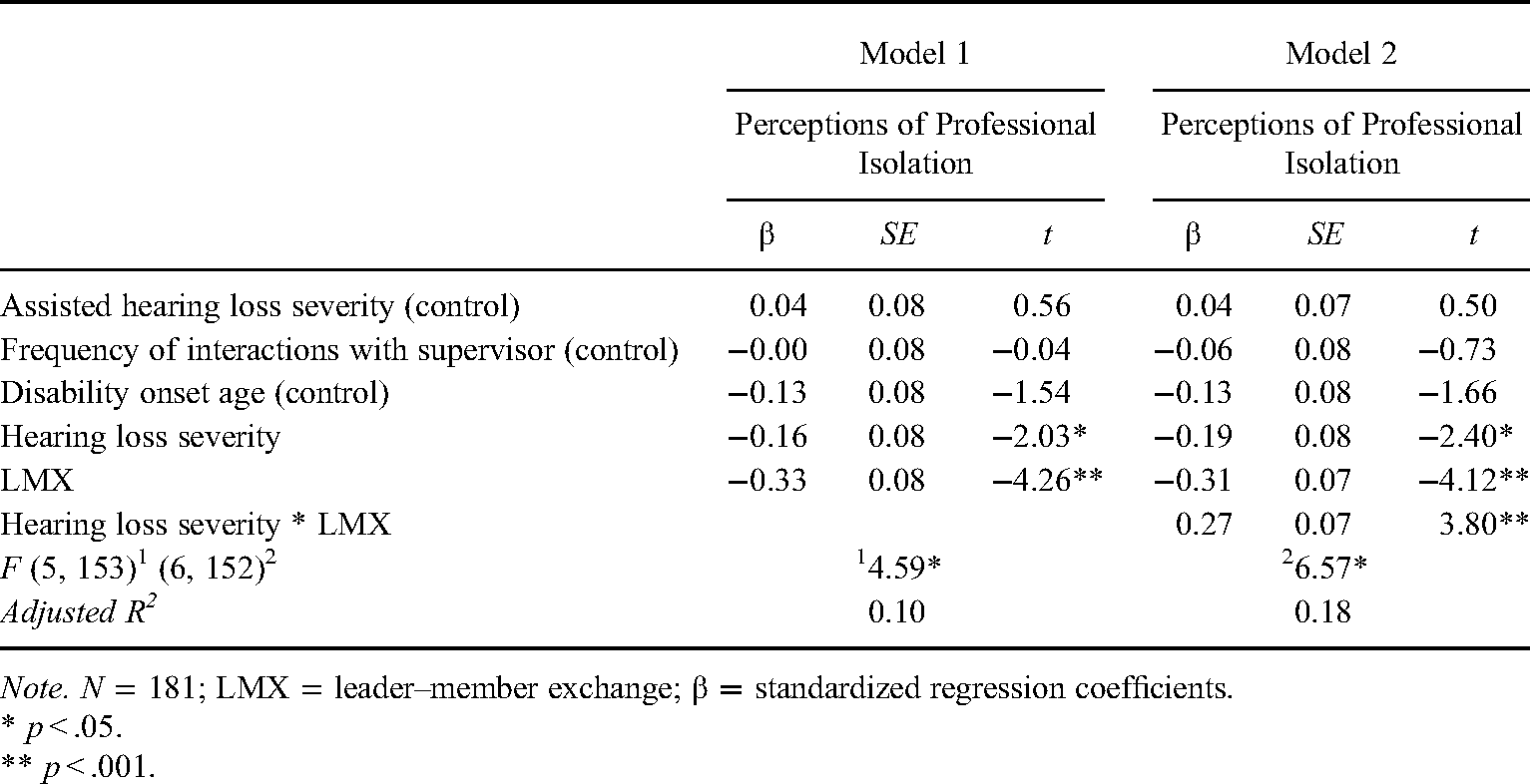
Hypothesis 1 predicted that hearing loss severity would be negatively related to perceptions of professional isolation. To test Hypothesis 1, we regressed perceptions of professional isolation onto hearing loss severity, LMX quality, and the controls. As can be seen in Model 1 of Table 2, hearing loss severity was significantly and negatively related to perceptions of professional isolation (β = −.16, p = .04). Thus, the results supported Hypothesis 1.
Regression Results With Hearing Loss Severity and Leader–Member Exchange Quality Predicting Perceptions of Professional Isolation (Study 1)
Note. N = 181; LMX = leader–member exchange; β = standardized regression coefficients.
* p < .05.
** p < .001.
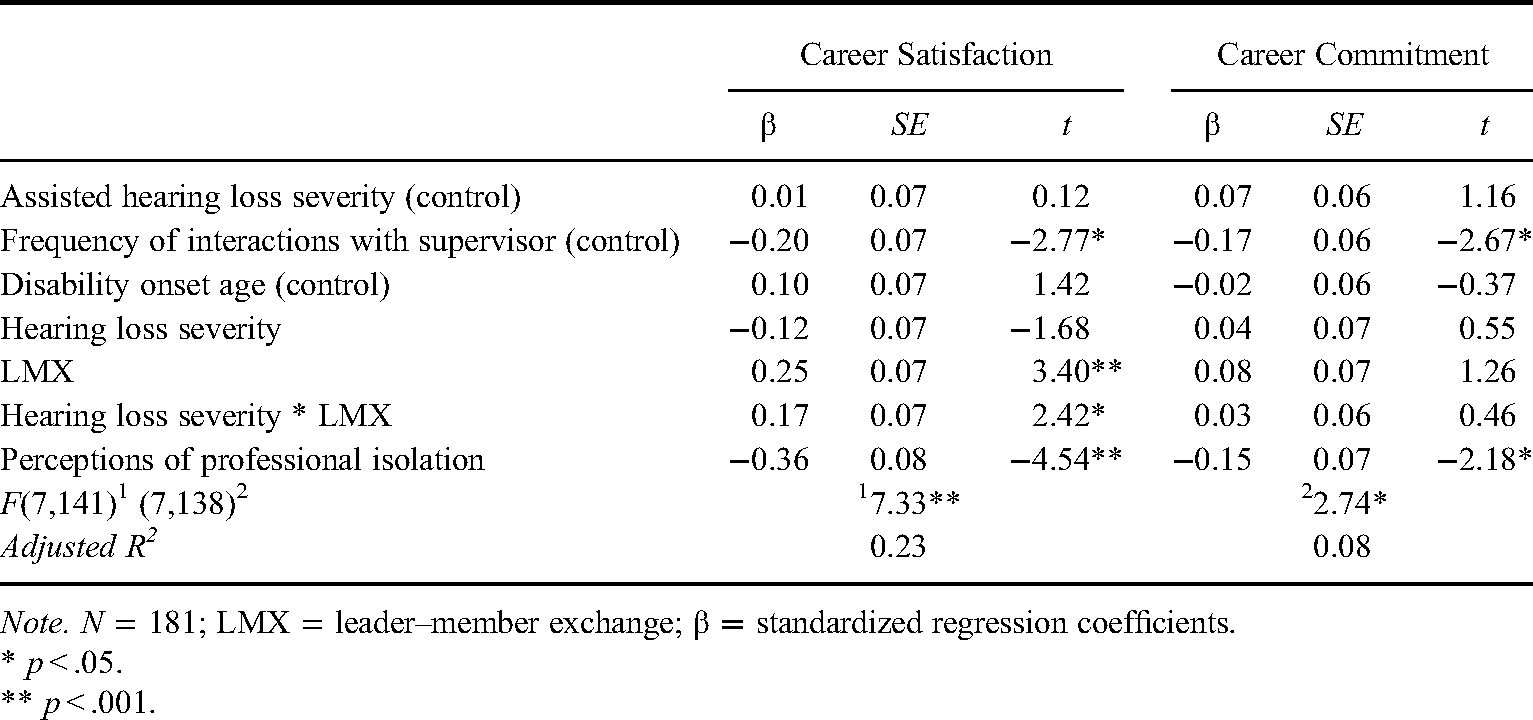
Hypothesis 2 predicted that perceptions of professional isolation would be negatively related to career attitudes. As shown in Table 3, perceptions of professional isolation were significantly and negatively related to career satisfaction (β = −.36, p < .001) and career commitment (β = −.15, p = .03). Thus, Hypothesis 2 was supported.
Regression Results With Hearing Loss Severity, Leader–Member Exchange Quality, and Perceptions of Professional Isolation Predicting Career Attitudes (Study 1)
Note. N = 181; LMX = leader–member exchange; β = standardized regression coefficients.
* p < .05.
** p < .001.
Hypothesis 3 predicted that perceptions of professional isolation would mediate the relation between hearing loss severity and career attitudes. We tested Hypotheses 3 using Macro-Model 4 of Hayes (2017) PROCESS macro for SPSS using 5,000 bootstrap samples. Notably, the results indicated that indirect effects were not significant for career satisfaction (.05; 95% CI [−.02, .13]) and career commitment (.02; 95% CI [−.01, .06]). Thus, Hypothesis 3 was not supported.
Hypothesis 4 predicted that hearing loss severity would be negatively related to perceptions of professional isolation under lower-quality LMX, but not under higher-quality LMX. To test Hypothesis 4, we regressed perceptions of professional isolation onto hearing loss severity and LMX quality in addition to the interaction of hearing loss severity and LMX quality interaction. To enhance the interpretability of the interaction, we standardized hearing loss severity and LMX quality before creating the interaction terms. As can be seen in Model 2 of Table 2, the interaction between hearing loss severity and LMX quality was significantly related to perceptions of professional isolation (β = .27, p < .001). A visual representation of this interaction is presented in Figure 2. According to simple slopes analysis, hearing loss severity was not significantly related to perceptions of professional isolation (β = .08, p = .43) when LMX quality was higher (at 1 standard deviation or higher). However, when LMX quality was lower (at −1 standard deviation or lower), hearing loss severity was significantly and negatively related to perceptions of professional isolation (β = −.42, p < .001). Thus, results supported Hypothesis 4.
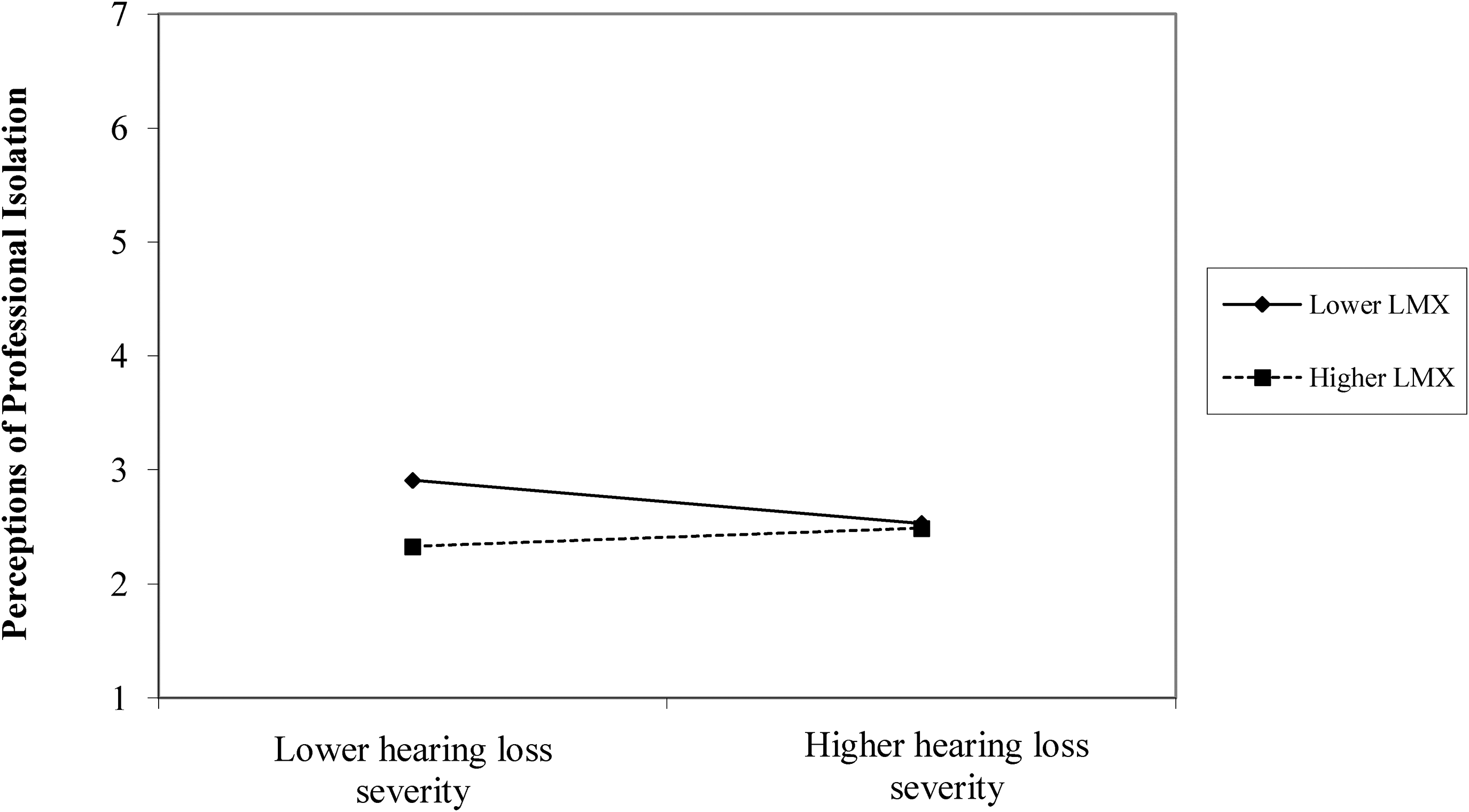
Interaction Between Hearing Loss Severity and Leader–Member Exchange Quality in Predicting Perceptions of Professional Isolation (Study 1)
Hypothesis 5 predicted that the indirect effect of perceptions of professional isolation on the association between hearing loss severity and career attitudes is conditional on LMX quality, such that the indirect effects would be significant when LMX quality is lower, but not when it is higher. We tested Hypothesis 5 by following Hayes (2017) procedure for testing moderated mediation using Model 8 of the PROCESS macro for SPSS and 5,000 bootstrap samples. The results of this analysis indicated that perceptions of professional isolation significantly mediated the association between hearing loss severity and career satisfaction when LMX quality was lower (indirect effect: .14; 95% CI [.06, .25]), but not when it was higher (indirect effect: −.04; 95% CI [−.13, .04]). Furthermore, when LMX quality was lower, perceptions of professional isolation significantly mediated the association between hearing loss severity and career commitment (indirect effect: .06; 95% CI [.01, .13]); however, this was not the case when LMX quality was higher (indirect effect: −.02; 95% CI [−.08, .01]). Thus, Hypothesis 5 was supported.
Supplemental Analyses
We also examined the role of assisted hearing loss severity. The results of these supplemental analyses indicated that assisted hearing loss severity was not significantly related to perceptions of professional isolation (β = .04, p = .58). In addition, the findings indicated that the interaction between assisted hearing loss severity and LMX quality was not significantly related to perceptions of professional isolation (β = −.08, p = .30). Therefore, unassisted hearing loss severity appeared to play a role in perceptions of professional isolation, while assisted hearing loss severity did not.
Study 1: Discussion
Overall, the results of Study 1 were consistent with our predictions. Communication impairment severity, which we operationalized as hearing loss severity, was found to be negatively related to perceptions of professional isolation, which were related to lower career satisfaction and commitment. These effects only held for DHH employees in lower-quality LMX relationships, and not for employees in higher-quality LMX relationships. These results suggest that employees with greater hearing loss severity experience fewer consequences of lower-quality LMX with respect to perceptions of professional isolation. Therefore, employees with more severe disability-related communication impairment may effectively cope in lower-quality LMX relationships, thereby exposing them to fewer negative consequences with respect to their career attitudes.
The results of the supplemental analyses also revealed that unassisted hearing loss severity, rather than assisted hearing loss severity, plays a role in perceptions of professional isolation. These findings align with our rationale that unassisted communication-impairment severity is more pertinent to psychological disengagement because it informs employees’ sense of self via their subjective appraisals of their impairment severity and the associated implications for their interactions with professional connections.
Study 2
Study 2 was designed to address the limitations of Study 1. Since career attitudes was the only career outcome examined in Study 1, we expanded our examination of career outcomes by also analyzing extrinsic career success (promotions and salary) in Study 2. All hypotheses were tested in Study 2 using a new sample of DHH employees. A second potential limitation of Study 1 was that the measurements obtained at Time 1 and Time 2 were separated by 3 months to mitigate the possibility of contaminated results due to common method bias. However, it is possible that the relationships observed in Study 1 may change when a different interval is used. Thus, the measurements taken at Time 1 and Time 2 were separated by 2 weeks in Study 2. Third, in Study 1 we focused on DHH employees’ subjective perceptions of professional isolation, while not accounting for the actual number of professional connections with whom they regularly interact. This is a notable omission, as it is possible that the respondents’ perceptions of professional isolation may be alternatively explained by their actual level of contact with professional connections. Thus, in Study 2 we controlled for a self-reported quantitative measure of isolation, namely, the amount of contact respondents had with their professional connections.
Study 2: Method
Participants and Procedure
The participants in Study 2 were recruited via two sources. First, participants were recruited electronically through organizations and websites that serve DHH persons in Canada and the United States. Second, we recruited DHH participants from the United States using Prolific, which is a crowdsourcing data-acquisition platform that allowed us to source panel participants with specific demographic characteristics, including hearing disabilities. Across both data-collection sources, participants had to self-identify as DHH, work at a mainstream organization, and be at least 18 years of age to be included in the study. In the Time 1 survey, participants completed measures of demographics, hearing loss severity, perceptions of professional isolation, amount of contact with professional connections, and LMX quality. In the Time 2 survey, participants completed measures designed to capture career satisfaction, career commitment, promotions, and salary.
Participants sourced from the DHH websites/organizations were entered into draws to win one of 10 $50 amazon.com gift cards, while participants sourced from Prolific were paid $5 for taking each survey. In total, 105 participants completed the survey at Time 1 (83 from DHH websites/organizations and 22 from Prolific). We removed 17 cases who failed attention checks (e.g., “please select ‘Strongly Disagree’ to this question”), four who indicated they had “normal” hearing (no hearing loss), and three who worked in an organization wherein they predominantly used sign language to communicate. The remaining participants were invited to take the Time 2 survey. The survey at Time 2 was completed by 81 participants (59 from DHH websites/organizations and 22 from Prolific), resulting in a repeated response rate of 77%. The final sample (n = 81) had an average age of 46 years (SD = 14.53) and consisted of 70% women (30% men). With regards to racial and ethnic identity, 91% of participants identified as White, 5% identified as Asian, 3% identified as Hispanic, and 1% identified as Black. The participants worked in a variety of industries, such as higher education, manufacturing, and medical/social services, and held a range of jobs, including college professor, warehouse manager, and social worker. Since we retained 81 of the 105 initial cases, we assessed the data for potential non-response bias (Rogelberg & Stanton, 2007). Independent samples t tests revealed no significant differences between respondents at Time 1 and Time 2 with respect to hearing loss severity, perceptions of professional isolation, amount of contact with professional colleagues, and LMX quality. Thus, there was no evidence of non-response bias.
Measures
As in Study 1, we assessed unassisted and assisted hearing loss severity, perceptions of professional isolation (α = .92), LMX quality (α = .93), career satisfaction (α = .91), and career commitment (α = .88). The severity of (unassisted) hearing loss among the participants was as follows: 29% reported profound hearing loss (>90 db HL), 24% indicated moderate hearing loss (41–55 db HL), 22% said they had severe hearing loss (71–90 db HL), 14% reported total loss of hearing, and 11% indicated mild hearing loss (26–40 db HL).
Promotions
We adopted Allen's (2006) approach to assessing promotions. Specifically, we asked participants, “How many promotions have you received while at your current company? Promotions are defined as a significant increase in responsibility or annual salary or a change in organizational rank.” However, it was possible that a participant's reported number of promotions may be influenced by their tenure at the organization. To remove possible bias from organizational tenure as a confounding variable we computed the standardized residual change score of promotions (i.e., we regressed standardized promotions onto standardized tenure and used the standardized residual score as our indicator of promotions) and used it for all analyses involving promotions. To assess tenure, we asked participants to indicate the length of time they had been working at their current organization in months (M = 112.66; SD = 107.68).
Salary
We adopted Allen's (2006) approach to assessing salary. Namely, we asked participants, “What is your current yearly salary at your current company? This can include all forms of financial compensation (e.g., bonuses).” Participants entered their annual salary as a number.
Confirmatory factor analysis
We conducted a CFA of the core study variables (excluding single-item measures) to examine whether there was enough evidence to treat constructs separately. The CFA results revealed that a four-factor model fit the data well (χ2 [df = 224] = 301.72, p < .001, RMSEA = 0.06; 90% CI [0.04, 0.07], CFI = 0.95) and significantly better than a single-factor model (χ2 [df = 230] = 906.13, p < .001, RMSEA = 0.17; 90% CI [0.16, 0.18], CFI = 0.54, Δχ2 [6] = 604.41, p < .05), a three-factor model in which LMX and perceptions of professional isolation form one factor (χ2 [df = 227] = 569.86, p < .001, RMSEA = 0.12; 90% CI [0.11, 0.13], CFI = 0.77, Δχ2 [3] = 268.14, p < .05), and a two-factor model in which career satisfaction and career commitment also comprise one factor (χ2 [df = 229] = 616.24, p < .001, RMSEA = 0.13; 90% CI [0.12, 0.14], CFI = 0.74, Δχ2 [5] = 314.52, p < .05).
Controls
We controlled for five additional variables: assisted hearing loss severity, disability onset age, frequency of interaction with supervisor, source of data collection, and amount of contact with professional connections. We controlled for source of data collection to account for the possibility that, compared to the participants from the general Prolific panel, the participants sourced from DHH websites or organizations may have access to different resources and connections that could facilitate career outcomes. We dummy coded source of data collection as DHH websites/organizations = 1 and Prolific = 0. We controlled for amount of contact with professional connections to create a more objective measure of professional isolation. To this end, we adapted a self-report measure of degree centrality from Reinholt, Pederson, and Foss (2011), as previous researchers have argued that degree centrality is the most suitable measure of employees’ communication activity (Wasserman & Faust, 1994). We adapted this measure to capture the participants’ level of contact with their professional connections using the following question: “How many people in your profession do you interact with regularly; that is, at least once per week?”
Study 2: Results
The descriptive statistics and inter-correlations for the variables in Study 2 are summarized in Table 4. To ease interpretation, we standardized all continuous variables included in the model.
Descriptive Statistics and Inter-Correlations for Controls and Variables (Study 2)
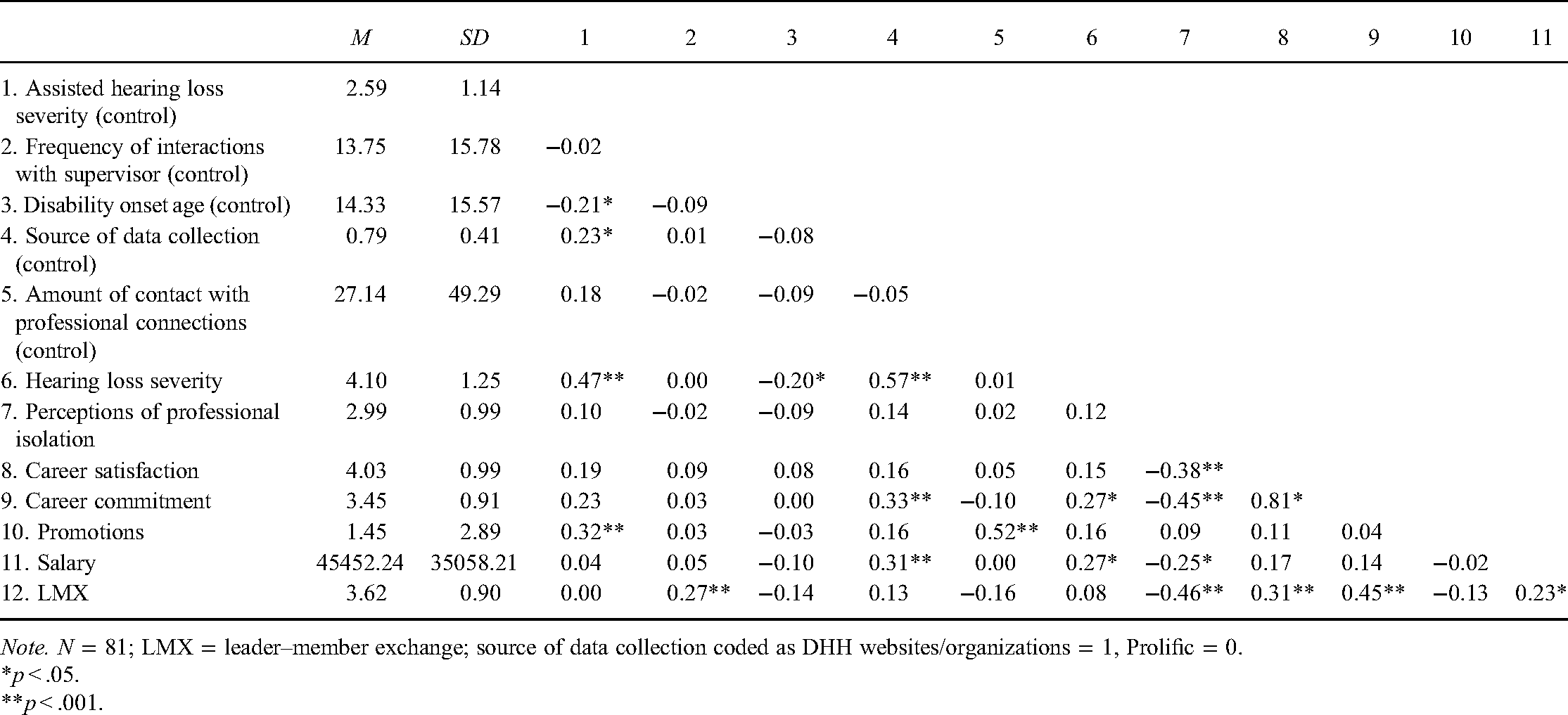
Note. N = 81; LMX = leader–member exchange; source of data collection coded as DHH websites/organizations = 1, Prolific = 0.
*p < .05.
**p < .001.
Hypotheses Testing
Hypothesis 1 predicted that hearing loss severity would be negatively related to perceptions of professional isolation. To test this hypothesis, we regressed perceptions of professional isolation onto hearing loss severity and the controls. As can be seen in Model 1 of Table 5, hearing loss severity was significantly and negatively related to perceptions of professional isolation (β = −.31, p = .02). Thus, Hypothesis 1 was supported.
Regression Results With Hearing Loss Severity and Leader–Member Exchange Quality Predicting Perceptions of Professional Isolation (Study 2)
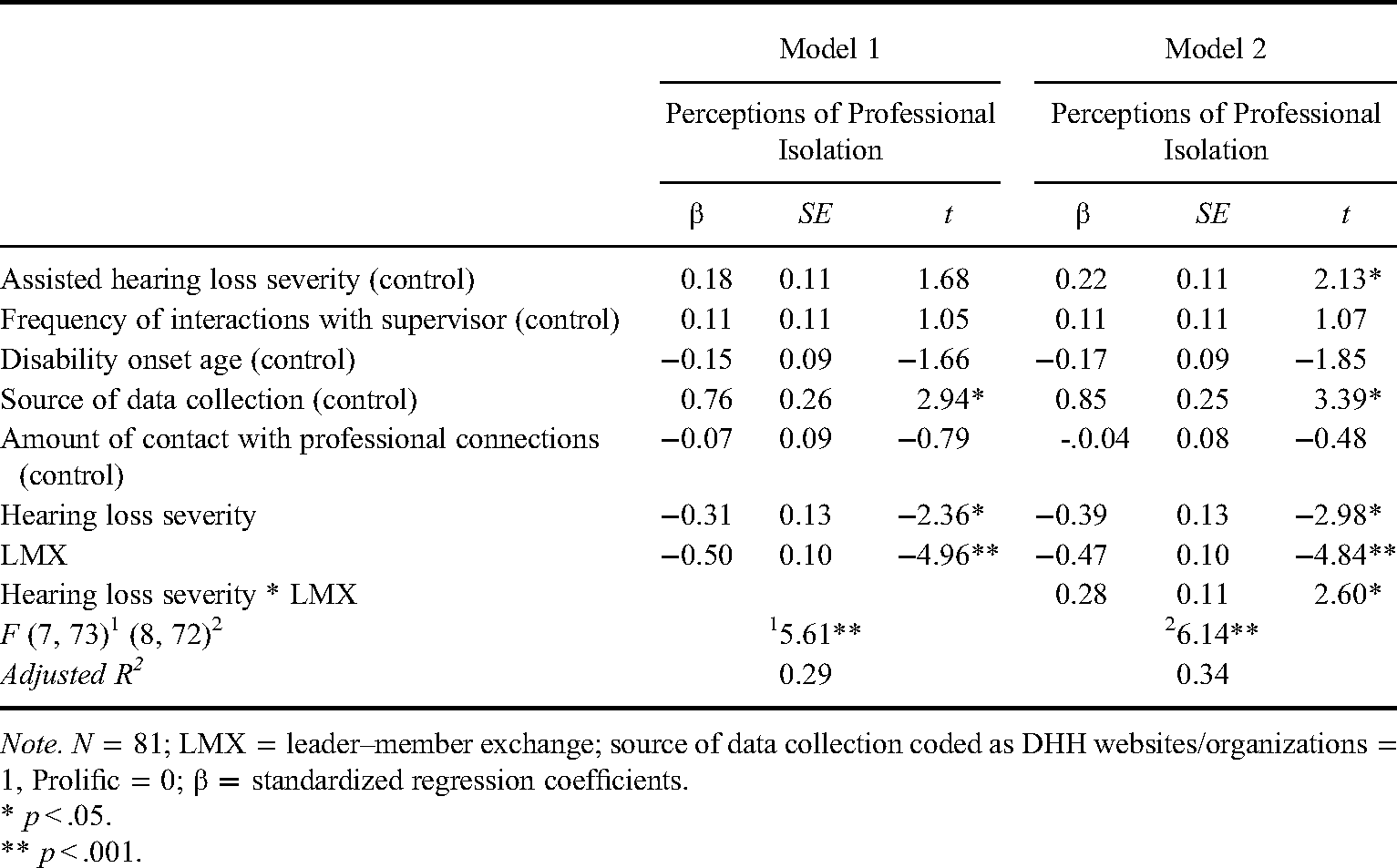
Note. N = 81; LMX = leader–member exchange; source of data collection coded as DHH websites/organizations = 1, Prolific = 0; β = standardized regression coefficients.
* p < .05. ** p < .001.
Hypothesis 2 predicted that perceptions of professional isolation would be negatively related to career outcomes. As shown in Table 6, perceptions of professional isolation were not significantly related to career satisfaction (β = −.25, p = .19) or promotions (β = .17, p = .24), but they were significantly and negatively related to career commitment (β = −.41, p = .02) and salary (β = −.38, p = .03). Thus, the findings partially supported Hypothesis 2.
Regression Results With Hearing Loss Severity, Leader–Member Exchange Quality, and Perceptions of Professional Isolation Predicting Career Outcomes (Study 2)
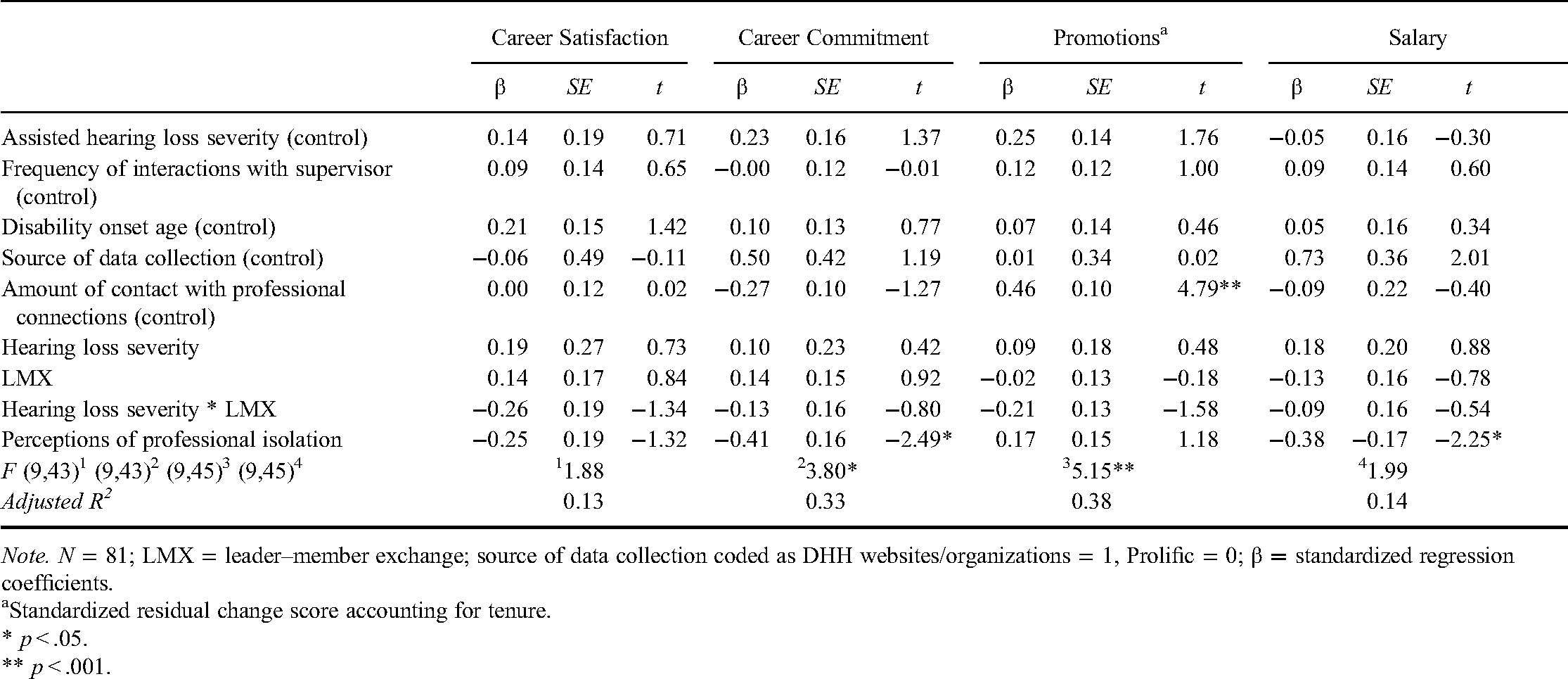
Note. N = 81; LMX = leader–member exchange; source of data collection coded as DHH websites/organizations = 1, Prolific = 0; β = standardized regression coefficients.
Standardized residual change score accounting for tenure.
* p < .05.
** p < .001.
Hypothesis 3 predicted that perceptions of professional isolation would mediate the relationship between hearing loss severity and career outcomes. We tested Hypothesis 3 using Macro-Model 4 of Hayes (2014) PROCESS macro for SPSS using 5,000 bootstrap samples. The results of this analysis indicated that the indirect effects were significant for career satisfaction (.22; 95% CI [.16, .48]), career commitment (.28; 95% CI [.04, .53]), and salary (.14; 95% CI [.01, .35]), but not for promotions (−.06; 95% CI [−.17, .11]). Thus, Hypothesis 3 was partially supported.
Hypothesis 4 predicted that, under conditions of lower−quality LMX (but not higher−quality LMX), hearing loss severity would be negatively related to perceptions of professional isolation. To test this hypothesis, we regressed perceptions of professional isolation onto hearing loss severity and LMX quality and the interaction between hearing loss severity and LMX quality interaction. As can be seen in Model 2 in Table 5, the interaction between hearing loss severity and LMX quality was significantly related to perceptions of professional isolation (β = .28, p = .01). A pictorial representation of this interaction is shown in Figure 3. According to simple slopes analysis, hearing loss severity was not significantly related to perceptions of professional isolation (β = −.10, p = .49) when LMX quality was higher (at 1 standard deviation or higher). However, when LMX quality was lower (at −1 standard deviation or lower), hearing loss severity was significantly and negatively related to perceptions of professional isolation (β = −.62, p < .001). Thus, Hypothesis 4 was supported.
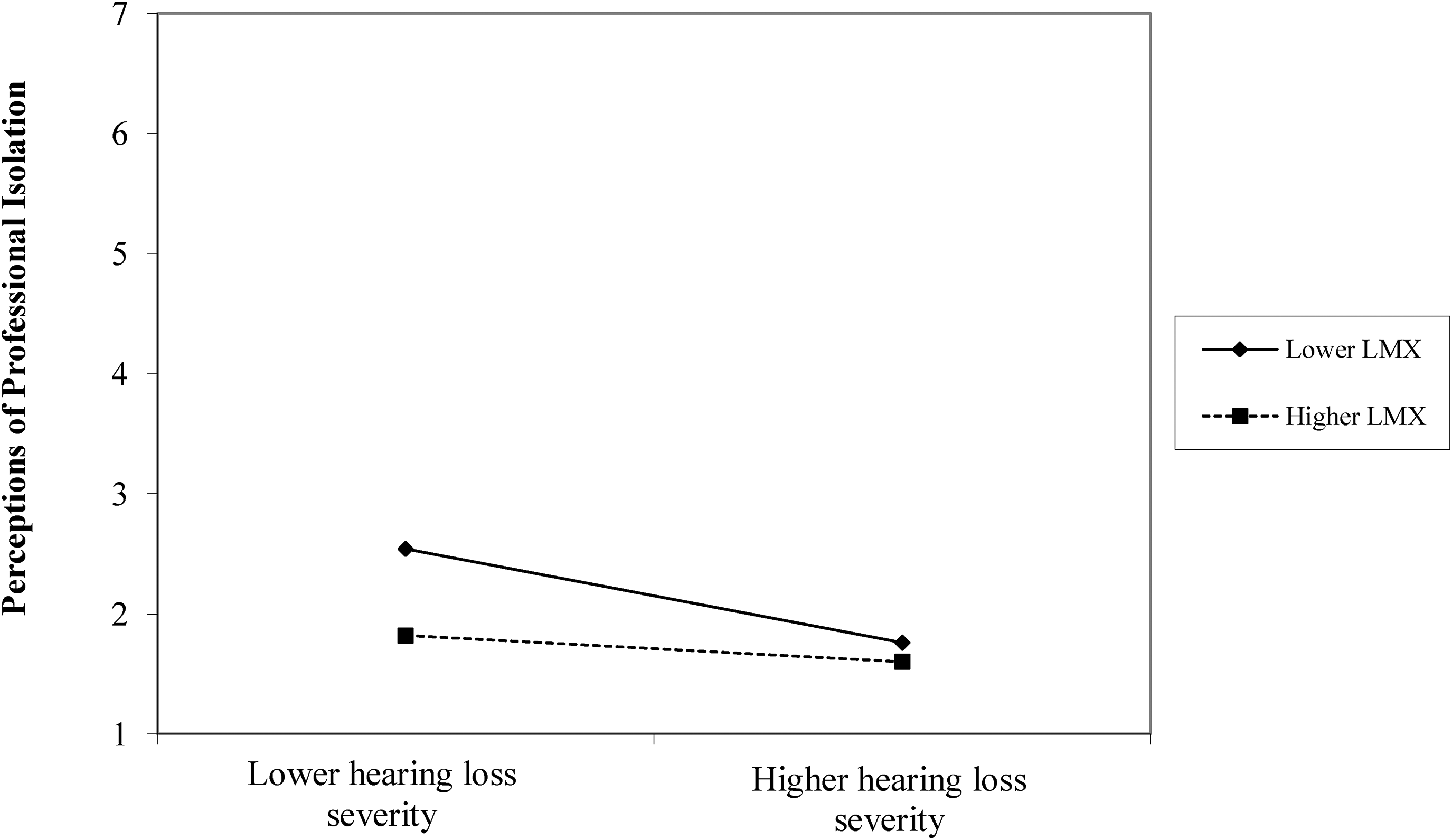
Interaction Between Hearing Loss Severity and Leader–Member Exchange Quality in Predicting Professional Isolation (Study 2)
Hypothesis 5 predicted that the indirect effects of perceptions of professional isolation on the association between hearing loss severity and career outcomes are conditional on LMX quality, such that the indirect effects will be significant when LMX quality is lower, but not when it is higher. We tested Hypothesis 5 by following Hayes (2017) procedure for testing moderated mediation using Model 8 of the PROCESS macro for SPSS and 5000 bootstrap samples. The results of this analysis indicated that perceptions of professional isolation did not significantly mediate the association between hearing loss severity and career satisfaction, regardless of whether LMX quality was lower (indirect effect: .22; 95% CI [−.16, .72]) or higher (indirect effect: .06; 95% CI [−.08, .20]). In contrast, perceptions of professional isolation significantly mediated the association between hearing loss severity and career commitment when LMX quality was lower (indirect effect: .35; 95% CI [.03, .86]), but not when it was higher (indirect effect: .10; 95% CI [−.09, .25]). Furthermore, perceptions of professional isolation did not significantly mediate the association between hearing loss severity and promotions, regardless of whether LMX quality was lower (indirect effect: −.10; 95% CI [−.25, .15]) or higher (indirect effect: −.03; 95% CI [−.11, .07]). Conversely, perceptions of professional isolation significantly mediated the association between hearing loss severity and salary when LMX quality was lower (indirect effect: .25; 95% CI [.03, .54]), but not when it was higher (indirect effect: .02; 95% CI [−.15, .22]). Thus, Hypothesis 5 was partially supported.
Supplemental Analyses
Regarding the role of assisted hearing loss severity, the results of the supplemental analyses indicated that assisted hearing loss severity was not significantly related to perceptions of professional isolation (β = .18, p = .10). Furthermore, the interaction between assisted hearing loss severity and LMX quality was not significantly related to perceptions of professional isolation (β = .13, p = .14). Therefore, as in Study 1, unassisted hearing loss seemed to play a role in perceptions of professional isolation, while assisted hearing loss did not.
Study 2: Discussion
Overall, the results of Study 2 are consistent with those of Study 1 in many ways. For example, hearing loss severity was found to be negatively related to perceptions of professional isolation, which were then adversely related to career commitment (Study 1 results replicated) and salary. Similar to Study 1, these results only held for DHH employees in lower-quality LMX relationships, and not for those in higher-quality LMX relationships.
There were also some differences in the results of Study 1 and Study 2. Unlike in Study 1, the findings of Study 2 did not show a relationship between perceived professional isolation and career satisfaction when LMX quality was considered as a moderator of the indirect effects. In Study 2, perceptions of professional isolation were only related to career satisfaction when the indirect effect of communication impairment severity was examined without considering LMX quality. One possible explanation for this divergence in results is that the participants in Study 1 and Study 2 interacted with their supervisors with differing frequencies. Indeed, the participants in Study 1 reported interacting with their supervisors more frequently compared to those in Study 2. Previous research on career satisfaction suggests that the frequency of employee-supervisor interaction is a mechanism that can contribute to how positively employees feel about their career progress, as supervisors are viewed as an important source of information about career progress. Employees with more frequent (vs. less frequent) interaction with their supervisors are more likely (vs. less likely) to act on information their supervisors provide regarding their career progress (e.g., feedback), and to take advantage of professional development opportunities (e.g., networking opportunities; Han, 2010; Kang, Gatling, & Kim, 2015). Regardless of a higher- (or lower-) quality LMX, employees who interact with their supervisors less frequently (Study 2) may be less sensitive to whether or not, and the extent to which, their supervisor provides them with information that is helpful for their career progress. Supervisors therefore may have less influence on career satisfaction for the participants in Study 2 compared to those in Study 1. An important avenue for future research will be to assess the precise role of the frequency and quality (e.g., information exchanged in interactions) of employee-supervisor interactions in the relations between communication impairment severity, perceived professional isolation, and career outcomes.
General Discussion
In this paper, we aimed to broaden our understanding of the role of supervisors in the career outcomes of employees with disability-related communication impairment. To this end, we examined how communication impairment severity influences how deaf/hard of hearing (DHH) employees cope with interpersonal challenges that arise in lower-quality LMX relationships and the associated consequences for career outcomes. In particular, we advance a novel perspective which holds that employees with more severe communication impairment (i.e., hearing loss) are more likely to psychologically disengage from professional connections, thereby buffering them against the negative effects of lower-quality LMX on career outcomes. Across two studies, we examined associations between hearing loss severity, LMX quality, perceptions of professional isolation, and career outcomes. The results of Studies 1 and 2 were generally supportive of our hypotheses.
In Study 1, we found that communication impairment severity was negatively related to perceptions of professional isolation, which subsequently negatively related to career attitudes of satisfaction and commitment. The downstream consequences of communication impairment severity for career attitudes via perceptions of professional isolation only occurred for DHH employees in lower-quality (but not higher-quality) LMX relationships. This pattern of results was largely replicated in Study 2, which extended Study 1 by revealing that communication impairment severity is also related to extrinsic career success, particularly salary, via perceived professional isolation among employees in lower-quality LMX relationships. Thus, overall, the results of our two studies suggest that employees with more severe communication impairment cope with challenges in lower-quality LMX relationships by disengaging from professional connections, which helps to mitigate negative consequences for their career outcomes.
Contribution to Research
Our findings contribute to two main areas of research: (1) the role of LMX quality in the career outcomes of employees with disability-related communication impairment and (2) the workplace treatment of employees with disability-related communication impairment. First, previous research has mainly examined how disability status and severity contributes to LMX quality (Colella & Varma, 2001; Dwertmann & Boehm, 2016; Lyubykh et al., 2020). Additional research suggests that poorer LMX quality hinders employees’ career attitudes (Raghuram et al., 2017) and efforts toward achieving extrinsic career successes (Kraimer et al., 2016). In considering LMX quality as a relational context, our results suggest that lower-quality LMX relationships may not have negative consequences for all employees with disability-related communication impairments. Rather, our findings suggest that the severity of an employee's communication impairment influences the degree to which they rely on professional connections for their self-concept, which has downstream consequences for career outcomes, especially among employees in lower-quality LMX relationships. Specifically, employees with more severe communication impairment may develop resiliency with regards to potential interpersonal challenges in the context of lower-quality LMX relationships.
Second, our results suggest that severity of communication impairment is negatively related to perceptions of professional isolation, especially when LMX quality is lower. Therefore, departing from the expectations established by previous research and theory focusing on the stigmatized treatment of employees with disabilities (Beatty et al., 2019; Bonaccio, Connelly, Gellatly, Jetha, & Martin Ginis, 2020), our findings suggest that psychological disengagement may also play a role in perceptions of professional isolation among employees with disability-related communication impairment. Our results support the premise that employee evaluations of professional isolation are not only a function of stigmatizing treatment from others, but also of their own subjective engagement with the domain of professional connections. Psychological disengagement from the domain of professional connections may be a way that employees with more severe communication impairment effectively cope with potential interpersonal challenges.
Practical Implications
Our research also has important implications for practice. Our findings suggest that avoiding lower-quality LMX relationships may not be enough to fully support employees with disability-related communication impairments. Although employees with more severe communication impairment can cope with the negative consequences of lower-quality LMX relationships due to lower perceived professional isolation, we are not suggesting that they do not also struggle with building professional connections that are important for their careers. Supervisors and mentors alike could help employees with more severe communication impairment find connections that work for the employee outside of their relationship with their supervisors. Furthermore, despite its benefits, disengagement from professional connections could also be a hurdle to developing professional connections. One way to prevent psychological disengagement is for supervisors and mentors to offer coaching opportunities for all employees with communication impairments to build self-efficacy with respect to professional connections.
At the same time, however, our results also suggest that employees with less severe communication impairment may not cope as well in lower-quality LMX relationships. This finding suggests that managers should pay particular attention to reducing interpersonal challenges to help these employees mitigate perceptions of professional isolation. Ongoing dialogue about LMX, perceptions of professional isolation, and career goals is critical for helping supervisors understand and respond to the varying needs of individual employees. Regardless of communication impairment severity, managers can play a critical role in making these employees feel included by working to understand their abilities, perceptions, and limitations, and helping them to build professional connections that will be helpful for their careers.
Limitations and Future Research
Our research has a few noteworthy limitations, as well as some implications for future research. First, in Studies 1 and 2, we tested our model using one type of disability linked to communication impairment: hearing disabilities. We selected this approach to avoid potential confounding from including multiple disability types in the same study. Nonetheless, it is well-documented that disabilities can have a variety of characteristics, such as progression and visibility (Stone & Colella, 1996), that impair the communication process to different degrees. Therefore, a fruitful area of future research will be to examine how level of impairment relates to employees’ experiences with LMX quality across a variety of disability types.
Second, we tested our hypotheses using self-reported data in both studies. Even though we separated the measurement of hearing loss severity, LMX quality, and perceptions of professional isolation (Time 1) from career outcomes (Time 2) in Studies 1 and 2, there is a possibility that common method bias may explain the results, especially for the measures obtained at Time 1 (Podsakoff, MacKenzie, Lee, & Podsakoff, 2003). However, we believe that alternative explanations of our results associated with common method bias are unlikely for two reasons. First, it is unlikely that we mis-specified the directionality of our model (e.g., perceptions of professional isolation affecting communication impairment severity), as hearing loss severity is not likely to be changed by the interpersonal dynamics of the workplace (perceptions of professional isolation). Additionally, the significant interaction between impairment severity and LMX quality in relation to perceptions of professional isolation flowed in the expected direction and is unlikely to be explained by common method bias alone (Evans, 1985). However, to further address issues of common method bias, future research would benefit by assessing non-self-reported measures of career outcomes in addition to supervisors’ perspectives of their relationships with the employees.
Third, in our discussion of Study 2, we noted that the divergence in the findings relating to career satisfaction in Studies 1 and 2 could be due to differences in the frequency of interaction between the employees and their supervisors. Future research will benefit from assessing how and why the frequency of employees’ interactions with their supervisors affects their sensitivity to LMX quality and its role in influencing perceptions of professional isolation and career outcomes.
Fourth, although we suggest that psychological disengagement is the theoretical mechanism that underlies our predictions and explains our findings, we did not explicitly measure psychological disengagement in Studies 1 or 2. Therefore, future research will benefit from integrating psychological disengagement as a mechanism that explains how employees with disability-related communication impairments cope with interpersonal challenges that arise due to an unsupportive supervisor, and measuring it to test those predictions. Relatedly, future research could also examine the longer-term positive and negative consequences of psychological disengagement from professional connections. For example, one positive consequence may be that psychologically disengaging from professional connections allows employees to become more resilient to a lack of support from their supervisors or professional connections over time. Conversely, a negative consequence may be that psychological disengagement causes employees to become more isolated from professional networks, which can be detrimental for their career outcomes over time. For instance, these employees may experience lower career mobility, underemployment, unemployment, and unwanted early retirement.
We also suggest that our focus on the subjective experience of communication impairment and isolation, via psychological disengagement, can inform future research on well-being outcomes for employees with disability-related communication impairment more broadly. Our results suggest that, in addition to how employees are treated by their professional connections, employees’ subjective experiences of impairment and isolation play a meaningful role in their career outcomes. While interpersonal treatment (e.g., discrimination, mistreatment) has been the focus of prior research (Beatty et al., 2019), subjective psychological (dis)engagement in the domain of professional connections can also be a powerful mechanism that explains the career sustainability, and downstream well-being, of employees with disabilities. Our findings suggest that examining the benefits and costs of employees’ psychological (dis)engagement within the domain of professional connections, rather than only focusing on interpersonal treatment, is an important avenue for future research, as it can help to better understand well-being outcomes for employees with disability-related communication impairment, including coping strategies and their effectiveness for career sustainability. Employees with disabilities report substantially lower well-being and life satisfaction compared to other groups (Savage, McConnell, Emerson, & Llewellyn, 2014). Thus, further exploring how psychological (dis)engagement impacts the careers and well-being of employees with disability-related communication impairment will be a fruitful area for future research aimed at identifying and developing possible avenues for intervention.
Footnotes
Acknowledgements
The authors would like to acknowledge the York Research Chair Program at York University and the College of Business at Oregon State University for financial support of this research. Portions of this research were also supported by the Grant #T03OH008435 awarded to Portland State University, funded by the Centers for Disease Control and Prevention, National Institute for Occupational Safety and Health. Its contents are solely the responsibility of the authors and do not necessarily represent the official views of NIOSH, CDC, or HHS.
