



Abstract
We theorized and tested an integrated model that examines the simultaneous effects of authentic self-expression and self-enhancement (including authentic and exaggerated self enhancement) on employee outcomes. Using a multisource, two-wave survey design and a sample of 143 working groups from 566 employees, we tested the indirect effects of self-presentation on job performance through (a) trust from coworkers and (b) felt trust from coworkers. We found that through trust from coworkers, authentic self-expression had a positive indirect effect on job performance, whereas authentic and exaggerated self-enhancement had negative indirect effects. Via felt trust from coworkers, authentic self-enhancement had a positive indirect effect on job performance, whereas exaggerated self-enhancement had a negative indirect effect. In addition, we identified a boundary condition of these relationships. The positive relationship between authentic self-expression and trust from coworkers and the negative relationship between exaggerated self-enhancement and trust from coworkers were stronger when working for highly authentic leaders. Contrary to expectations, the relationship between authentic self-enhancement and trust from coworkers was negative and significant when working for less authentic leaders.
Keywords
With regard to maximizing job performance, is it best to present one's authentic self to coworkers, or should employees choose to emphasize or even embellish their strengths? This and related questions on self-presentation have attracted considerable interest from scholars and practitioners alike (Sedikides, Hoorens, & Dufner, 2015). The concept of self-presentation has a long history in the management literature, with most studies focusing on the ways that individuals try to create a favorable public image (Den Hartog, De Hoogh, & Belschak, 2020; Higgins, Judge, & Ferris, 2003; Sedikides et al., 2015). This line of research has accumulated extensive knowledge on the interpersonal and performance consequences of presenting oneself in self-enhancing ways at work, including increased job performance, favorable interview ratings, and being perceived as likeable and socially attractive (for reviews, see Higgins et al., 2003; Sedikides et al., 2015). However, considerable evidence has also documented the positive outcomes associated with authentic self-expression (Cable, Gino, & Staats, 2013; David, Kim, Farh, Lin, & Zhou, 2021; Gino, Sezer, & Huang, 2020). These divergent positive findings beg the question of which presentation tactic is best. These tensions also exist on a theoretical level, with decades of research debating whether the drive to maintain high self-esteem and good social standing is more powerful than the desire for authenticity and self-verification or vice versa (Jones & Pittman, 1982; Swann, 2011).
Studies on self-enhancing self-presentation tactics have likewise failed to distinguish clearly between promoting one's actual strengths (authentic self-enhancement) and exaggerating or falsifying one's strengths (exaggerated self-enhancement; Molleman, 2019). This limitation is important because these two forms of self-enhancement differ in terms of veracity. Authentic self-enhancement aims to present actual positive attributes such as achievements and competencies, whereas exaggerated self-enhancement aims to enhance others’ perceptions of one's self on an unjustifiable basis. The blurred conceptualization and measures may be partially responsible for the mixed findings related to self-promotion (a type of self-enhancement). Some studies identify positive outcomes (e.g., Singh, Kumra, & Vinnicombe, 2002; Stevens & Kristof, 1995); others report negative outcomes (e.g., Ferris, Judge, Rowland, & Fitzgibbons, 1994). Summarizing these mixed findings, a meta-analytic study (Higgins et al., 2003) shows that self-promotion is not significantly related to job performance. Thus, the objective of the present study is to theorize and test the divergent relationships between authentic self-expression, authentic self-enhancement, and exaggerated self-enhancement and employee outcomes as well as the boundary conditions involved. In doing so, we extend prior research in several important ways.
First, we propose that trust—trust rated by coworkers and actor-centric felt trust from coworkers—is a mediating mechanism linking authentic self-expression, authentic self-enhancement, and exaggerated self-enhancement with job performance. Considering trust from both the coworker's and the focal actor's perspective is critical because although these constructs are frequently viewed as “two sides of the same coin” (Lau, Lam, & Wen, 2014: 114), recent research (e.g., Campagna, Dirks, Knight, Crossley, & Robinson, 2020) documents that important discrepancies can occasionally arise when people evaluate whether they are trusted by others. In addition, asymmetries and communication breakdowns may occur whereby others do not perceive self-presentation behaviors in the way the focal person intended (Steinmetz, Sezer, & Sedikides, 2017). Thus, we aim to better understand whether self-presentation behaviors viewed as effective and trusted by focal actors are, indeed, positively received by coworkers. We first examine how each self-presentation behavior relates to trust from coworkers by taking a target-centered perspective. Given that the self-presentation literature suggests that the self-image that individuals present to others should be believable and sincere to be effective (Schlenker, 2012), we expect self-presentation that is genuine in nature (including both authentic self-expression and authentic self-enhancement) to be well-received by coworkers. By contrast, exaggerated self-enhancement may reduce trust from coworkers because it lacks sincerity.
We also take an actor-centric view to understand how self-presentation behaviors relate to felt trust from coworkers (i.e., a focal person's perception of how much their coworkers trust him or her; Lester & Brower, 2003). According to social information processing theory (Salancik & Pfeffer, 1978), individuals incorporate cues from their social environments when formulating their perceptions and beliefs. Extrapolating from this perspective, when employees present a self-image to coworkers, they can sense whether their coworkers believe or accept the presented self-image from their reactions. We expect that when employees engage in authentic self-expression or authentic self-enhancement, they feel more trusted by their coworkers given that they are presenting a genuine and verifiable version of themselves (Schlenker, 2012). By contrast, employees may feel less trusted when engaging in exaggerated self-enhancement given the dishonesty and lack of integrity implied by these behaviors (Van Tongeren, Davis, & Hook, 2014). Moreover, extant research demonstrates that trust from coworkers (Colquitt, Scott, & LePine, 2007) and felt trust from coworkers (Lau et al., 2014; Lester & Brower, 2003) are positively associated with job performance. Thus, we expect that authentic self-expression and authentic self-enhancement positively and indirectly relate to job performance via trust, whereas exaggerated self-enhancement negatively and indirectly relates to job performance via trust.
In addition, we propose that leader behaviors can moderate the relationships between different self-presentation behaviors and trust as well as job performance. Contextual factors can shape the reception and effectiveness of self-enhancement and authentic self-expression (Sedikides et al., 2015; Swann, 2011). Researchers have noted that ethical climates (David et al., 2021) and narcissistic leaders (Den Hartog et al., 2020) can temper the effectiveness of various self-presentation techniques. To extend this line of research, and given that leaders frequently signal which behaviors are trustworthy (Grandey, Foo, Groth, & Goodwin, 2012), examining the boundary role of leadership on the relationships between employee self-presentation tactics and outcomes is important. Extant research also documents that authentic leaders can enhance the authentic self-expression of their followers and boost interpersonal trust among employees (Avolio, Gardner, Walumbwa, Luthans, & May, 2004; Gardner, Avolio, Luthans, May, & Walumbwa, 2005; Xiong, Lin, Li, & Wang, 2016). Thus, we theorize and test how authentic leadership (i.e., the extent to which a leader is honest, is transparent, is self-aware, is open to new ideas, and behaves in alignment with their values; Ilies, Morgeson, & Nahrgang, 2005) moderates the relationship between self-presentation and trust from coworkers and felt trust from coworkers. Specifically, we propose that when working for authentic leaders who endorse relational transparency, authentic self-expression and authentic self-enhancement may be more positively evaluated by the focal actors and their coworkers, thereby enhancing trust. On the contrary, exaggerated self-enhancement may be less valued by the focal actors and their coworkers, thereby deteriorating trust.
Our study can provide several important contributions to the self-presentation, authentic self-expression, self-enhancement, and authentic leadership literatures. First, by simultaneously examining the relationships between authentic self-expression, authentic self-enhancement, and exaggerated self-enhancement and employee outcomes using newly developed scales, we aim to demonstrate whether each self-presentation mode is effective when the others are considered concurrently. This is important in light of the limited understanding of how tactical and genuine aspects of self-presentation work together to relate to trust processes (Steinmetz et al., 2017). Second, our study further refines the self-presentation literature by distinguishing between exaggerated and authentic self-enhancement and demonstrating their distinct relationships with employee outcomes. Third, we examine both interpersonal and intrapersonal evaluations of the effectiveness (i.e., trust from coworkers and felt trust from coworkers) of each form of self-presentation, building on the current self-presentation literature that largely focuses on interpersonal mechanisms to explain the effectiveness of self-presentation (Den Hartog et al., 2020; Higgins et al., 2003; Roberts, Levine, & Sezer, 2020; Sezer, Gino, & Norton, 2018). By doing so, we provide a more holistic perspective to explain which types of self-presentation are perceived to be effective from the perspectives of both the target and the actor of these behaviors. Lastly, our study responds to Den Hartog et al.’s (2020) call for more studies on the roles of leader characteristics in the effectiveness of employees’ self-presentation tactics.
Theoretical Development and Hypotheses
The choice of whether or not to portray oneself to others in a sincere manner has theoretical roots in several siloed literatures. First, the authenticity literature defines acting authentically as being aligned with one's genuine self (Sedikides, Slabu, Lenton, & Thomaes, 2017). Authenticity is highly lauded in both academic and laymen circles and is linked to a host of positive outcomes such as job performance, subjective well-being, self-esteem, and meaning in life (Kifer, Heller, Perunovic, & Galinsky, 2013; Schlegel, Hicks, Arndt, & King, 2009). Authenticity is typically examined as a trait (or even as a universal human aspiration; Epstein, 1973), but recent scholars have also examined state authenticity and have shown that it can vary as a function of various factors, such as a leader's authentic humility (Oc, Daniels, Diefendorff, Bashshur, & Greguras, 2020). The authenticity literature leverages a number of theories to explain why people may not act in a genuine manner at times, including facades of conformity (Hewlin, 2003) and looking-glass-self theory (Wallace & Tice, 2012). As noted by Oc et al. (2020), the core mechanism of each of these theories is the notion that people crave social approval from others owing to their fundamental need to belong. Thus, although acting authentically may have its benefits and innate draws, social factors may lead people to occasionally conceal all or portions of their genuine selves (or to present an enhanced version of themselves).
In addition, the impression management literature, which details all the outward behaviors people engage in to project a desired image of themselves (for a review, see Bolino, Kacmar, Turnley, & Gilstrap, 2008), points to two motives driving these tactical actions: the desire to portray one's ideal self and trying to live up to externally imposed standards (Gino et al., 2020). Similarly, self-presentation scholars have suggested that individuals engage in these behaviors to either elicit liking or respect for their competence (Sezer et al., 2018). When targeting the latter, individuals may choose to self-enhance in a number of ways, including boasting, providing truthful biographical narratives, exaggerating successes, claiming credit, or humblebragging (Sezer et al., 2018). However, a clear theoretical or empirical distinction is lacking between promoting one's genuine or inauthentic attributes, with many assuming that self-promoters are at least embellishing their actual strengths (Molleman, 2019).
By integrating these diverse research streams and theories, we contend that people have more self-presentation options beyond the false dichotomies of behaving authentically or not and self-enhancing or not. Instead, we propose and test a three-pronged model of self-presentation wherein people may choose to show their real self (including positive and negative attributes), reveal only the positive portions of themselves, or exaggerate their positive attributes.
Authentic Self-Expression, Authentic Self-Enhancement, and Exaggerated Self-Enhancement
Authentic self-expression is defined in the present study as being genuine and transparently revealing all aspects of oneself, including weaknesses (Cable et al., 2013; Dufour, Maoret, & Montani, 2020; Montani, Maoret, & Dufour, 2019). Swann (1983) contended that expressing one's authentic self is beneficial for intrapersonal and interpersonal reasons. First, the alignment between one's private perception of the self and the outward expression of the self should minimize strain and promote inner peace owing to the lack of cognitive dissonance. Second, authentic self-expression garners interpersonal benefits given that peers may view people who self-present in this way as more predictable and dependable than those who do not. Supporting these suppositions, research finds that authentic self-expression and related constructs are linked to a host of positive intrapersonal and interpersonal outcomes, such as increased vigor and demand–ability fit (David et al., 2021), and better job performance (Cable & Kay, 2012; Kim, Gilbreath, David, & Kim, 2019).
Authentic self-enhancement involves proudly claiming accomplishments and highlighting one's strengths and talents. As a self-presentation behavior, authentic self-enhancement is defined here as genuinely promoting one's positive attributes. Although genuine, this form of self-presentation may lack full transparency because it does not reveal weaknesses. Extant research finds mixed results for the effects of self-promotion, which is a vague construct that is defined as efforts to enhance others’ perceptions of one's competence (Den Hartog et al., 2020), on employee outcomes. Some studies link self-promotion to career success (Singh et al., 2002) and better job performance (Stevens & Kristof, 1995). Other studies demonstrate that self-promotion is sometimes negatively linked to job performance (Ferris et al., 1994) or has no relationship with job performance or extrinsic success (Higgins et al., 2003). Authentic self-enhancement differs from self-promotion in that it promotes one's genuine positive attributes rather than making any efforts to enhance others’ perceptions of one's competence.
Lastly, exaggerated self-enhancement occurs when people present a false image of themselves by exaggerating how good they are, taking credit for things outside of their sphere of control, avoiding blame, or denying responsibility for failure (Ames, Rose, & Anderson, 2006; Assor & Tal, 2012). Exaggerated self-enhancement differs from authentic self-enhancement in that the strengths emphasized are not truly possessed by the focal person (Molleman, 2019). As a self-presentation behavior, exaggerated self-enhancement is defined in the current study as fabricating or embellishing one's positive attributes. Prior research shows that if observers interpret one's impression management behaviors as an attempt to ingratiate or manipulate, then they become deeply mistrustful of the focal person (Long, 2021).
Self-Presentation and Trust
The various self-presentation tactics may differentially relate to trust from coworkers and felt trust from coworkers (i.e., the extent to which the focal actors feel they are trusted by their coworkers). First, we expect that authentic self-expression will be positively linked to both trust outcomes. Trust from coworkers is an important criterion as it provides an external and objective indicator of how self-presentation behaviors are perceived by others. In line with prior research (e.g., Wong & Cummings, 2009), we expect that presenting one's genuine and transparent self results in more trusting relationships. Supporting this assertion, prior research has contended that authentic self-expression likely boosts perceptions of integrity and thereby enhances coworkers’ trust (Li, 2007; Mayer & Gavin, 2005) and can lead to “positive other-evaluations in the form of dyadic trust” (Burke & Stets, 1999: 348).
Felt trust differs from trusting others in terms of the referent. As Lau et al. (2014: 114) noted, “the referent for trusting is the truster, and the referent for felt trust from coworkers is the trustee.” Employees high in felt trust understand that the trusting parties are making themselves vulnerable to them by not actively monitoring their actions (Lau et al., 2014; Lester & Brower, 2003). Although the social information processing perspective suggests that actors are likely to observe and incorporate social cues into their conclusions about felt trust (Salancik & Pfeffer, 1978), they can also get information and make evaluations about themselves based on their own behaviors targeting others. For example, the prosocial literature suggests that helping behaviors targeting others provide people with the information to evaluate themselves (Bolino & Grant, 2016), allowing them to conclude that they have close relationships with others and are positively perceived by peers (Weinstein & Ryan, 2010). Applying similar logic, people can obtain information about how trustworthy they are based on their self-presentation behaviors. For people who engage in authentic self-expression, the genuine and transparent way they communicate with others conveys trustworthiness and integrity and thus enhances their felt trust.
Hypothesis 1: Authentic self-expression positively relates to (a) trust from coworkers and (b) felt trust from coworkers.
Likewise, we propose that authentic self-enhancement has a positive relationship with trust from coworkers and felt trust from coworkers. Authentic self-enhancement involves expressing one's actual positive attributes, such as high achievements, strengths, or importance. When verified by one's actual work output, this presented self-image becomes consistent with what coworkers know to be true and may be more likely to be accepted by them (Schlenker, 2012). As a result, attempts to put forth positive, yet credible, depictions of oneself are likely to be positively received by coworkers (Steinmetz et al., 2017). Indeed, sincerity is a crucial factor that determines the success of self-presentation tactics (Sezer et al., 2018; Steinmetz et al., 2017; Turnley & Bolino, 2001). In addition, high ability and integrity are identified as critical building blocks of gaining trust from coworkers (Mayer, Davis, & Schoorman, 1995). We also expect that authentic self-enhancement may enhance felt trust from coworkers. For example, actors are likely to believe that authentic self-enhancement can boost how competent they are seen by others, leading them to believe this form of self-presentation can be trusted by their coworkers owing to its inherent sincerity (Sezer et al., 2018). In addition, actors are likely to be observant of the positive signals sent by coworkers (Salancik & Pfeffer, 1978), and thus, they may feel that they are trusted by coworkers.
Hypothesis 2: Authentic self-enhancement positively relates to (a) trust from coworkers and (b) felt trust from coworkers.
Lastly, we contend that exaggerated self-enhancement will be negatively related to coworker trust. Over the course of a relatively long-term relationship, coworkers may become aware of the dishonesty and baselessness of overstated claims (Jones & Pittman, 1982) and dislike and reject people engaging in exaggerated self-enhancement on the basis of arrogance (Küfner, Nestler, & Back, 2013), thereby eroding the perceptions of integrity that are critical for building trust (Li, 2007; Mayer & Gavin, 2005). Supporting this idea, several studies note that observers may view exaggerated self-enhancement as conceited and immodest (Turnley & Bolino, 2001) and label employees using this form of self-presentation as self-centered braggarts (Giacalone & Rosenfeld, 1986) who are unlikeable and lack integrity (Van Tongeren et al., 2014). Exaggerated self-enhancement may also be negatively related to felt trust from coworkers. Self-presentation tactics attempting to generate competence perceptions are met with negative social reactions if they are perceived to lack sincerity (Sezer et al., 2018). Moreover, failed impression management tactics are often rooted in self-aggrandizing (Steinmetz et al., 2017). Although the focal actors are aware that exaggerated self-enhancement is not rooted in the truth, they may continue to engage in such actions as they often stem from personality traits (Steinmetz et al., 2017). They may also aptly conclude that ostracization attempts and closed body language from coworkers can be attributed to their exaggerated self-presentation. Hence, we hypothesize the following:
Hypothesis 3: Exaggerated self-enhancement has a negative relationship with (a) trust from coworkers and (b) felt trust from coworkers.
Indirect Effects of Self-Presentation on Job Performance Via Trust
Trust scholars have suggested that trust from coworkers can engender greater belonging, more empowerment, and access to key information and resources (Colquitt et al., 2007), thereby motivating trustees to perform at a higher level to live up to their reputation and maintain their status as a trusted group member. Others (e.g., Lau et al., 2014; Salamon & Robinson, 2008) have also noted that felt trust from coworkers motivates employees to perform at a high level. Drawing on a motivational perspective, prior studies theorized and demonstrated that felt trust from coworkers can increase job performance by leveraging heightened social exchange (Cropanzano & Mitchell, 2005) and enhanced self-evaluations (Lau et al., 2014).
Hypothesis 4: Authentic self-expression and authentic self-enhancement are indirectly and positively related to job performance, whereas exaggerated self-enhancement is indirectly and negatively related to job performance via (a) trust from coworkers and (b) felt trust from coworkers.
Moderating Effects of Authentic Leadership
In addition to the main effects of self-presentation on trust and felt trust from coworkers, we propose that authentic leadership can moderate the relationships between the three tactics and employee outcomes. Scholars have suggested that authentic leaders emphasize integrity and high moral standing in followers (Grandey et al., 2012). Authentic leaders are also more likely to endorse relational transparency that fosters mutual trust and encourages more transparent self-presentations among followers (Avolio et al., 2004).
We first propose that authentic leadership can enhance the relationships between authentic self-expression and authentic self-enhancement with both trust outcomes such that the relationships are stronger when authentic leadership is higher rather than lower. Authentic leaders reinforce norms of openness and honesty by modeling these qualities and clarifying that they expect employees to follow suit (Gardner et al., 2005; Luthans & Avolio, 2003), leading to a strong consensus about what self-presentation behaviors are appropriate and likely to be rewarded. Indeed, social information processing theory contends that social cues that are more salient, credible, and relevant can be more impactful on employee perceptions (Salancik & Pfeffer, 1978). Authentic leaders also act as powerful role models for employees by expressing their own genuine selves (Xiong et al., 2016). Therefore, we expect coworkers to be more sensitive to the genuine self-presentation of their peers (i.e., authentic self-expression and authentic self-enhancement) when working for such leaders, leading to higher levels of trust. On the contrary, when the leaders do not appreciate or endorse integrity, a high moral standing in followers, relational transparency, and genuine forms of self-presentation may not be as noticed and respected by others. Peers may even be distrustful of genuine forms of self-presentation when working for inauthentic leaders because relational transparency and truthfulness are not valued (Gardner et al., 2005).
Hypothesis 5: Authentic leadership enhances the positive relationships between authentic self-expression and (a) trust from coworkers and (b) felt trust from coworkers such that the relationships are stronger when authentic leadership is higher rather than lower.
Hypothesis 6: Authentic leadership enhances the positive relationships between authentic self-enhancement and (a) trust from coworkers and (b) felt trust from coworkers such that the relationships are stronger when authentic leadership is higher rather than lower.
People are likely to react negatively toward self-aggrandizers in interpersonal interactions, which can decrease trust and felt trust from coworkers. We expect these reactions to be amplified when working for highly authentic leaders. One of the core trademarks of authentic leadership is an internalized moral code that prioritizes integrity (Walumbwa, Avolio, Gardner, Wernsing, & Peterson, 2008). As a result, authentic leaders are very sensitive to truthful self-presentations, thus making exaggerated or false self-presentation tactics like exaggerated self-enhancement particularly off-putting. When working for authentic leaders, employees are likely to reject and isolate self-aggrandizers and may not believe the exaggerated self-image the latter presents, further deteriorating trust. On the contrary, leaders who do not endorse moral integrity and honesty (i.e., those displaying low authentic leadership) may encourage employees to demonstrate low levels of authenticity (May, Chan, Hodges, & Avolio, 2003). In such contexts, employees may react less negatively toward those engaging in exaggerated self-enhancement, and thus the negative relationships with trust may not be as strong as when the leader is highly authentic.
Hypothesis 7: Authentic leadership enhances the negative relationships between exaggerated self-enhancement and (a) trust from coworkers and (b) felt trust from coworkers such that the relationships are stronger when authentic leadership is higher rather than lower.
The preceding discussion and research hypotheses suggest a series of moderated mediation models. That is, authentic leadership moderates the indirect effect that different forms of self-presentation have on job performance via trust from coworkers and felt trust from coworkers. Specifically, the positive indirect effects of authentic self-expression and authentic self-enhancement (Hypotheses 8a and b) and the negative indirect effect of exaggerated self-enhancement (Hypothesis 8c) through trust from coworkers are stronger when authentic leadership is higher rather than lower. We also predict similar patterns via felt trust from coworkers (Hypotheses 9a–c). Our full hypothesized model is shown in Figure 1.
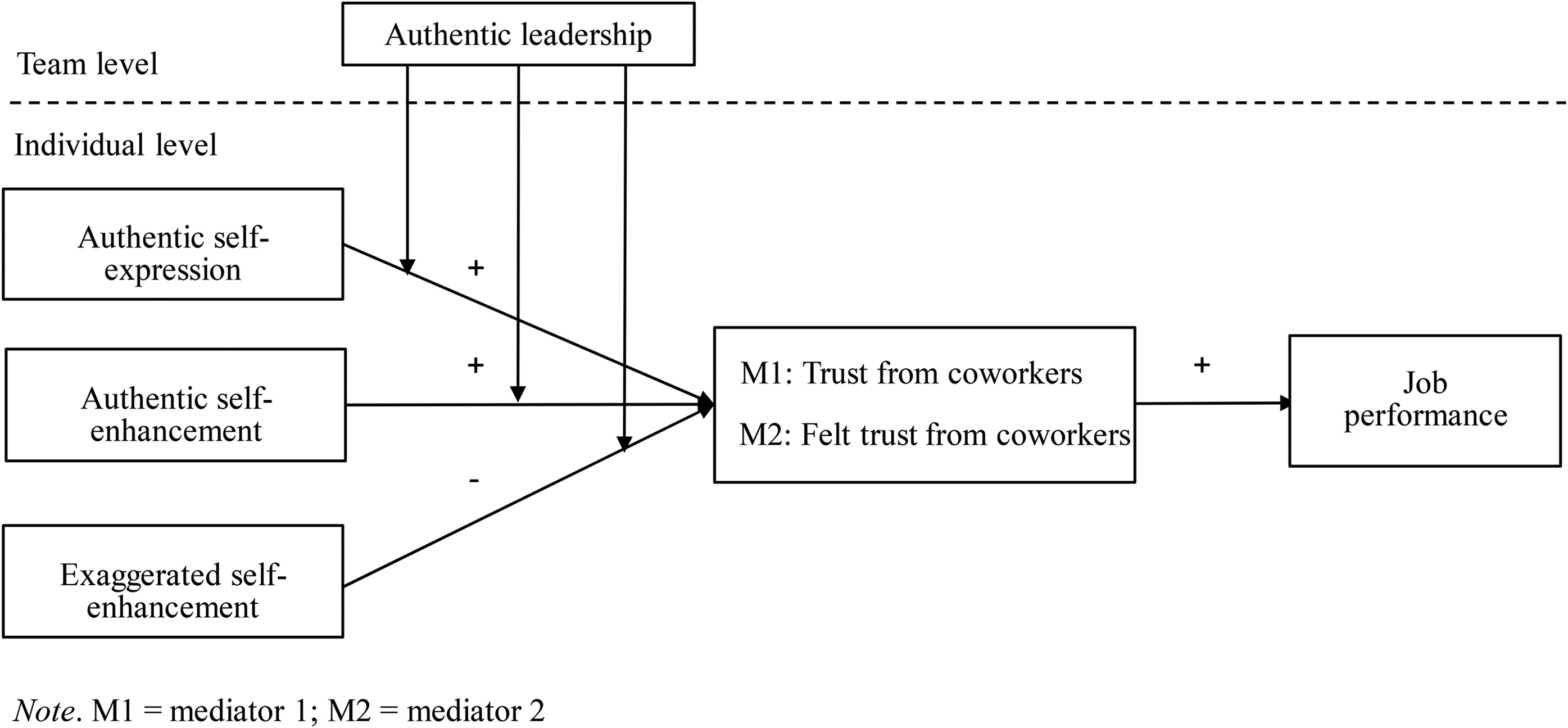
Hypothesized Model Linking Self-presentation to Job Performance via Trust Moderated by Authentic Leadership
Methods
Procedures and Participants
We collected data from four companies in southern China, which operated in the areas of distributing pharmaceutical and consumer products, property management, and real estate. We focused on the sales, customer service, and administration groups in these companies. With the assistance of the human resource departments of these four companies, we invited 152 working groups (152 supervisors and 574 employees) to participate in this study. Participants were notified that they could do the survey on a voluntary basis and that their responses would be kept strictly confidential and for third-party research only. To ensure a sizable sample, one co-author visited each company. We also told the human resource managers that we would provide them with an overall company consultancy report after the survey, which enhanced their motivation to help us remind the participants to complete the questionnaires. In addition, we provided a cash allowance of 50 RMB (approximately 8 USD) to the participants who completed both waves of questionnaires as a token of appreciation.
To reduce the concern of common method bias, we used a multisource and multiwave survey design (Podsakoff, MacKenzie, & Podsakoff, 2012). At Time 1 (T1), we asked employees to report their self-presentation styles (i.e., authentic self-expression, authentic self-enhancement, and exaggerated self-enhancement), felt trust from coworkers, authentic leadership, the control variables (i.e., self-esteem and self-consciousness), and their demographic variables (i.e., age, gender, and organizational tenure). We also used a round-robin approach to ask employees to rate how much they trusted each of their coworkers in the same workgroup. We received 520 responses to the survey (response rate: 90.6%) and 1,633 ratings of coworker trust among a possible 2,022 ratings (response rate: 80.8%) from employees. Following previous research (e.g., Lukowitsky & Pincus, 2013), we retained and aggregated coworker ratings of trust for the 500 employees that obtained 50% or more ratings from their coworkers. At Time 2 (T2), approximately 1 month after the first survey, employees completed the questionnaire that was the same as T1, except for authentic leadership and the control and demographic variables. Supervisors rated the job performance of their subordinates and provided their demographics. We received 561 responses to the survey (response rate: 97.7%) and 1,954 ratings of coworker trust among a possible 2,022 ratings (response rate: 96.6%) from employees. Moreover, we received responses from 147 supervisors (response rate: 96.7%) that included job performance ratings of 550 employees. We repeated the same procedures to retain and aggregate coworker ratings of trust from coworkers for the 562 employees that obtained 50% or more ratings from their coworkers. After matching the surveys between employees and their supervisors, we used 566 employees from 143 working groups for the subsequent analyses.
For the employee participants, the average age was 31.13 years (SD = 7.22), 43.3% were men, and average organizational tenure was 44.63 months (SD = 47.81). For the supervisor participants, the average age was 35.86 years (SD = 7.56), 58.8% were men, and average organizational tenure was 91.82 months (SD = 73.53).
Measures
We administered the survey in Chinese. All measures used in this study were translated from English into Chinese following Brislin’s (1986) translate-back-translation procedure. Unless otherwise noted, all responses were based on seven-point Likert-type scales (1 = strongly disagree, 7 = strongly agree).
Self-presentation
To assess employees’ self-presentation styles, we developed new scales based on established procedures for scale development (Hinkin, 1998; Molloy, Chadwick, Ployhart, & Golden, 2011). We first reviewed existing scales that measure related constructs (e.g., authentic self-expression, self-promotion, authentic self-expression striving, self-aggrandizement). To assess authentic self-expression, we reviewed and adapted items from Cable et al. (2013) and Cable and Kay (2012) and revised them slightly to better reflect an actual behavior toward coworkers (e.g., “I communicate honestly about myself with coworkers.”). For authentic self-enhancement, we reviewed Bolino and Turnley’s (1999) self-promotion scale (e.g., “I make people aware of my accomplishments”) and retained the language that referred to genuine attributes before changing the referent to “coworkers.” As authentic self-enhancement focuses primarily on qualifications, talents, and education, we also created items that capture other positive attributes that one may present in the workplace. Lastly, for exaggerated self-enhancement, we reviewed Lee, Quigley, Nesler, Corbett, and Tedeschi’s (1999) entitlement and enhancement subscales, Ames et al.’s (2006) narcissism personality inventory, and Assor and Tal’s (2012) self-aggrandizement scales. We then created new items focusing on self-presentation toward “coworkers.” After the initial round of item generation, we further modified the items to be consistent in content across the three forms of self-presentation, resulting in three four-item scales (12 items in total).
Content validity is an important initial step in construct validation and involves assessing the extent to which subject matter experts agree that the items reflect the theoretical construct of interest (Haynes, Richard, & Kubany, 1995). We asked nine subject-matter experts (all of whom have a PhD in Organizational Behavior or I/O Psychology) to rate the content validity of our developed items (Molloy et al., 2011). They were instructed to indicate the extent to which the items matched the definitions provided for the three self-presentation behaviors on a 7-point scale (1 = to no extent, 7 = to a great extent). The average ratings were 5.71 (SD = 0.46) for authentic self-expression, 5.81 (SD = 0.25) for authentic self-enhancement, and 6.42 (SD = 0.47) for exaggerated self-enhancement. For comparison, the subject matter experts rated Cable et al.’s (2013) authentic self-expression items as 5.71 (SD = 0.30) on average. We also asked respondents to provide additional comments about how the items could be further altered or improved to better reflect our constructs. Following their and anonymous reviewers’ feedback and suggestions, we made additional edits to ensure that the items are positively worded and capture the behaviors that (a) are expressed in the course of interacting with coworkers and (b) refer to frequencies of actions (i.e., incorporate active verbs that denote behaviors).
To validate these newly developed scales, using a separate sample (N = 275), we ran an exploratory factor analysis (EFA) and examined the convergent and criterion validities of the three self-presentation scales. The results strongly support the three-factor structure with all items loading on the extracted factor with a factor loading higher than 0.50 (Roesch & Rowley, 2005), largely confirming the convergent and criterion of our scales (see the Appendix for details on the validation study).
In addition, using the current sample (N = 561), we ran confirmatory factor analyses (CFAs) to examine whether the measures for authentic self-expression, authentic self-enhancement, and exaggerated self-enhancement are distinctive. The results showed that the hypothesized three-factor model fit the data well, χ2(51) = 151.65; RMSEA = 0.06; SRMR = 0.04; CFI = 0.98. This three-factor model was better than the three two-factor model (1) combining authentic self-expression and exaggerated self-enhancement, χ2(53) = 960.67; RMSEA = 0.18; SRMR = 0.15; CFI = 0.77; (2) combining authentic self-expression and authentic self-enhancement, χ2(53) = 844.24; RMSEA = 0.17; SRMR = 0.17; CFI = 0.80; and (3) combining exaggerated self-enhancement and authentic self-enhancement, χ2(53) = 724.66; RMSEA = 0.16; SRMR = 0.13; CFI = 0.83.
Trust from coworkers
At T2, to assess trust from coworkers, we provided the respondents with the list of the names of all working group members. We then asked them to assess the extent to which they trust their team members using De Jong, Van der Vegt, and Molleman’s (2007) six-item scale with the time referent of “in the last month.” An example item is “I can freely share my ideas, feelings, and hopes with this coworker.” Subsequently, we calculated each focal person's trust from coworkers by averaging the ratings that each team member made for the focal person.
Felt trust from coworkers
At T2, we assessed the felt trust from coworkers of employees by adopting Mayer and Davis’s (1999) six-item scale and changing the referent to coworkers. Employees assessed the extent to which they agreed with the items designed to assess whether coworkers trusted them with the time referent of “in the last month.” An example item is “My coworkers perceive that my actions and behaviors are very consistent.”
Authentic leadership
Authentic leadership was rated by working group members using a 16-item scale from Neider and Schriesheim (2011) at T1. The working group members were asked to assess their supervisor's authentic leadership. An example item is “My leader clearly states what he/she means.” To check whether we can aggregate the individual-level assessment to the working group level, we calculated the intermember reliability ICC(1) and ICC(2) and the within-group interrater agreement (rwg) for authentic leadership (Bliese, 2000). The values for ICC(1), ICC(2), and rwg were .22, .50, and .86, respectively, and F(141, 369) = 2.00, p < 0.001, which meets the requirement to justify aggregation (LeBreton & Senter, 2008).
Job performance
At T2, supervisors were asked to evaluate the job performance of their employees by using Farh and Cheng’s (1997) scale to assess job performance. Subsequent studies validated the four-item scale using Chinese participants (e.g., Gong, Huang, & Farh, 2009). An example item includes “This employee always completes job assignments on time.”
Control variables
We used three dummy variables for each company to control for the potential confounding effects of the organization. We also controlled for employee self-esteem because it can affect how people express themselves to others (Swann, 2011) and how self-presentation relates to employee outcomes (David et al., 2021). Self-esteem was assessed using five items from Rosenberg (1989). A sample item is “I feel I have a number of good qualities.” In addition, we controlled for self-consciousness (a heightened sense of self-awareness about one's actions, appearance, and what others think of them; Scheier & Carver, 1985), which can impact how people present themselves to others. Self-consciousness was measured using Scheier and Carver's five-item scale. A sample item is “I’m constantly examining my motives.”
Analytical Approach
Given that a multilevel moderated mediation model was being examined, we adopted a multilevel path analysis (Preacher, Zyphur, & Zhang, 2010) to test the research hypotheses by using Mplus 8.0 (Muthén & Muthén, 2017). Specifically, we used group-mean centering for the Level 1 predictors (i.e., three styles of self-presentation) and grand-mean centering for the Level 2 moderator (i.e., authentic leadership). For the significant interaction effects, we drew the simple slopes at ±1 SD from the mean of authentic leadership. In addition, for the mediating effects of trust from coworkers and felt trust from coworkers on the relationship between self-presentation and job performance and the moderated mediation effects, we used Monte Carlo simulations with 20,000 repetitions (Preacher & Selig, 2012) to generate the confidence intervals (CIs).
Results
Measurement Model Testing
We conducted CFAs with the key variables in our model (i.e., authentic self-expression, authentic and exaggerated self-enhancement, trust from coworkers, felt trust from coworkers, job performance, and authentic leadership). Given that the data were nested within working groups, we conducted two-level CFAs by loading authentic leadership items onto a factor at Level 2 and loading all other measures, after being group-mean centered, onto their respective latent factors at Level 1. The results showed that the seven-factor model had a good fit, χ2(439) = 1,141.82; RMSEA = 0.05; SRMRWithin−level = 0.04; SRMRBetween−level = 0.05; CFI = 0.91. The alternative models (i.e., six-factor model that combined trust from coworkers and felt trust from coworkers and the five-factor model that combined the three types of self-presentation) did not converge normally partially due to the complex model (Lüdtke, Ulitzsch, & Robitzsch, 2021). In addition, we conducted CFAs for all individual variables. The results showed that the seven-factor model had a good fit with the data, χ2(881) = 2,532.17; RMSEA = 0.06; SRMR = 0.04; CFI = 0.92. Moreover, it fit better than a six-factor model that combined trust from coworkers and felt trust from co-workers, χ2(893) = 6,420.44; RMSEA = 0.11; SRMR = 0.13; CFI = 0.72, and a five-factor model that combined the three types of self-presentation, χ2(892) = 4,026.61; RMSEA = 0.08; SRMR = 0.10; CFI = 0.84. These results suggested that the key variables used in this study were distinctive.
Hypothesis Testing
Descriptive statistics, measure reliability, and correlations among study variables are reported in Table 1. All reliability estimates for the key variables exceeded 0.81 with an average of 0.91. Authentic self-expression at T1 was positively and significantly correlated with job performance (r = 0.11, p < 0.05), whereas exaggerated self-enhancement at T1 was negatively and significantly correlated with job performance (r = −0.13, p < 0.01). On the contrary, authentic self-enhancement at T1 was not significantly correlated with job performance (r = −0.01, ns).
Means, Standard Deviations, Reliabilities, and Correlations for All Key Variables
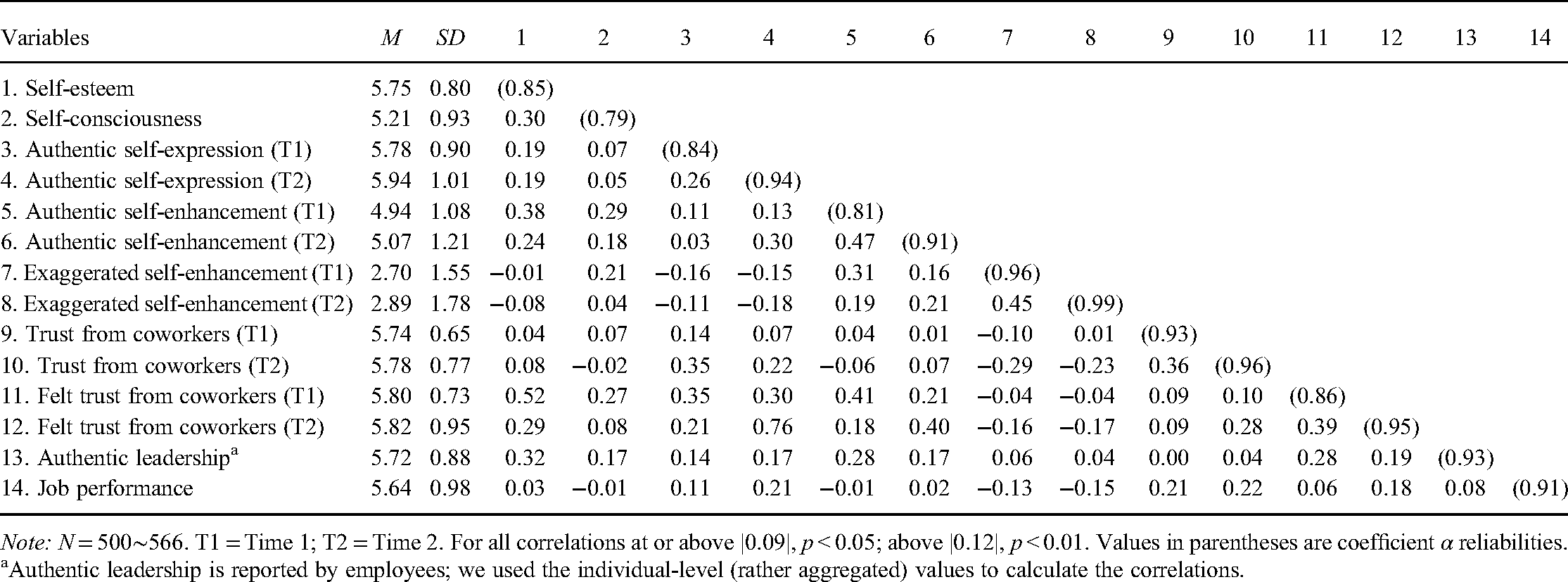
Note: N = 500∼566. T1 = Time 1; T2 = Time 2. For all correlations at or above |0.09|, p < 0.05; above |0.12|, p < 0.01. Values in parentheses are coefficient α reliabilities.
Authentic leadership is reported by employees; we used the individual-level (rather aggregated) values to calculate the correlations.
Hypothesis 1 stated that authentic self-expression would be positively linked to (a) trust from coworkers and (b) felt trust from coworkers. As shown in Table 2, authentic self-expression was positively and significantly related to trust from coworkers (B = 0.13, p < 0.01) but was not significantly related to felt trust from coworkers (B = 0.00, ns), supporting only Hypothesis 1a.
Multilevel Path Analysis Results
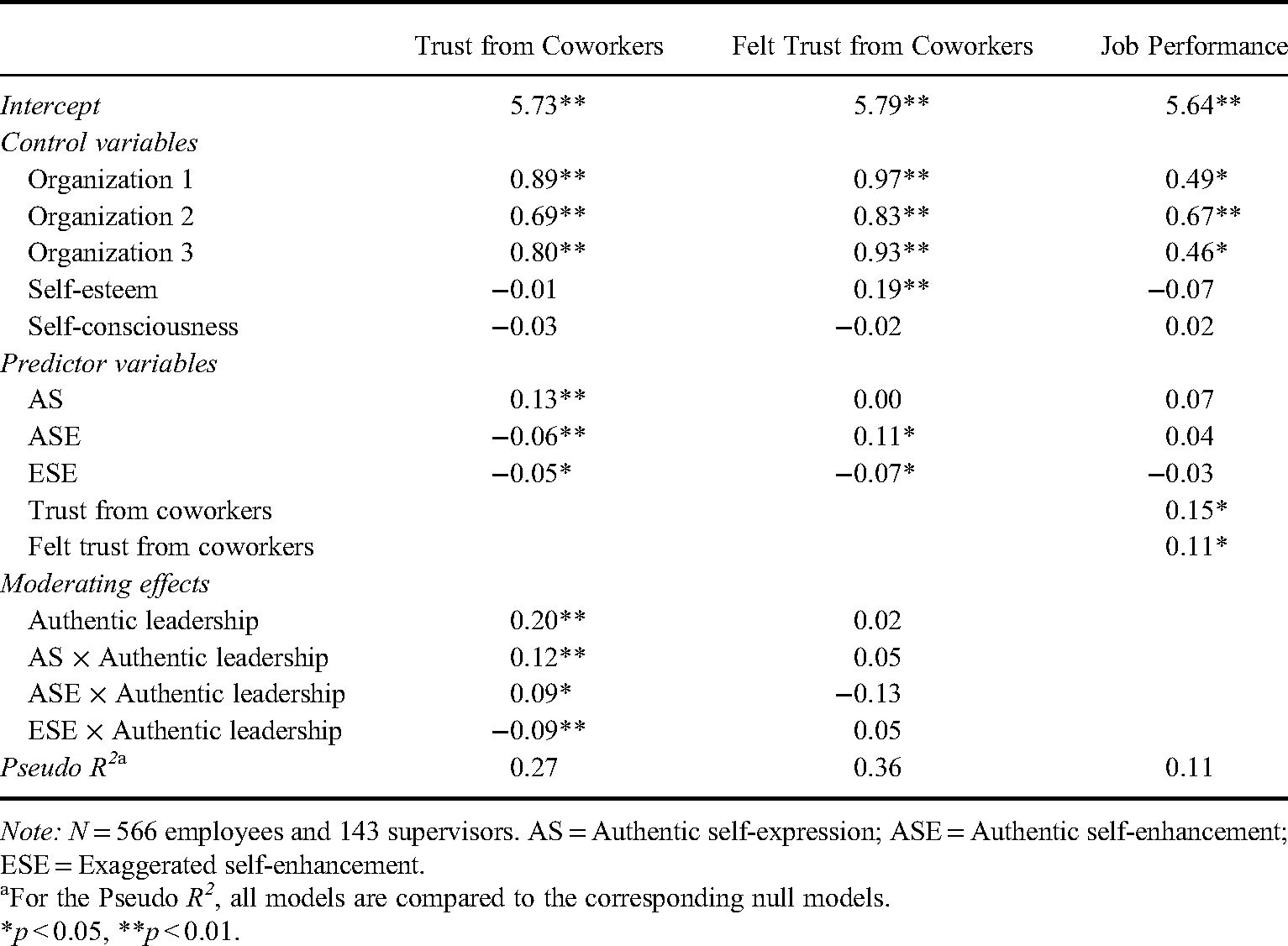
Note: N = 566 employees and 143 supervisors. AS = Authentic self-expression; ASE = Authentic self-enhancement; ESE = Exaggerated self-enhancement.
For the Pseudo R2, all models are compared to the corresponding null models.
*p < 0.05, **p < 0.01.
Hypothesis 2 proposed that authentic self-enhancement would be positively related to (a) trust from coworkers and (b) felt trust from coworkers. The results in Table 2 showed that authentic self-enhancement was positively and significantly related to felt trust from coworkers (B = 0.11, p < 0.05) but negatively and significantly related to trust from coworkers (B = −0.06, p < 0.01). Thus, only Hypothesis 2b was supported.
Hypothesis 3 stated that exaggerated self-enhancement would be negatively related to (a) trust from coworkers and (b) felt trust from coworkers. Fully supporting Hypothesis 3, exaggerated self-enhancement was negatively and significantly related to both trust from coworkers and felt trust from coworkers (B = −0.05, p < 0.05; B = −0.07, p < 0.05, respectively), as shown in Table 2.
Hypothesis 4 hypothesized that self-presentation would have an indirect effect on job performance via (a) trust from coworkers and (b) felt trust from coworkers. The results in Table 2 showed that trust from coworkers and felt trust from coworkers were positively and significantly related to job performance after taking authentic self-expression, authentic self-enhancement, and exaggerated self-enhancement into account (B = 0.15, p < 0.05; B = 0.11, p < 0.05, respectively). In addition, results in Table 3 demonstrated that authentic self-expression was positively and indirectly related to job performance, whereas authentic self-enhancement and exaggerated self-enhancement were negatively and indirectly related to job performance via trust from coworkers (indirect effect = 0.02, 95% CI [.0010, .0455]; indirect effect = −0.01, 95% CI [−.0242, −.0003]; and indirect effect = −0.01, 90% CI [−0.0141, −0.0007], respectively). A value of 90% CI is not robust but is frequently used in complex multilevel analyses with a directional research hypothesis like ours (Kang, Matusik, Kim, & Phillips, 2016). On the contrary, authentic self-enhancement was positively and indirectly related to job performance, whereas exaggerated self-enhancement was negatively and indirectly related to job performance via felt trust from coworkers (indirect effect = 0.01, 90% CI [0.0008, 0.0267]; indirect effect = –0.01, 90% CI [–0.0221, –0.0001], respectively). However, authentic self-expression was not significantly and indirectly related to job performance via felt trust from coworkers (indirect effect = 0.00, 95% CI [−0.0182, 0.0134]). In sum, Hypothesis 4 was supported in terms of authentic self-expression and exaggerated self-enhancement via trust from coworkers and authentic and exaggerated self-enhancement via felt trust from coworkers.
Results for Indirect Effects and Conditional Indirect Effects
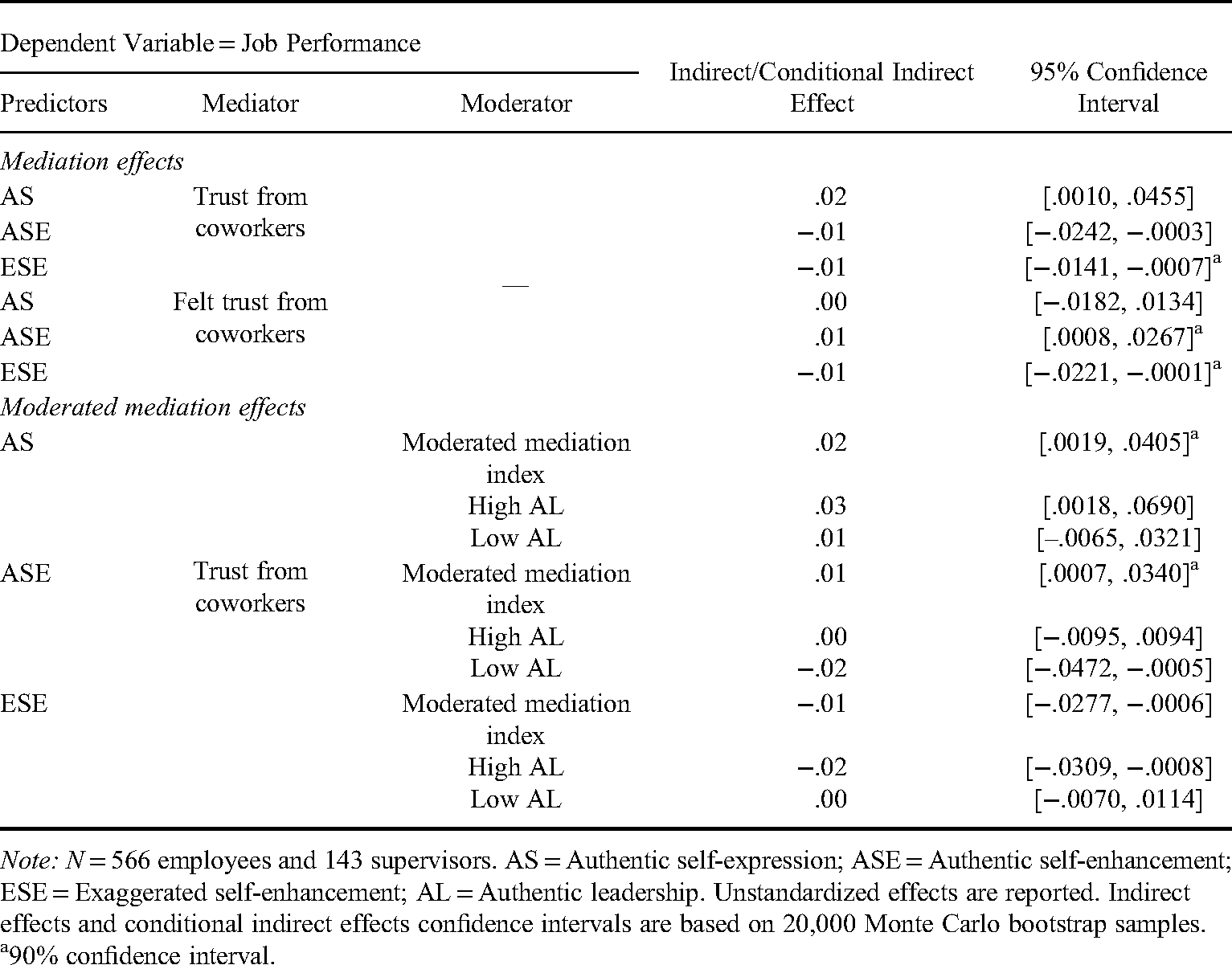
Note: N = 566 employees and 143 supervisors. AS = Authentic self-expression; ASE = Authentic self-enhancement; ESE = Exaggerated self-enhancement; AL = Authentic leadership. Unstandardized effects are reported. Indirect effects and conditional indirect effects confidence intervals are based on 20,000 Monte Carlo bootstrap samples.
90% confidence interval.
Hypothesis 5 proposed that authentic leadership would moderate the relationships between authentic self-expression and trust from coworkers and felt trust from coworkers. Consistent with Hypothesis 5, the interaction term between authentic self-expression and authentic leadership was positive and significant for trust from coworkers (B = 0.12, p < 0.01), as shown in Table 2. Simple slope tests (see Figure 2) showed that the relationship between authentic self-expression and trust from coworkers was positive and significant when authentic leadership was higher (+1 SD; simple slope = 0.21, p < 0.01) but insignificant when authentic leadership was lower (−1 SD; simple slope = 0.05, ns). On the contrary, the interaction term between authentic self-expression and authentic leadership was not significant for felt trust from coworkers (B = 0.05, ns), as shown in Model 2 in Table 2. Only Hypothesis 5a was supported.
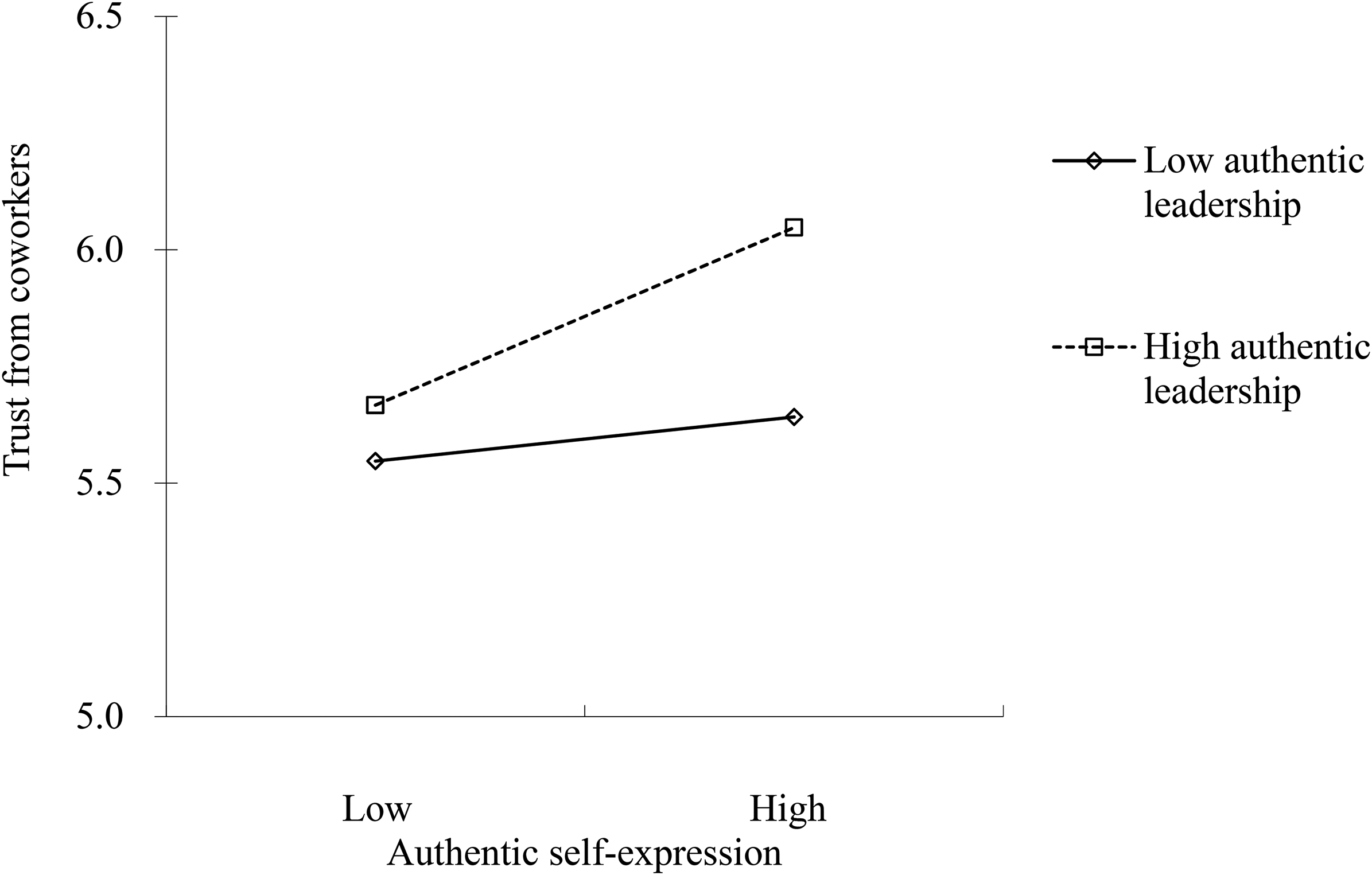
Simple Slopes of Authentic Self-Expression on Trust from Coworkers at Levels of Authentic Leadership
Hypothesis 6 stated that authentic leadership would moderate the relationships between authentic self-enhancement and trust from coworkers and felt trust from coworkers. The results in Table 2 showed that the interaction term between authentic self-enhancement and authentic leadership was positive and significant for trust from coworkers (B = 0.09, p < 0.05). However, the simple slope patterns differed from expected (see Figure 3). The relationship between authentic self-enhancement and trust from coworkers was not significant when authentic leadership was higher (+1 SD; simple slope = −0.004, ns) but was negative and significant when authentic leadership was lower (−1 SD; simple slope = −0.13, p < 0.01). On the contrary, the interaction term between authentic self-enhancement and authentic leadership was not significant for felt trust from coworkers (B = −0.13, ns). These results did not support Hypothesis 6.
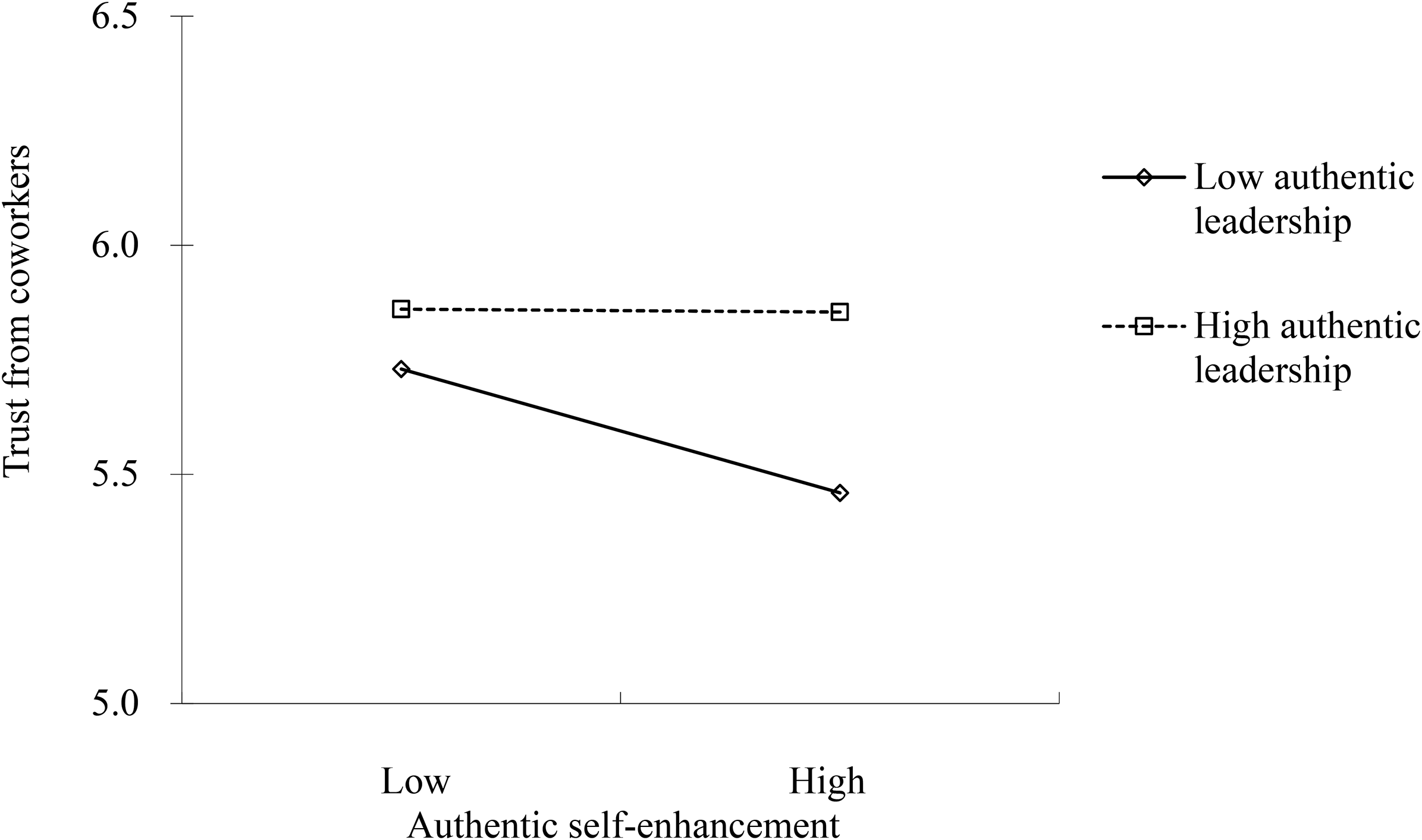
Simple Slopes of Authentic Self-Enhancement on Trust from Coworkers at Levels of Authentic Leadership
Hypothesis 7 stated that authentic leadership would moderate the negative relationship between exaggerated self-enhancement and trust from coworkers and felt trust from coworkers. As shown in Table 2, the interaction term between exaggerated self-enhancement and authentic leadership was negative and significant for trust from coworkers (B = −0.09, p < 0.01). Simple slope tests (see Figure 4) showed that the relationship between exaggerated self-enhancement and trust from coworkers was negative and significant when authentic leadership was higher (+1 SD; simple slope = −0.11, p < 0.01) but was insignificant when authentic leadership was lower (−1 SD; simple slope = 0.01, ns). The interaction term between exaggerated self-enhancement and authentic leadership, however, was not significant for felt trust from coworkers (B = 0.05, ns), as shown in Table 2. Thus, only Hypothesis 7a was supported.
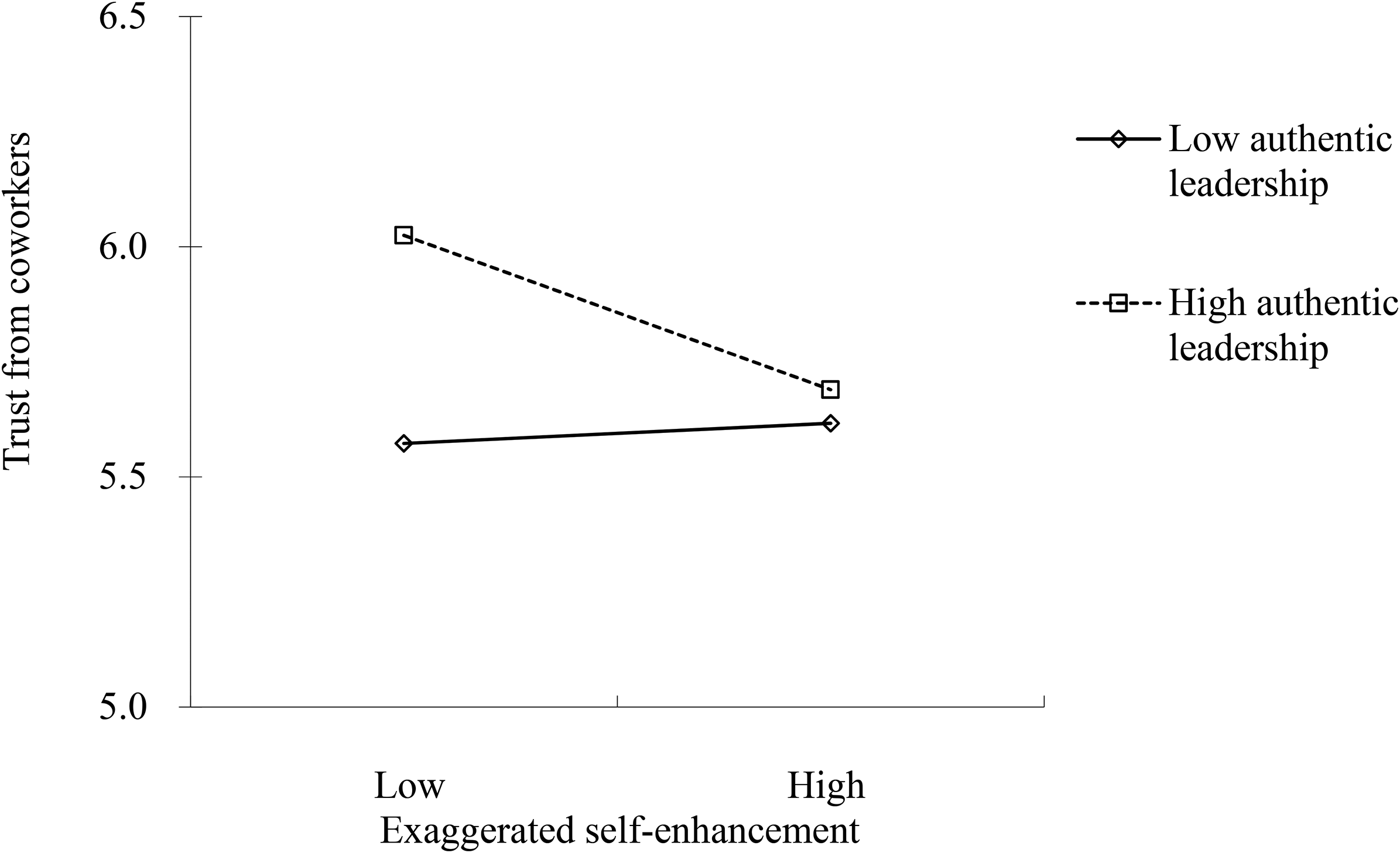
Simple Slopes of Exaggerated Self-Enhancement on Trust from Coworkers at Levels of Authentic Leadership
Lastly, we examined whether authentic leadership moderated the indirect effects of self-presentation on job performance via trust from coworkers (Hypotheses 8a–c) and felt trust from coworkers (Hypotheses 9a–c). As shown in Table 3, the Monte Carlo simulation results showed that authentic leadership significantly moderated the indirect effect that authentic self-expression had on job performance via trust from coworkers (moderated mediation index = 0.02, 90% CI [0.0019, 0.0405]). The indirect effect was positive and significant when authentic leadership was higher (+1 SD: indirect effect = 0.03, 95% CI [0.0018, 0.0690]) but was nonsignificant when authentic leadership was lower (−1 SD: indirect effect = 0.01, 95% CI [–0.0065, 0.0321]). In addition, authentic leadership significantly moderated the indirect effect that authentic self-enhancement had on job performance via trust from coworkers (moderated mediation index = 0.01, 90% CI [0.0007, 0.0340]). The indirect effect was negative and significant when authentic leadership was lower (−1 SD: indirect effect = −0.02, 95% CI [−0.0472, −0.0005]) but was not significant when authentic leadership was higher (+1 SD: indirect effect = 0.00, 95% CI [−0.0095, 0.0094]). Authentic leadership also significantly moderated the indirect effect that exaggerated self-enhancement had on job performance via trust from coworkers (moderated mediation index = –0.01, 95% CI [–0.0277, –0.0006]). The indirect effect that exaggerated self-enhancement had on job performance via trust from coworkers was negative and significant when authentic leadership was higher (+1 SD: indirect effect = −0.02, 95% CI [−0.0309, −0.0008]) but was not significant when authentic leadership was lower (−1 SD: indirect effect = 0.00, 95% CI [−0.0070, 0.0114]). On the contrary, authentic leadership did not significantly moderate the relationships between self-presentation and job performance via felt trust from coworkers (for authentic self-expression, moderated mediation index = 0.01, 95% CI [−0.0219, 0.0359]; for authentic self-enhancement, moderated mediation index = −0.01, 95% CI [−0.0402, 0.0044]; and for exaggerated self-enhancement, moderated mediation index = 0.01, 95% CI [−0.0030, 0.0211]). Taken together, although Hypotheses 8a and c were supported, Hypotheses 8b and 9a–c were not supported.
Supplementary Analyses
As sensitivity tests, we added demographic control variables (i.e., age, gender, and organizational tenure) and retested the research hypotheses. All the previous results remained significant. We also tested the research hypotheses without controlling for self-esteem and self-consciousness, and the significant results remained unchanged.
In addition, we tested the causal ordering between the three self-presentation variables and trust from coworkers/felt trust from coworkers using a cross-lagged panel design (Zablah, Carlson, Donavan, Maxham, & Brown, 2016). Specifically, we measured the three self-presentation variables and the two types of trust at T1 and T2. For the relationships between self-presentation and trust from coworkers, the results revealed that authentic self-expression and exaggerated self-enhancement had significant relationships with trust from coworkers (B = 0.24, p < 0.01; B = −0 .10, p < 0.01, respectively), but authentic self-enhancement was insignificantly related to trust from coworkers (B = −0.03, ns). On the contrary, trust from coworkers had no significant relationships with subsequent authentic self-expression, authentic self-enhancement, or exaggerated self-enhancement (B = 0.04, ns; B = −0.02, ns; B = 0.15, ns, respectively). For the relationship between self-presentation and felt trust from coworkers, the relationship between authentic self-expression and felt trust from coworkers was marginally significant (B = 0.10, p = 0.098), authentic self-enhancement was insignificantly related to felt trust from coworkers (B = 0.04, ns), and exaggerated self-enhancement was negatively related to felt trust (B = −0.05, p < 0.01). On the contrary, felt trust from coworkers was positively related to authentic self-expression (B = 0.33, p < 0.01) yet had no significant relationship with either authentic or exaggerated self-enhancement (B = 0.06, ns; B = −0.07, ns, respectively). In sum, these results showed that self-presentation, in general, had stronger cross-lagged effects on trust than the opposite direction.
Next, we ran the analyses while controlling for Time 1 trust and felt trust from coworkers, which can test whether self-presentations are associated with changes in trust and felt trust from coworkers. The findings related to trust from coworkers with the control of Time 1 trust from coworkers were quite similar to those found in the main analyses. By contrast, the findings related to felt trust from coworkers when controlling for Time 1 felt trust from coworkers were different from the ones in the main analyses. Namely, authentic self-expression, authentic self-enhancement, and exaggerated self-enhancement had no significant relationships with felt trust from coworkers (B = –0.06, ns; B = 0.07, ns; B = –0.06, ns, respectively).
Discussion
Our results reveal that authentic self-expression was positively related to trust from coworkers (as well as indirectly and positively impacted job performance). Authentic self-enhancement was positively related to felt trust from coworkers but was negatively related to trust from coworkers. Finally, exaggerated self-enhancement was universally negative, reducing trust from coworkers and felt trust from coworkers. In addition, when employees work for a highly authentic leader, the positive relationship between authentic self-expression and trust from coworkers and the negative relationship between exaggerated self-enhancement and trust from coworkers were stronger. On the contrary, the relationship between authentic self-enhancement and trust from coworkers was negative and significant only when working for a less authentic leader.
Implications for Theory and Practice
Our results provide several theoretical implications for the self-presentation and authentic leadership literatures. First, one important contribution of our study is examining the effects of authentic self-expression simultaneously with authentic and exaggerated self-enhancement, thereby illustrating the contrasting relationships between the various self-presentation tactics with employee outcomes. After taking authentic and exaggerated self-enhancement into account, we found that authentic self-expression significantly enhances trust from coworkers and thereby enhances subsequent job performance. These findings corroborate and extend the extant studies (e.g., Cable & Kay, 2012; Cable et al., 2013; David et al., 2021; Kim et al., 2019; Montani et al., 2019) showing that employees who strive for authentic self-expression (i.e., letting people see them as they really are) or engage in socialization tactics to express their genuine selves (i.e., act authentically) can perform effectively.
Second, our study is among the first to empirically distinguish between exaggerated self-enhancement (i.e., presenting an exaggerated or false self-image) and authentic self-enhancement (i.e., presenting one's actual positive qualities). As expected, exaggerated self-enhancement decreased job performance via trust from coworkers and felt trust from coworkers. That actors are aware of the mistrust that exaggerated self-enhancement breeds despite the fact that they are the ones engaging in said behaviors is interesting to note. Our findings expand on previous studies showing that impression management behaviors aiming to ingratiate or manipulate tend to decrease interpersonal trust (Long, 2021) and that bragging about or exaggerating one's positive traits elicits negative peer impressions about the focal person (Scopelliti, Loewenstein, & Vosgerau, 2015). On the other hand, we found that authentic self-enhancement was positively related to job performance via felt trust from coworkers. These results based on the newly developed scales for authentic and exaggerated self-enhancement may help resolve the mixed findings of self-promotion identified in previous studies given that existing scales conflate “valid claims of competence” with “exaggerating one's competence” or “lying” (cf. Molleman, 2019). Our new measures for authentic and exaggerated self-enhancement can also complement Yun, Takeuchi, and Liu (2007), who developed a new scale for self-enhancement motives (e.g., “I like to present myself to others as being a friendly and a polite person”) but did not distinguish whether these motives are authentic or exaggerated. In addition, our results complement the prior work by Levashina and colleagues, who demonstrated that some job applicants choose honest rather than deceptive impression management (Roulin, Bangerter, & Levashina, 2015) and that job applicants can choose to fake their self-image in varying degrees of intensity (ranging from slight image creation to extensive image creation; Levashina & Campion, 2007).
However, it is noteworthy that contrary to our expectations, authentic self-enhancement was significantly and negatively related to job performance via trust from coworkers. This result combined with the positive relationship between authentic self-enhancement and felt trust from coworkers suggests that although actors thought that others trusted them when they engaged in authentic self-enhancement, coworkers actually reported low levels of trust toward the actors who presented their actual positive qualities. These findings are aligned with prior work noting that people frequently overestimate the positive effects of self-enhancement (Scopelliti et al., 2015) and that this self-presentation tactic can sometimes be viewed negatively by others (Den Hartog et al., 2020), particularly when attempts to appear competent are perceived to lack sincerity (Sezer et al., 2018). In addition, several scholars (e.g., Steinmetz et al., 2017) noted that once impression management motives are recognized, targets may react negatively to a focal person's well-intended self-presentation behaviors because they are viewed as self-interested, manipulative, and deceitful. Our findings also corroborate and extend recent work showing that targets of self-presentation tactics respond differently in terms of trust depending on whether they interpret the behaviors as driven by the actor's authentic self (Long, 2021).
Further supporting people's apparent inability to gauge the effectiveness of self-presentation tactics, we found that authentic self-expression was significantly related to job performance via trust from coworkers (but not via felt trust from coworkers). These results suggest that people might underestimate how much others trust them when they engage in authentic self-expression. These findings are critical in light of recent research (e.g., Sezer et al., 2018; Steinmetz et al., 2017) that challenges the field's general assumption that people are able to effectively engage in self-presentation to enhance others’ perceptions about their competency and engender likeability. Our findings also show that target-centric and actor-centric reactions to self-presentation behaviors might differ and thus expand the current literature on self-presentation that focuses on target reactions (Den Hartog et al., 2020; Higgins et al., 2003; Roberts et al., 2020; Sezer et al., 2018). We also encourage future research to examine other types of target-centric and actor-centric reactions to authentic self-expression, authentic self-enhancement, and exaggerated self-enhancement such as vigor and demand–ability fit (David et al., 2021) or likability (Pfeffer, Fong, Cialdini, & Portnoy, 2006).
In addition, the significant mediation effects of felt trust from coworkers on the relationship between self-presentation and job performance contribute to the literature of self-presentation and felt trust. Our findings extend existing studies on self-presentation that identify perceived communion (Fragale & Grant, 2015) and likability (Pfeffer et al., 2006) as mediators for the self-presentation − employee outcome links. These results also support prior studies (e.g., Lau et al., 2014; Salamon & Robinson, 2008) noting that felt trust motivates employees to live up to the positive expectations of others by behaving in responsible, communal, and ethical ways and performing well in their jobs. However, these results are somewhat different from Baer et al.’s (2015) finding that feeling trusted by one's supervisor results in a higher perceived workload and reputation maintenance concerns that leave employees emotionally exhausted and performing poorly. It is likely that feeling trusted by a supervisor may result in burdensome pressure, whereas feeling trusted by coworkers for integrity reasons may create stronger socioemotional bonds that motivate employees to work harder. We encourage future researchers to examine felt trust with different referents (e.g., supervisors and coworkers) and different bases (i.e., competence-based trust and integrity-based trust) simultaneously to see how they differentially relate to positive and negative work outcomes.
Another important theoretical contribution of our study is the significant moderating role of authentic leadership on the relationship between self-presentation and trust from coworkers. These findings help enhance the collective understanding on when certain types of self-presentation are likely to backfire for employees (Bolino & Turnley, 1999) and why certain types of self-presentation are rejected by some observers but are embraced or even expected by others (Den Hartog et al., 2020). These results also support and build on David et al.’s (2021) findings that ethical climates are necessary to elicit the positive effects of striving for self-verification on employees’ job performance. Moreover, our findings are important for developing self-presentation theory about how organizations and leaders may alter the effectiveness of employees’ self-presentation tactics by sending salient social cues. However, more research is still needed to identify additional boundary conditions. For example, authentic leadership did not significantly moderate the relationships between self-presentation and felt trust from coworkers. A focal person's internal feeling of being trusted due to their self-presentation behaviors may not be significantly altered by external factors. Future research needs to confirm this supposition and learn more about when and why leadership alters the relationship between self-presentation behaviors and actor-centric reactions.
Our study also provides several practical implications for employees, organizations, and supervisors. First, our findings suggest that employees who would like to present themselves effectively at work should authentically and transparently present themselves while avoiding self-aggrandizing or falsifying strengths. Also, if they work with an authentic leader, presenting their genuine self (including both merits and flaws) can make them more trusted by others and enhance their job performance. In addition, organizations and supervisors should encourage employees to present their genuine and authentic attributes while discouraging them from presenting a false image of themselves. For example, they can help employees identify and present a “reflected best self” (i.e., “an individual's cognitive representation of the qualities and characteristics the individual displays when at his or her best”; Roberts, Dutton, Spreitzer, Heaphy, & Quinn, 2005: 713). Supervisors can also help employees make their self-presentation more effective by adopting authentic leadership, especially with people who have a proclivity for authentic self-expression.
Limitations and Future Research Opportunities
Like all studies, our work has several limitations that should be considered in understanding the implications of our findings and addressed in future research. First, we could not account for individual differences in the effectiveness of the employed self-presentation modes. In light of evidence that political and social skills can alter the effectiveness of various influence tactics (Ferris, Perrewé, Anthony, & Gilmore, 2000), some individuals may be more successful than others at “selling” authentic or exaggerated self-enhancement to coworkers. In addition, we did not measure the likeability of the person's expressed self. For example, if one's genuine self is selfish, rude, or manipulative, authentic self-expression may do little to garner trust from coworkers. To further distinguish the nuances of self-presentation at work, future research should consider the individual differences that can affect the outcomes associated with various forms of self-presentation as well as how others perceive the presented self-image.
Second, we did not examine authentic organizational climate nor assess how long the leader had been with a particular team. If the organization highly emphasizes authenticity and/or the leader has been signaling the value of genuine self-presentation for a long period, then the social cues of authentic leadership may be more relevant and amplified than in situations with a low authentic climate or low leader tenure. This area would benefit from more research examining the effect of leader tenure or organizational climate on these dynamics.
Another limitation is that our study was not designed to test the effect of self-presentation on changes in trust or felt trust from coworkers using a longitudinal design and with different time frames. Instead, we tested the time-lagged relationship between self-presentation and trust and felt trust from coworkers. It would be interesting to examine what time frames are required for self-presentation tactics to alter trust and felt trust from coworkers. We suggest that future researchers either assess self-presentation and trust/felt trust from coworkers repeatedly and test the change effects using latent growth modeling or measure self-presentation once and trust and felt trust from coworkers at various intervals to assess the changes over time (e.g., Cable & Parsons, 2001).
In addition, given that we collected the data from a single cultural context (i.e., China), we are uncertain about the generalizability of our findings to other cultural contexts. In their meta-analytic study, Sedikides, Gaertner, and Vevea (2005) showed that Westerners and Easterners self-enhanced strategically but in different ways. East Asians self-enhanced on collectivistic attributes (e.g., loyal, agreeable, and compromising) and behaviors (e.g., follow the rules according to which your group operates), whereas Westerners self-enhanced on individualistic attributes (e.g., leader, original, and unique) and behaviors (e.g., trust your own instinct rather than the group's instinct). To confirm the generalizability of our findings, future research should validate our findings in other cultural contexts, such as Western societies.
In conclusion, our study provides an initial step to better understand the relationships between a range of self-presentation tactics and employee outcomes when working under supervisors with varying levels of authentic leadership. We encourage further research to shed more light on how different types of self-presentation tactics link to employee outcomes. For example, effortful or deliberate self-presentation may deplete physical, emotional, and cognitive energy resources more than natural self-presentation, which may decrease job performance. We also call for future research to examine how organizations and job characteristics may moderate the relationship between the different forms of self-presentation and job performance. Such efforts will further extend the nomological net surrounding self-presentation tactics.
Footnotes
Acknowledgments
We appreciate the help of Sabrina Volpone, Sebastian Schuh, Byron Lee, Michael Kwan, An Chih Wang, Lars Johnson, Sara Perry, Michelle Zheng, and Maja Graso for their feedback on the item generation and on earlier versions of this manuscript. We also thank Xing Wang, Jiao Chen, Zoey He, Mia Zhou, Pan Fan, and Mingjun Shuai for their support for the data collection and analysis and finding articles. This research has benefited from financial support of Lingnan University, Hong Kong Special Administrative Region, China (Funding Reference: DB21B2) awarded to Tingting Chen; the Guangdong Basic and Applied Basic Research Foundation, China (Funding Reference: 2019A1515010698) and the Guangdong Planning Office of Philosophy and Social Science (Funding Reference: GD19CGL33) awarded to Yongyi Liang.
Declaration of Conflicting Interests
The author(s) declared no potential conflicts of interest with respect to the research, authorship, and/or publication of this article.
Funding
The author(s) disclosed receipt of the following financial support for the research, authorship, and/or publication of this article: This work was supported by Lingnan University, Hong Kong Special Administrative Region, China (Funding Reference: DB21B2); the Guangdong Basic and Applied Basic Research Foundation, China (Funding Reference: 2019A1515010698) and the Guangdong Planning Office of Philosophy and Social Science (Funding Reference: GD19CGL33).

Appendix
Validation of Self-Presentation Scales
We administered our survey to 295 participants using the Prolific Academic platform. Respondents were required to be working full-time in the United States (more than 40 h per week) and have at least a high school diploma. Twenty respondents were removed for failing at least one of the attention check items (e.g., “please select ‘somewhat agree’ for this item”), leaving a total sample of 275 participants (response rate = 93.2%). In terms of demographics, 68.4% of our respondents were men, and more than half (50.5%) were between 25 and 35 years of age. The majority were White (69.1%), with 17.1% responding that they were Black; 4.7%, Hispanic; 6.9%, Asian; 2.2%, “other.” The sample was generally well-educated, with 4% having a high school degree, 10.5% having taken some college classes, 43.3% earning an undergraduate degree, 34.9% earning a graduate degree, and 7.3% earning a doctoral degree. They worked in a variety of industries (e.g., healthcare, service, financial, technology), and 83.9% worked in their current company for over 5 years. Respondents were asked to indicate the extent that they agreed or disagreed with the statements beginning with the following phrases: “At work” on a scale ranging from 1 (strongly disagree) to 5 (strongly agree). For the EFA, we used the method of principal component analysis with promax rotation, an oblique rotation, on the basis of the assumption that any extracted factors relevant to self-presentation should be intercorrelated. Consistent with our expectations, we identified a clear three-factor structure with all items loading on each extracted factor with a factor loading higher than 0.50 (Roesch & Rowley, 2005). Table A1 summarizes the factor loadings for the three factors.
To examine the convergent validities of the three self-presentation scales, we assessed other related constructs in our survey. We included constructs associated with self-presentation in organizational context, including self-verification striving, which reflects a tendency to present realistic information about oneself to others at work (Cable & Kay, 2012); self-promotion, which involves individuals pointing out one's abilities or accomplishments in order to show a competent image to others (Bolino & Turnley, 1999), entitlement (i.e., taking credit for positive achievements, Lee et al., 1999), and enhancement (i.e., persuading others that one's performance is more positive than it actually is, Lee et al., 1999), which are two aspects of assertive self-presentation that aim to embellish one's public identity. The correlation matrix (see Table A2) revealed that self-verification striving was positively correlated with authentic self-expression (r = 0.64, p < 0.01) and authentic self-enhancement (r = 0.12, p < 0.05) but negatively correlated with exaggerated self-enhancement (r = −0.26, p < 0.01). On the contrary, self-promotion was positively correlated with authentic self-enhancement (r = 0.79, p < 0.01) and exaggerated self-enhancement (r = 0.53, p < 0.01). Entitlement and enhancement were also positively correlated with exaggerated self-enhancement (r = 0.50, p < 0.01; r = 0.52, p < 0.01, respectively). These results largely confirm the convergent validity of our scales.
We also examined the criterion validity of our scales. Drawing on related research showing that behaving authentically significantly relates to psychological well-being and discomfort (Gino et al., 2020), we expected individuals behaving authentically to be less depressed and more satisfied with their jobs. However, individuals engaging in exaggerated self-enhancement may be more depressed and less satisfied with their jobs. The results in Table A2 revealed that individuals engaging in authentic self-expression had lower job-related depression (r = −0.44, p < 0.01) and higher job satisfaction (r = 0.15, p < 0.05). Authentic self-enhancement was related to reduced job-related depression (r = −0.17, p < 0.01) but was unrelated to job satisfaction (r = 0.10, ns). Exaggerated self-enhancement was positively correlated to job-related depression (r = 0.21, p < 0.01) and negatively correlated to job satisfaction (r = −0.12, p < 0.05).