




Abstract
Within the framework of the National Radon Action Plan 2017–2027, the implementation of a communication strategy is included. In this regard, public awareness was assessed through a public opinion national survey based on a questionnaire designed under the EU RadoNorm project. The type of survey was computer-assisted web interviewing (CAWI) of 1009 participants randomly selected. The analysis of the study aims to improve and raise public awareness. The results show that Bulgarian citizens continue to feel that they are not well informed (72%) about the radon risk. Approximately 50% will be very attentive to the information related to radon remediation action and will try to learn more. The channels for receiving information were investigated. The most preferred channel is television (74.9%), followed by social media (38.6%). Participants’ intentions to measure and take corrective action if advised were studied, and only 37.1% are confident that they would be able to test. Serious attention should be paid to attracting stakeholder participation, and the focus of communication strategies should be on raising awareness in specific interest groups and their inclusiveness to health protection measures.
INTRODUCTION
An existing exposure situation introduced in ICRP Publication 103 (ICRP, 2007) has specific characteristics and a wide dispersion of individual doses. Radon exposure is one such situation recognised by the WHO that could cause lung cancer (WHO, 2009). In many cases, the exposure could be reduced by individuals themselves (self-help protection). Effective self-help protective actions are based on public risk awareness and informed personal behaviours, i.e. an informed individual tends to behave in the best interests of their health (Maziak and Ward, 2009). On the other hand, public awareness depends on proper risk communication of scientific information. Risk communication is important for the public's understanding of risks, benefits, and radiation protection. Radon risk communication on the health effects is faced with many challenges. To better understand the reason why individuals do not take action to measure and then remediate, the psychology of risk perception also needs to be considered (Hevey, 2017).
The National Radon Action Plan has been implemented in Bulgaria since 2017. Within its framework, a communication strategy is included, and information campaigns have been carried out. The results from the public opinion nationally representative survey, based on a questionnaire designed under the EU RadoNorm project, were analysed for evaluation of the current level of awareness and the ways of increasing it. Moreover, the current knowledge, radon risk perceptions, and assessment of the effectiveness of the communication programme for increasing radon testing and mitigation were evaluated.
METHODOLOGY
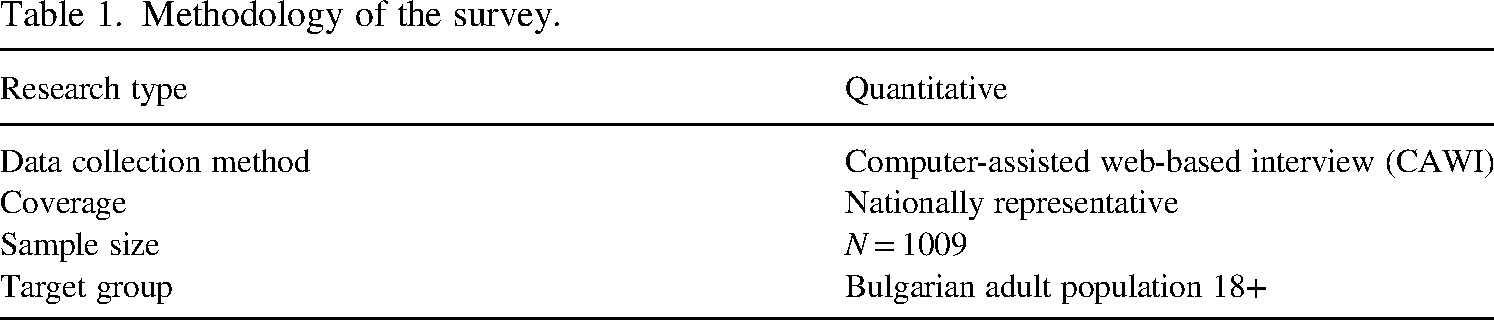
The survey was conducted in 2022 and aimed at examining the attitudes, beliefs, and risk perceptions in Bulgarian society. The survey methodology is presented in Table 1.
Methodology of the survey.
Methodology of the survey.
The sample size was calculated for a 95% confidence interval with a margin of error of 3% based on the total number of the Bulgarian population – 6,838,937 (NSI, 2021). To obtain the representativeness of the survey, the multi-level (multi-stage) clustered sample was stratified by regions and residence place type (city, town, village, etc.). Within every stratum the primary selection units (PSUs) were selected based on the enumeration areas. The random walk approach for selecting the households, where the respondents were identified by the method of last birthday in the PSU, was applied. The distribution by gender is by exact random probability sampling. The routes, streets (neighbourhoods), and starting addresses are initially determined, and a skipping interval is applied: every fifth residential block in cities and every third house in villages. The data collection was implemented on computer-assisted web-based interview with tablets. Potential risks of sampling bias, refusals, and non-responses were avoided through immediate data processing allowing cross-checking with SPSS analysing missing data and introducing appropriate corrections. The final results were evaluated with the SPSS statistical analysis.
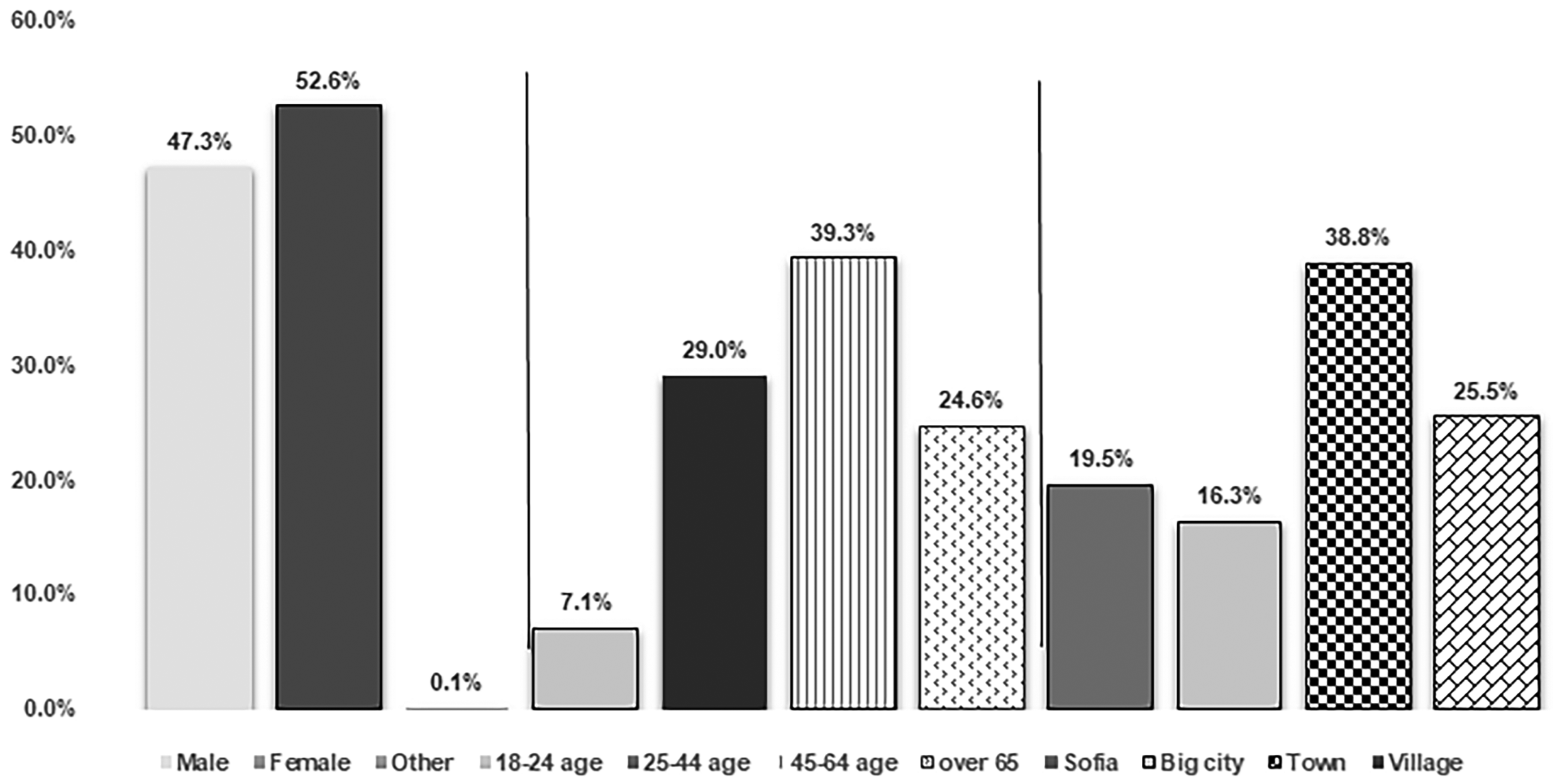
The distribution of the survey participants divided into groups by sex, age, and place of residence is presented in Fig. 1.
Sociodemographic distribution by sex, age, and place of residence.
Based on the results for the Bulgarian population from the National Statistical Institute (NSI, 2021), the percentage of men and women for 2021 is 48% and 52%, respectively, and percentage of people who live in large cities and the capital Sofia is 74%. The correspondence between the distribution of survey participants (Fig. 1) and the statistical data, as well as the randomly selected participants, proves the representativeness of our study.
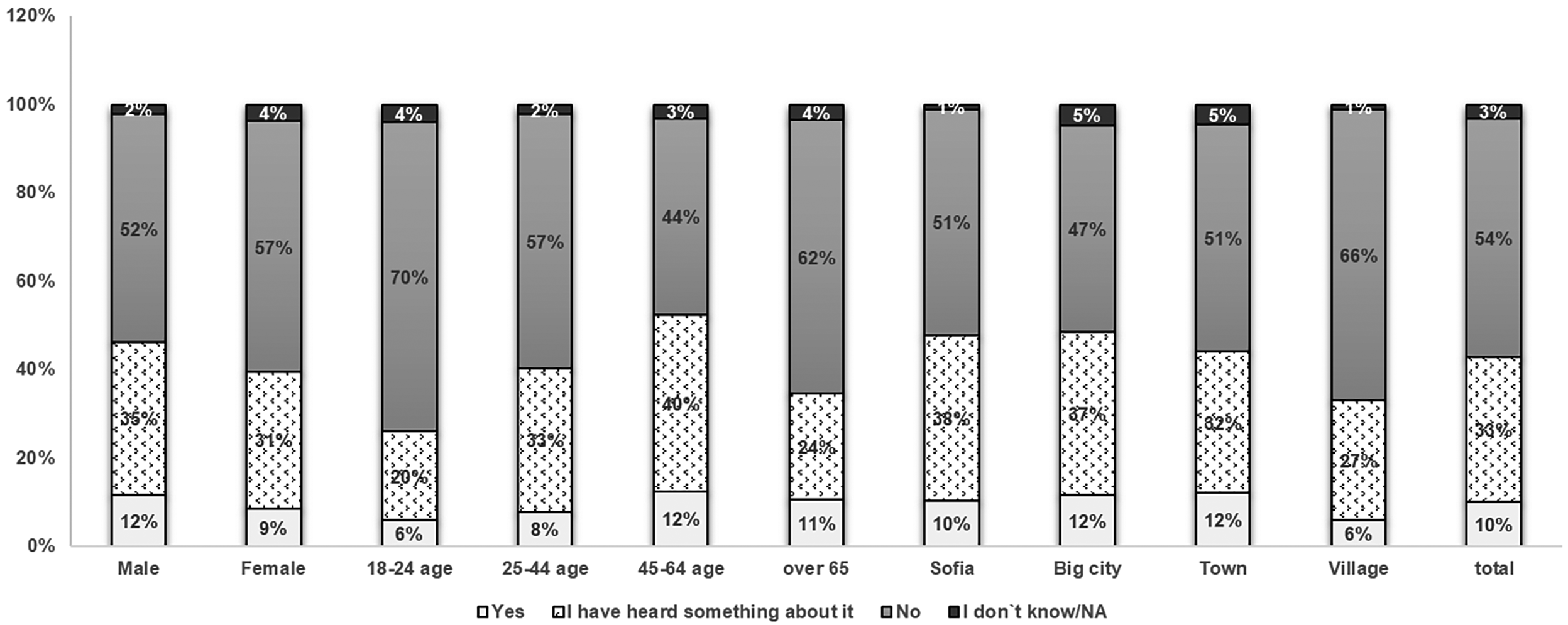
Public awareness about radon was assessed through the question ‘Do you know anything about Radon?’. More than half of Bulgarians declare that they don’t know about radon (54%). There is no significant difference in radon awareness between men and women. The most uninformed are respondents between the ages of 18–24 (70%) and people living in small villages (66%). The results by sex, age, and place of residence are presented in Fig. 2.
Answer the question ‘Do you know anything about radon?’ by sex, age, and place of residence.
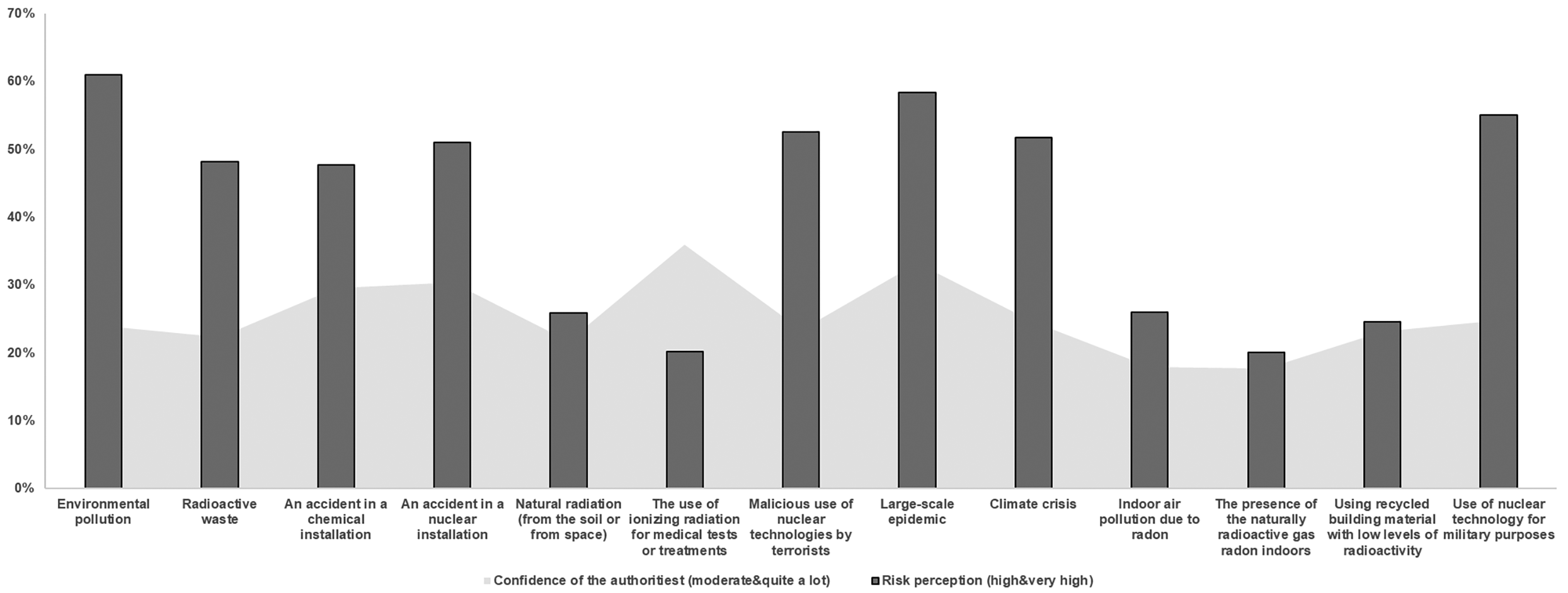
All risks related to ionising radiation are not recognised as significant by Bulgarians, including radon exposure, and confidence in authorities to deal with these risks is very low (Fig. 3).
Risk perception and confidence of the authorities.
In the analysis of risk perception, the risk of ‘environmental pollution’ was ranked first, followed by ‘climatic phenomena’ and ‘large-scale epidemic’. Although in principle confidence in the authorities is low for radon risks in the specific questions asked, such as ‘Who is telling the truth’, and ‘Who is technically competent’, it is seen that public health structures are recognisable (over 54%). This is probably due to the work on the National Radon Action Plan and also the COVID campaign. Real knowledge was assessed by answering directed questions about radon and radiation in general. The percentage of ‘don’t know’ responses is presented in Fig. 4. The results show that the overall knowledge about radon and radiation is very low and people admit they don’t know the answers or don’t care at all. The responses follow awareness and confirm the results of other studies (Cori et al., 2022).
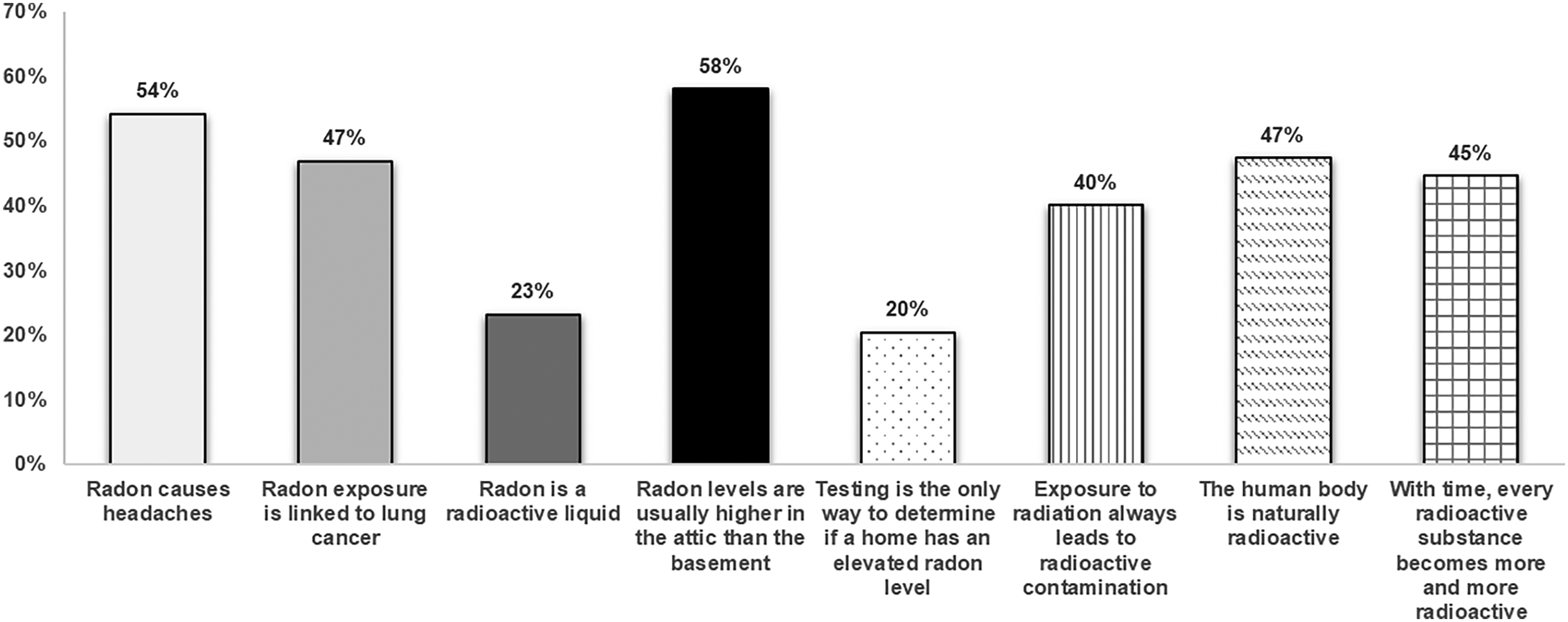
Knowledge questions about radon and radiation (answer ‘don’t know’ in percentage).
The information comprehensiveness and perception were analysed, and the results show that Bulgarian citizens continue to feel that they are not well informed (Fig. 5). Young people are less informed than older people (ANOVA, p < 0.05) and women than men (t, p < 0.05). Similar results were obtained by Ostlin et al. (2006) and Cholowsky et al. (2021), in the study on self-perception of knowledge. Men were more likely to express confidence, whereas women were more likely to express knowledge insecurity. Health promotion policies must take into account gender-specific factors to be effective (Ostlin et al., 2006). Place of residence does not affect radon information perception.
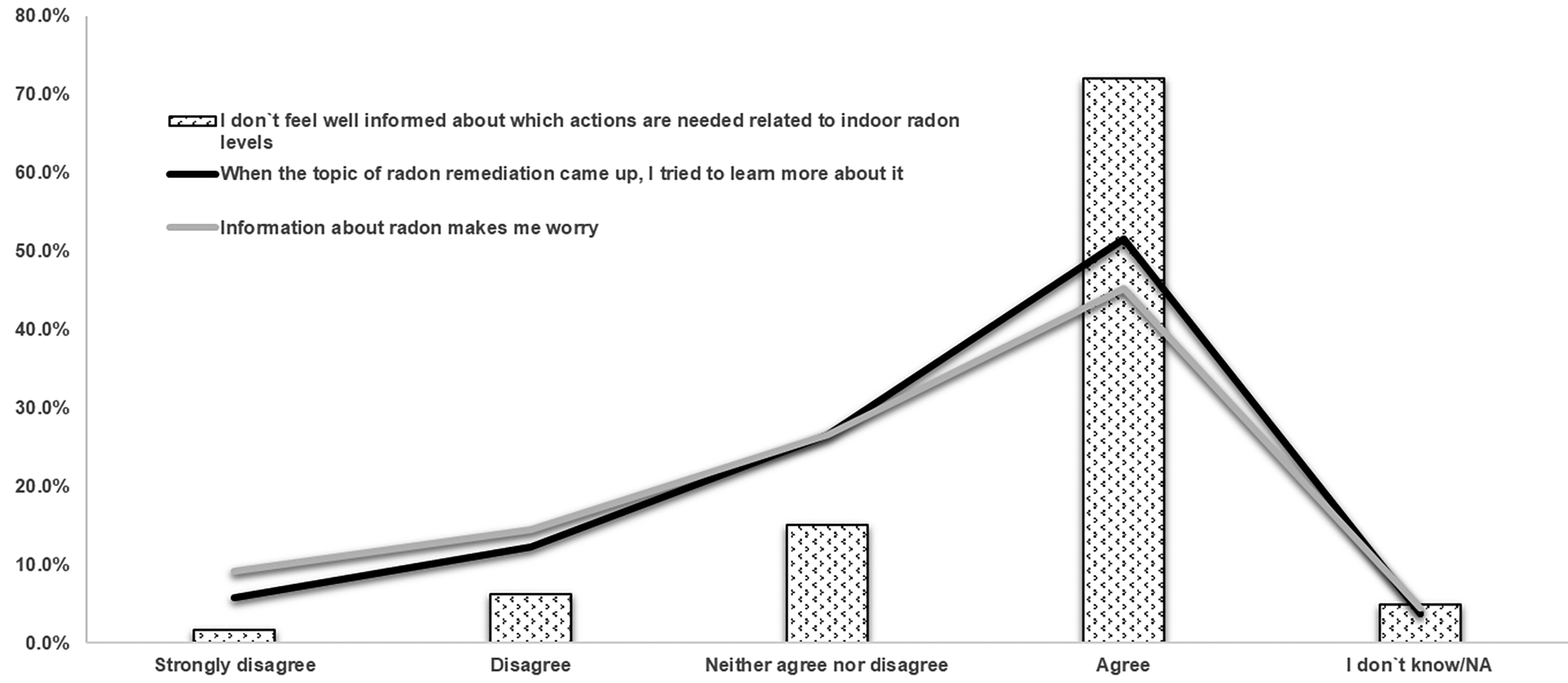
Answers about the information comprehensiveness and perception.
More than 70% of the respondents don’t feel well informed about which actions are needed related to indoor radon high levels, but approximately 50% will be very attentive to the information related to radon remediation and will try to learn more about it. People become concerned when they learn about radon (Fig. 5), which motivates them to carefully research solutions for lowering high levels. A weak but statistically significant association was found between information and intention to test and mitigate the high level (R0 = 0.164, p < 0.0001). Many authors (Doyle et al., 1990; Chow et al., 2011; Dowdall et al., 2016) note that the information programmes are successful at increasing awareness of radon; however, research consistently finds low levels of radon testing and remediation following such programmes. Similar behaviour has been noticed in our study. Therefore, changes in the communication campaign should be made to encourage testing and remediation.
The channels for receiving information were investigated. The most preferred channel, according to the respondents, is television (74.9%), followed by social media (38.6%). The distribution by gender repeats the choice of the first two positions, but women are in higher percentages than men choosing television and social media.
Social influence was investigated with principal component analysis based on answers to questions (name ‘sis’): (1) I don’t watch others to learn new things; (2) I don’t compare myself to other people; (3) I prefer to act the way everyone else is acting; (4) when I realise people are working on something important to me, I also want to start doing it; (5) I don’t like to collaborate with people; (6) I don’t like to compete with people; (7) I enjoy when my achievements are acknowledged in public.
According to the results presented in Fig. 6, people were divided into two main categories: susceptible to social influence and unsusceptible. The people in these two groups demonstrate different attitudes towards risk perception and their behaviour. Risk perceptions are affected by the norms of the groups with which people identify. Cholowsky et al. (2021) in another study demonstrated that social pressure from friends or family did not determine people's decision to get tested for radon. Risk perception is a complex psychological process of meaning-making by the individual; it is subject to numerous unconscious, cognitive, and emotional biases that influence how we process information for radon (Clifford et al., 2012; Hevey, 2017). These biases act to minimise our sense of risk. The social influence should be taken into account when developing the communication strategy.
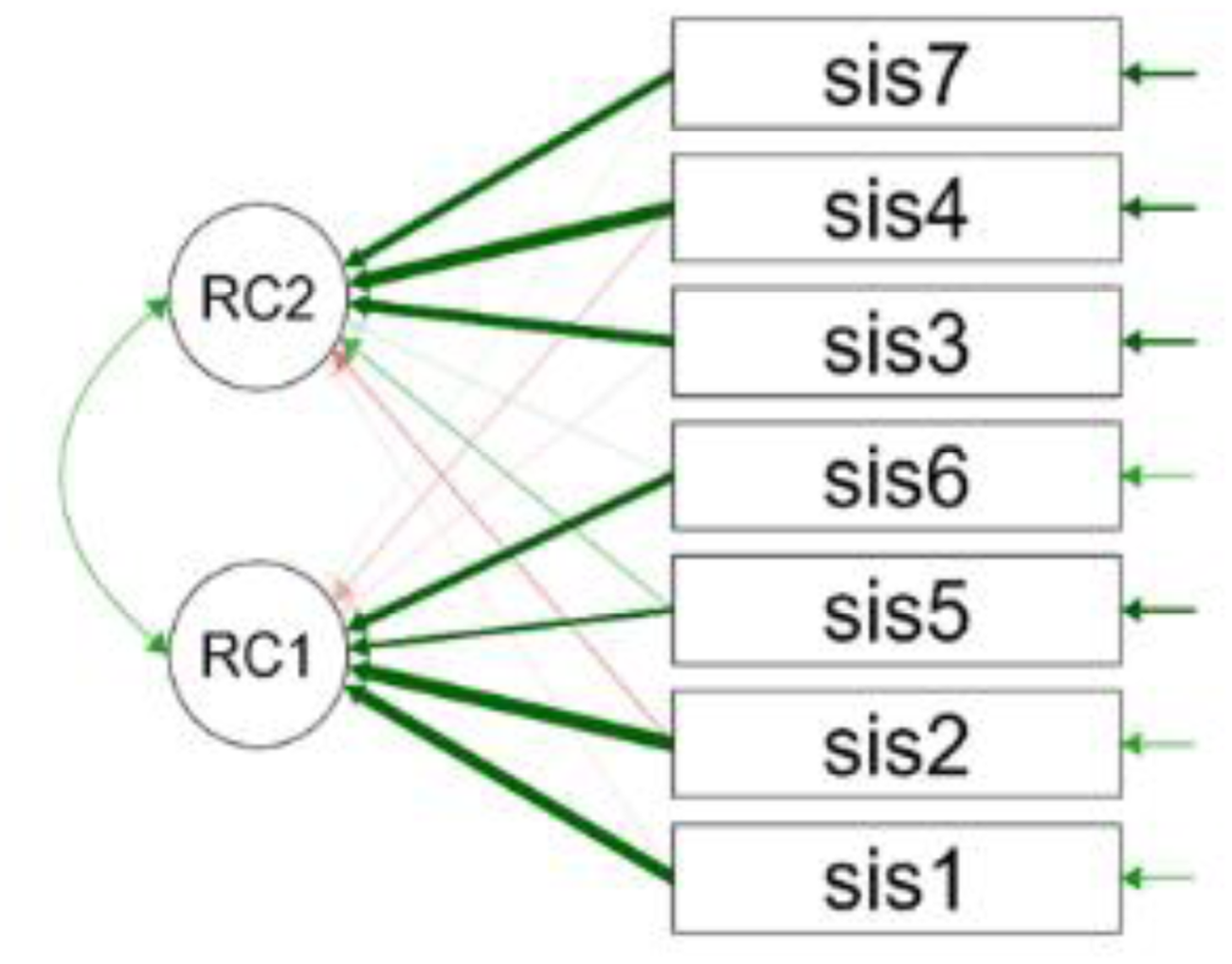
Grouping people based on the responses to the questions of social influence.
Regardless of efforts to inform the public, much still needs to be done to increase public knowledge about the radon problem and radiation exposure in general.
Channel preferences (TV and social media) ought to be utilised when running informational campaigns.
The training of the scientists and experts for presenting the information should get attention.
Based on the analysis, different types of behaviour were identified, which should be taken into account when preparing public awareness messaging to arouse interest.
During public awareness initiatives, substantial consideration should be given to encouraging stakeholder participation and encouraging self-informed decision-making.