




Abstract
‘Yes I tried to explain, but residents couldn’t understand …’ This was the title of my presentation at the first International Commission on Radiological Protection (ICRP) dialogue seminar in November 2011 held at the Fukushima Prefectural Government office. The accident at Fukushima Daiichi nuclear power plant was triggered by the tsunami caused by the Great East Japan Earthquake of March 2011. Initially, it was thought that Date city, 50–60 km away from the accident, would be safe, but unfortunately this was not the case due to the direction of the wind at the time of the accident. I reported on decontamination in the aftermath of the accident at the ICRP dialogue seminar, following an invitation from Dr. Niwa of the University of Kyoto and a member of ICRP. There were many participants from overseas, and it was the first time that I had attended a meeting with simultaneous interpretation. I still remember that I was slightly bewildered.
Keywords
1. REPORT ON DECONTAMINATION IN DATE CITY
I reported on decontamination in Date city at the first International Commission on Radiological Protection (ICRP) dialogue seminar. I commenced my presentation by saying, ‘It is important to decontaminate as soon as possible for radiation protection’ and ‘It is important to remove radioactive materials scientifically from the surroundings’, thinking that anyone worried about radiation exposure would start decontamination right away.
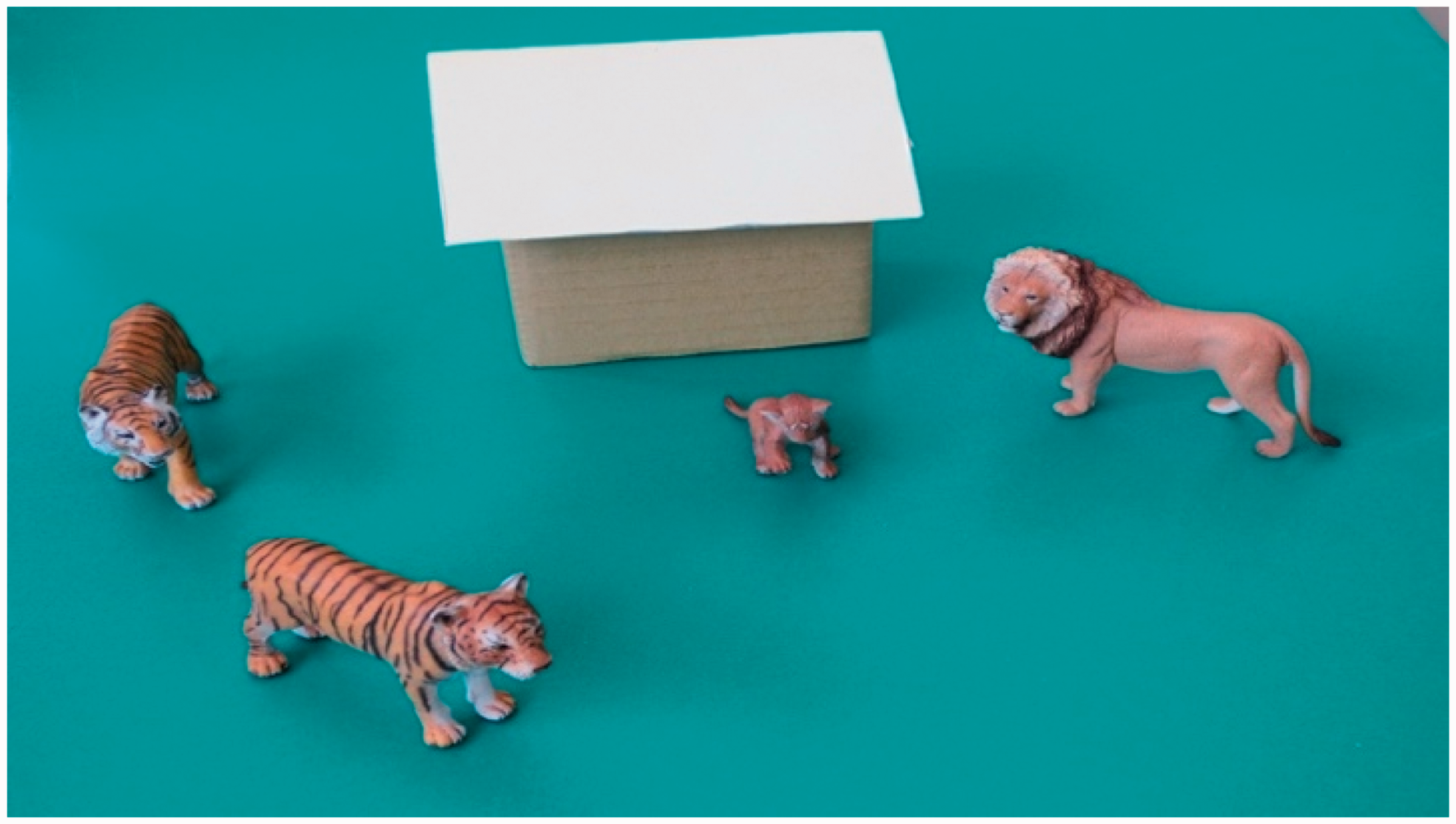
However, to my surprise, local residents were not starting to decontaminate. I realised that it was not sufficient to say ‘scientifically avoid radiation exposure …’. In addition, it was important to address the mental and moral aspects that resided within the minds of the local residents, and I realised that oral scientific explanation was of limited value. As such, I reverted to a totally unscientific approach, using beads to depict caesium, and an analogy of lions to explain the dangers (Figs 1 and 2). In other words, I made the situation ‘visible’. Gradually, the local residents started to understand what decontamination was all about, and started to decontaminate.
Use of beads for visualisation of invisible caesium. Lions were used to represent radiation: ‘Be afraid if lions are loose!’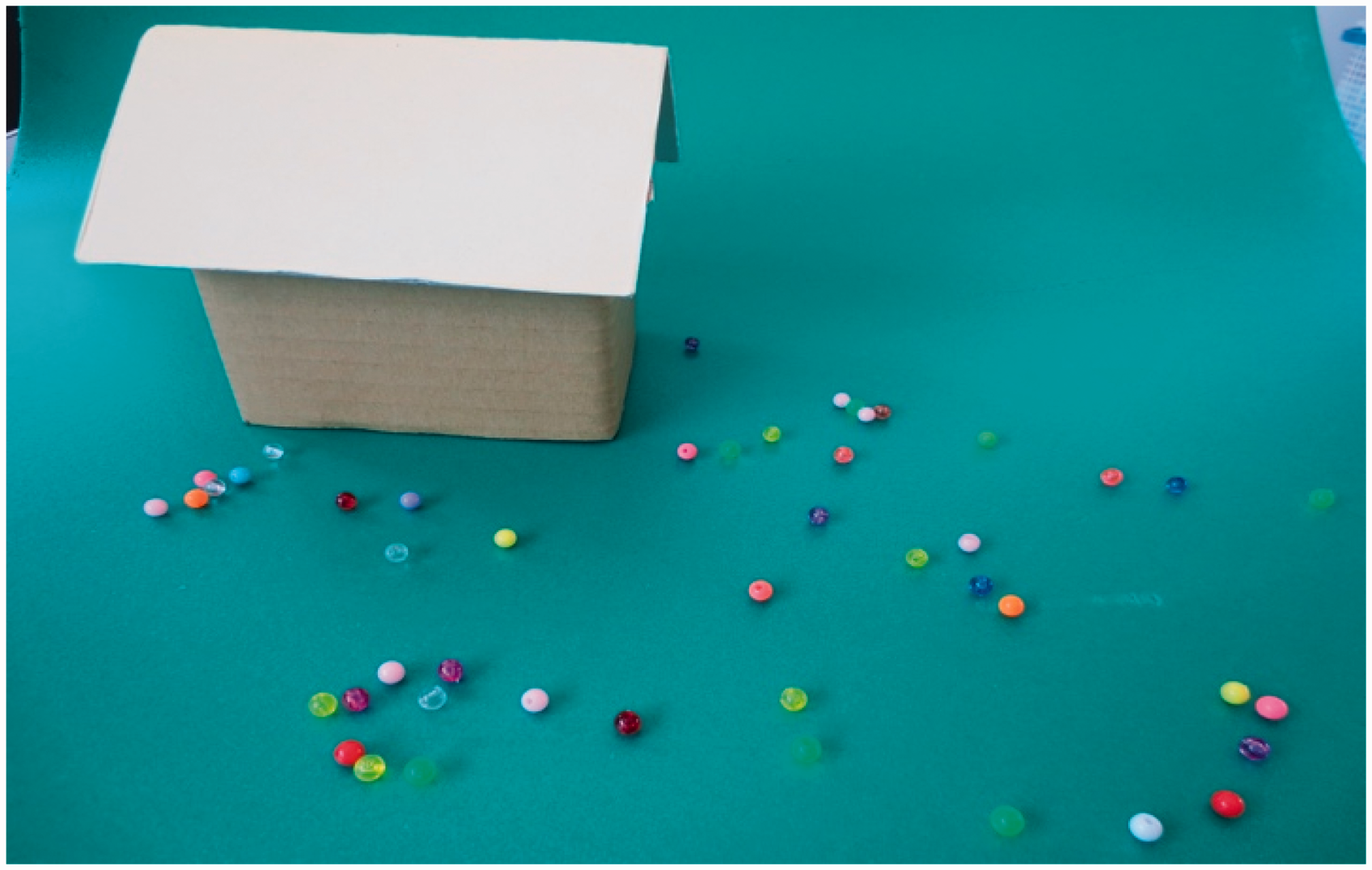
2. THE 12 ICRP DIALOGUE SEMINARS
I thought that this seminar was a one-off meeting, but Dr. Niwa approached me and suggested that a second seminar should be held in Date city. I accepted, believing that they were going to hold another one-off seminar. It never crossed my mind that there would be 12 dialogue seminars, or that seven of them would be held in Date city!
The themes chosen for each seminar were diverse, including food, education, and whether or not to return. There were new discoveries at every seminar. The ICRP dialogue model of roundtable discussion was introduced into briefing sessions with the local residents, which had traditionally been classroom-style meetings. This was found to improve understanding among the residents.
When I thought they had exhausted all the topics for discussion, ‘Festival and culture’ was suggested as the theme for the next dialogue seminar. ‘What has that got to do with radiation?’ was my reaction. However, under Jacques Lochard’s impeccable chairmanship, we learned that tradition and culture play an important role in reconnecting communities disconnected by radiation.
3. LESSONS LEARNED FROM THE ICRP DIALOGUE SEMINARS
Many lessons have been learned (‘YESs’) from the ICRP dialogue seminars. Administrative organisations tend to take a ‘top-down’ approach, and risk communication could be a way to convey information for the sake of making the people ‘understand what is correct’. However, this is not the case with dialogue with local residents. We have learned the importance of building trust among the stakeholders, that there is a gap between what the Government wants to convey and what the residents want to hear, and that the Japanese people want ‘uniformity’. Drawing from overseas experience, we have learned that local residents are not solely concerned with the risk of radiation from a scientific point of view, and their relationship with radiation in the long term, in terms of everyday living, is of greater importance to them. There was a limit to what the Government and municipal authorities could do; the involvement of the local residents will become more and more crucial now, 6 years since the accident.
Needless to say, the participation of high school students in the latter stages of the ICRP dialogue seminars was all the more meaningful. The significance of their involvement is that they will surely be the forerunners in fostering radiation protection culture in Japan.
4. FUTURE CHALLENGES
The future challenge is whether a meaningful dialogue will take root in Japan, which is a country with low awareness of risk. As the country is not used to ‘dialoguing’, discussions tend to create ‘binary oppositions’ where constructive opinions are difficult to obtain. What makes the situation worse is amplification of the mentality of being victimised. Furthermore, it would be difficult to continue effective dialogue should these discussions have a political dimension.
We need to transmit information in a timely manner to continue making steady efforts to support the positive attitudes of the residents and to recover the lost trust. It is on the foundation of this trust that our efforts towards genuine reconstruction of Fukushima must continue with the local residents.
Even before the accident at Fukushima Daiichi, Japan was facing the challenge of population aging and a low birth rate. These challenges have been highlighted further since the accident. However, I worry that if we continue to blame the nuclear accident and depend on the municipal government for everything, reconstruction will be delayed physically and the residents will never be able to recover their lost pride and self-confidence. I feel that it is important for the local residents to take upon themselves the work of genuine reconstruction of ‘damaged Fukushima’, not that of ‘Fukushima’, as we enter the sixth year since the accident.
I believe that continuation of the ICRP dialogue remains a necessity in helping this reconstruction process. The seminar format will finish, but I believe the spirit and achievements of the ICRP dialogue must continue in various other forms.
5. CONCLUSION
There have been many ‘YESs’ from the ICRP dialogue seminars. As mentioned above, briefing sessions to local residents have changed from classroom-style to dialogue-style meetings. Another important lesson was the establishment of an environment for residents to come together to talk. It is this form of communication that allows differences of opinion and feelings to be discussed openly, so no views are ignored and discarded.
There have been many valuable encounters with people we would never have met had it not been for the ICRP dialogue seminars. This is indeed one of the great achievements of the seminars, without which we would never have been able to listen to diverse opinions and experiences from so many people.
There were many, many ‘YESs’ but there were also some ‘BUTs’, which were surprising at times. Maybe that is because I was responsible for providing the venue in Date city at many dialogue seminars. This is the last of the dialogue seminars, but should there be more ‘BUTs’, I am determined not to be surprised again.