




Abstract
Cosmic radiation in aviation has been a concern since the 1960s, and measurements have been taken for several decades by Air France. Results show that aircraft crew generally receive 3–4 mSv y−1 for 750 boarding hours. Compliance with the trigger level of 6 mSv y−1 is achieved by route selection. Work schedules can be developed for pregnant pilots to enable the dose to the fetus to be kept below 1 mSv. Crew members are informed of their exposition and the potential health impact. The upcoming International Commission on Radiological Protection (ICRP) report on cosmic radiation in aviation will provide an updated guidance. A graded approach proportionate with the time of exposure is recommended to implement the optimisation principle. The objective is to keep exposures of the most exposed aircraft members to reasonable levels. ICRP also recommends that information about cosmic radiation be disseminated, and that awareness about cosmic radiation be raised in order to favour informed decision-making by all concerned stakeholders.
1. Historical account
1.1. Discovery of cosmic rays
In 1911–1912, Victor Hess measured radiation at altitudes up to 5 km, and found that the level increased considerably with altitude. In 1913, Werner Kolhorster confirmed the outer space origin of radiation, which Andrews Millikan named ‘cosmic rays’ in 1925. In 1930, Pierre Auger described giant air showers generated by the original high-energy particles colliding with air molecules of the earth’s atmosphere. This natural ionising radiation became a concern for the race to space in the 1960s. It is said that Colonel David Simons was worried when he saw the hairs on the back of his hands turning white after his stratospheric balloon flight. Previously, he had sent mice and guinea pigs into the upper atmosphere in balloon gondolas to determine the hazards of primary cosmic radiation (Project Manhigh, Holloman Air Force Base).
1.2. Measurement of cosmic rays
Following the measurement of cosmic rays using satellites (Pionneer, Explorer, and Elektron), the first measurements at civil aviation flight levels were taken in 1969 on board the supersonic prototype Concorde. Subsequently, measurements were taken in 1976 during commercial flights operated by Air France and British Airways. Measurements on board subsonic aircrafts such as Boeing 747 were taken for comparison. Since 1990, extensive campaigns have been undertaken by several airlines (Lavernhe et al., 1978; Montagne et al., 1993; Bottollier-Depois, 1997). Dose-rate recordings range between 12 and 15 µSv h−1 on supersonic aircraft, 4 and 6 µSv h−1 on long-haul subsonic jet aircraft, and 1 and 3 µSv h−1 on short-haul subsonic jet aircraft. Most crew members with approximately 750 boarding hours are expected to receive exposures in excess of 1 mSv y−1.
1.3. Regulation changeover
In the 1990 Recommendations of the International Commission on Radiological Protection (ICRP), crew members were recognised as ‘occupationally exposed workers’ (ICRP, 1991). This recommendation became a requirement in the European Council Directive 96/29 Euratom adopted in 1996 (EC, 1996). According to this directive, which became effective in France in 2000, companies need to take appropriate measures to assess the exposure of the concerned air crew, to inform them about the potential health risks, to reduce doses to the most highly exposed crew members, and to maintain the exposure of pregnant crew members to less than 1 mSv during pregnancy.
2. FRENCH SIEVERT SYSTEM
French authorities opted for an operational and automatic system: the SIEVERT project, an acronym for ‘Système d’Information et d’Evaluation par Vol de l’Exposition au Rayonnement cosmique dans les Transports aériens’ (i.e. a computerised system for flight assessment of exposure to cosmic radiation in air transport). It was developed by the Institute for Radiation Protection and Nuclear Safety (IRSN) on behalf of the French Directorate General for Civil Aviation and several partners: the Paris-Meudon Observatory, the Institute for Polar Research with its ground neutron monitors located at the South Pole, and Air France (the main professional user). This system was possible because of the uniformity of the radiation field into the cabin, and the known composition of that field at different altitudes. The irradiation is of whole-body type.
Air space at the heart of SIEVERT is divided into 265,000 cells, each of which is assigned an effective dose rate. The first model used was CARI 6, followed by EPCARD3 based on the FLUKA transport code in 2004. These models assess the intensity of the galactic component that is permanent but modulated by solar activity over the course of approximately 11-y solar cycles. IRSN validates the maps each month based on accurate solar activity.
The dose received during a flight is calculated based on the time spent by the public in each cell. The more detailed the information on the route, the greater the accuracy of the estimated dose. When the exact route is not known, a standard route is used in the same way as the assessment of dose to the general public on SIEVERT’s website (http://www.sievert-system.org).
Every month, approximately 26,000 Air France flights with navigation data are processed, and the exposures of 19,000 crew members are calculated. Addition of the doses received during the flights by each crew member enables the estimation of monthly or annual individual exposures of all crew members.
In the case of a solar proton event (SPE) classified as a ground level enhancement event (GLE), dose rates at flight altitudes can increase, leading to an additional dose that needs to be included in crew dose records according to French requirements. The semi-empirical model SiGLE of the Paris-Meudon Observatory enables estimation of these extra doses (Lantos and Fuller, 2003; Lantos et al., 2003).
A pioneering aspect of the SIEVERT system lies in the fact that it considers both galactic cosmic radiation and SPEs.
3. AIR FRANCE APPROACH
3.1. Highly exposed crews
Company physicians inform each crew member of their annual effective dose when they visit the occupational health service (OHS) for their mandatory annual examination. This transfer of information is also an opportunity to engage in a dialogue on the topic of cosmic radiation and its potential health effects.
The OHS cannot meet each crew member every month, so a screening system has been developed to identify the top 50 exposed crew members each month, and the top 100 exposed crew members over the last 8 months. To optimise protection, Air France set a reference level of 6 mSv over 12 rolling months. Using a trigger level at 4 mSv, the duty rota of a crew member can be modified if necessary.
It should be noted that despite the high altitude (15–18 km), the crew members of Concorde were never among the group of highly exposed workers because of the short flight duration (Paris to New York only took 3.5 h) and the limitation of 300 boarding hours y−1.
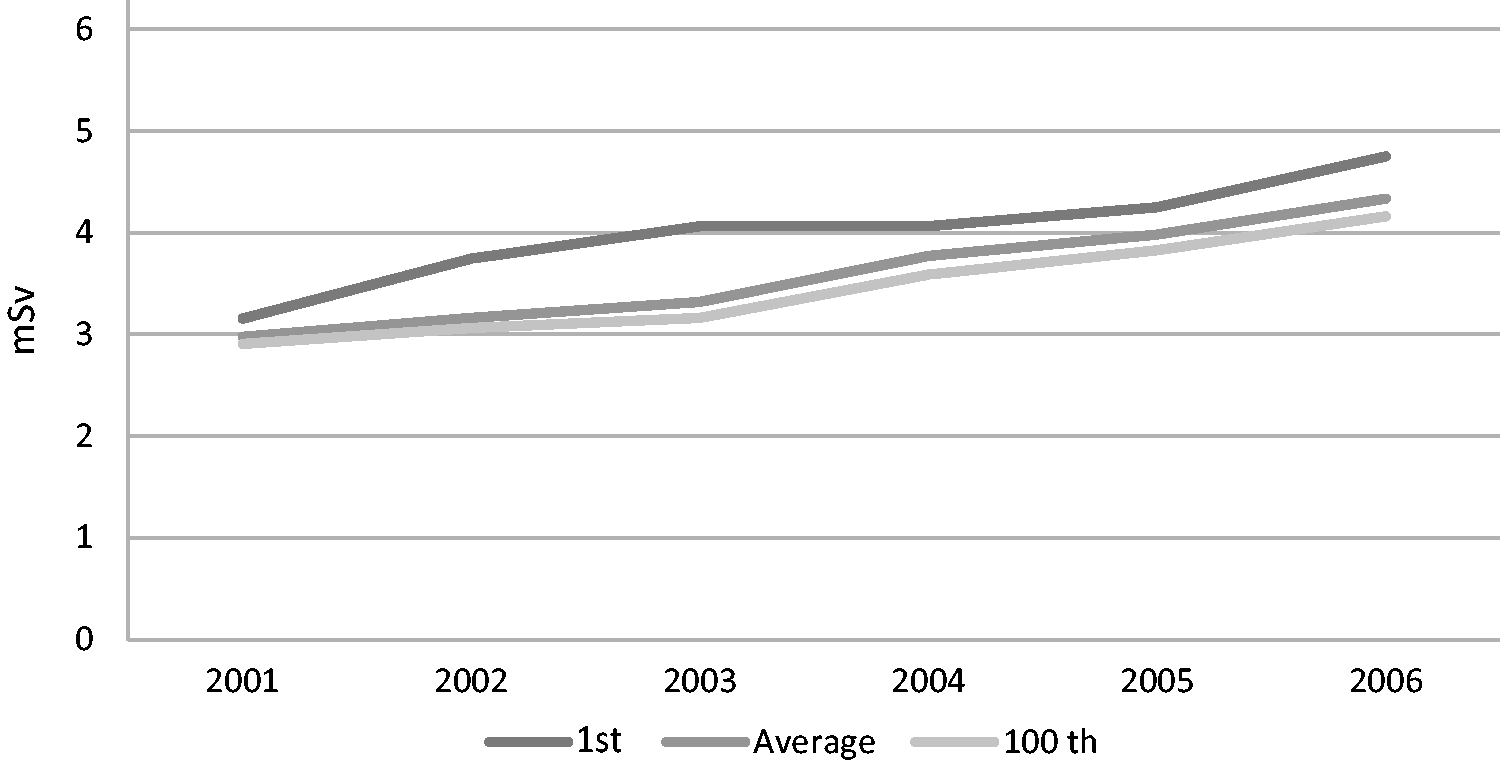
Data collected over the first 7 y showed that the average dose of the top 100 exposed crew members presented an ascendant trend. A few individuals stood out, and they appeared to have accumulated more than 750 boarding hours and worked on numerous near-polar flights.
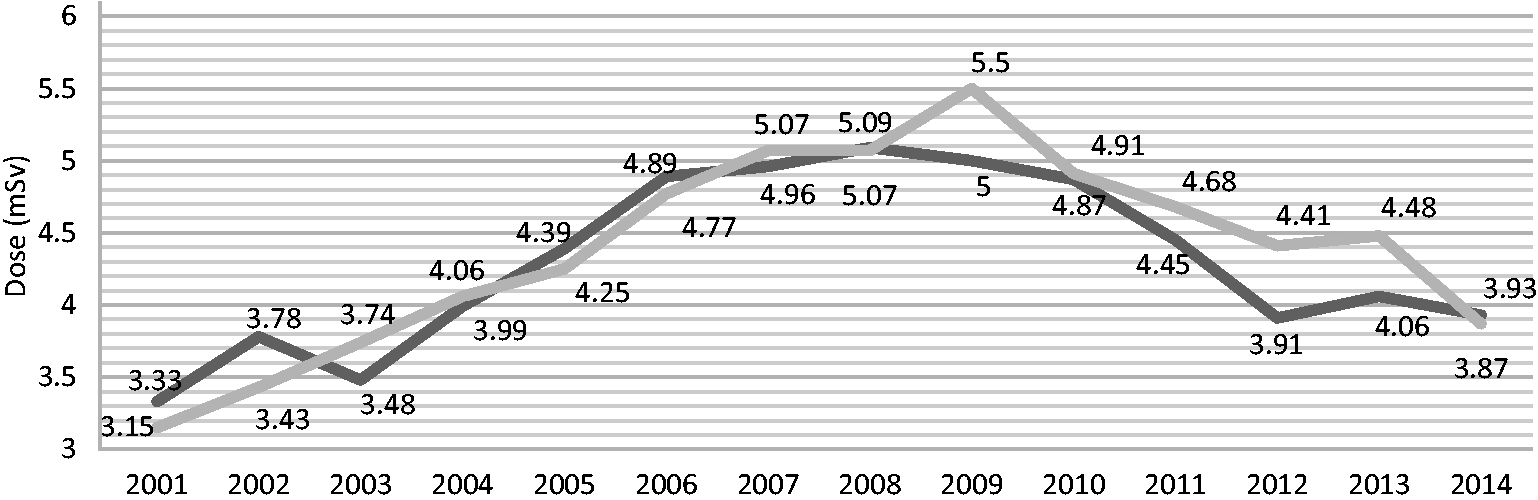
As crew members are paid according to the hours they fly, they may be reluctant to reduce their flying time. At present, there is no shielding from neutrons or the artificial electromagnetic field from charged particles on aircraft, and the only way to reduce the dose is to rely on ‘natural’ protection [i.e. the earth’s magnetic field (latitude) and the earth’s atmosphere (altitude)]. The intensity of the radiation field increases with altitude, doubling every 1500 m. At the altitudes flown by commercial jet aircrafts, galactic cosmic radiation is three to five times less intense near the equator than in polar regions. However, it is difficult to change routes (altitude and latitude) because this conflicts with the routes selected to save fuel. Given this constraint, the OHS and the radiation protection officer strove to make highly exposed crews aware of cosmic rays so that they would agree to change their favourite stopovers. This approach was successful, and no crew members have exceeded a dose of 5 mSv y−1 since 2012 (more than 20 crew members exceeded this dose before the approach was implemented).
The distribution of individual effective doses (Figs. 3 and 4) shows that the peak corresponding to long-haul flights is centred on 3 mSv y−1. The shape of the graphs shows that there is potential to reduce the highest doses; in other words, the collective dose can be shared more equitably. This is possible if transequatorial and near-polar flights are shared equally between all crew members. This type of policy is easier to implement in major airline companies operating worldwide flights.
Highest exposed flight deck crews during the 2001–2006 period. Highest exposed cabin crews during the 2001–2006 period. Highest effective dose by year. Black line, pilots; grey line, cabin crew. Dose distribution for flight deck crew in 2007.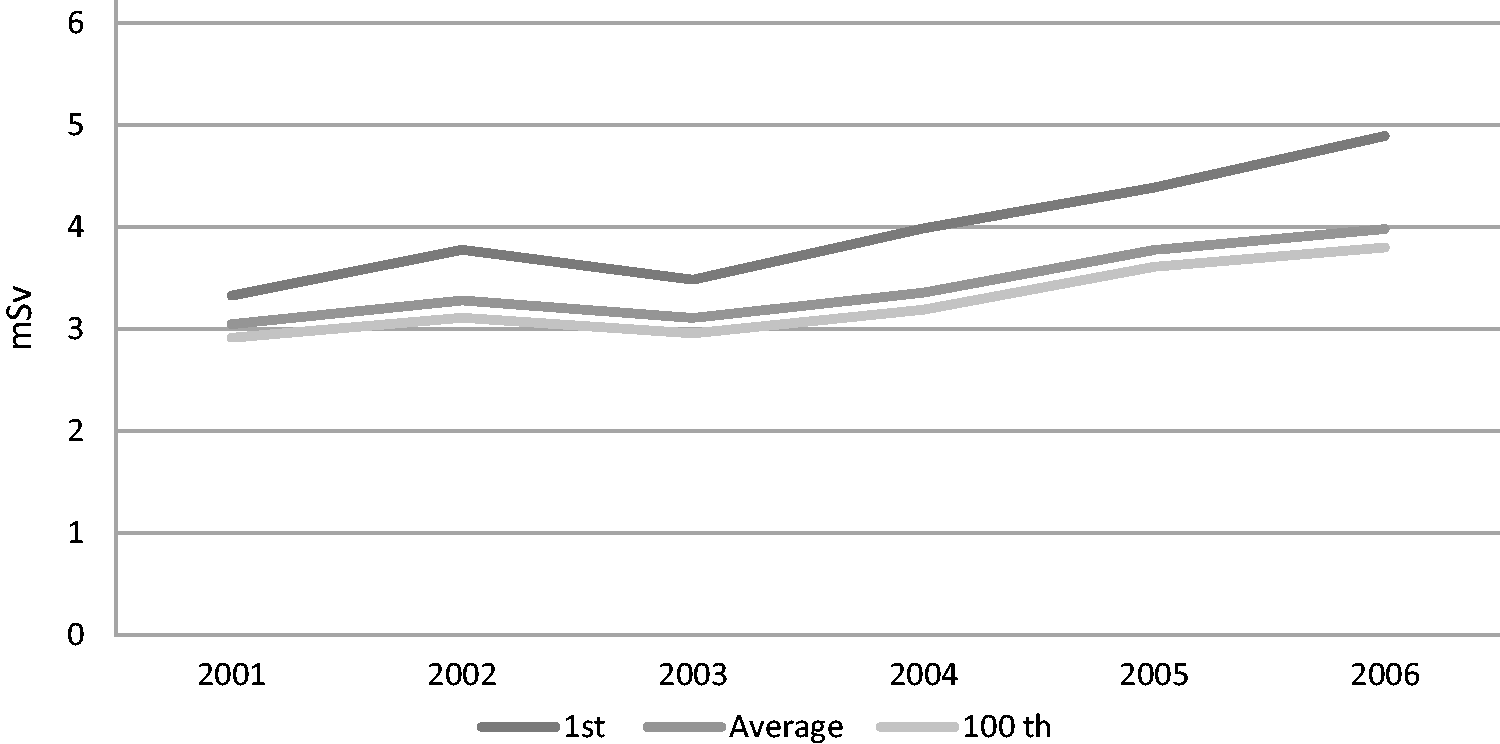
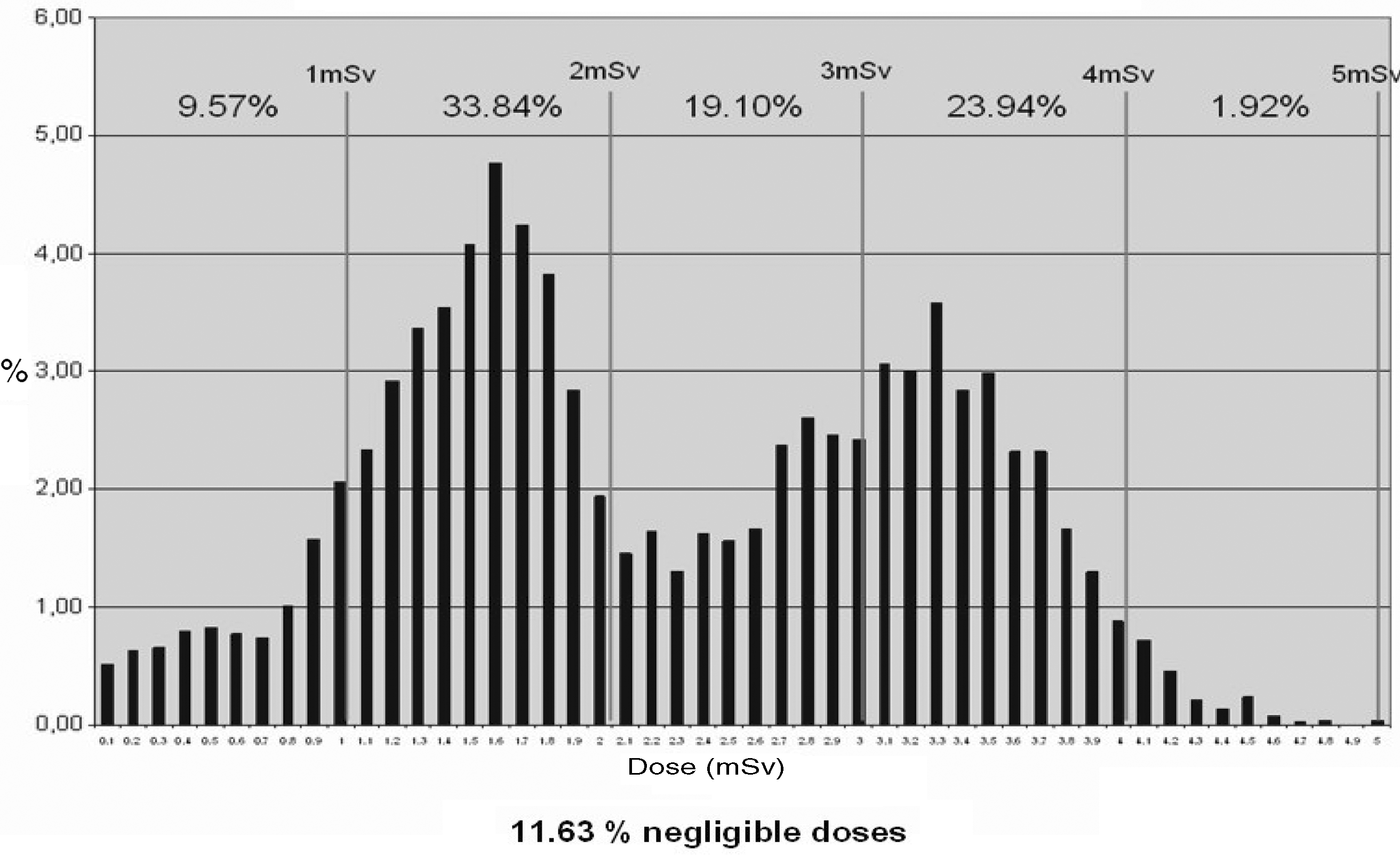
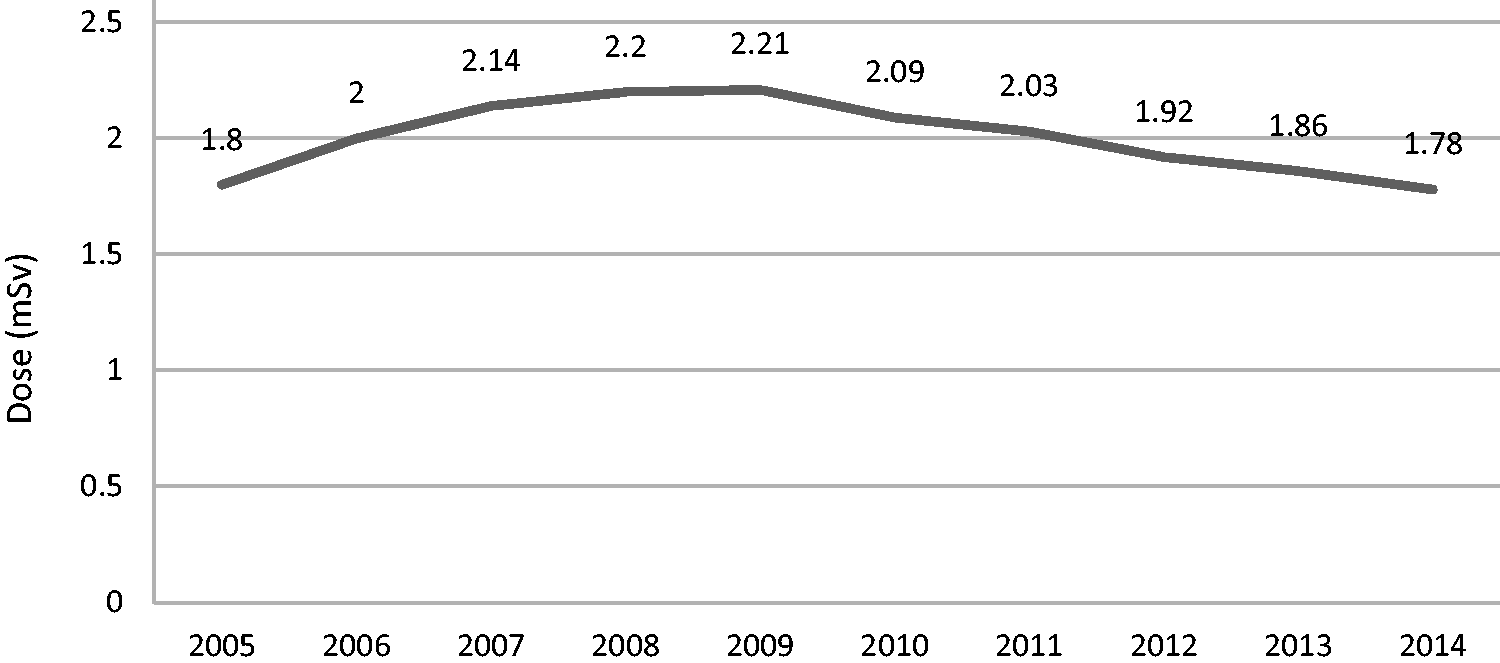
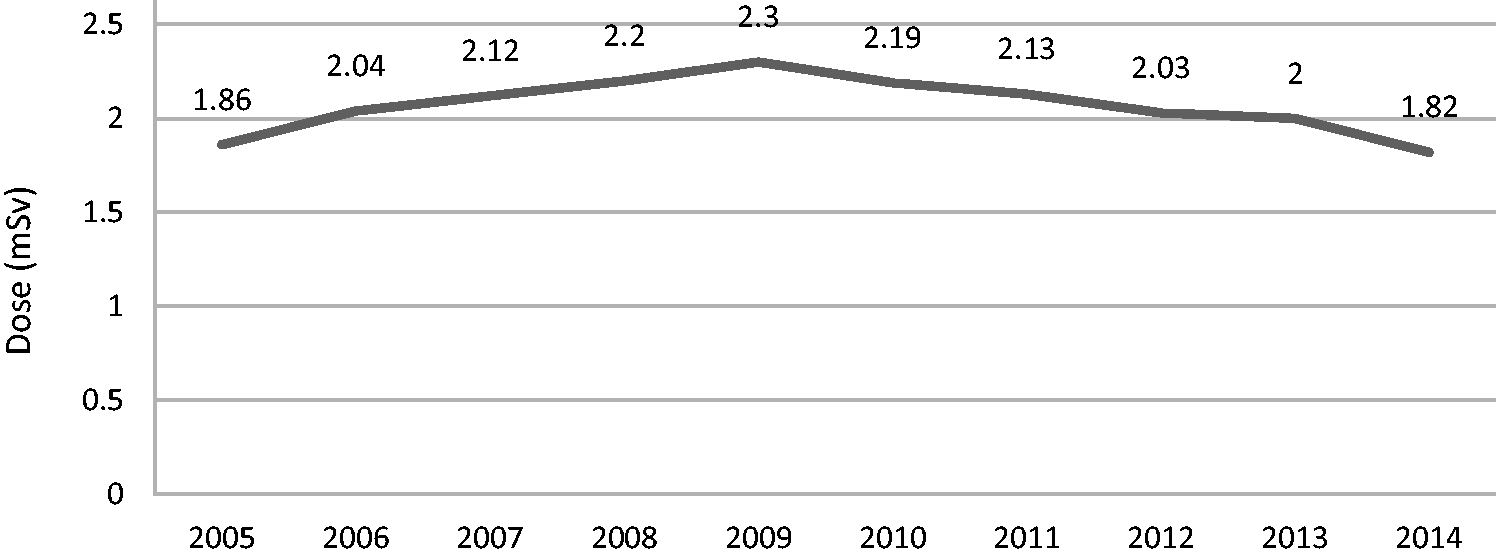
The peak for mid-haul flights is centred on 1.5 mSv y−1. The annual average effective dose taking into account all mid- and long-haul flights is steadily around 2 mSv y−1 (Figs. 5 and 6). It is thus unlikely that a crew member could accumulate an effective dose in excess of 100 mSv over a 40-y career.
Dose distribution of cabin crew in 2007. Annual average exposure (mSv) of flight deck crew working on mid- and long-haul flights from 2005 to 2014. Annual average exposure (mSv) of cabin crew working on mid- and long-haul flights from 2005 to 2014.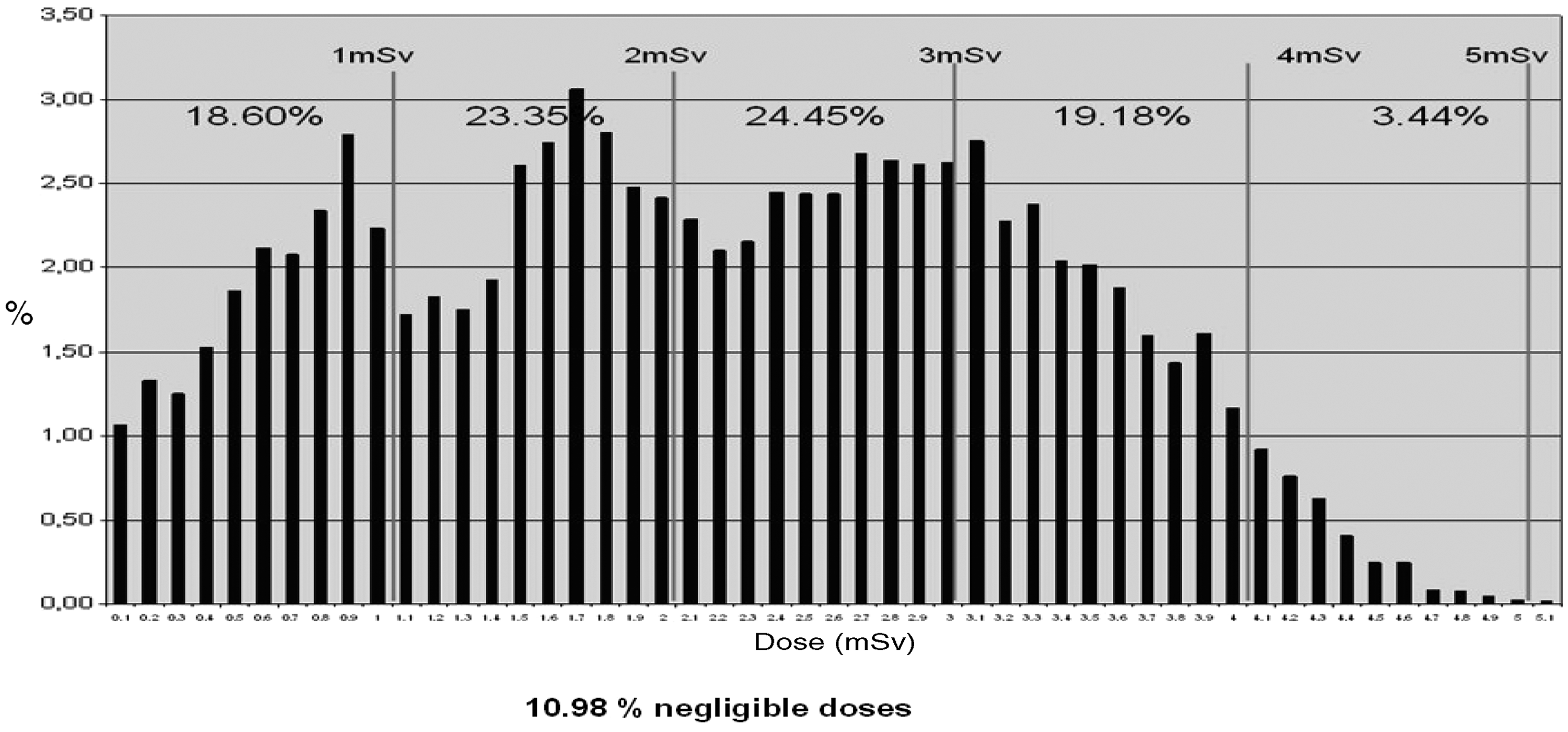
3.2. Pregnant crew members
The commercial aircraft environment is not considered to be hazardous for normal gestation, and there is no evidence that long exposure in commercial aircraft causes significant pregnancy-related problems. Thus, according to aeronautic European rules, since 7 January 2005, pregnant pilots have been allowed to fly during the first two trimesters of their pregnancy if they agree and if they are fit to do so (i.e. after a strict medical and obstetric evaluation).
As far as the fetus is concerned, the policy is to follow the French regulation based on ICRP recommendations: ‘The working conditions of a pregnant worker, after declaration of pregnancy, should be such to ensure that the additional dose to the fetus would not exceed about 1 mSv during the remainder of the pregnancy’ (ICRP, 2000; French Labour Code).
Information provided by the OHS encourages female pilots to declare their pregnancy as soon as possible. The monthly medical examination is the opportunity to discuss a flight schedule that is less intense than usual. Considering 5 µSv h−1 on a long-haul flight, 1 mSv is equivalent to 200 flying hours. Work schedules can be developed for pregnant pilots to enable the dose to the fetus to be kept below 1 mSv. For example, six pregnant pilots were allowed to fly in 2010, and the exposures recorded were between 0.1 and 0.5 mSv.
4. DEVELOPMENT OF THE RADIOLOGICAL PROTECTION CULTURE
At the beginning, Air France had to convince the crew representatives and professional unions about the validity of its choices in terms of radiological protection, such as the assessment of exposure by calculation rather than using individual dosimeters.
The OHS had to define and write the operating procedures for Air France management, and add a chapter to the health manual for crew members. All concerned personnel were informed by means of flyers and articles on the company’s news bulletin.
In order to improve the level of knowledge about natural radioactivity, particularly cosmic rays, and the potential impacts on health, short videos were prepared. An interactive e-learning programme with a quiz was developed recently. All 18,000 crew members employed by Air France take part in this programme every 3 y.
5. SOLAR FLARES
French regulations state that it is mandatory to take exceptional solar activity into account. After a significant GLE, a specific map is created and validated. Astrophysicists are asked to assess the impact on the ground and also at flight levels. It takes approximately 3–4 weeks to complile the dose-rate maps.
In total, 16 GLEs were recorded during Solar Cycle 23 (1996–2008). No significant radiation storms have been recorded to date in the current cycle (Solar Cycle 24). On 9 September 2015, the strongest solar flare since 2012 occurred, but this only had a relatively light repercussion on the earth’s magnetic field.
Since 2000, four eruptions with GLEs have been studied closely for their ionising effect at commercial flight altitudes. These occurred on 14 July 2000 (GLE59), 15 April 2001 (GLE60), 20 January 2005 (GLE69), and 13 December 2006 (GLE70). The latter two have been taken into account by the SIEVERT system, which officially came into use in September 2001. They were of moderate magnitude (S3) with a maximum peak flux of 0.1 mSv h−1 at 12,000 m. The intensity fell off rapidly. The duration was relatively short (approximately 1–6 h). Only a few flights were affected on routes between Europe, Japan, and North America.
Although the exposure due to a GLE appears to be high, it does not modify the annual exposure of crew members significantly. However, addressing GLEs is important in order to retain the trust of crew members.
In the future, radiation storms of greater magnitude may be observed, such as the famous GLE05 on 23 February 1956 (estimated 10 mSv h−1 at an altitude of 12 km).
The case of Concorde was different because of lower protection at a supersonic cruise altitude of approximately 18 km. Concorde had ionising radiation monitoring equipment installed permanently in the flight deck. This equipment was mandatory when flying above 15 km according to European aviation authority regulations (JAR-OPS 1.680 cosmic radiation detection equipment).
On three occasions, Air France Concordes had to initiate an emergency descent after a warning alert was triggered at 0.5 mSv h−1. This was the case on 9 January 1997, when an active dosimeter displayed 1 mSv h−1 at 16,000 m and 10 mSv h−1 at 17,600 m. Concorde descended to 16,000 m to continue the flight towards New York. The total exposure during this flight was four times higher than usual. A strong sun–earth connection event was observed at that time (SOHO/LASCO, NASA).
6. IRSN–AIR FRANCE PARTNERSHIP FOR SPACEWEATHER RESEARCH
For the last 20 y, IRSN and Air France have established a strong partnership that has led to the development of the SIEVERT system during the 2000s, and, more recently, information on the Fukushima accident and its consequences for the public. Beyond these actions, measurements on board are key elements of this partnership.
6.1. Terrestrial γ-ray flashes
In several recent papers, terrestrial γ-ray flashes (TGFs) have been investigated as a possible source of exposure of crew members. According to these papers, if an aircraft is located in or near the high-field region during a lightning discharge, doses could reach the order of 100 mSv. TGFs are directed from clouds to space (Briggs et al., 2010; Dwyer et al., 2010).
In order to investigate this phenomenon, several long-haul aircraft of the Air France fleet have been equipped with passive radiophotoluminescent dosimeters that are able to record very high dose rate events below 1 ms. Data from 1928 radiophotoluminescent dosimeters used on board between 2009 and 2014 were analysed by IRSN. No trace of a TGF was found. This does not mean that TGFs do not exist, but indicates that they are quite rare. However, monitoring of all transient events will continue in the coming years. It should be noted that air safety procedures require pilots to fly round huge tropical clouds and not to climb above them.
6.2. Ground level enhancement events
The models used for dosimetry are based on or compared with very few sets of inflight measurements during GLEs. There is a clear need for additional data to improve the existing models.
As such, IRSN and Air France have launched a joint programme to monitor the effect of GLEs on dose rates at flight altitude along the new solar cycle. The objective is to have at least two measurement devices flying at the same time on different routes.
The approach lies in selecting small electronic dosimeters with high battery autonomy, γ and neutron sensitivity and reliability, high data storage, and electromagnetic compatibility with aircraft instrumentation. Since 2015, five Liulin spectrometers and 25 EPD-N2 have been available. It is therefore possible to cover the main long-haul flight routes. As these types of dosimeters were not designed for cosmic radiation, a specific calibration has been established by comparing data from electronic dosimeters with reference instrumentation (TEPEC) during long-haul flights (Trompier et al., 2013).
Dose comparison.

7. CONCLUSIONS
The ICRP system of radiological protection is based on three fundamental principles: justification, optimisation and dose limitation.
Aviation enables geographic barriers to be crossed and speeds up socio-economic integration. In a sustainable development process, this human activity seems to be justified. The Advisory Council for Aeronautical Research in Europe has launched an ambitious programme to reduce emissions of NOx, CO2 and noise. The business jet market also continues to grow. According to the International Civil Aviation Organization, air traffic will double in 15 y.
Although the possibilities for controlling exposures in aircraft are limited, the implementation of a protective strategy is feasible using a graded approach as demonstrated by Air France. Individual exposures can be managed in the optimisation process using a reference level. The objective is to keep exposures of the most exposed aircraft members to reasonable levels.
As recommended in the forthcoming ICRP report on protection against cosmic radiation in aviation (ICRP, 2016), Air France is developing a programme to disseminate information and to raise awareness about cosmic radiation among its personnel to favour informed decision-making by all concerned stakeholders.
Footnotes
ACKNOWLEDGEMENTS
Thanks to full cooperation with IRSN, Air France management and the respective professional representatives, significant progress having been made over the last decade. The authors wish to thank Jean-François Bottollier-Depois, François Trompier, Isabelle Clairand, IRSN Fontenay aux Roses, Nicolas Fuller, Paris Meudon Observatory, Franck Bonnote, Frédéric Dollet, and Air France Roissy.